Alcohol and Sleep: Why Your Nightcap Is Backfiring
Published:
2023-08-06
·
Read time:
23
Last Updated:
2026-02-18
Written by
Reframe Content Team
A team of researchers and psychologists who specialize in behavioral health and neuroscience. This group collaborates to produce insightful and evidence-based content.
Certified recovery coach specialized in helping everyone redefine their relationship with alcohol. His approach in coaching focuses on habit formation and addressing the stress in our lives.
Recognized by Fortune and Fast Company as a top innovator shaping the future of health and known for his pivotal role in helping individuals change their relationship with alcohol.
August 6, 2023
·
23
Reframe Content Team
August 6, 2023
·
23
That glass of wine with dinner seems like the perfect nightcap. Your mind finally quiets down, and you drift off to sleep almost instantly. But then, a few hours later, you’re wide awake, staring at the ceiling. Sound familiar? This frustrating pattern isn't just you. It’s a classic example of the complicated relationship between alcohol and sleep. While a drink can make you feel drowsy, understanding how alcohol affects sleep—especially crucial stages like REM sleep—is the key to getting a truly restful night.
You’re not imagining things. Alcohol really does help you fall asleep faster and more easily. This is because alcohol is a central nervous system depressant: it slows our brain activity. It also acts as a sedative, inducing feelings of relaxation and sleepiness.
But here’s the problem: even though alcohol can cause us to fall asleep quickly, it negatively affects our overall quality of sleep. In fact, the consumption of alcohol — especially large amounts — has been consistently linked to poor sleep quality and duration. More specifically, alcohol suppresses rapid eye movement (REM) sleep, one of the most important stages of sleep for physical and mental restoration. Let’s take a closer look.
Understanding the Sleep Cycle
When you sleep, your brain doesn’t just power down for the night. Instead, it moves through a series of stages in a predictable pattern, known as the sleep cycle. Each cycle lasts about 90 minutes and repeats several times throughout the night. The two main types of sleep are Non-Rapid Eye Movement (NREM) and Rapid Eye Movement (REM). NREM sleep is divided into three stages, ranging from light dozing to the deep, restorative sleep that helps your body repair tissues and strengthen its immune system. After moving through the NREM stages, you enter REM sleep, which is essential for your mind. Understanding this cycle is the first step to figuring out why that glass of wine is having such a disruptive effect on your rest.
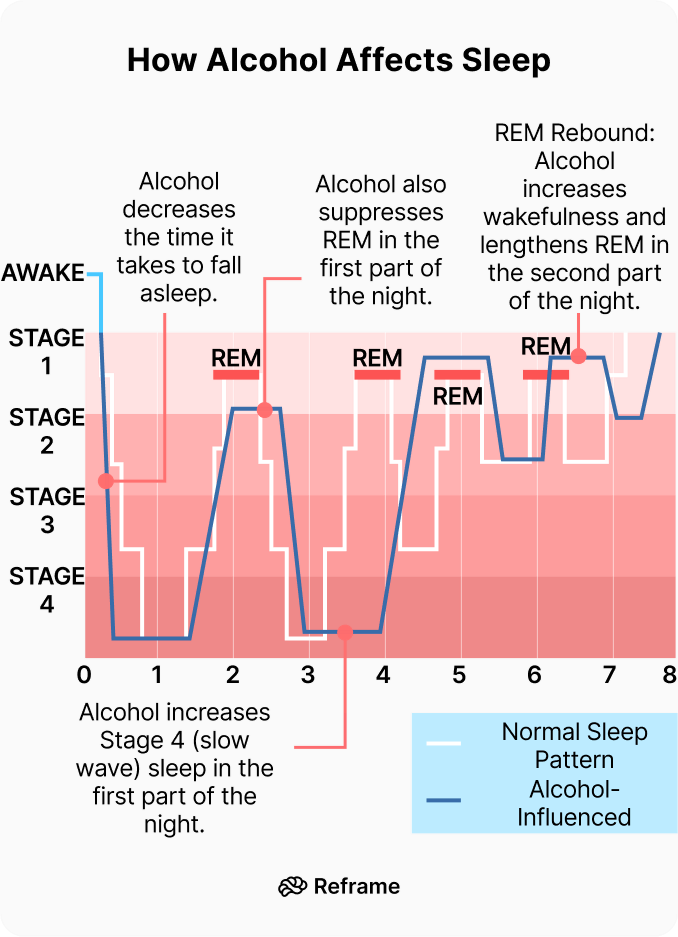
The first half of the night is typically dominated by NREM deep sleep. This is the phase where your body does most of its physical restoration. Your breathing and heart rate are at their lowest points, and it’s very difficult to be woken up. Because alcohol is a sedative, it can actually help you fall into this deep sleep stage faster. This is why you might feel like you’re getting great sleep right after you doze off. However, as your body begins to process the alcohol, this is where the problems start. The initial deep sleep comes at a cost, creating an imbalance in your sleep cycle that your body will try to correct later in the night.
The second half of the night is when REM sleep is supposed to take center stage. This is the stage where most of your dreaming occurs, and it’s absolutely vital for cognitive functions like memory consolidation, learning, and emotional regulation. During REM, your brain is highly active, sorting through the day’s experiences and filing them away. According to the Sleep Foundation, alcohol significantly suppresses REM sleep, especially during the first few cycles. This means your brain doesn't get the time it needs to properly process information and recharge, which is why you might feel mentally foggy and unfocused the next day, even if you technically slept for seven or eight hours.
As the alcohol wears off, your body experiences a “rebound effect.” Your sleep becomes lighter and more fragmented, leading to those frustrating middle-of-the-night awakenings. Your body is essentially trying to catch up on the REM sleep it missed earlier, resulting in a restless second half of the night. The more you drink, and the closer you drink to bedtime, the more pronounced this disruption becomes. This cycle of falling asleep quickly only to wake up a few hours later feeling alert and anxious is a classic sign that alcohol is interfering with your natural sleep architecture, preventing you from getting the truly restorative rest you need.
First, How Does Sleep Actually Work?
To understand how alcohol impacts REM sleep, it’s important to understand the different stages of the human sleep cycle. Over the course of the night, we go through several complete sleep cycles, each of which is composed of four individual stages. On a typical night, we’ll go through four to six sleep cycles, which last about 90 minutes each.
Here are the four different stages of a sleep cycle:
Stage 1 (light sleep): This is when we first fall asleep. Our body isn’t fully relaxed, and our brain activity starts to slow with periods of brief movements. This stage normally lasts from 1-7 minutes. It’s usually pretty easy to wake someone up during this time.
Stage 2 (light sleep): This is when our body enters a more subdued state including a drop in temperature, relaxed muscles, and slowed breathing and heart rate. This stage can last for 10-25 minutes during the first sleep cycle. We typically spend about half our sleep time in this stage of sleep.
Stage 3 (deep sleep): During this stage, our muscle tone, pulse, and breathing rate decrease as our body relaxes even further. Because of this, it’s much harder to wake someone up if they’re in this phase. This stage is also referred to as “delta sleep” or “slow-wave sleep,” as our brain activity during this period has a pattern of what are known as delta waves. We usually spend about 20 to 40 minutes in this phase.
Stage 4 (REM sleep): We typically enter rapid eye movement (REM) sleep about 90 minutes after we initially fall asleep. Even though our eyes are closed, they can be seen moving quickly, which is how this stage gets its name. There is a significant uptick in brain activity, and our breathing rate and heartbeat quicken. We also experience the most vivid dreams in this stage, which usually accounts for about 25% of our sleep time.
REM sleep is vital for cognitive functions like memory consolidation, emotional processing, learning, and creativity. For instance, during REM sleep, our brain processes the day’s new lessons and motor skills, committing some to memory, maintaining others, and deciding which ones to delete. Researchers suggest that REM sleep also promotes brain development, since newborns spend most of their sleep time in REM (8 hours a day!).
Study after study demonstrates the importance of REM sleep. REM sleep deprivation interferes with memory formation and negatively impacts our mood and mental focus. Lack of REM sleep can even weaken our immune system, as the growth of new healthy cells and tissue in the body is blocked.
How Alcohol Affects Sleep Quality
The Initial Sedative Effect vs. The Rebound Effect
That glass of wine can feel like the perfect nightcap, helping you doze off more quickly. This happens because alcohol is a central nervous system depressant, creating a sedative effect that makes you feel relaxed and sleepy. It quiets the brain, which can feel like a welcome relief after a long day. However, this initial drowsiness is misleading and sets the stage for a much more disruptive night. While you might fall asleep faster, the quality of that sleep takes a major hit as your body begins to process the alcohol.
As your body metabolizes the alcohol, it disrupts your natural sleep cycle. Specifically, it suppresses REM sleep, the critical stage for memory consolidation and emotional regulation. According to the Sleep Foundation, even small amounts of alcohol can decrease sleep quality by over 9%. This means you're missing out on the most restorative part of your sleep, which is why you can get a full eight hours and still wake up feeling groggy, irritable, and unfocused. The very thing that seemed to help you sleep ends up stealing the most valuable part of it.
Then comes the "rebound effect." As the sedative effects wear off in the second half of the night, your brain essentially wakes up with a jolt. This surge in activity leads to lighter, more fragmented sleep and those frustrating middle-of-the-night awakenings. You might find yourself wide awake at 3 a.m., your heart racing, unable to get back to sleep. This happens because your body is trying to counteract the initial depressive effects, leading to a state of over-arousal once the alcohol is gone. The more you drink, and the closer you drink to bedtime, the more pronounced these disruptions become, preventing you from ever reaching the deep, restorative stages you need.
How Alcohol Disrupts Your REM Sleep
Alcohol suppresses and reduces the amount of time we spend in REM sleep. As we’ve noted, alcohol initially acts as a sedative, increasing the proportion of deep sleep at the beginning of the night. However, as alcohol’s effects start to wear off, our body spends more time in light sleep, which can result in shorter sleep duration and more sleep disruptions. This is why we tend to wake up frequently after drinking once several hours have passed.
Even just a couple of drinks can have a negative effect. For instance, one study found that having fewer than two servings of alcohol per day for men or one serving per day for women decreased sleep quality by nearly 10%. The more alcohol we consume, the more our quality of sleep decreases: more than 2 drinks for men and more than 1 for women decreased sleep quality by almost 40%.
Alcohol also increases levels of adenosine, a key component of the homeostatic drive, which is responsible for keeping our body balanced. It’s also one of the major mechanisms regulating our sleep-wake cycle. The homeostatic drive tells us it’s time to sleep by boosting levels of adenosine when we’ve been awake for too long.
After a few drinks, increased levels of adenosine send us into a deep sleep. But, once our body realizes it’s had too much slow wave sleep, the homeostatic drive compensates by allowing us less deep sleep in the second half of the night. This is why we might find ourselves tossing and turning.
Without adequate sleep, our cognitive functions and performance start to decline. We might find ourselves forgetting things more often or having difficulty concentrating. Over time, lack of REM sleep and chronic sleep deprivation can lead to serious health issues such as diabetes, depression, obesity, and cardiovascular disease.
Physical Effects on Sleep Quality
Beyond just messing with your REM cycle, alcohol introduces a whole host of other physical disruptions that sabotage a good night's rest. That initial sleepy feeling is misleading; once your body starts to process the alcohol, it can trigger a cascade of effects that leave you feeling anything but refreshed in the morning. From throwing off your internal clock to making it harder to breathe, alcohol’s impact on your sleep is more complex and disruptive than many of us realize. It’s not just about feeling a little groggy; it’s about a fundamental interruption of the restorative processes your body needs to function at its best. Let’s break down some of the specific ways a nightcap can backfire.
Changes to Your Sleep Stages Throughout the Night
As we’ve touched on, alcohol acts as a sedative at first, which is why it can feel like it’s helping you doze off. It tends to increase deep sleep during the first part of the night. However, this is a classic bait-and-switch. As your body metabolizes the alcohol, its sedative effects wear off, leading to a rebound effect. Your body then spends much more time in lighter, less restorative sleep stages and experiences more frequent awakenings. This is why you might fall asleep easily after a drink, only to find yourself wide awake and staring at the ceiling at 3 a.m., wondering why you can't get back to sleep.
Disrupts the Body's Internal Clock
We all have an internal 24-hour clock, known as our circadian rhythm, that regulates our sleep-wake cycle. It’s what tells our body when it’s time to feel sleepy and when to be alert. Alcohol can throw a major wrench in this finely tuned system. By disrupting this natural rhythm, alcohol can leave you feeling drowsy when you need to be awake and frustratingly alert when you’re trying to sleep. This disruption can make it difficult to maintain a consistent sleep schedule, further contributing to feelings of fatigue and making the practice of mindful drinking even more important for your overall well-being.
Worsens Breathing Problems and Sleep Apnea
If you or your partner snores more after drinking, there’s a physiological reason for it. Alcohol relaxes the muscles throughout your body, including those in your throat. For some, this just means louder snoring. But for others, it can worsen more serious conditions like obstructive sleep apnea, a disorder where breathing repeatedly stops and starts during sleep. According to the Sleep Foundation, this muscle relaxation can make it harder to breathe and increase the frequency and duration of these dangerous breathing pauses throughout the night, turning what should be a restful period into a struggle for air.
Causes Other Physical Disruptions
The consequences of alcohol-induced sleep deprivation extend far beyond just feeling tired. When we consistently miss out on quality sleep, especially REM sleep, our cognitive functions take a hit. You might notice yourself becoming more forgetful, struggling to concentrate, or feeling mentally foggy. Over the long term, as one article from MD Anderson points out, chronic poor sleep is linked to a higher risk of serious health problems, including diabetes, obesity, depression, and cardiovascular disease. It’s a stark reminder that what happens during our sleeping hours has a profound impact on our overall health and daily performance.
Increases Unusual Sleep Events
Ever had bizarrely vivid dreams after a night of drinking? Alcohol can also increase the likelihood of parasomnias, which are unusual behaviors that occur during sleep. This can include things like sleepwalking, sleep talking, and even experiencing night terrors or sleep paralysis — that unsettling feeling of being awake but unable to move. While these events might seem random, they are often a sign of a disrupted and fragmented sleep architecture. It’s another way alcohol can turn a night of intended rest into a chaotic and unrefreshing experience, leaving you feeling more exhausted than when you went to bed.
Risks and Long-Term Consequences
The short-term disruption to your REM sleep is just the beginning. Relying on alcohol for sleep can lead to a host of bigger issues down the road, creating patterns that are tough to break.
The Cycle of Insomnia and Alcohol Dependence
It’s a tempting thought: if you’re struggling to fall asleep, a drink might seem like a quick fix. But this strategy can easily backfire and create a difficult cycle. When you use alcohol to get to sleep, your body starts to associate it with rest. The problem is, as we've seen, the sleep you get is fragmented and not very restorative. This can lead to chronic insomnia, where you have trouble falling or staying asleep on your own. You might then feel the need to drink more to get the same sedative effect, which only worsens your sleep quality. This pattern can create a dependence on alcohol for sleep, making it incredibly hard to rest naturally and trapping you in a loop of poor sleep and reliance on a substance that’s ultimately harming your health.
Worsens Hangovers and Next-Day Fatigue
We’ve all been there: waking up after a few drinks feeling groggy, irritable, and completely drained. It’s easy to blame the hangover, but the poor sleep quality is a huge part of the problem. The lack of deep, restorative REM sleep means your brain and body never got the chance to properly repair and recharge overnight. This sleep disruption makes classic hangover symptoms like headaches, nausea, and sensitivity to light feel so much worse. The next-day fatigue isn't just about being tired; it affects your focus, mood, and ability to function. So, that feeling of being mentally "off" and physically exhausted is a direct result of alcohol interfering with your natural sleep architecture.
Dangers of Mixing Alcohol with Medications
This is a critical point that can’t be overstated: mixing alcohol with certain medications is extremely dangerous. Alcohol is a central nervous system depressant, and so are many common medications, including sleeping pills, anti-anxiety drugs (like benzodiazepines), and some opioid pain relievers. When you combine them, you’re essentially doubling down on their sedative effects. This can slow your breathing and heart rate to dangerously low levels, a condition known as respiratory depression, which can be fatal. Even over-the-counter sleep aids can have unpredictable interactions with alcohol. It’s essential to always read medication labels and talk to your doctor or pharmacist about potential interactions before having a drink. Your safety comes first.
Effects on Recovery from Alcoholism
For those working to change their relationship with alcohol, sleep can be a major hurdle. Sleep problems are incredibly common during the early stages of recovery and can persist for months. This ongoing insomnia can be a powerful trigger for relapse. When you’re exhausted and desperate for rest, the temptation to turn back to alcohol—the very thing you’re trying to move away from—can feel overwhelming. That’s why developing healthy, sustainable sleep habits is a cornerstone of long-term success. Learning new coping mechanisms for stress and sleeplessness, like meditation or a consistent bedtime routine, is crucial for breaking the cycle and supporting your journey toward mindful drinking and better overall health.
How Effects on Sleep Can Differ
While alcohol’s general impact on the sleep cycle is consistent, its specific effects aren't the same for everyone. How a glass of wine before bed affects your rest can depend on a variety of factors, including your gender, age, and underlying health conditions. Understanding these nuances is a key part of developing a more mindful relationship with alcohol and prioritizing your well-being. Certain groups may find their sleep is particularly sensitive to disruption from drinking, making it even more important to be aware of the potential consequences for a good night's rest.
Differences Between Men and Women
It turns out that alcohol can play favorites when it comes to sleep, and gender is a big factor. While both men and women experience suppressed REM sleep after drinking, women often draw the shorter stick. Research shows that women tend to experience more sleep disruptions after drinking than men do. This means they are more likely to wake up throughout the night, even if the initial changes to their deep sleep and REM cycles are similar. So, if you find yourself wide awake at 3 a.m. after a couple of drinks, while your male partner is sleeping soundly, you’re not just imagining it. This increased fragmentation can leave you feeling particularly groggy and unrested the next day, highlighting how differently our bodies can process alcohol's effects.
Risk Factors for Sleep Apnea
If you or a loved one snores loudly, it might be more than just an annoyance — it could be a sign of sleep apnea, a condition where breathing repeatedly stops and starts during sleep. Alcohol is particularly problematic for anyone with this condition. Because alcohol is a muscle relaxant, it can cause the tissues in your throat to relax more than usual, making it easier for your airway to become blocked. This can worsen the frequency and severity of breathing pauses for those who already have sleep apnea. Certain factors increase the risk for this condition, including being male, over 50, or overweight. If you fall into any of these categories, drinking alcohol before bed could significantly interfere with your breathing and sleep quality.
Teenagers and Sleep
The connection between alcohol and sleep in teenagers is a bit of a two-way street. We know that alcohol can disrupt the crucial sleep that adolescents need for their developing brains and bodies. However, the relationship might start even before they take their first drink. Studies suggest that teenagers who already struggle with poor sleep—whether it's not getting enough hours or having low-quality rest—may be at a higher risk for developing issues with alcohol later on. This creates a challenging cycle where poor sleep can be a precursor to drinking, and drinking then further damages their sleep. It underscores the importance of addressing sleep problems in young people as a proactive measure for their long-term health.
Rethinking That Nightcap for Better Sleep
It can be tempting to turn to alcohol as a sleep aid. But, even though it can help us fall asleep, the effects are short-lived and we don’t end up getting the restorative sleep we need to function well. Even just one or two drinks can be harmful. The alcohol in our system causes us to spend less time in the important REM stage of sleep, ultimately causing us to wake up feeling less refreshed. In fact, fatigue and poor sleep are signs our body is telling us to drink less alcohol.
If you regularly turn to alcohol to help you fall asleep, consider downloading Reframe. We’ve helped millions of people cut back on their alcohol consumption and develop effective skills for better managing stress and getting a good night’s sleep.
Time Your Last Drink Carefully
If you enjoy an occasional drink but want to protect your sleep, timing is everything. The key is to give your body enough time to process the alcohol before you hit the hay. As a general rule, try to have your last drink at least three to four hours before you plan to go to bed. This buffer allows your liver to metabolize the alcohol, reducing its disruptive effects on your sleep cycle later in the night. Finishing your drink well before bedtime helps prevent the "rebound effect," where your body shifts into a lighter, more fragmented sleep as the initial sedative qualities of alcohol wear off. This simple adjustment can make a significant difference in how rested you feel the next morning.
Improve Your General Sleep Hygiene
Creating a strong foundation for sleep can make you less likely to reach for a nightcap in the first place. This is where good sleep hygiene comes in. Start by establishing a consistent schedule — go to bed and wake up around the same time every day, even on weekends. This helps regulate your body's internal clock. You can also create a relaxing bedtime routine to signal to your brain that it's time to wind down. This could include taking a warm bath, listening to calm music, or reading a book. Finally, make sure your bedroom is a sanctuary for sleep: keep it cool, dark, and quiet to minimize potential disturbances and improve your sleep habits.
Try Specific Alternatives to Alcohol
If you're struggling to fall asleep, there are much healthier and more effective alternatives to alcohol for quieting your mind. Exploring different mindfulness techniques can be a great way to promote relaxation without the negative side effects. Consider brewing a cup of caffeine-free herbal tea, like chamomile or lavender, to help you unwind. You could also try journaling to get your thoughts out of your head and onto paper, or listen to a guided meditation designed for sleep. The goal is to find a calming activity that works for you, creating a new, healthier ritual that supports truly restorative rest. These practices can help you build a better relationship with your evening routine.
Frequently Asked Questions
But I fall asleep so much faster with a glass of wine. Isn't that a good thing? I completely get why it feels that way. Alcohol does act as a sedative, which can quiet your mind and help you doze off more quickly. The catch is that this initial drowsiness is misleading. While you might fall asleep faster, the quality of that sleep is significantly worse. Your body pays for that quick entry into deep sleep by sacrificing the mentally restorative REM sleep you need later in the night.
Why do I always wake up around 3 a.m. after a night of drinking? This is a classic sign of alcohol's "rebound effect." In the first half of the night, your body is focused on processing the alcohol, and you experience a deeper, non-REM sleep. As the alcohol's sedative effects wear off, your brain essentially jolts awake. This surge in activity pulls you into a much lighter, more fragmented sleep, which is why you find yourself wide awake and often unable to get back to sleep.
Is even one drink enough to mess up my sleep? Unfortunately, yes. While more alcohol creates a bigger disruption, research shows that even a single drink can decrease your sleep quality. It might not feel as dramatic as the 3 a.m. wake-up call you get from having several drinks, but it still reduces the amount of REM sleep you get. This can leave you feeling less sharp and focused the next day, even if you don't feel particularly hungover.
Besides feeling tired, what are the long-term risks of using alcohol for sleep? Relying on alcohol to fall asleep can create a difficult cycle. Over time, your body can build a tolerance, meaning you might need more alcohol to get the same sleepy effect. This can lead to a dependence where you feel like you can't sleep without it. This pattern not only worsens your sleep quality night after night but can also contribute to chronic insomnia and other health issues linked to long-term sleep deprivation.
If I stop using alcohol to sleep, what can I do instead to wind down? Creating a new evening ritual is a great place to start. The goal is to signal to your body that it's time to rest without the negative effects of alcohol. You could try brewing a cup of calming herbal tea like chamomile, reading a book (on paper, not a screen), or listening to a guided meditation. Some people find that journaling for a few minutes helps clear their head. The key is to find a relaxing, consistent activity that helps you transition peacefully into sleep.
Key Takeaways
That nightcap is a bit of a trick: While alcohol's sedative effect can make you feel sleepy, it ultimately prevents the deep, restorative rest your brain and body need by disrupting your natural sleep cycle later in the night.
Alcohol sabotages your REM sleep: It suppresses the mentally restorative REM phase early on, causing a rebound of lighter, fragmented sleep in the second half of the night, which is why you might wake up at 3 a.m. feeling wide awake.
Protect your sleep with smarter habits: If you choose to drink, finish your last one at least three hours before bed to give your body time to process it. For a more reliable solution, create a relaxing bedtime routine with alternatives like herbal tea or journaling to help you unwind naturally.
Although it isn’t a treatment for alcohol use disorder (AUD), the Reframe app can help you cut back on drinking gradually, with the science-backed knowledge to empower you 100% of the way. Our proven program has helped millions of people around the world drink less and live more. And we want to help you get there, too!
The Reframe app equips you with the knowledge and skills you need to not only survive drinking less, but to thrive while you navigate the journey. Our daily research-backed readings teach you the neuroscience of alcohol, and our in-app Toolkit provides the resources and activities you need to navigate each challenge.
You’ll meet millions of fellow Reframers in our 24/7 Forum chat and daily Zoom check-in meetings. Receive encouragement from people worldwide who know exactly what you’re going through! You’ll also have the opportunity to connect with our licensed Reframe coaches for more personalized guidance.
Plus, we’re always introducing new features to optimize your in-app experience. We recently launched our in-app chatbot, Melody, powered by the world’s most powerful AI technology. Melody is here to help as you adjust to a life with less (or no) alcohol.
And that’s not all! Every month, we launch fun challenges, like Dry/Damp January, Mental Health May, and Outdoorsy June. You won’t want to miss out on the chance to participate alongside fellow Reframers (or solo if that’s more your thing!).
The Reframe app is free for 7 days, so you don’t have anything to lose by trying it. Are you ready to feel empowered and discover life beyond alcohol? Then download our app through the App Store or Google Play today!
Reframe has helped over 2 millions people to build healthier drinking habits globally
At Reframe, we do science, not stigma. We base our articles on the latest peer-reviewed research in psychology, neuroscience, and behavioral science. We follow the Reframe Content Creation Guidelines, to ensure that we share accurate and actionable information with our readers. This aids them in making informed decisions on their wellness journey. Learn more
Updated Regularly
Our articles undergo frequent updates to present the newest scientific research and changes in expert consensus in an easily understandable and implementable manner.