How to Set Boundaries in Friendships Without Guilt
Published:
2023-07-19
·
Read time:
23
Last Updated:
2025-12-26
Written by
Reframe Content Team
A team of researchers and psychologists who specialize in behavioral health and neuroscience. This group collaborates to produce insightful and evidence-based content.
Certified recovery coach specialized in helping everyone redefine their relationship with alcohol. His approach in coaching focuses on habit formation and addressing the stress in our lives.
Recognized by Fortune and Fast Company as a top innovator shaping the future of health and known for his pivotal role in helping individuals change their relationship with alcohol.
July 19, 2023
·
23
Reframe Content Team
July 19, 2023
·
23
Our friendships are some of the most important relationships in our lives. We're wired to connect, which means we often pick up the habits and emotions of our closest friends. This is great for bonding, but what happens when your goals don't match theirs? This is where understanding boundaries in friendships becomes so important. Learning about setting boundaries with friends isn't about pushing people away. It’s about protecting your own well-being while keeping your connections strong. These healthy friendship boundaries are a sign of respect—for them and for yourself.
These connections can be like the sun, bringing warmth and light into our lives — or like a heavy storm, creating unexpected challenges. Consider that friend who always insists on ordering cheeseburgers when you're trying to eat healthier, or the one who monopolizes conversations without lending an ear.
Or maybe, like James, a diligent college student, you find that your friendly study sessions often morph into late-night benders. The delicate balance of maintaining our friendships while also prioritizing our well-being can sometimes feel like a tightrope walk. Can you relate?
If you’re wondering how to set boundaries with friends, read on! Let's understand how we can draw upon principles of neuroscience to set healthy boundaries in our friendships and make lasting improvements to our well-being.
Why Your Brain Needs Friendship Boundaries
Did you know that our brains actually thrive on strong social connections? The quality of our friendships can have a profound impact on our stress levels, mental health — and even our habits.
What’s more, our brains are equipped with mirror neurons. These are involved in ‘emotional contagion,’ which is the tendency of one person to ‘catch’ the feelings of another. In friendships, mirror neurons can play a role in emotional bonding and empathy. When we observe our friends experiencing emotions, our mirror neurons fire in a way that allows us to feel those emotions too.
While mirror neurons can help us to better understand and empathize with our friends, it's also important to set healthy boundaries in friendships to avoid emotional exhaustion and burnout. This makes us inherently susceptible to the influence of our peers, contributing to the phenomenon known as peer pressure. This is why it’s important to surround yourself with people whose values and goals align with yours.
What’s more, the act of creating boundaries has a profound effect on the prefrontal cortex (PFC), a critical brain region involved in our decision-making process, social behavior, and personality.
Stress reduction: By setting healthy boundaries, we facilitate a reduction in our stress levels, which positively impacts our PFC. Chronic stress can impair this brain region, so mitigating stress through boundary establishment boosts its performance.
Improved decision-making: Boundaries pave the way for superior decision-making, allowing us to make choices that align with our core values and priorities. This helps our PFC function more optimally.
Better emotional control: The process of boundary setting amplifies our capacity to manage our emotions. Emotional instability can impede our utilization of the PFC — thus, by setting boundaries, we improve our emotional control and efficiently engage this brain area.
Through healthy boundaries, we can effectively reduce stress, improve our decision-making, and strengthen emotional regulation. In the meantime, we might cultivate deeper and more meaningful friendships — those in which both of your needs are met and each of you is seen.
What Are Boundaries, Really?
So, what exactly are boundaries? Think of them as your personal rulebook for relationships. They are the clear lines you draw that define what you’re comfortable with and what you’re not. According to Positive Psychology, boundaries are the limits that show where you end and another person begins. They aren’t about controlling others; they’re about honoring yourself. For instance, a boundary might be deciding to leave a social gathering at 10 p.m. because you need your sleep, or letting a friend know you’d rather not discuss a certain topic. It’s about communicating your needs so your friendships can be supportive and respectful for everyone involved.
Boundaries vs. Walls: A Key Distinction
It’s important to understand that setting a boundary is not the same as building a wall. A wall is meant to shut people out — think ghosting a friend or giving them the silent treatment after a disagreement. These actions create distance and often damage the relationship. Boundaries, on the other hand, are about connection through clear communication. They are built on mutual respect and are designed to protect your well-being while keeping the relationship intact. A boundary is saying, “I’m taking a break from drinking right now, so I’ll skip the bar, but I’d love to catch a movie with you this weekend.” It’s an invitation for your friend to meet you where you are, not a rejection.
The Emotional Challenge of Setting Boundaries
If the thought of setting a boundary makes your stomach clench, you’re not alone. It can feel incredibly difficult, especially with people we care about. As author and psychotherapist Terri Cole explains, we often struggle because we’re afraid of disappointing others, feeling guilty, or starting an argument. Many of us are conditioned to be agreeable and to put others' needs before our own. This can be especially true if you’re a natural caregiver or peacemaker in your friend group. Acknowledging this discomfort is the first step. It’s okay to feel nervous; it just means you’re stepping out of your comfort zone to prioritize your own well-being, which is a brave and necessary act.
Overcoming People-Pleasing Habits
At the heart of this struggle is often a deep-seated habit of people-pleasing. When your default setting is to make others happy, saying “no” can feel like a personal failure. The key to shifting this pattern is self-awareness. Start by simply noticing when you say “yes” when you really mean “no.” You don’t have to change anything at first — just observe. Understanding this behavior is the first step toward creating healthier dynamics in your friendships. This process is similar to practicing mindful drinking; it’s about pausing and checking in with yourself before acting on an impulse. By recognizing your people-pleasing tendencies, you empower yourself to make choices that truly align with your goals and values.
Are Your Friendships Draining You?
Healthy social interactions can lead to the release of oxytocin, a hormone that reduces the effects of the stress hormone cortisol, fostering feelings of relaxation and trust. This means that strong social relationships can actually lower stress levels, contribute to longevity, and enhance our overall well-being.
On the other hand, unhealthy relationships can become a source of stress — especially if they steer us towards behaviors that are detrimental to our health. For example, our drinking habits could escalate if we're frequently around people whose main form of social bonding is heavy drinking.
How do you know if your boundaries with friends are unhealthy? Look for the following:
You feel drained: If you feel mentally and emotionally drained after spending time with a friend, it may be a sign that your boundaries are being crossed.
You feel guilty: If you feel guilty for saying no to your friend or for setting boundaries, it may be a sign that you are not prioritizing your own needs.
You feel like you're always giving: If you feel as though you're always giving time, attention, or emotional support to your friend and not receiving anything in return, it may be a sign that your boundaries are not being respected.
You feel like you can't be yourself: If you feel like you have to change who you are or compromise your values to maintain the friendship, it may be a sign that your boundaries are being crossed.
You feel taken advantage of: If you repeatedly get hit up to loan money or clothes or facilitate work connections, your friend may be more interested in what they can extract from you, rather than seeing your friendship as its own gift. Move on. You deserve friends who heartily accept the gift of you — without needing material gain.
You’re always chasing: If you are the one always initiating meet-ups or chats or visits, or remembering important dates or events –– and not seeing any of this reciprocated –– it may be a sign of disinterest or devaluing of you as a friend.
If a friendship once brought value and joy to our lives but does no longer, it’s worth establishing healthy boundaries or patterns.
Recognizing Unhealthy Friendship Patterns
Sometimes, the lines can feel blurry. A friendship might not be overtly toxic, but it leaves you feeling off-balance or emotionally spent. Recognizing specific unhealthy dynamics is the first step toward protecting your energy and nurturing relationships that truly support you. It’s not about labeling people, but rather about understanding the patterns that can signal a need for stronger boundaries. Let’s look at a few common ones that might feel familiar.
Codependent Friendships
In a healthy friendship, there’s a balanced give-and-take. You can be honest when your feelings are hurt, and your friend cares enough to listen. Codependent friendships, however, are lopsided. One person often becomes the designated “giver,” constantly pouring their energy into the other’s problems and treating them as their own. This dynamic can feel supportive at first, but it often leads to one person feeling drained and the other becoming overly reliant. True friendship is about mutual support, not one person carrying the emotional weight for two. If you find yourself constantly sacrificing your own needs to manage a friend’s life, it might be a sign of codependency.
"Frenemies" and Hidden Competition
We’ve all heard the term “frenemy,” and it’s more than just a pop culture buzzword. This is the friend who offers a backhanded compliment or seems to subtly downplay your achievements. Frenemies are not genuinely happy for your success because they often view it through a lens of jealousy and competition. Instead of celebrating your wins, they might compare them to their own or find a way to poke holes in your joy. This undercurrent of rivalry is draining and erodes the trust that is essential for a real connection. A true friend is your cheerleader, not your competitor. They should be a source of encouragement, not someone who makes you second-guess your accomplishments.
Friendships Stuck in the Past ("Historical Handcuffs")
Some friendships, especially those from childhood, can feel like an obligation. These "historical handcuffs" keep you tied to someone you’ve known forever, even if you’ve grown in completely different directions. It’s natural for people’s values, interests, and lifestyles to change over time. Maybe you’re focused on your well-being and practicing mindful drinking, while your old friend still expects you to be their party buddy every weekend. It’s okay to acknowledge that a friendship served its purpose for a season of your life. Letting go doesn’t erase the good memories; it simply makes space for relationships that align with who you are today.
How to Set Healthy Boundaries with Friends
Remember, setting healthy friendship boundaries is not about creating distance or ending the friendship. It's about creating a positive and mutually beneficial relationship in which both of you feel respected and valued.
Communicate: Open a dialogue with your friend, and be explicit about what you need. Ask them what they think, how they feel, and if there may be any boundaries they would find helpful, too.
Be specific: Identify the specific behaviors or actions that are causing you discomfort or stress –– and communicate them to your friend.
Compromise: Be willing to compromise and meet in the middle. Being flexible and willing to compromise can be a healthy way of maintaining your friendship while respecting differing boundaries.
Say no: It's okay to say no to your friend if you need to prioritize your own needs or if you don't have the capacity to help them with something.
Prioritize yourself: Only offer to help friends with things that you genuinely have the capacity for. Otherwise, suggest alternative ways they can get help with the situation.
Be consistent: Once you've set boundaries, be consistent in enforcing them. This will help your friend understand that you are serious about your boundaries and that they need to respect them.
Know when to move on: If your friend isn’t responding to your needs, it may be time to make new friends.
Remember, friendships should be mutually beneficial, and they should align with your values and goals.
A Framework for Success: The 4 C's
Setting boundaries can feel complicated, but it doesn't have to be. Think of it as a skill you can develop with practice. A simple way to approach this is with the "4 C's": Clarity, Communication, Consistency, and Confidence. This framework breaks down the process into manageable steps, helping you build healthier and more balanced friendships. By focusing on these four key areas, you can create a clear path for establishing limits that protect your energy and honor your needs, all while treating your friends with respect.
Clarity
Before you can communicate a boundary, you have to know what it is. Clarity is about self-reflection. What makes you feel drained, resentful, or uncomfortable in a friendship? Pinpointing these feelings is the first step. Maybe it’s a friend who calls late at night, or one who always turns the conversation toward their own problems. Getting clear on your limits is a fundamental act of self-care that helps you build trusting, balanced relationships where you don't feel overwhelmed or taken for granted.
Communication
Once you’re clear on your needs, the next step is to share them. This isn’t about making demands; it’s about starting a conversation. The goal is to open a dialogue with your friend and be direct about what you need. You could say something like, “I’d love to catch up, but I need to keep my evenings free to recharge. Can we talk on the weekend instead?” It’s also helpful to ask how they feel and if they have any boundaries they’d like to share, turning a potentially difficult talk into a moment of mutual respect and connection.
Consistency
Setting a boundary once is a great start, but the real work is in maintaining it. Consistency is key. If you tell a friend you can’t lend them money but give in a week later, the boundary loses its meaning. Consistently enforcing your limits helps your friend understand that you’re serious and that they need to respect your needs. It’s not about being rigid or unkind; it’s about teaching people how you want to be treated. Over time, this consistency builds a foundation of trust and respect in the friendship.
Confidence
Let’s be real: setting boundaries can feel uncomfortable at first. You might worry about hurting your friend’s feelings or feel a pang of guilt. That’s completely normal. The final C, Confidence, is about accepting these feelings while still holding firm. Remember that respecting your own limits is a powerful way to build self-respect and confidence. Each time you honor your boundaries, you reinforce the message—to yourself and others—that your needs are valid and important. This is a cornerstone of building healthy, sustainable relationships.
Common Types of Boundaries and Examples
Boundaries aren't one-size-fits-all; they show up in different parts of our lives. Understanding the common types can help you identify where you might need to establish clearer limits in your friendships. From how you spend your time to the emotional support you offer, setting specific boundaries can prevent burnout and resentment. Let's look at a few key areas where boundaries are especially important for maintaining healthy and respectful connections with the people you care about.
Time and Availability Boundaries
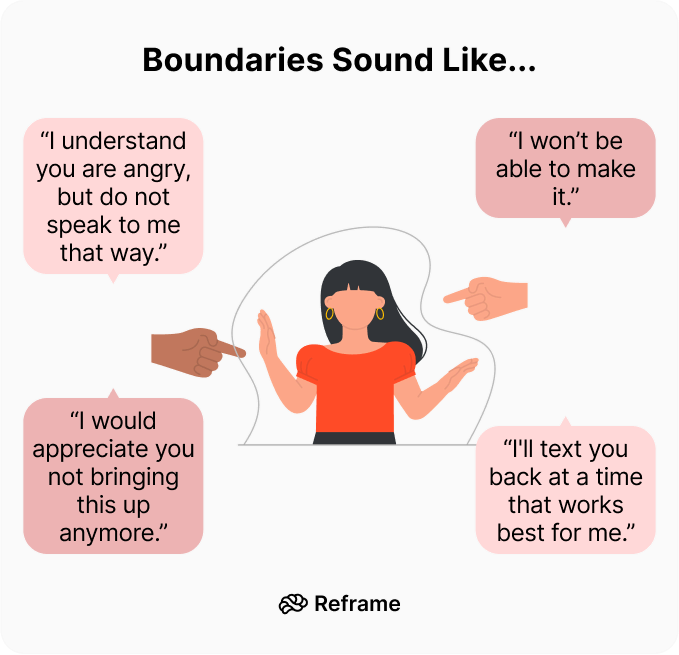
Your time is one of your most valuable resources, and it’s perfectly okay to protect it. This means letting friends know when you’re available and when you’re not. For example, you can decide not to answer non-urgent texts after 10 p.m. or dedicate certain days for socializing and others for personal time. A simple way to communicate this is by saying, “I’m not free on weeknights, but I’d love to see you on Saturday!” This isn’t about rejecting your friend; it’s about managing your schedule in a way that works for you.
Emotional and Support Boundaries
Being a supportive friend is wonderful, but not at the expense of your own mental health. If you feel like you’re always the one giving emotional support without receiving any in return, it’s a sign you need an emotional boundary. This could mean saying, “I have the space to listen for about 15 minutes, but then I need to get back to my work.” It’s also about recognizing when you’re not the right person to help. You can be a caring friend without becoming an on-call therapist for everyone in your life.
Communication and Digital Boundaries
In our always-on world, digital boundaries are essential. You have the right to control who can contact you and when. This might mean muting group chats that are too active or unfollowing a friend whose posts are draining. You don’t need to be available 24/7. If a friend repeatedly messages you across multiple platforms, it’s okay to say, “I’m trying to reduce my screen time, so it might take me a day or two to respond to texts.” Don't be afraid to block or mute people who don’t respect your digital space.
Practical Communication Techniques
Knowing you need to set a boundary is one thing; actually doing it is another. The words you choose can make all the difference between a constructive conversation and a conflict. Fortunately, there are simple, effective communication techniques you can use to express your needs clearly and kindly. These strategies help you stay true to yourself without blaming or criticizing your friend. Mastering these techniques will make setting boundaries feel much less intimidating and more like a natural part of a healthy friendship.
Using "I" Statements to Express Your Needs
One of the most effective tools for setting boundaries is the "I" statement. This technique focuses on your feelings and needs rather than your friend's actions, which helps prevent them from feeling defensive. Instead of saying, “You always interrupt me,” you could try, “I feel unheard when I’m not able to finish my thoughts.” This approach allows you to express yourself honestly without placing blame, opening the door for a more productive and empathetic conversation about how to move forward.
The Power of Saying "I'll think about it"
Sometimes, we agree to things in the moment only to regret them later. A powerful way to avoid this is to give yourself time to consider a request. Saying, “Let me think about it and get back to you,” is a completely valid response. This simple phrase gives you the space to check in with yourself and decide if you truly have the time, energy, or desire to say yes. It’s a great way to avoid making quick decisions you might resent and ensures your "yes" is genuine when you give it.
How to Say No Without Over-Explaining
Many of us feel the need to provide a long list of excuses when we say no, but it’s not necessary. A simple, direct “no” is often enough. You can soften it by saying, “Thank you for thinking of me, but I can’t make it,” or “I’m not able to help with that right now.” You don’t need to apologize or offer a detailed explanation for having boundaries. Being concise shows that you are confident in your decision and respect your own limits, which encourages others to do the same.
What to Do When Boundaries Are Crossed
Even with clear communication, there will be times when a friend crosses a boundary. They might forget, test your limits, or simply not understand. How you respond in these moments is just as important as setting the boundary in the first place. It’s an opportunity to reinforce your needs and show that you’re serious about maintaining a healthy dynamic. Handling these situations calmly and confidently can strengthen your friendship and your self-respect.
Reasserting Your Limits Calmly
If a friend ignores a boundary you’ve set, the best approach is to calmly and firmly restate it. You don’t need to get angry or emotional. For instance, if you’ve asked a friend not to call after 10 p.m. and they do, you can say, “Hey, I’m heading to bed now, but I can talk tomorrow. As I mentioned, I’m not available for calls this late.” Reasserting your boundary in a neutral tone reinforces your needs without escalating the situation, making it clear that your limit is not negotiable.
Knowing When to Direct a Friend to Professional Help
It’s crucial to recognize the difference between being a supportive friend and acting as a therapist. If a friend is dealing with serious mental health issues, a crisis, or suicidal thoughts, your role is not to fix their problems. In these situations, the most loving and responsible thing you can do is guide them toward professional help. You can say, “I care about you so much, and I’m worried. I think it would be really helpful for you to talk to a therapist or call a helpline.” This protects your own emotional well-being while ensuring your friend gets the expert support they truly need.
How Boundaries in Friendships Strengthen Your Brain
Asserting healthy boundaries in friendships centers on decisions that safeguard our well-being.
This is where our fascinating brains come in: neuroplasticity is our brain's remarkable ability to rewire and adapt itself in response to experience.
Every time we make decisions that prioritize our health — such as refusing an additional drink or choosing sleep over late-night social events — we're building new neural pathways in our brain.
With repetition, these new pathways grow stronger, making it progressively easier for us to stick to these healthier behaviors.
The Long-Term Benefits of Healthy Boundaries
Building Stronger, More Authentic Connections
Contrary to what it might feel like in the moment, setting boundaries isn’t about building walls or pushing friends away. It’s about defining the terms of a healthy, respectful relationship where both people feel valued. When you communicate your needs clearly, you give your friendships a chance to become more authentic. This process helps filter for the connections that are truly reciprocal — the ones where you can build positive relationships based on mutual support, listening without judgment, and celebrating each other's wins. Ultimately, boundaries create the space for deeper, more meaningful friendships to flourish, where both of your needs are met and each of you feels truly seen and appreciated for who you are.
Understanding That Boundaries Can Evolve
Friendships aren't static; they shift as our lives and priorities change. A boundary that worked in your early twenties might not serve you in your thirties. It’s completely normal for friendships to evolve, and with that, your boundaries may need adjusting. It’s also important to distinguish between a friend who is going through a temporary rough patch and one whose presence consistently creates drama or stress in your life. If you’ve communicated your needs and the friendship still feels draining or unsupportive, it might not be able to adapt to the person you’re becoming. And that’s okay. Sometimes, the healthiest boundary is recognizing when it’s time to move on and create space for connections that align with your current values.
The Key Takeaway
Our brains, friendships, and well-being are interconnected in complex ways. But the beauty of it is that we have the power to use this understanding to make lasting changes.
Let's start here:
Embrace self-awareness: Identify the situations or friendships that might be encouraging unhealthy habits.
Express your needs: Communicate your well-being goals to your friends. True friends will respect your boundaries.
Enjoy the journey: Remember, it's about progress, not perfection.
We all have the power to transform our well-being. The science backs it up — our brain is a powerful ally in this journey.
So let's set those healthy boundaries, reduce stress, and make lasting changes together!
Frequently Asked Questions
What if my friend gets angry or pushes back when I try to set a boundary? This is a common fear, and it’s completely valid. A friend’s negative reaction can feel like a rejection, but it’s important to remember that their response is about their own feelings, not a reflection of your worth. The best approach is to remain calm and hold your ground without getting into an argument. You can simply restate your need gently, like, “I understand this is difficult, but this is what I need for myself right now.” Giving them some space to process it can also help. Ultimately, how a friend responds to your needs for respect and well-being tells you a lot about the health of the friendship itself.
I’m a chronic people-pleaser. Where is the best place to start with all of this? If you’re used to always saying “yes,” the idea of setting boundaries can feel overwhelming. The key is to start small with low-stakes situations to build your confidence. You don’t have to begin with a major, emotional conversation. Try saying, “Let me think about it,” before committing to plans, or decide to let a non-urgent text wait until the morning. Think of it as a muscle you’re strengthening. Each small boundary you set makes the next one a little bit easier and reinforces the idea that your needs matter, too.
How can I tell the difference between a friend who needs temporary support and a friendship that's just emotionally draining? This is a great question because the line can feel blurry. A key indicator is how you feel over time. All friendships go through phases where one person may need more support. In a healthy, reciprocal relationship, this is balanced out, and you don’t consistently feel depleted. However, if you almost always leave interactions with a specific friend feeling exhausted, resentful, or unheard, that points to a draining dynamic. It’s less about a single tough situation and more about a persistent pattern where your own emotional energy is constantly being drawn upon without being replenished.
Does setting a boundary always require a big, serious conversation? Not at all. While some situations do call for a direct chat, many boundaries can be established through your actions. For example, consistently not answering work-related calls during dinner sets a clear boundary around your personal time. You can also use simple, direct phrases that don’t invite a long discussion, such as, “Thanks for the invitation, but I can’t make it,” without offering a detailed excuse. These small, consistent actions teach people how you wish to be treated without the need for a formal sit-down every time.
How do I know if a friendship is worth the effort of setting boundaries, or if it’s time to let it go? This is a tough one, and the answer is very personal. A good place to start is by assessing whether the friendship has room to grow. After you’ve clearly and consistently communicated your needs, does your friend make an effort to respect them, even if they don’t get it right every time? If they show a willingness to listen and adapt, the connection is likely worth nurturing. However, if your boundaries are repeatedly ignored or dismissed and the friendship consistently detracts from your well-being, it may be a sign that you’ve outgrown the connection. Sometimes the healthiest boundary is lovingly creating distance.
Although it isn’t a treatment for alcohol use disorder (AUD), the Reframe app can help you cut back on drinking gradually, with the science-backed knowledge to empower you 100% of the way. Our proven program has helped millions of people around the world drink less and live more. And we want to help you get there, too!
The Reframe app equips you with the knowledge and skills you need to not only survive drinking less, but to thrive while you navigate the journey. Our daily research-backed readings teach you the neuroscience of alcohol, and our in-app Toolkit provides the resources and activities you need to navigate each challenge.
You’ll meet millions of fellow Reframers in our 24/7 Forum chat and daily Zoom check-in meetings. Receive encouragement from people worldwide who know exactly what you’re going through! You’ll also have the opportunity to connect with our licensed Reframe coaches for more personalized guidance.
Plus, we’re always introducing new features to optimize your in-app experience. We recently launched our in-app chatbot, Melody, powered by the world’s most powerful AI technology. Melody is here to help as you adjust to a life with less (or no) alcohol.
And that’s not all! Every month, we launch fun challenges, like Dry/Damp January, Mental Health May, and Outdoorsy June. You won’t want to miss out on the chance to participate alongside fellow Reframers (or solo if that’s more your thing!).
The Reframe app is free for 7 days, so you don’t have anything to lose by trying it. Are you ready to feel empowered and discover life beyond alcohol? Then download our app through the App Store or Google Play today!
Reframe has helped over 2 millions people to build healthier drinking habits globally
At Reframe, we do science, not stigma. We base our articles on the latest peer-reviewed research in psychology, neuroscience, and behavioral science. We follow the Reframe Content Creation Guidelines, to ensure that we share accurate and actionable information with our readers. This aids them in making informed decisions on their wellness journey. Learn more
Updated Regularly
Our articles undergo frequent updates to present the newest scientific research and changes in expert consensus in an easily understandable and implementable manner.