A team of researchers and psychologists who specialize in behavioral health and neuroscience. This group collaborates to produce insightful and evidence-based content.
Certified recovery coach specialized in helping everyone redefine their relationship with alcohol. His approach in coaching focuses on habit formation and addressing the stress in our lives.
Recognized by Fortune and Fast Company as a top innovator shaping the future of health and known for his pivotal role in helping individuals change their relationship with alcohol.
August 3, 2023
·
15
Reframe Content Team
August 3, 2023
·
15
We hear plenty about Boomers and Millennials, but what about the so-called “forgotten generation” in between? Generation X, born between 1965 and 1980, includes over 65 million people who are often overlooked. They're the original latchkey kids who grew up independent and resilient. This self-reliance shaped their entire lives, including their gen x drinking habits. To understand the full picture of gen x alcohol consumption, we need to look at the unique pressures and culture that defined their formative years. Their approach to drinking is a story worth telling.
Despite being overshadowed by the larger generations above and below them, Gen Xers have their own unique characteristics, including drinking habits. So are there signs of Gen Z drinking less than their grandparents? And what is the most sober generation? Let’s take a look at the alcohol use trends in Gen X drinkers.
Is Gen X Drinking More Alcohol?
One of the most notable trends among Gen Xers is their increased consumption of alcohol compared to other generations. A study by the Substance Abuse and Mental Health Services Administration found that the percentage of Gen Xers who reported drinking alcohol in the past month increased from 56% in 2002 to 60% in 2014.
Comparing the Generations
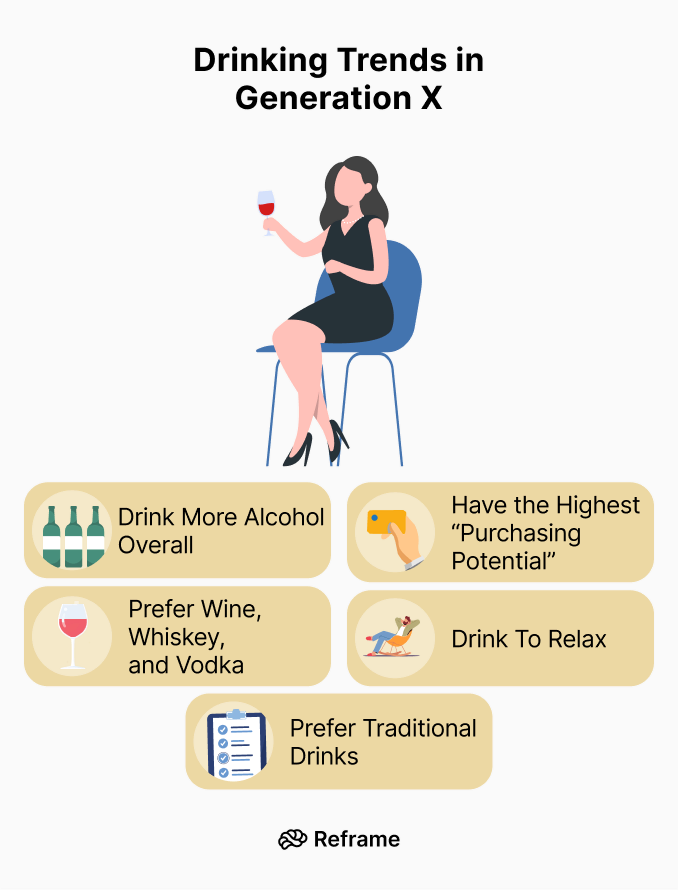
When you look at the numbers, it becomes clear that Gen X’s relationship with alcohol is unique. Their drinking habits, shaped by the social and cultural norms of the 70s, 80s, and 90s, stand in contrast to those of younger people. In fact, reports show that Millennials and Generation Z drink much less alcohol than Gen X and older groups. This isn't just about frequency; it's also about spending. Gen X holds the title for drinking more alcohol than any other generation, and with a collective spending power of $2.4 trillion, they often invest in higher-quality products. This pattern highlights a distinct generational divide in how alcohol is perceived and consumed.
Understanding the Health Risks
While a preference for premium drinks might seem harmless, experts are pointing to some concerning trends. Addiction specialists have noted a rise in both binge drinking and daily drinking among older Gen Xers, who often underestimate its impact on their health. The bigger issue may not be loud nights at the bar, but rather the habit of quietly drinking too much at home. This type of consistent, private consumption can fly under the radar, making it easier to overlook the potential health consequences. Recognizing these patterns is the first step toward making a change, whether that means cutting back or simply practicing more mindful drinking to build healthier habits for the long term.
Why Wine is the Go-To for Gen X
Another trend among Gen Xers is their preference for wine over other types of alcohol, particularly beer. In fact, they purchase more wine than any other generation, including Baby Boomers (who traditionally were top wine drinkers). One study found that Gen Xers are the largest consumers of wine in the United States, with 48% of Gen Xers reporting that they drink wine at least once a month.
Furthermore, another report indicates that Gen X purchased 13% more wine than any other generation between 2017-2019. Interestingly, Gen Xers are more likely to make wine purchases based on their established tastes and preferences, compared to millennials, who tend to follow industry trends.
According to Drizly, an online alcohol retailer, Gen X buys a greater share of red and white still wine than other generations. Some of the top selling red wines include Josh Cellars Cabernet Sauvignon, Meiomi Pinot Noir, Caymus Napa Valley Cabernet Sauvignon, Decoy Cabernet Sauvignon, and La Crema Sonoma Coast Pinot Noir.
Popular white wines among Gen X consumers include Kim Crawford Sauvignon Blanc, Oyster Bay Sauvignon Blanc, Santa Margherita Pinot Grigio DOC, Cavit Pinot Grigio, and Whitehaven Sauvignon Blanc.
Cultural Influences on Gen X Drinking
To understand why Gen X drinks the way it does, we have to look at the world they grew up in. This generation’s relationship with alcohol didn’t form in a vacuum; it was shaped by a unique blend of economic uncertainty, shifting social norms, and a media landscape that was rapidly changing. From being the first kids to come home to an empty house to navigating the anxieties of the Cold War, the AIDS crisis, and economic recessions, these cultural forces played a significant role in establishing their drinking habits, many of which persist today.
The "Latchkey Generation" and Independence
Many Gen Xers are part of the original “latchkey generation.” Growing up with less parental supervision than previous generations, they learned to be independent and self-reliant from a young age. This hands-off upbringing meant they often made their own rules when it came to socializing and had to figure things out for themselves. Without adults consistently present, experimenting with alcohol became a common part of teenage life. This early independence fostered social behaviors where drinking was simply a normal, unsupervised activity among friends, setting a foundation for their relationship with alcohol that carried into adulthood.
The Impact of 80s and 90s Culture
Gen X came of age during a period of major cultural and economic shifts. They witnessed the rise of personal computers, lived with the looming threat of nuclear war, and faced the frightening reality of the AIDS crisis. This environment fostered a certain "work hard, play hard" mentality, where alcohol was often seen as a necessary tool to decompress from the pressures of a rapidly changing and often uncertain world. The societal norms of the time normalized drinking as a way to cope with stress and anxiety, a habit that for many, has carried over into their adult lives.
"Ladette" Culture and Changing Norms for Women
For Gen X women, the 90s introduced the “ladette” culture, which celebrated women who embraced traditionally masculine behaviors, including heavy drinking. This movement was framed as a form of liberation and equality, allowing women to shed old expectations and drink as freely as their male counterparts. Alcohol brands quickly caught on, tailoring their advertising to appeal to this new, empowered female consumer. This cultural shift not only normalized but actively encouraged a more liberated approach to drinking for women, cementing it as a symbol of independence and fun.
Gen X Holds the Spending Power
Gen X is also said to hold greater immediate “purchasing potential” than its younger counterparts. This is largely because they have greater financial resources at their disposal compared to younger generations. In fact, Gen X maintains the highest average household income of all the generations, with a spending power of $2.4 trillion (yes, trillion-with-a-T!)
This makes them the leading demographic in wine and fine wine consumption. They tend to appreciate the “finer” things, and they’re known for being prime luxury consumers who value exclusivity. In general, they’re willing to spend more for quality wine.
One poll found that 27% of Gen X consumers reported that in the past two years they had been buying more expensive beer and wine than normal. Interestingly, Gen X also reportedly makes more winery visits than other generations, such as the Millennials.
What Are Gen X's Favorite Spirits?
While Gen X has a strong preference for wine, they also take the lead when it comes to sales of whiskey and vodka compared to other generations. Some data suggests that Gen X over-indexes within the whiskey category on bourbon and Canadian whisky. On the other hand, Gen X under-indexes on tequila and ready-to-drink cocktails, both of which are popular with younger generations.
Gen X Prioritizes Responsible Drinking
Interestingly, despite their increased consumption of alcohol, Gen Xers are largely still considered “responsible drinkers.” A study by the Centers for Disease Control and Prevention found that Gen-Xers are less likely to engage in excessive or binge drinking (defined as consuming five or more drinks in a single sitting for men, and four or more for women) than younger generations.
The "Sober Curious" Trend Among Gen X
While Gen Xers may be less prone to binge drinking than younger generations, a fascinating counter-trend is also taking shape. A growing number are becoming “sober curious,” re-evaluating their relationship with alcohol and exploring what life could look like with less of it. This doesn't always mean quitting completely, but rather embracing mindful drinking by cutting back or experimenting with non-alcoholic options. For a generation that grew up with drinking as a social norm, changing these long-standing habits can be tough. Still, the interest is there, showing that many are looking for a healthier balance and questioning the role alcohol plays in their lives.
It's All About Winding Down
According to polling, Gen Xers cite relaxation as one of the main reasons for consuming alcohol, compared to millennials and Gen Z, who cite drinking for special occasions or to feel comfortable around other people. As such, Generation X is more likely to drink by themselves, second only to Baby Boomers.
So does Gen Z drink less? Gen Z alcohol consumption surveys seem to say so. In fact, they can even be called the most sober generation!
The Shift From Pubs to At-Home Drinking
One of the most significant changes in drinking habits for Gen X is the move from the pub to the living room. It’s a complete reversal of how people used to socialize. In the early 1970s, about 70% of drinking happened in public places like bars. By the early 2000s, that number had flipped, with 70% of drinking taking place at home. This trend mirrors broader societal shifts, including the rise of home entertainment and a greater emphasis on convenience. For many Gen Xers, pouring a glass of wine at home simply became the new, easier way to unwind after a long day.
This change in setting also says a lot about the generation's lifestyle. Gen Xers have adapted their drinking habits to fit their lives, often choosing the comfort of their own space over a public one. As The Guardian notes, this preference for a relaxed, private environment aligns with the trend of drinking to de-stress rather than for purely social reasons. It points to a fundamental shift in not just where people drink, but also the core reasons why they choose to do so. The motivation moves away from social connection in a bustling pub and toward personal relaxation on the couch.
Sticking to the Classics They Know and Love
Overall, Generation X reflects an overall preference for familiar drinks and categories. For instance, they’re less inclined than younger generations to try newer alcoholic categories, such as hard seltzer. When it comes to drinking beer, Gen X leads toward the light lager and American-style lager categories, compared to craft beers. However, some data indicates that all generations — including Gen X — are increasingly shifting toward above-premium and craft beers.
Valuing Authenticity and Nostalgia
Gen X isn't easily swayed by fleeting trends or flashy marketing. Having grown up in a world before social media influencers, they value authenticity and a good story. They connect with brands that feel genuine and mature, preferring substance over style. This often translates to a fondness for products with a rich history or a nostalgic feel, reminding them of simpler times. It’s why they often stick to classic wine varietals or beer styles they’ve enjoyed for years. They appreciate the craftsmanship and heritage behind a product, and they’re more likely to choose a brand that tells a compelling, honest story rather than one that just follows the latest craze.
Supporting Socially Responsible Brands
While younger generations are often credited with driving the demand for ethical consumerism, Gen X quietly shares these values. They care about supporting businesses that are socially responsible and make a positive impact on their communities. Now in their peak earning years, many Gen Xers are in a position to vote with their wallets, and they often choose to support companies that align with their principles. This could mean buying from a local brewery that sources ingredients sustainably or a winery that gives back to charitable causes. For this generation, a purchase can be more than just a transaction; it’s a statement of support for the kind of world they want to live in.
Tech-Savvy and Brand-Loyal Consumers
Don’t mistake Gen X for being tech-averse. As the generation that ushered in the digital age, they are comfortable with technology, especially when it offers convenience. They appreciate the ease of managing things like loyalty rewards through an app, and data shows that these programs heavily influence their purchasing decisions. In fact, 71% of Gen Xers say loyalty programs help them choose which brand to buy. This blend of brand loyalty and tech-savviness means that once they find a product or service they trust, they tend to stick with it. This comfort with digital tools also extends to other areas of life, including health and wellness, where many are open to using apps to support their goals for mindful drinking and personal growth.
What We've Learned About Gen X Drinking Habits
Generation X is relatively small in number, but is consuming more alcohol than other generations. Gen Xers have a strong preference for wine, and they’re concerned more about quality and exclusivity than trends. While they are largely considered “responsible drinkers” by not engaging in excessive drinking, they are still purchasing and consuming large volumes of alcohol.
Even without drinking excessively, alcohol can cause long-term effects on our physical and mental health. It puts us at a greater risk for developing heart disease, cancer, liver disease, and brain damage.
If you want to cut back on your alcohol consumption, consider downloading Reframe. We’ve helped millions of people reduce their alcohol intake and enhance their health and well-being.
Frequently Asked Questions
Why does Gen X seem to drink more than younger generations? It really comes down to the environment they grew up in. Gen Xers were shaped by a "work hard, play hard" culture in the 80s and 90s, where drinking was often framed as a normal way to decompress from stress. This, combined with more independence at a young age and different social norms, helped establish a relationship with alcohol that has simply continued into adulthood, unlike younger generations who are drinking less overall.
The post says Gen Xers are "responsible drinkers" but also points out health risks. Can you clarify? This is a great question because it highlights a subtle but important distinction. While Gen Xers are statistically less likely to engage in what's defined as binge drinking compared to younger people, they tend to drink more consistently. The concern isn't necessarily about one wild night out, but rather the cumulative health impact of regular, moderate drinking over many years, especially when it becomes a daily habit at home.
I'm a Gen Xer who enjoys a glass of wine at home to unwind. Is this pattern of drinking a concern? Drinking to relax is one of the most common reasons Gen Xers give for their alcohol consumption. While there's nothing inherently wrong with unwinding, it becomes a potential issue when alcohol is the only tool you have for managing stress. If you find that you're relying on that glass of wine every single night to cope, it might be a good time to explore other relaxation techniques and build a healthier, more balanced relationship with drinking.
What's behind the strong preference for wine and classic spirits over trendier drinks? Gen X values authenticity and tends to stick with what they know and trust. They grew up before the age of social media influencers, so they're less likely to be swayed by the latest craze, like hard seltzers. Instead, they often prefer brands with a history and a story they connect with. This translates to a loyalty toward classic wine varietals, whiskeys, and other spirits that have stood the test of time.
Is it too late for a Gen Xer to change drinking habits that have been in place for decades? Absolutely not. It's never too late to re-evaluate your habits and make a change for the better. In fact, many Gen Xers are becoming "sober curious" and exploring mindful drinking. The key is understanding the role alcohol plays in your life and then taking small, intentional steps to build new routines. Changing long-standing habits takes effort, but it is completely achievable with the right mindset and support.
Key Takeaways
Gen X drinks more, and often better: This generation outpaces others in alcohol consumption, particularly when it comes to premium wine, using their significant spending power to invest in quality over quantity.
Their habits are rooted in their past: The independence of being "latchkey kids" combined with the "work hard, play hard" culture of the 80s and 90s established drinking as a primary tool for managing stress.
The setting has shifted from the bar to the couch: For many Gen Xers, drinking is now a private way to unwind at home rather than a social activity, though a growing interest in mindful drinking shows many are re-evaluating this routine.
Although it isn’t a treatment for alcohol use disorder (AUD), the Reframe app can help you cut back on drinking gradually, with the science-backed knowledge to empower you 100% of the way. Our proven program has helped millions of people around the world drink less and live more. And we want to help you get there, too!
The Reframe app equips you with the knowledge and skills you need to not only survive drinking less, but to thrive while you navigate the journey. Our daily research-backed readings teach you the neuroscience of alcohol, and our in-app Toolkit provides the resources and activities you need to navigate each challenge.
You’ll meet millions of fellow Reframers in our 24/7 Forum chat and daily Zoom check-in meetings. Receive encouragement from people worldwide who know exactly what you’re going through! You’ll also have the opportunity to connect with our licensed Reframe coaches for more personalized guidance.
Plus, we’re always introducing new features to optimize your in-app experience. We recently launched our in-app chatbot, Melody, powered by the world’s most powerful AI technology. Melody is here to help as you adjust to a life with less (or no) alcohol.
And that’s not all! Every month, we launch fun challenges, like Dry/Damp January, Mental Health May, and Outdoorsy June. You won’t want to miss out on the chance to participate alongside fellow Reframers (or solo if that’s more your thing!).
The Reframe app is free for 7 days, so you don’t have anything to lose by trying it. Are you ready to feel empowered and discover life beyond alcohol? Then download our app through the App Store or Google Play today!
Reframe has helped over 2 millions people to build healthier drinking habits globally
At Reframe, we do science, not stigma. We base our articles on the latest peer-reviewed research in psychology, neuroscience, and behavioral science. We follow the Reframe Content Creation Guidelines, to ensure that we share accurate and actionable information with our readers. This aids them in making informed decisions on their wellness journey. Learn more
Updated Regularly
Our articles undergo frequent updates to present the newest scientific research and changes in expert consensus in an easily understandable and implementable manner.