A team of researchers and psychologists who specialize in behavioral health and neuroscience. This group collaborates to produce insightful and evidence-based content.
Certified recovery coach specialized in helping everyone redefine their relationship with alcohol. His approach in coaching focuses on habit formation and addressing the stress in our lives.
Recognized by Fortune and Fast Company as a top innovator shaping the future of health and known for his pivotal role in helping individuals change their relationship with alcohol.
May 8, 2024
·
18
Reframe Content Team
May 8, 2024
·
18
Tom Holland is known for playing a superhero on screen, but his real strength might be how candidly he’s shared his personal struggles. He's one of many sober celebrities speaking out. He spoke openly about how his social life became tangled up with drinking, a feeling many of us can understand. It wasn't about one rock-bottom moment, but a slow realization that he had lost control. The question of how much did Tom Holland drink is less about a specific number and more about a pattern that left him feeling trapped. His journey with Tom Holland alcohol use offers a powerful roadmap for making meaningful, lasting change in your own life.
In this post, we’ll gain insight from Tom Holland’s struggle with alcohol and how he transformed his life through sobriety. We’ll also offer tips for cutting back on alcohol consumption. Let’s dive in!
How Much Did Tom Holland Drink?
First things first: who is Tom Holland? Holland is a London-born actor who achieved international fame for his portrayal of Spider-Man in six Marvel Cinematic Universe superhero films, beginning with Captain America: Civil War in 2016.
While he began his acting career at age 9 in musicals and theater, Holland’s career started to take off when he played Billy Elliot in the West End musical of the same name. He later made his film debut in 2012 in the disaster drama The Impossible, where he played a teenage tourist trapped in a tsunami. Following this film, he was cast for roles in How I Live Now (2013), In the Heart of the Sea (2015), and the miniseries Wolf Half (2015).
But behind the glitz and glamor of Hollywood, Holland began facing a battle all too familiar for many celebrities: alcohol. In fact, during a podcast interview with Jay Shetty, he admitted to not just struggling with alcohol but to being “enslaved” by it. “I’m happy to say it — I was definitely addicted to alcohol,” he said in the interview. “I’m not shying away from that at all.”
Looking back, Holland attributes his drinking habits to the need to “feel more comfortable in a social environment” — a common sentiment shared by many former drinkers. As he explained to Shetty, "I would look back and recognize that I would go to events for work, and I can't enjoy myself until I've had a few beers, and I just felt so much pressure.”
From "Just a Pint" to "Going Too Far"
Holland's story starts in a way that many of us can probably relate to. He mentioned that his drinking began with having "just a pint" to feel more at ease in social settings. It's a common crutch, but for him, it became a slippery slope. He later admitted that after that first drink, he would often "just go too far," leading to nights that would completely "ruin my next day." This progression from a casual social habit to something that negatively impacts your life is a classic sign that a change might be needed. It highlights how easily a tool for social comfort can turn into a pattern of overconsumption, making the practice of mindful drinking feel out of reach.
The Eye-Opening Moment at a Party
For many people, there’s a single moment when the reality of their drinking habits hits home. For Holland, that eye-opening moment came at a party. He realized he couldn't enjoy himself without alcohol, a thought that deeply troubled him. He shared a story about needing his younger brother to drive him home after a night out, which served as a major wake-up call. This led to a period of serious self-reflection. He confessed, "I found it very hard to go without alcohol, constantly thinking about having a drink," which sparked the worry that he might have a real problem. This kind of self-awareness is the first, crucial step toward making a change and starting to track the benefits of cutting back.
The Dry January That Changed Everything for Tom Holland
Much like other people who embark on the road to sobriety, Holland’s decision to give up drinking unfolded slowly and came in stages. It started after a boozy Christmas holiday in 2021. “It's interesting. I didn’t one day wake up and say, ‘I’m giving up drinking,’” he told Jay Shetty during the interview. “I, just like many Brits, had a very, very boozy December … I’ve always been able to drink a lot.”
But in the beginning of 2022, Tom Holland decided to take up the challenge of Dry January — a commitment to giving up alcohol for the first month of the year. Interestingly, Dry January began as a movement in the United Kingdom in 2013. Today it’s a global phenomenon supported by mobile apps, websites, and communities in which participants share their experiences, tips, and insights.
During Dry January, Holland found himself constantly thinking about having a drink. “I was waking up thinking about it. I was checking the clock ‘when’s it 12?’ It really scared me,” he said to Shetty. “I just was like, ‘Wow, maybe I have a little bit of an alcohol thing.'”
To prove to himself that he didn’t have a problem, he decided to refrain from drinking alcohol for the following month — and would ultimately end up challenging himself to quit drinking until his birthday on June 1, 2022. But, it wasn’t easy.
“Two months go by and I was still really struggling,” he said to Shetty. Particularly in England, where alcohol and socializing go hand in hand, Holland felt the pressure. “I felt like I couldn’t be social. I felt like I couldn’t go to the pub and have a lime soda,” he said. “I couldn’t go out for dinner. I was really, really struggling, and I started to really worry that maybe I had an alcohol problem.”
Holland found that he had to distance himself from friends in the rugby community in particular because “so much” of the environment is “about how much can you drink?” But Holland stuck with it — and by the time his 26th birthday rolled around, he had gone five whole months without drinking.
Navigating Sobriety on "The Crowded Room" Set
Maintaining sobriety is challenging enough, but doing it under intense pressure adds another layer of difficulty. This was the reality for Holland while filming his TV series, "The Crowded Room." He described the set as not being a happy place, which put his newfound sobriety to the test. In that tough environment, he worried that turning back to alcohol would only make things worse. This moment of clarity is powerful—recognizing that alcohol isn't a true solution for stress is a huge step in changing your relationship with it. It highlights the mental strength required to stick to your goals, even when external circumstances are working against you.
Finding Support Without Rehab
There's a common belief that quitting drinking requires a formal rehab program, but Holland’s journey shows another path. He didn't check into a facility; instead, he built a strong support system around himself. He leaned on his family, friends, and even sober colleagues who understood what he was going through. By connecting with other people who were also sober, he found a community that could help him handle the challenges. This approach underscores the power of connection. Having people to talk to who just *get it* can make all the difference, whether it's a close friend or a supportive online community like the one we have at Reframe.
What Tom Holland Gained by Giving Up Alcohol
Holland has noted multiple benefits from forgoing alcohol and being sober. As he told Shetty, "By the time I got to June 1, I was the happiest I've ever been in my life." He recalled, "I could sleep better. I could handle problems better, things that would go wrong on set, that would normally set me off, I could take in my stride. I had so much better mental clarity. I felt healthier, I felt fitter."
He also said sobriety helped him reconnect with his authentic self: “Once I really started feeling the health benefits, and once I really started feeling like my full self, I was like ‘Oh my God, this is the best.’”
Holland’s newfound clarity made him question why he’d ever pick up another drink. “I just sort of said to myself, ‘Why? Why am I enslaved to this drink? Why am I so obsessed with the idea of having this drink?’”
While Holland had made previous attempts to quit alcohol, he said this time was different because he started addressing the reasons he felt like he needed a drink — most of which came down to feeling more comfortable in social situations.
Having been sober since then, Holland says drinking doesn’t even cross his mind anymore and that the decision to become sober was the “best thing” he’s ever done.
Holland also described the support and encouragement he received from his friends, who never pressured him to have a drink. Interestingly, Holland’s sobriety journey inspired his mother to give up drinking as well. “She’s loving it, and it’s been amazing,” he said. “I can’t believe the difference that I feel from not drinking. Yeah, I feel amazing.”
Prioritizing Mental Health Beyond Alcohol
Tom Holland’s story highlights a crucial point: the benefits of cutting back on alcohol extend far beyond the physical. For him, sobriety wasn't just about avoiding hangovers; it was about a profound improvement in his mental well-being. He discovered he could sleep better, handle problems with a clearer head, and feel healthier and more fit. This journey allowed him to reconnect with his "full self," leading to a state of happiness he hadn't experienced before. His realization begs the question he asked himself: “Why am I enslaved to this drink?” Breaking free from that cycle is a powerful step in prioritizing your mental health and exploring what a life with more intentional choices, or mindful drinking, can feel like.
The Power of Finding a "Higher Taste"
Sustaining a change like sobriety isn't just about white-knuckling through cravings; it's about discovering something more fulfilling. Tom Holland’s experience is a perfect example of finding a "higher taste." He says the decision to stop drinking was the "best thing" he's ever done and that he feels "amazing." When the positive effects—like improved clarity, better relationships, and genuine happiness—become so apparent, the desire for alcohol naturally fades. It no longer holds the same appeal because you've found something far more rewarding. This shift in perspective is what makes the change stick. You're not just giving something up; you're gaining a better quality of life, and you can even calculate the tangible benefits to see how far you've come.
His Honest Take on an Alcohol-Free Life
Even though Holland has publicly shared his struggle with alcohol and now his sobriety journey, he told Shetty that he doesn’t want to be “that person that’s saying to people, ‘You should get sober.’” But he said that if he “could encourage someone to drink less, that would be great.”
He added: “I don’t want to start getting into the world of, ‘You need to stop drinking,’ because it’s not for me to say. I went on my own little journey. I’m really enjoying it.” Indeed, Holland has repeatedly echoed what many previous drinkers have said — that being alcohol-free is the best he’s ever felt.
A Lawyer's Powerful Advice
During his journey, Tom Holland received a piece of advice from his lawyer that completely shifted his perspective. The statement was simple yet profound: “You’ll never wake up the morning after a night out and wish you had a drink.” This resonated deeply with him, cutting through the noise of social pressure and short-term cravings. It’s a powerful reframe that focuses on the guaranteed positive outcome of not drinking — waking up clear-headed and regret-free. This kind of mental shift is a cornerstone of mindful drinking, helping you focus on how you want to feel long-term rather than what you think you’re missing in the moment.
Launching His Own Non-Alcoholic Beer
Beyond his personal transformation, Holland has taken his commitment to a healthier lifestyle a step further by launching his own brand of non-alcoholic beers called Bero. This move isn't just a business venture; it's a statement. It shows his dedication to providing enjoyable alternatives for people who want to socialize without alcohol. By creating a high-quality, non-alcoholic option, he’s helping to normalize sobriety and challenge the idea that you need alcohol to have a good time. This initiative provides a tangible solution for others looking to change their relationship with alcohol and embrace a vibrant, alcohol-free social life.
Ready to Cut Back? Here’s How
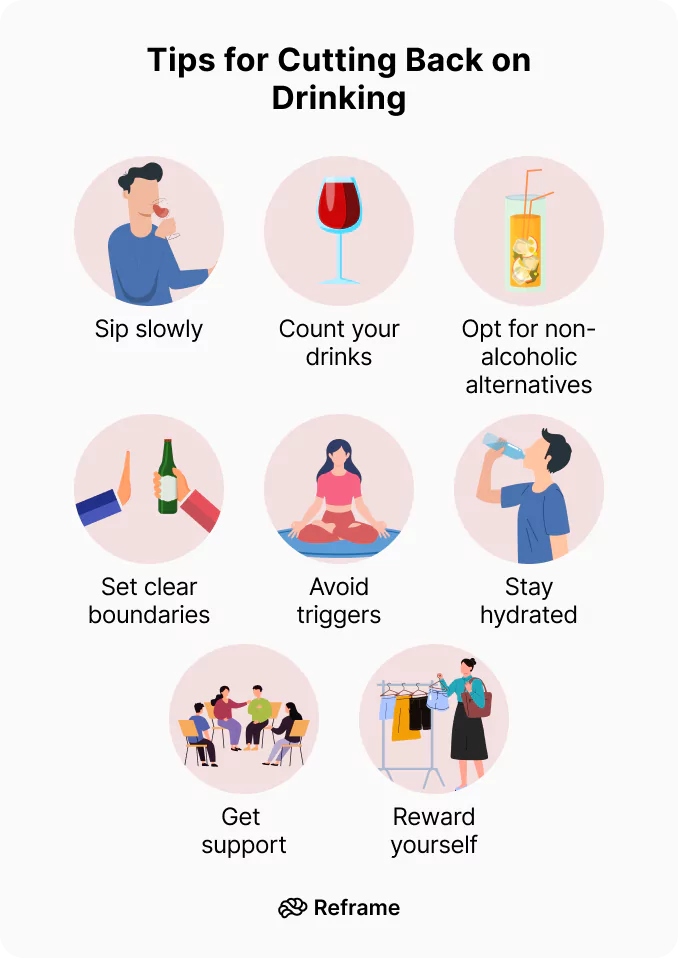
As Tom Holland’s journey to sobriety illustrates, cutting back on alcohol or eliminating it entirely is not always easy. It’s a process that requires patience, resilience, and dedication. But, the physical and mental health benefits are so worth the effort! With that in mind, here are eight tips for cutting back on alcohol consumption:
Sip slowly. Savor each drink, take slow sips, and stay active, such as chatting with friends. It can help to stick to drinks that take time to finish, such as beer or wine (as opposed to mixed drinks or shots, which are usually gulped down). Mindful drinking can also help us sip slowly.
Count your drinks. It’s easy to lose track of the amount of alcohol we consume. Try using a notepad app in your phone to document every drink you have in one sitting — whether at a party, dinner, or event. This can help you become more aware of how much you’re consuming. You can even take this one step further by limiting yourself to one drink every hour.
Opt for non-alcoholic alternatives. There are a growing number of non-alcoholic drinks on the market that mimic the taste of alcoholic beverages. Opting for alcohol-free beer or wine can help ease the transition. You can also consider finding DIY mocktail recipes.
Set clear boundaries. Quantify the number of days you'll drink and the days you won't. For instance, if you usually drink every day, start by cutting back to five days a week. As you make progress, you can start cutting back to just one day a week.
Avoid triggers. Recognize what induces you to drink — is it stress, boredom, or social pressure? Try keeping a journal to help you identify patterns and then come up with a list of alternative activities you can engage in when you’re triggered. For instance, you might practice meditation, go for a run, or call a friend.
Stay hydrated. For every alcoholic drink you have, try to consume a full glass of water. This practice not only helps us stay hydrated, but it helps limit the amount of alcohol we consume by keeping us full. It also gives our liver time to break down the alcohol. Even moderate levels of alcohol cause dehydration, and drinking water can slow this effect down.
Get support. Share your goals with friends or family or join a support group. This increases your accountability and decreases loneliness. You might also consider reaching out to a therapist or licensed counselor. Keep in mind that there’s nothing wrong with seeking professional help.
Reward yourself. It’s important to reward yourself for the progress you’re making as it can help reinforce your new habits and behavior. Every time you reach a milestone, like a day, a week, or a month without alcohol, treat yourself to something you love. For instance, maybe you go out to dinner or buy yourself a new piece of clothing.
Remember, cutting back on alcohol consumption is a journey that can be full of ups and downs. The important thing is to practice self-compassion and not give up!
What Does "Normal" Drinking Mean?
Tom Holland’s story brings up a great question: What does “normal” drinking actually look like? In a world where happy hours and bottomless mimosas are common, it’s easy for our perception to get skewed. Health experts, however, offer some clear benchmarks. The U.S. Dietary Guidelines, for example, define moderate drinking as up to one drink per day for women and up to two for men. The general consensus among medical professionals is that drinking less alcohol is always better for your health than drinking more. These guidelines aren’t meant to be rigid rules, but they can be a helpful reference point to check in with yourself and understand your own patterns, empowering you to make choices that align with your well-being goals.
Your Path to Mindful Drinking
Tom Holland is one among many celebrities who has shown the courage to confront his issues with alcohol and the determination to overcome them. He may have struggled through Dry January in the beginning, but as the benefits became more noticeable, it was easier for him to maintain his commitment to an alcohol-free lifestyle. From improved sleep to better clarity and focus, ditching alcohol is one of the best things we can do for our physical and mental health. And if stars like Tom Holland can do it, we can too!
If you want to change your drinking habits but don’t know where or how to start, consider trying Reframe. Our science-backed app has helped millions of people reduce their alcohol consumption and enhance their physical, mental, and emotional well-being.
In Good Company: Other Sober Celebrities
Tom Holland's story is powerful, and it's a reminder that you're never alone when re-evaluating your relationship with alcohol. He joins a growing list of public figures who have openly shared their sobriety journeys. For instance, actor Bradley Cooper has spoken about how getting sober at 29 completely changed his life's trajectory. Blake Lively, who has never been a big drinker, chose to abstain entirely to stay clear-headed and fully present. Daniel Radcliffe also quit drinking in his early twenties after realizing he was becoming reliant on it to enjoy himself. These stories, much like Holland's, highlight a common theme: choosing sobriety is a powerful step toward greater self-awareness and well-being.
Frequently Asked Questions
How much alcohol was Tom Holland actually drinking? While he never gave a specific number of drinks, the more important part of his story is about his relationship with alcohol. He shared that he felt "enslaved" by it and realized he was relying on it to feel comfortable in social situations. The issue wasn't a certain quantity, but the pattern of needing a drink to enjoy himself and how that dependency made him feel.
Did Tom Holland have a big "rock bottom" moment before he quit? No, and that’s what makes his story so relatable. His decision wasn't sparked by a single dramatic event. Instead, it was a slow realization that began after a particularly boozy holiday season. When he tried Dry January, he found it incredibly difficult and was constantly thinking about alcohol, which scared him and made him question his reliance on it.
Does this mean I have to go to rehab to change my drinking habits? Not at all. Tom Holland’s journey is a great example of finding a path that works for you without formal rehab. He built a strong support system by leaning on his family, close friends, and even sober colleagues who understood what he was going through. Finding your community, whether in person or through an app like Reframe, can be a powerful way to make a change.
What were the biggest benefits Tom Holland noticed after he stopped drinking? He described feeling like the happiest he's ever been. Specifically, he mentioned that he could sleep better and handle problems with much more clarity. He felt healthier and fitter overall, and things that used to stress him out on set became much easier to manage. Essentially, sobriety helped him feel more like his authentic self.
Is quitting alcohol completely the only option? Tom Holland chose to become completely sober, but he also said his goal isn't to tell everyone they must do the same. His story is about taking control back. For many people, the goal isn't total abstinence but mindful drinking—becoming more intentional about when and how much you drink. It's all about finding the approach that improves your own well-being.
Key Takeaways
Pay attention to your 'why' for drinking. Tom Holland realized he was using alcohol as a crutch to feel comfortable in social situations. If you find yourself needing a drink just to participate or feel like yourself, it’s a good opportunity to explore that pattern.
A short break can reveal your true relationship with alcohol. Trying Dry January was the turning point for Holland, as it showed him how much he was thinking about drinking. A planned break can offer powerful insights into your own habits without the pressure of a permanent change.
Focus on what you gain, not just what you give up. Holland discovered that sobriety brought him better sleep, mental clarity, and a deeper sense of happiness. Changing your drinking habits isn't about sacrifice; it's about gaining a healthier and more authentic version of yourself.
Tom Holland's decision to quit alcohol stemmed from his realization of its negative impact on his physical and mental well-being. He eventually realized that he was primarily using alcohol to feel comfortable in social situations.
2. How did Dry January play a role in Tom Holland's sobriety?
Dry January served as a catalyst, prompting Holland to abstain from alcohol for a month. He then challenged himself to make it to his birthday in June without alcohol.
3. What are the benefits Tom Holland has experienced from being sober?
Holland has noted a number of benefits, including improved mental clarity, better sleep, and increased happiness.
4. What can Tom Holland’s sobriety journey teach those of us who may be struggling with alcohol?
Tom Holland’s journey showcases the importance of self-reflection and seeking support when giving up alcohol. His story also underscores that positive change is achievable for anyone facing alcohol issues.
5. What are some tips for cutting back on alcohol consumption?
To begin cutting back on alcohol, try sipping your drinks slowly, tracking your drinks, opting for non-alcoholic alternatives, and seeking support.
Change Your Drinking Habits With Reframe
Although it isn’t a treatment for alcohol use disorder (AUD), the Reframe app can help you cut back on drinking gradually with the science-backed knowledge to empower you 100% of the way. Our proven program has helped millions of people around the world drink less and live more. And we want to help you get there, too!
The Reframe app equips you with the knowledge and skills you need to not only survive drinking less, but to thrive while you navigate the journey. Our daily research-backed readings teach you the neuroscience of alcohol, and our in-app Toolkit provides the resources and activities you need to navigate each challenge.
You’ll meet millions of fellow Reframers in our 24/7 Forum chat and daily Zoom check-in meetings. Receive encouragement from people worldwide who know exactly what you’re going through! You’ll also have the opportunity to connect with our licensed Reframe coaches for more personalized guidance.
Plus, we’re always introducing new features to optimize your in-app experience. We recently launched our in-app chatbot, Melody, powered by the world’s most powerful AI technology. Melody is here to help as you adjust to a life with less (or no) alcohol.
And that’s not all! Every month, we launch fun challenges, like Dry/Damp January, Mental Health May, and Outdoorsy June. You won’t want to miss out on the chance to participate alongside fellow Reframers (or solo if that’s more your thing!).
The Reframe app is free for 7 days, so you don’t have anything to lose by trying it. Are you ready to feel empowered and discover life beyond alcohol? Then download our app today!
Reframe has helped over 2 millions people to build healthier drinking habits globally
At Reframe, we do science, not stigma. We base our articles on the latest peer-reviewed research in psychology, neuroscience, and behavioral science. We follow the Reframe Content Creation Guidelines, to ensure that we share accurate and actionable information with our readers. This aids them in making informed decisions on their wellness journey. Learn more
Updated Regularly
Our articles undergo frequent updates to present the newest scientific research and changes in expert consensus in an easily understandable and implementable manner.