A team of researchers and psychologists who specialize in behavioral health and neuroscience. This group collaborates to produce insightful and evidence-based content.
Certified recovery coach specialized in helping everyone redefine their relationship with alcohol. His approach in coaching focuses on habit formation and addressing the stress in our lives.
Recognized by Fortune and Fast Company as a top innovator shaping the future of health and known for his pivotal role in helping individuals change their relationship with alcohol.
June 22, 2024
·
20
Reframe Content Team
June 22, 2024
·
20
Alcoholics Anonymous: A Deep Dive Into How It Works
Alcoholics Anonymous is a traditional treatment program for alcohol misuse that is active in more than 180 countries around the world.
We can determine if the AA program is right for us by understanding its different components.
Reframe can help us explore treatment options and find the program that’s right for us!
When you're ready to change your relationship with alcohol, Alcoholics Anonymous (AA) is often the first name you hear. It’s a symbol of hope for millions. But if you're unfamiliar with its principles, how it all works can be a mystery. What makes it so effective? And with support now on your phone, you might be looking for an official alcoholics anonymous app. We'll explore the core ideas behind AA, the benefits of its structure, and how a modern aa recovery app offers a different path to support your journey.
Whether you’re considering attending a meeting or you’re just curious about how AA works, understanding its concepts and the program’s support can help you decide whether it's right for you.
How Did Alcoholics Anonymous Begin?
AA dates back to 1935 when a New York stockbroker (Bill W.) and an Akron, Ohio, surgeon (Dr. Bob) crossed paths. Both men had been in contact with the Oxford Group, a nonalcoholic fellowship that emphasized the spiritual values in daily living. It was only after the two met that they were able to achieve sobriety, sparking the founding of AA.
The first AA group started in Akron’s City Hospital. The second group formed in New York and the third in Cleveland. After four years, the three groups had helped 100 people achieve sobriety. In 1939, the founders published what is known as “The Big Book,” the basic textbook titled Alcoholics Anonymous, which explains AA’s philosophy and methods. It also offers case histories.
Over time, AA continued to expand, and its teachings became more popular and widespread. Significant events, including Dr. Bob’s work in hospital care for alcoholics and the AA General Service Conference, integrated AA’s teachings into medical care, introduced it to other agencies, and ensured the ongoing functioning of AA. Despite the passing of AA’s founders, its teachings and presence endure in some 180 nations around the world. Today, AA continues to promote the 12 Steps of recovery on which the group was founded. Let’s learn more about the 12 Steps and why they’ve helped many achieve sobriety.
What Are the 12 Steps of AA?
The 12 Steps were created to establish a clear path to overcoming alcohol addiction. They were inspired by spiritual ideas centered around honesty, faith, humility, and repentance. Although the 12 Steps may vary slightly between groups, the core ideas remain intact.
Admittance. “We admitted we were powerless over alcohol — that our lives had become unmanageable.” The first step to change is admitting that we may have an issue.
Faith. “Came to believe that a Power greater than ourselves could restore us to sanity.“ The second step focuses on the belief that we can begin to change.
Trust. “Made a decision to turn our will and our lives over to the care of God as we understood Him.” In this step, we put our faith in a higher power while making a commitment to turn our life around.
Honesty. “Made a searching and fearless moral inventory of ourselves.” This step calls for us to be honest in our self-reflection — identifying habits and values we can improve.
Courage. “Admitted to God, to ourselves, and another human being the exact nature of our wrongs.” By admitting that we have a problem, we develop the courage to move forward.
Willingness. “We’re entirely ready to have God remove all these defects of character.” Now that we’ve identified aspects of our life we want to improve and developed the courage to make these changes, this step calls for a deeper commitment to change.
Humility. “Humbly asked Him to remove our shortcomings.” This step is rooted in the idea that humility can help enact positive change.
Forgiveness. “Made a list of all persons we had harmed, and became willing to make amends to them all.” By making a list, we acknowledge those we may have hurt — urging us to forgive ourselves and to seek forgiveness from others.
Reconciliation. “Made direct amends to such people wherever possible, except when to do so would injure them or others.” This action helps us mend relationships that may have been damaged due to our drinking habits.
Perseverance. “Continued to take personal inventory and when we were wrong promptly admitted it.“ This step encourages us to persevere despite the challenges and setbacks of recovery.
Patience. “Sought through prayer and meditation to improve our conscious contact with God as we understood Him, praying only for knowledge of His will for us and the power to carry that out.“ This step calls for us to be patient with ourselves and our spiritual healing.
Love. “Having had a spiritual awakening as a result of these Steps, we tried to carry this message to alcoholics, and to practice these principles and all these affairs.” The last step is self-compassion and compassion toward others who may also have been in a similar situation as ourselves.
These steps are the basis of AA’s program to help members achieve sobriety. Also integral to AA are the 12 Traditions (not to be confused with the 12 Steps).
Understanding the 12 Traditions of AA
AA helps its members achieve recovery by fostering a sense of community and promoting personal growth and responsibility. The 12 Traditions differ from the 12 Steps in that the traditions are less about individual acts and more about the principles of AA overall. The traditions aim to unite AA members and ensure the organizations stays true to its founding values.
Unity. The first tradition states that the welfare of the group comes first, as personal recovery depends on the unity of AA.
Group Conscience. The second tradition notes that AA leaders do not govern the group, as God is the ultimate authority.
Membership Requirements. The only requirement is the desire to stop drinking.
Autonomy. This tradition states that every group is autonomous, except in matters that affect other groups or AA as a whole.
Primary Purpose. The purpose of the group is to carry the message of AA to those who are struggling with alcohol misuse.
Non-Affiliation. AA pledges to not endorse external agencies, as doing so may distract from the main purpose of the group.
Self-Support. AA groups are self-supporting and do not accept outside contributions.
Non-Professionalism. AA is non-professional, but its service centers may employ professional workers.
Service Structure. This tradition states that AA should not be organized but does allow a service committee to be responsible for those it serves.
Non-Opinion. AA pledges to have no opinions on outside matters in order to stay out of public controversy.
Attraction. AA aims to attract rather than promote — maintaining personal anonymity in the media.
Anonymity. The last tradition is a key aspect — reminding their members to place its principles ahead of personalities.
A more thorough explanation and application can be found in a book written by one of AA’s founding members, Twelve Steps and Twelve Traditions. AA also has additional literature and resources that delve into other major concepts of the program and provide guidance on specific applications.
Essential AA Literature and Resources
The practices of AA remain strong today, as many of its teachings are well-documented in key literature and resources of the program. Alcoholics Anonymous, also known as “The Big Book,” is one of the core components, as it provides background on AA, stories of how the first members got sober, and information on how to seek recovery. The basic text has helped many people recover from alcohol use disorder (AUD) since the first edition was published in 1939.
Another helpful resource written by AA members for AA members is Daily Reflections, a collection of inspirational messages about living sober every day of the year. More specific resources such as AA and the Armed Services, AA as a Resource for the Healthcare Professional, and AA for Alcoholics with Mental Health Issues can be found as pamphlets on the AA website.
Online resources can also be found on the AA Grapevine website and AA’s Meeting Guide App. The app not only identifies resources but also locates nearby meetings. So, If we decide to take the step to attend a meeting, what can we expect?
The Official A.A. App: Meeting Guide
Core Features and Functionality
For those ready to find a meeting, A.A. offers a straightforward and free tool called the Meeting Guide app. Its primary purpose is to connect you with local A.A. meetings and other resources in your area, taking the guesswork out of finding support. The app is impressively comprehensive, listing over 100,000 weekly A.A. meetings, with information refreshed twice a day to ensure everything is current. Whether you’re at home or traveling, you can use its simple search tool to find meetings based on your location or by using specific keywords. This makes it an incredibly practical resource for anyone seeking the fellowship and structure that A.A. provides, putting a direct line to community support right in your pocket.
Finding Online Meetings
Accessibility is a key feature of the Meeting Guide app, which is available for both iOS and Android devices. The information you see comes directly from local A.A. service entities, so you can trust that it's reliable. A major benefit is that the app lists both in-person and online meetings, giving you the flexibility to choose what works best for your schedule and comfort level. For each listing, you’ll find essential details like the time, location (or virtual link), and the name of the meeting. This makes it easier than ever to find a welcoming space, whether you prefer connecting face-to-face or from the privacy of your own home, ensuring support is always within reach.
What to Expect at an AA Meeting
AA hosts two main types of meetings — open and closed. Open meetings are for anyone interested in AA’s program. Closed meetings are for members coping with alcohol misuse and seeking change and support. Both meetings are conducted by AA members who decide the format of the meetings. The common meeting formats include discussion meetings, speaker meetings, step meetings, and Big Book study meetings.
Although each type of meeting may differ slightly, the meeting elements remain similar:
Readings. The meeting usually opens with the AA Preamble, or purpose. Other elements such as a moment of silence, reciting the Serenity Prayer, and introductions may also occur before the readings. Then, readings from the Big Book begin. “How It Works” or “More About Alcoholism” are common chapters that are read during the meetings.
Sharing sessions. After the readings, the “chairperson” will propose a topic to be discussed, such as a specific step or challenges members face. Sharing isn’t mandatory but can be beneficial.
Sponsorship announcements. A sponsor in AA offers guidance and support. Oftentimes, newer members looking for a sponsor may stay to explore sponsoring. There is no requirement, however, to have a sponsor.
After the meeting, some people may stay and chat. It’s a great opportunity to connect with others on a similar path. Despite the popularity of AA, however, its effectiveness remains in question. Let’s examine its success rate and challenges.
Does AA Really Work?
Although AA is one of the most widely known options for addressing alcohol addiction, its effectiveness is less clear. Some sources claim that AA has a low success rate at 5% while addiction specialists report a slightly higher rate at 8%–12%. The Big Book claims a success rate of 50%, and a 2020 review found that none of the studies found AA to be less effective than other interventions or no intervention. While the review shows that AA is at least effective across the board, research shows that about 40% drop out of the program within the first year. Overall, the effectiveness of AA is not definitive.
AA may be well known, but it does face skepticism. As we’ve learned, much of AA is based on the concept of a higher power, which everyone is not comfortable with. Additionally, AA is structured around meetings, and if we’re not able to attend regularly, we may not receive the full benefits of the program. An effective treatment program for alcohol misuse should meet an individual’s specific needs, which is why AA may not be a good fit for everyone.
Although AA may not work for everyone, the element of support during recovery can be beneficial. Let’s take a closer look at the positive aspects of support groups in general during the recovery process.
Why Peer Support Is a Game-Changer in Recovery
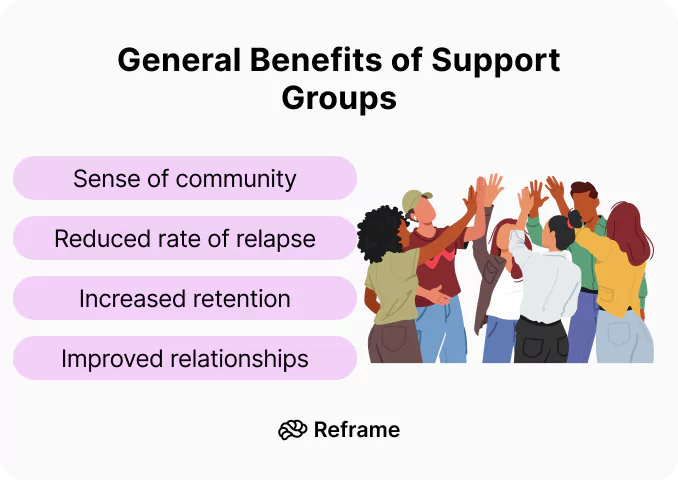
Support groups don’t need to be rigidly structured and formatted. They can be as tight-knit as a group of friends who’ve had similar experiences or as noncommittal as a public forum where we can share and learn from each other. No matter which format we prefer, support groups can provide many benefits:
Sense of community. A common aspect of alcohol misuse is social isolation. It can push us deeper into dependence as we don’t have outside support. Participating in a support group helps us realize that our personal struggles are often shared experiences.
Reduced rate of relapse. Support groups can serve as motivation and accountability. While relapse is a common experience in recovery, support from peer groups can help reduce the rate.
Increased retention. Doing hard things with others can be easier than doing them alone. Hence our gym buddy or go-to coworker. The presence of peers in support groups can increase retention — bolstering success rates of recovery.
Improved relationships. The sense of community in support groups along with our commitment to change can have a positive impact on our personal relationships.
Support groups like AA can help us on our path to recovery, but if we don’t align with some of AA’s values or just want to try something else, what other options are there?
What Are the Alternatives to AA?
Just as some of us may enjoy running while others prefer gentle movement like yoga for our daily exercise, some alcohol misuse treatment options may work better for us than others. Luckily, there are many options we can explore:
SMART Recovery. This is another major international community of peer support groups. Unlike AA, SMART highlights the importance of self-reliance and is based on six stages of change.
LifeRing. LifeRing is another anonymous, peer-led recovery group that differs from AA in that it is secular. The three philosophies of LifeRing include sobriety, secularity, and self-help.
Women for Sobriety (WFS). WFS is the first peer support program tailored specifically for women. Their New Life Program focuses on positive reinforcement, cognitive strategies, overall well-being, and group involvement.
Moderation Management (MM). MM is another secular, peer-run support group. It focuses on supporting those who are looking to improve their relationship with alcohol and make other positive lifestyle changes.
Secular Organizations for Sobriety (SOS). Also known as Save Our Selves, SOS focuses on abstinence by breaking the cycles of sobriety. The three main elements of SOS are acknowledgment, acceptance, and prioritization of sobriety.
Alcohol reduction apps. Apps like Reframe feature support groups to help us connect with others who may have similar experiences. We can be a part of a supportive community right from the convenience of our phones.
AA can be beneficial for some of us, but it does have its shortcomings. Fortunately, other options like those above can help us in our recovery by meeting our specific needs.
Exploring Different Types of Sobriety Apps
If traditional meetings don’t quite fit your lifestyle or you’re looking for extra support, technology offers a flexible and private way to get help. Sobriety apps put powerful tools and entire communities right in your pocket, allowing you to engage with your goals on your own terms and timeline. These apps cater to a wide range of needs, from tracking your progress and savings to connecting with peers or learning new coping mechanisms rooted in science. Whether you’re motivated by seeing your data, feeling a sense of community, or following a structured, science-backed program, there’s an app designed to support your specific journey toward changing your relationship with alcohol.
Apps for Community Support
For many of us, feeling connected is a powerful motivator for change. Apps like I Am Sober are built around this very principle, creating a dedicated space to share your journey with others who truly understand. You can track your sober days and milestones, see exactly how much money you’ve saved by not drinking, and join community message boards to talk with people at the same stage as you. It helps you reflect on your progress through daily pledges and private journaling, making it a fantastic option if you thrive on shared experiences and mutual encouragement from a supportive group.
Apps for Science-Based Coaching
If you’re looking for a structured program grounded in psychology and neuroscience, an app like Reframe might be the perfect fit. Developed with insights from medical and mental health professionals, it uses a science-based approach to help you change your drinking habits for good. The app provides a comprehensive toolkit with over 100 resources, including guided meditations, cognitive exercises, and craving trackers, all part of a daily program designed to help you build healthier routines. It also features drink tracking to help you stay mindful, live group meetings with coaches, and an active community, giving you a complete support system for making lasting changes.
Apps for Sober Relationships
Changing your relationship with alcohol can also mean changing your social life, especially when it comes to dating and making new friends. Apps like Loosid are designed specifically to address the social side of sobriety. It functions as a dating app for sober people, but it also includes community forums and groups for finding sober friends and local events. This unique focus helps you build a supportive social circle with people who share your lifestyle, making it much easier to navigate social situations without alcohol and form meaningful connections that aren't centered around drinking.
Apps for Simple Tracking
Sometimes, all you need is a straightforward way to see your progress and stay motivated. Apps like Nomo offer a simple, no-frills approach to tracking your journey. You can create customizable "clocks" to count your sober days, which provides a powerful visual of how far you've come. The app also shows you the money and time you've saved and allows you to share your progress with accountability partners to stay on track. It even includes mini-games to help you get through cravings and awards digital chips for milestones, providing simple motivation without overwhelming you with extra features.
How to Choose the Right App for You
Finding the right sobriety app is a personal choice, because everyone’s path is different. The best option for you depends entirely on what you need most at this moment. If you’re looking for accountability and a feeling of belonging, a community-focused app could be ideal. If you prefer a structured, educational approach that explains the "why" behind your habits, science-based coaching might be more effective. Take a moment to think about your primary motivation—is it building new sober relationships, or do you just want a simple tool to track your days? Reflecting on your needs will help you select an app that truly supports your goals.
Government Resources for Substance Abuse
Beyond peer groups and digital apps, there are also robust, publicly funded resources available to help you. Government agencies provide free, confidential support and information for anyone dealing with substance use issues, serving as a reliable starting point if you’re looking for more formal treatment options. These services are designed to be accessible and can connect you with professional help in your local area. If you need immediate assistance or are ready to explore clinical care, these resources can guide you toward the right path with credible, evidence-based information from trained professionals.
SAMHSA: The Substance Abuse and Mental Health Services Administration
The Substance Abuse and Mental Health Services Administration (SAMHSA) is a U.S. government agency dedicated to improving mental health and providing support for substance use issues across the country. Its core mission is to reduce the impact of substance misuse and mental illness on America's communities. As the nation's leading agency on this topic, SAMHSA offers a wealth of information, research, and programs that make it a central hub for public health efforts. For individuals, it serves as a trustworthy and authoritative source for finding evidence-based information and professional treatment resources.
National Helplines and Treatment Locators
One of SAMHSA’s most practical tools is its National Helpline, which is available 24/7 in both English and Spanish. This free, confidential service provides referrals to local treatment facilities, support groups, and community-based organizations. When you call, you’ll speak with a trained specialist who can help you understand your options and find the resources you need without judgment. SAMHSA also offers online treatment locators that allow you to search for mental health and substance use treatment centers near you, making it much easier to take that first step toward getting professional help.
Taking the Next Step in Your Recovery
AA is a bit like Cinderella’s glass slipper — the shoe doesn’t fit everyone. Its philosophy and support program have paved the way for other treatment models and can be beneficial for some seeking sobriety. Its spiritual basis and prescriptive structure, however, can prevent some of us from reaping AA’s peer-support benefits.
Happily, there are many ways we can stay on the path to recovery!
Frequently Asked Questions
What’s the real difference between the 12 Steps and the 12 Traditions? Think of it this way: the 12 Steps are a personal roadmap for your individual recovery journey. They offer a framework for self-reflection and action. The 12 Traditions, on the other hand, are guidelines for the AA groups themselves. They ensure that every group stays focused on its primary purpose and operates in a healthy, unified way. So, the Steps are for you, and the Traditions are for the group.
Do I have to be religious to join AA? Not at all. While AA’s language is rooted in spiritual concepts, including a “Power greater than ourselves,” it’s not a religious program. Many members define that higher power in their own terms. For some, it’s the collective strength of the support group; for others, it’s nature, the universe, or an inner sense of guidance. The focus is on finding a source of strength outside of yourself, whatever that may look like for you.
What if I’m too nervous to share my story at my first meeting? That is completely okay, and you are definitely not alone in feeling that way. There is absolutely no pressure to speak. You can attend as many meetings as you like and simply listen. The main goal is for you to feel safe and absorb the support in the room. People only share when they feel ready and comfortable.
Is AA my only option if I want peer support? No, AA is just one of many options available. It’s one of the most well-known, but there are many other excellent peer support groups out there. Programs like SMART Recovery, LifeRing, and Women for Sobriety offer different philosophies, some of which are entirely secular and based on modern psychology. The best program is the one that feels right for you.
How do I choose between a program like AA and a sobriety app? The best choice depends on your personal needs and lifestyle. AA provides a valuable, structured community with in-person meetings and a long-established tradition. An app offers flexibility, privacy, and a personalized approach you can access anytime, anywhere. If you prefer a science-based program with daily exercises, progress tracking, and an online community that fits into a busy schedule, an app might be a more practical fit.
Key Takeaways
Understand AA's framework before you commit: The program's foundation is the 12 Steps for personal recovery and the 12 Traditions for group unity, both of which are centered on spiritual principles and peer support.
Your recovery path is personal: While AA has helped millions, its specific structure and spiritual focus aren't a universal solution. Finding a program that aligns with your own values and lifestyle is key to making a lasting change.
Modern support is flexible and accessible: You have many alternatives to traditional meetings, from secular groups like SMART Recovery to science-based apps like Reframe that offer personalized coaching, tools, and community right on your phone.
1. What is the difference between the 12 Steps and the 12 Traditions?
The 12 Steps are the principles of recovery on an individual level whereas the 12 Traditions address AA as a whole and unify its members.
2. How does an AA meeting work?
There are different types of AA meetings, but common elements include readings, sharing sessions, and fellowship opportunities.
3. Does AA work for alcohol misuse?
AA is a widely used program of recovery from alcohol misuse; it is effective for many people.
4. Can anyone join AA?
Anyone can join open AA meetings. Closed meetings are only for AA members in recovery who are seeking help with quitting alcohol and/or maintaining sobriety.
5. What are other options for peer support in recovery?
Other support group options include SMART Recovery, LifeRing, and peer groups on alcohol reduction apps.
Feel Better With Reframe
Although it isn’t a treatment for alcohol use disorder (AUD), the Reframe app can help you cut back on drinking gradually with the science-backed knowledge to empower you 100% of the way. Our proven program has helped millions of people around the world drink less and live more. And we want to help you get there, too!
The Reframe app equips you with the knowledge and skills you need to not only survive drinking less, but to thrive while you navigate the journey. Our daily research-backed readings teach you the neuroscience of alcohol, and our in-app Toolkit provides the resources and activities you need to navigate each challenge.
You’ll meet millions of fellow Reframers in our 24/7 Forum chat and daily Zoom check-in meetings. Receive encouragement from people worldwide who know exactly what you’re going through! You’ll also have the opportunity to connect with our licensed Reframe coaches for more personalized guidance.
Plus, we’re always introducing new features to optimize your in-app experience. We recently launched our in-app chatbot, Melody, powered by the world’s most powerful AI technology. Melody is here to help as you adjust to a life with less (or no) alcohol.
And that’s not all! Every month, we launch fun challenges, like Dry/Damp January, Mental Health May, and Outdoorsy June. You won’t want to miss out on the chance to participate alongside fellow Reframers (or solo if that’s more your thing!).
The Reframe app is free for 7 days, so you don’t have anything to lose by trying it. Are you ready to feel empowered and discover life beyond alcohol? Then download our app today!
Reframe has helped over 2 millions people to build healthier drinking habits globally
At Reframe, we do science, not stigma. We base our articles on the latest peer-reviewed research in psychology, neuroscience, and behavioral science. We follow the Reframe Content Creation Guidelines, to ensure that we share accurate and actionable information with our readers. This aids them in making informed decisions on their wellness journey. Learn more
Updated Regularly
Our articles undergo frequent updates to present the newest scientific research and changes in expert consensus in an easily understandable and implementable manner.