Post Pandemic Alcohol Use: Did Your Habits Change?
Published:
2023-08-07
·
Read time:
17
Last Updated:
2026-01-02
Written by
Reframe Content Team
A team of researchers and psychologists who specialize in behavioral health and neuroscience. This group collaborates to produce insightful and evidence-based content.
Certified recovery coach specialized in helping everyone redefine their relationship with alcohol. His approach in coaching focuses on habit formation and addressing the stress in our lives.
Recognized by Fortune and Fast Company as a top innovator shaping the future of health and known for his pivotal role in helping individuals change their relationship with alcohol.
August 7, 2023
·
17
Reframe Content Team
August 7, 2023
·
17
Think back to the early days of the COVID-19 pandemic. The world locked down, and we were all stuck at home, just trying to cope. For many of us, that meant our drinking habits shifted. With bars closed, services offering fast standard delivery drinks became the new normal. This easy access created a lasting change in post pandemic alcohol use. If you feel like your consumption has gotten away from you, you're not alone. This article breaks down why so many of us are in the same boat and offers practical advice for re-evaluating your relationship with alcohol.
Unfortunately, this led a lot of us to maladaptive coping mechanisms, such as alcohol. In response, the convenience of home delivery of alcohol expanded, a quick and easy solution to help struggling businesses while enjoying a glass or two at home. However, there is more to this story than meets the eye, and it's crucial we take a closer look at the public health impact.
The Post-Pandemic Shift in Alcohol Consumption
As the world started to open back up, many of us expected our pandemic-era habits to simply fade away. But when it comes to alcohol, that hasn't been the case. Research from Keck Medicine of USC found that the higher levels of drinking that began during the pandemic have stuck around. During the peak of the crisis, heavy alcohol use jumped by 20% compared to pre-pandemic levels, and these elevated rates were still present even as life returned to a new normal. This tells us that for many, what started as a temporary coping mechanism has evolved into a more permanent pattern, highlighting a significant shift in our collective relationship with alcohol.
So, why did these habits stick? A big part of the answer lies in convenience and a change in our daily routines. With many people working from home and social calendars cleared, the environmental cues that once structured our days disappeared. It became easier to have a drink at home, sometimes even during work hours, as a way to manage stress and boredom. This new normal made alcohol a much more accessible and accepted part of daily life. Instead of being a social activity reserved for evenings or weekends, it became an anytime solution for difficult emotions, a habit that’s proven difficult for many to unlearn.
How Drink Delivery Changed Our Habits
In the midst of the pandemic, home alcohol delivery made a striking leap. This term, often misunderstood, refers to the process of bars, restaurants, or retailers delivering alcohol to consumers' homes, using either their staff or third-party services like DoorDash or Uber Eats. Even before COVID-19, this service was already trending upwards across the United States. But the pandemic kicked things into overdrive.
A closer look at legal databases from the U.S. National Institute on Drug Abuse revealed some startling figures. In January 2020, a total of 21 states allowed home delivery of alcohol by retailers. Fast forward to January 2022, this number had risen to 38 states. Moreover, the number of states permitting home delivery of alcohol by restaurants or bars jumped from 23 to 39 states.
Are We Drinking More Post-Pandemic?
At the start of the COVID-19 pandemic, there was a notable surge in alcohol sales. Initially, it was uncertain whether this increase was due to people stockpiling alcohol as a precautionary measure amid lockdowns and supply chain disruptions, or if it indicated a genuine uptick in alcohol consumption. However, as researchers delved deeper into this matter, a more worrisome pattern emerged.
A May 2020 online survey including adult participants from different regions of the U.S. gave insight into these consumption patterns, revealing a distinct trend. Adults who used delivery services to obtain alcohol reported higher levels of alcohol consumption compared to those who did not use such services. Additionally, the frequency of binge drinking, defined by the National Institute on Alcohol Abuse and Alcoholism (NIAAA) as a pattern of drinking alcohol that brings blood alcohol concentration (BAC) levels to 0.08 g/dL, was notably higher among the delivery-service users.
Adults who used delivery services consumed alcohol on more days per week than those who did not, and they consumed more drinks per drinking day. They were also more likely to engage in binge drinking at least once per week, compared to those who did not use delivery services.
This study raised important concerns about the potential implications of easier access to alcohol during lockdowns, especially in the form of delivery services. With the usual societal checks on drinking (like having to drive home or go to work the next day) removed, and increased stress due to the pandemic, there was a risk of escalating alcohol consumption and its associated harms. Further research would be necessary to confirm these initial findings and to develop effective strategies to mitigate these potential harms.
A Look at the Numbers
Overall Drinking Trends
The data confirms what many of us felt in our own lives: alcohol consumption went up, and it stayed up. A comprehensive study from Keck Medicine of USC found that from before the pandemic to its peak, heavy alcohol use among Americans increased by a staggering 20%. What’s more, this wasn’t just a temporary blip. The research shows that these elevated drinking levels persisted even after the most intense periods of lockdown ended. This shift highlights how easily new habits can form during times of stress and disruption, often becoming ingrained in our routines without us fully realizing it. For many, what started as a way to unwind during uncertain times became a regular pattern with lasting effects on both health and finances. If you're curious, you can calculate the financial impact of your own habits.
Contrasting Findings in Young Adults
Interestingly, the trend of increased drinking wasn't universal. A study published in Nature Mental Health revealed a different story for a specific group. It found that, contrary to expectations, heavy-drinking young adults actually drank less during the pandemic. This might seem surprising, but it makes sense when you consider the context. For many younger people, heavy drinking is closely tied to social events like parties, concerts, and nights out at bars. With those venues closed and social gatherings canceled, the primary opportunities for this type of drinking disappeared. This finding underscores a crucial point: our environment and social structures play a huge role in our drinking habits, and everyone’s experience is unique.
Why We Reached for a Drink More Often
The statistics paint a clear picture of what happened, but they don't fully explain the why. The reasons we collectively started drinking more are deeply human and rooted in the unprecedented challenges we faced. It wasn't just about having more time at home; it was about managing a tidal wave of new stressors, anxieties, and a profound sense of disconnection. Understanding these underlying factors is the first step toward re-evaluating our relationship with alcohol and building healthier habits. The pandemic fundamentally altered our emotional landscapes and daily structures, creating a perfect storm for alcohol to become a more prominent part of our lives.
Coping With Stress and Isolation
For many, alcohol became a tool to manage the intense emotional weight of the pandemic. Research from the Alcohol Research Group highlights that people drank to deal with a potent mix of stress, loneliness, boredom, and anxiety. These feelings were fueled by very real fears about job loss, financial instability, and the health of loved ones, all compounded by the isolation of being stuck at home. In the face of such overwhelming circumstances, a drink can feel like a quick and easy way to take the edge off. It offers a temporary escape from worry, but it doesn't solve the underlying issues. Learning to practice mindful drinking can help you find healthier ways to process these difficult emotions without relying on alcohol.
Changes in Daily Routines and Social Norms
The shift to remote work and canceled social plans completely dismantled our daily routines. The clear lines that once separated our professional and personal lives blurred into nonexistence. Without a morning commute to start the day or after-work plans to look forward to, the structure that naturally limited drinking opportunities vanished. It became easier, and more socially acceptable, to pour a glass of wine during the workday or start happy hour a little earlier. The usual guardrails were gone. This new normal made at-home drinking more frequent and casual, allowing a habit that might have once been reserved for weekends or special occasions to seep into the everyday.
What's the Real Cost to Our Health?
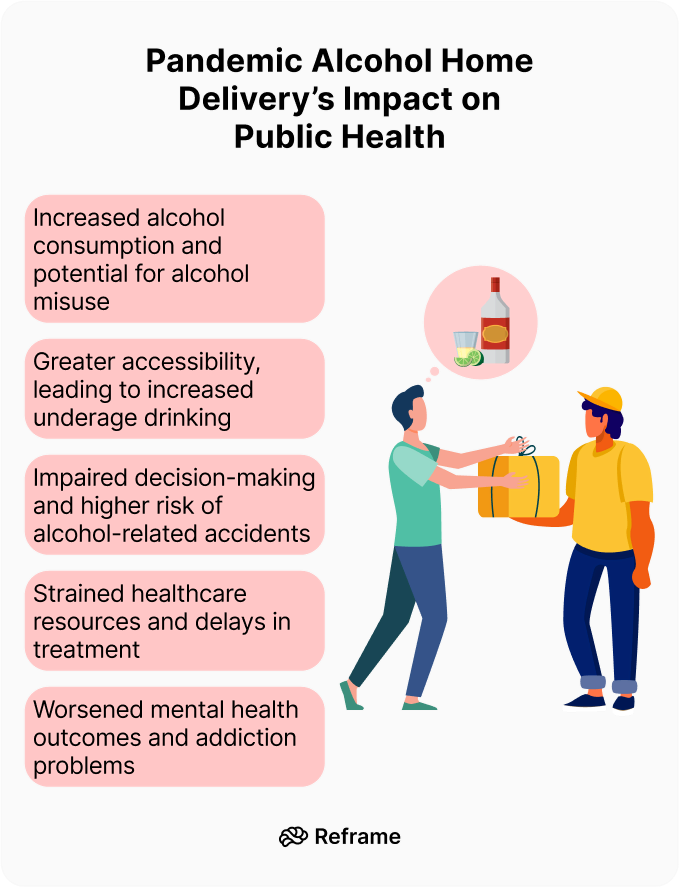
While expanding home delivery laws may have been a lifeline for businesses, it appears the potential impact on public health was overlooked. As Elyse Grossman, a social and behavioral sciences administrator at the U.S. National Institute on Drug Abuse, recommends, it's vital that public health considerations are given more weight when states contemplate policy decisions that increase access to alcohol.
Moreover, the researchers raise concerns about the potential impact on young people’s drinking habits. The surge in home alcohol delivery could have inadvertently made alcohol more accessible to underage drinkers. This is a hypothesis that urgently needs further research, given that delivery drivers often don't check IDs.
Alcohol's Toll on Liver Health
This increased access and consumption comes with a heavy price, particularly for our livers. The liver is a resilient organ, but it has its limits. According to research from Keck Medicine of USC, alcohol is responsible for half of all deaths related to liver disease. The data is stark: alcohol-related liver scarring, or cirrhosis, has become the leading reason people require a liver transplant. This isn't just a statistic; it's a serious health crisis that underscores the real, physical damage that can result from sustained heavy drinking. Understanding these risks is a critical first step in re-evaluating our relationship with alcohol and prioritizing our long-term health.
Understanding the Risk Factors for Problematic Drinking
The pandemic didn't just change where we drank; it changed why and how we drank. For many, it created a perfect storm of risk factors. The combination of heightened stress, social isolation, and unprecedented boredom left many of us searching for ways to cope. With traditional outlets like gyms, social gatherings, and hobbies suddenly off-limits, alcohol became an easy and accessible answer. The lines between work and home blurred, erasing the daily routines that once structured our days and, often, our drinking habits. A commute home from the office was replaced by simply closing a laptop, making "happy hour" start earlier and last longer.
This shift dismantled the subtle social controls that often keep drinking in check. There was no longer a need to worry about driving home from a bar or being sharp for a morning meeting. This new environment, combined with the constant undercurrent of anxiety, made it easier for casual drinking to escalate into a more problematic pattern. Recognizing these environmental and emotional triggers is key. It’s not about blame; it’s about understanding the context that shaped our behaviors so we can begin to build healthier coping mechanisms and regain control over our habits.
Demographic Trends in Increased Consumption
The numbers paint a clear picture of this shift. Research highlighted by Keck Medicine of USC shows that heavy alcohol use shot up by 20% between 2018 and the peak of the pandemic in 2020. Even general alcohol use saw a 4% increase during that same period. This wasn't just a small uptick; it was a significant change in national behavior. The convenience of delivery services played a major role. A survey from the Alcohol Research Group found that adults using these services drank more, and more often, than those who didn't. This data shows a direct link between easier access and higher consumption levels across the board.
Behaviors Linked to Higher Risk
The pandemic effectively removed many of the natural guardrails on drinking. As the Alcohol Research Group pointed out, societal checks like needing to drive home or get up for work the next day disappeared for many. This created an environment where it was easier to drink more without immediate consequences. When you combine this with the immense stress and uncertainty of the time, it's easy to see how consumption could escalate. For many, alcohol became a go-to tool for managing anxiety or breaking up the monotony of lockdown, leading to patterns of drinking that were riskier and more frequent than before.
Moving Forward: Expert Advice and Finding Support
So, where do we go from here? Acknowledging the problem is the first step, but taking action is what creates real change. Moving forward means being intentional about our choices and seeking out the right kind of support. It’s about replacing old habits with new, healthier ones that serve our well-being. This isn't something you have to do alone. There are incredible tools and communities available to help you understand your patterns and build a new relationship with alcohol. The goal is to feel empowered, not overwhelmed. By focusing on small, sustainable changes, you can start to build momentum and create a lifestyle that feels good both mentally and physically.
Finding support can look different for everyone. For some, it might mean talking with a therapist or a trusted friend. For others, it could involve using an app like Reframe, which is designed to help you change your habits through neuroscience-based programs and a supportive community. The key is to find a system that holds you accountable and provides encouragement along the way. Understanding your triggers, tracking your progress, and celebrating small wins can make a huge difference. It’s about equipping yourself with the knowledge and resources you need to make conscious decisions about your health and happiness.
What Health Experts Recommend
From a public health perspective, experts are calling for more careful consideration of policies that increase alcohol access. As one researcher from the U.S. National Institute on Drug Abuse noted, public health needs to be given more weight in these decisions. On an individual level, the advice is to become more mindful of your consumption. A great starting point is to simply track how much you're drinking and how much it's costing you. Tools like an alcohol spend calculator can be eye-opening. From there, you can set realistic goals for cutting back and explore new ways to unwind and socialize that don't revolve around alcohol.
Finding a Healthier Balance
The findings we've presented here are still in the preliminary stages and need to be corroborated by peer-reviewed research. However, they offer us a vital perspective on how policy decisions, though seemingly beneficial, can have unforeseen consequences.
The spike in home delivery of alcohol during the pandemic, while offering a lifeline to businesses and convenience to consumers, might have inadvertently escalated health risks. Going forward, we need to balance business and consumer needs with public health considerations.
On an individual level, we can be mindful of our alcohol consumption overall. Though a home delivery may feel tempting, we should stop and ask ourselves, “Is this what I really need right now?” Chances are, we are looking to cope with stress or boredom, in which case, there are plenty of alcohol-free activities to turn to instead. It’s a matter of training our minds to find healthier coping strategies. Though it may feel challenging in the beginning, over time, it’ll become second nature. Here’s to healthier habits!
Where to Find Help
If you've noticed your drinking habits have changed over the last few years, you're certainly not alone. A study from Keck Medicine of USC confirmed that the increase in alcohol consumption that started during the pandemic has continued for many Americans. Researchers believe the stress and upheaval of that time made drinking a more common coping mechanism. Recognizing that you might want to make a change is a huge first step, and there are many resources available to support you in building healthier habits that stick.
For some, talking to a doctor or a therapist is the best starting point. For others, community support groups can provide connection and accountability. If you're looking for a more private and flexible option, digital tools can be incredibly effective. Apps like Reframe are designed to help you understand the science behind your habits and provide daily support right from your phone. Our program uses a neuroscience-based approach to help you cut back on drinking and build a life you love, with a supportive community to cheer you on.
Frequently Asked Questions
I feel like my drinking habits got worse during the pandemic and never went back to normal. Is this a common experience? You are definitely not alone in feeling this way. What started as a way to cope with stress and boredom for many people became a regular habit that stuck around. The combination of working from home, social isolation, and the sheer convenience of alcohol delivery services created a new normal for millions. Research confirms that the spike in drinking during the pandemic has largely persisted, so what you're experiencing is a very shared phenomenon.
The article mentions some young adults actually drank less. Why was their experience so different? It’s an interesting point that really highlights how much our environment influences our habits. For many younger adults, heavy drinking was tied to social events like parties, concerts, or nights out at bars. When the world shut down, those opportunities simply vanished. This shows that when the setting and social cues for drinking are removed, behavior can change dramatically, which is a useful lesson for anyone looking to change their own patterns.
How can I tell if my post-pandemic drinking habits are becoming a real problem? This is a really personal question, but a good starting point is to look at the role alcohol plays in your life. Are you drinking to cope with stress or difficult emotions? Has the amount you drink slowly increased over time? Do you find it hard to imagine a week without it? Another clear sign is if it's affecting your health, finances, or relationships. Being honest with yourself about why and how often you're drinking is a powerful way to assess if your habits are serving you well.
What's a simple, practical first step I can take to cut back on my drinking? A great first step is to simply bring more awareness to your current habits without judgment. Try tracking your drinks for a week to get a clear picture of how much you're actually consuming. You can also identify your main triggers. Is it logging off from work? Feeling bored on a Tuesday night? Once you know your patterns, you can start planning alternatives, like going for a walk, calling a friend, or making a special non-alcoholic drink instead.
I still work from home. How can I create better boundaries around drinking when my kitchen is right there? Working from home completely blurred the lines between our personal and professional lives, making it easy for "happy hour" to start the second you close your laptop. A helpful strategy is to create a clear "end of workday" ritual that doesn't involve alcohol. This could be a 15-minute walk, a quick workout, or spending time on a hobby. By replacing the immediate drink with another rewarding activity, you create a buffer and retrain your brain to unwind in a healthier way.
Key Takeaways
Pandemic Drinking Habits Didn't Disappear: For many of us, the increased alcohol use that started as a coping mechanism during lockdown has become a regular part of life. If you feel like your consumption has stayed high, it's a common experience and worth examining.
Easy Access Changed Everything: The surge in alcohol delivery services removed natural barriers to drinking. This newfound convenience, combined with stress and blurred daily routines, created the perfect environment for consumption to increase without us even realizing it.
You Can Rebuild Healthier Habits: The first step is to understand why you're reaching for a drink—is it stress, boredom, or habit? From there, you can intentionally find new ways to cope and use tools and communities to support your goal of drinking more mindfully.
Although it isn’t a treatment for alcohol use disorder (AUD), the Reframe app can help you cut back on drinking gradually, with the science-backed knowledge to empower you 100% of the way. Our proven program has helped millions of people around the world drink less and live more. And we want to help you get there, too!
The Reframe app equips you with the knowledge and skills you need to not only survive drinking less, but to thrive while you navigate the journey. Our daily research-backed readings teach you the neuroscience of alcohol, and our in-app Toolkit provides the resources and activities you need to navigate each challenge.
You’ll meet millions of fellow Reframers in our 24/7 Forum chat and daily Zoom check-in meetings. Receive encouragement from people worldwide who know exactly what you’re going through! You’ll also have the opportunity to connect with our licensed Reframe coaches for more personalized guidance.
Plus, we’re always introducing new features to optimize your in-app experience. We recently launched our in-app chatbot, Melody, powered by the world’s most powerful AI technology. Melody is here to help as you adjust to a life with less (or no) alcohol.
And that’s not all! Every month, we launch fun challenges, like Dry/Damp January, Mental Health May, and Outdoorsy June. You won’t want to miss out on the chance to participate alongside fellow Reframers (or solo if that’s more your thing!).
The Reframe app is free for 7 days, so you don’t have anything to lose by trying it. Are you ready to feel empowered and discover life beyond alcohol? Then download our app through the App Store or Google Play today!
Reframe has helped over 2 millions people to build healthier drinking habits globally
At Reframe, we do science, not stigma. We base our articles on the latest peer-reviewed research in psychology, neuroscience, and behavioral science. We follow the Reframe Content Creation Guidelines, to ensure that we share accurate and actionable information with our readers. This aids them in making informed decisions on their wellness journey. Learn more
Updated Regularly
Our articles undergo frequent updates to present the newest scientific research and changes in expert consensus in an easily understandable and implementable manner.