Artificial Sweeteners and Fruit When Cutting Back on Alcohol
Published:
2026-06-30
·
Read time:
10 min read
Last Updated:
2026-06-30
Written by
Reframe Content Team
A team of researchers and psychologists who specialize in behavioral health and neuroscience. This group collaborates to produce insightful and evidence-based content.
Certified recovery coach specialized in helping everyone redefine their relationship with alcohol. His approach in coaching focuses on habit formation and addressing the stress in our lives.
Recognized by Fortune and Fast Company as a top innovator shaping the future of health and known for his pivotal role in helping individuals change their relationship with alcohol.
June 30, 2026
·
10 min read
Reframe Content Team
June 30, 2026
·
10 min read
For most people cutting back on alcohol, common artificial sweeteners (aspartame, sucralose, stevia, and similar) are considered safe within regulatory intake limits and are a reasonable way to enjoy mocktails and low-sugar drinks without the calories or blood-sugar swings of sugary mixers. They will not directly fuel alcohol cravings, though very sweet drinks can keep a reward habit alive for some people, so notice how they affect you. Fruit, meanwhile, is something to lean into rather than fear, because its fiber, nutrients, and natural sugars can help steady the blood-sugar dips that sometimes masquerade as a drink craving. Reframe helps you build drink-swap habits that fit your real life, so you can experiment with what actually keeps you on track.
What to Know About Sweeteners and Fruit While Drinking Less
For most people cutting back on alcohol, common artificial sweeteners (aspartame, sucralose, stevia, and similar) are considered safe within regulatory intake limits and are a reasonable way to enjoy mocktails and low-sugar drinks without the calories or blood-sugar swings of sugary mixers. They will not directly fuel alcohol cravings, though very sweet drinks can keep a reward habit alive for some people, so notice how they affect you. Fruit, meanwhile, is something to lean into rather than fear, because its fiber, nutrients, and natural sugars can help steady the blood-sugar dips that sometimes masquerade as a drink craving.
When you start drinking less, a surprising number of questions show up that have nothing to do with alcohol itself. One of the most common is about sweetness: is it okay to reach for a diet soda or a stevia-sweetened mocktail at night, and should you be worried about eating fruit when you are suddenly craving sugar like never before? These are good questions, and the honest answers are more reassuring than the internet often makes them sound. Let's walk through what the evidence actually says about artificial sweeteners and alcohol cravings, how fruit fits in, and how to build drink swaps that keep you on track without turning your kitchen into a chemistry lab.
We are going to treat this as a practical guide for someone in the middle of changing their habits, not a lecture. Reframe's whole approach is built on experimenting and noticing what works for your real life, so think of the recommendations here as starting points to test rather than commandments to follow.
Are artificial sweeteners safe when reducing alcohol?
For most adults, common artificial sweeteners are considered safe within established intake limits, and the amount you would use in a few mocktails a week sits comfortably within them. They are a practical sugar swap when you want a flavorful drink without the calories or blood-sugar spike of a sugary mixer. The bigger picture has some nuance worth understanding, but the headline is genuinely reassuring.
Which sweeteners are which?
Part of the confusion comes from lumping very different ingredients together. The FDA has approved six high-intensity sweeteners as food additives in the United States: saccharin, aspartame, acesulfame potassium, sucralose, neotame, and advantame, and it set an Acceptable Daily Intake for each so that even a heavy consumer would not exceed safe levels. Plant-derived options like stevia (certain steviol glycosides) and monk fruit extracts are handled through a separate regulatory pathway but are also widely used.
Sugar alcohols are a different animal entirely. Erythritol, xylitol, and sorbitol are technically polyols, not artificial sweeteners, and they behave differently in your gut. We will come back to them in the medical section, because they are the one category most likely to cause a stomachache. For now, just know that when someone says "artificial sweetener," they usually mean aspartame or sucralose, not erythritol. If you want to go deeper on the polyol side, our explainer on what sugar alcohol is and whether it is bad for you breaks it down.
What the safety reviews actually say
The appeal during reduction is obvious: zero or very low calories, no blood-sugar spike, and you get to keep a flavorful ritual drink in your hand at the time of day you used to reach for alcohol. If you are also paying attention to your waistline as you cut back, swapping a sugary cocktail for a sweetener-based mocktail can make a real difference, and our alcohol calorie calculator can show you how those numbers add up over a week.
Here is the honest nuance. In 2023, the WHO advised against using non-sugar sweeteners for long-term weight control or to reduce disease risk, citing no clear long-term benefit for body fat and possible undesirable effects from sustained high intake. That recommendation applies to all people except those with pre-existing diabetes. Separately, aspartame drew headlines that same year, but FDA scientists have stated they do not have safety concerns about aspartame under the approved conditions of use, and the WHO and FAO expert committee left its Acceptable Daily Intake unchanged.
The bottom line for someone cutting back: a sweetened mocktail a few nights a week is a very different thing from chronic, heavy daily intake. Used as a transitional tool, common artificial sweeteners are a sensible swap, and moderation is the only real caveat for most people.
Do artificial sweeteners affect alcohol cravings?
There is no strong evidence that artificial sweeteners directly trigger alcohol cravings. The urge to drink is driven far more by cues, habit loops, and reward conditioning than by sweetness itself, so a stevia-sweetened soda is not secretly lighting up your desire for a glass of wine. That said, the relationship between sweetness and habit is worth a closer look, because it is not zero.
Cravings tend to fire on context: the clock hitting 6 p.m., walking in the door after work, the particular chair you always drank in. If you want to map your own patterns, the What Type of Drinker Are You? quiz is a low-stakes way to start noticing them. A sweet substitute slots into that ritual nicely, which is exactly why it helps some people and trips up others.
The reward-ritual caveat is the interesting part. A very sweet substitute can keep the emotional shape of the nightly drink alive: the special glass, the fizzy pour, the little hit of pleasure at a set time. For many people that is a feature, a bridge that makes the early weeks easier. For others, leaning too hard on intense sweetness keeps the "I deserve a treat right now" loop running, and it can be worth dialing the sweetness down over time so the ritual loosens its grip. Our piece on the habit loop explains how those cue-routine-reward cycles work if you want the mechanics.
There is also a blood-sugar angle. Many sources describe how rapid sugar crashes can produce restlessness and irritability that feel a lot like a craving, and steadier glucose may quiet some of that noise. We will say more about that in the fruit section, because it is one of the strongest practical reasons to eat well while you cut back. The smartest move is not to follow a blanket rule but to track yourself: does a sweet mocktail calm the urge to drink, or does it feed a sugar-and-reward spiral? Both happen, and only you can tell which one is yours.
Should I limit fruit intake when reducing alcohol?
Most people cutting back on alcohol do not need to limit whole fruit, and many actually benefit from eating more of it. The fiber in whole fruit slows sugar absorption and helps steady the blood-sugar dips that can masquerade as cravings, while the vitamins and minerals support a body that may have been running short on nutrients during heavier drinking. Fruit is a friend here, not a threat.
The fiber piece is the heart of it. The Quadram Institute explains that fiber in whole fruit slows down glucose absorption and helps keep blood sugar levels more stable, which is exactly the kind of buffering you want when your body is recalibrating its sugar regulation. Steadier glucose means fewer of those jittery crashes that can feel like a drink is calling your name.
Why do I crave sugar after cutting back on alcohol?
If you have suddenly developed a sweet tooth you never had before, you are in very normal company. Alcohol delivered quick sugar and a dopamine reward, so when you cut back, the brain often goes looking for that hit somewhere else, and sugar is the obvious candidate. As Reframe's explainer on sugar cravings after drinking alcohol describes, the body tends to associate sugar with the same pleasure and reward mechanisms that alcohol used to activate, while blood-sugar regulation slowly rebalances. This usually eases over time.
The good news is that fruit can satisfy that urge more healthily than a candy bar or a third diet soda. Reaching for whole fruit, eating regular balanced meals, and staying hydrated tends to take the edge off the craving while keeping your blood sugar steadier. If snacking is your go-to, our roundup of ways to replace alcohol with healthy snacks has more ideas in the same spirit.
Whole fruit vs juice
This is where the "is fruit too sugary?" worry actually has some teeth, but the answer is about form, not fruit. Whole fruit and fruit juice are not the same thing. In a large Harvard cohort analysis, eating more whole fruit was associated with a lower risk of type 2 diabetes, while drinking fruit juice was associated with higher risk, and swapping juice for whole fruit was linked to reduced risk. The underlying BMJ study carried a later correction that adjusted some of the exact effect sizes, though the authors noted it did not change their conclusions, so the cleanest way to state it is directional: whole fruit beats juice. Juicing strips away the fiber that slows sugar absorption, so juice behaves more like a sugary drink.
The practical takeaway: reach for whole fruit freely unless a clinician has told you otherwise for a specific medical reason. Save juice for occasional use rather than a daily staple, and when you do want fruit flavor in a drink, muddle or blend the whole thing instead of pouring from a carton.
How do artificial sweeteners and fruit fit into mocktails and drink swaps?
Both can build a genuinely satisfying alcohol-free drink, with whole-fruit purees and a small amount of sweetener replacing the sugary syrups and mixers that turn a "healthy" mocktail into a dessert. The trick is to let fruit do the flavor work and use sweetener only to round things out, which gives you a drink that tastes like a treat without the sugar load of a soda or a classic cocktail.
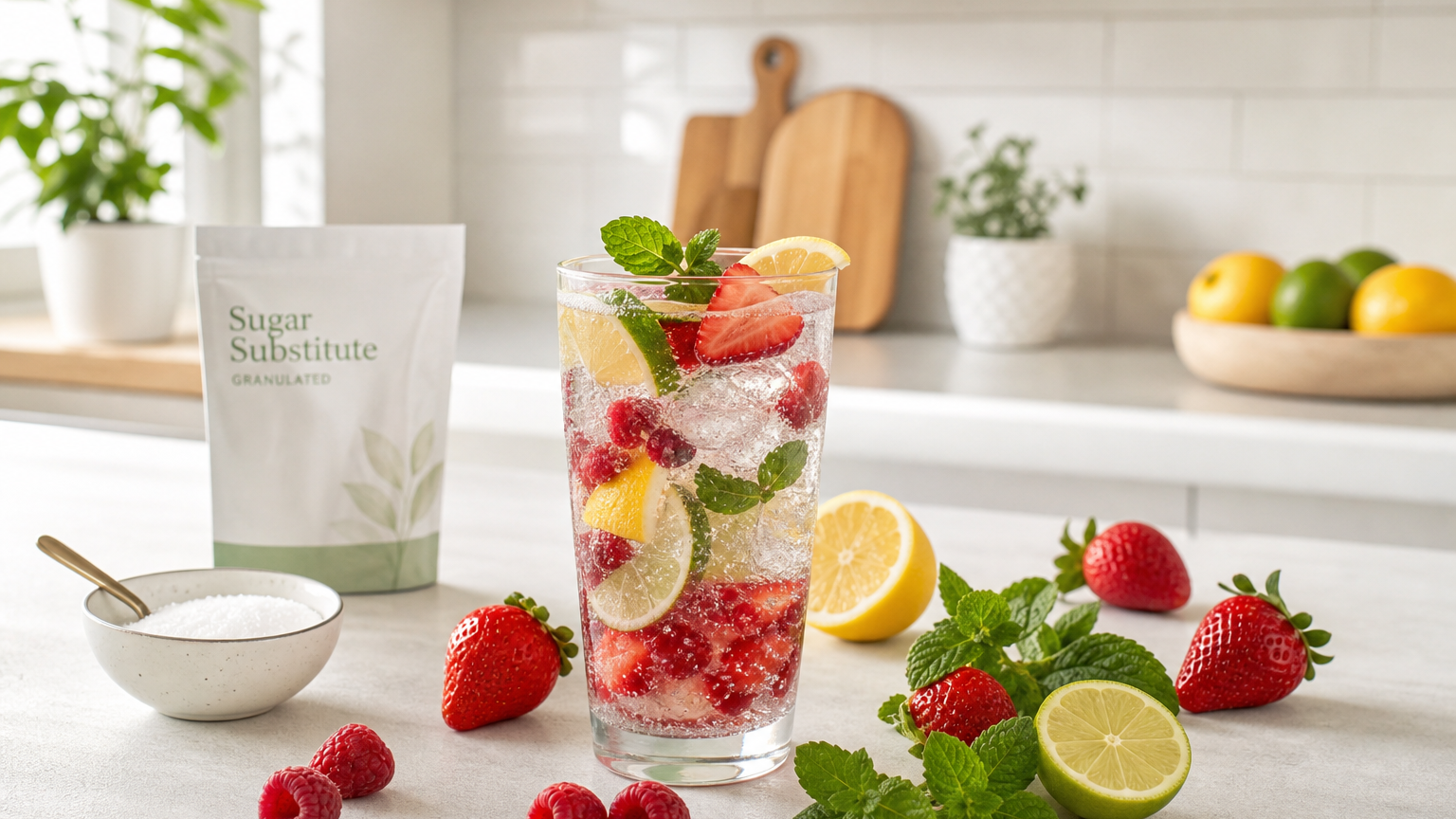
Start with a base of sparkling water, then build from there: muddled berries, a squeeze of citrus, fresh herbs like mint or basil, a slice of cucumber or ginger. Add sweetener only to taste, after you have tasted the fruit, because you will usually need far less than you expect. This approach has a real calorie and blood-sugar advantage over sugary cocktails and sodas, and it keeps the fiber and nutrients in play if you blend rather than strain. For more inspiration, our collection of the best mocktail recipes is a good place to raid for ideas.
The ritual matters as much as the liquid. A proper glass, a garnish, the timing of when you make it, all of that signals to your brain that this is your drink, which is half of why the swap works. Lean on fruit-forward drinks when you want nutrition and fiber, and reach for a touch of sweetener when you want sweetness without the sugar. Experimenting with these swaps is genuinely part of finding a routine you can sustain, and if you want a self-check on where your habits stand, the Am I Drinking Too Much? quiz is a quiet way to take stock.
When is this a question for your doctor instead of a self-help choice?
Most sweetener and fruit decisions are everyday choices you can make on your own, but a handful of situations genuinely call for a clinician's input. This article never tells anyone to start or stop a medication or self-manage a medical condition; it just flags where personalized guidance beats a general rule, so you can bring specifics to your care team.
If you have diabetes or another blood-sugar condition, portioning fruit, sugar alcohols, and overall carbohydrates may need individual guidance, because the "eat fruit freely" advice that fits most people may not fit your numbers. A clinician or dietitian can help you do that safely. The same goes for pregnancy and breastfeeding: it is worth asking a provider which sweeteners they are comfortable with rather than guessing, since recommendations vary.
There is one hard exclusion. People with phenylketonuria (PKU) cannot easily metabolize phenylalanine, a component of aspartame, and should avoid or restrict it, which is why products containing aspartame carry a phenylalanine warning on the label. If that is you, this is not a "in moderation" situation, it is an avoid-it situation.
Finally, the gut. Sugar alcohols are the category most likely to cause trouble. The Cleveland Clinic notes that polyols like sorbitol and xylitol can cause bloating, gas, and diarrhea, with erythritol generally better tolerated but still capable of causing symptoms in larger amounts. A peer-reviewed review explains the mechanism plainly: sugar alcohols are incompletely absorbed and ferment in the colon, producing osmotic and gas effects that are a normal physicochemical response rather than a disease. If you have IBS or a sensitive gut, you may want to limit them, and your care team can help you figure out your own tolerance.
Summary FAQs
1. Are artificial sweeteners safe to use when I am cutting back on alcohol?
For most adults, common artificial sweeteners like aspartame, sucralose, and stevia are considered safe within established daily intake limits, and typical mocktail use sits well within those. They are a practical way to enjoy a flavorful drink without the calories or blood-sugar spike of sugary mixers. Moderation still applies, and people who are pregnant, have PKU, or have gut sensitivities should check specifics with a clinician.
2. Should I limit fruit intake when reducing alcohol?
Most people cutting back on alcohol do not need to limit whole fruit and often benefit from eating more of it. The fiber in whole fruit slows sugar absorption and helps steady the blood-sugar dips that can feel like cravings, while the nutrients support a recovering body. People with diabetes or specific medical conditions may need portion guidance from their care team.
3. Do artificial sweeteners make alcohol cravings worse?
There is no strong evidence that artificial sweeteners directly trigger alcohol cravings, which are driven mostly by cues and habit loops rather than sweetness. That said, a very sweet substitute can keep a nightly drink ritual emotionally alive, which helps some people taper and keeps others stuck. The best move is to notice whether a sweet mocktail calms your craving or feeds it for you specifically.
4. Why do I crave sugar so much after cutting back on alcohol?
Alcohol delivers quick sugar and a dopamine reward, so when you cut back your brain often looks for that hit elsewhere, frequently as sugar cravings. This is common and usually eases over time. Reaching for whole fruit, eating regular balanced meals, and staying hydrated can satisfy the urge while keeping your blood sugar steadier.
5. Are sugar alcohols like erythritol the same as artificial sweeteners?
No, sugar alcohols such as erythritol, xylitol, and sorbitol are a distinct category from artificial sweeteners like aspartame and sucralose. They occur in many low-sugar products and are generally recognized as safe, but in larger amounts they can cause bloating, gas, or digestive upset. If you have a sensitive gut or IBS, you may want to limit them.
6. Is fruit juice as good as whole fruit when I am drinking less?
Whole fruit is the better choice because its fiber slows sugar absorption and keeps you fuller, while juice behaves more like a sugary drink and can spike blood sugar. If you enjoy fruit-based mocktails, muddling or blending whole fruit keeps more of that benefit than using juice or syrup. Save juice for occasional use rather than a daily staple.
Building Healthier Drink Swaps While Cutting Back? Reframe Can Help!
Although it isn't a treatment for alcohol use disorder (AUD), the Reframe app can help you cut back on drinking gradually with the science-backed knowledge to empower you 100% of the way. Our proven program has helped millions of people around the world drink less and live more. And we want to help you get there, too!
The Reframe app equips you with the knowledge and skills you need to not only survive drinking less, but to thrive while you navigate the journey. Our daily research-backed readings teach you the neuroscience of alcohol, and our in-app Toolkit provides the resources and activities you need to navigate each challenge.
You'll meet millions of fellow Reframers in our 24/7 Forum chat and daily Zoom check-in meetings. Receive encouragement from people worldwide who know exactly what you're going through! You'll also have the opportunity to connect with our licensed Reframe coaches for more personalized guidance.
Plus, we're always introducing new features to optimize your in-app experience. We recently launched our in-app chatbot, Melody, powered by the world's most powerful AI technology. Melody is here to help as you adjust to a life with less (or no) alcohol.
And that's not all! Every month, we launch fun challenges, like Dry/Damp January, Mental Health May, and Outdoorsy June. You won't want to miss out on the chance to participate alongside fellow Reframers (or solo if that's more your thing!).
The Reframe app is free for 7 days, so you don't have anything to lose by trying it. Are you ready to feel empowered and discover life beyond alcohol? Then download our app through the App Store or Google Play today!
Reframe has helped over 2 millions people to build healthier drinking habits globally
At Reframe, we do science, not stigma. We base our articles on the latest peer-reviewed research in psychology, neuroscience, and behavioral science. We follow the Reframe Content Creation Guidelines, to ensure that we share accurate and actionable information with our readers. This aids them in making informed decisions on their wellness journey. Learn more
Updated Regularly
Our articles undergo frequent updates to present the newest scientific research and changes in expert consensus in an easily understandable and implementable manner.
U.S. Food and Drug Administration. (2024). High-intensity sweeteners. https://www.fda.gov/food/food-additives-petitions/high-intensity-sweeteners
U.S. Food and Drug Administration. (2023). Aspartame and other sweeteners in food. https://www.fda.gov/food/food-additives-petitions/aspartame-and-other-sweeteners-food
World Health Organization. (2023, May 15). WHO advises not to use non-sugar sweeteners for weight control in newly released guideline. https://www.who.int/news/item/15-05-2023-who-advises-not-to-use-non-sugar-sweeteners-for-weight-control-in-newly-released-guideline
Cleveland Clinic. (2024). Sugar alcohols may not be as safe as you thought. https://health.clevelandclinic.org/what-to-know-about-sugar-alcohols
Mäkinen, K. K. (2016). Gastrointestinal disturbances associated with the consumption of sugar alcohols, with special consideration of xylitol: Scientific review and instructions for dentists and other health-care professionals. International Journal of Dentistry, 2016, 5967907. https://www.ncbi.nlm.nih.gov/pmc/articles/PMC5093271/
Harvard Gazette. (2013, August 29). Skip the juice, go for whole fruit. https://news.harvard.edu/gazette/story/2013/08/reduce-type-2-diabetes-risk/
Muraki, I., Imamura, F., Manson, J. E., Hu, F. B., Willett, W. C., van Dam, R. M., & Sun, Q. (2013). Fruit consumption and risk of type 2 diabetes: Results from three prospective longitudinal cohort studies. BMJ, 347, f5001. https://doi.org/10.1136/bmj.f5001
Quadram Institute. (2025). The science of how fruit affects blood sugar. https://quadram.ac.uk/blogs/the-science-of-how-fruit-affect-blood-sugar/
Reframe. (2025). The science behind why you crave sugar when hungover. https://www.joinreframeapp.com/blog-post/sugar-cravings-after-drinking-alcohol