Can You Drink Alcohol on Cymbalta? What to Know About Duloxetine and Alcohol
Published:
2026-08-19
·
Read time:
10 min read
Last Updated:
2026-08-19
Written by
Reframe Content Team
A team of researchers and psychologists who specialize in behavioral health and neuroscience. This group collaborates to produce insightful and evidence-based content.
Certified recovery coach specialized in helping everyone redefine their relationship with alcohol. His approach in coaching focuses on habit formation and addressing the stress in our lives.
Recognized by Fortune and Fast Company as a top innovator shaping the future of health and known for his pivotal role in helping individuals change their relationship with alcohol.
August 19, 2026
·
10 min read
Reframe Content Team
August 19, 2026
·
10 min read
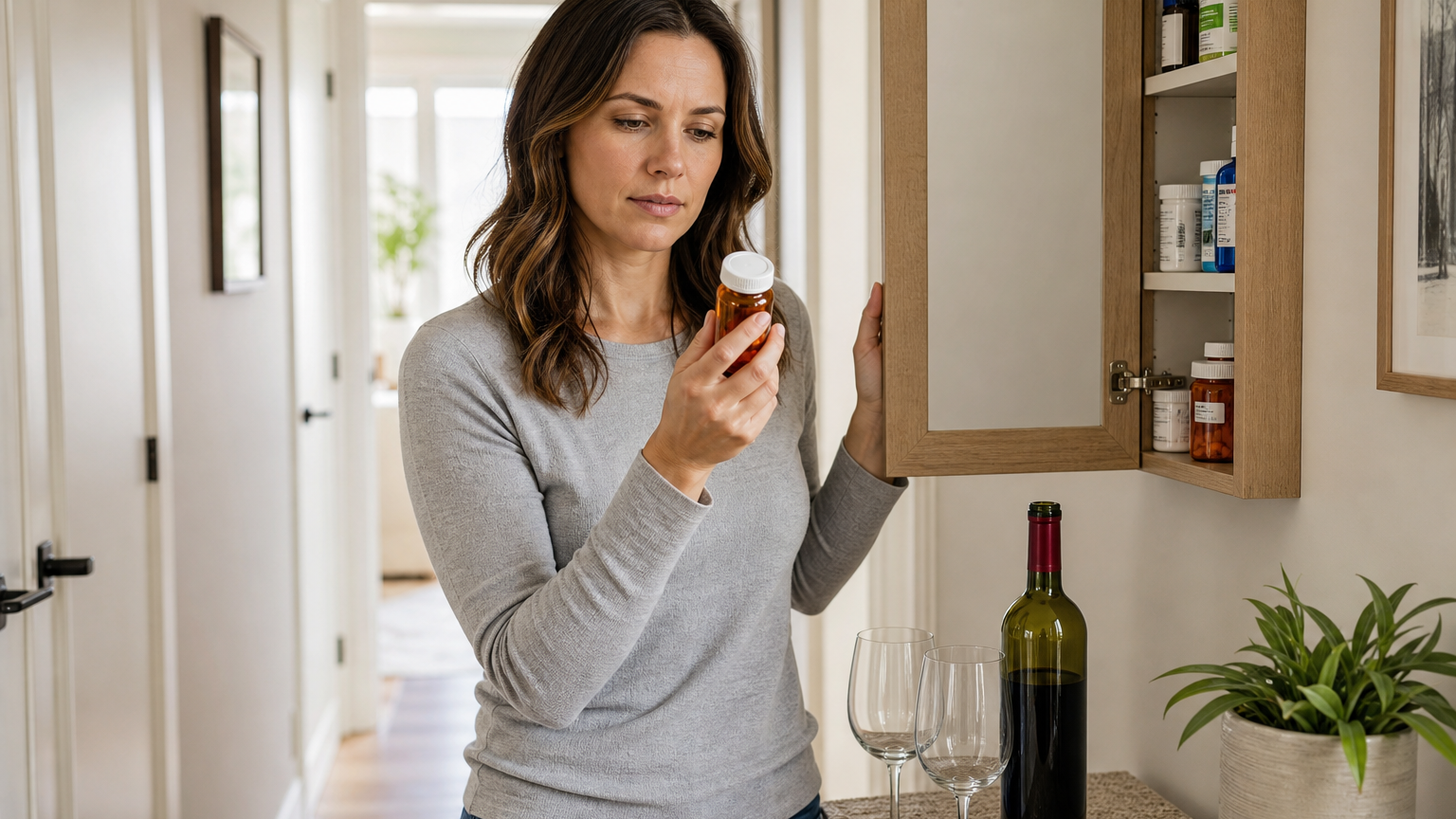
Combining Cymbalta (duloxetine) with alcohol is not recommended, and the reason is more specific than with most antidepressants: the FDA warns that duloxetine and substantial alcohol use together raise the risk of liver injury, on top of the shared drowsiness and dizziness you would expect. That does not mean one drink is a guaranteed crisis, but because duloxetine is an SNRI with a real hepatotoxicity signal, alcohol matters more here than it does with a typical SSRI, especially if you drink regularly. This is a conversation worth having with your prescriber, and if you notice alcohol has become a fixture in your routine, Reframe can help you understand and shift that pattern.
The Short Answer on Cymbalta and Alcohol
Combining Cymbalta (duloxetine) with alcohol is not recommended, and the reason is more specific than with most antidepressants: the FDA warns that duloxetine and substantial alcohol use together raise the risk of liver injury, on top of the shared drowsiness and dizziness you would expect. That does not mean one drink is a guaranteed crisis, but because duloxetine is an SNRI with a real hepatotoxicity signal, alcohol matters more here than it does with a typical SSRI, especially if you drink regularly. This is a conversation worth having with your prescriber, and if you notice alcohol has become a fixture in your routine, Reframe can help you understand and shift that pattern.
Let's talk honestly about a question that feels bigger than it should. You have a prescription for Cymbalta, a wedding or a Friday night is coming up, and you want to know whether one glass of wine is going to be a problem. The internet's usual answer, "avoid alcohol on antidepressants," is technically true but frustratingly vague. With duloxetine, the caution is not generic. It comes down to your liver, and that specific detail is what this post is really about.
We are going to walk through what makes duloxetine different from an SSRI, what the official guidance actually says, why the liver piece deserves your attention, and what to do if you want to drink (or already did). Throughout, we will keep the absolute risk in perspective, because being scared off a medication that is helping you is its own kind of harm.
What is Cymbalta (duloxetine) and how is it different from an SSRI?
Cymbalta is the brand name for duloxetine, a serotonin and norepinephrine reuptake inhibitor, or SNRI. According to NIH's LiverTox database, duloxetine works by blocking the reuptake of both serotonin and norepinephrine in the brain. That dual action is the headline difference: a typical SSRI like sertraline or escitalopram acts mainly on serotonin, while duloxetine pulls two levers at once.
That extra lever is not just trivia. The norepinephrine piece is a big part of why duloxetine is prescribed for physical pain and not only mood. It is FDA-approved for major depressive disorder, generalized anxiety disorder, diabetic nerve pain, fibromyalgia, and chronic musculoskeletal pain, a range described in the clinical literature on duloxetine. If you are taking it for aching joints or nerve pain rather than for your mood, that is completely normal for this drug.
Here is the distinction that actually changes how you think about drinking on it. Duloxetine has been linked to rare instances of clinically apparent acute liver injury, including uncommon cases of acute liver failure and chronic hepatitis, per that same LiverTox monograph. Most SSRIs do not carry this same liver signal. So when a general article tells you the alcohol story for Cymbalta is the same as for a standard SSRI, it is missing the one thing that makes this medication its own case. If you have read our companion pieces on whether sertraline and alcohol mix or on drinking while taking Lexapro, keep in mind those are SSRI-specific and do not carry the same hepatotoxicity warning.
Can you drink alcohol while taking Cymbalta?
The official answer is no, or at least not casually. The FDA-approved Cymbalta label states that because duloxetine and alcohol may interact to cause liver injury, or duloxetine may aggravate pre-existing liver disease, the drug should not be prescribed to patients with substantial alcohol use or evidence of chronic liver disease. That is unusually direct language for a drug label, and it is the crux of the whole conversation.
Why does the liver keep coming up? Both duloxetine and alcohol are processed by the liver, so the two stack their demands on the same organ. That is the mechanism behind the added caution, and it is genuinely different from the "you'll just feel groggier" warning that applies to a lot of medications.
None of this means a single drink is an emergency for an otherwise healthy person on a stable dose. The label's strongest warning targets substantial or chronic drinking, not a toast at a birthday. But "lower risk" is not the same as "endorsed," and the difference between an occasional drink and a regular habit is exactly where the real risk lives. This is one of those situations where a blanket internet rule is not good enough. Your prescriber knows your liver history, your dose, and your drinking pattern, and they can weigh all three in a way no article can. If you are quietly wondering whether your own drinking has crept past "occasional," the Am I Drinking Too Much? quiz is a low-stakes place to start that conversation with yourself.
Why does the liver-injury risk make Cymbalta different?
The liver warning is not scaremongering, but it is also not a coin flip. Duloxetine has been associated with elevated liver enzymes and, in rare cases, more serious hepatotoxicity, and alcohol is itself a well-known liver stressor. Put a liver stressor on top of a drug that already carries a liver signal, and the concern is that the two compound each other. That is the honest one-sentence version.
Now the part that keeps this from being alarmist. A peer-reviewed hepatic safety review estimated very rare cases of idiosyncratic liver toxicity at roughly 1 to 2 per 100,000 exposures in people taking duloxetine, and it noted this happens particularly in those with substantial alcohol use or pre-existing liver disease. In other words, the absolute odds of serious liver injury are low for most people, and the alcohol-and-liver-disease subgroup is where the risk concentrates. That is why the caution is real but the panic is not warranted. Drinking regularly moves you toward the higher-risk group; not drinking, or drinking very rarely, keeps you toward the low-risk end.
Signs of liver trouble to watch for
If you do drink on duloxetine, it is worth knowing what liver stress can look like. Clinicians generally advise patients to promptly report possible signs of liver dysfunction, which can include itching, dark urine, jaundice (a yellowing of the skin or eyes), and tenderness in the upper right side of the abdomen. Unusual fatigue and loss of appetite are also worth flagging. These are not symptoms to diagnose yourself with over one queasy morning, but if they show up, especially alongside drinking, that is a call to your healthcare provider, not a wait-and-see. This is the core reason moderate drinking earns more attention on Cymbalta than it would on a standard antidepressant.
How does alcohol affect Cymbalta's benefits for mood and pain?
Even setting the liver aside, alcohol tends to work against the very thing you are taking duloxetine for. Alcohol is a depressant, and regular drinking can drag on mood and anxiety over time, which is a strange partner for a medication you are using to lift exactly those things. If you are treating depression or generalized anxiety, drinking can quietly undermine the treatment and make it genuinely hard to tell whether the medication is doing its job.
For anyone taking duloxetine for nerve pain or fibromyalgia, the picture is similar. Alcohol disrupts sleep and can make pain harder to manage, which chips away at the relief you are chasing. When your symptoms come back or worsen, it is easy to blame the medication when the drinking may be part of the story.
There is also the more immediate, physical stacking effect. The National Institute on Alcohol Abuse and Alcoholism notes that mixing alcohol with medicines that cause drowsiness can intensify sleepiness, dizziness, and loss of coordination, and that alcohol can also make a medication less effective. Practically, that means the sedation from duloxetine and the sedation from alcohol do not politely take turns; they add up, which raises the odds of a fall or an accident. If you are curious how the drinks themselves fit into your bigger health picture, our alcohol calorie calculator is a small, concrete way to see part of the trade-off.
What should you do if you want to drink or already did?
First, breathe. One drink is rarely an emergency for an otherwise healthy person on a stable dose. If you already had a glass of wine and are now spiraling a little, that spiral is doing more harm than the wine. The genuinely important move is honesty with your prescriber, not guilt.
The one thing not to do is skip or stop your duloxetine so you can drink. Mayo Clinic advises against stopping an antidepressant just to drink, because these medications need steady levels to work and starting-and-stopping can worsen depression and trigger discontinuation symptoms. Duloxetine is particularly unforgiving about abrupt stops. A pooled analysis of six trials found discontinuation-emergent symptoms in about 44% of patients who stopped abruptly versus about 23% on placebo, with dizziness the most common, followed by nausea, headache, sensory disturbances often described as "brain zaps," vomiting, and irritability. Any change to your dose belongs in a plan with your prescriber, who can taper it gradually rather than cold.
If you do decide to have a drink after talking to your provider, ordinary harm-reduction still applies: eat first, stay hydrated, pace yourself slowly, and steer clear of combining it with other sedatives. Watch for the liver warning signs above and for excessive drowsiness. And if the honest truth is that keeping alcohol occasional feels hard, that is worth examining rather than white-knuckling through. Reframe's mindful drinking program is built for exactly that noticing-and-shifting work, and understanding what type of drinker you are can make the pattern easier to see.
When to call a healthcare provider
Some situations are not a judgment call. Jaundice, dark urine, persistent right-upper abdominal pain, confusion, or severe drowsiness all warrant prompt medical attention rather than a night of monitoring at home. When in doubt, a clinician can help you sort a passing symptom from a real one, and that is a much better use of your energy than guessing.
When is this a medical decision rather than a self-help question?
For some readers, the answer to "can I drink on this?" is not a lifestyle tweak, it is a clinical decision that belongs with a doctor. Anyone with existing liver disease, hepatitis, or elevated liver enzymes falls squarely into that category, and the FDA label reflects exactly this by advising against duloxetine in people with substantial alcohol use or chronic liver disease. If that describes you, please do not run the experiment solo.
Heavy or daily drinking on duloxetine also moves you out of the low-risk group and into the population where the liver concern actually concentrates, so a clinician should be part of the picture. And to be clear, none of this is a reason to start, stop, or change your dose on your own to make room for drinking. That decision, in either direction, is a conversation, not a solo edit.
The reassuring part is that your prescriber can weigh your specific liver health, your dose, and your real drinking pattern together, which is something no article, including this one, can do for you. If you have follow-up questions about how a tool like Reframe fits alongside medical care, Reframe's FAQ is a good next stop, and if you are ready to start tracking and shifting your drinking with support, you can download Reframe whenever it feels right.
Summary FAQs
1. Is it safe to drink alcohol while taking Cymbalta?
The official recommendation is to avoid alcohol while taking Cymbalta (duloxetine) because the combination raises the risk of liver injury and increases drowsiness and dizziness. An occasional single drink for an otherwise healthy person on a stable dose is lower-risk than regular drinking, but the caution is real and specific to this drug. Because duloxetine carries a liver warning, this is worth discussing with your prescriber rather than deciding alone.
2. Why is Cymbalta more of a concern with alcohol than an SSRI?
Duloxetine is an SNRI that has been linked to rare cases of liver injury, and the FDA specifically warns against using it with substantial alcohol. Alcohol is itself hard on the liver, so combining the two can compound the stress on that organ. Most SSRIs do not carry this same hepatotoxicity signal, which is why alcohol matters more with Cymbalta.
3. What are the signs of liver problems on Cymbalta and alcohol?
Warning signs include yellowing of the skin or eyes (jaundice), dark urine, pain in the upper right side of the abdomen, unusual fatigue, and loss of appetite. If you notice any of these, especially while drinking, contact a healthcare provider promptly. People with existing liver conditions should treat any drinking on duloxetine as a clinical decision.
4. Can I have one drink at a special event while on duloxetine?
A single drink at an occasional event is generally lower-risk for a healthy person stable on their dose, but it is not officially endorsed and you should mention it to your prescriber first. Stay hydrated, eat beforehand, pace slowly, and avoid mixing with other sedatives. Anyone with liver issues or a pattern of regular drinking should be more cautious.
5. Should I stop taking Cymbalta so I can drink?
No. Stopping or skipping duloxetine to drink can trigger withdrawal-like symptoms including dizziness, nausea, brain zaps, and mood swings, and it undermines your treatment. Never adjust your dose on your own. If alcohol and your medication feel incompatible, that is a conversation to have with your prescriber.
6. Does alcohol make Cymbalta less effective?
Regular alcohol use can counteract the mood and anxiety benefits of duloxetine because alcohol is a depressant. It can also worsen sleep and pain for people taking it for nerve pain or fibromyalgia. Occasional drinking has less impact, but if your symptoms return or worsen, your drinking pattern is worth examining with your prescriber.
Rethinking Alcohol While on Medication? Reframe Can Help!
Although it isn't a treatment for alcohol use disorder (AUD), the Reframe app can help you cut back on drinking gradually with the science-backed knowledge to empower you 100% of the way. Our proven program has helped millions of people around the world drink less and live more. And we want to help you get there, too!
The Reframe app equips you with the knowledge and skills you need to not only survive drinking less, but to thrive while you navigate the journey. Our daily research-backed readings teach you the neuroscience of alcohol, and our in-app Toolkit provides the resources and activities you need to navigate each challenge.
You'll meet millions of fellow Reframers in our 24/7 Forum chat and daily Zoom check-in meetings. Receive encouragement from people worldwide who know exactly what you're going through! You'll also have the opportunity to connect with our licensed Reframe coaches for more personalized guidance.
Plus, we're always introducing new features to optimize your in-app experience. We recently launched our in-app chatbot, Melody, powered by the world's most powerful AI technology. Melody is here to help as you adjust to a life with less (or no) alcohol.
And that's not all! Every month, we launch fun challenges, like Dry/Damp January, Mental Health May, and Outdoorsy June. You won't want to miss out on the chance to participate alongside fellow Reframers (or solo if that's more your thing!).
The Reframe app is free for 7 days, so you don't have anything to lose by trying it. Are you ready to feel empowered and discover life beyond alcohol? Then download our app through the App Store or Google Play today!
Reframe has helped over 2 millions people to build healthier drinking habits globally
At Reframe, we do science, not stigma. We base our articles on the latest peer-reviewed research in psychology, neuroscience, and behavioral science. We follow the Reframe Content Creation Guidelines, to ensure that we share accurate and actionable information with our readers. This aids them in making informed decisions on their wellness journey. Learn more
Updated Regularly
Our articles undergo frequent updates to present the newest scientific research and changes in expert consensus in an easily understandable and implementable manner.
U.S. Food and Drug Administration. (2010). Cymbalta (duloxetine) prescribing information. https://www.accessdata.fda.gov/drugsatfda_docs/label/2010/022516lbl.pdf
National Institute of Diabetes and Digestive and Kidney Diseases. (2018). Duloxetine. In LiverTox: Clinical and research information on drug-induced liver injury. https://www.ncbi.nlm.nih.gov/books/NBK548820/
Wernicke, J., Pangallo, B., Wang, F., Murray, I., Henck, J. W., Knadler, M. P., D'Souza, D. N., & Uetrecht, J. P. (2008). Answers to the most common questions about the hepatic safety profile of duloxetine. PubMed. https://pubmed.ncbi.nlm.nih.gov/18654076/
Drugs.com. (2024). Duloxetine hydrochloride monograph for professionals. https://www.drugs.com/monograph/duloxetine-hydrochloride.html
National Institute on Alcohol Abuse and Alcoholism. (n.d.). Harmful interactions: Mixing alcohol with medicines. https://www.niaaa.nih.gov/publications/brochures-and-fact-sheets/harmful-interactions-mixing-alcohol-with-medicines
Mayo Clinic. (n.d.). Antidepressants and alcohol: What's the concern? https://www.mayoclinic.org/diseases-conditions/depression/expert-answers/antidepressants-and-alcohol/faq-20058231
Perahia, D. G. S., Kajdasz, D. K., Desaiah, D., & Haddad, P. M. (2005). Symptoms following abrupt discontinuation of duloxetine treatment in patients with major depressive disorder. PubMed. https://pubmed.ncbi.nlm.nih.gov/16266753/
The Primary Care Companion for CNS Disorders. (2021). Dangers of rapid dosing: A case of dose-dependent drug-induced liver injury from duloxetine. https://www.psychiatrist.com/pcc/rapid-dosing-of-duloxetine-leads-to-liver-injury/




.png)