A team of researchers and psychologists who specialize in behavioral health and neuroscience. This group collaborates to produce insightful and evidence-based content.
Certified recovery coach specialized in helping everyone redefine their relationship with alcohol. His approach in coaching focuses on habit formation and addressing the stress in our lives.
Recognized by Fortune and Fast Company as a top innovator shaping the future of health and known for his pivotal role in helping individuals change their relationship with alcohol.
June 4, 2023
·
15
Reframe Content Team
June 4, 2023
·
15
Your brain is one of the most fascinating objects in the universe, holding more connections than there are stars in the Milky Way galaxy. So, what happens when you introduce alcohol into this intricate network? It triggers a powerful chemical reaction, centered on the alcohol dopamine connection. This interaction is the key to understanding how alcohol affects the brain. It explains cravings, rewards, and why changing your habits can feel so challenging. But understanding the alcohol brain is the first step to taking back control.
And yet, it’s also fragile and sensitive to physical and chemical changes in its delicate environment. As we reevaluate our relationship with alcohol, it's important to understand how it affects our brain, both immediately and in the long term.
Why Does Alcohol Feel Relaxing? Meet GABA and Glutamate
When we consume alcohol, it acts as a depressant that slows down our central nervous system and reduces the brain's activity. Two neurotransmitters — gamma-aminobutyric acid (GABA) and glutamate — play essential roles in this process. Both are regulated by the hypothalamus, an almond - sized region of the brain that connects the nervous system and the endocrine system and is in charge of keeping different parts of the brain and body in sync with each other.
GABA, the primary inhibitory neurotransmitter in the brain, works to decrease neuronal excitability. This means it reduces the activity of the brain's nerve cells. Alcohol amplifies the inhibitory effects of GABA, contributing to feelings of relaxation or drowsiness.
On the other hand, glutamate typically acts as an excitatory neurotransmitter, increasing brain activity and energy levels. Alcohol interferes with this action by suppressing the effects of glutamate, leading to brain activity to slow down even further.
The Alcohol Dopamine Connection: Chasing the Buzz
Despite alcohol's depressant properties, it often brings about feelings of pleasure. This is largely due to the release of dopamine, a neurotransmitter that's integral to our brain's reward system. Consumption of alcohol triggers a surge in dopamine activity, leading to sensations of enjoyment and satisfaction.
However, with repeated exposure to alcohol, this dopamine response can become dysregulated. This can set the stage for dependence, as the brain starts associating alcohol consumption with pleasure and reward, leading to cravings and increased use.
Inside the Brain's Reward Circuitry
So, what’s happening inside our heads when we drink? Alcohol directly interacts with the brain’s reward circuitry, a complex network designed to encourage life-sustaining activities like eating and socializing. When you take a sip of alcohol, it tells neurons in a region called the Ventral Tegmental Area (VTA) to release more dopamine into the brain’s pleasure center, the nucleus accumbens. This flood of dopamine is what creates that initial feeling of pleasure and reinforces the act of drinking. Your brain essentially logs the experience as something positive and worth repeating, which is a key reason why a habit can form so quickly.
How Alcohol Manipulates Dopamine Release
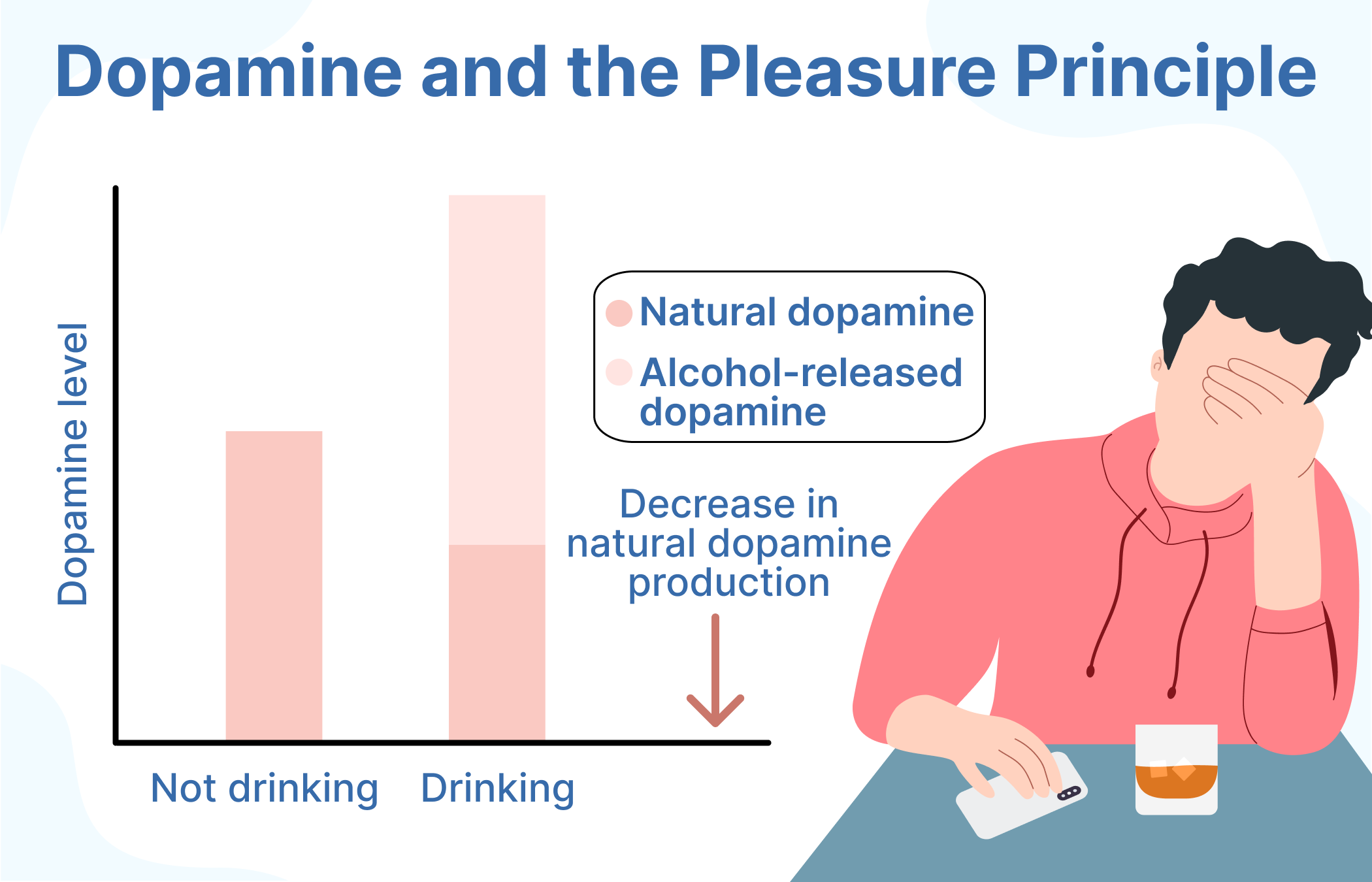
Even a small amount of alcohol can cause a significant dopamine spike. This chemical manipulation is quite powerful; studies show that alcohol’s effect on our reward system is similar to how other addictive drugs affect dopamine. This isn't about willpower; it's about brain chemistry. Over time, the brain can adapt to these frequent, artificially high levels of dopamine. It may start producing less dopamine on its own or reduce the number of dopamine receptors. As a result, you might need more alcohol to achieve the same feeling of pleasure, and natural rewards may feel less satisfying.
Why Cravings Start Before the First Sip
Have you ever felt a craving for a drink just by thinking about it? That’s your brain’s reward system at work again. The brain is excellent at making associations. It learns that certain cues—like the time of day, the sound of a bottle opening, or seeing friends drink—predict the arrival of alcohol. Just anticipating a drink can be enough to trigger a dopamine release, creating a craving before you’ve even had a drop. This is why simply the taste of alcohol can set off the cycle. This constant motivation from alcohol-related cues leads to a powerful urge to drink, which is a core part of why changing drinking habits can feel so challenging.
Why You Feel Anxious After Drinking: The Dynorphin Effect
Moreover, dopamine has a counterpart — dynorphin — which, when alcohol enters the picture, behaves a bit like an evil twin. Dynorphin is a type of endorphin — those little natural "feel-good" substances that our bodies produce. Scientifically speaking, dynorphin primarily acts on the kappa opioid receptors in our brain and spinal cord. Just as a key fits a lock, dynorphin latches onto these specific receptors, signaling to our brain to respond accordingly. It's a bit like turning down the volume dial on our body's natural pain and stress response.
While it primarily works to dampen our sensation of pain, it is also implicated in our experience of negative emotional states. When dynorphin levels go haywire — as they do when excessive levels of dopamine get released in response to alcohol consumption — it can contribute to feelings of unease, discomfort, or even dysphoria.
In an attempt to restore the brain’s chemical balance, dynorphin can actually lead to increased cravings, reinforcing the cycle of substance misuse. However, because of a build-up of tolerance, with time more and more alcohol is needed to balance out the effects. With chronic consumption, the pleasure associated with dopamine release continues to decrease: we are basically playing a never-ending game of catch-up in an attempt to relieve discomfort rather than generate pleasure.
Beyond Dopamine: Alcohol's Widespread Impact
While the dopamine rush explains the initial pleasure of drinking, the story doesn't end there. When we drink regularly, our brain's reward system starts to change. Think of it like a thermostat trying to maintain balance. To counteract the constant flood of dopamine from alcohol, the brain adapts by either producing less of its own dopamine or making its dopamine receptors less sensitive. This is why tolerance builds up, and you might find you need more alcohol to get the same buzz you once did. Over time, this adaptation can create a dopamine deficit, leaving you feeling flat or anxious when you're not drinking. This shift is crucial: instead of drinking for pleasure, the motivation can become about escaping discomfort, a cycle that reinforces dependence. The brain's wiring can be reshaped long after drinking stops, which is why understanding these changes is a key step in changing our habits for good.
How Alcohol Affects Your Brain's Decision-Maker
In addition to affecting our mood, changes in neurotransmitter levels also affect the workings of the prefrontal cortex — the area responsible for executive functions like decision-making, impulse control, and long-term planning. It's kind of like the brain's CEO, tirelessly working behind the scenes to keep everything in check. But what happens when alcohol comes into the picture?
Alcohol acts like an uninvited party guest, inducing changes that disrupt the CEO's usual duties. This intoxicating duo turns our usual restraint into a lackadaisical "why not?" approach to decision-making. This can lead to uninhibited behavior, impaired judgment, poor coordination, and memory issues — the classic signs of being tipsy or drunk. Not exactly the best scenario for a smooth-running operation, right?
But hold on! It's not just about the immediate effects; long-term, excessive drinking can cause lasting damage to the prefrontal cortex. This may result in serious problems like addiction, chronic impulsivity, mood disorders, and cognitive impairments, affecting memory, attention, and problem-solving skills. There's also evidence that heavy drinking can cause the brain to physically shrink over time. Yikes! That's definitely not the kind of party anyone wants to stick around for.
The Habituation Glitch: Why Alcohol Stays Rewarding
Normally, our brains are pretty good at getting used to things. Think about your favorite dessert. The first bite is amazing, but by the tenth, it’s not quite as thrilling. That’s called habituation, and it’s our brain’s way of telling us we’ve had enough of a good thing. But alcohol plays by a different set of rules. Research shows that unlike natural rewards, the dopamine response from alcohol doesn’t really weaken over time. It essentially creates a glitch in our brain's habituation process. Because alcohol keeps triggering that dopamine release without the usual drop-off, alcohol-related cues — like the clinking of ice in a glass or the sight of a particular bottle — gain an incredibly strong hold over our behavior, making cravings feel intense and almost automatic.
The Reward Deficit State: Needing a Drink to Feel Normal
When the brain is repeatedly flooded with dopamine from alcohol, it tries to regain balance by dialing down its own natural dopamine production and sensitivity. This adaptation leads to tolerance, meaning you need more alcohol to get the same buzz you once did. Over time, this can create what’s known as a reward deficit state. Your brain’s baseline for pleasure gets reset to a lower level, so everyday joys don’t feel as good anymore. At this point, drinking isn’t about chasing a high; it’s about trying to escape feeling low and just get back to feeling “normal.” This cycle is a core feature of dependence, and these changes to the brain’s dopamine system can persist for months, which is why building new, healthier habits is so important.
Can Your Brain Heal From Alcohol?
Fortunately, the brain is a resilient organ and has a remarkable ability to repair itself. Abstinence from alcohol can help reverse some of its negative effects, particularly on cognition and motor skills. However, it's important to note that some damage, especially those resulting from extended periods of heavy drinking, may be irreversible.
In conclusion, understanding the ways in which alcohol interacts with the brain can better inform our choices regarding its consumption. The power of this knowledge can help us make healthier decisions, reinforcing the importance of moderation and responsible drinking.
The Neurological Roots of Relapse
When you stop drinking, your brain’s reward system doesn’t just snap back to its original state. Research from Vanderbilt University shows that alcohol can create lasting changes in the brain's dopamine pathways that can stick around for at least a month. Normally, our brains habituate to rewards, meaning the dopamine hit lessens over time. But alcohol is different; it keeps triggering that dopamine release without this natural tapering effect. As a result, things associated with drinking—the clink of ice in a glass, the smell of a favorite wine, or driving past a familiar bar—become incredibly powerful cues. These triggers can spark intense cravings, making it feel like a battle against your own brain chemistry.
The Connection to Mental Well-being
The constant cycle of dopamine spikes and crashes from alcohol can lead to a significant deficit over time. When the brain gets used to alcohol-induced dopamine, it can slow down its own natural production. This means that when you’re not drinking, you may experience lower-than-average dopamine levels, leading to feelings of flatness, apathy, or general unhappiness. This state is why many people feel they need a drink just to feel "normal" or to experience pleasure. Research has also shown that these low dopamine levels are linked to depression and other mental health challenges, creating a difficult cycle where alcohol is used to self-medicate the very problem it’s contributing to.
A Timeline for Dopamine Normalization
The good news is that your brain is incredibly resilient and can recalibrate itself. While the exact timeline depends on factors like how much and how often you drank, many people find their natural dopamine production begins to return to normal after about 90 days of abstinence. During this period, your brain is essentially healing and re-learning how to produce and regulate dopamine on its own. As your levels stabilize, you’ll likely notice a gradual return of pleasure from everyday activities, a more stable mood, and a decrease in the intensity of cravings. Tracking your progress with tools like a sober day counter can be a great way to stay motivated as you give your brain the time it needs to heal.
Your Next Step: Reframe Your Relationship with Alcohol
If you’re ready to change your relationship with alcohol and make your brain healthier for years to come, the Reframe app is here to help you get started. By using the tools and skills in the app, you can start making changes in how you view alcohol and have more control over how it fits into your life, leading to positive changes in your mental well-being and overall health.
With our #1-rated app, we will give you access to daily readings that will teach you all about the science behind alcohol and how it affects your mind and body. There is a lot more to learn about alcohol and the brain, and our courses can supplement the knowledge you acquire from the readings.
You will also get a set of daily tasks to complete, including a journal prompt and other activities like guided meditations and motivational quotes to help you throughout the day. You will have access to a community of caring, compassionate people from around the world who are ready to share their stories and advice through our 24/7 Forum chat. You can also get connected with licensed coaches for one-on-one counseling sessions and daily check-in calls via Zoom.
The Reframe in-app Toolkit is a treasure trove of resources designed to help you along the way and will provide you with additional information about the way alcohol affects your body and mind. The Reframe app is free for 7 days — so go ahead and give it a try! We would love to help you make a difference in your life and are confident that we can make your journey toward brain health and overall wellness easier and more enjoyable.
Frequently Asked Questions
If alcohol is a depressant, why does it make me feel good at first? That initial happy, relaxed feeling comes from a rush of dopamine, a chemical in your brain’s reward system. Alcohol essentially tricks your brain into releasing this feel-good chemical, which is why the first drink can feel so pleasant. This happens at the same time alcohol is slowing down your brain activity through other neurotransmitters, which is what causes the depressant effects like drowsiness or slower reflexes.
Why do I get cravings just from seeing or thinking about alcohol? Your brain is incredibly good at making connections. Over time, it learns to associate certain things—like the time of day, a specific place, or even the sound of a can opening—with the dopamine rush from alcohol. When you encounter one of these cues, your brain anticipates the reward and releases a little dopamine, which creates that strong urge or craving before you’ve even taken a sip.
I've noticed I need to drink more to get the same feeling. What's happening in my brain? This is a classic sign of tolerance, and it’s your brain’s attempt to find balance. When it's repeatedly exposed to alcohol-induced dopamine floods, it adapts by becoming less sensitive to the chemical. Your brain essentially turns down the volume on its own dopamine receptors. As a result, you need more alcohol to achieve the same level of pleasure you once did from a smaller amount.
Why do I sometimes feel anxious or down after a night of drinking? That post-drinking slump is often due to a chemical rebound effect. While alcohol initially spikes dopamine, your brain releases other chemicals, like dynorphin, to counteract it and restore balance. This can lead to feelings of unease or dysphoria once the initial buzz wears off. Your brain is left with the "downer" chemicals after the "upper" ones have faded, which can contribute to that next-day anxiety.
Can my brain actually heal if I reduce my drinking? Yes, absolutely. The brain has a remarkable capacity for healing and rewiring itself. When you cut back or stop drinking, you give it a chance to recalibrate. Over time, your brain can begin to restore its natural dopamine production and sensitivity. While everyone's timeline is different, many people start to notice their mood stabilizing and finding more pleasure in everyday activities after a few months as their brain chemistry returns to a healthier balance.
Key Takeaways
Alcohol trains your brain to want more: Drinking causes a surge of the pleasure chemical, dopamine, which reinforces the habit. Your brain learns to associate alcohol with reward, making you reach for it again to repeat the feeling.
Cravings are a chemical response, not a personal failing: Your brain links environmental cues—like a specific time, place, or social setting—with drinking. These triggers can spark a dopamine release and an intense urge to drink before you’ve even had a sip.
Your brain can heal and rebalance itself: Frequent drinking can lower your brain's natural dopamine levels, making it harder to feel pleasure from everyday life. By cutting back, you give your brain the chance to recalibrate its reward system and find joy in activities again.
At Reframe, we do science, not stigma. We base our articles on the latest peer-reviewed research in psychology, neuroscience, and behavioral science. We follow the Reframe Content Creation Guidelines, to ensure that we share accurate and actionable information with our readers. This aids them in making informed decisions on their wellness journey. Learn more
Updated Regularly
Our articles undergo frequent updates to present the newest scientific research and changes in expert consensus in an easily understandable and implementable manner.