A team of researchers and psychologists who specialize in behavioral health and neuroscience. This group collaborates to produce insightful and evidence-based content.
Certified recovery coach specialized in helping everyone redefine their relationship with alcohol. His approach in coaching focuses on habit formation and addressing the stress in our lives.
Recognized by Fortune and Fast Company as a top innovator shaping the future of health and known for his pivotal role in helping individuals change their relationship with alcohol.
June 14, 2024
·
17
Reframe Content Team
June 14, 2024
·
17
From Prices to Health Risks, Rising Costs Are Making Beer Take a Back Seat.
These days, interest in beer is on the decline for economic, health, and cultural reasons.
You can save your money and avoid health complications, such as the “beer belly” and high cholesterol levels, by joining the trend to opt out of beer.
Reframe is here to help you kickstart your alcohol journey by giving you the tools to see beer (and other forms of alcohol) differently. Join our community of sober-curious users who are thriving by drinking less (or not at all!).
Remember Norm from Cheers, whose whole story was basically "Boy meets beer"? For a long time, that felt like America's story, too. But that chapter is closing. The simple, loyal relationship with a cold one is fading fast. It's not just a hunch; the data shows that beer is on the decline in America. Even the once-unstoppable craft beer scene is feeling the pressure. So, are craft beer sales declining? Yes, and it signals a bigger change in how we choose to unwind and what we're willing to pay for it.
In the world of Cheers, the beer is flowing from Season 1 to 11, and Norm gulps it down by the pitcher, episode after episode. It’s fiction, of course. Still, there’s no denying that beer has been a staple in bars around the country (and, for that matter, the globe). But things are changing, and Cheers — charming as it always will be — is starting to look a bit dated.
These days, Americans buy less beer. Breweries, bars, and restaurants are feeling the trend firsthand. But what’s behind it? Let’s find out!
Why Is Beer on the Decline in America?
"How's it going, Mr. Peterson?" "Poor." "I'm sorry to hear that." "No, I mean pour."
One of the main reasons for the downward trend? Craft beer decline.
As the name suggests, the world of “craft beers” sees the brewing process as an art. These beers are usually produced by smaller breweries. With creative names such as “Arrogant Bastard Ale” and “Hoppy Ending Pale Ale,” their colorful containers make the shelves in the beer aisle of Whole Foods look like a toy store.
This also means that they’re pricier than their mass-market counterparts. For example, a 6-pack of Dogfish Head sets us back around $13, while the same amount of regular old Budwiser is likely to run under $10. And that’s just the beginning. Similar to wine, the more rare a certain beer is, the more expensive it will be. The winner? A bottle of Nail Brewing’s Antarctic Nail Ale went for a whopping $800 at the Sea Shepherd’s auction in Fremantle. This one-of-a-kind brew has an activist twist: it was brewed with Antarctic ice brought back by the Sea Shepherd on a mission to save the whales.
Are We Witnessing the End of the Beer Era?
At the turn of the 21st century, craft beer was on the rise, with the number of microbreweries that produce them shooting up from 205 to 420 between 1995 and 2000. But, according to Forbes, 2020 marked the end of an era, as far as craft beer is concerned. Sales started to decline and were down by 2% by the middle of 2023.
As it turns out, craft beer has gotten, well, too crafty for its own good. Consumers have gotten over the magenta monsters and cartoon cats on the packaging and want affordable options. Or, perhaps, they just want something else to drink. Craft beer may have been a novelty at one point, but now there are other “kids on the (boozy) block.”
For example, studies show that other drinks — such as alcoholic seltzers — have been on the rise. The projected growth rate for hard seltzer from 2018 to 2021 has been a whopping 66%, with consumption rates growing from 14 million to 72 million cases.
How Our Views on Alcohol Are Shifting
"How's a beer sound, Norm?" "I dunno. I usually finish them before they get a word in."
The epitome of “mindless” drinking, Norm downs one after another without a second thought.
But things are changing.
The sober-curious movement is stronger than ever as more and more people are trading in alcohol-fueled brain fog, health concerns, and next-day hangovers for clarity, creativity, and authentic connection. Millennials and Gen Z consumers in particular are driving the change, opting for non-alcoholic drinks and making mocktails instead of cocktails.
This change contributes to craft beer decline, as well as the dwindling interest in beer in general these days. It also makes it unlikely that a new contender will reach the heights of popularity that craft beer once did.
But what exactly are the downsides of alcohol (and beer in particular) that are driving the shift? Let’s take a closer look.
Economic and Competitive Pressures
Beyond the cultural shifts, practical, everyday factors are playing a huge role in why people are ordering fewer beers. It often comes down to simple math and a growing number of alternatives. When your wallet and your wellness are on the line, that pint of IPA starts to look a little different.
The High Price of a Night Out
Let's be honest: going out for drinks has gotten expensive. That casual after-work beer can easily turn into a pricey habit. With many bars charging $7 or more for a single pint, the idea of a "cheap drink" feels like a thing of the past. For many, the cost just doesn't justify the experience anymore. When you start to think about what that money could be used for instead, cutting back on pricey bar tabs becomes an easy decision. If you're curious about how much you're spending, using an alcohol spend calculator can be a real eye-opener and a great first step toward re-evaluating your budget.
Competition from Cannabis and THC Drinks
The options for relaxing or socializing have expanded far beyond the bar. With the legalization of cannabis in many states, more people are choosing it as a cheaper and, for some, more enjoyable alternative to alcohol. Alongside this, a new market of THC-infused beverages is emerging, offering a different kind of buzz without the alcohol. These drinks are often inexpensive to produce and provide a novel experience that’s drawing consumers away from traditional beer. The landscape of recreational consumption is changing, and beer is no longer the only player in the game.
The Decline of Draft Beer
There’s something classic about a freshly poured draft beer, but even that tradition is fading. The sight of a bartender pulling the tap is becoming less common across the country. This decline in draft beer consumption is a strong indicator of the broader trend. As bars see less demand, they dedicate fewer tap lines to beer, opting instead for more popular alternatives. It’s a cycle that reflects changing tastes: as people explore other drinks, the infrastructure that once made beer king is slowly being dismantled in favor of what’s new and in demand.
Political and Social Influences
It might seem strange to connect a pint of beer to the political climate, but the two are more intertwined than you might think. From brand controversies to government policies, external forces are shaping what and how people drink. These influences can change consumer behavior overnight and have long-lasting effects on the industry.
When Beer Becomes Political
Brands can quickly find themselves in hot water in today's polarized environment. The Bud Light boycott in 2023 is a prime example. After the brand partnered with a transgender influencer, it faced a significant backlash that dramatically impacted its sales. This event showed that when a beer becomes a symbol in a culture war, many consumers will simply choose to spend their money elsewhere. People don’t always want their drink order to feel like a political statement, and controversy can be a powerful deterrent.
How Policy and Politics Affect Sales
Beyond consumer boycotts, government actions also play a role. Policies related to tariffs can increase the cost of imported ingredients, driving up the price of beer for everyone. Similarly, immigration policies can affect the workforce available to both breweries and the bars and restaurants that serve their products. These high-level political decisions trickle down to the consumer, influencing everything from the price of a six-pack to the availability of certain brands, subtly guiding people's purchasing habits.
Changing Social Norms and Safety
Feeling safe and comfortable is essential for a good night out, and for some, that feeling is diminishing. Reports suggest that certain groups, including some Hispanic customers, are going out less often due to safety concerns. When people don't feel secure in social settings, they're more likely to stay home. This shift not only impacts bar attendance but also affects overall beer sales, as social drinking is a huge driver of the market. A sense of community and safety is vital, and when it's compromised, industries that rely on social gatherings feel the effects.
Generational Shifts and Lifestyle Choices
Perhaps the most powerful force changing America's relationship with beer is a fundamental shift in personal values, especially among younger generations. Health, wellness, and intentional living are taking center stage, and for many, heavy drinking just doesn't fit into that picture anymore.
Learning from Previous Generations
Many Millennials and Gen Zers grew up watching the effects of a culture where heavy drinking was normalized. They saw the toll it took on the health and relationships of older relatives and friends, and they’ve made a conscious choice to do things differently. This isn't about judgment; it's about observation and a desire for a healthier, more present life. Witnessing the downsides of excessive alcohol use has inspired a generation to seek moderation and practice mindful drinking from the start.
How Life Changes Impact Drinking Habits
As we move through life, our priorities naturally change. The appeal of late nights and heavy drinking often fades with age, new responsibilities, and different goals. For many, having young children is a major turning point. The reality of being hungover while caring for a toddler is a powerful motivator to cut back. In these life stages, a clear head becomes more valuable than a temporary buzz, making non-alcoholic options a practical and appealing choice for parents and anyone else looking to stay sharp and present.
The Rise of Health-Conscious Drinkers
More than ever, people are aware of the connection between their habits and their overall well-being. We know that alcohol can contribute to a range of health issues, from liver damage and weight gain to disrupted sleep and mental fog. This growing health consciousness is driving many to reduce their alcohol intake or quit altogether. People are prioritizing their physical and mental health, and they're realizing that cutting back on beer is a simple yet effective way to feel better, have more energy, and live a healthier life.
What Beer Really Does to Your Body
What are the downsides of drinking beer, as far as health is concerned? For an in-depth look, check out “What Happens If You Drink 6 Beers a Day?” For now, here’s the gist.
1. It's More Than Just 'Empty Calories'
"What's shaking, Norm?" "All four cheeks & a couple of chins.”
It’s no secret that alcohol — including beer — is chock-full of empty calories. And although the typical 150-200 per can might not seem like that much, those cans quickly add up, especially after a few hours at a bar or at a sports game. (Just ask Norm. Although he might be too busy looking for a refill to answer you.)
That said, not all beer is created equal. Three old-time favorites — Samuel Adams Boston Lager, Guinness Extra Stout, and Sierra Nevada Pale Ale — average in the high 170s, while Anheuser-Busch Light Pale Lager, Miller Light, and other “light” varieties clock in a little under 100. Still, chugging several puts us on the track to that double chin Norm is talking about.
2. Let's Talk About the 'Beer Belly'
"Whatcha up to, Norm?" "My ideal weight if I were eleven feet tall."
The term "beer belly" isn't a myth. Those calories that come with beer tend to go to one of the worst destinations — the abdomen.
This abdominal fat isn’t just a matter of looks — it comes with serious health risks, including cardiovascular diseases. Abdominal fat is metabolically active, churning out potentially harmful molecules behind the scenes. Specifically, it contributes to the production of hormones that can have negative effects on our health. (Want to learn more? Check out “The Causes of a Beer Belly (and How To Get Rid of It).”
3. How Beer Affects Your Cholesterol
We hear about cholesterol all the time. There’s “good” cholesterol that clears our blood of gunk (such as triglycerides) that leads to heart disease. There’s also the “bad” kind that does the opposite, binding to fats that clog up our arteries.
And alcohol? Here’s where things get confusing. The media loves to repeat the popular refrain that moderate drinking (including an occasional beer) “helps” our cholesterol levels. But is it true?
Not really. While alcohol does tend to raise the levels of both “good” and “bad” cholesterol alike, any positive change is offset by the negative shift that comes with it. Beer in particular is loaded with carbs, which (along with the alcohol itself) raise triglyceride levels. (For an in-depth look, check out “How Does Drinking Beer Affect Cholesterol?”)
"Hey Mr. Peterson, Jack Frost nipping at your nose?" "Yep. Now let's get Joe Beer nipping at my liver, huh?"
Alcohol overwhelms the liver, and beer is no exception. The body sees booze as a poison and prioritizes its speedy exit. The liver is at the front lines of the process, and over time this can take a toll. Alcohol metabolism produces acetaldehyde — a compound more toxic than alcohol itself.
If the liver, which takes about an hour to metabolize one drink, can’t keep up, the toxin builds up in the body. The result? Headaches, nausea, and fatigue the next day and a rising risk of serious health problems (such as certain cancers) over time. (For more information, check out “How Much Alcohol Causes Liver Damage?”)
5. Why Beer Leaves You Dehydrated
"What's going on, Mr. Peterson?" "A flashing sign in my gut that says, 'Insert beer here.'"
One reason Norm is constantly thirsty? Beer! While his attempts to quench his thirst by gulping down another pint might make some sense at first glance, he’s missing an important point: beer dehydrates us.
That’s right, although alcohol is a liquid, it works against our hydration efforts. Alcohol suppresses the hormone vasopressin, which tells the kidneys to hold on to water. The fallout? We spend a good part of the evening in line for the bathroom, losing excessive amounts of water while continuing the counterproductive efforts to replenish it by drinking more. In fact, the next-day hangover is largely the result of dehydration from the day before.
6. Understanding the Risk of Alcohol Dependence
"What's new, Norm?" "Terrorists, Sam. They've taken over my stomach. And they're demanding beer."
Last but certainly not least, there’s the risk of dependence to consider. Over time, alcohol — including beer — creates neurotransmitter shifts in the brain that make it difficult to slow down (let alone stop) our alcohol consumption. Booze floods the brain with the reward neurotransmitter dopamine while boosting GABA (an inhibitory neurotransmitter) and decreasing glutamate, its excitatory counterpart).
The result? Our brain adjusts to the “new normal” — a shift that can eventually lead us to experience unpleasant withdrawal symptoms if we stop. Activities that used to bring us joy no longer cut it, and we keep going back to that bar stool (or fridge) for our “happiness fix.” (Check out “Alcohol Misuse vs. Dependence: What's the Difference?” for a deeper look.)
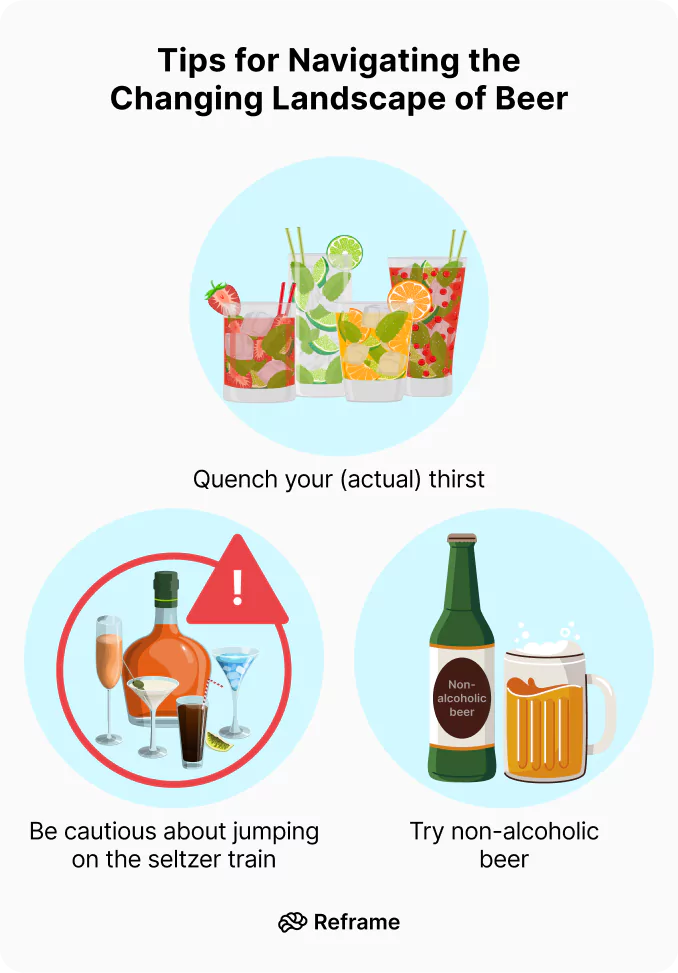
Finally, here are some tips for navigating the changing landscape of beer, bars, and beyond.
Quench your (actual) thirst. If you do drink, make sure to alternate with a glass of water after each one. Better yet, try a delicious and hydrating mocktail instead!
Be cautious about jumping on the seltzer train. Or, for that matter, any other type of alcohol. While switching from beer to something else might seem like the “lesser of two evils,” remember — all alcohol is damaging to our health. (For a closer look, check out “Beer vs. Wine: Which Is Healthier?” and “Beer vs. Liquor: Which One Is Worse?”)
Try non-alcoholic beer. Non-alcoholic beer is all the rage these days. With this version, you get the best of both worlds: an earthy kick of flavor as well as hydration. Want to know more? Take a look at “What Is the Reality of Non-Alcoholic Beer?”
Remember, just because beer has been a staple at bars, picnics, college parties, and sports games, doesn’t mean things can’t change!
All in all, while the decline of interest in beer these days is an interesting trend, why not take it further? We can take this opportunity to reexamine our relationship with alcohol in general.
It all starts with curiosity. If you look at your drinking patterns more closely and ask yourself, “Is beer really delivering on the promises of fun and relaxation? What if there’s a more fulfilling and exciting option out there — one that doesn’t leave you with a hangover or predispose you to a number of health complications?” Who knows, you might discover booze-free alternatives that are actually more satisfying, since they “keep on giving” long after the night out is over.
Frequently Asked Questions
So, is it just the fancy craft beers that are losing popularity? While the decline of expensive craft beer is a huge part of the story, the trend is bigger than that. The novelty of quirky labels and intense IPAs has worn off for many, especially as prices have climbed. But this shift has opened up a larger conversation about drinking in general, leading more people to reconsider their go-to pint of any kind, not just the crafty ones.
What are people choosing to drink instead of beer? The options have really expanded beyond the usual bar menu. Hard seltzers have become incredibly popular as a lighter alternative. In states where it's legal, cannabis and THC-infused beverages are also drawing people away from alcohol. On the other end of the spectrum, there's a growing appreciation for well-made mocktails and a new wave of non-alcoholic beers that actually taste great, catering to everyone who wants a satisfying drink without the alcohol.
Why is there such a big generational difference in drinking habits? Many younger people, particularly Millennials and Gen Z, grew up seeing the effects of a culture where heavy drinking was the norm. They’ve made a conscious choice to prioritize their mental and physical health in a way previous generations might not have. This isn't about judgment; it's about wanting to feel good, be present, and avoid the hangovers and health issues they've seen others experience.
I've heard that beer has some health benefits. Is that a myth? That's a common belief, but the full picture is more complicated. While some studies point to minor benefits from moderate drinking, they are often outweighed by the negatives. Beer is packed with calories that can lead to abdominal fat, which is linked to serious health risks. It also raises triglycerides and puts a significant strain on your liver. When you look at its overall impact, it's clear that beer isn't a health drink.
If I want to cut back on beer, what are some simple alternatives besides just switching to another alcoholic drink? This is a great question because simply swapping one type of alcohol for another doesn't address the core health concerns. A great first step is to explore the new generation of non-alcoholic beers; you might be surprised by how good they are. You can also make a habit of ordering a sparkling water with lime or asking the bartender for a creative mocktail. The key is to find a new go-to drink that you genuinely enjoy and that helps you feel good, both during the night and the morning after.
Key Takeaways
It’s More Than Just Beer: The decline in beer sales reflects a major cultural shift. People are prioritizing their wallets and their well-being, leading them to explore alternatives to traditional drinking culture for socializing and unwinding.
Health Consciousness is the New Happy Hour: More people are connecting the dots between their drinking habits and overall health. Choosing to reduce beer intake is a direct result of prioritizing physical and mental wellness, from wanting more energy to maintaining a healthy weight.
Explore Your Alternatives: This shift away from beer opens the door to better-for-you options. You can still enjoy the flavor and ritual of a cold drink by trying sophisticated non-alcoholic beers or creative mocktails that hydrate you instead of leaving you with a hangover.
1. Why is the interest in beer declining nowadays?
Interest in beer is declining due to several factors. The high price of craft beers, the rise of alternative alcoholic beverages like hard seltzers, changing attitudes toward alcohol consumption, and health concerns are all contributing to this trend. People are seeking more affordable, healthier, and innovative options.
2. What is contributing to craft beer decline?
Craft beer is brewed by smaller breweries that often see the brewing process as an art. They produce creative and unique beers that are typically more expensive than mass-market options. However, the novelty of craft beer is wearing off, and consumers are looking for more affordable and different types of alcoholic beverages.
3. How are changing attitudes toward alcohol affecting beer consumption?
Many people, especially Millennials and Gen Z, are part of the sober-curious movement. They are choosing non-alcoholic drinks and mocktails over traditional alcoholic beverages. This shift is driven by a desire for better health, mental clarity, and authentic social connections, reducing the overall interest in beer.
4. What are some health downsides of drinking beer?
Drinking beer can lead to several health issues, such as weight gain, liver damage, dehydration, and risk of alcohol dependence.
5. What alternatives to beer are people choosing?
People are increasingly opting for alcoholic seltzers, which have seen a significant rise in consumption. Non-alcoholic beers and mocktails are also gaining popularity as they offer a satisfying beverage experience without the negative effects of alcohol.
Leave Beer Behind and Get Started With Reframe!
Although it isn’t a treatment for alcohol use disorder (AUD), the Reframe app can help you cut back on drinking gradually with the science-backed knowledge to empower you 100% of the way. Our proven program has helped millions of people around the world drink less and live more. And we want to help you get there, too!
The Reframe app equips you with the knowledge and skills you need to not only survive drinking less, but to thrive while you navigate the journey. Our daily research-backed readings teach you the neuroscience of alcohol, and our in-app Toolkit provides the resources and activities you need to navigate each challenge.
You’ll meet millions of fellow Reframers in our 24/7 Forum chat and daily Zoom check-in meetings. Receive encouragement from people worldwide who know exactly what you’re going through! You’ll also have the opportunity to connect with our licensed Reframe coaches for more personalized guidance.
Plus, we’re always introducing new features to optimize your in-app experience. We recently launched our in-app chatbot, Melody, powered by the world’s most powerful AI technology. Melody is here to help as you adjust to a life with less (or no) alcohol.
And that’s not all! Every month, we launch fun challenges, like Dry/Damp January, Mental Health May, and Outdoorsy June. You won’t want to miss out on the chance to participate alongside fellow Reframers (or solo if that’s more your thing!).
The Reframe app is free for 7 days, so you don’t have anything to lose by trying it. Are you ready to feel empowered and discover life beyond alcohol? Then download our app today!
Reframe has helped over 2 millions people to build healthier drinking habits globally
At Reframe, we do science, not stigma. We base our articles on the latest peer-reviewed research in psychology, neuroscience, and behavioral science. We follow the Reframe Content Creation Guidelines, to ensure that we share accurate and actionable information with our readers. This aids them in making informed decisions on their wellness journey. Learn more
Updated Regularly
Our articles undergo frequent updates to present the newest scientific research and changes in expert consensus in an easily understandable and implementable manner.