A team of researchers and psychologists who specialize in behavioral health and neuroscience. This group collaborates to produce insightful and evidence-based content.
Certified recovery coach specialized in helping everyone redefine their relationship with alcohol. His approach in coaching focuses on habit formation and addressing the stress in our lives.
Recognized by Fortune and Fast Company as a top innovator shaping the future of health and known for his pivotal role in helping individuals change their relationship with alcohol.
July 17, 2024
·
23
Reframe Content Team
July 17, 2024
·
23
Ease the Transition to Sobriety Through Mindful Drinking
Mindful drinking is more than just a tool to help us develop a healthier relationship with alcohol; it’s also a gentle pathway to quit drinking.
We can avoid the risks of quitting alcohol cold turkey by utilizing mindful drinking as a stepping stone to an alcohol-free lifestyle.
Reframe can help us learn mindful drinking strategies to support us on our journey to sobriety!
It seems like mindfulness is the solution for everything these days, and for good reason. It’s a powerful tool for changing our habits, especially our relationship with alcohol. Mindful drinking is simply about being more present and intentional with your choices. It's not about strict rules, but about understanding why you're drinking and how it makes you feel. This simple shift in awareness can make a huge difference. To help you get started, we’ve reviewed the best mindful drinking apps, including some great free mindful drinking app options and even the best quit drinking app for those on a different path.
Meditation, for those of us who are unfamiliar with it, may not seem like an effective strategy to quit drinking. However, there have been numerous scientific studies looking into the specific benefits of mindfulness, one of which is developing a healthier relationship with alcohol. But what if we’re looking to quit alcohol? Let’s learn more about mindful drinking strategies and how they can help us transition to sobriety.
So, What Is Mindful Drinking, Anyway?
Mindful drinking is the practice of developing a healthier, more conscious relationship with alcohol. It promotes questioning why we’re drinking and reflecting on how much we’re drinking, without judgment. Mindful drinking differs from moderation or sobriety, as they are more like end goals whereas mindfulness is a practice that involves actionable steps to help us reach these goals of quitting or cutting back.
Some mindful drinking practices include the following:
Planning ahead when considering drinking, whether that’s the number of drinks you’ll have or what you’ll do after
Noticing our emotions while drinking
Identifying our triggers for drinking
Being present in the moment, both while drinking and not drinking
Identifying other coping strategies for negative emotions
Finding alternatives to drinking, whether that’s non-alcoholic beverages or different activities
These practices create a strong framework to help us quit or cut back on alcohol by promoting greater intention with our choices. Helping us develop better habits ultimately leads to better physical and mental health. Mindful drinking promises many benefits, but how does it actually work?
The Tangible Benefits of Drinking Less
When you practice mindful drinking, the positive changes aren't just abstract ideas—they're real, tangible shifts you can feel. Paying closer attention to your habits creates a ripple effect across your entire well-being, starting with small adjustments that build into significant improvements. These aren't vague wellness concepts; they are concrete benefits that can change your day-to-day life for the better. From waking up feeling rested to having more cash in your wallet, the rewards of cutting back are tangible and incredibly motivating.
Better Sleep and More Energy
One of the first things people often notice when they reduce their alcohol intake is a dramatic improvement in their sleep. While a glass of wine might make you feel sleepy, alcohol actually disrupts your sleep cycle, particularly the restorative REM stage. This is why you can sleep for eight hours after drinking and still wake up feeling exhausted. Mindful drinking can lead to good things like better sleep, more energy, a stronger immune system, and a better mood. When you give your body a break from processing alcohol overnight, you allow it to get the deep, uninterrupted rest it needs. This naturally translates to more energy and mental clarity throughout the day.
Stronger Immune System
Feeling run down or catching every cold that goes around? Your drinking habits might be playing a role. Alcohol can suppress your immune system, making it harder for your body to fight off infections. By drinking less, you give your immune system the chance to function at its best. As many users of habit-change apps report, the benefits extend beyond just physical health; they also include improving their diet, saving money, and generally feeling happier. Seeing how much you can save is a powerful motivator, and you can even use an alcohol spend calculator to see the financial benefits add up in real-time.
Understanding Drinking Patterns
A core principle of this approach is simply paying attention. Mindful drinking means paying close attention to how much alcohol you drink and how it impacts your health and daily life. It’s about becoming a curious observer of your own habits without judgment. You start to ask questions: Why am I reaching for a drink right now? How do I feel before, during, and after? What situations trigger my desire to drink? This self-awareness is the first step toward making intentional choices rather than falling into old patterns. It’s not about restriction; it’s about empowerment through understanding.
This is where technology can be an incredible ally. Instead of relying on memory alone, you can use tools to help you track your consumption and identify your triggers. Apps like Reframe are designed to support this process by providing a structured way to monitor your habits and gain insights. As the SF Standard notes, these apps offer different ways to help, like coaching, online communities, and educational tools. At Reframe, we combine neuroscience-backed daily readings, personalized drink tracking, and a supportive community to give you a comprehensive toolkit for changing your relationship with alcohol for good.
How to Start Drinking Mindfully
If we’re looking to start developing a healthier relationship with alcohol, the first step is to get “sober curious.” This idea involves questioning our personal and societal reasons we drink rather than mindlessly sipping. Getting “sober curious” increases our awareness of our drinking habits, already dipping our toe into mindful drinking strategies.
After realizing we may want to quit or cut back on alcohol, we may be looking for how to sober up. Alcohol hijacks our brain’s reward system, making it challenging to stop drinking even if we want to. On top of that, we may get withdrawal symptoms that make the experience even more unpleasant. We can explore ways to safely detox at home or find monitored options to increase our safety.
Once we’re ready to embark on our journey of quitting or cutting back, we can find support options that work best for us. There’s no shortage of treatment options, from behavioral programs, peer support groups, and a newer option that helps meet us no matter where we are in our journey — mindful drinking apps. If you’re looking to learn more about the best “quit drinking” apps, check out “Sip with Purpose: The 10 Best Mindful Drinking Apps”. There are plenty of options to choose from, but let’s take a deep dive into the top alcohol reduction app — Reframe.
Trying a Simple Framework: The 3-2-1 Drinking Rule
If "being present" with your drink feels a little abstract, a structured approach might be more your speed. The 3-2-1 drinking rule is a straightforward guideline to help you pace yourself and stay in control. The rule is simple: limit yourself to a maximum of three drinks per day, no more than two on any single occasion, and only one drink per hour. This isn't about deprivation; it's about creating a framework for intentionality. By setting clear boundaries before you take the first sip, you can shift from mindless consumption to a more conscious experience, making it easier to practice mindful drinking.
This framework does more than just limit your intake; it builds awareness. The one-drink-per-hour rule is powerful because it forces a pause, giving your body time to metabolize the alcohol and maintain a lower Blood Alcohol Content (BAC). In that space between drinks, you can check in with yourself: How are you feeling? Are you drinking out of habit or genuine enjoyment? This deliberate pacing prevents you from drinking more than intended and can lead to benefits like better sleep and more stable moods, helping you build a healthier relationship with alcohol on your own terms.
Why Reframe Might Be the Best Mindful Drinking App for You
Let’s take a walkthrough of the Reframe app to see how it can help us develop mindful drinking strategies and help us work towards an alcohol-free life. Here’s how it works:
1. A Daily Program to Build Better Habits
Reframe’s habit-changing program is the heart of the app. The neuroscience-based alcohol reduction program is developed by leading experts in the field of mental health and medicine to help us change our relationship with alcohol and build positive habits using scientific practices.
By participating in daily tasks to learn something new every day, we get one step closer to sobriety and a healthier, more fulfilling life. As we learn ways to change our habits, we can effectively develop skills to eventually quit alcohol for good.
2. Track Your Drinks and Celebrate Progress
Tracking our alcohol consumption helps us get a better idea of what our drinking habits look like over time. Reframe’s personalized drink tracker allows us to set targets that help us stay accountable day by day. It also allows us to track our progress over time, helping us adjust our goals and work toward quitting alcohol.
Ditch the old pen and paper and prevent forgetting to log a drink. Logging our consumption right there and then not only helps us more accurately keep track of our alcohol consumption but also increases our awareness of how much we’re drinking while it happens.
3. Mindfulness Tools to Manage Cravings
The journey to sobriety can be filled with a spectrum of challenging emotions. We can tune into different guided meditations and mindfulness activities to help us relax and find inner peace during any wave of emotion we may be feeling. Check out meditations from inspiration-focused ones such as “Initiating Freedom” to stress-reducing ones such as “You Are Water”.
Meditation and mindfulness practices might feel uncomfortable at first, especially in the fast-paced world we live in today. However, meditation is a scientifically proven tool to help reduce stress and quiet the mind. And some even better news? We can slowly develop these practices through Reframe’s mindfulness and meditation activities to hopefully be able to use them on our own one day!
4. Courses and Challenges to Keep You Motivated
Learn new life skills through Reframe’s science-backed courses. We can explore a range of topics to acquire practical strategies to help us quit or cut back and build a healthier and more meaningful life in general. Some course topics include alcohol and digestion, stress and the body, improving our sleep, understanding the risks of hard liquor, and much more. Don’t worry, the courses provide recorded and live videos to present everything in an informational yet entertaining way.
But there’s more! We can participate in challenges that give us the opportunity to apply our learned skills in a fun way. Monthly challenges such as Reflect December, Dry/Damp January, Mental Health May, and Outdoorsy June are just some activities you won’t want to miss. Joining Reframe’s courses and challenges is the perfect way to apply mindfulness to drinking. Educational information from the courses helps to increase our awareness, and challenges help us to use those tools to make more intentional decisions. Practice mindful drinking in a way that’s enjoyable and doesn’t seem like a chore with Reframe!
5. A Supportive Community That Gets It
Join a thriving community of over a million Reframers that’s there to support you 24/7. The Reframe community is a private, anonymous community that allows you to celebrate milestones or give and receive support from those who may know exactly what you’re going through. In addition to staying connected to others through peer matching and group challenges, we can also get more personalized guidance through check-ins with certified coaches. Quitting or cutting back on alcohol can be a challenging journey, but we don’t have to go through it alone!
Support during recovery can be much more than just a network of acquaintances. Research shows that human connection can be a powerful tool for change and growth. During our journey to sobriety, which can be filled with overcoming uncomfortable emotions and facing the aftermath of life-altering experiences, a support system can help pick us back up and motivate us to continue to work toward a brighter future.
6. Your Toolkit for Handling Tough Moments
Reframe puts everything you need to help quit or cut back on alcohol all in one place. Ditch the need for scrambling to find a pen and paper when we need to write something down or scrolling through myriad online videos to find one that distracts us or motivates us to stay committed to the journey.
If we’re looking to quit drinking, apps like Reframe allow us to tune in to a guided meditation, play a distracting game, or watch inspirational videos to help the cravings fade away. This sets us up for success, as all our tools and resources are right there at our fingertips. If we’re looking to take that leap from mindful drinking to full sobriety, how can we make that final push?
Games, Podcasts, and More
Beyond meditation, your toolkit includes a variety of engaging content designed to occupy your mind when cravings strike. You can find distracting games that help you refocus your attention or listen to insightful podcasts that reinforce your goals. These tools are more than just time-fillers; they are practical, on-demand resources that make it easier to build new routines. Studies and user experiences show that mindful drinking apps really do help people drink less by providing these kinds of accessible, in-the-moment support systems. Having these options readily available means you're better equipped to handle challenging moments and reaffirm your commitment.
7. A Science-Backed Approach With Clear Results
The entire Reframe program is built on a foundation of science, specifically neuroscience and psychology. It wasn't just designed to feel good; it was developed by medical and mental health professionals to create lasting change. The daily habit-building exercises are rooted in principles of neuroplasticity, helping you rewire your brain’s response to alcohol. The emphasis on community isn't just for moral support—it leverages the proven power of human connection in behavior change. Every tool, from the guided meditations to the educational courses, is there because evidence shows it works. This science-backed approach means you’re not just trying something new; you’re using a structured, effective method to change your relationship with alcohol for good.
Other Mindful Drinking Apps to Consider
While Reframe offers a comprehensive, science-backed program to help you change your relationship with alcohol, we know that everyone’s journey is unique. Finding the right tool that clicks with your personality and goals is what matters most. Exploring different options can help you find the perfect companion for your path to mindful drinking or sobriety. Think of it like trying on shoes — you want to find the pair that offers the best support and comfort for the road ahead. Here are a few other popular apps in the space, each with its own distinct approach to helping you build healthier habits.
Common Features to Look For
As you explore different mindful drinking apps, you’ll notice a few common threads. Most top-tier apps provide tools to track your alcohol consumption and your mood, which helps you connect the dots between how you feel and your drinking patterns. They also typically offer a library of articles and resources to help you learn more about the science of habits and alcohol’s effects on your body. Another key feature is social support, whether it’s a large anonymous forum or a small group chat. These core components create a solid foundation, giving you the awareness, knowledge, and connection needed to make lasting changes.
Sunnyside
If your goal is to cut back rather than quit completely, Sunnyside might be a great fit. This app is built around the idea of mindful moderation, helping you build healthier habits without the pressure of all-or-nothing thinking. It uses a system of personalized plans and text-based coaching to help you stay on track with your weekly goals. Sunnyside focuses on progress, not perfection, making it an approachable option for anyone who is just starting to become more intentional about their drinking and wants to reduce their consumption in a sustainable, judgment-free way.
TryDry
For those motivated by tangible results, TryDry is a fantastic free tool. Developed by the charity Alcohol Change UK, this app goes beyond simple drink tracking. It helps you visualize your progress by calculating how much money you’ve saved, the number of calories you’ve avoided, and even how your sleep quality improves over time. Seeing these concrete benefits laid out in clear graphs and numbers can be a powerful motivator. It’s a great way to stay focused on the positive changes you’re making, turning abstract goals into measurable achievements you can see every day.
WEConnect
WEConnect takes a holistic approach, focusing on overall well-being as a cornerstone of recovery. What sets this app apart is its emphasis on live, real-time connection. It offers a packed schedule of free online support meetings, including peer groups, wellness activities, and spiritual sessions. This focus on community and routine helps you build a supportive structure for your day. If you thrive on connection and feel that consistent, scheduled support would help you stay accountable, WEConnect provides a powerful network to lean on throughout your journey.
I Am Sober
As the name suggests, I Am Sober is geared toward those who are committed to achieving and maintaining sobriety. The app is centered around tracking your sober days and celebrating key milestones, which provides a steady stream of positive reinforcement. Beyond the counter, it offers daily motivational pledges, workbooks, and a vibrant community where you can share your experiences with others on the same path. It’s a structured and encouraging environment designed to help you build momentum and stay motivated, one day at a time.
Loosid
One of the biggest challenges when you stop drinking can be rebuilding your social life. Loosid is designed to solve that exact problem. It’s less of a tracking app and more of a social network for the sober community. You can use it to find sober friends or even start dating people who share your lifestyle. The app also features city guides for alcohol-free events, activities, and restaurants, making it easier to get out and have fun without feeling pressured to drink. It’s an excellent tool for building new, healthy social connections.
DrinkControl
If you’re a data-driven person, DrinkControl might be the straightforward tool you’re looking for. This app focuses on one thing and does it well: tracking your alcohol consumption. It allows you to see your drinking patterns over weeks, months, and years, presenting the information in easy-to-read charts and graphs. You can also track how much you’re spending on alcohol, which can be a real eye-opener. By putting the hard data right in front of you, DrinkControl helps you objectively assess your habits and make informed decisions about the changes you want to make.
Less
Sometimes, simplicity is key. Less is a free, beautifully designed app that makes tracking your drinks feel less like a chore. It uses a clever visual metaphor — an animated sailing ship — to represent your progress. As you stick to your goals, your ship sails smoothly; if you go over your limit, the seas get a little choppy. This lighthearted, gamified approach can make the process of cutting back feel more engaging and less clinical. It’s a great choice for anyone who wants a simple, visually appealing tool to help them stay mindful of their consumption.
Drinker's Helper
While large communities can be great, some people find more strength in smaller, more intimate groups. Drinker's Helper is designed around this idea, connecting users in small support groups with others who have similar goals. This fosters a strong sense of accountability and camaraderie, as you get to know the people you’re sharing the journey with. The app also offers exercises based on cognitive behavioral therapy (CBT) to help you manage cravings and identify triggers, providing both peer support and practical, evidence-based tools for change.
Finch
Finch isn’t strictly a mindful drinking app, but its unique approach to self-care can be a powerful ally on your journey. In this app, you care for a virtual pet penguin by completing your own self-care goals. You can set goals related to drinking less, but also for things like meditating, journaling, or getting outside. As you check off your real-life tasks, your little penguin grows and goes on adventures. This fun, gamified system makes building healthy habits feel rewarding and can be a gentle way to incorporate mindfulness into your daily routine.
Sobriety Counter – Stop Drinking (EasyQuit)
For those whose primary goal is to stop drinking entirely, Sobriety Counter (EasyQuit) offers a focused and motivating experience. The app is built around tracking your sober time down to the second, but it also includes features to keep you inspired. It shows you the health benefits you’re regaining over time, such as improved organ function, and includes memory games to help you fight off cravings. It’s a straightforward, no-frills tool designed to provide constant encouragement for anyone committed to a life of sobriety.
Important Note: When an App Isn't Enough
While apps are incredible tools for building awareness, fostering community, and learning new coping skills, it’s crucial to recognize their limitations. They are designed for support, not as a substitute for professional medical treatment. If you are experiencing significant withdrawal symptoms when you try to cut back, or if you believe you may have a severe Alcohol Use Disorder (AUD), an app alone is not enough. Symptoms like shaking, anxiety, nausea, or seizures can be dangerous and require medical supervision. A healthcare professional can create a safe detoxification plan and connect you with the appropriate level of care, which might include therapy, medication, or inpatient programs. Your health and safety are the top priority, so please reach out for professional help if you feel your drinking has become a serious health concern.
When Mindful Drinking Leads to Sobriety
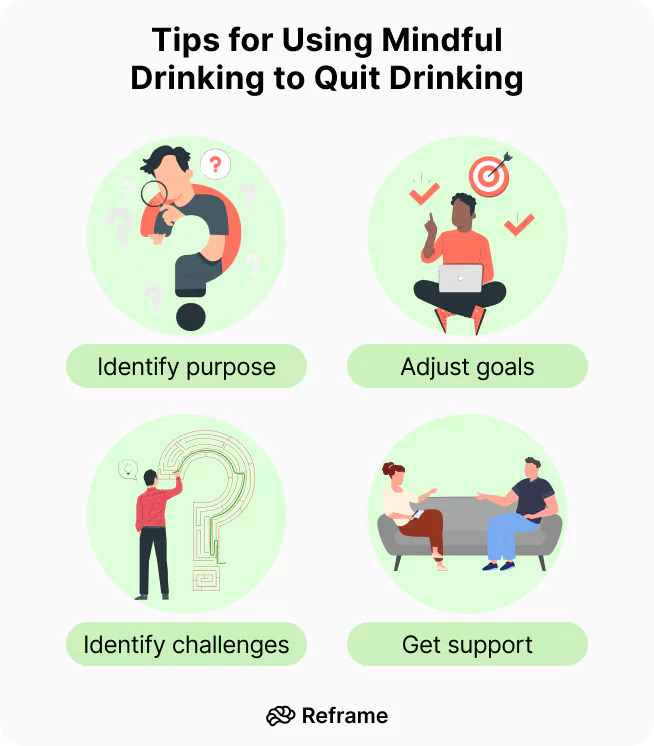
There’s no right or wrong way to reach sobriety, nor any correct timeline for it. If we feel ready to take that next step from mindful drinking to sobriety, we can continue to implement these same strategies with a different end goal in mind:
Find your purpose. Having something to work towards can be a significant motivator to take that step towards sobriety or keep going when things get tough. Our end goal may be to quit alcohol, but it’s also important to ask ourselves why. To develop more authentic relationships? To improve our physical and mental health? Our purpose acts as our guiding light on our journey to sobriety.
Adjust goals accordingly. Taking that step from mindful drinking to sobriety includes adjusting our goals with that endpoint in mind. Instead of limiting our consumption, we can identify alternative coping strategies to drinking and opt for alcohol-free alternatives.
Continue to cut back.Small steps add up over time and help us get to our end goal. If we’re looking to say goodbye to alcohol for good, we can set goals to cut back on alcohol weekly, eventually reducing our consumption to zero.
Identify challenges. The journey to sobriety can be riddled with obstacles and challenges. Identifying what these are, such as our triggers for drinking and underlying factors for our habits, helps us overcome them and commit to an alcohol-free lifestyle.
Get support. As we’ve mentioned, support can be a hugely beneficial tool in recovery. Open up to close friends and family, get involved in mindful drinking apps like Reframe, or explore professional treatment options.
Quitting cold turkey may work for some of us, but for others, we may be looking to transition into sobriety. Whichever we choose, tools like mindful drinking apps that promote science-based strategies can help us reach our goals.
Ready to Redefine Your Relationship with Alcohol?
Mindful drinking isn’t a magical solution, but it can be an incredibly beneficial tool not only for developing a better relationship with alcohol but also for quitting it altogether. The two main mechanisms of increasing our awareness and making more intentional decisions help us reach sobriety in a transitional way. Luckily, there are many helpful tools to guide us on our mindful drinking journey, including mindful drinking apps like Reframe! Take the first step towards a healthier, happier life by embracing mindful drinking!
Frequently Asked Questions
Is mindful drinking just another term for moderation? Not exactly. Think of moderation as a potential outcome, like a destination on a map. Mindful drinking is the practice you use to get there—it's the act of paying attention to your route. It’s about asking why you’re reaching for a drink and noticing how it affects you, which empowers you to make intentional choices. This awareness is what helps you naturally reduce your intake, rather than just following a strict rule.
Do I have to want to quit drinking forever to benefit from an app like Reframe? Absolutely not. These tools are designed to meet you wherever you are. Whether your goal is to cut back for Dry January, stick to a certain number of drinks per week, or explore a completely sober lifestyle, the focus is on building self-awareness. The app provides the framework to help you understand your habits and work toward whatever goal feels right for you, without pressure or judgment.
What if I try mindful drinking but still have a night where I drink more than I intended? That’s completely normal, and it’s important to approach it with curiosity, not criticism. A slip-up doesn't erase your progress. Instead of feeling guilty, you can use it as a learning opportunity. Ask yourself what led to that situation and what you might do differently next time. This is a journey of building new skills, and every step—even the wobbly ones—is part of the process.
How is using a mindful drinking app different from just tracking my drinks in a notebook? While a notebook is a great start for building awareness, a dedicated app like Reframe offers a much more comprehensive toolkit. Beyond simple tracking, it provides a structured, science-backed program, guided meditations to manage cravings, educational courses, and a supportive community of people who understand what you're going through. It’s the difference between having a map and having a full navigation system with a co-pilot.
Can mindful drinking apps replace professional help for a serious drinking problem? No, and this is a crucial distinction. These apps are powerful tools for support, education, and habit change, but they are not a substitute for medical treatment. If you experience withdrawal symptoms like shaking or severe anxiety when you try to stop drinking, or if you feel your consumption is a serious health concern, it is essential to speak with a doctor or a qualified professional. Your safety always comes first.
Key Takeaways
Focus on the 'why,' not just the 'what': Mindful drinking starts with getting curious about your motivations and triggers. By understanding your patterns without judgment, you can make intentional choices that feel good to you, rather than just following rigid rules.
Find an app that fits your personal goals: Whether you want to cut back, quit entirely, or just track your habits, there's a tool for you. The key is to find an app with features—like tracking, community, or educational content—that support your specific path.
Prioritize your safety and know when to get professional help: Apps are fantastic support tools, but they don't replace medical advice. If you experience withdrawal symptoms or feel your drinking is a serious health issue, it's essential to speak with a healthcare professional.
1. How do mindful drinking strategies help me quit alcohol?
Mindful drinking strategies increase our awareness and help us make intentional decisions, which in turn help us prioritize our health and say no to alcohol.
2. Are mindful drinking apps the same as “quit drinking” apps?
Sometimes. Mindful drinking apps may focus on developing a healthier relationship with alcohol whereas “quit drinking” apps focus more on reaching sobriety.
3. Are sober apps also for those of us who want to explore mindful drinking?
Yes! Sober apps promote helpful tools that can help us develop a healthier relationship with alcohol, even if we don’t want to quit completely.
4. How do I start mindful drinking?
The first step to mindful drinking is getting curious about sobriety and questioning our drinking habits.
5. Can “stop drinking” apps help me transition from mindful drinking to sobriety?
Yes. Mindful drinking strategies that apps promote can help us work towards an alcohol-free lifestyle.
Quit or Cut Back on Alcohol With Reframe!
Although it isn’t a treatment for alcohol use disorder (AUD), the Reframe app can help you cut back on drinking gradually, with the science-backed knowledge to empower you 100% of the way. Our proven program has helped millions of people around the world drink less and live more. And we want to help you get there, too!
The Reframe app equips you with the knowledge and skills you need to not only survive drinking less, but to thrive while you navigate the journey. Our daily research-backed readings teach you the neuroscience of alcohol, and our in-app Toolkit provides the resources and activities you need to navigate each challenge.
You’ll meet millions of fellow Reframers in our 24/7 Forum chat and daily Zoom check-in meetings. Receive encouragement from people worldwide who know exactly what you’re going through! You’ll also have the opportunity to connect with our licensed Reframe coaches for more personalized guidance.
Plus, we’re always introducing new features to optimize your in-app experience. We recently launched our in-app chatbot, Melody, powered by the world’s most powerful AI technology. Melody is here to help as you adjust to a life with less (or no) alcohol.
And that’s not all! Every month, we launch fun challenges, like Dry/Damp January, Mental Health May, and Outdoorsy June. You won’t want to miss out on the chance to participate alongside fellow Reframers (or solo if that’s more your thing!).
The Reframe app is free for 7 days, so you don’t have anything to lose by trying it. Are you ready to feel empowered and discover life beyond alcohol? Then download our app through the App Store or Google Play today!
Reframe has helped over 2 millions people to build healthier drinking habits globally
At Reframe, we do science, not stigma. We base our articles on the latest peer-reviewed research in psychology, neuroscience, and behavioral science. We follow the Reframe Content Creation Guidelines, to ensure that we share accurate and actionable information with our readers. This aids them in making informed decisions on their wellness journey. Learn more
Updated Regularly
Our articles undergo frequent updates to present the newest scientific research and changes in expert consensus in an easily understandable and implementable manner.