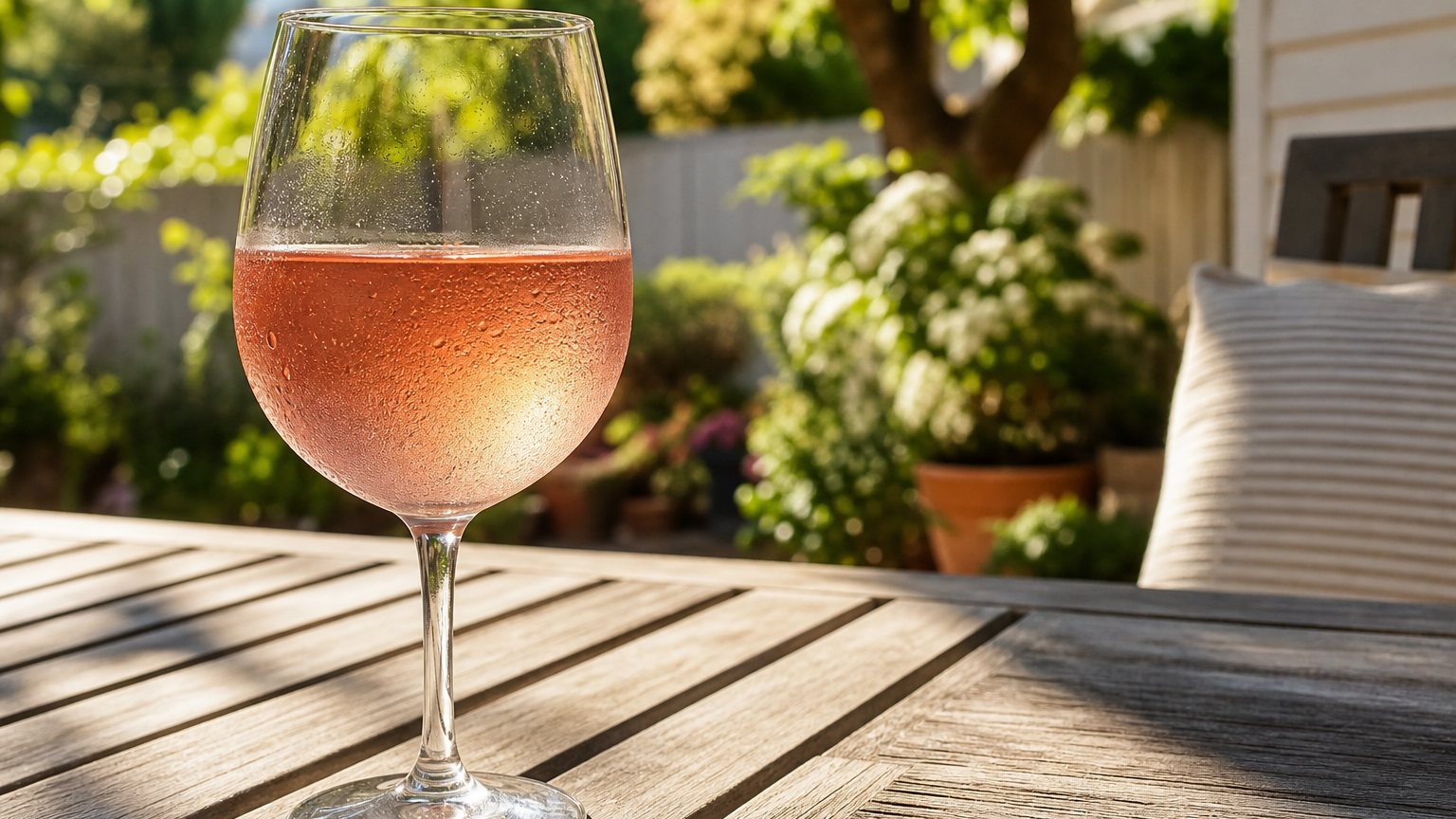
What Does Drinking Rose Every Day All Summer Do to Your Body?
Published:
2026-08-21
·
Read time:
12 min read
Last Updated:
2026-08-21
Written by
Reframe Content Team
A team of researchers and psychologists who specialize in behavioral health and neuroscience. This group collaborates to produce insightful and evidence-based content.
Certified recovery coach specialized in helping everyone redefine their relationship with alcohol. His approach in coaching focuses on habit formation and addressing the stress in our lives.
Recognized by Fortune and Fast Company as a top innovator shaping the future of health and known for his pivotal role in helping individuals change their relationship with alcohol.
August 21, 2026
·
12 min read
Reframe Content Team
August 21, 2026
·
12 min read
Drinking a glass or two of rose every day through the summer quietly adds up in ways a single evening never shows: a season of daily wine can mean tens of thousands of extra calories and a steady sugar load, more dehydration in the heat, fragmented sleep on those long light evenings, and a weekly volume that creeps well past where you think it is. The "rose all day" habit feels casual precisely because it is spread out, which is exactly what makes the cumulative toll easy to miss. None of this makes you a problem drinker; it is just what a normalized daily pattern does over three months. Reframe helps you see that pattern clearly and decide, glass by glass, whether it is still serving you.
What a Summer of Daily Rose Really Does to Your Body
Drinking a glass or two of rose every day through the summer quietly adds up in ways a single evening never shows: a season of daily wine can mean tens of thousands of extra calories and a steady sugar load, more dehydration in the heat, fragmented sleep on those long light evenings, and a weekly volume that creeps well past where you think it is. The "rose all day" habit feels casual precisely because it is spread out, which is exactly what makes the cumulative toll easy to miss. None of this makes you a problem drinker; it is just what a normalized daily pattern does over three months. Reframe helps you see that pattern clearly and decide, glass by glass, whether it is still serving you.
Let's talk honestly about the drink that basically became a summer personality trait. Rose earned its "all day" reputation because it is light, pink, easy, and socially frictionless: nobody blinks at a chilled glass on a patio at 4 p.m. That ease is the whole point, and also the whole problem. A big night out gets remembered, counted, and sometimes regretted. A nightly glass just evaporates from memory. This post is not here to talk you out of rose or make you feel bad about wine o'clock. It is here to run the arithmetic that usually goes unrun, because once you can actually see the season-long numbers, you get to make a real choice instead of a default one.
How does daily rose add up over a whole summer?
Here is the short version: a nightly glass of rose across a three-month summer stacks up to roughly 11,000 calories, and two glasses a night roughly doubles that to over 22,000, plus a steady drip of sugar that varies with how sweet your bottle is. The reason it sneaks up on you is structural. Daily-and-casual hides the total in a way a single big night never could.
The calorie math nobody runs
A standard 5-ounce glass of dry table wine contains roughly 120 to 130 calories, according to USDA data cited by Wine Spectator. Higher-alcohol wines run a little more, lower-alcohol ones a little less, but 125 or so is a fair working number for a glass of rose. Now do the multiplication that almost nobody actually does. One glass a night, times 90 summer days, lands around 11,250 calories. Make it two glasses a night, and you are at roughly 22,500 for the season, and that is before you count the chips, the cheese board, and the "well, I'm already snacking" momentum that tends to ride along with wine. Those calories are what many sources describe as "empty," meaning they arrive with almost no nutrition attached. As the NIAAA notes, alcohol supplies calories but few nutrients and may contribute to unwanted weight gain, which is why these are often described as "empty" calories. If you want to see your own season-long figure instead of ours, Reframe's alcohol calorie calculator turns your actual pours into a number you can look at.
Where the hidden sugar lives in your glass
Rose is not automatically sugary, but it is not automatically dry either, and that ambiguity is where people get surprised. The sugar and carbohydrate load in wine varies widely by style: a typical dry wine has around 4 grams of carbohydrate per 5-ounce pour, while a sweet dessert wine can deliver about 20 grams, per Wine Spectator. Rose sits somewhere on that spectrum depending on whether you reached for a crisp Provence-style bottle or something distinctly fruitier and off-dry. The point is not to hunt down the exact grams in your glass; it is to notice that when you drink daily rather than occasionally, even a modest sugar load compounds across the summer. Drier styles carry much less, which is worth knowing if you want the ritual without as much of the residual sweetness.
The deeper issue is that the casual framing hides the total. Nobody tallies wine o'clock the way they would a blowout weekend, so the season-long sum stays invisible. And there is a volume-creep problem baked in: a single nightly glass at a backyard hangout easily becomes two or three when the weather is perfect and the social calendar cooperates. Each individual pour still feels moderate, which is exactly why the running total escapes notice.
Why does summer heat make daily drinking harder on your body?
Summer stacks two dehydrating forces on top of each other, and daily drinking keeps both of them running. Alcohol acts as a diuretic, partly by suppressing vasopressin, the hormone that tells your kidneys to hold onto water, so you shed more fluid than you take in. Layer that on top of a hot day where you are already sweating out water and electrolytes, and you are effectively starting each drink from a fluid deficit.
Think of your body in July as a bucket with a slow leak already in it. Heat and sweating are the leak; the diuretic effect of alcohol is you tipping a little more water out on purpose. Poolside and daytime drinking is where this gets sneaky, because you are often reaching for that first rose while already mildly dehydrated from the sun, not before. That combined deficit is what tends to intensify the next-day fatigue, dry mouth, and low-grade headaches that make a hot-weather glass feel like it punched above its weight. Reframe has written more about why alcohol seems to hit harder in the heat if you want to go deeper on the mechanism.
None of this means you have to swear off a patio glass. It means the usual advice runs backwards in summer: hydration and pacing matter more when it is hot, not less. Alternating water with wine, front-loading fluids before you start, and eating alongside the glass all blunt the compounding effect. If you want a practical, non-preachy version of that, Reframe's guide to drinking safely in the heat lays it out.
How does a nightly glass of wine wreck your summer sleep?
Even one evening drink degrades sleep quality, and doing it nightly across a whole summer turns an occasional rough night into a standing debt. The frustrating part is that alcohol genuinely helps you fall asleep faster, which is why it feels like it is working. What it does after that is the problem: it suppresses REM sleep and fragments the back half of the night, so your total hours can look fine while the quality quietly craters. Reframe covers this in more detail in its piece on how alcohol affects REM sleep.
Summer makes this worse before you have even poured. Long daylight and late sunsets already push your bedtime later and shorten the window your body has to work with, so you are compressing already-compromised sleep into a smaller slot. Do that seven nights a week for three months and you are not having a bad night here and there; you are carrying a chronic sleep debt across the season.
Here is the loop that quietly closes. Poor sleep feeds next-day fatigue, flatter mood, and stronger cravings, and those are exactly the conditions under which the evening drink starts to feel more earned. You slept badly, you dragged through the day, and now the rose reads like a reward you deserve. That is not a character flaw; it is a self-reinforcing cycle where worse sleep makes tomorrow's pour more automatic. Recognizing the loop is most of what it takes to interrupt it.
How does casual daily rose quietly turn into more than you meant to drink?
The honest answer is that it rarely feels like escalation while it is happening, because escalation on a daily pattern is almost impossible to feel one glass at a time. The mechanism is a habit loop, and it is worth understanding because it is doing more of the driving than your conscious preference is.
What the wine o'clock cue is really doing
A habit loop has three parts, a cue, a routine, and a reward, which lets the brain run a learned behavior automatically once the cue fires, as Psychology Today describes. For summer rose, the cue is reliable and everywhere: the sun dropping, the workday ending, the patio, the specific hour. Once that cue is wired to the pour, you are not really deciding to drink each night; you are running a routine on autopilot, and the reward (relaxation, transition, a little dopamine) reinforces it every single time. That is why "I'll just have one" so often stops being a decision. If you are curious where your own patterns sit, the What Type of Drinker Are You? quiz is a low-stakes way to look. Reframe's mindful drinking program is essentially built around catching that cue-routine-reward sequence before it runs.
Two more forces push the same direction. Tolerance tends to nudge upward over a season, so the same relaxation gradually asks for a little more wine, a shift that is generally understood as a normal adaptation rather than anything alarming. And because each night reads as moderate, the weekly total almost never gets counted. The single most clarifying thing you can do is track one honest week, every pour, actual size. People are frequently startled to find their real number sits well above low-risk guidelines, without a single "bad" night anywhere in it. If that lands, Reframe has a straightforward guide to how much wine is genuinely too much.
What happens to your body when you take a break from daily rose?
The upside of a cumulative habit is that it works in reverse too: ease off and the season's math starts unwinding, often faster than you would guess. This is not an all-or-nothing proposition. Even trimming the pour or adding a couple of alcohol-free nights a week shifts the totals in your favor.
Sleep tends to be the first thing you notice. Controlled sleep research supports a REM rebound once nightly alcohol stops, meaning the deep, restorative stages your evening glass was suppressing start returning. The studies are small and short, so the exact timeline is fuzzy, but many people report sharper, more consolidated sleep within days to a couple of weeks. Reframe's one-week better-sleep plan is built around exactly that window.
Over a longer stretch, the calorie and sugar arithmetic runs backwards. Cutting a nightly glass or two removes a meaningful, steady input, and across roughly a month that can show up as shifts in weight, steadier energy, and a more even mood. Daytime hydration improves once you are not compounding a summer fluid deficit every evening, which tends to mean fewer of those low-grade afternoon headaches. And as the sleep debt lifts, the wine o'clock loop weakens on its own: better-rested days generate fewer late-afternoon cravings, so the evening pour stops feeling quite so earned. The whole pattern loosens from both ends at once.
When is daily summer drinking a sign to look closer, not just cut back?
Most of the time, a normalized summer rose habit is exactly that, a habit, and the response is honest curiosity rather than concern. But there are signals worth noticing, and the goal here is information, not a label. It is worth looking closer if you find yourself drinking earlier in the day, needing the drink to relax rather than simply enjoying it, or genuinely struggling to skip a night when you intend to.
Short of that, a self-assessment can help you locate yourself without any labeling. The Am I Drinking Too Much? quiz is a private way to gauge where you fall, and if you would rather just start noticing your own patterns, you can download Reframe and begin tracking. What actually shifts a pattern is not shame, which mostly makes people defensive and secretive. It is honest data and a little curiosity about what the habit is really giving you, and whether it is still worth what it costs.
Summary FAQs
1. How many calories are in a summer of daily rose?
A standard 5 oz glass of rose is roughly 120 to 130 calories, so one glass a night for a 90-day summer adds up to around 11,250 calories, and two a night roughly doubles that to over 22,000. That is comparable to several pounds of potential weight gain from the drinks alone, before counting the snacks that tend to come with them. Running your own numbers through a calorie calculator often makes the season total feel a lot more real.
2. Does rose have a lot of sugar?
Rose varies widely, but many styles carry noticeable residual sugar, and off-dry or sweeter roses can add several grams per glass. Because you are drinking it daily rather than occasionally, that sugar and carbohydrate load accumulates over the summer. Drier styles have less, but the alcohol itself still contributes calories your body processes before anything else.
3. Why does wine dehydrate me more in summer?
Alcohol acts as a diuretic, meaning it makes your body shed more fluid than you take in, and summer heat and sweating already pull water and electrolytes out of you. Drinking in that state stacks two dehydrating forces on top of each other, which intensifies next-day fatigue and headaches. This is why the same glass can feel like it hits harder on a hot day.
4. Can a nightly glass of wine really affect my sleep?
Yes. Even a single evening drink helps you fall asleep faster but suppresses REM sleep and fragments the back half of the night, so your sleep quality drops even if your total hours do not. Done nightly across a summer, it turns into a chronic sleep debt that feeds fatigue, low mood, and stronger cravings the next day. Long summer daylight already shortens sleep windows, so the effect compounds.
5. How do I know if my casual summer drinking has crept up?
The clearest way is to actually count a full week's drinks rather than judge night by night, since each individual pour feels moderate. Home pours are usually larger than the official 5 oz, and a reliable evening cue like sunset or the end of the workday can make the drink automatic. Many people find their honest weekly total sits well above low-risk guidelines without any single big night.
6. What happens if I stop drinking rose every day?
Most people notice their sleep quality and REM rebound within days to a couple of weeks, along with steadier daytime hydration and fewer low-grade headaches. Cutting the daily calorie and sugar load can shift weight, energy, and mood over about a month. You do not have to quit entirely to benefit; adding alcohol-free days or scaling back the pour changes the cumulative math too.
7. When should I be concerned about daily summer drinking?
It is worth looking closer if you find yourself drinking earlier in the day, needing the drink to relax, or struggling to skip a night. Physical signs like shakiness, sweating, or anxiety when you do not drink can indicate dependence and warrant a conversation with a clinician; never stop heavy daily drinking abruptly on your own if those symptoms appear. Approaching it with honest curiosity rather than shame is what actually helps the pattern shift.
Ready to Rethink Your Rose o'Clock Habit This Summer?
Although it isn't a treatment for alcohol use disorder (AUD), the Reframe app can help you cut back on drinking gradually with the science-backed knowledge to empower you 100% of the way. Our proven program has helped millions of people around the world drink less and live more. And we want to help you get there, too!
The Reframe app equips you with the knowledge and skills you need to not only survive drinking less, but to thrive while you navigate the journey. Our daily research-backed readings teach you the neuroscience of alcohol, and our in-app Toolkit provides the resources and activities you need to navigate each challenge.
You'll meet millions of fellow Reframers in our 24/7 Forum chat and daily Zoom check-in meetings. Receive encouragement from people worldwide who know exactly what you're going through! You'll also have the opportunity to connect with our licensed Reframe coaches for more personalized guidance.
Plus, we're always introducing new features to optimize your in-app experience. We recently launched our in-app chatbot, Melody, powered by the world's most powerful AI technology. Melody is here to help as you adjust to a life with less (or no) alcohol.
And that's not all! Every month, we launch fun challenges, like Dry/Damp January, Mental Health May, and Outdoorsy June. You won't want to miss out on the chance to participate alongside fellow Reframers (or solo if that's more your thing!).
The Reframe app is free for 7 days, so you don't have anything to lose by trying it. Are you ready to feel empowered and discover life beyond alcohol? Then download our app through the App Store or Google Play today!
Reframe has helped over 2 millions people to build healthier drinking habits globally
At Reframe, we do science, not stigma. We base our articles on the latest peer-reviewed research in psychology, neuroscience, and behavioral science. We follow the Reframe Content Creation Guidelines, to ensure that we share accurate and actionable information with our readers. This aids them in making informed decisions on their wellness journey. Learn more
Updated Regularly
Our articles undergo frequent updates to present the newest scientific research and changes in expert consensus in an easily understandable and implementable manner.
Wine Spectator. (2023). How many calories are in a glass of wine? Wine Spectator.
National Institute on Alcohol Abuse and Alcoholism. (n.d.). Alcohol calorie calculator. Rethinking Drinking. U.S. Department of Health and Human Services.
Feige, B., Gann, H., Brueck, R., Hornyak, M., Litsch, S., Hohagen, F., & Riemann, D. (2006). Effects of alcohol on polysomnographically recorded sleep in healthy subjects. Alcoholism: Clinical and Experimental Research, 30(9), 1527–1537.
Psychology Today. (2025, June). The neuroscience of drinking on autopilot. Sober Curiosity.
Wine Spectator. (2013). What's in a glass? Study shows wine drinkers fail to gauge serving size. Wine Spectator.
National Institute on Alcohol Abuse and Alcoholism. (n.d.). Understanding alcohol use disorder. U.S. Department of Health and Human Services.
American Psychiatric Association. (n.d.). What is alcohol use disorder? psychiatry.org.