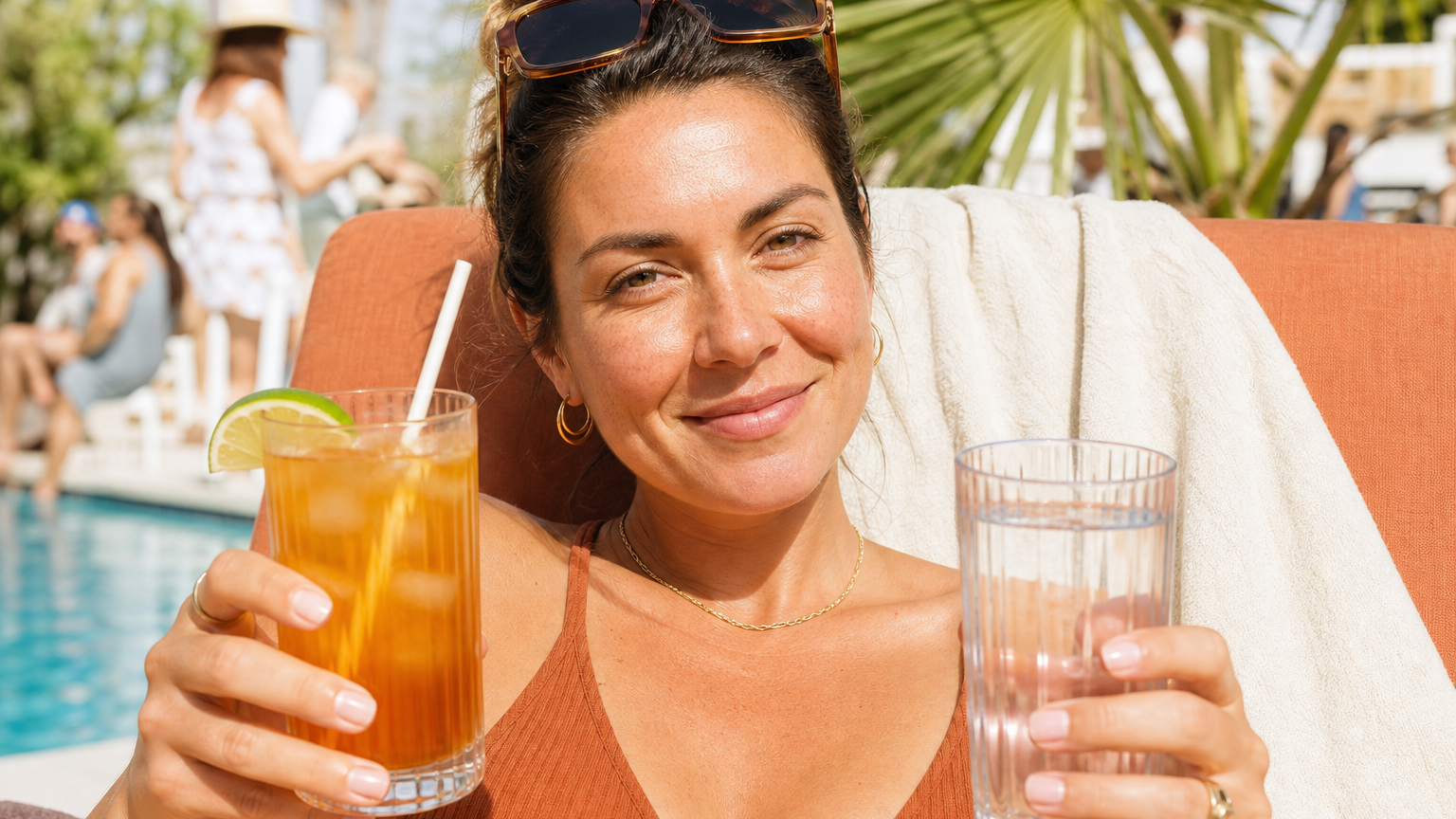
How to Pace Yourself Drinking at a Pool Party in the Heat
Published:
2026-08-14
·
Read time:
10 min read
Last Updated:
2026-08-14
Written by
Reframe Content Team
A team of researchers and psychologists who specialize in behavioral health and neuroscience. This group collaborates to produce insightful and evidence-based content.
Certified recovery coach specialized in helping everyone redefine their relationship with alcohol. His approach in coaching focuses on habit formation and addressing the stress in our lives.
Recognized by Fortune and Fast Company as a top innovator shaping the future of health and known for his pivotal role in helping individuals change their relationship with alcohol.
August 14, 2026
·
10 min read
Reframe Content Team
August 14, 2026
·
10 min read
To pace yourself drinking at a pool party, anchor every alcoholic drink to a glass of water, slow your cadence to no more than one drink per hour, and treat an all-day event like a marathon rather than a sprint since there is no clear "end of night" cutoff to stop you. Heat, sun, and physical activity accelerate both dehydration and how drunk you feel, so the same number of drinks hits harder poolside than it would indoors at night. Reframe can help you plan a cadence ahead of time so a fun day in the sun does not quietly turn into a binge.
Pacing Drinks at a Pool Party: The Short Version
To pace yourself drinking at a pool party, anchor every alcoholic drink to a glass of water, slow your cadence to no more than one drink per hour, and treat an all-day event like a marathon rather than a sprint since there is no clear "end of night" cutoff to stop you. Heat, sun, and physical activity accelerate both dehydration and how drunk you feel, so the same number of drinks hits harder poolside than it would indoors at night. Reframe can help you plan a cadence ahead of time so a fun day in the sun does not quietly turn into a binge.
There is a specific kind of afternoon that starts with sunscreen and a cold drink at noon and ends, somehow, with you feeling wrecked by 4 p.m. and wondering where the day went. Nobody plans for that. It usually happens because a pool party breaks all the normal rules that keep a night out contained: there is no last call, no closing time, no cab arriving at eleven. Just sun, snacks, a cooler that keeps refilling itself, and hours that blur together.
The good news is that pacing drinking at a pool party is mostly about a few small, repeatable habits, not willpower or white-knuckling through the whole event. We are not here to talk you out of having fun in the sun. We are here to help you still feel like a person at the end of it. Let's get into how heat changes the math, how to build a cadence that survives a six-hour day, and where the line between a pacing question and a genuine safety one actually sits.
Why does alcohol hit harder at a pool party in the heat?
The honest answer is that a lot of what feels like "getting drunk faster in the heat" is a felt experience rather than a proven chemistry change. Drinks tend to hit harder poolside because your body is already under strain from sun, sweat, and movement, so alcohol lands on top of a system that is working overtime. The subjective intensity can easily outrun your actual blood alcohol level, which is exactly why the surprise sneaks up on people.
One real mechanism at play is what alcohol does to your circulation. Alcohol widens the blood vessels near your skin, shunting warm blood from your core toward the surface, which is why a drink makes you feel flushed and warm, according to toxicologist Ted Simon via Live Science. In a hot, sunny setting, that warm-and-loose feeling stacks onto the heat you are already absorbing, and the whole thing can read as "wow, this is hitting me." Worth noting: there is no strong evidence that ambient heat measurably speeds up how fast your body absorbs alcohol, so we are talking about how it feels, not a faster pharmacological clock.
Then there is dehydration, which is the bigger practical culprit. Alcohol works as a diuretic by suppressing vasopressin, a hormone that tells your kidneys to hold on to fluid, so it increases urination and nudges you toward mild dehydration, as the NIAAA describes. Now add a sun that has you sweating steadily for hours. The fluid loss from drinking and the fluid loss from heat compound each other, and dehydration is a big part of why alcohol's rougher effects (thirst, fatigue, that pounding head) show up faster and feel worse.
The setting itself does the rest of the work. Physical activity, swimming laps, tossing a ball, standing in the sun, burns through energy and can mask how much you have actually had, because you feel active and alert instead of sluggish. Festive, sunny gatherings also encourage faster, more frequent sipping without you clocking it, since a drink in the sun goes down easy and there is always someone topping off the cooler. Put it together and the takeaway is simple: poolside, the same drink count that would feel fine on a Friday night indoors can leave you noticeably more affected. Curious where your own patterns land? Reframe's What Type of Drinker Are You? quiz is a low-pressure place to start.
How do you set a drinking cadence for an all-day event?
The single most useful move for pacing drinking at a pool party is to decide your cadence before you arrive, when you are clear-headed and not standing next to a cooler. A workable baseline is no more than one standard drink per hour, alternating each drink with a full glass of water, front-loading food, and reaching for lower-strength options to stretch the day. Set a rough total for the whole event too, so you have a number to steer by rather than a vibe.
That one-drink-per-hour rule is not arbitrary. Your liver can only clear roughly one standard drink per hour, so anything faster and the alcohol starts to accumulate in your blood rather than getting processed, per the California Department of Alcoholic Beverage Control. Individual rates vary, so treat it as an approximate ceiling, not a precision guarantee. And "one standard drink" is doing a lot of work here: in the U.S. that means about 14 grams of pure alcohol, roughly a 12 oz beer at 5% ABV, 5 oz of wine at 12% ABV, or 1.5 oz of spirits at 40% ABV, according to the NIAAA. A generous pour or a strong craft beer can quietly count as two, which throws off your whole hourly math if you are not watching.
Anchor each drink to water. The technique sometimes called zebra-striping, alternating one alcoholic drink with one non-alcoholic one, does two jobs at once: it keeps you hydrated and it naturally halves your pace without you having to think hard about it. Keep a go-to non-alcoholic drink you actually like for the gaps, so your hand is never empty and nobody is asking why you are not drinking. This is also where lower-ABV choices earn their keep: a wine spritzer, a light beer, or a splash of wine over soda water lets you keep something festive in hand while dramatically slowing how fast alcohol builds up over a long day.
Food is the other lever, and it is a strong one. Eating before or alongside alcohol slows how quickly it hits by slowing gastric emptying. One study found that a roughly 700-kcal meal eaten just before drinking cut peak blood alcohol and total bioavailability by over 50%, according to a study in the Journal of Medicinal Food. The catch, and it matters: food lowers and flattens the peak, it does not make it safe to drink more or to drive. Front-load a real meal and keep snacking through the day rather than drinking on an empty, sun-baked stomach. If building these habits into an actual plan appeals to you, Reframe's mindful drinking program is designed around exactly this kind of intentional cadence.
How do you stay hydrated when drinking in the sun?
Hydration at a pool party is not a one-to-one water-per-drink equation, because the sun is taxing your fluids on top of whatever the alcohol is doing. When you are drinking in the sun, plan to take in more water than you would indoors, start the day already hydrated, and treat those water breaks as both a rehydration tool and a built-in pacing brake.
Getting ahead of it is the key. Trying to "catch up" on hydration after you already feel parched and headachy is a losing game, so drink water before the party starts rather than chasing your losses all afternoon. Since alcohol's diuretic effect already tips you toward mild dehydration, and that dehydration feeds directly into thirst, fatigue, and headache, as the NIAAA notes, stacking heat and sweat on top means plain water alone, and more of it, is your baseline defense.
If you are sweating heavily, electrolytes can help replace some of what you lose, though for most casual drinkers plain water plus a few salty snacks does the job just as well. There is no need to over-engineer this. The bigger win is simply learning to read your own early-warning signs. Watch for a creeping headache, dizziness, dark-colored urine, or that specific feeling of being overheated and foggy. Those are your body flagging that you have fallen behind, and the fix is shade and water, not one more drink. The quiet bonus of all this is that every water break is also a pacing break, which is why hydration and slowing down tend to solve each other.
How do you know when steady sipping has crossed into a binge?
The trap of an all-day event is that you can hit binge-level drinking without a single dramatic moment. There is no shot lineup, no fast rush, just steady sipping over six or eight hours that adds up. Binge drinking is defined as bringing your blood alcohol to 0.08% or higher, typically about 4 drinks for women or 5 for men within roughly two hours, according to the NIAAA. Stretch that same total across a whole afternoon and it stops feeling like a binge, even though the drink count says otherwise.
This is really the core problem with daytime drinking, and it is worth naming plainly. A night out has natural cutoffs built in: the bar closes, the restaurant clears, the event wraps up and everyone heads home. A pool party has none of that. The day just keeps going, and without a closing time to cap you, the only boundary is the one you bring yourself. That is why setting a personal stopping point in advance, either a time ("I'm done drinking by 4") or a number ("five drinks, that's it"), is so much more effective than waiting to feel like stopping. The feeling rarely arrives on schedule.
The other habit that helps is a simple hourly check-in. Instead of waiting for an obvious signal, pause each hour and ask yourself a real question: how many have I had, how do I feel, am I still enjoying this or just refilling out of habit? It sounds almost too basic, but the whole reason all-day drinking sneaks up on people is that nobody is keeping count. If you are not sure whether your patterns are worth a closer look, the Am I Drinking Too Much? quiz is a quick, private gut-check, and if binges are a recurring theme for you, our guide on how to stop binge drinking goes deeper.
When is heat plus alcohol a safety issue, not just a pacing one?
Most of this guide is about comfort and control, but there is a point where heat and alcohol stop being a pacing question and become a genuine safety one. Two situations deserve real respect: heat illness and water. Neither is something to push through or drink past, and knowing the warning signs ahead of time is the whole game.
Heat stroke is the serious one. It happens when your body can no longer regulate its own temperature: the temperature climbs fast, the sweating mechanism fails, and the body simply cannot cool itself, which is why it can cause permanent harm or death without emergency treatment, as the CDC explains. The warning signs to watch for in yourself or a friend include confusion, nausea, a racing heartbeat, feeling faint, and changes in sweating, whether hot, dry skin or heavy sweating. Confusion is a particularly important flag, because that brain-level dysfunction is among the symptoms of life-threatening heat stroke, according to the Cleveland Clinic. Alcohol muddies all of this, because a little drunkenness and early heat illness can look similar, so err on the side of taking it seriously.
If someone shows those signs, the response is straightforward: move them to a shaded, cool area, help them cool down and rehydrate, stay with them, and call 911 for emergency medical care if symptoms are severe, which is the CDC's guidance. This is one spot where we will gently defer to professionals: severe heat illness needs medical care, not a nap in the shade and hope.
The water piece is just as important and easy to underestimate. Alcohol impairs judgment, balance, and coordination, which is a dangerous combination anywhere near a pool, lake, or boat. Alcohol is involved in up to 70% of deaths associated with water recreation like boating and swimming among adolescents and adults, and in nearly 1 in 4 emergency department visits for drowning, per the CDC. We are sharing that not to scare you off the water but because it is genuinely one of the strongest reasons to keep your pace in check. The practical rule writes itself: never mix heavy day-drinking with driving home, swimming alone, or being the adult responsible for kids in the water. Pace yourself partly so you can still be the reliable person when it counts. If you want ongoing support building steadier summer habits, you can download Reframe and plan your cadence day by day.
Summary FAQs
1. Does alcohol really get you drunk faster in the heat?
Yes, in a felt sense. Heat dilates your blood vessels and dehydrates you through sweat, which can make the effects of alcohol feel more intense and come on faster than they would indoors at night. You may also drink more quickly in a festive, sunny setting without noticing, so the combination compounds.
2. How many drinks is too many at an all-day pool party?
Binge levels are around 4 drinks for women or 5 for men within about two hours, but an all-day event lets you cross those thresholds gradually without a single fast rush. A good baseline is no more than one standard drink per hour, with water in between. Setting a total drink count before you arrive helps because there is no closing time to cap you.
3. What should I drink to pace myself at a pool party?
Lower-ABV options like a light beer, a wine spritzer, or a shandy stretch the day out and slow down how fast alcohol builds up. Alternating each alcoholic drink with a full glass of water keeps you hydrated and naturally slows your cadence. Having a go-to non-alcoholic drink for the gaps makes it easy to hold something without always holding alcohol.
4. How much water should I drink if I'm drinking in the sun?
More than you would indoors, because sun and sweat drain fluids on top of alcohol's diuretic effect. Start the day already hydrated, alternate at least one glass of water per alcoholic drink, and add electrolytes if you are sweating heavily. Early signs you are behind include headache, dizziness, and dark urine.
5. Why is it harder to stop drinking at a daytime party than a night out?
A night out usually has a natural cutoff, like the bar closing or the event ending, that caps how long you drink. An all-day pool party has no such signal, so steady sipping over six to eight hours can quietly add up. Setting your own stopping point, a time or a drink number, gives you the boundary the event does not.
6. When does drinking in the heat become dangerous?
It becomes a safety issue, not just a pacing one, when signs of heat exhaustion or heat stroke appear, such as confusion, nausea, a racing heart, faintness, or suddenly not sweating. These need cooling, hydration, and medical help if severe. Alcohol also impairs judgment around water, so swimming or boating while drinking raises the risk of drowning.
Want to Pace Your Summer Sipping Without the Regret? Reframe Can Help!
Although it isn't a treatment for alcohol use disorder (AUD), the Reframe app can help you cut back on drinking gradually with the science-backed knowledge to empower you 100% of the way. Our proven program has helped millions of people around the world drink less and live more. And we want to help you get there, too!
The Reframe app equips you with the knowledge and skills you need to not only survive drinking less, but to thrive while you navigate the journey. Our daily research-backed readings teach you the neuroscience of alcohol, and our in-app Toolkit provides the resources and activities you need to navigate each challenge.
You'll meet millions of fellow Reframers in our 24/7 Forum chat and daily Zoom check-in meetings. Receive encouragement from people worldwide who know exactly what you're going through! You'll also have the opportunity to connect with our licensed Reframe coaches for more personalized guidance.
Plus, we're always introducing new features to optimize your in-app experience. We recently launched our in-app chatbot, Melody, powered by the world's most powerful AI technology. Melody is here to help as you adjust to a life with less (or no) alcohol.
And that's not all! Every month, we launch fun challenges, like Dry/Damp January, Mental Health May, and Outdoorsy June. You won't want to miss out on the chance to participate alongside fellow Reframers (or solo if that's more your thing!).
The Reframe app is free for 7 days, so you don't have anything to lose by trying it. Are you ready to feel empowered and discover life beyond alcohol? Then download our app through the App Store or Google Play today!
Reframe has helped over 2 millions people to build healthier drinking habits globally
At Reframe, we do science, not stigma. We base our articles on the latest peer-reviewed research in psychology, neuroscience, and behavioral science. We follow the Reframe Content Creation Guidelines, to ensure that we share accurate and actionable information with our readers. This aids them in making informed decisions on their wellness journey. Learn more
Updated Regularly
Our articles undergo frequent updates to present the newest scientific research and changes in expert consensus in an easily understandable and implementable manner.
National Institute on Alcohol Abuse and Alcoholism. (n.d.). Understanding alcohol drinking patterns. U.S. Department of Health and Human Services. https://www.niaaa.nih.gov/alcohols-effects-health/alcohol-drinking-patterns
National Institute on Alcohol Abuse and Alcoholism. (2025). What is a standard drink? U.S. Department of Health and Human Services. https://www.niaaa.nih.gov/alcohols-effects-health/what-standard-drink
National Institute on Alcohol Abuse and Alcoholism. (n.d.). Hangovers. U.S. Department of Health and Human Services. https://www.niaaa.nih.gov/publications/brochures-and-fact-sheets/hangovers
Van de Loo, A. J. A. E., Mackus, M., Kwon, O., Krishnakumar, I. M., Garssen, J., Kraneveld, A. D., Scholey, A., & Verster, J. C. (2020). Effect of a snack bar optimized to reduce alcohol bioavailability: A randomized controlled clinical trial in healthy individuals. Nutrients. https://www.ncbi.nlm.nih.gov/pmc/articles/PMC7185312/
Centers for Disease Control and Prevention. (2026). Heat-related illnesses. National Institute for Occupational Safety and Health. https://www.cdc.gov/niosh/heat-stress/about/illnesses.html
Centers for Disease Control and Prevention. (2026). Risk factors for drowning. https://www.cdc.gov/drowning/risk-factors/index.html
Lewis, T. (2016). Does drinking alcohol warm your body? Live Science. https://www.livescience.com/55435-does-drinking-alcohol-warm-your-body.html
California Department of Alcoholic Beverage Control. (n.d.). Alcohol facts. State of California. https://www.abc.ca.gov/education/licensee-education/alcohol-facts/