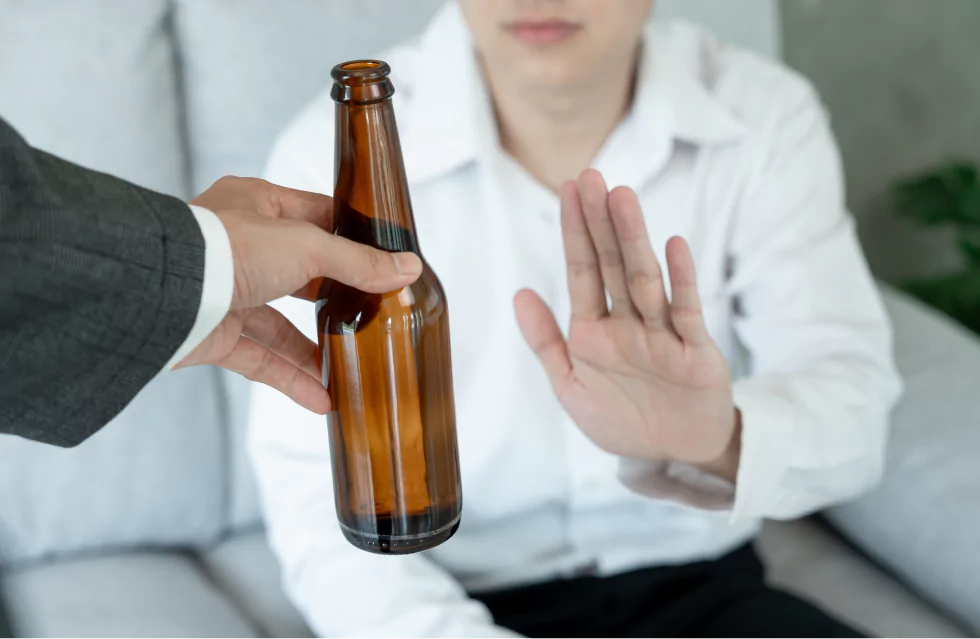
How Supportive Friends Help You Avoid Pressure to Drink Alcohol
Published:
2024-07-16
·
Read time:
17
Last Updated:
2025-11-29
Written by
Reframe Content Team
A team of researchers and psychologists who specialize in behavioral health and neuroscience. This group collaborates to produce insightful and evidence-based content.
Certified recovery coach specialized in helping everyone redefine their relationship with alcohol. His approach in coaching focuses on habit formation and addressing the stress in our lives.
Recognized by Fortune and Fast Company as a top innovator shaping the future of health and known for his pivotal role in helping individuals change their relationship with alcohol.
July 16, 2024
·
17
Reframe Content Team
July 16, 2024
·
17
Social gatherings and alcohol often feel like a package deal. Whether it's a casual get-together or a big celebration, opting out can feel like you're swimming upstream. It’s especially tough when you feel that subtle (or not-so-subtle) peer drink pressure. But you've already made a powerful choice for yourself. This guide is about owning that choice when you've decided ahead of time to abstain from drinking at social functions. Remember, surrounding yourself with friends who encourage and support your healthy decisions can help you avoid pressure to drink alcohol—it truly makes all the difference.
What Is Peer Pressure, Really?
Peer pressure is the influence exerted by a peer group or individual that encourages others to change their attitudes, values, or behaviors in order to conform to group norms. In the context of social drinking, peer pressure can manifest in many forms, from direct offers of a drink to more subtle cues like questioning your choice to stay sober.
It's important to recognize that peer pressure can arise from a variety of sources:
Direct Pressure: When someone explicitly offers you a drink or challenges your choice not to drink.
Indirect Pressure: The feeling of being left out or different if you choose not to drink in a group where everyone else is drinking.
Self-Imposed Pressure: Internalizing the belief that you need to drink in order to fit in or be accepted.
Understanding Why Friends Might Pressure You to Drink
It can feel personal when a friend pushes a drink on you after you’ve said no, but their reasons often have more to do with them than with you. Drinking is frequently a shared social ritual, and when you change your role in that dynamic, it can unintentionally hold a mirror up to their own habits. This can make people uncomfortable. Your choice might challenge the way your social circle has always operated, where drinking is seen as the default way to have fun and connect. As some experts note, friends who use substances together can normalize the behavior, making your decision to abstain seem unusual. It’s less about you being "boring" and more about them adjusting to a shift in a long-standing group norm. Understanding this can help you approach the situation with empathy instead of frustration.
How to Handle Pressure to Drink
1. Find Your Sober-Supportive Friends
Surround yourself with friends and family who respect your decision to stay sober. Having a support network can provide the encouragement and reassurance needed to resist peer pressure. These individuals can also help you navigate social situations by offering companionship and advocating for your choice.
Green Flags: Signs of a Supportive Friend
A truly supportive friend is a game-changer. They're the ones who champion your decision to drink less without making you feel like you have to explain yourself. Instead of suggesting another happy hour, they might propose a hike, a coffee date, or a movie night. They listen without judgment when you’re struggling and remind you of your goals when you need to hear it most. These friends respect your decision and your boundaries, creating a safe space where you don’t feel pressured to participate in activities that don’t align with your well-being. They celebrate your milestones, no matter how small, and genuinely want to see you thrive. This kind of friendship is built on mutual respect and understanding, making your journey feel less isolating and much more manageable.
Red Flags: Signs of an Unsupportive Friend
On the flip side, some friends can make your journey more difficult, even if they don’t mean to. These are the friends who constantly talk about drinking, downplay your efforts, or try to guilt you into having "just one." You might notice they still invite you to bars or parties centered around alcohol, ignoring your new lifestyle. A major red flag is when someone makes fun of your sobriety or pressures you to drink, even if they claim it's just a joke. This kind of behavior can undermine your confidence and make social situations feel incredibly stressful. While it’s a tough reality to face, recognizing these unsupportive patterns is the first step toward protecting your progress and prioritizing relationships that truly have your back.
2. Have Your "No, Thanks" Ready
Knowing how to confidently and succinctly articulate your decision not to drink can be powerful. Prepare a few responses that you’re comfortable with, such as:
"I’m focusing on my health right now."
"I have an early morning tomorrow."
"I’m driving tonight."
"I simply enjoy socializing without alcohol."
3. Decide Ahead of Time to Abstain
Before attending social events, plan your approach. This might include deciding what you’ll say if offered a drink, bringing your own non-alcoholic beverages, or arranging to leave early if the pressure becomes too intense. Having a strategy can alleviate anxiety and bolster your resolve.
Create a Clear Exit Strategy
Sometimes, the best plan is knowing when to call it a night. Having an exit strategy isn't about being pessimistic; it's about being prepared so you can relax and enjoy yourself without anxiety. Before you even leave the house, decide on a time you'll head home or have a simple reason ready for when you want to leave. This could be anything from an early morning workout to needing to let the dog out. As experts suggest, planning ahead for social events can significantly reduce worry and temptation. If a situation starts to feel uncomfortable or the pressure mounts, you have a pre-made, graceful way to exit. True friends will respect your decision and won't make you feel guilty for taking care of yourself. Your well-being always comes first, and a good exit plan is a powerful tool to protect it.
4. Get Comfortable Saying No
It can be helpful to practice turning down offers of alcohol in a firm yet polite manner. Role-playing scenarios with a trusted friend or family member can help you feel more confident in saying no. Remember, it’s your right to make choices that align with your values and well-being.
How to Set and Maintain Boundaries
Setting and maintaining boundaries is all about clear communication. It means being direct with your friends about what you need to feel supported and what makes you feel pressured. The people who truly have your back will respect your choice not to drink and won't push you into uncomfortable situations. Make an effort to surround yourself with friends who encourage healthy choices and celebrate your successes. And if someone’s behavior makes you feel uneasy, it's okay to say so. Remember, these boundaries aren't about building walls; they're about creating a safe space for yourself as you practice mindful drinking.
5. Suggest Fun, Alcohol-Free Plans
Encourage social activities that don’t center around drinking. Suggest alternatives such as going for a hike, attending a cultural event, or hosting a game night. By shifting the focus from alcohol, you can enjoy meaningful interactions without feeling pressured.
6. Share Your "Why" (If You Want To)
If you feel comfortable, share your reasons for staying sober with your peers. Often, people will respect your honesty and may even be inspired by your commitment. Transparency can also help dispel any misconceptions about your decision.
Keep a Personal Reminder of Your Goals
In moments of pressure, it’s easy to forget why you started this journey in the first place. Keeping a personal reminder of your goals can be a powerful anchor. This doesn’t have to be anything elaborate — it could be a simple note on your phone listing the reasons you’re cutting back, a photo of your family, or even a quick glance at an app that tracks your progress. Seeing how much money you’ve saved or how many days you’ve gone without a drink can be incredibly motivating. Your support system can also be a living reminder. A quick text to a supportive friend can ground you in your commitment. This personal touchstone helps you stay connected to your “why,” making it easier to handle social settings with confidence and stick to the choices that feel right for you.
7. Own Your Healthy Decision
Remaining steadfast in your choice to stay sober requires inner strength and self-confidence. Remind yourself of the reasons behind your decision and the benefits you’re experiencing. Keeping your long-term goals in mind can reinforce your determination.
8. Always Hold a Non-Alcoholic Drink
This is a classic for a reason: it works. Walking around with a drink in your hand acts as a simple social shield. When you’re already holding something, people are far less likely to offer you another drink or question why you aren’t drinking. A club soda with lime, a cranberry and tonic, or even just sparkling water in a nice glass looks the part and keeps you in the loop. This small act helps you blend in comfortably without having to explain yourself over and over. It’s a low-effort way to redirect unwanted attention and focus on what you’re really there for — to connect with people and have a good time on your own terms. It's a key part of practicing mindful drinking in a social setting.
9. Volunteer as the Designated Driver
Looking for a socially accepted, no-questions-asked reason to stay sober? Offer to be the designated driver (DD). This is a powerful move because it immediately frames your choice not to drink as a responsible and caring act. No one is going to argue with the person who is ensuring they get home safely. Taking on this role gives you a clear purpose and an easy out from any pressure. Plus, there are some great perks: you’ll save money, you’ll wake up feeling refreshed, and your friends will be incredibly grateful. It’s a win-win that allows you to enjoy the party while staying true to your goals and being a great friend in the process.
10. Know When to Skip Triggering Events
Protecting your progress is your top priority, and sometimes that means respectfully declining an invitation. If you know a certain party, event, or environment will be too tempting or stressful, it is perfectly okay to sit it out. This isn’t about avoidance; it’s about self-awareness and making strategic choices for your well-being. Early in your journey, you might find that certain situations are particularly triggering. Recognizing this and choosing to protect your peace is a sign of strength, not weakness. You can always suggest an alternative way to catch up with friends later, in a setting where you feel more comfortable and in control.
The Real-Life Perks of Staying Sober
Staying sober, particularly in social settings, can yield numerous benefits:
Improved Health: Avoiding alcohol can lead to better physical health, improved sleep, and increased energy levels.
Authentic Connections: Building relationships without the influence of alcohol can lead to more genuine and meaningful connections.
Financial Savings: Not spending money on alcohol can result in significant financial savings over time.
Personal Empowerment: Successfully navigating social situations without succumbing to peer pressure can boost self-esteem and confidence.
Reshaping Your Social Scene
The culture surrounding alcohol is deep-rooted, but it’s evolving. More people are beginning to question traditional drinking norms and are seeking healthier lifestyles. This shift presents an opportunity to redefine social habits and norms around drinking. By choosing sobriety and encouraging others to do the same, you can be part of this positive change.
1. Be the Sober Peer You Want to See
Your decision to stay sober can serve as a powerful example to others. Demonstrating that it’s possible to enjoy social gatherings without alcohol can inspire those around you to reconsider their own drinking habits.
2. Create a Supportive Environment
If you host events, make sure there are plenty of non-alcoholic options available. Creating an inclusive environment where everyone feels comfortable, regardless of their drinking choices, can promote healthier social habits.
3. Talk Openly About Not Drinking
Engage in conversations about the benefits of sobriety and the challenges of peer pressure. Advocacy can raise awareness and foster a more accepting atmosphere for those who choose not to drink.
4. Find New Sober Connections
Sometimes, the most effective way to handle pressure from your current social circle is to expand it. Building a network of friends who share your commitment to a healthier lifestyle can make all the difference in feeling supported versus feeling isolated. When you’re surrounded by people who get it, you won’t have to constantly explain or defend your choices. This isn’t about ditching your old friends, but about adding new, supportive connections that reinforce your goals. It transforms your journey from a solitary effort into a shared, positive experience, making it easier and more enjoyable to stick with your decision.
Joining Support Groups and Online Communities
Connecting with people who are on a similar path can be incredibly validating. Whether in person or online, support groups provide a safe space to share experiences and strategies without fear of judgment. Building a strong support system with sober friends is a powerful tool for long-term success. Digital communities, like the one within the Reframe app, offer 24/7 access to encouragement and advice right from your phone. You can find people who truly understand the challenges and celebrate your victories, big and small, which can be a huge source of strength when you need it most.
Exploring Alcohol-Free Activities and Venues
Redefining your social life can be an exciting adventure. Instead of focusing on what you’re avoiding, concentrate on all the new experiences you can explore. You can suggest alternatives to your current friends, like planning a hike, visiting a museum, or hosting a board game night. You can also seek out new environments designed for sober fun. Look for alcohol-free bars, sober meetups, or community events in your area. Discovering new hobbies and activities not only fills your time but also introduces you to new people who value connection and fun over cocktails.
When Professional Support Can Help
Having a plan and a few go-to phrases can make a world of difference in most social settings. But what if the pressure to drink feels less about others and more like an internal need? For many of us, alcohol becomes a tool to quiet a racing mind or ease the discomfort of social situations. If you find that your desire to drink is tied to managing anxiety or other difficult emotions, it might be time to consider reaching out for professional support. This isn't a sign of failure; it's a proactive step toward building a stronger foundation for your well-being, one that doesn't rely on a substance to get you through the day.
Think of it this way: you're not just learning to say no to a drink, you're learning new ways to handle life's challenges. A therapist or counselor can act as a guide, helping you identify the triggers that lead you to drink and equipping you with healthier coping strategies. This process can be incredibly empowering, as it addresses the root cause rather than just the symptom. When you understand the "why" behind your drinking habits, you gain more control over your choices and can build a social life that feels authentic and enjoyable, without needing alcohol as a crutch to participate.
Managing Social Anxiety Without Alcohol
If the thought of a party or networking event makes your palms sweat, you’re not alone. Many people use alcohol as a "social lubricant" to take the edge off and feel more outgoing. While it might seem to work in the short term, relying on alcohol can prevent you from developing genuine social confidence. Learning to handle social stress and anxiety without a drink is a crucial part of feeling better for the long haul. A therapist can help you unpack these feelings and teach you practical techniques, like mindfulness exercises or cognitive-behavioral strategies, to feel more at ease in social settings on your own terms.
Addressing Underlying Mental Health Conditions
Sometimes, drinking isn't just about social anxiety; it can be a way to self-medicate for other underlying conditions like depression or past trauma. If you suspect this might be the case, professional help is essential. A qualified mental health expert can provide the tools and support you need to feel steady in social situations and beyond. They can offer a proper diagnosis and create a treatment plan that might include therapy or medication, giving you a solid strategy for managing your mental health. This holistic approach makes long-term change much more achievable because you're healing the source of the issue, not just putting a bandage on it.
Your Path to Confident Sobriety
Managing and overcoming peer pressure in social situations while staying sober requires preparation, confidence, and support. By understanding the dynamics of peer pressure and employing strategies to resist it, you can navigate social environments with ease and integrity. Remember, your commitment to sobriety is a powerful choice that can lead to numerous personal and social benefits. As more individuals embrace sober living, the norms surrounding alcohol consumption are slowly but surely changing, paving the way for healthier and more inclusive social interactions.
Frequently Asked Questions
What if my friends get defensive or annoyed when I turn down a drink? It’s tough when the people closest to you don’t seem to get it. Remember, their reaction often has more to do with their own relationship with alcohol than it does with you. Give them some time to adjust to this change in your dynamic. In the meantime, focus your energy on the friends who respect your decision without question. True friends will come around and value your presence more than what's in your cup.
Do I really have to explain to everyone why I’m not drinking? Absolutely not. You don't owe anyone a detailed explanation for your personal health choices. A simple and friendly "No, thanks, I'm good" is a complete answer. If someone pushes, you can have a short, prepared line like, "I'm just not feeling it tonight." The less of a big deal you make it, the less of a big deal it will become for others.
How can I still feel included and have fun at parties without drinking? Feeling like part of the fun is about connection, not consumption. A great strategy is to always have a non-alcoholic drink in your hand—like a soda with lime—which usually stops people from offering you one. Focus on engaging in great conversations, hitting the dance floor, or suggesting a game. Your energy and presence are what make you a fun person to be around, not the beverage you're holding.
Is it okay to just avoid social events for a while? Of course. Protecting your well-being is your top priority, and if that means skipping a few parties, that's a sign of strength, not weakness. This is especially true early in your journey when you're still building confidence. Think of it as a strategic pause. You can always suggest catching up with friends in a different setting, like a coffee shop or a walk in the park, where you feel more comfortable.
What should I do if a really close friend is the one pressuring me the most? This situation requires a more direct approach. Find a time to talk to your friend one-on-one, away from the party atmosphere. You can explain how much you value their friendship and then clearly state what you need. Something like, "Our friendship means a lot to me, and right now, I need your support in my decision not to drink. It would help me a lot if you could back me up." Setting this boundary is a crucial step in maintaining a healthy, respectful friendship.
Key Takeaways
Prepare your social script: Walk into any event with confidence by deciding your non-alcoholic drink order, your "no, thanks" response, and your exit strategy ahead of time. A little planning removes the pressure of making decisions on the spot.
Curate your support system: True friends respect your choices. Surround yourself with people who champion your well-being and don't be afraid to set boundaries with those who pressure you, even unintentionally.
Address the anxiety, not just the alcohol: If social events feel impossible without a drink, consider if you're using alcohol to manage anxiety. Addressing the root cause is the key to building genuine social confidence that doesn't depend on a substance.
Although it isn’t a treatment for alcohol use disorder (AUD), the Reframe app can help you cut back on drinking gradually with the science-backed knowledge to empower you 100% of the way. Our proven program has helped millions of people around the world drink less and live more. And we want to help you get there, too!
The Reframe app equips you with the knowledge and skills you need to not only survive drinking less, but to thrive while you navigate the journey. Our daily research-backed readings teach you the neuroscience of alcohol, and our in-app Toolkit provides the resources and activities you need to navigate each challenge.
You’ll meet millions of fellow Reframers in our 24/7 Forum chat and daily Zoom check-in meetings. Receive encouragement from people worldwide who know exactly what you’re going through! You’ll also have the opportunity to connect with our licensed Reframe coaches for more personalized guidance.
Plus, we’re always introducing new features to optimize your in-app experience. We recently launched our in-app chatbot, Melody, powered by the world’s most powerful AI technology. Melody is here to help as you adjust to a life with less (or no) alcohol.
And that’s not all! Every month, we launch fun challenges, like Dry/Damp January, Mental Health May, and Outdoorsy June. You won’t want to miss out on the chance to participate alongside fellow Reframers (or solo if that’s more your thing!).
The Reframe app is free for 7 days, so you don’t have anything to lose by trying it. Are you ready to feel empowered and discover life beyond alcohol? Then download our app today!
Reframe has helped over 2 millions people to build healthier drinking habits globally
At Reframe, we do science, not stigma. We base our articles on the latest peer-reviewed research in psychology, neuroscience, and behavioral science. We follow the Reframe Content Creation Guidelines, to ensure that we share accurate and actionable information with our readers. This aids them in making informed decisions on their wellness journey. Learn more
Updated Regularly
Our articles undergo frequent updates to present the newest scientific research and changes in expert consensus in an easily understandable and implementable manner.