A team of researchers and psychologists who specialize in behavioral health and neuroscience. This group collaborates to produce insightful and evidence-based content.
Certified recovery coach specialized in helping everyone redefine their relationship with alcohol. His approach in coaching focuses on habit formation and addressing the stress in our lives.
Recognized by Fortune and Fast Company as a top innovator shaping the future of health and known for his pivotal role in helping individuals change their relationship with alcohol.
June 19, 2023
·
17
Reframe Content Team
June 19, 2023
·
17
The conversation around alcohol is changing. You might have heard people talking about being "soberish" or living a "damp" lifestyle. But what is soberish, really? It’s not about strict rules or total abstinence. The core soberish meaning is all about mindful consumption and being more intentional with your choices. It’s a flexible approach for anyone who wants to drink less and feel better, without the pressure of quitting completely. This is about finding a middle path that works for you and your well-being.
What Does Being "Soberish" Actually Mean?
What exactly does “soberish” mean? And what is a “damp” lifestyle? They’re terms that have come to define a state of selective sobriety — people who are “soberish” or “damp” aren’t completely abstinent from alcohol, but they’re intentional and mindful about their consumption. It's about setting your own rules and finding balance. You're not a teetotaler, but you're also not partaking in boozy blowouts. You're treading the path of moderation and maybe even becoming “sober-curious.”
The “soberish” approach acknowledges the detrimental effects excessive alcohol can have on both physical and mental health. Picture your body as a well-oiled machine. If alcohol is added in excess, it's like throwing a wrench in the works; it can disrupt various bodily functions. As just one example, it can strain the liver, leading to diseases like cirrhosis, in which the liver cells get damaged and replaced by scar tissue. It can also increase the risk of various cancers, including mouth, esophagus, colorectal, stomach, liver, pancreatic, and breast cancer. Moreover, alcohol has been associated with an increased risk of diabetes and can be detrimental to gut health, too.
Excessive alcohol can impact our mental well-being, too. Alcohol tends to amplify our feelings, so if we’re feeling anxious, alcohol might increase those feelings instead of suppressing them. While drinking might feel like a temporary relief, alcohol can exacerbate anxiety symptoms in the long run.
So where does “soberish” fall in all this? It's like taking the steering wheel of our health and well-being into our own hands. We’re in the driver’s seat, deciding when to hit the brakes on our alcohol intake and when to gently press the accelerator, always ensuring we’re in control.
The Evolving Definition of Sobriety
The idea of sobriety isn't as black-and-white as it used to be. Traditionally, it meant complete and total abstinence from alcohol. But today, the definition has expanded to include a wide spectrum of choices. Many people are choosing to drink less for personal reasons, whether it's to improve their physical health, gain mental clarity, or simply out of curiosity. This modern approach isn't about following rigid rules set by others. Instead, it’s about taking control and practicing mindful drinking — a way of being more intentional and aware of how, when, and why you consume alcohol, ensuring it aligns with your personal wellness goals.
Soberish vs. Sober Curious
While they sound similar, "soberish" and "sober curious" describe two different points on the path to mindful drinking. Being sober curious is the exploratory phase. It’s about questioning your relationship with alcohol and its role in your life. This might involve taking breaks from drinking, like participating in Dry January, to observe how you feel without it. In contrast, a "soberish" lifestyle is the result of that curiosity. It’s a more permanent, balanced approach where you’ve consciously decided to reduce your alcohol consumption for the long term, but not necessarily eliminate it entirely. Think of it this way: being sober curious is asking the questions, and living soberish is living with the answer you’ve created for yourself.
The Rise of Mindful Drinking: A Look at the Numbers
This shift toward mindful drinking isn't just something you're imagining; it's a real movement with numbers to back it up. More and more people are re-evaluating their relationship with alcohol, moving away from an all-or-nothing mindset and toward a more intentional approach. They're asking themselves how drinking fits into their lives, rather than letting it be a default social activity. This cultural current is gaining momentum because it offers a flexible, shame-free way to improve well-being. Let's look at what the data says about these changing habits and who is driving this change.
Trends in Alcohol Consumption
The reasons people are choosing to drink less are becoming more diverse. It's no longer just about recovering from addiction; many are simply curious or want to make healthier choices for their overall well-being. This cultural shift is happening even as some data points to concerning patterns. For instance, a 2021 survey found that 17% of U.S. adults engaged in heavy drinking, with women experiencing a notable rise in heavy drinking days. This contrast highlights why the mindful drinking movement is gaining so much traction — it offers a balanced, sustainable alternative for those who feel caught between extremes and want to regain control over their habits.
Why Younger Generations Are Drinking Less
Younger generations, particularly Gen Z, are leading the charge in this new approach to alcohol. They are drinking significantly less than older generations did at the same age, largely because they place a higher value on health and wellness. Unlike previous generations, they've grown up with social media, which not only glamorizes drinking but also openly displays its downsides — from "hangxiety" to long-term health risks. This constant stream of information has made them more aware and intentional consumers. For them, mindful drinking isn't a temporary trend; it's an integral part of a health-conscious lifestyle.
Is "Damp Drinking" the Same as Soberish?
Going “damp” is a similar idea with an even more casual, user-friendly flavor. Like being “soberish,” it’s all about finding a sweet spot between complete sobriety (being bone-dry) and drinking regularly. This particular spin on the concept first appeared thanks to a TikToker named Hana Elson. She's whipped up a bunch of videos teaching people about the upsides of “damp” drinking, and boy, has it struck a chord! The #damplifestyle hashtag on TikTok is up to nearly 20 million views and still going strong.
The “damp” lifestyle is a down-to-earth way to handle drinking. Picture it like the mindful eating trend but swapping out food for alcohol. You can still have a drink, but you're setting some ground rules for yourself.
Being “damp” is all about spotting why you're drinking and the fallout that might come from it. The goal is similar to the “soberish” approach – making your relationship with alcohol a whole lot healthier.
Why Choose Soberish Instead of Full Sobriety?
Some may ask, "Why not go entirely sober?" Absolutely, sure — complete abstinence works for some. However, absolute sobriety can be a drastic change, and the idea of never having a drink again can be daunting — especially at the beginning, when we’re still trying to determine what relationship with alcohol is right for us. Being “soberish” allows for flexibility in the way we see our relationship with alcohol. It's about choosing when, where, and how much we drink, putting the power back in our own hands.
Specific Benefits of Drinking Less
Adopting a soberish lifestyle isn't about what you're giving up; it's about what you stand to gain. This shift toward mindful drinking is rooted in the desire for a healthier, more balanced life. When you intentionally reduce your alcohol intake, you open the door to a wide range of positive changes that can affect everything from your physical health and appearance to your bank account and social life. It’s about taking charge and discovering that the benefits of cutting back often far outweigh the temporary buzz of a drink.
Improved Health and Appearance
One of the most immediate rewards of drinking less is how much better you feel and look. Reducing alcohol gives your body a much-needed break, allowing it to repair and function more efficiently. Your liver, which works hard to process alcohol, can recover, and your immune system gets stronger. Many people also notice significant changes in their appearance, like clearer, more hydrated skin and brighter eyes. Cutting back on the empty calories in alcoholic drinks can also make weight management easier and give you a welcome surge of natural energy that you just don't get when you're nursing even a mild hangover.
More Energy, Money, and Productivity
Waking up without that familiar groggy feeling is a game-changer. Better sleep is a common side effect of drinking less, leading to more energy and mental clarity throughout the day. This newfound vitality often translates into greater productivity, both at work and in your personal life. And let's not forget the financial perks. Drinks are expensive, and the costs add up quickly. Have you ever stopped to calculate how much you spend on alcohol each month? Redirecting that money toward hobbies, travel, or savings is a powerful motivator for sticking with a soberish lifestyle.
Sharper Social Skills
Many of us worry that drinking less will make social situations awkward, but the opposite is often true. The soberish approach gives you the flexibility to enjoy social events without relying on alcohol as a crutch. You might find that you're more present, engaged, and articulate in conversations. Since alcohol can sometimes amplify feelings of anxiety, cutting back can actually make you feel more comfortable and confident in social settings. It allows you to build genuine connections based on your personality, not on a shared buzz, proving you can have fun and loosen up all on your own.
Is Soberish Right for Everyone? Potential Downsides to Consider
This approach of mindful drinking is empowering for so many people, but it’s wise to acknowledge that it might not be the perfect fit for everyone. The key is radical honesty with yourself. Being “soberish” is about making conscious choices to improve your well-being, not finding a loophole to continue patterns that no longer serve you. It requires a strong sense of self-awareness to know when moderation is working and when it might be preventing you from addressing a deeper issue. Before you commit to a “damp” lifestyle, it’s worth taking a moment to reflect on your personal relationship with alcohol and what you truly hope to achieve by cutting back.
The Risk of Masking a Deeper Issue
One of the biggest cautions around the “soberish” trend is that it can sometimes allow a more serious drinking problem to fly under the radar. It’s a common misconception that you only have a problem with alcohol if you’re unable to function in your daily life. As one expert noted, many people with alcohol issues can still excel at work and maintain their responsibilities. If you find that your attempts at moderation consistently lead back to heavy drinking, or if the rules you set for yourself are constantly being broken, it might be a sign that a “soberish” approach isn’t providing the support you need. Understanding your own drinking triggers is a crucial first step in making a change that lasts.
A Note on "Sober-Friendly" Alternatives
With the rise of mindful drinking, the market for “sober-friendly” alternatives has exploded. While having more options like non-alcoholic beers and sophisticated mocktails is fantastic, it’s important to approach them with care. Just because a product is labeled as “natural” or alcohol-free doesn’t mean it’s entirely without risk. Some non-alcoholic beverages can contain trace amounts of alcohol, which could be problematic for someone in recovery. Furthermore, for some people, these alternatives can mimic the ritual of drinking so closely that they keep cravings alive rather than helping to build new, healthier habits. It’s all about knowing what works for you and being mindful of the products you consume on your journey.
How to Practice Mindful Drinking
The concept of being “soberish” or “damp” goes hand-in-hand with the principles of mindful drinking. It's like turning on the GPS to navigate our journey with alcohol. We become more aware of our speed (rate of consumption), our destination (how we feel after drinking), and any bumps on the road (unwanted side effects). This mindful approach lets us enjoy the journey without veering off the healthy path.
Non-alcoholic alternatives play a significant role in the “soberish” or “damp” journey. Think of them as rest stops along the road. We still get to enjoy the ride — parties, celebrations, and social gatherings — without adding road wear to our health. Non-alcoholic drinks have been shown not only to help reduce alcohol intake but also to improve overall quality of life. So the next time you're at a social gathering, don't hesitate to reach for that mocktail or sparkling water!
Social Strategies for Cutting Back
Navigating social events can feel like a challenge when you’re changing your drinking habits, but a little planning goes a long way. Being “soberish” means you get to define your own terms, whether that’s drinking less often or more carefully. Before you head out, decide what your limit will be for the night, or if you’ll be skipping alcohol altogether. At parties or bars, you can confidently choose drinks like sparkling water with lime, seltzers, or one of the many great-tasting non-alcoholic beers now available. This isn’t about missing out; it’s about being present and in control of your experience. You might be surprised how many people don’t even notice what’s in your cup, and you’ll definitely appreciate waking up feeling clear-headed the next day.
Using Tools to Support Your Goals
The core idea behind lifestyles like “Damp and Soberish” is to put you in charge of your drinking, not to label alcohol as inherently bad. It’s about pursuing a healthier, more balanced life on your own terms. A huge part of this is practicing mindful drinking, which simply means paying close attention to why you’re reaching for a drink, how much you’re consuming, and how it truly makes you feel physically and emotionally. You don’t have to do it alone, either. Talking to friends, joining supportive groups, or seeking professional guidance can make a world of difference. Online communities, like the Reframe Forum, offer a safe space to connect with others who are on a similar path and share experiences without judgment.
How Apps Like Reframe Can Help
For daily support right in your pocket, technology can be an incredible ally. The Reframe app, for example, has already helped over two million people worldwide build healthier drinking habits through its neuroscience-based program. It offers a flexible approach that empowers you to reduce your consumption without feeling pressured to quit completely. With tools for tracking drinks, understanding your triggers, and participating in daily readings and exercises, it provides a structured way to make mindful changes. This method allows you to improve your health and social life without feeling like you have to give up fun, making it a perfect fit for a soberish lifestyle.
Ready to Give Soberish a Try?
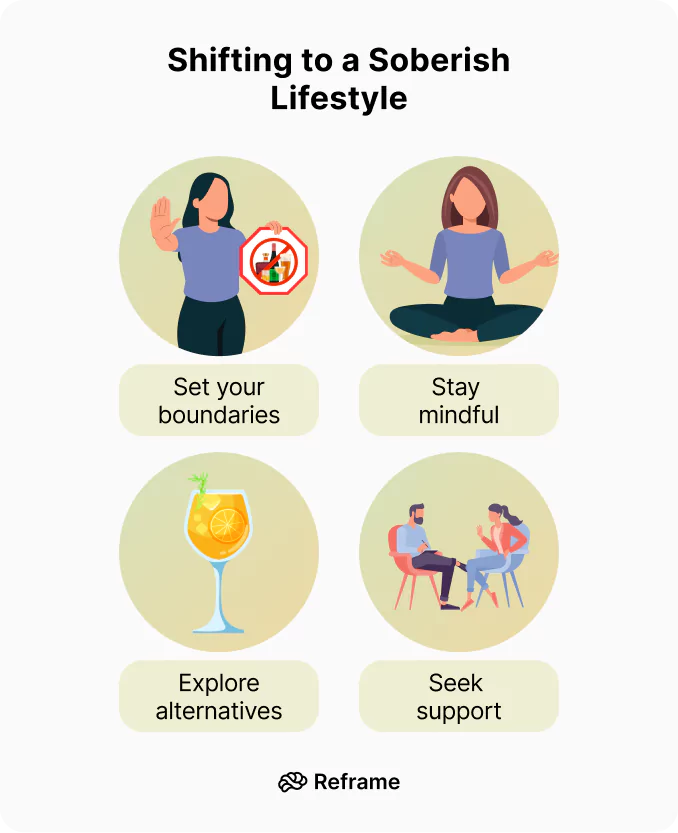
Don’t know how to shift toward a “soberish” or “damp” lifestyle? Here are a few practical tips:
Set your boundaries. Decide what moderation means for you. It might be drinking only on weekends or special occasions, or limiting the number of drinks per sitting.
Stay mindful. Pay attention to your drinking habits. Note your triggers and how you feel during and after drinking. This awareness will help guide your decisions.
Explore alternatives. There's a whole world of non-alcoholic beverages to explore. From herbal teas to kombuchas to alcohol-free beers, there's a drink for every occasion.
Seek support. This journey doesn't have to be solitary. Connect with like-minded individuals, join support groups, or talk to a professional if needed. Try the Reframe Forum! Remember, it's okay to ask for help.
The Damp January challenge is exactly what it sounds like: during the entire month of January, try to be conscious about drinking less than you usually do. Unlike the traditional Dry January, this challenge is perfect for those of us who aren’t looking to go sober for the entire month (or at all), but would like to be more mindful of their alcohol intake and improve their relationship with it.
Why Being Soberish Puts You in Control
In a nutshell, being “soberish” — or “damp,” if you prefer — means you're the one in the driver's seat, taking control of your journey with alcohol, making conscious choices to ensure you enjoy the ride while maintaining your physical and mental well-being.
The idea behind being soberish or damp is not about demonizing alcohol; it’s about promoting a balanced, healthier lifestyle. It's about enjoying a glass of wine on a special occasion without feeling the pressure to finish a whole bottle or choosing a mocktail over a cocktail without any insecurity.
Being “soberish” or “damp” gives you the freedom to define your own relationship with alcohol, giving you control and the opportunity to lead a happier, healthier life.
Frequently Asked Questions
How is being "soberish" different from just being "sober curious"? Think of it like this: being sober curious is the research phase, while living a soberish lifestyle is putting that research into practice. When you're sober curious, you're asking questions and exploring your relationship with alcohol, maybe by taking a break from drinking to see how you feel. Being soberish is the next step, where you've decided to permanently reduce your alcohol intake in a way that feels right for you, without necessarily quitting altogether.
I'm worried a soberish lifestyle might make social events awkward. How do I handle that? This is a super common concern, but it's often less of an issue than we imagine. The key is to have a plan. Decide on your drinking limit before you even leave the house. You can also get comfortable ordering non-alcoholic options like sparkling water with lime or a mocktail. You'll likely find that you're more present and engaged in conversations, and most people are too focused on their own night to notice what's in your glass.
Is a soberish or damp lifestyle a good fit for everyone? While it’s a fantastic approach for many, it’s not a universal solution. A soberish lifestyle requires a lot of self-awareness and honesty. If you find that your attempts to moderate often fail or that you're constantly breaking the rules you set for yourself, it might be a sign that this flexible approach isn't providing the level of support you need. It's about finding a path that genuinely serves your well-being, not one that masks a deeper issue.
What's the first step I should take if I want to try being soberish? A great first step is to simply become more aware of your current habits without judgment. Before you pour a drink, ask yourself why you want it. Is it a craving, a social habit, or a way to unwind? Just noticing your patterns is a powerful move. From there, you can set a small, achievable goal, like having two alcohol-free days during the week or setting a two-drink maximum when you go out.
Do I have to use non-alcoholic drinks to be soberish? Not at all! Non-alcoholic beers, wines, and mocktails are simply tools you can use if you find them helpful. For some, they are a great way to enjoy the ritual or flavor of a drink without the alcohol. For others, they might feel too close to the real thing. The soberish lifestyle is all about personal choice, so if you'd rather have a seltzer or a cup of tea, that works perfectly too. The goal is to find what supports you in drinking more mindfully.
Key Takeaways
Embrace flexibility over an all-or-nothing approach: Being soberish means you decide what a healthy relationship with alcohol looks like for you. It’s about setting personal boundaries and drinking more intentionally, not about complete abstinence.
Cutting back is about gaining, not losing: Reducing your alcohol intake leads to tangible benefits like better sleep, more energy, clearer skin, and extra money in your pocket, while also helping you build more genuine social connections.
Self-awareness is your most important tool: A soberish lifestyle requires you to be honest about your drinking triggers and goals. Use supportive tools like the Reframe app to track your progress, stay mindful, and connect with a community on a similar path.
Whether you're considering a life without alcohol or are simply sober-curious, remember that making positive changes is always worth it — and the Reframe app is here to help! You will have access to tools and skills that can help you explore a sober or soberish lifestyle in a fun and intuitive way.
With our # 1-rated app, you’ll have access to daily readings that help you develop new habits and sharpen your problem-solving skills. You will also receive a set of daily tasks, journal prompts, guided meditations, and motivational quotes to keep you inspired.
When you join, you’ll have a chance to interact with a worldwide community of caring, compassionate people just like you, eager to share their stories and advice in our 24/7 Forum chat. You can also connect with licensed coaches for one-on-one counseling sessions, as well as daily check-in calls via Zoom if you would like extra support.
The Reframe in-app Toolkit is a treasure trove of resources that will arm you with additional knowledge and help you hone your new skills. Most importantly, the Reframe app is free for 7 days — so try it today risk-free! We would love to be a part of your healing journey. Hope to see you in the app!
Reframe has helped over 2 millions people to build healthier drinking habits globally
At Reframe, we do science, not stigma. We base our articles on the latest peer-reviewed research in psychology, neuroscience, and behavioral science. We follow the Reframe Content Creation Guidelines, to ensure that we share accurate and actionable information with our readers. This aids them in making informed decisions on their wellness journey. Learn more
Updated Regularly
Our articles undergo frequent updates to present the newest scientific research and changes in expert consensus in an easily understandable and implementable manner.