

Why do we snore after a night of drinking? The answer lies in alcohol's impact on sleep. Let's take a look.
Consuming alcohol, particularly right before bed, can have a direct impact on the quality of your sleep. Drinking alcohol increases your chances of snoring loudly, which can prevent REM sleep. If you have sleep apnea, this increase in snoring may be more concerning and cut into your total sleep time.
To prevent poorer quality sleep from happening on a regular basis, it is important to cut back on the consumption of alcohol, especially close to bedtime. Cutting down the amount of alcohol you drink is usually enough. Ultimately, no matter how you go about it, cutting down on your alcohol intake will lead to better rest quality and can even improve long-term health outcomes if done consistently.
Snoring can be a very frustrating situation, both for those enduring it and those creating the disruption. If you're the one mixing up everyone's sleep with your loud snores, not only are you likely dealing with tiredness during the day, but you are also compromising your own restorative sleep. There is an easy way to cut back on snoring - cut back on drinking alcohol.
Alcohol consumption has a negative effect on our bodies even when we're not about to doze off in bed, but for anyone looking to cut down their snoring habit, reducing alcohol consumption will definitely have a positive impact. It's often difficult at first to know how to cut back your intake of alcohol, but there are plenty of resources out there that can help guide you toward responsible drinking habits.
Although most people cut back on drinking when they learn that alcohol is a depressant and can make them feel tired or sleepy after having too much, few people realize the implications it may have on snoring. Studies have shown that heavy drinking and even some moderate drinking contribute to more frequent or louder snoring or even apnea, making it essential to cut back on alcohol consumption if loud snoring is an issue.
Alcohol can make you sleepy faster and make snoring more likely, and drinking too much can worsen the effects of snoring. When people drink alcohol, the muscles in their throats tighten, which can force air through the smaller opening with greater intensity, thus making the sound of snoring louder. Consuming too much alcohol can increase your risk of developing sleep apnea.
If you are concerned about your snoring or worry you have sleep apnea, it would be a good idea to cut back on drinking and also cut out other activities like smoking that can increase your risk of developing such ailments. It is important to note that this does not mean you must cut out all consumption of alcohol - instead focus on drinking less for better health outcomes.
A 2020 study noted that drinking alcohol close to bedtime can increase the risk of snoring or obstructive sleep apnea (OSA). This could be due to how alcohol affects your throat’s epiglottis, which is a flap of cartilage that acts as a gateway between your throat and mouth. It typically remains open to allow air to flow freely into your lungs but when you swallow, it folds back to stop food and drinks from entering.
There are a few simple methods to cut back on your alcohol consumption before bed, like having some water between sips of alcohol or limiting yourself to one alcoholic beverage per night.
Everyone snores occasionally - but when you drink alcohol, your regular breathing could become more difficult than usual. That is because the relaxation effects of drinking cause your throat muscles to contract and your nasal passages to swell, making it harder for air to flow freely. This leads the body to make up for this restriction by forcing deeper breaths which vibrate against your esophagus, resulting in snoring.
As a result of the 2020 sleep apnea study, researchers determined that drinking alcohol close to bedtime was linked to more severe sleep apnea symptoms. Those who cut back on the amount of alcohol consumed before bed were found to have fewer blocked airways and higher oxygen levels during their sleep. It’s recommended for anyone suffering from snoring or sleep apnea to cut back on drinking as an effective way to reduce these symptoms.
There are many different strategies you can use to cut back on your alcohol consumption, such as reducing the amount you drink each day, setting a specific time when you plan on cutting off your intake, and replacing alcoholic beverages with non-alcoholic alternatives such as sparkling water or herbal tea.
Although it may seem counterintuitive, cutting back on drinking can actually improve your sleep quality. A recently published study highlighted the correlation between alcohol consumption and sleep, suggesting that exploring your relationship with alcohol – and considering how to cut back – can be of great benefit and play an important role in improving your sleep profile and determining treatment plans for those struggling with insomnia.
According to the Sleep Foundation, drinking even low amounts of alcohol (fewer than two drinks per day for men, less than one drink for women) can decrease sleep quality by 8.3 percent, while moderate (two drinks for men; one drink for women) and high (over two drinks for men; more than one drink for women) alcohol consumption further cut down on quality by 24 percent and 39.2 percent respectively. As such, reducing your alcohol intake could increase your overall restful nights.
Reaching your REM stage is essential in maintaining a healthy lifestyle; it is the deepest and most restorative sleep that provides our brains with much-needed improvements to concentration, mood, and memory. If you are having trouble getting enough REM sleep, cut back on drinking alcohol - it can inhibit your body’s natural ability to reach REM. Try different ways to cut back alcohol, such as limiting it to weekends only or cutting back the number of drinks you have gradually over time. When your REM sleep is optimized, your body can reap the full benefits of restorative sleep.
Stop drinking four hours before bed
Use a mouthguard or nasal strips
Sleep on your side
Alcohol can play a major role in affecting the quality of sleep, particularly if consumed right before bed. People who drink alcohol heavily or frequently may not get enough restorative REM sleep each night. This type of deep sleep is essential for feeling well-rested and having clarity when tackling tasks during the day. That's why it's important to cut back on drinking in order to improve your sleeping habits.
If you are someone who has difficulty making healthier decisions about when and how much alcohol to consume, the Reframe app is a great tool to help you cut back on drinking and work towards better sleep health! The app provides resources on how to cut back on alcohol with easy-to-follow tips like setting weekly personal goals that meet both mental and physical well-being needs.
Consuming alcohol, particularly right before bed, can have a direct impact on the quality of your sleep. Drinking alcohol increases your chances of snoring loudly, which can prevent REM sleep. If you have sleep apnea, this increase in snoring may be more concerning and cut into your total sleep time.
To prevent poorer quality sleep from happening on a regular basis, it is important to cut back on the consumption of alcohol, especially close to bedtime. Cutting down the amount of alcohol you drink is usually enough. Ultimately, no matter how you go about it, cutting down on your alcohol intake will lead to better rest quality and can even improve long-term health outcomes if done consistently.
Snoring can be a very frustrating situation, both for those enduring it and those creating the disruption. If you're the one mixing up everyone's sleep with your loud snores, not only are you likely dealing with tiredness during the day, but you are also compromising your own restorative sleep. There is an easy way to cut back on snoring - cut back on drinking alcohol.
Alcohol consumption has a negative effect on our bodies even when we're not about to doze off in bed, but for anyone looking to cut down their snoring habit, reducing alcohol consumption will definitely have a positive impact. It's often difficult at first to know how to cut back your intake of alcohol, but there are plenty of resources out there that can help guide you toward responsible drinking habits.
Although most people cut back on drinking when they learn that alcohol is a depressant and can make them feel tired or sleepy after having too much, few people realize the implications it may have on snoring. Studies have shown that heavy drinking and even some moderate drinking contribute to more frequent or louder snoring or even apnea, making it essential to cut back on alcohol consumption if loud snoring is an issue.
Alcohol can make you sleepy faster and make snoring more likely, and drinking too much can worsen the effects of snoring. When people drink alcohol, the muscles in their throats tighten, which can force air through the smaller opening with greater intensity, thus making the sound of snoring louder. Consuming too much alcohol can increase your risk of developing sleep apnea.
If you are concerned about your snoring or worry you have sleep apnea, it would be a good idea to cut back on drinking and also cut out other activities like smoking that can increase your risk of developing such ailments. It is important to note that this does not mean you must cut out all consumption of alcohol - instead focus on drinking less for better health outcomes.
A 2020 study noted that drinking alcohol close to bedtime can increase the risk of snoring or obstructive sleep apnea (OSA). This could be due to how alcohol affects your throat’s epiglottis, which is a flap of cartilage that acts as a gateway between your throat and mouth. It typically remains open to allow air to flow freely into your lungs but when you swallow, it folds back to stop food and drinks from entering.
There are a few simple methods to cut back on your alcohol consumption before bed, like having some water between sips of alcohol or limiting yourself to one alcoholic beverage per night.
Everyone snores occasionally - but when you drink alcohol, your regular breathing could become more difficult than usual. That is because the relaxation effects of drinking cause your throat muscles to contract and your nasal passages to swell, making it harder for air to flow freely. This leads the body to make up for this restriction by forcing deeper breaths which vibrate against your esophagus, resulting in snoring.
As a result of the 2020 sleep apnea study, researchers determined that drinking alcohol close to bedtime was linked to more severe sleep apnea symptoms. Those who cut back on the amount of alcohol consumed before bed were found to have fewer blocked airways and higher oxygen levels during their sleep. It’s recommended for anyone suffering from snoring or sleep apnea to cut back on drinking as an effective way to reduce these symptoms.
There are many different strategies you can use to cut back on your alcohol consumption, such as reducing the amount you drink each day, setting a specific time when you plan on cutting off your intake, and replacing alcoholic beverages with non-alcoholic alternatives such as sparkling water or herbal tea.
Although it may seem counterintuitive, cutting back on drinking can actually improve your sleep quality. A recently published study highlighted the correlation between alcohol consumption and sleep, suggesting that exploring your relationship with alcohol – and considering how to cut back – can be of great benefit and play an important role in improving your sleep profile and determining treatment plans for those struggling with insomnia.
According to the Sleep Foundation, drinking even low amounts of alcohol (fewer than two drinks per day for men, less than one drink for women) can decrease sleep quality by 8.3 percent, while moderate (two drinks for men; one drink for women) and high (over two drinks for men; more than one drink for women) alcohol consumption further cut down on quality by 24 percent and 39.2 percent respectively. As such, reducing your alcohol intake could increase your overall restful nights.
Reaching your REM stage is essential in maintaining a healthy lifestyle; it is the deepest and most restorative sleep that provides our brains with much-needed improvements to concentration, mood, and memory. If you are having trouble getting enough REM sleep, cut back on drinking alcohol - it can inhibit your body’s natural ability to reach REM. Try different ways to cut back alcohol, such as limiting it to weekends only or cutting back the number of drinks you have gradually over time. When your REM sleep is optimized, your body can reap the full benefits of restorative sleep.
Stop drinking four hours before bed
Use a mouthguard or nasal strips
Sleep on your side
Alcohol can play a major role in affecting the quality of sleep, particularly if consumed right before bed. People who drink alcohol heavily or frequently may not get enough restorative REM sleep each night. This type of deep sleep is essential for feeling well-rested and having clarity when tackling tasks during the day. That's why it's important to cut back on drinking in order to improve your sleeping habits.
If you are someone who has difficulty making healthier decisions about when and how much alcohol to consume, the Reframe app is a great tool to help you cut back on drinking and work towards better sleep health! The app provides resources on how to cut back on alcohol with easy-to-follow tips like setting weekly personal goals that meet both mental and physical well-being needs.

Alcohol affects all areas of our health, from our emotional well-being to our organ function. Here's a look into several areas.
With so many conflicting messages about alcohol, it can be difficult to know how to cut back. The truth is that drinking too much can be unhealthy. For those trying to cut back on drinking, monitoring the type and amount of alcohol consumed is key.
Alcohol is one of the most popular psychoactive substances in the world and its use has both short-term and long-term effects. Ethanol, the active ingredient in alcoholic drinks, is generally referred to as “alcohol” and can have powerful effects on your mental state. Moderate amounts are said to have health benefits in some cases, such as reducing cardiovascular disease and stroke risk. If regular drinking is causing symptoms such as fatigue, feeling sick in the morning or a lack of concentration, cutting back on alcohol - or completely avoiding it - may make all the difference.
The liver is a tremendously remarkable organ that has hundreds of essential functions, one of the most important being the neutralization of toxic substances. Excessive alcohol consumption can damage the liver. One common result of too much alcohol consumption is fatty liver, which is characterized by fat inside liver cells that can develop in those who drink more than half an ounce (15ml) of alcohol per day.
Over time, drinking less alcohol will help protect your precious and irreplaceable liver from further damage.
Drinking too much alcohol can have serious consequences for your brain. It slows down communication between brain cells, which can cause symptoms like feeling drunk and may even lead to memory loss during a heavy drinking episode. These effects are generally temporary, but long-term chronic alcohol abuse can cause permanent damage to the brain’s function.
Experts recommend that everyone cut back on consuming alcohol or drink less frequently.
Alcohol abuse and depression often coincide, creating a dangerous cycle where increased alcohol intake leads to depression and further drinking. Research suggests that cutting back on alcohol is an important step toward improving mental health. Cutting back or completely eliminating drinking can reduce depression as well as associated risks from heavy drinking, such as chronic stress, increased risk of medical illness, and whole-body inflammation.
Many people find it helpful to cut back on their drinking habits gradually. Create goals for yourself to cut down on drinking over time. You can also take other steps to reduce the effects of depression, such as talking to supportive friends, prioritizing healthy activities like sleep and exercise, and exploring mindfulness practices like yoga or meditation. Taking a holistic approach can help you cut back on your alcohol use while improving your overall mental health.
Obesity is a serious health concern. Alcohol is the second most calorie-rich nutrient after fat — packing about seven calories per gram. Beer has a similar number of calories to sugary soft drinks, ounce for ounce, whereas red wine has twice as many.
It seems that drinking habits and preferences may play a role in obesity. For example, moderate drinking is linked to slower weight gain, whereas heavy drinking is linked to increased weight gain.
A growing body of research suggests drinking alcohol in moderation may have beneficial effects on heart health. Excessive consumption of alcohol can have a harmful effect on the cardiovascular system and increase your risk for heart disease. Research shows that light to moderate consumption of alcohol is linked to a lower risk for heart disease, whereas heavy drinking has been shown to increase it.
If you wish to cut back on your alcohol consumption and reduce your risk of developing heart disease, it’s important to understand how much is too much. The recommended guideline is no more than two drinks per day for men and one drink per day for women on alternating days. Cut back on drinking by having drink-free days throughout the week or alternate alcoholic drinks with non-alcoholic beverages like lime soda or sparkling water with crushed mint leaves.
It’s essential to not replace mealtime with an alcoholic beverage and practice mindful drinking by taking a minute during each serving of an alcoholic beverage. Moderate consumption of alcohol may help cut back the symptoms of type 2 diabetes. Affecting eight percent of the world’s population, type 2 diabetes is caused by a reduced absorption of glucose into cells, where it triggers the release of insulin into the body.
Studies have shown that drinking alcohol in moderation can actually reduce insulin resistance and cut back on rising blood sugar and fasting blood glucose levels. It is recommended those with type 2 diabetes looking to cut back on their drinking should do so slowly and with professional advice, as drinking too much or too quickly can have serious repercussions for them.
There is no denying that the effects of alcohol depend entirely on individual body chemistry and drinking habits. Moderate indulgence of beer, wine, or spirits can be beneficial in some cases, with moderate drinking linked to lowered risks of heart disease, type 2 diabetes, and stroke. That being said, cut back on drinking if you are approaching the recommended daily limit — too much of anything is not good for you. For those who find they cannot cut back on their alcohol consumption successfully without professional help, it's important to seek out treatment immediately to prevent any negative health effects from worsening. Remember that even just drinking less alcohol can make a huge difference in your overall well-being.
It's true that moderate drinking can bring some potential health benefits but it is important to cut back on your alcohol intake if you're approaching the recommended daily limits. While the effects of alcohol depend on an individual's body chemistry and drinking habits, taking things down a level when it comes to your beer, wine or spirits consumption can have a huge impact on overall well-being. If you are struggling to cut back, Reframe can provide helpful resources for learning new ways to drink less and achieve better health and happiness.
With so many conflicting messages about alcohol, it can be difficult to know how to cut back. The truth is that drinking too much can be unhealthy. For those trying to cut back on drinking, monitoring the type and amount of alcohol consumed is key.
Alcohol is one of the most popular psychoactive substances in the world and its use has both short-term and long-term effects. Ethanol, the active ingredient in alcoholic drinks, is generally referred to as “alcohol” and can have powerful effects on your mental state. Moderate amounts are said to have health benefits in some cases, such as reducing cardiovascular disease and stroke risk. If regular drinking is causing symptoms such as fatigue, feeling sick in the morning or a lack of concentration, cutting back on alcohol - or completely avoiding it - may make all the difference.
The liver is a tremendously remarkable organ that has hundreds of essential functions, one of the most important being the neutralization of toxic substances. Excessive alcohol consumption can damage the liver. One common result of too much alcohol consumption is fatty liver, which is characterized by fat inside liver cells that can develop in those who drink more than half an ounce (15ml) of alcohol per day.
Over time, drinking less alcohol will help protect your precious and irreplaceable liver from further damage.
Drinking too much alcohol can have serious consequences for your brain. It slows down communication between brain cells, which can cause symptoms like feeling drunk and may even lead to memory loss during a heavy drinking episode. These effects are generally temporary, but long-term chronic alcohol abuse can cause permanent damage to the brain’s function.
Experts recommend that everyone cut back on consuming alcohol or drink less frequently.
Alcohol abuse and depression often coincide, creating a dangerous cycle where increased alcohol intake leads to depression and further drinking. Research suggests that cutting back on alcohol is an important step toward improving mental health. Cutting back or completely eliminating drinking can reduce depression as well as associated risks from heavy drinking, such as chronic stress, increased risk of medical illness, and whole-body inflammation.
Many people find it helpful to cut back on their drinking habits gradually. Create goals for yourself to cut down on drinking over time. You can also take other steps to reduce the effects of depression, such as talking to supportive friends, prioritizing healthy activities like sleep and exercise, and exploring mindfulness practices like yoga or meditation. Taking a holistic approach can help you cut back on your alcohol use while improving your overall mental health.
Obesity is a serious health concern. Alcohol is the second most calorie-rich nutrient after fat — packing about seven calories per gram. Beer has a similar number of calories to sugary soft drinks, ounce for ounce, whereas red wine has twice as many.
It seems that drinking habits and preferences may play a role in obesity. For example, moderate drinking is linked to slower weight gain, whereas heavy drinking is linked to increased weight gain.
A growing body of research suggests drinking alcohol in moderation may have beneficial effects on heart health. Excessive consumption of alcohol can have a harmful effect on the cardiovascular system and increase your risk for heart disease. Research shows that light to moderate consumption of alcohol is linked to a lower risk for heart disease, whereas heavy drinking has been shown to increase it.
If you wish to cut back on your alcohol consumption and reduce your risk of developing heart disease, it’s important to understand how much is too much. The recommended guideline is no more than two drinks per day for men and one drink per day for women on alternating days. Cut back on drinking by having drink-free days throughout the week or alternate alcoholic drinks with non-alcoholic beverages like lime soda or sparkling water with crushed mint leaves.
It’s essential to not replace mealtime with an alcoholic beverage and practice mindful drinking by taking a minute during each serving of an alcoholic beverage. Moderate consumption of alcohol may help cut back the symptoms of type 2 diabetes. Affecting eight percent of the world’s population, type 2 diabetes is caused by a reduced absorption of glucose into cells, where it triggers the release of insulin into the body.
Studies have shown that drinking alcohol in moderation can actually reduce insulin resistance and cut back on rising blood sugar and fasting blood glucose levels. It is recommended those with type 2 diabetes looking to cut back on their drinking should do so slowly and with professional advice, as drinking too much or too quickly can have serious repercussions for them.
There is no denying that the effects of alcohol depend entirely on individual body chemistry and drinking habits. Moderate indulgence of beer, wine, or spirits can be beneficial in some cases, with moderate drinking linked to lowered risks of heart disease, type 2 diabetes, and stroke. That being said, cut back on drinking if you are approaching the recommended daily limit — too much of anything is not good for you. For those who find they cannot cut back on their alcohol consumption successfully without professional help, it's important to seek out treatment immediately to prevent any negative health effects from worsening. Remember that even just drinking less alcohol can make a huge difference in your overall well-being.
It's true that moderate drinking can bring some potential health benefits but it is important to cut back on your alcohol intake if you're approaching the recommended daily limits. While the effects of alcohol depend on an individual's body chemistry and drinking habits, taking things down a level when it comes to your beer, wine or spirits consumption can have a huge impact on overall well-being. If you are struggling to cut back, Reframe can provide helpful resources for learning new ways to drink less and achieve better health and happiness.

How exactly does alcohol make us drunk? Though few of us take time to think about it, intoxication is quite complex and involves many different neurotransmitters and parts of the brain.

Cutting back on our alcohol consumption is one of the best things we can do for our overall well-being. So why not download Reframe right now and give it a shot?
Although it isn’t a treatment for alcohol use disorder (AUD), Reframe can help you cut back on drinking gradually and with the science-backed knowledge to empower you every step of the way. Our proven program has helped millions of people around the world drink less and live more.
The Reframe app equips you with the knowledge and skills you need to not only survive drinking less, but to thrive while doing so! Our daily research-backed readings teach you the neuroscience of alcohol, and our in-app Toolkit gives you the resources and activities you need to navigate each challenge.
You’ll meet millions of fellow Reframers in our 24/7 Forum chat and daily Zoom check-in meetings. Receive encouragement from people from around the world who are going through the exact same experiences as you! You’ll also have the opportunity to connect with our licensed Reframe coaches for more personalized guidance.
The Reframe app is free for 7 days, so you don’t have anything to lose by trying it. Are you ready to feel empowered and discover life beyond alcohol? Then download Reframe today! Can’t wait to see you there!
It’s fairly easy to recognize when someone is drunk. Their speech becomes slurred, their movements uncoordinated, and their judgment and inhibitions go out the window. But have you ever wondered, why does alcohol make you drunk? What exactly is happening inside the body and brain?
In this post, we’ll explore how alcohol interacts with our bodily systems to cause many of the symptoms we associate with being drunk. We’ll also offer tips on how to avoid intoxication. Let’s get started!

What is in alcohol that makes you drunk? To understand the answer, it’s helpful to understand exactly what alcohol is. When we talk about alcohol in the context of beverages, we’re referring to active ingredient ethanol. This clear, colorless liquid is produced through the process of fermentation, in which yeast converts sugars into alcohol. For instance, beer is made from the sugars in malted barley, wine from the sugars in grapes, and vodka from the sugars in potatoes.
When we drink beverages that contain ethanol (the active compound in alcohol), the chemical enters our bloodstream quickly, circulates throughout our body, and travels to various organs. We can gauge how much alcohol has affected us from our blood alcohol content (BAC), which tells us just how much alcohol has entered our bloodstream. For instance, a BAC of 0.08 indicates that there are 0.08 grams of alcohol per 100 milliliters of a person's blood, which is often the legal driving limit.
Alcohol’s effects are more obvious at greater blood alcohol concentrations. At lower BAC levels, people might experience feelings of relaxation and sociability. However, when BAC rises, these sensations can morph into unsteady movements and poor judgment — and at dangerously high concentrations, we can experience loss of consciousness or alcohol poisoning.

Many of the signs we associate with being drunk — such as slurred speech, poor coordination, and impaired judgment — are due to alcohol’s effect on the brain. In fact, alcohol typically reaches our brain within 5 minutes, and we can begin feeling its effects within 10 minutes. But what makes you drunk exactly?
Alcohol crosses something called the blood-brain barrier, a group of cells surrounding the brain that protects it from invaders such as toxins and bacteria. Some substances are able to pass through if they dissolve easily in water or fat, and alcohol is one of those substances.
Once alcohol enters our brain, it triggers a number of processes that lead to the typical signs of drunkenness. Our brains are highly complex structures that contain a delicate balance of neurotransmitters — chemicals that carry signals between nerve cells. Two neurotransmitters in particular are responsible for causing many of the symptoms we associate with intoxication.
The more alcohol we consume, the more alcohol builds in our bloodstream, and the greater the effects on GABA and glutamate. This is why intoxication leads to slower reaction times, slower thought processes, loss of motor control, slurred speech, dizziness, and lowered inhibitions.


Now that we have a general understanding of how alcohol causes intoxication, let’s get a bit more specific: what parts of the brain does alcohol affect that makes us drunk? Here’s a look at 6 areas of our brain that alcohol acts on to cause those familiar symptoms of intoxication:

With alcohol affecting all these different parts of our brain, it’s no wonder we start to lose control of our movements, speech, and judgment!
Feeling drunk might initially involve a short-lived “buzz” caused by a rush of dopamine. We might then feel sluggish and uncoordinated as the depressant effects kick in.
The neurotransmitter chaos created by alcohol can lead to unpredictable moods — laughing one minute and crying the next. We could even get aggressive or make impulsive decisions.
If we continue to drink, our coordination is likely to worsen, we might slur our words, or we could be hit by a wave of fatigue (and maybe even fall asleep!).
How much alcohol makes you drunk? If you ask two different people, you’ll get two different answers. That’s because a lot of factors go into how alcohol affects us.

So what can we do to avoid intoxication? Is it possible to still drink without becoming drunk? Yes! However, given alcohol’s negative effects on both our short- and long-term physical and mental health, it’s worth limiting consumption or quitting alcohol altogether. It’s even possible our body is sending us signals to reduce drinking. However, if we do choose to drink, here are 6 tips for avoiding intoxication:
Many of the signs we associate with intoxication arise because alcohol slows brain processes and activity. It acts on important neurotransmitters and affects the parts of our brain associated with balance, coordination, judgment, memory and decision-making. While no one is immune to alcohol’s intoxicating effect, various factors can influence its intensity, such as our weight, sex, age, and drinking speed. We can avoid intoxication by practicing mindful drinking, hydrating as we drink, and eating food while drinking.
If you’re looking to cut back on your alcohol consumption but not sure where to start, Reframe can help. We’ve helped millions of people not only change their relationship with alcohol, but develop healthier lifestyle habits that enhance their well-being.

It’s fairly easy to recognize when someone is drunk. Their speech becomes slurred, their movements uncoordinated, and their judgment and inhibitions go out the window. But have you ever wondered, why does alcohol make you drunk? What exactly is happening inside the body and brain?
In this post, we’ll explore how alcohol interacts with our bodily systems to cause many of the symptoms we associate with being drunk. We’ll also offer tips on how to avoid intoxication. Let’s get started!
What is in alcohol that makes you drunk? To understand the answer, it’s helpful to understand exactly what alcohol is. When we talk about alcohol in the context of beverages, we’re referring to active ingredient ethanol. This clear, colorless liquid is produced through the process of fermentation, in which yeast converts sugars into alcohol. For instance, beer is made from the sugars in malted barley, wine from the sugars in grapes, and vodka from the sugars in potatoes.
When we drink beverages that contain ethanol (the active compound in alcohol), the chemical enters our bloodstream quickly, circulates throughout our body, and travels to various organs. We can gauge how much alcohol has affected us from our blood alcohol content (BAC), which tells us just how much alcohol has entered our bloodstream. For instance, a BAC of 0.08 indicates that there are 0.08 grams of alcohol per 100 milliliters of a person's blood, which is often the legal driving limit.
Alcohol’s effects are more obvious at greater blood alcohol concentrations. At lower BAC levels, people might experience feelings of relaxation and sociability. However, when BAC rises, these sensations can morph into unsteady movements and poor judgment — and at dangerously high concentrations, we can experience loss of consciousness or alcohol poisoning.
Many of the signs we associate with being drunk — such as slurred speech, poor coordination, and impaired judgment — are due to alcohol’s effect on the brain. In fact, alcohol typically reaches our brain within 5 minutes, and we can begin feeling its effects within 10 minutes. But what makes you drunk exactly?
Alcohol crosses something called the blood-brain barrier, a group of cells surrounding the brain that protects it from invaders such as toxins and bacteria. Some substances are able to pass through if they dissolve easily in water or fat, and alcohol is one of those substances.
Once alcohol enters our brain, it triggers a number of processes that lead to the typical signs of drunkenness. Our brains are highly complex structures that contain a delicate balance of neurotransmitters — chemicals that carry signals between nerve cells. Two neurotransmitters in particular are responsible for causing many of the symptoms we associate with intoxication.
The more alcohol we consume, the more alcohol builds in our bloodstream, and the greater the effects on GABA and glutamate. This is why intoxication leads to slower reaction times, slower thought processes, loss of motor control, slurred speech, dizziness, and lowered inhibitions.
Now that we have a general understanding of how alcohol causes intoxication, let’s get a bit more specific: what parts of the brain does alcohol affect that makes us drunk? Here’s a look at 6 areas of our brain that alcohol acts on to cause those familiar symptoms of intoxication:
With alcohol affecting all these different parts of our brain, it’s no wonder we start to lose control of our movements, speech, and judgment!
Feeling drunk might initially involve a short-lived “buzz” caused by a rush of dopamine. We might then feel sluggish and uncoordinated as the depressant effects kick in.
The neurotransmitter chaos created by alcohol can lead to unpredictable moods — laughing one minute and crying the next. We could even get aggressive or make impulsive decisions.
If we continue to drink, our coordination is likely to worsen, we might slur our words, or we could be hit by a wave of fatigue (and maybe even fall asleep!).
How much alcohol makes you drunk? If you ask two different people, you’ll get two different answers. That’s because a lot of factors go into how alcohol affects us.
So what can we do to avoid intoxication? Is it possible to still drink without becoming drunk? Yes! However, given alcohol’s negative effects on both our short- and long-term physical and mental health, it’s worth limiting consumption or quitting alcohol altogether. It’s even possible our body is sending us signals to reduce drinking. However, if we do choose to drink, here are 6 tips for avoiding intoxication:
Many of the signs we associate with intoxication arise because alcohol slows brain processes and activity. It acts on important neurotransmitters and affects the parts of our brain associated with balance, coordination, judgment, memory and decision-making. While no one is immune to alcohol’s intoxicating effect, various factors can influence its intensity, such as our weight, sex, age, and drinking speed. We can avoid intoxication by practicing mindful drinking, hydrating as we drink, and eating food while drinking.
If you’re looking to cut back on your alcohol consumption but not sure where to start, Reframe can help. We’ve helped millions of people not only change their relationship with alcohol, but develop healthier lifestyle habits that enhance their well-being.

Night sweats after drinking: they happen to many of us, but they can be frustrating. So why does drinking alcohol cause night sweats? And what can we do about them? Let’s take a look at the science.

Although it isn’t a treatment for alcohol use disorder (AUD), the Reframe app can help you cut back on drinking gradually, with the science-backed knowledge to empower you 100% of the way. Our proven program has helped millions of people around the world drink less and live more. And we want to help you get there, too!
The Reframe app equips you with the knowledge and skills you need to not only survive drinking less, but to thrive while you navigate the journey. Our daily research-backed readings teach you the neuroscience of alcohol, and our in-app Toolkit provides the resources and activities you need to navigate each challenge.
You’ll meet millions of fellow Reframers in our 24/7 Forum chat and daily Zoom check-in meetings. Receive encouragement from people worldwide who know exactly what you’re going through! You’ll also have the opportunity to connect with our licensed Reframe coaches for more personalized guidance.
Plus, we’re always introducing new features to optimize your in-app experience. We recently launched our in-app chatbot, Melody, powered by the world’s most powerful AI technology. Melody is here to help as you adjust to a life with less (or no) alcohol.
And that’s not all! Every month, we launch fun challenges, like Dry/Damp January, Mental Health May, and Outdoorsy June. You won’t want to miss out on the chance to participate alongside fellow Reframers (or solo if that’s more your thing!).
The Reframe app is free for 7 days, so you don’t have anything to lose by trying it. Are you ready to feel empowered and discover life beyond alcohol? Then download our app through the App Store or Google Play today!
Alcohol has many adverse effects on our bodies and minds. There are the short-term discomforts like hangovers and “hangxiety,” as well as long-term effects on our physical and mental health. Today, we're discussing an issue that falls somewhere between the two: night sweats related to alcohol use.
How does alcohol use lead to night sweats? And what steps can be taken to prevent them? In this post, we’ll explore the causes of night sweats related to alcohol use and discuss how cutting back on or quitting alcohol can help.

First, let's define night sweats. Night sweats are episodes of excessive sweating that occur during sleep, often leading to damp or soaked sheets and clothing. While occasional night sweats are normal, persistent night sweats can be a symptom of an underlying medical condition or lifestyle factor, such as sweating at night after drinking.
Alcohol is a depressant that affects the central nervous system, leading to a range of physical and psychological effects. When we consume alcohol, it can cause our bodies to become dehydrated, leading to increased thirst and a need to urinate more frequently. These effects can contribute to night sweats, as our bodies attempt to regulate our temperature and maintain proper hydration levels during sleep.
In addition to dehydration, alcohol use can also lead to changes in our body's hormones and neurotransmitters, which can impact our sleep patterns and contribute to sweating at night after drinking. For example, alcohol can increase the production of the stress hormone cortisol, which can disrupt our sleep and lead to night sweats. It can also decrease the production of the hormone vasopressin, which regulates our body's fluid balance, leading to dehydration and increased thirst.
Night sweats are one of the many signals that we’re drinking too much. If we heed the warning signs early on, we can prevent this issue from persisting or leading to other health challenges.

Night sweats related to alcohol use can have negative consequences for both our physical and psychological health. Here are a few of the potential negative consequences of alcohol night sweats:

So, how can we prevent night sweats related to alcohol use? The most effective solution is to cut back on or quit drinking alcohol altogether. By reducing or eliminating alcohol consumption, our bodies can rehydrate, and regulating our fluid balance more effectively, and reducing the likelihood of night sweats.
Deciding to cut back or quit drinking alcohol can be difficult, but it's a powerful step towards improving your physical and mental health. Whether you are looking to reduce your alcohol consumption or quit altogether, there are steps you can take.
The first step in cutting back or quitting alcohol is to set clear goals and make a plan. This might involve setting limits on the amount and frequency of alcohol you consume, or it could mean committing to abstaining from alcohol altogether. Whatever your goals, it's important to be specific and measurable. For example, instead of saying "I want to drink less," you might set a goal to only have one drink per day, or to go alcohol-free for a month.
Once you have set your goals, make a plan to achieve them. This might involve finding alternative, alcohol-free ways to socialize or manage stress, such as taking up a new hobby or joining a sober social group. You might also consider enlisting the support of friends or family members who can help you stay accountable to your goals.

Many people turn to alcohol as a way of coping with stress or difficult emotions. If you’re trying to cut back or quit drinking, it's important to find alternative coping strategies to manage these feelings in a healthy way. This might involve learning relaxation techniques such as deep breathing or meditation, or finding physical activities that release tension and boost your mood, such as yoga or running.
You might also consider seeking support from a mental health professional, who can help you develop coping strategies and address any underlying emotional or psychological issues that may be contributing to your alcohol use. With the right support and strategies in place, you can manage your emotions in a healthy way and reduce your dependence on alcohol.
Finally, it's important to create a supportive environment that can help you achieve your goals. This might involve avoiding situations or people that trigger your desire to drink, or finding friends and social groups who are supportive of your decision to cut back or quit drinking. You might also consider finding a support group or seeking counseling to connect with others who are on a similar journey.
In addition to creating a supportive environment, take care of yourself in other ways that can improve your overall health and well-being: get regular exercise, eat a healthy diet, and practice good sleep hygiene. By taking care of your body and mind, you can reduce the impact of alcohol on your physical and psychological health, and enjoy greater success in cutting back or quitting alcohol.
Remember that night sweats can also be a sign of an underlying medical condition or lifestyle factor. If you are experiencing frequent or persistent night sweats, it's important to talk to a healthcare professional to determine the underlying cause and develop an appropriate treatment plan. In some cases, cutting back on or quitting alcohol may be one component of this plan.
Alcohol has many adverse effects on our bodies and minds. There are the short-term discomforts like hangovers and “hangxiety,” as well as long-term effects on our physical and mental health. Today, we're discussing an issue that falls somewhere between the two: night sweats related to alcohol use.
How does alcohol use lead to night sweats? And what steps can be taken to prevent them? In this post, we’ll explore the causes of night sweats related to alcohol use and discuss how cutting back on or quitting alcohol can help.
First, let's define night sweats. Night sweats are episodes of excessive sweating that occur during sleep, often leading to damp or soaked sheets and clothing. While occasional night sweats are normal, persistent night sweats can be a symptom of an underlying medical condition or lifestyle factor, such as sweating at night after drinking.
Alcohol is a depressant that affects the central nervous system, leading to a range of physical and psychological effects. When we consume alcohol, it can cause our bodies to become dehydrated, leading to increased thirst and a need to urinate more frequently. These effects can contribute to night sweats, as our bodies attempt to regulate our temperature and maintain proper hydration levels during sleep.
In addition to dehydration, alcohol use can also lead to changes in our body's hormones and neurotransmitters, which can impact our sleep patterns and contribute to sweating at night after drinking. For example, alcohol can increase the production of the stress hormone cortisol, which can disrupt our sleep and lead to night sweats. It can also decrease the production of the hormone vasopressin, which regulates our body's fluid balance, leading to dehydration and increased thirst.
Night sweats are one of the many signals that we’re drinking too much. If we heed the warning signs early on, we can prevent this issue from persisting or leading to other health challenges.
Night sweats related to alcohol use can have negative consequences for both our physical and psychological health. Here are a few of the potential negative consequences of alcohol night sweats:
So, how can we prevent night sweats related to alcohol use? The most effective solution is to cut back on or quit drinking alcohol altogether. By reducing or eliminating alcohol consumption, our bodies can rehydrate, and regulating our fluid balance more effectively, and reducing the likelihood of night sweats.
Deciding to cut back or quit drinking alcohol can be difficult, but it's a powerful step towards improving your physical and mental health. Whether you are looking to reduce your alcohol consumption or quit altogether, there are steps you can take.
The first step in cutting back or quitting alcohol is to set clear goals and make a plan. This might involve setting limits on the amount and frequency of alcohol you consume, or it could mean committing to abstaining from alcohol altogether. Whatever your goals, it's important to be specific and measurable. For example, instead of saying "I want to drink less," you might set a goal to only have one drink per day, or to go alcohol-free for a month.
Once you have set your goals, make a plan to achieve them. This might involve finding alternative, alcohol-free ways to socialize or manage stress, such as taking up a new hobby or joining a sober social group. You might also consider enlisting the support of friends or family members who can help you stay accountable to your goals.
Many people turn to alcohol as a way of coping with stress or difficult emotions. If you’re trying to cut back or quit drinking, it's important to find alternative coping strategies to manage these feelings in a healthy way. This might involve learning relaxation techniques such as deep breathing or meditation, or finding physical activities that release tension and boost your mood, such as yoga or running.
You might also consider seeking support from a mental health professional, who can help you develop coping strategies and address any underlying emotional or psychological issues that may be contributing to your alcohol use. With the right support and strategies in place, you can manage your emotions in a healthy way and reduce your dependence on alcohol.
Finally, it's important to create a supportive environment that can help you achieve your goals. This might involve avoiding situations or people that trigger your desire to drink, or finding friends and social groups who are supportive of your decision to cut back or quit drinking. You might also consider finding a support group or seeking counseling to connect with others who are on a similar journey.
In addition to creating a supportive environment, take care of yourself in other ways that can improve your overall health and well-being: get regular exercise, eat a healthy diet, and practice good sleep hygiene. By taking care of your body and mind, you can reduce the impact of alcohol on your physical and psychological health, and enjoy greater success in cutting back or quitting alcohol.
Remember that night sweats can also be a sign of an underlying medical condition or lifestyle factor. If you are experiencing frequent or persistent night sweats, it's important to talk to a healthcare professional to determine the underlying cause and develop an appropriate treatment plan. In some cases, cutting back on or quitting alcohol may be one component of this plan.

You may have heard the term toxic positivity before but what does it really mean? Can positivity be toxic? The answer is yes. According to Tabitha Kirkland, a psychologist and associate teaching professor at the University of Washington’s Department of Psychology, “Toxic positivity is a way of responding to your own or someone else’s suffering that comes across as a lack of empathy. It dismisses emotions instead of affirming them and could come from a place of discomfort.”
You may have heard the term toxic positivity before but what does it really mean? Can positivity be toxic? The answer is yes. According to Tabitha Kirkland, a psychologist and associate teaching professor at the University of Washington’s Department of Psychology, “Toxic positivity is a way of responding to your own or someone else’s suffering that comes across as a lack of empathy. It dismisses emotions instead of affirming them and could come from a place of discomfort.”
Some examples of toxic positivity include:
Being overly positive can also negatively impact our relationships. If you are someone who is constantly invalidating or minimizing others feelings with dismissing statements, people can interpret that as being fake or hard to connect with. Toxic positivity can also negatively affect your children, if you are a parent or guardian. “With children, our impulse may be to tell them, ‘You’re OK’ or ‘It’s not a big deal’ or ‘Stop crying, everything is fine.’ This teaches them that their negative feelings aren’t OK and can be influential on how they develop and process their concepts about emotion, and how they learn to express or not express their own emotions,” Kirkland explains.
So how do we avoid toxic positivity? The first step is practicing empathy. When we practice empathy, we truly meet the needs of others by listening and supporting them. Empathy is an essential element to any healthy relationship and we need to have strong empathy practices if we want to strengthen our mind and our connections. When we use toxic positivity phrases like “it’s not that bad” or “it could be worse” when our friends are speaking with us, we tend to invalidate their feelings or even devalue their emotions. Remind yourself that oftentimes when someone needs an ear they simply need someone to listen, not provide feedback
But if you find yourself in a position where someone is asking for feedback or words of encouragement, it's important to adjust our language to avoid toxic phrases. Here are some “Harmful to Helpful” phrases that can get you started on your journey:
You may have heard the term toxic positivity before but what does it really mean? Can positivity be toxic? The answer is yes. According to Tabitha Kirkland, a psychologist and associate teaching professor at the University of Washington’s Department of Psychology, “Toxic positivity is a way of responding to your own or someone else’s suffering that comes across as a lack of empathy. It dismisses emotions instead of affirming them and could come from a place of discomfort.”
Some examples of toxic positivity include:
Being overly positive can also negatively impact our relationships. If you are someone who is constantly invalidating or minimizing others feelings with dismissing statements, people can interpret that as being fake or hard to connect with. Toxic positivity can also negatively affect your children, if you are a parent or guardian. “With children, our impulse may be to tell them, ‘You’re OK’ or ‘It’s not a big deal’ or ‘Stop crying, everything is fine.’ This teaches them that their negative feelings aren’t OK and can be influential on how they develop and process their concepts about emotion, and how they learn to express or not express their own emotions,” Kirkland explains.
So how do we avoid toxic positivity? The first step is practicing empathy. When we practice empathy, we truly meet the needs of others by listening and supporting them. Empathy is an essential element to any healthy relationship and we need to have strong empathy practices if we want to strengthen our mind and our connections. When we use toxic positivity phrases like “it’s not that bad” or “it could be worse” when our friends are speaking with us, we tend to invalidate their feelings or even devalue their emotions. Remind yourself that oftentimes when someone needs an ear they simply need someone to listen, not provide feedback
But if you find yourself in a position where someone is asking for feedback or words of encouragement, it's important to adjust our language to avoid toxic phrases. Here are some “Harmful to Helpful” phrases that can get you started on your journey:

Living with a heavy drinker affects your emotional well-being, finances, and relationships. Learn practical tips to protect your peace and find support.
We understand how tough it can be to live with a loved one who struggles with alcohol misuse. At Reframe, our mission is to stop the stigma and empower users to make lasting changes to their drinking habits. So, if you or someone you live with is looking to build better drinking habits, we encourage you to download Reframe right now and kickstart your wellness journey!
Although it isn’t a treatment for alcohol use disorder (AUD), the Reframe app can help you cut back on drinking gradually and with the science-backed knowledge to empower you 100% of the way. Our proven program has helped millions of people around the world drink less and live more.
The Reframe app equips you with the knowledge and skills you need to not only survive drinking less, but to thrive while you navigate the journey! Our daily research-backed readings teach you the neuroscience of alcohol, and our in-app Toolkit gives you the resources and activities you need to navigate each challenge.
You’ll meet millions of fellow Reframers in our 24/7 Forum chat and daily Zoom check-in meetings. Receive encouragement from people from around the world who are going through the exact same experiences as you! You’ll also have the opportunity to connect with our licensed Reframe coaches for more personalized guidance.
Plus, we’re always introducing new features to ensure your in-app experience is optimal. We recently launched our in-app chatbot, Melody, whose powered by the world’s most powerful AI technology. Melody is here to support you whenever you need it and lend an extra helping hand as you adjust to a life with less (or no) alcohol. Oh, and that’s not all! Every month, we launch fun challenges — from Dry/Damp Janary to Sober Spring to Outdoorsy June. You won’t want to miss out on the chance to participate alongside fellow Reframers (or solo if that’s more of your vibe!).
The Reframe app is free for 7 days, so you don’t have anything to lose by trying it. Are you ready to feel empowered and discover life beyond alcohol? Then download the app today!
We often tell ourselves our drinking habits are our own business. But the truth is, they create ripples that touch everyone around us. If you're a heavy drinker, your loved ones are on this journey with you—whether you realize it or not. The impact goes far beyond a single argument or a forgotten promise. For those living with a heavy drinker, life can become a cycle of worry, frustration, and disappointment. The consequences of a chronic drinker's actions build over time, straining the most important relationships in your life.
Consider Mark, a university student whose excited to share a flat with his high-school best friend, Peter. They move in, set up their space, and look forward to a year of shared memories. However, Mark soon realizes that Peter's social drinking has morphed into heavier, more frequent alcohol use. This story isn't just about Peter's journey with alcohol; it's also about Mark's experiences living with a heavy drinker, a side of the story often left untold.

A heavy drinker is a person who consumes alcohol amounts that significantly surpass the guidelines provided by the Centers for Disease Control and Prevention (CDC). According to the CDC, heavy drinking for men involves having more than four drinks on any single occasion or more than 14 drinks per week. For women, the threshold is more than three drinks in one sitting or more than seven drinks over the course of a week. The CDC defines “a standard drink” as one that contains roughly 14 grams of pure alcohol (aka, 12 ounces of beer, 5 ounces of wine, or 1.5 ounces of distilled spirits). Consistently drinking beyond these limits can lead to a host of health complications, including increased risk of chronic diseases, neurological impairments, and psychological issues, and it also raises the likelihood of developing alcohol dependence.
If that’s a heavy drinker, what is a frequent drinker? A frequent drinker consumes alcohol on a regular basis, often doing so multiple times per week, or in some cases, daily. This term doesn't automatically imply heavy drinking; instead it highlights the regularity of alcohol intake. While it may not always exceed recommended guidelines for moderate drinking, frequent drinking can still pose similar risks as heavy drinking.
It’s important to draw a line between heavy drinking and Alcohol Use Disorder (AUD), which is the clinical term for what many people call alcoholism. As Harvard Health points out, someone can drink excessively without meeting the diagnostic criteria for AUD. This doesn’t mean the behavior is harmless. Consistently drinking above recommended levels can still create significant problems in your health, relationships, and daily life. Recognizing that your drinking patterns are causing negative consequences is the first step toward making a change, whether or not a formal diagnosis is involved. The focus should be on the impact alcohol has on your life, not just the label.
To better understand our own habits, it helps to know how experts define different drinking patterns. Health organizations like the National Institute on Alcohol Abuse and Alcoholism (NIAAA) have specific definitions for terms like "binge drinking" and "high-intensity drinking." These aren't just arbitrary labels; they're based on the amount of alcohol consumed in a certain timeframe and how it affects your blood alcohol concentration (BAC). Knowing these definitions can provide a clearer picture of where your own consumption falls and help you identify patterns you might want to change. It’s about having objective information to assess your relationship with alcohol.
According to the NIAAA, binge drinking is a pattern of consumption that brings a person’s BAC to 0.08% or higher. This typically happens when a woman has four or more drinks, or a man has five or more drinks, in about two hours. It’s less about the day of the week and more about the concentration of alcohol intake in a short period. This type of drinking is common in many social settings, but it carries immediate risks related to impairment and can contribute to long-term health issues if it becomes a regular habit.
High-intensity drinking takes this a step further. This pattern involves drinking at levels that are two or more times the binge-drinking thresholds. For women, this means consuming eight or more drinks, and for men, ten or more drinks in a single occasion. The risks associated with high-intensity drinking are substantially greater, increasing the likelihood of alcohol poisoning, accidents, and other severe negative outcomes. It’s a dangerous pattern that puts a significant strain on your body and overall health, moving far beyond what would be considered social or moderate use.
When we talk about reducing alcohol's harm, it's useful to know what health experts consider "low-risk" drinking. These guidelines aren't a free pass to drink, but rather a benchmark to help you understand the levels at which health risks begin to increase significantly. The core message from organizations like the NIAAA is simple: the less you drink, the lower your risk for health problems. Adopting a practice of mindful drinking can help you become more aware of your consumption and make conscious choices that align with your well-being goals, rather than drinking out of habit.
The NIAAA defines moderate drinking as up to one standard drink per day for women and up to two for men. Low-risk drinking is defined by weekly limits: no more than seven drinks per week for women and no more than 14 for men. It’s crucial to see these as upper limits, not targets. Staying within these guidelines can help reduce the long-term health risks associated with alcohol. For many, cutting back offers immediate benefits, from better sleep and more energy to significant financial savings, which you can track with tools like an alcohol spend calculator.
It’s easy to think of a hangover as the main physical consequence of drinking, but the effects of alcohol go much deeper than a headache and a rough morning. When we drink heavily or frequently, we’re putting our bodies under significant stress. According to the CDC, "drinking too much alcohol can hurt your health right away and over a long time." Think of it this way: your body treats alcohol as a poison, and your liver works overtime to process and filter it out. When the liver is constantly tasked with this job, it can become fatty, inflamed, and eventually scarred, which impairs its ability to perform its hundreds of other vital functions. This isn't just about the liver, though. Alcohol impacts nearly every system in your body, from your heart and brain to your digestive tract and immune system. The more you drink, the higher the risk becomes for a wide range of health problems.
Alcohol's journey through the body is a disruptive one. From the moment it enters your system, it begins to affect your brain's communication pathways, which is why your coordination, speech, and judgment can feel off after a few drinks. It also irritates the stomach lining, which can lead to nausea and more serious digestive issues over time. As it's absorbed into the bloodstream, it causes blood vessels to widen, giving you that warm, flushed feeling but also making your heart work harder. The real heavy lifting falls to the liver, which can only metabolize about one standard drink per hour. When you drink more than that, the excess alcohol circulates throughout your body, continuing to cause damage until your liver can catch up. This ongoing strain is what leads to the serious long-term health consequences that many heavy drinkers face, making a case for a more mindful approach to drinking.
The immediate risks of drinking too much can be just as serious as the long-term ones. We’ve all heard stories, or perhaps experienced them ourselves, where a night of heavy drinking led to a regrettable decision or a dangerous situation. The CDC notes that the "short-term health effects of drinking too much include injuries like car crashes, falls, drownings, and burns, as well as violence, alcohol poisoning, and higher risk of sexually transmitted infections." This happens because alcohol lowers inhibitions and impairs judgment, making us more likely to take risks we wouldn't consider when sober. It also slows our reaction time and messes with our coordination, a dangerous combination in any situation. Understanding your Blood Alcohol Content (BAC) can help you recognize when you've had too much, but the safest bet is always to moderate your intake to avoid these immediate dangers.
While the short-term effects are scary enough, the damage from consistent heavy drinking accumulates over years, leading to a host of chronic health problems. Think of it as slow, steady erosion of your body's defenses and functions. What might start as minor issues can develop into life-altering conditions. The National Institute on Alcohol Abuse and Alcoholism (NIAAA) is clear that "drinking too much alcohol can lead to many short-term and long-term health problems, injuries, and even death." These aren't just abstract warnings; they are real-world consequences that affect millions of people. The damage often happens silently, without obvious symptoms, until a serious problem is diagnosed. This includes an increased risk for certain cancers, significant harm to your brain and mental well-being, and a range of other chronic diseases that can reduce both your quality of life and your lifespan.
One of the most sobering long-term effects of alcohol is its link to cancer. It might be surprising to learn, but alcohol is classified as a Group 1 carcinogen, putting it in the same category as tobacco and asbestos. According to the NIAAA, "drinking any type of alcohol increases the risk of several cancers, including breast cancer in women. Even a small amount of alcohol can increase this risk." This includes cancers of the mouth, throat, esophagus, liver, and colon. The body breaks down alcohol into a chemical called acetaldehyde, which is a toxic compound that can damage your DNA and stop your cells from repairing this damage. This is what can lead to cancerous growths. It doesn’t matter if your drink of choice is beer, wine, or liquor—it’s the alcohol itself that creates the risk.
Alcohol’s impact on mood and mental clarity is well-known, but long-term heavy use can cause lasting damage to the brain. While a drink might temporarily ease feelings of anxiety, it can worsen them in the long run by disrupting the delicate balance of neurotransmitters that regulate our moods. The CDC points out that "long-term health effects of drinking alcohol include mental and social problems: depression, anxiety, problems with learning, memory issues (like dementia), and difficulties with family and friends." Chronic drinking can actually shrink the brain, particularly in areas responsible for memory and higher-level thinking. This is why changing your relationship with alcohol is not just about physical health; it's also about protecting your cognitive function and emotional well-being for years to come.
Beyond cancer and brain health, heavy drinking is a major contributor to a number of other serious chronic diseases. It's a key driver of liver disease, progressing from fatty liver to alcoholic hepatitis and, eventually, cirrhosis—a condition where the liver is so scarred it can no longer function properly. But the damage doesn't stop there. The NIAAA states that "heavy drinking can lead to serious diseases such as high blood pressure, heart disease, liver disease, stroke, and digestive problems." Alcohol can weaken the heart muscle, lead to irregular heartbeats, and increase your blood pressure, all of which are major risk factors for heart attack and stroke. It also inflames the pancreas and the lining of the stomach, causing severe pain and interfering with your body's ability to digest food and regulate blood sugar.
Many people see the ability to "hold their liquor" as a point of pride, but in reality, a high tolerance can be a red flag. It means your body has adapted to the presence of alcohol, requiring you to drink more to achieve the same effects you once did with less. This is a dangerous cycle, because as the NIAAA explains, "patients who feel like they can 'hold their liquor' might actually be at higher risk for alcohol problems because they tend to drink more." While you might not feel as intoxicated, the alcohol is still doing the same amount of damage—or more, since you're consuming larger quantities—to your internal organs. Instead of being a sign of strength, a high tolerance is often an early indicator that your body is developing a dependence on alcohol, putting you on a path toward more serious health issues.
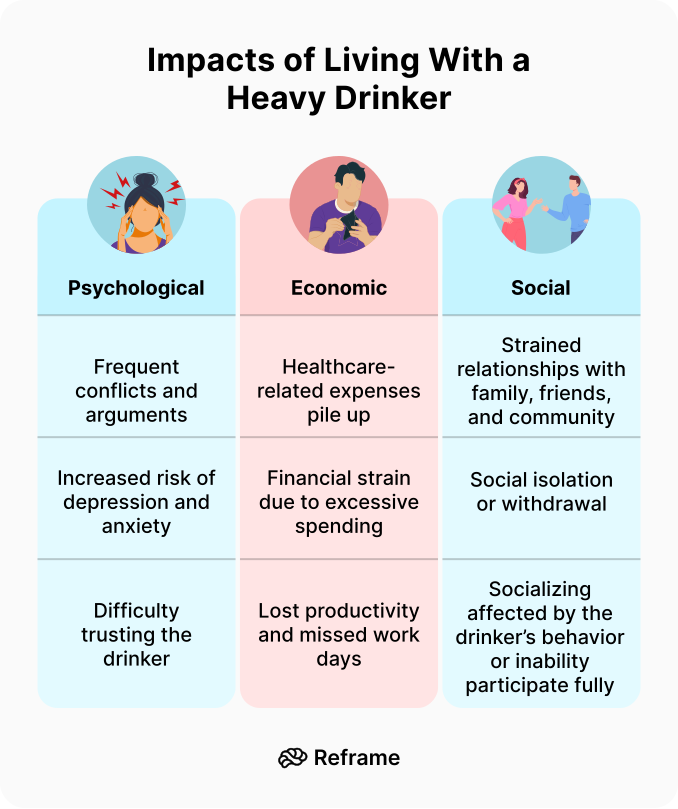
Living with a heavy drinker can place an enormous psychological burden on cohabitants. The unpredictable nature of a heavy drinker's behavior may lead to constant tension and anxiety. We never know if the drinker will be jovial, angry, or completely indifferent. This unpredictability can lead to chronic stress and, over time, result in symptoms of anxiety and depression. Besides, the drinker's focus on alcohol often means that they neglect their relationships, leading to feelings of loneliness and abandonment in those around them. Thus, a home with a heavy drinker can become a space filled with emotional turmoil and isolation.
The financial effects of sharing a home with a heavy drinker are enormous. In addition to the direct costs of buying alcohol, there may be indirect economic effects. For instance, heavy drinkers may face job loss or decreased productivity, leading to reduced income. This financial strain can impact the entire household, especially when the heavy drinker is a primary breadwinner. Financial strain may also be made worse by additional costs linked to health problems or legal challenges brought on by heavy drinking.

Heavy drinking can severely impact the social dynamics within a household. Relationships can be strained due to erratic behavior, broken promises, or neglect, often leading to feelings of resentment and frustration.
Partners of heavy drinkers frequently suffer with their own problems, like codependency, which can lead them to blame themselves for the situation. They may wonder what they did wrong or failed to do right. They may also stay in the unhealthy relationship out of comfort or a desire to “fix” the heavy drinker. Additionally, worried partners may pressure the heavy drinker to get help, which could lead to conflict in the relationship, or they may choose to deal by withdrawing into denial, supporting reckless conduct despite its terrible repercussions on the happiness of the family.
Children who live with a heavy-drinking parent may face particular challenges, including neglect, emotional abuse, and the burden of assuming adult responsibilities.
In the United States, 1 in 10 children grow up with a parent who struggles with substance misuse. This is incredibly detrimental because these children do not have access to the needed safety and stability to thrive. In a home where alcohol misuse prevails, the chaos can cause anxiety that may stay with them for the rest of their lives.
Furthermore, there is often societal stigma associated with heavy drinking. Friends, neighbors, or extended family members may distance themselves, leading to a sense of isolation for all members of the household. The fear of judgment can also deter people from seeking support, further compounding the problem.
Living with a heavy drinker is undoubtedly challenging, but implementing coping strategies can can provide some relief. Support groups can offer a space to share experiences, express feelings, and learn from others who are in similar situations.
Furthermore, setting boundaries can be crucial for self-preservation. It's essential to understand that we can't control or cure someone else's tendencies — only they can make the decision to seek help. Hence, protecting our own mental and physical health becomes paramount. This might involve strategies like not engaging with the drinker when they are intoxicated, or seeking respite in hobbies, activities, and relationships outside the home.
Living with a heavy drinker can be a tumultuous journey. It often comes with significant psychological, economic, and social impacts that ripple through all aspects of life. However, amidst these challenges, it's crucial to remember that support is available, and there are strategies for coping.
Like Mark, many people live with the impact of someone else's heavy drinking. We need to understand and acknowledge these experiences to provide support, break stigmas, and cultivate empathy. After all, our experiences shape us, and when we understand each other's journeys, we create a more compassionate, empathetic society.
If you are living with someone you believe is a heavy drinker, or someone who is suffering from alcohol misuse, there are support resources and techniques for you.
It's helpful to know what experts consider safer drinking levels, especially when you're trying to assess a loved one's habits. According to the National Institute on Alcohol Abuse and Alcoholism (NIAAA), heavy drinking for women is defined as consuming more than four drinks on any day or more than eight drinks per week. For men, the threshold is higher: five or more drinks on any day or more than 15 drinks in a week. These guidelines aren't a free pass to drink up to these limits, but rather a clear benchmark to help you understand potential risk. Having these numbers in mind can provide a more objective perspective on a person's drinking patterns and help you gauge when their consumption might be entering a harmful zone.
For some people, no amount of alcohol is considered safe. The NIAAA is clear that certain individuals should avoid alcohol completely to protect their health and safety. This group includes anyone who plans to drive a car or operate machinery, as alcohol significantly impairs coordination and judgment. It also applies to people taking medications that could interact negatively with alcohol, those with specific medical conditions, and anyone who is pregnant or trying to become pregnant. Of course, this also includes individuals under the legal drinking age of 21 and anyone who is recovering from an alcohol use disorder or finds they cannot control their drinking once they start.
If you or a loved one isn't ready or able to stop drinking entirely, focusing on harm reduction can be a powerful and practical step. The reality is that any amount of alcohol can pose risks, but certain strategies can help lower them. Simple changes like alternating each alcoholic drink with a full glass of water, eating a substantial meal before and during drinking, and setting a firm limit on the number of drinks for the evening can make a huge difference. It’s also wise to steer clear of drinking games or social situations that encourage rapid consumption. These small adjustments can help you practice mindful drinking and reduce the immediate dangers associated with heavy alcohol use.
When you’re ready to make a change, remember you don’t have to do it alone. Support is a critical piece of the puzzle, and it comes in many forms. As mentioned earlier, support groups provide a valuable space to connect with others who truly understand what you’re going through. Beyond traditional groups, digital tools can offer flexible, private, and accessible support right from your phone. Apps and online communities can provide daily encouragement, educational resources, and tracking tools that empower you to build healthier habits on your own terms. These resources can be especially helpful for learning new coping mechanisms and feeling less isolated on your journey.
The Reframe app is one of these tools, specifically designed to help you change your relationship with alcohol using a science-backed approach. It’s built on neuroscience principles that help you understand the “why” behind your cravings and habits, giving you the power to rewire them. Instead of just focusing on counting sober days, Reframe provides a comprehensive toolkit that includes personalized drink tracking, daily educational readings, and a supportive, anonymous community. The goal is to equip you with the knowledge and skills to make lasting changes, whether you want to cut back or quit entirely. It’s a way to work on your emotional well-being and build a life with less alcohol.
Sometimes, the situation requires more support than friends, family, or even an app can provide. If you or someone you know needs immediate or professional help, there are several confidential and free national resources available. These organizations are staffed by trained professionals who can offer guidance, connect you with local treatment options, and provide support during a crisis. Knowing where to turn can make all the difference when things feel overwhelming, and you can find more answers to common questions on our FAQ page. Here are a few reliable places to start.
The Substance Abuse and Mental Health Services Administration (SAMHSA) runs a National Helpline that is free, confidential, and available 24/7, 365 days a year. You can call 1-800-662-HELP (4357) for information and treatment referrals for individuals and families facing mental health or substance use disorders. They can help you find local treatment facilities, support groups, and community-based organizations in your area. It’s an excellent first call to make if you’re unsure where to begin your search for professional help for yourself or a loved one.
If you or someone you know is in emotional distress or having suicidal thoughts, the 988 Suicide & Crisis Lifeline is always available. By simply calling or texting 988, you can connect with a trained crisis counselor anytime, day or night. This service is completely free, confidential, and available to anyone experiencing a mental health-related crisis. It provides immediate, compassionate support and can be a literal lifeline in a moment of intense struggle. Please don’t hesitate to use it if you feel you or a loved one is at risk.
Another fantastic resource from SAMHSA is the website FindTreatment.gov. This is a confidential and anonymous online tool that allows you to search for substance use and mental health treatment facilities near you. You can easily filter your search based on the type of treatment you’re looking for, payment options, language services, and other specific needs. It’s a practical, user-friendly way to locate and evaluate different treatment options in your area, empowering you to find the care that’s right for your unique situation.
What’s the difference between being a “heavy drinker” and having Alcohol Use Disorder? Think of heavy drinking as a behavior defined by numbers—specifically, drinking more than the recommended weekly or daily limits set by health experts. It’s a pattern that puts your health at significant risk. Alcohol Use Disorder (AUD), on the other hand, is a medical diagnosis. It’s characterized by a loss of control, where you can't stop drinking even when it causes serious problems in your relationships, work, and health. While not every heavy drinker has AUD, that pattern of drinking is a major risk factor for developing it.
My friend brags about having a high tolerance for alcohol. Is that something to be concerned about? Yes, that’s definitely a red flag. Being able to "hold your liquor" isn't a sign of strength; it's a sign that your body is adapting to the constant presence of alcohol. This means you need to drink more to get the same feeling, which in turn means you're consuming larger, more damaging amounts of a substance your body processes as a toxin. A high tolerance often goes hand-in-hand with an increased risk for developing alcohol dependence.
Is having a couple of glasses of wine every single night considered heavy drinking? It certainly can be. For women, heavy drinking is defined as having more than seven drinks in a week, so two glasses of wine each night would put you at 14 drinks—double the recommended limit. While it might not feel like a lot in the moment, this consistent daily intake doesn't give your body, especially your liver, a break. The health risks from alcohol are cumulative, and this kind of regular habit significantly increases your long-term risk for chronic diseases.
I’m worried about someone’s drinking, but I don’t know how to bring it up without starting a fight. What should I do? The key is to approach the conversation from a place of care, not accusation. Use "I" statements to express how their behavior affects you, like "I've been worried about you," rather than "You're drinking too much." Try to have this conversation when they are sober and in a private, calm setting. Focus on specific examples of behaviors that concerned you and emphasize that you're there to support them. The goal isn't to fix them, but to open a door for them to see the impact and consider getting help.
I want to cut back on my drinking, but quitting completely feels overwhelming. What’s a good first step? You don't have to go from 100 to zero overnight. A great starting point is to focus on harm reduction and mindful drinking. Try designating two or three specific days of the week as completely alcohol-free. When you do drink, make a conscious effort to slow down. Have a big glass of water between each alcoholic beverage. These small, manageable changes can make a huge difference in your overall consumption and help you build momentum toward a healthier relationship with alcohol.
We often tell ourselves our drinking habits are our own business. But the truth is, they create ripples that touch everyone around us. If you're a heavy drinker, your loved ones are on this journey with you—whether you realize it or not. The impact goes far beyond a single argument or a forgotten promise. For those living with a heavy drinker, life can become a cycle of worry, frustration, and disappointment. The consequences of a chronic drinker's actions build over time, straining the most important relationships in your life.
Consider Mark, a university student whose excited to share a flat with his high-school best friend, Peter. They move in, set up their space, and look forward to a year of shared memories. However, Mark soon realizes that Peter's social drinking has morphed into heavier, more frequent alcohol use. This story isn't just about Peter's journey with alcohol; it's also about Mark's experiences living with a heavy drinker, a side of the story often left untold.
A heavy drinker is a person who consumes alcohol amounts that significantly surpass the guidelines provided by the Centers for Disease Control and Prevention (CDC). According to the CDC, heavy drinking for men involves having more than four drinks on any single occasion or more than 14 drinks per week. For women, the threshold is more than three drinks in one sitting or more than seven drinks over the course of a week. The CDC defines “a standard drink” as one that contains roughly 14 grams of pure alcohol (aka, 12 ounces of beer, 5 ounces of wine, or 1.5 ounces of distilled spirits). Consistently drinking beyond these limits can lead to a host of health complications, including increased risk of chronic diseases, neurological impairments, and psychological issues, and it also raises the likelihood of developing alcohol dependence.
If that’s a heavy drinker, what is a frequent drinker? A frequent drinker consumes alcohol on a regular basis, often doing so multiple times per week, or in some cases, daily. This term doesn't automatically imply heavy drinking; instead it highlights the regularity of alcohol intake. While it may not always exceed recommended guidelines for moderate drinking, frequent drinking can still pose similar risks as heavy drinking.
It’s important to draw a line between heavy drinking and Alcohol Use Disorder (AUD), which is the clinical term for what many people call alcoholism. As Harvard Health points out, someone can drink excessively without meeting the diagnostic criteria for AUD. This doesn’t mean the behavior is harmless. Consistently drinking above recommended levels can still create significant problems in your health, relationships, and daily life. Recognizing that your drinking patterns are causing negative consequences is the first step toward making a change, whether or not a formal diagnosis is involved. The focus should be on the impact alcohol has on your life, not just the label.
To better understand our own habits, it helps to know how experts define different drinking patterns. Health organizations like the National Institute on Alcohol Abuse and Alcoholism (NIAAA) have specific definitions for terms like "binge drinking" and "high-intensity drinking." These aren't just arbitrary labels; they're based on the amount of alcohol consumed in a certain timeframe and how it affects your blood alcohol concentration (BAC). Knowing these definitions can provide a clearer picture of where your own consumption falls and help you identify patterns you might want to change. It’s about having objective information to assess your relationship with alcohol.
According to the NIAAA, binge drinking is a pattern of consumption that brings a person’s BAC to 0.08% or higher. This typically happens when a woman has four or more drinks, or a man has five or more drinks, in about two hours. It’s less about the day of the week and more about the concentration of alcohol intake in a short period. This type of drinking is common in many social settings, but it carries immediate risks related to impairment and can contribute to long-term health issues if it becomes a regular habit.
High-intensity drinking takes this a step further. This pattern involves drinking at levels that are two or more times the binge-drinking thresholds. For women, this means consuming eight or more drinks, and for men, ten or more drinks in a single occasion. The risks associated with high-intensity drinking are substantially greater, increasing the likelihood of alcohol poisoning, accidents, and other severe negative outcomes. It’s a dangerous pattern that puts a significant strain on your body and overall health, moving far beyond what would be considered social or moderate use.
When we talk about reducing alcohol's harm, it's useful to know what health experts consider "low-risk" drinking. These guidelines aren't a free pass to drink, but rather a benchmark to help you understand the levels at which health risks begin to increase significantly. The core message from organizations like the NIAAA is simple: the less you drink, the lower your risk for health problems. Adopting a practice of mindful drinking can help you become more aware of your consumption and make conscious choices that align with your well-being goals, rather than drinking out of habit.
The NIAAA defines moderate drinking as up to one standard drink per day for women and up to two for men. Low-risk drinking is defined by weekly limits: no more than seven drinks per week for women and no more than 14 for men. It’s crucial to see these as upper limits, not targets. Staying within these guidelines can help reduce the long-term health risks associated with alcohol. For many, cutting back offers immediate benefits, from better sleep and more energy to significant financial savings, which you can track with tools like an alcohol spend calculator.
It’s easy to think of a hangover as the main physical consequence of drinking, but the effects of alcohol go much deeper than a headache and a rough morning. When we drink heavily or frequently, we’re putting our bodies under significant stress. According to the CDC, "drinking too much alcohol can hurt your health right away and over a long time." Think of it this way: your body treats alcohol as a poison, and your liver works overtime to process and filter it out. When the liver is constantly tasked with this job, it can become fatty, inflamed, and eventually scarred, which impairs its ability to perform its hundreds of other vital functions. This isn't just about the liver, though. Alcohol impacts nearly every system in your body, from your heart and brain to your digestive tract and immune system. The more you drink, the higher the risk becomes for a wide range of health problems.
Alcohol's journey through the body is a disruptive one. From the moment it enters your system, it begins to affect your brain's communication pathways, which is why your coordination, speech, and judgment can feel off after a few drinks. It also irritates the stomach lining, which can lead to nausea and more serious digestive issues over time. As it's absorbed into the bloodstream, it causes blood vessels to widen, giving you that warm, flushed feeling but also making your heart work harder. The real heavy lifting falls to the liver, which can only metabolize about one standard drink per hour. When you drink more than that, the excess alcohol circulates throughout your body, continuing to cause damage until your liver can catch up. This ongoing strain is what leads to the serious long-term health consequences that many heavy drinkers face, making a case for a more mindful approach to drinking.
The immediate risks of drinking too much can be just as serious as the long-term ones. We’ve all heard stories, or perhaps experienced them ourselves, where a night of heavy drinking led to a regrettable decision or a dangerous situation. The CDC notes that the "short-term health effects of drinking too much include injuries like car crashes, falls, drownings, and burns, as well as violence, alcohol poisoning, and higher risk of sexually transmitted infections." This happens because alcohol lowers inhibitions and impairs judgment, making us more likely to take risks we wouldn't consider when sober. It also slows our reaction time and messes with our coordination, a dangerous combination in any situation. Understanding your Blood Alcohol Content (BAC) can help you recognize when you've had too much, but the safest bet is always to moderate your intake to avoid these immediate dangers.
While the short-term effects are scary enough, the damage from consistent heavy drinking accumulates over years, leading to a host of chronic health problems. Think of it as slow, steady erosion of your body's defenses and functions. What might start as minor issues can develop into life-altering conditions. The National Institute on Alcohol Abuse and Alcoholism (NIAAA) is clear that "drinking too much alcohol can lead to many short-term and long-term health problems, injuries, and even death." These aren't just abstract warnings; they are real-world consequences that affect millions of people. The damage often happens silently, without obvious symptoms, until a serious problem is diagnosed. This includes an increased risk for certain cancers, significant harm to your brain and mental well-being, and a range of other chronic diseases that can reduce both your quality of life and your lifespan.
One of the most sobering long-term effects of alcohol is its link to cancer. It might be surprising to learn, but alcohol is classified as a Group 1 carcinogen, putting it in the same category as tobacco and asbestos. According to the NIAAA, "drinking any type of alcohol increases the risk of several cancers, including breast cancer in women. Even a small amount of alcohol can increase this risk." This includes cancers of the mouth, throat, esophagus, liver, and colon. The body breaks down alcohol into a chemical called acetaldehyde, which is a toxic compound that can damage your DNA and stop your cells from repairing this damage. This is what can lead to cancerous growths. It doesn’t matter if your drink of choice is beer, wine, or liquor—it’s the alcohol itself that creates the risk.
Alcohol’s impact on mood and mental clarity is well-known, but long-term heavy use can cause lasting damage to the brain. While a drink might temporarily ease feelings of anxiety, it can worsen them in the long run by disrupting the delicate balance of neurotransmitters that regulate our moods. The CDC points out that "long-term health effects of drinking alcohol include mental and social problems: depression, anxiety, problems with learning, memory issues (like dementia), and difficulties with family and friends." Chronic drinking can actually shrink the brain, particularly in areas responsible for memory and higher-level thinking. This is why changing your relationship with alcohol is not just about physical health; it's also about protecting your cognitive function and emotional well-being for years to come.
Beyond cancer and brain health, heavy drinking is a major contributor to a number of other serious chronic diseases. It's a key driver of liver disease, progressing from fatty liver to alcoholic hepatitis and, eventually, cirrhosis—a condition where the liver is so scarred it can no longer function properly. But the damage doesn't stop there. The NIAAA states that "heavy drinking can lead to serious diseases such as high blood pressure, heart disease, liver disease, stroke, and digestive problems." Alcohol can weaken the heart muscle, lead to irregular heartbeats, and increase your blood pressure, all of which are major risk factors for heart attack and stroke. It also inflames the pancreas and the lining of the stomach, causing severe pain and interfering with your body's ability to digest food and regulate blood sugar.
Many people see the ability to "hold their liquor" as a point of pride, but in reality, a high tolerance can be a red flag. It means your body has adapted to the presence of alcohol, requiring you to drink more to achieve the same effects you once did with less. This is a dangerous cycle, because as the NIAAA explains, "patients who feel like they can 'hold their liquor' might actually be at higher risk for alcohol problems because they tend to drink more." While you might not feel as intoxicated, the alcohol is still doing the same amount of damage—or more, since you're consuming larger quantities—to your internal organs. Instead of being a sign of strength, a high tolerance is often an early indicator that your body is developing a dependence on alcohol, putting you on a path toward more serious health issues.
Living with a heavy drinker can place an enormous psychological burden on cohabitants. The unpredictable nature of a heavy drinker's behavior may lead to constant tension and anxiety. We never know if the drinker will be jovial, angry, or completely indifferent. This unpredictability can lead to chronic stress and, over time, result in symptoms of anxiety and depression. Besides, the drinker's focus on alcohol often means that they neglect their relationships, leading to feelings of loneliness and abandonment in those around them. Thus, a home with a heavy drinker can become a space filled with emotional turmoil and isolation.
The financial effects of sharing a home with a heavy drinker are enormous. In addition to the direct costs of buying alcohol, there may be indirect economic effects. For instance, heavy drinkers may face job loss or decreased productivity, leading to reduced income. This financial strain can impact the entire household, especially when the heavy drinker is a primary breadwinner. Financial strain may also be made worse by additional costs linked to health problems or legal challenges brought on by heavy drinking.
Heavy drinking can severely impact the social dynamics within a household. Relationships can be strained due to erratic behavior, broken promises, or neglect, often leading to feelings of resentment and frustration.
Partners of heavy drinkers frequently suffer with their own problems, like codependency, which can lead them to blame themselves for the situation. They may wonder what they did wrong or failed to do right. They may also stay in the unhealthy relationship out of comfort or a desire to “fix” the heavy drinker. Additionally, worried partners may pressure the heavy drinker to get help, which could lead to conflict in the relationship, or they may choose to deal by withdrawing into denial, supporting reckless conduct despite its terrible repercussions on the happiness of the family.
Children who live with a heavy-drinking parent may face particular challenges, including neglect, emotional abuse, and the burden of assuming adult responsibilities.
In the United States, 1 in 10 children grow up with a parent who struggles with substance misuse. This is incredibly detrimental because these children do not have access to the needed safety and stability to thrive. In a home where alcohol misuse prevails, the chaos can cause anxiety that may stay with them for the rest of their lives.
Furthermore, there is often societal stigma associated with heavy drinking. Friends, neighbors, or extended family members may distance themselves, leading to a sense of isolation for all members of the household. The fear of judgment can also deter people from seeking support, further compounding the problem.
Living with a heavy drinker is undoubtedly challenging, but implementing coping strategies can can provide some relief. Support groups can offer a space to share experiences, express feelings, and learn from others who are in similar situations.
Furthermore, setting boundaries can be crucial for self-preservation. It's essential to understand that we can't control or cure someone else's tendencies — only they can make the decision to seek help. Hence, protecting our own mental and physical health becomes paramount. This might involve strategies like not engaging with the drinker when they are intoxicated, or seeking respite in hobbies, activities, and relationships outside the home.
Living with a heavy drinker can be a tumultuous journey. It often comes with significant psychological, economic, and social impacts that ripple through all aspects of life. However, amidst these challenges, it's crucial to remember that support is available, and there are strategies for coping.
Like Mark, many people live with the impact of someone else's heavy drinking. We need to understand and acknowledge these experiences to provide support, break stigmas, and cultivate empathy. After all, our experiences shape us, and when we understand each other's journeys, we create a more compassionate, empathetic society.
If you are living with someone you believe is a heavy drinker, or someone who is suffering from alcohol misuse, there are support resources and techniques for you.
It's helpful to know what experts consider safer drinking levels, especially when you're trying to assess a loved one's habits. According to the National Institute on Alcohol Abuse and Alcoholism (NIAAA), heavy drinking for women is defined as consuming more than four drinks on any day or more than eight drinks per week. For men, the threshold is higher: five or more drinks on any day or more than 15 drinks in a week. These guidelines aren't a free pass to drink up to these limits, but rather a clear benchmark to help you understand potential risk. Having these numbers in mind can provide a more objective perspective on a person's drinking patterns and help you gauge when their consumption might be entering a harmful zone.
For some people, no amount of alcohol is considered safe. The NIAAA is clear that certain individuals should avoid alcohol completely to protect their health and safety. This group includes anyone who plans to drive a car or operate machinery, as alcohol significantly impairs coordination and judgment. It also applies to people taking medications that could interact negatively with alcohol, those with specific medical conditions, and anyone who is pregnant or trying to become pregnant. Of course, this also includes individuals under the legal drinking age of 21 and anyone who is recovering from an alcohol use disorder or finds they cannot control their drinking once they start.
If you or a loved one isn't ready or able to stop drinking entirely, focusing on harm reduction can be a powerful and practical step. The reality is that any amount of alcohol can pose risks, but certain strategies can help lower them. Simple changes like alternating each alcoholic drink with a full glass of water, eating a substantial meal before and during drinking, and setting a firm limit on the number of drinks for the evening can make a huge difference. It’s also wise to steer clear of drinking games or social situations that encourage rapid consumption. These small adjustments can help you practice mindful drinking and reduce the immediate dangers associated with heavy alcohol use.
When you’re ready to make a change, remember you don’t have to do it alone. Support is a critical piece of the puzzle, and it comes in many forms. As mentioned earlier, support groups provide a valuable space to connect with others who truly understand what you’re going through. Beyond traditional groups, digital tools can offer flexible, private, and accessible support right from your phone. Apps and online communities can provide daily encouragement, educational resources, and tracking tools that empower you to build healthier habits on your own terms. These resources can be especially helpful for learning new coping mechanisms and feeling less isolated on your journey.
The Reframe app is one of these tools, specifically designed to help you change your relationship with alcohol using a science-backed approach. It’s built on neuroscience principles that help you understand the “why” behind your cravings and habits, giving you the power to rewire them. Instead of just focusing on counting sober days, Reframe provides a comprehensive toolkit that includes personalized drink tracking, daily educational readings, and a supportive, anonymous community. The goal is to equip you with the knowledge and skills to make lasting changes, whether you want to cut back or quit entirely. It’s a way to work on your emotional well-being and build a life with less alcohol.
Sometimes, the situation requires more support than friends, family, or even an app can provide. If you or someone you know needs immediate or professional help, there are several confidential and free national resources available. These organizations are staffed by trained professionals who can offer guidance, connect you with local treatment options, and provide support during a crisis. Knowing where to turn can make all the difference when things feel overwhelming, and you can find more answers to common questions on our FAQ page. Here are a few reliable places to start.
The Substance Abuse and Mental Health Services Administration (SAMHSA) runs a National Helpline that is free, confidential, and available 24/7, 365 days a year. You can call 1-800-662-HELP (4357) for information and treatment referrals for individuals and families facing mental health or substance use disorders. They can help you find local treatment facilities, support groups, and community-based organizations in your area. It’s an excellent first call to make if you’re unsure where to begin your search for professional help for yourself or a loved one.
If you or someone you know is in emotional distress or having suicidal thoughts, the 988 Suicide & Crisis Lifeline is always available. By simply calling or texting 988, you can connect with a trained crisis counselor anytime, day or night. This service is completely free, confidential, and available to anyone experiencing a mental health-related crisis. It provides immediate, compassionate support and can be a literal lifeline in a moment of intense struggle. Please don’t hesitate to use it if you feel you or a loved one is at risk.
Another fantastic resource from SAMHSA is the website FindTreatment.gov. This is a confidential and anonymous online tool that allows you to search for substance use and mental health treatment facilities near you. You can easily filter your search based on the type of treatment you’re looking for, payment options, language services, and other specific needs. It’s a practical, user-friendly way to locate and evaluate different treatment options in your area, empowering you to find the care that’s right for your unique situation.
What’s the difference between being a “heavy drinker” and having Alcohol Use Disorder? Think of heavy drinking as a behavior defined by numbers—specifically, drinking more than the recommended weekly or daily limits set by health experts. It’s a pattern that puts your health at significant risk. Alcohol Use Disorder (AUD), on the other hand, is a medical diagnosis. It’s characterized by a loss of control, where you can't stop drinking even when it causes serious problems in your relationships, work, and health. While not every heavy drinker has AUD, that pattern of drinking is a major risk factor for developing it.
My friend brags about having a high tolerance for alcohol. Is that something to be concerned about? Yes, that’s definitely a red flag. Being able to "hold your liquor" isn't a sign of strength; it's a sign that your body is adapting to the constant presence of alcohol. This means you need to drink more to get the same feeling, which in turn means you're consuming larger, more damaging amounts of a substance your body processes as a toxin. A high tolerance often goes hand-in-hand with an increased risk for developing alcohol dependence.
Is having a couple of glasses of wine every single night considered heavy drinking? It certainly can be. For women, heavy drinking is defined as having more than seven drinks in a week, so two glasses of wine each night would put you at 14 drinks—double the recommended limit. While it might not feel like a lot in the moment, this consistent daily intake doesn't give your body, especially your liver, a break. The health risks from alcohol are cumulative, and this kind of regular habit significantly increases your long-term risk for chronic diseases.
I’m worried about someone’s drinking, but I don’t know how to bring it up without starting a fight. What should I do? The key is to approach the conversation from a place of care, not accusation. Use "I" statements to express how their behavior affects you, like "I've been worried about you," rather than "You're drinking too much." Try to have this conversation when they are sober and in a private, calm setting. Focus on specific examples of behaviors that concerned you and emphasize that you're there to support them. The goal isn't to fix them, but to open a door for them to see the impact and consider getting help.
I want to cut back on my drinking, but quitting completely feels overwhelming. What’s a good first step? You don't have to go from 100 to zero overnight. A great starting point is to focus on harm reduction and mindful drinking. Try designating two or three specific days of the week as completely alcohol-free. When you do drink, make a conscious effort to slow down. Have a big glass of water between each alcoholic beverage. These small, manageable changes can make a huge difference in your overall consumption and help you build momentum toward a healthier relationship with alcohol.

Looking for the inside scoop on how alcohol and supplements interact in your body? From boosting brain power to loving your liver, we're diving deep into the good, the bad, and the bubbly in our latest blog post.
Although it isn’t a treatment for alcohol use disorder (AUD), the Reframe app can help you cut back on drinking gradually, with the science-backed knowledge to empower you 100% of the way. Our proven program has helped millions of people around the world drink less and live more. And we want to help you get there, too!
The Reframe app equips you with the knowledge and skills you need to not only survive drinking less, but to thrive while you navigate the journey. Our daily research-backed readings teach you the neuroscience of alcohol, and our in-app Toolkit provides the resources and activities you need to navigate each challenge.
You’ll meet millions of fellow Reframers in our 24/7 Forum chat and daily Zoom check-in meetings. Receive encouragement from people worldwide who know exactly what you’re going through! You’ll also have the opportunity to connect with our licensed Reframe coaches for more personalized guidance.
Plus, we’re always introducing new features to optimize your in-app experience. We recently launched our in-app chatbot, Melody, powered by the world’s most powerful AI technology. Melody is here to help as you adjust to a life with less (or no) alcohol.
And that’s not all! Every month, we launch fun challenges, like Dry/Damp January, Mental Health May, and Outdoorsy June. You won’t want to miss out on the chance to participate alongside fellow Reframers (or solo if that’s more your thing!).
The Reframe app is free for 7 days, so you don’t have anything to lose by trying it. Are you ready to feel empowered and discover life beyond alcohol? Then download our app today!
In the media, supplements have a bit of a double personality. Established brands like Neuriva or Nature’s Way frequently advertise their products on network TV, the Kardahsians promote “Lemme” gummies that claim to help with issues like digestion and energy slumps, while the comedy Arrested Development pokes fun at the supplement craze with the fictional “Teamocil” — a pill that “produces a feeling of camaraderie” but also “leads to a total shutdown of the pituitary gland.”
If you walk through the aisles of any health food store — or even your local CVS — the number of supplement bottles is overwhelming. So how do we tell the good from the bad? And which ones play well with alcohol? For example, what happens if you combine ashwagandha and alcohol or mix magnesium with alcohol? Is it true that the depressant effects of alcohol can be offset if combined with energy drinks? Why is NAC harmful after drinking? What are the dangers of taking Neuriva? And can you take L-theanine for hangover relief? Let’s find out!

Used correctly, supplements can help make up for nutritional deficits in our diet or support the body with specific needs — such as cutting back on or stopping drinking alcohol or reducing its negative effects on the body. They can support health, assist in maintaining its nutrient levels, and even help us recover from a night out. But remember, they're supplements — they're meant to complement a healthy lifestyle, not be the only healthy element in our lives.
While they might seem like a modern trend, the use of supplements actually goes way back!
Alcohol Use Disorder (AUD) leads to a number of nutrient deficiencies. Many might be missing from our diet entirely, while others might not be absorbed or metabolized properly. Here’s an overview:
There are many other nutritional deficiencies that AUD is known to trigger, such as critical dietary fats, proteins necessary for muscle maintenance, and other vitamins and minerals.
Today, the world of supplements is vast and varied, and many promise near-miraculous results. But what is the science behind them? Let's explore how they work and what they can achieve.
Supplements can be categorized into a few basic groups: vitamins, minerals, herbs, amino acids, and other nutrients. They are typically taken in a concentrated form, so they’re more potent than regular dietary sources. Each supplement targets specific pathways in the body, either by providing raw materials (such as essential amino acids), acting as cofactors (like vitamins and minerals), or modulating biological pathways (like many herbs).
Not all supplements are created equal. The body's ability to absorb and utilize a given supplement — its bioavailability — can vary. For instance, turmeric's active ingredient, curcumin, is not easily absorbed. But combining it with piperine (from black pepper) increases its bioavailability. Similarly, some forms of minerals (such as magnesium citrate) are more bioavailable than others (such as magnesium oxide).
While supplements hold promise, they have their limitations:
That said, supplements can be a great dietary addition for mitigating the effects of alcohol or helping you cut back or quit. Let’s talk about it!
When we drink alcohol, it affects multiple systems in our body — the liver works to metabolize it; the brain feels its intoxicating effects; and the gut finds its balance of beneficial bacteria threatened. Let’s take a closer look at how supplements can help us restore balance.
The immediate and lingering effects of alcohol, from hangovers to nutrient depletion, have driven many to use supplements as potential remedies. While no pill can magically erase the consequences of overconsumption, certain supplements might help by easing symptoms, providing protection, or helping to repair damage. Here’s a more comprehensive look:
The digestive system can also take a hit when alcohol enters the picture. These supplements can help stave off or repair the damage:
Now let’s take a closer look at supplements for alcoholics — in other words, vitamins and supplements that can help rebalance our body for those recovering from alcohol use disorder (AUD).
The liver is our body’s hardworking custodian, constantly cleaning up so everything else can run smoothly. Given the negative effects of alcohol on the liver, helping this vital organ perform its job of detoxifying the body can be a good idea. Here are some specific supplements to consider:

Now, let's switch gears from our liver to our brain, which can also use a little TLC to help it recover from the effects of alcohol and keep it safe from further damage. Certain supplements can enhance cognitive functions, memory, and mood. They even protect against aging and alcohol-related neurodegenerative disorders!
Now let’s switch gears one more time and talk about how supplements can help you if you decide to reduce or eliminate alcohol. Remember, while they’re amazing helpers, they aren’t a replacement for professional advice. Here are some supplements for alcohol withdrawal and to help with alcohol cravings:
While some supplements can help mitigate the effects of alcohol or help with hangovers and withdrawal, others can actually be harmful.
With advances in genetic testing and personalized medicine, the future of supplementation is promising and is getting more precise when it comes to meeting our individual needs. Imagine tailoring your supplement regimen based on your DNA or microbiome profile! We are moving towards more personalized and precise recommendations, ensuring that each of us gets the most benefit with the least risk.
Still, when it comes to supplements, remember that they are just that — supplementary. They’re not a magic fix, although they can support a healthy lifestyle when combined with a balanced diet, regular exercise, and plenty of sleep.
In the end, it’s all about balance and finding what works best for you. We're all on this journey together, learning and growing every day!
In the media, supplements have a bit of a double personality. Established brands like Neuriva or Nature’s Way frequently advertise their products on network TV, the Kardahsians promote “Lemme” gummies that claim to help with issues like digestion and energy slumps, while the comedy Arrested Development pokes fun at the supplement craze with the fictional “Teamocil” — a pill that “produces a feeling of camaraderie” but also “leads to a total shutdown of the pituitary gland.”
If you walk through the aisles of any health food store — or even your local CVS — the number of supplement bottles is overwhelming. So how do we tell the good from the bad? And which ones play well with alcohol? For example, what happens if you combine ashwagandha and alcohol or mix magnesium with alcohol? Is it true that the depressant effects of alcohol can be offset if combined with energy drinks? Why is NAC harmful after drinking? What are the dangers of taking Neuriva? And can you take L-theanine for hangover relief? Let’s find out!
Used correctly, supplements can help make up for nutritional deficits in our diet or support the body with specific needs — such as cutting back on or stopping drinking alcohol or reducing its negative effects on the body. They can support health, assist in maintaining its nutrient levels, and even help us recover from a night out. But remember, they're supplements — they're meant to complement a healthy lifestyle, not be the only healthy element in our lives.
While they might seem like a modern trend, the use of supplements actually goes way back!
Alcohol Use Disorder (AUD) leads to a number of nutrient deficiencies. Many might be missing from our diet entirely, while others might not be absorbed or metabolized properly. Here’s an overview:
There are many other nutritional deficiencies that AUD is known to trigger, such as critical dietary fats, proteins necessary for muscle maintenance, and other vitamins and minerals.
Today, the world of supplements is vast and varied, and many promise near-miraculous results. But what is the science behind them? Let's explore how they work and what they can achieve.
Supplements can be categorized into a few basic groups: vitamins, minerals, herbs, amino acids, and other nutrients. They are typically taken in a concentrated form, so they’re more potent than regular dietary sources. Each supplement targets specific pathways in the body, either by providing raw materials (such as essential amino acids), acting as cofactors (like vitamins and minerals), or modulating biological pathways (like many herbs).
Not all supplements are created equal. The body's ability to absorb and utilize a given supplement — its bioavailability — can vary. For instance, turmeric's active ingredient, curcumin, is not easily absorbed. But combining it with piperine (from black pepper) increases its bioavailability. Similarly, some forms of minerals (such as magnesium citrate) are more bioavailable than others (such as magnesium oxide).
While supplements hold promise, they have their limitations:
That said, supplements can be a great dietary addition for mitigating the effects of alcohol or helping you cut back or quit. Let’s talk about it!
When we drink alcohol, it affects multiple systems in our body — the liver works to metabolize it; the brain feels its intoxicating effects; and the gut finds its balance of beneficial bacteria threatened. Let’s take a closer look at how supplements can help us restore balance.
The immediate and lingering effects of alcohol, from hangovers to nutrient depletion, have driven many to use supplements as potential remedies. While no pill can magically erase the consequences of overconsumption, certain supplements might help by easing symptoms, providing protection, or helping to repair damage. Here’s a more comprehensive look:
The digestive system can also take a hit when alcohol enters the picture. These supplements can help stave off or repair the damage:
Now let’s take a closer look at supplements for alcoholics — in other words, vitamins and supplements that can help rebalance our body for those recovering from alcohol use disorder (AUD).
The liver is our body’s hardworking custodian, constantly cleaning up so everything else can run smoothly. Given the negative effects of alcohol on the liver, helping this vital organ perform its job of detoxifying the body can be a good idea. Here are some specific supplements to consider:
Now, let's switch gears from our liver to our brain, which can also use a little TLC to help it recover from the effects of alcohol and keep it safe from further damage. Certain supplements can enhance cognitive functions, memory, and mood. They even protect against aging and alcohol-related neurodegenerative disorders!
Now let’s switch gears one more time and talk about how supplements can help you if you decide to reduce or eliminate alcohol. Remember, while they’re amazing helpers, they aren’t a replacement for professional advice. Here are some supplements for alcohol withdrawal and to help with alcohol cravings:
While some supplements can help mitigate the effects of alcohol or help with hangovers and withdrawal, others can actually be harmful.
With advances in genetic testing and personalized medicine, the future of supplementation is promising and is getting more precise when it comes to meeting our individual needs. Imagine tailoring your supplement regimen based on your DNA or microbiome profile! We are moving towards more personalized and precise recommendations, ensuring that each of us gets the most benefit with the least risk.
Still, when it comes to supplements, remember that they are just that — supplementary. They’re not a magic fix, although they can support a healthy lifestyle when combined with a balanced diet, regular exercise, and plenty of sleep.
In the end, it’s all about balance and finding what works best for you. We're all on this journey together, learning and growing every day!

The brain has a direct effect on the gut and vice versa. Stop and think of a time when you got excited about an event, that nervous yet exciting feeling (a.k.a the butterflies) mixed in your stomach. That feeling immediately reports from the gut to the brain, and that's how you ultimately know what you are feeling. These feelings are natural occurrences and can arise from the bacteria in the gut communicating directly to the emotional and intuitive parts of the brain via messengers called cytokines.
A happy gut leads to a happy mind, and a happy mind leads to a happy life.
The brain has a direct effect on the gut and vice versa. Stop and think of a time when you got excited about an event, that nervous yet exciting feeling (a.k.a the butterflies) mixed in your stomach. That feeling immediately reports from the gut to the brain, and that's how you ultimately know what you are feeling. These feelings are natural occurrences and can arise from the bacteria in the gut communicating directly to the emotional and intuitive parts of the brain via messengers called cytokines.
Because our gut and our brain are so deeply connected, it's important to nourish both systems efficiently. When our gut health is not optimally thriving, we are more prone to anxiety, depression, stress and the misuse of alcohol. Our minds ultimately mirror how our gut feels.
It's essential to focus on correlating factors such as those listed below to achieve optimal gut health:
You might be asking yourself, what counts as "daily joyful movement?" Daily joyful movement is exercising in a way YOU like to. Exercising does not need to be a drag. It doesn't mean that you need to hit the gym or a HIIT class that overwhelms you, but it does mean finding joy in such activities as walking, jogging, or stretching. The key is to start slow. Set a goal for yourself each week and progress depending on how you feel. For example, start with a 10-minute walk per day for at least four days of the week. The following week tack on 5-10 minutes per day and so forth. It's always good to have long and short-term goals that are attainable.
Nourishing your body is not solely about what you eat (though eating has a significant impact). Instead, "nourishing" encourages you to notice how you treat and manage your body. That's right; we are talking about self-care! Self-care is HUGE and can impact us more than imaginable. It tends to look different person-to-person depending on preferences. Some people practice self-care by grounding themselves on the beach and digging their toes in the sand. Others may be meditating or practicing yoga. I challenge you to try out what makes YOU feel good and refreshed daily.
"How do I become more in tune with my mind/body cues? What even are mind/body cues?" These cues are the ones your brain and gut have immediate communication signaling when you're physically, mentally, or even emotionally hungry/full/satiated, and so forth. Therefore, it is vital to begin incorporating more mindfulness gestures into your daily routine to start this practice. Begin by taking a few minutes in the morning for yourself, read a few pages of your favorite book, or journal something positive to start your day. Then, get sunshine as soon as possible for at least 5-10 minutes; sun exposure helps reduce our stress levels. Also, do not forget to take care of your oral health! Our digestive processes begin in the mouth, so brushing your teeth in the mornings and evenings is crucial to rid any excess bacteria that may soil the GI tract.
Another way to become more intune with yourself includes planning out your meals so you aren't scrambling when it comes time to eat. When eating, practicing mindfulness can range from chewing each bite thoroughly to eating without screen distractions (TV/Computer/Phone/Ipad, etc.) When we begin incorporating such practices, our brain-gut connection gets more robust. We can tell when we are hungry or full in a more obvious way.
Getting adequate sleep (>7 hours per night) is critical to our wellness, especially when it comes to brain-gut health. Without enough quality sleep, our brain-gut cues can diminish. Likewise, when we drink alcohol, it is scientifically proven that quality sleep is out of the picture. As a result, our circadian rhythms get disturbed when stimulants or substances interfere.
Ensuring our hydration is on point is a significant part of the process. If you are unsure how much water to drink, divide your weight in half and aim for that amount in ounces. If you find yourself drinking only 1-2 cups of water per day, and the number you calculated encourages you to drink 8, start slowly by adding a cup of water per week until you hit your goal. Once your body is adequately hydrated, your bodily functions are optimized. Your body will thank you, and you will realize all of the water you've been missing daily. Say goodbye to those mid-afternoon headaches!
Here's a challenge for you, take at least 5 minutes out of your day to spend on yourself utilizing any of the tools mentioned above. Which one will be the first one you implement?
A happy gut leads to a happy mind, and a happy mind leads to a happy life.
The brain has a direct effect on the gut and vice versa. Stop and think of a time when you got excited about an event, that nervous yet exciting feeling (a.k.a the butterflies) mixed in your stomach. That feeling immediately reports from the gut to the brain, and that's how you ultimately know what you are feeling. These feelings are natural occurrences and can arise from the bacteria in the gut communicating directly to the emotional and intuitive parts of the brain via messengers called cytokines.
Because our gut and our brain are so deeply connected, it's important to nourish both systems efficiently. When our gut health is not optimally thriving, we are more prone to anxiety, depression, stress and the misuse of alcohol. Our minds ultimately mirror how our gut feels.
It's essential to focus on correlating factors such as those listed below to achieve optimal gut health:
You might be asking yourself, what counts as "daily joyful movement?" Daily joyful movement is exercising in a way YOU like to. Exercising does not need to be a drag. It doesn't mean that you need to hit the gym or a HIIT class that overwhelms you, but it does mean finding joy in such activities as walking, jogging, or stretching. The key is to start slow. Set a goal for yourself each week and progress depending on how you feel. For example, start with a 10-minute walk per day for at least four days of the week. The following week tack on 5-10 minutes per day and so forth. It's always good to have long and short-term goals that are attainable.
Nourishing your body is not solely about what you eat (though eating has a significant impact). Instead, "nourishing" encourages you to notice how you treat and manage your body. That's right; we are talking about self-care! Self-care is HUGE and can impact us more than imaginable. It tends to look different person-to-person depending on preferences. Some people practice self-care by grounding themselves on the beach and digging their toes in the sand. Others may be meditating or practicing yoga. I challenge you to try out what makes YOU feel good and refreshed daily.
"How do I become more in tune with my mind/body cues? What even are mind/body cues?" These cues are the ones your brain and gut have immediate communication signaling when you're physically, mentally, or even emotionally hungry/full/satiated, and so forth. Therefore, it is vital to begin incorporating more mindfulness gestures into your daily routine to start this practice. Begin by taking a few minutes in the morning for yourself, read a few pages of your favorite book, or journal something positive to start your day. Then, get sunshine as soon as possible for at least 5-10 minutes; sun exposure helps reduce our stress levels. Also, do not forget to take care of your oral health! Our digestive processes begin in the mouth, so brushing your teeth in the mornings and evenings is crucial to rid any excess bacteria that may soil the GI tract.
Another way to become more intune with yourself includes planning out your meals so you aren't scrambling when it comes time to eat. When eating, practicing mindfulness can range from chewing each bite thoroughly to eating without screen distractions (TV/Computer/Phone/Ipad, etc.) When we begin incorporating such practices, our brain-gut connection gets more robust. We can tell when we are hungry or full in a more obvious way.
Getting adequate sleep (>7 hours per night) is critical to our wellness, especially when it comes to brain-gut health. Without enough quality sleep, our brain-gut cues can diminish. Likewise, when we drink alcohol, it is scientifically proven that quality sleep is out of the picture. As a result, our circadian rhythms get disturbed when stimulants or substances interfere.
Ensuring our hydration is on point is a significant part of the process. If you are unsure how much water to drink, divide your weight in half and aim for that amount in ounces. If you find yourself drinking only 1-2 cups of water per day, and the number you calculated encourages you to drink 8, start slowly by adding a cup of water per week until you hit your goal. Once your body is adequately hydrated, your bodily functions are optimized. Your body will thank you, and you will realize all of the water you've been missing daily. Say goodbye to those mid-afternoon headaches!
Here's a challenge for you, take at least 5 minutes out of your day to spend on yourself utilizing any of the tools mentioned above. Which one will be the first one you implement?

Could alcohol be the cause of my excess body fat? The simple answer–yes. Many popular mixed drinks and ready-to-go beverages are loaded with processed sugars; margaritas, daiquiris and even beer!
Although it isn’t a treatment for alcohol use disorder (AUD), the Reframe app can help you cut back on drinking gradually, with the science-backed knowledge to empower you 100% of the way. Our proven program has helped millions of people around the world drink less and live more. And we want to help you get there, too!
The Reframe app equips you with the knowledge and skills you need to not only survive drinking less, but to thrive while you navigate the journey. Our daily research-backed readings teach you the neuroscience of alcohol, and our in-app Toolkit provides the resources and activities you need to navigate each challenge.
You’ll meet millions of fellow Reframers in our 24/7 Forum chat and daily Zoom check-in meetings. Receive encouragement from people worldwide who know exactly what you’re going through! You’ll also have the opportunity to connect with our licensed Reframe coaches for more personalized guidance.
Plus, we’re always introducing new features to optimize your in-app experience. We recently launched our in-app chatbot, Melody, powered by the world’s most powerful AI technology. Melody is here to help as you adjust to a life with less (or no) alcohol.
And that’s not all! Every month, we launch fun challenges, like Dry/Damp January, Mental Health May, and Outdoorsy June. You won’t want to miss out on the chance to participate alongside fellow Reframers (or solo if that’s more your thing!).
The Reframe app is free for 7 days, so you don’t have anything to lose by trying it. Are you ready to feel empowered and discover life beyond alcohol? Then download our app through the App Store or Google Play today!
Does alcohol cause weight gain? The simple answer? Yes! Many popular mixed drinks and ready-to-go beverages are loaded with processed sugars: margaritas, daiquiris, and even beer! While companies like White Claw and Truly advertise themselves as the “healthier” alternatives because they contain only 2 grams of sugar, they’re forgetting to mention that the biggest problem of all isn't the sugar content but the alcohol itself.
So, what exactly explains the alcohol-weight gain link? When we consume alcohol, our metabolism is negatively affected, which can play a major role in weight gain if we’re not paying attention. Essentially, when we drink, our body stops using other sources of energy like lipids and carbs. It instead focuses on using alcohol as its number one source of energy. Since alcohol can’t be stored by the body (this is why our blood alcohol level increases as we drink), it then becomes the number one fuel source, leaving everything else to be used later or stored as fat.
What else explains the relationship between alcohol and weight gain? Alcohol affects our judgment calls in general, but specifically with food. Whether it’s a late night pizza or a greasy morning hangover cure, alcohol lowers our inhibitions and can lead us to poor decision making when it comes to food. When we add up all the late night snacking and weekend hangover food, our caloric intake increases. And if we aren’t burning off what we’re eating with regular exercise and movement, we may be gaining weight unintentionally. As we age, it also becomes harder for us to lose weight as our metabolism naturally slows down.
The best thing we can do for our body is be mindful of what we consume — whether that’s food or beverages. Our nutrition plays a major role in our physical and emotional well-being. When we drink, we can also experience imbalances in our hormones, digestive systems and gut bacteria, which according to DrinkAware.ie, can lead to adverse outcomes:

If you’re ready to cut back on your alcohol intake and approach a healthier lifestyle, here are some tips to jumpstart your journey:
To sum it up, we can answer the question, “Does drinking alcohol cause weight gain?” with a hearty “Yes!” With the right steps, we can reduce or eliminate our alcohol use, thereby keeping our weight — and overall health — in check.
Does alcohol cause weight gain? The simple answer? Yes! Many popular mixed drinks and ready-to-go beverages are loaded with processed sugars: margaritas, daiquiris, and even beer! While companies like White Claw and Truly advertise themselves as the “healthier” alternatives because they contain only 2 grams of sugar, they’re forgetting to mention that the biggest problem of all isn't the sugar content but the alcohol itself.
So, what exactly explains the alcohol-weight gain link? When we consume alcohol, our metabolism is negatively affected, which can play a major role in weight gain if we’re not paying attention. Essentially, when we drink, our body stops using other sources of energy like lipids and carbs. It instead focuses on using alcohol as its number one source of energy. Since alcohol can’t be stored by the body (this is why our blood alcohol level increases as we drink), it then becomes the number one fuel source, leaving everything else to be used later or stored as fat.
What else explains the relationship between alcohol and weight gain? Alcohol affects our judgment calls in general, but specifically with food. Whether it’s a late night pizza or a greasy morning hangover cure, alcohol lowers our inhibitions and can lead us to poor decision making when it comes to food. When we add up all the late night snacking and weekend hangover food, our caloric intake increases. And if we aren’t burning off what we’re eating with regular exercise and movement, we may be gaining weight unintentionally. As we age, it also becomes harder for us to lose weight as our metabolism naturally slows down.
The best thing we can do for our body is be mindful of what we consume — whether that’s food or beverages. Our nutrition plays a major role in our physical and emotional well-being. When we drink, we can also experience imbalances in our hormones, digestive systems and gut bacteria, which according to DrinkAware.ie, can lead to adverse outcomes:
If you’re ready to cut back on your alcohol intake and approach a healthier lifestyle, here are some tips to jumpstart your journey:
To sum it up, we can answer the question, “Does drinking alcohol cause weight gain?” with a hearty “Yes!” With the right steps, we can reduce or eliminate our alcohol use, thereby keeping our weight — and overall health — in check.
