A team of researchers and psychologists who specialize in behavioral health and neuroscience. This group collaborates to produce insightful and evidence-based content.
Certified recovery coach specialized in helping everyone redefine their relationship with alcohol. His approach in coaching focuses on habit formation and addressing the stress in our lives.
Recognized by Fortune and Fast Company as a top innovator shaping the future of health and known for his pivotal role in helping individuals change their relationship with alcohol.
January 2, 2024
·
23
Reframe Content Team
January 2, 2024
·
23
If you're searching for answers because you feel like "alcohol is ruining my marriage," the statistics can be terrifying. Maybe you're thinking, 'my husband's drinking is ruining our marriage,' and you're not wrong to be concerned. Studies show that verbal abuse is twice as likely when alcohol is involved, and the risk of physical aggression skyrockets. But these numbers don't have to be your story. Recognizing the problem is the first, most powerful step toward healing and creating a new path forward together.
Marriage is a partnership, but when alcohol misuse gets mixed in, things can go haywire quickly. Whether you’re living with an alcoholic spouse or you’re the one struggling with alcohol misuse yourself, the challenge can feel overwhelming. However, by understanding the dynamics and adopting some science-based strategies, each partner can help the other steer towards calmer waters.
Recognizing the Signs of Alcoholism in Your Partner
When it comes to relationships, alcohol can really shake things up. Scientifically speaking, it can alter brain chemistry, leading to changes in behavior by disrupting the neurotransmitters that are responsible for mood regulation, decision-making, and impulse control. The result? Mood swings, aggression, or withdrawal — and a strain on the emotional connection that’s the bedrock of marriage.
For the non-drinking spouse, the repeated stress can trigger a cascade of psychological effects, including anxiety, depression, and even symptoms of post-traumatic stress. Alcohol drives the partners apart, creating an environment where both may feel misunderstood and alone.
Let's take a closer look at how alcohol misuse can affect relationship dynamics:
Emotional connection decreases. Alcohol slips into the nooks and crannies of a relationship, dampening the emotional connection between partners. It can make a partner emotionally unavailable or unpredictable, which, in turn, leads to loneliness or frustration.
Communication gets off course. Picture trying to have a meaningful conversation while someone keeps changing the topic — that's often what it's like when alcohol misuse is in the mix. Alcohol can lead to misunderstandings, unaddressed issues, and hurtful exchanges that leave both partners feeling unheard and undervalued.
Trust issues crop up. With booze in the equation, trust — a relationship cornerstone — can start to erode. This might look like broken promises, unreliable behavior, or deception about drinking habits.
Intimacy takes a nosedive. Intimacy, both emotional and physical, can also suffer. Alcohol can dampen sexual desire and performance, leading to troubles in the bedroom — and beyond.
Understanding the "Functioning Alcoholic"
It’s a term you’ve probably heard before, but what does it really mean? A "functioning alcoholic" isn't a clinical diagnosis. Instead, it describes someone who struggles with alcohol misuse but still manages to keep up with daily responsibilities like work, family, and social commitments. Because they seem to have it all together on the outside, it can be incredibly difficult to spot the problem — for them and for you. Doctors would classify this pattern of drinking as alcohol use disorder, and recognizing the subtle signs is the first step toward addressing it.
Common Signs and Behaviors
Since a high-functioning person with alcohol use disorder doesn't fit the stereotypical image of someone whose life is falling apart, the signs can be easy to miss. They might frequently drink more than intended, drink alone or in secret, or consistently use alcohol as a reward or a way to de-stress. You might also notice them becoming irritable or defensive if you bring up their drinking habits. They often rationalize their behavior with thoughts like, "I'm successful at work, so my drinking can't be that bad," or "Everyone I know drinks this much." This justification makes it hard for them to see the negative impact alcohol is having on their health and relationships.
The Role of Denial
Denial is a powerful defense mechanism that often goes hand-in-hand with alcohol misuse. Because the person can still pay their bills and maintain friendships, they genuinely may not believe they have a problem. This denial isn't necessarily about lying; it's a cognitive blind spot that protects them from the shame and fear associated with addiction. According to experts, this denial is one of the biggest barriers to seeking help. Acknowledging the issue feels like admitting failure, which is especially difficult for someone who prides themselves on being successful and in control. Breaking through this denial requires compassion and understanding, not confrontation.
How Your Partner's Drinking Affects You
The effects of alcohol misuse aren’t limited to just the couple — they can ripple out to affect family life, social relationships, and work. It's a chain reaction, with the strain in the marriage leading to tensions in other relationships.
The Research on Alcohol and Marital Stress
If you feel like alcohol is driving a wedge in your marriage, you’re not imagining things. The connection between drinking and relationship problems is well-documented, and the research paints a clear picture of how it can systematically weaken a partnership. Looking at the science can help validate your feelings and pinpoint exactly where the strain is coming from. It’s not just about a few bad arguments; it’s about a pattern of behavior that can affect everything from daily happiness to the long-term stability of your relationship.
Impact on Divorce Rates
The link between heavy drinking and divorce is unfortunately strong. Research from Sanford Behavioral Health confirms that when one partner drinks heavily, the likelihood of divorce goes up significantly. Alcohol rarely creates problems in a vacuum. Instead, it often acts as a catalyst, amplifying existing issues like financial stress or communication gaps and creating new ones like infidelity or constant conflict. This puts an immense and sustained pressure on the partnership, and over time, that strain can cause even the strongest foundations to crack, pushing a couple toward separation.
How Drinking Erodes Marital Happiness
Marital satisfaction naturally has its ups and downs, but consistent alcohol misuse can lead to a steady decline in happiness for both people. A study in the journal Psychology of Addictive Behaviors found a direct link between heavy drinking and lower marital happiness. This isn't just about the fallout from a single night of drinking too much. It’s more like a slow erosion of the joy, trust, and connection that holds a couple together. This creates a cycle of disappointment and resentment that makes it incredibly difficult for either partner to feel positive about the relationship or hopeful about the future.
Negative Effects on Couple Interactions
Healthy communication is the lifeblood of a partnership, but alcohol can poison those interactions. Research shows that couples dealing with alcohol misuse tend to have more negative exchanges, like criticism or hostility, and fewer positive ones, like showing empathy or sharing a laugh. This imbalance creates a tense dynamic where it feels like you’re walking on eggshells. Instead of working as a team, you might feel like you’re constantly on the defensive. This breakdown in communication makes it nearly impossible to resolve conflicts, provide support, or simply enjoy being together, which only deepens the emotional divide.
If You're the One Drinking: A Path Forward
If you're the one grappling with alcohol misuse, know that your journey towards a healthier lifestyle is pivotal, not just for your own well-being, but for the health of your marriage. It's time to look at this challenge with fresh eyes and a determined heart. Here's how you can make significant strides in the right direction.
Acknowledge the challenge. First things first: Recognizing that alcohol is impacting your life and your relationship is a huge step. It's about understanding that your actions have consequences beyond yourself. This realization isn't easy, and it takes courage to admit.
Set personal goals. What does a healthier version of you look like? Maybe it's someone who can enjoy family events without relying on alcohol, or someone who wakes up feeling refreshed and clear-headed. Set tangible, achievable goals for yourself. Whether it's being sober for a day, a week, or a month, each one is a building block towards a larger vision of your health and happiness.
Track your progress. Keep a journal or use an app to track how much you drink and how it correlates with your mood and health. Seeing things in black and white can be a powerful motivator!
Seek professional guidance. There's no shame in asking for help — it's a wise and brave decision! A therapist or healthcare provider can give you personalized advice and suggest treatment options. These might include therapy sessions, medication, or joining a support group.
Focus on holistic wellness. Your physical, mental, and emotional health are interconnected. Try some activities that nourish all aspects of your well-being — exercise, meditation, and spending time in nature are all excellent choices to give your physical health a boost while sparking a sense of achievement and joy.
Communicate openly. Be open with your spouse about your struggles and successes. Honesty fosters trust and understanding and lets your partner be a part of your journey.
Remember, you're not alone. Finally, remind yourself that you're not alone in this. Many have walked this path and emerged stronger and healthier than ever! There's a community out there of people who understand and support you.
The Emotional Toll of Loving an Alcoholic
Living with an alcoholic wife or alcoholic husband can bring on a flood of intense emotions. It's a challenging situation, but your resilience and understanding can make a world of difference! Here's how to navigate this journey while maintaining your own well-being and nurturing your relationship.
Acknowledge your feelings. First and foremost, it's important to acknowledge your feelings. It's normal to experience a range of emotions from sadness to anger, frustration, and helplessness. Recognizing and accepting these feelings is not a sign of weakness — it's a healthy way to understand your own needs in the relationship.
Learn about alcohol misuse. Understanding alcohol misuse can be a game changer. It's a complex issue that affects both the brain and behavior. This knowledge can foster empathy and patience, helping you handle the ups and downs more effectively.
Seek support. This journey isn't meant to be walked alone. Seek support from friends, family, or join support groups like Al-Anon, where you can share experiences with others in similar situations. These groups offer both emotional support and practical coping strategies.
Set healthy boundaries. Setting boundaries is crucial. It’s about protecting your well-being while encouraging your spouse to take responsibility for their actions. Boundaries might include not accepting disrespectful behavior or insisting that your spouse does not drink during family times. Boundaries aren’t just about setting rules; they're about creating a safe, respectful environment.
Take care of yourself. Self-care is not selfish! It's essential. Make sure you’re taking time for yourself: engaging in a hobby, exercising, or simply enjoying some quiet time. Your mental and physical health are crucial, and nurturing them will help you cope better and bring a positive energy to your relationship.
Be realistic. Understand that change takes time, and there may be setbacks along the way. Celebrate small victories and be patient with the process. It's important to remain hopeful — but realistic — about the challenges of recovery from alcohol misuse.
The Ripple Effect: Impact on the Whole Family
When alcohol misuse enters a marriage, its effects don't stop with the couple. Like a stone tossed into a pond, the impact creates ripples that touch every family member, especially children. The constant stress can lead to a host of problems, affecting the family’s emotional, social, and financial well-being. Partners often feel emotionally exhausted from trying to hold everything together, and the financial strain from the cost of alcohol and related issues can be immense. You can even calculate the spending to see the tangible impact. This environment of instability and tension can be particularly damaging for children, who may experience anxiety and insecurity, shaping their emotional development and future relationships in profound ways.
Common Dysfunctional Family Roles
To cope with the chaos, family members often unconsciously adopt specific roles. These are survival tactics, but they can create unhealthy dynamics. You might recognize some of these: The Enabler (often the spouse) covers up the problem, making excuses to shield their partner from consequences. The Hero, typically an older child, becomes a high achiever to bring a sense of pride to the family. The Scapegoat acts out and gets blamed for all the family’s troubles, diverting attention from the drinking. The Lost Child flies under the radar, staying quiet and invisible to avoid conflict. Finally, The Mascot uses humor to ease the tension. While these roles help the family function day-to-day, they prevent everyone from addressing the root issue and can have lasting effects on each person’s identity and well-being.
Can This Marriage Be Saved? Taking the First Steps
If this all sounds a bit daunting, there's good news: recognizing these challenges is a huge step towards addressing them. With the right tools, support, and a dash of perseverance, steering your marriage back to a healthier place is absolutely possible.
How to Talk to Your Partner About Their Drinking
Open, honest communication can be a lifeline when it comes to marriage problems. The right approach can pave the way for mutual support and recovery.
Open and honest dialogue. Open and honest dialogue freshens and invigorates your relationship. It's about sharing your thoughts, fears, and hopes in a candid yet respectful way — without blame or criticism. Whether it's sharing how your partner's drinking affects you or discussing your own struggles with alcohol, these conversations are the bedrock of mutual understanding.
The right time and place. Timing and setting are key for effective communication. Aim for moments when both of you are calm and free from distractions. This might mean setting aside a specific time to talk when you’re both relaxed, not immediately after a booze-related incident.
Listening is as important as speaking. Good communication is a two-way street! Active listening involves fully concentrating, understanding, responding, and then remembering what is being said.
Use "I" statements. "I" statements are powerful. They allow you to express your feelings without sounding accusatory or confrontational. For instance, saying "I feel worried when you drink too much" is more effective than saying "You drink too much." It's a way to take ownership of your feelings and invite your partner to understand your perspective without feeling attacked.
Non-verbal communication counts! Communication isn’t just about words. Your body language, tone of voice, and even your facial expressions convey volumes. A gentle tone and open posture can set a positive tone for the conversation, making it easier for your partner to open up.
Keep it consistent. Make communication a regular part of your relationship. Regular check-ins or scheduled times to talk can help keep the lines of communication open. It’s not just about talking when there’s a problem; it’s about maintaining an ongoing dialogue.
What to Do When Alcohol Is Ruining Your Marriage
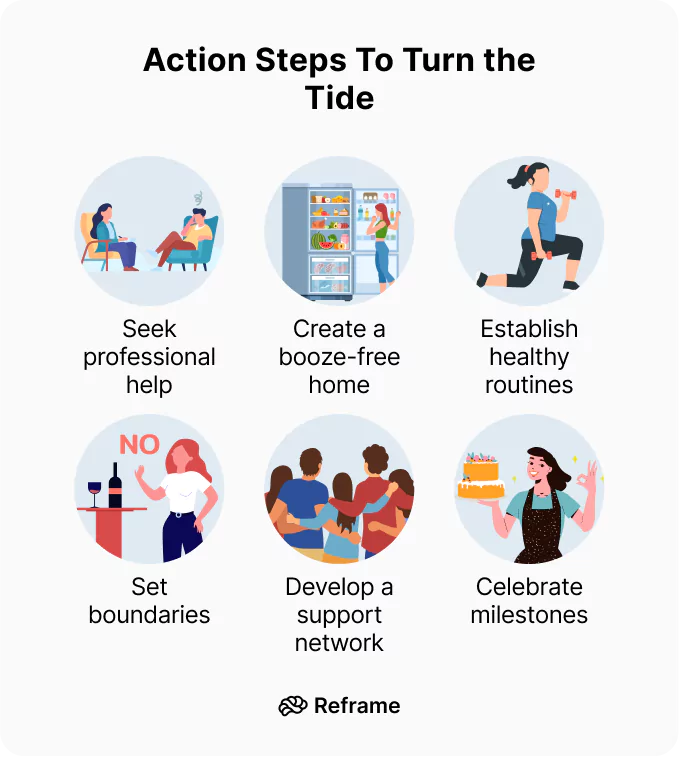
Finally, here are some additional action steps to help you and your partner address the challenge of alcohol misuse head-on in your marriage.
Seek professional help. Engage with a healthcare provider or a therapist who specializes in addiction. This could involve medically supervised detoxification, individual therapy, couples therapy, and support groups like Al-Anon for the non-drinking spouse. Therapy provides a safe space to explore the issues and learn coping mechanisms while under the guidance of a professional.
Create a booze-free home. Remove alcohol from your home environment to eliminate temptation and triggers. While it might seem like a simple step, it is a powerful tangible symbol of solidarity, mutual support, and commitment to a new lifestyle!
Establish healthy routines. Incorporate regular exercise, a balanced diet, and adequate sleep into your daily routine. These habits can improve mood, reduce stress, and enhance overall well-being, making it easier to cope with any challenges that come up.
Set boundaries. Establish clear boundaries around alcohol. Discuss and agree upon these boundaries to make sure they’re specific and realistic. Boundaries might include no drinking during family events or deciding on a plan of action if things don’t go as planned.
Develop a support network. Build a support network of friends, family, and community members who understand what you’re going through. They can provide emotional encouragement and practical help if you need it.
Celebrate milestones. Acknowledge and celebrate milestones in your alcohol journey — or your partner’s. Whether it’s one week or one year, recognizing these achievements can boost morale and motivate continued progress. Creating new, booze-free traditions to mark these occasions is a great way to celebrate achievements while bringing you closer and creating new memories.
Focus on What You Can Control
When you're dealing with a partner's drinking, it's easy to feel powerless. The key is to shift your focus from trying to change them to managing your own actions and environment. This isn't about giving up; it's about taking your power back and creating a healthier space for yourself, which can, in turn, inspire change.
Set and Maintain Clear Boundaries
Setting boundaries is one of the most important things you can do for your own well-being. Think of them not as rules for your partner, but as guidelines for yourself to protect your peace and safety. For example, a boundary might be, "I will not engage in arguments when you've been drinking," or "I will take the kids to my parents' house if there is drinking during family dinner." These aren't punishments; they are clear, consistent actions you take to create a respectful and stable environment. By upholding them, you encourage your spouse to take responsibility for their choices while safeguarding your own mental health.
Avoid Ultimatums You Can't Keep
It's important to distinguish between a healthy boundary and an ultimatum you aren't prepared to enforce. While it can be tempting to say, "If you drink again, I'm leaving," this can cause more harm than good if you don't mean it. Empty threats can damage trust and make your partner take your concerns less seriously over time. Before you state a consequence, ask yourself if you are truly ready and able to follow through. Your words carry weight, and using them carefully ensures that when you do set a firm line, it's respected because it's backed by genuine intention.
Accept That You Cannot Force Change
This can be the hardest truth to accept: you cannot force your partner to change. The motivation to address their drinking has to come from within them. Trying to control their behavior through nagging, pleading, or threats often backfires, creating resentment and pushing them further away. While you can't make the decision for them, you can create an environment that encourages self-reflection. Your role is to offer support, maintain your boundaries, and take care of yourself. By focusing on your own health and happiness, you model a positive alternative and show that change is possible, but the first step must be theirs.
Finding Support and Treatment Options
Taking the step to find support is a powerful move, whether it’s for you or your partner. The good news is there are many paths to getting help, from immediate phone support to long-term professional guidance. It’s all about finding the right fit for your family’s unique situation. Remember, reaching out is a sign of strength and the first step toward rebuilding a healthier, more connected life together. Below are several resources that can provide the support and information you need to get started on this journey.
Helplines for Immediate Support
When you need to talk to someone right away, helplines offer a confidential and immediate connection to support. These services are staffed by trained individuals who can provide information, offer a listening ear, and guide you to the next appropriate step. They are an invaluable resource for moments of crisis or when you simply don't know where else to turn. Think of them as a knowledgeable and compassionate first point of contact on the road to recovery and healing for your family.
SAMHSA's National Helpline
The Substance Abuse and Mental Health Services Administration (SAMHSA) runs a National Helpline that is free, confidential, and available 24/7. You can call anytime to get referrals to local treatment facilities, support groups, and community-based organizations. It’s not a crisis line, but rather an information service that connects you with the resources in your area that can provide long-term help for substance use disorders.
Al-Anon for Family and Friends
If your partner’s drinking is affecting you, Al-Anon is a resource created specifically for the friends and family members of people struggling with alcohol misuse. It’s a support group where you can share your experiences and learn coping strategies from others who truly understand what you’re going through. Many find the community incredibly validating and helpful, and they have online meetings, making it accessible no matter where you are.
Professional Treatment Paths
For a more structured approach, professional treatment offers evidence-based strategies to address alcohol misuse. These paths are guided by healthcare providers, therapists, and specialists who can create a personalized plan. Professional treatment addresses not just the drinking itself, but also the underlying psychological factors that contribute to it. This comprehensive approach is often key to creating lasting change and rebuilding the trust and communication within your marriage.
Medically Supervised Detox
For someone with a physical dependence on alcohol, stopping suddenly can be dangerous. Medically supervised detoxification ensures that the process is managed safely under the care of healthcare professionals. This is often the first step in a formal treatment program, as it clears the body of alcohol while managing withdrawal symptoms, creating a stable foundation for the therapeutic work ahead.
Residential and Outpatient Programs
Treatment programs come in different formats to fit various needs. Residential (or inpatient) programs offer an immersive environment where the individual lives at a treatment facility, providing 24/7 support. Outpatient programs are more flexible, allowing the person to live at home while attending scheduled therapy and counseling sessions. Both are effective options for helping rebuild trust and relationships.
Therapy and Aftercare
Therapy, whether it’s individual, couples, or family counseling, provides a safe space to explore the root causes of alcohol misuse and develop healthier coping mechanisms. A therapist can guide you and your partner in improving communication and resolving conflicts. Aftercare, which includes ongoing support groups or therapy sessions after a formal program ends, is crucial for maintaining progress long-term.
Digital Tools for Habit Change
In addition to traditional support systems, digital tools have emerged as a powerful and accessible way to foster new habits. Apps can provide daily encouragement, educational resources, and a supportive community right at your fingertips. They offer a private and convenient way to track progress and learn new skills, making them an excellent supplement to other forms of support. This approach allows you to integrate habit-change work into your daily life seamlessly.
How Apps Like Reframe Can Help
Apps like Reframe are designed to help you change your relationship with alcohol through a science-backed approach. Based on neuroscience, Reframe offers tools like personalized drink tracking, which can be a real eye-opener and a catalyst for change. The app also provides daily readings, skill-building exercises, and access to a large, supportive community of peers and coaches. By helping you understand the "why" behind your habits, Reframe empowers you to build a healthier, more mindful lifestyle.
Your Path to a Healthier Future
Alcohol misuse can indeed put a strain on marriage, but it doesn’t have to be the narrative of your relationship. With the right tools, understanding, and action, both partners can work towards a healthier, happier union free from the shadow of alcohol.
It’s not just about navigating away from alcohol; it’s about steering towards a shared vision of your life together. Take it one step at a time, support each other, and keep your eyes on the horizon of a fulfilling, alcohol-free future.
Frequently Asked Questions
How do I bring up my partner's drinking without starting a huge argument? The key is to approach the conversation with care, not criticism. Choose a calm, private moment when neither of you is stressed or has been drinking. Frame your concerns around your own feelings by using "I" statements, like "I feel lonely when we don't connect in the evenings," instead of "You always drink too much." The goal isn't to accuse them but to share how their behavior impacts you and the relationship, opening the door for a discussion rather than shutting it with blame.
My partner seems to handle their responsibilities just fine. Could their drinking still be a problem? Absolutely. This is often what a "functioning" alcohol use disorder looks like. Just because someone is succeeding at work and meeting daily obligations doesn't mean alcohol isn't causing harm. The real damage is often hidden, eroding trust, emotional intimacy, and communication within the marriage. If their drinking is causing tension or you feel it's creating distance between you, then it's a problem for your relationship, regardless of how well they manage other parts of their life.
What if my partner completely denies they have a drinking problem? This is a very common and frustrating situation. The most important thing to remember is that you cannot force someone to see what they aren't ready to acknowledge. Instead of trying to convince them, shift your focus to what you can control: your own actions and well-being. This is where setting firm, healthy boundaries becomes essential. You can also seek support for yourself through resources like Al-Anon or a therapist, which can help you cope with the situation and learn how to protect your own peace.
Is it really possible to save our marriage if alcohol has caused so much damage? Yes, it is possible, but it requires a real commitment from both people. Healing a relationship strained by alcohol misuse is a process that takes time, patience, and often professional help. The journey begins when the issue is brought into the open and both partners are willing to work on rebuilding trust and communication. It won't happen overnight, but many couples find their way back to a stronger, healthier partnership.
I feel so overwhelmed. What is the single most important thing I can do for myself right now? Focus on your own support system. It's easy to get completely wrapped up in your partner's issues, but you cannot pour from an empty cup. Your first step should be to find someone you can talk to, whether it's a trusted friend, a family member, or a professional counselor. Joining a support group like Al-Anon can also be incredibly helpful because you'll connect with others who understand exactly what you're going through. Taking care of your own emotional health gives you the strength to handle the challenges ahead.
Key Takeaways
Alcohol systematically weakens a marriage by disrupting communication and trust. Recognizing this pattern, even in a high-functioning partner, is the first step toward addressing the root of the problem, not just the symptoms.
Your power lies in setting healthy boundaries and prioritizing your own well-being. You cannot force your partner to change, but you can create a stable environment for yourself, which in turn encourages them to take responsibility.
Combine honest communication with professional support for a clear path forward. Healing is most effective when blame-free dialogue is paired with resources like therapy, support groups, or habit-change apps that provide structure for recovery.
1. What impact does alcohol misuse have on a marriage?
Alcohol misuse can significantly strain a marriage, affecting communication, trust, and emotional intimacy. It alters brain chemistry, leading to mood swings, poor decision-making, and sometimes aggressive behavior, which can create a challenging and stressful environment for both partners.
2. How can I support my spouse who is struggling with alcohol misuse?
Support your spouse by encouraging open communication, setting healthy boundaries, and seeking professional help if necessary. Educate yourself about alcohol misuse, and consider joining support groups like Al-Anon. Remember to take care of your own emotional and physical well-being too.
3. I'm struggling with alcohol misuse. How can I start making changes?
Acknowledge the issue and understand the impact of alcohol on your brain and behavior. Set personal goals for sobriety and track your progress. Seek professional help, focus on overall wellness, and maintain open communication with your spouse.
4. Why is communication so important in dealing with alcohol misuse in a marriage?
Effective communication fosters understanding, empathy, and support in a marriage affected by alcohol misuse. It involves honest dialogue, active listening, using "I" statements, and considering non-verbal cues, which helps both partners feel heard and understood.
5. What are some effective ways to communicate with my partner about their drinking?
Choose a calm time and private setting for conversation, use "I" statements to express your feelings, actively listen to your partner, and practice empathy. Avoid blame and focus on how the situation affects you and your relationship.
6. How can setting boundaries help in a relationship affected by alcohol misuse?
Setting boundaries helps protect your well-being and encourages your partner to take responsibility for their actions. Clear, realistic, and enforceable boundaries, such as not accepting disrespectful behavior or insisting on sobriety during family times, create a safer and more respectful environment for both partners.
7. What role does professional help play in dealing with alcohol misuse in a marriage?
Professional help, including therapy and medical assistance, provides tailored strategies and support for addressing alcohol misuse. It can offer couples coping mechanisms, individualized treatment plans, and a safe space to work through the challenges in the marriage.
Improve the Relationships in Your Life by Changing Your Relationship With Alcohol!
Although it isn’t a treatment for alcohol use disorder (AUD), the Reframe app can help you cut back on drinking gradually, with the science-backed knowledge to empower you 100% of the way. Our proven program has helped millions of people around the world drink less and live more. And we want to help you get there, too!
The Reframe app equips you with the knowledge and skills you need to not only survive drinking less, but to thrive while you navigate the journey. Our daily research-backed readings teach you the neuroscience of alcohol, and our in-app Toolkit provides the resources and activities you need to navigate each challenge.
You’ll meet millions of fellow Reframers in our 24/7 Forum chat and daily Zoom check-in meetings. Receive encouragement from people worldwide who know exactly what you’re going through! You’ll also have the opportunity to connect with our licensed Reframe coaches for more personalized guidance.
Plus, we’re always introducing new features to optimize your in-app experience. We recently launched our in-app chatbot, Melody, powered by the world’s most powerful AI technology. Melody is here to help as you adjust to a life with less (or no) alcohol.
And that’s not all! Every month, we launch fun challenges, like Dry/Damp January, Mental Health May, and Outdoorsy June. You won’t want to miss out on the chance to participate alongside fellow Reframers (or solo if that’s more your thing!).
The Reframe app is free for 7 days, so you don’t have anything to lose by trying it. Are you ready to feel empowered and discover life beyond alcohol? Then download our app today!
Reframe has helped over 2 millions people to build healthier drinking habits globally
At Reframe, we do science, not stigma. We base our articles on the latest peer-reviewed research in psychology, neuroscience, and behavioral science. We follow the Reframe Content Creation Guidelines, to ensure that we share accurate and actionable information with our readers. This aids them in making informed decisions on their wellness journey. Learn more
Updated Regularly
Our articles undergo frequent updates to present the newest scientific research and changes in expert consensus in an easily understandable and implementable manner.