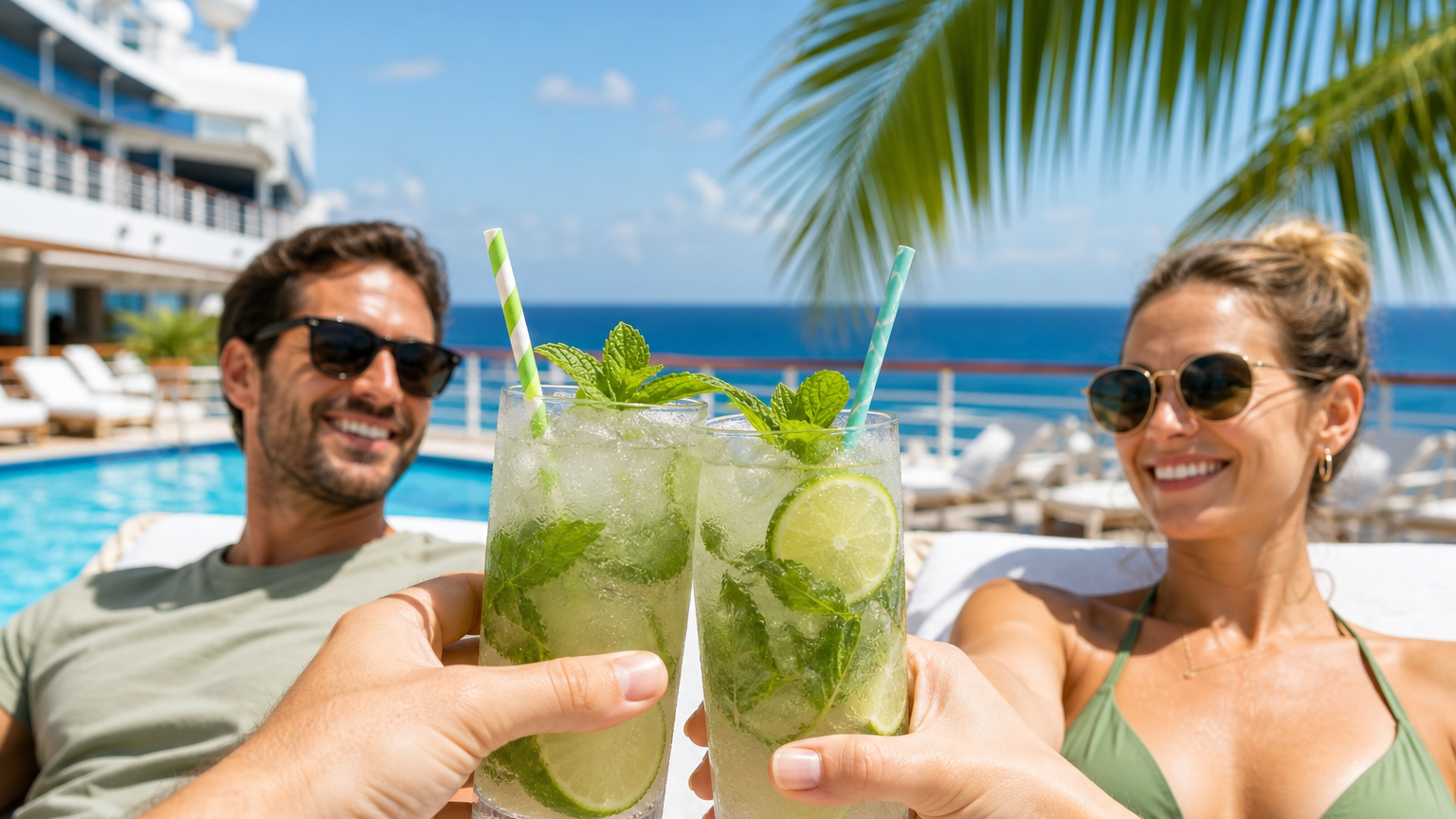
How to Pace Yourself on a Cruise When You Have a Drink Package
Published:
2026-08-07
·
Read time:
11 min read
Last Updated:
2026-08-07
Written by
Reframe Content Team
A team of researchers and psychologists who specialize in behavioral health and neuroscience. This group collaborates to produce insightful and evidence-based content.
Certified recovery coach specialized in helping everyone redefine their relationship with alcohol. His approach in coaching focuses on habit formation and addressing the stress in our lives.
Recognized by Fortune and Fast Company as a top innovator shaping the future of health and known for his pivotal role in helping individuals change their relationship with alcohol.
August 7, 2026
·
11 min read
Reframe Content Team
August 7, 2026
·
11 min read
You can pace yourself on a cruise even with an all-inclusive drink package by setting a daily drink target before you board, alternating every alcoholic drink with water or a non-alcoholic option, and refusing to let the package's "unlimited" framing drive how much you drink. The package is designed to feel like a deal you should maximize, but that sunk-cost pull is exactly what nudges people to drink far past what they actually want. Reframe can help you set an intention and track it so a week at sea feels like a vacation, not a bar tab you're trying to justify.
Pacing Yourself on a Cruise Without Letting the Package Run the Show
You can pace yourself on a cruise even with an all-inclusive drink package by setting a daily drink target before you board, alternating every alcoholic drink with water or a non-alcoholic option, and refusing to let the package's "unlimited" framing drive how much you drink. The package is designed to feel like a deal you should maximize, but that sunk-cost pull is exactly what nudges people to drink far past what they actually want. Reframe can help you set an intention and track it so a week at sea feels like a vacation, not a bar tab you're trying to justify.
Here's the thing nobody warns you about before you swipe your card for the beverage package: the math starts working on you. You do a little back-of-the-napkin calculation ("if I have five drinks a day, this pays for itself"), and suddenly a target has quietly become a floor. A cruise is one of the few places on earth where a fresh drink is always within arm's reach, always already paid for, and always socially on-brand. That combination is great for the cruise line and rough on anyone trying to drink a little less. So let's talk honestly about how to enjoy the trip, use the package you paid for, and still wake up clear-headed for the parts of the vacation you actually came for.
Why do all-inclusive cruise drink packages lead to overdrinking?
The short version: a prepaid package removes the small, useful pause that a bar tab normally creates, and then your brain starts treating "get my money's worth" as the goal. When every drink feels free, the natural friction that would slow you down at a normal bar just isn't there, and unlimited availability does the rest.
The sunk-cost trap at sea
Once you've paid up front, the money is gone whether you drink or not, but it rarely feels that way in the moment. The pull to justify what you already spent has a name in behavioral science: the sunk-cost effect, our tendency to keep pouring resources into something because we've already invested in it. The cleanest real-world demonstration isn't about alcohol at all, it's about buffets. In one experiment, people who paid for an all-you-can-eat buffet before eating consumed significantly more than those who paid afterward, which is about as close an analogy to a prepaid drink package as you'll find. Swap "food" for "cocktails" and you've basically described day three of a cruise. Naming this dynamic doesn't make it disappear, but it does give you something to push back on when the little voice starts doing drink math. If you want to go deeper on the psychology, we've written a whole piece on how the sunk-cost fallacy affects our decision-making.
Why "unlimited" rewires your drink math
Normally, the friction of ordering, paying, and watching a tab climb acts as a quiet governor on how much you drink. A cruise package sands all of that off. There's a bar by the pool, a bar at dinner, a bar before the show, a bar after the show, and room service that will happily bring you a nightcap. Constant access plus a party atmosphere plus a shipful of people who are also on vacation makes heavy drinking feel like the expected default rather than a choice you're making. The goal here isn't to maximize a spreadsheet. It's to enjoy the trip, and enjoyment and volume are not the same thing. Learning to notice that gap is a big part of what Reframe's mindful drinking program is built around.
How do you set a realistic drinking plan before you board?
Decide your numbers on dry land, before the lido deck starts working on you. A workable plan has three parts: a per-day drink target chosen in advance, a short list of the moments you actually want a drink for, and a couple of alcohol-free days built in. Making these calls sober, days ahead of time, beats trying to make good decisions with a free piña colada already in your hand.
Pick a per-day number when you're not in the moment, and pick it honestly. If you're using this trip to cut back, it helps to anchor to something real. General low-risk guidance from the Centers for Disease Control and Prevention describes moderate drinking as up to one drink a day for women and up to two for men, and it's worth reading those as maximums for people who choose to drink, not a nudge to hit the number. The same guidance flags something cruise-relevant: a single beverage can contain more than one standard drink, which is a polite way of saying cruise pours run generous.
That's why it pays to think in standard drinks rather than "rounds." A U.S. standard drink contains about 0.6 fluid ounces of pure alcohol, and a strong, oversized frozen cocktail can quietly count as two. If you plan in rounds, a generous bartender can double your actual intake without you noticing. Counting in standard drinks keeps your target meaningful.
Next, decide which occasions matter most to you. Maybe it's a sunset cocktail on a sea day, or a single glass of something nice for the formal-night toast. Plan your drinks around the moments you'll remember, not the ones that just happen because a bar is nearby. Then budget a couple of alcohol-free days, a port-excursion morning where you want to feel sharp climbing ruins, or a spa day where a headache would be a waste. Finally, tell a travel companion your plan. You're not asking them to police you; you're just making the intention real by saying it out loud to someone. Not sure where your baseline sits? Our What Type of Drinker Are You? quiz is a low-stakes way to get oriented before you pack.
What pacing tactics work in the unique cruise environment?
The most reliable move is to alternate every alcoholic drink with water or a mocktail. That single habit slows your pace, keeps you hydrated in the sun, and quietly halves how fast you're drinking, all without requiring any willpower in the moment. Layer a few environmental tweaks on top and the whole trip gets easier.
Order drinks you actually enjoy sipping slowly. A neat pour or a spritz you nurse beats a fast, sweet, high-proof frozen thing you'll finish in four minutes and immediately reorder.
Choose slower-service spots. Sitting at a table where a server checks in occasionally naturally paces you better than standing at a walk-up pool bar where the next drink is a two-foot reach away.
Set a nightly stop time. Last-call momentum is real, and pacing protects you from it.
Sea days vs. port days
These two kinds of days call for different plans. Sea days are the danger zone, wide open, low structure, and a bar in every direction, so give yourself something to do that isn't drinking: a pool, a spa appointment, a trivia contest, a nap that you actually take. Port days often solve themselves, because you're off the ship exploring, but they come with a twist: excursions are more fun and a lot safer when you're not nursing a hangover from the night before. Front-loading a stop time the evening before a big port day pays off the next morning.
Formal night and the built-in toast
Formal night is designed to feel like an occasion, which makes it one of the easier nights to overshoot. There's the pre-dinner cocktail, the wine with dinner, the toast, and the after-party. If a toast is a moment you genuinely want, plan for it and let the drink be that one glass of something you'll savor. You don't have to match the pace of the whole table to be part of the celebration. A nightly stop time matters here too, because your blood alcohol can keep climbing after you stop ordering. even small increases in blood alcohol concentration can decrease motor coordination, make a person feel sick, and cloud judgment, which is exactly how one last toast turns into a rough morning.
What non-alcoholic options can you actually get on a cruise?
More than you'd expect, and using them is how you "use" the package without racking up alcohol. Most major cruise lines now stock non-alcoholic beer, zero-proof spirits, and premium mocktails, and many beverage packages also fold in specialty coffees, sodas, and fresh juices. That means you can order all night and stay within your plan.
The single most useful move is to ask your bartender for a mocktail version of whatever's on the cocktail menu. Most can make a virgin version of nearly anything, and because it's the same glass and garnish, nobody at the table treats it as a statement. Sparkling water with lime or a dash of bitters is another easy standby that reads as a "real" drink in a group setting, which quietly defuses a lot of social pressure before anyone even asks. It's worth confirming with the bartender what your specific package includes on the zero-proof side, since coffees, sodas, and premium mocktails are often covered, and that's real value you already paid for.
The trick that makes this effortless is deciding on a couple of go-to zero-proof orders before the trip so you're never standing at the bar improvising. If you want a running start on ideas, we keep a list of mocktails you can order at any bar that translates neatly to a ship's cocktail menu, and a broader guide to enjoying travel alcohol-free if you're leaning toward a mostly-dry trip.
How do you handle drinking around other people on a cruise?
You almost never have to announce a plan. Quietly holding a mocktail or a water handles the vast majority of situations, because a drink in your hand, alcoholic or not, sidesteps most of the social choreography around ordering. People clink glasses, not contents.
If someone does ask, one easy line does the job: "I'm pacing myself so I feel good for the excursion tomorrow." It's true, it's relatable, and it ends the conversation without a big discussion about your relationship with alcohol. Beyond that, lean toward group activities that aren't built entirely around the bar, the shows, the pools, shore excursions, the specialty restaurants, so the default social setting isn't a drinking setting. And take some comfort in the fact that most people are deep in their own vacation and are not, in fact, tallying what's in your glass. If the pressure feels sharper than that, our guide to mindful drinking during social events has scripts and strategies that carry over to a cruise cleanly.
When should you worry about how much you're drinking at sea?
Cruise drinking can escalate quietly, because access is constant and one loose day tends to blur into the next. A single rough night isn't a verdict. But a few patterns are worth taking seriously: blacking out, waking up with real regret about the night before, or noticing you're reaching for the first drink earlier each day to feel normal.
If what you notice at sea is a pattern that follows you home rather than a one-off vacation night, that's the signal to look a little closer. A quick self-check like the Am I Drinking Too Much? quiz can help you sort a rowdy week from a habit worth changing, and a tool like Reframe can help you turn that awareness into a plan. There's no shame in either direction; the point is information, not judgment.
Summary FAQs
1. Is it worth buying the drink package if I'm trying to drink less?
If your goal is to cut back, the all-inclusive package can work against you because it makes every drink feel free and triggers sunk-cost drinking. Many people who drink moderately come out ahead paying per drink instead. If your line's package includes specialty coffees, sodas, and mocktails, though, you can still get value from it without leaning on alcohol.
2. How many drinks a day is reasonable on a cruise?
There's no cruise-specific magic number; general low-risk guidance suggests keeping to about one drink per day for women and up to two for men, and less is always lower risk. On a cruise, it helps to set your own target before you board and count in standard drinks rather than rounds, since cruise pours can be generous. Building in a few alcohol-free days over the week keeps the whole trip feeling better.
3. What are good non-alcoholic drinks to order on a cruise?
Most cruise lines carry non-alcoholic beer, zero-proof spirits, and can make mocktail versions of nearly any cocktail on the menu. Sparkling water with lime or a dash of bitters is an easy one that reads as a 'real' drink in social settings. Ask the bartender what's included in your package, since specialty coffees, sodas, and premium mocktails often are.
4. How do I avoid overdrinking when the alcohol is unlimited?
The most effective tactic is alternating every alcoholic drink with water or a non-alcoholic option, which naturally slows your pace and keeps you hydrated. Set a per-day target and a nightly stop time before you board, and fill sea days and port days with activities that aren't centered on the bar. Deciding in advance beats trying to make good calls in the moment with a free drink in reach.
5. How do I turn down drinks on a cruise without a big conversation?
You usually don't need to explain yourself; holding a mocktail or water quietly handles most situations. If someone asks, a simple line like 'I'm pacing myself so I feel good for tomorrow's excursion' is enough. Most people are focused on their own vacation and won't track what's in your glass.
6. Can I still enjoy a cruise if I'm cutting back on alcohol?
Absolutely, and many people find they enjoy it more because they wake up clear-headed for excursions, sleep better, and remember the trip. Cruises are packed with non-drinking options like spa days, shows, pools, ports, and dining. Cutting back doesn't mean going fully dry unless you want to; it means the trip runs on the experiences, not the bar.
Want To Cruise Without the Bar Tab Running Your Trip? Reframe Can Help!
Although it isn't a treatment for alcohol use disorder (AUD), the Reframe app can help you cut back on drinking gradually with the science-backed knowledge to empower you 100% of the way. Our proven program has helped millions of people around the world drink less and live more. And we want to help you get there, too!
The Reframe app equips you with the knowledge and skills you need to not only survive drinking less, but to thrive while you navigate the journey. Our daily research-backed readings teach you the neuroscience of alcohol, and our in-app Toolkit provides the resources and activities you need to navigate each challenge.
You'll meet millions of fellow Reframers in our 24/7 Forum chat and daily Zoom check-in meetings. Receive encouragement from people worldwide who know exactly what you're going through! You'll also have the opportunity to connect with our licensed Reframe coaches for more personalized guidance.
Plus, we're always introducing new features to optimize your in-app experience. We recently launched our in-app chatbot, Melody, powered by the world's most powerful AI technology. Melody is here to help as you adjust to a life with less (or no) alcohol.
And that's not all! Every month, we launch fun challenges, like Dry/Damp January, Mental Health May, and Outdoorsy June. You won't want to miss out on the chance to participate alongside fellow Reframers (or solo if that's more your thing!).
The Reframe app is free for 7 days, so you don't have anything to lose by trying it. Are you ready to feel empowered and discover life beyond alcohol? Then download our app through the App Store or Google Play today!
Reframe has helped over 2 millions people to build healthier drinking habits globally
At Reframe, we do science, not stigma. We base our articles on the latest peer-reviewed research in psychology, neuroscience, and behavioral science. We follow the Reframe Content Creation Guidelines, to ensure that we share accurate and actionable information with our readers. This aids them in making informed decisions on their wellness journey. Learn more
Updated Regularly
Our articles undergo frequent updates to present the newest scientific research and changes in expert consensus in an easily understandable and implementable manner.
Centers for Disease Control and Prevention. (2025). About moderate alcohol use. U.S. Department of Health and Human Services. https://www.cdc.gov/alcohol/about-alcohol-use/moderate-alcohol-use.html
National Institute on Alcohol Abuse and Alcoholism. (2025). What is a standard drink? National Institutes of Health. https://www.niaaa.nih.gov/alcohols-effects-health/what-standard-drink
Ronayne, C., & Wojcik, J. (2016). Sunk costs, psychological symptomology, and help seeking. SpringerPlus, 5, 1699. https://www.ncbi.nlm.nih.gov/pmc/articles/PMC5047866/
National Institute on Alcohol Abuse and Alcoholism. (n.d.). The truth about holiday spirits. National Institutes of Health. https://www.niaaa.nih.gov/publications/brochures-and-fact-sheets/truth-about-holiday-spirits
National Institute on Alcohol Abuse and Alcoholism. (n.d.). Harmful interactions: Mixing alcohol with medicines. National Institutes of Health. https://www.niaaa.nih.gov/publications/brochures-and-fact-sheets/harmful-interactions-mixing-alcohol-with-medicines
National Institute on Alcohol Abuse and Alcoholism. (n.d.). Interrupted memories: Alcohol-induced blackouts. National Institutes of Health. https://www.niaaa.nih.gov/sites/default/files/publications/alcohol-induced-blackouts-fact-sheet.pdf
National Institute on Alcohol Abuse and Alcoholism. (n.d.). Understanding the dangers of alcohol overdose. National Institutes of Health. https://www.niaaa.nih.gov/publications/brochures-and-fact-sheets/understanding-dangers-of-alcohol-overdose