The Morning After a Binge: Your Same Day Recovery Plan
Published:
2026-07-29
·
Read time:
10 min read
Last Updated:
2026-07-29
Written by
Reframe Content Team
A team of researchers and psychologists who specialize in behavioral health and neuroscience. This group collaborates to produce insightful and evidence-based content.
Certified recovery coach specialized in helping everyone redefine their relationship with alcohol. His approach in coaching focuses on habit formation and addressing the stress in our lives.
Recognized by Fortune and Fast Company as a top innovator shaping the future of health and known for his pivotal role in helping individuals change their relationship with alcohol.
July 29, 2026
·
10 min read
Reframe Content Team
July 29, 2026
·
10 min read
If you binged last night, the most useful thing you can do today is rehydrate steadily, eat gentle food, rest, and move a little, in that order, while going easy on yourself. Your body is clearing alcohol and rebalancing fluids and blood sugar, which is why you feel wrung out physically and often anxious by mid-afternoon; that "hangxiety" spike around the 24 hour mark is a predictable brain chemistry rebound, not a sign something is wrong with you. This is one day, not a verdict on who you are. If you want a calmer, more structured way to reset your relationship with alcohol beyond today, Reframe is built for exactly that.
Your Same Day Reset After a Binge
If you binged last night, the most useful thing you can do today is rehydrate steadily, eat gentle food, rest, and move a little, in that order, while going easy on yourself. Your body is clearing alcohol and rebalancing fluids and blood sugar, which is why you feel wrung out physically and often anxious by mid-afternoon; that "hangxiety" spike around the 24 hour mark is a predictable brain chemistry rebound, not a sign something is wrong with you. This is one day, not a verdict on who you are. If you want a calmer, more structured way to reset your relationship with alcohol beyond today, Reframe is built for exactly that.
Let's be honest about what today probably feels like. Your head is pounding, your stomach is uneasy, and there's a low hum of dread you can't quite explain. Maybe you woke up replaying the night, wincing at something you said. The good news, and it is genuinely good news, is that the morning after a binge follows a fairly predictable arc. Once you know what's happening in your body and what actually helps, you can stop white-knuckling through the day and start giving yourself the specific things that shorten it. Everything below is about today: hydration, food, rest, movement, and a bit of self-talk that doesn't make it worse.
What should you do in the first few hours after waking up?
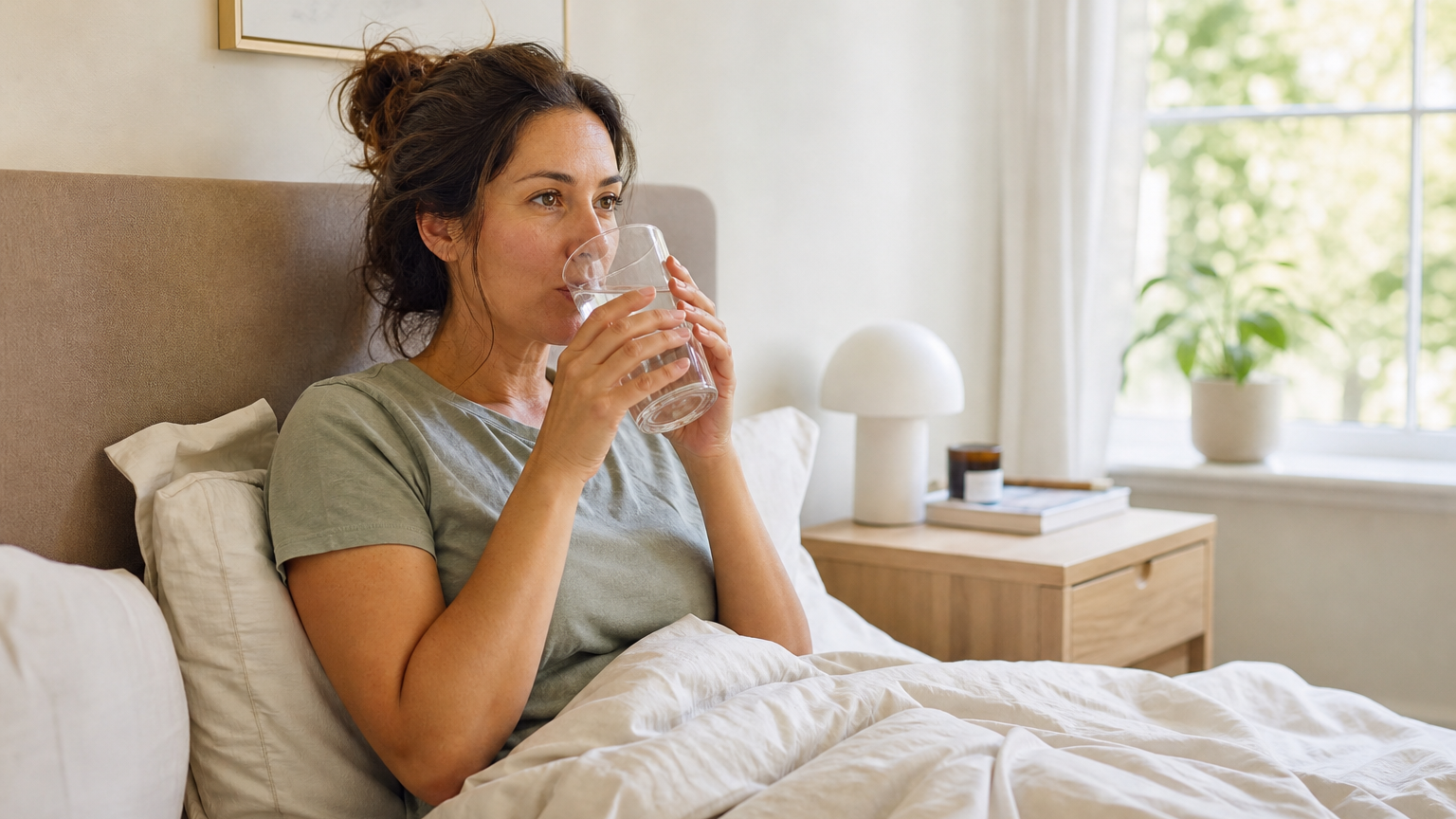
Start with water, not coffee, and sip it slowly. Your body is dehydrated because alcohol suppresses the hormone that helps you retain fluid, so replacing that fluid gently is the single most useful first move. According to Cleveland Clinic, the most reliable way to ease a hangover is to wait it out while drinking plenty of water, since that fluid loss drives the thirst, fatigue, and headache you're feeling right now.
Rehydration and electrolytes
Reach for water first, and sip steadily instead of chugging a huge glass all at once, which can turn your already queasy stomach against you. If plain water feels boring or your stomach wants something with a little more to it, a sports drink or some broth is fine, mostly because it helps you feel better and keeps you drinking fluids. Worth a quiet note: the National Institute on Alcohol Abuse and Alcoholism is actually skeptical that added electrolytes do much for hangover severity, and your body tends to rebalance its own salts once the alcohol clears. So think of electrolytes as an optional comfort, not a miracle fix. The point is steady fluid, whatever form makes that easiest for you today.
Food that actually helps
Once you can keep something down, go carb-forward and gentle. Toast, a banana, plain broth, or a couple of eggs give your blood sugar something to lean on without asking your stomach to do heavy lifting. Cleveland Clinic specifically favors easy-to-digest options like a banana over the greasy fry-up so many of us reach for out of habit. The greasy breakfast is a myth that tends to backfire; keep it small, keep it bland, and add more once your appetite comes back.
Pain relief cautions
A headache is one of the most common morning-after complaints, and a standard over-the-counter pain reliever can take the edge off. Be thoughtful about which one and when, though, because some pain relievers are hard on the stomach and others are hard on the liver, and your liver is already busy processing last night. This is a good place to read the label and, if you take medications regularly or aren't sure what's safe for you, check with a pharmacist rather than guessing. And if your body is begging to go back to sleep, let it. Recovery sleep is doing real repair work, and there is no prize for powering through on three restless hours.
What does a realistic hour-by-hour recovery day look like?
Picture today as a low-demand reset rather than a normal day you happen to feel bad on. NIAAA is blunt that there is no cure for a hangover other than time, because your body has to clear the byproducts of alcohol, rehydrate, and settle your brain back to baseline on its own schedule. You can't speed that up, but you can make the waiting far more bearable. Here's a rough map.
Morning
Ease in slowly. Rehydrate, eat something small, and keep the lights low and the noise down; a taxed nervous system does not want stimulation right now. This is not the morning to answer hard emails or make any decision you'd regret. If you can nap, nap. Think of the first few hours as triage: fluids in, calm environment, no pressure to be productive.
Midday
By the middle of the day you'll usually feel a little steadier. Have a light meal, keep drinking water, and get some fresh air. A short, gentle walk around the block does more for your mood than you'd expect. This is also the window where a bit of movement helps without straining you, which is very different from a hard workout. If you use a tool to notice your patterns, this is a calm moment to jot down what happened, and Reframe's mindful drinking program is designed to make that kind of low-key reflection feel supportive rather than like homework.
Afternoon and evening
Brace a little for the afternoon, because this is often when the low mood and anxiety peak, roughly around the time the alcohol has fully left your system. Plan for it by keeping the afternoon low-stimulation: an easy show, a slow errand, a call with someone who won't stress you out. Skip the doom-scrolling, which pours fuel on hangxiety. In the evening, eat a light dinner, do not add any more alcohol, and start winding down early to protect tonight's sleep. The whole arc, from rough morning to a calmer evening, tends to resolve within about a day of steady care.
Why do you feel so anxious the day after a binge?
The dread isn't in your head, and it isn't a character flaw. When you drink, alcohol quiets your brain by boosting a calming chemical called GABA and dialing down an excitatory one called glutamate. The next day your brain overcorrects in the opposite direction, leaving you wired, jittery, and anxious. Reassuringly, NIAAA lists anxiety and irritability directly among normal hangover symptoms, so feeling on edge is an expected part of the process, not evidence that something has gone wrong with you.
The GABA glutamate rebound
Here's the mechanism, in plain terms. Research on alcohol withdrawal links hyperexcitability to altered brain inhibition, which can show up as anxiety, insomnia, agitation, and palpitations. That research is about clinical withdrawal in dependence, so for a single heavy night, think of it as the same directional rebound running on a milder, shorter scale. Your brain leaned one way all evening and is now swinging back. Dehydration, patchy sleep, and blood sugar dips all amplify the feeling, which is exactly why fluids, food, and rest help so directly.
When the anxiety peaks
A lot of people expect to feel worst first thing in the morning and are blindsided when the anxiety actually crests later. It often peaks around the time alcohol has fully cleared your system, roughly the 24 hour mark, which is consistent with NIAAA's observation that hangover symptoms peak as your blood alcohol returns to zero. The upside of that predictability is that it's ridable: it climbs, it crests, and it comes down. If you want the deeper science on this timing, our explainer on what hangxiety is breaks down the curve and the ways to soften it. Slow breathing, fresh air, food, and hydration all shorten the ride.
How do you reset today without spiraling into guilt?
Treat last night as a single data point, not a label about who you are. One binge is information, not a verdict, and the way you talk to yourself in the next few hours matters more than you'd think. Piling on shame feels like accountability, but it usually does the opposite of what you want.
Why shame backfires
Here's the uncomfortable loop: guilt and self-blame tend to fuel more drinking, which makes shame actively counterproductive when your goal is to drink less. Beating yourself up doesn't prevent the next binge; it often sets it up, because feeling awful about yourself is a classic trigger to reach for the thing that numbs it. This is well-trodden ground, and our piece on guilt and shame with past alcohol use digs into why the harsh inner voice tends to keep the cycle spinning rather than breaking it.
A gentler self-talk script
So try naming what happened plainly, without the editorializing. "I drank more than I meant to last night. I noticed it started when I got stressed at dinner. Today I'm going to rest and drink water." That's it. Note the trigger if there was one, because that's genuinely useful information for next time, then do one small caring thing for yourself: a shower, a real meal, a walk, a text to a friend. The goal today is to decide the next thing, not the rest of your life. A single reset is plenty. If part of you is quietly wondering where your drinking sits overall, a low-pressure Am I Drinking Too Much? quiz can turn a vague worry into something concrete, but that's a tomorrow question, not a today one.
When is a hangover actually a medical emergency?
Most morning-after symptoms are miserable but not dangerous, and they resolve with rest and fluids. A minority of situations are genuinely medical, though, and knowing the line matters. If someone is showing signs of alcohol poisoning, this is a call-for-help decision, not a wait-it-out one, and it's worth being clear on the red flags before you ever need them.
Not every worrying symptom is a 911 call, but some still deserve medical attention. Seek care for a severe headache that won't lift, chest pain, vomiting blood, or a fever that persists. And here's a quieter signal worth taking seriously: if you regularly wake up shaky, sweaty, or intensely anxious the morning after drinking, that pattern can point to physical dependence, and it's genuinely worth a conversation with a clinician who can help you sort out what's going on safely. That's not a diagnosis or a scare tactic, just an honest flag that the morning-after feeling has more than one possible cause.
How can you protect tonight's sleep and tomorrow?
Skip the hair-of-the-dog. It's tempting when you feel this rough, but NIAAA notes that a morning drink may briefly mask symptoms while actually prolonging the hangover. In brain-chemistry terms, re-dosing just resets the rebound clock, so you trade an hour of relief for a worse afternoon and a rougher tomorrow. Give your body one alcohol-free day to actually reset.
Guard your sleep like it's the main event, because tonight it is. Keep caffeine to the morning so it isn't still working against you at bedtime, and treat late-afternoon coffee as a false friend today. Wind down early with a dark, cool room and a real break from screens; your nervous system is still settling, and a good night's sleep is where a lot of the recovery actually lands. Then set yourself up for tomorrow with something small and forward-looking rather than a grand overhaul.
A short, honest reflection on what led to last night can quietly prevent a repeat, and it works best without the self-punishment. Maybe you noticed the night got away from you at a specific point, or that a certain setting or feeling nudged you. Understanding your own patterns, like whether you tend to drink to loosen up socially or to take the edge off stress, is genuinely useful, and a quick What Type of Drinker Are You? quiz can make those patterns easier to see. If today has you thinking about a steadier approach going forward, you can download Reframe and let the small next-day habits, tracking, a plan for the next social event, build a little momentum. One reset day is enough for today.
Summary FAQs
1. What is the fastest way to feel better after a binge?
There is no way to speed up how quickly your liver clears alcohol, but you can ease the symptoms by rehydrating with water and electrolytes, eating gentle carb-forward food to steady your blood sugar, and resting. Avoid more alcohol and skip intense exercise. Most people feel meaningfully better within 24 hours of steady, low-demand recovery.
2. Why do I feel more anxious the day after drinking than during my hangover?
Alcohol calms your brain by boosting GABA while you drink, and the next day your brain rebounds in the opposite direction, leaving you anxious and on edge. This hangxiety often peaks around 24 hours after a heavy night rather than the morning after. It is temporary; hydration, food, fresh air, and slow breathing help shorten it.
3. Should I exercise to sweat out a hangover?
No, intense exercise is not a good idea when you are dehydrated and depleted, and you cannot sweat out alcohol. A short, gentle walk or some fresh air can lift your mood and help without straining an already taxed body. Save harder workouts for once you are rehydrated and rested.
4. Is it bad to drink again the day after a binge?
Yes, a hair-of-the-dog drink only delays your recovery, disrupts your sleep further, and can deepen the anxiety rebound the following day. It also nudges you toward a repeating cycle. Give your body an alcohol-free day to reset instead.
5. When should I go to the ER after drinking too much?
Call emergency services for signs of alcohol poisoning: repeated vomiting, confusion, seizures, slow or irregular breathing, cold, clammy, or bluish skin, or a person who cannot be woken. Also seek care for chest pain, vomiting blood, or a severe headache that will not lift. When these red flags appear, this is a medical emergency, not something to wait out at home.
6. How do I stop feeling guilty after binge drinking?
Treat one binge as a single event, not proof of failure or a label about who you are. Guilt and shame tend to fuel more drinking, so self-blame actually works against you. Name what happened, note any trigger, do one small caring thing for yourself, and focus only on the next decision rather than the rest of your life.
Ready to Make the Morning After a Rare Event? Reframe Can Help!
Although it isn't a treatment for alcohol use disorder (AUD), the Reframe app can help you cut back on drinking gradually with the science-backed knowledge to empower you 100% of the way. Our proven program has helped millions of people around the world drink less and live more. And we want to help you get there, too!
The Reframe app equips you with the knowledge and skills you need to not only survive drinking less, but to thrive while you navigate the journey. Our daily research-backed readings teach you the neuroscience of alcohol, and our in-app Toolkit provides the resources and activities you need to navigate each challenge.
You'll meet millions of fellow Reframers in our 24/7 Forum chat and daily Zoom check-in meetings. Receive encouragement from people worldwide who know exactly what you're going through! You'll also have the opportunity to connect with our licensed Reframe coaches for more personalized guidance.
Plus, we're always introducing new features to optimize your in-app experience. We recently launched our in-app chatbot, Melody, powered by the world's most powerful AI technology. Melody is here to help as you adjust to a life with less (or no) alcohol.
And that's not all! Every month, we launch fun challenges, like Dry/Damp January, Mental Health May, and Outdoorsy June. You won't want to miss out on the chance to participate alongside fellow Reframers (or solo if that's more your thing!).
The Reframe app is free for 7 days, so you don't have anything to lose by trying it. Are you ready to feel empowered and discover life beyond alcohol? Then download our app through the App Store or Google Play today!
Reframe has helped over 2 millions people to build healthier drinking habits globally
At Reframe, we do science, not stigma. We base our articles on the latest peer-reviewed research in psychology, neuroscience, and behavioral science. We follow the Reframe Content Creation Guidelines, to ensure that we share accurate and actionable information with our readers. This aids them in making informed decisions on their wellness journey. Learn more
Updated Regularly
Our articles undergo frequent updates to present the newest scientific research and changes in expert consensus in an easily understandable and implementable manner.
National Institute on Alcohol Abuse and Alcoholism. (2024). Hangovers. U.S. Department of Health and Human Services. https://www.niaaa.nih.gov/publications/brochures-and-fact-sheets/hangovers
National Institute on Alcohol Abuse and Alcoholism. (2024). Understanding the dangers of alcohol overdose. U.S. Department of Health and Human Services. https://www.niaaa.nih.gov/publications/brochures-and-fact-sheets/understanding-dangers-of-alcohol-overdose
Frontiers in Neural Circuits. (2023). GABAergic signaling in alcohol use disorder and withdrawal: Pathological involvement and therapeutic potential. Frontiers in Neural Circuits, 17, 1218737. https://www.frontiersin.org/journals/neural-circuits/articles/10.3389/fncir.2023.1218737/full
Cleveland Clinic. (2025). Hangover: What it is, symptoms & how to cure. https://my.clevelandclinic.org/health/diseases/16627-hangover