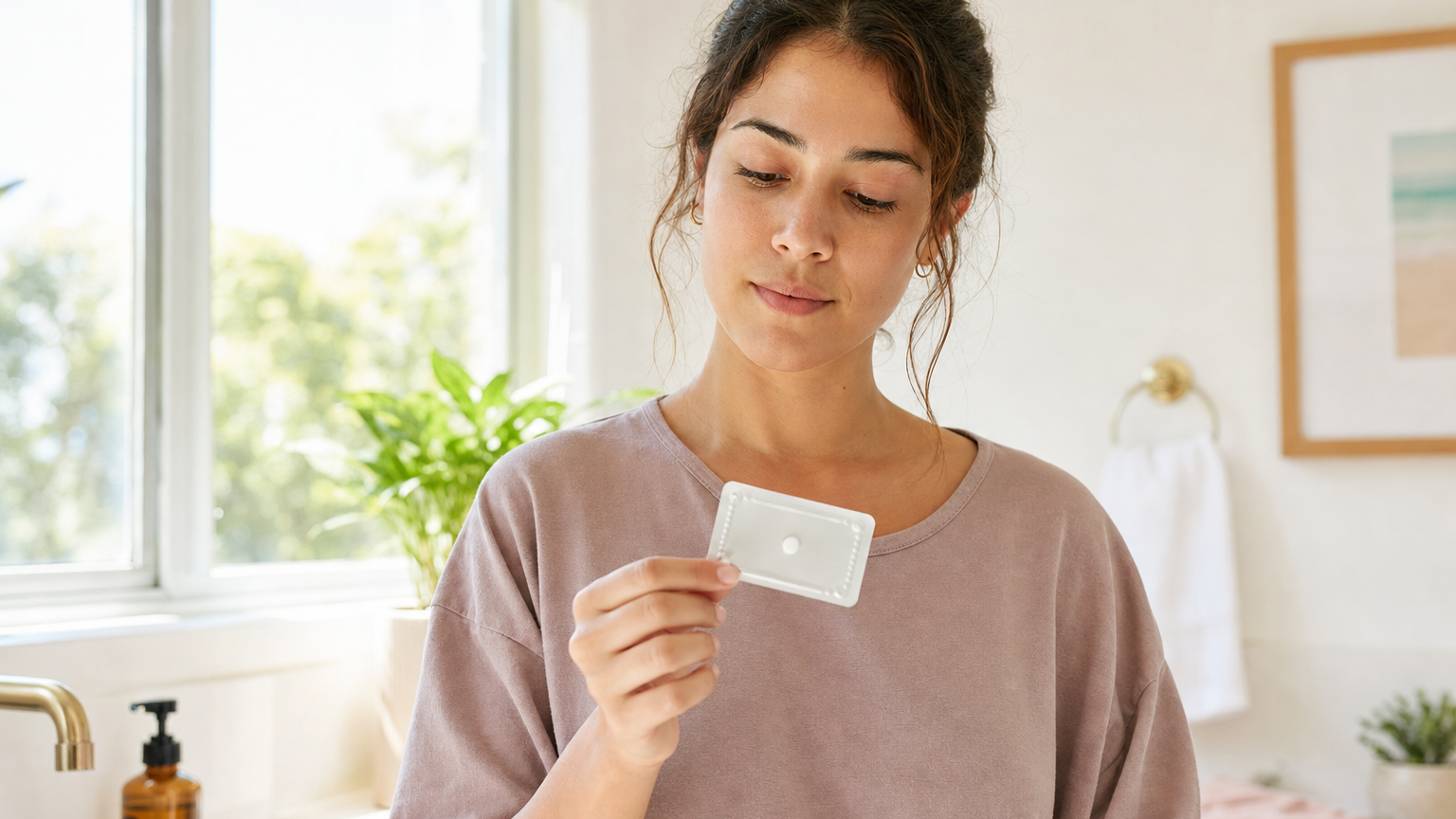
Plan B and Alcohol: Does Drinking Affect Emergency Contraception?
Published:
2026-05-18
·
Read time:
13 min read
Last Updated:
2026-05-21
Written by
Reframe Content Team
A team of researchers and psychologists who specialize in behavioral health and neuroscience. This group collaborates to produce insightful and evidence-based content.
Certified recovery coach specialized in helping everyone redefine their relationship with alcohol. His approach in coaching focuses on habit formation and addressing the stress in our lives.
Recognized by Fortune and Fast Company as a top innovator shaping the future of health and known for his pivotal role in helping individuals change their relationship with alcohol.
May 18, 2026
·
13 min read
Reframe Content Team
May 18, 2026
·
13 min read
Alcohol does not chemically reduce the effectiveness of Plan B (levonorgestrel emergency contraception). The one real interaction to know about: if you vomit within two hours of taking the pill, the dose may not have fully absorbed, and you typically need to take another. Beyond that, alcohol does not change how levonorgestrel works, but heavy drinking raises the odds of vomiting, missed doses, and the kinds of nights that lead to needing emergency contraception in the first place. If alcohol keeps showing up in these decisions, Reframe can help you take a closer look at the pattern without judgment.
The Short Answer on Plan B and Alcohol
Alcohol does not chemically reduce the effectiveness of Plan B (levonorgestrel emergency contraception). The one real interaction to know about: if you vomit within two hours of taking the pill, the dose may not have fully absorbed, and you typically need to take another. Beyond that, alcohol does not change how levonorgestrel works, but heavy drinking raises the odds of vomiting, missed doses, and the kinds of nights that lead to needing emergency contraception in the first place. If alcohol keeps showing up in these decisions, Reframe can help you take a closer look at the pattern without judgment.
Let's talk honestly about something a lot of people quietly Google the morning after a rough night. You took Plan B (or you're about to), you had been drinking, and now you're wondering if the booze somehow cancelled it out. Short version: no, but there are a couple of things worth knowing so you can stop spiraling and actually relax. This guide walks through what alcohol does and doesn't do to emergency contraception, what to watch for in the next few hours, and when to call someone who can help.
Does alcohol reduce the effectiveness of Plan B?
No. There is no known direct interaction between ethanol and levonorgestrel, the hormone in Plan B. The pill works primarily by delaying or preventing ovulation, and alcohol does not block, speed up, or otherwise mess with that mechanism in any clinically meaningful way. Major clinical references treat alcohol as a non-issue when it comes to Plan B's chemistry.
If you want the official version: the FDA prescribing information for Plan B One-Step lists specific drug interactions that can reduce levonorgestrel effectiveness, including efavirenz, rifampin, and certain anti-seizure medications. Alcohol is not on that list. It is also not flagged as a contraindication or warning anywhere on the label. The Plan B One-Step package insert confirms this when you read it in full.
What can actually reduce effectiveness is timing, vomiting, and (more controversially) higher body weight. Plan B works best the sooner you take it after unprotected sex, and effectiveness drops the longer you wait within the 72-hour window. Some research has suggested reduced efficacy above roughly 165 pounds or a BMI around 30, which is contested but worth knowing about: in that situation, a clinician may steer you toward ella or a copper IUD instead. None of these factors have anything to do with alcohol. They are independent variables.
What happens if you throw up after taking Plan B?
This is where alcohol indirectly matters. The critical window is two hours. The Plan B One-Step label instructs that if vomiting occurs within two hours of taking the tablet, you should contact a healthcare provider to discuss repeating the dose. After the two-hour mark, the medication has typically absorbed into your bloodstream and is doing its work, so throwing up does not undo it.
Heavy drinking is, frankly, one of the more common ways the vomiting window becomes relevant. The pill itself can cause nausea on its own (we'll get to those numbers in a minute), and stacking it on top of a stomach full of liquor is the kind of combination that sends some people to the bathroom. If you can keep the pill down for two hours, you're past the absorption concern.
Practical tip: set a timer on your phone for two hours from the moment you swallow the pill. If you make it that far without throwing up, the dose is in. If you vomit before the timer goes off, call a pharmacist. Pharmacists in the United States can dispense levonorgestrel emergency contraception over the counter without a prescription, so getting a second dose is usually straightforward. The manufacturer also runs a consumer helpline if you'd rather not have the conversation in person.
Why does alcohol show up so often when Plan B is needed?
This is not a moral observation. It is a statistical one, and it is worth naming because pretending the connection does not exist would be silly.
A systematic review and meta-analysis published in Addiction concluded that alcohol consumption is an independent risk factor for intentions to engage in unprotected sex, with higher blood alcohol concentrations associated with lower self-reported likelihood of condom use. The methodology there is strong because it pooled experimental studies where participants were randomly assigned to drink or not drink, which controls for the obvious confound that people who drink heavily may differ in other ways too. The causal arrow really does seem to point from drinking to riskier sex, not just correlation.
A larger and more recent picture: a 2023 meta-analysis covering more than 465,000 adolescents and young adults found alcohol consumption significantly associated with inconsistent condom use and with having multiple sexual partners. Effect sizes were modest but consistent. Alcohol nudges judgment, communication, condom use, and sometimes memory of what actually happened, which is its own kind of stress the morning after.
Why this matters for you, right now: if Plan B has shown up in your life more than once after a night of drinking, that is a pattern worth noticing without shame. It does not mean you have a "problem" with capital letters. It means alcohol is influencing decisions you might make differently sober, and a self-check tool like the Am I Drinking Too Much? quiz can be a low-stakes way to look at what's going on. So can Reframe's mindful drinking program, which is built around noticing patterns rather than forcing abstinence.
How should you time Plan B if you have been drinking?
Take it as soon as possible. The FDA label for Plan B directs that the tablet be taken as soon as possible and not more than 72 hours after unprotected intercourse, with effectiveness greater the sooner it is taken. Every hour you wait matters a little. Being drunk, hungover, or queasy is not a reason to delay.
You do not need to wait until you sober up. There is no version of this where waiting helps. If you can swallow a pill and keep it down, take it now and worry about everything else later.
A few practical moves that lower the chance of vomiting it back up:
Eat something light before or right after the pill if you can manage it. A piece of toast, crackers, a banana. A small amount of food in the stomach often calms the nausea reflex.
Drink water, not more alcohol. Continued heavy drinking after the pill is in your system will not undo its effect, but it can keep your stomach churning.
Lie still for a bit if you're spinning. Standing up and moving around when you're already nauseous tends to make things worse.
Set that two-hour alarm we mentioned. After two hours, the pill is absorbed and you can stop worrying about that specific risk.
If you are too nauseous to keep anything down at all, that is a conversation to have with a clinician or pharmacist. Anti-nausea medication, or switching to a copper IUD as the emergency contraception method, may be options worth raising.
What about ella, the copper IUD, or daily birth control pills?
Plan B is one option, not the only one. Quick tour:
Ella (ulipristal acetate) is a different oral emergency contraceptive. It has the same lack of direct alcohol interaction as Plan B, but its vomiting window is three hours, not two. The ella prescribing information instructs that if you vomit within three hours, you should consider repeating the dose. Ella also works slightly differently from Plan B. ACOG guidance on emergency contraception explains that levonorgestrel delays follicular development when given before the luteinizing-hormone surge, while ulipristal acetate can still inhibit follicular rupture even after the LH surge has begun. Translation: ella has a slightly wider mechanistic window. It requires a prescription in the United States.
The copper IUD is the most effective form of emergency contraception, full stop. Vomiting cannot undo it. Alcohol cannot affect it. Heavy drinking cannot affect it. It must be placed within five days of unprotected sex, which means calling a clinic. The bonus is that once placed, it can stay as ongoing birth control for up to ten years.
Daily birth control pills are a different conversation entirely. They are not emergency contraception. If you're already on the pill and worried about how alcohol fits in, our companion guide on drinking while taking birth control gets into the daily-pill nuance. The short version: alcohol does not deactivate daily birth control either, but heavy drinking can make you forget pills or vomit them up, which is its own efficacy concern.
Plan B and ella are not interchangeable on the same cycle. If you take one, do not take the other without talking to a clinician, because they can interfere with each other.
Are the side effects worse if you have been drinking?
The most common side effects of Plan B, from the DailyMed levonorgestrel label clinical trial data, are nausea (23%), abdominal pain (18%), fatigue (17%), headache (17%), and dizziness (11%). Notice that nausea is the top one even without any alcohol involved.
Alcohol does not pharmacologically amplify Plan B's side effects in any clinically tracked way, but practically, both substances can independently cause nausea, fatigue, and dizziness, and clinicians often note that the combination tends to feel worse than either on its own. Add hangover-stage dehydration to the mix and you have a recipe for a miserable morning even if everything is working exactly as it should.
A few things that genuinely help:
Water and electrolytes. Plain water is fine; a sports drink or electrolyte mix is better if you've been drinking heavily.
A small, bland meal. Toast, rice, eggs, soup. Nothing greasy.
Rest. Both your body's hangover recovery and the hormonal jolt from Plan B are easier to ride out horizontally.
Acetaminophen rather than ibuprofen for a headache, if alcohol is still active in your system, because ibuprofen plus alcohol can be hard on the stomach. If you're past the hangover stage, either is fine.
If the nausea is so bad you cannot stop throwing up, our guide on how to stop throwing up after drinking covers practical steps, and a pharmacist can help with whether you need to redose Plan B.
When should you call a clinician or pharmacist?
Most Plan B situations resolve without needing a professional in the loop. A few that do warrant a call:
You vomited within two hours of taking the pill. Call a pharmacist; they can dispense a second dose without a prescription.
Severe lower abdominal pain in the three to five weeks after. The FDA Plan B label specifically flags this as a sign to be evaluated for ectopic pregnancy, which the label notes accounts for about 2% of reported pregnancies. This is not common, but it is the one thing where waiting is genuinely a bad idea.
Your period is more than one week late. Take a pregnancy test and follow up with a clinician.
You take regular medications. A few drugs (efavirenz, rifampin, certain anti-seizure medications, St. John's wort) can reduce levonorgestrel effectiveness. If you take any of these, ask about ella or the copper IUD instead.
You've needed Plan B more than once or twice recently. Not a crisis, just a signal that an ongoing contraception method (or a closer look at the role alcohol is playing in those nights) might save you time, money, and morning-after stress. A clinician can walk you through options without judgment.
If money is part of why ongoing contraception or other support feels out of reach, the alcohol spend calculator is a surprisingly clarifying exercise. The number tends to be larger than people guess, and it's often the same number that would cover a lot of other things.
The pattern worth noticing, gently
If alcohol has shown up alongside Plan B more than once, you don't have to make it mean anything dramatic. You also don't have to pretend it isn't a pattern. The most useful thing is usually somewhere in between: noticing, without spiraling, that drinking is influencing decisions you might make differently sober.
That is exactly the kind of pattern Reframe is built to help with. Not by telling you to quit, not by guilt-tripping you, but by helping you see what's actually happening across weeks and months so you can decide what you want to do with that information. The What Type of Drinker Are You? quiz is one starting point. You can also download Reframe and use the tracking and neuroscience-based prompts to look at your drinking with curiosity instead of dread. The Reframe FAQ has more on how the app works if you're not sure where to start.
Summary FAQs
1. Does drinking alcohol stop Plan B from working?
No. Alcohol does not chemically interfere with levonorgestrel, the active ingredient in Plan B. The pill works by delaying or preventing ovulation, and that mechanism is not blocked by ethanol. The one real risk is vomiting within two hours of taking the pill, which can happen more easily after heavy drinking.
2. Can I take Plan B if I am still drunk?
Yes, and you should take it as soon as possible rather than waiting to sober up. Plan B is most effective the sooner you take it after unprotected sex; effectiveness declines with every passing hour. Being intoxicated does not change how the pill works, but try to eat something light to lower the chance of nausea.
3. What if I throw up after taking Plan B?
If you vomit within two hours of taking the pill, the dose may not have fully absorbed and you typically need to take another. If you vomit after the two-hour mark, the pill has usually absorbed and a redose is not needed. When in doubt, call a pharmacist; they can dispense a second dose.
4. Can I drink alcohol after taking Plan B?
Drinking after the pill is already absorbed will not undo its effect. The pharmacological action happens within the first couple of hours. That said, continuing to drink heavily can cause nausea or vomiting that complicates the window, so it is reasonable to ease off for the rest of the day.
5. Does alcohol make Plan B side effects worse?
Alcohol can amplify some side effects of Plan B, particularly nausea, fatigue, and dizziness. Both alcohol and high-dose levonorgestrel can upset the stomach independently, so combining them tends to feel worse. Hydration and a small meal usually help.
6. Is the copper IUD a better option if I was drinking heavily?
The copper IUD is the most effective form of emergency contraception and, unlike pills, cannot be undone by vomiting. If you have been drinking heavily, are very nauseous, or are over the weight thresholds where oral EC efficacy declines, asking a clinician about a copper IUD is reasonable. It must be placed within five days of unprotected sex.
7. If I keep needing Plan B after drinking, what should I do?
Recurring use of emergency contraception after drinking is a signal worth paying attention to, without shame. It usually means either contraception or alcohol (or both) needs a closer look. Talking to a clinician about an ongoing method, and honestly examining the role alcohol plays in those nights, can both make a real difference.
Wondering How Alcohol Fits Into Your Health Decisions? Reframe Can Help!
Although it isn't a treatment for alcohol use disorder (AUD), the Reframe app can help you cut back on drinking gradually with the science-backed knowledge to empower you 100% of the way. Our proven program has helped millions of people around the world drink less and live more. And we want to help you get there, too!
The Reframe app equips you with the knowledge and skills you need to not only survive drinking less, but to thrive while you navigate the journey. Our daily research-backed readings teach you the neuroscience of alcohol, and our in-app Toolkit provides the resources and activities you need to navigate each challenge.
You'll meet millions of fellow Reframers in our 24/7 Forum chat and daily Zoom check-in meetings. Receive encouragement from people worldwide who know exactly what you're going through! You'll also have the opportunity to connect with our licensed Reframe coaches for more personalized guidance.
Plus, we're always introducing new features to optimize your in-app experience. We recently launched our in-app chatbot, Melody, powered by the world's most powerful AI technology. Melody is here to help as you adjust to a life with less (or no) alcohol.
And that's not all! Every month, we launch fun challenges, like Dry/Damp January, Mental Health May, and Outdoorsy June. You won't want to miss out on the chance to participate alongside fellow Reframers (or solo if that's more your thing!).
The Reframe app is free for 7 days, so you don't have anything to lose by trying it. Are you ready to feel empowered and discover life beyond alcohol? Then download our app through the App Store or Google Play today!
Reframe has helped over 2 millions people to build healthier drinking habits globally
At Reframe, we do science, not stigma. We base our articles on the latest peer-reviewed research in psychology, neuroscience, and behavioral science. We follow the Reframe Content Creation Guidelines, to ensure that we share accurate and actionable information with our readers. This aids them in making informed decisions on their wellness journey. Learn more
Updated Regularly
Our articles undergo frequent updates to present the newest scientific research and changes in expert consensus in an easily understandable and implementable manner.
U.S. Food and Drug Administration. (2009). Plan B One-Step (levonorgestrel) tablet, 1.5 mg [Prescribing information]. https://www.accessdata.fda.gov/drugsatfda_docs/label/2009/021998lbl.pdf
Plan B One-Step: Package insert / prescribing information. (2024, July 3). Drugs.com. https://www.drugs.com/pro/plan-b-one-step.html
American College of Obstetricians and Gynecologists. (2015). Practice bulletin no. 152: Emergency contraception. https://www.acog.org/clinical/clinical-guidance/practice-bulletin/articles/2015/09/emergency-contraception
HRA Pharma America. (n.d.). Ella (ulipristal acetate) tablet [Prescribing information]. DailyMed, U.S. National Library of Medicine. https://dailymed.nlm.nih.gov/dailymed/drugInfo.cfm?setid=2bf93d23-cddd-4613-9066-5b5fa090404b
Rehm, J., Shield, K. D., Joharchi, N., & Shuper, P. A. (2012). Alcohol consumption and the intention to engage in unprotected sex: Systematic review and meta-analysis of experimental studies. Addiction, 107(1), 51-59. https://pubmed.ncbi.nlm.nih.gov/22151318/
Choi, H. J., Lee, E. H., & Kim, S. J. (2023). Relationship between alcohol consumption and risky sexual behaviors among adolescents and young adults: A meta-analysis. International Journal of Public Health, 68, 1605669. https://www.ssph-journal.org/journals/international-journal-of-public-health/articles/10.3389/ijph.2023.1605669/full
Teva Women's Health. (n.d.). Plan B (levonorgestrel) tablets, 0.75 mg [Prescribing information]. DailyMed, U.S. National Library of Medicine. https://dailymed.nlm.nih.gov/dailymed/fda/fdaDrugXsl.cfm?setid=fffebd01-3815-425f-8293-1ad909d0d0ab&type=display