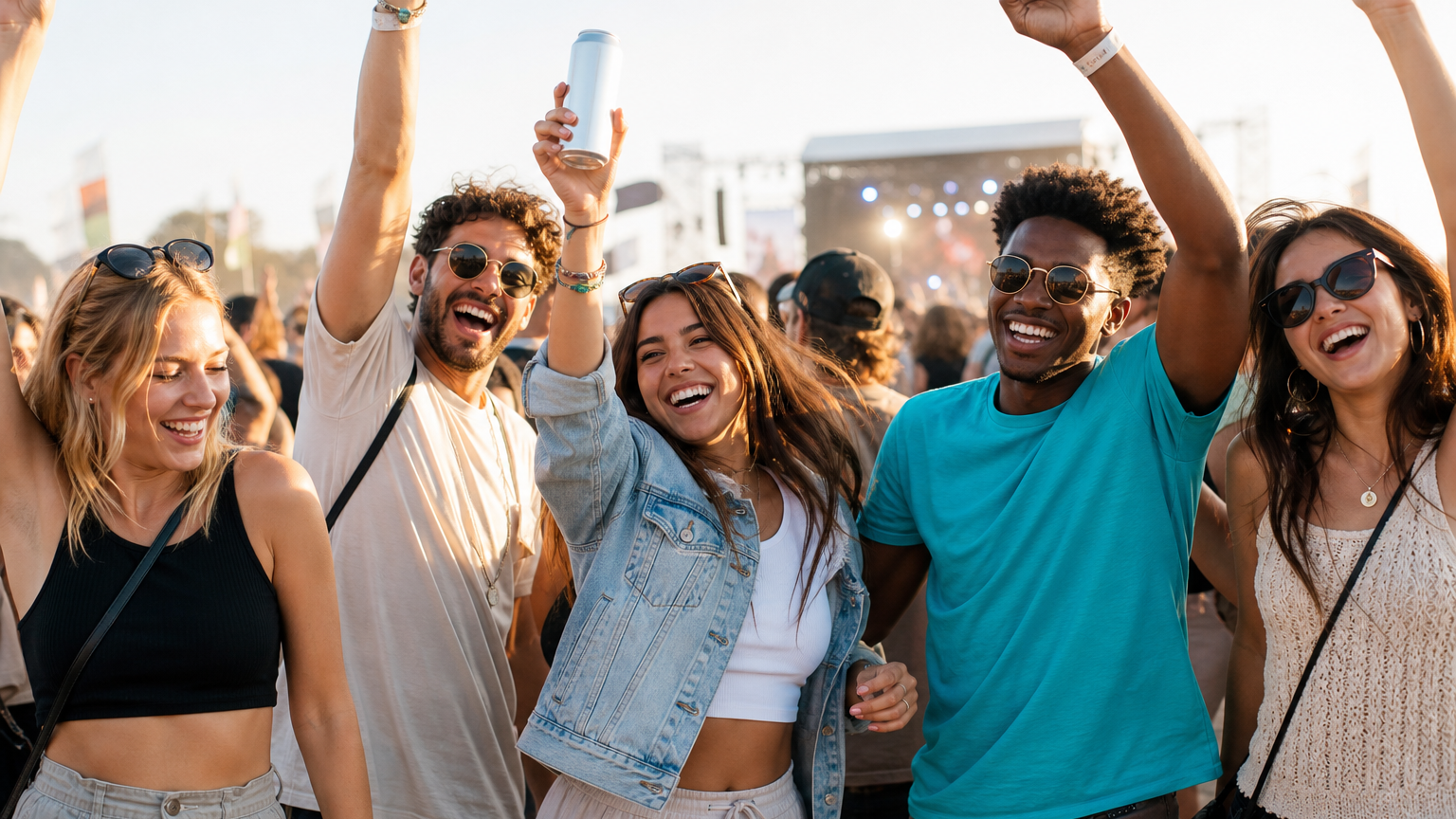
How to Enjoy Music Festivals and Concerts Without Drinking
Published:
2026-07-24
·
Read time:
9 min read
Last Updated:
2026-07-24
Written by
Reframe Content Team
A team of researchers and psychologists who specialize in behavioral health and neuroscience. This group collaborates to produce insightful and evidence-based content.
Certified recovery coach specialized in helping everyone redefine their relationship with alcohol. His approach in coaching focuses on habit formation and addressing the stress in our lives.
Recognized by Fortune and Fast Company as a top innovator shaping the future of health and known for his pivotal role in helping individuals change their relationship with alcohol.
July 24, 2026
·
9 min read
Reframe Content Team
July 24, 2026
·
9 min read
Yes, you can fully enjoy music festivals and concerts without drinking, and many people find they enjoy them more once alcohol stops competing with the music. The trick is treating these settings as high-cue environments (drink vendors everywhere, group-drinking rituals, long unstructured hours) and planning your moves in advance: a go-to non-alcoholic order, an anchor friend, hydration and energy that don't depend on booze, and a clear exit plan. Reframe's tools can help you rehearse these situations so a standing-crowd show feels like fun, not a test of willpower.
You Can Absolutely Love a Festival Sober, Here Is How
Yes, you can fully enjoy music festivals and concerts without drinking, and plenty of people find they enjoy them more once alcohol stops competing with the music. The trick is to treat these settings as high-cue environments (drink vendors everywhere, group-drinking rituals, long unstructured hours) and to plan your moves in advance: a go-to non-alcoholic order, an anchor friend, hydration that does not depend on booze, and a clear exit plan. Reframe's tools can help you rehearse these situations so a standing-crowd show feels like fun, not a test of willpower.
Let's be honest about something up front: the version of the festival everyone romanticizes later is almost never the drunk blur. It is the moment a favorite song dropped, the dance circle that formed with strangers, the sunset over the main stage. None of that requires a drink in your hand. What it does require, especially in your first sober festival or two, is a little strategy so you are not white-knuckling your way through hour six. Being sober at music festivals is not about resisting temptation all day; it is about setting things up so temptation barely gets a vote. Below, we will walk through why these places feel so intense, what to order, how to handle the crowd, how to actually sink into the music, and how to pace a long day so you leave feeling great instead of frazzled.
Why are festivals and concerts such intense drinking triggers?
Festivals hit hard as triggers because they stack nearly every drinking cue you have into one loud, sweaty, hours-long package. Drink vendors line every walkway, the person next to you is holding a beer, and the whole crowd seems to be mid-round. That density is the point to understand: it is not weak willpower, it is a genuinely cue-saturated environment.
The cue-heavy environment
Here is the mechanism, minus the jargon. Cues that get repeatedly paired with drinking, like specific people, places, glassware, or even images of drinking, can trigger powerful urges to drink, which is exactly why a setting this saturated feels so charged. A festival is a cue buffet: the smell of a beer garden, the clink of plastic cups, the "grab a round before the set" ritual you have run a hundred times. Your brain has learned to expect a drink in this exact scene, so it starts asking for one before you have even decided anything. That expectation is the trigger, not a flaw in you.
The beer-during-the-set ritual deserves its own callout because it is so specific to live music. For a lot of us, the pairing of a great song and a cold drink got wired together over years of shows. Break the pairing on purpose and you take a lot of the automatic pull out of it. If you want to understand your own pattern more precisely, the What Type of Drinker Are You? quiz can help you name which cues do the most work on you.
Unstructured time and boredom
The other half of the problem is time. A multi-day festival is mostly gaps: waiting for the next act, wandering between stages, standing in a field for forty minutes before a set starts. Drinking has historically filled those gaps, and boredom is one of the most common reasons people reach for a drink out of pure habit. If you are curious how boredom specifically drives cravings, we dug into that in our piece on why you crave alcohol when you are bored.
Group-drinking culture layers on top of all this. Rounds, toasts, "you're not drinking?" energy: it is built-in peer pressure, even when nobody means it that way. The single most useful move is to name these specific cues before you go. When you have already told yourself "the vendors will be everywhere, the rounds will start early, the afternoon will drag," none of it ambushes you. A named cue is a cue you can ride out.
What should you order instead, and how do you plan it in advance?
Decide your non-alcoholic go-to before you arrive, so you are never choosing under social pressure with a line behind you. Most festival and venue bars stock sparkling water, soda, non-alcoholic beer, and often a mocktail or two. Having one default order means the bar stops being a decision and becomes a formality.
Scope your options early in the day when you are fresh. Walk past a couple of vendors, see what they pour, and lock in your pick. A club soda with lime reads as a cocktail from three feet away and costs almost nothing. Non-alcoholic beer is increasingly everywhere and lets you hold the familiar bottle without the alcohol; if you are new to it, our guide to non-alcoholic beer covers what to expect from the category. For more crowd-pleasing ideas, our roundup of mocktails to order at any bar travels well to festival grounds.
Keep a drink in your hand as a quiet strategy. When your hands are visibly occupied, people offer you fewer drinks and ask fewer questions, because you already appear to be participating. This is the low-effort version of blending in.
Hydration is where the festival environment genuinely matters. Alcohol is a diuretic: it suppresses vasopressin, the hormone that tells your kidneys to hold onto water, so it increases urine output and fluid loss. Skipping alcohol already puts you ahead on that front, but heat, dense crowds, and a long day still add up, so alternate water with an electrolyte drink across the afternoon. Bring a refillable bottle if the venue allows it. If part of your motivation for skipping booze is health or weight, it can be satisfying to run the numbers through the alcohol calorie calculator and see what a dry festival day saves you. And having a ready one-liner for "what are you drinking?" ("just a soda, saving my energy for the headliner") removes the last bit of decision fatigue.
How do you handle FOMO and peer pressure in the crowd?
The most reliable defense against crowd pressure is an anchor friend: one person who knows your plan, supports it, and can back you up when a round starts. You do not need the whole group on board. One ally changes the entire social math of the night.
Finding an anchor friend
Pick your anchor before you go, ideally someone who either does not drink much or genuinely does not care whether you do. Text them your plan in plain terms: "I'm not drinking this weekend, can you have my back if it gets weird?" Most people say yes instantly and feel honored to be asked. Now you have someone to stand with during a set, someone to leave with, and someone who will say "she's good" so you do not have to.
Scripts for saying no
Prepare a short, low-drama line and practice it until it is boring to say. "I'm good with this one, thanks" works almost everywhere. So does "not tonight, I'm driving" or "taking it easy so I can actually remember this." The confidence to decline under pressure matters more than the exact words: a person's belief in their ability to refuse a drink is consistently linked to drinking less, and that confidence grows with rehearsal. Say your line out loud a few times before you go and it will come out steady in the moment. If you want a deeper bench of options, we collected a bunch in excuses to not drink: how to say no to alcohol.
Now, the FOMO. It is real, and pretending it is not helps no one. The reframe that actually lands is a trade, not a sacrifice: you are swapping a few hours of a buzz for full presence during the sets and no next-day crash. Focus on what you specifically came for, whether that is one artist or dancing with your people. Here is the quiet truth about the crowd, too: almost nobody is tracking what is in your cup. They are watching the stage. The awkwardness you are imagining is far bigger in your head than in the field. If FOMO is a recurring theme for you, our full guide on overcoming fear of missing out without alcohol goes deeper. And if pressure spikes, just drift to the edge of the crowd for a few minutes; the wave usually passes.
How do you stay present and actually enjoy the music sober?
Be deliberate about which sets you see. When you are not drifting wherever the round-buying crowd drifts, you get to pick the acts you genuinely want, plant yourself somewhere with a good sightline, and stay for the whole thing. That intentionality is its own kind of fun, and it is a lot easier without the "let's just grab one more first" detour.
Let the crowd itself be your stimulation. Dancing, moving, singing along, the collective roar when the drop hits: that is the actual drug of live music, and it works better when you are clear-headed enough to get swept up in it. Sober you can go all-in on the physical experience instead of managing a buzz. If reconnecting with what you enjoy is part of your bigger picture, Reframe's mindful drinking program is built around noticing and savoring exactly these kinds of moments.
How do you manage energy, hydration, and the long hours without alcohol?
Eat real food across the day, because steady energy is the whole game at a festival. It is easy to skip meals when you are chasing sets, but a proper lunch and snacks between acts keep your mood and stamina level. When you are sober you feel every dip honestly, so feeding yourself is not optional, it is the difference between thriving at the headliner and fading before it.
Alternate water and electrolytes on a loose rhythm, roughly a water for every stretch in the sun. This matters more in heat and dense crowds, where you sweat out fluid faster than you notice. You do not have to overthink it: a bottle of water, then an electrolyte packet or sports drink, repeat. Clinicians and hydration guides widely describe electrolytes as helpful when you are sweating a lot over long periods, which is basically the definition of a festival afternoon.
Build in rest breaks, shade, and a spot to regroup. Pick a landmark, a specific tree, a merch tent, a corner of the field, where your group reconvenes between sets. Sitting down for fifteen minutes in the shade is not giving up; it is how you stay standing for the encore. The afternoon slump is real, and this is where a coffee, an iced tea, or a non-alcoholic energy drink can carry you through without a drink. Pacing genuinely matters more sober precisely because you are not numbing the fatigue, so treat your energy like a budget you are spending across many hours, not all at once.
What is a good exit plan for a multi-day festival or long show?
A good exit plan is decided before you go, not improvised at 1 a.m. Know how you are getting home or back to camp, and who with. When the logistics are locked in early, you free up all the mental energy you would otherwise spend negotiating a ride at the exact moment you are most tired.
Give yourself full permission to leave early. This is worth saying plainly: a good exit plan is a strength, not a failure. If the vibe turns, if a craving surges, or if you are simply done, you are allowed to go. No single set is worth pushing past your limit, and nobody remembers who stayed latest.
For a multi-day festival, a loose daily schedule keeps each day from turning into an unstructured marathon. Sketch which acts are non-negotiable, when you will eat, and roughly when you will call it, then hold it lightly. Structure is the antidote to the boredom-and-drift problem we talked about earlier.
Identify a quiet fallback spot for when the crowd gets to be too much: the edge of the grounds, your tent, a shaded rest area, wherever you can breathe for a few minutes. And keep your anchor friend one text away. If you feel wobbly, reach out, hydrate, and reset. If you want a structured way to practice these moves before the gates open, you can download Reframe and rehearse the high-pressure moments in advance, and if you are weighing whether your drinking is worth rethinking at all, the Am I Drinking Too Much? quiz is a low-stakes place to start.
Summary FAQs
1. Can you actually have fun at a music festival without drinking?
Yes, and many sober festival-goers say the music, dancing, and social connection feel sharper without alcohol competing for attention. The key is planning ahead for the heavy drinking cues rather than relying on willpower in the moment. Bringing an anchor friend, a go-to non-alcoholic order, and an exit plan turns a high-pressure setting into a genuinely good time.
2. What can I drink at a concert or festival if I'm not drinking alcohol?
Most festival and venue bars stock sparkling water, soda, non-alcoholic beer, and often mocktails, so you have options that let you hold a drink and blend in. Water plus electrolytes is smart across a long, hot day to stay ahead of dehydration. Deciding your go-to order before you arrive means you are not choosing under social pressure.
3. How do I say no when everyone is buying rounds?
Have a short, low-drama line ready, such as "I'm good with this one, thanks," and keep a non-alcoholic drink in your hand so you are not repeatedly offered one. An anchor friend who knows your plan can help deflect pressure. Most people move on quickly; the awkwardness you imagine is usually far bigger in your head than in the crowd.
4. How do I deal with FOMO when my friends are all drinking?
Reframe the trade: you are swapping a few hours of a buzz for full presence during the sets and no next-day crash. Focus on the parts you actually came for, like a specific artist or dancing with friends. It also helps to remember that the version of the night everyone romanticizes is rarely the drunk blur; it is the shared experience, which you get to keep in full.
5. How do I stay energized through a long festival day without alcohol?
Eat real meals, alternate water with electrolytes, and build in shade and rest breaks between sets. Caffeine or a non-alcoholic energy drink can cover the afternoon slump. Because you feel every hour honestly when sober, pacing and hydration matter even more, and they leave you feeling far better the next morning.
6. What if I get overwhelmed or start craving a drink mid-show?
Step to the edge of the crowd, get some air, hydrate, and check in with your anchor friend. A brief reset often lets the craving pass on its own. Give yourself full permission to leave early if you need to; a good exit plan is a strength, not a failure, and no single show is worth pushing past your limit.
Heading to a Festival and Skipping the Booze? Reframe Has Your Back!
Although it isn't a treatment for alcohol use disorder (AUD), the Reframe app can help you cut back on drinking gradually with the science-backed knowledge to empower you 100% of the way. Our proven program has helped millions of people around the world drink less and live more. And we want to help you get there, too!
The Reframe app equips you with the knowledge and skills you need to not only survive drinking less, but to thrive while you navigate the journey. Our daily research-backed readings teach you the neuroscience of alcohol, and our in-app Toolkit provides the resources and activities you need to navigate each challenge.
You'll meet millions of fellow Reframers in our 24/7 Forum chat and daily Zoom check-in meetings. Receive encouragement from people worldwide who know exactly what you're going through! You'll also have the opportunity to connect with our licensed Reframe coaches for more personalized guidance.
Plus, we're always introducing new features to optimize your in-app experience. We recently launched our in-app chatbot, Melody, powered by the world's most powerful AI technology. Melody is here to help as you adjust to a life with less (or no) alcohol.
And that's not all! Every month, we launch fun challenges, like Dry/Damp January, Mental Health May, and Outdoorsy June. You won't want to miss out on the chance to participate alongside fellow Reframers (or solo if that's more your thing!).
The Reframe app is free for 7 days, so you don't have anything to lose by trying it. Are you ready to feel empowered and discover life beyond alcohol? Then download our app through the App Store or Google Play today!
Reframe has helped over 2 millions people to build healthier drinking habits globally
At Reframe, we do science, not stigma. We base our articles on the latest peer-reviewed research in psychology, neuroscience, and behavioral science. We follow the Reframe Content Creation Guidelines, to ensure that we share accurate and actionable information with our readers. This aids them in making informed decisions on their wellness journey. Learn more
Updated Regularly
Our articles undergo frequent updates to present the newest scientific research and changes in expert consensus in an easily understandable and implementable manner.
National Institute on Alcohol Abuse and Alcoholism. (n.d.). The cycle of alcohol addiction. U.S. Department of Health and Human Services.
Caudevilla-Gálligo, et al. (2019). A multilevel study of alcohol consumption in young adults: Self-efficacy, peers' motivations and protective strategies. International Journal of Environmental Research and Public Health, 16(16), 2827.
Taivainen, H., Laitinen, K., Tähtelä, R., Kilanmaa, K., & Välimäki, M. J. (1995). Role of plasma vasopressin in changes of water balance accompanying acute alcohol intoxication. Alcoholism: Clinical and Experimental Research, 19(3), 759–762.
Kähkönen, S., et al. (2005). Alcohol impairs auditory processing of frequency changes and novel sounds: A combined MEG and EEG study. Psychopharmacology.
National Institute on Alcohol Abuse and Alcoholism. (n.d.). Interrupted memories: Alcohol-induced blackouts. U.S. Department of Health and Human Services.