A team of researchers and psychologists who specialize in behavioral health and neuroscience. This group collaborates to produce insightful and evidence-based content.
Certified recovery coach specialized in helping everyone redefine their relationship with alcohol. His approach in coaching focuses on habit formation and addressing the stress in our lives.
Recognized by Fortune and Fast Company as a top innovator shaping the future of health and known for his pivotal role in helping individuals change their relationship with alcohol.
November 5, 2024
·
24
Reframe Content Team
November 5, 2024
·
24
What Is a Recovery Vision Board?
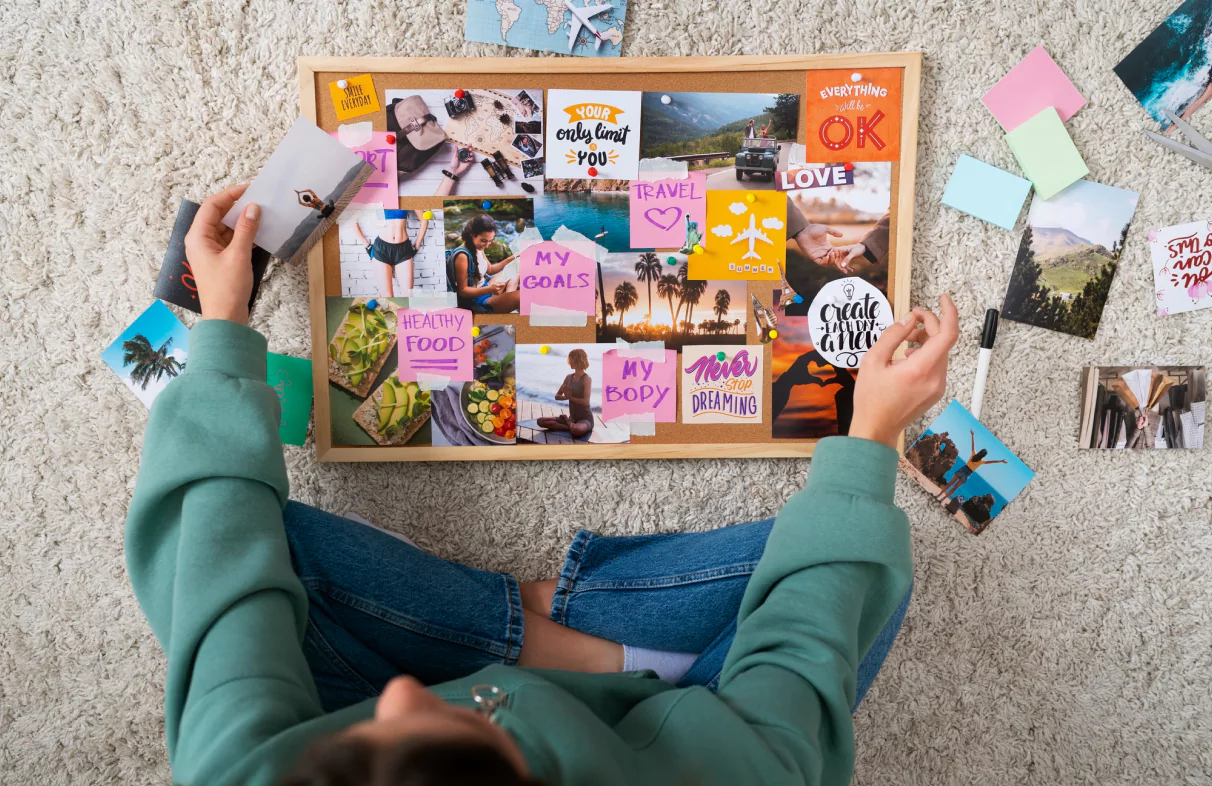
A vision board consists of putting images on a board to help us envision the life we’re working towards. In recovery, it can be used to help us stay motivated and on track with our goals to quit or cut back on alcohol. Recovery vision boards also offer a refreshing and uplifting distraction, allowing us to unleash our creativity and keep our hands and mind busy during recovery.
You kept telling yourself you wanted to cut back on drinking, but “one day” never seemed to arrive. It wasn’t until you got specific—writing down goals and tracking your progress—that “one day” finally became day one. Making your intentions tangible is a game-changer. A vision board for recovery takes this a step further by making your goals visual. It’s a powerful, daily reminder of the life you’re building. This isn't just about pretty pictures; it's about creating a concrete roadmap for your journey. We'll explore some practical recovery vision board ideas to help you build yours.
Making a recovery vision board or bulletin board is just like that — setting a goal and having something to keep us accountable. And the best part? It’s a fun way to do it. Let’s learn how we can use this creative outlet as a tool to boost our success during recovery.
How Can a Vision Board Help Your Recovery?
A vision board is like a visual representation of our goals and aspirations. It’s an intentional hodgepodge of images, words, and other items that are meant to inspire and motivate us. Vision boards can be used for anything, not just recovery, and there’s no one way to make them. They can be done digitally, or you can use physical images, your own drawings, or even words. Vision boards are meant to be just as unique as we are, so let’s dive into how we can make one of our own.
A Tool for Managing Cravings and Stress
When a craving hits, it can feel all-consuming. Your brain fixates on the idea of a drink, and it’s tough to think about anything else. A vision board acts as a powerful pattern interrupt in these moments. Instead of letting the craving take over, you can turn to your board and immerse yourself in the future you’re building. Visualizing those calm moments, future achievements, or happy memories you want to create gives you a crucial moment to pause and choose a different path. It’s a tangible reminder of your “why,” helping to manage the stress and anxiety that often trigger the urge to drink in the first place. This simple act of refocusing can be the difference between giving in and staying true to your goals.
The Science Behind Vision Boards and Recovery
It might seem like just a fun, creative project, but there’s real science explaining why vision boards are so effective. They work by tapping into powerful functions of your brain to help reinforce new habits and mindsets. When you consistently focus on images and words that represent your goals, you’re not just daydreaming; you’re actively engaging your brain’s ability to change and adapt. This process involves two key concepts: neuroplasticity and the Reticular Activating System (RAS). Understanding how these work can show you that your vision board isn’t just a collection of pictures—it’s a tool you’re using to actively reshape your thought patterns and guide your brain toward the positive outcomes you want to achieve in your recovery.
Neuroplasticity: Rewiring Your Brain
Your brain has an incredible ability to reorganize itself by forming new neural connections, a process called neuroplasticity. Think of it like creating a new trail in a forest; the more you walk it, the more defined it becomes. When you regularly look at your vision board and picture yourself living a healthier, happier life without alcohol, you are essentially carving out a new neural pathway. According to addiction recovery specialists, this visualization helps your brain build new, healthier habits. You’re training your brain to associate positive feelings with your goals rather than with drinking. Over time, this consistent mental practice makes it easier and more automatic to make choices that align with your vision for a sober life.
How Reframe Uses Neuroscience
This concept of neuroplasticity is the foundation of the Reframe app. We didn’t just create another drink-tracking tool; we built a program based on the science of how habits are formed and changed. Our daily readings, skill-building exercises, and evidence-based programs are all designed to help you create those new neural pathways. Just like a vision board gives you a visual focus, Reframe provides a structured, daily practice to help you rewire your brain. By combining neuroscience with a supportive community, we offer a comprehensive toolkit that empowers you to make lasting changes to your relationship with alcohol, one new thought pattern at a time.
The Reticular Activating System (RAS)
Have you ever decided you want a specific type of car and then suddenly started seeing it everywhere? That’s your Reticular Activating System (RAS) at work. The RAS is a network of neurons in your brainstem that acts as a filter for information, deciding what gets your attention and what doesn’t. When you create a vision board, you’re essentially programming your RAS to pay attention to things that will help you achieve your goals. By keeping your aspirations top of mind, your brain starts to notice opportunities, resources, and solutions that support your recovery. It’s not magic; you’re just directing your brain’s natural focus system toward what truly matters to you.
Creating Your Own Recovery Vision Board
1. Define Your Recovery Goals
SMART is a framework used to help us set effective goals. It stands for specific, measurable, achievable, relevant, and time-bound. Since our vision board is a visual representation of what our goals are, this step helps us zero in on the images and words we should look for.
Not sure where to begin? Consider setting a goal in each of these areas:
Recovery. A recovery goal can be centered around quitting or cutting back on alcohol, such as actions we might take to do so. For example, it could be cutting our intake by half each week or attending a support group session once a week.
Physical health. Alcohol takes a toll on our physical health. Set goals to address any medical needs, get adequate sleep, eat a balanced diet, or incorporate more movement.
Mental health. Recovery can be riddled with challenges, but prioritizing our mental health helps us work through these challenges. Some positive mental health practices we can add to our toolkit include mindfulness, healthy coping strategies, and finding an outlet to express our stress and emotions.
Relationships. Recovery can give us more time and energy to develop stronger relationships with those around us. Set goals to strengthen ties such as practicing active listening, or work on developing new friendships by initiating conversations with others.
Professional development. Drinking can often negatively affect our academic or employment performance. Set goals to pursue the career you’ve always wanted, such as taking a course, or set boundaries to maintain a good work-life balance.
Interests and passions. Exploring our interests and passions is important for living a fulfilling life. Get back into an old hobby, volunteer in the community, or learn a new skill.
For support with setting SMART goals and developing skills to reach them, try Reframe coaching. Once you’ve set your goals, you’re ready to start making your vision board come to life!
2. Choose Your Canvas: Physical or Digital?
A vision board can take different forms. The most important thing is that it works for you. If you’re more tech-savvy, make a vision board online using tools like Canva or Pinterest. A digital vision board can be easy to edit and allows you to print out multiple copies.
If you’re more hands-on, try some poster board, a canvas, or even a piece of paper. Either way, there’s no right or wrong method. Think about which one you’re more interested in creating or one you feel like you’ll use more. Once you’ve got that decided, get those creative juices flowing to start piecing together your board.
3. Bring Your Vision to Life
The fun part begins! Look at the goals you’ve written and start printing images, cutting out magazine clippings, and looking for inspirational quotes that represent these goals. For example, if you’re looking to develop more emotional balance through practicing mindfulness, a picture of a serene landscape could work. If you’re focusing on connecting more with loved ones, pictures of family members would be a great visual reminder.
Piece together words and images in a way that works for you. Don’t worry about what makes sense to an outside observer — if it’s meaningful or inspiring to you, that’s all that matters. Again, there’s no right or wrong way to do this, so just have fun with it!
Focus on Emotional Connection
As you select images and words, think about how they make you feel. The goal isn’t just to represent an object or an outcome, but to capture the emotion behind it. A picture of a mountain might represent not just hiking, but the feeling of strength, accomplishment, and peace you’re working toward. Vision boards help by making your wants and needs visible, and looking at your board often reminds you of the positive future you want. This emotional connection is a powerful motivator, keeping your aspirations at the forefront of your mind and encouraging you to take real steps toward achieving them, especially on days when you need it most.
Use Personal Affirmations
Words have power, so be sure to sprinkle your board with phrases that resonate with you. Incorporating positive statements like “I am strong” or “Progress is my goal” can reinforce your commitment and build your self-esteem. These affirmations serve as daily reminders of your own strength and determination, making it easier to stay focused on your goals. Think about what you need to hear. It could be “I am worthy of a healthy life,” “I am resilient,” or “I choose clarity today.” Write them out, print them in a font you love, and place them where you’ll see them often. They are small but mighty tools for shifting your mindset.
4. Keep Your Goals in Sight
After you’ve put together your vision board, put it somewhere you can see it. Set it as the lock screen on your phone, stick it to the fridge, or put it up on your desk. Putting your vision board somewhere you can see it throughout the day helps it serve its purpose as a reminder of your goals. But it doesn’t end here!
5. Let Your Vision Evolve With You
Just like our goals, our vision board should be updated regularly. While there's no exact answer for how often a vision board should be updated, keeping track of our progress can help us identify when it's time. If we’ve reached our goals and we’re setting new ones that don’t exactly fit with the pictures or quotes we’ve put on our vision board, it's a good time for a refresh. Our goals should be time-bound, so aim for an update roughly every six months to a year.
A vision board might be fun to make, but there’s even more to it. Using a vision board in recovery can be a tool for positive change. Let’s take a closer look at how.
Why a Vision Board is a Powerful Recovery Tool
A recovery vision board is more than just an art project or an inspirational quote on the wall. It serves as a reminder of our recovery goals and sets the stage for our success. Here’s how a vision board can boost our recovery.
It keeps us proactive. Making a vision board is hands-on. It involves developing our goals, finding representations of them, and getting a daily reminder of them. Research shows that staying proactive in recovery boosts our confidence and self-efficacy, which are both key to making lasting change. To learn more about the power of taking charge in recovery, check out “The Difference Between Passive and Active Recovery.”
It boosts motivation. Having a visual reminder of the things we’re working towards can help us get through challenging moments. It’s similar to having a hangout with friends to look forward to after a long week of work, or treating yourself to a snack after a grueling work or study session. For other methods to stay motivated, read “How to Stay Motivated and Celebrate Your Sobriety Milestones.”
It gives us a creative outlet. A vision board allows us to express ourselves creatively. Research shows that creative expression helps us explore our thoughts, emotions, behaviors, and actions, fostering engagement in the process of making positive change. To learn more about the power of creativity in recovery, read more on “How Engaging in Creative Activities Can Help Reduce the Urge to Drink.”
It’s a positive distraction. Creating a vision board keeps our hands and mind busy. In recovery when cravings can come on strong, creating a vision board allows us to express ourselves creatively and keeps us distracted. Get ideas for other positive distractions by reading our blog “Sober Living: Visual Arts, Music, and Writing.”
It can act as an accountability buddy. Out of sight can really be out of mind. Luckily, with a vision board placed somewhere we can easily see, our goals are always at the forefront of our mind.
A vision board can be beneficial for anyone, but in recovery where motivation and goal-setting are crucial, it can be a powerful tool for positive change. Let’s look at how we can keep that progress going after we’ve made our vision board.
More Recovery Vision Board Ideas to Stay Inspired
A vision board is a great start, but the work doesn’t end there. Here are ways we can ride that wave of inspiration to keep us moving forward in recovery:
Track your progress. It’s easy to overlook how far you’ve come when you’re so focused on reaching your goals. Keep a log so you can see the progress you’ve made and know when it’s time to set new goals.
Celebrate milestones. Give yourself a pat on the back by celebrating even the small wins during recovery, such as getting through a social event without drinking. Even a simple treat like ordering a latte instead of making coffee at home can positively reinforce the actions you’re taking.
Avoid comparison. Comparison can undermine your own progress. Be mindful of what media you’re consuming, and remember that everyone’s recovery journey is different.
Practice mindfulness. Mindfulness helps us make more intentional choices that align with our goals and values. Practice breathing exercises or follow a guided meditation.
Stay connected. Social support gets us through challenging times and keeps us accountable. Open up to family and friends, join support groups, or explore professional treatment options to keep progressing toward your goals.
With these strategies, we can set ourselves up for success in recovery and keep up the drive that a vision board sparks.
Sobriety Milestones
A vision board is a fantastic way to map out your journey, celebrating both the small wins and the major achievements. It helps you visualize and reach your goals by breaking them down into tangible steps. For instance, a big goal like running a marathon can feel overwhelming, but adding a picture of a 5K finish line makes it feel more immediate and achievable. These smaller goals serve as stepping stones, building your confidence with each one you accomplish. Seeing these milestones laid out visually reminds you that progress is a series of small, consistent efforts, making the entire process feel less intimidating and more exciting.
Emotional Healing and Growth
Recovery is as much an emotional journey as it is a physical one. A vision board acts as a visual anchor, helping you focus on the future you want to create rather than dwelling on the past. By making your wants and needs visible, you give yourself a daily reminder of your capacity for growth and happiness. When you’re having a tough day, a quick glance at images representing peace, joy, or connection can shift your perspective and reinforce your commitment. It’s a gentle but powerful way to guide your thoughts toward positivity and remind yourself of the emotionally rich life you are building.
Healthy Coping Skills
The very act of creating your vision board is a healthy coping mechanism in itself. When you feel a craving or a wave of stress, immersing yourself in this creative project can be a powerful form of distraction. The process of searching for images, cutting them out, and arranging them keeps your hands and mind occupied, channeling that restless energy into something positive and constructive. This activity is a form of mindful engagement, allowing you to process feelings creatively without judgment and build a tangible representation of your strength and resilience.
Support and Connection
While your vision board is a deeply personal project, it can also be a beautiful tribute to the people who support you. Including photos of family, friends, and mentors can serve as a potent reminder that you are not alone on this journey. In moments of doubt or isolation, seeing their faces can inspire you to reach out and lean on your support system. Goal-setting is crucial in recovery, and visualizing stronger relationships can motivate you to invest time and energy into nurturing those connections, which are fundamental to long-term success and well-being.
Peace and Balance
Consistently seeing your goals has a fascinating effect on your brain. When you regularly look at your vision board, you begin to prime your mind to notice and act on opportunities that align with your aspirations. It’s as if you’re training your subconscious to work in your favor. If your board features images of serene mornings or calm activities, you might find yourself naturally making choices that support that vision, like waking up a bit earlier for quiet reflection. This alignment between your conscious goals and daily actions helps cultivate a powerful sense of inner peace and balance.
Daily Joys
Big life changes are important, but so is the ability to find happiness in the small, everyday moments. A vision board is an excellent tool for clarifying what brings you simple joy. Beyond your major recovery goals, be sure to include images that represent daily pleasures: a perfect cup of coffee, a walk through a park, the feeling of getting lost in a good book, or cuddling with a pet. This practice helps you cultivate gratitude and appreciate the beauty of a sober life, reminding you that fulfillment isn't just found in future achievements but also in the present moment.
Exploring the Dimensions of Wellness
A fulfilling recovery is about more than just changing your drinking habits; it’s about building a life that feels good from the inside out. Your vision board can be a holistic map that touches on all the different dimensions of your well-being. It taps into your brain's ability to focus on what truly matters, helping you create a balanced and sustainable lifestyle. By dedicating space to different areas of your life, you ensure that your journey is comprehensive, nurturing your mind, body, and spirit all at once.
Spiritual Wellness
Spiritual wellness doesn’t have to be tied to religion; it can be about your connection to yourself, to nature, or to a sense of purpose that is greater than you. On your vision board, this might be represented by a photo of a peaceful forest, an image of someone meditating, or a quote that speaks to your core values. It’s about visualizing what helps you feel centered, grounded, and connected to what is most meaningful in your life. Nurturing this side of yourself provides a deep well of strength to draw from during challenging times.
Environmental Wellness
Your physical surroundings have a significant impact on your mental state. Environmental wellness is about creating a space that feels safe, calm, and supportive of your goals. Your vision board could include pictures of a clean, organized room, a cozy reading corner with a soft blanket, or a home filled with plants. Visualizing a serene personal environment can motivate you to declutter and create a sanctuary that reduces stress and promotes peace, making it easier to stay on track with your recovery.
Financial Wellness
Changing your relationship with alcohol often comes with significant financial benefits. Think about all the money you can save and what you could do with it. Your vision board is the perfect place to visualize these financial goals. Add a picture of a dream vacation, a symbol of becoming debt-free, or an image representing a savings goal. This makes the rewards of your new lifestyle tangible and exciting. If you’re curious, you can use an alcohol spend calculator to see just how much you could be saving.
Important Tips for an Effective Vision Board
Now that you’re inspired, let’s talk about how to make your vision board as effective as possible. A few simple guidelines can help ensure your board is a powerful tool that truly works for you. It’s not about creating a perfect piece of art, but about crafting a meaningful reflection of your aspirations that keeps you motivated day after day. These tips will help you get started on the right foot and create a board that resonates deeply with your personal journey.
It’s a Supplement, Not a Substitute
It’s important to remember that a vision board is a powerful tool, but it’s one piece of a larger recovery puzzle. It’s a helpful addition to your toolkit, designed to work alongside professional treatment, therapy, support groups, or programs like Reframe. Think of it as your personal cheerleader and a visual reminder of the work you’re doing elsewhere. It complements these foundational supports by keeping your goals top-of-mind, but it doesn’t replace the essential guidance and community that are so vital to making lasting change.
Focus on Your Personal Goals
For your vision board to be truly effective, it must be a genuine reflection of your own dreams and desires, not what you think it *should* look like or what others expect of you. Tune out the noise and connect with what truly motivates you. Your board should feel uniquely personal and inspiring to you. Whether your goals are unconventional or simple, they are valid because they are yours. This authenticity is what gives the board its power, creating a strong emotional connection that will fuel your motivation.
Practical Advice for Getting Started
Ready to bring your vision to life? The key is to just begin. Don’t overthink it or wait for the perfect moment. Gather some magazines, print images from the internet, or simply grab a pen and start writing down words that inspire you. The momentum you build by starting is more important than getting it perfect right away. Here are a few final tips to help you create a board that you’ll love and that will serve you well on your path.
What to Avoid on Your Board
When selecting images and words, aim for clarity and specificity. Avoid vague pictures that don’t have a strong, direct connection to your goals. For example, instead of a generic picture of money, use an image of the specific thing you’re saving for. The more specific the image, the stronger the emotional response it will evoke. This clarity helps your brain create a detailed mental picture of your desired outcome, making it feel more real and attainable.
You Don’t Need to Be Artistic
Please don’t let a fear of not being “creative enough” stop you. You absolutely do not need to be an artist to make a powerful vision board. The goal is not to create a masterpiece for a gallery; the goal is to create something that is meaningful to you. Whether it’s a simple collage of printed images or a corkboard with a few handwritten notes, its effectiveness comes from the personal significance it holds, not its aesthetic perfection.
Start Small or Use Multiple Boards
If you have many goals, the idea of fitting them all onto one board can feel overwhelming. Feel free to start small with a board focused on a single area, like health or career. You can also create multiple boards for different areas of your life. Digital tools like Pinterest are great for this, as you can create separate boards for every dream. The key is to make the process feel manageable and inspiring, not like another chore on your to-do list.
Turning Your Vision into Your Reality
Vision boards can be a powerful addition to any recovery journey, offering a blend of inspiration, clarity, and a creative outlet as we work towards our goals. By visualizing the future we want, we reinforce positive intentions and set the foundation for lasting change. A vision board in recovery serves not only as a tangible reminder of why we started and where we’re headed, but it keeps us proactive in recovery and gives us a way to express ourselves, helping us turn vision into victory. So, grab a laptop or some magazines, and let your dream life take shape!
Frequently Asked Questions
Is a vision board a replacement for therapy or support groups? Think of your vision board as a powerful personal tool, but not a substitute for professional support. It’s a fantastic supplement that works alongside therapy, support groups, or programs like Reframe. Your board acts as your daily, visual cheerleader, reinforcing the work you’re doing and reminding you of your goals, but it doesn’t replace the essential guidance and connection that come from structured support systems.
What if I’m not a creative or artistic person? You absolutely do not need to be an artist to create an effective vision board. The power of the board comes from the personal meaning behind the images and words, not from how perfectly it’s arranged. Your board is for you and you alone. Whether you use simple magazine clippings, printouts from the internet, or just a few handwritten affirmations on a corkboard, what matters is that it connects with your aspirations.
How do I choose between a physical and a digital vision board? This really comes down to your personal preference and lifestyle. A physical board is great if you enjoy a hands-on, tactile process and want a constant visual presence in your space, like on your desk or bedroom wall. A digital board, made with a tool like Pinterest or Canva, is incredibly flexible, easy to edit, and can be set as your phone or computer background for constant, on-the-go reminders. Choose the format that you feel you’ll engage with most consistently.
I feel overwhelmed by all the goals I want to achieve. Where do I start? That feeling is completely normal. If a single board for all your goals feels like too much, just start smaller. You could create a board that focuses on just one area of your life for the next few months, like your physical health or a new hobby. Another approach is to create multiple, smaller boards for different goals. The point is to make the process feel inspiring and manageable, not like another item on your to-do list.
How often should I look at my vision board for it to be effective? Consistency is more important than duration. You don’t need to sit and stare at it for long periods. The goal is to make it a natural part of your day. Place it where you’ll see it daily, like by your coffee maker or on your desk. A quick glance in the morning to set your intention or a brief look in the evening to reflect on your day is enough to keep your goals at the front of your mind and reinforce your commitment.
Key Takeaways
Make Your Brain Your Ally: A vision board is a practical tool for retraining your brain. Consistently visualizing your goals helps form new, healthier neural pathways and directs your mind to notice opportunities that support your recovery.
Connect With Emotion, Not Just Logic: The most effective vision boards evoke feeling. Choose images, quotes, and affirmations that represent how you want to feel (e.g., peaceful, strong, connected) to create a powerful source of motivation that a simple to-do list can't match.
Use It as a Supplement, Not a Substitute: Think of your vision board as one important tool in your recovery toolkit. It works best when used alongside foundational supports like therapy, community connection, and structured programs that guide you through the process of making lasting change.
A vision board is a visual representation of our goals that can serve as inspiration and motivation during recovery.
2. How do vision boards help in recovery?
Vision boards can help us clearly visualize and define our goals, help us stay motivated, and give us a creative outlet.
3. What should I include in my recovery vision board?
A recovery vision board should represent your goals in addiction recovery — images, affirmations, or drawings that reflect what you want your life to look like after recovery.
4. What are some recovery bulletin board ideas?
Some ideas for your recovery bulletin board include pictures of friends and family members with whom you want to develop a closer relationship, images of places you want to travel to, song lyrics that inspire you, or even the amount of money you want to save by not buying alcohol.
5. How often should I change my vision board in recovery?
Everyone’s recovery is different, but a good rule of thumb is to update your goals and vision board at least once a year to make sure you’re staying proactive with self-improvement.
Make Positive Life Changes With Reframe!
Although it isn’t a treatment for alcohol use disorder (AUD), the Reframe app can help you cut back on drinking gradually, with the science-backed knowledge to empower you 100% of the way. Our proven program has helped millions of people around the world drink less and live more. And we want to help you get there, too!
The Reframe app equips you with the knowledge and skills you need to not only survive drinking less, but to thrive while you navigate the journey. Our daily research-backed readings teach you the neuroscience of alcohol, and our in-app Toolkit provides the resources and activities you need to navigate each challenge.
You’ll meet hundreds of fellow Reframers in our 24/7 Forum chat and daily Zoom check-in meetings. Receive encouragement from people worldwide who know exactly what you’re going through! You’ll also have the opportunity to connect with our licensed Reframe coaches for more personalized guidance.
Plus, we’re always introducing new features to optimize your in-app experience. We recently launched our in-app chatbot, Melody, powered by the world’s most powerful AI technology. Melody is here to help as you adjust to a life with less (or no) alcohol.
And that’s not all! Every month, we launch fun challenges, like Dry/Damp January, Mental Health May, and Outdoorsy June. You won’t want to miss out on the chance to participate alongside fellow Reframers (or solo if that’s more your thing!).
The Reframe app is free for 7 days, so you don’t have anything to lose by trying it. Are you ready to feel empowered and discover life beyond alcohol? Then download our app through the App Store or Google Play today!
Reframe has helped over 2 millions people to build healthier drinking habits globally
At Reframe, we do science, not stigma. We base our articles on the latest peer-reviewed research in psychology, neuroscience, and behavioral science. We follow the Reframe Content Creation Guidelines, to ensure that we share accurate and actionable information with our readers. This aids them in making informed decisions on their wellness journey. Learn more
Updated Regularly
Our articles undergo frequent updates to present the newest scientific research and changes in expert consensus in an easily understandable and implementable manner.