Does Marijuana Affect Dopamine Like Alcohol? And What About Coffee and Sex?
Published:
2026-06-29
·
Read time:
10 min read
Last Updated:
2026-06-29
Written by
Reframe Content Team
A team of researchers and psychologists who specialize in behavioral health and neuroscience. This group collaborates to produce insightful and evidence-based content.
Certified recovery coach specialized in helping everyone redefine their relationship with alcohol. His approach in coaching focuses on habit formation and addressing the stress in our lives.
Recognized by Fortune and Fast Company as a top innovator shaping the future of health and known for his pivotal role in helping individuals change their relationship with alcohol.
June 29, 2026
·
10 min read
Reframe Content Team
June 29, 2026
·
10 min read
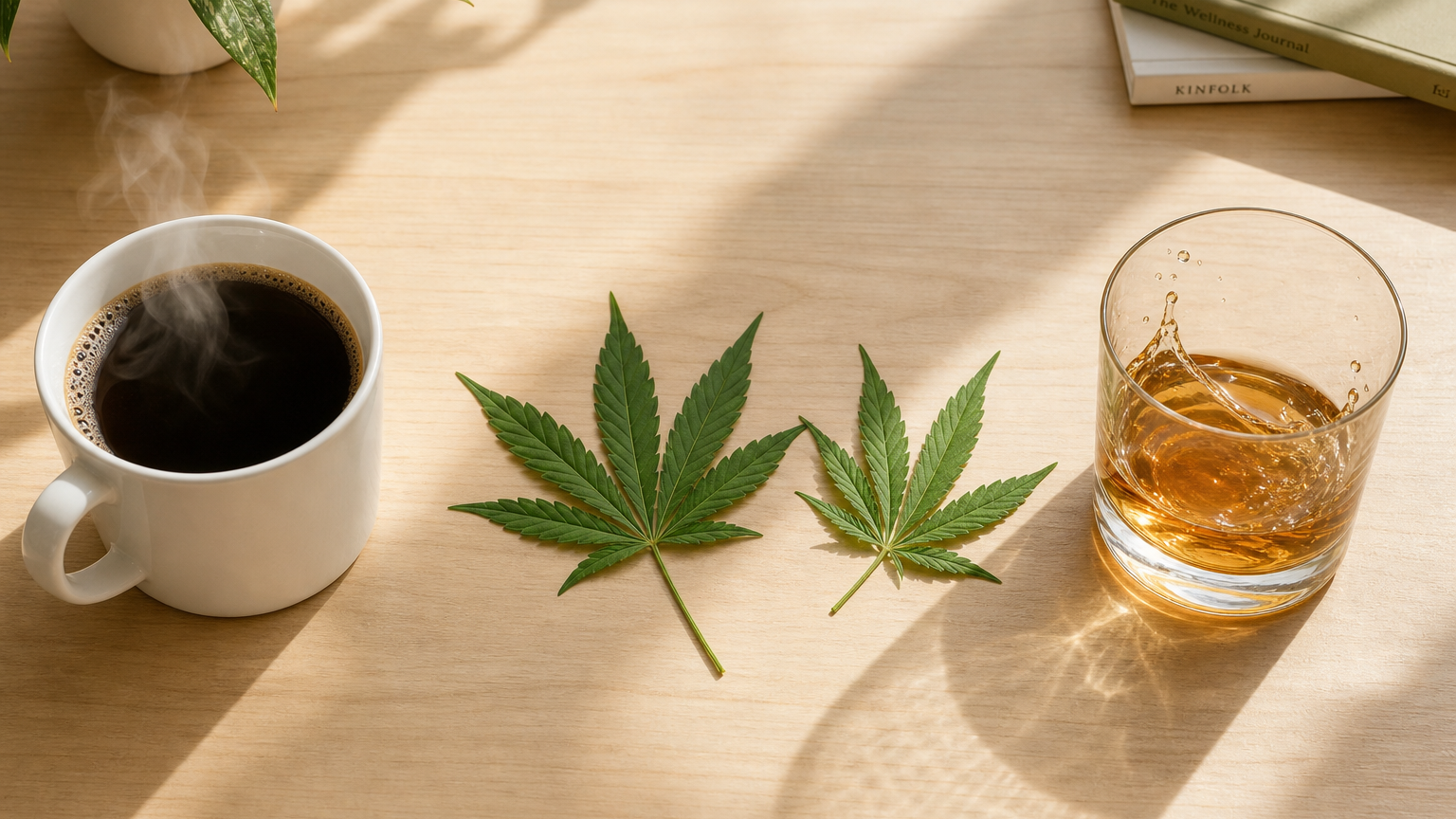
Marijuana, coffee, and orgasm all touch the brain's dopamine reward system, but none of them do it the way alcohol does. Alcohol raises dopamine indirectly by disrupting the GABA and glutamate balance in the mesolimbic pathway; THC activates CB1 receptors that drive dopamine release more directly; caffeine works mostly by blocking adenosine and nudging dopamine signaling; and orgasm produces a sharp, natural dopamine surge that resolves on its own. Understanding how these differ helps explain why some people reach for cannabis or coffee while cutting back on drinking, and Reframe is built to help you notice and reshape those substitution patterns.
How Marijuana, Coffee, and Orgasm Compare to Alcohol on Dopamine
Marijuana, coffee, and orgasm all touch the brain's dopamine reward system, but none of them do it the way alcohol does. Alcohol raises dopamine indirectly by disrupting the GABA and glutamate balance in the mesolimbic pathway; THC activates CB1 receptors that drive dopamine release more directly; caffeine works mostly by blocking adenosine and nudging dopamine signaling; and orgasm produces a sharp, natural dopamine surge that resolves on its own. Understanding how these differ helps explain why some people reach for cannabis or coffee while cutting back on drinking, and Reframe is built to help you notice and reshape those substitution patterns.
If you have ever swapped your evening glass of wine for a coffee, an edible, or, frankly, more time with your partner, you have already run a little experiment on your own reward system. The question underneath all of it is the same one we get asked constantly: does marijuana affect dopamine like alcohol, and what about the other things we reach for when we are trying to drink less? The honest answer is that dopamine is the common thread, but the wiring behind each one is genuinely different. Let's walk through the four mechanisms side by side, lead with the answer each time, and skip the hand-waving.
Key Takeaways
Alcohol works indirectly. It raises dopamine by suppressing GABA and glutamate signaling in the reward pathway rather than acting on dopamine neurons directly.
THC acts through CB1 receptors. Marijuana stimulates the same mesolimbic reward circuit but via cannabinoid receptors, producing a different release pattern than alcohol.
Coffee is the mildest of the four. Caffeine mainly blocks adenosine and only modestly influences dopamine, which is why it does not produce alcohol-like intoxication or reward.
Orgasm is a natural dopamine spike. Sex produces a sharp, self-limiting dopamine surge tied to bonding chemistry, not the prolonged disruption that repeated drinking causes.
Substitution is not neutral. Swapping one reward-system activator for another while cutting back on alcohol can help or hinder depending on the substance and your goals.
How does alcohol affect dopamine in the first place?
Here is the part that surprises people: alcohol does not actually plug into your dopamine receptors. It raises dopamine sideways. As research published in Alcohol Research & Health notes, alcohol affects neural circuits that control reward, acting through signaling systems that include dopamine, GABA, and glutamate. The broader picture clinicians often describe is that alcohol may quiet the GABA neurons that normally hold dopamine cells in check, effectively disinhibiting dopamine neurons rather than acting on them directly. The net result is more dopamine landing in the reward center, but through a back door.
The mesolimbic reward pathway
That back door opens onto the mesolimbic dopamine pathway, the brain's core reward circuit. The National Institute on Alcohol Abuse and Alcoholism describes how alcohol activates these reward circuits and engages what researchers call "incentive salience," the process that links a pleasurable experience to the cues around it, the glass, the time of day, the people. Over time that linkage is what trains the brain to expect reward from drinking, turning a choice into a habit and, for some, into something harder to steer. If you have ever wondered why the urge shows up at 6 p.m. like clockwork, this is the machinery behind it. (Our deeper dive on how alcohol affects the brain unpacks the rest of the circuit.)
Why tolerance and cravings develop
The catch with indirect, repeated stimulation is that the brain adapts. With ongoing heavy use, the reward system recalibrates and baseline dopamine signaling tends to drop, so it takes more alcohol to feel the same lift, and ordinary pleasures feel flatter. That dip is a big part of what drives cravings. This is the baseline we are measuring marijuana, coffee, and orgasm against, and it is why a tool like Reframe's mindful drinking program focuses on noticing the cue-to-craving loop rather than just white-knuckling through it. If you are not sure where your own pattern sits, the Am I Drinking Too Much? quiz is a low-pressure place to start.
Does marijuana affect dopamine like alcohol?
Short answer: yes, marijuana raises dopamine in the same reward pathway, but it gets there by a different road. Where alcohol works through GABA and glutamate, THC acts more directly on the endocannabinoid system. A review in Nature puts it plainly: acute THC increases dopamine release and dopamine-neuron activity, while long-term heavy use is associated with a blunting of the dopamine system. So the acute bump and the chronic dampening both show up, much like with alcohol, just via different receptors.
The CB1 receptor route
THC's psychoactive effects are carried by CB1 cannabinoid receptors, and as research in the British Journal of Pharmacology describes, THC activates the mesolimbic dopamine system that underlies reward and reinforcement, the same circuit most drugs of abuse touch. That is the headline contrast in the marijuana vs alcohol dopamine comparison: where alcohol disinhibits dopamine neurons through its effect on GABA, THC engages the cannabinoid receptors that influence those same dopamine projections more directly. Different switch, similar light comes on.
Using cannabis to cut back on alcohol
This is where people get understandably hopeful, and where we have to be careful. Some people do swap cannabis in for alcohol as a harm-reduction move. NIAAA's Alcohol Research: Current Reviews summarizes that cannabis-related policies have been linked to reduced alcohol sales and some alcohol-related harms, while also noting evidence of complementary use (people using both more) and increased co-exposure emergency visits among youth. A separate study in the Harm Reduction Journal found that a substantial share of participants reported their cannabis use led to less alcohol use, though the overall evidence on substitution remains mixed. The takeaway is not that cannabis is a treatment, because it is not. It activates its own reward loop and can become its own habit, so trading one for the other is not an automatic win. If you are weighing the broader comparison, our piece on which is worse, alcohol or weed goes further.
Does coffee affect the brain like alcohol does?
No, and it is not close. Coffee affects the brain far more mildly and through a completely different mechanism than alcohol. Caffeine is a stimulant, alcohol is a depressant, so they sit on opposite ends of the spectrum to begin with. Caffeine's main move is blocking adenosine, the molecule that builds up through the day and makes you feel sleepy. Block adenosine and you feel more alert, which is the entire reason coffee works.
Adenosine blocking explained
Caffeine's effect on dopamine is real but indirect and modest. A review in the Journal of Caffeine and Adenosine Research describes how caffeine modulates dopamine signaling through adenosine-dopamine receptor interactions in the striatum, a more limited route than the way alcohol acts on the reward system. That is why your morning cup sharpens you without producing intoxication or the dopamine-disruption pattern that drives heavy drinking. The question "does coffee affect the brain like alcohol" mostly answers itself once you see that one substance nudges signaling at the edges while the other rewires the core reward loop.
Coffee as a drinking-ritual replacement
For a lot of people the appeal of an evening drink is the ritual as much as the chemistry, and a warm cup can stand in for that nicely. That said, caffeine carries its own caveats: it can fray your sleep and crank up anxiety, especially later in the day, and heavy intake produces genuine dependence and withdrawal (the classic skipped-coffee headache). It just does not do it through the reward-system disruption that alcohol causes. If swapping a nightcap for tea or decaf appeals to you, our guide on how to replace alcohol in your evening routine has practical swaps that respect the ritual without wrecking your sleep.
Does an orgasm release dopamine like alcohol does?
Yes, orgasm produces a dopamine surge, but it is a fundamentally different kind of event than drinking. Sexual arousal and climax activate the same mesolimbic reward pathway, alongside other chemistry like oxytocin, the bonding hormone. The difference that matters is the shape of the curve: the dopamine spike from orgasm rises sharply and then resolves on its own, with no external chemical doing the driving. It is a natural, self-limiting reward.
Natural versus chemical reward
Compare that to alcohol, which artificially and repeatedly drives the reward system. That repetition is exactly what builds tolerance and cravings, because the brain keeps anticipating an outside source of dopamine and adjusts its baseline downward to compensate. A natural reward like orgasm does not ask the brain to keep chasing an external chemical, so it does not pull the system out of balance in the same way. The pleasure itself was never the problem. The source and the pattern are what separate a healthy reward from a hijacked one.
Rebuilding reward after drinking less
This reframing matters when you are cutting back. Natural rewards, sex, exercise, accomplishment, real connection, are widely understood to help the reward system find its footing again as it stops anticipating alcohol-driven spikes. We would call this a mechanism-informed suggestion rather than a guaranteed prescription, but it lines up with everything we know about how the circuit recovers. If you want the bigger map of what improves and when, our timeline on the benefits of cutting back on alcohol lays it out, and you can see how serotonin fits into the picture in how does alcohol affect serotonin.
Why does comparing these substances matter when you are cutting back?
Because almost nobody quits a reward cold without reaching for something else, and the dopamine reward system substances we reach for are not interchangeable. People cutting back on alcohol commonly substitute cannabis, coffee, sugar, or other rewards, and knowing the mechanism behind each one lets you choose on purpose instead of accidentally trading one dependence for another. A coffee ritual and an evening edible are not the same swap, and pretending they are is how good intentions quietly become a new habit.
The reason any of this is worth understanding is that recovery of the reward system is gradual and individual. An NIH review in Alcohol Research: Current Reviews notes that imaging studies found reduced striatal dopamine D2 receptor availability that did not fully recover up to about four months into abstinence, and that slower recovery of dopamine signaling tracks with higher relapse risk. That is not a reason to despair; it is a reason to be patient and to feed the system natural rewards while it readjusts. The goal was never zero pleasure. It is a reward system that is not held hostage by a single chemical.
The most useful habit here is simple: track how you actually feel after each substitution. Some swaps will leave you steadier, and some will just relocate the problem. Reframe is designed for exactly that kind of noticing, and if you want to start small, the What Type of Drinker Are You? quiz can help you spot your patterns before you decide what to swap in. One safety note worth stating plainly: if you drink heavily and daily, stopping abruptly can be dangerous, and a clinician can help you taper safely. When you are ready to build the practice, you can download Reframe and lingering questions are answered in Reframe's FAQ.
Summary FAQs
1. Does marijuana affect dopamine like alcohol?
Marijuana raises dopamine in the brain's reward pathway, but through a different route than alcohol. THC activates CB1 cannabinoid receptors that increase dopamine neuron firing more directly, whereas alcohol raises dopamine indirectly by altering GABA and glutamate signaling. Both can be reinforcing, and heavy chronic use of either is linked to blunted dopamine response over time.
2. Does coffee affect the brain like alcohol does?
No. Coffee works very differently and far more mildly than alcohol. Caffeine is a stimulant that mainly blocks adenosine receptors to boost alertness, with only a modest effect on dopamine, while alcohol is a depressant that disrupts the reward system more profoundly. Coffee does not cause intoxication, though heavy use can still create dependence.
3. Does an orgasm release dopamine like alcohol does?
Yes, orgasm triggers a dopamine surge in the same reward pathway, along with oxytocin and other chemistry. The difference is that this spike is natural, sharp, and self-resolving, whereas alcohol drives the system artificially and repeatedly, which builds tolerance and cravings. Natural rewards like sex and exercise can actually help restore healthy dopamine signaling.
4. Which is harder on the brain's reward system, alcohol or marijuana?
Both can disrupt dopamine signaling with heavy use, but they do it through different mechanisms and the comparison depends on dose, frequency, and individual factors. Alcohol also causes broad central nervous system and organ effects beyond dopamine. Neither is risk-free, and substituting one for the other is not automatically safer.
5. Can I replace alcohol with cannabis or coffee while cutting back?
Some people do swap in cannabis or coffee, but each carries its own tradeoffs and neither is a guaranteed harm-reduction win. Cannabis activates the reward system in its own way and can become its own habit, while coffee can disrupt sleep and anxiety. The most reliable rebuild comes from natural rewards like movement, connection, and rest.
6. How long does it take for dopamine to rebalance after cutting back on alcohol?
Recovery timelines vary, but many people notice mood and reward sensitivity improving over weeks to a few months of reduced drinking. The reward system gradually readjusts as it stops anticipating alcohol-driven dopamine spikes. Supporting that with sleep, exercise, and social connection tends to speed the process.
Curious How Your Brain Rewires When You Drink Less? Reframe Can Help!
Although it isn't a treatment for alcohol use disorder (AUD), the Reframe app can help you cut back on drinking gradually with the science-backed knowledge to empower you 100% of the way. Our proven program has helped millions of people around the world drink less and live more. And we want to help you get there, too!
The Reframe app equips you with the knowledge and skills you need to not only survive drinking less, but to thrive while you navigate the journey. Our daily research-backed readings teach you the neuroscience of alcohol, and our in-app Toolkit provides the resources and activities you need to navigate each challenge.
You'll meet millions of fellow Reframers in our 24/7 Forum chat and daily Zoom check-in meetings. Receive encouragement from people worldwide who know exactly what you're going through! You'll also have the opportunity to connect with our licensed Reframe coaches for more personalized guidance.
Plus, we're always introducing new features to optimize your in-app experience. We recently launched our in-app chatbot, Melody, powered by the world's most powerful AI technology. Melody is here to help as you adjust to a life with less (or no) alcohol.
And that's not all! Every month, we launch fun challenges, like Dry/Damp January, Mental Health May, and Outdoorsy June. You won't want to miss out on the chance to participate alongside fellow Reframers (or solo if that's more your thing!).
The Reframe app is free for 7 days, so you don't have anything to lose by trying it. Are you ready to feel empowered and discover life beyond alcohol? Then download our app through the App Store or Google Play today!
Reframe has helped over 2 millions people to build healthier drinking habits globally
At Reframe, we do science, not stigma. We base our articles on the latest peer-reviewed research in psychology, neuroscience, and behavioral science. We follow the Reframe Content Creation Guidelines, to ensure that we share accurate and actionable information with our readers. This aids them in making informed decisions on their wellness journey. Learn more
Updated Regularly
Our articles undergo frequent updates to present the newest scientific research and changes in expert consensus in an easily understandable and implementable manner.
Gilpin, N. W., & Koob, G. F. (2008). Neurobiology of alcohol dependence: Focus on motivational mechanisms. Alcohol Research & Health, 31(3), 185–195.
National Institute on Alcohol Abuse and Alcoholism. (2022). Neuroscience: The brain in addiction and recovery. U.S. Department of Health and Human Services.
Bloomfield, M. A. P., Ashok, A. H., Volkow, N. D., & Howes, O. D. (2016). The effects of Δ9-tetrahydrocannabinol on the dopamine system. Nature, 539(7629), 369–377.
Maldonado, R., Valverde, O., & Berrendero, F. (2006). Involvement of the endocannabinoid system in drug addiction. Trends in Neurosciences, 29(4), 225–232.
Ferré, S. (2018). New developments on the adenosine mechanisms of the central effects of caffeine and their implications for neuropsychiatric disorders. Journal of Caffeine and Adenosine Research, 8(4), 121–131.
Karoly, H. C., Ross, J. M., Prince, M. A., Zabelski, A. E., & Hutchison, K. E. (2021). Patterns of cannabis and alcohol co-use: Substitution versus complementarity. Alcohol Research: Current Reviews, 41(1).
Substitution of cannabis for alcohol and other drugs among a large convenience sample of people who use cannabis. (2024). Harm Reduction Journal, 21, Article 111.
Erdozain, A. M., & Callado, L. F. (2014). Neuroplasticity and predictors of alcohol recovery. Alcohol Research: Current Reviews, 37(1), 143–152.