Why Do I Feel Guilty After Drinking? An Explanation
Published:
2023-12-13
·
Read time:
27
Last Updated:
2026-01-05
Written by
Reframe Content Team
A team of researchers and psychologists who specialize in behavioral health and neuroscience. This group collaborates to produce insightful and evidence-based content.
Certified recovery coach specialized in helping everyone redefine their relationship with alcohol. His approach in coaching focuses on habit formation and addressing the stress in our lives.
Recognized by Fortune and Fast Company as a top innovator shaping the future of health and known for his pivotal role in helping individuals change their relationship with alcohol.
December 13, 2023
·
27
Reframe Content Team
December 13, 2023
·
27
The physical hangover is only half the story. Along with the headache comes a wave of regret-filled memories from the night before. What was supposed to be a "few drinks" turned into too many, and now you're left with a heavy dose of drinker's remorse. If you constantly find yourself asking, "why do I feel guilty after drinking?", you should know it's not just a personal failing. This intense feeling of guilt after drinking is a common experience, rooted in your brain's chemistry. We'll explain the science and show you how to move forward.
Why Do I Feel Guilty After Drinking? The Science of Drinker's Remorse
Anyone who has experienced drinker's remorse knows that it's not merely a fleeting emotion. It's a state of mind that combines regret, anxiety, and sometimes a heavy dose of shame. But understanding what's happening inside the brain can provide fascinating insights into why drinker's remorse occurs, and how to manage or even prevent it.
How Alcohol Affects Your Brain's "Happy" Chemicals
Central to this experience are two neurotransmitters, specifically dopamine and serotonin. These brain chemicals serve as messengers, transmitting signals between nerve cells. Dopamine is often labeled as the "pleasure molecule," playing a critical role in how we experience joy, reward, and motivation. Serotonin, on the other hand, influences mood, emotion, and sleep, acting as a natural mood stabilizer.
When alcohol enters the system, it stimulates the release of these neurotransmitters, leading to feelings of euphoria, lowered inhibitions, and a sense of well-being. But what goes up must come down. Once the effects of alcohol dissipate, the levels of these neurotransmitters plummet, creating an imbalance. This drop correlates with the feelings of regret, shame, and anxiety that constitute drinker's remorse.
The Impact on Your Brain's Decision-Making Center
The prefrontal cortex, the brain's decision-making center, is also heavily affected by alcohol. This region is responsible for rational thinking, planning, and impulse control. Alcohol dampens the activity of the prefrontal cortex, impairing judgment and leading to decisions we might regret when sober.
Why You Feel More Stressed and Anxious After Drinking
Alcohol also impacts the body's stress response system, specifically the hypothalamic-pituitary-adrenal (HPA) axis. This system controls reactions to stress and regulates various body processes, including mood. Alcohol can dysregulate the HPA axis, causing heightened emotional responses and contributing to feelings of remorse or anxiety after drinking.
Understanding "Hangxiety"
If you've ever woken up after a night of drinking with a racing heart and a sense of dread, you've likely met "hangxiety." This term, a mashup of "hangover" and "anxiety," perfectly describes the wave of unease, worry, and regret that can follow alcohol consumption. It’s more than just feeling a bit down; it’s a distinct psychological and physiological response. Your brain and body are working overtime to find equilibrium after being suppressed by alcohol, and the result is often a cocktail of physical discomfort and mental distress. Understanding the mechanics behind hangxiety can be the first step in learning how to manage it.
The Nervous System Rebound Effect
Think of your central nervous system as a finely tuned instrument. Alcohol acts as a depressant, slowing everything down and creating a temporary feeling of calm. However, your body is always striving for balance. As the alcohol leaves your system, your brain tries to counteract the sedative effects by ramping up its activity. This overcorrection is often called the rebound effect. Essentially, when you stop drinking, your system speeds back up into a state of hyperactivity, which can manifest as the jitters, a racing heart, and that all-too-familiar feeling of anxiety during what is essentially a mini-withdrawal.
Cortisol Spikes and Stress
While a drink might feel like it's melting away stress, it's often just delaying it. Alcohol can temporarily lower the levels of cortisol, the body's primary stress hormone. But this is a short-term loan from your future self. The next day, your body compensates for this dip by releasing a surge of cortisol. This hormonal spike can leave you feeling anxious, jumpy, or irritable, even if you have no specific reason to be stressed. It’s a purely chemical reaction that can make small worries feel monumental and create a sense of unease out of thin air.
How Physical Symptoms Worsen Anxiety
The physical misery of a hangover is a major contributor to hangxiety. When you're dealing with a pounding headache, nausea, and fatigue, your capacity to handle emotional stress is significantly lower. Heavy drinking often leads to dehydration, disrupted sleep, and low blood sugar, all of which are known to make anxiety feel much worse. Your body is in a state of physical distress, sending alarm signals to your brain that can easily be interpreted as anxiety. Taking simple steps to address these physical symptoms—like drinking water, eating a balanced meal, and getting some rest—can help calm your body and, in turn, soothe your mind.
How Your Brain Learns the Habit of Drinking
Another intriguing aspect is the concept of neuroplasticity — the brain's ability to reorganize itself by forming new neural connections or strengthening existing ones. Habitual drinking can lead to changes in neural pathways, influencing behavior and making us more susceptible to drinker's remorse. In essence, the more frequently we experience these emotions, the more "wired" the brain becomes to enter this regretful state post-consumption.
Why Your Emotions Feel So Complicated the Next Day
It's essential to recognize that emotions are a complex interplay of neurotransmitters, brain regions, and individual psychology. Therefore, while neuroscientific mechanisms underlie drinker's remorse, they don't function in isolation. The social context, past experiences, and even genetic predisposition can modulate how intensely we feel remorse and how we cope with it.
By understanding the neuroscience behind drinker's remorse, strategies can be developed to mitigate its impact. Be it through mindfulness techniques, professional counseling, or pharmacological interventions, knowledge provides the power to manage and transform this emotional state.
The Mental and Social Side of Guilt After Drinking
In the wake of a night of overindulgence, it's easy to focus on the immediate physical discomforts: the throbbing headache, the queasy stomach, and the overwhelming fatigue. But often, after the ibuprofen kicks in and the nausea ebbs away, what remains is an emotional aftermath that's harder to shake. While hangover symptoms usually fade within a day, the psychological effects of drinker's remorse can linger, casting a cloud over mental well-being. These aren't merely fleeting feelings of regret; they can manifest as enduring patterns that shape thoughts, feelings, and even behavior.
Getting Stuck in a Negative Thought Loop
It's common to replay the events of the night before, fixating on what was said, how much alcohol was consumed, and any actions that now seem regrettable. This rumination can kickstart a cycle of negative thought patterns, creating a mental loop that replays these moments of regret, exacerbating feelings of shame, guilt, or anxiety. These thought patterns are not innocuous; they can significantly influence self-esteem and general well-being.
Common Triggers for Drinker's Remorse
The feeling of guilt after drinking isn't random; it's often tied to specific triggers that tap into our values, fears, and personal history. Understanding these triggers is the first step toward addressing them. When we can pinpoint why we feel remorseful, we can start to make changes that align with the life we want to live, rather than getting caught in a cycle of regret. It's about moving from a place of reaction to a place of intention. By recognizing what sets off these feelings, we gain the power to approach situations differently in the future. Let's look at some of the most common reasons that morning-after guilt shows up.
Regrettable Actions and Broken Promises
One of the most common sources of drinker's remorse comes from our actions while under the influence. Maybe we said something we didn't mean, overshared with a coworker, or sent a text we wish we could unsend. Alcohol can lower our inhibitions, making us act in ways that don't align with our sober selves. This is especially true if we use alcohol to manage social anxiety; the very thing we used to feel more comfortable can become the source of our embarrassment. The guilt also stems from breaking promises, especially to ourselves. We might have sworn we'd only have two drinks, but ended up having more, leaving us feeling disappointed and questioning our own self-control.
Family History with Alcohol
For those who grew up in households where alcohol misuse was present, the relationship with drinking can be incredibly complex. Seeing the negative impact of alcohol on loved ones can create a deep-seated fear of repeating those same patterns. For many, any amount of drinking can trigger feelings of guilt, shame, or anxiety. This isn't just a passing worry; it's a profound fear rooted in personal history. The concern that you might be susceptible to the same struggles, especially if there's a genetic predisposition, can turn what might be a neutral act for others into a source of significant emotional distress for you.
Revealing a "Shadow Self"
We all have parts of our personality that we prefer to keep under wraps — maybe a tendency to be more argumentative, overly emotional, or just a bit too loud. Alcohol has a way of lowering our internal guard, allowing this "shadow self" to come to the forefront. Waking up and remembering a version of yourself that you don't recognize or particularly like can be jarring. This disconnect between who you are and who you were while drinking can lead to intense feelings of shame and regret. It feels like a betrayal of your own character, leaving you to grapple with the actions of a person you don't want to be.
Negative Impacts on Your Life and Career
Sometimes, drinker's remorse is a direct result of the tangible consequences of our drinking. It could be the worried look from a partner, the missed morning workout, or the struggle to focus at work the next day. When our drinking starts to visibly affect our relationships, health, or professional life, the guilt can be overwhelming. These negative outcomes serve as clear evidence that our habits are costing us something valuable. The financial toll can also be a major trigger; seeing how much money is spent on alcohol can bring a sharp sense of regret, especially when you consider what else that money could have been used for.
Giving In to Social Pressure
Many of us go into a social situation with the best intentions. We plan to stick to water or have just one drink. But then the social pressure mounts, and before we know it, we've had more than we planned. The guilt that follows isn't just about the alcohol itself; it's about feeling like we've let ourselves down. It's a feeling of losing control and not honoring our own goals. This can be particularly frustrating when we're actively trying to change our habits. Learning to handle these situations is a key part of developing a healthier relationship with alcohol and practicing mindful drinking.
Trying to Piece Together What Happened
One of the psychological phenomena to consider is cognitive dissonance, the mental stress experienced when we hold contradictory beliefs or attitudes. For instance, if we believe ourselves responsible, we may struggle to reconcile this self-image with our behavior while drinking. This dissonance can be mentally taxing and may spur efforts to amend our actions to align better with their self-perception, sometimes leading to avoidant behaviors or even more drinking as a form of coping.
Facing Social Anxiety and Regret
In many cases, drinker's remorse extends beyond the individual and impacts social relationships. Actions or words spoken while intoxicated can result in damaged relationships, leading to further stress and emotional turmoil. This social dimension can amplify feelings of regret and, in some cases, lead to social withdrawal, isolation, or avoidance behavior, which are risk factors for developing depression.
What Happens to Your Well-Being Over Time?
When these experiences are frequent or particularly intense, they can contribute to long-term psychological problems. For some people, consistent episodes of drinker's remorse may even lead to anxiety or depression. The correlation between heavy drinking and depressive symptoms has been well-documented, making it all the more imperative to address the psychological implications of drinker's remorse.
How to Protect Your Mental Health
Given the weight of these psychological effects, acknowledging them is the first step toward managing them effectively. Psychological strategies like cognitive behavioral therapy (CBT) can be invaluable for those who find themselves frequently struggling with drinker's remorse. CBT provides tools to break the cycle of negative thought patterns and promote healthier coping mechanisms.
Putting It All Together for a Healthier You
Mental health is a holistic endeavor. It's not just about avoiding negative emotional states, but also fostering a life that enables emotional resilience and mental equilibrium. The psychological aspect of drinker's remorse provides a window into how isolated events can have long-lasting impacts on mental well-being.
When dealing with drinker's remorse, it's crucial not only to address the immediate physical symptoms but also to take stock of the psychological repercussions. The psychological element may be less tangible than a hangover, but its impact can be profound and far-reaching.
When Guilt Signals a Deeper Issue
While feeling a pang of regret after a night of drinking is common, persistent and overwhelming guilt can be more than just a passing emotion. When drinker's remorse becomes a regular part of your life, it might be your mind's way of telling you that your relationship with alcohol needs a closer look. This recurring cycle of drinking, regretting, and repeating can be exhausting, but it can also be a powerful catalyst for change. Recognizing that this guilt is a signal, rather than just a feeling to be ignored, is the first step toward understanding what's really going on.
Recognizing the Signs of Alcohol Use Disorder (AUD)
Alcohol Use Disorder (AUD) is a medical condition characterized by an impaired ability to stop or control alcohol use despite adverse social, occupational, or health consequences. It's not a black-and-white issue but rather a spectrum that ranges from mild to severe. Persistent guilt is often intertwined with the signs of AUD. If you find that your feelings of remorse are accompanied by some of the behaviors below, it may be an indication that your drinking habits are becoming problematic. Paying attention to these patterns is a crucial act of self-awareness and care.
Wanting to Cut Back but Being Unable To
Have you ever told yourself you'd only have one drink, only to finish the bottle? Or maybe you promised yourself a sober week but found yourself pouring a glass by Tuesday. This internal struggle—the desire to reduce your drinking versus the inability to follow through—is a classic sign of a deeper issue. Breaking these promises you make to yourself can be a major source of guilt and frustration. It’s not a matter of willpower; it’s an indication that your drinking has become a powerful habit that’s difficult to control, a key component of Alcohol Use Disorder.
Developing a High Tolerance
Remember when one or two drinks were enough to feel relaxed and buzzed? If you now find that you need more and more alcohol to achieve the same effect, you've likely developed a high tolerance. This happens because your body and brain adapt to the presence of alcohol over time, requiring larger quantities to produce the desired feelings. While it might seem like you can "hold your liquor," a high tolerance is actually a physiological sign that your body is becoming dependent on alcohol. This can lead to drinking more than you intended, which in turn fuels the cycle of guilt.
Drinking Affecting Your Responsibilities and Hobbies
When drinking or its aftereffects start to interfere with your daily life, it's a significant red flag. This could look like calling in sick to work because of a hangover, missing your kid's soccer game, or skipping workouts you used to enjoy. Alcohol might also start taking precedence over hobbies and activities that once brought you joy. If you find that your responsibilities at home, work, or school are suffering because of your drinking, the resulting guilt is a natural consequence of your actions not aligning with your values and commitments.
Experiencing Withdrawal Symptoms
If you feel anxious, shaky, irritable, or nauseous when you're not drinking, you might be experiencing alcohol withdrawal. These symptoms occur because your body has become physically dependent on alcohol to function normally. In some cases, people continue to drink simply to avoid these uncomfortable feelings, a behavior known as relief drinking. Experiencing withdrawal is a serious sign that your drinking has progressed beyond a simple habit. The anxiety and discomfort from withdrawal can be intense and often contribute to the emotional turmoil and guilt associated with a problematic drinking pattern.
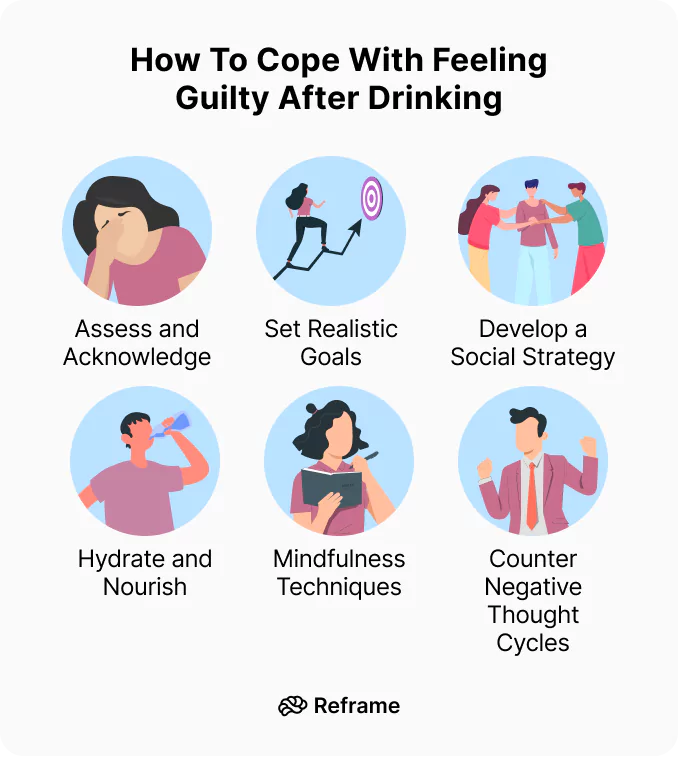
How to Stop Feeling Guilty After Drinking: 6 Actionable Steps
In addition to CBT techniques, here are a few effective ways to prevent and cope with drinker’s remorse.
1. Acknowledge How You're Feeling Without Judgment
The first step toward grappling with drinker's remorse is a sincere acknowledgment of the feelings and the situations that led to them. Often, remorse is dismissed or glossed over in an attempt to move on quickly, but sidestepping this emotional state won't help in the long run. Make it a point to identify the triggers that contributed to the experience. Was it the amount of alcohol consumed? Did the social setting play a role? Or maybe it was a combination of factors such as emotional state, company, and the type of alcoholic beverages.
Documenting these details can provide valuable insights. Using a dedicated notebook or the Reframe app can track alcohol consumption and emotional states, which can be highly beneficial. This written record helps establish a pattern over time, which can be incredibly enlightening. It serves as a roadmap of sorts, indicating which situations or behaviors lead to feelings of regret and should, therefore, be modified or avoided.
2. Decide What You Want Your Future to Look Like
While the emotional aftermath of a night out might tempt some to swear off alcohol altogether, such drastic measures often prove unsustainable. Setting realistic goals that align with individual lifestyles is more effective. For example, we can limit ourselves to two drinks when going out, or designate specific days of the week as alcohol-free days. Utilize your notebook or the Reframe app to track progress. Take note of the situations in which staying within the set limits was challenging and brainstorm ways to better handle those scenarios in the future. The goal is not necessarily total abstinence but a healthier relationship with alcohol that minimizes the risk of experiencing remorse.
3. Make a Plan for Social Situations
Often, social pressures or the excitement of the moment can derail even the best-laid plans. Before heading into social situations where alcohol will be present, develop a comprehensive strategy. Decide in advance how many drinks will be consumed and adhere strictly to this limit. To ensure compliance, share this plan with a trusted friend or family member who can ensure accountability on our part. This adds a layer of social commitment to the personal goal, making it more challenging to deviate from the plan. It's also a good idea to have non-alcoholic options in mind to substitute for additional drinks beyond the set limit. This way, there's a ready alternative that doesn't involve consuming more alcohol.
4. Set Specific Rules for Yourself
Moving beyond a general plan, creating specific, non-negotiable rules for yourself can be a game-changer. Vague goals like “drink less” are easy to forget in the moment, but concrete rules act as guardrails to keep you aligned with your intentions. For example, you might decide to only drink when you're with other people, never alone, or to avoid using alcohol as a way to cope with difficult emotions. Another powerful approach is to practice mindful drinking by setting a firm limit—say, two drinks—before you even take the first sip. To make this stick, let a trusted friend know your limit so they can help you stay accountable. Establishing a framework, like spreading your drinks out over the week instead of concentrating them in one night, provides a solid foundation for a healthier relationship with alcohol.
4. Hydrate and Nourish Your Body to Feel Better
One often-overlooked method for controlling alcohol intake and minimizing regret is the strategic use of hydration and nourishment. Keeping a glass of water or a non-alcoholic beverage at hand serves multiple purposes.
First, sipping water between alcoholic drinks slows down the rate of alcohol consumption, making it easier to stick to predetermined limits. Second, staying hydrated can offset some of the notorious physical hangover symptoms like headaches and nausea, which are often exacerbated by dehydration. Additionally, having a nourishing meal before consuming alcohol can slow its absorption, reducing its intoxicating effects and the subsequent likelihood of remorseful behavior.
5. Address Physical Symptoms First
When you wake up with a pounding head and a churning stomach, it’s nearly impossible to think clearly about your emotions. The physical discomfort of a hangover can amplify feelings of anxiety and regret, making it difficult to address the mental side of drinker’s remorse. Prioritize your physical well-being first. Focus on rehydrating with water or electrolytes, eating a gentle meal to stabilize your blood sugar, and getting some rest if you can. Once you manage the physical symptoms, you’ll be in a much better headspace to process your feelings without the added layer of physical misery.
6. Avoid the "Hair of the Dog"
It can be tempting to reach for another drink to ease the discomfort of a hangover, a practice often called the "hair of the dog." While it might offer temporary relief by postponing withdrawal symptoms, this approach is a dangerous trap. Drinking more alcohol only delays the inevitable and can create a harmful cycle. It teaches your body to rely on alcohol to feel normal, which can increase your tolerance and risk of dependence over time. Instead of masking the symptoms, focus on genuinely helping your body recover through hydration, nutrition, and rest. This builds a healthier foundation for managing both the physical and emotional aftermath of drinking.
5. Use Mindfulness to Calm Your Mind
The power of the present moment can be a significant ally when facing the temptation to overindulge in alcohol. Mindfulness techniques can help shift the focus from external pressures or emotional triggers to immediate sensory experiences. Deep breathing exercises can act as an instant reset button for the mind. The practice involves taking a deep breath, holding it for a few seconds, and then slowly exhaling. This simple act can be remarkably effective in grounding the moment, making it easier to resist the urge for that extra drink.
If the social environment becomes overwhelming, step away for a few minutes to recalibrate. A short break from the crowd can provide space to reassess and recommit to goals.
6. Challenge Your Negative Thoughts
Drinker's remorse often triggers a cascade of negative thoughts that can spiral into an emotional pitfall. One way to arrest this downward spiral is through positive affirmations or by recalling past instances where alcohol consumption was successfully managed. This acts as a mental counterbalance, replacing feelings of failure and regret with empowerment and hope. Jot these affirmations or memories down. Over time, this repository of positive reminders can serve as an emotional first-aid kit, available when needed.
These action steps create a blueprint for managing drinker's remorse. They offer practical, actionable strategies that respect individual lifestyle choices while encouraging healthier patterns of behavior and thought. Through consistent application and a little self-compassion, it's entirely possible to navigate social drinking scenarios with greater emotional ease and less morning-after regret.
7. Talk to a Friend for Perspective
When you're stuck replaying the night before, your own mind can feel like an echo chamber of regret. Reaching out to a trusted friend can be a powerful way to break that negative thought loop. They can offer an outside perspective that cuts through the noise, helping you see things more clearly. Often, we're our own harshest critics, and a friend can provide a much-needed reality check on whether your actions were truly as regrettable as they feel in the moment. Having a strong support system is vital for staying accountable and moving forward. Sharing your experience, whether with a single friend or within a supportive community like the one in the Reframe app, reminds you that you're not alone and helps you process your feelings constructively.
Moving Past the Guilt and Toward a Healthier Relationship with Alcohol
Dealing with drinker's remorse might seem like a daunting task, but it is entirely manageable. Small, conscious choices can pave the way for significant improvements in mental well-being and in the relationship with alcohol. By acknowledging the feelings of remorse, setting achievable goals, and utilizing a toolkit of strategies, it's entirely possible to look forward to Sunday mornings filled with sunshine and promise.
Finding Professional Support
If you find that drinker's remorse is a recurring theme in your life and self-guided strategies aren't providing enough relief, seeking professional support is a powerful and courageous step. It’s not about admitting defeat; it’s about equipping yourself with the best possible tools for your well-being. There are many different paths to getting help, and finding the one that fits your life and comfort level is key to making lasting, positive changes. From community groups to one-on-one therapy, these resources are designed to provide guidance, structure, and a sense of hope when you need it most.
Support Groups
There is incredible strength in knowing you’re not alone. Support groups offer a unique space to connect with people who truly understand what you're experiencing because they’ve been there too. Having a solid support system is crucial for staying accountable and feeling understood on your journey. Sharing your story and hearing from others in a judgment-free environment can lift a heavy weight of shame and isolation. Whether you find a local meeting or join a digital community like the one in the Reframe app, these connections provide perspective, encouragement, and practical advice from people who get it.
Therapy and Counseling
Working with a therapist or counselor provides personalized guidance to help you explore the complex emotions tied to drinking. If you feel trapped in a cycle of guilt and regret, a professional can help you identify the underlying triggers and thought patterns driving your behavior. Methods like Cognitive Behavioral Therapy (CBT) are especially useful, as they teach you how to challenge and change the negative thoughts that fuel drinker's remorse. A therapist acts as your partner, helping you build healthier coping skills and create a clear, sustainable plan for improving your relationship with alcohol.
Inpatient and Outpatient Programs
For some, a more structured environment is necessary to create meaningful change. Inpatient and outpatient programs are designed to provide a higher level of care and help you build a strong foundation for recovery. Residential inpatient programs offer an immersive, trigger-free setting where you can focus entirely on your health, while outpatient programs provide structured support and therapy while you continue to manage your daily life at home. Both options offer a comprehensive approach, often including individual counseling, group therapy, and educational workshops to equip you with the skills for long-term success.
Confidential Helplines
When you need immediate guidance and don't know where to turn, a confidential helpline can be a lifeline. These services offer a safe, anonymous space to talk to someone who can listen and provide information on what to do next. For instance, SAMHSA’s National Helpline is a free, 24/7 resource that provides referrals to local treatment facilities, support groups, and community-based organizations. Making that call is a simple, powerful first step toward getting the help you or a loved one may need, connecting you with resources right in your area.
Frequently Asked Questions
Is feeling guilty after drinking always a sign of a serious problem? Not at all. A pang of regret after a night of drinking is a very common human experience. It often just means your actions didn't quite line up with your values or intentions. However, if that feeling of guilt becomes a constant, overwhelming part of your life every time you drink, it's worth treating it as a signal. It could be your mind's way of telling you it's time to take a closer look at your relationship with alcohol.
Why do I feel so anxious the next day, even if I didn't do anything wrong? That wave of dread and worry is often called "hangxiety," and it's more of a chemical reaction than an emotional one. Alcohol acts as a depressant on your nervous system. As it leaves your body, your brain tries to rebalance itself by ramping up its activity. This rebound effect can leave you feeling jittery, on edge, and anxious for no specific reason. It’s a purely physical response that can make even small worries feel huge.
Can I stop feeling this way without quitting alcohol completely? Yes, for many people, the key is to build a more mindful and intentional relationship with alcohol rather than eliminating it entirely. This starts with making a plan before you're in a social situation. Deciding on a firm limit, alternating alcoholic drinks with water, and making sure you've eaten a good meal can make a huge difference. The goal is to stay in control so your actions align with your intentions, which helps prevent that morning-after regret.
What's the most important first step to take when I'm overwhelmed with drinker's remorse? Before you try to sort through your feelings, take care of your body. The physical misery of a hangover—the headache, nausea, and fatigue—can intensify any feelings of anxiety or guilt. Focus on rehydrating with water, eating a gentle meal to stabilize your blood sugar, and getting some rest. Once you feel physically better, you'll be in a much clearer headspace to acknowledge your emotions without judgment and remind yourself that the feeling will pass.
How do I know if my guilt is just a bad hangover or a sign of something more, like Alcohol Use Disorder? The key difference is the pattern and frequency. Occasional regret is one thing, but if intense guilt is a regular outcome of your drinking, it's time to pay closer attention. Ask yourself if this feeling is accompanied by other behaviors, like consistently drinking more than you planned, wanting to cut back but finding you can't, or noticing that drinking is negatively affecting your work, hobbies, or relationships. If this sounds familiar, the guilt may be a symptom of a larger issue.
Key Takeaways
Guilt After Drinking Is a Chemical Reaction, Not a Character Flaw: The intense regret and anxiety you feel is often a direct result of alcohol's impact on your brain. When feel-good neurotransmitters like dopamine and serotonin plummet after drinking, it can trigger a wave of remorse and unease.
Identify Your Personal Triggers to Break the Cycle: Remorse isn't random; it's often tied to specific actions like breaking promises to yourself, giving in to social pressure, or acting in a way that doesn't align with your values. Pinpointing what causes your guilt is the first step toward making intentional changes.
A Proactive Plan Is Your Best Defense Against Regret: Instead of dealing with guilt the morning after, create a strategy beforehand. Set clear limits before you go out, stay hydrated, and have a plan to manage social situations so you can remain in control and aligned with your goals.
Drinker's remorse refers to the feelings of regret, shame, or anxiety after consuming alcohol. It's not just a social phenomenon; it has neurological and psychological underpinnings as well.
2. How does alcohol affect neurotransmitters?
Alcohol can temporarily boost neurotransmitters like dopamine and serotonin, which are linked to feelings of pleasure and well-being. However, these levels tend to drop as the effects of alcohol wear off, contributing to feelings of remorse or unhappiness.
3. What psychological impact can drinker's remorse have?
The remorse can lead to a cycle of negative thoughts, affecting self-esteem and potentially contributing to depressive symptoms. Acknowledging these feelings and their triggers is crucial for long-term mental well-being.
4. How can I manage alcohol consumption to avoid drinker's remorse?
Setting realistic drinking goals can help. If wearing off alcohol entirely feels out of the question, consider limiting the number of drinks or choosing specific days to abstain. Also, keep track of triggers and patterns in a dedicated notebook or the Reframe app.
5. What is the role of hydration in minimizing drinker's remorse?
Drinking water or non-alcoholic beverages between alcoholic drinks can reduce the rate of alcohol consumption and help prevent dehydration, a key factor in physical hangover symptoms like headaches and nausea.
6. Can mindfulness techniques help in avoiding overindulgence?
Yes, mindfulness strategies like deep breathing can help focus on the present moment and serve as a natural deterrent to overindulging in alcohol.
7. When should I seek professional help for drinker's remorse?
If experiencing symptoms of anxiety or depression, or if alcohol consumption becomes unmanageable, it may be wise to consult a healthcare provider. Cognitive behavioral therapy is one of several effective treatments for managing emotional aspects of alcohol consumption.
Supercharge Your Well-Being With Reframe!
Although it isn’t a treatment for alcohol use disorder (AUD), the Reframe app can help you cut back on drinking gradually, with the science-backed knowledge to empower you 100% of the way. Our proven program has helped millions of people around the world drink less and live more. And we want to help you get there, too!
The Reframe app equips you with the knowledge and skills you need to not only survive drinking less, but to thrive while you navigate the journey. Our daily research-backed readings teach you the neuroscience of alcohol, and our in-app Toolkit provides the resources and activities you need to navigate each challenge.
You’ll meet millions of fellow Reframers in our 24/7 Forum chat and daily Zoom check-in meetings. Receive encouragement from people worldwide who know exactly what you’re going through! You’ll also have the opportunity to connect with our licensed Reframe coaches for more personalized guidance.
Plus, we’re always introducing new features to optimize your in-app experience. We recently launched our in-app chatbot, Melody, powered by the world’s most powerful AI technology. Melody is here to help as you adjust to a life with less (or no) alcohol.
And that’s not all! Every month, we launch fun challenges, like Dry/Damp January, Mental Health May, and Outdoorsy June. You won’t want to miss out on the chance to participate alongside fellow Reframers (or solo if that’s more your thing!).
The Reframe app is free for 7 days, so you don’t have anything to lose by trying it. Are you ready to feel empowered and discover life beyond alcohol? Then download our app through the App Store or Google Play today!
Reframe has helped over 2 millions people to build healthier drinking habits globally
At Reframe, we do science, not stigma. We base our articles on the latest peer-reviewed research in psychology, neuroscience, and behavioral science. We follow the Reframe Content Creation Guidelines, to ensure that we share accurate and actionable information with our readers. This aids them in making informed decisions on their wellness journey. Learn more
Updated Regularly
Our articles undergo frequent updates to present the newest scientific research and changes in expert consensus in an easily understandable and implementable manner.