

Explore mindfulness meditation techniques to manage alcohol cravings and develop healthier drinking habits, including mindful breathing, body scan, loving-kindness meditation, and more.

Although it isn’t a treatment for alcohol use disorder (AUD), the Reframe app can help you cut back on drinking gradually with the science-backed knowledge to empower you 100% of the way. Our proven program has helped millions of people around the world drink less and live more. And we want to help you get there, too!
The Reframe app equips you with the knowledge and skills you need to not only survive drinking less, but to thrive while you navigate the journey. Our daily research-backed readings teach you the neuroscience of alcohol, and our in-app Toolkit provides the resources and activities you need to navigate each challenge.
You’ll meet millions of fellow Reframers in our 24/7 Forum chat and daily Zoom check-in meetings. Receive encouragement from people worldwide who know exactly what you’re going through! You’ll also have the opportunity to connect with our licensed Reframe coaches for more personalized guidance.
Plus, we’re always introducing new features to optimize your in-app experience. We recently launched our in-app chatbot, Melody, powered by the world’s most powerful AI technology. Melody is here to help as you adjust to a life with less (or no) alcohol.
And that’s not all! Every month, we launch fun challenges, like Dry/Damp January, Mental Health May, and Outdoorsy June. You won’t want to miss out on the chance to participate alongside fellow Reframers (or solo if that’s more your thing!).
The Reframe app is free for 7 days, so you don’t have anything to lose by trying it. Are you ready to feel empowered and discover life beyond alcohol? Then download our app through the App Store or Google Play today!
In today's fast-paced world, many people turn to alcohol to unwind and cope with stress. However, developing healthier drinking habits is crucial for overall well-being. One effective approach is mindfulness meditation, which can significantly reduce the urge to drink. This article explores various mindfulness meditation practices that can help you reframe your relationship with alcohol and lead a healthier life.
Mindfulness is the practice of being present in the moment and observing your thoughts and feelings without judgment. This heightened awareness can be particularly beneficial for those looking to reduce alcohol consumption. By recognizing and acknowledging cravings without acting on them, you can make more conscious choices about drinking.
Mindful breathing is one of the simplest yet most effective mindfulness practices. It involves focusing your attention on your breath as it flows in and out of your body. This practice helps calm the mind and reduce stress, which are common triggers for drinking.
To practice mindful breathing:
Regular practice of mindful breathing can help you become more aware of your cravings and reduce the urge to drink.
Body scan meditation involves paying close attention to different parts of your body, from your toes to your head. This practice helps you become more attuned to physical sensations, which can provide valuable insights into your emotional state and cravings.
To practice body scan meditation:
Body scan meditation can help you identify physical triggers for drinking and develop healthier coping mechanisms.

Loving-kindness meditation, also known as Metta meditation, involves directing feelings of love and compassion towards yourself and others. This practice can help reduce negative emotions and increase feelings of self-worth, which are often linked to alcohol consumption.
To practice loving-kindness meditation:
Loving-kindness meditation can help you develop a more positive mindset and reduce the emotional triggers for drinking.
Mindful walking is a form of meditation that involves walking slowly and paying attention to the sensations in your body and your surroundings. This practice can help ground you in the present moment and reduce stress.
To practice mindful walking:
Mindful walking can be a great way to reduce stress and manage cravings in a natural and healthy way.
Guided meditation involves listening to a recorded meditation led by a teacher. This practice can be particularly helpful for beginners, as it provides structure and guidance.
To practice guided meditation:
Guided meditation can help you develop a regular meditation practice and provide tools for managing the urge to drink.

There is substantial scientific evidence supporting the effectiveness of mindfulness meditation in reducing alcohol consumption. Studies have shown that mindfulness-based interventions can help individuals reduce their alcohol use and cravings by allowing them to observe their cravings in a nonjudgmental way.
For example, one study found that participants who practiced mindfulness meditation drank three fewer beers per week compared to a control group. This suggests that mindfulness meditation can help individuals make more conscious choices about drinking and reduce their overall alcohol consumption.
Incorporating mindfulness meditation into your daily routine can be a powerful tool for reducing the urge to drink. Here are some tips for getting started:
By incorporating mindfulness meditation into your daily routine, you can develop healthier coping mechanisms and reduce the urge to drink.
Mindfulness meditation is a powerful tool for reducing the urge to drink and developing healthier drinking habits. By practicing mindful breathing, body scan meditation, loving-kindness meditation, mindful walking, and guided meditation, you can become more aware of your cravings and make more conscious choices about drinking. With regular practice, mindfulness meditation can help you reframe your relationship with alcohol and lead a healthier, more fulfilling life.
In today's fast-paced world, many people turn to alcohol to unwind and cope with stress. However, developing healthier drinking habits is crucial for overall well-being. One effective approach is mindfulness meditation, which can significantly reduce the urge to drink. This article explores various mindfulness meditation practices that can help you reframe your relationship with alcohol and lead a healthier life.
Mindfulness is the practice of being present in the moment and observing your thoughts and feelings without judgment. This heightened awareness can be particularly beneficial for those looking to reduce alcohol consumption. By recognizing and acknowledging cravings without acting on them, you can make more conscious choices about drinking.
Mindful breathing is one of the simplest yet most effective mindfulness practices. It involves focusing your attention on your breath as it flows in and out of your body. This practice helps calm the mind and reduce stress, which are common triggers for drinking.
To practice mindful breathing:
Regular practice of mindful breathing can help you become more aware of your cravings and reduce the urge to drink.
Body scan meditation involves paying close attention to different parts of your body, from your toes to your head. This practice helps you become more attuned to physical sensations, which can provide valuable insights into your emotional state and cravings.
To practice body scan meditation:
Body scan meditation can help you identify physical triggers for drinking and develop healthier coping mechanisms.
Loving-kindness meditation, also known as Metta meditation, involves directing feelings of love and compassion towards yourself and others. This practice can help reduce negative emotions and increase feelings of self-worth, which are often linked to alcohol consumption.
To practice loving-kindness meditation:
Loving-kindness meditation can help you develop a more positive mindset and reduce the emotional triggers for drinking.
Mindful walking is a form of meditation that involves walking slowly and paying attention to the sensations in your body and your surroundings. This practice can help ground you in the present moment and reduce stress.
To practice mindful walking:
Mindful walking can be a great way to reduce stress and manage cravings in a natural and healthy way.
Guided meditation involves listening to a recorded meditation led by a teacher. This practice can be particularly helpful for beginners, as it provides structure and guidance.
To practice guided meditation:
Guided meditation can help you develop a regular meditation practice and provide tools for managing the urge to drink.
There is substantial scientific evidence supporting the effectiveness of mindfulness meditation in reducing alcohol consumption. Studies have shown that mindfulness-based interventions can help individuals reduce their alcohol use and cravings by allowing them to observe their cravings in a nonjudgmental way.
For example, one study found that participants who practiced mindfulness meditation drank three fewer beers per week compared to a control group. This suggests that mindfulness meditation can help individuals make more conscious choices about drinking and reduce their overall alcohol consumption.
Incorporating mindfulness meditation into your daily routine can be a powerful tool for reducing the urge to drink. Here are some tips for getting started:
By incorporating mindfulness meditation into your daily routine, you can develop healthier coping mechanisms and reduce the urge to drink.
Mindfulness meditation is a powerful tool for reducing the urge to drink and developing healthier drinking habits. By practicing mindful breathing, body scan meditation, loving-kindness meditation, mindful walking, and guided meditation, you can become more aware of your cravings and make more conscious choices about drinking. With regular practice, mindfulness meditation can help you reframe your relationship with alcohol and lead a healthier, more fulfilling life.

Beer and football feel inseparable, but the pairing is a learned cue you can break. Here's how to enjoy game day on the couch without drinking.

Although it isn't a treatment for alcohol use disorder (AUD), the Reframe app can help you cut back on drinking gradually with the science-backed knowledge to empower you 100% of the way. Our proven program has helped millions of people around the world drink less and live more. And we want to help you get there, too!
The Reframe app equips you with the knowledge and skills you need to not only survive drinking less, but to thrive while you navigate the journey. Our daily research-backed readings teach you the neuroscience of alcohol, and our in-app Toolkit provides the resources and activities you need to navigate each challenge.
You'll meet millions of fellow Reframers in our 24/7 Forum chat and daily Zoom check-in meetings. Receive encouragement from people worldwide who know exactly what you're going through! You'll also have the opportunity to connect with our licensed Reframe coaches for more personalized guidance.
Plus, we're always introducing new features to optimize your in-app experience. We recently launched our in-app chatbot, Melody, powered by the world's most powerful AI technology. Melody is here to help as you adjust to a life with less (or no) alcohol.
And that's not all! Every month, we launch fun challenges, like Dry/Damp January, Mental Health May, and Outdoorsy June. You won't want to miss out on the chance to participate alongside fellow Reframers (or solo if that's more your thing!).
The Reframe app is free for 7 days, so you don't have anything to lose by trying it. Are you ready to feel empowered and discover life beyond alcohol? Then download our app through the App Store or Google Play today!
You can absolutely watch football without a beer in hand, and the fact that the pairing feels automatic is exactly the point: after enough Sundays, your brain learns "kickoff means crack a cold one" as a conditioned cue, not a genuine desire. The most reliable way to break it is to interrupt the cue-routine-reward loop with a new game-day ritual (an alcohol-free drink you actually like, something to keep your hands busy, a swap that survives all four quarters). Reframe helps you spot these conditioned cues and rewire them, so the game stays fun and the beer stops running the show.
Here is the part nobody says out loud: you are not weak for reaching for a beer the second the anthem ends. You have simply trained yourself, one Sunday at a time, to link the whole ritual (the couch, the snacks, the roar of the crowd) with a drink. That is good news, because anything learned can be unlearned. Below, we will walk through why the pairing feels so glued-together, and then we will get practical about pulling the two apart, from the drink in your hand to the friends around you to the craving that spikes right when the ads roll. This is about the living room specifically, the couch-and-recliner Sunday, not the tailgate or the stadium.
The short version: your brain has been trained to want a drink the moment the game starts. The urge to drink when a familiar situation begins is a classically conditioned response, where cues you have repeatedly paired with alcohol (the couch, kickoff, other people drinking) start triggering craving all on their own. It is not a character flaw and it is not really about the football. It is a reflex you built through repetition.
Think of it like Pavlov's dog, except the bell is a coin toss and the treat is a lager. An originally neutral cue becomes a trigger only because it kept showing up alongside alcohol's effects. Importantly, this is not a marker of dependence. In an experiment pairing new neutral cues with a moderate dose of alcohol in social drinkers, even non-dependent, everyday drinkers formed learned associations between alcohol and the settings they drank in, and started paying more attention to the alcohol-linked cue. Translation: the wanting is a trained association, not a defect, and trained associations can be untrained. If you want to understand the mechanism in more depth, our explainer on classical conditioning breaks it down.
A football broadcast is almost custom-built to meter a drink out of you. A game runs roughly 3.5 hours, and it is chopped into quarters, timeouts, reviews, and commercial breaks, each of which quietly reads as a cue to sip or refill. Nobody plans to drink on a schedule, but the structure of the broadcast does the scheduling for you: a beer at kickoff, another after a touchdown, a refill during the review, one more for the fourth-quarter drive. The pacing is why "just one" so rarely stays "just one" across a full Sunday. This is a big reason your game day drinking trigger feels less like a decision and more like a metronome.
Then there are the commercials. Beer advertising is not sprinkled evenly across TV; it is concentrated right where you are sitting. In a NIAAA-funded review of alcohol in the media, roughly 95% of televised beer advertising spending appeared in sports programming, with more than half of beer ads airing on Saturday or Sunday afternoons. Every one of those spots is a little nudge, priming the beer-and-football association again and again. Does that mean the ads force a drink into your hand? No. One analysis of national sports broadcasts found that alcohol ad exposure overall did not increase craving or drinking intentions, with a modest craving increase found only for a subsample of risky drinkers who also reported preferring the specific beverage being advertised. So think of ads as a gentle priming effect on an already-trained brain, not a magic spell. Watching alongside friends who drink adds one more layer of reinforcement, turning a personal habit into a group ritual. Add it all up and the whole environment, snacks and recliner and pre-game routine included, ends up whispering "time to drink."
Breaking the pairing does not mean white-knuckling through the game. It means keeping the trigger and changing your response to it. Habits run on a cue-routine-reward loop, and the most widely used approach to change one is to keep the same cue and the same reward while swapping in a new routine. You keep kickoff, the big play, and the commercial break. You just change what your hand reaches for.
Start by noticing your own tells, because they are personal. Maybe you always crack the first one during the national anthem. Maybe it is the moment your team scores, or the specific ad that used to send you to the fridge. Spend one game just watching yourself instead of the game, and jot down when the pull hits hardest. This is exactly the kind of pattern-spotting that Reframe's mindful drinking program is built around, and once you can see your cues clearly, you can plan a response for each one instead of getting ambushed. Curious how your patterns stack up? The What Type of Drinker Are You? quiz is a low-stakes place to start.
Here is where most game-day plans fall apart: they cover the first quarter and quit. If your only strategy is "I'll have a sparkling water at kickoff," you are unprotected by halftime. Because the broadcast meters drinks across 3.5 hours, your swap has to survive all four quarters too. Pick a replacement you genuinely look forward to so the reward still lands, and stock enough of it that the easy grab is always the alcohol-free one. Keep your hands and mouth busy during commercial breaks, which tend to be the highest-risk cue moments. And change the environment a touch: a different glass, a new seat, snacks prepped in advance. Loosening the physical setup helps loosen the automatic association. If you want the underlying method, our guide to breaking a bad habit and replacing it with a good one and our breakdown of the habit loop both go deeper.
The winning move for watching football without drinking is a swap that preserves the ritual, not one that punishes you for it. The closest one-to-one is non-alcoholic beer, which keeps the cold-bottle-in-hand motion nearly intact. But there is a whole lineup that works, and the trick is matching the physical experience of the drink you are replacing: the temperature, the vessel, and the pace.
Non-alcoholic beer is not a lesser consolation prize; it is a genuinely mainstream choice now. It is one of the fastest-growing beer segments and, per market data reported by NBC News, is projected to overtake ale as the world's second-largest beer category, largely because younger drinkers are cutting back. What makes it work on game day is simple: it carries the exact ritual your brain is craving. The cold bottle, the pop of the cap, the same shape in your hand. You keep the whole choreography and drop the alcohol. Nobody at the party is going to blink. If you want to compare options, our NA beer guide and roundup of the best non-alcoholic beers and wines are good starting points, and the research on how non-alcoholic beer supports drinking less is worth a look.
Non-alcoholic beer is not your only play. Sparkling water with a few dashes of bitters, a citrus mocktail, or even a cola poured into a pint glass all deliver the hand-and-sip motion that carries so much of the habit. The details matter more than they seem: match the temperature and the vessel, because a cold can or a frosted glass does a surprising amount of the ritual's work. Pace it like you would a beer, one fresh drink per quarter, so the routine feels intact instead of interrupted. And prep ahead. Stock the fridge before kickoff so the effortless grab is always the alcohol-free one. If you want ideas, our lists of mocktails you can order at any bar and the best mocktail recipes have plenty. As a bonus, an alcohol calorie calculator makes it easy to see what you are saving by swapping.


Watching with a crew that drinks is a solved problem once you decide two things in advance: what you are drinking, and what you will say if asked. Make both calls before you walk in the door, and you take the in-the-moment pressure off entirely. Most of the awkwardness people dread comes from improvising, and improvising is exactly what you do not have to do.
Have a short, low-drama line ready and deliver it like it is the most boring fact in the world, because it is. "I'm good with this one," "driving later," or "taking it easy today" all work, and none of them invites a debate. Say it once, hand still holding your NA beer, and move the conversation back to the game. You do not owe anyone an explanation, and honestly, most people stop noticing within a quarter. If you want more polished options, our guides on how to say no to alcohol and excuses to not drink have ready-made lines. This is also where the beer and football habit shows its social side, which is worth planning for.
Bring your own options so you are never dependent on what the host stocked. A six-pack of good NA beer in your hand solves the logistics and doubles as a contribution to the party. Then lean into everything about the day that has nothing to do with alcohol: the rivalry, the trash talk, the snacks, the collective groan when your team fumbles. That group energy is the actual reward you have been chasing, and it does not require a drink to deliver it. The pairing just made the two feel inseparable. For more on navigating these settings, our piece on enjoying social events alcohol-free is a solid companion.
When a craving spikes during the game, the most useful thing to remember is that it will not last. Urges are time-limited; most peak and pass, often within about 15 to 20 minutes, which is frequently shorter than a commercial break plus a possession. You do not have to defeat the craving. You just have to outlast it, and the clock is on your side.
Give your hands something to do while the wave moves through. Refill your NA drink, grab a fistful of snacks, fire off a message in the group chat about the terrible officiating. It also helps to name the cue out loud: "that's just the ad talking" strips a surprising amount of power from the automatic pull, because you have made a reflex conscious. Stepping away during a timeout for a glass of water or a quick lap around the kitchen resets things too. This is the core idea behind urge surfing, riding the craving like a wave instead of fighting it head-on, and it works precisely because the wave always crests and falls.
Sometimes the craving during sports is not a one-off wave; it is constant, loud, and exhausting, and no amount of snack-and-distract seems to touch it. That is worth taking seriously, and it is not a failure to want backup. If you regularly feel like the drinking is running the show, it may be time to check in with where you stand. The Am I Drinking Too Much? quiz is a quick, private self-assessment, and structured support can make the difference between grinding through every Sunday and actually rewiring the habit. If you are trying to stop drinking during sports and it feels heavier than a simple swap can fix, reaching out for help is a smart, ordinary move, not a dramatic one. When you are ready for tools built for exactly this, you can download Reframe or browse Reframe's FAQ to see how it works.
You can absolutely watch football without a beer in hand, and the fact that the pairing feels automatic is exactly the point: after enough Sundays, your brain learns "kickoff means crack a cold one" as a conditioned cue, not a genuine desire. The most reliable way to break it is to interrupt the cue-routine-reward loop with a new game-day ritual (an alcohol-free drink you actually like, something to keep your hands busy, a swap that survives all four quarters). Reframe helps you spot these conditioned cues and rewire them, so the game stays fun and the beer stops running the show.
Here is the part nobody says out loud: you are not weak for reaching for a beer the second the anthem ends. You have simply trained yourself, one Sunday at a time, to link the whole ritual (the couch, the snacks, the roar of the crowd) with a drink. That is good news, because anything learned can be unlearned. Below, we will walk through why the pairing feels so glued-together, and then we will get practical about pulling the two apart, from the drink in your hand to the friends around you to the craving that spikes right when the ads roll. This is about the living room specifically, the couch-and-recliner Sunday, not the tailgate or the stadium.
The short version: your brain has been trained to want a drink the moment the game starts. The urge to drink when a familiar situation begins is a classically conditioned response, where cues you have repeatedly paired with alcohol (the couch, kickoff, other people drinking) start triggering craving all on their own. It is not a character flaw and it is not really about the football. It is a reflex you built through repetition.
Think of it like Pavlov's dog, except the bell is a coin toss and the treat is a lager. An originally neutral cue becomes a trigger only because it kept showing up alongside alcohol's effects. Importantly, this is not a marker of dependence. In an experiment pairing new neutral cues with a moderate dose of alcohol in social drinkers, even non-dependent, everyday drinkers formed learned associations between alcohol and the settings they drank in, and started paying more attention to the alcohol-linked cue. Translation: the wanting is a trained association, not a defect, and trained associations can be untrained. If you want to understand the mechanism in more depth, our explainer on classical conditioning breaks it down.
A football broadcast is almost custom-built to meter a drink out of you. A game runs roughly 3.5 hours, and it is chopped into quarters, timeouts, reviews, and commercial breaks, each of which quietly reads as a cue to sip or refill. Nobody plans to drink on a schedule, but the structure of the broadcast does the scheduling for you: a beer at kickoff, another after a touchdown, a refill during the review, one more for the fourth-quarter drive. The pacing is why "just one" so rarely stays "just one" across a full Sunday. This is a big reason your game day drinking trigger feels less like a decision and more like a metronome.
Then there are the commercials. Beer advertising is not sprinkled evenly across TV; it is concentrated right where you are sitting. In a NIAAA-funded review of alcohol in the media, roughly 95% of televised beer advertising spending appeared in sports programming, with more than half of beer ads airing on Saturday or Sunday afternoons. Every one of those spots is a little nudge, priming the beer-and-football association again and again. Does that mean the ads force a drink into your hand? No. One analysis of national sports broadcasts found that alcohol ad exposure overall did not increase craving or drinking intentions, with a modest craving increase found only for a subsample of risky drinkers who also reported preferring the specific beverage being advertised. So think of ads as a gentle priming effect on an already-trained brain, not a magic spell. Watching alongside friends who drink adds one more layer of reinforcement, turning a personal habit into a group ritual. Add it all up and the whole environment, snacks and recliner and pre-game routine included, ends up whispering "time to drink."
Breaking the pairing does not mean white-knuckling through the game. It means keeping the trigger and changing your response to it. Habits run on a cue-routine-reward loop, and the most widely used approach to change one is to keep the same cue and the same reward while swapping in a new routine. You keep kickoff, the big play, and the commercial break. You just change what your hand reaches for.
Start by noticing your own tells, because they are personal. Maybe you always crack the first one during the national anthem. Maybe it is the moment your team scores, or the specific ad that used to send you to the fridge. Spend one game just watching yourself instead of the game, and jot down when the pull hits hardest. This is exactly the kind of pattern-spotting that Reframe's mindful drinking program is built around, and once you can see your cues clearly, you can plan a response for each one instead of getting ambushed. Curious how your patterns stack up? The What Type of Drinker Are You? quiz is a low-stakes place to start.
Here is where most game-day plans fall apart: they cover the first quarter and quit. If your only strategy is "I'll have a sparkling water at kickoff," you are unprotected by halftime. Because the broadcast meters drinks across 3.5 hours, your swap has to survive all four quarters too. Pick a replacement you genuinely look forward to so the reward still lands, and stock enough of it that the easy grab is always the alcohol-free one. Keep your hands and mouth busy during commercial breaks, which tend to be the highest-risk cue moments. And change the environment a touch: a different glass, a new seat, snacks prepped in advance. Loosening the physical setup helps loosen the automatic association. If you want the underlying method, our guide to breaking a bad habit and replacing it with a good one and our breakdown of the habit loop both go deeper.
The winning move for watching football without drinking is a swap that preserves the ritual, not one that punishes you for it. The closest one-to-one is non-alcoholic beer, which keeps the cold-bottle-in-hand motion nearly intact. But there is a whole lineup that works, and the trick is matching the physical experience of the drink you are replacing: the temperature, the vessel, and the pace.
Non-alcoholic beer is not a lesser consolation prize; it is a genuinely mainstream choice now. It is one of the fastest-growing beer segments and, per market data reported by NBC News, is projected to overtake ale as the world's second-largest beer category, largely because younger drinkers are cutting back. What makes it work on game day is simple: it carries the exact ritual your brain is craving. The cold bottle, the pop of the cap, the same shape in your hand. You keep the whole choreography and drop the alcohol. Nobody at the party is going to blink. If you want to compare options, our NA beer guide and roundup of the best non-alcoholic beers and wines are good starting points, and the research on how non-alcoholic beer supports drinking less is worth a look.
Non-alcoholic beer is not your only play. Sparkling water with a few dashes of bitters, a citrus mocktail, or even a cola poured into a pint glass all deliver the hand-and-sip motion that carries so much of the habit. The details matter more than they seem: match the temperature and the vessel, because a cold can or a frosted glass does a surprising amount of the ritual's work. Pace it like you would a beer, one fresh drink per quarter, so the routine feels intact instead of interrupted. And prep ahead. Stock the fridge before kickoff so the effortless grab is always the alcohol-free one. If you want ideas, our lists of mocktails you can order at any bar and the best mocktail recipes have plenty. As a bonus, an alcohol calorie calculator makes it easy to see what you are saving by swapping.
Watching with a crew that drinks is a solved problem once you decide two things in advance: what you are drinking, and what you will say if asked. Make both calls before you walk in the door, and you take the in-the-moment pressure off entirely. Most of the awkwardness people dread comes from improvising, and improvising is exactly what you do not have to do.
Have a short, low-drama line ready and deliver it like it is the most boring fact in the world, because it is. "I'm good with this one," "driving later," or "taking it easy today" all work, and none of them invites a debate. Say it once, hand still holding your NA beer, and move the conversation back to the game. You do not owe anyone an explanation, and honestly, most people stop noticing within a quarter. If you want more polished options, our guides on how to say no to alcohol and excuses to not drink have ready-made lines. This is also where the beer and football habit shows its social side, which is worth planning for.
Bring your own options so you are never dependent on what the host stocked. A six-pack of good NA beer in your hand solves the logistics and doubles as a contribution to the party. Then lean into everything about the day that has nothing to do with alcohol: the rivalry, the trash talk, the snacks, the collective groan when your team fumbles. That group energy is the actual reward you have been chasing, and it does not require a drink to deliver it. The pairing just made the two feel inseparable. For more on navigating these settings, our piece on enjoying social events alcohol-free is a solid companion.
When a craving spikes during the game, the most useful thing to remember is that it will not last. Urges are time-limited; most peak and pass, often within about 15 to 20 minutes, which is frequently shorter than a commercial break plus a possession. You do not have to defeat the craving. You just have to outlast it, and the clock is on your side.
Give your hands something to do while the wave moves through. Refill your NA drink, grab a fistful of snacks, fire off a message in the group chat about the terrible officiating. It also helps to name the cue out loud: "that's just the ad talking" strips a surprising amount of power from the automatic pull, because you have made a reflex conscious. Stepping away during a timeout for a glass of water or a quick lap around the kitchen resets things too. This is the core idea behind urge surfing, riding the craving like a wave instead of fighting it head-on, and it works precisely because the wave always crests and falls.
Sometimes the craving during sports is not a one-off wave; it is constant, loud, and exhausting, and no amount of snack-and-distract seems to touch it. That is worth taking seriously, and it is not a failure to want backup. If you regularly feel like the drinking is running the show, it may be time to check in with where you stand. The Am I Drinking Too Much? quiz is a quick, private self-assessment, and structured support can make the difference between grinding through every Sunday and actually rewiring the habit. If you are trying to stop drinking during sports and it feels heavier than a simple swap can fix, reaching out for help is a smart, ordinary move, not a dramatic one. When you are ready for tools built for exactly this, you can download Reframe or browse Reframe's FAQ to see how it works.
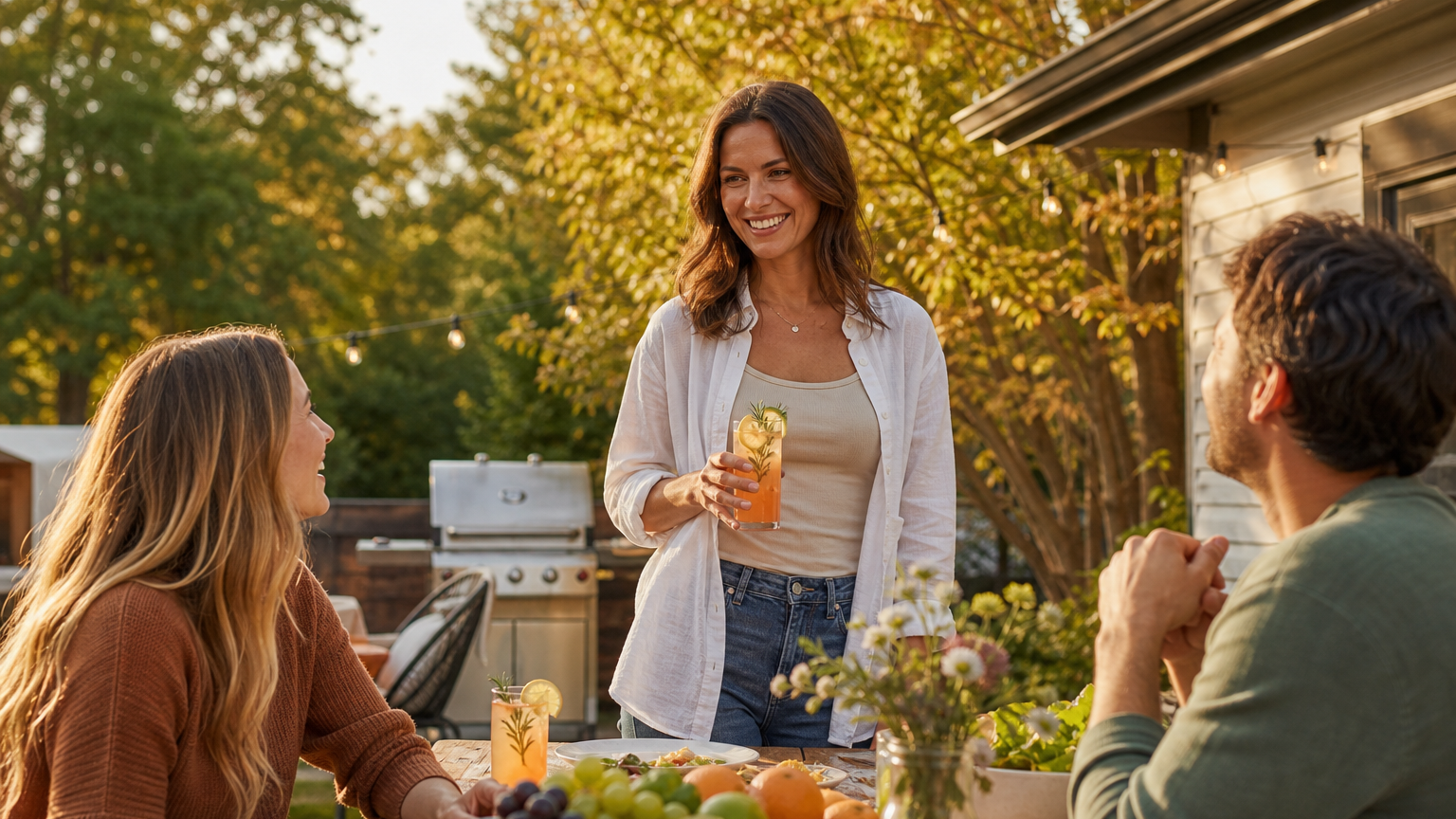
Labor Day's "last hurrah" mindset drives overdrinking. Here's why the end-of-summer deadline hits so hard, plus how to pace a three-day weekend and reset for fall.
Although it isn't a treatment for alcohol use disorder (AUD), the Reframe app can help you cut back on drinking gradually with the science-backed knowledge to empower you 100% of the way. Our proven program has helped millions of people around the world drink less and live more. And we want to help you get there, too!
The Reframe app equips you with the knowledge and skills you need to not only survive drinking less, but to thrive while you navigate the journey. Our daily research-backed readings teach you the neuroscience of alcohol, and our in-app Toolkit provides the resources and activities you need to navigate each challenge.
You'll meet millions of fellow Reframers in our 24/7 Forum chat and daily Zoom check-in meetings. Receive encouragement from people worldwide who know exactly what you're going through! You'll also have the opportunity to connect with our licensed Reframe coaches for more personalized guidance.
Plus, we're always introducing new features to optimize your in-app experience. We recently launched our in-app chatbot, Melody, powered by the world's most powerful AI technology. Melody is here to help as you adjust to a life with less (or no) alcohol.
And that's not all! Every month, we launch fun challenges, like Dry/Damp January, Mental Health May, and Outdoorsy June. You won't want to miss out on the chance to participate alongside fellow Reframers (or solo if that's more your thing!).
The Reframe app is free for 7 days, so you don't have anything to lose by trying it. Are you ready to feel empowered and discover life beyond alcohol? Then download our app through the App Store or Google Play today!
You can absolutely enjoy Labor Day weekend without overdoing it, and the key is naming the "last hurrah" mindset before it drives the pace: the feeling that summer is ending and you "might as well" go big is a scarcity trigger, not a fact. Because a long weekend is three days, not one night, pacing across the days (and protecting the Monday off as a recovery-and-reset day rather than a third party day) matters more than any single-night willpower trick. Reframe's mindful drinking tools can help you spot that deadline pressure in the moment and turn the weekend into a soft bridge into fall instead of a blowout.
Let's talk honestly about the last big weekend of summer. There's a specific mood that creeps in around the end of August, a kind of countdown-clock feeling that quietly rewrites how much you plan to drink. Nobody sits down and decides, "I'm going to overdo it this weekend." It just sort of happens, one refill and one "why not, it's the end of summer" at a time. The good news is that this feeling is a story your brain tells, not a rule you have to follow, and once you can see it clearly you can enjoy the whole weekend without waking up Tuesday wishing you'd done it differently. This is the whole idea behind Reframe's approach to drinking: notice the pattern, then choose on purpose.
The short answer is scarcity. When something feels like it's running out, our brains treat whatever's left as a now-or-never opportunity, and "one last summer weekend" gets loaded with a pressure that a random Saturday in June never carries. That pressure is what quietly bumps the number of drinks up, often before you've noticed you're drinking more at all.
"Might as well" is the tell. It's the phrase that shows up right before a choice you didn't actually plan to make. The mindset underneath it treats the end of summer like the last slice of pizza on the table: grab it now or lose it forever. But summer isn't a finite pie, and Monday isn't a wall. Fall arrives with its own good stuff, and the drink you skip Saturday doesn't vanish into some cosmic loss column. Naming the scarcity out loud ("ah, that's the last-hurrah story talking") takes a surprising amount of air out of it. You're not arguing with the feeling, just labeling it, and a labeled feeling is a lot easier to steer around. Getting curious about your own patterns is exactly what Reframe's mindful drinking program is built to help with.
Deadlines change behavior. A due date makes us cram, a closing-time sign makes us order one more, and "summer's over Monday" works the same way on a long weekend. The perceived stakes of these three days go up simply because they feel final, and higher stakes tend to mean bigger swings. Labor Day carries a different emotional weight than Memorial Day or July 4th, and that's not an accident of the calendar. Those earlier holidays sit at the start and peak of summer with a forward-looking, "the fun is just beginning" energy. Labor Day is the closing ceremony. That "closing the season" feeling is exactly what fuels the deadline-driven push to go big, which is why the same person who drinks moderately on a normal weekend can find themselves overdoing it here. Recognizing that this specific trigger is running in the background is the single most protective thing you can do before the cooler even gets packed. Holidays and long weekends do tend to nudge drinking upward in general, so you're not imagining the effect.
Here's the reframe that changes everything: a long weekend is not one continuous event to survive. It's three separate days, each with its own morning, its own plans, and its own chance to feel good. Treat them that way. When you stop seeing the weekend as a single 72-hour party and start seeing it as three distinct days, pacing stops being about willpower and starts being about a handful of small, calm decisions.
Decide your rough number for each day in advance, ideally while you're standing in your kitchen on Thursday and not while you're three deep at the cookout. NIAAA's Rethinking Drinking guidance suggests setting goals ahead of time, deciding how many days you'll drink and how many drinks you'll have on those days, and building in some days with no alcohol at all. That last part matters more than people expect. Watch for the sneaky math of "I was good yesterday, so I can go big today," because that averaging trick has a way of turning a three-day weekend into three heavy days. Momentum runs both directions: a lighter Saturday makes a lighter Sunday feel natural, while a heavy Saturday makes Sunday's first drink arrive a lot earlier. Let one calm day protect the next. If you're not sure what your baseline actually looks like, the What Type of Drinker Are You? quiz is a low-stakes way to get a read before the weekend starts.
Pace is the other lever, and it's mostly mechanical. A common approach is to sip slowly, keep to about one standard drink per hour, and use "drink spacers" by making every other drink a non-alcoholic one like water or soda. That alternating trick, sometimes called zebra-striping, does two things at once: it slows you down and it keeps your hands and mouth busy, which matters at a party where a drink is basically a social prop. Front-load the fun that has nothing to do with alcohol, too. A morning hike, a few hours at the beach, a garage project you've been putting off, all of these make drinking one part of the day instead of the main event of every day. When the interesting thing about Saturday is the lake and not the cooler, the pacing takes care of itself.
When the "one last blowout" urge hits, the move is to separate the feeling from the plan. The feeling ("this is the end of summer, and I'm a little sad about it") is completely real and worth honoring. The plan it's trying to attach itself to ("so I have to drink heavily tonight") is optional, and pulling those two apart is where you get your choice back.
So pause and ask what you actually want out of the weekend. Almost nobody's honest answer is "a hangover on my day off." The real wants are usually connection with people you like, some genuine rest, and a good memory or two you'll actually keep. Heavy drinking tends to deliver the opposite of all three, blurring the connection, wrecking the rest, and fogging the memory. It helps to have a short, low-drama line ready for the person cheerfully refilling your cup, something like "I'm good with this one for now." Keep a mocktail or a non-alcoholic option in hand so you're not standing there empty-handed, because an empty hand at a party is basically an invitation for someone to fill it.
The other piece is remembering that the finality is largely imagined. Summer doesn't slam a door shut at midnight on Monday. Fall has hoodie weather, football, cooler hikes, and its own particular good mood, so the "last chance ever" pressure is built on a premise that isn't even true. And picture Tuesday morning as a real anchor. The version of you waking up for the return to routine is going to feel the choice you make Saturday night, and giving that person a good morning is one of the kindest things you can do from the cooler. If the weekend leaves you genuinely wondering about your patterns, the Am I Drinking Too Much? quiz is a quiet, private place to check in.
The extra day off is the weekend's biggest hidden asset, and most people spend it by accident. Instead of defaulting Monday into a third straight drinking day, plan it as a recovery-and-reset day on purpose. Sleep in, move your body, cook a real meal, get outside. That's it. It sounds almost too simple, but a calm Monday is what separates a weekend you enjoyed from a weekend you're recovering from.
There's a real reason the recovery framing matters, and it comes down to sleep. Although alcohol can make you fall asleep faster, it reduces REM sleep and disrupts normal sleep patterns, leading to lighter, less restorative rest and more frequent waking. Stack that across two or three drinking nights and you arrive at Tuesday already running on a deficit. A Monday spent resting instead of drinking lets your sleep actually do its job, which is exactly why the day feels so different depending on how you use it.
A calm Monday also makes Tuesday's return to routine dramatically easier, and it quietly removes the specific regret of "I wasted my day off nursing a hangover." Skipping the third straight drinking day isn't a punishment or a consolation prize, it's a choice that pays you back immediately, that same afternoon. Use some of the quiet to set one small intention for fall drinking, nothing dramatic, just a single doable thing. You don't have to white-knuckle a big resolution; you just have to give the coming season one gentle nudge in the direction you want.
The end of summer is a natural reset point, a lot like New Year's but with far less pressure and none of the champagne-and-confetti obligation. Instead of framing the weekend as the final party of a wild summer, you can treat it as the on-ramp to a calmer fall. That small shift in story changes what the whole weekend is for, and it's the difference between an ending you're mourning and a beginning you're easing into.
The trick is to set one specific, doable fall intention rather than a vague vow to "drink less." Vague vows evaporate by the second week of September. Concrete ones stick. Maybe that's a weekly drink limit, maybe it's keeping weeknights alcohol-free, maybe it's tracking how the weekend actually felt so you've got honest data to work from instead of a fuzzy memory. Small, concrete habits carried into September outlast any single-weekend willpower push, every time. If part of your motivation is practical, running your typical month through an alcohol spend calculator can make the fall intention feel a lot more tangible than a resolution alone.
One of the easiest soft on-ramps is a short, time-boxed break, and Sober October is the classic version of it. The evidence for even a temporary break is genuinely encouraging: a Brown University review found that a month without alcohol is linked to better sleep, improved mood, more energy, and healthier liver function and blood pressure, and that participants who didn't fully abstain still reported benefits. In one Dry January survey of adults, most reported better sleep by the end of the month, with roughly half reporting more energy and better overall health, all self-reported. The same Brown review also noted a small rebound effect, where a few people who couldn't finish the month drank more afterward, which is a useful reminder that gentle, sustainable habits tend to beat a rigid all-or-nothing push. A month-long trial, an alcohol-free-weeknights rule, a weekly cap: any of these turns Labor Day into the start of something rather than the end of everything. That's the whole point of enjoying your Labor Day weekend without overdrinking, and if you want structure for the fall reset, you can always download Reframe to build it one small habit at a time.
You can absolutely enjoy Labor Day weekend without overdoing it, and the key is naming the "last hurrah" mindset before it drives the pace: the feeling that summer is ending and you "might as well" go big is a scarcity trigger, not a fact. Because a long weekend is three days, not one night, pacing across the days (and protecting the Monday off as a recovery-and-reset day rather than a third party day) matters more than any single-night willpower trick. Reframe's mindful drinking tools can help you spot that deadline pressure in the moment and turn the weekend into a soft bridge into fall instead of a blowout.
Let's talk honestly about the last big weekend of summer. There's a specific mood that creeps in around the end of August, a kind of countdown-clock feeling that quietly rewrites how much you plan to drink. Nobody sits down and decides, "I'm going to overdo it this weekend." It just sort of happens, one refill and one "why not, it's the end of summer" at a time. The good news is that this feeling is a story your brain tells, not a rule you have to follow, and once you can see it clearly you can enjoy the whole weekend without waking up Tuesday wishing you'd done it differently. This is the whole idea behind Reframe's approach to drinking: notice the pattern, then choose on purpose.
The short answer is scarcity. When something feels like it's running out, our brains treat whatever's left as a now-or-never opportunity, and "one last summer weekend" gets loaded with a pressure that a random Saturday in June never carries. That pressure is what quietly bumps the number of drinks up, often before you've noticed you're drinking more at all.
"Might as well" is the tell. It's the phrase that shows up right before a choice you didn't actually plan to make. The mindset underneath it treats the end of summer like the last slice of pizza on the table: grab it now or lose it forever. But summer isn't a finite pie, and Monday isn't a wall. Fall arrives with its own good stuff, and the drink you skip Saturday doesn't vanish into some cosmic loss column. Naming the scarcity out loud ("ah, that's the last-hurrah story talking") takes a surprising amount of air out of it. You're not arguing with the feeling, just labeling it, and a labeled feeling is a lot easier to steer around. Getting curious about your own patterns is exactly what Reframe's mindful drinking program is built to help with.
Deadlines change behavior. A due date makes us cram, a closing-time sign makes us order one more, and "summer's over Monday" works the same way on a long weekend. The perceived stakes of these three days go up simply because they feel final, and higher stakes tend to mean bigger swings. Labor Day carries a different emotional weight than Memorial Day or July 4th, and that's not an accident of the calendar. Those earlier holidays sit at the start and peak of summer with a forward-looking, "the fun is just beginning" energy. Labor Day is the closing ceremony. That "closing the season" feeling is exactly what fuels the deadline-driven push to go big, which is why the same person who drinks moderately on a normal weekend can find themselves overdoing it here. Recognizing that this specific trigger is running in the background is the single most protective thing you can do before the cooler even gets packed. Holidays and long weekends do tend to nudge drinking upward in general, so you're not imagining the effect.
Here's the reframe that changes everything: a long weekend is not one continuous event to survive. It's three separate days, each with its own morning, its own plans, and its own chance to feel good. Treat them that way. When you stop seeing the weekend as a single 72-hour party and start seeing it as three distinct days, pacing stops being about willpower and starts being about a handful of small, calm decisions.
Decide your rough number for each day in advance, ideally while you're standing in your kitchen on Thursday and not while you're three deep at the cookout. NIAAA's Rethinking Drinking guidance suggests setting goals ahead of time, deciding how many days you'll drink and how many drinks you'll have on those days, and building in some days with no alcohol at all. That last part matters more than people expect. Watch for the sneaky math of "I was good yesterday, so I can go big today," because that averaging trick has a way of turning a three-day weekend into three heavy days. Momentum runs both directions: a lighter Saturday makes a lighter Sunday feel natural, while a heavy Saturday makes Sunday's first drink arrive a lot earlier. Let one calm day protect the next. If you're not sure what your baseline actually looks like, the What Type of Drinker Are You? quiz is a low-stakes way to get a read before the weekend starts.
Pace is the other lever, and it's mostly mechanical. A common approach is to sip slowly, keep to about one standard drink per hour, and use "drink spacers" by making every other drink a non-alcoholic one like water or soda. That alternating trick, sometimes called zebra-striping, does two things at once: it slows you down and it keeps your hands and mouth busy, which matters at a party where a drink is basically a social prop. Front-load the fun that has nothing to do with alcohol, too. A morning hike, a few hours at the beach, a garage project you've been putting off, all of these make drinking one part of the day instead of the main event of every day. When the interesting thing about Saturday is the lake and not the cooler, the pacing takes care of itself.
When the "one last blowout" urge hits, the move is to separate the feeling from the plan. The feeling ("this is the end of summer, and I'm a little sad about it") is completely real and worth honoring. The plan it's trying to attach itself to ("so I have to drink heavily tonight") is optional, and pulling those two apart is where you get your choice back.
So pause and ask what you actually want out of the weekend. Almost nobody's honest answer is "a hangover on my day off." The real wants are usually connection with people you like, some genuine rest, and a good memory or two you'll actually keep. Heavy drinking tends to deliver the opposite of all three, blurring the connection, wrecking the rest, and fogging the memory. It helps to have a short, low-drama line ready for the person cheerfully refilling your cup, something like "I'm good with this one for now." Keep a mocktail or a non-alcoholic option in hand so you're not standing there empty-handed, because an empty hand at a party is basically an invitation for someone to fill it.
The other piece is remembering that the finality is largely imagined. Summer doesn't slam a door shut at midnight on Monday. Fall has hoodie weather, football, cooler hikes, and its own particular good mood, so the "last chance ever" pressure is built on a premise that isn't even true. And picture Tuesday morning as a real anchor. The version of you waking up for the return to routine is going to feel the choice you make Saturday night, and giving that person a good morning is one of the kindest things you can do from the cooler. If the weekend leaves you genuinely wondering about your patterns, the Am I Drinking Too Much? quiz is a quiet, private place to check in.
The extra day off is the weekend's biggest hidden asset, and most people spend it by accident. Instead of defaulting Monday into a third straight drinking day, plan it as a recovery-and-reset day on purpose. Sleep in, move your body, cook a real meal, get outside. That's it. It sounds almost too simple, but a calm Monday is what separates a weekend you enjoyed from a weekend you're recovering from.
There's a real reason the recovery framing matters, and it comes down to sleep. Although alcohol can make you fall asleep faster, it reduces REM sleep and disrupts normal sleep patterns, leading to lighter, less restorative rest and more frequent waking. Stack that across two or three drinking nights and you arrive at Tuesday already running on a deficit. A Monday spent resting instead of drinking lets your sleep actually do its job, which is exactly why the day feels so different depending on how you use it.
A calm Monday also makes Tuesday's return to routine dramatically easier, and it quietly removes the specific regret of "I wasted my day off nursing a hangover." Skipping the third straight drinking day isn't a punishment or a consolation prize, it's a choice that pays you back immediately, that same afternoon. Use some of the quiet to set one small intention for fall drinking, nothing dramatic, just a single doable thing. You don't have to white-knuckle a big resolution; you just have to give the coming season one gentle nudge in the direction you want.
The end of summer is a natural reset point, a lot like New Year's but with far less pressure and none of the champagne-and-confetti obligation. Instead of framing the weekend as the final party of a wild summer, you can treat it as the on-ramp to a calmer fall. That small shift in story changes what the whole weekend is for, and it's the difference between an ending you're mourning and a beginning you're easing into.
The trick is to set one specific, doable fall intention rather than a vague vow to "drink less." Vague vows evaporate by the second week of September. Concrete ones stick. Maybe that's a weekly drink limit, maybe it's keeping weeknights alcohol-free, maybe it's tracking how the weekend actually felt so you've got honest data to work from instead of a fuzzy memory. Small, concrete habits carried into September outlast any single-weekend willpower push, every time. If part of your motivation is practical, running your typical month through an alcohol spend calculator can make the fall intention feel a lot more tangible than a resolution alone.
One of the easiest soft on-ramps is a short, time-boxed break, and Sober October is the classic version of it. The evidence for even a temporary break is genuinely encouraging: a Brown University review found that a month without alcohol is linked to better sleep, improved mood, more energy, and healthier liver function and blood pressure, and that participants who didn't fully abstain still reported benefits. In one Dry January survey of adults, most reported better sleep by the end of the month, with roughly half reporting more energy and better overall health, all self-reported. The same Brown review also noted a small rebound effect, where a few people who couldn't finish the month drank more afterward, which is a useful reminder that gentle, sustainable habits tend to beat a rigid all-or-nothing push. A month-long trial, an alcohol-free-weeknights rule, a weekly cap: any of these turns Labor Day into the start of something rather than the end of everything. That's the whole point of enjoying your Labor Day weekend without overdrinking, and if you want structure for the fall reset, you can always download Reframe to build it one small habit at a time.
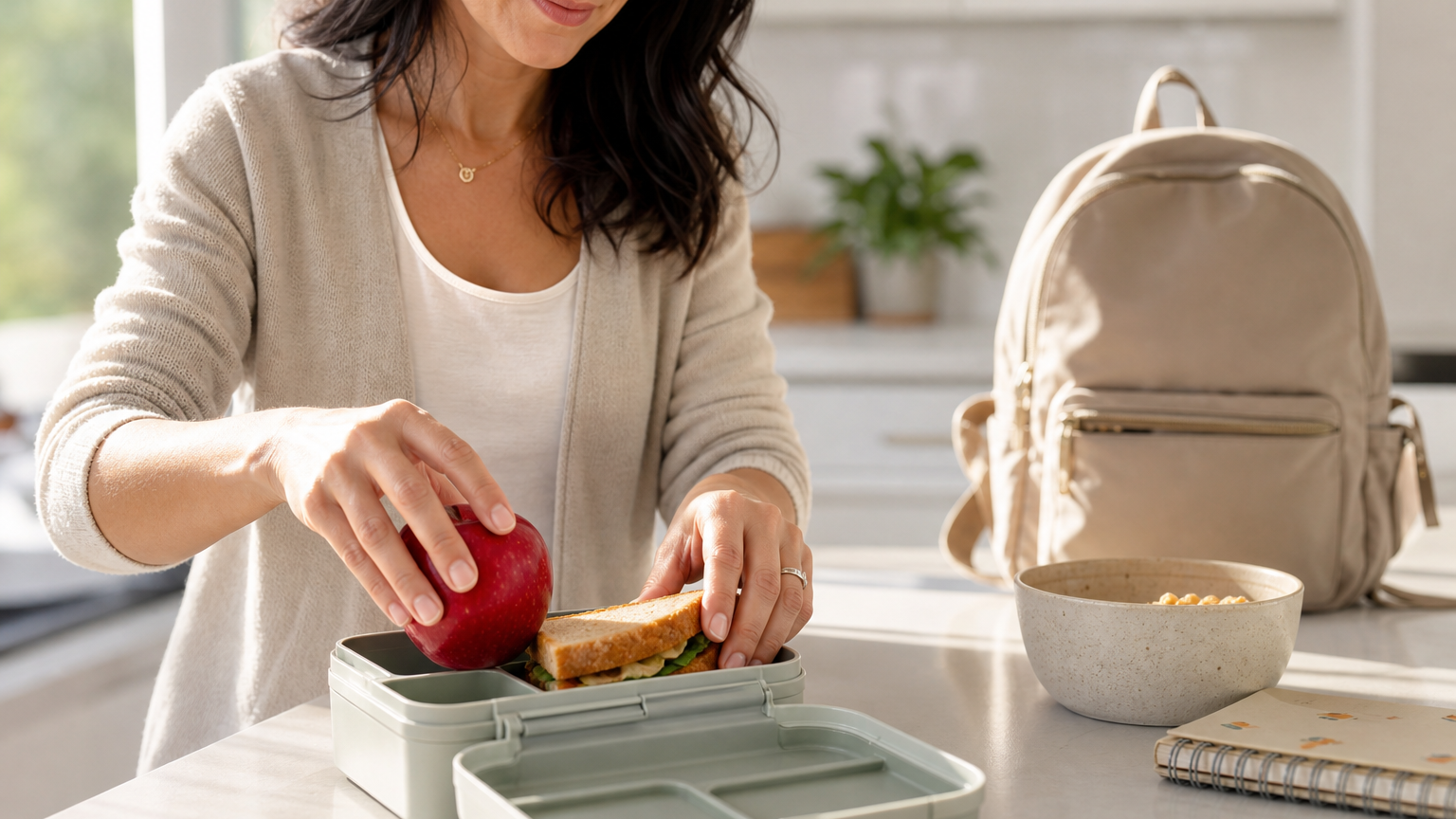
Back to school season quietly ramps up parents' drinking. Here's why the September transition spikes cravings and how to swap the evening wind-down ritual.
Although it isn't a treatment for alcohol use disorder (AUD), the Reframe app can help you cut back on drinking gradually with the science-backed knowledge to empower you 100% of the way. Our proven program has helped millions of people around the world drink less and live more. And we want to help you get there, too!
The Reframe app equips you with the knowledge and skills you need to not only survive drinking less, but to thrive while you navigate the journey. Our daily research-backed readings teach you the neuroscience of alcohol, and our in-app Toolkit provides the resources and activities you need to navigate each challenge.
You'll meet millions of fellow Reframers in our 24/7 Forum chat and daily Zoom check-in meetings. Receive encouragement from people worldwide who know exactly what you're going through! You'll also have the opportunity to connect with our licensed Reframe coaches for more personalized guidance.
Plus, we're always introducing new features to optimize your in-app experience. We recently launched our in-app chatbot, Melody, powered by the world's most powerful AI technology. Melody is here to help as you adjust to a life with less (or no) alcohol.
And that's not all! Every month, we launch fun challenges, like Dry/Damp January, Mental Health May, and Outdoorsy June. You won't want to miss out on the chance to participate alongside fellow Reframers (or solo if that's more your thing!).
The Reframe app is free for 7 days, so you don't have anything to lose by trying it. Are you ready to feel empowered and discover life beyond alcohol? Then download our app through the App Store or Google Play today!
The back-to-school transition in late August and September stacks up a specific set of parent stressors, schedule chaos, homework battles, activity logistics, and relentless decision fatigue, that quietly funnel into an evening reward drink once the kids are finally down. It is a seasonal craving spike, not a personal failing: your nervous system is looking for a fast off-switch after a day of low-grade overwhelm, and alcohol is the ritual most within reach. The good news is that a predictable trigger is a manageable one, and swapping the wind-down ritual, rather than white-knuckling through it, is where the leverage lives. Reframe can help you spot the pattern and build a replacement that actually delivers the relief you're after.
If you've noticed the pour getting a little more automatic since the school calendar kicked in, you're not imagining it, and you're definitely not alone. Something shifts in a household when summer's loose rhythm gives way to the tight machinery of a school year. Let's talk honestly about why that shift lands in the glass, and what you can do about it that doesn't rely on gritting your teeth every night at 8:30.
Back-to-school drinking creeps up because the first few weeks of the school year compress an unusual number of stressors into a very short window. New schedules, earlier wake-ups, a blizzard of forms and fees, activity sign-ups, and the reintroduction of homework all arrive at once. Each one is small; together they leave you running on empty by evening, and alcohol becomes the fastest available exit.
None of these individual tasks is dramatic. Filling out a permission slip is not a crisis. But the school year re-entry front-loads dozens of them into September, and they all draw on the same finite pool of daily attention and self-control. Learning to cope with stressors and negative emotional states without alcohol is one of the mechanisms of behavior change described by the National Institute on Alcohol Abuse and Alcoholism, which helps explain why a stress-dense stretch like this tends to nudge the evening drink upward.
Picture a normal weekday in week two of the term. Earlier alarm. Lunches to pack. A backpack that's missing a form the teacher needed yesterday. Drop-off traffic. A workday. Pickup logistics that depend on who has soccer versus who has piano. Dinner. Homework triage with a kid who would rather do literally anything else. By the time the house goes quiet, you've been making decisions since before sunrise, and this is where parent stress drinking finds its opening: the day feels like it owes you something, and a drink is the closest thing to a reward you can reach without effort.
If you read our piece on the summer "school's out wine o'clock" spike, this will feel familiar in reverse. Summer breaks structure entirely, kids underfoot all day, no routine, and that unstructured chaos funnels into an afternoon or early-evening drink. The school year does the opposite: it over-structures the day into a relentless schedule. The stress didn't disappear when the calendar flipped; it simply relocated to a new set of triggers. Recognizing this as one of several predictable seasonal drinking triggers makes it far easier to plan around than treating each craving as if it appeared out of nowhere.
One more thing worth saying plainly: this is not a mom problem. The culture loves to frame the stressed-out parent with a glass of wine as a mother, but the school-year stress stack hits every kind of household. Research during the pandemic found that having children in the home was associated with increased drinking above and beyond gender, and in that particular sample the men actually reported drinking more than the women. It's a single pandemic-era study, so read it as suggestive rather than definitive, but the direction is clear enough: dads, single parents, and co-parents all face the same conveyor belt.
Decision fatigue is the decline in the quality of your choices and your self-control after a long run of successive decisions. Under high cognitive demand, the brain shifts from effortful, controlled decision-making toward less effortful, error-prone choices, according to a 2025 integrative review in Frontiers in Cognition. By evening, the part of you that would normally pause before pouring is simply less available.
A back-to-school day is practically engineered to trigger this. It's a conveyor belt of micro-decisions: what goes in the lunchbox, which form is due, who's driving whom, what's for dinner, whether the math homework is worth the fight tonight. And this isn't a character flaw or a lack of discipline. The literature notes that fatigue effects tend to be stronger among people with high daily decision loads and chronic stress, explicitly including caregivers. In other words, the exhausted-parent profile is precisely the group the research flags as most vulnerable. (Worth a caveat: the older "willpower is a fuel tank that runs dry" model has faced replication problems, so it's more accurate to say your self-control tends to be worn down by evening than to picture a tank hitting empty.)
When that pause-and-consider function is depleted, alcohol looks especially good because it offers a fast, familiar reward with zero deliberation required. There's real value in simply naming the mechanism. If the evening drink is a fatigue response rather than a moral failing, you can stop spending energy on shame and start spending it on the swap. If you want to go deeper on this loop, our explainer on decision fatigue and how to overcome it unpacks it further, and Reframe's mindful drinking program is built around catching exactly these depleted-brain moments.
The "I survived today" drink feels earned because it's a textbook case of negative-reinforcement conditioning: the relief arrives right after the pour, so the brain files the drink as the thing that made the day stop. NIAAA describes alcohol as "dually reinforcing", meaning it can activate the brain's reward system while quieting the systems that carry stress, anxiety, and emotional pain. That's a powerful one-two punch at the end of a hard day.
The daily structure makes it worse, or at least more predictable. The morning school run and the evening bedtime routine act as natural bookends, and the moment the house finally goes still becomes a reliable cue. Same time, same chair, same signal that the shift is over. Repeat that a dozen evenings in a row and it stops being a choice and starts being a habit.
The trouble isn't that you want relief after a genuinely hard day. Wanting relief is reasonable. The trouble is that alcohol delivers it fast on the front end and quietly bills you on the back end. Although a drink can help you fall asleep faster, it disrupts sleep in the second half of the night, so the sedation you feel doesn't translate into restorative rest. Worse still, NIAAA notes that drinking to cope with stress tends to intensify negative emotional states between drinking episodes. Poor sleep plus a raw baseline mood makes the next day's stress load heavier, which tightens the loop across the whole school week. If stress is your primary cue, our piece on alcohol cravings when you're stressed is worth a read.
The way out starts with getting specific about what you're actually chasing. Usually it isn't the alcohol itself. It's the transition, the quiet, the felt sense that the day is officially over. Name that, and you can meet it another way.
You swap the wind-down ritual by keeping the cue and the reward while changing only the routine in the middle. White-knuckling asks you to resist with willpower that's already spent by evening, which is why it so often fails right at the moment you need it. Swapping works with your depleted brain instead of against it, and it's a far more durable evening wind-down drinking fix.
This is the core insight from habit science. Habits run on a cue, routine, reward loop, and the most effective change strategy is to hold the cue and reward steady while replacing the routine. Applied here: keep the same time, the same comfortable chair, the same "the day is done" signal, and simply put something other than a drink in your hand. The cue still fires, the reward still lands, but the middle step changes.
The mechanics matter more than motivation. Don't try to erase the ritual, because the ritual is doing real emotional work. Instead, give it a new center. If the cue is "kids are finally asleep and I sink into my chair," the reward you're after is decompression and a clear end to the day. A different routine can deliver both. NIAAA's own guidance leans on building behavioral skills for managing stress rather than relying on raw resolve, which is exactly the shift from white-knuckling to swapping.
Here are swaps that keep the ceremony intact:
The real trick is timing the decision. Prep the swap earlier in the day, when your decision-making is still online, so the depleted 8:30 version of you doesn't have to choose anything. Chill the non-alcoholic drink at 4pm. Set the book on the chair. Lay out the walking shoes. And track the pattern for a week or two, so the trigger becomes visible and the swap becomes a plan rather than a hope. If you're not sure yet whether your pattern needs attention at all, the Am I Drinking Too Much? quiz is a low-stakes place to check in.
The morning school run can become accountability because it's an early, non-negotiable commitment that gives your evening a hard reason to protect itself. When you know you have to be functional and present at 7:45 tomorrow, the incentive to keep tonight clear-headed stops being abstract. The thing that felt like a stressor in September becomes a built-in structure that does some of the work willpower can't sustain alone.
The mechanism is simple: work backward from wake-up time. If you need to be up at 6:15 and reasonably human by drop-off, your evening acquires a natural stop point for drinking, screens, and doomscrolling. You don't have to invent a curfew; the school run imposes one. And being clear-headed at drop-off is its own small, daily, felt reward, the kind of low-drama win that quietly reinforces the change every single morning.
You can strengthen this further by pairing the morning with a quick check-in. A ten-second question, how did last night's swap go?, turns the school run into a gentle habit loop with its own feedback built in. Over a long school year, that external structure carries a real load. It's the same principle behind why external accountability tends to outlast solo resolve. If you want a fuller toolkit for this stage of parenting, our guide to managing alcohol cravings as a parent of young children pairs well with everything here, and when you're ready for daily structure and tracking, you can download Reframe to keep the pattern visible.
A quick, honest note before we wrap: if you've noticed that stopping drinking for even a night or two brings on shakiness, sweating, a racing heart, or real anxiety, that's a signal to talk with a clinician rather than manage it solo, because meaningful physical withdrawal needs medical guidance to handle safely.
The back-to-school transition in late August and September stacks up a specific set of parent stressors, schedule chaos, homework battles, activity logistics, and relentless decision fatigue, that quietly funnel into an evening reward drink once the kids are finally down. It is a seasonal craving spike, not a personal failing: your nervous system is looking for a fast off-switch after a day of low-grade overwhelm, and alcohol is the ritual most within reach. The good news is that a predictable trigger is a manageable one, and swapping the wind-down ritual, rather than white-knuckling through it, is where the leverage lives. Reframe can help you spot the pattern and build a replacement that actually delivers the relief you're after.
If you've noticed the pour getting a little more automatic since the school calendar kicked in, you're not imagining it, and you're definitely not alone. Something shifts in a household when summer's loose rhythm gives way to the tight machinery of a school year. Let's talk honestly about why that shift lands in the glass, and what you can do about it that doesn't rely on gritting your teeth every night at 8:30.
Back-to-school drinking creeps up because the first few weeks of the school year compress an unusual number of stressors into a very short window. New schedules, earlier wake-ups, a blizzard of forms and fees, activity sign-ups, and the reintroduction of homework all arrive at once. Each one is small; together they leave you running on empty by evening, and alcohol becomes the fastest available exit.
None of these individual tasks is dramatic. Filling out a permission slip is not a crisis. But the school year re-entry front-loads dozens of them into September, and they all draw on the same finite pool of daily attention and self-control. Learning to cope with stressors and negative emotional states without alcohol is one of the mechanisms of behavior change described by the National Institute on Alcohol Abuse and Alcoholism, which helps explain why a stress-dense stretch like this tends to nudge the evening drink upward.
Picture a normal weekday in week two of the term. Earlier alarm. Lunches to pack. A backpack that's missing a form the teacher needed yesterday. Drop-off traffic. A workday. Pickup logistics that depend on who has soccer versus who has piano. Dinner. Homework triage with a kid who would rather do literally anything else. By the time the house goes quiet, you've been making decisions since before sunrise, and this is where parent stress drinking finds its opening: the day feels like it owes you something, and a drink is the closest thing to a reward you can reach without effort.
If you read our piece on the summer "school's out wine o'clock" spike, this will feel familiar in reverse. Summer breaks structure entirely, kids underfoot all day, no routine, and that unstructured chaos funnels into an afternoon or early-evening drink. The school year does the opposite: it over-structures the day into a relentless schedule. The stress didn't disappear when the calendar flipped; it simply relocated to a new set of triggers. Recognizing this as one of several predictable seasonal drinking triggers makes it far easier to plan around than treating each craving as if it appeared out of nowhere.
One more thing worth saying plainly: this is not a mom problem. The culture loves to frame the stressed-out parent with a glass of wine as a mother, but the school-year stress stack hits every kind of household. Research during the pandemic found that having children in the home was associated with increased drinking above and beyond gender, and in that particular sample the men actually reported drinking more than the women. It's a single pandemic-era study, so read it as suggestive rather than definitive, but the direction is clear enough: dads, single parents, and co-parents all face the same conveyor belt.
Decision fatigue is the decline in the quality of your choices and your self-control after a long run of successive decisions. Under high cognitive demand, the brain shifts from effortful, controlled decision-making toward less effortful, error-prone choices, according to a 2025 integrative review in Frontiers in Cognition. By evening, the part of you that would normally pause before pouring is simply less available.
A back-to-school day is practically engineered to trigger this. It's a conveyor belt of micro-decisions: what goes in the lunchbox, which form is due, who's driving whom, what's for dinner, whether the math homework is worth the fight tonight. And this isn't a character flaw or a lack of discipline. The literature notes that fatigue effects tend to be stronger among people with high daily decision loads and chronic stress, explicitly including caregivers. In other words, the exhausted-parent profile is precisely the group the research flags as most vulnerable. (Worth a caveat: the older "willpower is a fuel tank that runs dry" model has faced replication problems, so it's more accurate to say your self-control tends to be worn down by evening than to picture a tank hitting empty.)
When that pause-and-consider function is depleted, alcohol looks especially good because it offers a fast, familiar reward with zero deliberation required. There's real value in simply naming the mechanism. If the evening drink is a fatigue response rather than a moral failing, you can stop spending energy on shame and start spending it on the swap. If you want to go deeper on this loop, our explainer on decision fatigue and how to overcome it unpacks it further, and Reframe's mindful drinking program is built around catching exactly these depleted-brain moments.
The "I survived today" drink feels earned because it's a textbook case of negative-reinforcement conditioning: the relief arrives right after the pour, so the brain files the drink as the thing that made the day stop. NIAAA describes alcohol as "dually reinforcing", meaning it can activate the brain's reward system while quieting the systems that carry stress, anxiety, and emotional pain. That's a powerful one-two punch at the end of a hard day.
The daily structure makes it worse, or at least more predictable. The morning school run and the evening bedtime routine act as natural bookends, and the moment the house finally goes still becomes a reliable cue. Same time, same chair, same signal that the shift is over. Repeat that a dozen evenings in a row and it stops being a choice and starts being a habit.
The trouble isn't that you want relief after a genuinely hard day. Wanting relief is reasonable. The trouble is that alcohol delivers it fast on the front end and quietly bills you on the back end. Although a drink can help you fall asleep faster, it disrupts sleep in the second half of the night, so the sedation you feel doesn't translate into restorative rest. Worse still, NIAAA notes that drinking to cope with stress tends to intensify negative emotional states between drinking episodes. Poor sleep plus a raw baseline mood makes the next day's stress load heavier, which tightens the loop across the whole school week. If stress is your primary cue, our piece on alcohol cravings when you're stressed is worth a read.
The way out starts with getting specific about what you're actually chasing. Usually it isn't the alcohol itself. It's the transition, the quiet, the felt sense that the day is officially over. Name that, and you can meet it another way.
You swap the wind-down ritual by keeping the cue and the reward while changing only the routine in the middle. White-knuckling asks you to resist with willpower that's already spent by evening, which is why it so often fails right at the moment you need it. Swapping works with your depleted brain instead of against it, and it's a far more durable evening wind-down drinking fix.
This is the core insight from habit science. Habits run on a cue, routine, reward loop, and the most effective change strategy is to hold the cue and reward steady while replacing the routine. Applied here: keep the same time, the same comfortable chair, the same "the day is done" signal, and simply put something other than a drink in your hand. The cue still fires, the reward still lands, but the middle step changes.
The mechanics matter more than motivation. Don't try to erase the ritual, because the ritual is doing real emotional work. Instead, give it a new center. If the cue is "kids are finally asleep and I sink into my chair," the reward you're after is decompression and a clear end to the day. A different routine can deliver both. NIAAA's own guidance leans on building behavioral skills for managing stress rather than relying on raw resolve, which is exactly the shift from white-knuckling to swapping.
Here are swaps that keep the ceremony intact:
The real trick is timing the decision. Prep the swap earlier in the day, when your decision-making is still online, so the depleted 8:30 version of you doesn't have to choose anything. Chill the non-alcoholic drink at 4pm. Set the book on the chair. Lay out the walking shoes. And track the pattern for a week or two, so the trigger becomes visible and the swap becomes a plan rather than a hope. If you're not sure yet whether your pattern needs attention at all, the Am I Drinking Too Much? quiz is a low-stakes place to check in.
The morning school run can become accountability because it's an early, non-negotiable commitment that gives your evening a hard reason to protect itself. When you know you have to be functional and present at 7:45 tomorrow, the incentive to keep tonight clear-headed stops being abstract. The thing that felt like a stressor in September becomes a built-in structure that does some of the work willpower can't sustain alone.
The mechanism is simple: work backward from wake-up time. If you need to be up at 6:15 and reasonably human by drop-off, your evening acquires a natural stop point for drinking, screens, and doomscrolling. You don't have to invent a curfew; the school run imposes one. And being clear-headed at drop-off is its own small, daily, felt reward, the kind of low-drama win that quietly reinforces the change every single morning.
You can strengthen this further by pairing the morning with a quick check-in. A ten-second question, how did last night's swap go?, turns the school run into a gentle habit loop with its own feedback built in. Over a long school year, that external structure carries a real load. It's the same principle behind why external accountability tends to outlast solo resolve. If you want a fuller toolkit for this stage of parenting, our guide to managing alcohol cravings as a parent of young children pairs well with everything here, and when you're ready for daily structure and tracking, you can download Reframe to keep the pattern visible.
A quick, honest note before we wrap: if you've noticed that stopping drinking for even a night or two brings on shakiness, sweating, a racing heart, or real anxiety, that's a signal to talk with a clinician rather than manage it solo, because meaningful physical withdrawal needs medical guidance to handle safely.

Craving a drink before a big presentation or meeting? Here's the neuroscience of pre-performance anxiety and calming alternatives that don't tank your work.
Although it isn't a treatment for alcohol use disorder (AUD), the Reframe app can help you cut back on drinking gradually with the science-backed knowledge to empower you 100% of the way. Our proven program has helped millions of people around the world drink less and live more. And we want to help you get there, too!
The Reframe app equips you with the knowledge and skills you need to not only survive drinking less, but to thrive while you navigate the journey. Our daily research-backed readings teach you the neuroscience of alcohol, and our in-app Toolkit provides the resources and activities you need to navigate each challenge.
You'll meet millions of fellow Reframers in our 24/7 Forum chat and daily Zoom check-in meetings. Receive encouragement from people worldwide who know exactly what you're going through! You'll also have the opportunity to connect with our licensed Reframe coaches for more personalized guidance.
Plus, we're always introducing new features to optimize your in-app experience. We recently launched our in-app chatbot, Melody, powered by the world's most powerful AI technology. Melody is here to help as you adjust to a life with less (or no) alcohol.
And that's not all! Every month, we launch fun challenges, like Dry/Damp January, Mental Health May, and Outdoorsy June. You won't want to miss out on the chance to participate alongside fellow Reframers (or solo if that's more your thing!).
The Reframe app is free for 7 days, so you don't have anything to lose by trying it. Are you ready to feel empowered and discover life beyond alcohol? Then download our app through the App Store or Google Play today!
Craving alcohol before a high-stakes work event usually comes from anticipatory performance anxiety: your brain floods with adrenaline and cortisol ahead of a socially evaluated moment, and alcohol has learned to blunt that surge fast. This is distinct from general stress drinking because it is tied to a specific, upcoming, evaluated event, which makes the "liquid courage" association especially sticky in professional settings. Reframe helps you spot this exact trigger pattern and build pre-event calming rituals that steady your nerves without dulling the performance you are trying to protect.
You have the slide deck ready. You have rehearsed the opening line a dozen times. And yet, an hour before you walk in, the thought arrives almost on its own: just one drink would take the edge off. If that sounds familiar, you are not weak and you are not broken. You are experiencing a very specific, very learnable trigger, and the good news is that a specific trigger is exactly the kind you can work with. Let's walk through what is actually happening, why the "quick fix" backfires, and what steadies you without costing you the sharpness you showed up to bring.
The craving isn't random. It's your brain flagging a solution to a very particular problem: an upcoming, time-bound moment where other people are about to evaluate you. That's anticipatory performance anxiety, and it behaves differently from the low-grade hum of everyday stress. General stress drinking tends to be about escaping a bad mood or unwinding after a long day. Craving alcohol before a presentation is cued by the event itself, which is why it shows up so predictably right before you go on.
Think of the difference this way. Ambient stress is weather, a persistent condition you live inside. Anticipatory anxiety is a specific storm you can see coming on the calendar. Because it has a clear start and end (the meeting begins, the meeting ends), your brain treats it as a discrete threat to be managed. If drinking has quieted that particular kind of nervousness before, your brain files alcohol as the tool for this exact job. This is a big part of why pre-performance anxiety drinking feels so different from your neighbor-post reasons like cravings when you're stressed in a general, ongoing way.
The more visible the judgment and the higher the stakes, the bigger the anticipatory spike. A casual team huddle barely registers. A board presentation, a pitch to a major client, or a talk in front of leadership can send your nervous system into overdrive hours in advance. The pattern is a learned, conditioned response, not a character flaw. Your brain is doing what brains do: reaching for the fastest thing that worked last time. Naming it as conditioning rather than weakness is the first step toward being able to change it.
When you anticipate being evaluated, your threat-response system switches on. Your amygdala, the brain's alarm center, reads the upcoming meeting the way it might read physical danger, and it triggers a surge of adrenaline and cortisol. That surge is why the symptoms are so physical: racing heart, shaky hands, dry mouth, a tight chest, and thoughts that won't slow down. Clinicians often note that this stress cascade is the body mobilizing energy, not a sign that something has gone wrong with you.
Here is the frustrating irony. The same system that makes you feel jittery is the system designed to help you perform. Your heart speeds up to move oxygen. Your senses sharpen. Your body is essentially preparing for a sprint. The problem is that we interpret those sensations as fear, and fear is unpleasant, so we look for the exit. That's where the drink comes in, promising to switch off the alarm.
Alcohol is a central nervous system depressant that works by stimulating GABA, the brain's primary inhibitory neurotransmitter, which produces a sedative effect (StatPearls, NCBI Bookshelf). By blunting arousal in this way, a drink can feel like fast relief from pre-event nerves. So the relief is real in the short term. The catch is that it's borrowed, and the interest rate is steep. That relief comes at a cost to your memory, focus, and next-day mood, which we'll get to.
Every time a drink calms your pre-event nerves and the meeting goes fine, your brain draws a line between alcohol and relief and then reinforces it. Reach for the drink, feel the edge soften, survive the moment: repeat that loop enough times and the craving starts arriving automatically at the mere anticipation of a big event. You don't even have to decide to want it. The wanting is already installed.
This is classic learning, and it's sturdy. Research summarized by the NIAAA Spectrum found that socially anxious people frequently use alcohol to cope with evaluative situations, and on days they drink to cope they tend to drink more and experience more negative consequences, which reinforces the pattern over time. The belief that you need a drink to perform becomes self-reinforcing precisely because you rarely test it. If you always drink before the big meeting and the meeting goes okay, you never get to discover that you would have been fine (or better) without it. Understanding this loop is a core piece of what Reframe's mindful drinking program helps you unpack, and it connects closely to the broader science of liquid courage and inhibitions.
Here's a pattern worth naming, which we'll call the executive-drinking trap. High-pressure roles pair frequent evaluated, high-stakes moments with easy, normalized access to alcohol. Client dinners, conference bars, the well-stocked office fridge on a Friday, the "let's grab a drink before the pitch" culture. Each evaluated moment is a fresh chance for the alcohol-equals-relief loop to fire, and each social norm around drinking makes it easier to say yes. The reliance can grow quietly for years before it becomes obvious, partly because it's camouflaged as professional ritual. Recognizing the trap early makes it far easier to build other tools before the loop hardens.
The uncomfortable truth is that the thing you're reaching for to help you perform tends to quietly degrade the exact skills a presentation demands. Alcohol may lower your felt anxiety, but it does not make you sharper. In one experimental study comparing an alcohol beverage against a no-alcohol beverage, acute intoxication impaired free recall of narrative material (Addictive Behaviors, via PubMed Central). Working memory, quick verbal processing, and on-the-spot recall are the abilities you lean on hardest when someone asks an unexpected question, and those are the first to slip.
There's also the appearance problem. Alcohol reduces fine motor control and can make you seem less composed, not more, exactly the opposite of the polished impression you're trying to make. The perceived confidence boost rarely matches the actual, measurable dip in performance. You may feel looser; your audience may notice you're a beat behind.
Then there's the day-after tax, which matters enormously if your event is in the morning. As alcohol wears off, many people feel more on edge rather than steadier heading into a next-day event. Sleep takes a hit too. Even though a drink can help you fall asleep faster, it reduces REM sleep, the stage tied to memory and emotional processing, leaving you less sharp and more fatigued the next day (Sleep Foundation). Rely on drinking to face evaluated moments and, over time, you also chip away at your genuine, drug-free competence, the very thing that gets you invited into these rooms.
Plenty, and most of it works faster than a drink and leaves your brain intact. The overarching move is to stop fighting the arousal and start redirecting it. Below are the approaches that tend to hold up when the stakes are real.
Start with interpretation. That racing heart and buzzing energy is not proof that something is wrong; it's your body mobilizing to perform. Telling yourself "I'm excited" or "I'm ready" rather than "I'm panicking" changes very little about the physical sensation and a great deal about how you experience it. The sensations of anxiety and readiness are nearly identical under the hood. You get to choose the label, and the label steers what you do next. Learning to be steady in these moments is closely tied to building confidence without alcohol.
For a fast, discreet reset, try cyclic sighing: a double inhale through the nose followed by a long, slow exhale through the mouth. In a Stanford controlled study, five minutes a day of this practice improved mood more than mindfulness meditation, with the long exhale thought to trigger a calming parasympathetic response (Stanford Medicine). You can do a round of it in the hallway before you walk in, and nobody will know. If you want a deeper toolkit, our guide to breathing techniques for cravings and stress has more.
A few more things that genuinely help: build a consistent pre-event ritual (same playlist, same short walk, same three breaths) so your brain has a new calming cue to reach for instead of a drink. Prepare and rehearse thoroughly, because anxiety has less to grip onto when you know your material cold. Take a brief walk to physically discharge the adrenaline before you go on. And name the craving out loud for what it is: "this is anticipatory anxiety, not a real need." Naming it strips away some of its automatic pull. If social settings are where this bites hardest, our piece on coping with social anxiety without alcohol pairs well with these tactics.
Occasional nerves before a big moment are completely normal, and the odd pre-event drink is not a crisis. What's worth a closer, honest look is a standing habit: needing a drink to face nearly every evaluated event, drinking before work to function, hiding it, or noticing the amount creeping upward. Alcohol may appear to relieve anxiety in the short term, but over time heavy drinking and repeated withdrawal can escalate both anxiety and the drinking itself (National Institute on Alcohol Abuse and Alcoholism), which is exactly why a pattern of drinking to get through work moments deserves attention.
Because the executive-drinking trap lets reliance grow quietly, the signs can be subtle for a long time. A low-pressure way to check in with yourself is a quick self-assessment. Reframe's Am I Drinking Too Much? quiz can help you gauge where you stand, and the What Type of Drinker Are You? quiz can surface the patterns behind the habit. Neither is a verdict; both are mirrors.
None of this is about guilt. It's about protecting two things at once: your health and your career. Building non-alcohol coping skills means you get to walk into the high-stakes room as your actual, capable self, no borrowed calm required. If you want structured support for spotting triggers and rewiring the loop, you can download Reframe and start with the trigger you already know. And if you have questions about how the app works, Reframe's FAQ covers the basics.
Craving alcohol before a high-stakes work event usually comes from anticipatory performance anxiety: your brain floods with adrenaline and cortisol ahead of a socially evaluated moment, and alcohol has learned to blunt that surge fast. This is distinct from general stress drinking because it is tied to a specific, upcoming, evaluated event, which makes the "liquid courage" association especially sticky in professional settings. Reframe helps you spot this exact trigger pattern and build pre-event calming rituals that steady your nerves without dulling the performance you are trying to protect.
You have the slide deck ready. You have rehearsed the opening line a dozen times. And yet, an hour before you walk in, the thought arrives almost on its own: just one drink would take the edge off. If that sounds familiar, you are not weak and you are not broken. You are experiencing a very specific, very learnable trigger, and the good news is that a specific trigger is exactly the kind you can work with. Let's walk through what is actually happening, why the "quick fix" backfires, and what steadies you without costing you the sharpness you showed up to bring.
The craving isn't random. It's your brain flagging a solution to a very particular problem: an upcoming, time-bound moment where other people are about to evaluate you. That's anticipatory performance anxiety, and it behaves differently from the low-grade hum of everyday stress. General stress drinking tends to be about escaping a bad mood or unwinding after a long day. Craving alcohol before a presentation is cued by the event itself, which is why it shows up so predictably right before you go on.
Think of the difference this way. Ambient stress is weather, a persistent condition you live inside. Anticipatory anxiety is a specific storm you can see coming on the calendar. Because it has a clear start and end (the meeting begins, the meeting ends), your brain treats it as a discrete threat to be managed. If drinking has quieted that particular kind of nervousness before, your brain files alcohol as the tool for this exact job. This is a big part of why pre-performance anxiety drinking feels so different from your neighbor-post reasons like cravings when you're stressed in a general, ongoing way.
The more visible the judgment and the higher the stakes, the bigger the anticipatory spike. A casual team huddle barely registers. A board presentation, a pitch to a major client, or a talk in front of leadership can send your nervous system into overdrive hours in advance. The pattern is a learned, conditioned response, not a character flaw. Your brain is doing what brains do: reaching for the fastest thing that worked last time. Naming it as conditioning rather than weakness is the first step toward being able to change it.
When you anticipate being evaluated, your threat-response system switches on. Your amygdala, the brain's alarm center, reads the upcoming meeting the way it might read physical danger, and it triggers a surge of adrenaline and cortisol. That surge is why the symptoms are so physical: racing heart, shaky hands, dry mouth, a tight chest, and thoughts that won't slow down. Clinicians often note that this stress cascade is the body mobilizing energy, not a sign that something has gone wrong with you.
Here is the frustrating irony. The same system that makes you feel jittery is the system designed to help you perform. Your heart speeds up to move oxygen. Your senses sharpen. Your body is essentially preparing for a sprint. The problem is that we interpret those sensations as fear, and fear is unpleasant, so we look for the exit. That's where the drink comes in, promising to switch off the alarm.
Alcohol is a central nervous system depressant that works by stimulating GABA, the brain's primary inhibitory neurotransmitter, which produces a sedative effect (StatPearls, NCBI Bookshelf). By blunting arousal in this way, a drink can feel like fast relief from pre-event nerves. So the relief is real in the short term. The catch is that it's borrowed, and the interest rate is steep. That relief comes at a cost to your memory, focus, and next-day mood, which we'll get to.
Every time a drink calms your pre-event nerves and the meeting goes fine, your brain draws a line between alcohol and relief and then reinforces it. Reach for the drink, feel the edge soften, survive the moment: repeat that loop enough times and the craving starts arriving automatically at the mere anticipation of a big event. You don't even have to decide to want it. The wanting is already installed.
This is classic learning, and it's sturdy. Research summarized by the NIAAA Spectrum found that socially anxious people frequently use alcohol to cope with evaluative situations, and on days they drink to cope they tend to drink more and experience more negative consequences, which reinforces the pattern over time. The belief that you need a drink to perform becomes self-reinforcing precisely because you rarely test it. If you always drink before the big meeting and the meeting goes okay, you never get to discover that you would have been fine (or better) without it. Understanding this loop is a core piece of what Reframe's mindful drinking program helps you unpack, and it connects closely to the broader science of liquid courage and inhibitions.
Here's a pattern worth naming, which we'll call the executive-drinking trap. High-pressure roles pair frequent evaluated, high-stakes moments with easy, normalized access to alcohol. Client dinners, conference bars, the well-stocked office fridge on a Friday, the "let's grab a drink before the pitch" culture. Each evaluated moment is a fresh chance for the alcohol-equals-relief loop to fire, and each social norm around drinking makes it easier to say yes. The reliance can grow quietly for years before it becomes obvious, partly because it's camouflaged as professional ritual. Recognizing the trap early makes it far easier to build other tools before the loop hardens.
The uncomfortable truth is that the thing you're reaching for to help you perform tends to quietly degrade the exact skills a presentation demands. Alcohol may lower your felt anxiety, but it does not make you sharper. In one experimental study comparing an alcohol beverage against a no-alcohol beverage, acute intoxication impaired free recall of narrative material (Addictive Behaviors, via PubMed Central). Working memory, quick verbal processing, and on-the-spot recall are the abilities you lean on hardest when someone asks an unexpected question, and those are the first to slip.
There's also the appearance problem. Alcohol reduces fine motor control and can make you seem less composed, not more, exactly the opposite of the polished impression you're trying to make. The perceived confidence boost rarely matches the actual, measurable dip in performance. You may feel looser; your audience may notice you're a beat behind.
Then there's the day-after tax, which matters enormously if your event is in the morning. As alcohol wears off, many people feel more on edge rather than steadier heading into a next-day event. Sleep takes a hit too. Even though a drink can help you fall asleep faster, it reduces REM sleep, the stage tied to memory and emotional processing, leaving you less sharp and more fatigued the next day (Sleep Foundation). Rely on drinking to face evaluated moments and, over time, you also chip away at your genuine, drug-free competence, the very thing that gets you invited into these rooms.
Plenty, and most of it works faster than a drink and leaves your brain intact. The overarching move is to stop fighting the arousal and start redirecting it. Below are the approaches that tend to hold up when the stakes are real.
Start with interpretation. That racing heart and buzzing energy is not proof that something is wrong; it's your body mobilizing to perform. Telling yourself "I'm excited" or "I'm ready" rather than "I'm panicking" changes very little about the physical sensation and a great deal about how you experience it. The sensations of anxiety and readiness are nearly identical under the hood. You get to choose the label, and the label steers what you do next. Learning to be steady in these moments is closely tied to building confidence without alcohol.
For a fast, discreet reset, try cyclic sighing: a double inhale through the nose followed by a long, slow exhale through the mouth. In a Stanford controlled study, five minutes a day of this practice improved mood more than mindfulness meditation, with the long exhale thought to trigger a calming parasympathetic response (Stanford Medicine). You can do a round of it in the hallway before you walk in, and nobody will know. If you want a deeper toolkit, our guide to breathing techniques for cravings and stress has more.
A few more things that genuinely help: build a consistent pre-event ritual (same playlist, same short walk, same three breaths) so your brain has a new calming cue to reach for instead of a drink. Prepare and rehearse thoroughly, because anxiety has less to grip onto when you know your material cold. Take a brief walk to physically discharge the adrenaline before you go on. And name the craving out loud for what it is: "this is anticipatory anxiety, not a real need." Naming it strips away some of its automatic pull. If social settings are where this bites hardest, our piece on coping with social anxiety without alcohol pairs well with these tactics.
Occasional nerves before a big moment are completely normal, and the odd pre-event drink is not a crisis. What's worth a closer, honest look is a standing habit: needing a drink to face nearly every evaluated event, drinking before work to function, hiding it, or noticing the amount creeping upward. Alcohol may appear to relieve anxiety in the short term, but over time heavy drinking and repeated withdrawal can escalate both anxiety and the drinking itself (National Institute on Alcohol Abuse and Alcoholism), which is exactly why a pattern of drinking to get through work moments deserves attention.
Because the executive-drinking trap lets reliance grow quietly, the signs can be subtle for a long time. A low-pressure way to check in with yourself is a quick self-assessment. Reframe's Am I Drinking Too Much? quiz can help you gauge where you stand, and the What Type of Drinker Are You? quiz can surface the patterns behind the habit. Neither is a verdict; both are mirrors.
None of this is about guilt. It's about protecting two things at once: your health and your career. Building non-alcohol coping skills means you get to walk into the high-stakes room as your actual, capable self, no borrowed calm required. If you want structured support for spotting triggers and rewiring the loop, you can download Reframe and start with the trigger you already know. And if you have questions about how the app works, Reframe's FAQ covers the basics.

If your family stays silent or indifferent about your sobriety, here's why it happens, how to protect your progress, and how to build support that holds.
Although it isn't a treatment for alcohol use disorder (AUD), the Reframe app can help you cut back on drinking gradually with the science-backed knowledge to empower you 100% of the way. Our proven program has helped millions of people around the world drink less and live more. And we want to help you get there, too!
The Reframe app equips you with the knowledge and skills you need to not only survive drinking less, but to thrive while you navigate the journey. Our daily research-backed readings teach you the neuroscience of alcohol, and our in-app Toolkit provides the resources and activities you need to navigate each challenge.
You'll meet millions of fellow Reframers in our 24/7 Forum chat and daily Zoom check-in meetings. Receive encouragement from people worldwide who know exactly what you're going through! You'll also have the opportunity to connect with our licensed Reframe coaches for more personalized guidance.
Plus, we're always introducing new features to optimize your in-app experience. We recently launched our in-app chatbot, Melody, powered by the world's most powerful AI technology. Melody is here to help as you adjust to a life with less (or no) alcohol.
And that's not all! Every month, we launch fun challenges, like Dry/Damp January, Mental Health May, and Outdoorsy June. You won't want to miss out on the chance to participate alongside fellow Reframers (or solo if that's more your thing!).
The Reframe app is free for 7 days, so you don't have anything to lose by trying it. Are you ready to feel empowered and discover life beyond alcohol? Then download our app through the App Store or Google Play today!
When your family stays silent or indifferent about your sobriety, the loneliness is real, but their lack of engagement usually says more about their own discomfort, fear, or wish to "keep things normal" than about the worth of what you're doing. The most protective move is to stop measuring your success by whether they acknowledge it, name the loneliness as a genuine relapse trigger, and build support from people and tools that can actually mirror your change back to you. Reframe's community and daily check-ins exist for exactly this gap, so your progress doesn't hinge on approval that may never come.
You did a hard thing. Maybe you're weeks in, maybe months, and you've quietly rearranged your whole life around drinking less. And then you sit down at a family dinner, and nobody says a word about it. Not a question, not a nod, not even an awkward acknowledgment. It stings in a way that's difficult to explain to anyone who hasn't felt it, because it feels like the biggest change of your life is happening in a room where nobody can see it.
Here's what we want you to know up front: a family that isn't supportive of sobriety is a common experience, not a sign that you've done something wrong or that your effort doesn't count. This post is about you, specifically about managing your own response to their non-engagement, because that's the part you can actually control. We're not going to hand you scripts to change your relatives or tell you to write anyone off. We're going to help you carry this without letting it pull you backward.
Most family silence isn't rejection dressed up as quiet. It's usually discomfort, and discomfort is a much more workable thing than contempt. A lot of families genuinely just want to know you're okay, and they don't realize that saying "hey, I've noticed, and I'm proud of you" out loud would land as a gift. To them, not mentioning it can feel like being polite or not making a big deal of something private. To you, it feels like being unseen.
There's also the uncomfortable math of what your change implies. Acknowledging that you've stopped or cut back can mean acknowledging that there was a problem to begin with, and not every family wants to open that door. Naming your progress can feel, to them, like naming a past nobody agreed to discuss. So they cope the way many families cope with anything tender: by leaving it alone and hoping the status quo holds.
Think about how families usually check in. It's often indirect, through a plate of food, a ride offered, a "you look good," a text that says nothing and everything. Many relatives are running that same quiet software when it comes to your sobriety. They're monitoring, in their own way, whether you seem steady, and they've decided that if you're fine, there's nothing to say. The gap is that their reassurance is happening silently, on a channel you can't hear, while you're waiting for words that would actually register.
Families are built around rituals, and a surprising number of them involve drinking. The wine that comes out at every holiday, the beer someone always hands you at the cookout, the running joke about your tolerance. When you step out of that pattern, you don't just change your own behavior; you nudge the whole choreography. Some relatives go quiet because they don't know their new lines. Others feel quietly implicated, because your choice to drink less raises a question about their own habits that they'd rather not sit with. None of this requires you to blame them. Understanding the motive tends to lower the sting, and it keeps you from reading indifference as a verdict on your worth.
The pain here has a name, even if the family never gives it one: it's the absence of mirroring. Humans are wired to have our inner experience reflected back by the people closest to us, and when a major internal change goes unspoken, the silence registers as a specific kind of loneliness. Psychology Today's overview of emotional validation describes feeling seen, heard, and understood as a core human need, and notes that when inner experiences get dismissed or denied it can feed shame, low self-worth, and low mood. In other words, this isn't you being needy. It's you being human.
Early sobriety is an enormous internal transformation that can be almost invisible from the outside. Nobody sees the cravings you rode out on a Tuesday night, or the party you left early, or the running tally in your head of days and dollars. When the effort feels this big and the acknowledgment feels this small, the gap breeds resentment and self-doubt in equal measure. A quiet voice starts asking, "if it doesn't matter to them, does it really matter at all?"
It's worth taking loneliness seriously rather than shrugging it off as oversensitivity. The 2023 U.S. Surgeon General's advisory on loneliness and isolation frames a lack of social connection as a genuine health risk, comparing its mortality impact to smoking up to 15 cigarettes a day. We're not repeating that to alarm you; we're repeating it so you'll give yourself permission to treat "I feel unseen" as a real problem worth solving, not a feeling to power through in silence. Recognizing the need for mirroring is actually the first step to getting it met somewhere it can actually be met.
Start by separating the meaning of your sobriety from anyone's reaction to it. The clearer sleep, the steadier mood, the money that stops evaporating, the mornings you don't dread, these are real whether or not a single relative claps. Their applause was never what made the change valuable. It just felt that way because we're used to looking to family for the scoreboard. You get to move the scoreboard.
One of the most grounding moves is to track your own wins concretely, so your progress becomes self-evident instead of approval-dependent. Count the days. Log your sleep and your mood. Watch the savings add up; our alcohol spend calculator can turn the vague sense of "I'm saving money" into a number you can actually see, and our alcohol calorie calculator does the same for the physical side. When the evidence lives in your own records, a silent dinner table loses a lot of its power to define you.
Then there's the expectation itself. Hoping your family acknowledges your effort is completely healthy. Requiring it is where you get into trouble, because requiring it hands your stability to people who may never provide it. Notice the internal narrative when it shows up ("if they don't care, maybe it doesn't matter") and challenge it directly, because it's a distortion, not a fact. Self-validation isn't a consolation prize you accept because the real thing didn't show up. It's a skill you build, and it happens to make your sobriety far more durable than one propped up by outside approval. If you're still sorting out where your own drinking sits, the Am I Drinking Too Much? quiz is a low-stakes way to get your own read, on your own terms.
Loneliness and disappointment belong on your list of triggers, right next to stress and boredom. We tend to plan carefully for the obvious ones and then get blindsided by the emotional letdown after a family gathering where nobody asked how we're doing. Naming these feelings as triggers before they build is the whole game. The moment you can say "this is loneliness, and loneliness is a high-risk state for me," you've turned an ambush into something you can prepare for. Disruptions to social connection and recovery support have been linked to a higher likelihood of relapse among people with a history of alcohol use disorder, which is exactly why the quiet ache after a family event deserves a plan, not a shrug.
Build a specific routine for the drive home and the hour after. That might be urge-surfing, where you let a craving crest and fall without acting on it; our guide to urge surfing walks through the mechanics. It might be a pre-arranged text to one person who genuinely gets it, so you're not sitting alone with the letdown. It might be a grounding routine you can do in a parked car. The point is to decide in advance, when you're calm, what you'll reach for, because the disappointed version of you at 9pm is not the version you want making the call.
The other half is lowering the stakes going in. If you walk into a family event silently hoping for validation you can't control, you've set up a letdown before you've even parked. Go in expecting the gathering to be a gathering, nothing more, and let any acknowledgment be a bonus rather than the mission. Meanwhile, build recovery-affirming rituals that don't depend on family participation at all, a Sunday walk, a check-in, a small celebration of a milestone that's yours alone. Reframe's mindful drinking program is built around exactly this kind of steady, self-directed structure, so your momentum comes from a routine you own rather than a reaction you're waiting on.
If your family can't mirror your change right now, the answer isn't to keep asking harder. It's to find people who can. Sober and sober-curious friends, peer communities, group programs, a coach, or a therapist can all reflect your progress back in a way that actually lands, because they understand what the work costs. This isn't a workaround or a lesser substitute. Social support is a documented part of durable recovery: NIAAA's recovery research describes recovery as often marked by improvements in social support alongside physical and mental health and quality of life, with continued gains in those areas helping sustain it.
Peer and mutual-support communities are especially good at the "getting it" part. NIAAA's Alcohol Treatment Navigator notes that a mutual-support group can reinforce and extend the benefits of professional treatment while providing much-needed social support over the long term. Those groups come in many flavors, including secular and non-12-step options, so you're not locked into any single format that doesn't fit you. And online communities and apps make that support available at odd hours, which matters, because loneliness rarely keeps office hours. An unsupportive family in recovery is a real gap, but it's a fillable one.
Here's the reassuring math: one or two people who genuinely get it can outweigh a whole family that doesn't. You don't need a crowd. You need a mirror or two that actually reflects. Reframe's community and daily check-ins are designed to be exactly that kind of mirror, available around the clock from people who understand what you're doing, and you can download Reframe to plug into it. Building this outside support isn't abandoning your family. It's giving yourself the acknowledgment they can't offer right now, which, honestly, tends to make you steadier and warmer around them, not more distant.
Often, yes, and often more than you'd expect. Many families come around slowly, not because you argued them into it but because they watched the change hold. Patience does what pressure can't here. Every month you stay consistent is quiet evidence, and evidence is a lot more persuasive to a wary relative than a speech would be. Modeling calm consistency, rather than seeking a confrontation or an apology, tends to open the door far wider than demanding acknowledgment ever could.
You're also allowed to make a small, low-pressure request. Something like "it would mean a lot if you asked how I'm doing sometimes" gives a family that genuinely wants to help a concrete way to do it, without turning it into an ultimatum. Plenty of relatives simply didn't know that naming your effort would matter. Give them the map, then let them find their own pace. If it helps to understand your own patterns and what tends to set them off, our guide to your drinking triggers can make those conversations feel less like guesswork.
One more thing, gently. Cutting family off is rarely the first or best answer for simple indifference, and distance and silence are usually discomfort rather than rejection. Keep proportion, and give the relationship room to catch up to the new you. That said, there's a real difference between a family that's slow to acknowledge your sobriety and a dynamic that's genuinely harmful to it. If it's the latter, that's a conversation to work through with a therapist who can help you weigh it carefully, not a decision to make in a single moment of hurt. You deserve support for that too, and you don't have to figure it out alone.
When your family stays silent or indifferent about your sobriety, the loneliness is real, but their lack of engagement usually says more about their own discomfort, fear, or wish to "keep things normal" than about the worth of what you're doing. The most protective move is to stop measuring your success by whether they acknowledge it, name the loneliness as a genuine relapse trigger, and build support from people and tools that can actually mirror your change back to you. Reframe's community and daily check-ins exist for exactly this gap, so your progress doesn't hinge on approval that may never come.
You did a hard thing. Maybe you're weeks in, maybe months, and you've quietly rearranged your whole life around drinking less. And then you sit down at a family dinner, and nobody says a word about it. Not a question, not a nod, not even an awkward acknowledgment. It stings in a way that's difficult to explain to anyone who hasn't felt it, because it feels like the biggest change of your life is happening in a room where nobody can see it.
Here's what we want you to know up front: a family that isn't supportive of sobriety is a common experience, not a sign that you've done something wrong or that your effort doesn't count. This post is about you, specifically about managing your own response to their non-engagement, because that's the part you can actually control. We're not going to hand you scripts to change your relatives or tell you to write anyone off. We're going to help you carry this without letting it pull you backward.
Most family silence isn't rejection dressed up as quiet. It's usually discomfort, and discomfort is a much more workable thing than contempt. A lot of families genuinely just want to know you're okay, and they don't realize that saying "hey, I've noticed, and I'm proud of you" out loud would land as a gift. To them, not mentioning it can feel like being polite or not making a big deal of something private. To you, it feels like being unseen.
There's also the uncomfortable math of what your change implies. Acknowledging that you've stopped or cut back can mean acknowledging that there was a problem to begin with, and not every family wants to open that door. Naming your progress can feel, to them, like naming a past nobody agreed to discuss. So they cope the way many families cope with anything tender: by leaving it alone and hoping the status quo holds.
Think about how families usually check in. It's often indirect, through a plate of food, a ride offered, a "you look good," a text that says nothing and everything. Many relatives are running that same quiet software when it comes to your sobriety. They're monitoring, in their own way, whether you seem steady, and they've decided that if you're fine, there's nothing to say. The gap is that their reassurance is happening silently, on a channel you can't hear, while you're waiting for words that would actually register.
Families are built around rituals, and a surprising number of them involve drinking. The wine that comes out at every holiday, the beer someone always hands you at the cookout, the running joke about your tolerance. When you step out of that pattern, you don't just change your own behavior; you nudge the whole choreography. Some relatives go quiet because they don't know their new lines. Others feel quietly implicated, because your choice to drink less raises a question about their own habits that they'd rather not sit with. None of this requires you to blame them. Understanding the motive tends to lower the sting, and it keeps you from reading indifference as a verdict on your worth.
The pain here has a name, even if the family never gives it one: it's the absence of mirroring. Humans are wired to have our inner experience reflected back by the people closest to us, and when a major internal change goes unspoken, the silence registers as a specific kind of loneliness. Psychology Today's overview of emotional validation describes feeling seen, heard, and understood as a core human need, and notes that when inner experiences get dismissed or denied it can feed shame, low self-worth, and low mood. In other words, this isn't you being needy. It's you being human.
Early sobriety is an enormous internal transformation that can be almost invisible from the outside. Nobody sees the cravings you rode out on a Tuesday night, or the party you left early, or the running tally in your head of days and dollars. When the effort feels this big and the acknowledgment feels this small, the gap breeds resentment and self-doubt in equal measure. A quiet voice starts asking, "if it doesn't matter to them, does it really matter at all?"
It's worth taking loneliness seriously rather than shrugging it off as oversensitivity. The 2023 U.S. Surgeon General's advisory on loneliness and isolation frames a lack of social connection as a genuine health risk, comparing its mortality impact to smoking up to 15 cigarettes a day. We're not repeating that to alarm you; we're repeating it so you'll give yourself permission to treat "I feel unseen" as a real problem worth solving, not a feeling to power through in silence. Recognizing the need for mirroring is actually the first step to getting it met somewhere it can actually be met.
Start by separating the meaning of your sobriety from anyone's reaction to it. The clearer sleep, the steadier mood, the money that stops evaporating, the mornings you don't dread, these are real whether or not a single relative claps. Their applause was never what made the change valuable. It just felt that way because we're used to looking to family for the scoreboard. You get to move the scoreboard.
One of the most grounding moves is to track your own wins concretely, so your progress becomes self-evident instead of approval-dependent. Count the days. Log your sleep and your mood. Watch the savings add up; our alcohol spend calculator can turn the vague sense of "I'm saving money" into a number you can actually see, and our alcohol calorie calculator does the same for the physical side. When the evidence lives in your own records, a silent dinner table loses a lot of its power to define you.
Then there's the expectation itself. Hoping your family acknowledges your effort is completely healthy. Requiring it is where you get into trouble, because requiring it hands your stability to people who may never provide it. Notice the internal narrative when it shows up ("if they don't care, maybe it doesn't matter") and challenge it directly, because it's a distortion, not a fact. Self-validation isn't a consolation prize you accept because the real thing didn't show up. It's a skill you build, and it happens to make your sobriety far more durable than one propped up by outside approval. If you're still sorting out where your own drinking sits, the Am I Drinking Too Much? quiz is a low-stakes way to get your own read, on your own terms.
Loneliness and disappointment belong on your list of triggers, right next to stress and boredom. We tend to plan carefully for the obvious ones and then get blindsided by the emotional letdown after a family gathering where nobody asked how we're doing. Naming these feelings as triggers before they build is the whole game. The moment you can say "this is loneliness, and loneliness is a high-risk state for me," you've turned an ambush into something you can prepare for. Disruptions to social connection and recovery support have been linked to a higher likelihood of relapse among people with a history of alcohol use disorder, which is exactly why the quiet ache after a family event deserves a plan, not a shrug.
Build a specific routine for the drive home and the hour after. That might be urge-surfing, where you let a craving crest and fall without acting on it; our guide to urge surfing walks through the mechanics. It might be a pre-arranged text to one person who genuinely gets it, so you're not sitting alone with the letdown. It might be a grounding routine you can do in a parked car. The point is to decide in advance, when you're calm, what you'll reach for, because the disappointed version of you at 9pm is not the version you want making the call.
The other half is lowering the stakes going in. If you walk into a family event silently hoping for validation you can't control, you've set up a letdown before you've even parked. Go in expecting the gathering to be a gathering, nothing more, and let any acknowledgment be a bonus rather than the mission. Meanwhile, build recovery-affirming rituals that don't depend on family participation at all, a Sunday walk, a check-in, a small celebration of a milestone that's yours alone. Reframe's mindful drinking program is built around exactly this kind of steady, self-directed structure, so your momentum comes from a routine you own rather than a reaction you're waiting on.
If your family can't mirror your change right now, the answer isn't to keep asking harder. It's to find people who can. Sober and sober-curious friends, peer communities, group programs, a coach, or a therapist can all reflect your progress back in a way that actually lands, because they understand what the work costs. This isn't a workaround or a lesser substitute. Social support is a documented part of durable recovery: NIAAA's recovery research describes recovery as often marked by improvements in social support alongside physical and mental health and quality of life, with continued gains in those areas helping sustain it.
Peer and mutual-support communities are especially good at the "getting it" part. NIAAA's Alcohol Treatment Navigator notes that a mutual-support group can reinforce and extend the benefits of professional treatment while providing much-needed social support over the long term. Those groups come in many flavors, including secular and non-12-step options, so you're not locked into any single format that doesn't fit you. And online communities and apps make that support available at odd hours, which matters, because loneliness rarely keeps office hours. An unsupportive family in recovery is a real gap, but it's a fillable one.
Here's the reassuring math: one or two people who genuinely get it can outweigh a whole family that doesn't. You don't need a crowd. You need a mirror or two that actually reflects. Reframe's community and daily check-ins are designed to be exactly that kind of mirror, available around the clock from people who understand what you're doing, and you can download Reframe to plug into it. Building this outside support isn't abandoning your family. It's giving yourself the acknowledgment they can't offer right now, which, honestly, tends to make you steadier and warmer around them, not more distant.
Often, yes, and often more than you'd expect. Many families come around slowly, not because you argued them into it but because they watched the change hold. Patience does what pressure can't here. Every month you stay consistent is quiet evidence, and evidence is a lot more persuasive to a wary relative than a speech would be. Modeling calm consistency, rather than seeking a confrontation or an apology, tends to open the door far wider than demanding acknowledgment ever could.
You're also allowed to make a small, low-pressure request. Something like "it would mean a lot if you asked how I'm doing sometimes" gives a family that genuinely wants to help a concrete way to do it, without turning it into an ultimatum. Plenty of relatives simply didn't know that naming your effort would matter. Give them the map, then let them find their own pace. If it helps to understand your own patterns and what tends to set them off, our guide to your drinking triggers can make those conversations feel less like guesswork.
One more thing, gently. Cutting family off is rarely the first or best answer for simple indifference, and distance and silence are usually discomfort rather than rejection. Keep proportion, and give the relationship room to catch up to the new you. That said, there's a real difference between a family that's slow to acknowledge your sobriety and a dynamic that's genuinely harmful to it. If it's the latter, that's a conversation to work through with a therapist who can help you weigh it carefully, not a decision to make in a single moment of hurt. You deserve support for that too, and you don't have to figure it out alone.
Hosting an alcohol free summer BBQ? Here is how to build a great drinks table, menu, and games so no one misses the booze, and how to handle triggers as the host.
Although it isn't a treatment for alcohol use disorder (AUD), the Reframe app can help you cut back on drinking gradually with the science-backed knowledge to empower you 100% of the way. Our proven program has helped millions of people around the world drink less and live more. And we want to help you get there, too!
The Reframe app equips you with the knowledge and skills you need to not only survive drinking less, but to thrive while you navigate the journey. Our daily research-backed readings teach you the neuroscience of alcohol, and our in-app Toolkit provides the resources and activities you need to navigate each challenge.
You'll meet millions of fellow Reframers in our 24/7 Forum chat and daily Zoom check-in meetings. Receive encouragement from people worldwide who know exactly what you're going through! You'll also have the opportunity to connect with our licensed Reframe coaches for more personalized guidance.
Plus, we're always introducing new features to optimize your in-app experience. We recently launched our in-app chatbot, Melody, powered by the world's most powerful AI technology. Melody is here to help as you adjust to a life with less (or no) alcohol.
And that's not all! Every month, we launch fun challenges, like Dry/Damp January, Mental Health May, and Outdoorsy June. You won't want to miss out on the chance to participate alongside fellow Reframers (or solo if that's more your thing!).
The Reframe app is free for 7 days, so you don't have anything to lose by trying it. Are you ready to feel empowered and discover life beyond alcohol? Then download our app through the App Store or Google Play today!
You can host a genuinely fun summer BBQ where alcohol is not the centerpiece by building a drinks table that treats non-alcoholic options as the main event, pairing them with the food you are already grilling, and letting games and activities carry the mood. The trick as the host is planning ahead so you are not managing a booze-default gathering in the moment, which is exactly when cravings and social pressure tend to spike. Reframe's mindful drinking tools can help you prep for those host-side moments so the day feels like a celebration you are running, not one you are white-knuckling.
Here is the thing nobody tells you about hosting a cookout when you are cutting back: the food is the easy part. You already know how to grill. What catches people off guard is that being the person who plans, pours, sets up, and cleans up puts you in the drinking environment longer than anyone else at the party, and often with the fewest distractions. This guide is about running the whole day so it feels like yours. We will cover the drinks table, the food pairings, the invite scripts, the lawn games, and, honestly, the part most hosting advice skips: how you actually enjoy the party you are throwing.
Being the host is a different job than being a guest, and it comes with a longer exposure to every drinking cue in the yard. You are there from the first bag of ice to the last folded chair, you are managing what everyone else expects, and you are doing it while your own brain is quietly registering the beer cooler, the clink of glasses, and the muscle memory of pouring rounds. That is a lot to hold at once, and it helps to name it before the first guest pulls into the driveway.
There is real neuroscience behind why this hits harder than you would expect. According to the National Institute on Alcohol Abuse and Alcoholism, the people, places, and things linked to past drinking can trigger cravings even when you are not consciously looking for a drink, because the brain attaches strong motivational pull to those cues. A backyard set up for a party is basically a room full of them. Research on craving triggers also points to social settings specifically: one study of craving in a clinical sample found greater levels of alcohol craving in many situations, including being at a party, in a restaurant, and in a bar or pub. Your cookout checks several of those boxes at once, which is not a character flaw. It is just information you can plan around.
The good news is that this kind of trigger is the manageable kind. The NIAAA's Rethinking Drinking resource describes external triggers (the people, places, times, and things tied to drinking) as more predictable and avoidable than internal ones, which is exactly why seeing them coming works in your favor. If you know the setup phase and the "host pour" habit are your soft spots, you can build the day so those moments have a plan attached. Not sure where your own patterns sit? A quick What Type of Drinker Are You? quiz can be a useful gut check before you start planning the menu.
Do the hard thinking early, when you are calm and nobody needs anything from you. Decide what you will be drinking, where your own glass lives so it is always in reach, and what you will say if someone offers you something. A craving that shows up at 4 p.m. is a lot easier to ride out when you already scripted the response at 10 a.m. This is the same logic behind Reframe's mindful drinking program: the plan you make in advance carries you through the moment willpower gets thin.
Idle hands at your own party are a setup for the old reflex. Give yourself a role that keeps you moving: manning the grill, refilling the ice, restocking the drinks table, running the music. A busy host is a distracted host in the best way, and staying in motion means you are choosing what to do with your hands instead of defaulting to holding a drink you did not want.
Presentation is the whole game here. When the non-alcoholic options look like an afterthought, tucked in a back cooler behind the "real" drinks, guests read them as second string. When they are front and center, colorful, garnished, and clearly the plan, nobody goes hunting for what is missing because the table already looks complete. Treat the drinks like the main event and they will be.
Aim for variety over volume. Offer three to four easy make-ahead mocktails plus the reliable backups: sparkling water, iced tea, infused water, and non-alcoholic beer or wine for guests who want something familiar in their hand. Batch the mocktails in big dispensers so you are not chained to a shaker all afternoon, and set out an ice bucket, good glassware, and little handwritten cards naming each drink. Those cards do quiet work: they signal the drinks were made on purpose and invite people to try something new. For inspiration, our roundups of the best mocktail recipes and zero-proof cocktail ideas are good starting points.
The best cookout mocktails are the ones you can make in a pitcher and forget about. Think a citrus-and-herb spritz (sparkling water, fresh lemon and lime, a handful of mint), a ginger cooler with a splash of lime, or a cucumber-basil refresher for the heat. Keep them grown-up and not cloying by leaning on citrus, fresh herbs, and a few dashes of bitters instead of sugary mixers. Low-sugar options mean guests can have a few without the crash, and they photograph well enough that people want one just because it looks good.
Some guests just want the ritual of a familiar bottle in their hand, and non-alcoholic beer or wine gives them exactly that without derailing your table. Research on zero-proof options suggests they can genuinely stand in for the habit rather than the buzz, which is why we have written a full guide to non-alcoholic beer and wine. Keep a few chilled and visible. For a lot of people, the muscle memory of cracking a cold one matters more than what is inside it.
A drink feels like part of the meal when it plays off the food instead of just sitting next to it. Smoky, rich, grilled mains want a bright, acidic partner to cut through them, which is exactly what a good mocktail delivers. Match your drinks to what is on the grill and the whole table snaps into focus, the way a thoughtful wine pairing would at a nicer dinner, minus the wine.
Here is a simple cheat sheet. Citrus and herb spritzes love burgers and anything charred. Ginger-forward drinks stand up beautifully to barbecue and smoky sauces. Cucumber-mint coolers keep grilled vegetables and lighter plates feeling crisp. And because it is summer and the sun is doing its thing, keep hydration effortless with a big dispenser of infused water and maybe an electrolyte option on the side, so nobody is running on citrus and heat alone.
You do not need a sommelier's palate to nail this. Bright with rich, spicy with sweet, crisp with green. If a drink tastes refreshing on its own, it will usually cut through grilled food nicely. Set the pairings up as a build-your-own station (base, mixer, garnish, ice) and guests will happily experiment, which keeps them engaged at the table and turns the drinks into part of the entertainment rather than a pit stop.
The after-dinner "nightcap" is one of the stickiest habits to unwind, and it is worth replacing rather than just removing. Offer a dessert drink at the wind-down, a frozen blended treat or a rich iced coffee mocktail, so the ritual of a special final glass survives without the alcohol. There is a practical upside too: Cleveland Clinic explains that a nightcap fragments sleep and reduces REM, so you wake up less rested even if you drift off fast. A satisfying non-alcoholic send-off means your guests (and you) actually feel good the next morning.
Set the tone before anyone arrives, and most of these moments never happen. A single friendly line in the invite (something like, "keeping this one alcohol-free, but I have got a seriously good drinks table planned") tells people what to expect without turning your BBQ into a manifesto. Guests appreciate knowing the vibe in advance, and it quietly gives them permission to show up ready for it.
Decide your own boundary ahead of time so you are not improvising under pressure. Are you fine with a guest bringing their own, or do you want a fully alcohol-free space? Either is a legitimate choice; the point is to know it before you are standing at the door. If someone does arrive with a six-pack, a calm logistics answer beats a confrontation every time: point them to a spot for it, or gently note the vibe, and move on. And if someone hands you a drink, you do not owe an explanation. "I am good with what I have got, thanks" is a complete sentence. For more on this, we have a whole guide on how to say no to alcohol without the awkwardness.
Keep it warm, keep it short, and lead with what you are offering rather than what you are cutting. "Bringing the grill and a killer mocktail bar, no booze needed" lands very differently than a rule. The tone tells guests this is a celebration with a plan, not a party with something missing, and it heads off ninety percent of the questions before they come up.
If a question does surface mid-party, matter-of-fact wins. "We are doing alcohol-free this year, it has been great, grab a spritz" answers it and redirects to the fun in one breath. You are not defending a position, you are describing a plan you are excited about. The less it sounds like a big deal, the less anyone treats it like one.
Give the party a center of gravity that is not the cooler, and the drinks stop being the main character on their own. Daytime, outdoor, summer heat: this is the ideal setting for lawn games, which pull people out of the "stand around and sip" default and into something they will actually remember. A cookout with a running cornhole tournament is a cookout nobody notices is alcohol-free.
Keep the setup low so the games actually get played. Cornhole, ladder toss, giant Jenga, a water balloon toss for the brave, badminton if you have got the space. These work across a mixed crowd of kids and adults, which matters at a family cookout. Add a good playlist (bonus points if guests can add to it), a shaded seating area for the folks who would rather talk, and you have built a party that runs itself. For more ideas along these lines, our guides to sober summer ideas and things to do instead of drinking are worth a scroll.
The winners are the ones you can pull out of a bag and start in two minutes. Cornhole and ladder toss are the reliable anchors because they run continuously and let people rotate in and out without commitment. Giant Jenga draws a crowd of watchers, badminton burns off the burger, and a water balloon toss is the great equalizer on a hot day. Have one or two ready to go before guests arrive so the momentum starts early.
Beyond the games, a shared project gives the day a story. A casual grilling cook-off (everyone brings a topping or a side to riff on), a collaborative playlist, or a simple team activity gets people talking to each other instead of standing in familiar clumps. These moments are where the real connection happens, and they have the side benefit of giving you, the host, a natural reason to circulate and reset whenever you need a beat.
Prep is the secret to being present. The more you handle before guests arrive (batch the drinks, prep the grill, set out the games), the less you are scrambling mid-party, and scrambling is when you are most likely to run on autopilot. Pour yourself a real drink you actually love and keep it in hand, because being empty-handed at your own party is its own small pressure. This is your celebration; you get to enjoy it, not just staff it.
Delegate a task or two without guilt. Ask a friend to run the music or restock the ice, and you free yourself to actually socialize. Build in a two-minute reset for the moment a craving or a wave of overwhelm hits, and end the day on your own terms with a wind-down you like. When it is over and the yard is quiet, take a second to notice what you pulled off: a full day of people having a great time, on a plan that was entirely yours. If you want tools that make this repeatable, you can download Reframe for in-the-moment support, and if you are still weighing where your drinking sits, the Am I Drinking Too Much? quiz is a low-stakes place to start.
When an urge shows up mid-party, you do not have to fight it or flee it. A technique often called "urge surfing," described by outlets like Psychology Today, works by noticing the craving and letting it crest and pass like a wave rather than white-knuckling against it. Step to the grill, take a slow breath, refill your glass, and give it ninety seconds. Cravings are temporary by nature; a small pause is usually all it takes to let one move through. Our guide on urge surfing for cravings walks through the steps in more detail.
Give yourself a closing ritual you look forward to, so the end of the party is a reward and not a letdown. That dessert mocktail from earlier, a walk once the guests clear out, a quiet playlist while you tidy up. Ending on your terms is part of the win, and it sets up the next morning to feel as good as the day did. A great cookout is not just the hours in the middle; it is walking away from your own party glad you ran it your way.
You can host a genuinely fun summer BBQ where alcohol is not the centerpiece by building a drinks table that treats non-alcoholic options as the main event, pairing them with the food you are already grilling, and letting games and activities carry the mood. The trick as the host is planning ahead so you are not managing a booze-default gathering in the moment, which is exactly when cravings and social pressure tend to spike. Reframe's mindful drinking tools can help you prep for those host-side moments so the day feels like a celebration you are running, not one you are white-knuckling.
Here is the thing nobody tells you about hosting a cookout when you are cutting back: the food is the easy part. You already know how to grill. What catches people off guard is that being the person who plans, pours, sets up, and cleans up puts you in the drinking environment longer than anyone else at the party, and often with the fewest distractions. This guide is about running the whole day so it feels like yours. We will cover the drinks table, the food pairings, the invite scripts, the lawn games, and, honestly, the part most hosting advice skips: how you actually enjoy the party you are throwing.
Being the host is a different job than being a guest, and it comes with a longer exposure to every drinking cue in the yard. You are there from the first bag of ice to the last folded chair, you are managing what everyone else expects, and you are doing it while your own brain is quietly registering the beer cooler, the clink of glasses, and the muscle memory of pouring rounds. That is a lot to hold at once, and it helps to name it before the first guest pulls into the driveway.
There is real neuroscience behind why this hits harder than you would expect. According to the National Institute on Alcohol Abuse and Alcoholism, the people, places, and things linked to past drinking can trigger cravings even when you are not consciously looking for a drink, because the brain attaches strong motivational pull to those cues. A backyard set up for a party is basically a room full of them. Research on craving triggers also points to social settings specifically: one study of craving in a clinical sample found greater levels of alcohol craving in many situations, including being at a party, in a restaurant, and in a bar or pub. Your cookout checks several of those boxes at once, which is not a character flaw. It is just information you can plan around.
The good news is that this kind of trigger is the manageable kind. The NIAAA's Rethinking Drinking resource describes external triggers (the people, places, times, and things tied to drinking) as more predictable and avoidable than internal ones, which is exactly why seeing them coming works in your favor. If you know the setup phase and the "host pour" habit are your soft spots, you can build the day so those moments have a plan attached. Not sure where your own patterns sit? A quick What Type of Drinker Are You? quiz can be a useful gut check before you start planning the menu.
Do the hard thinking early, when you are calm and nobody needs anything from you. Decide what you will be drinking, where your own glass lives so it is always in reach, and what you will say if someone offers you something. A craving that shows up at 4 p.m. is a lot easier to ride out when you already scripted the response at 10 a.m. This is the same logic behind Reframe's mindful drinking program: the plan you make in advance carries you through the moment willpower gets thin.
Idle hands at your own party are a setup for the old reflex. Give yourself a role that keeps you moving: manning the grill, refilling the ice, restocking the drinks table, running the music. A busy host is a distracted host in the best way, and staying in motion means you are choosing what to do with your hands instead of defaulting to holding a drink you did not want.
Presentation is the whole game here. When the non-alcoholic options look like an afterthought, tucked in a back cooler behind the "real" drinks, guests read them as second string. When they are front and center, colorful, garnished, and clearly the plan, nobody goes hunting for what is missing because the table already looks complete. Treat the drinks like the main event and they will be.
Aim for variety over volume. Offer three to four easy make-ahead mocktails plus the reliable backups: sparkling water, iced tea, infused water, and non-alcoholic beer or wine for guests who want something familiar in their hand. Batch the mocktails in big dispensers so you are not chained to a shaker all afternoon, and set out an ice bucket, good glassware, and little handwritten cards naming each drink. Those cards do quiet work: they signal the drinks were made on purpose and invite people to try something new. For inspiration, our roundups of the best mocktail recipes and zero-proof cocktail ideas are good starting points.
The best cookout mocktails are the ones you can make in a pitcher and forget about. Think a citrus-and-herb spritz (sparkling water, fresh lemon and lime, a handful of mint), a ginger cooler with a splash of lime, or a cucumber-basil refresher for the heat. Keep them grown-up and not cloying by leaning on citrus, fresh herbs, and a few dashes of bitters instead of sugary mixers. Low-sugar options mean guests can have a few without the crash, and they photograph well enough that people want one just because it looks good.
Some guests just want the ritual of a familiar bottle in their hand, and non-alcoholic beer or wine gives them exactly that without derailing your table. Research on zero-proof options suggests they can genuinely stand in for the habit rather than the buzz, which is why we have written a full guide to non-alcoholic beer and wine. Keep a few chilled and visible. For a lot of people, the muscle memory of cracking a cold one matters more than what is inside it.
A drink feels like part of the meal when it plays off the food instead of just sitting next to it. Smoky, rich, grilled mains want a bright, acidic partner to cut through them, which is exactly what a good mocktail delivers. Match your drinks to what is on the grill and the whole table snaps into focus, the way a thoughtful wine pairing would at a nicer dinner, minus the wine.
Here is a simple cheat sheet. Citrus and herb spritzes love burgers and anything charred. Ginger-forward drinks stand up beautifully to barbecue and smoky sauces. Cucumber-mint coolers keep grilled vegetables and lighter plates feeling crisp. And because it is summer and the sun is doing its thing, keep hydration effortless with a big dispenser of infused water and maybe an electrolyte option on the side, so nobody is running on citrus and heat alone.
You do not need a sommelier's palate to nail this. Bright with rich, spicy with sweet, crisp with green. If a drink tastes refreshing on its own, it will usually cut through grilled food nicely. Set the pairings up as a build-your-own station (base, mixer, garnish, ice) and guests will happily experiment, which keeps them engaged at the table and turns the drinks into part of the entertainment rather than a pit stop.
The after-dinner "nightcap" is one of the stickiest habits to unwind, and it is worth replacing rather than just removing. Offer a dessert drink at the wind-down, a frozen blended treat or a rich iced coffee mocktail, so the ritual of a special final glass survives without the alcohol. There is a practical upside too: Cleveland Clinic explains that a nightcap fragments sleep and reduces REM, so you wake up less rested even if you drift off fast. A satisfying non-alcoholic send-off means your guests (and you) actually feel good the next morning.
Set the tone before anyone arrives, and most of these moments never happen. A single friendly line in the invite (something like, "keeping this one alcohol-free, but I have got a seriously good drinks table planned") tells people what to expect without turning your BBQ into a manifesto. Guests appreciate knowing the vibe in advance, and it quietly gives them permission to show up ready for it.
Decide your own boundary ahead of time so you are not improvising under pressure. Are you fine with a guest bringing their own, or do you want a fully alcohol-free space? Either is a legitimate choice; the point is to know it before you are standing at the door. If someone does arrive with a six-pack, a calm logistics answer beats a confrontation every time: point them to a spot for it, or gently note the vibe, and move on. And if someone hands you a drink, you do not owe an explanation. "I am good with what I have got, thanks" is a complete sentence. For more on this, we have a whole guide on how to say no to alcohol without the awkwardness.
Keep it warm, keep it short, and lead with what you are offering rather than what you are cutting. "Bringing the grill and a killer mocktail bar, no booze needed" lands very differently than a rule. The tone tells guests this is a celebration with a plan, not a party with something missing, and it heads off ninety percent of the questions before they come up.
If a question does surface mid-party, matter-of-fact wins. "We are doing alcohol-free this year, it has been great, grab a spritz" answers it and redirects to the fun in one breath. You are not defending a position, you are describing a plan you are excited about. The less it sounds like a big deal, the less anyone treats it like one.
Give the party a center of gravity that is not the cooler, and the drinks stop being the main character on their own. Daytime, outdoor, summer heat: this is the ideal setting for lawn games, which pull people out of the "stand around and sip" default and into something they will actually remember. A cookout with a running cornhole tournament is a cookout nobody notices is alcohol-free.
Keep the setup low so the games actually get played. Cornhole, ladder toss, giant Jenga, a water balloon toss for the brave, badminton if you have got the space. These work across a mixed crowd of kids and adults, which matters at a family cookout. Add a good playlist (bonus points if guests can add to it), a shaded seating area for the folks who would rather talk, and you have built a party that runs itself. For more ideas along these lines, our guides to sober summer ideas and things to do instead of drinking are worth a scroll.
The winners are the ones you can pull out of a bag and start in two minutes. Cornhole and ladder toss are the reliable anchors because they run continuously and let people rotate in and out without commitment. Giant Jenga draws a crowd of watchers, badminton burns off the burger, and a water balloon toss is the great equalizer on a hot day. Have one or two ready to go before guests arrive so the momentum starts early.
Beyond the games, a shared project gives the day a story. A casual grilling cook-off (everyone brings a topping or a side to riff on), a collaborative playlist, or a simple team activity gets people talking to each other instead of standing in familiar clumps. These moments are where the real connection happens, and they have the side benefit of giving you, the host, a natural reason to circulate and reset whenever you need a beat.
Prep is the secret to being present. The more you handle before guests arrive (batch the drinks, prep the grill, set out the games), the less you are scrambling mid-party, and scrambling is when you are most likely to run on autopilot. Pour yourself a real drink you actually love and keep it in hand, because being empty-handed at your own party is its own small pressure. This is your celebration; you get to enjoy it, not just staff it.
Delegate a task or two without guilt. Ask a friend to run the music or restock the ice, and you free yourself to actually socialize. Build in a two-minute reset for the moment a craving or a wave of overwhelm hits, and end the day on your own terms with a wind-down you like. When it is over and the yard is quiet, take a second to notice what you pulled off: a full day of people having a great time, on a plan that was entirely yours. If you want tools that make this repeatable, you can download Reframe for in-the-moment support, and if you are still weighing where your drinking sits, the Am I Drinking Too Much? quiz is a low-stakes place to start.
When an urge shows up mid-party, you do not have to fight it or flee it. A technique often called "urge surfing," described by outlets like Psychology Today, works by noticing the craving and letting it crest and pass like a wave rather than white-knuckling against it. Step to the grill, take a slow breath, refill your glass, and give it ninety seconds. Cravings are temporary by nature; a small pause is usually all it takes to let one move through. Our guide on urge surfing for cravings walks through the steps in more detail.
Give yourself a closing ritual you look forward to, so the end of the party is a reward and not a letdown. That dessert mocktail from earlier, a walk once the guests clear out, a quiet playlist while you tidy up. Ending on your terms is part of the win, and it sets up the next morning to feel as good as the day did. A great cookout is not just the hours in the middle; it is walking away from your own party glad you ran it your way.
Festivals and concerts are wall-to-wall drinking cues. Here's how to handle vendors, group pressure, and long hours while staying present and sober.
Although it isn't a treatment for alcohol use disorder (AUD), the Reframe app can help you cut back on drinking gradually with the science-backed knowledge to empower you 100% of the way. Our proven program has helped millions of people around the world drink less and live more. And we want to help you get there, too!
The Reframe app equips you with the knowledge and skills you need to not only survive drinking less, but to thrive while you navigate the journey. Our daily research-backed readings teach you the neuroscience of alcohol, and our in-app Toolkit provides the resources and activities you need to navigate each challenge.
You'll meet millions of fellow Reframers in our 24/7 Forum chat and daily Zoom check-in meetings. Receive encouragement from people worldwide who know exactly what you're going through! You'll also have the opportunity to connect with our licensed Reframe coaches for more personalized guidance.
Plus, we're always introducing new features to optimize your in-app experience. We recently launched our in-app chatbot, Melody, powered by the world's most powerful AI technology. Melody is here to help as you adjust to a life with less (or no) alcohol.
And that's not all! Every month, we launch fun challenges, like Dry/Damp January, Mental Health May, and Outdoorsy June. You won't want to miss out on the chance to participate alongside fellow Reframers (or solo if that's more your thing!).
The Reframe app is free for 7 days, so you don't have anything to lose by trying it. Are you ready to feel empowered and discover life beyond alcohol? Then download our app through the App Store or Google Play today!
Yes, you can fully enjoy music festivals and concerts without drinking, and plenty of people find they enjoy them more once alcohol stops competing with the music. The trick is to treat these settings as high-cue environments (drink vendors everywhere, group-drinking rituals, long unstructured hours) and to plan your moves in advance: a go-to non-alcoholic order, an anchor friend, hydration that does not depend on booze, and a clear exit plan. Reframe's tools can help you rehearse these situations so a standing-crowd show feels like fun, not a test of willpower.
Let's be honest about something up front: the version of the festival everyone romanticizes later is almost never the drunk blur. It is the moment a favorite song dropped, the dance circle that formed with strangers, the sunset over the main stage. None of that requires a drink in your hand. What it does require, especially in your first sober festival or two, is a little strategy so you are not white-knuckling your way through hour six. Being sober at music festivals is not about resisting temptation all day; it is about setting things up so temptation barely gets a vote. Below, we will walk through why these places feel so intense, what to order, how to handle the crowd, how to actually sink into the music, and how to pace a long day so you leave feeling great instead of frazzled.
Festivals hit hard as triggers because they stack nearly every drinking cue you have into one loud, sweaty, hours-long package. Drink vendors line every walkway, the person next to you is holding a beer, and the whole crowd seems to be mid-round. That density is the point to understand: it is not weak willpower, it is a genuinely cue-saturated environment.
Here is the mechanism, minus the jargon. Cues that get repeatedly paired with drinking, like specific people, places, glassware, or even images of drinking, can trigger powerful urges to drink, which is exactly why a setting this saturated feels so charged. A festival is a cue buffet: the smell of a beer garden, the clink of plastic cups, the "grab a round before the set" ritual you have run a hundred times. Your brain has learned to expect a drink in this exact scene, so it starts asking for one before you have even decided anything. That expectation is the trigger, not a flaw in you.
The beer-during-the-set ritual deserves its own callout because it is so specific to live music. For a lot of us, the pairing of a great song and a cold drink got wired together over years of shows. Break the pairing on purpose and you take a lot of the automatic pull out of it. If you want to understand your own pattern more precisely, the What Type of Drinker Are You? quiz can help you name which cues do the most work on you.
The other half of the problem is time. A multi-day festival is mostly gaps: waiting for the next act, wandering between stages, standing in a field for forty minutes before a set starts. Drinking has historically filled those gaps, and boredom is one of the most common reasons people reach for a drink out of pure habit. If you are curious how boredom specifically drives cravings, we dug into that in our piece on why you crave alcohol when you are bored.
Group-drinking culture layers on top of all this. Rounds, toasts, "you're not drinking?" energy: it is built-in peer pressure, even when nobody means it that way. The single most useful move is to name these specific cues before you go. When you have already told yourself "the vendors will be everywhere, the rounds will start early, the afternoon will drag," none of it ambushes you. A named cue is a cue you can ride out.
Decide your non-alcoholic go-to before you arrive, so you are never choosing under social pressure with a line behind you. Most festival and venue bars stock sparkling water, soda, non-alcoholic beer, and often a mocktail or two. Having one default order means the bar stops being a decision and becomes a formality.
Scope your options early in the day when you are fresh. Walk past a couple of vendors, see what they pour, and lock in your pick. A club soda with lime reads as a cocktail from three feet away and costs almost nothing. Non-alcoholic beer is increasingly everywhere and lets you hold the familiar bottle without the alcohol; if you are new to it, our guide to non-alcoholic beer covers what to expect from the category. For more crowd-pleasing ideas, our roundup of mocktails to order at any bar travels well to festival grounds.
Keep a drink in your hand as a quiet strategy. When your hands are visibly occupied, people offer you fewer drinks and ask fewer questions, because you already appear to be participating. This is the low-effort version of blending in.
Hydration is where the festival environment genuinely matters. Alcohol is a diuretic: it suppresses vasopressin, the hormone that tells your kidneys to hold onto water, so it increases urine output and fluid loss. Skipping alcohol already puts you ahead on that front, but heat, dense crowds, and a long day still add up, so alternate water with an electrolyte drink across the afternoon. Bring a refillable bottle if the venue allows it. If part of your motivation for skipping booze is health or weight, it can be satisfying to run the numbers through the alcohol calorie calculator and see what a dry festival day saves you. And having a ready one-liner for "what are you drinking?" ("just a soda, saving my energy for the headliner") removes the last bit of decision fatigue.
The most reliable defense against crowd pressure is an anchor friend: one person who knows your plan, supports it, and can back you up when a round starts. You do not need the whole group on board. One ally changes the entire social math of the night.
Pick your anchor before you go, ideally someone who either does not drink much or genuinely does not care whether you do. Text them your plan in plain terms: "I'm not drinking this weekend, can you have my back if it gets weird?" Most people say yes instantly and feel honored to be asked. Now you have someone to stand with during a set, someone to leave with, and someone who will say "she's good" so you do not have to.
Prepare a short, low-drama line and practice it until it is boring to say. "I'm good with this one, thanks" works almost everywhere. So does "not tonight, I'm driving" or "taking it easy so I can actually remember this." The confidence to decline under pressure matters more than the exact words: a person's belief in their ability to refuse a drink is consistently linked to drinking less, and that confidence grows with rehearsal. Say your line out loud a few times before you go and it will come out steady in the moment. If you want a deeper bench of options, we collected a bunch in excuses to not drink: how to say no to alcohol.
Now, the FOMO. It is real, and pretending it is not helps no one. The reframe that actually lands is a trade, not a sacrifice: you are swapping a few hours of a buzz for full presence during the sets and no next-day crash. Focus on what you specifically came for, whether that is one artist or dancing with your people. Here is the quiet truth about the crowd, too: almost nobody is tracking what is in your cup. They are watching the stage. The awkwardness you are imagining is far bigger in your head than in the field. If FOMO is a recurring theme for you, our full guide on overcoming fear of missing out without alcohol goes deeper. And if pressure spikes, just drift to the edge of the crowd for a few minutes; the wave usually passes.
Sober, you often experience more of the show, not less. There is a real perceptual angle here: alcohol temporarily impairs how the brain processes sound, including tones, frequency changes, and novel sounds, so sober listeners tend to catch more musical detail. The bassline you always felt but never quite heard, the harmony in the bridge, the little improvised run: those land sharper when nothing is dulling the signal.
Be deliberate about which sets you see. When you are not drifting wherever the round-buying crowd drifts, you get to pick the acts you genuinely want, plant yourself somewhere with a good sightline, and stay for the whole thing. That intentionality is its own kind of fun, and it is a lot easier without the "let's just grab one more first" detour.
Let the crowd itself be your stimulation. Dancing, moving, singing along, the collective roar when the drop hits: that is the actual drug of live music, and it works better when you are clear-headed enough to get swept up in it. Sober you can go all-in on the physical experience instead of managing a buzz. If reconnecting with what you enjoy is part of your bigger picture, Reframe's mindful drinking program is built around noticing and savoring exactly these kinds of moments.
There is also the memory payoff, which is bigger than people expect. Heavy drinking interferes with the hippocampus forming memories, creating gaps because alcohol blocks the transfer from short-term to long-term storage. Sober, you keep the whole night: the setlist, the surprise guest, the walk back with your friends. You paid for the ticket; you get to keep all of it.
Eat real food across the day, because steady energy is the whole game at a festival. It is easy to skip meals when you are chasing sets, but a proper lunch and snacks between acts keep your mood and stamina level. When you are sober you feel every dip honestly, so feeding yourself is not optional, it is the difference between thriving at the headliner and fading before it.
Alternate water and electrolytes on a loose rhythm, roughly a water for every stretch in the sun. This matters more in heat and dense crowds, where you sweat out fluid faster than you notice. You do not have to overthink it: a bottle of water, then an electrolyte packet or sports drink, repeat. Clinicians and hydration guides widely describe electrolytes as helpful when you are sweating a lot over long periods, which is basically the definition of a festival afternoon.
Build in rest breaks, shade, and a spot to regroup. Pick a landmark, a specific tree, a merch tent, a corner of the field, where your group reconvenes between sets. Sitting down for fifteen minutes in the shade is not giving up; it is how you stay standing for the encore. The afternoon slump is real, and this is where a coffee, an iced tea, or a non-alcoholic energy drink can carry you through without a drink. Pacing genuinely matters more sober precisely because you are not numbing the fatigue, so treat your energy like a budget you are spending across many hours, not all at once.
A good exit plan is decided before you go, not improvised at 1 a.m. Know how you are getting home or back to camp, and who with. When the logistics are locked in early, you free up all the mental energy you would otherwise spend negotiating a ride at the exact moment you are most tired.
Give yourself full permission to leave early. This is worth saying plainly: a good exit plan is a strength, not a failure. If the vibe turns, if a craving surges, or if you are simply done, you are allowed to go. No single set is worth pushing past your limit, and nobody remembers who stayed latest.
For a multi-day festival, a loose daily schedule keeps each day from turning into an unstructured marathon. Sketch which acts are non-negotiable, when you will eat, and roughly when you will call it, then hold it lightly. Structure is the antidote to the boredom-and-drift problem we talked about earlier.
Identify a quiet fallback spot for when the crowd gets to be too much: the edge of the grounds, your tent, a shaded rest area, wherever you can breathe for a few minutes. And keep your anchor friend one text away. If you feel wobbly, reach out, hydrate, and reset. If you want a structured way to practice these moves before the gates open, you can download Reframe and rehearse the high-pressure moments in advance, and if you are weighing whether your drinking is worth rethinking at all, the Am I Drinking Too Much? quiz is a low-stakes place to start.
Yes, you can fully enjoy music festivals and concerts without drinking, and plenty of people find they enjoy them more once alcohol stops competing with the music. The trick is to treat these settings as high-cue environments (drink vendors everywhere, group-drinking rituals, long unstructured hours) and to plan your moves in advance: a go-to non-alcoholic order, an anchor friend, hydration that does not depend on booze, and a clear exit plan. Reframe's tools can help you rehearse these situations so a standing-crowd show feels like fun, not a test of willpower.
Let's be honest about something up front: the version of the festival everyone romanticizes later is almost never the drunk blur. It is the moment a favorite song dropped, the dance circle that formed with strangers, the sunset over the main stage. None of that requires a drink in your hand. What it does require, especially in your first sober festival or two, is a little strategy so you are not white-knuckling your way through hour six. Being sober at music festivals is not about resisting temptation all day; it is about setting things up so temptation barely gets a vote. Below, we will walk through why these places feel so intense, what to order, how to handle the crowd, how to actually sink into the music, and how to pace a long day so you leave feeling great instead of frazzled.
Festivals hit hard as triggers because they stack nearly every drinking cue you have into one loud, sweaty, hours-long package. Drink vendors line every walkway, the person next to you is holding a beer, and the whole crowd seems to be mid-round. That density is the point to understand: it is not weak willpower, it is a genuinely cue-saturated environment.
Here is the mechanism, minus the jargon. Cues that get repeatedly paired with drinking, like specific people, places, glassware, or even images of drinking, can trigger powerful urges to drink, which is exactly why a setting this saturated feels so charged. A festival is a cue buffet: the smell of a beer garden, the clink of plastic cups, the "grab a round before the set" ritual you have run a hundred times. Your brain has learned to expect a drink in this exact scene, so it starts asking for one before you have even decided anything. That expectation is the trigger, not a flaw in you.
The beer-during-the-set ritual deserves its own callout because it is so specific to live music. For a lot of us, the pairing of a great song and a cold drink got wired together over years of shows. Break the pairing on purpose and you take a lot of the automatic pull out of it. If you want to understand your own pattern more precisely, the What Type of Drinker Are You? quiz can help you name which cues do the most work on you.
The other half of the problem is time. A multi-day festival is mostly gaps: waiting for the next act, wandering between stages, standing in a field for forty minutes before a set starts. Drinking has historically filled those gaps, and boredom is one of the most common reasons people reach for a drink out of pure habit. If you are curious how boredom specifically drives cravings, we dug into that in our piece on why you crave alcohol when you are bored.
Group-drinking culture layers on top of all this. Rounds, toasts, "you're not drinking?" energy: it is built-in peer pressure, even when nobody means it that way. The single most useful move is to name these specific cues before you go. When you have already told yourself "the vendors will be everywhere, the rounds will start early, the afternoon will drag," none of it ambushes you. A named cue is a cue you can ride out.
Decide your non-alcoholic go-to before you arrive, so you are never choosing under social pressure with a line behind you. Most festival and venue bars stock sparkling water, soda, non-alcoholic beer, and often a mocktail or two. Having one default order means the bar stops being a decision and becomes a formality.
Scope your options early in the day when you are fresh. Walk past a couple of vendors, see what they pour, and lock in your pick. A club soda with lime reads as a cocktail from three feet away and costs almost nothing. Non-alcoholic beer is increasingly everywhere and lets you hold the familiar bottle without the alcohol; if you are new to it, our guide to non-alcoholic beer covers what to expect from the category. For more crowd-pleasing ideas, our roundup of mocktails to order at any bar travels well to festival grounds.
Keep a drink in your hand as a quiet strategy. When your hands are visibly occupied, people offer you fewer drinks and ask fewer questions, because you already appear to be participating. This is the low-effort version of blending in.
Hydration is where the festival environment genuinely matters. Alcohol is a diuretic: it suppresses vasopressin, the hormone that tells your kidneys to hold onto water, so it increases urine output and fluid loss. Skipping alcohol already puts you ahead on that front, but heat, dense crowds, and a long day still add up, so alternate water with an electrolyte drink across the afternoon. Bring a refillable bottle if the venue allows it. If part of your motivation for skipping booze is health or weight, it can be satisfying to run the numbers through the alcohol calorie calculator and see what a dry festival day saves you. And having a ready one-liner for "what are you drinking?" ("just a soda, saving my energy for the headliner") removes the last bit of decision fatigue.
The most reliable defense against crowd pressure is an anchor friend: one person who knows your plan, supports it, and can back you up when a round starts. You do not need the whole group on board. One ally changes the entire social math of the night.
Pick your anchor before you go, ideally someone who either does not drink much or genuinely does not care whether you do. Text them your plan in plain terms: "I'm not drinking this weekend, can you have my back if it gets weird?" Most people say yes instantly and feel honored to be asked. Now you have someone to stand with during a set, someone to leave with, and someone who will say "she's good" so you do not have to.
Prepare a short, low-drama line and practice it until it is boring to say. "I'm good with this one, thanks" works almost everywhere. So does "not tonight, I'm driving" or "taking it easy so I can actually remember this." The confidence to decline under pressure matters more than the exact words: a person's belief in their ability to refuse a drink is consistently linked to drinking less, and that confidence grows with rehearsal. Say your line out loud a few times before you go and it will come out steady in the moment. If you want a deeper bench of options, we collected a bunch in excuses to not drink: how to say no to alcohol.
Now, the FOMO. It is real, and pretending it is not helps no one. The reframe that actually lands is a trade, not a sacrifice: you are swapping a few hours of a buzz for full presence during the sets and no next-day crash. Focus on what you specifically came for, whether that is one artist or dancing with your people. Here is the quiet truth about the crowd, too: almost nobody is tracking what is in your cup. They are watching the stage. The awkwardness you are imagining is far bigger in your head than in the field. If FOMO is a recurring theme for you, our full guide on overcoming fear of missing out without alcohol goes deeper. And if pressure spikes, just drift to the edge of the crowd for a few minutes; the wave usually passes.
Sober, you often experience more of the show, not less. There is a real perceptual angle here: alcohol temporarily impairs how the brain processes sound, including tones, frequency changes, and novel sounds, so sober listeners tend to catch more musical detail. The bassline you always felt but never quite heard, the harmony in the bridge, the little improvised run: those land sharper when nothing is dulling the signal.
Be deliberate about which sets you see. When you are not drifting wherever the round-buying crowd drifts, you get to pick the acts you genuinely want, plant yourself somewhere with a good sightline, and stay for the whole thing. That intentionality is its own kind of fun, and it is a lot easier without the "let's just grab one more first" detour.
Let the crowd itself be your stimulation. Dancing, moving, singing along, the collective roar when the drop hits: that is the actual drug of live music, and it works better when you are clear-headed enough to get swept up in it. Sober you can go all-in on the physical experience instead of managing a buzz. If reconnecting with what you enjoy is part of your bigger picture, Reframe's mindful drinking program is built around noticing and savoring exactly these kinds of moments.
There is also the memory payoff, which is bigger than people expect. Heavy drinking interferes with the hippocampus forming memories, creating gaps because alcohol blocks the transfer from short-term to long-term storage. Sober, you keep the whole night: the setlist, the surprise guest, the walk back with your friends. You paid for the ticket; you get to keep all of it.
Eat real food across the day, because steady energy is the whole game at a festival. It is easy to skip meals when you are chasing sets, but a proper lunch and snacks between acts keep your mood and stamina level. When you are sober you feel every dip honestly, so feeding yourself is not optional, it is the difference between thriving at the headliner and fading before it.
Alternate water and electrolytes on a loose rhythm, roughly a water for every stretch in the sun. This matters more in heat and dense crowds, where you sweat out fluid faster than you notice. You do not have to overthink it: a bottle of water, then an electrolyte packet or sports drink, repeat. Clinicians and hydration guides widely describe electrolytes as helpful when you are sweating a lot over long periods, which is basically the definition of a festival afternoon.
Build in rest breaks, shade, and a spot to regroup. Pick a landmark, a specific tree, a merch tent, a corner of the field, where your group reconvenes between sets. Sitting down for fifteen minutes in the shade is not giving up; it is how you stay standing for the encore. The afternoon slump is real, and this is where a coffee, an iced tea, or a non-alcoholic energy drink can carry you through without a drink. Pacing genuinely matters more sober precisely because you are not numbing the fatigue, so treat your energy like a budget you are spending across many hours, not all at once.
A good exit plan is decided before you go, not improvised at 1 a.m. Know how you are getting home or back to camp, and who with. When the logistics are locked in early, you free up all the mental energy you would otherwise spend negotiating a ride at the exact moment you are most tired.
Give yourself full permission to leave early. This is worth saying plainly: a good exit plan is a strength, not a failure. If the vibe turns, if a craving surges, or if you are simply done, you are allowed to go. No single set is worth pushing past your limit, and nobody remembers who stayed latest.
For a multi-day festival, a loose daily schedule keeps each day from turning into an unstructured marathon. Sketch which acts are non-negotiable, when you will eat, and roughly when you will call it, then hold it lightly. Structure is the antidote to the boredom-and-drift problem we talked about earlier.
Identify a quiet fallback spot for when the crowd gets to be too much: the edge of the grounds, your tent, a shaded rest area, wherever you can breathe for a few minutes. And keep your anchor friend one text away. If you feel wobbly, reach out, hydrate, and reset. If you want a structured way to practice these moves before the gates open, you can download Reframe and rehearse the high-pressure moments in advance, and if you are weighing whether your drinking is worth rethinking at all, the Am I Drinking Too Much? quiz is a low-stakes place to start.
Worried sober nights won't feel as fun or memorable as boozy ones? Here's the neuroscience of why drinking memories feel inflated, and how to build vivid sober ones.
Although it isn't a treatment for alcohol use disorder (AUD), the Reframe app can help you cut back on drinking gradually with the science-backed knowledge to empower you 100% of the way. Our proven program has helped millions of people around the world drink less and live more. And we want to help you get there, too!
The Reframe app equips you with the knowledge and skills you need to not only survive drinking less, but to thrive while you navigate the journey. Our daily research-backed readings teach you the neuroscience of alcohol, and our in-app Toolkit provides the resources and activities you need to navigate each challenge.
You'll meet millions of fellow Reframers in our 24/7 Forum chat and daily Zoom check-in meetings. Receive encouragement from people worldwide who know exactly what you're going through! You'll also have the opportunity to connect with our licensed Reframe coaches for more personalized guidance.
Plus, we're always introducing new features to optimize your in-app experience. We recently launched our in-app chatbot, Melody, powered by the world's most powerful AI technology. Melody is here to help as you adjust to a life with less (or no) alcohol.
And that's not all! Every month, we launch fun challenges, like Dry/Damp January, Mental Health May, and Outdoorsy June. You won't want to miss out on the chance to participate alongside fellow Reframers (or solo if that's more your thing!).
The Reframe app is free for 7 days, so you don't have anything to lose by trying it. Are you ready to feel empowered and discover life beyond alcohol? Then download our app through the App Store or Google Play today!
Yes, sober memories can be every bit as fun and meaningful as your drinking memories, and often more vivid, because alcohol actually gets in the way of how the brain stores an experience in the first place. The nostalgia you feel for boozy nights is partly a trick of memory: your brain tags emotionally charged, socially connected moments as special, and the fun came from the connection, the novelty, and being present, not from the drink itself. Reframe helps you spot what genuinely made those nights good so you can recreate it, minus the fog that blurred half of it.
Let's talk honestly about a fear that keeps a lot of people from cutting back: the worry that the best nights of your life are already behind you, filed under "back when I drank." It's a real feeling, and it deserves a real answer rather than a pep talk. The good news is that when you look at how memory and enjoyment actually work, the story flips. The parts of those nights you're nostalgic for were never really about the alcohol. And the fog you drank yourself into was quietly deleting chunks of the very memories you're now romanticizing. Let's walk through why sober memories can hold up, and how to build ones that stick. If you're weighing this question because you're rethinking your own patterns, the What Type of Drinker Are You? quiz is a low-pressure place to start.
Here's the honest reason those nights glow in hindsight: your brain is a generous, and slightly unreliable, editor. When you replay a night out, you're not watching a recording. You're reconstructing a highlight reel, and the editing software has a bias toward the good stuff. That bias is real, and it's part of why the comparison between sober memories vs drinking memories feels so lopsided at first.
Part of what made those nights feel looser was chemical, and it's worth naming plainly. Alcohol acutely takes the edge off social anxiety, which is why a room can feel warmer and easier a couple of drinks in. Researchers describe this through tension-reduction theory, and one NIAAA-affiliated review on social anxiety and alcohol use notes that people often drink to self-medicate social fears. The catch buried in that same research is telling: the calming effect is partly driven by expectation, meaning your belief that the drink will loosen you up does a lot of the work. In other words, the confidence you credited to the glass was already partly yours.
Then time gets to work. Psychologists have long described a "fading affect bias," where the sting of the negative parts of a memory fades faster than the warmth of the positive parts. Add the soft-focus glow of nostalgia, and the blurry ending, the argument in the cab, the next morning's hangxiety quietly drop out of the story. What's left is a curated night that never quite happened the way you remember it. That's not lying to yourself; it's just how human memory maintains a flattering archive.
Culture finishes the job. We've all absorbed decades of messaging that credits the drink for the celebration, the wedding toast, the beach bonfire, the reunion. So we hand the alcohol the trophy for a good time it merely attended. Noticing that pattern is the first move, and it's exactly the kind of awareness that Reframe's mindful drinking program is built around.
It does the opposite, and the mechanism is well documented. The brain region most responsible for turning an experience into a lasting memory is the hippocampus, and alcohol interferes directly with it. According to the National Institute on Alcohol Abuse and Alcoholism, blackouts happen because drinking enough alcohol temporarily blocks the transfer of experiences from short-term into long-term storage, a process called memory consolidation. During a blackout a person is awake and functioning, but the brain simply isn't recording.
You don't have to black out for this to matter. Even smaller amounts nudge the dial. NIAAA's resource on alcohol and the developing brain notes that even a small amount can cause subtle memory impairment while a person is drinking, and the more consumed, the more significant that impairment becomes. That dose-response is why the details of a night out tend to soften and smear the more you drink, long before anyone would call it a blackout.
A peer-reviewed NIAAA review by Aaron White sharpens the picture: alcohol mainly interferes with forming new long-term memories while leaving your older, already-stored memories intact, and the impairment grows as the amount climbs. Heavier nights can produce fragmentary blackouts, partial gaps, or complete ones where no memory forms at all. So the "best night ever" you replay may be part memory and part reconstruction, stitched together from photos, other people's retellings, and your brain's talent for filling gaps.
Flip that logic and the upside becomes obvious. Because alcohol is the thing degrading the recording, a sober experience gets encoded far more completely. You're actually there for the whole arc, the setup, the peak, the goodbye, the drive home. That fuller storage is a big reason sober memories vs drinking memories isn't the unfair fight you might fear; sober nights tend to come back to you in sharper, more reliable detail. (Worth noting: researchers have established the encoding impairment cleanly, so the "sober nights store better" conclusion follows as the logical corollary rather than a head-to-head lab result.) If memory loss is a live worry for you, our deeper piece on whether alcohol causes memory loss goes further into the science.
The fun was real. That's the part nobody should take from you. What's worth questioning is the recipe you've been giving credit to. Strip a great night down to its ingredients and the alcohol turns out to be the backdrop, not the main dish.
Connection is usually the biggest ingredient. Laughing until your face hurts with people you love, the inside joke that lands perfectly, the conversation that ran until 2 a.m., none of that is manufactured by ethanol. Alcohol may have lowered the barrier to starting the conversation, but the warmth was human. And as we saw, even that loosening effect is partly expectation, a permission slip you can learn to write yourself.
Novelty is the second big one. Great nights are usually out-of-the-ordinary nights: a new city, a concert, a spontaneous plan, a first time. The brain lights up around the unfamiliar, which is exactly why these evenings stick. Add movement, music, celebration, and the shared anticipation of something happening, and you've got the actual formula. Notice that not one of those ingredients requires a drink. Reframing this is really about separating the setting from the substance: the party, the people, and the occasion were the fun; the alcohol was just holding a cup nearby. If it helps to see what the substance was quietly costing you while it took the credit, the alcohol spend calculator can be a clarifying reality check.
Start with the good news that you don't have to leave enjoyment to chance. The same brain systems that alcohol was blurring can be deliberately steered toward richer, longer-lasting memories. Two levers do most of the work: novelty and presence.
Novelty isn't just fun, it's a memory amplifier with a real mechanism behind it. A review in Trends in Neurosciences describes how novel experiences trigger dopamine release in the hippocampus, a process that promotes memory persistence. Translation: doing something out of the ordinary is one of the most reliable ways to tag a moment as worth keeping. Much of that mechanistic detail comes from animal research, but the effect shows up in people too. Exploring a novel environment has been shown to promote memory formation in healthy adults. So take the unfamiliar route, try the class you've been curious about, go to the new place instead of the usual booth.
Undivided attention is the other half of the equation. A moment sticks when you're fully in it, and nothing you do sober competes with the divided, half-recorded attention of a buzzed brain. Give people your actual focus. Anchor the experience with sensory detail, the smell of the venue, the exact song, the taste of the food, or lean on a photo or a small shared ritual to bookmark it. Prioritize genuine connection over racking up a big count of events, because two vivid nights beat six blurry ones. And here's the quiet bonus: you'll remember the whole night now, including the parts that used to vanish, the walk to the car, the goodbye hug, the debrief text the next morning. Those endings are often the sweetest part, and they're the first things a drink used to erase.
Honestly, this is the part that trips people up, so let's be straight about it. Early on, sober fun can feel a little flat, like the volume got turned down. That's not proof that sober life is duller. It's your reward system recalibrating. A peer-reviewed review on anhedonia and substance dependence describes how anhedonia, the reduced ability to feel pleasure, is linked to the brain's dopamine-driven reward circuit. Clinicians generally note that this blunting tends to ease as you keep going. (Timelines vary a lot from person to person, so it's not worth fixating on a specific "it fixes at week X" number.)
While your baseline is resetting, cravings love to wear a disguise. That ache of "sober nights just aren't as fun" is frequently a craving dressed up as nostalgia, or as FOMO about memories you haven't even made yet. Naming it as a passing craving, rather than a verdict on your whole future, takes a lot of its power away. Our companion piece on what to do when you're missing alcohol is a good toolkit for those moments, and if the fear is specifically about missing out socially, how to overcome fear of missing out without alcohol tackles that head-on.
Give new experiences a few reps before you judge them. Novelty and enjoyment build back; the first sober version of anything is rarely the best one. And none of this means erasing where you've been. Your past drinking memories are valid, they happened, they mattered, and you're allowed to keep them fondly. This isn't about rewriting the past. It's about what comes next, and about the memories that will actually stick around because you were fully there for them. If you're curious whether your current patterns line up with your goals, the Am I Drinking Too Much? quiz is a quick gut check, and when you're ready for structure, you can download Reframe and start building the kind of nights worth remembering.
Yes, sober memories can be every bit as fun and meaningful as your drinking memories, and often more vivid, because alcohol actually gets in the way of how the brain stores an experience in the first place. The nostalgia you feel for boozy nights is partly a trick of memory: your brain tags emotionally charged, socially connected moments as special, and the fun came from the connection, the novelty, and being present, not from the drink itself. Reframe helps you spot what genuinely made those nights good so you can recreate it, minus the fog that blurred half of it.
Let's talk honestly about a fear that keeps a lot of people from cutting back: the worry that the best nights of your life are already behind you, filed under "back when I drank." It's a real feeling, and it deserves a real answer rather than a pep talk. The good news is that when you look at how memory and enjoyment actually work, the story flips. The parts of those nights you're nostalgic for were never really about the alcohol. And the fog you drank yourself into was quietly deleting chunks of the very memories you're now romanticizing. Let's walk through why sober memories can hold up, and how to build ones that stick. If you're weighing this question because you're rethinking your own patterns, the What Type of Drinker Are You? quiz is a low-pressure place to start.
Here's the honest reason those nights glow in hindsight: your brain is a generous, and slightly unreliable, editor. When you replay a night out, you're not watching a recording. You're reconstructing a highlight reel, and the editing software has a bias toward the good stuff. That bias is real, and it's part of why the comparison between sober memories vs drinking memories feels so lopsided at first.
Part of what made those nights feel looser was chemical, and it's worth naming plainly. Alcohol acutely takes the edge off social anxiety, which is why a room can feel warmer and easier a couple of drinks in. Researchers describe this through tension-reduction theory, and one NIAAA-affiliated review on social anxiety and alcohol use notes that people often drink to self-medicate social fears. The catch buried in that same research is telling: the calming effect is partly driven by expectation, meaning your belief that the drink will loosen you up does a lot of the work. In other words, the confidence you credited to the glass was already partly yours.
Then time gets to work. Psychologists have long described a "fading affect bias," where the sting of the negative parts of a memory fades faster than the warmth of the positive parts. Add the soft-focus glow of nostalgia, and the blurry ending, the argument in the cab, the next morning's hangxiety quietly drop out of the story. What's left is a curated night that never quite happened the way you remember it. That's not lying to yourself; it's just how human memory maintains a flattering archive.
Culture finishes the job. We've all absorbed decades of messaging that credits the drink for the celebration, the wedding toast, the beach bonfire, the reunion. So we hand the alcohol the trophy for a good time it merely attended. Noticing that pattern is the first move, and it's exactly the kind of awareness that Reframe's mindful drinking program is built around.
It does the opposite, and the mechanism is well documented. The brain region most responsible for turning an experience into a lasting memory is the hippocampus, and alcohol interferes directly with it. According to the National Institute on Alcohol Abuse and Alcoholism, blackouts happen because drinking enough alcohol temporarily blocks the transfer of experiences from short-term into long-term storage, a process called memory consolidation. During a blackout a person is awake and functioning, but the brain simply isn't recording.
You don't have to black out for this to matter. Even smaller amounts nudge the dial. NIAAA's resource on alcohol and the developing brain notes that even a small amount can cause subtle memory impairment while a person is drinking, and the more consumed, the more significant that impairment becomes. That dose-response is why the details of a night out tend to soften and smear the more you drink, long before anyone would call it a blackout.
A peer-reviewed NIAAA review by Aaron White sharpens the picture: alcohol mainly interferes with forming new long-term memories while leaving your older, already-stored memories intact, and the impairment grows as the amount climbs. Heavier nights can produce fragmentary blackouts, partial gaps, or complete ones where no memory forms at all. So the "best night ever" you replay may be part memory and part reconstruction, stitched together from photos, other people's retellings, and your brain's talent for filling gaps.
Flip that logic and the upside becomes obvious. Because alcohol is the thing degrading the recording, a sober experience gets encoded far more completely. You're actually there for the whole arc, the setup, the peak, the goodbye, the drive home. That fuller storage is a big reason sober memories vs drinking memories isn't the unfair fight you might fear; sober nights tend to come back to you in sharper, more reliable detail. (Worth noting: researchers have established the encoding impairment cleanly, so the "sober nights store better" conclusion follows as the logical corollary rather than a head-to-head lab result.) If memory loss is a live worry for you, our deeper piece on whether alcohol causes memory loss goes further into the science.
The fun was real. That's the part nobody should take from you. What's worth questioning is the recipe you've been giving credit to. Strip a great night down to its ingredients and the alcohol turns out to be the backdrop, not the main dish.
Connection is usually the biggest ingredient. Laughing until your face hurts with people you love, the inside joke that lands perfectly, the conversation that ran until 2 a.m., none of that is manufactured by ethanol. Alcohol may have lowered the barrier to starting the conversation, but the warmth was human. And as we saw, even that loosening effect is partly expectation, a permission slip you can learn to write yourself.
Novelty is the second big one. Great nights are usually out-of-the-ordinary nights: a new city, a concert, a spontaneous plan, a first time. The brain lights up around the unfamiliar, which is exactly why these evenings stick. Add movement, music, celebration, and the shared anticipation of something happening, and you've got the actual formula. Notice that not one of those ingredients requires a drink. Reframing this is really about separating the setting from the substance: the party, the people, and the occasion were the fun; the alcohol was just holding a cup nearby. If it helps to see what the substance was quietly costing you while it took the credit, the alcohol spend calculator can be a clarifying reality check.
Start with the good news that you don't have to leave enjoyment to chance. The same brain systems that alcohol was blurring can be deliberately steered toward richer, longer-lasting memories. Two levers do most of the work: novelty and presence.
Novelty isn't just fun, it's a memory amplifier with a real mechanism behind it. A review in Trends in Neurosciences describes how novel experiences trigger dopamine release in the hippocampus, a process that promotes memory persistence. Translation: doing something out of the ordinary is one of the most reliable ways to tag a moment as worth keeping. Much of that mechanistic detail comes from animal research, but the effect shows up in people too. Exploring a novel environment has been shown to promote memory formation in healthy adults. So take the unfamiliar route, try the class you've been curious about, go to the new place instead of the usual booth.
Undivided attention is the other half of the equation. A moment sticks when you're fully in it, and nothing you do sober competes with the divided, half-recorded attention of a buzzed brain. Give people your actual focus. Anchor the experience with sensory detail, the smell of the venue, the exact song, the taste of the food, or lean on a photo or a small shared ritual to bookmark it. Prioritize genuine connection over racking up a big count of events, because two vivid nights beat six blurry ones. And here's the quiet bonus: you'll remember the whole night now, including the parts that used to vanish, the walk to the car, the goodbye hug, the debrief text the next morning. Those endings are often the sweetest part, and they're the first things a drink used to erase.
Honestly, this is the part that trips people up, so let's be straight about it. Early on, sober fun can feel a little flat, like the volume got turned down. That's not proof that sober life is duller. It's your reward system recalibrating. A peer-reviewed review on anhedonia and substance dependence describes how anhedonia, the reduced ability to feel pleasure, is linked to the brain's dopamine-driven reward circuit. Clinicians generally note that this blunting tends to ease as you keep going. (Timelines vary a lot from person to person, so it's not worth fixating on a specific "it fixes at week X" number.)
While your baseline is resetting, cravings love to wear a disguise. That ache of "sober nights just aren't as fun" is frequently a craving dressed up as nostalgia, or as FOMO about memories you haven't even made yet. Naming it as a passing craving, rather than a verdict on your whole future, takes a lot of its power away. Our companion piece on what to do when you're missing alcohol is a good toolkit for those moments, and if the fear is specifically about missing out socially, how to overcome fear of missing out without alcohol tackles that head-on.
Give new experiences a few reps before you judge them. Novelty and enjoyment build back; the first sober version of anything is rarely the best one. And none of this means erasing where you've been. Your past drinking memories are valid, they happened, they mattered, and you're allowed to keep them fondly. This isn't about rewriting the past. It's about what comes next, and about the memories that will actually stick around because you were fully there for them. If you're curious whether your current patterns line up with your goals, the Am I Drinking Too Much? quiz is a quick gut check, and when you're ready for structure, you can download Reframe and start building the kind of nights worth remembering.
