
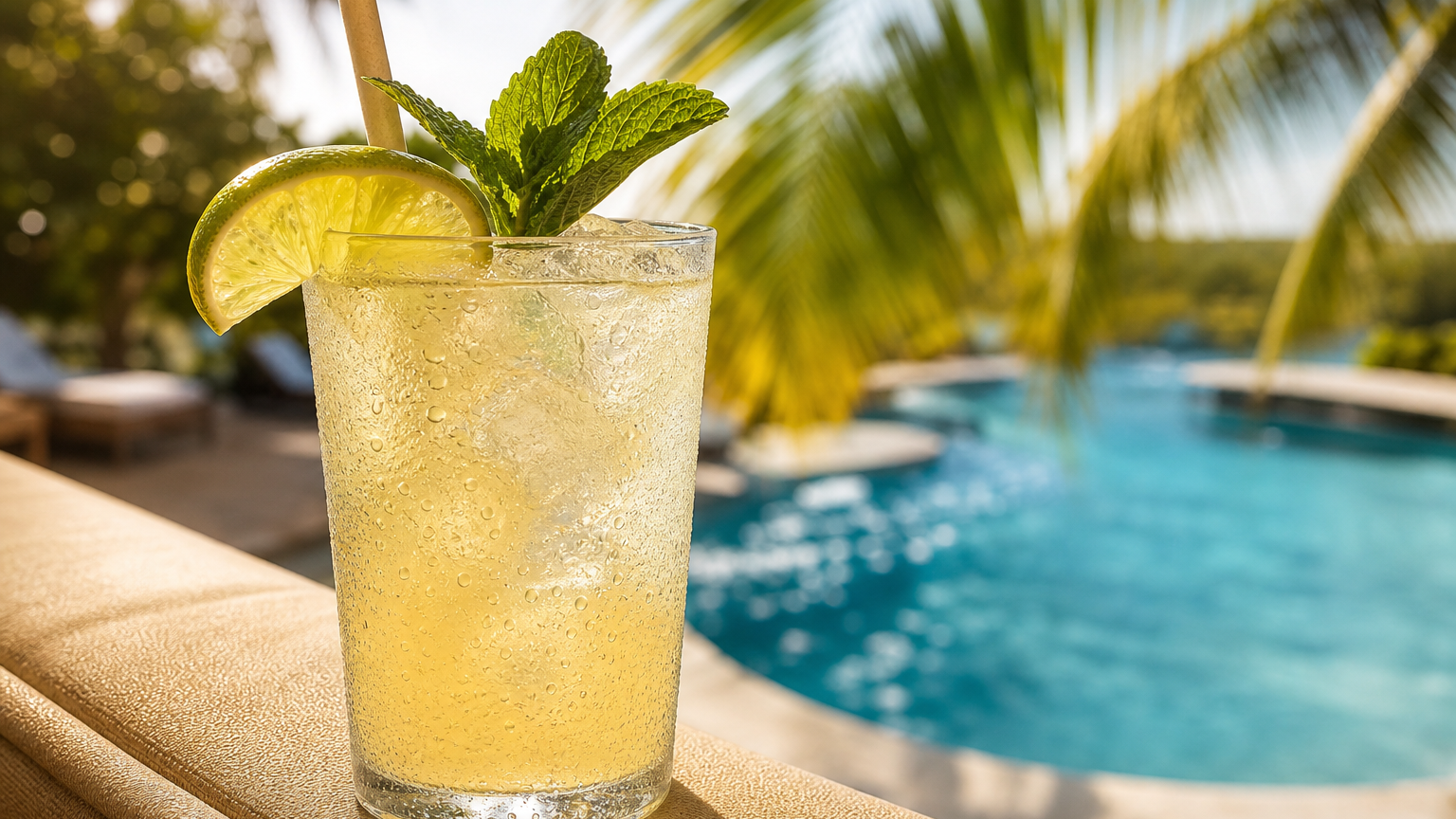
Vacation quietly disinhibits drinking through routine disruption and a permission mindset. Here is why it happens and how to keep travel fun without overdoing it.

Although it isn't a treatment for alcohol use disorder (AUD), the Reframe app can help you cut back on drinking gradually with the science-backed knowledge to empower you 100% of the way. Our proven program has helped millions of people around the world drink less and live more. And we want to help you get there, too!
The Reframe app equips you with the knowledge and skills you need to not only survive drinking less, but to thrive while you navigate the journey. Our daily research-backed readings teach you the neuroscience of alcohol, and our in-app Toolkit provides the resources and activities you need to navigate each challenge.
You'll meet millions of fellow Reframers in our 24/7 Forum chat and daily Zoom check-in meetings. Receive encouragement from people worldwide who know exactly what you're going through! You'll also have the opportunity to connect with our licensed Reframe coaches for more personalized guidance.
Plus, we're always introducing new features to optimize your in-app experience. We recently launched our in-app chatbot, Melody, powered by the world's most powerful AI technology. Melody is here to help as you adjust to a life with less (or no) alcohol.
And that's not all! Every month, we launch fun challenges, like Dry/Damp January, Mental Health May, and Outdoorsy June. You won't want to miss out on the chance to participate alongside fellow Reframers (or solo if that's more your thing!).
The Reframe app is free for 7 days, so you don't have anything to lose by trying it. Are you ready to feel empowered and discover life beyond alcohol? Then download our app through the App Store or Google Play today!
You drink more on vacation because travel removes the everyday structure that normally keeps your drinking in check and swaps in a powerful "permission" mindset: the sense that vacation is earned, temporary, and exempt from your usual rules. Add in all-inclusive cues, novelty-seeking, and the blurry line between relaxing and being bored, and the environment nudges you toward a drink at almost every turn. The good news is that once you can name the specific trigger driving it, you can plan around it and still have a genuinely fun trip. Reframe's approach to spotting and reshaping situational triggers is built for exactly these predictable, high-cue moments.
Here is the thing nobody tells you before you pack the sunscreen: you probably are not drinking more on vacation because you suddenly lost your willpower somewhere over the Atlantic. You are drinking more because the trip itself is engineered, almost perfectly, to make a drink the easiest choice in every direction you look. Understanding exactly how that works is far more useful than a list of scoldings, and it is the difference between white-knuckling your way through a week away and actually enjoying yourself while drinking on your own terms.
Most "how to travel without drinking" advice skips straight to the tips. We are going to start with the mechanism, because if you know why the pull is so strong, the tips finally make sense (and stick). Let's talk honestly about what a vacation does to your brain and your habits, and then get into what to do about it.
The short version: vacation quietly deletes the guardrails that normally cap your drinking, then floods the environment with cues that say "have one." At home, your workday, your morning alarm, and your structured evenings put a ceiling on how much you drink without you ever thinking about it. Travel strips all of that away in a single day, and the drink rushes in to fill the space.
The biggest driver is what we call the permission mindset, which we will unpack in its own section below. But it rides on top of a few very real, very human mechanisms.
Your regular week is full of invisible brakes. You do not have a second glass of wine on a Tuesday because you have a 7 a.m. meeting, a gym class, a kid to get to school, or simply a routine that does not include drinking at that hour. Vacation removes every one of those anchors at once. There is no alarm, no commute, no reason not to order another. College students who travel with friends dramatically increase their alcohol use, while those who stay home or vacation with their parents tend to drink moderately or not at all, according to Psychology Today's addiction outlook. The pattern shifts with the setting and the company, not with your character.
Special occasions do something similar. Research summarized by that same outlet suggests adults drink roughly twice as much during holidays as during the rest of the year. That figure is about holidays specifically rather than vacations, but it is a useful illustration of the same principle: any context that reads as "a special exception" tends to license more drinking than an ordinary day would.

Environments teach your brain to want a drink. Cues previously paired with drinking, like bars, parties, and restaurants, can trigger cravings without any conscious decision on your part, and research in Frontiers in Psychology found that the highest-craving contexts include being at a party, in a restaurant, in a bar, or in a pub. That same study noted that nighttime and weekends emerged as triggers too.
Now picture a typical vacation. A poolside bar in your eyeline all afternoon. A welcome drink pressed into your hand at check-in. A wristband that has already technically paid for the next cocktail, so ordering one feels like getting your money's worth rather than a decision. Dinner out every single night. It is essentially a full day of drinking cues stacked back to back, in a place your brain reads as one long night-and-weekend. The environment is doing a lot of the pulling for you, and knowing that takes the mystery (and some of the self-blame) out of it.
Vacation is novelty on purpose. New places, new food, new views, and novelty is a reward all by itself. Novel experiences appear to activate the same reward circuitry the brain uses for other reinforcing behaviors, and research reviewed via PubMed Central suggests that higher novelty- and sensation-seeking is associated with greater susceptibility to alcohol use. Much of the direct evidence there comes from animal models, so it is best read as consistent-with rather than proven, but the felt experience is familiar: in a heightened, everything-is-exciting state, a drink slots right in as "part of the experience."
Then there is the flip side of the same coin. On vacation the line between relaxing and being bored gets blurry. A lull by the pool, a slow hour before dinner, a rained-out afternoon, and because there is little structure and lots of easy access, a drink becomes the default way to fill the gap. If you want to go deeper on that specific pull, our piece on why you crave alcohol when you're bored covers it well. The first real step is simply naming which of these, permission, routine loss, cues, novelty, or boredom, is driving you on any given trip.
An occasional, context-specific bump in drinking is common and not automatically a red flag. Most people drink somewhat more on a big trip than on a random weeknight, and that alone does not mean anything is wrong. The question worth asking is not "did I drink more?" but "did it cost me anything I care about?"
It is worth a closer look when vacation drinking regularly overshoots what you intended, leaves you with genuine regret, or bleeds into the days after (the mornings you write off, the parts of the trip you barely remember). The "what happens on vacation stays on vacation" framing is comforting, but it can quietly normalize a pattern you would question anywhere else. A useful gut check: would this amount of drinking bother you if it happened on a random Tuesday at home? If the answer is a clear yes, that is worth noticing, not to feel bad about, but as information.
None of this is a verdict on your character. It is about awareness and intention. If you want a low-pressure way to reflect, the Am I Drinking Too Much? quiz is a quick starting point, and for a slightly different angle, the What Type of Drinker Are You? quiz can help you spot which situations tend to push you. For a more structured self-check, NIAAA's Rethinking Drinking worksheets offer tools to evaluate your drinking and decide whether to make a change. The goal is clarity, not guilt.


The permission mindset is the internal story that vacation is a reward you deserve, is only temporary, and does not count toward your normal limits. It is the single most powerful thing turning "one nice drink" into "well, it's vacation." And crucially, it is a story you are telling yourself, not a fixed fact of travel, which means it can be rewritten. (Worth naming: "permission mindset" is our framing for a cluster of very real behavioral pulls, not a formal clinical diagnosis.)
It works through a few levers at once. First, the reward framing: you earned this trip, so you deserve every drink in it, and "I deserve this" is a hard argument to say no to when you are the one making it. Second, temporary framing: it's just this week, so each drink feels like it barely counts, which lowers the perceived cost of every single one. And third, social permission, which is sneakier than it looks.
We tend to assume everyone around us is drinking more than they actually are, and that assumption pushes us to match a pace that may not even be real. People consistently overestimate how much their peers drink, and one study reported that about 80% of women and 73% of men overestimated heavy drinking among their peers, with the size of that overestimation tied to their own drinking. That research came from a university sample, so treat the exact figures as illustrative rather than universal, but the mechanism travels well: "everyone's drinking" is often a story, and it nudges you to keep up with a crowd that is quieter than you think.
Here is the freeing part. Because the permission mindset is a narrative, you can swap in a better one. Reframing the trip as "a break I actually want to remember and enjoy" changes the default calculation. Suddenly the drink that would blur tomorrow morning is not a reward at all, it is a tax on the vacation you paid for. This kind of noticing-and-rewriting is the core of Reframe's mindful drinking program, and it is exactly the muscle that makes high-cue moments feel manageable.
The most important move happens before you leave: set a loose intention while you are still at home and clear-headed, not in the moment at the bar when the permission mindset is running the show. It does not have to be rigid. "I want to be present for the mornings" or "I'll keep it to drinks I actually enjoy, not autopilot ones" is enough to give future-you something to hold onto.
From there, the trick is to swap the ritual, not just the drink. A huge part of what you are after is the ritual itself: the cold glass in your hand, the pause, the social cue that you are relaxing with everyone else. You can keep all of that and lose the alcohol. Order a mocktail, a sparkling water with bitters, or a non-alcoholic beer so your hands and the social script are covered. Setting a limit before you start and alternating each alcoholic drink with water or a soft drink is classic NHS advice for a reason, and it is the backbone of what people call zebra-striping: you keep a drink in hand the whole time, you just cut the total in half without ever opting out.
Reframe the all-inclusive too. That wristband is not only "all the cocktails I can drink," it is also all the coffee, all the smoothies, all the fresh fruit and food you want. When you stop reading it as a bar tab you need to max out, the poolside bar loses a lot of its gravitational pull.

The single best antidote to vacation drinking is making drinking not the main event. Front-load novelty into activities: the excursion, the hike, the market, the early boat trip, the great meal. When your days have a shape and a highlight that is not a glass, the reward-seeking part of your brain gets fed by the experience instead of the alcohol. Boredom is where the default drink sneaks in, so give the lulls somewhere else to go.
It also helps enormously to protect one anchor of routine. A morning walk, a workout, an early activity you have committed to, anything that keeps the whole trip from dissolving into unstructured time. That single anchor does what your normal week does at home: it puts a gentle ceiling on the night before, because now there is a reason to wake up decent. If you want more ideas in this vein, our guides on enjoying travel alcohol-free and the case for sober tourism go deep on making the trip itself the reward.
Half the battle when you are traveling with a group is not the alcohol, it is the offers, the rounds, and the low-grade sense that opting out makes you the odd one out. The fix is mostly logistical, and it starts with having a low-key line ready before anyone asks. Something like "I'm pacing myself today" or "I'm on the mocktails tonight" ends the conversation without inviting a debate.
Hold a non-alcoholic drink so you are not fielding offers with empty hands. This is where planning your refusals in advance pays off: NIAAA's guidance on building drink-refusal skills recommends knowing your "no" ahead of time and keeping it clear and firm yet friendly, while avoiding long explanations and vague excuses, and keeping an alcohol-free drink in hand. Redirecting the group ("let's actually go see the sunset spot") beats sitting there resisting drink after drink.
A quiet piece of insurance: let one travel companion in on your plan. Having a single person who knows you are keeping it light means you have backup without making an announcement to everyone. You can also take pace off the table by getting your own drinks instead of drinking in rounds, which, as Cancer Research UK notes, gives you more control over how much you actually consume. And if saying no still feels hard, our full guide on how to say no to alcohol has scripts for nearly every scenario.
The mindset underneath all of it: you do not owe anyone an explanation, and you definitely do not owe anyone a fully sober trip if that is not your goal. The aim is drinking on your terms. If you want tools that make those terms easier to hold when the cues stack up, you can download Reframe, and if you have questions about how it works, Reframe's FAQ is a good place to start.
You drink more on vacation because travel removes the everyday structure that normally keeps your drinking in check and swaps in a powerful "permission" mindset: the sense that vacation is earned, temporary, and exempt from your usual rules. Add in all-inclusive cues, novelty-seeking, and the blurry line between relaxing and being bored, and the environment nudges you toward a drink at almost every turn. The good news is that once you can name the specific trigger driving it, you can plan around it and still have a genuinely fun trip. Reframe's approach to spotting and reshaping situational triggers is built for exactly these predictable, high-cue moments.
Here is the thing nobody tells you before you pack the sunscreen: you probably are not drinking more on vacation because you suddenly lost your willpower somewhere over the Atlantic. You are drinking more because the trip itself is engineered, almost perfectly, to make a drink the easiest choice in every direction you look. Understanding exactly how that works is far more useful than a list of scoldings, and it is the difference between white-knuckling your way through a week away and actually enjoying yourself while drinking on your own terms.
Most "how to travel without drinking" advice skips straight to the tips. We are going to start with the mechanism, because if you know why the pull is so strong, the tips finally make sense (and stick). Let's talk honestly about what a vacation does to your brain and your habits, and then get into what to do about it.
The short version: vacation quietly deletes the guardrails that normally cap your drinking, then floods the environment with cues that say "have one." At home, your workday, your morning alarm, and your structured evenings put a ceiling on how much you drink without you ever thinking about it. Travel strips all of that away in a single day, and the drink rushes in to fill the space.
The biggest driver is what we call the permission mindset, which we will unpack in its own section below. But it rides on top of a few very real, very human mechanisms.
Your regular week is full of invisible brakes. You do not have a second glass of wine on a Tuesday because you have a 7 a.m. meeting, a gym class, a kid to get to school, or simply a routine that does not include drinking at that hour. Vacation removes every one of those anchors at once. There is no alarm, no commute, no reason not to order another. College students who travel with friends dramatically increase their alcohol use, while those who stay home or vacation with their parents tend to drink moderately or not at all, according to Psychology Today's addiction outlook. The pattern shifts with the setting and the company, not with your character.
Special occasions do something similar. Research summarized by that same outlet suggests adults drink roughly twice as much during holidays as during the rest of the year. That figure is about holidays specifically rather than vacations, but it is a useful illustration of the same principle: any context that reads as "a special exception" tends to license more drinking than an ordinary day would.
Environments teach your brain to want a drink. Cues previously paired with drinking, like bars, parties, and restaurants, can trigger cravings without any conscious decision on your part, and research in Frontiers in Psychology found that the highest-craving contexts include being at a party, in a restaurant, in a bar, or in a pub. That same study noted that nighttime and weekends emerged as triggers too.
Now picture a typical vacation. A poolside bar in your eyeline all afternoon. A welcome drink pressed into your hand at check-in. A wristband that has already technically paid for the next cocktail, so ordering one feels like getting your money's worth rather than a decision. Dinner out every single night. It is essentially a full day of drinking cues stacked back to back, in a place your brain reads as one long night-and-weekend. The environment is doing a lot of the pulling for you, and knowing that takes the mystery (and some of the self-blame) out of it.
Vacation is novelty on purpose. New places, new food, new views, and novelty is a reward all by itself. Novel experiences appear to activate the same reward circuitry the brain uses for other reinforcing behaviors, and research reviewed via PubMed Central suggests that higher novelty- and sensation-seeking is associated with greater susceptibility to alcohol use. Much of the direct evidence there comes from animal models, so it is best read as consistent-with rather than proven, but the felt experience is familiar: in a heightened, everything-is-exciting state, a drink slots right in as "part of the experience."
Then there is the flip side of the same coin. On vacation the line between relaxing and being bored gets blurry. A lull by the pool, a slow hour before dinner, a rained-out afternoon, and because there is little structure and lots of easy access, a drink becomes the default way to fill the gap. If you want to go deeper on that specific pull, our piece on why you crave alcohol when you're bored covers it well. The first real step is simply naming which of these, permission, routine loss, cues, novelty, or boredom, is driving you on any given trip.
An occasional, context-specific bump in drinking is common and not automatically a red flag. Most people drink somewhat more on a big trip than on a random weeknight, and that alone does not mean anything is wrong. The question worth asking is not "did I drink more?" but "did it cost me anything I care about?"
It is worth a closer look when vacation drinking regularly overshoots what you intended, leaves you with genuine regret, or bleeds into the days after (the mornings you write off, the parts of the trip you barely remember). The "what happens on vacation stays on vacation" framing is comforting, but it can quietly normalize a pattern you would question anywhere else. A useful gut check: would this amount of drinking bother you if it happened on a random Tuesday at home? If the answer is a clear yes, that is worth noticing, not to feel bad about, but as information.
None of this is a verdict on your character. It is about awareness and intention. If you want a low-pressure way to reflect, the Am I Drinking Too Much? quiz is a quick starting point, and for a slightly different angle, the What Type of Drinker Are You? quiz can help you spot which situations tend to push you. For a more structured self-check, NIAAA's Rethinking Drinking worksheets offer tools to evaluate your drinking and decide whether to make a change. The goal is clarity, not guilt.
The permission mindset is the internal story that vacation is a reward you deserve, is only temporary, and does not count toward your normal limits. It is the single most powerful thing turning "one nice drink" into "well, it's vacation." And crucially, it is a story you are telling yourself, not a fixed fact of travel, which means it can be rewritten. (Worth naming: "permission mindset" is our framing for a cluster of very real behavioral pulls, not a formal clinical diagnosis.)
It works through a few levers at once. First, the reward framing: you earned this trip, so you deserve every drink in it, and "I deserve this" is a hard argument to say no to when you are the one making it. Second, temporary framing: it's just this week, so each drink feels like it barely counts, which lowers the perceived cost of every single one. And third, social permission, which is sneakier than it looks.
We tend to assume everyone around us is drinking more than they actually are, and that assumption pushes us to match a pace that may not even be real. People consistently overestimate how much their peers drink, and one study reported that about 80% of women and 73% of men overestimated heavy drinking among their peers, with the size of that overestimation tied to their own drinking. That research came from a university sample, so treat the exact figures as illustrative rather than universal, but the mechanism travels well: "everyone's drinking" is often a story, and it nudges you to keep up with a crowd that is quieter than you think.
Here is the freeing part. Because the permission mindset is a narrative, you can swap in a better one. Reframing the trip as "a break I actually want to remember and enjoy" changes the default calculation. Suddenly the drink that would blur tomorrow morning is not a reward at all, it is a tax on the vacation you paid for. This kind of noticing-and-rewriting is the core of Reframe's mindful drinking program, and it is exactly the muscle that makes high-cue moments feel manageable.
The most important move happens before you leave: set a loose intention while you are still at home and clear-headed, not in the moment at the bar when the permission mindset is running the show. It does not have to be rigid. "I want to be present for the mornings" or "I'll keep it to drinks I actually enjoy, not autopilot ones" is enough to give future-you something to hold onto.
From there, the trick is to swap the ritual, not just the drink. A huge part of what you are after is the ritual itself: the cold glass in your hand, the pause, the social cue that you are relaxing with everyone else. You can keep all of that and lose the alcohol. Order a mocktail, a sparkling water with bitters, or a non-alcoholic beer so your hands and the social script are covered. Setting a limit before you start and alternating each alcoholic drink with water or a soft drink is classic NHS advice for a reason, and it is the backbone of what people call zebra-striping: you keep a drink in hand the whole time, you just cut the total in half without ever opting out.
Reframe the all-inclusive too. That wristband is not only "all the cocktails I can drink," it is also all the coffee, all the smoothies, all the fresh fruit and food you want. When you stop reading it as a bar tab you need to max out, the poolside bar loses a lot of its gravitational pull.
The single best antidote to vacation drinking is making drinking not the main event. Front-load novelty into activities: the excursion, the hike, the market, the early boat trip, the great meal. When your days have a shape and a highlight that is not a glass, the reward-seeking part of your brain gets fed by the experience instead of the alcohol. Boredom is where the default drink sneaks in, so give the lulls somewhere else to go.
It also helps enormously to protect one anchor of routine. A morning walk, a workout, an early activity you have committed to, anything that keeps the whole trip from dissolving into unstructured time. That single anchor does what your normal week does at home: it puts a gentle ceiling on the night before, because now there is a reason to wake up decent. If you want more ideas in this vein, our guides on enjoying travel alcohol-free and the case for sober tourism go deep on making the trip itself the reward.
Half the battle when you are traveling with a group is not the alcohol, it is the offers, the rounds, and the low-grade sense that opting out makes you the odd one out. The fix is mostly logistical, and it starts with having a low-key line ready before anyone asks. Something like "I'm pacing myself today" or "I'm on the mocktails tonight" ends the conversation without inviting a debate.
Hold a non-alcoholic drink so you are not fielding offers with empty hands. This is where planning your refusals in advance pays off: NIAAA's guidance on building drink-refusal skills recommends knowing your "no" ahead of time and keeping it clear and firm yet friendly, while avoiding long explanations and vague excuses, and keeping an alcohol-free drink in hand. Redirecting the group ("let's actually go see the sunset spot") beats sitting there resisting drink after drink.
A quiet piece of insurance: let one travel companion in on your plan. Having a single person who knows you are keeping it light means you have backup without making an announcement to everyone. You can also take pace off the table by getting your own drinks instead of drinking in rounds, which, as Cancer Research UK notes, gives you more control over how much you actually consume. And if saying no still feels hard, our full guide on how to say no to alcohol has scripts for nearly every scenario.
The mindset underneath all of it: you do not owe anyone an explanation, and you definitely do not owe anyone a fully sober trip if that is not your goal. The aim is drinking on your terms. If you want tools that make those terms easier to hold when the cues stack up, you can download Reframe, and if you have questions about how it works, Reframe's FAQ is a good place to start.
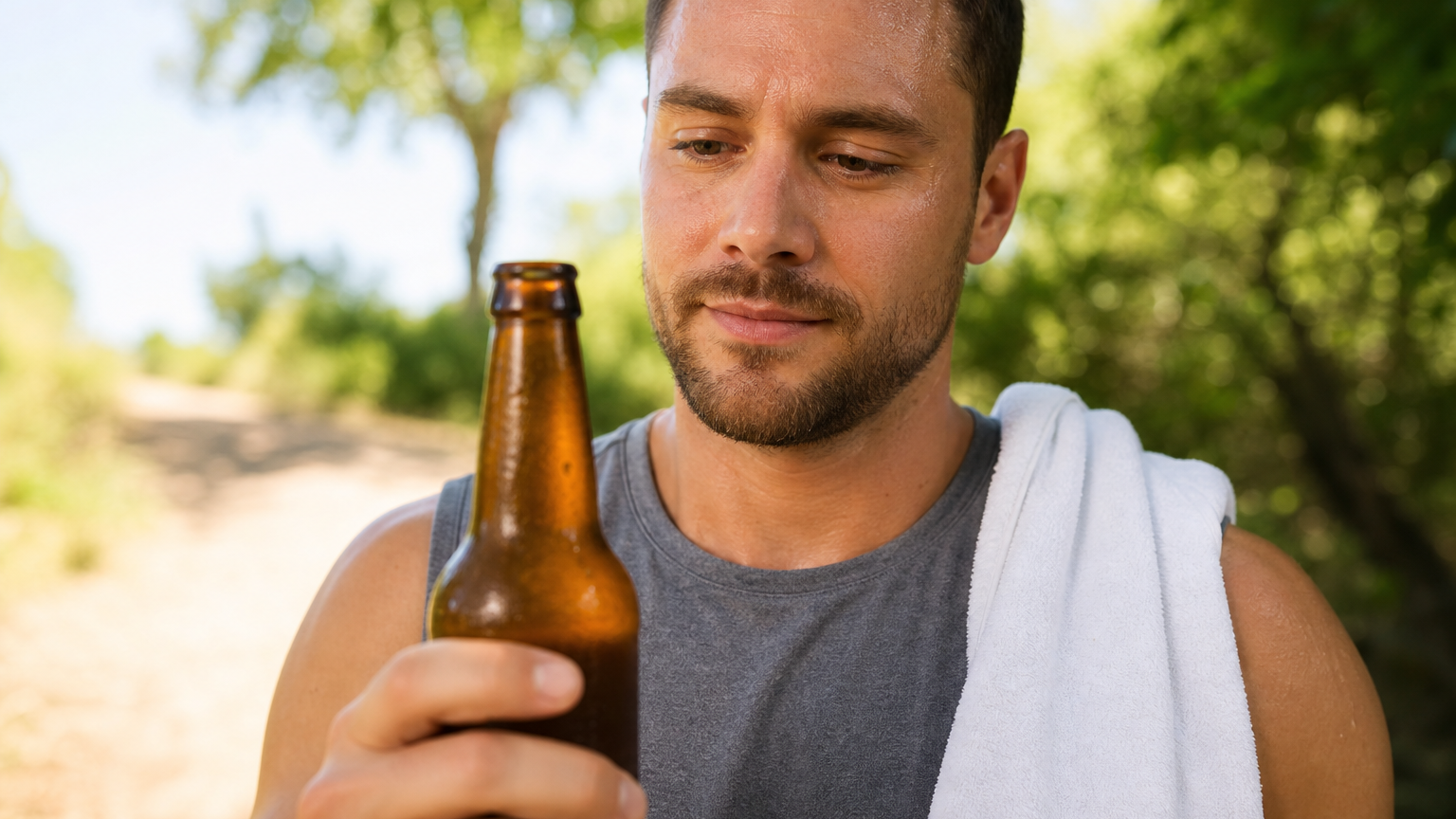
That post-workout urge to drink is a real trigger. Here's why the craving fires after exercise, from dehydration to the 'I earned it' brain, and what to do.
Although it isn't a treatment for alcohol use disorder (AUD), the Reframe app can help you cut back on drinking gradually with the science-backed knowledge to empower you 100% of the way. Our proven program has helped millions of people around the world drink less and live more. And we want to help you get there, too!
The Reframe app equips you with the knowledge and skills you need to not only survive drinking less, but to thrive while you navigate the journey. Our daily research-backed readings teach you the neuroscience of alcohol, and our in-app Toolkit provides the resources and activities you need to navigate each challenge.
You'll meet millions of fellow Reframers in our 24/7 Forum chat and daily Zoom check-in meetings. Receive encouragement from people worldwide who know exactly what you're going through! You'll also have the opportunity to connect with our licensed Reframe coaches for more personalized guidance.
Plus, we're always introducing new features to optimize your in-app experience. We recently launched our in-app chatbot, Melody, powered by the world's most powerful AI technology. Melody is here to help as you adjust to a life with less (or no) alcohol.
And that's not all! Every month, we launch fun challenges, like Dry/Damp January, Mental Health May, and Outdoorsy June. You won't want to miss out on the chance to participate alongside fellow Reframers (or solo if that's more your thing!).
The Reframe app is free for 7 days, so you don't have anything to lose by trying it. Are you ready to feel empowered and discover life beyond alcohol? Then download our app through the App Store or Google Play today!
The urge to drink after a workout usually comes from a stack of overlapping signals rather than one cause: dehydration and electrolyte loss that your brain may misread as a craving, a dopamine and reward dip after exertion that alcohol promises to fill, and years of social conditioning that pairs the finish line with a cold drink ("I earned it"). None of it means something is wrong with you. It means a predictable trigger is firing at a predictable moment, which also makes it one of the easier cravings to interrupt with hydration, protein, and a small change to your post-workout ritual. Reframe helps you spot patterns like this and build a wind-down routine that gives your body what it's actually asking for.
Let's talk honestly about that moment. You finish a run, you're sweaty and a little wrung out, and somewhere between the cooldown and the shower a very specific thought shows up: a beer would be perfect right now. It feels almost inevitable, like your body decided before your brain did. If you've been trying to drink less, that timing can be frustrating, because you did the healthy thing and the reward your mind wants is the exact thing you're cutting back on. The good news is that this particular craving is unusually easy to decode. Once you understand why it fires, you can meet the real need underneath it instead of just white-knuckling past the urge or giving in.
The short version: craving alcohol after a workout is a time-locked trigger, not a random urge and definitely not a sign of weakness. It shows up at roughly the same point every time because several mechanisms are firing together: your body just lost fluid and electrolytes, your brain's reward chemistry spiked and then dipped, and, for a lot of us, exercise has been paired with a celebratory drink so many times that the association runs on autopilot.
Exertion raises your reward chemicals and then lets them settle back down, which leaves a small gap where the brain goes looking for something satisfying to close it. Alcohol is a fast, familiar way to close that gap, so it comes to mind quickly. That is the whole trick, really: the craving is not proof that you "need" a drink, it is your reward system doing exactly what it evolved to do at a moment when you happen to feel depleted.
Naming it matters more than it sounds. When you label the feeling as a trigger firing (rather than a command you have to obey), you create a little space between the urge and the action. That gap is where every practical strategy in this post lives. If you want to get better at spotting these moments across your whole week, learning to identify your drinking triggers is the foundational skill, and the post-workout urge is one of the cleanest examples to practice on.
Often, at least partly, yes. Exercise depletes fluid and electrolytes, and a thirst signal can feel a lot like a general "I want something" pull rather than a clear "I want water" message. On top of that, even mild dehydration of around 1.5% of body water has been shown to worsen mood and increase feelings of tension and fatigue, according to research published in the British Journal of Nutrition. When your mood dips and your energy sags, the brain tends to reach for a quick fix, and a drink is one it has learned well.
To be precise about the science: those studies show dehydration drags down mood and focus, not that the brain specifically relabels thirst as an alcohol craving. The mimicry idea is a reasonable read of how these pieces fit together, so treat it as a plausible mechanism rather than a proven fact. Either way, the practical takeaway holds up.
Here's the part worth sitting up for. Reaching for a beer to fix that feeling tends to work against you, because higher-strength drinks impair how well you rehydrate, and beer is a poor source of the electrolytes you just sweated out. A study in the Journal of Applied Physiology found that drinks with around 4% alcohol or more delayed the recovery of fluid balance after exercise-induced dehydration. So even when the craving is genuinely rooted in thirst, alcohol is close to the worst tool for the job.
That gives you a simple self-experiment. Drink 16 to 20 ounces of water or an electrolyte drink first, then wait about 15 minutes before you decide anything. This isn't a validated clinical test, just a practical way to separate signals. If the urge fades after you rehydrate, thirst and electrolyte loss were doing most of the talking. If it's still there, you've learned something useful too: this one is more about reward and ritual than water, and you can aim your next move accordingly. Either result is helpful, which is what makes the test worth doing every time for a while.
A workout gives you a chemical high and then a comedown, and alcohol quietly volunteers to fill the dip. During and right after harder exercise, your brain releases feel-good chemicals (the "runner's high," which current research increasingly attributes to endocannabinoids rather than the endorphins most of us grew up hearing about). As those levels normalize afterward, you're left in a brief low spot where the brain is primed to seek a quick reward.
Here's the crossover that makes alcohol so tempting in that window. Alcohol acts directly on the same reward pathway, as the National Institute on Alcohol Abuse and Alcoholism explains: it prompts the ventral tegmental area to release dopamine into the nucleus accumbens, and that dopamine helps the brain tag cues (people, places, moments) as worth repeating. Because exercise and alcohol both operate on this dopamine machinery, your brain can treat them as interchangeable rewards. The post-workout dip is a vulnerable moment, and alcohol is standing right there offering a top-up. If the dopamine angle interests you, we go deeper into how alcohol affects dopamine levels in a dedicated piece.
None of this means exercise is somehow bad for you or "causing" a drinking problem. Reward-seeking after exertion is normal wiring; the only issue is which reward you've defaulted to. Understanding the crossover does two quiet, useful things at once: it removes the mystery, and it removes the self-judgment. You're not weak-willed, you're just running a well-worn neural shortcut, and shortcuts can be rerouted.
That sense of having earned a drink is a real psychological effect, not just an excuse you tell yourself. Doing something virtuous or depleting (like a hard workout) makes the mind want to balance the ledger with a treat. Psychologists call this licensing: a good deed gives you permission, in your own accounting, to indulge somewhere else. "I worked out, so I deserve this" feels airtight in the moment precisely because part of it is true. You did work, and you are a little depleted.
Culture pours fuel on this. Gym and fitness culture actively pairs exertion with a drink at the finish: run clubs that end on a patio, the post-game round, the celebratory trail beer at the summit. Advertising leans into the same story, tying the reward you feel you're owed to a specific bottle. So the craving isn't only your brain chemistry, it's also decades of learned scripts about what "earning it" is supposed to look like. When you notice the thought, it can help to remember it's partly borrowed programming, not a fact about what your body needs.
Here's the reframe that actually breaks the link: the reward doesn't have to be alcohol. Your brain learned that pairing, which means it can learn a different one. Redefining "earned it" as recovery (a real meal, a hot shower, rest, a mocktail you genuinely like, a treat you choose on purpose) satisfies the same impulse without feeding the pattern you're trying to change. If you're curious how your own "earned it" reflex fits your broader relationship with drinking, the What Type of Drinker Are You? quiz is a low-stakes way to see the shape of it. And if you're weighing whether that post-workout drink is worth it at all on the recovery side, our piece on whether it's okay to drink alcohol after a workout covers the advisability question in detail.
Repetition turns a choice into a reflex, and the gym itself can become the cue. When you've paired a workout and a drink enough times, your brain wires up a loop: a cue (finishing exercise) leads to a routine (having a drink) leads to a reward (relief, relaxation, celebration). This cue-routine-reward pattern is well-established behavioral science, and it's why the craving can arrive before you've consciously decided anything. The location, the time of day, and the people around you can all fire the urge on their own.
Social settings crank the volume way up. The run club that always ends at the same bar, the post-game round with teammates, the group ride that finishes with a cooler of drinks: these aren't just occasions to drink, they're cues your brain has practiced responding to. Part of what feels like "wanting a beer" is really "this is the part where we all get a beer." Recognizing that the pull is partly environmental, not purely internal, takes some of its power away. If drinking tends to cluster around specific people and places for you, our guide to understanding your triggers for drinking maps out how those contexts quietly shape the urge.
The leverage point here is cue awareness, not raw willpower. You don't have to out-muscle a habit loop; you can interrupt the cue that starts it. Change the route home so you don't pass the usual spot. Change the first thing you do when you finish. Change who you decompress with, or how. Each small edit weakens the association a little, and weakened associations fire less insistently over time. This is also exactly the kind of pattern that Reframe's mindful drinking program is built to help you notice and rework, cue by cue.
Start by removing the physical drivers, then rewire the ritual. The urge is a stack of signals, so you dismantle it one layer at a time. None of these steps require heroic willpower; they mostly work by giving your body and brain what they're actually asking for before the craving can hijack the moment.
Rehydrate first, always. Water plus electrolytes before you decide anything, to rule out thirst mimicry. This is the single most reliable move, because so much of the post-workout urge is fluid and mood chemistry dressed up as a craving. Then refuel. Eat some protein and carbohydrates soon after finishing. A fed, stable body sends fewer frantic reward-seeking signals, and a snack you actually enjoy doubles as a small reward in its own right. If you like tracking the numbers, our alcohol calorie calculator can also make the swap from a drink to real recovery food feel more concrete.
Insert a new fast reward. The brain wants something satisfying in that dip, so give it one that isn't alcohol: a hot shower with good music, a mocktail you look forward to, a specific snack, a few minutes of doing nothing on purpose. Change the cue. Shift your route, your timing, or the first thing you do after the workout ends, so the old loop doesn't get its usual trigger. Delay and observe. Give the urge about 20 minutes; post-workout cravings often fade on their own as recovery kicks in and your fluids come back up.
It's also worth zooming out, because the acute post-workout spike and the big picture point in different directions. Over the long term, regular exercise tends to support drinking less, not more. A systematic review and meta-analysis in Frontiers in Psychology found that adding exercise to usual treatment significantly reduced overall drinking volume in people with alcohol use disorder. That was a clinical population, so it doesn't map perfectly onto every reader, but the direction is encouraging: exercise is on your side here, even when one post-workout craving suggests otherwise. There's even adjacent evidence that aerobic exercise itself can reduce cravings across dependency studies, which means movement can be part of managing an urge, not only a thing that sets one off.
Finally, use two skills that make the whole pattern lose its grip: urge surfing and self-tracking. Learning how urge surfing can help you overcome alcohol cravings gives you a way to ride the 20-minute wave without acting on it, and tracking the pattern lets you watch it weaken week over week. When you're ready to build this into a routine, you can download Reframe to log triggers and swap in new rewards, and if you have questions about how the app fits your goals, Reframe's FAQ covers the basics.
The urge to drink after a workout usually comes from a stack of overlapping signals rather than one cause: dehydration and electrolyte loss that your brain may misread as a craving, a dopamine and reward dip after exertion that alcohol promises to fill, and years of social conditioning that pairs the finish line with a cold drink ("I earned it"). None of it means something is wrong with you. It means a predictable trigger is firing at a predictable moment, which also makes it one of the easier cravings to interrupt with hydration, protein, and a small change to your post-workout ritual. Reframe helps you spot patterns like this and build a wind-down routine that gives your body what it's actually asking for.
Let's talk honestly about that moment. You finish a run, you're sweaty and a little wrung out, and somewhere between the cooldown and the shower a very specific thought shows up: a beer would be perfect right now. It feels almost inevitable, like your body decided before your brain did. If you've been trying to drink less, that timing can be frustrating, because you did the healthy thing and the reward your mind wants is the exact thing you're cutting back on. The good news is that this particular craving is unusually easy to decode. Once you understand why it fires, you can meet the real need underneath it instead of just white-knuckling past the urge or giving in.
The short version: craving alcohol after a workout is a time-locked trigger, not a random urge and definitely not a sign of weakness. It shows up at roughly the same point every time because several mechanisms are firing together: your body just lost fluid and electrolytes, your brain's reward chemistry spiked and then dipped, and, for a lot of us, exercise has been paired with a celebratory drink so many times that the association runs on autopilot.
Exertion raises your reward chemicals and then lets them settle back down, which leaves a small gap where the brain goes looking for something satisfying to close it. Alcohol is a fast, familiar way to close that gap, so it comes to mind quickly. That is the whole trick, really: the craving is not proof that you "need" a drink, it is your reward system doing exactly what it evolved to do at a moment when you happen to feel depleted.
Naming it matters more than it sounds. When you label the feeling as a trigger firing (rather than a command you have to obey), you create a little space between the urge and the action. That gap is where every practical strategy in this post lives. If you want to get better at spotting these moments across your whole week, learning to identify your drinking triggers is the foundational skill, and the post-workout urge is one of the cleanest examples to practice on.
Often, at least partly, yes. Exercise depletes fluid and electrolytes, and a thirst signal can feel a lot like a general "I want something" pull rather than a clear "I want water" message. On top of that, even mild dehydration of around 1.5% of body water has been shown to worsen mood and increase feelings of tension and fatigue, according to research published in the British Journal of Nutrition. When your mood dips and your energy sags, the brain tends to reach for a quick fix, and a drink is one it has learned well.
To be precise about the science: those studies show dehydration drags down mood and focus, not that the brain specifically relabels thirst as an alcohol craving. The mimicry idea is a reasonable read of how these pieces fit together, so treat it as a plausible mechanism rather than a proven fact. Either way, the practical takeaway holds up.
Here's the part worth sitting up for. Reaching for a beer to fix that feeling tends to work against you, because higher-strength drinks impair how well you rehydrate, and beer is a poor source of the electrolytes you just sweated out. A study in the Journal of Applied Physiology found that drinks with around 4% alcohol or more delayed the recovery of fluid balance after exercise-induced dehydration. So even when the craving is genuinely rooted in thirst, alcohol is close to the worst tool for the job.
That gives you a simple self-experiment. Drink 16 to 20 ounces of water or an electrolyte drink first, then wait about 15 minutes before you decide anything. This isn't a validated clinical test, just a practical way to separate signals. If the urge fades after you rehydrate, thirst and electrolyte loss were doing most of the talking. If it's still there, you've learned something useful too: this one is more about reward and ritual than water, and you can aim your next move accordingly. Either result is helpful, which is what makes the test worth doing every time for a while.
A workout gives you a chemical high and then a comedown, and alcohol quietly volunteers to fill the dip. During and right after harder exercise, your brain releases feel-good chemicals (the "runner's high," which current research increasingly attributes to endocannabinoids rather than the endorphins most of us grew up hearing about). As those levels normalize afterward, you're left in a brief low spot where the brain is primed to seek a quick reward.
Here's the crossover that makes alcohol so tempting in that window. Alcohol acts directly on the same reward pathway, as the National Institute on Alcohol Abuse and Alcoholism explains: it prompts the ventral tegmental area to release dopamine into the nucleus accumbens, and that dopamine helps the brain tag cues (people, places, moments) as worth repeating. Because exercise and alcohol both operate on this dopamine machinery, your brain can treat them as interchangeable rewards. The post-workout dip is a vulnerable moment, and alcohol is standing right there offering a top-up. If the dopamine angle interests you, we go deeper into how alcohol affects dopamine levels in a dedicated piece.
None of this means exercise is somehow bad for you or "causing" a drinking problem. Reward-seeking after exertion is normal wiring; the only issue is which reward you've defaulted to. Understanding the crossover does two quiet, useful things at once: it removes the mystery, and it removes the self-judgment. You're not weak-willed, you're just running a well-worn neural shortcut, and shortcuts can be rerouted.
That sense of having earned a drink is a real psychological effect, not just an excuse you tell yourself. Doing something virtuous or depleting (like a hard workout) makes the mind want to balance the ledger with a treat. Psychologists call this licensing: a good deed gives you permission, in your own accounting, to indulge somewhere else. "I worked out, so I deserve this" feels airtight in the moment precisely because part of it is true. You did work, and you are a little depleted.
Culture pours fuel on this. Gym and fitness culture actively pairs exertion with a drink at the finish: run clubs that end on a patio, the post-game round, the celebratory trail beer at the summit. Advertising leans into the same story, tying the reward you feel you're owed to a specific bottle. So the craving isn't only your brain chemistry, it's also decades of learned scripts about what "earning it" is supposed to look like. When you notice the thought, it can help to remember it's partly borrowed programming, not a fact about what your body needs.
Here's the reframe that actually breaks the link: the reward doesn't have to be alcohol. Your brain learned that pairing, which means it can learn a different one. Redefining "earned it" as recovery (a real meal, a hot shower, rest, a mocktail you genuinely like, a treat you choose on purpose) satisfies the same impulse without feeding the pattern you're trying to change. If you're curious how your own "earned it" reflex fits your broader relationship with drinking, the What Type of Drinker Are You? quiz is a low-stakes way to see the shape of it. And if you're weighing whether that post-workout drink is worth it at all on the recovery side, our piece on whether it's okay to drink alcohol after a workout covers the advisability question in detail.
Repetition turns a choice into a reflex, and the gym itself can become the cue. When you've paired a workout and a drink enough times, your brain wires up a loop: a cue (finishing exercise) leads to a routine (having a drink) leads to a reward (relief, relaxation, celebration). This cue-routine-reward pattern is well-established behavioral science, and it's why the craving can arrive before you've consciously decided anything. The location, the time of day, and the people around you can all fire the urge on their own.
Social settings crank the volume way up. The run club that always ends at the same bar, the post-game round with teammates, the group ride that finishes with a cooler of drinks: these aren't just occasions to drink, they're cues your brain has practiced responding to. Part of what feels like "wanting a beer" is really "this is the part where we all get a beer." Recognizing that the pull is partly environmental, not purely internal, takes some of its power away. If drinking tends to cluster around specific people and places for you, our guide to understanding your triggers for drinking maps out how those contexts quietly shape the urge.
The leverage point here is cue awareness, not raw willpower. You don't have to out-muscle a habit loop; you can interrupt the cue that starts it. Change the route home so you don't pass the usual spot. Change the first thing you do when you finish. Change who you decompress with, or how. Each small edit weakens the association a little, and weakened associations fire less insistently over time. This is also exactly the kind of pattern that Reframe's mindful drinking program is built to help you notice and rework, cue by cue.
Start by removing the physical drivers, then rewire the ritual. The urge is a stack of signals, so you dismantle it one layer at a time. None of these steps require heroic willpower; they mostly work by giving your body and brain what they're actually asking for before the craving can hijack the moment.
Rehydrate first, always. Water plus electrolytes before you decide anything, to rule out thirst mimicry. This is the single most reliable move, because so much of the post-workout urge is fluid and mood chemistry dressed up as a craving. Then refuel. Eat some protein and carbohydrates soon after finishing. A fed, stable body sends fewer frantic reward-seeking signals, and a snack you actually enjoy doubles as a small reward in its own right. If you like tracking the numbers, our alcohol calorie calculator can also make the swap from a drink to real recovery food feel more concrete.
Insert a new fast reward. The brain wants something satisfying in that dip, so give it one that isn't alcohol: a hot shower with good music, a mocktail you look forward to, a specific snack, a few minutes of doing nothing on purpose. Change the cue. Shift your route, your timing, or the first thing you do after the workout ends, so the old loop doesn't get its usual trigger. Delay and observe. Give the urge about 20 minutes; post-workout cravings often fade on their own as recovery kicks in and your fluids come back up.
It's also worth zooming out, because the acute post-workout spike and the big picture point in different directions. Over the long term, regular exercise tends to support drinking less, not more. A systematic review and meta-analysis in Frontiers in Psychology found that adding exercise to usual treatment significantly reduced overall drinking volume in people with alcohol use disorder. That was a clinical population, so it doesn't map perfectly onto every reader, but the direction is encouraging: exercise is on your side here, even when one post-workout craving suggests otherwise. There's even adjacent evidence that aerobic exercise itself can reduce cravings across dependency studies, which means movement can be part of managing an urge, not only a thing that sets one off.
Finally, use two skills that make the whole pattern lose its grip: urge surfing and self-tracking. Learning how urge surfing can help you overcome alcohol cravings gives you a way to ride the 20-minute wave without acting on it, and tracking the pattern lets you watch it weaken week over week. When you're ready to build this into a routine, you can download Reframe to log triggers and swap in new rewards, and if you have questions about how the app fits your goals, Reframe's FAQ covers the basics.
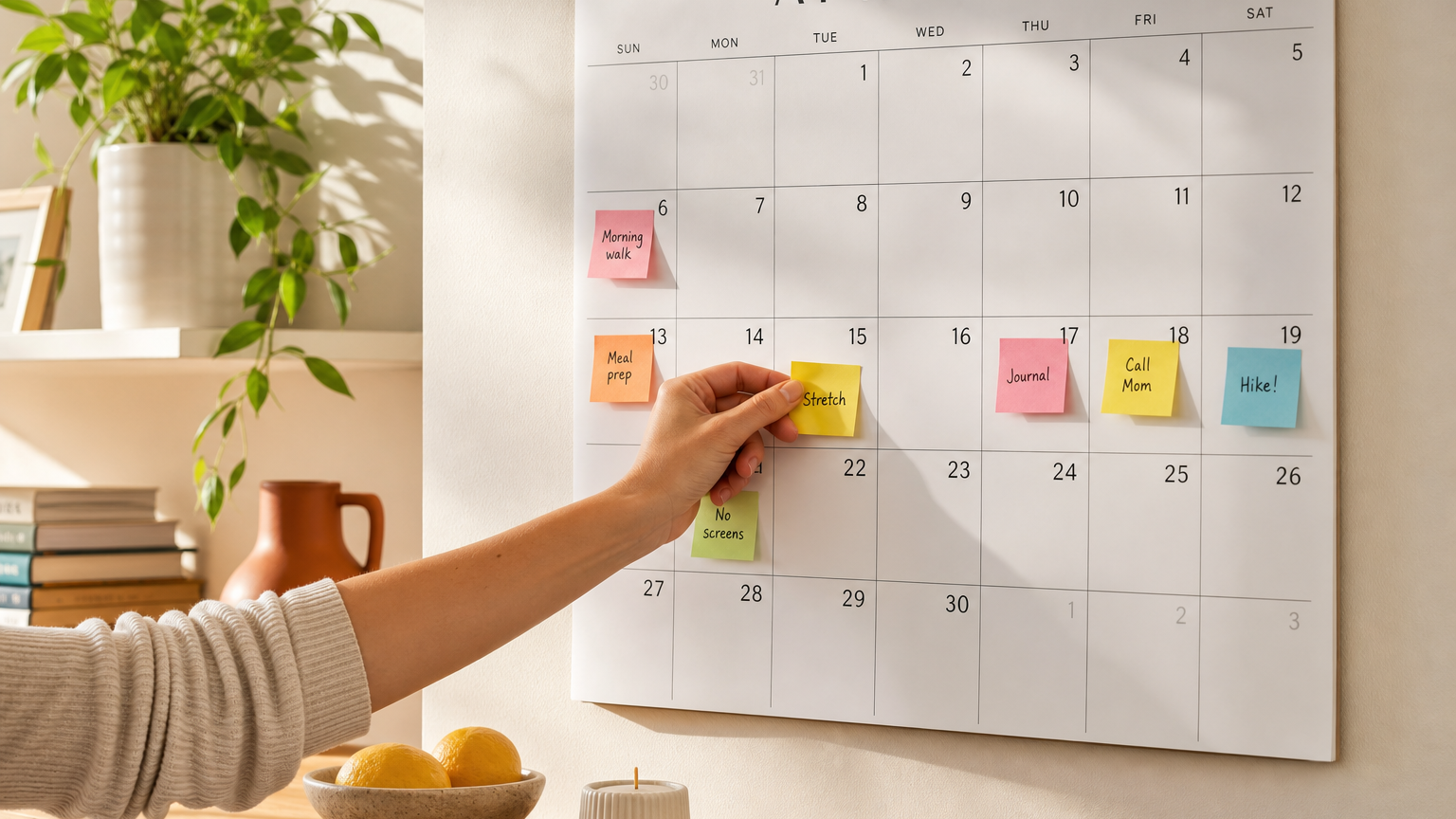
A single alcohol craving usually lasts 15 to 20 minutes. Here is the real timeline of how craving frequency and intensity change over days, weeks, and months.
Although it isn't a treatment for alcohol use disorder (AUD), the Reframe app can help you cut back on drinking gradually with the science-backed knowledge to empower you 100% of the way. Our proven program has helped millions of people around the world drink less and live more. And we want to help you get there, too!
The Reframe app equips you with the knowledge and skills you need to not only survive drinking less, but to thrive while you navigate the journey. Our daily research-backed readings teach you the neuroscience of alcohol, and our in-app Toolkit provides the resources and activities you need to navigate each challenge.
You'll meet millions of fellow Reframers in our 24/7 Forum chat and daily Zoom check-in meetings. Receive encouragement from people worldwide who know exactly what you're going through! You'll also have the opportunity to connect with our licensed Reframe coaches for more personalized guidance.
Plus, we're always introducing new features to optimize your in-app experience. We recently launched our in-app chatbot, Melody, powered by the world's most powerful AI technology. Melody is here to help as you adjust to a life with less (or no) alcohol.
And that's not all! Every month, we launch fun challenges, like Dry/Damp January, Mental Health May, and Outdoorsy June. You won't want to miss out on the chance to participate alongside fellow Reframers (or solo if that's more your thing!).
The Reframe app is free for 7 days, so you don't have anything to lose by trying it. Are you ready to feel empowered and discover life beyond alcohol? Then download our app through the App Store or Google Play today!
A single alcohol craving usually peaks and passes within roughly 15 to 30 minutes, whether or not you act on it, because cravings are self-limiting neurological waves rather than a state that keeps escalating. Over a longer arc, cravings tend to be most frequent and intense in the first one to two weeks of not drinking, taper noticeably across the first one to three months, and become occasional but can still resurface with triggers for months afterward. Understanding this timeline makes each urge feel less like an emergency and more like a wave you can ride out. Reframe's approach is built around exactly this idea: giving a craving somewhere to go until it crests and fades.
Here is the thing almost nobody tells you when you decide to drink less: the craving you are dreading has a shelf life. It is not a permanent new setting on your nervous system. It is a wave, and waves break. When you know roughly how long the wave lasts, and roughly how the whole ocean calms down week by week, the whole project stops feeling like a life sentence and starts feeling like something with a shape and an end in sight. Let's walk through both timelines, the single craving and the long arc, so you know what to expect and when to expect it.
The short version: an individual urge tends to rise, plateau, and fall within a fairly short window, and it does that whether or not you pour a drink. The felt experience is that it will keep climbing forever, but the clock almost always disagrees. Clinical descriptions of urge surfing frame a craving as a wave in the ocean, encouraging you to "surf the urge" and let it pass without being wiped out by giving in, research on the technique explains.
That is worth sitting with for a second, because it reverses the usual logic. We tend to assume the craving ends because we finally give in, that the drink is what makes it stop. It isn't. The urge was going to fade regardless. Acting on it just teaches your brain that the fastest route out of discomfort is a drink, which is exactly the loop you are trying to loosen. Clinicians generally describe urges as often short-lived, predictable, and controllable, and the reason that framing matters is that a wave you can predict is a wave you can plan around.
Cravings are loud. They hijack your attention, they narrate a very convincing story about how you cannot possibly get through the next hour, and they trade on urgency because urgency is what gets you to act. But intensity and duration are two different things. A craving can be extremely intense and still be brief. The distortion is not that the craving is fake, it is real, it is that your brain badly overestimates how long it will last. Naming that gap ("this is intense, and it is also temporary") takes a surprising amount of the power out of it.
So what do you actually do with 15 to 30 minutes? Not much, and that is the point. You do not have to win an argument with the craving or white-knuckle your way through a philosophical crisis. You put a little time and a little distance between the urge and any decision. Change rooms. Drink a glass of water. Step outside. Text someone. Start something that occupies your hands. The goal is not to make the urge vanish on command, it is to still be standing there when it passes on its own. If you want concrete in-the-moment tools, we go deep on them in our guide to how to stop alcohol cravings and in this walkthrough of how urge surfing can help you overcome alcohol cravings. For this post, the only tactic you need is a delay.
Zoom out from the single wave to the whole ocean and a clear pattern shows up. Cravings are usually most frequent and most intense in the first one to two weeks without alcohol, then taper noticeably across the first one to three months, and by several months in, most people experience them as occasional rather than constant. The exact pace varies with your drinking history, stress load, sleep, and how many triggers are still sitting in your daily environment. As the federal alcohol institute puts it, with time and by practicing new responses, your urges to drink will lose strength, even though occasional ones can still surface.
The first fortnight is typically the loudest stretch. Your routines are still built around drinking, the cues are everywhere (the wine aisle, the after-work slump, the Friday feeling), and your brain is essentially asking "wait, where is the thing we always do here?" several times a day. This is normal, it is expected, and it is temporary. If you are white-knuckling through week one, you are not doing it wrong, you are doing the hardest part. It genuinely does not stay this loud. A quick gut-check on where your baseline sits can help too, and our Am I Drinking Too Much? quiz is a low-stakes place to start.
After those first couple of weeks, most people notice the urges start spacing out and softening. This taper is real, but it is not a clean downhill slide. It is bumpy. You will have a stretch of quiet days and then a hard afternoon that feels like a step backward, and that back-and-forth is not a sign the process is failing, it is just what non-linear progress looks like. Across the first one to three months, the trend line points down even when individual days wobble. It helps to remember you are comparing month to month, not hour to hour.
If you want a rough mental map: week one and two, frequent and strong; weeks three through eight, less frequent, still real, easier to move through; months two and three, occasional and usually briefer. Past that, many people describe cravings as something that shows up now and then rather than something that runs the day. None of this is a guarantee, timelines are individual, but the general shape holds for a lot of people. Tools like Reframe's mindful drinking program are built around riding this exact curve, giving each urge somewhere to go until the overall frequency drops off.
Intrusive or obsessive thoughts about alcohol, the mental version of the loop, are common in the early weeks and generally ease over the first one to three months as the habit pathway weakens. Many people find these thoughts fade faster when they are not fed by rehearsing the fantasy or arguing with it point by point. There is no dedicated stopwatch for this, but the broader pattern mirrors the craving taper: loud early, quieter over months, with an occasional flare around specific cues.
A craving is a felt pull, a body-and-brain urge for the thing. An intrusive thought is more of a mental habit loop, the story on repeat: "one wouldn't hurt," "you always drink on Fridays," "this would be easier with a glass of wine." They overlap, and they feed each other, but the thought is not a command and it is not a verdict on your willpower. Treating it as background noise your brain is generating out of old habit, rather than a signal you must respond to, is what lets it quiet down. Engaging with it, debating it, or trying to suppress it hard tends to keep it alive longer. Curious about the mechanics behind all this? Our piece on alcohol cravings psychology unpacks the loop in more detail.
Most of the time these thoughts drift into the background on their own. But there is a line worth naming. If intrusive or obsessive thoughts about alcohol stay intense, constant, or genuinely distressing well beyond the early months, that is worth raising with a healthcare professional. If urges stay very difficult, consulting a clinician is a reasonable next step, not a sign you have failed. A professional can help you sort out whether something else, like anxiety or low mood, is keeping the loop spinning.
This one catches people off guard, so let's be clear about it: a craving that shows up out of nowhere after a quiet stretch is normal, and it does not erase your progress. These late, out-of-the-blue urges are often called post-acute or triggered cravings, and they are usually cue-driven, set off by a specific person, place, emotion, or old routine your brain filed under "drinking." A systematic review of post-acute withdrawal found that cravings and related symptoms can persist or resurface for four to six months or longer after the acute phase is over, which is exactly why a random Tuesday can suddenly feel harder than the whole month before it.
Think of it as habit memory rather than backsliding. Your brain spent a long time pairing certain contexts with alcohol, and those associations do not evaporate the moment you stop, they just go dormant. Repeated drinking builds conditioned links so that cues later trigger powerful urges, the federal alcohol institute explains, which is why an old bar, a certain song, or a familiar stressor can flip the switch weeks or months in. The urge resurfacing is not proof the wiring is unchanged, it is just proof the wiring exists. Each time you ride one out without drinking, that association gets a little weaker.
Some triggers are almost universal. Emotional states like anxiety, tension, sadness, stress, and irritability are strongly associated with urges to drink, a study indexed in PMC found, as are specific contexts like nights and weekends. Celebration is a sneaky one too, because "I earned this" is just as effective a cue as "I need this." Loneliness and plain fatigue round out the usual suspects. The move here is not to avoid every trigger for the rest of your life, that is impossible, it is to name the trigger when it hits so the craving becomes information ("ah, I'm exhausted and it's Friday") instead of a mystery ambush. If you want to understand your own pattern better, our What Type of Drinker Are You? quiz can surface some of the cues you might be pairing with a drink.
When a resurfaced craving lands, the playbook is the same as day one: name it, delay, and let the 15 to 30 minute window do its work. What keeps a craving from becoming a binge is almost always having a plan ready before the urge arrives, rather than negotiating with yourself in the moment. We keep the detailed tactics in our dedicated coping guides so this timeline post stays a timeline post, so head to how to stop alcohol cravings or urge surfing when you want the step-by-step. And if you would rather have that support in your pocket, you can download Reframe and lean on the tools right when a wave hits.
One important boundary, because it is easy to blur: a resurfaced psychological craving is not the same thing as physical alcohol withdrawal. Withdrawal is a distinct, time-limited set of physical symptoms that can appear when a dependent person stops drinking, and the acute phase generally lasts only a few days up to about a week. It follows its own course and, at its severe end, can be medically serious, so anyone with heavy or long-term drinking who is thinking about stopping should talk to a clinician first rather than tough it out alone. A professional can help you do it safely. For the full physical picture, see our timeline on how long does alcohol withdrawal last. Cravings, the thing this post is about, are the psychological pull, and they run on the longer, gentler timeline we have been mapping.
A single alcohol craving usually peaks and passes within roughly 15 to 30 minutes, whether or not you act on it, because cravings are self-limiting neurological waves rather than a state that keeps escalating. Over a longer arc, cravings tend to be most frequent and intense in the first one to two weeks of not drinking, taper noticeably across the first one to three months, and become occasional but can still resurface with triggers for months afterward. Understanding this timeline makes each urge feel less like an emergency and more like a wave you can ride out. Reframe's approach is built around exactly this idea: giving a craving somewhere to go until it crests and fades.
Here is the thing almost nobody tells you when you decide to drink less: the craving you are dreading has a shelf life. It is not a permanent new setting on your nervous system. It is a wave, and waves break. When you know roughly how long the wave lasts, and roughly how the whole ocean calms down week by week, the whole project stops feeling like a life sentence and starts feeling like something with a shape and an end in sight. Let's walk through both timelines, the single craving and the long arc, so you know what to expect and when to expect it.
The short version: an individual urge tends to rise, plateau, and fall within a fairly short window, and it does that whether or not you pour a drink. The felt experience is that it will keep climbing forever, but the clock almost always disagrees. Clinical descriptions of urge surfing frame a craving as a wave in the ocean, encouraging you to "surf the urge" and let it pass without being wiped out by giving in, research on the technique explains.
That is worth sitting with for a second, because it reverses the usual logic. We tend to assume the craving ends because we finally give in, that the drink is what makes it stop. It isn't. The urge was going to fade regardless. Acting on it just teaches your brain that the fastest route out of discomfort is a drink, which is exactly the loop you are trying to loosen. Clinicians generally describe urges as often short-lived, predictable, and controllable, and the reason that framing matters is that a wave you can predict is a wave you can plan around.
Cravings are loud. They hijack your attention, they narrate a very convincing story about how you cannot possibly get through the next hour, and they trade on urgency because urgency is what gets you to act. But intensity and duration are two different things. A craving can be extremely intense and still be brief. The distortion is not that the craving is fake, it is real, it is that your brain badly overestimates how long it will last. Naming that gap ("this is intense, and it is also temporary") takes a surprising amount of the power out of it.
So what do you actually do with 15 to 30 minutes? Not much, and that is the point. You do not have to win an argument with the craving or white-knuckle your way through a philosophical crisis. You put a little time and a little distance between the urge and any decision. Change rooms. Drink a glass of water. Step outside. Text someone. Start something that occupies your hands. The goal is not to make the urge vanish on command, it is to still be standing there when it passes on its own. If you want concrete in-the-moment tools, we go deep on them in our guide to how to stop alcohol cravings and in this walkthrough of how urge surfing can help you overcome alcohol cravings. For this post, the only tactic you need is a delay.
Zoom out from the single wave to the whole ocean and a clear pattern shows up. Cravings are usually most frequent and most intense in the first one to two weeks without alcohol, then taper noticeably across the first one to three months, and by several months in, most people experience them as occasional rather than constant. The exact pace varies with your drinking history, stress load, sleep, and how many triggers are still sitting in your daily environment. As the federal alcohol institute puts it, with time and by practicing new responses, your urges to drink will lose strength, even though occasional ones can still surface.
The first fortnight is typically the loudest stretch. Your routines are still built around drinking, the cues are everywhere (the wine aisle, the after-work slump, the Friday feeling), and your brain is essentially asking "wait, where is the thing we always do here?" several times a day. This is normal, it is expected, and it is temporary. If you are white-knuckling through week one, you are not doing it wrong, you are doing the hardest part. It genuinely does not stay this loud. A quick gut-check on where your baseline sits can help too, and our Am I Drinking Too Much? quiz is a low-stakes place to start.
After those first couple of weeks, most people notice the urges start spacing out and softening. This taper is real, but it is not a clean downhill slide. It is bumpy. You will have a stretch of quiet days and then a hard afternoon that feels like a step backward, and that back-and-forth is not a sign the process is failing, it is just what non-linear progress looks like. Across the first one to three months, the trend line points down even when individual days wobble. It helps to remember you are comparing month to month, not hour to hour.
If you want a rough mental map: week one and two, frequent and strong; weeks three through eight, less frequent, still real, easier to move through; months two and three, occasional and usually briefer. Past that, many people describe cravings as something that shows up now and then rather than something that runs the day. None of this is a guarantee, timelines are individual, but the general shape holds for a lot of people. Tools like Reframe's mindful drinking program are built around riding this exact curve, giving each urge somewhere to go until the overall frequency drops off.
Intrusive or obsessive thoughts about alcohol, the mental version of the loop, are common in the early weeks and generally ease over the first one to three months as the habit pathway weakens. Many people find these thoughts fade faster when they are not fed by rehearsing the fantasy or arguing with it point by point. There is no dedicated stopwatch for this, but the broader pattern mirrors the craving taper: loud early, quieter over months, with an occasional flare around specific cues.
A craving is a felt pull, a body-and-brain urge for the thing. An intrusive thought is more of a mental habit loop, the story on repeat: "one wouldn't hurt," "you always drink on Fridays," "this would be easier with a glass of wine." They overlap, and they feed each other, but the thought is not a command and it is not a verdict on your willpower. Treating it as background noise your brain is generating out of old habit, rather than a signal you must respond to, is what lets it quiet down. Engaging with it, debating it, or trying to suppress it hard tends to keep it alive longer. Curious about the mechanics behind all this? Our piece on alcohol cravings psychology unpacks the loop in more detail.
Most of the time these thoughts drift into the background on their own. But there is a line worth naming. If intrusive or obsessive thoughts about alcohol stay intense, constant, or genuinely distressing well beyond the early months, that is worth raising with a healthcare professional. If urges stay very difficult, consulting a clinician is a reasonable next step, not a sign you have failed. A professional can help you sort out whether something else, like anxiety or low mood, is keeping the loop spinning.
This one catches people off guard, so let's be clear about it: a craving that shows up out of nowhere after a quiet stretch is normal, and it does not erase your progress. These late, out-of-the-blue urges are often called post-acute or triggered cravings, and they are usually cue-driven, set off by a specific person, place, emotion, or old routine your brain filed under "drinking." A systematic review of post-acute withdrawal found that cravings and related symptoms can persist or resurface for four to six months or longer after the acute phase is over, which is exactly why a random Tuesday can suddenly feel harder than the whole month before it.
Think of it as habit memory rather than backsliding. Your brain spent a long time pairing certain contexts with alcohol, and those associations do not evaporate the moment you stop, they just go dormant. Repeated drinking builds conditioned links so that cues later trigger powerful urges, the federal alcohol institute explains, which is why an old bar, a certain song, or a familiar stressor can flip the switch weeks or months in. The urge resurfacing is not proof the wiring is unchanged, it is just proof the wiring exists. Each time you ride one out without drinking, that association gets a little weaker.
Some triggers are almost universal. Emotional states like anxiety, tension, sadness, stress, and irritability are strongly associated with urges to drink, a study indexed in PMC found, as are specific contexts like nights and weekends. Celebration is a sneaky one too, because "I earned this" is just as effective a cue as "I need this." Loneliness and plain fatigue round out the usual suspects. The move here is not to avoid every trigger for the rest of your life, that is impossible, it is to name the trigger when it hits so the craving becomes information ("ah, I'm exhausted and it's Friday") instead of a mystery ambush. If you want to understand your own pattern better, our What Type of Drinker Are You? quiz can surface some of the cues you might be pairing with a drink.
When a resurfaced craving lands, the playbook is the same as day one: name it, delay, and let the 15 to 30 minute window do its work. What keeps a craving from becoming a binge is almost always having a plan ready before the urge arrives, rather than negotiating with yourself in the moment. We keep the detailed tactics in our dedicated coping guides so this timeline post stays a timeline post, so head to how to stop alcohol cravings or urge surfing when you want the step-by-step. And if you would rather have that support in your pocket, you can download Reframe and lean on the tools right when a wave hits.
One important boundary, because it is easy to blur: a resurfaced psychological craving is not the same thing as physical alcohol withdrawal. Withdrawal is a distinct, time-limited set of physical symptoms that can appear when a dependent person stops drinking, and the acute phase generally lasts only a few days up to about a week. It follows its own course and, at its severe end, can be medically serious, so anyone with heavy or long-term drinking who is thinking about stopping should talk to a clinician first rather than tough it out alone. A professional can help you do it safely. For the full physical picture, see our timeline on how long does alcohol withdrawal last. Cravings, the thing this post is about, are the psychological pull, and they run on the longer, gentler timeline we have been mapping.

That relief the instant you decide to drink is not the alcohol, it is your brain resolving a decision. Here is the mechanism and how to use the lag.
Although it isn't a treatment for alcohol use disorder (AUD), the Reframe app can help you cut back on drinking gradually with the science-backed knowledge to empower you 100% of the way. Our proven program has helped millions of people around the world drink less and live more. And we want to help you get there, too!
The Reframe app equips you with the knowledge and skills you need to not only survive drinking less, but to thrive while you navigate the journey. Our daily research-backed readings teach you the neuroscience of alcohol, and our in-app Toolkit provides the resources and activities you need to navigate each challenge.
You'll meet millions of fellow Reframers in our 24/7 Forum chat and daily Zoom check-in meetings. Receive encouragement from people worldwide who know exactly what you're going through! You'll also have the opportunity to connect with our licensed Reframe coaches for more personalized guidance.
Plus, we're always introducing new features to optimize your in-app experience. We recently launched our in-app chatbot, Melody, powered by the world's most powerful AI technology. Melody is here to help as you adjust to a life with less (or no) alcohol.
And that's not all! Every month, we launch fun challenges, like Dry/Damp January, Mental Health May, and Outdoorsy June. You won't want to miss out on the chance to participate alongside fellow Reframers (or solo if that's more your thing!).
The Reframe app is free for 7 days, so you don't have anything to lose by trying it. Are you ready to feel empowered and discover life beyond alcohol? Then download our app through the App Store or Google Play today!
You have felt this before. The craving builds all afternoon, loud and insistent, and then the moment you finally think "fine, I'll have a drink," the whole thing goes quiet. The urgency drains out of you before you have poured anything, before you have even stood up. It can feel like proof that the craving was real and only alcohol could touch it. The opposite is closer to the truth.
Here is the short version: most of what you experience as a craving is not a fixed physical need for alcohol. It is the tension of an unresolved decision. When your brain commits to drinking, the internal push and pull collapses, anticipatory dopamine settles, and the felt urgency fades, all before a drop of alcohol is involved. That reveals something genuinely useful. The peak of a craving is a decision point, not a countdown you have to survive. Which means the same relief is available if you delay the decision instead of granting it. At Reframe, we build our whole approach around noticing that exact moment and buying yourself the few minutes it takes for the urge to pass on its own.
Let's walk through why this happens, whether it is really the alcohol doing the work, and how to turn the mechanism to your advantage.
The craving quiets because deciding ends an argument your brain was tired of having. Researchers increasingly model alcohol craving not as one clean urge but as an approach-avoidance conflict, the simultaneous coactivation of a desire to drink and a competing desire not to. That tug of war is effortful, and the discomfort of it is a big part of what you have been labeling "craving." Commit to one side and the tug of war stops, so the tension drops right away.
It helps to separate the two things happening in your head. There is the wanting, and there is the wrestling with the wanting. The wrestling is loud. It is the part that keeps you refreshing the same internal debate: I shouldn't, but maybe, but no, but it's been a long day. When you say yes, you are not satisfying a physical hunger. You are firing the referee and calling the match. The relief you feel is the argument ending.
Dopamine gets blamed for a lot, usually with the implication that it is the chemical of pleasure. That is not quite right. Dopamine is more the chemical of anticipation and seeking. It spikes on the expectation and prediction of a reward, then quiets once the outcome is settled. So when your brain is still deciding, the system is in a keyed-up, predicting state. The moment the prediction resolves into "this is happening," the seeking signal has done its job and eases off. You get a wave of calm that has nothing to do with alcohol yet.
This is the tell. If the relief were the alcohol working, it could not arrive before you drink, and it definitely could not arrive before you leave your seat. But it does, routinely. That timing is the clearest evidence that what settled was the decision, not your bloodstream. Worth flagging honestly: we could not find a study that directly clocks relief landing at the instant of commitment, so treat this as an explanatory framing rather than a measured result. Still, it lines up cleanly with what the conflict model would predict, and it proves the urge was time-limited and decision-linked, not a fixed force you had to feed.
It is the resolved decision, and the timing gives it away. The calm arrives at the moment of commitment, well before alcohol reaches your brain, so it cannot be the drink itself doing the work. What actually eases is decisional tension, the effortful back-and-forth of wanting to and not wanting to at the same time.
Recall that dopamine drives seeking and anticipation more than the pleasure of consuming. Once your brain has an answer, the chase quiets, because the chase was the point of all that activation. This is why people describe the pre-drink relief as bigger than the drink. The hard part was never the sip. The hard part was the standoff, and the standoff is what ended.
Here is the part that changes everything. If the relief comes from resolving the decision and not from the alcohol, then the alcohol was never the only key. A firm "not right now" resolves the decision too. Your nervous system does not check which answer you picked before it lets go of the tension. It just needs an answer. That single fact decouples the urge from the drink and shows the craving was solvable without drinking at all. Understanding the psychology behind alcohol cravings makes this less abstract: the wave you were bracing against was mostly the unresolved question.
Name the permission thought for what it is: your brain reaching for the fastest exit from an uncomfortable standoff. "Just one won't hurt" is not new information and it is not a genuine change of mind. It is a decision-resolution shortcut, a way to grant yourself relief through a decision to drink. Once you can spot it as a move rather than a message, it loses a lot of its authority.
The reframe is simple and a little sneaky: you can get the exact relief that thought is promising without taking the drink, because any clear decision drops the tension. So instead of settling the question right now, you postpone it.
Delay-and-decide works like this. When the permission thought shows up, you do not fight it and you do not obey it. You agree to revisit the choice in a set window, somewhere around 10 to 20 minutes. You are not white-knuckling forever; you are just moving the decision a short distance down the road. Popular and clinical write-ups often say urges peak in roughly this window, though we could not confirm an exact figure in a primary source, so treat any minute count as an approximation. The point of the delay is not endurance. It is that the intensity you are feeling is tied to the open question, and open questions do not stay at full volume for long.
Pair the delay with a physical reset so the urgency has somewhere to go. Take a walk, drink a glass of water, start a task you can finish in ten minutes. This is the kind of small, repeatable move that Reframe's mindful drinking program is built to make automatic, so the delay becomes your default response instead of a heroic effort.
When the window is up, make a real decision, and let "not this one" count as a real decision. It is not a dodge. Because your nervous system just wants the argument closed, choosing not to drink delivers the same drop in tension you were chasing with "yes." That is the whole trick. You are not depriving yourself of relief. You are getting the relief from the other door.
Suddenly deciding to drink after planning not to often feels like willpower collapsing, but it is usually the same decision-resolution mechanism doing its thing. Here is what actually happened. Your "not drinking" plan supplied a steady avoidance inclination, which is useful, but it also created ongoing low-grade conflict all night. Every drink offered, every glass clinking nearby, nudged the balance. Cue exposure can shift the balance between approach and avoidance inclinations, and when the approach urge outweighs restraint, the odds of drinking climb.
So when you finally switch to "I'll just have one," you are not losing a battle so much as ending one. The mid-event switch collapses the conflict you had been carrying, and that collapse feels like calm and reasonableness in the moment. The relief is real, which is exactly why it is sticky. It quietly reinforces the switch and teaches your brain that changing plans mid-event pays off.
Once you see the pattern, you can outmaneuver it. The problem was the live decision hanging over the whole event. So remove it. Pre-commit before you go: decide in advance, tell someone your plan, and line up a specific alcohol-free drink to order the moment you arrive. Pre-commitment takes the decision off the table entirely, so there is no ongoing conflict for a cue to tip over. If you are still figuring out where your patterns sit, the What Type of Drinker Are You? quiz can help you spot the situations where pre-deciding matters most.
Cravings ride on the body. Before any conscious thought arrives, you might notice tightness in the chest, restlessness in your legs, a hollow or keyed-up feeling that the mind quickly translates into "I need a drink." The sensation is genuine. What it is not is specific. That charge does not actually point at alcohol; your interpretation does.
A lot of that priming happens through learned cues. Conditioned environmental cues that were previously paired with drinking can trigger craving on their own, even without alcohol present, through a learned appetitive response. The after-work window, a certain chair, the sound of a cork, a stressful email that lands at 5 p.m., these can all set off the physical charge before you have consciously decided anything. Your body starts the process; the decision is what spikes and then resolves.
This is where tracking earns its keep. When you note when and where urges hit, the pattern behind them stops being mysterious. You realize it is almost always the same chair, the same hour, the same trigger, and that predictability shrinks the surprise power of the urge. If part of what you are tracking is whether the pattern has tipped into something worth a closer look, the Am I Drinking Too Much? quiz is a low-stakes place to start.
Try treating the physical charge as data instead of a command. Notice the tightness or the restlessness, name it, and do nothing about it for a beat. Because the sensation is non-specific, you get to decide what it means. Naming it without acting is not passive suffering; it is refusing to let a body signal auto-complete into a decision.
Most people have three or four predictable danger windows, not a hundred. The commute home, the first quiet hour alone, Friday at 6, the Sunday-night dread. Mapping yours turns a vague sense of "cravings hit me all the time" into a short, concrete list you can actually prepare for. Pre-deciding is far easier when you know precisely which moments to pre-decide about.
The gap between the urge and the action is not a countdown you have to endure. It is a decision window, and it belongs to you. Everything above points to one practical move: postpone the choice and the intensity fades on its own, because the intensity was tethered to the open question in the first place.
This is essentially what urge surfing, a mindfulness technique associated with psychologist G. Alan Marlatt, does. It treats cravings as waves that rise, peak, and subside if you observe them without acting, which is why delaying rather than feeding an urge lets it pass. You are not fighting the wave. You are noticing it has a shape, and letting it finish.
Delay-and-decide turns the whole mechanism in your favor. Remember the payoff: deciding "not right now" delivers the same relief you were seeking from "yes," so you are not choosing between relief and deprivation. You are choosing which decision closes the loop. Stack small frictions to make the delay easier: change rooms, start a task, message a friend, sip something else. None of these are willpower feats. They are just ways to spend the few minutes the urge needs to crest and fall.
Do this enough times and something bigger happens. Every time you resolve a craving with the non-drinking choice, you are reshaping the cue-response loop a little. The chair, the hour, the email stop reliably ending in a drink, and eventually they stop reliably producing the same charge. If this way of thinking about your relationship with alcohol clicks, you can download Reframe to put the delay-and-decide move in your pocket, and our FAQ covers how the day-to-day of the program works.
You have felt this before. The craving builds all afternoon, loud and insistent, and then the moment you finally think "fine, I'll have a drink," the whole thing goes quiet. The urgency drains out of you before you have poured anything, before you have even stood up. It can feel like proof that the craving was real and only alcohol could touch it. The opposite is closer to the truth.
Here is the short version: most of what you experience as a craving is not a fixed physical need for alcohol. It is the tension of an unresolved decision. When your brain commits to drinking, the internal push and pull collapses, anticipatory dopamine settles, and the felt urgency fades, all before a drop of alcohol is involved. That reveals something genuinely useful. The peak of a craving is a decision point, not a countdown you have to survive. Which means the same relief is available if you delay the decision instead of granting it. At Reframe, we build our whole approach around noticing that exact moment and buying yourself the few minutes it takes for the urge to pass on its own.
Let's walk through why this happens, whether it is really the alcohol doing the work, and how to turn the mechanism to your advantage.
The craving quiets because deciding ends an argument your brain was tired of having. Researchers increasingly model alcohol craving not as one clean urge but as an approach-avoidance conflict, the simultaneous coactivation of a desire to drink and a competing desire not to. That tug of war is effortful, and the discomfort of it is a big part of what you have been labeling "craving." Commit to one side and the tug of war stops, so the tension drops right away.
It helps to separate the two things happening in your head. There is the wanting, and there is the wrestling with the wanting. The wrestling is loud. It is the part that keeps you refreshing the same internal debate: I shouldn't, but maybe, but no, but it's been a long day. When you say yes, you are not satisfying a physical hunger. You are firing the referee and calling the match. The relief you feel is the argument ending.
Dopamine gets blamed for a lot, usually with the implication that it is the chemical of pleasure. That is not quite right. Dopamine is more the chemical of anticipation and seeking. It spikes on the expectation and prediction of a reward, then quiets once the outcome is settled. So when your brain is still deciding, the system is in a keyed-up, predicting state. The moment the prediction resolves into "this is happening," the seeking signal has done its job and eases off. You get a wave of calm that has nothing to do with alcohol yet.
This is the tell. If the relief were the alcohol working, it could not arrive before you drink, and it definitely could not arrive before you leave your seat. But it does, routinely. That timing is the clearest evidence that what settled was the decision, not your bloodstream. Worth flagging honestly: we could not find a study that directly clocks relief landing at the instant of commitment, so treat this as an explanatory framing rather than a measured result. Still, it lines up cleanly with what the conflict model would predict, and it proves the urge was time-limited and decision-linked, not a fixed force you had to feed.
It is the resolved decision, and the timing gives it away. The calm arrives at the moment of commitment, well before alcohol reaches your brain, so it cannot be the drink itself doing the work. What actually eases is decisional tension, the effortful back-and-forth of wanting to and not wanting to at the same time.
Recall that dopamine drives seeking and anticipation more than the pleasure of consuming. Once your brain has an answer, the chase quiets, because the chase was the point of all that activation. This is why people describe the pre-drink relief as bigger than the drink. The hard part was never the sip. The hard part was the standoff, and the standoff is what ended.
Here is the part that changes everything. If the relief comes from resolving the decision and not from the alcohol, then the alcohol was never the only key. A firm "not right now" resolves the decision too. Your nervous system does not check which answer you picked before it lets go of the tension. It just needs an answer. That single fact decouples the urge from the drink and shows the craving was solvable without drinking at all. Understanding the psychology behind alcohol cravings makes this less abstract: the wave you were bracing against was mostly the unresolved question.
Name the permission thought for what it is: your brain reaching for the fastest exit from an uncomfortable standoff. "Just one won't hurt" is not new information and it is not a genuine change of mind. It is a decision-resolution shortcut, a way to grant yourself relief through a decision to drink. Once you can spot it as a move rather than a message, it loses a lot of its authority.
The reframe is simple and a little sneaky: you can get the exact relief that thought is promising without taking the drink, because any clear decision drops the tension. So instead of settling the question right now, you postpone it.
Delay-and-decide works like this. When the permission thought shows up, you do not fight it and you do not obey it. You agree to revisit the choice in a set window, somewhere around 10 to 20 minutes. You are not white-knuckling forever; you are just moving the decision a short distance down the road. Popular and clinical write-ups often say urges peak in roughly this window, though we could not confirm an exact figure in a primary source, so treat any minute count as an approximation. The point of the delay is not endurance. It is that the intensity you are feeling is tied to the open question, and open questions do not stay at full volume for long.
Pair the delay with a physical reset so the urgency has somewhere to go. Take a walk, drink a glass of water, start a task you can finish in ten minutes. This is the kind of small, repeatable move that Reframe's mindful drinking program is built to make automatic, so the delay becomes your default response instead of a heroic effort.
When the window is up, make a real decision, and let "not this one" count as a real decision. It is not a dodge. Because your nervous system just wants the argument closed, choosing not to drink delivers the same drop in tension you were chasing with "yes." That is the whole trick. You are not depriving yourself of relief. You are getting the relief from the other door.
Suddenly deciding to drink after planning not to often feels like willpower collapsing, but it is usually the same decision-resolution mechanism doing its thing. Here is what actually happened. Your "not drinking" plan supplied a steady avoidance inclination, which is useful, but it also created ongoing low-grade conflict all night. Every drink offered, every glass clinking nearby, nudged the balance. Cue exposure can shift the balance between approach and avoidance inclinations, and when the approach urge outweighs restraint, the odds of drinking climb.
So when you finally switch to "I'll just have one," you are not losing a battle so much as ending one. The mid-event switch collapses the conflict you had been carrying, and that collapse feels like calm and reasonableness in the moment. The relief is real, which is exactly why it is sticky. It quietly reinforces the switch and teaches your brain that changing plans mid-event pays off.
Once you see the pattern, you can outmaneuver it. The problem was the live decision hanging over the whole event. So remove it. Pre-commit before you go: decide in advance, tell someone your plan, and line up a specific alcohol-free drink to order the moment you arrive. Pre-commitment takes the decision off the table entirely, so there is no ongoing conflict for a cue to tip over. If you are still figuring out where your patterns sit, the What Type of Drinker Are You? quiz can help you spot the situations where pre-deciding matters most.
Cravings ride on the body. Before any conscious thought arrives, you might notice tightness in the chest, restlessness in your legs, a hollow or keyed-up feeling that the mind quickly translates into "I need a drink." The sensation is genuine. What it is not is specific. That charge does not actually point at alcohol; your interpretation does.
A lot of that priming happens through learned cues. Conditioned environmental cues that were previously paired with drinking can trigger craving on their own, even without alcohol present, through a learned appetitive response. The after-work window, a certain chair, the sound of a cork, a stressful email that lands at 5 p.m., these can all set off the physical charge before you have consciously decided anything. Your body starts the process; the decision is what spikes and then resolves.
This is where tracking earns its keep. When you note when and where urges hit, the pattern behind them stops being mysterious. You realize it is almost always the same chair, the same hour, the same trigger, and that predictability shrinks the surprise power of the urge. If part of what you are tracking is whether the pattern has tipped into something worth a closer look, the Am I Drinking Too Much? quiz is a low-stakes place to start.
Try treating the physical charge as data instead of a command. Notice the tightness or the restlessness, name it, and do nothing about it for a beat. Because the sensation is non-specific, you get to decide what it means. Naming it without acting is not passive suffering; it is refusing to let a body signal auto-complete into a decision.
Most people have three or four predictable danger windows, not a hundred. The commute home, the first quiet hour alone, Friday at 6, the Sunday-night dread. Mapping yours turns a vague sense of "cravings hit me all the time" into a short, concrete list you can actually prepare for. Pre-deciding is far easier when you know precisely which moments to pre-decide about.
The gap between the urge and the action is not a countdown you have to endure. It is a decision window, and it belongs to you. Everything above points to one practical move: postpone the choice and the intensity fades on its own, because the intensity was tethered to the open question in the first place.
This is essentially what urge surfing, a mindfulness technique associated with psychologist G. Alan Marlatt, does. It treats cravings as waves that rise, peak, and subside if you observe them without acting, which is why delaying rather than feeding an urge lets it pass. You are not fighting the wave. You are noticing it has a shape, and letting it finish.
Delay-and-decide turns the whole mechanism in your favor. Remember the payoff: deciding "not right now" delivers the same relief you were seeking from "yes," so you are not choosing between relief and deprivation. You are choosing which decision closes the loop. Stack small frictions to make the delay easier: change rooms, start a task, message a friend, sip something else. None of these are willpower feats. They are just ways to spend the few minutes the urge needs to crest and fall.
Do this enough times and something bigger happens. Every time you resolve a craving with the non-drinking choice, you are reshaping the cue-response loop a little. The chair, the hour, the email stop reliably ending in a drink, and eventually they stop reliably producing the same charge. If this way of thinking about your relationship with alcohol clicks, you can download Reframe to put the delay-and-decide move in your pocket, and our FAQ covers how the day-to-day of the program works.
Muscle tension, joint pain, and body aches after quitting alcohol are common withdrawal symptoms. Here's why they happen, how long they last, and when to get help.
Although it isn't a treatment for alcohol use disorder (AUD), the Reframe app can help you cut back on drinking gradually with the science-backed knowledge to empower you 100% of the way. Our proven program has helped millions of people around the world drink less and live more. And we want to help you get there, too!
The Reframe app equips you with the knowledge and skills you need to not only survive drinking less, but to thrive while you navigate the journey. Our daily research-backed readings teach you the neuroscience of alcohol, and our in-app Toolkit provides the resources and activities you need to navigate each challenge.
You'll meet millions of fellow Reframers in our 24/7 Forum chat and daily Zoom check-in meetings. Receive encouragement from people worldwide who know exactly what you're going through! You'll also have the opportunity to connect with our licensed Reframe coaches for more personalized guidance.
Plus, we're always introducing new features to optimize your in-app experience. We recently launched our in-app chatbot, Melody, powered by the world's most powerful AI technology. Melody is here to help as you adjust to a life with less (or no) alcohol.
And that's not all! Every month, we launch fun challenges, like Dry/Damp January, Mental Health May, and Outdoorsy June. You won't want to miss out on the chance to participate alongside fellow Reframers (or solo if that's more your thing!).
The Reframe app is free for 7 days, so you don't have anything to lose by trying it. Are you ready to feel empowered and discover life beyond alcohol? Then download our app through the App Store or Google Play today!
Muscle tension, aches, joint pain, and body soreness after quitting alcohol are common, usually temporary withdrawal symptoms. They're driven mostly by an overactive nervous system, dehydration and electrolyte loss, magnesium depletion, tremor-related muscle fatigue, and a likely rebound in inflammation as your body recalibrates. For most people these aches peak in the first few days to a week and ease over two to four weeks, though some lingering stiffness can last longer. Because physical discomfort is itself a powerful relapse trigger, knowing what to expect (and how to soothe it) makes those early weeks far easier to ride out.
Let's talk honestly about something nobody warns you about when you put the bottle down: your body can hurt. Not the dramatic, movie-version kind of hurt, but a low, grinding ache. Stiff hands. A back that feels like you slept on a fence. Headaches that arrive uninvited. If this is you right now, you are not imagining it, and you are not broken. These aches are a recognized part of early sobriety, and they almost always pass. At Reframe, we hear about them constantly, which is exactly why this guide exists: to explain what's happening in plain language, give you a realistic timeline, and flag the handful of symptoms that mean it's time to call a clinician rather than wait it out.
The short version: your nervous system is rebounding. Alcohol is a depressant that quiets the brain, and when you drink regularly, your brain adapts by ramping up its own excitatory machinery to compensate. Take the alcohol away and that machinery is suddenly running unopposed, leaving your whole system keyed up and your muscles tense. Add dehydration, lost minerals, and rough sleep, and the result is an achy, wired body.
Chronic drinking shifts the brain's balance between its calming signals (GABA) and its activating signals (glutamate). According to StatPearls, chronic alcohol use downregulates inhibitory GABA and upregulates excitatory glutamate, so when alcohol is removed, a relative GABA deficit and glutamate excess leave the central nervous system hyperexcitable. That same autonomic hyperactivity drives the classic withdrawal trio of tremor, sweating, and a racing heart, and a body running this hot tends to keep its muscles clenched. The NIAAA describes this nervous-system hyperactivity as characteristic of withdrawal, reflecting the brain's attempt to function normally once chronic alcohol consumption ceases. The muscle tension you feel is essentially that revved-up state showing up in your shoulders, neck, and jaw.
Dehydration and electrolyte loss pile on. When your fluids and minerals are off balance, muscles become cramp-prone and sore. We'd keep the dehydration framing modest, though, because withdrawal physiology is more complicated than a simple "drink more water" story; pairing rehydration with attention to electrolytes is the more honest approach.
Headaches love to crash this particular party, and the reasons overlap with the body aches. The same hyperexcitable, keyed-up nervous system that tightens your muscles also fuels tension-type headaches, and clenched neck and scalp muscles do the rest. Poor sleep is the multiplier here. In a controlled study published in PLOS ONE, a single night of total sleep deprivation impaired the body's natural pain-dampening system and measurably increased sensitivity to pressure and cold pain. Early sobriety is notorious for wrecking sleep, so the aches you already have can simply feel louder. There's also a likely rebound in inflammation that alcohol may have been masking, which many sources describe as making the whole body feel achy, though we'd treat that as a plausible mechanism rather than settled science.
The reassuring part: these symptoms are common, expected, and usually self-limiting. If you're newly curious about where your drinking sits on the spectrum, our Am I Drinking Too Much? quiz is a low-stakes place to start.
Yes, joint aches and stiffness do get reported in early sobriety, even though the evidence base for joint pain specifically is thinner than for muscle symptoms. The most useful way to understand it: alcohol has short-term pain-numbing effects, so quitting can briefly pull back the curtain on discomfort that was there all along.
Alcohol's temporary anti-inflammatory and analgesic qualities mean that while you were drinking, low-grade joint aches may have been dulled. Remove that masking effect and the underlying discomfort becomes more noticeable. Fluid shifts and the electrolyte disturbances of early withdrawal can also leave joints feeling stiff or creaky, since hydration matters for the tissues that cushion and lubricate them. We'd flag this as a soft, mechanistic explanation; it's plausible and widely described, but we won't attach a hard number to it.
For anyone with pre-existing arthritis or an old injury, this unmasking can feel like a flare. Pain the alcohol was quietly dulling may suddenly demand attention. The good news is that for most people this settles as the body normalizes over the following weeks. The caveat worth taking seriously: joints that are hot, red, or visibly swollen are a different story and deserve a clinician's look, because those can signal infection or an inflammatory condition rather than ordinary withdrawal stiffness. If you're weighing whether cutting back fits your body and goals, the What Type of Drinker Are You? quiz can help you map your patterns.
Absolutely, and there's a clear culprit: the shakes. That fine tremor so characteristic of withdrawal makes the small muscles of your hands and forearms work essentially nonstop, and muscles that never get to rest end up fatigued, cramped, and sore.
The NIAAA notes that tremor in withdrawal can become pronounced enough to interfere with simple tasks like holding an eating utensil, which gives you a sense of how much involuntary work those tiny muscles are doing. Hours of that constant micro-activity translate into stiffness in the fingers and wrists and the kind of deep ache you'd expect after gripping something all day.
Mineral depletion makes it worse. A meta-analysis in Nutrients found that chronic alcohol use markedly lowers both blood and skeletal-muscle magnesium. Because magnesium supports normal neuromuscular function, low levels are commonly linked to cramping and twitching. Low potassium can compound this. We want to be clear, though: correcting minerals is something to do with a clinician's guidance, not by guessing at supplement doses on your own. Gentle stretching, warmth, and steady rehydration usually take the edge off the hand and wrist soreness. If you notice persistent numbness, tingling, or weakness that doesn't ease, that can point to nerve involvement and should be checked out, since it's a different problem than tired muscles. You can also explore the gentle, body-based techniques in Reframe's mindful drinking program for calming that wired, tremor-prone state.
Back and rib soreness in early sobriety usually comes down to the same sustained muscle tension showing up in bigger muscle groups. When your nervous system is in that clenched, keyed-up state, the large muscles of the back, shoulders, and rib cage hold tension for hours, and that constant low-grade contraction leaves them aching.
Dehydration and electrolyte loss make those big back muscles more prone to spasm and soreness, the same mineral story that drives hand cramps. Tremor and shivering can also strain the intercostal muscles between your ribs, producing a tight or sore feeling, sometimes most noticeable when you breathe deeply. Restless, poor-quality sleep and a lot of tossing and turning round out the picture, since early-sobriety nights rarely leave your back well-supported.
Here's the part to read carefully, because not all back or torso pain is muscular. Sharp, severe, or one-sided pain in the upper abdomen or back can signal something serious, and the one to know about is pancreatitis. The NIDDK explains that pancreatitis causes pain in the upper abdomen that may spread to the back, and that heavy alcohol use is a common cause of both acute and chronic forms. Harvard Health adds useful timing detail: in alcohol-induced pancreatitis the pain often begins one to three days after heavy drinking, reaches maximum intensity quickly, and tends to worsen with eating. That profile (sudden, intense, radiating, worse after meals) is very different from the dull, achy stiffness of a tense muscle, and it warrants prompt medical evaluation rather than a heat pack and a wait-and-see. When in doubt, get it checked.
For most people, aches arrive within roughly 6 to 12 hours of the last drink, peak in the first few days, and ease substantially over the following weeks. The exact curve varies, but the overall shape is reliably "worse early, better soon."
The literature lines up reasonably well here. StatPearls notes that withdrawal symptoms typically begin within about eight hours of the last drink, peak in one to three days, and can persist for up to two weeks. The Cleveland Clinic similarly describes symptoms peaking around 24 to 72 hours after the last drink, with some lingering for weeks. Translated into everyday terms: expect the aches to show up within roughly 6 to 12 hours, hit their worst around days two to four, and improve meaningfully through the first one to four weeks. Some fatigue-related stiffness can hang around into the first month or two as your body finishes recalibrating, which is normal and not a cause for alarm on its own.
The self-care that genuinely helps is unglamorous but effective: steady hydration with electrolytes, gentle movement and stretching, warmth from a bath or heat pack, real rest, and balanced, nutrient-rich meals. Addressing low magnesium and other minerals can reduce cramping, ideally with a healthcare provider rather than self-prescribing. Pacing your body back to baseline is also where a structured plan helps; many people find that tracking symptoms day to day inside Reframe's mindful drinking program makes the rough patches feel finite instead of endless. If you have lingering questions about the app itself, Reframe's FAQ covers the practical details.
Most aches are benign, but a few signals are not, and these override any wait-it-out instinct. Seek medical care promptly for severe withdrawal signs such as seizures, confusion or hallucinations, high fever, a racing or irregular heartbeat, or profuse sweating. StatPearls describes how severe withdrawal can progress to delirium tremens, which carries a high mortality rate if untreated. That's a hospital situation, not a home-remedy one.
One muscle-specific emergency deserves its own line. The Cleveland Clinic describes rhabdomyolysis, serious muscle breakdown that can damage the kidneys, with warning signs including muscle pain, weakness, and dark, tea-colored urine. Heavy drinking is often noted as a possible trigger, so if you have severe muscle pain alongside dark urine, treat it as urgent and get help. The same goes for the sharp, radiating abdominal or back pain described in the section above.
Context helps here too. Withdrawal is common: per StatPearls, about half of people with alcohol dependence experience withdrawal symptoms when they cut down or stop, while only a small minority develop life-threatening complications like delirium tremens. So the odds favor a rough-but-manageable stretch, but anyone who drank heavily or daily should still consider medically supervised withdrawal, because severe withdrawal can be dangerous and a clinician can help you do it safely. None of this means you're failing; it means your body is doing real work.
And here's the thread that ties this back to staying the course: physical discomfort is a quiet, underrated relapse trigger. When everything aches, "just one drink to take the edge off" can start to sound reasonable, because alcohol really did numb it before. Having a couple of soothing routines ready (a warm shower, a stretch, a glass of electrolytes, a check-in with your tracker) is genuinely protective. When you're ready for ongoing support through these early weeks, you can download Reframe and lean on the tools and community instead of the bottle.
Muscle tension, aches, joint pain, and body soreness after quitting alcohol are common, usually temporary withdrawal symptoms. They're driven mostly by an overactive nervous system, dehydration and electrolyte loss, magnesium depletion, tremor-related muscle fatigue, and a likely rebound in inflammation as your body recalibrates. For most people these aches peak in the first few days to a week and ease over two to four weeks, though some lingering stiffness can last longer. Because physical discomfort is itself a powerful relapse trigger, knowing what to expect (and how to soothe it) makes those early weeks far easier to ride out.
Let's talk honestly about something nobody warns you about when you put the bottle down: your body can hurt. Not the dramatic, movie-version kind of hurt, but a low, grinding ache. Stiff hands. A back that feels like you slept on a fence. Headaches that arrive uninvited. If this is you right now, you are not imagining it, and you are not broken. These aches are a recognized part of early sobriety, and they almost always pass. At Reframe, we hear about them constantly, which is exactly why this guide exists: to explain what's happening in plain language, give you a realistic timeline, and flag the handful of symptoms that mean it's time to call a clinician rather than wait it out.
The short version: your nervous system is rebounding. Alcohol is a depressant that quiets the brain, and when you drink regularly, your brain adapts by ramping up its own excitatory machinery to compensate. Take the alcohol away and that machinery is suddenly running unopposed, leaving your whole system keyed up and your muscles tense. Add dehydration, lost minerals, and rough sleep, and the result is an achy, wired body.
Chronic drinking shifts the brain's balance between its calming signals (GABA) and its activating signals (glutamate). According to StatPearls, chronic alcohol use downregulates inhibitory GABA and upregulates excitatory glutamate, so when alcohol is removed, a relative GABA deficit and glutamate excess leave the central nervous system hyperexcitable. That same autonomic hyperactivity drives the classic withdrawal trio of tremor, sweating, and a racing heart, and a body running this hot tends to keep its muscles clenched. The NIAAA describes this nervous-system hyperactivity as characteristic of withdrawal, reflecting the brain's attempt to function normally once chronic alcohol consumption ceases. The muscle tension you feel is essentially that revved-up state showing up in your shoulders, neck, and jaw.
Dehydration and electrolyte loss pile on. When your fluids and minerals are off balance, muscles become cramp-prone and sore. We'd keep the dehydration framing modest, though, because withdrawal physiology is more complicated than a simple "drink more water" story; pairing rehydration with attention to electrolytes is the more honest approach.
Headaches love to crash this particular party, and the reasons overlap with the body aches. The same hyperexcitable, keyed-up nervous system that tightens your muscles also fuels tension-type headaches, and clenched neck and scalp muscles do the rest. Poor sleep is the multiplier here. In a controlled study published in PLOS ONE, a single night of total sleep deprivation impaired the body's natural pain-dampening system and measurably increased sensitivity to pressure and cold pain. Early sobriety is notorious for wrecking sleep, so the aches you already have can simply feel louder. There's also a likely rebound in inflammation that alcohol may have been masking, which many sources describe as making the whole body feel achy, though we'd treat that as a plausible mechanism rather than settled science.
The reassuring part: these symptoms are common, expected, and usually self-limiting. If you're newly curious about where your drinking sits on the spectrum, our Am I Drinking Too Much? quiz is a low-stakes place to start.
Yes, joint aches and stiffness do get reported in early sobriety, even though the evidence base for joint pain specifically is thinner than for muscle symptoms. The most useful way to understand it: alcohol has short-term pain-numbing effects, so quitting can briefly pull back the curtain on discomfort that was there all along.
Alcohol's temporary anti-inflammatory and analgesic qualities mean that while you were drinking, low-grade joint aches may have been dulled. Remove that masking effect and the underlying discomfort becomes more noticeable. Fluid shifts and the electrolyte disturbances of early withdrawal can also leave joints feeling stiff or creaky, since hydration matters for the tissues that cushion and lubricate them. We'd flag this as a soft, mechanistic explanation; it's plausible and widely described, but we won't attach a hard number to it.
For anyone with pre-existing arthritis or an old injury, this unmasking can feel like a flare. Pain the alcohol was quietly dulling may suddenly demand attention. The good news is that for most people this settles as the body normalizes over the following weeks. The caveat worth taking seriously: joints that are hot, red, or visibly swollen are a different story and deserve a clinician's look, because those can signal infection or an inflammatory condition rather than ordinary withdrawal stiffness. If you're weighing whether cutting back fits your body and goals, the What Type of Drinker Are You? quiz can help you map your patterns.
Absolutely, and there's a clear culprit: the shakes. That fine tremor so characteristic of withdrawal makes the small muscles of your hands and forearms work essentially nonstop, and muscles that never get to rest end up fatigued, cramped, and sore.
The NIAAA notes that tremor in withdrawal can become pronounced enough to interfere with simple tasks like holding an eating utensil, which gives you a sense of how much involuntary work those tiny muscles are doing. Hours of that constant micro-activity translate into stiffness in the fingers and wrists and the kind of deep ache you'd expect after gripping something all day.
Mineral depletion makes it worse. A meta-analysis in Nutrients found that chronic alcohol use markedly lowers both blood and skeletal-muscle magnesium. Because magnesium supports normal neuromuscular function, low levels are commonly linked to cramping and twitching. Low potassium can compound this. We want to be clear, though: correcting minerals is something to do with a clinician's guidance, not by guessing at supplement doses on your own. Gentle stretching, warmth, and steady rehydration usually take the edge off the hand and wrist soreness. If you notice persistent numbness, tingling, or weakness that doesn't ease, that can point to nerve involvement and should be checked out, since it's a different problem than tired muscles. You can also explore the gentle, body-based techniques in Reframe's mindful drinking program for calming that wired, tremor-prone state.
Back and rib soreness in early sobriety usually comes down to the same sustained muscle tension showing up in bigger muscle groups. When your nervous system is in that clenched, keyed-up state, the large muscles of the back, shoulders, and rib cage hold tension for hours, and that constant low-grade contraction leaves them aching.
Dehydration and electrolyte loss make those big back muscles more prone to spasm and soreness, the same mineral story that drives hand cramps. Tremor and shivering can also strain the intercostal muscles between your ribs, producing a tight or sore feeling, sometimes most noticeable when you breathe deeply. Restless, poor-quality sleep and a lot of tossing and turning round out the picture, since early-sobriety nights rarely leave your back well-supported.
Here's the part to read carefully, because not all back or torso pain is muscular. Sharp, severe, or one-sided pain in the upper abdomen or back can signal something serious, and the one to know about is pancreatitis. The NIDDK explains that pancreatitis causes pain in the upper abdomen that may spread to the back, and that heavy alcohol use is a common cause of both acute and chronic forms. Harvard Health adds useful timing detail: in alcohol-induced pancreatitis the pain often begins one to three days after heavy drinking, reaches maximum intensity quickly, and tends to worsen with eating. That profile (sudden, intense, radiating, worse after meals) is very different from the dull, achy stiffness of a tense muscle, and it warrants prompt medical evaluation rather than a heat pack and a wait-and-see. When in doubt, get it checked.
For most people, aches arrive within roughly 6 to 12 hours of the last drink, peak in the first few days, and ease substantially over the following weeks. The exact curve varies, but the overall shape is reliably "worse early, better soon."
The literature lines up reasonably well here. StatPearls notes that withdrawal symptoms typically begin within about eight hours of the last drink, peak in one to three days, and can persist for up to two weeks. The Cleveland Clinic similarly describes symptoms peaking around 24 to 72 hours after the last drink, with some lingering for weeks. Translated into everyday terms: expect the aches to show up within roughly 6 to 12 hours, hit their worst around days two to four, and improve meaningfully through the first one to four weeks. Some fatigue-related stiffness can hang around into the first month or two as your body finishes recalibrating, which is normal and not a cause for alarm on its own.
The self-care that genuinely helps is unglamorous but effective: steady hydration with electrolytes, gentle movement and stretching, warmth from a bath or heat pack, real rest, and balanced, nutrient-rich meals. Addressing low magnesium and other minerals can reduce cramping, ideally with a healthcare provider rather than self-prescribing. Pacing your body back to baseline is also where a structured plan helps; many people find that tracking symptoms day to day inside Reframe's mindful drinking program makes the rough patches feel finite instead of endless. If you have lingering questions about the app itself, Reframe's FAQ covers the practical details.
Most aches are benign, but a few signals are not, and these override any wait-it-out instinct. Seek medical care promptly for severe withdrawal signs such as seizures, confusion or hallucinations, high fever, a racing or irregular heartbeat, or profuse sweating. StatPearls describes how severe withdrawal can progress to delirium tremens, which carries a high mortality rate if untreated. That's a hospital situation, not a home-remedy one.
One muscle-specific emergency deserves its own line. The Cleveland Clinic describes rhabdomyolysis, serious muscle breakdown that can damage the kidneys, with warning signs including muscle pain, weakness, and dark, tea-colored urine. Heavy drinking is often noted as a possible trigger, so if you have severe muscle pain alongside dark urine, treat it as urgent and get help. The same goes for the sharp, radiating abdominal or back pain described in the section above.
Context helps here too. Withdrawal is common: per StatPearls, about half of people with alcohol dependence experience withdrawal symptoms when they cut down or stop, while only a small minority develop life-threatening complications like delirium tremens. So the odds favor a rough-but-manageable stretch, but anyone who drank heavily or daily should still consider medically supervised withdrawal, because severe withdrawal can be dangerous and a clinician can help you do it safely. None of this means you're failing; it means your body is doing real work.
And here's the thread that ties this back to staying the course: physical discomfort is a quiet, underrated relapse trigger. When everything aches, "just one drink to take the edge off" can start to sound reasonable, because alcohol really did numb it before. Having a couple of soothing routines ready (a warm shower, a stretch, a glass of electrolytes, a check-in with your tracker) is genuinely protective. When you're ready for ongoing support through these early weeks, you can download Reframe and lean on the tools and community instead of the bottle.

Yes, AA meetings can trigger cravings and anxiety in some people. Here's the cue-reactivity mechanism, who's most at risk, and what to do about it.
Although it isn't a treatment for alcohol use disorder (AUD), the Reframe app can help you cut back on drinking gradually with the science-backed knowledge to empower you 100% of the way. Our proven program has helped millions of people around the world drink less and live more. And we want to help you get there, too!
The Reframe app equips you with the knowledge and skills you need to not only survive drinking less, but to thrive while you navigate the journey. Our daily research-backed readings teach you the neuroscience of alcohol, and our in-app Toolkit provides the resources and activities you need to navigate each challenge.
You'll meet millions of fellow Reframers in our 24/7 Forum chat and daily Zoom check-in meetings. Receive encouragement from people worldwide who know exactly what you're going through! You'll also have the opportunity to connect with our licensed Reframe coaches for more personalized guidance.
Plus, we're always introducing new features to optimize your in-app experience. We recently launched our in-app chatbot, Melody, powered by the world's most powerful AI technology. Melody is here to help as you adjust to a life with less (or no) alcohol.
And that's not all! Every month, we launch fun challenges, like Dry/Damp January, Mental Health May, and Outdoorsy June. You won't want to miss out on the chance to participate alongside fellow Reframers (or solo if that's more your thing!).
The Reframe app is free for 7 days, so you don't have anything to lose by trying it. Are you ready to feel empowered and discover life beyond alcohol? Then download our app through the App Store or Google Play today!
Yes, for some people, attending AA meetings can provoke anxiety and alcohol cravings rather than calm them. The most common reason is cue reactivity: vivid, detailed drinking stories (often called "drunkalogues") can act as conditioned cues that light up the brain's reward and craving circuits, while social-performance pressure and the powerlessness framing can spike anxiety. This does not mean AA is bad or that you are doing recovery wrong. It means meetings are a trigger-rich environment, and there are concrete ways to manage that or choose a format that fits you better. At Reframe, we help you spot your personal triggers and build skills to ride out cravings, wherever they show up.
Here is something almost nobody warns you about before your first meeting: a room full of people talking honestly about drinking can, for a subset of folks, make the urge to drink louder rather than quieter. If that has happened to you, you are not broken and you are not failing. You are running into a well-documented quirk of how craving works. Let's talk honestly about why a recovery space can sometimes feel like a trigger, who is most likely to experience it, and what you can actually do about it without giving up on support altogether.
For a subset of people, yes, attending an AA meeting can stir up both anxiety and a craving to drink, even though the same meetings genuinely help many others. Three things tend to be at work: cue reactivity from detailed drinking testimonials, social or performance anxiety in a group-sharing setting, and distress over the disease or powerlessness framing. None of those mean the support is useless. They mean the format and your coping toolkit may need adjusting.
Start with the cue piece, because it's the most surprising. Cue reactivity is a brain response that can be learned over time. A voxel-wise meta-analysis of fMRI studies found that alcohol-related cues activate the brain's reward and motivation circuitry more strongly than neutral cues in people with alcohol use disorder. In plain terms, over time your brain comes to associate certain sights, sounds, and stories with drinking, and those associations don't vanish overnight. A room where people describe drinking in detail is, mechanically speaking, a room full of cues.
The anxiety piece is more familiar. Sharing in front of a group is genuinely stressful for a lot of people, and the "powerlessness" language at the heart of some programs can land hard if it doesn't match how you see yourself. It is also worth keeping the bigger picture in view: a 2020 Cochrane review of 27 studies found AA and Twelve-Step Facilitation were at least as effective as other established treatments, and often better for sustained abstinence. So AA works for many people. The goal here isn't to talk you out of it; it's to name what's happening if it's backfiring for you.
The cruel irony is that the very thing that makes a meeting helpful, honest talk about drinking, is also what can set off a cue response. Walking in committed to change does not switch off the conditioned pathways your brain built over months or years. Feeling a pull toward drinking while sitting in a recovery room is a sign those pathways are still wired, not a sign your commitment is fake.
There is nothing wrong with you. Cue reactivity is a known, normal phenomenon, and feeling triggered at a meeting is a recognized experience, not a character flaw. If you want a low-pressure way to reflect on your own patterns, the What Type of Drinker Are You? quiz can be a useful starting point. The takeaway: being triggered doesn't mean recovery support is pointless, it means the format or your coping plan may need a tweak.
Yes. Hearing or reading detailed drinking stories, whether in an AA share, a memoir, a news article, or a social media post, can trigger cravings through the same cue-reactivity pathway. Vivid sensory detail (the taste, the ritual, the relief at the end of a hard day) reactivates reward-related memories, and that can produce a real, measurable urge even when you have zero intention of drinking. The fix isn't to never hear a drinking story again; it's to recognize what the urge actually is.
The research here is suggestive. In a combined laboratory and field study of alcohol-dependent patients, exposure to depictions of drinking behavior (not just the drink itself) induced physiological cue reactivity and craving, and the two were positively correlated. That study used visual cues like advertisements rather than spoken testimonials, so applying it to a "drunkalogue" is a reasonable extension of the mechanism rather than a directly tested result. Still, the underlying logic holds: detailed depictions of drinking work as cues.
What makes this especially tricky is anticipatory craving. When the cue is vivid, your brain essentially rehearses the reward before anything has happened. That rehearsal feels like wanting, which can feel like a problem, which can spiral into anxiety. Naming the experience interrupts that loop. If you tend to encounter triggers in many corners of your life, our guide on how to avoid your triggers walks through practical ways to spot and defuse them.
The pattern across studies is consistent: alcohol cues light up reward and motivation circuitry, and stronger cue reactivity tracks with stronger subjective craving. That's the engine behind every "why did that random Instagram post make me want a drink?" moment. It's automatic, it's fast, and it's not a referendum on your willpower.
The more sensory the story, the stronger the pull, generally speaking. A flat, abstract account of "I used to drink too much" rarely lands the same way as a slow, loving description of the first cold sip after work. That's the detail problem: in a setting built on candor, the most honest and moving shares can also be the most cue-rich. Knowing that in advance lets you brace for it instead of being blindsided.
A few groups tend to feel triggered more than others, and it comes down to fit and timing, not commitment or willpower. People earlier in their change journey, people with co-occurring social anxiety or panic, and those who don't connect with the disease or spiritual framing are the most likely candidates. Large, share-heavy open meetings without a coping plan raise the odds for almost everyone.
On the cue-reactivity side, research suggests reactivity tends to be stronger with greater severity and longer duration of dependence. One fMRI study found alcohol-dependent patients showed stronger cue-induced craving than people with depression or anxiety and than healthy controls. The common idea that reactivity is strongest "early in the change journey" is a reasonable clinical generalization, but it's worth holding loosely, since that particular study ties reactivity to dependence severity and duration rather than to how recently someone quit.
Social anxiety is its own factor, and a big one. The group-sharing format that makes meetings powerful for some people is exactly what makes them dread-inducing for others. According to an NIAAA-published review, roughly one-fifth of people with social anxiety disorder also have an alcohol use disorder, often because alcohol gets used to cope with social fear in the first place. For that person, being asked to speak in a circle isn't neutral; it's the precise situation they once drank to avoid. People who respond strongly to vivid storytelling, and anyone walking into a big open meeting without a plan, round out the list. If you're not sure where your own drinking sits, the Am I Drinking Too Much? quiz is a quiet place to check in.
If a meeting sets off a craving, the most effective first move is to name it: label the urge as a conditioned cue response rather than a sign you're about to relapse. That single reframe tends to lower its intensity, because it turns a scary "I want to drink" into a much more manageable "my brain is doing the cue thing again." From there, a few simple tools can carry you through the share and out the door.
A helpful frame here is urge surfing, a mindfulness-based strategy attributed to addiction researcher Alan Marlatt. As described in an experimental examination of mindfulness for cue-elicited cravings, the idea is to picture a craving like an ocean wave that rises, peaks, and falls, and to ride it out without being knocked over by giving in. The point is to treat the craving as a passing mental event rather than a fact about who you are. Cravings do tend to rise, crest, and subside on their own; you don't have to act on them while they pass. Our deeper dive on how urge surfing can help you overcome alcohol cravings breaks the technique down step by step.
Practical, in-the-moment moves matter more than perfect technique. Slow breathing during or right after a tough share can settle the nervous-system jolt. Sitting near the door and giving yourself explicit permission to step out removes the trapped feeling that often makes anxiety worse. Even a small physical anchor, like pressing your feet into the floor or naming a few objects you can see, pulls attention out of the craving loop and back into the room.
The minutes after a meeting are their own risk window, so plan them. Line up a buffer: a call to a sponsor or friend, a walk, a non-alcohol reward you genuinely look forward to. Debriefing the trigger with a peer, sponsor, or coach beats white-knuckling it alone, because saying "that share got to me" out loud drains a lot of the charge. Reframe's mindful drinking program is built around exactly this kind of in-the-moment skill-building, so you're not improvising under pressure.
If meetings keep leaving you more triggered than supported, you have real options, and using them is not quitting. You can change the format, switch to a different kind of group, or control your exposure to drinking stories through app-based or one-on-one support. Recovery support is not one-size-fits-all, and matching the tool to the person is the whole game.
Start with format, because the smallest change often helps most. Meetings vary enormously, and the NIAAA notes that people often try several meetings before finding one where they feel comfortable. A smaller, closed, speaker-light, or step-study meeting can be a completely different experience from a large open share. If the format itself is the problem, you're allowed to shop around.
If the framing is the sticking point, secular and skills-based alternatives exist. The NIAAA notes that some groups, such as Secular AA and SMART Recovery, are structured without spiritual or 12-step components, while others such as LifeRing and Women for Sobriety offer further alternatives. Those programs use different language and lean into directly handling urges, which can be a better match if powerlessness framing doesn't land for you. For a fuller rundown, see our overview of the best alternatives for AA. Pairing peer support with skills training like CBT or mindfulness lets you tackle cue reactivity head-on instead of just enduring it. And when anxiety is severe or persistent, a clinician can help sort situational meeting stress from a broader anxiety disorder.
It's easy to assume "AA" is one fixed thing, but the difference between a 60-person open speaker meeting and an 8-person closed step study is enormous. If shares are what trigger you, a speaker-focused or study-focused meeting cuts way down on the open-ended drinking stories. Trying a few before deciding the whole approach isn't for you is just sensible matching.
Beyond the secular skills-based groups, app-based and one-on-one support give you something meetings can't: control over how much drinking talk you're exposed to and when. That control is precisely what a cue-sensitive person needs. The honest principle here is to take what works and leave the rest. You can download Reframe to build that control into your week, or read up on whatever option fits, with no obligation to do recovery anyone else's way.
Most meeting-related anxiety is situational and manageable with the coping tools above. But some signals point to a genuine medical or mental-health stake, and those deserve professional support rather than self-management. The line to watch for is when anxiety stops being tied to a specific situation, or when cravings come bundled with physical symptoms.
Red flags on the mental-health side include panic attacks, persistent anxiety that doesn't lift between meetings, depression, or any thoughts of self-harm. Those warrant talking to a professional, full stop. A clinician can help distinguish situational meeting stress from an underlying anxiety disorder, which is genuinely hard to do on your own and which changes what actually helps.
The more urgent category is physical. If cravings come paired with withdrawal symptoms, that is a medical situation, not a willpower one. The Cleveland Clinic notes that alcohol withdrawal can cause tremor, sweating, heart palpitations, an upset stomach, and anxiety, and in severe cases seizures or delirium tremens, which can be life-threatening and need immediate medical care. Harvard Health describes withdrawal tremors typically beginning within 5 to 10 hours of the last drink, often alongside a rapid pulse, elevated blood pressure, sweating, and a hyper-alert anxious state. If that's what you're experiencing, please seek medical care rather than trying to ride it out. Reframe is a behavior-change tool, not a substitute for medical attention when there's a real health stake, and choosing whether to continue or change any recovery program is a personal decision a clinician can help you make safely.
Yes, for some people, attending AA meetings can provoke anxiety and alcohol cravings rather than calm them. The most common reason is cue reactivity: vivid, detailed drinking stories (often called "drunkalogues") can act as conditioned cues that light up the brain's reward and craving circuits, while social-performance pressure and the powerlessness framing can spike anxiety. This does not mean AA is bad or that you are doing recovery wrong. It means meetings are a trigger-rich environment, and there are concrete ways to manage that or choose a format that fits you better. At Reframe, we help you spot your personal triggers and build skills to ride out cravings, wherever they show up.
Here is something almost nobody warns you about before your first meeting: a room full of people talking honestly about drinking can, for a subset of folks, make the urge to drink louder rather than quieter. If that has happened to you, you are not broken and you are not failing. You are running into a well-documented quirk of how craving works. Let's talk honestly about why a recovery space can sometimes feel like a trigger, who is most likely to experience it, and what you can actually do about it without giving up on support altogether.
For a subset of people, yes, attending an AA meeting can stir up both anxiety and a craving to drink, even though the same meetings genuinely help many others. Three things tend to be at work: cue reactivity from detailed drinking testimonials, social or performance anxiety in a group-sharing setting, and distress over the disease or powerlessness framing. None of those mean the support is useless. They mean the format and your coping toolkit may need adjusting.
Start with the cue piece, because it's the most surprising. Cue reactivity is a brain response that can be learned over time. A voxel-wise meta-analysis of fMRI studies found that alcohol-related cues activate the brain's reward and motivation circuitry more strongly than neutral cues in people with alcohol use disorder. In plain terms, over time your brain comes to associate certain sights, sounds, and stories with drinking, and those associations don't vanish overnight. A room where people describe drinking in detail is, mechanically speaking, a room full of cues.
The anxiety piece is more familiar. Sharing in front of a group is genuinely stressful for a lot of people, and the "powerlessness" language at the heart of some programs can land hard if it doesn't match how you see yourself. It is also worth keeping the bigger picture in view: a 2020 Cochrane review of 27 studies found AA and Twelve-Step Facilitation were at least as effective as other established treatments, and often better for sustained abstinence. So AA works for many people. The goal here isn't to talk you out of it; it's to name what's happening if it's backfiring for you.
The cruel irony is that the very thing that makes a meeting helpful, honest talk about drinking, is also what can set off a cue response. Walking in committed to change does not switch off the conditioned pathways your brain built over months or years. Feeling a pull toward drinking while sitting in a recovery room is a sign those pathways are still wired, not a sign your commitment is fake.
There is nothing wrong with you. Cue reactivity is a known, normal phenomenon, and feeling triggered at a meeting is a recognized experience, not a character flaw. If you want a low-pressure way to reflect on your own patterns, the What Type of Drinker Are You? quiz can be a useful starting point. The takeaway: being triggered doesn't mean recovery support is pointless, it means the format or your coping plan may need a tweak.
Yes. Hearing or reading detailed drinking stories, whether in an AA share, a memoir, a news article, or a social media post, can trigger cravings through the same cue-reactivity pathway. Vivid sensory detail (the taste, the ritual, the relief at the end of a hard day) reactivates reward-related memories, and that can produce a real, measurable urge even when you have zero intention of drinking. The fix isn't to never hear a drinking story again; it's to recognize what the urge actually is.
The research here is suggestive. In a combined laboratory and field study of alcohol-dependent patients, exposure to depictions of drinking behavior (not just the drink itself) induced physiological cue reactivity and craving, and the two were positively correlated. That study used visual cues like advertisements rather than spoken testimonials, so applying it to a "drunkalogue" is a reasonable extension of the mechanism rather than a directly tested result. Still, the underlying logic holds: detailed depictions of drinking work as cues.
What makes this especially tricky is anticipatory craving. When the cue is vivid, your brain essentially rehearses the reward before anything has happened. That rehearsal feels like wanting, which can feel like a problem, which can spiral into anxiety. Naming the experience interrupts that loop. If you tend to encounter triggers in many corners of your life, our guide on how to avoid your triggers walks through practical ways to spot and defuse them.
The pattern across studies is consistent: alcohol cues light up reward and motivation circuitry, and stronger cue reactivity tracks with stronger subjective craving. That's the engine behind every "why did that random Instagram post make me want a drink?" moment. It's automatic, it's fast, and it's not a referendum on your willpower.
The more sensory the story, the stronger the pull, generally speaking. A flat, abstract account of "I used to drink too much" rarely lands the same way as a slow, loving description of the first cold sip after work. That's the detail problem: in a setting built on candor, the most honest and moving shares can also be the most cue-rich. Knowing that in advance lets you brace for it instead of being blindsided.
A few groups tend to feel triggered more than others, and it comes down to fit and timing, not commitment or willpower. People earlier in their change journey, people with co-occurring social anxiety or panic, and those who don't connect with the disease or spiritual framing are the most likely candidates. Large, share-heavy open meetings without a coping plan raise the odds for almost everyone.
On the cue-reactivity side, research suggests reactivity tends to be stronger with greater severity and longer duration of dependence. One fMRI study found alcohol-dependent patients showed stronger cue-induced craving than people with depression or anxiety and than healthy controls. The common idea that reactivity is strongest "early in the change journey" is a reasonable clinical generalization, but it's worth holding loosely, since that particular study ties reactivity to dependence severity and duration rather than to how recently someone quit.
Social anxiety is its own factor, and a big one. The group-sharing format that makes meetings powerful for some people is exactly what makes them dread-inducing for others. According to an NIAAA-published review, roughly one-fifth of people with social anxiety disorder also have an alcohol use disorder, often because alcohol gets used to cope with social fear in the first place. For that person, being asked to speak in a circle isn't neutral; it's the precise situation they once drank to avoid. People who respond strongly to vivid storytelling, and anyone walking into a big open meeting without a plan, round out the list. If you're not sure where your own drinking sits, the Am I Drinking Too Much? quiz is a quiet place to check in.
If a meeting sets off a craving, the most effective first move is to name it: label the urge as a conditioned cue response rather than a sign you're about to relapse. That single reframe tends to lower its intensity, because it turns a scary "I want to drink" into a much more manageable "my brain is doing the cue thing again." From there, a few simple tools can carry you through the share and out the door.
A helpful frame here is urge surfing, a mindfulness-based strategy attributed to addiction researcher Alan Marlatt. As described in an experimental examination of mindfulness for cue-elicited cravings, the idea is to picture a craving like an ocean wave that rises, peaks, and falls, and to ride it out without being knocked over by giving in. The point is to treat the craving as a passing mental event rather than a fact about who you are. Cravings do tend to rise, crest, and subside on their own; you don't have to act on them while they pass. Our deeper dive on how urge surfing can help you overcome alcohol cravings breaks the technique down step by step.
Practical, in-the-moment moves matter more than perfect technique. Slow breathing during or right after a tough share can settle the nervous-system jolt. Sitting near the door and giving yourself explicit permission to step out removes the trapped feeling that often makes anxiety worse. Even a small physical anchor, like pressing your feet into the floor or naming a few objects you can see, pulls attention out of the craving loop and back into the room.
The minutes after a meeting are their own risk window, so plan them. Line up a buffer: a call to a sponsor or friend, a walk, a non-alcohol reward you genuinely look forward to. Debriefing the trigger with a peer, sponsor, or coach beats white-knuckling it alone, because saying "that share got to me" out loud drains a lot of the charge. Reframe's mindful drinking program is built around exactly this kind of in-the-moment skill-building, so you're not improvising under pressure.
If meetings keep leaving you more triggered than supported, you have real options, and using them is not quitting. You can change the format, switch to a different kind of group, or control your exposure to drinking stories through app-based or one-on-one support. Recovery support is not one-size-fits-all, and matching the tool to the person is the whole game.
Start with format, because the smallest change often helps most. Meetings vary enormously, and the NIAAA notes that people often try several meetings before finding one where they feel comfortable. A smaller, closed, speaker-light, or step-study meeting can be a completely different experience from a large open share. If the format itself is the problem, you're allowed to shop around.
If the framing is the sticking point, secular and skills-based alternatives exist. The NIAAA notes that some groups, such as Secular AA and SMART Recovery, are structured without spiritual or 12-step components, while others such as LifeRing and Women for Sobriety offer further alternatives. Those programs use different language and lean into directly handling urges, which can be a better match if powerlessness framing doesn't land for you. For a fuller rundown, see our overview of the best alternatives for AA. Pairing peer support with skills training like CBT or mindfulness lets you tackle cue reactivity head-on instead of just enduring it. And when anxiety is severe or persistent, a clinician can help sort situational meeting stress from a broader anxiety disorder.
It's easy to assume "AA" is one fixed thing, but the difference between a 60-person open speaker meeting and an 8-person closed step study is enormous. If shares are what trigger you, a speaker-focused or study-focused meeting cuts way down on the open-ended drinking stories. Trying a few before deciding the whole approach isn't for you is just sensible matching.
Beyond the secular skills-based groups, app-based and one-on-one support give you something meetings can't: control over how much drinking talk you're exposed to and when. That control is precisely what a cue-sensitive person needs. The honest principle here is to take what works and leave the rest. You can download Reframe to build that control into your week, or read up on whatever option fits, with no obligation to do recovery anyone else's way.
Most meeting-related anxiety is situational and manageable with the coping tools above. But some signals point to a genuine medical or mental-health stake, and those deserve professional support rather than self-management. The line to watch for is when anxiety stops being tied to a specific situation, or when cravings come bundled with physical symptoms.
Red flags on the mental-health side include panic attacks, persistent anxiety that doesn't lift between meetings, depression, or any thoughts of self-harm. Those warrant talking to a professional, full stop. A clinician can help distinguish situational meeting stress from an underlying anxiety disorder, which is genuinely hard to do on your own and which changes what actually helps.
The more urgent category is physical. If cravings come paired with withdrawal symptoms, that is a medical situation, not a willpower one. The Cleveland Clinic notes that alcohol withdrawal can cause tremor, sweating, heart palpitations, an upset stomach, and anxiety, and in severe cases seizures or delirium tremens, which can be life-threatening and need immediate medical care. Harvard Health describes withdrawal tremors typically beginning within 5 to 10 hours of the last drink, often alongside a rapid pulse, elevated blood pressure, sweating, and a hyper-alert anxious state. If that's what you're experiencing, please seek medical care rather than trying to ride it out. Reframe is a behavior-change tool, not a substitute for medical attention when there's a real health stake, and choosing whether to continue or change any recovery program is a personal decision a clinician can help you make safely.

Taking a break from heavy drinking but feeling no cravings or withdrawal? Here's what the absence of symptoms actually means, and when it can mislead you.
Although it isn't a treatment for alcohol use disorder (AUD), the Reframe app can help you cut back on drinking gradually with the science-backed knowledge to empower you 100% of the way. Our proven program has helped millions of people around the world drink less and live more. And we want to help you get there, too!
The Reframe app equips you with the knowledge and skills you need to not only survive drinking less, but to thrive while you navigate the journey. Our daily research-backed readings teach you the neuroscience of alcohol, and our in-app Toolkit provides the resources and activities you need to navigate each challenge.
You'll meet millions of fellow Reframers in our 24/7 Forum chat and daily Zoom check-in meetings. Receive encouragement from people worldwide who know exactly what you're going through! You'll also have the opportunity to connect with our licensed Reframe coaches for more personalized guidance.
Plus, we're always introducing new features to optimize your in-app experience. We recently launched our in-app chatbot, Melody, powered by the world's most powerful AI technology. Melody is here to help as you adjust to a life with less (or no) alcohol.
And that's not all! Every month, we launch fun challenges, like Dry/Damp January, Mental Health May, and Outdoorsy June. You won't want to miss out on the chance to participate alongside fellow Reframers (or solo if that's more your thing!).
The Reframe app is free for 7 days, so you don't have anything to lose by trying it. Are you ready to feel empowered and discover life beyond alcohol? Then download our app through the App Store or Google Play today!
Not feeling cravings or withdrawal when you pause heavy drinking is common and usually means your drinking is driven more by habit, environment, and routine than by deep physiological dependence, which varies a lot from person to person. It often signals a real window of opportunity, but it does not guarantee your drinking is harmless or that dependence could never develop, especially as patterns escalate. Reframe can help you read your own drinking pattern clearly and use this lower-resistance moment to build habits that stick.
Here's a situation that confuses a lot of thoughtful people: you drink quite a bit, maybe more than you'd like, and then one week you simply don't. No shakes. No clawing urge. No restless 2 a.m. craving. You half-expected a fight with yourself and instead got silence. So you wonder, a little suspiciously, whether that means you were never really drinking "that much," or whether something is wrong with you for not struggling the way the stories say you should.
The honest answer is reassuring and worth understanding clearly. The absence of cravings and withdrawal is not a glitch, and it's not a moral verdict either. It tells you something specific about how your drinking is wired, and that information is genuinely useful. Let's walk through what it means, what it doesn't mean, and how to use it while it lasts.
It usually means your drinking is driven more by habit, routine, and environment than by deep physiological dependence, which varies a great deal between individuals. Physical dependence develops through specific brain changes that not every heavy drinker reaches, especially when drinking is intermittent rather than steady and daily. The absence of symptoms is common and not a sign that anything is wrong with you.
This is one of the most useful distinctions to get straight, so it's worth a little detail. Many people use "heavy drinking" and "dependence" as if they're the same thing. They aren't. You can drink a lot and still not have crossed into the neuroadaptation that produces classic withdrawal.
Physical dependence isn't about volume alone; it's about adaptation. Over time, repeated heavy drinking can shift the balance between the brain's main calming signal, GABA, and its main excitatory signal, glutamate. According to StatPearls, chronic alcohol use nudges glutamate activity up to compensate for alcohol's GABA-boosting effect while the brain's own GABA signaling is dialed down; when alcohol is suddenly removed, that adapted balance is exposed and the excitatory symptoms of withdrawal appear. The key phrase there is "over time." This adaptation requires sustained, repeated exposure to develop, which is exactly why not every heavy drinker reaches it.
So if you drink heavily but your brain hasn't made those compensating changes, there's no rebound to feel when you stop. There's nothing to withdraw from in the physiological sense. What you're left with is the habit itself, which is a different animal entirely and far more responsive to changing your surroundings.
Severe withdrawal is genuinely the exception, not the rule. American Addiction Centers, drawing on clinical literature, notes that only around 3 to 5 percent of people who go through alcohol withdrawal develop the most serious symptoms like seizures and delirium tremens, and that the most severe presentations don't happen to everyone who withdraws. That spread tells you how much this varies between individuals.
Several things shape where you land: how much you drink, how long you've been drinking that way, your genetics, and, crucially, how consistently you drink. Steady daily drinking is generally thought to be more likely to produce dependence than heavy-but-intermittent or weekend patterns, because dependence tends to track with sustained, repeated exposure rather than total lifetime volume. And cravings themselves are often cue-driven rather than chemically compelled. Remove the cue and the craving may simply never fire. If you're curious how your pattern fits, the differences between tolerance and dependence is a good companion read, and so is our piece on alcohol misuse vs dependence.
When alcohol isn't physically present, the cue that normally triggers your drinking habit is simply missing, so there's nothing prompting the urge. Habits run on a cue-routine-reward loop, and for many people the bottle in the house is the cue. Removing it makes abstaining feel effortless rather than like a battle of willpower, which is strong evidence your drinking is more situational than compulsive.
This is one of those quiet truths that feels almost too simple to be real, and yet it explains a huge amount of behavior. Willpower gets all the credit and all the blame, but a lot of what looks like willpower is actually just the absence of a trigger.
The cue-routine-reward loop comes from Charles Duhigg's The Power of Habit, and it's a useful lens rather than a clinical diagnosis. The idea: an environmental cue triggers an automatic routine, the routine delivers a reward, and the whole sequence gets more automatic every time you run it. Duhigg notes that cues usually fall into a handful of categories, including location, time of day, emotional state, the people around you, and whatever action immediately preceded the behavior. For a lot of evening drinkers, the cue is wonderfully concrete: it's the bottle on the counter or the cans in the fridge door.
Take that cue away and the loop has no on-switch. You walk into the kitchen at 7 p.m., the old prompt isn't there, and the routine simply doesn't launch. It doesn't feel like resistance because there's nothing to resist. That's not a character achievement; it's a design outcome. And it's genuinely good news, because it means a chunk of your drinking is situational, which is the most changeable kind.
The flip side is the part worth respecting: a stocked house can quietly undo a good intention. If the cue is always present, the loop keeps getting invitations to fire, and on a tired or stressed night it eventually will. So the most powerful, lowest-effort tool you have isn't gritting your teeth. It's arranging your surroundings so the cue isn't there in the first place.
That's the whole logic behind environment design, and it's far more reliable than motivation. Keeping alcohol out of the house, changing the route home that passes your usual shop, swapping the after-work glass for a different ritual in the same spot. These shift the cues instead of fighting the urges. Reframe's mindful drinking program leans heavily on this kind of structure, and if you want to map your own triggers first, our guide to identifying your drinking triggers walks through exactly how to spot them.
No. The health effects of heavy drinking, including risks to the liver, heart, sleep, mood, and cancer risk, accumulate regardless of whether you feel cravings or withdrawal. Whether drinking is a problem is defined by its impact on your life, not by the presence of physical symptoms. No withdrawal can be a false reassurance that delays a change you might still want to make.
This is the part that's easy to skim past, so let's slow down. Feeling fine on a break is real and worth celebrating. It is not, by itself, a clean bill of health.
Here's why those two things come apart. The harms of drinking don't wait for symptoms. The NIAAA describes alcohol as affecting essentially the whole body, not just the liver but also the brain, gut, pancreas, lungs, and the cardiovascular and immune systems, and notes that the more a person drinks, particularly regularly over time, the higher their risk of an alcohol-associated cancer, with some risk present even at low levels. None of that depends on whether your hands shake when you stop. The damage accrues on its own timeline.
There's also a definitional point that surprises people. Whether drinking counts as a problem isn't decided by withdrawal at all. The NIAAA's framework for alcohol use disorder describes a problematic pattern of use causing significant impairment or distress, diagnosed when someone meets any 2 of 11 criteria over a year. Withdrawal and tolerance are only 2 of those 11, and neither is required. Someone can meet the criteria entirely through impact: drinking more than they intended, repeatedly failing to cut down, or continuing despite consequences. You can be fully in that territory and never feel a single withdrawal symptom.
It helps to know the categories themselves have shifted. The same agency explains in its DSM-IV vs DSM-5 comparison that the older "alcohol abuse" and "alcohol dependence" labels were merged into a single spectrum, rated mild, moderate, or severe by how many criteria you meet. That matters here because "I'm not dependent" was never the meaningful dividing line many people assume it is. The honest question isn't "do I get withdrawal," it's "is this drinking costing me things I care about." A self-check like our Am I Drinking Too Much? quiz or the What Type of Drinker Are You? quiz can make that clearer than waiting for a symptom that may never arrive. If you want the broader picture, gray area drinking describes exactly this zone where nothing is obviously wrong and yet something is worth changing.
Yes. Dependence can develop gradually as the amount, frequency, and duration of drinking increase, even if you have no symptoms today. Tolerance tends to rise over time, and repeated cycles of heavy drinking and stopping can make future withdrawal more severe through what's called the kindling effect. The easy window you have now is not a permanent guarantee.
None of this is meant to alarm you. You feel fine, and that's the genuine truth of your current situation. The point is simply that "fine now" and "fine forever" aren't the same promise, and understanding the trajectory helps you make a calmer decision than waiting for a crisis would.
The mechanism behind escalation has a name. A review by H. C. Becker describes the kindling effect, in which withdrawal symptoms can increase cumulatively after repeated withdrawal episodes, so that someone who started with no symptoms can, cycle after cycle, eventually experience more severe ones. In other words, the brain seems to remember each round of adaptation and rebound, and the next one can come faster and harder.
There's clinical grounding for how steeply that can climb. In a study by Brown and colleagues, 48 percent of patients who had withdrawal seizures had gone through 5 or more previous detoxifications, compared with 12 percent of those who didn't have seizures, which supports the kindling idea that repeated cycles raise the stakes. That's not a forecast for you. It's a reason that acting now, while resistance is low, is smarter than parking the question until symptoms force the issue. Watching for early shifts in your pattern, more days per week, larger pours, drinking earlier, is far more useful than waiting for something dramatic.
Tremors, sweating, a racing heart, nausea, sharp anxiety, hallucinations, or seizures after stopping are signs of physical withdrawal that warrant medical care. Severe withdrawal, including seizures and delirium tremens, can be life-threatening and is a medical emergency. If you drink heavily and daily, talk to a healthcare provider before stopping abruptly rather than going it alone.
This whole post is written for the person who feels fine on a break. But it would be irresponsible not to draw a clear line for the moment that picture changes, because the safe path forks sharply depending on whether withdrawal shows up.
If you do notice physical symptoms after stopping, the situation is no longer a self-help one. The Cleveland Clinic describes a withdrawal timeline that can begin with milder symptoms like headache, anxiety, and insomnia within roughly 6 to 12 hours, with possible hallucinations within about 24 hours and the highest seizure risk in the 24 to 48 hour range, and advises seeking emergency care for concerning symptoms. Those are signals to involve a clinician, not to tough it out at home.
The most serious end of the spectrum is a genuine emergency. MedlinePlus states that delirium tremens is a medical emergency that can be life-threatening and instructs going to the ER or calling 911. It's uncommon, but it's exactly the kind of thing you don't gamble on. So here's the one piece of direct guidance in this post: if you drink heavily and daily, talk to a healthcare provider before you stop, because a clinician can help you taper down safely instead of you risking it solo. Reframe supports behavior change, and it works alongside medical care rather than in place of it during withdrawal.
Low resistance is the easiest time to change a habit, so act while it lasts. Keep alcohol out of the house, change the routines tied to your old drinking cues, track your actual drinking, and set a clear, measurable goal. Replacing the routine with another rewarding activity, and lining up support, helps the change hold once motivation dips.
If cravings aren't fighting you right now, you've essentially been handed the easy mode of habit change. Most people try to rewire their drinking in the middle of a storm. You get to do it in calm weather. That advantage is real, and it's perishable, so the move is to convert the easy feeling into structure before anything shifts.
Start with the environment, because that's where the leverage is. Keep alcohol out of the house so the cue stays absent, and deliberately change the routines that used to surround drinking: the spot, the time, the wind-down ritual. Then get honest data. Tracking your drinking shows you your real pattern instead of the one you feel, and it's hard to manage a number you've never actually looked at. Set something specific and measurable, a defined number of drinks per week or a clear break, so you have a target rather than a vague intention.
The piece people skip is replacing the routine, not just deleting it. The old loop delivered a reward, usually some version of unwind-and-transition, and if nothing meets that need the cue eventually wins. Swap in something that genuinely does the job: a walk, a real wind-down drink you like, a hobby that occupies your hands. Then build accountability before motivation dips, because it will dip. If the money or health angle motivates you, our alcohol spend calculator and alcohol calorie calculator make the payoff concrete, and when you're ready for daily structure you can download Reframe to put all of this on rails. Our guide to how to stop alcohol cravings is the companion for the days they do show up.
Not feeling cravings or withdrawal when you pause heavy drinking is common and usually means your drinking is driven more by habit, environment, and routine than by deep physiological dependence, which varies a lot from person to person. It often signals a real window of opportunity, but it does not guarantee your drinking is harmless or that dependence could never develop, especially as patterns escalate. Reframe can help you read your own drinking pattern clearly and use this lower-resistance moment to build habits that stick.
Here's a situation that confuses a lot of thoughtful people: you drink quite a bit, maybe more than you'd like, and then one week you simply don't. No shakes. No clawing urge. No restless 2 a.m. craving. You half-expected a fight with yourself and instead got silence. So you wonder, a little suspiciously, whether that means you were never really drinking "that much," or whether something is wrong with you for not struggling the way the stories say you should.
The honest answer is reassuring and worth understanding clearly. The absence of cravings and withdrawal is not a glitch, and it's not a moral verdict either. It tells you something specific about how your drinking is wired, and that information is genuinely useful. Let's walk through what it means, what it doesn't mean, and how to use it while it lasts.
It usually means your drinking is driven more by habit, routine, and environment than by deep physiological dependence, which varies a great deal between individuals. Physical dependence develops through specific brain changes that not every heavy drinker reaches, especially when drinking is intermittent rather than steady and daily. The absence of symptoms is common and not a sign that anything is wrong with you.
This is one of the most useful distinctions to get straight, so it's worth a little detail. Many people use "heavy drinking" and "dependence" as if they're the same thing. They aren't. You can drink a lot and still not have crossed into the neuroadaptation that produces classic withdrawal.
Physical dependence isn't about volume alone; it's about adaptation. Over time, repeated heavy drinking can shift the balance between the brain's main calming signal, GABA, and its main excitatory signal, glutamate. According to StatPearls, chronic alcohol use nudges glutamate activity up to compensate for alcohol's GABA-boosting effect while the brain's own GABA signaling is dialed down; when alcohol is suddenly removed, that adapted balance is exposed and the excitatory symptoms of withdrawal appear. The key phrase there is "over time." This adaptation requires sustained, repeated exposure to develop, which is exactly why not every heavy drinker reaches it.
So if you drink heavily but your brain hasn't made those compensating changes, there's no rebound to feel when you stop. There's nothing to withdraw from in the physiological sense. What you're left with is the habit itself, which is a different animal entirely and far more responsive to changing your surroundings.
Severe withdrawal is genuinely the exception, not the rule. American Addiction Centers, drawing on clinical literature, notes that only around 3 to 5 percent of people who go through alcohol withdrawal develop the most serious symptoms like seizures and delirium tremens, and that the most severe presentations don't happen to everyone who withdraws. That spread tells you how much this varies between individuals.
Several things shape where you land: how much you drink, how long you've been drinking that way, your genetics, and, crucially, how consistently you drink. Steady daily drinking is generally thought to be more likely to produce dependence than heavy-but-intermittent or weekend patterns, because dependence tends to track with sustained, repeated exposure rather than total lifetime volume. And cravings themselves are often cue-driven rather than chemically compelled. Remove the cue and the craving may simply never fire. If you're curious how your pattern fits, the differences between tolerance and dependence is a good companion read, and so is our piece on alcohol misuse vs dependence.
When alcohol isn't physically present, the cue that normally triggers your drinking habit is simply missing, so there's nothing prompting the urge. Habits run on a cue-routine-reward loop, and for many people the bottle in the house is the cue. Removing it makes abstaining feel effortless rather than like a battle of willpower, which is strong evidence your drinking is more situational than compulsive.
This is one of those quiet truths that feels almost too simple to be real, and yet it explains a huge amount of behavior. Willpower gets all the credit and all the blame, but a lot of what looks like willpower is actually just the absence of a trigger.
The cue-routine-reward loop comes from Charles Duhigg's The Power of Habit, and it's a useful lens rather than a clinical diagnosis. The idea: an environmental cue triggers an automatic routine, the routine delivers a reward, and the whole sequence gets more automatic every time you run it. Duhigg notes that cues usually fall into a handful of categories, including location, time of day, emotional state, the people around you, and whatever action immediately preceded the behavior. For a lot of evening drinkers, the cue is wonderfully concrete: it's the bottle on the counter or the cans in the fridge door.
Take that cue away and the loop has no on-switch. You walk into the kitchen at 7 p.m., the old prompt isn't there, and the routine simply doesn't launch. It doesn't feel like resistance because there's nothing to resist. That's not a character achievement; it's a design outcome. And it's genuinely good news, because it means a chunk of your drinking is situational, which is the most changeable kind.
The flip side is the part worth respecting: a stocked house can quietly undo a good intention. If the cue is always present, the loop keeps getting invitations to fire, and on a tired or stressed night it eventually will. So the most powerful, lowest-effort tool you have isn't gritting your teeth. It's arranging your surroundings so the cue isn't there in the first place.
That's the whole logic behind environment design, and it's far more reliable than motivation. Keeping alcohol out of the house, changing the route home that passes your usual shop, swapping the after-work glass for a different ritual in the same spot. These shift the cues instead of fighting the urges. Reframe's mindful drinking program leans heavily on this kind of structure, and if you want to map your own triggers first, our guide to identifying your drinking triggers walks through exactly how to spot them.
No. The health effects of heavy drinking, including risks to the liver, heart, sleep, mood, and cancer risk, accumulate regardless of whether you feel cravings or withdrawal. Whether drinking is a problem is defined by its impact on your life, not by the presence of physical symptoms. No withdrawal can be a false reassurance that delays a change you might still want to make.
This is the part that's easy to skim past, so let's slow down. Feeling fine on a break is real and worth celebrating. It is not, by itself, a clean bill of health.
Here's why those two things come apart. The harms of drinking don't wait for symptoms. The NIAAA describes alcohol as affecting essentially the whole body, not just the liver but also the brain, gut, pancreas, lungs, and the cardiovascular and immune systems, and notes that the more a person drinks, particularly regularly over time, the higher their risk of an alcohol-associated cancer, with some risk present even at low levels. None of that depends on whether your hands shake when you stop. The damage accrues on its own timeline.
There's also a definitional point that surprises people. Whether drinking counts as a problem isn't decided by withdrawal at all. The NIAAA's framework for alcohol use disorder describes a problematic pattern of use causing significant impairment or distress, diagnosed when someone meets any 2 of 11 criteria over a year. Withdrawal and tolerance are only 2 of those 11, and neither is required. Someone can meet the criteria entirely through impact: drinking more than they intended, repeatedly failing to cut down, or continuing despite consequences. You can be fully in that territory and never feel a single withdrawal symptom.
It helps to know the categories themselves have shifted. The same agency explains in its DSM-IV vs DSM-5 comparison that the older "alcohol abuse" and "alcohol dependence" labels were merged into a single spectrum, rated mild, moderate, or severe by how many criteria you meet. That matters here because "I'm not dependent" was never the meaningful dividing line many people assume it is. The honest question isn't "do I get withdrawal," it's "is this drinking costing me things I care about." A self-check like our Am I Drinking Too Much? quiz or the What Type of Drinker Are You? quiz can make that clearer than waiting for a symptom that may never arrive. If you want the broader picture, gray area drinking describes exactly this zone where nothing is obviously wrong and yet something is worth changing.
Yes. Dependence can develop gradually as the amount, frequency, and duration of drinking increase, even if you have no symptoms today. Tolerance tends to rise over time, and repeated cycles of heavy drinking and stopping can make future withdrawal more severe through what's called the kindling effect. The easy window you have now is not a permanent guarantee.
None of this is meant to alarm you. You feel fine, and that's the genuine truth of your current situation. The point is simply that "fine now" and "fine forever" aren't the same promise, and understanding the trajectory helps you make a calmer decision than waiting for a crisis would.
The mechanism behind escalation has a name. A review by H. C. Becker describes the kindling effect, in which withdrawal symptoms can increase cumulatively after repeated withdrawal episodes, so that someone who started with no symptoms can, cycle after cycle, eventually experience more severe ones. In other words, the brain seems to remember each round of adaptation and rebound, and the next one can come faster and harder.
There's clinical grounding for how steeply that can climb. In a study by Brown and colleagues, 48 percent of patients who had withdrawal seizures had gone through 5 or more previous detoxifications, compared with 12 percent of those who didn't have seizures, which supports the kindling idea that repeated cycles raise the stakes. That's not a forecast for you. It's a reason that acting now, while resistance is low, is smarter than parking the question until symptoms force the issue. Watching for early shifts in your pattern, more days per week, larger pours, drinking earlier, is far more useful than waiting for something dramatic.
Tremors, sweating, a racing heart, nausea, sharp anxiety, hallucinations, or seizures after stopping are signs of physical withdrawal that warrant medical care. Severe withdrawal, including seizures and delirium tremens, can be life-threatening and is a medical emergency. If you drink heavily and daily, talk to a healthcare provider before stopping abruptly rather than going it alone.
This whole post is written for the person who feels fine on a break. But it would be irresponsible not to draw a clear line for the moment that picture changes, because the safe path forks sharply depending on whether withdrawal shows up.
If you do notice physical symptoms after stopping, the situation is no longer a self-help one. The Cleveland Clinic describes a withdrawal timeline that can begin with milder symptoms like headache, anxiety, and insomnia within roughly 6 to 12 hours, with possible hallucinations within about 24 hours and the highest seizure risk in the 24 to 48 hour range, and advises seeking emergency care for concerning symptoms. Those are signals to involve a clinician, not to tough it out at home.
The most serious end of the spectrum is a genuine emergency. MedlinePlus states that delirium tremens is a medical emergency that can be life-threatening and instructs going to the ER or calling 911. It's uncommon, but it's exactly the kind of thing you don't gamble on. So here's the one piece of direct guidance in this post: if you drink heavily and daily, talk to a healthcare provider before you stop, because a clinician can help you taper down safely instead of you risking it solo. Reframe supports behavior change, and it works alongside medical care rather than in place of it during withdrawal.
Low resistance is the easiest time to change a habit, so act while it lasts. Keep alcohol out of the house, change the routines tied to your old drinking cues, track your actual drinking, and set a clear, measurable goal. Replacing the routine with another rewarding activity, and lining up support, helps the change hold once motivation dips.
If cravings aren't fighting you right now, you've essentially been handed the easy mode of habit change. Most people try to rewire their drinking in the middle of a storm. You get to do it in calm weather. That advantage is real, and it's perishable, so the move is to convert the easy feeling into structure before anything shifts.
Start with the environment, because that's where the leverage is. Keep alcohol out of the house so the cue stays absent, and deliberately change the routines that used to surround drinking: the spot, the time, the wind-down ritual. Then get honest data. Tracking your drinking shows you your real pattern instead of the one you feel, and it's hard to manage a number you've never actually looked at. Set something specific and measurable, a defined number of drinks per week or a clear break, so you have a target rather than a vague intention.
The piece people skip is replacing the routine, not just deleting it. The old loop delivered a reward, usually some version of unwind-and-transition, and if nothing meets that need the cue eventually wins. Swap in something that genuinely does the job: a walk, a real wind-down drink you like, a hobby that occupies your hands. Then build accountability before motivation dips, because it will dip. If the money or health angle motivates you, our alcohol spend calculator and alcohol calorie calculator make the payoff concrete, and when you're ready for daily structure you can download Reframe to put all of this on rails. Our guide to how to stop alcohol cravings is the companion for the days they do show up.
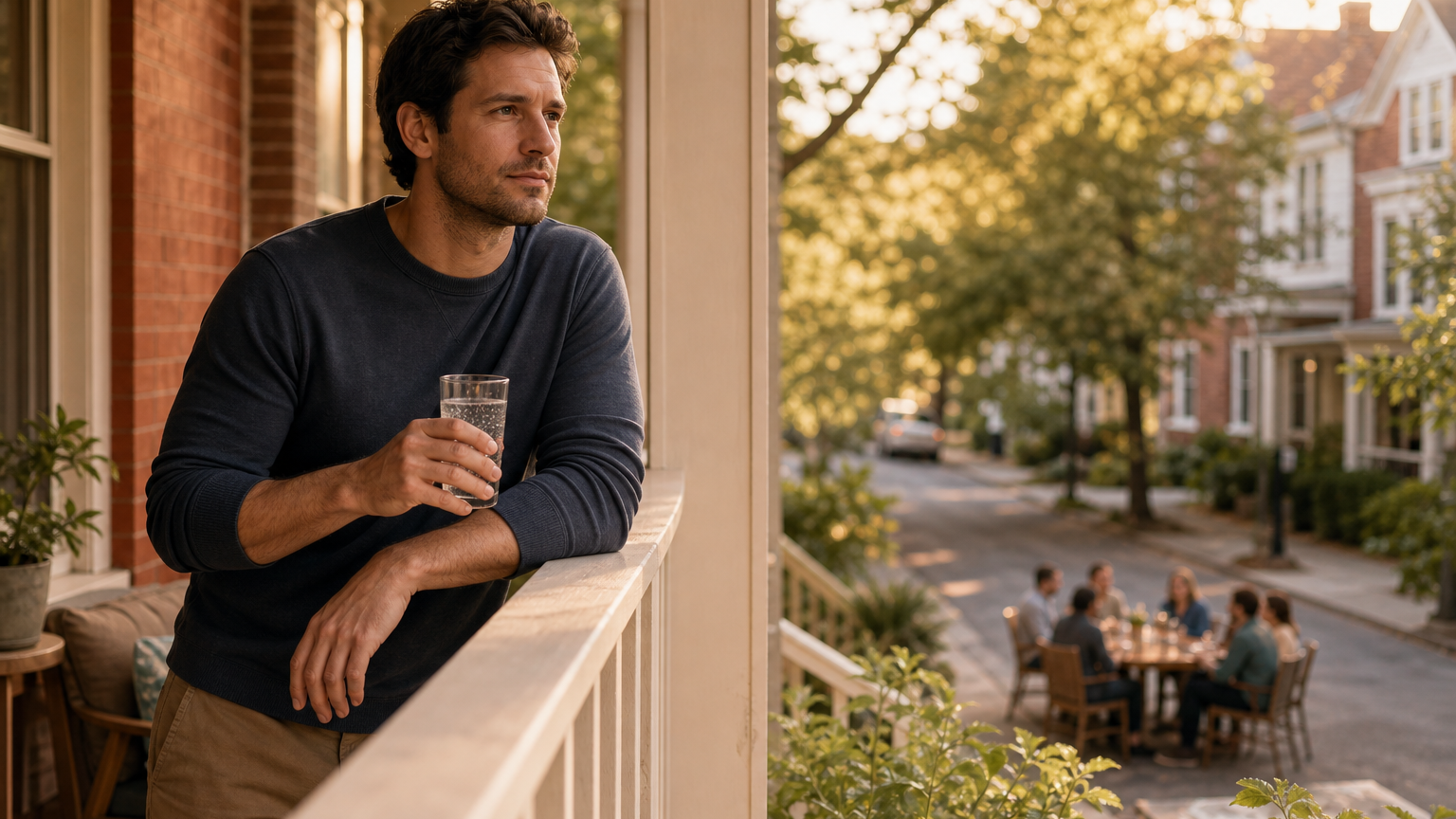
Cutting back on alcohol can feel isolating at first. Here's why it happens, whether it lasts, and how to get comfortable with solitude as you drink less.
Although it isn't a treatment for alcohol use disorder (AUD), the Reframe app can help you cut back on drinking gradually with the science-backed knowledge to empower you 100% of the way. Our proven program has helped millions of people around the world drink less and live more. And we want to help you get there, too!
The Reframe app equips you with the knowledge and skills you need to not only survive drinking less, but to thrive while you navigate the journey. Our daily research-backed readings teach you the neuroscience of alcohol, and our in-app Toolkit provides the resources and activities you need to navigate each challenge.
You'll meet millions of fellow Reframers in our 24/7 Forum chat and daily Zoom check-in meetings. Receive encouragement from people worldwide who know exactly what you're going through! You'll also have the opportunity to connect with our licensed Reframe coaches for more personalized guidance.
Plus, we're always introducing new features to optimize your in-app experience. We recently launched our in-app chatbot, Melody, powered by the world's most powerful AI technology. Melody is here to help as you adjust to a life with less (or no) alcohol.
And that's not all! Every month, we launch fun challenges, like Dry/Damp January, Mental Health May, and Outdoorsy June. You won't want to miss out on the chance to participate alongside fellow Reframers (or solo if that's more your thing!).
The Reframe app is free for 7 days, so you don't have anything to lose by trying it. Are you ready to feel empowered and discover life beyond alcohol? Then download our app through the App Store or Google Play today!
Cutting back on alcohol can temporarily increase feelings of isolation, but for most people this is a transient adjustment phase rather than a permanent cost. The isolation usually comes from losing a drinking-based social scaffold, FOMO, and a brief friend-group drift, not from drinking less itself making you less connected. As your nervous system recalibrates and you rebuild social habits that don't hinge on alcohol, the loneliness tends to ease and connection often deepens. Reframe can help you navigate this stretch so the dip feels like a phase you're moving through, not a wall.
Here's a scenario a lot of people recognize. You decide to drink less. The first week feels clarifying. Then Friday rolls around, the group text lights up about happy hour, and you suddenly feel like you're watching your own social life from across the street. That ache is real, and it catches people off guard, especially when they expected drinking less to feel uncomplicatedly good. The good news is that the loneliness most people feel in this stretch has a predictable shape and a fairly predictable end. Below we walk through why cutting back on alcohol can spike isolation, why some of the closeness alcohol seemed to provide was partly chemical, why moderation can feel disappointing even when it's working, and how to get genuinely comfortable being alone instead of just enduring it.
Yes, reducing alcohol can increase feelings of isolation in the short term, but for most people it's a passing adjustment rather than a lasting consequence. The lonely stretch usually reflects the loss of a drinking-based social scaffold, not a drop in how likable or connected you actually are. As you build social habits that don't depend on a drink in your hand, the isolation typically eases.
Think about how much of social life is quietly organized around alcohol. The default venue is a bar. The default gesture is a round. The default celebration involves a toast. When you step back from drinking, you're not just changing a beverage, you're stepping outside the scaffolding that used to hold your weekends together. That's why the dip feels structural rather than personal. It's the scaffold being rebuilt, not your worth being reassessed.
FOMO sharpens this. Declining an invitation can feel like opting out of the whole friendship, even when it's just one event. And some friend-group drift is real, though it tends to be partial and temporary. A few of those connections may turn out to have been primarily drinking relationships, and that's worth noticing without judgment. The goal isn't to white-knuckle through the loneliness in silence. It helps to name the dip as expected, keep low-stakes social contact going, and resist the urge to over-isolate while you find your footing. If you're rethinking your patterns deliberately, Reframe's mindful drinking program is built to support exactly this kind of recalibration.
The early weeks tend to be the rawest because two things hit at once: your social calendar suddenly has gaps where drinking events used to be, and your nervous system is adjusting. When someone reduces drinking after a stretch of heavy use, the Cleveland Clinic explains that the central nervous system can become temporarily overexcited, because it had been working to counteract alcohol's depressant effect. That can leave you more sensitive and less eager to throw yourself into a loud crowd, which compounds the sense of being on the outside. This usually softens as the weeks pass.
Sometimes a friendship cools when you stop drinking, and the honest read is that the bond was mostly about the activity. That's painful, but it's also information. A relationship that only worked with a few drinks in it was working on a narrow foundation. Noticing this isn't a reason to write people off; plenty of friendships survive the transition and grow sturdier. But if a connection evaporates the moment alcohol leaves the equation, the drift is telling you something true about what was holding it together.
Often, yes. A meaningful share of the closeness alcohol seems to produce is chemical disinhibition, meaning reduced self-monitoring and lowered anxiety, rather than genuine intimacy. That's why early sober socializing can feel flatter or more awkward, not because the friendships are weaker, but because you're relearning how to connect without a chemical assist.
It helps to know what's happening in the brain. The National Institute on Alcohol Abuse and Alcoholism describes how alcohol's rewarding effects include euphoria, reduced anxiety, and the easing of social interactions. It's easy to see why the brain learns to associate drinking with feeling socially at ease. There's even a brain-based mechanism for the anxiety part: one functional MRI study found that alcohol significantly reduced the amygdala's reactivity to social threat signals in social drinkers. In plain terms, part of what feels like connection is the brain's threat-detector going quiet, not closeness actually increasing. (That study was small, so treat it as a mechanism rather than a precise effect size.)
Now, the honest caveat. Alcohol isn't socially inert. Researchers including Robin Dunbar argue that alcohol triggers the brain's endorphin system, the same pathway behind laughter, singing, and dancing, and that social drinkers in their data reported more friends they could rely on. So the bonding effect is real. The crucial point is that it's replaceable. The endorphin-driven closeness alcohol borrows can be reached through shared meals, movement, music, and genuine laughter. You're not losing the capacity for connection, you're just sourcing it differently. And there's a cost to leaning on the chemical version: drinking to cope with social anxiety tends to bring more negative effects over time.
Disinhibition feels like intimacy because both involve dropping your guard. The difference is durability. Connection built on lowered self-monitoring needs the substance present to recur, which is why some "deep" late-night conversations evaporate by morning. Connection built sober tends to hold, because nothing has to be reintroduced to access it again. That's a meaningful upgrade, even if it takes a beat to feel as immediate.
The first stretch of sober socializing can feel oddly effortful, like you've lost a step. You haven't. You're noticing the silences you used to paper over, registering social anxiety you used to mute, and doing the live work of connecting without a buffer. That skill comes back, and often it comes back stronger. The trick isn't to grit your teeth through every event but to choose settings where sober connection is easier: smaller gatherings, daytime plans, activities with a shared focus. For practical scripts and ideas, our guide to alcohol-free socializing is a useful next step.
That disappointment usually comes from all-or-nothing thinking, where any drinking at all feels like a total failure, paired with goals that were never clearly defined. Moderation is a legitimate, evidence-supported path, not a botched attempt at sobriety. Most of the time the let-down is a thinking pattern, not an accurate report on your progress.
Here's the framing problem. When you quietly hold abstinence as the only "real" success, every single drink registers as a collapse of the whole project, even on a week where you drank far less than you used to. Black-and-white thinking does this for a living: it erases the enormous middle ground where most actual progress lives. If this pattern sounds familiar, our piece on black-and-white thinking breaks down how to catch it.
The evidence is genuinely on moderation's side for many drinkers. A randomized trial of a moderation-based program found significant reductions in both alcohol consumption and alcohol-related problems, and harm-reduction approaches generally hold up at least as well as abstinence-only ones for some people. One important caveat: this evidence is strongest for non-dependent and problem drinkers, not for severe dependence, so if your drinking feels physically out of your control, a clinician can help you choose the safest path for your situation.
Cutting from twenty drinks a week to ten isn't a failed quit attempt, it's a fifty percent reduction, and that's a substantial change in your exposure, your sleep, your budget, and your mornings. The disappointment often comes from comparing your real progress against an unspoken ideal instead of against where you started. Concrete wins stack up: fewer hangovers, more control, and money saved. You can make the financial side vivid with our alcohol spend calculator, and tracking the rest tends to make the progress finally visible.
Progress is often invisible without tracking, which is precisely what makes the let-down feeling so convincing. In the moment, "I had two glasses of wine" feels like proof that nothing changed, even when last month it would have been a bottle. Writing it down reframes the data. And here's a subtler point: if the disappointment keeps surfacing even after you reframe it, that may be useful information that you actually want full abstinence. That's not failure either, it's clarity. If you're unsure where you land, the Am I Drinking Too Much? quiz is a low-pressure place to start.
Comfort with being alone is a skill you build deliberately, not a feeling you sit around waiting for. The first move is separating two things that get blurred together: loneliness and solitude. Once you can tell them apart, the alone time you used to dread starts to look like a resource instead of a void.
Researchers draw a clean line here. Solitude is being alone without distress, often by choice, while loneliness is the painful gap between the connection you want and the connection you have. You can feel lonely in a crowded room and content on a quiet Sunday morning, which tells you the feeling isn't really about the number of people present. Chosen time alone can be actively good for you: a registered-report study found that on days people spent more time in solitude they reported less stress and greater autonomy, with benefits that built up over time.
The practical difference is choice. Solitude is something you opt into and can leave; loneliness is something that feels imposed. The skill of building comfort with alone time is really the skill of converting unstructured emptiness into chosen, restorative space. That conversion doesn't happen by waiting for it to feel natural. It happens by deciding what the time is for.
Start small and structured rather than facing wide-open, formless hours. Pick a short solo activity you genuinely enjoy: a walk with a specific loop, a chapter of a book, cooking one good meal. Fill the space alcohol used to occupy with grounding routines, movement, and rest, and stay connected on purpose so solitude stays a choice rather than your only option. Be patient with yourself, because the discomfort fades faster when you stop treating it as an emergency to fix instantly. If you want to understand your own patterns better, the What Type of Drinker Are You? quiz can offer a useful mirror.
Wanting more alone time in early sobriety is common and usually healthy, but a strong pull toward total isolation is worth watching. Some withdrawal from a busy social life reflects a nervous system that needs lower stimulation and genuine rest. The line to watch is between choosing quiet and avoiding all contact and support.
There's a real physiological basis for wanting less stimulation. NIAAA's neuroscience resource describes how the emotional discomforts of early and protracted abstinence, including anxiety, irritability, and insomnia, are driven by the brain's stress and glutamate systems rebalancing, and that they tend to ease as recovery continues. Healthy retreat looks like choosing rest and protecting your energy. Concerning isolation looks like cutting off everyone, ignoring support, and disappearing.
That distinction matters for your health, not just your mood. The U.S. Surgeon General's advisory notes that social isolation and loneliness are independent risk factors for serious conditions including cardiovascular disease, dementia, depression, and premature death. So keeping a few low-pressure connections active while you crave quiet isn't just nice, it's protective.
A useful test: are you choosing solitude, or hiding in it? Healthy retreat leaves the door open; you skip the loud party but still text a friend back. A red flag looks like avoiding every form of contact, including the people who help. If quiet has tipped into walling yourself off entirely, that's worth taking seriously rather than rationalizing.
Cutting back can unmask depression or anxiety that alcohol was masking. Alcohol use disorder frequently co-occurs with both, and treatment for these conditions can begin in a primary care setting rather than waiting for full sobriety. So if isolation arrives alongside persistent low mood, hopelessness, loss of interest, or an inability to function, that's a reason to involve a healthcare professional, not to wait it out alone. Reaching out is a strength, and a clinician can help you do this safely.
Yes, craving calm, quiet, and less stimulation is a normal and common early-sobriety experience. The lifestyle around drinking is often loud and overstimulating, and stepping back can reveal just how much your system was quietly asking for quiet. For most people this craving is a sign of healing, not avoidance.
The everything-feels-louder sensation has a basis in how the nervous system recalibrates. As mentioned, when alcohol's depressant effect is removed, the central nervous system can run hot for a while, which can heighten sensitivity to noise, crowds, and general busyness. Honoring that need for quiet tends to support the change rather than undermine it. The aim is balance: protect the quiet time without letting it slide into total disappearance.
In the early weeks, a normal restaurant can feel like a stadium and a group chat can feel like static. That heightened sensitivity is usually temporary, part of a brain that spent a while being chemically dampened and is now turning the lights back up. Treating it as a phase, rather than as evidence that you can't handle life, takes a lot of pressure off.
The move is to schedule the quiet deliberately so it doesn't become a default that swallows your social life. Block out genuine downtime, and then also keep a couple of low-effort connections on the calendar: a walk with one friend, a short phone call, a standing coffee. That way the quiet is something you chose, with connection still woven in, rather than a slow fade out of everyone's view.
Comfort with rest grows when you treat stillness as a practice rather than a void to escape. A lot of people used alcohol as a wind-down signal, so when it's gone, stillness can feel uncomfortable or even anxious at first. Building a clear, non-alcohol cue for relaxing is what turns restlessness into actual rest.
The discomfort makes sense given how the brain is rebalancing. Many sources describe early sobriety as a stretch where downtime feels strangely activating, because the cue your brain used to read as "now we relax" has been removed. The fix isn't to power through with sheer willpower; it's to give your brain a new, reliable signal.
If alcohol was your off-switch, the first quiet evenings can feel like the engine is still running with nowhere to go. That restlessness is expected, and letting it pass without immediately reaching for a quick fix is part of how the new pattern sets in. Over time, the same stillness that felt empty starts to feel like the recovery your body was asking for all along.
Build a short, repeatable routine that tells your nervous system the day is closing: a few minutes of slow breathing, gentle movement or a stretch, reading, or a warm-drink ritual that occupies your hands the way a glass used to. Keep it simple and do it consistently, because the consistency is what makes it work as a signal. For more ideas on replacing that evening cue, our guide on replacing alcohol in your evening routine goes deeper. And if you want structured support through this whole adjustment, you can download Reframe to build the habits one day at a time.
Cutting back on alcohol can temporarily increase feelings of isolation, but for most people this is a transient adjustment phase rather than a permanent cost. The isolation usually comes from losing a drinking-based social scaffold, FOMO, and a brief friend-group drift, not from drinking less itself making you less connected. As your nervous system recalibrates and you rebuild social habits that don't hinge on alcohol, the loneliness tends to ease and connection often deepens. Reframe can help you navigate this stretch so the dip feels like a phase you're moving through, not a wall.
Here's a scenario a lot of people recognize. You decide to drink less. The first week feels clarifying. Then Friday rolls around, the group text lights up about happy hour, and you suddenly feel like you're watching your own social life from across the street. That ache is real, and it catches people off guard, especially when they expected drinking less to feel uncomplicatedly good. The good news is that the loneliness most people feel in this stretch has a predictable shape and a fairly predictable end. Below we walk through why cutting back on alcohol can spike isolation, why some of the closeness alcohol seemed to provide was partly chemical, why moderation can feel disappointing even when it's working, and how to get genuinely comfortable being alone instead of just enduring it.
Yes, reducing alcohol can increase feelings of isolation in the short term, but for most people it's a passing adjustment rather than a lasting consequence. The lonely stretch usually reflects the loss of a drinking-based social scaffold, not a drop in how likable or connected you actually are. As you build social habits that don't depend on a drink in your hand, the isolation typically eases.
Think about how much of social life is quietly organized around alcohol. The default venue is a bar. The default gesture is a round. The default celebration involves a toast. When you step back from drinking, you're not just changing a beverage, you're stepping outside the scaffolding that used to hold your weekends together. That's why the dip feels structural rather than personal. It's the scaffold being rebuilt, not your worth being reassessed.
FOMO sharpens this. Declining an invitation can feel like opting out of the whole friendship, even when it's just one event. And some friend-group drift is real, though it tends to be partial and temporary. A few of those connections may turn out to have been primarily drinking relationships, and that's worth noticing without judgment. The goal isn't to white-knuckle through the loneliness in silence. It helps to name the dip as expected, keep low-stakes social contact going, and resist the urge to over-isolate while you find your footing. If you're rethinking your patterns deliberately, Reframe's mindful drinking program is built to support exactly this kind of recalibration.
The early weeks tend to be the rawest because two things hit at once: your social calendar suddenly has gaps where drinking events used to be, and your nervous system is adjusting. When someone reduces drinking after a stretch of heavy use, the Cleveland Clinic explains that the central nervous system can become temporarily overexcited, because it had been working to counteract alcohol's depressant effect. That can leave you more sensitive and less eager to throw yourself into a loud crowd, which compounds the sense of being on the outside. This usually softens as the weeks pass.
Sometimes a friendship cools when you stop drinking, and the honest read is that the bond was mostly about the activity. That's painful, but it's also information. A relationship that only worked with a few drinks in it was working on a narrow foundation. Noticing this isn't a reason to write people off; plenty of friendships survive the transition and grow sturdier. But if a connection evaporates the moment alcohol leaves the equation, the drift is telling you something true about what was holding it together.
Often, yes. A meaningful share of the closeness alcohol seems to produce is chemical disinhibition, meaning reduced self-monitoring and lowered anxiety, rather than genuine intimacy. That's why early sober socializing can feel flatter or more awkward, not because the friendships are weaker, but because you're relearning how to connect without a chemical assist.
It helps to know what's happening in the brain. The National Institute on Alcohol Abuse and Alcoholism describes how alcohol's rewarding effects include euphoria, reduced anxiety, and the easing of social interactions. It's easy to see why the brain learns to associate drinking with feeling socially at ease. There's even a brain-based mechanism for the anxiety part: one functional MRI study found that alcohol significantly reduced the amygdala's reactivity to social threat signals in social drinkers. In plain terms, part of what feels like connection is the brain's threat-detector going quiet, not closeness actually increasing. (That study was small, so treat it as a mechanism rather than a precise effect size.)
Now, the honest caveat. Alcohol isn't socially inert. Researchers including Robin Dunbar argue that alcohol triggers the brain's endorphin system, the same pathway behind laughter, singing, and dancing, and that social drinkers in their data reported more friends they could rely on. So the bonding effect is real. The crucial point is that it's replaceable. The endorphin-driven closeness alcohol borrows can be reached through shared meals, movement, music, and genuine laughter. You're not losing the capacity for connection, you're just sourcing it differently. And there's a cost to leaning on the chemical version: drinking to cope with social anxiety tends to bring more negative effects over time.
Disinhibition feels like intimacy because both involve dropping your guard. The difference is durability. Connection built on lowered self-monitoring needs the substance present to recur, which is why some "deep" late-night conversations evaporate by morning. Connection built sober tends to hold, because nothing has to be reintroduced to access it again. That's a meaningful upgrade, even if it takes a beat to feel as immediate.
The first stretch of sober socializing can feel oddly effortful, like you've lost a step. You haven't. You're noticing the silences you used to paper over, registering social anxiety you used to mute, and doing the live work of connecting without a buffer. That skill comes back, and often it comes back stronger. The trick isn't to grit your teeth through every event but to choose settings where sober connection is easier: smaller gatherings, daytime plans, activities with a shared focus. For practical scripts and ideas, our guide to alcohol-free socializing is a useful next step.
That disappointment usually comes from all-or-nothing thinking, where any drinking at all feels like a total failure, paired with goals that were never clearly defined. Moderation is a legitimate, evidence-supported path, not a botched attempt at sobriety. Most of the time the let-down is a thinking pattern, not an accurate report on your progress.
Here's the framing problem. When you quietly hold abstinence as the only "real" success, every single drink registers as a collapse of the whole project, even on a week where you drank far less than you used to. Black-and-white thinking does this for a living: it erases the enormous middle ground where most actual progress lives. If this pattern sounds familiar, our piece on black-and-white thinking breaks down how to catch it.
The evidence is genuinely on moderation's side for many drinkers. A randomized trial of a moderation-based program found significant reductions in both alcohol consumption and alcohol-related problems, and harm-reduction approaches generally hold up at least as well as abstinence-only ones for some people. One important caveat: this evidence is strongest for non-dependent and problem drinkers, not for severe dependence, so if your drinking feels physically out of your control, a clinician can help you choose the safest path for your situation.
Cutting from twenty drinks a week to ten isn't a failed quit attempt, it's a fifty percent reduction, and that's a substantial change in your exposure, your sleep, your budget, and your mornings. The disappointment often comes from comparing your real progress against an unspoken ideal instead of against where you started. Concrete wins stack up: fewer hangovers, more control, and money saved. You can make the financial side vivid with our alcohol spend calculator, and tracking the rest tends to make the progress finally visible.
Progress is often invisible without tracking, which is precisely what makes the let-down feeling so convincing. In the moment, "I had two glasses of wine" feels like proof that nothing changed, even when last month it would have been a bottle. Writing it down reframes the data. And here's a subtler point: if the disappointment keeps surfacing even after you reframe it, that may be useful information that you actually want full abstinence. That's not failure either, it's clarity. If you're unsure where you land, the Am I Drinking Too Much? quiz is a low-pressure place to start.
Comfort with being alone is a skill you build deliberately, not a feeling you sit around waiting for. The first move is separating two things that get blurred together: loneliness and solitude. Once you can tell them apart, the alone time you used to dread starts to look like a resource instead of a void.
Researchers draw a clean line here. Solitude is being alone without distress, often by choice, while loneliness is the painful gap between the connection you want and the connection you have. You can feel lonely in a crowded room and content on a quiet Sunday morning, which tells you the feeling isn't really about the number of people present. Chosen time alone can be actively good for you: a registered-report study found that on days people spent more time in solitude they reported less stress and greater autonomy, with benefits that built up over time.
The practical difference is choice. Solitude is something you opt into and can leave; loneliness is something that feels imposed. The skill of building comfort with alone time is really the skill of converting unstructured emptiness into chosen, restorative space. That conversion doesn't happen by waiting for it to feel natural. It happens by deciding what the time is for.
Start small and structured rather than facing wide-open, formless hours. Pick a short solo activity you genuinely enjoy: a walk with a specific loop, a chapter of a book, cooking one good meal. Fill the space alcohol used to occupy with grounding routines, movement, and rest, and stay connected on purpose so solitude stays a choice rather than your only option. Be patient with yourself, because the discomfort fades faster when you stop treating it as an emergency to fix instantly. If you want to understand your own patterns better, the What Type of Drinker Are You? quiz can offer a useful mirror.
Wanting more alone time in early sobriety is common and usually healthy, but a strong pull toward total isolation is worth watching. Some withdrawal from a busy social life reflects a nervous system that needs lower stimulation and genuine rest. The line to watch is between choosing quiet and avoiding all contact and support.
There's a real physiological basis for wanting less stimulation. NIAAA's neuroscience resource describes how the emotional discomforts of early and protracted abstinence, including anxiety, irritability, and insomnia, are driven by the brain's stress and glutamate systems rebalancing, and that they tend to ease as recovery continues. Healthy retreat looks like choosing rest and protecting your energy. Concerning isolation looks like cutting off everyone, ignoring support, and disappearing.
That distinction matters for your health, not just your mood. The U.S. Surgeon General's advisory notes that social isolation and loneliness are independent risk factors for serious conditions including cardiovascular disease, dementia, depression, and premature death. So keeping a few low-pressure connections active while you crave quiet isn't just nice, it's protective.
A useful test: are you choosing solitude, or hiding in it? Healthy retreat leaves the door open; you skip the loud party but still text a friend back. A red flag looks like avoiding every form of contact, including the people who help. If quiet has tipped into walling yourself off entirely, that's worth taking seriously rather than rationalizing.
Cutting back can unmask depression or anxiety that alcohol was masking. Alcohol use disorder frequently co-occurs with both, and treatment for these conditions can begin in a primary care setting rather than waiting for full sobriety. So if isolation arrives alongside persistent low mood, hopelessness, loss of interest, or an inability to function, that's a reason to involve a healthcare professional, not to wait it out alone. Reaching out is a strength, and a clinician can help you do this safely.
Yes, craving calm, quiet, and less stimulation is a normal and common early-sobriety experience. The lifestyle around drinking is often loud and overstimulating, and stepping back can reveal just how much your system was quietly asking for quiet. For most people this craving is a sign of healing, not avoidance.
The everything-feels-louder sensation has a basis in how the nervous system recalibrates. As mentioned, when alcohol's depressant effect is removed, the central nervous system can run hot for a while, which can heighten sensitivity to noise, crowds, and general busyness. Honoring that need for quiet tends to support the change rather than undermine it. The aim is balance: protect the quiet time without letting it slide into total disappearance.
In the early weeks, a normal restaurant can feel like a stadium and a group chat can feel like static. That heightened sensitivity is usually temporary, part of a brain that spent a while being chemically dampened and is now turning the lights back up. Treating it as a phase, rather than as evidence that you can't handle life, takes a lot of pressure off.
The move is to schedule the quiet deliberately so it doesn't become a default that swallows your social life. Block out genuine downtime, and then also keep a couple of low-effort connections on the calendar: a walk with one friend, a short phone call, a standing coffee. That way the quiet is something you chose, with connection still woven in, rather than a slow fade out of everyone's view.
Comfort with rest grows when you treat stillness as a practice rather than a void to escape. A lot of people used alcohol as a wind-down signal, so when it's gone, stillness can feel uncomfortable or even anxious at first. Building a clear, non-alcohol cue for relaxing is what turns restlessness into actual rest.
The discomfort makes sense given how the brain is rebalancing. Many sources describe early sobriety as a stretch where downtime feels strangely activating, because the cue your brain used to read as "now we relax" has been removed. The fix isn't to power through with sheer willpower; it's to give your brain a new, reliable signal.
If alcohol was your off-switch, the first quiet evenings can feel like the engine is still running with nowhere to go. That restlessness is expected, and letting it pass without immediately reaching for a quick fix is part of how the new pattern sets in. Over time, the same stillness that felt empty starts to feel like the recovery your body was asking for all along.
Build a short, repeatable routine that tells your nervous system the day is closing: a few minutes of slow breathing, gentle movement or a stretch, reading, or a warm-drink ritual that occupies your hands the way a glass used to. Keep it simple and do it consistently, because the consistency is what makes it work as a signal. For more ideas on replacing that evening cue, our guide on replacing alcohol in your evening routine goes deeper. And if you want structured support through this whole adjustment, you can download Reframe to build the habits one day at a time.
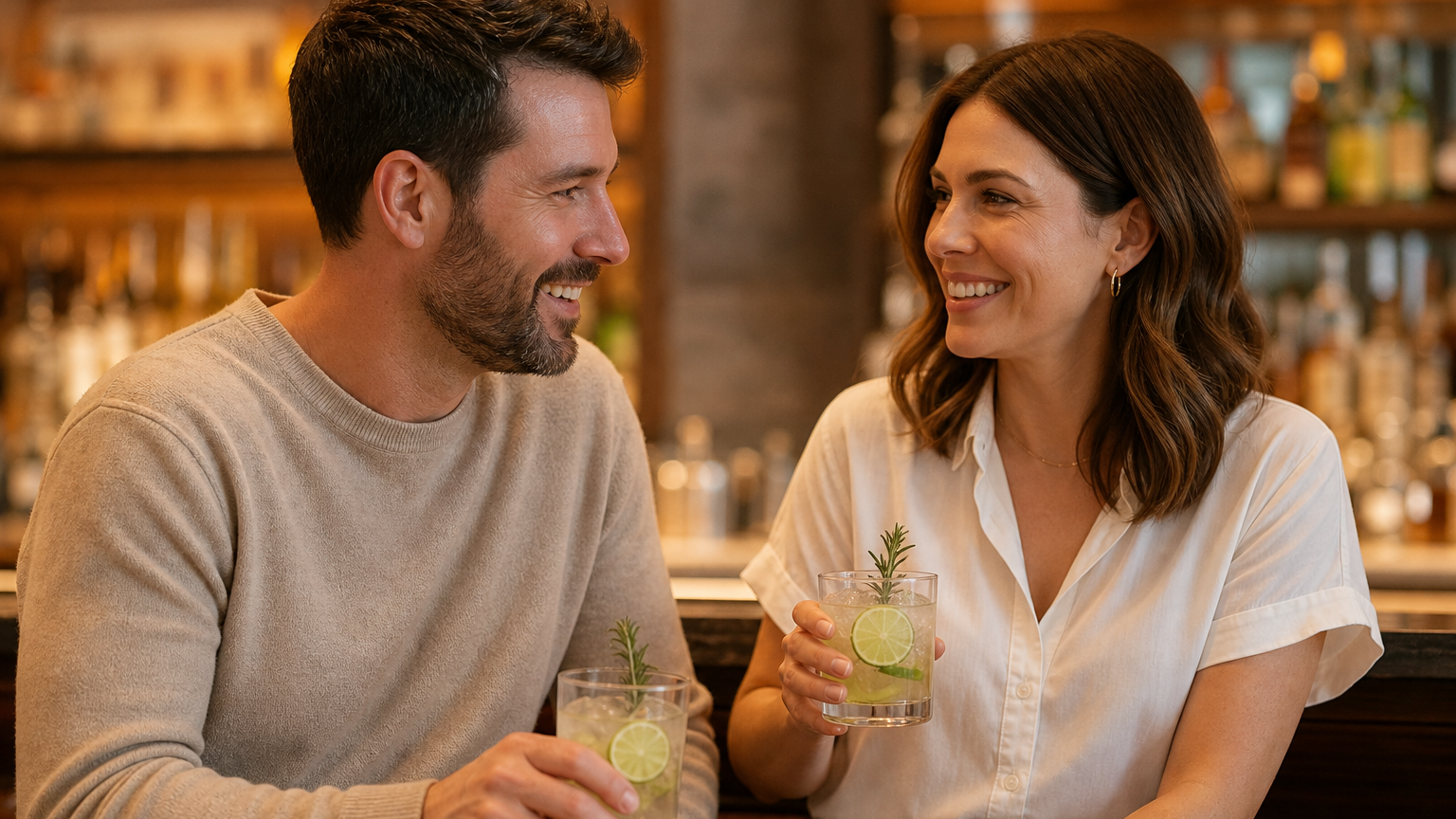
Bars are high-trigger environments. Here is how to navigate them sober, the alcohol-glasses reframe trick, what to order, and when to skip a night out.
Although it isn't a treatment for alcohol use disorder (AUD), the Reframe app can help you cut back on drinking gradually with the science-backed knowledge to empower you 100% of the way. Our proven program has helped millions of people around the world drink less and live more. And we want to help you get there, too!
The Reframe app equips you with the knowledge and skills you need to not only survive drinking less, but to thrive while you navigate the journey. Our daily research-backed readings teach you the neuroscience of alcohol, and our in-app Toolkit provides the resources and activities you need to navigate each challenge.
You'll meet millions of fellow Reframers in our 24/7 Forum chat and daily Zoom check-in meetings. Receive encouragement from people worldwide who know exactly what you're going through! You'll also have the opportunity to connect with our licensed Reframe coaches for more personalized guidance.
Plus, we're always introducing new features to optimize your in-app experience. We recently launched our in-app chatbot, Melody, powered by the world's most powerful AI technology. Melody is here to help as you adjust to a life with less (or no) alcohol.
And that's not all! Every month, we launch fun challenges, like Dry/Damp January, Mental Health May, and Outdoorsy June. You won't want to miss out on the chance to participate alongside fellow Reframers (or solo if that's more your thing!).
The Reframe app is free for 7 days, so you don't have anything to lose by trying it. Are you ready to feel empowered and discover life beyond alcohol? Then download our app through the App Store or Google Play today!
Yes, you can go to bars sober, and for many people it is a worthwhile skill to build rather than a place to avoid forever. The catch is that a bar is one of the highest-trigger environments there is: the sights, smells, sounds, and social cues all nudge your brain toward the old habit, so going in with a plan matters more than willpower. The practical move is to treat the outing like a craving situation you are managing on purpose, with a drink order, a perception trick, and an exit plan ready before you arrive. Reframe's tools for spotting and defusing triggers can help you decide which bar nights are worth it and how to get through the ones that are.
Let's be honest about what a bar actually is for someone changing their relationship with alcohol. It is not neutral ground. It is a room engineered, intentionally or not, to encourage drinking, and for a while it can feel like the building itself is working against you. But that does not mean you have to give up bars for the rest of your life. With the right preparation, going to bars sober becomes one more thing you know how to do, like driving in the rain or speaking up in a meeting. This guide walks through why bars hit so hard, whether sitting there with a non-alcoholic drink is safe, the perception tricks that defuse a craving, what to order, how to build an exit plan, and how the people who work behind the bar can drink less too.
A bar bundles almost every classic drinking cue into one room: the smell of beer, the clink of glasses, the music, the dim lighting, and a crowd of people drinking around you. That density is what makes it potent. Each of those signals has been paired with alcohol in your brain hundreds of times, so the setting does a lot of the work before you have consciously decided anything.
This is not a character flaw, it is conditioning. Research on people in alcohol detox found that exposure to alcohol cues, the sight of beverages and the act of drinking, triggered measurable physical arousal and craving as a conditioned response, even without a deliberate decision to drink. In plain terms, a once-neutral object like a pint glass picks up motivational pull through repeated pairing. Worth noting from that same study: the strength of someone's cue reactivity did not predict whether they relapsed, so a strong reaction in a bar is a craving event to ride out, not a verdict on how you are doing.
Think about the specific bar you used to go to. Where did you stand? What did you order without thinking? Who was next to you? Those details are not nostalgia, they are retrieval cues. The physical setting re-triggers the old routine because the routine was built there. This is why a bar can feel different from, say, a friend's kitchen even when the same drink is available in both.
On top of the sensory layer sits social expectation: the unspoken sense that being at a bar means drinking, and that not drinking needs explaining. The NIAAA describes how external triggers like particular places and social situations create predictable high-risk situations, and how they get harder when they stack with internal triggers like stress or excitement. A bar is the rare place where the external and internal layers pile up at once. Recognizing the bar as a trigger is not weakness; it is what lets you plan around it instead of getting ambushed. If you are still mapping your own patterns, Reframe's mindful drinking program and a quick read on how to identify your drinking triggers both help you see the cues before they see you.
For most people, yes, sitting at a bar with a non-alcoholic drink is safe, and it has become an increasingly normal way to be out without drinking. You are not doing anything risky by holding a soda in a loud room full of cocktails. For many, it is a legitimate and even useful way to keep a social life intact while changing a habit.
There is also a case that managed exposure helps over time. Being in the environment while staying in control may, for some people, gradually loosen the bar's grip, because you are practicing the situation without the old payoff. We want to be careful here: the clinical evidence for deliberately exposing yourself to cues to weaken cravings is genuinely mixed, so treat this as a possible individual benefit rather than a guaranteed result. Some people find each sober bar night easier than the last; others do not, and both are normal.
If your footing is solid, a low-stakes bar visit can be good rehearsal. You learn that the craving rises and falls, that nobody actually cares what is in your glass, and that you can stay an hour and leave intact. Repetition is part of why this gets easier, which lines up with the NIAAA's framing that urges are short-lived, predictable, and controllable and that a recognize-avoid-cope approach helps you manage them.
Two real caveats. First, it can be riskier in very early sobriety, if you are physically dependent on alcohol, or if a specific bar is wired to heavy patterns for you. If alcohol dependence is part of your picture, stopping is a medical matter and a clinician can help you do it safely; a bar visit is not the place to test that. Second, watch the closely mimicking products. Non-alcoholic beers and wines that nail the taste and ritual soothe a craving for some people and reignite it for others, which fits what we know about how much individual responses to alcohol cues can differ. Read your own state honestly that night, and keep an exit plan ready. Not sure where your own line is? The Am I Drinking Too Much? quiz is a low-pressure place to start.
Drinking a non-alcoholic beverage out of a wine glass or a heavy tumbler is completely safe, and for a lot of people it makes staying sober easier, not harder. There is nothing physically risky about the glass itself, and the familiar vessel does real social work.
The "real glass" gives you three things at once: the ritual, the weight in your hand, and a drink that looks like everyone else's. That last part quietly heads off both self-consciousness and the round of questions that a giveaway plastic cup invites. You blend in, which means you spend less energy managing other people's curiosity and more energy enjoying the night.
This is really a version of the perception reframe: keep the comforting cues, drop the alcohol. The brain's craving system responds heavily to ritual and context, so giving it the familiar shape of the evening, the stem between your fingers, the swirl, the slow sip, can satisfy a surprising amount of what it is actually asking for. You are not faking it so much as redirecting it.
The honest caveat: for a minority of people, closely copying the old ritual heightens a craving instead of easing it, which again reflects how much individual responses differ. If you notice the wine glass making things worse rather than better, switch to something that looks nothing like your old drink. A practical move is to ask the bartender to serve your soda, mocktail, or non-alcoholic option in real glassware so you are not holding a tell. If you want ideas, our list of 10 mocktails to order at any bar is built for exactly this.
The "alcohol glasses" idea is a mindful-perception reframe: you deliberately notice what alcohol actually delivers versus the fantasy your craving is selling. The craving paints a tidy picture of the first sip and stops there. The trick is to refuse to stop there.
In the moment, name the craving out loud or in your head, then play the tape forward past that first sip to the hangxiety, the broken sleep, and the morning regret. The point is not to scold yourself, it is to give your brain the whole movie instead of the trailer. This pairs naturally with the NIAAA's recognize-avoid-cope method and its reminder that urges are short-lived and controllable. Knowing where your patterns come from helps; the What Type of Drinker Are You? quiz can sharpen that self-read.
Make the forward tape specific to you. Not "I might feel bad," but the actual 3 a.m. wake-up, the actual canceled morning plan, the actual conversation you would rather not have had. Then anchor yourself in the present with your non-alcoholic drink: hold it, notice the temperature, taste it properly, and let it occupy the ritual slot the craving is reaching for. You are giving the urge something real to land on.
Urge surfing is a mindfulness technique, developed by psychologist G. Alan Marlatt, in which you picture a craving as a wave that rises, peaks, and falls while you observe it without acting. You do not fight the wave and you do not obey it; you ride it as it crests and recedes. In a loud bar this is harder than on a meditation cushion, so keep it small: one breath, the drink in your hand, the reminder that this peak passes. These are skills that get easier with repetition, which is part of why managed bar exposure can help. Our full walkthrough on how urge surfing helps with cravings goes deeper if you want a script.
Have a default order ready before you walk in, so you are never standing at the bar improvising under pressure. Decision-making is weakest exactly when the cues are loudest, so the order should already be decided. This one habit removes most of the friction of a sober bar night.
Reliable options travel well: soda with lime, tonic and bitters, a mocktail, sparkling water, a coffee, or a quality non-alcoholic beer if that works for you without nudging a craving. Any of them looks at home in your hand and gives you something to do besides field offers. The NIAAA's drink-refusal guidance advises keeping your response short and simple and not hesitating, since hesitating gives you the chance to think of reasons to go along, so order first or order confidently, because hesitation invites questions and a chorus of "have a real drink."
Pick one go-to and one backup, the way you would pick a coffee order. Keep something in your hand at all times; a person already holding a full glass is far less likely to get one bought for them. The trick is having the answer ready, not clever, so you can say it without missing a beat in the conversation.
If your usual is getting boring, variety keeps the night interesting and keeps you from drifting toward the old default. A rotating set of mocktails, paired with our 10 mocktails to order at any bar, covers most menus. And tip your bartender well, because a sober regular who tips is a welcome customer, not an oddity, and the staff will start steering good non-alcoholic options your way.
Decide three things before you go: how long you will stay, how you will get home, and a clean line you can use to leave. The plan only works if it exists before the first craving, because in the moment your judgment is exactly what the environment is trying to bend.
Control your own transportation. Drive yourself or pre-book a ride so leaving is never hostage to someone else's night. Set a check-in point partway through, maybe the one-hour mark, where you honestly ask how you are doing rather than coasting on momentum. Building this kind of structure is the everyday work of changing your drinking habits, and it gets more automatic each time.
Your exit line should be short, true enough, and require no negotiation: an early morning, a ride waiting, a simple "I'm heading out, this was great." You are not asking permission, you are announcing a decision. Saying it the same way every time means you never have to invent it while a craving is talking.
Some nights are not worth it, and reading that in advance is a skill. Red flags: you are already stressed, exhausted, or depleted; the entire event is built around heavy drinking with no other center of gravity; or you catch yourself bargaining, the quiet "just one wouldn't hurt" negotiation. That bargaining voice is the clearest tell. Choosing to skip or to leave early is a strong move that protects your goal, not a failure; you are not proving anything to anyone by staying. For more on spotting the moment before it slips, our piece on how to avoid your triggers pairs well with this.
Bar work makes drinking less genuinely harder, because alcohol is constant, cheap or free, social, and woven straight into the job, but it is doable with structure rather than willpower alone. This is not in your head: workers in the accommodations and food services industry report the highest rate of past-month illicit drug use of any U.S. industry, around 19.1 percent in that SAMHSA report. The job pushes in this direction; you are pushing back against a strong current, and that deserves credit, not shame.
The core moves are about replacing rituals, not just resisting them. Swap the shift drink for a non-alcoholic default you actually like, and tell one trusted coworker your goal so the "one for the staff" offers quietly ease off. Track your intake against a clear weekly limit so easy access does not slide into a daily habit you never decided on; if you want a number to anchor to, the Am I Drinking Too Much? quiz is a fast gut check.
The real need after a tough shift is decompression, not alcohol specifically. Alcohol just happens to be the closest tool on the rail. Meet the actual need another way: a walk home, real food, a no-alcohol drink, ten minutes of quiet before you switch your brain off. When you name what the shift drink is really for, it gets easier to give it a different job.
Know your specific job triggers and pre-decide your response to each: the post-close drink, tasting cocktails on the line, and customers buying you rounds. A ready "I'm good, thank you" handles most of it, and a coworker who knows your goal can run interference. If drinking on the job starts to feel out of your control, that is worth taking seriously rather than normalizing as part of the trade; a clinician can help you sort out whether it is a habit or something more, and you do not have to figure that out alone. When you are ready for ongoing support, you can download Reframe and lean on a program built for exactly this kind of high-exposure environment.
Yes, you can go to bars sober, and for many people it is a worthwhile skill to build rather than a place to avoid forever. The catch is that a bar is one of the highest-trigger environments there is: the sights, smells, sounds, and social cues all nudge your brain toward the old habit, so going in with a plan matters more than willpower. The practical move is to treat the outing like a craving situation you are managing on purpose, with a drink order, a perception trick, and an exit plan ready before you arrive. Reframe's tools for spotting and defusing triggers can help you decide which bar nights are worth it and how to get through the ones that are.
Let's be honest about what a bar actually is for someone changing their relationship with alcohol. It is not neutral ground. It is a room engineered, intentionally or not, to encourage drinking, and for a while it can feel like the building itself is working against you. But that does not mean you have to give up bars for the rest of your life. With the right preparation, going to bars sober becomes one more thing you know how to do, like driving in the rain or speaking up in a meeting. This guide walks through why bars hit so hard, whether sitting there with a non-alcoholic drink is safe, the perception tricks that defuse a craving, what to order, how to build an exit plan, and how the people who work behind the bar can drink less too.
A bar bundles almost every classic drinking cue into one room: the smell of beer, the clink of glasses, the music, the dim lighting, and a crowd of people drinking around you. That density is what makes it potent. Each of those signals has been paired with alcohol in your brain hundreds of times, so the setting does a lot of the work before you have consciously decided anything.
This is not a character flaw, it is conditioning. Research on people in alcohol detox found that exposure to alcohol cues, the sight of beverages and the act of drinking, triggered measurable physical arousal and craving as a conditioned response, even without a deliberate decision to drink. In plain terms, a once-neutral object like a pint glass picks up motivational pull through repeated pairing. Worth noting from that same study: the strength of someone's cue reactivity did not predict whether they relapsed, so a strong reaction in a bar is a craving event to ride out, not a verdict on how you are doing.
Think about the specific bar you used to go to. Where did you stand? What did you order without thinking? Who was next to you? Those details are not nostalgia, they are retrieval cues. The physical setting re-triggers the old routine because the routine was built there. This is why a bar can feel different from, say, a friend's kitchen even when the same drink is available in both.
On top of the sensory layer sits social expectation: the unspoken sense that being at a bar means drinking, and that not drinking needs explaining. The NIAAA describes how external triggers like particular places and social situations create predictable high-risk situations, and how they get harder when they stack with internal triggers like stress or excitement. A bar is the rare place where the external and internal layers pile up at once. Recognizing the bar as a trigger is not weakness; it is what lets you plan around it instead of getting ambushed. If you are still mapping your own patterns, Reframe's mindful drinking program and a quick read on how to identify your drinking triggers both help you see the cues before they see you.
For most people, yes, sitting at a bar with a non-alcoholic drink is safe, and it has become an increasingly normal way to be out without drinking. You are not doing anything risky by holding a soda in a loud room full of cocktails. For many, it is a legitimate and even useful way to keep a social life intact while changing a habit.
There is also a case that managed exposure helps over time. Being in the environment while staying in control may, for some people, gradually loosen the bar's grip, because you are practicing the situation without the old payoff. We want to be careful here: the clinical evidence for deliberately exposing yourself to cues to weaken cravings is genuinely mixed, so treat this as a possible individual benefit rather than a guaranteed result. Some people find each sober bar night easier than the last; others do not, and both are normal.
If your footing is solid, a low-stakes bar visit can be good rehearsal. You learn that the craving rises and falls, that nobody actually cares what is in your glass, and that you can stay an hour and leave intact. Repetition is part of why this gets easier, which lines up with the NIAAA's framing that urges are short-lived, predictable, and controllable and that a recognize-avoid-cope approach helps you manage them.
Two real caveats. First, it can be riskier in very early sobriety, if you are physically dependent on alcohol, or if a specific bar is wired to heavy patterns for you. If alcohol dependence is part of your picture, stopping is a medical matter and a clinician can help you do it safely; a bar visit is not the place to test that. Second, watch the closely mimicking products. Non-alcoholic beers and wines that nail the taste and ritual soothe a craving for some people and reignite it for others, which fits what we know about how much individual responses to alcohol cues can differ. Read your own state honestly that night, and keep an exit plan ready. Not sure where your own line is? The Am I Drinking Too Much? quiz is a low-pressure place to start.
Drinking a non-alcoholic beverage out of a wine glass or a heavy tumbler is completely safe, and for a lot of people it makes staying sober easier, not harder. There is nothing physically risky about the glass itself, and the familiar vessel does real social work.
The "real glass" gives you three things at once: the ritual, the weight in your hand, and a drink that looks like everyone else's. That last part quietly heads off both self-consciousness and the round of questions that a giveaway plastic cup invites. You blend in, which means you spend less energy managing other people's curiosity and more energy enjoying the night.
This is really a version of the perception reframe: keep the comforting cues, drop the alcohol. The brain's craving system responds heavily to ritual and context, so giving it the familiar shape of the evening, the stem between your fingers, the swirl, the slow sip, can satisfy a surprising amount of what it is actually asking for. You are not faking it so much as redirecting it.
The honest caveat: for a minority of people, closely copying the old ritual heightens a craving instead of easing it, which again reflects how much individual responses differ. If you notice the wine glass making things worse rather than better, switch to something that looks nothing like your old drink. A practical move is to ask the bartender to serve your soda, mocktail, or non-alcoholic option in real glassware so you are not holding a tell. If you want ideas, our list of 10 mocktails to order at any bar is built for exactly this.
The "alcohol glasses" idea is a mindful-perception reframe: you deliberately notice what alcohol actually delivers versus the fantasy your craving is selling. The craving paints a tidy picture of the first sip and stops there. The trick is to refuse to stop there.
In the moment, name the craving out loud or in your head, then play the tape forward past that first sip to the hangxiety, the broken sleep, and the morning regret. The point is not to scold yourself, it is to give your brain the whole movie instead of the trailer. This pairs naturally with the NIAAA's recognize-avoid-cope method and its reminder that urges are short-lived and controllable. Knowing where your patterns come from helps; the What Type of Drinker Are You? quiz can sharpen that self-read.
Make the forward tape specific to you. Not "I might feel bad," but the actual 3 a.m. wake-up, the actual canceled morning plan, the actual conversation you would rather not have had. Then anchor yourself in the present with your non-alcoholic drink: hold it, notice the temperature, taste it properly, and let it occupy the ritual slot the craving is reaching for. You are giving the urge something real to land on.
Urge surfing is a mindfulness technique, developed by psychologist G. Alan Marlatt, in which you picture a craving as a wave that rises, peaks, and falls while you observe it without acting. You do not fight the wave and you do not obey it; you ride it as it crests and recedes. In a loud bar this is harder than on a meditation cushion, so keep it small: one breath, the drink in your hand, the reminder that this peak passes. These are skills that get easier with repetition, which is part of why managed bar exposure can help. Our full walkthrough on how urge surfing helps with cravings goes deeper if you want a script.
Have a default order ready before you walk in, so you are never standing at the bar improvising under pressure. Decision-making is weakest exactly when the cues are loudest, so the order should already be decided. This one habit removes most of the friction of a sober bar night.
Reliable options travel well: soda with lime, tonic and bitters, a mocktail, sparkling water, a coffee, or a quality non-alcoholic beer if that works for you without nudging a craving. Any of them looks at home in your hand and gives you something to do besides field offers. The NIAAA's drink-refusal guidance advises keeping your response short and simple and not hesitating, since hesitating gives you the chance to think of reasons to go along, so order first or order confidently, because hesitation invites questions and a chorus of "have a real drink."
Pick one go-to and one backup, the way you would pick a coffee order. Keep something in your hand at all times; a person already holding a full glass is far less likely to get one bought for them. The trick is having the answer ready, not clever, so you can say it without missing a beat in the conversation.
If your usual is getting boring, variety keeps the night interesting and keeps you from drifting toward the old default. A rotating set of mocktails, paired with our 10 mocktails to order at any bar, covers most menus. And tip your bartender well, because a sober regular who tips is a welcome customer, not an oddity, and the staff will start steering good non-alcoholic options your way.
Decide three things before you go: how long you will stay, how you will get home, and a clean line you can use to leave. The plan only works if it exists before the first craving, because in the moment your judgment is exactly what the environment is trying to bend.
Control your own transportation. Drive yourself or pre-book a ride so leaving is never hostage to someone else's night. Set a check-in point partway through, maybe the one-hour mark, where you honestly ask how you are doing rather than coasting on momentum. Building this kind of structure is the everyday work of changing your drinking habits, and it gets more automatic each time.
Your exit line should be short, true enough, and require no negotiation: an early morning, a ride waiting, a simple "I'm heading out, this was great." You are not asking permission, you are announcing a decision. Saying it the same way every time means you never have to invent it while a craving is talking.
Some nights are not worth it, and reading that in advance is a skill. Red flags: you are already stressed, exhausted, or depleted; the entire event is built around heavy drinking with no other center of gravity; or you catch yourself bargaining, the quiet "just one wouldn't hurt" negotiation. That bargaining voice is the clearest tell. Choosing to skip or to leave early is a strong move that protects your goal, not a failure; you are not proving anything to anyone by staying. For more on spotting the moment before it slips, our piece on how to avoid your triggers pairs well with this.
Bar work makes drinking less genuinely harder, because alcohol is constant, cheap or free, social, and woven straight into the job, but it is doable with structure rather than willpower alone. This is not in your head: workers in the accommodations and food services industry report the highest rate of past-month illicit drug use of any U.S. industry, around 19.1 percent in that SAMHSA report. The job pushes in this direction; you are pushing back against a strong current, and that deserves credit, not shame.
The core moves are about replacing rituals, not just resisting them. Swap the shift drink for a non-alcoholic default you actually like, and tell one trusted coworker your goal so the "one for the staff" offers quietly ease off. Track your intake against a clear weekly limit so easy access does not slide into a daily habit you never decided on; if you want a number to anchor to, the Am I Drinking Too Much? quiz is a fast gut check.
The real need after a tough shift is decompression, not alcohol specifically. Alcohol just happens to be the closest tool on the rail. Meet the actual need another way: a walk home, real food, a no-alcohol drink, ten minutes of quiet before you switch your brain off. When you name what the shift drink is really for, it gets easier to give it a different job.
Know your specific job triggers and pre-decide your response to each: the post-close drink, tasting cocktails on the line, and customers buying you rounds. A ready "I'm good, thank you" handles most of it, and a coworker who knows your goal can run interference. If drinking on the job starts to feel out of your control, that is worth taking seriously rather than normalizing as part of the trade; a clinician can help you sort out whether it is a habit or something more, and you do not have to figure that out alone. When you are ready for ongoing support, you can download Reframe and lean on a program built for exactly this kind of high-exposure environment.
