

Grief is one of the hardest triggers in sobriety. Learn why loss destabilizes recovery, how long the urge lasts, and concrete ways to mourn without drinking.

Although it isn't a treatment for alcohol use disorder (AUD), the Reframe app can help you cut back on drinking gradually with the science-backed knowledge to empower you 100% of the way. Our proven program has helped millions of people around the world drink less and live more. And we want to help you get there, too!
The Reframe app equips you with the knowledge and skills you need to not only survive drinking less, but to thrive while you navigate the journey. Our daily research-backed readings teach you the neuroscience of alcohol, and our in-app Toolkit provides the resources and activities you need to navigate each challenge.
You'll meet millions of fellow Reframers in our 24/7 Forum chat and daily Zoom check-in meetings. Receive encouragement from people worldwide who know exactly what you're going through! You'll also have the opportunity to connect with our licensed Reframe coaches for more personalized guidance.
Plus, we're always introducing new features to optimize your in-app experience. We recently launched our in-app chatbot, Melody, powered by the world's most powerful AI technology. Melody is here to help as you adjust to a life with less (or no) alcohol.
And that's not all! Every month, we launch fun challenges, like Dry/Damp January, Mental Health May, and Outdoorsy June. You won't want to miss out on the chance to participate alongside fellow Reframers (or solo if that's more your thing!).
The Reframe app is free for 7 days, so you don't have anything to lose by trying it. Are you ready to feel empowered and discover life beyond alcohol? Then download our app through the App Store or Google Play today!
Grief is one of the most destabilizing triggers in recovery because loss floods the brain with pain that alcohol once promised to numb, and grief-heavy rituals like wakes and funerals put alcohol directly in front of you. You can protect your sobriety by naming grief as a high-risk window in advance, leaning hard on support, and giving yourself permission to actually feel the loss rather than mute it. Reframe can help you build a coping plan for these acute emotional moments so a loss does not become a relapse.
Let's talk honestly about something most recovery advice skips over. There is "I had a stressful week" hard, and then there is the kind of grief that hollows you out, the death of a parent, a partner, a child, a friend. If you have spent any time changing your relationship with alcohol, you already know that big feelings and old habits live next door to each other. Grief is the loudest of those feelings, and it tends to knock on the door at the exact moment your defenses are thinnest.
This guide walks through why grief and sobriety pull against each other so hard, how to get through the worst stretch without drinking, how long the urges tend to last, what separates real mourning from numbing, and how to navigate the alcohol-soaked rituals of loss. We will also be clear about when grief stops being a self-help moment and becomes something a professional should help carry. None of this is about gritting your teeth. It is about giving yourself a plan before you need one.
Grief outranks ordinary stress because it is not generic tension you can shake off after a good night's sleep. It is acute, identity-shaking pain, and the brain wants to escape that kind of pain fast. Alcohol once offered exactly that escape, so loss can reactivate an old reflex that says "this will make it stop." Understanding that mechanism is the first step in disarming it.
The pull toward a drink in grief is not a character flaw; it is a learned shortcut your brain remembers. According to the National Institute on Alcohol Abuse and Alcoholism, negative emotional states are the leading precipitant of relapse, in part because alcohol quiets the brain systems that handle stress, anxiety, and emotional pain. That is the "this will make it stop" reflex in a nutshell. When grief floods you, the brain reaches for the fastest known off-switch, and for a long time alcohol was that switch.
What makes grief so much sharper than a rough day at work is the sheer load it dumps on you at once. Exhaustion, broken sleep, a missing appetite, and emotional flooding all arrive together, and each one chips away at the steadiness you normally rely on to ride out a craving. You are being asked to resist an old habit at the precise moment you have the fewest resources to do it.
Here is the cruel logistical twist: the events built around loss tend to come soaked in alcohol. Wakes, funeral receptions, shivas, repasts, and "let's raise a glass to them" gatherings put a drink in your hand while your guard is already down. So grief is a double hit. The emotional pain is pushing you toward escape, and the social setting is handing you the means. We cover the specifics of getting through those rooms further down, because they deserve their own plan.
The scale of this risk is not small. A 2025 national study of bereaved adults found that roughly one-third reported problematic alcohol use, with a shorter time since the death and prolonged grief disorder both significantly raising the odds, per research in Alcohol: Clinical and Experimental Research. In a separate UK study of young bereaved adults, about a third said they increased their alcohol use at some point after the loss, while most reported no increase. The takeaway is not that drinking is inevitable; most people do not spiral. It is that the risk is real enough to plan around.
Grief does not file itself away neatly. Months or even years later, a song, a smell, a birthday, or a holiday can reignite the urge out of nowhere. These anniversary reactions are a normal feature of mourning, not evidence that something is wrong with you. Naming grief as a known high-risk trigger, rather than getting blindsided by it, is itself protective, because a craving you predicted is far easier to manage than one that ambushes you. If you are still mapping your own patterns, Reframe's emotional triggers guide is a useful companion to this one.

You protect sobriety in grief by treating the first days and weeks as a known high-risk window, front-loading support before you are desperate for it, and letting yourself feel the loss instead of muting it. That combination, planning plus support plus permission to grieve, does more than willpower alone. Here is how it breaks down in practice.
The opening stretch after a loss is when everything is rawest and your usual coping is most scrambled. Lower the bar for yourself, hard. This is not the week to be productive, to host everyone, or to "be strong" for the room. Basic food, water, sleep, and a little movement matter more right now than anything on your to-do list. If all you do is stay fed, stay hydrated, and stay sober, that is a full day's work.
The single most useful thing you can do early is tell one or two trusted people that you are at higher risk of drinking right now and ask them to check in. Saying it out loud does two jobs at once: it recruits backup, and it makes the risk concrete instead of a vague dread you carry alone. Peer recovery communities are built for exactly these hours; you can reach a human being at 3 a.m. when the house is quiet and the grief is loud. If you want to gauge where your own drinking sits before the loss reshuffles everything, Reframe's Am I Drinking Too Much? quiz is a low-pressure place to start.
When a wave hits, you need something to do with your hands and your attention. Urge surfing is one of the most reliable tools here. The idea, drawn from mindfulness-based relapse work and summarized by PositivePsychology.com, is to treat the craving like a wave that rises, peaks, and falls on its own, so your job is to observe and ride it rather than act on it. The urge often crests and passes if you do not feed it. You can find a fuller walkthrough in Reframe's guide to urge surfing.
Other in-the-moment resets work because they buy time and shift your physiology: a brisk paced walk, a few rounds of slow breathing, a glass of cold water, or simply calling the person on your list. The point is not to win the craving with logic; it is to outlast it. Cravings are loud but short-lived, and you only have to get through this one.
Coping is not only about blocking the urge to drink. It is about giving the grief somewhere to go, because feelings that have no outlet tend to look for the nearest exit. Talk about the person. Write them a letter. Cry when it comes. Build a small memorial, light a candle, cook their recipe. Grief that is felt, named, and shared tends to soften over time, while grief that gets buried tends to wait for you. If you are noticing that sadness specifically sends you toward a drink, Reframe's piece on craving alcohol when you're sad digs into that exact loop.


Acute grief-driven urges are usually most intense in the first days to weeks and tend to ease over the following weeks to months, though grief moves in waves rather than a tidy downward slope. Any single craving typically crests and passes fairly quickly if you ride it out instead of acting on it. The honest answer is that there is no fixed schedule, and that is worth understanding rather than fighting.
It helps to separate two timescales. There is the individual craving, which is short, and there is the broad high-risk window, which is long and bumpy. A single urge behaves like a wave: it builds, peaks, and recedes, often within minutes to roughly half an hour if you let it pass without drinking. The overall grief window is wider and lumpier, because grief itself arrives in surges. You can feel almost steady on Tuesday and flattened on Thursday for no obvious reason, and both are normal.
Even long after the acute phase, triggers can resurface around anniversaries, birthdays, holidays, and ordinary sensory reminders like a song or a familiar street. A returning urge six months or two years later does not mean you have failed or relapsed; it means you loved someone and your brain still registers their absence. Expecting these spikes lets you plan for them, the same way you would plan for the funeral. Many people in recovery find it helpful to mark a hard date with support already lined up rather than hoping it passes quietly.
There is a difference between waves that come and go and a tide that never goes out. If the urges stay constant and overwhelming for weeks, or pair with persistent hopelessness, that is a signal to bring in professional support rather than tough it out alone. The same study that found roughly one-third of bereaved adults reported problematic alcohol use also noted that only about half of those who struggled had received any mental health service, per Alcohol: Clinical and Experimental Research. In other words, plenty of people who could use help never reach for it. Reaching is the move.
Healthy mourning lets the emotion move through you over time, while drinking to avoid grief tends to freeze the feeling in place and prolong it. Both can look like "coping" from the outside. The difference is direction: one slowly metabolizes the loss, and the other postpones it, often at compounding interest.
When you drink to mute grief, the work does not get done, it just gets deferred. The loss tends to resurface later, sometimes harder, because nothing actually processed in the meantime. There is also a pharmacological wrinkle. The NIAAA explains that alcohol interferes with the brain's communication pathways in ways that can change mood and make clear thinking harder, which means the thing you reached for to feel less can quietly make you feel worse. Many sources also describe alcohol deepening low mood and intensifying next-day distress rather than lifting it.
Sleep is a common trap here. It is tempting to use a drink to knock yourself out when the nights are unbearable. The problem is that, although alcohol is a sedating depressant that can help you fall asleep, it disrupts sleep, particularly during the second half of the night. So you trade a faster bedtime for a worse, more fragmented rest, and wake up more raw, not less.
A few honest signals you may be numbing rather than mourning: drinking specifically to fall asleep, to stop crying, or to feel nothing at all. There is no single right way to grieve, and nobody gets to grade your sadness. But using alcohol as the main tool is a pattern worth catching early, in part because the NIAAA notes that self-medicating negative emotional states raises the risk of developing an alcohol use disorder. If you want to understand your own tendencies here, the What Type of Drinker Are You? quiz can surface patterns you might not have named.

The single most powerful move is to decide before you arrive that you are not drinking, so the choice is already made when you are too emotional to make it well. Grief plus a room full of alcohol is a hard combination, but it is a manageable one with a short, concrete plan. This section is deliberately tactical, because these settings are where good intentions tend to wobble.
Keep a non-alcoholic drink in your hand from the moment you walk in. Holding something does two things: your hands are occupied, and you field far fewer offers because, to everyone else, you already have a drink. Soda water with lime, a mocktail, coffee, whatever travels well in a crowd. The glass is a small prop that does a lot of quiet work.
Bring or brief an ally who knows your situation. This is someone who can run light interference, redirect a pushy host, refill your non-alcoholic glass, or simply leave with you when you have had enough. Have a low-drama line ready for offers, something flat and final like "I'm good, thanks." You do not owe anyone an explanation at a funeral, and the briefer the answer, the faster the moment passes.
Give yourself explicit permission to step outside, take breaks, or leave early. Grief and exposure stack, and there is no medal for staying until the lights come up. Pay special attention to the after-gathering, the smaller, looser stretch once the crowd thins and a few people settle in to keep drinking and reminiscing. That is often when the pull to "just stay and have one with everyone" spikes hardest. Decide in advance how that part ends for you. For more on declining drinks gracefully in any setting, Reframe's mindful drinking program builds these exact muscles.
Most grief is intensely painful but entirely normal, and it eases without treatment. A minority of people develop something that needs clinical care, and knowing the line between the two matters. The goal here is not to pathologize sadness; it is to make sure that the people who would genuinely benefit from help do not white-knuckle alone.
For most people, grief symptoms decrease over time and do not require treatment, even though the feelings can spike at certain moments. StatPearls notes that acute grief, including sadness and disrupted sleep, typically needs no treatment and that most people recover adequately within about a year. When intense, impairing grief persists beyond roughly a year in adults, it may meet the criteria for prolonged grief disorder, a condition for which the American Psychiatric Association notes that evidence-based treatments, including cognitive behavioral approaches, are effective. So if the grief simply will not loosen its grip and is keeping you from functioning, that is information, not failure.
Reach out to a grief counselor, therapist, or doctor if grief brings persistent hopelessness, an inability to function for weeks, thoughts of self-harm, or alcohol urges that stay constant and overwhelming. A professional can hold both the loss and the sobriety at once, which is more than most of us can do solo in the worst weeks. If thoughts of self-harm are present, that warrants immediate care, not a wait-and-see.
There is one more safety point that belongs here, and it is the most important sentence in this guide. If you have already returned to heavy drinking in the wake of a loss, do not try to stop suddenly on your own. The NIAAA is direct that alcohol withdrawal is a potentially life-threatening process when someone who has been drinking heavily for a prolonged period stops abruptly, and that doctors can prescribe medications to make it safer. Harvard Health describes the most dangerous form, delirium tremens, occurring in about one in 20 people who have withdrawal symptoms and causing dangerous shifts in heart rate, blood pressure, and temperature. Tapering or detoxing safely is a medical decision, and a clinician can help you do it without putting your body at risk. Asking for that help is a strength, not a relapse of self-reliance. When you are ready to build the day-to-day side of a plan, you can download Reframe and lean on the community while you do it.
Grief is one of the most destabilizing triggers in recovery because loss floods the brain with pain that alcohol once promised to numb, and grief-heavy rituals like wakes and funerals put alcohol directly in front of you. You can protect your sobriety by naming grief as a high-risk window in advance, leaning hard on support, and giving yourself permission to actually feel the loss rather than mute it. Reframe can help you build a coping plan for these acute emotional moments so a loss does not become a relapse.
Let's talk honestly about something most recovery advice skips over. There is "I had a stressful week" hard, and then there is the kind of grief that hollows you out, the death of a parent, a partner, a child, a friend. If you have spent any time changing your relationship with alcohol, you already know that big feelings and old habits live next door to each other. Grief is the loudest of those feelings, and it tends to knock on the door at the exact moment your defenses are thinnest.
This guide walks through why grief and sobriety pull against each other so hard, how to get through the worst stretch without drinking, how long the urges tend to last, what separates real mourning from numbing, and how to navigate the alcohol-soaked rituals of loss. We will also be clear about when grief stops being a self-help moment and becomes something a professional should help carry. None of this is about gritting your teeth. It is about giving yourself a plan before you need one.
Grief outranks ordinary stress because it is not generic tension you can shake off after a good night's sleep. It is acute, identity-shaking pain, and the brain wants to escape that kind of pain fast. Alcohol once offered exactly that escape, so loss can reactivate an old reflex that says "this will make it stop." Understanding that mechanism is the first step in disarming it.
The pull toward a drink in grief is not a character flaw; it is a learned shortcut your brain remembers. According to the National Institute on Alcohol Abuse and Alcoholism, negative emotional states are the leading precipitant of relapse, in part because alcohol quiets the brain systems that handle stress, anxiety, and emotional pain. That is the "this will make it stop" reflex in a nutshell. When grief floods you, the brain reaches for the fastest known off-switch, and for a long time alcohol was that switch.
What makes grief so much sharper than a rough day at work is the sheer load it dumps on you at once. Exhaustion, broken sleep, a missing appetite, and emotional flooding all arrive together, and each one chips away at the steadiness you normally rely on to ride out a craving. You are being asked to resist an old habit at the precise moment you have the fewest resources to do it.
Here is the cruel logistical twist: the events built around loss tend to come soaked in alcohol. Wakes, funeral receptions, shivas, repasts, and "let's raise a glass to them" gatherings put a drink in your hand while your guard is already down. So grief is a double hit. The emotional pain is pushing you toward escape, and the social setting is handing you the means. We cover the specifics of getting through those rooms further down, because they deserve their own plan.
The scale of this risk is not small. A 2025 national study of bereaved adults found that roughly one-third reported problematic alcohol use, with a shorter time since the death and prolonged grief disorder both significantly raising the odds, per research in Alcohol: Clinical and Experimental Research. In a separate UK study of young bereaved adults, about a third said they increased their alcohol use at some point after the loss, while most reported no increase. The takeaway is not that drinking is inevitable; most people do not spiral. It is that the risk is real enough to plan around.
Grief does not file itself away neatly. Months or even years later, a song, a smell, a birthday, or a holiday can reignite the urge out of nowhere. These anniversary reactions are a normal feature of mourning, not evidence that something is wrong with you. Naming grief as a known high-risk trigger, rather than getting blindsided by it, is itself protective, because a craving you predicted is far easier to manage than one that ambushes you. If you are still mapping your own patterns, Reframe's emotional triggers guide is a useful companion to this one.
You protect sobriety in grief by treating the first days and weeks as a known high-risk window, front-loading support before you are desperate for it, and letting yourself feel the loss instead of muting it. That combination, planning plus support plus permission to grieve, does more than willpower alone. Here is how it breaks down in practice.
The opening stretch after a loss is when everything is rawest and your usual coping is most scrambled. Lower the bar for yourself, hard. This is not the week to be productive, to host everyone, or to "be strong" for the room. Basic food, water, sleep, and a little movement matter more right now than anything on your to-do list. If all you do is stay fed, stay hydrated, and stay sober, that is a full day's work.
The single most useful thing you can do early is tell one or two trusted people that you are at higher risk of drinking right now and ask them to check in. Saying it out loud does two jobs at once: it recruits backup, and it makes the risk concrete instead of a vague dread you carry alone. Peer recovery communities are built for exactly these hours; you can reach a human being at 3 a.m. when the house is quiet and the grief is loud. If you want to gauge where your own drinking sits before the loss reshuffles everything, Reframe's Am I Drinking Too Much? quiz is a low-pressure place to start.
When a wave hits, you need something to do with your hands and your attention. Urge surfing is one of the most reliable tools here. The idea, drawn from mindfulness-based relapse work and summarized by PositivePsychology.com, is to treat the craving like a wave that rises, peaks, and falls on its own, so your job is to observe and ride it rather than act on it. The urge often crests and passes if you do not feed it. You can find a fuller walkthrough in Reframe's guide to urge surfing.
Other in-the-moment resets work because they buy time and shift your physiology: a brisk paced walk, a few rounds of slow breathing, a glass of cold water, or simply calling the person on your list. The point is not to win the craving with logic; it is to outlast it. Cravings are loud but short-lived, and you only have to get through this one.
Coping is not only about blocking the urge to drink. It is about giving the grief somewhere to go, because feelings that have no outlet tend to look for the nearest exit. Talk about the person. Write them a letter. Cry when it comes. Build a small memorial, light a candle, cook their recipe. Grief that is felt, named, and shared tends to soften over time, while grief that gets buried tends to wait for you. If you are noticing that sadness specifically sends you toward a drink, Reframe's piece on craving alcohol when you're sad digs into that exact loop.
Acute grief-driven urges are usually most intense in the first days to weeks and tend to ease over the following weeks to months, though grief moves in waves rather than a tidy downward slope. Any single craving typically crests and passes fairly quickly if you ride it out instead of acting on it. The honest answer is that there is no fixed schedule, and that is worth understanding rather than fighting.
It helps to separate two timescales. There is the individual craving, which is short, and there is the broad high-risk window, which is long and bumpy. A single urge behaves like a wave: it builds, peaks, and recedes, often within minutes to roughly half an hour if you let it pass without drinking. The overall grief window is wider and lumpier, because grief itself arrives in surges. You can feel almost steady on Tuesday and flattened on Thursday for no obvious reason, and both are normal.
Even long after the acute phase, triggers can resurface around anniversaries, birthdays, holidays, and ordinary sensory reminders like a song or a familiar street. A returning urge six months or two years later does not mean you have failed or relapsed; it means you loved someone and your brain still registers their absence. Expecting these spikes lets you plan for them, the same way you would plan for the funeral. Many people in recovery find it helpful to mark a hard date with support already lined up rather than hoping it passes quietly.
There is a difference between waves that come and go and a tide that never goes out. If the urges stay constant and overwhelming for weeks, or pair with persistent hopelessness, that is a signal to bring in professional support rather than tough it out alone. The same study that found roughly one-third of bereaved adults reported problematic alcohol use also noted that only about half of those who struggled had received any mental health service, per Alcohol: Clinical and Experimental Research. In other words, plenty of people who could use help never reach for it. Reaching is the move.
Healthy mourning lets the emotion move through you over time, while drinking to avoid grief tends to freeze the feeling in place and prolong it. Both can look like "coping" from the outside. The difference is direction: one slowly metabolizes the loss, and the other postpones it, often at compounding interest.
When you drink to mute grief, the work does not get done, it just gets deferred. The loss tends to resurface later, sometimes harder, because nothing actually processed in the meantime. There is also a pharmacological wrinkle. The NIAAA explains that alcohol interferes with the brain's communication pathways in ways that can change mood and make clear thinking harder, which means the thing you reached for to feel less can quietly make you feel worse. Many sources also describe alcohol deepening low mood and intensifying next-day distress rather than lifting it.
Sleep is a common trap here. It is tempting to use a drink to knock yourself out when the nights are unbearable. The problem is that, although alcohol is a sedating depressant that can help you fall asleep, it disrupts sleep, particularly during the second half of the night. So you trade a faster bedtime for a worse, more fragmented rest, and wake up more raw, not less.
A few honest signals you may be numbing rather than mourning: drinking specifically to fall asleep, to stop crying, or to feel nothing at all. There is no single right way to grieve, and nobody gets to grade your sadness. But using alcohol as the main tool is a pattern worth catching early, in part because the NIAAA notes that self-medicating negative emotional states raises the risk of developing an alcohol use disorder. If you want to understand your own tendencies here, the What Type of Drinker Are You? quiz can surface patterns you might not have named.
The single most powerful move is to decide before you arrive that you are not drinking, so the choice is already made when you are too emotional to make it well. Grief plus a room full of alcohol is a hard combination, but it is a manageable one with a short, concrete plan. This section is deliberately tactical, because these settings are where good intentions tend to wobble.
Keep a non-alcoholic drink in your hand from the moment you walk in. Holding something does two things: your hands are occupied, and you field far fewer offers because, to everyone else, you already have a drink. Soda water with lime, a mocktail, coffee, whatever travels well in a crowd. The glass is a small prop that does a lot of quiet work.
Bring or brief an ally who knows your situation. This is someone who can run light interference, redirect a pushy host, refill your non-alcoholic glass, or simply leave with you when you have had enough. Have a low-drama line ready for offers, something flat and final like "I'm good, thanks." You do not owe anyone an explanation at a funeral, and the briefer the answer, the faster the moment passes.
Give yourself explicit permission to step outside, take breaks, or leave early. Grief and exposure stack, and there is no medal for staying until the lights come up. Pay special attention to the after-gathering, the smaller, looser stretch once the crowd thins and a few people settle in to keep drinking and reminiscing. That is often when the pull to "just stay and have one with everyone" spikes hardest. Decide in advance how that part ends for you. For more on declining drinks gracefully in any setting, Reframe's mindful drinking program builds these exact muscles.
Most grief is intensely painful but entirely normal, and it eases without treatment. A minority of people develop something that needs clinical care, and knowing the line between the two matters. The goal here is not to pathologize sadness; it is to make sure that the people who would genuinely benefit from help do not white-knuckle alone.
For most people, grief symptoms decrease over time and do not require treatment, even though the feelings can spike at certain moments. StatPearls notes that acute grief, including sadness and disrupted sleep, typically needs no treatment and that most people recover adequately within about a year. When intense, impairing grief persists beyond roughly a year in adults, it may meet the criteria for prolonged grief disorder, a condition for which the American Psychiatric Association notes that evidence-based treatments, including cognitive behavioral approaches, are effective. So if the grief simply will not loosen its grip and is keeping you from functioning, that is information, not failure.
Reach out to a grief counselor, therapist, or doctor if grief brings persistent hopelessness, an inability to function for weeks, thoughts of self-harm, or alcohol urges that stay constant and overwhelming. A professional can hold both the loss and the sobriety at once, which is more than most of us can do solo in the worst weeks. If thoughts of self-harm are present, that warrants immediate care, not a wait-and-see.
There is one more safety point that belongs here, and it is the most important sentence in this guide. If you have already returned to heavy drinking in the wake of a loss, do not try to stop suddenly on your own. The NIAAA is direct that alcohol withdrawal is a potentially life-threatening process when someone who has been drinking heavily for a prolonged period stops abruptly, and that doctors can prescribe medications to make it safer. Harvard Health describes the most dangerous form, delirium tremens, occurring in about one in 20 people who have withdrawal symptoms and causing dangerous shifts in heart rate, blood pressure, and temperature. Tapering or detoxing safely is a medical decision, and a clinician can help you do it without putting your body at risk. Asking for that help is a strength, not a relapse of self-reliance. When you are ready to build the day-to-day side of a plan, you can download Reframe and lean on the community while you do it.

Wondering if the desire for alcohol ever fades? Here's the neuroscience of how cravings shrink, romanticizing stops, and drinking stops appealing over time.
Although it isn't a treatment for alcohol use disorder (AUD), the Reframe app can help you cut back on drinking gradually with the science-backed knowledge to empower you 100% of the way. Our proven program has helped millions of people around the world drink less and live more. And we want to help you get there, too!
The Reframe app equips you with the knowledge and skills you need to not only survive drinking less, but to thrive while you navigate the journey. Our daily research-backed readings teach you the neuroscience of alcohol, and our in-app Toolkit provides the resources and activities you need to navigate each challenge.
You'll meet millions of fellow Reframers in our 24/7 Forum chat and daily Zoom check-in meetings. Receive encouragement from people worldwide who know exactly what you're going through! You'll also have the opportunity to connect with our licensed Reframe coaches for more personalized guidance.
Plus, we're always introducing new features to optimize your in-app experience. We recently launched our in-app chatbot, Melody, powered by the world's most powerful AI technology. Melody is here to help as you adjust to a life with less (or no) alcohol.
And that's not all! Every month, we launch fun challenges, like Dry/Damp January, Mental Health May, and Outdoorsy June. You won't want to miss out on the chance to participate alongside fellow Reframers (or solo if that's more your thing!).
The Reframe app is free for 7 days, so you don't have anything to lose by trying it. Are you ready to feel empowered and discover life beyond alcohol? Then download our app through the App Store or Google Play today!
If you are early in cutting back or quitting and the pull toward a drink feels relentless, here is the honest, encouraging answer: for most people, yes, the desire to drink genuinely fades over time, and not just because you are gritting your teeth through it. As your brain's reward system recalibrates and the old cues stop predicting a reward, alcohol loses its grip. Many people reach a point where they simply stop thinking about it or actively wanting it. The shift is gradual and uneven, and Reframe is built to support that whole arc, from fighting cravings early on to noticing one day that the pull is just gone.
We get asked some version of "does wanting a drink ever go away" constantly, usually by people who are exhausted from resisting and starting to wonder if this is just their life now. It isn't. What feels like a permanent tug-of-war in week three is, for most people, a temporary phase of a much longer process. Below, we will walk through what actually changes in your brain and your day-to-day experience, why the appeal fades, why thinking about alcohol shrinks, and why an occasional craving years in does not mean you are back at square one. Think of this as a map of the terrain ahead, so the hard early stretch makes more sense.
For most people the desire fades substantially over months and years of not drinking, often to the point where it barely registers in daily life. The key distinction is between two very different experiences: actively resisting a craving (common early on) and alcohol simply not appealing to you anymore (common later). The first feels like work. The second feels like indifference. Getting from one to the other is the whole journey.
Early sobriety and later sobriety are almost different emotional weather systems. At the front end, your brain is still running the old program: a cue shows up, your system expects a reward, and you have to consciously decline. That is the white-knuckle phase nobody enjoys. Over time, though, the cue stops reliably predicting a drink, the expectation quiets down, and declining stops feeling like declining because there is nothing to decline. You are not resisting a craving that isn't there.
This maps neatly onto how researchers describe the brain's motivation systems. The influential incentive-sensitization framework distinguishes between "wanting" a drink (a dopamine-driven pull) and "liking" it (the actual pleasure), and notes these are run by separate brain systems, according to Berridge and Robinson. That is a big part of why the urge to drink can outlast any real enjoyment alcohol delivers, and why, as the "wanting" circuitry quiets, the appeal can fade even though the "liking" was never as high as the craving implied.
Here is the reassuring part for anyone stuck in the early grind: the front end is the hardest part, and it does not stay this hard. There is a persistent fear that quitting will make cravings worse and worse until you cave. The data points the other way. In one clinical trial that tracked daily reports, the people who initiated abstinence actually showed an immediate drop in craving when they quit, followed by further gradual declines over the following weeks, according to Hallgren and colleagues. Quitting is hard, but it does not intensify cravings the way people brace for. If the early stretch feels brutal, that is the phase doing its worst, not a preview of forever. If you are still figuring out where you stand, the Am I Drinking Too Much? quiz is a low-pressure place to start.
The appeal fades because sustained abstinence lets your brain's dopamine-driven reward system recalibrate, so alcohol stops delivering the outsized reward signal that once drove wanting. At the same time, the cues that used to predict a drink lose their meaning. And as real-world benefits like better sleep and steadier mood stack up, alcohol's shrinking payoff simply cannot compete with how good not-drinking starts to feel.
When you drink regularly, your brain adapts to the flood of reward chemistry, and the same adaptability runs in reverse. The plasticity of the brain that contributes to the development of alcohol use disorder is also central to recovery, according to the National Institute on Alcohol Abuse and Alcoholism. The full return to "normal" after long-term sobriety is not completely understood, so we will not promise your brain resets like a factory wipe. But the direction of travel is toward healing, and you can read more about that process in our overview of how alcohol affects the brain's reward pathways.
Picture the reward system like a sound engineer who has spent years cranking one channel way up to compensate for distortion. As you stay sober, that engineer slowly brings the level back down. Alcohol stops being the loudest thing in the mix, and ordinary pleasures, a good meal, a morning walk, actual rested sleep, start coming through clearly again.
Half of alcohol's grip lives in cues: a specific time of day, a chair, a stressful email, the clink of glasses. Those cues got powerful because, over years, they reliably predicted a drink. When you stop pairing them with drinking, they slowly stop predicting anything, a process researchers call extinction. Notably, cue reactivity tends to be larger in people with shorter histories of alcohol dependence, as one combined lab-and-field study found, which is consistent with the conditioned pull weakening as cues stop being paired with drinking over time.
This is also why two people can be at "the same point" and feel completely different. Someone who keeps walking past the same triggers all day is re-running those cues constantly; someone who has built new routines is not. The timeline is genuinely individual, shaped by your history, your support, and how often old cues get re-triggered. Tools like Reframe's mindful drinking program are designed to help you notice and gently rewire those cue-and-response patterns rather than just tough them out.
Yes, the romanticized image of drinking typically weakens over time as honest memory replaces the mental highlight reel. Early on, your mind tends to edit out the downsides and play only the good clips. But sustained sober time piles up counter-evidence, the hangxiety, the regret, the flat mornings, until the fantasy deflates and romanticizing shows up, if at all, as a passing thought rather than a compelling truth.
Many people in recovery describe a phenomenon often called euphoric recall: the brain serves up a rose-tinted memory of drinking that conveniently leaves out everything that went wrong. You remember the warm first sip and the easy laughter, not the 3 a.m. dread or the wasted Sunday. It is a recognized experience in recovery circles, and it makes sense mechanistically too. Remember that "wanting" and "liking" run on separate systems; the cue can keep feeling desirable and salient even when the actual pleasure was modest, as Berridge and Robinson describe. In other words, the fantasy is your wanting-system talking, not an accurate report of how good it really felt.
The antidote to a highlight reel is the full footage. Every honest sober morning adds a frame the fantasy left out. Over months, those frames accumulate into a more truthful memory, and the romanticized version loses its authority. You start catching the thought "a glass of wine would be nice right now" and immediately remembering how the last version of that story actually ended.
Tracking and reflection accelerate this honest re-storying, because writing down how you actually felt the next day creates a record your wanting-brain can't airbrush. If part of what kept the fantasy alive was the cost, running your numbers through the alcohol spend calculator can be a sobering reframe of the "good old days." For more on this exact moment, our piece on what to do when you're missing alcohol walks through catching the nostalgia in real time.
Yes, beyond simply having fewer cravings, the total mental airtime alcohol occupies tends to shrink noticeably with time. As drinking-linked cues lose their meaning, fewer everyday moments prompt an alcohol thought, and new routines fill the space drinking used to take up. Occasional thoughts can still surface around strong cues, which is completely normal and not a sign of backsliding.
It helps to separate two things that often get lumped together. Craving is wanting, the felt pull toward a drink. Preoccupation is thinking, the sheer amount of mental real estate alcohol rents in your head: planning around it, worrying about it, deciding about it. Both decline over time, but they are not the same, and noticing the difference can be encouraging. You might still get an occasional craving while realizing you simply think about alcohol far less than you used to. The thinking often quiets even faster than the wanting, because once a cue stops predicting a drink, it stops generating the thought in the first place.
Early sobriety can feel like alcohol is on the schedule even when you are not drinking it, because every decision routes around it. As cues lose their meaning, that constant background hum fades. The combined research on cue reactivity supports this: cue-triggered responses weaken as cues stop being reinforced, which means fewer ordinary moments fire off an alcohol thought, consistent with that cue-reactivity field study. New routines and a shifting sense of who you are then move into the space drinking used to occupy. Curious how your patterns shape this? The What Type of Drinker Are You? quiz can help you see which cues are doing the most work in your particular case.
Yes, many people describe a relatively sudden drop in desire after a long and difficult struggle, and this is a recognized pattern rather than a fluke. It often reflects the slow work of cue extinction finally reaching a tipping point alongside a consolidating shift in how you see yourself. You do not need to distrust the relief or treat it as a setup for relapse.
For something that builds gradually, the experience can arrive abruptly. One week you are negotiating with yourself daily; the next, you notice you simply forgot to want a drink. Part of this is real and documented: in that daily-report trial, people who initiated abstinence showed a sudden drop in craving right when they quit, on top of the gradual declines that followed, according to Hallgren and colleagues. The broader "the switch flipped" feeling, where desire just falls off after months of effort, is better understood as accumulated change crossing a threshold rather than a documented overnight event, but the lived experience of it is extremely common and entirely real.
A lot of people meet this relief with suspicion, as if enjoying the absence of desire is tempting fate. It isn't. You are allowed to enjoy not wanting a drink, and you do not have to stay on high alert to keep it. At the same time, trusting the shift is not the same as forgetting how you got here. The sensible middle ground is to enjoy the easier days while staying loosely connected to whatever supported you, your routines, your community, your tools, so that an occasional cue does not catch you flat-footed. Reframe's peer and community support exists precisely for this stage, where you need less daily firefighting but still value staying tethered.
Occasional resurfacing cravings are normal and do not erase your progress. Extinguished associations are dormant, not deleted, so a strong cue, a stretch of stress, or a meaningful anniversary can briefly reactivate an old pathway. A craving showing up years in is not a verdict on your recovery; it is your brain briefly running an old file, and it passes.
This is one of the most useful things to understand about long-term sobriety. When a cue stops predicting a drink, the learned association quiets down, but it is not erased from the hard drive. Cue-exposure (extinction) therapy can reduce reactivity to alcohol cues, but its efficacy is limited by spontaneous recovery and reinstatement, which can cause a return of conditioned responding after extinction, as one study on alcohol cue reactivity describes. This is consistent with the idea that the learned associations are dormant rather than gone. The incentive-sensitization framework makes a related point about the persistence of sensitized motivation in the brain's reward systems, according to Robinson and Berridge. So a strong enough cue can momentarily revive an old pull, which is why "can resurface" is honest and "will torment you forever" is not.
Common re-trigger contexts are predictable once you know to watch for them: acute stress, grief, big celebrations, and certain people or places that were heavily paired with drinking. If you understand these as occasional, expected blips rather than failures, they lose most of their power. For a deeper look at the mechanics, our explainer on why you crave alcohol covers the underlying triggers in detail.
When one does show up, you do not need a dramatic intervention; you need a couple of reliable, low-effort moves. One is urge surfing, riding the craving like a wave that rises, peaks, and passes instead of fighting it head-on. It is an evidence-informed skill drawn from Mindfulness-Based Relapse Prevention, a program first tested in a pilot trial by Bowen, Chawla, and Marlatt that found lower rates of substance use and greater decreases in craving compared with treatment as usual. The other moves are simple: lean on your supports, and deliberately recall the honest memory of how alcohol actually left you feeling, not the highlight reel. A passing craving years into sobriety is not a sign of failure or relapse; it is a wave, and waves break. Our guide to urge surfing for alcohol cravings walks through the technique step by step.
If you are early in cutting back or quitting and the pull toward a drink feels relentless, here is the honest, encouraging answer: for most people, yes, the desire to drink genuinely fades over time, and not just because you are gritting your teeth through it. As your brain's reward system recalibrates and the old cues stop predicting a reward, alcohol loses its grip. Many people reach a point where they simply stop thinking about it or actively wanting it. The shift is gradual and uneven, and Reframe is built to support that whole arc, from fighting cravings early on to noticing one day that the pull is just gone.
We get asked some version of "does wanting a drink ever go away" constantly, usually by people who are exhausted from resisting and starting to wonder if this is just their life now. It isn't. What feels like a permanent tug-of-war in week three is, for most people, a temporary phase of a much longer process. Below, we will walk through what actually changes in your brain and your day-to-day experience, why the appeal fades, why thinking about alcohol shrinks, and why an occasional craving years in does not mean you are back at square one. Think of this as a map of the terrain ahead, so the hard early stretch makes more sense.
For most people the desire fades substantially over months and years of not drinking, often to the point where it barely registers in daily life. The key distinction is between two very different experiences: actively resisting a craving (common early on) and alcohol simply not appealing to you anymore (common later). The first feels like work. The second feels like indifference. Getting from one to the other is the whole journey.
Early sobriety and later sobriety are almost different emotional weather systems. At the front end, your brain is still running the old program: a cue shows up, your system expects a reward, and you have to consciously decline. That is the white-knuckle phase nobody enjoys. Over time, though, the cue stops reliably predicting a drink, the expectation quiets down, and declining stops feeling like declining because there is nothing to decline. You are not resisting a craving that isn't there.
This maps neatly onto how researchers describe the brain's motivation systems. The influential incentive-sensitization framework distinguishes between "wanting" a drink (a dopamine-driven pull) and "liking" it (the actual pleasure), and notes these are run by separate brain systems, according to Berridge and Robinson. That is a big part of why the urge to drink can outlast any real enjoyment alcohol delivers, and why, as the "wanting" circuitry quiets, the appeal can fade even though the "liking" was never as high as the craving implied.
Here is the reassuring part for anyone stuck in the early grind: the front end is the hardest part, and it does not stay this hard. There is a persistent fear that quitting will make cravings worse and worse until you cave. The data points the other way. In one clinical trial that tracked daily reports, the people who initiated abstinence actually showed an immediate drop in craving when they quit, followed by further gradual declines over the following weeks, according to Hallgren and colleagues. Quitting is hard, but it does not intensify cravings the way people brace for. If the early stretch feels brutal, that is the phase doing its worst, not a preview of forever. If you are still figuring out where you stand, the Am I Drinking Too Much? quiz is a low-pressure place to start.
The appeal fades because sustained abstinence lets your brain's dopamine-driven reward system recalibrate, so alcohol stops delivering the outsized reward signal that once drove wanting. At the same time, the cues that used to predict a drink lose their meaning. And as real-world benefits like better sleep and steadier mood stack up, alcohol's shrinking payoff simply cannot compete with how good not-drinking starts to feel.
When you drink regularly, your brain adapts to the flood of reward chemistry, and the same adaptability runs in reverse. The plasticity of the brain that contributes to the development of alcohol use disorder is also central to recovery, according to the National Institute on Alcohol Abuse and Alcoholism. The full return to "normal" after long-term sobriety is not completely understood, so we will not promise your brain resets like a factory wipe. But the direction of travel is toward healing, and you can read more about that process in our overview of how alcohol affects the brain's reward pathways.
Picture the reward system like a sound engineer who has spent years cranking one channel way up to compensate for distortion. As you stay sober, that engineer slowly brings the level back down. Alcohol stops being the loudest thing in the mix, and ordinary pleasures, a good meal, a morning walk, actual rested sleep, start coming through clearly again.
Half of alcohol's grip lives in cues: a specific time of day, a chair, a stressful email, the clink of glasses. Those cues got powerful because, over years, they reliably predicted a drink. When you stop pairing them with drinking, they slowly stop predicting anything, a process researchers call extinction. Notably, cue reactivity tends to be larger in people with shorter histories of alcohol dependence, as one combined lab-and-field study found, which is consistent with the conditioned pull weakening as cues stop being paired with drinking over time.
This is also why two people can be at "the same point" and feel completely different. Someone who keeps walking past the same triggers all day is re-running those cues constantly; someone who has built new routines is not. The timeline is genuinely individual, shaped by your history, your support, and how often old cues get re-triggered. Tools like Reframe's mindful drinking program are designed to help you notice and gently rewire those cue-and-response patterns rather than just tough them out.
Yes, the romanticized image of drinking typically weakens over time as honest memory replaces the mental highlight reel. Early on, your mind tends to edit out the downsides and play only the good clips. But sustained sober time piles up counter-evidence, the hangxiety, the regret, the flat mornings, until the fantasy deflates and romanticizing shows up, if at all, as a passing thought rather than a compelling truth.
Many people in recovery describe a phenomenon often called euphoric recall: the brain serves up a rose-tinted memory of drinking that conveniently leaves out everything that went wrong. You remember the warm first sip and the easy laughter, not the 3 a.m. dread or the wasted Sunday. It is a recognized experience in recovery circles, and it makes sense mechanistically too. Remember that "wanting" and "liking" run on separate systems; the cue can keep feeling desirable and salient even when the actual pleasure was modest, as Berridge and Robinson describe. In other words, the fantasy is your wanting-system talking, not an accurate report of how good it really felt.
The antidote to a highlight reel is the full footage. Every honest sober morning adds a frame the fantasy left out. Over months, those frames accumulate into a more truthful memory, and the romanticized version loses its authority. You start catching the thought "a glass of wine would be nice right now" and immediately remembering how the last version of that story actually ended.
Tracking and reflection accelerate this honest re-storying, because writing down how you actually felt the next day creates a record your wanting-brain can't airbrush. If part of what kept the fantasy alive was the cost, running your numbers through the alcohol spend calculator can be a sobering reframe of the "good old days." For more on this exact moment, our piece on what to do when you're missing alcohol walks through catching the nostalgia in real time.
Yes, beyond simply having fewer cravings, the total mental airtime alcohol occupies tends to shrink noticeably with time. As drinking-linked cues lose their meaning, fewer everyday moments prompt an alcohol thought, and new routines fill the space drinking used to take up. Occasional thoughts can still surface around strong cues, which is completely normal and not a sign of backsliding.
It helps to separate two things that often get lumped together. Craving is wanting, the felt pull toward a drink. Preoccupation is thinking, the sheer amount of mental real estate alcohol rents in your head: planning around it, worrying about it, deciding about it. Both decline over time, but they are not the same, and noticing the difference can be encouraging. You might still get an occasional craving while realizing you simply think about alcohol far less than you used to. The thinking often quiets even faster than the wanting, because once a cue stops predicting a drink, it stops generating the thought in the first place.
Early sobriety can feel like alcohol is on the schedule even when you are not drinking it, because every decision routes around it. As cues lose their meaning, that constant background hum fades. The combined research on cue reactivity supports this: cue-triggered responses weaken as cues stop being reinforced, which means fewer ordinary moments fire off an alcohol thought, consistent with that cue-reactivity field study. New routines and a shifting sense of who you are then move into the space drinking used to occupy. Curious how your patterns shape this? The What Type of Drinker Are You? quiz can help you see which cues are doing the most work in your particular case.
Yes, many people describe a relatively sudden drop in desire after a long and difficult struggle, and this is a recognized pattern rather than a fluke. It often reflects the slow work of cue extinction finally reaching a tipping point alongside a consolidating shift in how you see yourself. You do not need to distrust the relief or treat it as a setup for relapse.
For something that builds gradually, the experience can arrive abruptly. One week you are negotiating with yourself daily; the next, you notice you simply forgot to want a drink. Part of this is real and documented: in that daily-report trial, people who initiated abstinence showed a sudden drop in craving right when they quit, on top of the gradual declines that followed, according to Hallgren and colleagues. The broader "the switch flipped" feeling, where desire just falls off after months of effort, is better understood as accumulated change crossing a threshold rather than a documented overnight event, but the lived experience of it is extremely common and entirely real.
A lot of people meet this relief with suspicion, as if enjoying the absence of desire is tempting fate. It isn't. You are allowed to enjoy not wanting a drink, and you do not have to stay on high alert to keep it. At the same time, trusting the shift is not the same as forgetting how you got here. The sensible middle ground is to enjoy the easier days while staying loosely connected to whatever supported you, your routines, your community, your tools, so that an occasional cue does not catch you flat-footed. Reframe's peer and community support exists precisely for this stage, where you need less daily firefighting but still value staying tethered.
Occasional resurfacing cravings are normal and do not erase your progress. Extinguished associations are dormant, not deleted, so a strong cue, a stretch of stress, or a meaningful anniversary can briefly reactivate an old pathway. A craving showing up years in is not a verdict on your recovery; it is your brain briefly running an old file, and it passes.
This is one of the most useful things to understand about long-term sobriety. When a cue stops predicting a drink, the learned association quiets down, but it is not erased from the hard drive. Cue-exposure (extinction) therapy can reduce reactivity to alcohol cues, but its efficacy is limited by spontaneous recovery and reinstatement, which can cause a return of conditioned responding after extinction, as one study on alcohol cue reactivity describes. This is consistent with the idea that the learned associations are dormant rather than gone. The incentive-sensitization framework makes a related point about the persistence of sensitized motivation in the brain's reward systems, according to Robinson and Berridge. So a strong enough cue can momentarily revive an old pull, which is why "can resurface" is honest and "will torment you forever" is not.
Common re-trigger contexts are predictable once you know to watch for them: acute stress, grief, big celebrations, and certain people or places that were heavily paired with drinking. If you understand these as occasional, expected blips rather than failures, they lose most of their power. For a deeper look at the mechanics, our explainer on why you crave alcohol covers the underlying triggers in detail.
When one does show up, you do not need a dramatic intervention; you need a couple of reliable, low-effort moves. One is urge surfing, riding the craving like a wave that rises, peaks, and passes instead of fighting it head-on. It is an evidence-informed skill drawn from Mindfulness-Based Relapse Prevention, a program first tested in a pilot trial by Bowen, Chawla, and Marlatt that found lower rates of substance use and greater decreases in craving compared with treatment as usual. The other moves are simple: lean on your supports, and deliberately recall the honest memory of how alcohol actually left you feeling, not the highlight reel. A passing craving years into sobriety is not a sign of failure or relapse; it is a wave, and waves break. Our guide to urge surfing for alcohol cravings walks through the technique step by step.
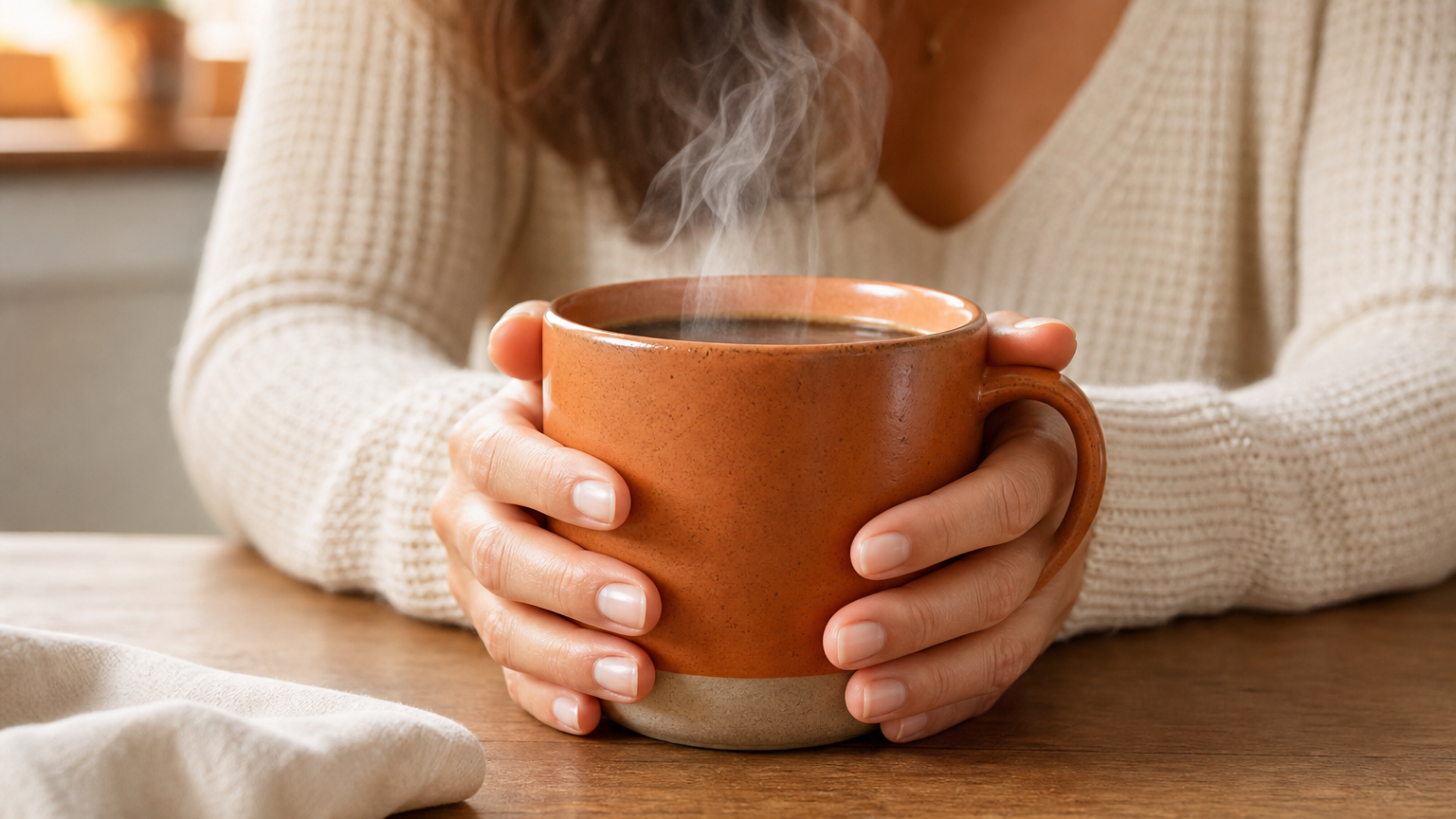
If you quit drinking and your coffee suddenly feels like too much, here is why caffeine sensitivity rises in early sobriety and whether to taper it too.
Although it isn't a treatment for alcohol use disorder (AUD), the Reframe app can help you cut back on drinking gradually with the science-backed knowledge to empower you 100% of the way. Our proven program has helped millions of people around the world drink less and live more. And we want to help you get there, too!
The Reframe app equips you with the knowledge and skills you need to not only survive drinking less, but to thrive while you navigate the journey. Our daily research-backed readings teach you the neuroscience of alcohol, and our in-app Toolkit provides the resources and activities you need to navigate each challenge.
You'll meet millions of fellow Reframers in our 24/7 Forum chat and daily Zoom check-in meetings. Receive encouragement from people worldwide who know exactly what you're going through! You'll also have the opportunity to connect with our licensed Reframe coaches for more personalized guidance.
Plus, we're always introducing new features to optimize your in-app experience. We recently launched our in-app chatbot, Melody, powered by the world's most powerful AI technology. Melody is here to help as you adjust to a life with less (or no) alcohol.
And that's not all! Every month, we launch fun challenges, like Dry/Damp January, Mental Health May, and Outdoorsy June. You won't want to miss out on the chance to participate alongside fellow Reframers (or solo if that's more your thing!).
The Reframe app is free for 7 days, so you don't have anything to lose by trying it. Are you ready to feel empowered and discover life beyond alcohol? Then download our app through the App Store or Google Play today!
Not everyone needs to quit coffee after quitting alcohol, but plenty of people find that their usual caffeine intake suddenly feels like too much. That is because removing alcohol tends to raise caffeine sensitivity: your nervous system is recalibrating, and caffeine's jittery, heart-racing effects can mimic or trigger the same anxiety and restlessness that drive cravings. The practical move is usually to dial caffeine back and watch how your anxiety responds, rather than quit it overnight. Reframe can help you track these patterns so you can tell which jitters are caffeine and which are something else.
Here is a familiar scene. You stopped drinking, you are proud of it, and then a couple of weeks in your morning coffee starts feeling like it was spiked. Your heart speeds up, your hands feel buzzy, and a low hum of anxiety follows you around until lunch. Nothing about your coffee changed. Something about you did. This post unpacks why that happens, whether your caffeine intake is likely to creep up after you quit drinking, how a stimulant can quietly feed cravings, and how to adjust without trading one crutch for another. We will keep it honest and specific, because a vague "just relax" is not useful when your nervous system is the thing that will not relax.
Coffee feels stronger after you quit drinking because your nervous system is running hot. Alcohol is a depressant, and with chronic use the brain compensates by dialing up its excitatory machinery; once alcohol is gone, that revved-up tone lingers, and caffeine, a stimulant, lands on top of an already over-aroused system. The same cup hits harder because the baseline shifted.
To get specific about the mechanism: chronic heavy drinking pushes the brain to downregulate its calming GABA activity and upregulate excitatory glutamate to keep balance. When alcohol is removed, a review in StatPearls describes a relative deficit of GABA alongside an excess of glutamate, which produces the excitatory, keyed-up state many people feel in early sobriety. A separate review in Frontiers in Neural Circuits notes that ethanol directly impacts the GABAergic system, contributing to GABAergic dysregulations that vary depending on the intensity and duration of alcohol consumption. So the backdrop is a system primed to overreact.
Now add the stimulant. Caffeine is a stimulant, and a review in PMC notes that high-dose caffeine consumption is associated with increases in anxiety and stress levels. Put those two things together: a nervous system already leaning toward overstimulation, plus a substance that pushes it further in that direction. It is easy to see how a long-standing coffee habit can suddenly feel like overstimulation rather than a gentle lift.
The short version is that your brain spent a long time counterbalancing a depressant, and now there is nothing to counterbalance. That excitatory tone does not switch off the moment you put the glass down; it eases over time. Early sobriety also tends to scramble sleep and shift the body's stress-hormone rhythm, and both of those make caffeine's edge more noticeable. None of this means something is wrong with you. It means your system is mid-recalibration, and it is temporarily more reactive than it will be later.
If a cup of coffee used to feel like nothing and now feels like a lot, your tolerance has not necessarily changed at the receptor level so much as your starting point has. When you begin the day more aroused and more anxious than you used to, the same dose of stimulant pushes you past the comfortable line faster. As the nervous system settles, many people find caffeine feels closer to normal again, which is exactly why a temporary adjustment, rather than a permanent ban, is usually the right call.
Yes, for a lot of people caffeine intake rises after they stop or cut back on alcohol. Coffee tends to slide into the ritual and habit slot that alcohol used to occupy: the cup in hand, the thing to do with your hands, the reliable little lift. That is not automatically a problem, but it is worth watching so a more anxious, over-caffeinated version of you does not quietly replace the old habit.
There is research behind this pattern. A study of people in recovery published in Alcoholism: Clinical and Experimental Research found that a greater proportion of participants drank coffee, and in larger amounts, than the general population, and that participants described the effects as providing stimulation and reducing negative affect. Read that sentence again, because it is the whole story in miniature. Caffeine is legal, socially encouraged, and genuinely rewarding, which makes it an easy stand-in for the chemical comfort alcohol used to provide.
The morning lift and the social cup are the two big on-ramps. You wake up tired because your sleep is still adjusting, so you reach for more coffee. You meet a friend and "let's grab a coffee" replaces "let's grab a drink." Both are reasonable, both are better than drinking, and both can compound until you are running on far more caffeine than you realize. If you are taking stock of your overall patterns, Reframe's mindful drinking program is built around noticing exactly this kind of substitution before it becomes invisible. You might also find it useful to take the What Type of Drinker Are You? quiz to think about which rituals you are actually trying to replace.
Caffeine can feed cravings indirectly, mostly through two channels. First, the physical signature of too much caffeine, a racing heart, restlessness, edginess, closely resembles the body sensations that often arrive just before a craving. When you feel keyed up, the brain can read that arousal as a cue to seek the calming effect alcohol used to deliver. Second, caffeine disrupts sleep, and poor sleep is a well-documented relapse risk.
That first point is worth sitting with for a second, because it is more about interpretation than chemistry. If your chest is fluttering and your thoughts are racing, your brain reaches for an explanation, and if alcohol was your old answer to "I feel wound up," that wiring is still warm. The arousal itself becomes a false alarm. Many people in early sobriety describe a wave they assume is a craving, only to realize later it was the third coffee talking. Recognizing the jitters as caffeine rather than as a true urge takes a surprising amount of power out of them, which is one reason simply tracking the timeline between your coffee and your discomfort is so useful.
The sleep connection is the better-evidenced one. A study published in the American Journal of Psychiatry followed people after they stopped drinking and found that 60% of those with baseline insomnia relapsed, compared with 30% of those without it, and insomnia remained a robust predictor of relapse even after statistical adjustment. Caffeine late in the day is one of the most common, most fixable contributors to poor sleep. So a late-afternoon cup is not just an anxiety problem in the moment; it can ripple into the night and quietly raise your risk the next day.
Cravings rarely announce themselves in words. More often they show up as a physical state, tightness, restlessness, a vague urgency, that your brain then labels. Because caffeine produces a strikingly similar physical state, it can essentially counterfeit the opening notes of a craving. The fix is not dramatic. It is mostly about putting language to what is happening: "this is caffeine, not a relapse warning." Naming it correctly interrupts the automatic slide from sensation to urge.
Bad sleep makes everything harder, including saying no. When you are underslept, your tolerance for discomfort drops, your mood frays, and the brain's reward-seeking gets louder. That is the loop: caffeine too late, worse sleep, lower resilience the next day, stronger pull toward an easy fix. Protecting sleep is one of the highest-leverage things you can do in early sobriety, and managing caffeine timing is one of the simplest levers you have. For more on managing urges directly, Reframe's guide on how to stop alcohol cravings pairs well with this.
Most people do not need to quit coffee entirely to feel calmer; cutting back and shifting it earlier in the day usually delivers most of the anxiety benefit. Quitting caffeine cold turkey also triggers its own withdrawal, which can make early sobriety feel like it is going badly when it is not. The smarter approach for the majority is to reduce, observe, and adjust rather than to slam the brakes.
Here is the trap with going fully caffeine-free overnight. A review of caffeine withdrawal in Psychopharmacology found that headache occurred in about half of people, that symptoms typically started 12 to 24 hours after the last dose and lasted roughly 2 to 9 days, and that they could appear from intakes as low as 100 mg a day. Now imagine stacking a pounding headache, fatigue, and a flat mood on top of the adjustment your body is already making to no alcohol. It is easy to misread that pile-on as "sobriety is making me feel terrible," which is exactly the wrong lesson to draw.
For a reference point, the FDA cites 400 mg of caffeine a day, roughly two to three 12-ounce cups of coffee, as an amount not generally tied to negative effects for most healthy adults, while stressing there is wide variation in how sensitive people are. That last clause matters for this audience. Your early-sobriety nervous system may be more reactive than the average, so the number that works for a friend may be more than you can comfortably handle right now.
For most people, the win comes from less coffee, earlier in the day, with attention paid to how anxiety responds. If your jitters and afternoon dread ease when you drop from four cups to two and stop drinking it after noon, you have your answer without ever going caffeine-free. This is the path of least resistance and least suffering, and it keeps a comforting ritual intact.
There is a subset of people, especially those with high baseline anxiety, a history of panic, or anxiety that clearly spikes with any caffeine, who do benefit from a temporary caffeine-free stretch. The keyword is temporary. The point is to remove a variable so you can see your true anxiety baseline, then reintroduce caffeine carefully if you want it back. If you are weighing how your overall consumption fits the bigger picture, the Am I Drinking Too Much? quiz can help you frame the question honestly.
The reliable way to lower caffeine without inviting a withdrawal headache is to step down gradually rather than stop all at once. StatPearls notes that caffeine withdrawal follows abrupt cessation or a substantial sudden reduction, and that gradual reduction is the way to avoid the worst of it. A slow taper also keeps you from stacking caffeine withdrawal on top of the adjustment to alcohol-free living.
A simple version looks like this. Drop one cup every few days rather than cutting several at once, so your body has time to adapt. Move whatever caffeine you keep to earlier in the day, ideally finishing by early afternoon, so it clears before bedtime; this is ordinary sleep hygiene, but it matters more right now because your alcohol-free sleep is still finding its rhythm. Swap a later cup for decaf, herbal tea, or sparkling water, which keeps the warm-mug or fizzy-drink ritual without the stimulant. And pair the change with regular food and water, because erratic blood sugar and mild dehydration both mimic and amplify jitteriness.
Think in small subtractions, not heroic overhauls. If you drink four cups, go to three for a few days, then two, pausing at any level that feels comfortable. There is no prize for reaching zero fast, and the slower you go, the less your body protests. Give each step a few days before judging it, because the first day of any reduction is the least representative.
A lot of the coffee habit is the ritual, not the chemistry: the pause, the warmth, the small reward. Decaf scratches almost all of that itch. So does a herbal tea, a hot chocolate, or a fancy sparkling water in a nice glass. Reframe's mindful drinking tools are built around swapping rituals deliberately, which is the same move here, just pointed at a different mug. Track how your anxiety and any urges respond over one to two weeks before you decide where your final caffeine level should land.
Adjusting your own caffeine is reasonable and low-risk. Self-managing alcohol withdrawal or untreated panic is not. Caffeine cutbacks can take the edge off jitteriness, but they are not a substitute for medical care, and a few situations call for a professional rather than a smaller coffee.
Severe alcohol withdrawal is the clearest line. According to MedlinePlus, delirium tremens is a medical emergency that can involve confusion, hallucinations, an irregular heartbeat, and seizures, and it advises going to the emergency room or calling 911 if those symptoms appear. That is not a coffee question, and it is not something to ride out alone. If you are a heavy daily drinker planning to stop, talk to a clinician first, because severe withdrawal can be life-threatening and a doctor can help you do it safely.
The other situations are quieter but still worth a call. Persistent panic attacks, intrusive low mood, or anxiety that simply does not ease no matter how you adjust your caffeine all warrant talking to a healthcare provider; those may be signals of something that caffeine timing cannot fix. And if you take medication for anxiety or depression, changing your caffeine and alcohol can shift how you feel, so loop in your prescriber rather than guessing. If you are not sure where your drinking itself stands, the What Type of Drinker Are You? quiz is a low-stakes starting point, and you can always download Reframe to track the patterns between your caffeine, your sleep, and your mood over time.
Not everyone needs to quit coffee after quitting alcohol, but plenty of people find that their usual caffeine intake suddenly feels like too much. That is because removing alcohol tends to raise caffeine sensitivity: your nervous system is recalibrating, and caffeine's jittery, heart-racing effects can mimic or trigger the same anxiety and restlessness that drive cravings. The practical move is usually to dial caffeine back and watch how your anxiety responds, rather than quit it overnight. Reframe can help you track these patterns so you can tell which jitters are caffeine and which are something else.
Here is a familiar scene. You stopped drinking, you are proud of it, and then a couple of weeks in your morning coffee starts feeling like it was spiked. Your heart speeds up, your hands feel buzzy, and a low hum of anxiety follows you around until lunch. Nothing about your coffee changed. Something about you did. This post unpacks why that happens, whether your caffeine intake is likely to creep up after you quit drinking, how a stimulant can quietly feed cravings, and how to adjust without trading one crutch for another. We will keep it honest and specific, because a vague "just relax" is not useful when your nervous system is the thing that will not relax.
Coffee feels stronger after you quit drinking because your nervous system is running hot. Alcohol is a depressant, and with chronic use the brain compensates by dialing up its excitatory machinery; once alcohol is gone, that revved-up tone lingers, and caffeine, a stimulant, lands on top of an already over-aroused system. The same cup hits harder because the baseline shifted.
To get specific about the mechanism: chronic heavy drinking pushes the brain to downregulate its calming GABA activity and upregulate excitatory glutamate to keep balance. When alcohol is removed, a review in StatPearls describes a relative deficit of GABA alongside an excess of glutamate, which produces the excitatory, keyed-up state many people feel in early sobriety. A separate review in Frontiers in Neural Circuits notes that ethanol directly impacts the GABAergic system, contributing to GABAergic dysregulations that vary depending on the intensity and duration of alcohol consumption. So the backdrop is a system primed to overreact.
Now add the stimulant. Caffeine is a stimulant, and a review in PMC notes that high-dose caffeine consumption is associated with increases in anxiety and stress levels. Put those two things together: a nervous system already leaning toward overstimulation, plus a substance that pushes it further in that direction. It is easy to see how a long-standing coffee habit can suddenly feel like overstimulation rather than a gentle lift.
The short version is that your brain spent a long time counterbalancing a depressant, and now there is nothing to counterbalance. That excitatory tone does not switch off the moment you put the glass down; it eases over time. Early sobriety also tends to scramble sleep and shift the body's stress-hormone rhythm, and both of those make caffeine's edge more noticeable. None of this means something is wrong with you. It means your system is mid-recalibration, and it is temporarily more reactive than it will be later.
If a cup of coffee used to feel like nothing and now feels like a lot, your tolerance has not necessarily changed at the receptor level so much as your starting point has. When you begin the day more aroused and more anxious than you used to, the same dose of stimulant pushes you past the comfortable line faster. As the nervous system settles, many people find caffeine feels closer to normal again, which is exactly why a temporary adjustment, rather than a permanent ban, is usually the right call.
Yes, for a lot of people caffeine intake rises after they stop or cut back on alcohol. Coffee tends to slide into the ritual and habit slot that alcohol used to occupy: the cup in hand, the thing to do with your hands, the reliable little lift. That is not automatically a problem, but it is worth watching so a more anxious, over-caffeinated version of you does not quietly replace the old habit.
There is research behind this pattern. A study of people in recovery published in Alcoholism: Clinical and Experimental Research found that a greater proportion of participants drank coffee, and in larger amounts, than the general population, and that participants described the effects as providing stimulation and reducing negative affect. Read that sentence again, because it is the whole story in miniature. Caffeine is legal, socially encouraged, and genuinely rewarding, which makes it an easy stand-in for the chemical comfort alcohol used to provide.
The morning lift and the social cup are the two big on-ramps. You wake up tired because your sleep is still adjusting, so you reach for more coffee. You meet a friend and "let's grab a coffee" replaces "let's grab a drink." Both are reasonable, both are better than drinking, and both can compound until you are running on far more caffeine than you realize. If you are taking stock of your overall patterns, Reframe's mindful drinking program is built around noticing exactly this kind of substitution before it becomes invisible. You might also find it useful to take the What Type of Drinker Are You? quiz to think about which rituals you are actually trying to replace.
Caffeine can feed cravings indirectly, mostly through two channels. First, the physical signature of too much caffeine, a racing heart, restlessness, edginess, closely resembles the body sensations that often arrive just before a craving. When you feel keyed up, the brain can read that arousal as a cue to seek the calming effect alcohol used to deliver. Second, caffeine disrupts sleep, and poor sleep is a well-documented relapse risk.
That first point is worth sitting with for a second, because it is more about interpretation than chemistry. If your chest is fluttering and your thoughts are racing, your brain reaches for an explanation, and if alcohol was your old answer to "I feel wound up," that wiring is still warm. The arousal itself becomes a false alarm. Many people in early sobriety describe a wave they assume is a craving, only to realize later it was the third coffee talking. Recognizing the jitters as caffeine rather than as a true urge takes a surprising amount of power out of them, which is one reason simply tracking the timeline between your coffee and your discomfort is so useful.
The sleep connection is the better-evidenced one. A study published in the American Journal of Psychiatry followed people after they stopped drinking and found that 60% of those with baseline insomnia relapsed, compared with 30% of those without it, and insomnia remained a robust predictor of relapse even after statistical adjustment. Caffeine late in the day is one of the most common, most fixable contributors to poor sleep. So a late-afternoon cup is not just an anxiety problem in the moment; it can ripple into the night and quietly raise your risk the next day.
Cravings rarely announce themselves in words. More often they show up as a physical state, tightness, restlessness, a vague urgency, that your brain then labels. Because caffeine produces a strikingly similar physical state, it can essentially counterfeit the opening notes of a craving. The fix is not dramatic. It is mostly about putting language to what is happening: "this is caffeine, not a relapse warning." Naming it correctly interrupts the automatic slide from sensation to urge.
Bad sleep makes everything harder, including saying no. When you are underslept, your tolerance for discomfort drops, your mood frays, and the brain's reward-seeking gets louder. That is the loop: caffeine too late, worse sleep, lower resilience the next day, stronger pull toward an easy fix. Protecting sleep is one of the highest-leverage things you can do in early sobriety, and managing caffeine timing is one of the simplest levers you have. For more on managing urges directly, Reframe's guide on how to stop alcohol cravings pairs well with this.
Most people do not need to quit coffee entirely to feel calmer; cutting back and shifting it earlier in the day usually delivers most of the anxiety benefit. Quitting caffeine cold turkey also triggers its own withdrawal, which can make early sobriety feel like it is going badly when it is not. The smarter approach for the majority is to reduce, observe, and adjust rather than to slam the brakes.
Here is the trap with going fully caffeine-free overnight. A review of caffeine withdrawal in Psychopharmacology found that headache occurred in about half of people, that symptoms typically started 12 to 24 hours after the last dose and lasted roughly 2 to 9 days, and that they could appear from intakes as low as 100 mg a day. Now imagine stacking a pounding headache, fatigue, and a flat mood on top of the adjustment your body is already making to no alcohol. It is easy to misread that pile-on as "sobriety is making me feel terrible," which is exactly the wrong lesson to draw.
For a reference point, the FDA cites 400 mg of caffeine a day, roughly two to three 12-ounce cups of coffee, as an amount not generally tied to negative effects for most healthy adults, while stressing there is wide variation in how sensitive people are. That last clause matters for this audience. Your early-sobriety nervous system may be more reactive than the average, so the number that works for a friend may be more than you can comfortably handle right now.
For most people, the win comes from less coffee, earlier in the day, with attention paid to how anxiety responds. If your jitters and afternoon dread ease when you drop from four cups to two and stop drinking it after noon, you have your answer without ever going caffeine-free. This is the path of least resistance and least suffering, and it keeps a comforting ritual intact.
There is a subset of people, especially those with high baseline anxiety, a history of panic, or anxiety that clearly spikes with any caffeine, who do benefit from a temporary caffeine-free stretch. The keyword is temporary. The point is to remove a variable so you can see your true anxiety baseline, then reintroduce caffeine carefully if you want it back. If you are weighing how your overall consumption fits the bigger picture, the Am I Drinking Too Much? quiz can help you frame the question honestly.
The reliable way to lower caffeine without inviting a withdrawal headache is to step down gradually rather than stop all at once. StatPearls notes that caffeine withdrawal follows abrupt cessation or a substantial sudden reduction, and that gradual reduction is the way to avoid the worst of it. A slow taper also keeps you from stacking caffeine withdrawal on top of the adjustment to alcohol-free living.
A simple version looks like this. Drop one cup every few days rather than cutting several at once, so your body has time to adapt. Move whatever caffeine you keep to earlier in the day, ideally finishing by early afternoon, so it clears before bedtime; this is ordinary sleep hygiene, but it matters more right now because your alcohol-free sleep is still finding its rhythm. Swap a later cup for decaf, herbal tea, or sparkling water, which keeps the warm-mug or fizzy-drink ritual without the stimulant. And pair the change with regular food and water, because erratic blood sugar and mild dehydration both mimic and amplify jitteriness.
Think in small subtractions, not heroic overhauls. If you drink four cups, go to three for a few days, then two, pausing at any level that feels comfortable. There is no prize for reaching zero fast, and the slower you go, the less your body protests. Give each step a few days before judging it, because the first day of any reduction is the least representative.
A lot of the coffee habit is the ritual, not the chemistry: the pause, the warmth, the small reward. Decaf scratches almost all of that itch. So does a herbal tea, a hot chocolate, or a fancy sparkling water in a nice glass. Reframe's mindful drinking tools are built around swapping rituals deliberately, which is the same move here, just pointed at a different mug. Track how your anxiety and any urges respond over one to two weeks before you decide where your final caffeine level should land.
Adjusting your own caffeine is reasonable and low-risk. Self-managing alcohol withdrawal or untreated panic is not. Caffeine cutbacks can take the edge off jitteriness, but they are not a substitute for medical care, and a few situations call for a professional rather than a smaller coffee.
Severe alcohol withdrawal is the clearest line. According to MedlinePlus, delirium tremens is a medical emergency that can involve confusion, hallucinations, an irregular heartbeat, and seizures, and it advises going to the emergency room or calling 911 if those symptoms appear. That is not a coffee question, and it is not something to ride out alone. If you are a heavy daily drinker planning to stop, talk to a clinician first, because severe withdrawal can be life-threatening and a doctor can help you do it safely.
The other situations are quieter but still worth a call. Persistent panic attacks, intrusive low mood, or anxiety that simply does not ease no matter how you adjust your caffeine all warrant talking to a healthcare provider; those may be signals of something that caffeine timing cannot fix. And if you take medication for anxiety or depression, changing your caffeine and alcohol can shift how you feel, so loop in your prescriber rather than guessing. If you are not sure where your drinking itself stands, the What Type of Drinker Are You? quiz is a low-stakes starting point, and you can always download Reframe to track the patterns between your caffeine, your sleep, and your mood over time.
When illness or pregnancy forces you to stop drinking, does that pause build lasting change or just delay it? Here is what the evidence says, and how to make it stick.
Although it isn't a treatment for alcohol use disorder (AUD), the Reframe app can help you cut back on drinking gradually with the science-backed knowledge to empower you 100% of the way. Our proven program has helped millions of people around the world drink less and live more. And we want to help you get there, too!
The Reframe app equips you with the knowledge and skills you need to not only survive drinking less, but to thrive while you navigate the journey. Our daily research-backed readings teach you the neuroscience of alcohol, and our in-app Toolkit provides the resources and activities you need to navigate each challenge.
You'll meet millions of fellow Reframers in our 24/7 Forum chat and daily Zoom check-in meetings. Receive encouragement from people worldwide who know exactly what you're going through! You'll also have the opportunity to connect with our licensed Reframe coaches for more personalized guidance.
Plus, we're always introducing new features to optimize your in-app experience. We recently launched our in-app chatbot, Melody, powered by the world's most powerful AI technology. Melody is here to help as you adjust to a life with less (or no) alcohol.
And that's not all! Every month, we launch fun challenges, like Dry/Damp January, Mental Health May, and Outdoorsy June. You won't want to miss out on the chance to participate alongside fellow Reframers (or solo if that's more your thing!).
The Reframe app is free for 7 days, so you don't have anything to lose by trying it. Are you ready to feel empowered and discover life beyond alcohol? Then download our app through the App Store or Google Play today!
A forced pause from drinking, whether it comes from being sick or being pregnant, can absolutely become lasting change, but it does not happen automatically. Externally imposed abstinence pulls the alcohol out of your life without touching the reasons you drank in the first place, so drinking often resumes once the crisis lifts unless you deliberately turn the pause into a chosen one. The encouraging part: any extended break, even one you did not pick, gives your brain and body a genuine head start, and that momentum is something you can build on. Reframe is built for exactly this moment, helping you convert an imposed break into a change you actually want.
Let's talk honestly about what happens when life makes the decision for you. A nasty flu, a course of antibiotics, or a positive pregnancy test can stop your drinking cold, and for a stretch of days, weeks, or months, you simply do not drink. That break is real, and it counts. The question is whether it sticks once the external reason evaporates, and that is where most of the interesting psychology lives. This post walks through what crisis driven sobriety can and cannot do, why being sick is both a brake and a hidden trigger, why the postpartum window deserves a plan, and exactly how to carry an involuntary break forward into something durable.
Being sick can jump-start a reduction, but it rarely builds lasting change on its own, because the motivation is borrowed from your symptoms rather than your values. Illness physically interrupts drinking and hands your body a real break. The catch is that the moment you feel better, the original triggers and routines are exactly where you left them, so drinking commonly resumes unless you treat the pause as a starting point instead of a layover.
When you are running a fever, nauseated, exhausted, or on medication, alcohol loses its appeal fast. Food and drinks taste off, energy is scarce, and the whole ritual of pouring a glass feels like more effort than it's worth. On top of that, mixing alcohol with medicine is a genuinely bad idea: the National Institute on Alcohol Abuse and Alcoholism notes that combining alcohol with certain medicines can cause nausea, drowsiness, internal bleeding, and other harmful effects, and can make a medication useless or dangerous. So illness creates a natural, sometimes days-long gap in drinking without you having to white-knuckle anything. That gap is the head start.
Here's the uncomfortable truth about quitting alcohol while sick: the brake was never really yours. The flu did the heavy lifting. Once your appetite returns and your energy comes back, the cues that used to cue a drink, the end of a workday, a certain chair, a particular friend's text, all light up again on schedule. The pause lowered your tolerance and loosened the habit a little, which is real momentum, but momentum without a destination just coasts to a stop. Forced abstinence does not, by itself, install any new coping skills or routines to take alcohol's place, so the path of least resistance leads right back to the bottle.
A bout of illness can double as a useful natural experiment. You get a few sober days handed to you, and you get to notice what they actually feel like once the worst symptoms pass: maybe you sleep more deeply, wake up clearer, or feel a little less anxious in the mornings. That noticing is the bridge. If you can name even one benefit that has nothing to do with being sick, you have started converting a circumstantial pause into a reason of your own. We'll get into the exact how-to later, but the principle is simple: do not just wait out the illness, pay attention during it.
Abstinence driven by an outside circumstance is more fragile than abstinence you choose, because the "why" vanishes the instant the circumstance does. This is not a character flaw or a willpower shortage. It is a predictable feature of how human motivation actually works, and understanding it is what lets you outmaneuver it.
The cleanest explanation comes from Self-Determination Theory, the research framework developed by Edward Deci and Richard Ryan. As the University of Rochester Medical Center describes it, when people are motivated by their own values, interest, or enjoyment (autonomous motivation), they tend to be more persistent over the long term than when they are motivated mainly by rewards, punishments, and internal pressure. A pregnancy, an illness, a doctor's order, a rule someone else set: those are all controlled motivation. They can absolutely stop you from drinking right now. What they cannot do is persist once they are gone, because nothing inside you is holding the line.
Internally motivated change behaves differently because it is wired into your own values and your sense of who you are. "I do not drink because it is wrecking my sleep and I value feeling sharp" survives a Friday night, a stressful week, and a celebration, because the reason travels with you. An external pause does not build that. What it does build is time, and time is the raw material you can use to develop your own reasons before the external brake lifts. That is the entire opportunity hiding inside crisis driven sobriety: you have been handed a free trial of not drinking, and the trial is most valuable if you spend it figuring out whether you want to keep going on your own terms. Reframe's mindful drinking program is designed around exactly that shift, helping you notice patterns and build internal buy-in rather than relying on a rule that will eventually expire.
Pregnancy itself does not make later sobriety harder, but the postpartum period is a well-documented high-risk window for resuming drinking. The pattern is striking: a prospective study published in Drug and Alcohol Dependence found that 83% of women achieved abstinence from at least one substance during pregnancy, yet return to use during the first year after delivery is common, and one analysis of that work put first-year relapse rates as high as roughly 80%, with the average return to drinking occurring a few months after birth. The pregnancy did its job beautifully; the months afterward are where the plan has to come from somewhere else.
The mechanics here are almost cruelly well-timed. During pregnancy, the motivation is concrete, external, and impossible to argue with: there is a baby. After birth, that external brake lifts at exactly the moment stress, sleep deprivation, and isolation tend to spike. The reason to abstain disappears just as the pressure to cope ramps up. Research bears this out: in a study published in the Journal of Studies on Alcohol and Drugs, about 38% of women who had been frequent drinkers before pregnancy reported risky drinking after giving birth. The same body of work, as summarized in that review, describes drinking falling sharply during pregnancy and then climbing back toward pre-pregnancy levels within the first year, with the steepest rise in the first six months.
Interestingly, that same research found that women who breastfed were significantly less likely to relapse into risky drinking. Breastfeeding effectively extends the external "why," which can be genuinely useful, but it also means the window simply moves: when breastfeeding ends, the brake lifts again, so planning for that transition matters too.
Months of abstinence are a real asset, not a fluke. They prove sobriety is possible for you, they lower your tolerance, and they reset a lot of automatic habits. To carry that forward, the work is the same as with any crisis driven pause, just front-loaded: identify your own reasons to stay alcohol-free beyond the pregnancy, and build postpartum support before the baby arrives, not in the exhausted fog afterward. If you are weighing where your drinking actually sits, the Am I Drinking Too Much? quiz is a low-stakes place to start getting honest with yourself. For anyone navigating drinking and pregnancy more broadly, our questions about alcohol during pregnancy guide covers the medical side in depth.
Relapse risk peaks in the days and weeks right after the crisis lifts, when the external reason to abstain disappears but the old habits are still fully intact. The postpartum data makes this concrete, with drinking climbing back fastest in the first six months, but the same shape applies to recovering from an illness: the danger is not during the pause, it is right at the edge of it.
A few forces converge in that window. First is what we might call the permission moment. Feeling better, or finishing a pregnancy, can quietly feel like a license to drink again, as if the pause earned you a reward. Second, the triggers that went dormant during the crisis, social settings, stress, familiar routines, come roaring back all at once, and they have not weakened in your absence. Third, and this one is easy to overlook, your tolerance has likely dropped. Because tolerance to alcohol develops with regular use, after a break, picking up where you left off may hit harder than you expect.
The warning signs are usually visible if you know to watch for them. Romanticizing past drinking, mentally planning a "celebration" drink to mark the end of the crisis, or telling yourself that one won't hurt are all classic precursors. The good news embedded in all of this: because the window is so predictable, you can plan for it in advance. Knowing your drinking triggers and having a few concrete strategies ready before you hit the edge is most of the battle. Our relapse prevention guide goes deeper on building that safety net.
Convert external motivation into internal motivation by naming your own reasons, noticing the benefits you are already feeling, and building new routines before the crisis ends. The single most important move is to stop treating the pause as something that is happening to you and start treating it as something you are doing. That reframe, from "I have to" to "I want to," is the whole game.
Start by writing down what you have personally gained from the break, not the external reason but the everyday payoffs: deeper sleep, more money in your account, a clearer head, a steadier mood. Make it specific to your life. Tracking your days also helps enormously, because a streak you are counting becomes something you own rather than something imposed on you. If you are curious how your patterns and personality factor in, the What Type of Drinker Are You? quiz can sharpen the picture. And if money is part of your motivation, an alcohol spend calculator can turn a vague sense of waste into a number that genuinely lands.
The other half of the work is mechanical: figure out what role alcohol actually played and build a specific replacement for each of those moments. If a drink was how you decompressed after work, you need a different decompression ritual ready before the external brake lifts, not improvised in the moment a craving hits. Tell a few trusted people what you are doing, so accountability outlasts the circumstance that started it. Set up your support for the post-crisis window before you reach it, whether that is a community, an app, or a standing plan with a friend. When you are ready to make the shift deliberate, you can download Reframe and lean on structure built for precisely this transition. If you have questions about how the program works, Reframe's FAQ covers the basics.
Plan for illness as a trigger by pre-deciding your non-alcohol comfort routine and removing easy access to drink before you are too miserable to make good decisions. Being sick is not only a brake on drinking; it is also a setup for cravings, because discomfort, boredom, and a blown-up routine are exactly the conditions that tend to push people toward a glass. The fix is to make the comfortable choice the easy one ahead of time.
Stock soothing alternatives in advance so they are already in the house when you feel awful: warm non-alcoholic drinks, electrolytes, easy comfort food, and entertainment that requires zero effort. Lean on rest, hydration, and gentle distraction to ride out a craving rather than trying to "treat" symptoms with alcohol, which tends to backfire. There is a physiological reason to skip the drink entirely when you are unwell: an overview in Alcohol Research: Current Reviews describes how alcohol disrupts the immune system and is associated with slower, less complete recovery from infection and poorer wound healing. In other words, drinking while sick works against the very thing your body is trying to do.
This is the sneaky part. Plenty of over-the-counter remedies, including some cough and cold products and certain herbal preparations, contain alcohol or interact with it, and a "hot toddy" is essentially a drink wearing a wellness costume. The NIAAA guidance referenced earlier flags that many OTC medicines and even some herbal remedies can react with alcohol, which is a problem both for your recovery and for the habit you are trying to interrupt. When you are unsure whether a remedy is safe alongside alcohol, or whether a medication and alcohol mix at all, treat it as a medical decision rather than a guess: a quick question to a pharmacist or clinician can help you do this safely and is far smarter than experimenting while you are already run down.
A forced pause from drinking, whether it comes from being sick or being pregnant, can absolutely become lasting change, but it does not happen automatically. Externally imposed abstinence pulls the alcohol out of your life without touching the reasons you drank in the first place, so drinking often resumes once the crisis lifts unless you deliberately turn the pause into a chosen one. The encouraging part: any extended break, even one you did not pick, gives your brain and body a genuine head start, and that momentum is something you can build on. Reframe is built for exactly this moment, helping you convert an imposed break into a change you actually want.
Let's talk honestly about what happens when life makes the decision for you. A nasty flu, a course of antibiotics, or a positive pregnancy test can stop your drinking cold, and for a stretch of days, weeks, or months, you simply do not drink. That break is real, and it counts. The question is whether it sticks once the external reason evaporates, and that is where most of the interesting psychology lives. This post walks through what crisis driven sobriety can and cannot do, why being sick is both a brake and a hidden trigger, why the postpartum window deserves a plan, and exactly how to carry an involuntary break forward into something durable.
Being sick can jump-start a reduction, but it rarely builds lasting change on its own, because the motivation is borrowed from your symptoms rather than your values. Illness physically interrupts drinking and hands your body a real break. The catch is that the moment you feel better, the original triggers and routines are exactly where you left them, so drinking commonly resumes unless you treat the pause as a starting point instead of a layover.
When you are running a fever, nauseated, exhausted, or on medication, alcohol loses its appeal fast. Food and drinks taste off, energy is scarce, and the whole ritual of pouring a glass feels like more effort than it's worth. On top of that, mixing alcohol with medicine is a genuinely bad idea: the National Institute on Alcohol Abuse and Alcoholism notes that combining alcohol with certain medicines can cause nausea, drowsiness, internal bleeding, and other harmful effects, and can make a medication useless or dangerous. So illness creates a natural, sometimes days-long gap in drinking without you having to white-knuckle anything. That gap is the head start.
Here's the uncomfortable truth about quitting alcohol while sick: the brake was never really yours. The flu did the heavy lifting. Once your appetite returns and your energy comes back, the cues that used to cue a drink, the end of a workday, a certain chair, a particular friend's text, all light up again on schedule. The pause lowered your tolerance and loosened the habit a little, which is real momentum, but momentum without a destination just coasts to a stop. Forced abstinence does not, by itself, install any new coping skills or routines to take alcohol's place, so the path of least resistance leads right back to the bottle.
A bout of illness can double as a useful natural experiment. You get a few sober days handed to you, and you get to notice what they actually feel like once the worst symptoms pass: maybe you sleep more deeply, wake up clearer, or feel a little less anxious in the mornings. That noticing is the bridge. If you can name even one benefit that has nothing to do with being sick, you have started converting a circumstantial pause into a reason of your own. We'll get into the exact how-to later, but the principle is simple: do not just wait out the illness, pay attention during it.
Abstinence driven by an outside circumstance is more fragile than abstinence you choose, because the "why" vanishes the instant the circumstance does. This is not a character flaw or a willpower shortage. It is a predictable feature of how human motivation actually works, and understanding it is what lets you outmaneuver it.
The cleanest explanation comes from Self-Determination Theory, the research framework developed by Edward Deci and Richard Ryan. As the University of Rochester Medical Center describes it, when people are motivated by their own values, interest, or enjoyment (autonomous motivation), they tend to be more persistent over the long term than when they are motivated mainly by rewards, punishments, and internal pressure. A pregnancy, an illness, a doctor's order, a rule someone else set: those are all controlled motivation. They can absolutely stop you from drinking right now. What they cannot do is persist once they are gone, because nothing inside you is holding the line.
Internally motivated change behaves differently because it is wired into your own values and your sense of who you are. "I do not drink because it is wrecking my sleep and I value feeling sharp" survives a Friday night, a stressful week, and a celebration, because the reason travels with you. An external pause does not build that. What it does build is time, and time is the raw material you can use to develop your own reasons before the external brake lifts. That is the entire opportunity hiding inside crisis driven sobriety: you have been handed a free trial of not drinking, and the trial is most valuable if you spend it figuring out whether you want to keep going on your own terms. Reframe's mindful drinking program is designed around exactly that shift, helping you notice patterns and build internal buy-in rather than relying on a rule that will eventually expire.
Pregnancy itself does not make later sobriety harder, but the postpartum period is a well-documented high-risk window for resuming drinking. The pattern is striking: a prospective study published in Drug and Alcohol Dependence found that 83% of women achieved abstinence from at least one substance during pregnancy, yet return to use during the first year after delivery is common, and one analysis of that work put first-year relapse rates as high as roughly 80%, with the average return to drinking occurring a few months after birth. The pregnancy did its job beautifully; the months afterward are where the plan has to come from somewhere else.
The mechanics here are almost cruelly well-timed. During pregnancy, the motivation is concrete, external, and impossible to argue with: there is a baby. After birth, that external brake lifts at exactly the moment stress, sleep deprivation, and isolation tend to spike. The reason to abstain disappears just as the pressure to cope ramps up. Research bears this out: in a study published in the Journal of Studies on Alcohol and Drugs, about 38% of women who had been frequent drinkers before pregnancy reported risky drinking after giving birth. The same body of work, as summarized in that review, describes drinking falling sharply during pregnancy and then climbing back toward pre-pregnancy levels within the first year, with the steepest rise in the first six months.
Interestingly, that same research found that women who breastfed were significantly less likely to relapse into risky drinking. Breastfeeding effectively extends the external "why," which can be genuinely useful, but it also means the window simply moves: when breastfeeding ends, the brake lifts again, so planning for that transition matters too.
Months of abstinence are a real asset, not a fluke. They prove sobriety is possible for you, they lower your tolerance, and they reset a lot of automatic habits. To carry that forward, the work is the same as with any crisis driven pause, just front-loaded: identify your own reasons to stay alcohol-free beyond the pregnancy, and build postpartum support before the baby arrives, not in the exhausted fog afterward. If you are weighing where your drinking actually sits, the Am I Drinking Too Much? quiz is a low-stakes place to start getting honest with yourself. For anyone navigating drinking and pregnancy more broadly, our questions about alcohol during pregnancy guide covers the medical side in depth.
Relapse risk peaks in the days and weeks right after the crisis lifts, when the external reason to abstain disappears but the old habits are still fully intact. The postpartum data makes this concrete, with drinking climbing back fastest in the first six months, but the same shape applies to recovering from an illness: the danger is not during the pause, it is right at the edge of it.
A few forces converge in that window. First is what we might call the permission moment. Feeling better, or finishing a pregnancy, can quietly feel like a license to drink again, as if the pause earned you a reward. Second, the triggers that went dormant during the crisis, social settings, stress, familiar routines, come roaring back all at once, and they have not weakened in your absence. Third, and this one is easy to overlook, your tolerance has likely dropped. Because tolerance to alcohol develops with regular use, after a break, picking up where you left off may hit harder than you expect.
The warning signs are usually visible if you know to watch for them. Romanticizing past drinking, mentally planning a "celebration" drink to mark the end of the crisis, or telling yourself that one won't hurt are all classic precursors. The good news embedded in all of this: because the window is so predictable, you can plan for it in advance. Knowing your drinking triggers and having a few concrete strategies ready before you hit the edge is most of the battle. Our relapse prevention guide goes deeper on building that safety net.
Convert external motivation into internal motivation by naming your own reasons, noticing the benefits you are already feeling, and building new routines before the crisis ends. The single most important move is to stop treating the pause as something that is happening to you and start treating it as something you are doing. That reframe, from "I have to" to "I want to," is the whole game.
Start by writing down what you have personally gained from the break, not the external reason but the everyday payoffs: deeper sleep, more money in your account, a clearer head, a steadier mood. Make it specific to your life. Tracking your days also helps enormously, because a streak you are counting becomes something you own rather than something imposed on you. If you are curious how your patterns and personality factor in, the What Type of Drinker Are You? quiz can sharpen the picture. And if money is part of your motivation, an alcohol spend calculator can turn a vague sense of waste into a number that genuinely lands.
The other half of the work is mechanical: figure out what role alcohol actually played and build a specific replacement for each of those moments. If a drink was how you decompressed after work, you need a different decompression ritual ready before the external brake lifts, not improvised in the moment a craving hits. Tell a few trusted people what you are doing, so accountability outlasts the circumstance that started it. Set up your support for the post-crisis window before you reach it, whether that is a community, an app, or a standing plan with a friend. When you are ready to make the shift deliberate, you can download Reframe and lean on structure built for precisely this transition. If you have questions about how the program works, Reframe's FAQ covers the basics.
Plan for illness as a trigger by pre-deciding your non-alcohol comfort routine and removing easy access to drink before you are too miserable to make good decisions. Being sick is not only a brake on drinking; it is also a setup for cravings, because discomfort, boredom, and a blown-up routine are exactly the conditions that tend to push people toward a glass. The fix is to make the comfortable choice the easy one ahead of time.
Stock soothing alternatives in advance so they are already in the house when you feel awful: warm non-alcoholic drinks, electrolytes, easy comfort food, and entertainment that requires zero effort. Lean on rest, hydration, and gentle distraction to ride out a craving rather than trying to "treat" symptoms with alcohol, which tends to backfire. There is a physiological reason to skip the drink entirely when you are unwell: an overview in Alcohol Research: Current Reviews describes how alcohol disrupts the immune system and is associated with slower, less complete recovery from infection and poorer wound healing. In other words, drinking while sick works against the very thing your body is trying to do.
This is the sneaky part. Plenty of over-the-counter remedies, including some cough and cold products and certain herbal preparations, contain alcohol or interact with it, and a "hot toddy" is essentially a drink wearing a wellness costume. The NIAAA guidance referenced earlier flags that many OTC medicines and even some herbal remedies can react with alcohol, which is a problem both for your recovery and for the habit you are trying to interrupt. When you are unsure whether a remedy is safe alongside alcohol, or whether a medication and alcohol mix at all, treat it as a medical decision rather than a guess: a quick question to a pharmacist or clinician can help you do this safely and is far smarter than experimenting while you are already run down.

Quitting drinking? Here's exactly what to do with the alcohol in your home, fridge, and bar cart, plus how to handle gifted bottles and drinking guests.
Although it isn't a treatment for alcohol use disorder (AUD), the Reframe app can help you cut back on drinking gradually with the science-backed knowledge to empower you 100% of the way. Our proven program has helped millions of people around the world drink less and live more. And we want to help you get there, too!
The Reframe app equips you with the knowledge and skills you need to not only survive drinking less, but to thrive while you navigate the journey. Our daily research-backed readings teach you the neuroscience of alcohol, and our in-app Toolkit provides the resources and activities you need to navigate each challenge.
You'll meet millions of fellow Reframers in our 24/7 Forum chat and daily Zoom check-in meetings. Receive encouragement from people worldwide who know exactly what you're going through! You'll also have the opportunity to connect with our licensed Reframe coaches for more personalized guidance.
Plus, we're always introducing new features to optimize your in-app experience. We recently launched our in-app chatbot, Melody, powered by the world's most powerful AI technology. Melody is here to help as you adjust to a life with less (or no) alcohol.
And that's not all! Every month, we launch fun challenges, like Dry/Damp January, Mental Health May, and Outdoorsy June. You won't want to miss out on the chance to participate alongside fellow Reframers (or solo if that's more your thing!).
The Reframe app is free for 7 days, so you don't have anything to lose by trying it. Are you ready to feel empowered and discover life beyond alcohol? Then download our app through the App Store or Google Play today!
When you decide to quit drinking, the most cue-protective move is to physically remove alcohol from the spaces where you spend the most time, because visible bottles act as environmental triggers that keep cravings alive. Pour opened bottles down the drain, and for unopened or expensive alcohol you can return it, regift it, donate it where legal, or store it offsite if a housemate still drinks. Reducing in-home cues is one of the most reliable ways to lower how often cravings show up.
Let's be honest about something most quit-drinking advice skips over: the bottles already in your kitchen don't disappear the moment you make a decision. There's the half-finished wine in the door of the fridge, the bottle of something expensive a relative gave you two birthdays ago, the case of beer a friend left after a barbecue. Figuring out what to do with alcohol when you quit drinking is one of the first concrete tasks of early sobriety, and how you handle it genuinely matters. This guide walks through every category, from the open bottle you can pour out tonight to the sentimental gift you're not ready to part with, with the science on why a cleared-out home makes the whole thing easier. If you want a partner in reshaping the rest of your environment, Reframe is built for exactly that kind of work.
For most people quitting, the answer is yes: clearing alcohol from the fridge and home removes a constant visual trigger that fuels cravings. Your fridge door and kitchen counter are some of the highest-traffic spots in the house, so a bottle parked there gets seen dozens of times a day, and every glance is a small nudge toward drinking.
This isn't just willpower folklore. Research on people in alcohol treatment found that exposure to alcohol-related cues reliably triggers both physical reactivity and craving, through a learned response your brain built up over time. The visible bottle is the cue, and the craving is the conditioned answer. Worth noting: that particular study did not show that everyday cue exposure predicts relapse, so we won't overstate it. What it does show clearly is that seeing alcohol makes you want it more, which is reason enough to get it out of sight.
The federal government's own guidance leans the same direction. NIAAA describes external triggers like people, places, and things tied to drinking as "tempting situations" and notes that the best strategy for them is often to avoid taking the chance of an urge in the first place. A bottle in your fridge is about as external and avoidable a trigger as it gets. The reassuring part is that urges lose strength with practice, so the cleared-out fridge does the heavy lifting precisely when you need it most, in those first raw weeks.
The clinical literature backs this up as a named technique. Stimulus-control methods are a recognized part of relapse prevention, and a common application is removing alcohol from the home, including supplies kept "for guests," especially during early abstinence. It's a simple move with an outsized payoff. If you want to understand your own patterns before you start, our piece on how to identify drinking triggers pairs well with a physical clear-out.
There's a nice psychological bonus here too. Doing the clear-out as a deliberate act, pouring things out, bagging up bottles for recycling, wiping down the empty shelf, can mark a real line in the sand. It turns an abstract decision into something your hands actually did. Plenty of people describe this moment as the point where quitting stopped feeling theoretical. The one big exception is a shared home, where you may not control all the alcohol; in that case you relocate your own and negotiate the rest, which we cover further down.
Pour opened beer, wine, and spirits down the kitchen or bathroom sink with the tap running to dilute it. Once you've decided to stop, there's no practical reason to keep a half-finished bottle around, and the dilution-and-drain method handles ordinary household amounts cleanly.
For typical leftover quantities, this is straightforward. Home-disposal guidance suggests diluting unwanted liquor with three to five times as much water and pouring it down the drain where local rules allow, while checking with your local water-treatment or waste authority first. That last part matters more than people expect, because municipal rules do vary, so a quick check beats an assumption.
A few practical notes. Rinse out glass bottles and aluminum cans and recycle them according to your local recycling program. If you're on a septic system, go easy: avoid dumping large volumes all at once, and either space it out over a few days or dilute heavily, since septic systems rely on a delicate balance of bacteria. And if you happen to have an unusually large quantity to get rid of, many areas route bigger amounts to a household hazardous waste facility rather than the sink. For everyday kitchen quantities, though, running water and a few minutes is genuinely all it takes.
You do not have to pour out unopened or pricey alcohol. You have real options: return it, regift it, donate it where legal, sell it (rarely), or store it offsite. Destroying value you paid for can feel like its own little obstacle, so it's good to know you don't have to.
Many stores accept returns of unopened, unexpired alcohol with a receipt, especially for recent purchases. Policies vary by retailer and by state, and some jurisdictions restrict alcohol returns outright, so call ahead rather than showing up hopeful. When it works, a return is the cleanest option because it puts the money back in your pocket and the bottle entirely out of your life.
A sealed bottle makes a perfectly good host gift or a present for a friend who drinks, and clinician-reviewed guidance on stopping drinking explicitly suggests giving alcohol away to a friend or family member if throwing it out feels too hard. Donating is another route, sometimes to charity auctions or raffles, but here's the catch: donating alcohol is legal in some areas and restricted in others, so check your local laws before you assume a charity can even accept it. Reselling is heavily regulated and usually not legal without a license, so treat that as a genuine last resort rather than a plan.
If you have a bottle that's expensive or sentimental and you're not ready to part with it, stashing it at a trusted friend's or family member's place keeps it out of your daily sightline without destroying its value. This is a nice middle path for the collector's bottle of something or the gift you'll want to hand off later. Out of your home means out of your everyday cue environment, which is the whole point. Reducing those cues is one piece of a bigger picture; if you want help with the rest, Reframe's mindful drinking program is designed to rebuild the habits around the empty space.
You are allowed to remove or rehome any alcohol in your house, including gifts, without guilt. A present is yours once it's given, which means what you do with it is entirely your call, and a bottle you won't drink helps no one sitting in your cabinet.
For sentimental or expensive gifted bottles, the kindest move is often to pass them to someone who will genuinely enjoy them. That preserves the gesture behind the gift, the giver wanted to give you something nice, and someone still gets the nice thing, while getting it out of your space. If a bottle is too meaningful to hand off just yet, keeping it sealed and stored offsite is a legitimate option. You don't have to choose between drinking it and destroying it.
Future gifts are easier to handle with a short, warm script ready to go. You don't owe anyone a long explanation. Something like: "Thank you so much, that's really thoughtful. I'm not drinking right now, so why don't you enjoy this one, or I'll pass it along to someone who will?" Thank the giver, mention you're not drinking, and either redirect the bottle to them or offer to rehome it. Most people respond well to a friendly, low-drama redirect, and over time friends and family usually adjust and stop bringing alcohol altogether. If saying no to alcohol in general feels hard, our guide on how to say no to alcohol has more scripts you can borrow. And when you're choosing what to bring sober friends instead, the roundup of thoughtful gifts for a friend in recovery is a handy reference.
Barware is a much weaker trigger than alcohol itself, so there's no need to throw it all out unless seeing it genuinely bothers you. A wine glass isn't a bottle; it's a container, and most people find an empty glass carries far less pull than a full one.
In fact, keeping nice glassware can support your new alcohol-free rituals rather than undermine them. The evening pour is partly about the ceremony, the stem of the glass, the sound of liquid, the moment of sitting down, so repurposing those same glasses for mocktails, sparkling water, or a fancy non-alcoholic drink lets the comforting habit loop stay intact without the alcohol. Our list of mocktails you can make at home gives you something worth pouring into them.
That said, let your own reaction be the guide. If a particular set of shot glasses or a specific decanter carries strong drinking associations and tugs at you every time you see it, pack it away or donate it. Keep what feels neutral, remove what feels charged, and don't feel obligated to perform a full purge for its own sake. This is one area where there's no science to obey, just your honest read on what helps.
Keeping alcohol for guests is a personal choice, not an obligation, and many people protect early sobriety by keeping a fully alcohol-free home. You don't owe visitors a stocked bar, and in the first weeks and months, fewer cues at home is generally the safer bet.
The clinical guidance leans this way. Stimulus control is a recognized relapse-prevention technique, and a common application is clearing out alcohol supplies, including those kept "for guests," because a bottle is a cue whether or not you bought it for yourself. If you do choose to host people who drink, you can store their alcohol out of sight, offer genuinely good non-alcoholic options so guests feel taken care of, and have them take any leftovers home rather than leaving the surplus with you. Setting up a sober-friendly home environment is the natural companion to clearing things out; one removes the cues, the other builds something better in their place. You can always revisit the keep-it-for-guests decision later, once your cravings have settled and your new habits feel solid. Early on, though, protecting your own goal comes first.
You usually cannot and should not try to force a shared home dry, so the realistic move is to negotiate placement and visibility instead of demanding a purge. Your housemate's drinking is theirs to manage; your craving environment is yours to shape, and there's a workable overlap between the two.
Start by asking for alcohol to be stored in one designated, out-of-sight spot, a particular cabinet or the garage fridge, rather than the fridge door, the counter, or wherever it currently lives in your eyeline. Be specific about what actually helps you: not seeing it, not being offered a drink, not having it sitting on the table at shared meals in the early weeks. Frame it as a request for support, not a demand that they change who they are. Most people who care about you will happily move a few bottles if they understand it genuinely makes your day easier. Living with a drinker while you quit is hard, and our piece on living with a heavy drinker digs deeper into the dynamics.
Crucially, don't lean on the household alone to carry you. Pair the environmental changes with your own craving tools, so that when you do encounter alcohol, at home, at a friend's place, anywhere, you have something to reach for besides willpower. Our guide on how to stop alcohol cravings covers techniques that travel with you. If you're still figuring out where your drinking sits, the Am I Drinking Too Much? quiz is a quick, no-pressure starting point, and when you're ready for daily support, you can download Reframe and build the rest of the toolkit from there.
When you decide to quit drinking, the most cue-protective move is to physically remove alcohol from the spaces where you spend the most time, because visible bottles act as environmental triggers that keep cravings alive. Pour opened bottles down the drain, and for unopened or expensive alcohol you can return it, regift it, donate it where legal, or store it offsite if a housemate still drinks. Reducing in-home cues is one of the most reliable ways to lower how often cravings show up.
Let's be honest about something most quit-drinking advice skips over: the bottles already in your kitchen don't disappear the moment you make a decision. There's the half-finished wine in the door of the fridge, the bottle of something expensive a relative gave you two birthdays ago, the case of beer a friend left after a barbecue. Figuring out what to do with alcohol when you quit drinking is one of the first concrete tasks of early sobriety, and how you handle it genuinely matters. This guide walks through every category, from the open bottle you can pour out tonight to the sentimental gift you're not ready to part with, with the science on why a cleared-out home makes the whole thing easier. If you want a partner in reshaping the rest of your environment, Reframe is built for exactly that kind of work.
For most people quitting, the answer is yes: clearing alcohol from the fridge and home removes a constant visual trigger that fuels cravings. Your fridge door and kitchen counter are some of the highest-traffic spots in the house, so a bottle parked there gets seen dozens of times a day, and every glance is a small nudge toward drinking.
This isn't just willpower folklore. Research on people in alcohol treatment found that exposure to alcohol-related cues reliably triggers both physical reactivity and craving, through a learned response your brain built up over time. The visible bottle is the cue, and the craving is the conditioned answer. Worth noting: that particular study did not show that everyday cue exposure predicts relapse, so we won't overstate it. What it does show clearly is that seeing alcohol makes you want it more, which is reason enough to get it out of sight.
The federal government's own guidance leans the same direction. NIAAA describes external triggers like people, places, and things tied to drinking as "tempting situations" and notes that the best strategy for them is often to avoid taking the chance of an urge in the first place. A bottle in your fridge is about as external and avoidable a trigger as it gets. The reassuring part is that urges lose strength with practice, so the cleared-out fridge does the heavy lifting precisely when you need it most, in those first raw weeks.
The clinical literature backs this up as a named technique. Stimulus-control methods are a recognized part of relapse prevention, and a common application is removing alcohol from the home, including supplies kept "for guests," especially during early abstinence. It's a simple move with an outsized payoff. If you want to understand your own patterns before you start, our piece on how to identify drinking triggers pairs well with a physical clear-out.
There's a nice psychological bonus here too. Doing the clear-out as a deliberate act, pouring things out, bagging up bottles for recycling, wiping down the empty shelf, can mark a real line in the sand. It turns an abstract decision into something your hands actually did. Plenty of people describe this moment as the point where quitting stopped feeling theoretical. The one big exception is a shared home, where you may not control all the alcohol; in that case you relocate your own and negotiate the rest, which we cover further down.
Pour opened beer, wine, and spirits down the kitchen or bathroom sink with the tap running to dilute it. Once you've decided to stop, there's no practical reason to keep a half-finished bottle around, and the dilution-and-drain method handles ordinary household amounts cleanly.
For typical leftover quantities, this is straightforward. Home-disposal guidance suggests diluting unwanted liquor with three to five times as much water and pouring it down the drain where local rules allow, while checking with your local water-treatment or waste authority first. That last part matters more than people expect, because municipal rules do vary, so a quick check beats an assumption.
A few practical notes. Rinse out glass bottles and aluminum cans and recycle them according to your local recycling program. If you're on a septic system, go easy: avoid dumping large volumes all at once, and either space it out over a few days or dilute heavily, since septic systems rely on a delicate balance of bacteria. And if you happen to have an unusually large quantity to get rid of, many areas route bigger amounts to a household hazardous waste facility rather than the sink. For everyday kitchen quantities, though, running water and a few minutes is genuinely all it takes.
You do not have to pour out unopened or pricey alcohol. You have real options: return it, regift it, donate it where legal, sell it (rarely), or store it offsite. Destroying value you paid for can feel like its own little obstacle, so it's good to know you don't have to.
Many stores accept returns of unopened, unexpired alcohol with a receipt, especially for recent purchases. Policies vary by retailer and by state, and some jurisdictions restrict alcohol returns outright, so call ahead rather than showing up hopeful. When it works, a return is the cleanest option because it puts the money back in your pocket and the bottle entirely out of your life.
A sealed bottle makes a perfectly good host gift or a present for a friend who drinks, and clinician-reviewed guidance on stopping drinking explicitly suggests giving alcohol away to a friend or family member if throwing it out feels too hard. Donating is another route, sometimes to charity auctions or raffles, but here's the catch: donating alcohol is legal in some areas and restricted in others, so check your local laws before you assume a charity can even accept it. Reselling is heavily regulated and usually not legal without a license, so treat that as a genuine last resort rather than a plan.
If you have a bottle that's expensive or sentimental and you're not ready to part with it, stashing it at a trusted friend's or family member's place keeps it out of your daily sightline without destroying its value. This is a nice middle path for the collector's bottle of something or the gift you'll want to hand off later. Out of your home means out of your everyday cue environment, which is the whole point. Reducing those cues is one piece of a bigger picture; if you want help with the rest, Reframe's mindful drinking program is designed to rebuild the habits around the empty space.
You are allowed to remove or rehome any alcohol in your house, including gifts, without guilt. A present is yours once it's given, which means what you do with it is entirely your call, and a bottle you won't drink helps no one sitting in your cabinet.
For sentimental or expensive gifted bottles, the kindest move is often to pass them to someone who will genuinely enjoy them. That preserves the gesture behind the gift, the giver wanted to give you something nice, and someone still gets the nice thing, while getting it out of your space. If a bottle is too meaningful to hand off just yet, keeping it sealed and stored offsite is a legitimate option. You don't have to choose between drinking it and destroying it.
Future gifts are easier to handle with a short, warm script ready to go. You don't owe anyone a long explanation. Something like: "Thank you so much, that's really thoughtful. I'm not drinking right now, so why don't you enjoy this one, or I'll pass it along to someone who will?" Thank the giver, mention you're not drinking, and either redirect the bottle to them or offer to rehome it. Most people respond well to a friendly, low-drama redirect, and over time friends and family usually adjust and stop bringing alcohol altogether. If saying no to alcohol in general feels hard, our guide on how to say no to alcohol has more scripts you can borrow. And when you're choosing what to bring sober friends instead, the roundup of thoughtful gifts for a friend in recovery is a handy reference.
Barware is a much weaker trigger than alcohol itself, so there's no need to throw it all out unless seeing it genuinely bothers you. A wine glass isn't a bottle; it's a container, and most people find an empty glass carries far less pull than a full one.
In fact, keeping nice glassware can support your new alcohol-free rituals rather than undermine them. The evening pour is partly about the ceremony, the stem of the glass, the sound of liquid, the moment of sitting down, so repurposing those same glasses for mocktails, sparkling water, or a fancy non-alcoholic drink lets the comforting habit loop stay intact without the alcohol. Our list of mocktails you can make at home gives you something worth pouring into them.
That said, let your own reaction be the guide. If a particular set of shot glasses or a specific decanter carries strong drinking associations and tugs at you every time you see it, pack it away or donate it. Keep what feels neutral, remove what feels charged, and don't feel obligated to perform a full purge for its own sake. This is one area where there's no science to obey, just your honest read on what helps.
Keeping alcohol for guests is a personal choice, not an obligation, and many people protect early sobriety by keeping a fully alcohol-free home. You don't owe visitors a stocked bar, and in the first weeks and months, fewer cues at home is generally the safer bet.
The clinical guidance leans this way. Stimulus control is a recognized relapse-prevention technique, and a common application is clearing out alcohol supplies, including those kept "for guests," because a bottle is a cue whether or not you bought it for yourself. If you do choose to host people who drink, you can store their alcohol out of sight, offer genuinely good non-alcoholic options so guests feel taken care of, and have them take any leftovers home rather than leaving the surplus with you. Setting up a sober-friendly home environment is the natural companion to clearing things out; one removes the cues, the other builds something better in their place. You can always revisit the keep-it-for-guests decision later, once your cravings have settled and your new habits feel solid. Early on, though, protecting your own goal comes first.
You usually cannot and should not try to force a shared home dry, so the realistic move is to negotiate placement and visibility instead of demanding a purge. Your housemate's drinking is theirs to manage; your craving environment is yours to shape, and there's a workable overlap between the two.
Start by asking for alcohol to be stored in one designated, out-of-sight spot, a particular cabinet or the garage fridge, rather than the fridge door, the counter, or wherever it currently lives in your eyeline. Be specific about what actually helps you: not seeing it, not being offered a drink, not having it sitting on the table at shared meals in the early weeks. Frame it as a request for support, not a demand that they change who they are. Most people who care about you will happily move a few bottles if they understand it genuinely makes your day easier. Living with a drinker while you quit is hard, and our piece on living with a heavy drinker digs deeper into the dynamics.
Crucially, don't lean on the household alone to carry you. Pair the environmental changes with your own craving tools, so that when you do encounter alcohol, at home, at a friend's place, anywhere, you have something to reach for besides willpower. Our guide on how to stop alcohol cravings covers techniques that travel with you. If you're still figuring out where your drinking sits, the Am I Drinking Too Much? quiz is a quick, no-pressure starting point, and when you're ready for daily support, you can download Reframe and build the rest of the toolkit from there.
Should you quit nicotine and alcohol at once or stagger them? Here's the evidence on dual cessation, mood, meds, and how to avoid swapping one habit for another.
Although it isn't a treatment for alcohol use disorder (AUD), the Reframe app can help you cut back on drinking gradually with the science-backed knowledge to empower you 100% of the way. Our proven program has helped millions of people around the world drink less and live more. And we want to help you get there, too!
The Reframe app equips you with the knowledge and skills you need to not only survive drinking less, but to thrive while you navigate the journey. Our daily research-backed readings teach you the neuroscience of alcohol, and our in-app Toolkit provides the resources and activities you need to navigate each challenge.
You'll meet millions of fellow Reframers in our 24/7 Forum chat and daily Zoom check-in meetings. Receive encouragement from people worldwide who know exactly what you're going through! You'll also have the opportunity to connect with our licensed Reframe coaches for more personalized guidance.
Plus, we're always introducing new features to optimize your in-app experience. We recently launched our in-app chatbot, Melody, powered by the world's most powerful AI technology. Melody is here to help as you adjust to a life with less (or no) alcohol.
And that's not all! Every month, we launch fun challenges, like Dry/Damp January, Mental Health May, and Outdoorsy June. You won't want to miss out on the chance to participate alongside fellow Reframers (or solo if that's more your thing!).
The Reframe app is free for 7 days, so you don't have anything to lose by trying it. Are you ready to feel empowered and discover life beyond alcohol? Then download our app through the App Store or Google Play today!
There is no single right answer here, but the evidence increasingly leans toward quitting nicotine and alcohol around the same time rather than treating them as two separate projects. The two habits share reward pathways and cue each other, so keeping one often keeps the other alive. Quitting both at once is harder in the short term, yet it does not appear to worsen your odds of staying off alcohol, and it removes the trap of using nicotine to cope with alcohol cravings (or the reverse). The key is having a plan for the overlapping triggers and the mood dip that can follow, so you build real coping tools instead of swapping one crutch for another.
If you have ever lit a cigarette the second a drink hit your hand, or reached for a vape because a craving for wine showed up, you already know these two habits travel together. They are not random roommates. They wire into the same circuits, and they have a way of covering for each other when you try to drop one. That is exactly why quitting smoking and drinking at the same time deserves an honest, specific game plan rather than vague willpower talk. Let's walk through what the research actually says, where it gets messy, and how to keep a craving for one from quietly becoming a craving for the other.
Yes, dual cessation is genuinely harder in the short term, because you lose two coping habits at once and face two overlapping sets of cravings. That difficulty is real, and pretending otherwise helps no one. But harder is not the same as worse, and the day-to-day spike tends to fade while the benefit of breaking the cross-trigger lasts.
The brain is the reason these two are such a stubborn pair. Both nicotine and alcohol act on the mesolimbic dopamine system, the shared reward circuit that drives the pleasurable, reinforcing pull of each substance, according to an NIAAA review in Alcohol Research: Current Reviews. When you regularly pair them, your brain starts to expect them together, which is why one rarely feels complete without the other.
That pairing shows up clearly in the lab. In a brain-imaging study of heavy-drinking nondaily smokers, alcohol increased the self-reported urge to smoke and heightened reward-circuit responses to smoking cues, as reported in Neuropsychopharmacology. In plainer terms, a drink does not just lower your guard; it directly turns up the volume on the urge to smoke. Cue-reactivity research backs this up: in a study of intermittent smokers, craving increased following exposure to smoking and alcohol cues, per this cue-reactivity research. Over time, alcohol becomes a conditioned smoking trigger, and the ritual of the two together becomes its own habit. Keep one, and you keep a live trigger for the other. Reading your own patterns is a big part of this, and Reframe's drinking triggers assessment tool can help you map exactly where these pairings show up in your week.
Here is the counterintuitive part that should take some pressure off. Despite being tougher day to day, quitting both does not appear to lower your chances of staying off alcohol. The weight of evidence finds that treating tobacco dependence alongside alcohol treatment does not jeopardize alcohol recovery, and that smoking cessation may actually improve long-term abstinence; one analysis linked a smoking-cessation intervention during substance treatment with around a 25% greater likelihood of long-term abstinence from alcohol and other drugs, according to an NIAAA review.
So the math is friendlier than it feels. The extra difficulty is concentrated in the first weeks and fades, while the benefit of removing a relapse cue is permanent. If you are still figuring out where your drinking sits on the spectrum, the Am I Drinking Too Much? quiz is a low-stakes way to get a clearer baseline before you plan a quit. None of this means simultaneous is mandatory, just that the fear of doubling your relapse risk is not well supported.
There is no universal rule, but quitting around the same time is increasingly favored, because nicotine and alcohol cue each other and keeping one often keeps cravings for the other alive. That said, the evidence is not unanimous, and a deliberate stagger can be the right call for some people. The worst version is an accidental stagger, where you keep one habit indefinitely and quietly lean on it.
Quitting both in one window has a clean logic to it. You remove the cross-cue, you get the hardest discomfort over in a single stretch, and you stop one habit from sabotaging the other. If your drinking and smoking are tightly braided together (the after-work drink-and-smoke, the social cigarette that only appears with a glass in hand), pulling them apart one at a time can feel like trying to untangle a knot that keeps re-tying itself. For many people, the cleaner break is to stop feeding the loop entirely. We see this work especially well when someone has already noticed that "just one" of either tends to summon the other. If you want to understand your own pattern better, the What Type of Drinker Are You? quiz can surface the situations and moods that drive your drinking, which usually overlap heavily with your smoking cues.
Staggering can absolutely be reasonable, and honesty requires noting the strongest counter-evidence. The largest dedicated randomized trial found that delivering smoking-cessation treatment at the same time as alcohol treatment led to worse alcohol-abstinence outcomes than delaying the smoking quit by six months, with 6-month alcohol abstinence of 41% in the concurrent group versus 56% in the delayed group, as reported by Joseph and colleagues. The authors themselves flagged that result as inconsistent with the broader literature, so it is a reason for caution rather than a verdict.
The practical takeaway: if alcohol withdrawal is medically significant and needs your full attention first, a lower total load at once can make sense. The danger is leaning on the remaining habit so long that it becomes a permanent fixture. If you stagger, set a firm date for the second quit and write it down, so the "later" does not stretch into "never." And because the severity of alcohol withdrawal genuinely changes this calculus, the timing of an alcohol quit for a heavy or daily drinker is a medical decision; a clinician can help you sequence both quits safely. Reframe's mindful drinking program is built around exactly this kind of deliberate planning rather than white-knuckling.
Expect a temporary dip in mood and energy for a few weeks, plan for it, and lean on non-substance tools rather than reaching for the other habit. The dip is normal, it is time-limited, and it is not a sign that quitting was a mistake. The trick is to have your supports lined up before the rough patch arrives, not during it.
Removing nicotine shifts your brain chemistry, and the fallout has a fairly predictable shape. Nicotine withdrawal's negative mood symptoms (irritability, anger, frustration, anxiety, and low mood) typically peak within the first week of quitting and last roughly two to four weeks, according to the National Cancer Institute. Pulling alcohol out at the same time adds its own adjustment, so it is fair to expect a stretch where you feel more raw and short-fused than usual.
Knowing the timeline is itself a coping tool, because "this peaks soon and then eases" is a very different story than "this is my new normal." Protect your sleep fiercely, schedule some daily movement even if it is just a walk, and front-load support for the high-risk windows: evenings, weekends, and social events where both habits used to show up. Many people are surprised how much steadier they feel once a few weeks of better sleep stack up, and Reframe's broader approach to changing your relationship with alcohol leans on exactly these everyday structures.
Most relapse is not really about the substance; it is about the slot in your day that the substance used to fill. The after-work wind-down, the smoke break that gave you ten minutes of quiet, the social cigarette that gave your hands something to do. Identify those overlapping trigger windows and build a specific replacement ritual for each one, rather than leaving an empty space that a craving will happily fill.
For the cravings themselves, skills beat substitutes. Urge surfing, a mindfulness technique where you observe a craving and let it rise and fall like a wave instead of acting on it, is commonly used in relapse-prevention work. In one study of a mindfulness approach, participants did not differ significantly from a control group on measures of urges, though they smoked significantly fewer cigarettes over a follow-up period, as reported by Bowen and Marlatt, so it is best understood as a promising skill rather than a guaranteed fix. You can pair it with a brief breathing routine, and Reframe's guide to urge surfing for alcohol cravings walks through the steps. If low mood lingers well past the expected window or deepens, that is worth raising with a healthcare provider, because it may be more than withdrawal.
Some medications can genuinely support alcohol reduction or treat the anxiety that drove the drinking in the first place, but this is a clinical decision, and the goal is treatment, not a new dependence. Addressing a real underlying condition under a prescriber's supervision is not substitution. The trap is using a sedating medication the way alcohol was used, or letting use creep upward outside what was prescribed.
It helps to separate medications by their dependence potential, in general terms. Three medications (naltrexone, acamprosate, and disulfiram) are FDA-approved to treat alcohol use disorder, are non-addictive, and can be prescribed in primary care, according to NIAAA's Core Resource on Alcohol. Those are a different category from sedatives. If chronic anxiety was a real engine behind your drinking, treating that anxiety properly removes a reason to drink rather than adding a new crutch. That is the difference between addressing a root cause and relocating the problem.
The substitution risk shows up when a calming, sedating medication starts doing the exact job alcohol used to do, or when the dose quietly escalates to chase that effect. That is the pattern to watch for, and it is precisely why this belongs with a professional rather than with self-experimentation. For a broader look at how this dynamic plays out, Reframe's explainer on cross-addiction and cross-dependence is a useful companion.
This is not a place to self-medicate or adjust doses to manage cravings. A prescriber who knows your full history can weigh the benefits against the risks, especially alongside alcohol withdrawal, and help you avoid trading one dependence for another. Talk to your prescriber before starting, stopping, or changing how you take any medication. Framing this as a clinical conversation is not about handing away your agency; it is about getting the part of the plan that is genuinely high-stakes done safely.
One important safety note belongs here. Unlike nicotine withdrawal, stopping heavy alcohol use can be medically dangerous: withdrawal seizures occur in up to 15% of patients and delirium tremens, a potentially fatal complication, occurs in roughly 3 to 5% of patients, per a StatPearls clinical review. Delirium tremens is the most severe, life-threatening form of alcohol withdrawal and requires immediate medical care, as the Cleveland Clinic describes. If you drink heavily or daily, do not try to manage that withdrawal on your own; a clinician can help you do it safely.
Substitution happens when you remove a habit without addressing the need it was meeting, so the craving simply moves somewhere new. The fix is to meet that underlying need directly rather than leaving a vacuum. Done well, this is the difference between recovery and a long game of habit whack-a-mole.
Cross-addiction, sometimes called habit displacement, is when the craving relocates: from alcohol to heavier nicotine use or vaping, to sugar, to shopping, to non-prescribed reliance on a medication. It is sneaky precisely because the new habit can look harmless at first. Build yourself a short watchlist of early warning signs: a new habit ramping up unusually fast, secrecy around it, or noticing you are using something mainly to get through a craving rather than because you actually want it.
The telltale sign is function. If a behavior is doing the emotional job alcohol used to do, it is worth a second look, even if it seems benign. Reframe's deeper dive into transfer addictions and the science behind them covers the patterns to watch, and catching them early is far easier than unwinding them later.
The durable move is to figure out what each habit was actually doing for you. Was the drink about stress relief, social ease, reward, or just filling a bored evening? Once you name the function, you can build a specific tool for it: a real wind-down routine for stress, a go-to line and a non-alcoholic drink for social pressure, a genuinely enjoyable reward that is not a substance. Generic advice to "find a hobby" fails because it ignores the specific need; targeted replacements stick because they do the same job.
Structure carries a lot of the weight here. Tracking your habits, planning your alternatives in advance, and leaning on support all give the craving somewhere healthy to go instead of a void to flood. Because nicotine and alcohol share circuitry, real recovery means changing the underlying pattern rather than relocating it, and that is the whole point of breaking a habit and replacing it with a better one. When you are ready for daily structure and craving tools in your pocket, you can download Reframe and start mapping your own shared cues.
There is no single right answer here, but the evidence increasingly leans toward quitting nicotine and alcohol around the same time rather than treating them as two separate projects. The two habits share reward pathways and cue each other, so keeping one often keeps the other alive. Quitting both at once is harder in the short term, yet it does not appear to worsen your odds of staying off alcohol, and it removes the trap of using nicotine to cope with alcohol cravings (or the reverse). The key is having a plan for the overlapping triggers and the mood dip that can follow, so you build real coping tools instead of swapping one crutch for another.
If you have ever lit a cigarette the second a drink hit your hand, or reached for a vape because a craving for wine showed up, you already know these two habits travel together. They are not random roommates. They wire into the same circuits, and they have a way of covering for each other when you try to drop one. That is exactly why quitting smoking and drinking at the same time deserves an honest, specific game plan rather than vague willpower talk. Let's walk through what the research actually says, where it gets messy, and how to keep a craving for one from quietly becoming a craving for the other.
Yes, dual cessation is genuinely harder in the short term, because you lose two coping habits at once and face two overlapping sets of cravings. That difficulty is real, and pretending otherwise helps no one. But harder is not the same as worse, and the day-to-day spike tends to fade while the benefit of breaking the cross-trigger lasts.
The brain is the reason these two are such a stubborn pair. Both nicotine and alcohol act on the mesolimbic dopamine system, the shared reward circuit that drives the pleasurable, reinforcing pull of each substance, according to an NIAAA review in Alcohol Research: Current Reviews. When you regularly pair them, your brain starts to expect them together, which is why one rarely feels complete without the other.
That pairing shows up clearly in the lab. In a brain-imaging study of heavy-drinking nondaily smokers, alcohol increased the self-reported urge to smoke and heightened reward-circuit responses to smoking cues, as reported in Neuropsychopharmacology. In plainer terms, a drink does not just lower your guard; it directly turns up the volume on the urge to smoke. Cue-reactivity research backs this up: in a study of intermittent smokers, craving increased following exposure to smoking and alcohol cues, per this cue-reactivity research. Over time, alcohol becomes a conditioned smoking trigger, and the ritual of the two together becomes its own habit. Keep one, and you keep a live trigger for the other. Reading your own patterns is a big part of this, and Reframe's drinking triggers assessment tool can help you map exactly where these pairings show up in your week.
Here is the counterintuitive part that should take some pressure off. Despite being tougher day to day, quitting both does not appear to lower your chances of staying off alcohol. The weight of evidence finds that treating tobacco dependence alongside alcohol treatment does not jeopardize alcohol recovery, and that smoking cessation may actually improve long-term abstinence; one analysis linked a smoking-cessation intervention during substance treatment with around a 25% greater likelihood of long-term abstinence from alcohol and other drugs, according to an NIAAA review.
So the math is friendlier than it feels. The extra difficulty is concentrated in the first weeks and fades, while the benefit of removing a relapse cue is permanent. If you are still figuring out where your drinking sits on the spectrum, the Am I Drinking Too Much? quiz is a low-stakes way to get a clearer baseline before you plan a quit. None of this means simultaneous is mandatory, just that the fear of doubling your relapse risk is not well supported.
There is no universal rule, but quitting around the same time is increasingly favored, because nicotine and alcohol cue each other and keeping one often keeps cravings for the other alive. That said, the evidence is not unanimous, and a deliberate stagger can be the right call for some people. The worst version is an accidental stagger, where you keep one habit indefinitely and quietly lean on it.
Quitting both in one window has a clean logic to it. You remove the cross-cue, you get the hardest discomfort over in a single stretch, and you stop one habit from sabotaging the other. If your drinking and smoking are tightly braided together (the after-work drink-and-smoke, the social cigarette that only appears with a glass in hand), pulling them apart one at a time can feel like trying to untangle a knot that keeps re-tying itself. For many people, the cleaner break is to stop feeding the loop entirely. We see this work especially well when someone has already noticed that "just one" of either tends to summon the other. If you want to understand your own pattern better, the What Type of Drinker Are You? quiz can surface the situations and moods that drive your drinking, which usually overlap heavily with your smoking cues.
Staggering can absolutely be reasonable, and honesty requires noting the strongest counter-evidence. The largest dedicated randomized trial found that delivering smoking-cessation treatment at the same time as alcohol treatment led to worse alcohol-abstinence outcomes than delaying the smoking quit by six months, with 6-month alcohol abstinence of 41% in the concurrent group versus 56% in the delayed group, as reported by Joseph and colleagues. The authors themselves flagged that result as inconsistent with the broader literature, so it is a reason for caution rather than a verdict.
The practical takeaway: if alcohol withdrawal is medically significant and needs your full attention first, a lower total load at once can make sense. The danger is leaning on the remaining habit so long that it becomes a permanent fixture. If you stagger, set a firm date for the second quit and write it down, so the "later" does not stretch into "never." And because the severity of alcohol withdrawal genuinely changes this calculus, the timing of an alcohol quit for a heavy or daily drinker is a medical decision; a clinician can help you sequence both quits safely. Reframe's mindful drinking program is built around exactly this kind of deliberate planning rather than white-knuckling.
Expect a temporary dip in mood and energy for a few weeks, plan for it, and lean on non-substance tools rather than reaching for the other habit. The dip is normal, it is time-limited, and it is not a sign that quitting was a mistake. The trick is to have your supports lined up before the rough patch arrives, not during it.
Removing nicotine shifts your brain chemistry, and the fallout has a fairly predictable shape. Nicotine withdrawal's negative mood symptoms (irritability, anger, frustration, anxiety, and low mood) typically peak within the first week of quitting and last roughly two to four weeks, according to the National Cancer Institute. Pulling alcohol out at the same time adds its own adjustment, so it is fair to expect a stretch where you feel more raw and short-fused than usual.
Knowing the timeline is itself a coping tool, because "this peaks soon and then eases" is a very different story than "this is my new normal." Protect your sleep fiercely, schedule some daily movement even if it is just a walk, and front-load support for the high-risk windows: evenings, weekends, and social events where both habits used to show up. Many people are surprised how much steadier they feel once a few weeks of better sleep stack up, and Reframe's broader approach to changing your relationship with alcohol leans on exactly these everyday structures.
Most relapse is not really about the substance; it is about the slot in your day that the substance used to fill. The after-work wind-down, the smoke break that gave you ten minutes of quiet, the social cigarette that gave your hands something to do. Identify those overlapping trigger windows and build a specific replacement ritual for each one, rather than leaving an empty space that a craving will happily fill.
For the cravings themselves, skills beat substitutes. Urge surfing, a mindfulness technique where you observe a craving and let it rise and fall like a wave instead of acting on it, is commonly used in relapse-prevention work. In one study of a mindfulness approach, participants did not differ significantly from a control group on measures of urges, though they smoked significantly fewer cigarettes over a follow-up period, as reported by Bowen and Marlatt, so it is best understood as a promising skill rather than a guaranteed fix. You can pair it with a brief breathing routine, and Reframe's guide to urge surfing for alcohol cravings walks through the steps. If low mood lingers well past the expected window or deepens, that is worth raising with a healthcare provider, because it may be more than withdrawal.
Some medications can genuinely support alcohol reduction or treat the anxiety that drove the drinking in the first place, but this is a clinical decision, and the goal is treatment, not a new dependence. Addressing a real underlying condition under a prescriber's supervision is not substitution. The trap is using a sedating medication the way alcohol was used, or letting use creep upward outside what was prescribed.
It helps to separate medications by their dependence potential, in general terms. Three medications (naltrexone, acamprosate, and disulfiram) are FDA-approved to treat alcohol use disorder, are non-addictive, and can be prescribed in primary care, according to NIAAA's Core Resource on Alcohol. Those are a different category from sedatives. If chronic anxiety was a real engine behind your drinking, treating that anxiety properly removes a reason to drink rather than adding a new crutch. That is the difference between addressing a root cause and relocating the problem.
The substitution risk shows up when a calming, sedating medication starts doing the exact job alcohol used to do, or when the dose quietly escalates to chase that effect. That is the pattern to watch for, and it is precisely why this belongs with a professional rather than with self-experimentation. For a broader look at how this dynamic plays out, Reframe's explainer on cross-addiction and cross-dependence is a useful companion.
This is not a place to self-medicate or adjust doses to manage cravings. A prescriber who knows your full history can weigh the benefits against the risks, especially alongside alcohol withdrawal, and help you avoid trading one dependence for another. Talk to your prescriber before starting, stopping, or changing how you take any medication. Framing this as a clinical conversation is not about handing away your agency; it is about getting the part of the plan that is genuinely high-stakes done safely.
One important safety note belongs here. Unlike nicotine withdrawal, stopping heavy alcohol use can be medically dangerous: withdrawal seizures occur in up to 15% of patients and delirium tremens, a potentially fatal complication, occurs in roughly 3 to 5% of patients, per a StatPearls clinical review. Delirium tremens is the most severe, life-threatening form of alcohol withdrawal and requires immediate medical care, as the Cleveland Clinic describes. If you drink heavily or daily, do not try to manage that withdrawal on your own; a clinician can help you do it safely.
Substitution happens when you remove a habit without addressing the need it was meeting, so the craving simply moves somewhere new. The fix is to meet that underlying need directly rather than leaving a vacuum. Done well, this is the difference between recovery and a long game of habit whack-a-mole.
Cross-addiction, sometimes called habit displacement, is when the craving relocates: from alcohol to heavier nicotine use or vaping, to sugar, to shopping, to non-prescribed reliance on a medication. It is sneaky precisely because the new habit can look harmless at first. Build yourself a short watchlist of early warning signs: a new habit ramping up unusually fast, secrecy around it, or noticing you are using something mainly to get through a craving rather than because you actually want it.
The telltale sign is function. If a behavior is doing the emotional job alcohol used to do, it is worth a second look, even if it seems benign. Reframe's deeper dive into transfer addictions and the science behind them covers the patterns to watch, and catching them early is far easier than unwinding them later.
The durable move is to figure out what each habit was actually doing for you. Was the drink about stress relief, social ease, reward, or just filling a bored evening? Once you name the function, you can build a specific tool for it: a real wind-down routine for stress, a go-to line and a non-alcoholic drink for social pressure, a genuinely enjoyable reward that is not a substance. Generic advice to "find a hobby" fails because it ignores the specific need; targeted replacements stick because they do the same job.
Structure carries a lot of the weight here. Tracking your habits, planning your alternatives in advance, and leaning on support all give the craving somewhere healthy to go instead of a void to flood. Because nicotine and alcohol share circuitry, real recovery means changing the underlying pattern rather than relocating it, and that is the whole point of breaking a habit and replacing it with a better one. When you are ready for daily structure and craving tools in your pocket, you can download Reframe and start mapping your own shared cues.

Suddenly ravenous after cutting back on alcohol? Here's why appetite spikes when you stop drinking, how to tell real hunger from cravings, and what to do.
Although it isn't a treatment for alcohol use disorder (AUD), the Reframe app can help you cut back on drinking gradually with the science-backed knowledge to empower you 100% of the way. Our proven program has helped millions of people around the world drink less and live more. And we want to help you get there, too!
The Reframe app equips you with the knowledge and skills you need to not only survive drinking less, but to thrive while you navigate the journey. Our daily research-backed readings teach you the neuroscience of alcohol, and our in-app Toolkit provides the resources and activities you need to navigate each challenge.
You'll meet millions of fellow Reframers in our 24/7 Forum chat and daily Zoom check-in meetings. Receive encouragement from people worldwide who know exactly what you're going through! You'll also have the opportunity to connect with our licensed Reframe coaches for more personalized guidance.
Plus, we're always introducing new features to optimize your in-app experience. We recently launched our in-app chatbot, Melody, powered by the world's most powerful AI technology. Melody is here to help as you adjust to a life with less (or no) alcohol.
And that's not all! Every month, we launch fun challenges, like Dry/Damp January, Mental Health May, and Outdoorsy June. You won't want to miss out on the chance to participate alongside fellow Reframers (or solo if that's more your thing!).
The Reframe app is free for 7 days, so you don't have anything to lose by trying it. Are you ready to feel empowered and discover life beyond alcohol? Then download our app through the App Store or Google Play today!
Yes, feeling hungrier after you quit or cut back on alcohol is normal and very common. When you stop drinking, your body restores the hunger and fullness hormones (leptin and ghrelin) that alcohol disrupted, your blood sugar stabilizes, your taste and digestion recover, and the brain's reward system often reaches for food to fill the gap alcohol left. Much of this surge fades within a few weeks, and learning to tell genuine hunger from a displaced craving makes it far easier to ride out.
So you cut back on drinking, expecting to feel lighter and clearer, and instead you are standing in front of the fridge at 9 p.m. wondering why you suddenly want to eat everything in it. If that sounds familiar, you are in good company. Increased hunger after quitting alcohol is one of the most common and least talked about parts of early sobriety, and it catches a lot of people off guard. It is not a sign that something is wrong with you or that your willpower has gone soft. It is your body recalibrating, and there are real, well understood reasons behind it.
The good news is that once you understand what is driving the appetite surge, it stops feeling like a mystery and starts feeling like something you can work with. Let's walk through the why, the timeline, and the practical moves that make this phase smoother. Along the way we will sort out the part that trips most people up: telling the difference between real hunger and an alcohol craving wearing a hunger costume. If you want a structured way to do that, Reframe builds it into the daily flow.
Yes, an appetite increase is normal and reported by many people in early sobriety. Several things shift at once when you stop drinking: hunger and fullness hormones start to normalize, the calories alcohol was supplying disappear, food becomes more rewarding as your senses recover, and the brain looks for a new source of the reward alcohol used to provide. Put those together and a bigger appetite makes complete sense.
Two hormones do most of the heavy lifting here. Ghrelin is broadly known as a hunger-related hormone and leptin as a fullness-related one. Researchers note that leptin and ghrelin receptors are also expressed in reward-related brain regions that signal via dopaminergic neurons and are involved in the motivational response to both food and drugs, according to a human laboratory study in Translational Psychiatry. In other words, the systems that manage hunger and the pull toward a drink share some of the same reward-related circuitry.
When you stop drinking, those signals begin to reset, and the reset can register as more hunger. Research suggests that appetite-regulating hormones like ghrelin, which drives hunger and food intake, are altered in alcoholism, as summarized in a review of appetite hormones in alcoholism. Worth a gentle caveat: most of this work studied people with heavy alcohol dependence rather than someone trimming a few drinks a week, so think of it as a plausible mechanism behind what you are feeling, not a guaranteed script your body will follow.
There is also a straightforward energy gap. Alcohol delivers about 7 calories per gram, nearly as many as fat and almost double the 4 calories per gram in carbohydrate and protein, which works out to roughly 100 calories per standard drink before any mixers, according to the federal Dietary Guidelines for Americans. Remove a few hundred liquid calories a night and your body notices the shortfall and asks you to make it up, often with food.
The brain's reward circuitry plays a part too. Alcohol reliably nudged your dopamine reward loop, and when that nudge stops, the brain tends to go looking for a replacement. Food, especially the sweet and salty kind, is the most available stand-in, which is why so many people find themselves reaching for snacks in the exact window they used to reach for a glass. If you are curious how this maps onto your own patterns, the What Type of Drinker Are You? quiz can be a useful starting point.
Yes, hunger is one of the most reliable craving amplifiers there is. Both the H and the A in HALT (Hungry, Angry, Lonely, Tired) point to states that crank up the urge to drink, and hunger sits right at the front of that list. The fix is not complicated, but it does take a little planning: eat regularly, keep your blood sugar steady, and treat a sudden urge as a question rather than a command.
HALT is a long-standing self-check in addiction recovery, built on the recognized idea that physical and emotional states affect relapse vulnerability, as described in a peer-reviewed paper in Advances in Drug and Alcohol Research. It is a heuristic rather than a clinical trial, but it endures because it is genuinely useful. When a craving hits, running through those four letters often reveals that the real problem is an empty stomach, not a need for a drink.
Here is the move that changes everything: pause and ask yourself whether you are actually hungry before you do anything else. If a snack would settle it, you were hungry. If you eat something reasonable and the itch is still there twenty minutes later, that was probably a craving in disguise, and now you can treat it like one. Hydration helps, since thirst masquerades as hunger constantly, and a short walk can reset both the hunger noise and the craving intensity at the same time.
This pause-and-check habit is exactly the kind of skill that gets easier with practice and structure. Reframe's mindful drinking program is built around catching these moments in real time, so a "hunger" that is really a craving does not slip past you unexamined. The more reps you get noticing the difference, the more automatic it becomes.
Steady eating can help blunt urges, in part by keeping blood sugar even. Alcohol can actually lower blood sugar because the liver prioritizes clearing alcohol over releasing glucose, and the symptoms of low blood sugar overlap heavily with the symptoms of being drunk, the American Diabetes Association explains. For most people without diabetes this is less a warning than a simple piece of physiology: keep your fuel even and you remove one of the loudest triggers.
Practically, that means building meals around protein and fiber rather than skipping and crashing, and keeping easy, satisfying snacks within arm's reach so a craving never catches you depleted. A handful of nuts, some yogurt, an apple with peanut butter, a hard-boiled egg: nothing fancy, just steady. The goal is to flatten the peaks and valleys that make cravings spike in the first place.
Yes, both salt cravings and shifts in how food tastes and smells are common after quitting, and both are usually temporary. They tend to show up in the first weeks and ease as your body finds its footing. Neither is cause for alarm on its own, though a persistent and severe salt craving paired with other symptoms is worth a quick conversation with a clinician.
Suddenly craving chips, pickles, or salty broth? There is a sensible explanation rooted in how alcohol affects your fluids. Alcohol suppresses vasopressin, the hormone that tells your kidneys to hold on to fluid, and in most people the body quickly restores electrolyte balance once alcohol's effects subside, per NIAAA. As your system rebalances sodium and fluid after you stop drinking, asking for a little salt may plausibly be part of that adjustment.
A practical note worth holding onto: NIAAA describes the diuretic and electrolyte mechanism, but no authoritative source pins quitting alcohol itself as the direct cause of salt cravings, so treat it as a likely rebalancing quirk rather than a hard rule. Hydrate, lean on whole foods, and do not over-restrict, since clamping down hard usually just makes cravings louder. If a salt craving is severe, persistent, or comes with dizziness or rapid changes in how you feel, that is the point to check in with a clinician, because it can occasionally signal an electrolyte issue worth a medical look.
One of the genuinely pleasant surprises of cutting back is that food often becomes more vivid. Heavy drinking is linked to alterations in smell and taste perception, according to an NIH Intramural Research Program study, which helps explain why flavors can seem sharper and more satisfying once the alcohol stops dulling them. Your recovering digestion can shift what feels satisfying too.
There is a small catch to this otherwise happy development. When everything tastes better, salt and sugar in particular can become extra appealing, which briefly turbocharges the appetite surge. And while research suggests taste and smell often improve noticeably with abstinence, some changes from long-term heavy drinking may not fully reverse, so think of this as a common and welcome shift rather than a guaranteed full reset. Either way, leaning into the new flavor of whole, real food is a nicer place to put your attention than fighting it.
Some early weight change is common in the first weeks of cutting back, and for most people it is short-lived as appetite and routine settle. The usual drivers are an increased appetite, swapping alcohol calories for food calories (often sugar), and simple water-weight shifts as your body rehydrates. It is adjustment, not failure, and the early numbers rarely tell the long-term story.
It can help to see what alcohol was actually adding before you cut it. Alcoholic beverages supply calories but few nutrients and can contribute to unwanted weight gain, which is why cutting back is a meaningful place to start, and NIAAA's alcohol calorie calculator lets you plug in your weekly drinks and see the total. Many people are genuinely surprised. You can also run the numbers on Reframe's own alcohol calorie calculator if you want a quick estimate while you read.
Over the longer term, plenty of people find weight settles or drops once alcohol's empty calories and disrupted sleep are out of the picture, though that trajectory varies from person to person and is not guaranteed. The most useful thing you can do is treat the early phase as recalibration rather than a verdict. Steady protein, fiber, regular movement, and decent sleep all smooth the transition, and they happen to be the same habits that quiet cravings. If you are still weighing whether to cut back or quit, the Am I Drinking Too Much? quiz is a low-stakes place to gut-check where you stand.
In the short term, reaching for sugar instead of a drink is a reasonable harm-reduction swap, and it is extremely common in early sobriety. A cookie is not a glass of wine, and on a hard night that distinction matters. So if you find yourself eating more sweets than usual right now, there is no need to pile guilt on top of it.
The reason it happens ties back to the brain's reward system. Alcohol and sugar both light up reward pathways, so sugar can plausibly stand in for some of the dopamine hit alcohol used to provide. This is a commonly described, mechanistically sensible pattern rather than a precisely measured one, so we will leave the dramatic statistics out of it and just call it what it is: your brain looking for a familiar reward and finding the nearest sweet thing.
The catch is the long game. Leaning hard on sugar can build a new craving loop of its own, and the blood-sugar swings that follow a sugar spike can fuel more cravings down the line, which connects back to that steady-fuel principle from earlier. A more durable strategy is to pair quick comfort foods with protein and fiber so they do not spike and crash, and to slowly build rewards that are not food at all: a walk, a show you have been saving, a hot shower, a phone call. Be compassionate rather than perfectionist about it. A sugar phase early on is normal and tends to fade as the rest of your routine stabilizes. For more on this specific loop, our piece on sugar cravings after drinking digs deeper.
For most people, the sharpest hunger eases within the first few weeks as leptin, ghrelin, and blood sugar normalize. Cravings that show up disguised as hunger tend to track the broader craving timeline and soften over the first one to three months. These are general, individually variable patterns rather than hard guarantees, so hold them loosely and watch your own experience.
Building steady meal rhythms is the single biggest lever for speeding this adjustment, because it addresses hunger, blood sugar, and craving vulnerability all at once. Most people notice that the random, urgent, eat-everything feeling fades into something much more like ordinary appetite within a month or so, especially once eating at regular times becomes a habit rather than a reaction.
A few things deserve attention rather than patience. If your appetite changes are extreme, keep worsening, or come with symptoms like shakiness, confusion, or sweating, those are worth raising with a healthcare provider. And it is worth saying plainly: severe alcohol withdrawal is a medical matter, not a self-help one, and it can be dangerous, so anyone stopping after heavy or daily drinking should have clinical support to do it safely. Hunger is a normal part of recalibrating; the symptoms in that last category are not, and a clinician can help you sort out which is which. If you have questions about how an app fits into all this, Reframe's FAQ covers the basics, and when you are ready, you can download Reframe to start putting these tools to work.
Yes, feeling hungrier after you quit or cut back on alcohol is normal and very common. When you stop drinking, your body restores the hunger and fullness hormones (leptin and ghrelin) that alcohol disrupted, your blood sugar stabilizes, your taste and digestion recover, and the brain's reward system often reaches for food to fill the gap alcohol left. Much of this surge fades within a few weeks, and learning to tell genuine hunger from a displaced craving makes it far easier to ride out.
So you cut back on drinking, expecting to feel lighter and clearer, and instead you are standing in front of the fridge at 9 p.m. wondering why you suddenly want to eat everything in it. If that sounds familiar, you are in good company. Increased hunger after quitting alcohol is one of the most common and least talked about parts of early sobriety, and it catches a lot of people off guard. It is not a sign that something is wrong with you or that your willpower has gone soft. It is your body recalibrating, and there are real, well understood reasons behind it.
The good news is that once you understand what is driving the appetite surge, it stops feeling like a mystery and starts feeling like something you can work with. Let's walk through the why, the timeline, and the practical moves that make this phase smoother. Along the way we will sort out the part that trips most people up: telling the difference between real hunger and an alcohol craving wearing a hunger costume. If you want a structured way to do that, Reframe builds it into the daily flow.
Yes, an appetite increase is normal and reported by many people in early sobriety. Several things shift at once when you stop drinking: hunger and fullness hormones start to normalize, the calories alcohol was supplying disappear, food becomes more rewarding as your senses recover, and the brain looks for a new source of the reward alcohol used to provide. Put those together and a bigger appetite makes complete sense.
Two hormones do most of the heavy lifting here. Ghrelin is broadly known as a hunger-related hormone and leptin as a fullness-related one. Researchers note that leptin and ghrelin receptors are also expressed in reward-related brain regions that signal via dopaminergic neurons and are involved in the motivational response to both food and drugs, according to a human laboratory study in Translational Psychiatry. In other words, the systems that manage hunger and the pull toward a drink share some of the same reward-related circuitry.
When you stop drinking, those signals begin to reset, and the reset can register as more hunger. Research suggests that appetite-regulating hormones like ghrelin, which drives hunger and food intake, are altered in alcoholism, as summarized in a review of appetite hormones in alcoholism. Worth a gentle caveat: most of this work studied people with heavy alcohol dependence rather than someone trimming a few drinks a week, so think of it as a plausible mechanism behind what you are feeling, not a guaranteed script your body will follow.
There is also a straightforward energy gap. Alcohol delivers about 7 calories per gram, nearly as many as fat and almost double the 4 calories per gram in carbohydrate and protein, which works out to roughly 100 calories per standard drink before any mixers, according to the federal Dietary Guidelines for Americans. Remove a few hundred liquid calories a night and your body notices the shortfall and asks you to make it up, often with food.
The brain's reward circuitry plays a part too. Alcohol reliably nudged your dopamine reward loop, and when that nudge stops, the brain tends to go looking for a replacement. Food, especially the sweet and salty kind, is the most available stand-in, which is why so many people find themselves reaching for snacks in the exact window they used to reach for a glass. If you are curious how this maps onto your own patterns, the What Type of Drinker Are You? quiz can be a useful starting point.
Yes, hunger is one of the most reliable craving amplifiers there is. Both the H and the A in HALT (Hungry, Angry, Lonely, Tired) point to states that crank up the urge to drink, and hunger sits right at the front of that list. The fix is not complicated, but it does take a little planning: eat regularly, keep your blood sugar steady, and treat a sudden urge as a question rather than a command.
HALT is a long-standing self-check in addiction recovery, built on the recognized idea that physical and emotional states affect relapse vulnerability, as described in a peer-reviewed paper in Advances in Drug and Alcohol Research. It is a heuristic rather than a clinical trial, but it endures because it is genuinely useful. When a craving hits, running through those four letters often reveals that the real problem is an empty stomach, not a need for a drink.
Here is the move that changes everything: pause and ask yourself whether you are actually hungry before you do anything else. If a snack would settle it, you were hungry. If you eat something reasonable and the itch is still there twenty minutes later, that was probably a craving in disguise, and now you can treat it like one. Hydration helps, since thirst masquerades as hunger constantly, and a short walk can reset both the hunger noise and the craving intensity at the same time.
This pause-and-check habit is exactly the kind of skill that gets easier with practice and structure. Reframe's mindful drinking program is built around catching these moments in real time, so a "hunger" that is really a craving does not slip past you unexamined. The more reps you get noticing the difference, the more automatic it becomes.
Steady eating can help blunt urges, in part by keeping blood sugar even. Alcohol can actually lower blood sugar because the liver prioritizes clearing alcohol over releasing glucose, and the symptoms of low blood sugar overlap heavily with the symptoms of being drunk, the American Diabetes Association explains. For most people without diabetes this is less a warning than a simple piece of physiology: keep your fuel even and you remove one of the loudest triggers.
Practically, that means building meals around protein and fiber rather than skipping and crashing, and keeping easy, satisfying snacks within arm's reach so a craving never catches you depleted. A handful of nuts, some yogurt, an apple with peanut butter, a hard-boiled egg: nothing fancy, just steady. The goal is to flatten the peaks and valleys that make cravings spike in the first place.
Yes, both salt cravings and shifts in how food tastes and smells are common after quitting, and both are usually temporary. They tend to show up in the first weeks and ease as your body finds its footing. Neither is cause for alarm on its own, though a persistent and severe salt craving paired with other symptoms is worth a quick conversation with a clinician.
Suddenly craving chips, pickles, or salty broth? There is a sensible explanation rooted in how alcohol affects your fluids. Alcohol suppresses vasopressin, the hormone that tells your kidneys to hold on to fluid, and in most people the body quickly restores electrolyte balance once alcohol's effects subside, per NIAAA. As your system rebalances sodium and fluid after you stop drinking, asking for a little salt may plausibly be part of that adjustment.
A practical note worth holding onto: NIAAA describes the diuretic and electrolyte mechanism, but no authoritative source pins quitting alcohol itself as the direct cause of salt cravings, so treat it as a likely rebalancing quirk rather than a hard rule. Hydrate, lean on whole foods, and do not over-restrict, since clamping down hard usually just makes cravings louder. If a salt craving is severe, persistent, or comes with dizziness or rapid changes in how you feel, that is the point to check in with a clinician, because it can occasionally signal an electrolyte issue worth a medical look.
One of the genuinely pleasant surprises of cutting back is that food often becomes more vivid. Heavy drinking is linked to alterations in smell and taste perception, according to an NIH Intramural Research Program study, which helps explain why flavors can seem sharper and more satisfying once the alcohol stops dulling them. Your recovering digestion can shift what feels satisfying too.
There is a small catch to this otherwise happy development. When everything tastes better, salt and sugar in particular can become extra appealing, which briefly turbocharges the appetite surge. And while research suggests taste and smell often improve noticeably with abstinence, some changes from long-term heavy drinking may not fully reverse, so think of this as a common and welcome shift rather than a guaranteed full reset. Either way, leaning into the new flavor of whole, real food is a nicer place to put your attention than fighting it.
Some early weight change is common in the first weeks of cutting back, and for most people it is short-lived as appetite and routine settle. The usual drivers are an increased appetite, swapping alcohol calories for food calories (often sugar), and simple water-weight shifts as your body rehydrates. It is adjustment, not failure, and the early numbers rarely tell the long-term story.
It can help to see what alcohol was actually adding before you cut it. Alcoholic beverages supply calories but few nutrients and can contribute to unwanted weight gain, which is why cutting back is a meaningful place to start, and NIAAA's alcohol calorie calculator lets you plug in your weekly drinks and see the total. Many people are genuinely surprised. You can also run the numbers on Reframe's own alcohol calorie calculator if you want a quick estimate while you read.
Over the longer term, plenty of people find weight settles or drops once alcohol's empty calories and disrupted sleep are out of the picture, though that trajectory varies from person to person and is not guaranteed. The most useful thing you can do is treat the early phase as recalibration rather than a verdict. Steady protein, fiber, regular movement, and decent sleep all smooth the transition, and they happen to be the same habits that quiet cravings. If you are still weighing whether to cut back or quit, the Am I Drinking Too Much? quiz is a low-stakes place to gut-check where you stand.
In the short term, reaching for sugar instead of a drink is a reasonable harm-reduction swap, and it is extremely common in early sobriety. A cookie is not a glass of wine, and on a hard night that distinction matters. So if you find yourself eating more sweets than usual right now, there is no need to pile guilt on top of it.
The reason it happens ties back to the brain's reward system. Alcohol and sugar both light up reward pathways, so sugar can plausibly stand in for some of the dopamine hit alcohol used to provide. This is a commonly described, mechanistically sensible pattern rather than a precisely measured one, so we will leave the dramatic statistics out of it and just call it what it is: your brain looking for a familiar reward and finding the nearest sweet thing.
The catch is the long game. Leaning hard on sugar can build a new craving loop of its own, and the blood-sugar swings that follow a sugar spike can fuel more cravings down the line, which connects back to that steady-fuel principle from earlier. A more durable strategy is to pair quick comfort foods with protein and fiber so they do not spike and crash, and to slowly build rewards that are not food at all: a walk, a show you have been saving, a hot shower, a phone call. Be compassionate rather than perfectionist about it. A sugar phase early on is normal and tends to fade as the rest of your routine stabilizes. For more on this specific loop, our piece on sugar cravings after drinking digs deeper.
For most people, the sharpest hunger eases within the first few weeks as leptin, ghrelin, and blood sugar normalize. Cravings that show up disguised as hunger tend to track the broader craving timeline and soften over the first one to three months. These are general, individually variable patterns rather than hard guarantees, so hold them loosely and watch your own experience.
Building steady meal rhythms is the single biggest lever for speeding this adjustment, because it addresses hunger, blood sugar, and craving vulnerability all at once. Most people notice that the random, urgent, eat-everything feeling fades into something much more like ordinary appetite within a month or so, especially once eating at regular times becomes a habit rather than a reaction.
A few things deserve attention rather than patience. If your appetite changes are extreme, keep worsening, or come with symptoms like shakiness, confusion, or sweating, those are worth raising with a healthcare provider. And it is worth saying plainly: severe alcohol withdrawal is a medical matter, not a self-help one, and it can be dangerous, so anyone stopping after heavy or daily drinking should have clinical support to do it safely. Hunger is a normal part of recalibrating; the symptoms in that last category are not, and a clinician can help you sort out which is which. If you have questions about how an app fits into all this, Reframe's FAQ covers the basics, and when you are ready, you can download Reframe to start putting these tools to work.
.png)
A parent's guide to handling alcohol cravings with no childcare break: the witching-hour wine trigger, postpartum anxiety, and 60-second tactics that fit real life.
Although it isn't a treatment for alcohol use disorder (AUD), the Reframe app can help you cut back on drinking gradually with the science-backed knowledge to empower you 100% of the way. Our proven program has helped millions of people around the world drink less and live more. And we want to help you get there, too!
The Reframe app equips you with the knowledge and skills you need to not only survive drinking less, but to thrive while you navigate the journey. Our daily research-backed readings teach you the neuroscience of alcohol, and our in-app Toolkit provides the resources and activities you need to navigate each challenge.
You'll meet millions of fellow Reframers in our 24/7 Forum chat and daily Zoom check-in meetings. Receive encouragement from people worldwide who know exactly what you're going through! You'll also have the opportunity to connect with our licensed Reframe coaches for more personalized guidance.
Plus, we're always introducing new features to optimize your in-app experience. We recently launched our in-app chatbot, Melody, powered by the world's most powerful AI technology. Melody is here to help as you adjust to a life with less (or no) alcohol.
And that's not all! Every month, we launch fun challenges, like Dry/Damp January, Mental Health May, and Outdoorsy June. You won't want to miss out on the chance to participate alongside fellow Reframers (or solo if that's more your thing!).
The Reframe app is free for 7 days, so you don't have anything to lose by trying it. Are you ready to feel empowered and discover life beyond alcohol? Then download our app through the App Store or Google Play today!
Managing alcohol cravings as a parent of young children means anchoring your tactics to the constraints you actually face: no break from caregiving, broken sleep, and a culture that jokes about "needing wine." The most reliable approach pairs prediction (knowing the late-afternoon witching hour is your highest-risk window) with brief, do-anywhere tactics you can run while a toddler is still in the room. Reframe's tools help you spot your specific pattern and build a parent-sized plan so the craving stops running the evening.
Let's talk honestly about the version of craving advice that fails parents. Most guides tell you to step away, take a bath, go for a walk, or wait it out somewhere quiet. That is lovely advice for someone who can leave the room. If you have a two-year-old mid-meltdown and a baby on your hip at 5:30 p.m., "go take twenty minutes for yourself" is not a tactic. It's a punchline. This guide is built for the actual conditions of early parenting, where the urge to drink shows up exactly when you have the least time, the least sleep, and the least space to deal with it. Everything below is sized to fit a real evening with kids underfoot.
Cravings hit hardest where stress, exhaustion, and low autonomy pile up at once, which is a fairly precise description of life with small kids. You can't clock out, you can't reliably rest, and the one window when everyone is most frayed (late afternoon into bedtime) is the same window a thousand cultural jokes have labeled "wine o'clock." That convergence is why the urge can feel almost gravitational.
Part of this is neurological. Over time, drinking to cope with stress tends to deepen the negative emotional states between drinks rather than relieving them, according to the National Institute on Alcohol Abuse and Alcoholism. In other words, the high-stress, low-control texture of early parenting isn't just unpleasant; it's the exact terrain where cravings get strongest. Naming that helps. You're not weak-willed. You're a person standing in the most craving-prone moment of the day, on purpose, every single day.
The "witching hour" is the late-afternoon to bedtime stretch when kid meltdowns, your own depletion, and dinner-and-bath logistics all crash together. "Wine o'clock" is the cultural script layered on top of it, the running joke that a drink is the rightful reward for surviving until the kids are down. Because this window is so predictable, it's also plannable. You know roughly when it arrives, which means you can decide your alcohol-free move before it hits instead of improvising while overwhelmed. We'll get to the specific moves below, but the first win is simply seeing the pattern as a pattern. A trigger you can name on a clock is a trigger you can prepare for. If you want help spotting your own version of it, Reframe's mindful drinking program is built around noticing exactly these recurring cues.
Broken sleep does more than make you tired. Sleep deprivation depletes self-control, as a mini-review in Frontiers in Human Neuroscience describes. For a parent running on fragmented nights for months, that means the part of you that would normally say "not tonight" is operating at low battery right when the craving peaks. This is why willpower-based plans tend to collapse in early parenting. You're not failing the plan; the plan ignored your sleep. The fix isn't to white-knuckle harder. It's to lean on prediction and pre-decided moves so your depleted evening self has to make as few hard calls as possible.
The short version: use tactics that take about sixty seconds and work with kids in the room, because you usually can't step away. Predict the witching hour, pre-decide one alcohol-free move, and make the drink harder to reach than the alternative. That's the whole spine of a parent-sized plan, and it beats generic urge advice precisely because it never assumes you can leave.
Pre-deciding is the heavy lifter. Before the witching hour arrives, choose your move and stage it: a sparkling drink waiting in a glass you actually like, a snack already out, a plan to take everyone into the yard for two minutes. When the urge shows up, you're executing a decision you already made instead of negotiating with a depleted brain. Front-loading relief earlier in the day helps too. A ten-minute sit while the kids nap, a walk after lunch, a real meal instead of grazing on toddler crusts; these meet the evening craving with a less wrung-out version of you. None of this requires childcare you don't have. It requires deciding once, in advance, while you still have the bandwidth to decide.
Here's the menu of moves that survive a room full of small humans. Recruit the kids into them and they double as distraction for everyone. Pour a tall cold glass of water and have a "cheers" with your toddler. Put on one loud song and dance it out in the kitchen. Step onto the porch or into the yard for two minutes of different air. Hand a kid a job ("help me find three blue things") that buys you a beat. The point of each is the same: interrupt the automatic reach and let the urge crest. Cravings tend to behave like a wave; once triggered, they rise, peak, and subside on their own, which is the basis of the urge-surfing model, in which you observe the urge with curiosity, knowing it will eventually fall away. The popular "it passes in a few minutes" line is a clinical rule of thumb rather than a stopwatch fact, so the honest framing is: name the urge, and it will usually crest and pass if you don't feed it. Sixty seconds of stalling is often all it takes to get past the peak. If you want a deeper toolkit, urge surfing is worth learning properly.
The easiest craving to beat is the one your kitchen makes harder to act on. Most of us drink what's chilled, visible, and one motion away. So flip the defaults: don't keep alcohol cold and front-of-fridge, and do keep your alternative (sparkling water, a fun mocktail kit, a good non-alcoholic option) staged and ready. Set it up the night before, when you're not in the thick of the witching hour and can think clearly. This isn't about willpower; it's about geometry. Every extra step between you and the drink is a step where the urge can crest. Every step removed from the alternative makes the better choice the lazy choice, which is exactly what you want when you're exhausted. Pairing this with a calmer evening ritual matters too; here's a guide to replacing alcohol in your evening routine that fits around bedtime chaos.
When cravings ride on postpartum anxiety, treat the anxiety as the driver, not just the craving, and loop in your provider, because postpartum mental health is a medical matter. The craving here is usually a bid for relief from an anxious, revved-up nervous system. Resisting the urge alone, without addressing what's underneath it, tends to leave you fighting the same fight every night.
Postpartum anxiety is far more common than the silence around it suggests. One systematic review estimated that roughly one in five women experiences an anxiety disorder during pregnancy or the postpartum period, as a scoping review in PMC reports, citing the Fawcett and colleagues figure. Estimates vary across studies, so treat "around one in five" as representative rather than exact, but the headline holds: this is widespread, it is not a personal failing, and it is treatable. That reframe alone takes some pressure off the craving, because you stop reading the urge as a character flaw and start reading it as a signal that your nervous system needs help.
There's a real reason a drink can feel like the fastest available relief when anxiety spikes. Alcohol is "dually reinforcing": it activates the brain's reward system and dampens the systems that mediate negative states like stress and emotional pain, which is part of why it feels like fast relief, per NIAAA's Core Resource on Alcohol. The catch is that the relief is short-term and self-reinforcing; the brain learns "anxiety means drink," and the loop tightens. Brief nervous-system tools can interrupt that loop without alcohol. Slow, exhale-focused breathing, a splash of cold water on the face, or stepping outside for a minute all lower the physical arousal that fuels the urge. They won't cure postpartum anxiety, but they can take the edge off the spike long enough for the craving to pass.
There's also a sleep trap worth naming. A nightcap feels like it'll help you rest, but drinking before bed fragments sleep and cuts restorative REM, so even a full night in bed leaves you under-rested, Cleveland Clinic explains. For a parent already running on broken nights, that next-day grogginess often shows up as more anxiety and a stronger craving, deepening the very cycle the drink promised to ease.
This is a moment to ask for help, not to tough it out alone. Postpartum anxiety, postpartum depression, intrusive thoughts, or any thoughts of self-harm are medical concerns, and the last one is an emergency that warrants immediate care. Professional guidelines back this up: the CDC notes that recommended comprehensive postpartum care includes screening for depression, anxiety, and substance use disorder, which signals that these belong in a clinician's hands, not solely in a self-help plan. Practically, support can be small and concrete: a partner or a postpartum group who holds the baby for ten minutes so you can reset, or a clinician who can adjust treatment so the anxiety driving the craving actually gets treated. Reaching out while caring for a small child is a strength, full stop. If you're not sure where your drinking sits, the Am I Drinking Too Much? quiz is a low-stakes place to start the honest conversation with yourself.
Busyness masks cravings without resolving what causes them, so the urge resurfaces the moment you slow down. Packing every minute can genuinely mute the feeling for a while, which is why it's such a tempting strategy for parents who already have no spare minutes. The problem is that it postpones the craving to the one window you can't avoid: the quiet after the kids are finally asleep.
Notice the pattern first. If your days are deliberately wall-to-wall and the urge to drink reliably ambushes you the instant things go still, busyness has become your avoidance tool. The fix isn't to add more chaos. It's to build small, deliberate pauses where you let the feeling surface and watch it move through, the same rise-and-fall shape we covered with urge surfing. A minute in the parked car before you walk inside. A short bedtime wind-down that's yours. These tiny pauses train you to meet the urge instead of outrunning it, which is the only way it actually loses power.
Avoidance is a deal with high interest. Every time you outrun a craving with activity, you confirm to your brain that the feeling underneath is unbearable and must be escaped, which keeps the trigger fully charged for next time. Meeting it, even briefly, does the opposite: you learn that the urge crests and passes whether or not you drink, and the charge starts to drain. The practical move is to name what you're outrunning. Is it boredom, loneliness, resentment, the sheer monotony of a long parenting day? Cravings often have a feeling underneath them, and stress in particular is a heavy hitter; if that's your pattern, this piece on cravings when you're stressed digs into the loop. Name the feeling, meet it for sixty seconds, and you've done more than another hour of frantic tidying ever will.
You don't need a meditation retreat; you need three minutes you've decided are pauses, not productivity. Schedule genuine rest rather than collapse-drinking, so the evening drink stops being your only release valve. That might be ten minutes with a real cup of tea after bedtime, a short walk while a partner takes over, or simply sitting in the car for a beat before the house swallows you. The goal is to spread relief across the day so it isn't all crammed into one risky evening window. Tracking helps here: when you log when cravings spike, you can address the trigger instead of burying it, and you start to see which pauses actually take the pressure off. Reframe's mindful drinking approach is built around exactly this kind of pattern-spotting, turning vague "wine o'clock" dread into something you can see and plan around.
Cravings that come with physical withdrawal, daily drinking, or symptoms of postpartum depression need a clinician, not just a self-management plan. Most of this guide is about brief tactics you can run on your own. This section is the line where that stops being enough, because some patterns are medical, and trying to self-manage them can be genuinely dangerous.
Watch for shakes, sweats, or anxiety that ease only when you have a drink. Those can signal physical dependence, and they matter because of what happens if you then try to stop on your own. Alcohol withdrawal can be life-threatening when someone who's been drinking heavily for a prolonged period suddenly quits, and clinicians can prescribe medications to make the process safer, NIAAA states plainly. Severe withdrawal can include a dangerous condition called delirium tremens, as Harvard Health describes. The takeaway is simple and non-negotiable: never abruptly stop heavy daily drinking without medical guidance. A clinician can help you do it safely.
The mental-health side carries the same weight. Postpartum depression, intrusive thoughts, or any thoughts of self-harm are medical, and self-harm thoughts are an emergency; please seek help immediately. A short, honest conversation with a doctor opens up real options, including medication, therapy, and a safe plan to cut back or stop, rather than leaving you to manage a medical situation with willpower alone. Reaching out is a strength, especially while you're caring for small children who need you well. If you'd like to gauge your own pattern privately first, the What Type of Drinker Are You? quiz can help you frame the conversation, and you can download Reframe for daily support between those conversations.
Managing alcohol cravings as a parent of young children means anchoring your tactics to the constraints you actually face: no break from caregiving, broken sleep, and a culture that jokes about "needing wine." The most reliable approach pairs prediction (knowing the late-afternoon witching hour is your highest-risk window) with brief, do-anywhere tactics you can run while a toddler is still in the room. Reframe's tools help you spot your specific pattern and build a parent-sized plan so the craving stops running the evening.
Let's talk honestly about the version of craving advice that fails parents. Most guides tell you to step away, take a bath, go for a walk, or wait it out somewhere quiet. That is lovely advice for someone who can leave the room. If you have a two-year-old mid-meltdown and a baby on your hip at 5:30 p.m., "go take twenty minutes for yourself" is not a tactic. It's a punchline. This guide is built for the actual conditions of early parenting, where the urge to drink shows up exactly when you have the least time, the least sleep, and the least space to deal with it. Everything below is sized to fit a real evening with kids underfoot.
Cravings hit hardest where stress, exhaustion, and low autonomy pile up at once, which is a fairly precise description of life with small kids. You can't clock out, you can't reliably rest, and the one window when everyone is most frayed (late afternoon into bedtime) is the same window a thousand cultural jokes have labeled "wine o'clock." That convergence is why the urge can feel almost gravitational.
Part of this is neurological. Over time, drinking to cope with stress tends to deepen the negative emotional states between drinks rather than relieving them, according to the National Institute on Alcohol Abuse and Alcoholism. In other words, the high-stress, low-control texture of early parenting isn't just unpleasant; it's the exact terrain where cravings get strongest. Naming that helps. You're not weak-willed. You're a person standing in the most craving-prone moment of the day, on purpose, every single day.
The "witching hour" is the late-afternoon to bedtime stretch when kid meltdowns, your own depletion, and dinner-and-bath logistics all crash together. "Wine o'clock" is the cultural script layered on top of it, the running joke that a drink is the rightful reward for surviving until the kids are down. Because this window is so predictable, it's also plannable. You know roughly when it arrives, which means you can decide your alcohol-free move before it hits instead of improvising while overwhelmed. We'll get to the specific moves below, but the first win is simply seeing the pattern as a pattern. A trigger you can name on a clock is a trigger you can prepare for. If you want help spotting your own version of it, Reframe's mindful drinking program is built around noticing exactly these recurring cues.
Broken sleep does more than make you tired. Sleep deprivation depletes self-control, as a mini-review in Frontiers in Human Neuroscience describes. For a parent running on fragmented nights for months, that means the part of you that would normally say "not tonight" is operating at low battery right when the craving peaks. This is why willpower-based plans tend to collapse in early parenting. You're not failing the plan; the plan ignored your sleep. The fix isn't to white-knuckle harder. It's to lean on prediction and pre-decided moves so your depleted evening self has to make as few hard calls as possible.
The short version: use tactics that take about sixty seconds and work with kids in the room, because you usually can't step away. Predict the witching hour, pre-decide one alcohol-free move, and make the drink harder to reach than the alternative. That's the whole spine of a parent-sized plan, and it beats generic urge advice precisely because it never assumes you can leave.
Pre-deciding is the heavy lifter. Before the witching hour arrives, choose your move and stage it: a sparkling drink waiting in a glass you actually like, a snack already out, a plan to take everyone into the yard for two minutes. When the urge shows up, you're executing a decision you already made instead of negotiating with a depleted brain. Front-loading relief earlier in the day helps too. A ten-minute sit while the kids nap, a walk after lunch, a real meal instead of grazing on toddler crusts; these meet the evening craving with a less wrung-out version of you. None of this requires childcare you don't have. It requires deciding once, in advance, while you still have the bandwidth to decide.
Here's the menu of moves that survive a room full of small humans. Recruit the kids into them and they double as distraction for everyone. Pour a tall cold glass of water and have a "cheers" with your toddler. Put on one loud song and dance it out in the kitchen. Step onto the porch or into the yard for two minutes of different air. Hand a kid a job ("help me find three blue things") that buys you a beat. The point of each is the same: interrupt the automatic reach and let the urge crest. Cravings tend to behave like a wave; once triggered, they rise, peak, and subside on their own, which is the basis of the urge-surfing model, in which you observe the urge with curiosity, knowing it will eventually fall away. The popular "it passes in a few minutes" line is a clinical rule of thumb rather than a stopwatch fact, so the honest framing is: name the urge, and it will usually crest and pass if you don't feed it. Sixty seconds of stalling is often all it takes to get past the peak. If you want a deeper toolkit, urge surfing is worth learning properly.
The easiest craving to beat is the one your kitchen makes harder to act on. Most of us drink what's chilled, visible, and one motion away. So flip the defaults: don't keep alcohol cold and front-of-fridge, and do keep your alternative (sparkling water, a fun mocktail kit, a good non-alcoholic option) staged and ready. Set it up the night before, when you're not in the thick of the witching hour and can think clearly. This isn't about willpower; it's about geometry. Every extra step between you and the drink is a step where the urge can crest. Every step removed from the alternative makes the better choice the lazy choice, which is exactly what you want when you're exhausted. Pairing this with a calmer evening ritual matters too; here's a guide to replacing alcohol in your evening routine that fits around bedtime chaos.
When cravings ride on postpartum anxiety, treat the anxiety as the driver, not just the craving, and loop in your provider, because postpartum mental health is a medical matter. The craving here is usually a bid for relief from an anxious, revved-up nervous system. Resisting the urge alone, without addressing what's underneath it, tends to leave you fighting the same fight every night.
Postpartum anxiety is far more common than the silence around it suggests. One systematic review estimated that roughly one in five women experiences an anxiety disorder during pregnancy or the postpartum period, as a scoping review in PMC reports, citing the Fawcett and colleagues figure. Estimates vary across studies, so treat "around one in five" as representative rather than exact, but the headline holds: this is widespread, it is not a personal failing, and it is treatable. That reframe alone takes some pressure off the craving, because you stop reading the urge as a character flaw and start reading it as a signal that your nervous system needs help.
There's a real reason a drink can feel like the fastest available relief when anxiety spikes. Alcohol is "dually reinforcing": it activates the brain's reward system and dampens the systems that mediate negative states like stress and emotional pain, which is part of why it feels like fast relief, per NIAAA's Core Resource on Alcohol. The catch is that the relief is short-term and self-reinforcing; the brain learns "anxiety means drink," and the loop tightens. Brief nervous-system tools can interrupt that loop without alcohol. Slow, exhale-focused breathing, a splash of cold water on the face, or stepping outside for a minute all lower the physical arousal that fuels the urge. They won't cure postpartum anxiety, but they can take the edge off the spike long enough for the craving to pass.
There's also a sleep trap worth naming. A nightcap feels like it'll help you rest, but drinking before bed fragments sleep and cuts restorative REM, so even a full night in bed leaves you under-rested, Cleveland Clinic explains. For a parent already running on broken nights, that next-day grogginess often shows up as more anxiety and a stronger craving, deepening the very cycle the drink promised to ease.
This is a moment to ask for help, not to tough it out alone. Postpartum anxiety, postpartum depression, intrusive thoughts, or any thoughts of self-harm are medical concerns, and the last one is an emergency that warrants immediate care. Professional guidelines back this up: the CDC notes that recommended comprehensive postpartum care includes screening for depression, anxiety, and substance use disorder, which signals that these belong in a clinician's hands, not solely in a self-help plan. Practically, support can be small and concrete: a partner or a postpartum group who holds the baby for ten minutes so you can reset, or a clinician who can adjust treatment so the anxiety driving the craving actually gets treated. Reaching out while caring for a small child is a strength, full stop. If you're not sure where your drinking sits, the Am I Drinking Too Much? quiz is a low-stakes place to start the honest conversation with yourself.
Busyness masks cravings without resolving what causes them, so the urge resurfaces the moment you slow down. Packing every minute can genuinely mute the feeling for a while, which is why it's such a tempting strategy for parents who already have no spare minutes. The problem is that it postpones the craving to the one window you can't avoid: the quiet after the kids are finally asleep.
Notice the pattern first. If your days are deliberately wall-to-wall and the urge to drink reliably ambushes you the instant things go still, busyness has become your avoidance tool. The fix isn't to add more chaos. It's to build small, deliberate pauses where you let the feeling surface and watch it move through, the same rise-and-fall shape we covered with urge surfing. A minute in the parked car before you walk inside. A short bedtime wind-down that's yours. These tiny pauses train you to meet the urge instead of outrunning it, which is the only way it actually loses power.
Avoidance is a deal with high interest. Every time you outrun a craving with activity, you confirm to your brain that the feeling underneath is unbearable and must be escaped, which keeps the trigger fully charged for next time. Meeting it, even briefly, does the opposite: you learn that the urge crests and passes whether or not you drink, and the charge starts to drain. The practical move is to name what you're outrunning. Is it boredom, loneliness, resentment, the sheer monotony of a long parenting day? Cravings often have a feeling underneath them, and stress in particular is a heavy hitter; if that's your pattern, this piece on cravings when you're stressed digs into the loop. Name the feeling, meet it for sixty seconds, and you've done more than another hour of frantic tidying ever will.
You don't need a meditation retreat; you need three minutes you've decided are pauses, not productivity. Schedule genuine rest rather than collapse-drinking, so the evening drink stops being your only release valve. That might be ten minutes with a real cup of tea after bedtime, a short walk while a partner takes over, or simply sitting in the car for a beat before the house swallows you. The goal is to spread relief across the day so it isn't all crammed into one risky evening window. Tracking helps here: when you log when cravings spike, you can address the trigger instead of burying it, and you start to see which pauses actually take the pressure off. Reframe's mindful drinking approach is built around exactly this kind of pattern-spotting, turning vague "wine o'clock" dread into something you can see and plan around.
Cravings that come with physical withdrawal, daily drinking, or symptoms of postpartum depression need a clinician, not just a self-management plan. Most of this guide is about brief tactics you can run on your own. This section is the line where that stops being enough, because some patterns are medical, and trying to self-manage them can be genuinely dangerous.
Watch for shakes, sweats, or anxiety that ease only when you have a drink. Those can signal physical dependence, and they matter because of what happens if you then try to stop on your own. Alcohol withdrawal can be life-threatening when someone who's been drinking heavily for a prolonged period suddenly quits, and clinicians can prescribe medications to make the process safer, NIAAA states plainly. Severe withdrawal can include a dangerous condition called delirium tremens, as Harvard Health describes. The takeaway is simple and non-negotiable: never abruptly stop heavy daily drinking without medical guidance. A clinician can help you do it safely.
The mental-health side carries the same weight. Postpartum depression, intrusive thoughts, or any thoughts of self-harm are medical, and self-harm thoughts are an emergency; please seek help immediately. A short, honest conversation with a doctor opens up real options, including medication, therapy, and a safe plan to cut back or stop, rather than leaving you to manage a medical situation with willpower alone. Reaching out is a strength, especially while you're caring for small children who need you well. If you'd like to gauge your own pattern privately first, the What Type of Drinker Are You? quiz can help you frame the conversation, and you can download Reframe for daily support between those conversations.
.png)
Drinking dreams during sobriety feel real and rattling, but they rarely predict relapse. Here is what they mean, why they happen, and how to handle the morning after.
Although it isn't a treatment for alcohol use disorder (AUD), the Reframe app can help you cut back on drinking gradually with the science-backed knowledge to empower you 100% of the way. Our proven program has helped millions of people around the world drink less and live more. And we want to help you get there, too!
The Reframe app equips you with the knowledge and skills you need to not only survive drinking less, but to thrive while you navigate the journey. Our daily research-backed readings teach you the neuroscience of alcohol, and our in-app Toolkit provides the resources and activities you need to navigate each challenge.
You'll meet millions of fellow Reframers in our 24/7 Forum chat and daily Zoom check-in meetings. Receive encouragement from people worldwide who know exactly what you're going through! You'll also have the opportunity to connect with our licensed Reframe coaches for more personalized guidance.
Plus, we're always introducing new features to optimize your in-app experience. We recently launched our in-app chatbot, Melody, powered by the world's most powerful AI technology. Melody is here to help as you adjust to a life with less (or no) alcohol.
And that's not all! Every month, we launch fun challenges, like Dry/Damp January, Mental Health May, and Outdoorsy June. You won't want to miss out on the chance to participate alongside fellow Reframers (or solo if that's more your thing!).
The Reframe app is free for 7 days, so you don't have anything to lose by trying it. Are you ready to feel empowered and discover life beyond alcohol? Then download our app through the App Store or Google Play today!
Drinking dreams, those vivid dreams where you relapse or drink, are a normal and common part of sobriety, and they are not a sign that relapse is coming. They usually reflect your brain processing a major life change and replaying old reward associations, not a hidden wish to drink. The intensity often comes from how real they feel and the guilt or craving they can spark on waking. Reframe helps you read that morning reaction as information rather than a verdict, so a dream stays a dream.
You wake up convinced you blew it. There was a glass in your hand, you drank, and the streak you have been protecting is gone. Then the room comes into focus, the clock reads 4 a.m., and the relief hits like a wave: it was only a dream. If you have lived through this, you are in very good company. These nighttime relapses are one of the most common and most rattling experiences in early recovery, and almost nobody warns you about them in advance. Let's talk honestly about what they are, why your brain serves them up, and what to actually do with the leftover feelings the next morning.
A drinking dream is a vivid dream in which you drink or relapse while you are sober or cutting back, and its meaning is almost always about your brain processing a big behavioral change rather than predicting one. Common versions include drinking by accident, realizing mid-dream that you broke your streak, or finding yourself back in an old bar or kitchen where you used to drink. They are extremely common and tend to fade as sobriety settles in.
How common, exactly? In a nationally representative U.S. study, many clinicians now hold that a person's emotional reaction to a drinking dream matters more than its frequency, and that these dreams have not been tied to relapse risk — they're often met with relief. That single finding does a lot of reassuring work: a drinking dream is not some private glitch you alone are cursed with, and it is not a permanent fixture. It is a phase your sleeping brain moves through and gradually grows out of.
The content tends to follow a script. You are doing something ordinary, a drink appears, you take it, and a sour mix of panic and regret floods in, sometimes before you even wake. That panic is worth noticing, because it tells you something true about where your priorities actually sit. If part of you wanted to relapse, the dream-self would feel pleasure or relief, not dread. Instead, most people report the opposite.
It is tempting to read these dreams as a coded confession, a buried wish to drink leaking out at night. The research does not support that interpretation. One study comparing people with alcohol dependence to healthy sleepers found they dream about alcohol significantly more often during withdrawal and abstinence, and the idea that these dreams serve a wish-fulfillment function was not confirmed. In plain terms: your brain is replaying a heavily practiced habit, not whispering a secret desire. If you are still sorting out your own patterns, a short tool like the What Type of Drinker Are You? quiz can give you language for what your daytime triggers look like, which is usually more useful than over-interpreting a single dream.
You dream about drinking after quitting because the old neural shortcuts tied to alcohol do not vanish the moment you stop, and your sleeping brain keeps filing and rehearsing emotionally charged experiences, including the ones from your drinking days. Stress, anniversaries, social cues, and even a particularly vivid stretch of sleep can all bring these dreams to the surface. They cluster around hard weeks far more than they appear at random.
Most vivid dreaming happens during REM sleep, the stage where the brain does a lot of its emotional bookkeeping. Research on memory and sleep found that REM sleep plays a specific role in consolidating emotionally charged memories, with the size of that benefit tracking how much REM sleep a person gets. Drinking, for anyone who did it heavily, was wrapped up in a lot of emotion: relief, social warmth, escape, regret. So when your brain sorts through emotionally loaded material at night, alcohol-related scenes are simply part of the archive it has to process.
Here is the twist that catches people off guard. Alcohol itself wrecks the architecture of sleep, and quitting reverses that, which paradoxically makes dreams more intense for a while. The consensus in the literature is that alcohol suppresses REM sleep, followed by a rebound increase in REM as blood alcohol falls. For months or years, drinking may have been blunting your dream life. Take the alcohol away and the REM comes roaring back, brighter and more memorable than you are used to. The vividness is not a warning. It is partly a sign your sleep is repairing itself. If you want to go deeper on the sleep side specifically, our piece on how alcohol affects our dreams covers the active-drinking side of that same coin.
Drinking dreams rarely strike out of nowhere. They tend to pile up during transitions, stressful weeks, and around emotionally loaded dates: a sober anniversary, a birthday you used to spend at the bar, the run-up to a holiday. A wedding invitation, a tough day at work, a whiff of something that smells like a place you used to drink, any of these daytime cues can prime the dream that shows up that night.
Noticing the pattern is more useful than dreading it. When you can connect a dream to "oh, right, yesterday was brutal," the dream stops feeling like a verdict and starts feeling like a readout. Reframe's mindful drinking program is built around exactly this kind of pattern-spotting, helping you map the triggers that show up while you are awake so the nighttime version makes more sense.
No. A drinking dream is not a predictor or a warning of relapse, and the dream itself does nothing to weaken your sobriety. Both the research and the lived experience of people in recovery treat these dreams as a normal feature of the process, not a red flag, and many people read them as evidence of how much their sobriety actually matters to them.
The most reassuring interpretation comes from the researchers themselves. Looking at how these dreams fade with time, the team behind the national study suggested the decreasing frequency reflects the body and mind adapting to abstinence, with relapse dreams indicating a healing process and brain-mind stabilization rather than impending trouble. So if anything, the arc of these dreams over time points toward recovery, not away from it.
We should be honest about one nuance, because overselling the science helps no one. That same study found these dreams were more common in people with more severe drinking histories, and the broader literature is genuinely mixed: many clinicians now hold that a person's emotional reaction to a drinking dream matters more than its frequency, and that these dreams have not been tied to relapse risk — they're often met with relief. The defensible takeaway is not "dreams have zero link to anything." It is this: a drinking dream is common, it fades over time, and it is not itself a relapse or a reliable crystal ball.
What does deserve your attention is the difference between a dream and a daytime craving pattern. A dream is a single night of brain activity you did not choose. A genuine craving pattern, the kind you notice while wide awake and making decisions, is different information. If you are seeing the second kind, our guide on how to stop alcohol cravings is a better resource than anything your dream is telling you.
Drinking dreams can leave you feeling guilty or even craving a drink because dreams can feel almost indistinguishable from real memories, so your brain reacts on waking as if you genuinely drank. That false guilt, plus a jolt of leftover adrenaline or relief, can masquerade as a craving or a hangover-like unease. The most important thing to understand is that the morning reaction, not the dream, is the part that actually needs managing.
Think about how your body handles a nightmare about falling. You wake with your heart pounding even though you never left the bed. Drinking dreams work the same way. The dream-self drank, the emotional and physical aftershock feels real, and your waking brain has to spend a moment sorting fiction from fact. In that gap, shame can rush in: "What kind of progress is this if I am still drinking in my dreams?" That spiral, not the dream itself, is what tends to wreck the morning.
This is where a quiet relabeling does real work. Naming the experience accurately, "that was a dream, not a slip," defuses most of the emotional charge. You did not drink. Your streak is intact. The choice you actually made, the sober one, is still the true record of the night. A drinking dream changes none of it. If the morning-after feelings keep echoing the larger story you tell yourself about setbacks, our piece on how to move forward after a slip is worth a read, even though, to be clear, a dream is not a slip.
Handling a drinking dream is less about the dream and more about a short, deliberate reset when you wake. Pause, label it accurately, reaffirm the choice you actually made, and use a grounding technique if any craving or unease lingers. Then, if you can, jot down the dream and any trigger from the day before, and notice the pattern over time instead of reacting to one rough night.
Try this sequence the next time you wake up shaken. First, before you do anything else, say it plainly to yourself: this was a dream, not a real event. Second, reaffirm the facts, your streak, the actual sober choice you made, the morning you are now living. Third, if a craving or jittery feeling is hanging around, give your nervous system something to do. A slow round of breathing, a glass of water, feeling your feet on the floor, any small grounding move helps the leftover adrenaline drain off. Our breathing techniques to manage cravings and stress walks through a few options that take under five minutes.
Then, if it helps, write it down. Capturing the dream and any obvious trigger from the previous day turns a vague unease into a concrete observation you can actually use. Talking it through with a supportive person or your recovery community does the same thing, it takes the dream out of the echo chamber of your own head, where it tends to grow teeth.
Here is the genuinely useful angle: a drinking dream can occasionally point at a daytime trigger you have not fully clocked. If you keep dreaming about drinking after a specific kind of day, a particular person, a recurring stressor, that is worth tracking. Not because the dream predicts disaster, but because it may be flagging a cue your waking mind glossed over.
The move is to watch the pattern, not to overreact to a single night. One drinking dream is just a Tuesday. A cluster of them tied to the same trigger is data. Reframe's tools for logging your drinking patterns and triggers make this kind of pattern-spotting routine rather than a chore, and you might also revisit the common challenges in early days of sobriety, since drinking dreams sit right alongside the other surprises of those first weeks.
For most people, occasional drinking dreams are a normal part of recovery and rarely need any clinical attention. It is worth reaching out to a therapist or recovery coach when the dreams become frequent, genuinely distressing, and are disrupting your sleep, or when your waking cravings are sharpening into real urges. Persistent nightmares can sometimes point to underlying anxiety or trauma that is easier to address with support than alone.
There is no need to pathologize a vivid dream or two. The same national study that put the prevalence around a third also showed these dreams thin out with time, so for the average person the right response is patience and a good morning-after routine, not a crisis plan. The threshold for getting help here is emotional, not medical: if the dreams are wrecking your sleep or your mood week after week, that is reason enough to talk to someone, and a therapist or coach can help you trace whether they are tethered to an unresolved trigger.
The one distinction worth holding onto is between a dream and a daytime urge. If you notice your awake-life cravings intensifying into something that feels harder to manage, treat that as a support conversation rather than a self-diagnosis. That is exactly the kind of thing Reframe's community and coaching are built for, and if you are weighing whether your relationship with alcohol needs more structured help, the honest self-check in the Am I Drinking Too Much? quiz is a low-stakes place to start. When in doubt, you can always download Reframe and lean on the community on a rough morning rather than riding it out solo.
Drinking dreams, those vivid dreams where you relapse or drink, are a normal and common part of sobriety, and they are not a sign that relapse is coming. They usually reflect your brain processing a major life change and replaying old reward associations, not a hidden wish to drink. The intensity often comes from how real they feel and the guilt or craving they can spark on waking. Reframe helps you read that morning reaction as information rather than a verdict, so a dream stays a dream.
You wake up convinced you blew it. There was a glass in your hand, you drank, and the streak you have been protecting is gone. Then the room comes into focus, the clock reads 4 a.m., and the relief hits like a wave: it was only a dream. If you have lived through this, you are in very good company. These nighttime relapses are one of the most common and most rattling experiences in early recovery, and almost nobody warns you about them in advance. Let's talk honestly about what they are, why your brain serves them up, and what to actually do with the leftover feelings the next morning.
A drinking dream is a vivid dream in which you drink or relapse while you are sober or cutting back, and its meaning is almost always about your brain processing a big behavioral change rather than predicting one. Common versions include drinking by accident, realizing mid-dream that you broke your streak, or finding yourself back in an old bar or kitchen where you used to drink. They are extremely common and tend to fade as sobriety settles in.
How common, exactly? In a nationally representative U.S. study, many clinicians now hold that a person's emotional reaction to a drinking dream matters more than its frequency, and that these dreams have not been tied to relapse risk — they're often met with relief. That single finding does a lot of reassuring work: a drinking dream is not some private glitch you alone are cursed with, and it is not a permanent fixture. It is a phase your sleeping brain moves through and gradually grows out of.
The content tends to follow a script. You are doing something ordinary, a drink appears, you take it, and a sour mix of panic and regret floods in, sometimes before you even wake. That panic is worth noticing, because it tells you something true about where your priorities actually sit. If part of you wanted to relapse, the dream-self would feel pleasure or relief, not dread. Instead, most people report the opposite.
It is tempting to read these dreams as a coded confession, a buried wish to drink leaking out at night. The research does not support that interpretation. One study comparing people with alcohol dependence to healthy sleepers found they dream about alcohol significantly more often during withdrawal and abstinence, and the idea that these dreams serve a wish-fulfillment function was not confirmed. In plain terms: your brain is replaying a heavily practiced habit, not whispering a secret desire. If you are still sorting out your own patterns, a short tool like the What Type of Drinker Are You? quiz can give you language for what your daytime triggers look like, which is usually more useful than over-interpreting a single dream.
You dream about drinking after quitting because the old neural shortcuts tied to alcohol do not vanish the moment you stop, and your sleeping brain keeps filing and rehearsing emotionally charged experiences, including the ones from your drinking days. Stress, anniversaries, social cues, and even a particularly vivid stretch of sleep can all bring these dreams to the surface. They cluster around hard weeks far more than they appear at random.
Most vivid dreaming happens during REM sleep, the stage where the brain does a lot of its emotional bookkeeping. Research on memory and sleep found that REM sleep plays a specific role in consolidating emotionally charged memories, with the size of that benefit tracking how much REM sleep a person gets. Drinking, for anyone who did it heavily, was wrapped up in a lot of emotion: relief, social warmth, escape, regret. So when your brain sorts through emotionally loaded material at night, alcohol-related scenes are simply part of the archive it has to process.
Here is the twist that catches people off guard. Alcohol itself wrecks the architecture of sleep, and quitting reverses that, which paradoxically makes dreams more intense for a while. The consensus in the literature is that alcohol suppresses REM sleep, followed by a rebound increase in REM as blood alcohol falls. For months or years, drinking may have been blunting your dream life. Take the alcohol away and the REM comes roaring back, brighter and more memorable than you are used to. The vividness is not a warning. It is partly a sign your sleep is repairing itself. If you want to go deeper on the sleep side specifically, our piece on how alcohol affects our dreams covers the active-drinking side of that same coin.
Drinking dreams rarely strike out of nowhere. They tend to pile up during transitions, stressful weeks, and around emotionally loaded dates: a sober anniversary, a birthday you used to spend at the bar, the run-up to a holiday. A wedding invitation, a tough day at work, a whiff of something that smells like a place you used to drink, any of these daytime cues can prime the dream that shows up that night.
Noticing the pattern is more useful than dreading it. When you can connect a dream to "oh, right, yesterday was brutal," the dream stops feeling like a verdict and starts feeling like a readout. Reframe's mindful drinking program is built around exactly this kind of pattern-spotting, helping you map the triggers that show up while you are awake so the nighttime version makes more sense.
No. A drinking dream is not a predictor or a warning of relapse, and the dream itself does nothing to weaken your sobriety. Both the research and the lived experience of people in recovery treat these dreams as a normal feature of the process, not a red flag, and many people read them as evidence of how much their sobriety actually matters to them.
The most reassuring interpretation comes from the researchers themselves. Looking at how these dreams fade with time, the team behind the national study suggested the decreasing frequency reflects the body and mind adapting to abstinence, with relapse dreams indicating a healing process and brain-mind stabilization rather than impending trouble. So if anything, the arc of these dreams over time points toward recovery, not away from it.
We should be honest about one nuance, because overselling the science helps no one. That same study found these dreams were more common in people with more severe drinking histories, and the broader literature is genuinely mixed: many clinicians now hold that a person's emotional reaction to a drinking dream matters more than its frequency, and that these dreams have not been tied to relapse risk — they're often met with relief. The defensible takeaway is not "dreams have zero link to anything." It is this: a drinking dream is common, it fades over time, and it is not itself a relapse or a reliable crystal ball.
What does deserve your attention is the difference between a dream and a daytime craving pattern. A dream is a single night of brain activity you did not choose. A genuine craving pattern, the kind you notice while wide awake and making decisions, is different information. If you are seeing the second kind, our guide on how to stop alcohol cravings is a better resource than anything your dream is telling you.
Drinking dreams can leave you feeling guilty or even craving a drink because dreams can feel almost indistinguishable from real memories, so your brain reacts on waking as if you genuinely drank. That false guilt, plus a jolt of leftover adrenaline or relief, can masquerade as a craving or a hangover-like unease. The most important thing to understand is that the morning reaction, not the dream, is the part that actually needs managing.
Think about how your body handles a nightmare about falling. You wake with your heart pounding even though you never left the bed. Drinking dreams work the same way. The dream-self drank, the emotional and physical aftershock feels real, and your waking brain has to spend a moment sorting fiction from fact. In that gap, shame can rush in: "What kind of progress is this if I am still drinking in my dreams?" That spiral, not the dream itself, is what tends to wreck the morning.
This is where a quiet relabeling does real work. Naming the experience accurately, "that was a dream, not a slip," defuses most of the emotional charge. You did not drink. Your streak is intact. The choice you actually made, the sober one, is still the true record of the night. A drinking dream changes none of it. If the morning-after feelings keep echoing the larger story you tell yourself about setbacks, our piece on how to move forward after a slip is worth a read, even though, to be clear, a dream is not a slip.
Handling a drinking dream is less about the dream and more about a short, deliberate reset when you wake. Pause, label it accurately, reaffirm the choice you actually made, and use a grounding technique if any craving or unease lingers. Then, if you can, jot down the dream and any trigger from the day before, and notice the pattern over time instead of reacting to one rough night.
Try this sequence the next time you wake up shaken. First, before you do anything else, say it plainly to yourself: this was a dream, not a real event. Second, reaffirm the facts, your streak, the actual sober choice you made, the morning you are now living. Third, if a craving or jittery feeling is hanging around, give your nervous system something to do. A slow round of breathing, a glass of water, feeling your feet on the floor, any small grounding move helps the leftover adrenaline drain off. Our breathing techniques to manage cravings and stress walks through a few options that take under five minutes.
Then, if it helps, write it down. Capturing the dream and any obvious trigger from the previous day turns a vague unease into a concrete observation you can actually use. Talking it through with a supportive person or your recovery community does the same thing, it takes the dream out of the echo chamber of your own head, where it tends to grow teeth.
Here is the genuinely useful angle: a drinking dream can occasionally point at a daytime trigger you have not fully clocked. If you keep dreaming about drinking after a specific kind of day, a particular person, a recurring stressor, that is worth tracking. Not because the dream predicts disaster, but because it may be flagging a cue your waking mind glossed over.
The move is to watch the pattern, not to overreact to a single night. One drinking dream is just a Tuesday. A cluster of them tied to the same trigger is data. Reframe's tools for logging your drinking patterns and triggers make this kind of pattern-spotting routine rather than a chore, and you might also revisit the common challenges in early days of sobriety, since drinking dreams sit right alongside the other surprises of those first weeks.
For most people, occasional drinking dreams are a normal part of recovery and rarely need any clinical attention. It is worth reaching out to a therapist or recovery coach when the dreams become frequent, genuinely distressing, and are disrupting your sleep, or when your waking cravings are sharpening into real urges. Persistent nightmares can sometimes point to underlying anxiety or trauma that is easier to address with support than alone.
There is no need to pathologize a vivid dream or two. The same national study that put the prevalence around a third also showed these dreams thin out with time, so for the average person the right response is patience and a good morning-after routine, not a crisis plan. The threshold for getting help here is emotional, not medical: if the dreams are wrecking your sleep or your mood week after week, that is reason enough to talk to someone, and a therapist or coach can help you trace whether they are tethered to an unresolved trigger.
The one distinction worth holding onto is between a dream and a daytime urge. If you notice your awake-life cravings intensifying into something that feels harder to manage, treat that as a support conversation rather than a self-diagnosis. That is exactly the kind of thing Reframe's community and coaching are built for, and if you are weighing whether your relationship with alcohol needs more structured help, the honest self-check in the Am I Drinking Too Much? quiz is a low-stakes place to start. When in doubt, you can always download Reframe and lean on the community on a rough morning rather than riding it out solo.
