Back to School Drinking: Defusing the September Stress Trigger
Published:
2026-09-02
·
Read time:
11 min read
Last Updated:
2026-09-02
Written by
Reframe Content Team
A team of researchers and psychologists who specialize in behavioral health and neuroscience. This group collaborates to produce insightful and evidence-based content.
Certified recovery coach specialized in helping everyone redefine their relationship with alcohol. His approach in coaching focuses on habit formation and addressing the stress in our lives.
Recognized by Fortune and Fast Company as a top innovator shaping the future of health and known for his pivotal role in helping individuals change their relationship with alcohol.
September 2, 2026
·
11 min read
Reframe Content Team
September 2, 2026
·
11 min read
The back-to-school transition in late August and September stacks up a specific set of parent stressors, schedule chaos, homework battles, activity logistics, and relentless decision fatigue, that quietly funnel into an evening reward drink once the kids are finally down. It is a seasonal craving spike, not a personal failing: your nervous system is looking for a fast off-switch after a day of low-grade overwhelm, and alcohol is the ritual most within reach. The good news is that a predictable trigger is a manageable one, and swapping the wind-down ritual, rather than white-knuckling through it, is where the leverage lives. Reframe can help you spot the pattern and build a replacement that actually delivers the relief you're after.
The back-to-school transition in late August and September stacks up a specific set of parent stressors, schedule chaos, homework battles, activity logistics, and relentless decision fatigue, that quietly funnel into an evening reward drink once the kids are finally down. It is a seasonal craving spike, not a personal failing: your nervous system is looking for a fast off-switch after a day of low-grade overwhelm, and alcohol is the ritual most within reach. The good news is that a predictable trigger is a manageable one, and swapping the wind-down ritual, rather than white-knuckling through it, is where the leverage lives. Reframe can help you spot the pattern and build a replacement that actually delivers the relief you're after.
If you've noticed the pour getting a little more automatic since the school calendar kicked in, you're not imagining it, and you're definitely not alone. Something shifts in a household when summer's loose rhythm gives way to the tight machinery of a school year. Let's talk honestly about why that shift lands in the glass, and what you can do about it that doesn't rely on gritting your teeth every night at 8:30.
Why does drinking creep up when school starts back?
Back-to-school drinking creeps up because the first few weeks of the school year compress an unusual number of stressors into a very short window. New schedules, earlier wake-ups, a blizzard of forms and fees, activity sign-ups, and the reintroduction of homework all arrive at once. Each one is small; together they leave you running on empty by evening, and alcohol becomes the fastest available exit.
None of these individual tasks is dramatic. Filling out a permission slip is not a crisis. But the school year re-entry front-loads dozens of them into September, and they all draw on the same finite pool of daily attention and self-control. Learning to cope with stressors and negative emotional states without alcohol is one of the mechanisms of behavior change described by the National Institute on Alcohol Abuse and Alcoholism, which helps explain why a stress-dense stretch like this tends to nudge the evening drink upward.
The stress that stacks up in September
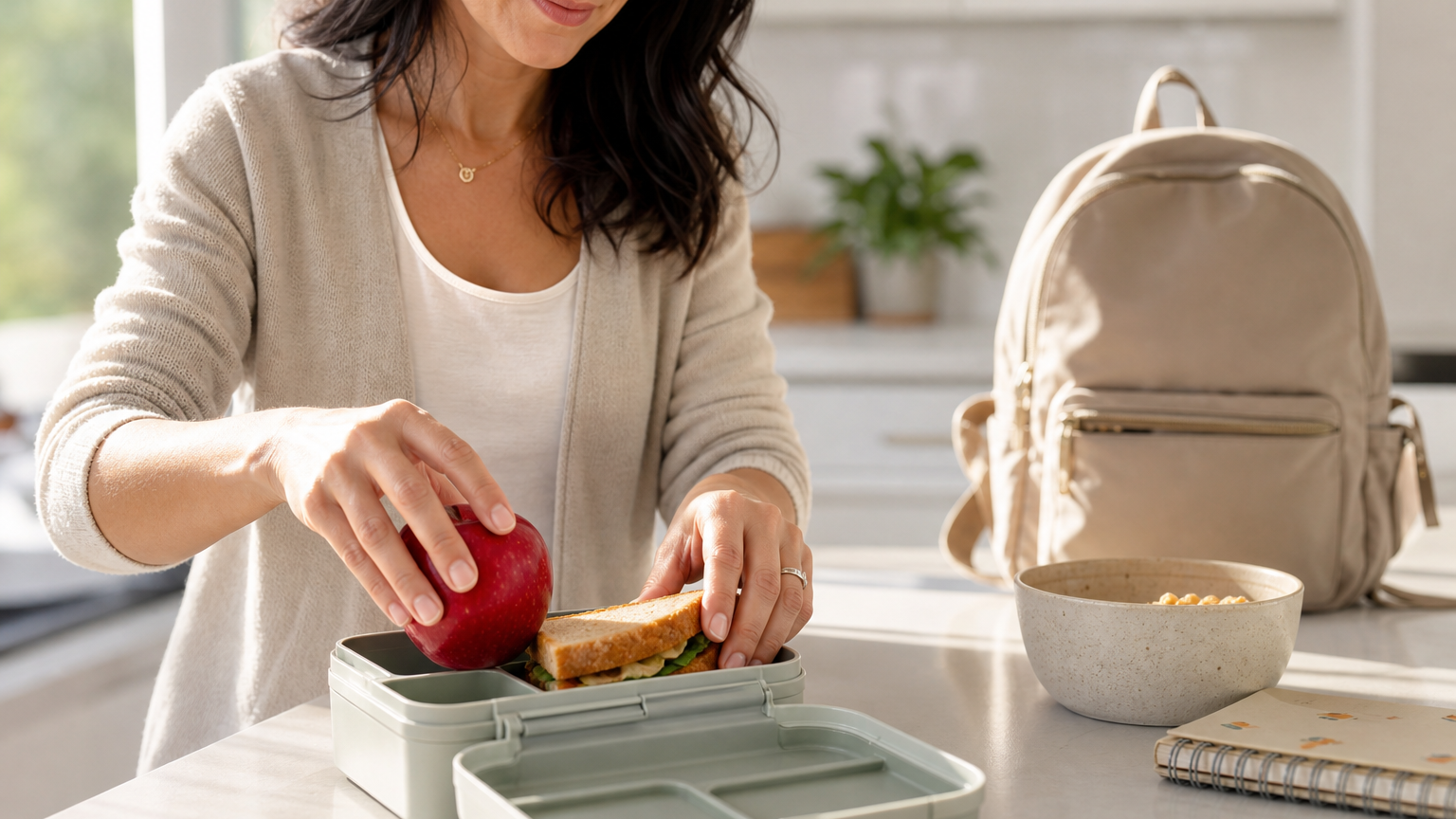
Picture a normal weekday in week two of the term. Earlier alarm. Lunches to pack. A backpack that's missing a form the teacher needed yesterday. Drop-off traffic. A workday. Pickup logistics that depend on who has soccer versus who has piano. Dinner. Homework triage with a kid who would rather do literally anything else. By the time the house goes quiet, you've been making decisions since before sunrise, and this is where parent stress drinking finds its opening: the day feels like it owes you something, and a drink is the closest thing to a reward you can reach without effort.
Why this is the mirror image of summer
If you read our piece on the summer "school's out wine o'clock" spike, this will feel familiar in reverse. Summer breaks structure entirely, kids underfoot all day, no routine, and that unstructured chaos funnels into an afternoon or early-evening drink. The school year does the opposite: it over-structures the day into a relentless schedule. The stress didn't disappear when the calendar flipped; it simply relocated to a new set of triggers. Recognizing this as one of several predictable seasonal drinking triggers makes it far easier to plan around than treating each craving as if it appeared out of nowhere.
One more thing worth saying plainly: this is not a mom problem. The culture loves to frame the stressed-out parent with a glass of wine as a mother, but the school-year stress stack hits every kind of household. Research during the pandemic found that having children in the home was associated with increased drinking above and beyond gender, and in that particular sample the men actually reported drinking more than the women. It's a single pandemic-era study, so read it as suggestive rather than definitive, but the direction is clear enough: dads, single parents, and co-parents all face the same conveyor belt.
What is decision fatigue and how does it fuel the evening drink?
Decision fatigue is the decline in the quality of your choices and your self-control after a long run of successive decisions. Under high cognitive demand, the brain shifts from effortful, controlled decision-making toward less effortful, error-prone choices, according to a 2025 integrative review in Frontiers in Cognition. By evening, the part of you that would normally pause before pouring is simply less available.
A back-to-school day is practically engineered to trigger this. It's a conveyor belt of micro-decisions: what goes in the lunchbox, which form is due, who's driving whom, what's for dinner, whether the math homework is worth the fight tonight. And this isn't a character flaw or a lack of discipline. The literature notes that fatigue effects tend to be stronger among people with high daily decision loads and chronic stress, explicitly including caregivers. In other words, the exhausted-parent profile is precisely the group the research flags as most vulnerable. (Worth a caveat: the older "willpower is a fuel tank that runs dry" model has faced replication problems, so it's more accurate to say your self-control tends to be worn down by evening than to picture a tank hitting empty.)
When that pause-and-consider function is depleted, alcohol looks especially good because it offers a fast, familiar reward with zero deliberation required. There's real value in simply naming the mechanism. If the evening drink is a fatigue response rather than a moral failing, you can stop spending energy on shame and start spending it on the swap. If you want to go deeper on this loop, our explainer on decision fatigue and how to overcome it unpacks it further, and Reframe's mindful drinking program is built around catching exactly these depleted-brain moments.
Why does the post-drop-off or post-bedtime reward drink feel so earned?
The "I survived today" drink feels earned because it's a textbook case of negative-reinforcement conditioning: the relief arrives right after the pour, so the brain files the drink as the thing that made the day stop. NIAAA describes alcohol as "dually reinforcing", meaning it can activate the brain's reward system while quieting the systems that carry stress, anxiety, and emotional pain. That's a powerful one-two punch at the end of a hard day.
The daily structure makes it worse, or at least more predictable. The morning school run and the evening bedtime routine act as natural bookends, and the moment the house finally goes still becomes a reliable cue. Same time, same chair, same signal that the shift is over. Repeat that a dozen evenings in a row and it stops being a choice and starts being a habit.
The trouble isn't that you want relief after a genuinely hard day. Wanting relief is reasonable. The trouble is that alcohol delivers it fast on the front end and quietly bills you on the back end. Although a drink can help you fall asleep faster, it disrupts sleep in the second half of the night, so the sedation you feel doesn't translate into restorative rest. Worse still, NIAAA notes that drinking to cope with stress tends to intensify negative emotional states between drinking episodes. Poor sleep plus a raw baseline mood makes the next day's stress load heavier, which tightens the loop across the whole school week. If stress is your primary cue, our piece on alcohol cravings when you're stressed is worth a read.
The way out starts with getting specific about what you're actually chasing. Usually it isn't the alcohol itself. It's the transition, the quiet, the felt sense that the day is officially over. Name that, and you can meet it another way.
How do you swap the wind-down ritual instead of white-knuckling it?
You swap the wind-down ritual by keeping the cue and the reward while changing only the routine in the middle. White-knuckling asks you to resist with willpower that's already spent by evening, which is why it so often fails right at the moment you need it. Swapping works with your depleted brain instead of against it, and it's a far more durable evening wind-down drinking fix.
The mechanics matter more than motivation. Don't try to erase the ritual, because the ritual is doing real emotional work. Instead, give it a new center. If the cue is "kids are finally asleep and I sink into my chair," the reward you're after is decompression and a clear end to the day. A different routine can deliver both. NIAAA's own guidance leans on building behavioral skills for managing stress rather than relying on raw resolve, which is exactly the shift from white-knuckling to swapping.
Ready-to-use evening swaps
Here are swaps that keep the ceremony intact:
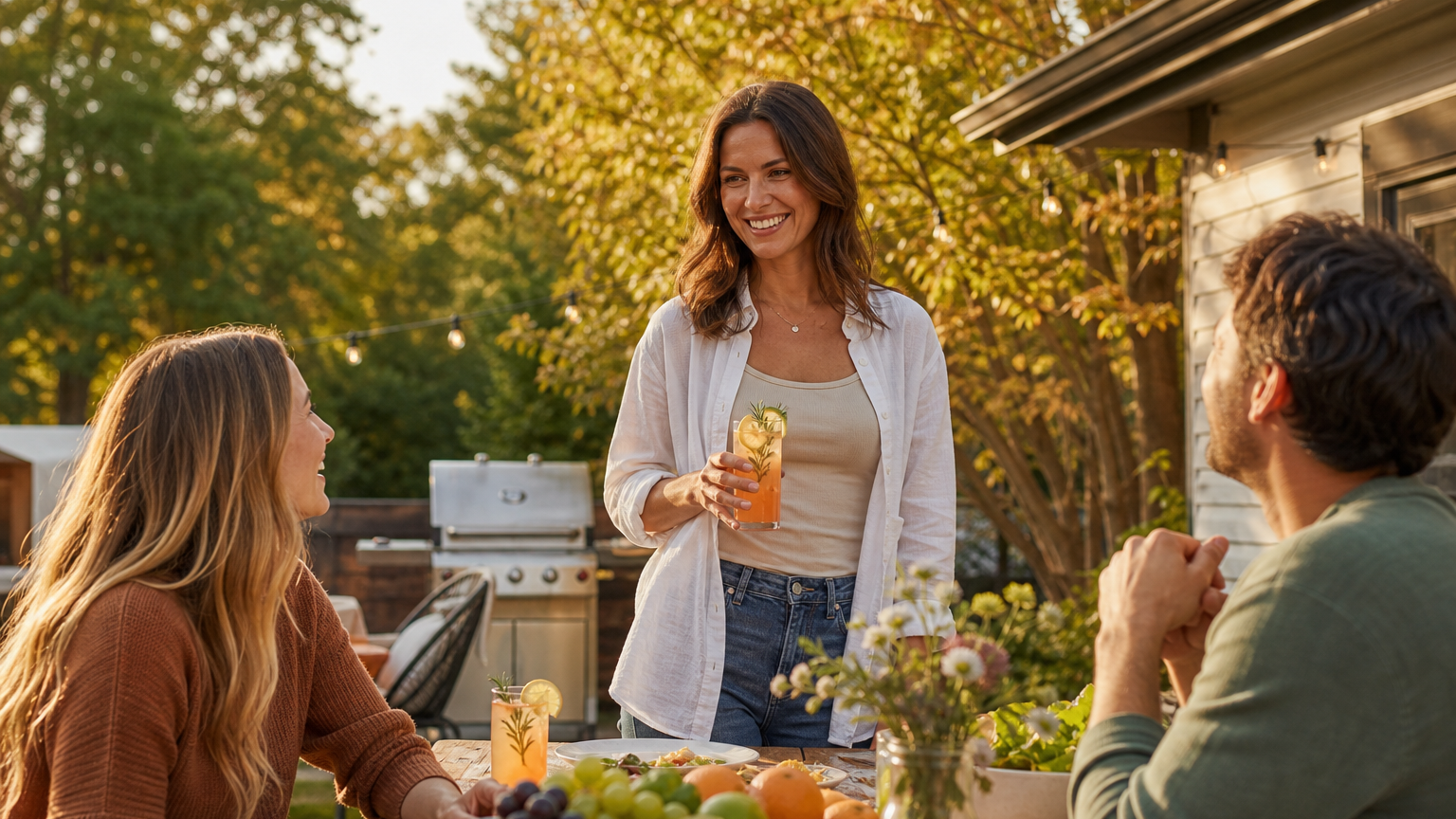
A chilled non-alcoholic drink poured into a proper glass, with the same little ritual of ice, garnish, and settling in. Our evening routine guide has more ideas along these lines.
A hot shower, which functions as a hard reset and a clear "shift over" signal.
A few minutes of slow breathing to downshift your nervous system.
Genuinely sitting down with a book, which occupies the same chair and the same wind-down slot.
The real trick is timing the decision. Prep the swap earlier in the day, when your decision-making is still online, so the depleted 8:30 version of you doesn't have to choose anything. Chill the non-alcoholic drink at 4pm. Set the book on the chair. Lay out the walking shoes. And track the pattern for a week or two, so the trigger becomes visible and the swap becomes a plan rather than a hope. If you're not sure yet whether your pattern needs attention at all, the Am I Drinking Too Much? quiz is a low-stakes place to check in.
How can the morning school run become accountability instead of stress?
The morning school run can become accountability because it's an early, non-negotiable commitment that gives your evening a hard reason to protect itself. When you know you have to be functional and present at 7:45 tomorrow, the incentive to keep tonight clear-headed stops being abstract. The thing that felt like a stressor in September becomes a built-in structure that does some of the work willpower can't sustain alone.
The mechanism is simple: work backward from wake-up time. If you need to be up at 6:15 and reasonably human by drop-off, your evening acquires a natural stop point for drinking, screens, and doomscrolling. You don't have to invent a curfew; the school run imposes one. And being clear-headed at drop-off is its own small, daily, felt reward, the kind of low-drama win that quietly reinforces the change every single morning.
You can strengthen this further by pairing the morning with a quick check-in. A ten-second question, how did last night's swap go?, turns the school run into a gentle habit loop with its own feedback built in. Over a long school year, that external structure carries a real load. It's the same principle behind why external accountability tends to outlast solo resolve. If you want a fuller toolkit for this stage of parenting, our guide to managing alcohol cravings as a parent of young children pairs well with everything here, and when you're ready for daily structure and tracking, you can download Reframe to keep the pattern visible.
A quick, honest note before we wrap: if you've noticed that stopping drinking for even a night or two brings on shakiness, sweating, a racing heart, or real anxiety, that's a signal to talk with a clinician rather than manage it solo, because meaningful physical withdrawal needs medical guidance to handle safely.
Summary FAQs
1. Why do I drink more when the kids go back to school?
The back-to-school transition compresses schedule changes, homework re-entry, activity logistics, and endless small decisions into a few weeks, which leaves your nervous system depleted by evening. Alcohol becomes the fastest available off-switch after a day of low-grade overwhelm. It's a predictable seasonal craving spike, not a personal failing, which also means it's something you can plan around.
2. Is back-to-school stress drinking a real seasonal pattern?
Yes. Many parents notice their drinking quietly climbs in late August and September as the school routine ramps up. It's the mirror image of the summer 'school's out' spike: the structure changed, but the stress simply relocated to a new set of triggers. Recognizing it as seasonal makes it far easier to prepare for than treating each craving as random.
3. How is decision fatigue connected to my evening drink?
Decision fatigue is the erosion of self-control after a long run of small choices, and a back-to-school day is a conveyor belt of them. By the time the house is quiet, the part of your brain that would normally pause before pouring is running on empty. Alcohol offers a quick reward that feels earned, which is why the evening drink can feel almost automatic.
4. How do I stop the after-bedtime reward drink without just relying on willpower?
Willpower is usually spent by evening, so swapping the ritual works better than white-knuckling it. Keep the cue and the reward but change the routine: same time and same chair, with a chilled non-alcoholic drink, a short walk, or a hot shower instead. Prep the swap earlier in the day so the depleted evening version of you doesn't have to make the call.
5. What are good evening wind-down swaps for parents cutting back?
Effective swaps keep the ritual and ceremony but drop the alcohol: a chilled non-alcoholic drink poured into a proper glass, a ten-minute walk after bedtime, a hot shower, a few minutes of slow breathing, or genuinely sitting down with a book. The key is choosing and prepping the swap in advance so it's ready when the craving arrives. Tracking how each one lands for a week helps you find the ones that actually deliver the relief you're after.
6. Does back-to-school drinking only affect moms?
No. While the culture tends to frame it as a 'wine mom' issue, the back-to-school stress stack hits parents of every gender and household setup. Dads, single parents, and co-parents all face the same schedule chaos, decision fatigue, and evening wind-down pull. Framing it accurately, as a shared parent trigger, is more useful than gendering it.
7. How can the morning school run help me drink less?
An early, non-negotiable school run is built-in accountability. Working backward from wake-up gives your evening a natural stop point, and being clear-headed and present at drop-off is a small daily reward that reinforces the change. Pairing the morning with a quick check-in on how last night's swap went turns the school run into a gentle habit loop.
Facing the Back to School Stress Spike? Reframe Can Help!
Although it isn't a treatment for alcohol use disorder (AUD), the Reframe app can help you cut back on drinking gradually with the science-backed knowledge to empower you 100% of the way. Our proven program has helped millions of people around the world drink less and live more. And we want to help you get there, too!
The Reframe app equips you with the knowledge and skills you need to not only survive drinking less, but to thrive while you navigate the journey. Our daily research-backed readings teach you the neuroscience of alcohol, and our in-app Toolkit provides the resources and activities you need to navigate each challenge.
You'll meet millions of fellow Reframers in our 24/7 Forum chat and daily Zoom check-in meetings. Receive encouragement from people worldwide who know exactly what you're going through! You'll also have the opportunity to connect with our licensed Reframe coaches for more personalized guidance.
Plus, we're always introducing new features to optimize your in-app experience. We recently launched our in-app chatbot, Melody, powered by the world's most powerful AI technology. Melody is here to help as you adjust to a life with less (or no) alcohol.
And that's not all! Every month, we launch fun challenges, like Dry/Damp January, Mental Health May, and Outdoorsy June. You won't want to miss out on the chance to participate alongside fellow Reframers (or solo if that's more your thing!).
The Reframe app is free for 7 days, so you don't have anything to lose by trying it. Are you ready to feel empowered and discover life beyond alcohol? Then download our app through the App Store or Google Play today!
Reframe has helped over 2 millions people to build healthier drinking habits globally
At Reframe, we do science, not stigma. We base our articles on the latest peer-reviewed research in psychology, neuroscience, and behavioral science. We follow the Reframe Content Creation Guidelines, to ensure that we share accurate and actionable information with our readers. This aids them in making informed decisions on their wellness journey. Learn more
Updated Regularly
Our articles undergo frequent updates to present the newest scientific research and changes in expert consensus in an easily understandable and implementable manner.
Frontiers in Cognition. (2025). An integrative review on unveiling the causes and effects of decision fatigue to develop a multi-domain conceptual framework. Frontiers in Cognition, 4, Article 1719312. https://doi.org/10.3389/fcogn.2025.1719312
The effect of decision fatigue on food choices: A narrative review. (2025). PubMed Central. https://www.ncbi.nlm.nih.gov/pmc/articles/PMC12736114/
National Institute on Alcohol Abuse and Alcoholism. (n.d.). Neuroscience: The brain in addiction and recovery. Core Resource on Alcohol. https://www.niaaa.nih.gov/health-professionals-communities/core-resource-on-alcohol/neuroscience-brain-addiction-and-recovery
National Institute on Alcohol Abuse and Alcoholism. (n.d.). The cycle of alcohol addiction. https://www.niaaa.nih.gov/publications/cycle-alcohol-addiction
National Institute on Alcohol Abuse and Alcoholism. (n.d.). Support recovery: It's a marathon, not a sprint. Core Resource on Alcohol. https://www.niaaa.nih.gov/health-professionals-communities/core-resource-on-alcohol/support-recovery-its-marathon-not-sprint
Colrain, I. M., Nicholas, C. L., & Baker, F. C. (2014). Alcohol and the sleeping brain (Sleep, sleepiness, and alcohol use). Handbook of Clinical Neurology / Alcohol Research: Current Reviews. https://www.ncbi.nlm.nih.gov/pmc/articles/PMC6707127/
University of North Carolina Learning Center. (n.d.). Changing habits. https://learningcenter.unc.edu/tips-and-tools/changing-habits/ [summarizing Duhigg, C. (2012). The power of habit: Why we do what we do in life and business. Random House.]
Colton, K. C., Godleski, S. A., Baschnagel, J. S., Houston, R. J., & DeHarder, S. M. (2023). Alcohol use during the COVID-19 pandemic: Gender, parenthood, intimate partner violence, and stress. AIMS Public Health, 10(2). https://doi.org/10.3934/publichealth.2023027
American Psychological Association. (2020). Working out boosts brain health. https://www.apa.org/topics/exercise-fitness/stress