

Alcohol and sporting events go hand-in-hand but not at the 2024 Paris Olympics. Check out our latest blog for more details on the alcohol ban and its significance.

Although it isn’t a treatment for alcohol use disorder (AUD), the Reframe app can help you cut back on drinking gradually with the science-backed knowledge to empower you 100% of the way. Our proven program has helped millions of people around the world drink less and live more. And we want to help you get there, too!
The Reframe app equips you with the knowledge and skills you need to not only survive drinking less, but to thrive while you navigate the journey. Our daily research-backed readings teach you the neuroscience of alcohol, and our in-app Toolkit provides the resources and activities you need to navigate each challenge.
You’ll meet millions of fellow Reframers in our 24/7 Forum chat and daily Zoom check-in meetings. Receive encouragement from people worldwide who know exactly what you’re going through! You’ll also have the opportunity to connect with our licensed Reframe coaches for more personalized guidance.
Plus, we’re always introducing new features to optimize your in-app experience. We recently launched our in-app chatbot, Melody, powered by the world’s most powerful AI technology. Melody is here to help as you adjust to a life with less (or no) alcohol.
And that’s not all! Every month, we launch fun challenges, like Dry/Damp January, Mental Health May, and Outdoorsy June. You won’t want to miss out on the chance to participate alongside fellow Reframers (or solo if that’s more your thing!).
The Reframe app is free for 7 days, so you don’t have anything to lose by trying it. Are you ready to feel empowered and discover life beyond alcohol? Then download our app today!
As the 2024 sports events of the Paris Olympics are fast approaching, the City of Light is buzzing in preparation and excitement for the culmination of all sporting events. Athletes are prepping for top-of-the-line competition, venues are making last-minute tweaks, and fans from around the world are anticipating a summer of thrilling competition. But amidst the chaos of preparations, another topic is generating buzz — there’s no alcohol for sale at the Games.

The ban on alcohol sales and advertisements at the Paris 2024 stadium makes an impactful statement on public health and safety, as alcohol and sporting events are a familiar duo. Let’s explore how these alcohol restrictions are set to reshape not only the Olympic experience but also more mindful celebrations and future events.

Alcohol and sporting events can be traced back thousands of years ago. During the ancient Grecian Olympics, red wine was plowed down by not only the spectators but also the athletes. While this is no longer the case, alcohol continues to be an integral part of sporting events — partially attributed to the big brand advertising and sponsorships from major alcohol companies.
Global sporting events have become not only the pinnacle of sports competitions for athletes but also highly-anticipated entertainment for fans (which many like to watch with a bit of booze in hand). While this keeps vendors and fans content, the data from alcohol-related harm suggests otherwise.
Aside from the 2024 Paris Olympic venues, we’ve seen alcohol restrictions at other major international sporting events only a handful of times. The 2022 FIFA World Cup and the 2020 Tokyo Olympics (mainly due to COVID-19. However, with the Paris Olympics taking the lead, we’re starting to see others follow suit such as England’s Euro 2024. Let’s take a closer look at the policies of the Games’ alcohol restrictions to understand exactly why it’s so impactful.
A new sport, breakdancing, and a revival of other events such as 3x3 basketball and skateboarding aren’t the only shake-up at the Paris Olympics. Officials have confirmed that alcohol restrictions will be implemented at the Games which will take place from July 26th through August 11th. However, alcohol restrictions for sporting events in France are actually not a new concept. Evin’s Law which was implemented in 1991, bans the sale and advertisement of alcohol in sports and physical activity establishments. Although it's a law that’s been in the books for many years in France, it came as a shock to many that no exceptions were filed for the 2024 Paris Olympics.
This means that alcohol won’t be sold or advertised to the general public at the Games. However, there’s a loophole to this ban. Due to different rules for catered hospitality areas, alcoholic beverages will still be sold inside the VIP suites in the stadiums and arenas. Despite this exception, the unwavering stance on keeping alcohol restrictions for the Games is changing the game for sporting events.
Notably, the alcohol company AB InBev has signed as the Olympics worldwide sponsor — naming Corona Cero, a non-alcoholic beer, as the global beer sponsor for the 2024 Games. The decision to keep the Paris Olympics a “clean” event has sparked a spirited debate among conflicting opinions. Let’s gain some insight as to why officials committed to this risky move.

Evin’s law, which the Games’ alcohol restrictions follow, was put in place to reduce alcohol-related mortalities by restricting the sale and advertising of alcohol. Despite the massive opportunity to drive revenue with alcohol sales to the spectators of the Games, officials decided against filing for an exemption for many reasons:
Although the announcement of the alcohol ban brought mixed opinions, these factors helped officials determine that the pros outweigh the cons. Let’s take a closer look at how these pros and cons will affect the 2024 Paris Olympics.


Some potential benefits of the imposed alcohol restrictions include improved health and safety of the Games’ athletes and spectators. Placing a barrier to accessing alcohol will reduce alcohol consumption and as a result, lower the risk of alcohol-related harm. Decreased alcohol-related incidents at the games may also enhance visitors’ experience and enjoyment of the event.
The opposing argument is that alcohol is a major part of sporting events and some argue can enhance the experience. However, it’s important to note that alcohol provides an inauthentic feeling of pleasure. Alcohol is a depressant, so although when we’re drinking we may temporarily feel a boost in our “happy hormones”, it eventually wears off and our mood can swing in the other direction.
Another major impact that the alcohol ban has is on the Games’ vendors and businesses. Typically, alcohol sales bring in significant revenue. Since alcohol won’t be sold or advertised, we’re seeing a positive adaptation in business strategy. The Paris Olympics announced Corona Cero as its non-alcoholic beer sponsor — giving fans an alternative to alcohol and shifting the opportunity to increase revenue using a different market. With benefits and downsides to the implantation of alcohol restrictions at the Games, many are questioning if they’ll even work.
Alcohol restrictions when implemented and enforced correctly can be beneficial in deterring alcohol consumption. Many people cite Prohibition as a failed attempt to ban alcohol consumption. While this may be true, we’ve learned what doesn’t work and have put in place other measures such as educational resources and non-alcoholic alternatives— putting us in a drastically different position today.
While the restrictions we see today aren’t as exhaustive as a complete ban on alcohol, they follow the same intention, which is to keep us healthy and safe. Some restrictions we see today include a legal drinking age, laws against driving under the influence, and bans for drinking in certain places. These restrictions don’t completely curb alcohol-related harm but they do minimize certain risks.
Examples of more drastic measures to deter alcohol consumption include Qatar’s ban on alcohol sales at World Cup stadiums, Miami Beach’s new regulations during spring break, the Balearic Islands’ new alcohol bans, and many more. While these changes continue to be tweaked for greater effectiveness, we’ve seen many benefits and several challenges. Let’s learn about what these are.

The Olympic venues encompass different arenas, stadiums, and housing. Although alcohol won’t be sold to the general public, it’s not guaranteed that people won’t get their hands on it. Around 40,000 agents will be providing security at the Games each day but enforcing the alcohol ban on top of managing large crowds and coordinating among different agencies can prove to be a challenge.
Business and spectator opposition have also proven to be challenging. In 2019, the French Health Minister attempted to ban alcohol even in VIP areas but her idea was quickly shut down by the beverage industry. As the host country for the pinnacle of sporting competition, France works to balance restrictions with hospitality to maintain a safe but welcoming atmosphere for the 2024 Olympics. Although met with some resistance, the alcohol restrictions are changing the game and setting the stage for future events.
Although the 2020 Tokyo Olympics held in 2021 also featured alcohol restrictions, they were mainly due to COVID-19 concerns. As the first of the Games to stand its ground on an alcohol ban, the 2024 Paris Olympics is highly significant for many reasons:
While the Paris Olympics is setting the stage for other sporting events, it also serves as a reminder to stay aware of our alcohol consumption in general. Let’s explore some ways we can sharpen our mindful drinking skills.
Although alcohol won’t be sold to the general public at the Paris Olympics, alcohol is around us whether we like it or not. Implementing these mindful drinking practices helps us consume more intentionally when alcohol is around:
These mindful drinking practices aren’t only to ensure our health and safety when watching the Olympics or other sporting events, they’re applicable to any situation to help us consume more intentionally.
As we eagerly anticipate the 2024 Paris Olympics, the decision to implement alcohol restrictions shines as a beacon of change. This major move not only prioritizes the health and safety of the athletes and spectators but also resonates with a growing global consciousness around mindful consumption. Let’s allow the 2024 Paris Olympics to inspire not just records and medals, but a legacy of responsible drinking that can redefine celebrations for generations to come!
As the 2024 sports events of the Paris Olympics are fast approaching, the City of Light is buzzing in preparation and excitement for the culmination of all sporting events. Athletes are prepping for top-of-the-line competition, venues are making last-minute tweaks, and fans from around the world are anticipating a summer of thrilling competition. But amidst the chaos of preparations, another topic is generating buzz — there’s no alcohol for sale at the Games.
The ban on alcohol sales and advertisements at the Paris 2024 stadium makes an impactful statement on public health and safety, as alcohol and sporting events are a familiar duo. Let’s explore how these alcohol restrictions are set to reshape not only the Olympic experience but also more mindful celebrations and future events.
Alcohol and sporting events can be traced back thousands of years ago. During the ancient Grecian Olympics, red wine was plowed down by not only the spectators but also the athletes. While this is no longer the case, alcohol continues to be an integral part of sporting events — partially attributed to the big brand advertising and sponsorships from major alcohol companies.
Global sporting events have become not only the pinnacle of sports competitions for athletes but also highly-anticipated entertainment for fans (which many like to watch with a bit of booze in hand). While this keeps vendors and fans content, the data from alcohol-related harm suggests otherwise.
Aside from the 2024 Paris Olympic venues, we’ve seen alcohol restrictions at other major international sporting events only a handful of times. The 2022 FIFA World Cup and the 2020 Tokyo Olympics (mainly due to COVID-19. However, with the Paris Olympics taking the lead, we’re starting to see others follow suit such as England’s Euro 2024. Let’s take a closer look at the policies of the Games’ alcohol restrictions to understand exactly why it’s so impactful.
A new sport, breakdancing, and a revival of other events such as 3x3 basketball and skateboarding aren’t the only shake-up at the Paris Olympics. Officials have confirmed that alcohol restrictions will be implemented at the Games which will take place from July 26th through August 11th. However, alcohol restrictions for sporting events in France are actually not a new concept. Evin’s Law which was implemented in 1991, bans the sale and advertisement of alcohol in sports and physical activity establishments. Although it's a law that’s been in the books for many years in France, it came as a shock to many that no exceptions were filed for the 2024 Paris Olympics.
This means that alcohol won’t be sold or advertised to the general public at the Games. However, there’s a loophole to this ban. Due to different rules for catered hospitality areas, alcoholic beverages will still be sold inside the VIP suites in the stadiums and arenas. Despite this exception, the unwavering stance on keeping alcohol restrictions for the Games is changing the game for sporting events.
Notably, the alcohol company AB InBev has signed as the Olympics worldwide sponsor — naming Corona Cero, a non-alcoholic beer, as the global beer sponsor for the 2024 Games. The decision to keep the Paris Olympics a “clean” event has sparked a spirited debate among conflicting opinions. Let’s gain some insight as to why officials committed to this risky move.
Evin’s law, which the Games’ alcohol restrictions follow, was put in place to reduce alcohol-related mortalities by restricting the sale and advertising of alcohol. Despite the massive opportunity to drive revenue with alcohol sales to the spectators of the Games, officials decided against filing for an exemption for many reasons:
Although the announcement of the alcohol ban brought mixed opinions, these factors helped officials determine that the pros outweigh the cons. Let’s take a closer look at how these pros and cons will affect the 2024 Paris Olympics.
Some potential benefits of the imposed alcohol restrictions include improved health and safety of the Games’ athletes and spectators. Placing a barrier to accessing alcohol will reduce alcohol consumption and as a result, lower the risk of alcohol-related harm. Decreased alcohol-related incidents at the games may also enhance visitors’ experience and enjoyment of the event.
The opposing argument is that alcohol is a major part of sporting events and some argue can enhance the experience. However, it’s important to note that alcohol provides an inauthentic feeling of pleasure. Alcohol is a depressant, so although when we’re drinking we may temporarily feel a boost in our “happy hormones”, it eventually wears off and our mood can swing in the other direction.
Another major impact that the alcohol ban has is on the Games’ vendors and businesses. Typically, alcohol sales bring in significant revenue. Since alcohol won’t be sold or advertised, we’re seeing a positive adaptation in business strategy. The Paris Olympics announced Corona Cero as its non-alcoholic beer sponsor — giving fans an alternative to alcohol and shifting the opportunity to increase revenue using a different market. With benefits and downsides to the implantation of alcohol restrictions at the Games, many are questioning if they’ll even work.
Alcohol restrictions when implemented and enforced correctly can be beneficial in deterring alcohol consumption. Many people cite Prohibition as a failed attempt to ban alcohol consumption. While this may be true, we’ve learned what doesn’t work and have put in place other measures such as educational resources and non-alcoholic alternatives— putting us in a drastically different position today.
While the restrictions we see today aren’t as exhaustive as a complete ban on alcohol, they follow the same intention, which is to keep us healthy and safe. Some restrictions we see today include a legal drinking age, laws against driving under the influence, and bans for drinking in certain places. These restrictions don’t completely curb alcohol-related harm but they do minimize certain risks.
Examples of more drastic measures to deter alcohol consumption include Qatar’s ban on alcohol sales at World Cup stadiums, Miami Beach’s new regulations during spring break, the Balearic Islands’ new alcohol bans, and many more. While these changes continue to be tweaked for greater effectiveness, we’ve seen many benefits and several challenges. Let’s learn about what these are.
The Olympic venues encompass different arenas, stadiums, and housing. Although alcohol won’t be sold to the general public, it’s not guaranteed that people won’t get their hands on it. Around 40,000 agents will be providing security at the Games each day but enforcing the alcohol ban on top of managing large crowds and coordinating among different agencies can prove to be a challenge.
Business and spectator opposition have also proven to be challenging. In 2019, the French Health Minister attempted to ban alcohol even in VIP areas but her idea was quickly shut down by the beverage industry. As the host country for the pinnacle of sporting competition, France works to balance restrictions with hospitality to maintain a safe but welcoming atmosphere for the 2024 Olympics. Although met with some resistance, the alcohol restrictions are changing the game and setting the stage for future events.
Although the 2020 Tokyo Olympics held in 2021 also featured alcohol restrictions, they were mainly due to COVID-19 concerns. As the first of the Games to stand its ground on an alcohol ban, the 2024 Paris Olympics is highly significant for many reasons:
While the Paris Olympics is setting the stage for other sporting events, it also serves as a reminder to stay aware of our alcohol consumption in general. Let’s explore some ways we can sharpen our mindful drinking skills.
Although alcohol won’t be sold to the general public at the Paris Olympics, alcohol is around us whether we like it or not. Implementing these mindful drinking practices helps us consume more intentionally when alcohol is around:
These mindful drinking practices aren’t only to ensure our health and safety when watching the Olympics or other sporting events, they’re applicable to any situation to help us consume more intentionally.
As we eagerly anticipate the 2024 Paris Olympics, the decision to implement alcohol restrictions shines as a beacon of change. This major move not only prioritizes the health and safety of the athletes and spectators but also resonates with a growing global consciousness around mindful consumption. Let’s allow the 2024 Paris Olympics to inspire not just records and medals, but a legacy of responsible drinking that can redefine celebrations for generations to come!

Explore the critical role of post-exercise nutrition in muscle recovery and the negative impacts of alcohol on these processes, including dehydration, reduced protein synthesis, and more.
Although it isn’t a treatment for alcohol use disorder (AUD), the Reframe app can help you cut back on drinking gradually with the science-backed knowledge to empower you 100% of the way. Our proven program has helped millions of people around the world drink less and live more. And we want to help you get there, too!
The Reframe app equips you with the knowledge and skills you need to not only survive drinking less, but to thrive while you navigate the journey. Our daily research-backed readings teach you the neuroscience of alcohol, and our in-app Toolkit provides the resources and activities you need to navigate each challenge.
You’ll meet millions of fellow Reframers in our 24/7 Forum chat and daily Zoom check-in meetings. Receive encouragement from people worldwide who know exactly what you’re going through! You’ll also have the opportunity to connect with our licensed Reframe coaches for more personalized guidance.
Plus, we’re always introducing new features to optimize your in-app experience. We recently launched our in-app chatbot, Melody, powered by the world’s most powerful AI technology. Melody is here to help as you adjust to a life with less (or no) alcohol.
And that’s not all! Every month, we launch fun challenges, like Dry/Damp January, Mental Health May, and Outdoorsy June. You won’t want to miss out on the chance to participate alongside fellow Reframers (or solo if that’s more your thing!).
The Reframe app is free for 7 days, so you don’t have anything to lose by trying it. Are you ready to feel empowered and discover life beyond alcohol? Then download our app through the App Store or Google Play today!
The journey to fitness and health doesn't end when you step off the treadmill or put down the weights. What you do after your workout is crucial to your recovery, muscle building, and overall health. Proper nutrition plays a pivotal role in replenishing your body, repairing muscle tissues, and boosting your energy levels post-exercise. However, the consumption of alcohol post-exercise can significantly hinder these benefits, affecting both your physical recovery and your long-term fitness goals.
After a strenuous workout, your body goes through a series of physiological changes. Your muscles are depleted of their stored glycogen, and some of the proteins in your muscles also get broken down. To repair these muscles and replenish the glycogen stores, you need the right nutrients. This is where post-exercise nutrition comes into play.
Carbohydrates are crucial as they replenish the glycogen stores in your muscles. Proteins, on the other hand, provide the amino acids necessary for muscle repair and growth. A meal or a snack rich in both carbohydrates and proteins, consumed within 45 minutes to an hour after exercising, can drastically improve your muscle recovery and energy levels.
While nutrition can aid in recovery, alcohol can impede it. Consuming alcohol after working out can have several negative effects:
For those who enjoy a regular fitness regime and also partake in drinking, finding a balance is key. It's not just about choosing to drink or not to drink; it's about understanding the best time to consume alcohol and its effects on your body. For instance, if you choose to drink, doing so well after your body has had the chance to recover from a workout could be less detrimental. Additionally, ensuring that you're hydrated and have eaten adequately before consuming alcohol can help mitigate some of its negative effects on recovery.
Here are some practical tips to enhance your post-workout recovery while maintaining a balanced approach to alcohol:
Understanding the interplay between alcohol consumption and exercise recovery can empower you to make informed choices that support your health and fitness goals. By prioritizing proper nutrition and hydration after workouts and moderating alcohol intake, you can enjoy both a socially active lifestyle and a productive fitness regime.
Incorporating these practices not only helps in achieving better physical health but also contributes to a healthier relationship with alcohol. For those interested in exploring how alcohol affects different aspects of health and fitness, consider reading about how alcohol can impact weight loss efforts.
The journey to fitness and health doesn't end when you step off the treadmill or put down the weights. What you do after your workout is crucial to your recovery, muscle building, and overall health. Proper nutrition plays a pivotal role in replenishing your body, repairing muscle tissues, and boosting your energy levels post-exercise. However, the consumption of alcohol post-exercise can significantly hinder these benefits, affecting both your physical recovery and your long-term fitness goals.
After a strenuous workout, your body goes through a series of physiological changes. Your muscles are depleted of their stored glycogen, and some of the proteins in your muscles also get broken down. To repair these muscles and replenish the glycogen stores, you need the right nutrients. This is where post-exercise nutrition comes into play.
Carbohydrates are crucial as they replenish the glycogen stores in your muscles. Proteins, on the other hand, provide the amino acids necessary for muscle repair and growth. A meal or a snack rich in both carbohydrates and proteins, consumed within 45 minutes to an hour after exercising, can drastically improve your muscle recovery and energy levels.
While nutrition can aid in recovery, alcohol can impede it. Consuming alcohol after working out can have several negative effects:
For those who enjoy a regular fitness regime and also partake in drinking, finding a balance is key. It's not just about choosing to drink or not to drink; it's about understanding the best time to consume alcohol and its effects on your body. For instance, if you choose to drink, doing so well after your body has had the chance to recover from a workout could be less detrimental. Additionally, ensuring that you're hydrated and have eaten adequately before consuming alcohol can help mitigate some of its negative effects on recovery.
Here are some practical tips to enhance your post-workout recovery while maintaining a balanced approach to alcohol:
Understanding the interplay between alcohol consumption and exercise recovery can empower you to make informed choices that support your health and fitness goals. By prioritizing proper nutrition and hydration after workouts and moderating alcohol intake, you can enjoy both a socially active lifestyle and a productive fitness regime.
Incorporating these practices not only helps in achieving better physical health but also contributes to a healthier relationship with alcohol. For those interested in exploring how alcohol affects different aspects of health and fitness, consider reading about how alcohol can impact weight loss efforts.

Explore effective lifestyle adjustments and holistic methods to manage alcohol withdrawal and sustain long-term recovery, including diet, exercise, therapy, and more in this comprehensive guide.

Although it isn’t a treatment for alcohol use disorder (AUD), the Reframe app can help you cut back on drinking gradually with the science-backed knowledge to empower you 100% of the way. Our proven program has helped millions of people around the world drink less and live more. And we want to help you get there, too!
The Reframe app equips you with the knowledge and skills you need to not only survive drinking less, but to thrive while you navigate the journey. Our daily research-backed readings teach you the neuroscience of alcohol, and our in-app Toolkit provides the resources and activities you need to navigate each challenge.
You’ll meet millions of fellow Reframers in our 24/7 Forum chat and daily Zoom check-in meetings. Receive encouragement from people worldwide who know exactly what you’re going through! You’ll also have the opportunity to connect with our licensed Reframe coaches for more personalized guidance.
Plus, we’re always introducing new features to optimize your in-app experience. We recently launched our in-app chatbot, Melody, powered by the world’s most powerful AI technology. Melody is here to help as you adjust to a life with less (or no) alcohol.
And that’s not all! Every month, we launch fun challenges, like Dry/Damp January, Mental Health May, and Outdoorsy June. You won’t want to miss out on the chance to participate alongside fellow Reframers (or solo if that’s more your thing!).
The Reframe app is free for 7 days, so you don’t have anything to lose by trying it. Are you ready to feel empowered and discover life beyond alcohol? Then download our app through the App Store or Google Play today!
Alcohol withdrawal can be a challenging and daunting process, but with the right lifestyle adjustments and holistic approaches, it is possible to ease the symptoms and promote long-term recovery. This article explores various methods to help manage alcohol withdrawal and maintain sobriety.
When a person who has been consuming alcohol heavily for a prolonged period suddenly stops drinking, their body goes through withdrawal. The severity and duration of withdrawal symptoms can vary, but they often include anxiety, tremors, nausea, and in severe cases, seizures and delirium tremens (DTs).
For a detailed timeline of what to expect during alcohol withdrawal, you can refer to our article on Alcohol Withdrawal Timeline: Causes, Symptoms, and Treatments.
A balanced diet can significantly impact the body’s ability to cope with withdrawal symptoms. Foods rich in vitamins and minerals, such as fruits, vegetables, lean proteins, and whole grains, provide the necessary nutrients to support recovery.
Regular physical activity can help alleviate withdrawal symptoms by releasing endorphins, which improve mood and reduce stress. Even light exercises, such as walking or yoga, can be beneficial.
Withdrawal can severely disrupt sleep patterns. Establishing a regular sleep routine, avoiding caffeine and heavy meals before bedtime, and creating a calm sleep environment can improve sleep quality.
Practicing mindfulness and meditation can help manage stress and reduce cravings. These techniques encourage a focus on the present moment and can help in developing healthier coping mechanisms.
Engaging in therapy, such as cognitive-behavioral therapy (CBT), can help address the psychological aspects of addiction. Therapy provides tools to manage triggers and develop strategies to maintain sobriety.
Joining support groups like Alcoholics Anonymous (AA) or other community-based groups can provide a sense of community and accountability. Sharing experiences with others who are on the same journey can be incredibly supportive.
For those who aim to moderate their drinking rather than abstain completely, building healthier drinking habits is essential. You can read more about this in our article on The Role of Habits in Drinking Less or Quitting Alcohol.
Setting clear limits on how much and how often you drink can help you maintain control. Using tools like the Reframe app can assist in tracking your intake and keeping you accountable.
Finding non-alcoholic alternatives and engaging in activities that do not involve drinking can help reduce the temptation to drink. This might include hobbies like exercising, cooking, or engaging in creative pursuits.
Long-term recovery is a continuous process that requires ongoing support. Stay connected with your support network, attend regular therapy sessions, and participate in support groups to maintain your sobriety.
Prioritizing self-care is crucial for long-term recovery. This includes maintaining a healthy diet, exercising regularly, getting enough sleep, and engaging in activities that bring you joy and relaxation.
Often, alcohol misuse is a symptom of underlying issues such as stress, anxiety, or depression. Addressing these issues through therapy or counseling can help prevent relapse and promote overall well-being.
For more insights on why some rehab programs might not work for everyone and how to tailor a recovery plan that suits your needs, check out our article Why Rehab Doesn’t Work for Everyone.
Easing the process of alcohol withdrawal and promoting long-term recovery requires a multifaceted approach. By incorporating lifestyle adjustments, holistic treatments, and building healthier drinking habits, it is possible to navigate the challenges of withdrawal and maintain sobriety. Remember, recovery is a journey, and seeking support is a sign of strength.
Alcohol withdrawal can be a challenging and daunting process, but with the right lifestyle adjustments and holistic approaches, it is possible to ease the symptoms and promote long-term recovery. This article explores various methods to help manage alcohol withdrawal and maintain sobriety.
When a person who has been consuming alcohol heavily for a prolonged period suddenly stops drinking, their body goes through withdrawal. The severity and duration of withdrawal symptoms can vary, but they often include anxiety, tremors, nausea, and in severe cases, seizures and delirium tremens (DTs).
For a detailed timeline of what to expect during alcohol withdrawal, you can refer to our article on Alcohol Withdrawal Timeline: Causes, Symptoms, and Treatments.
A balanced diet can significantly impact the body’s ability to cope with withdrawal symptoms. Foods rich in vitamins and minerals, such as fruits, vegetables, lean proteins, and whole grains, provide the necessary nutrients to support recovery.
Regular physical activity can help alleviate withdrawal symptoms by releasing endorphins, which improve mood and reduce stress. Even light exercises, such as walking or yoga, can be beneficial.
Withdrawal can severely disrupt sleep patterns. Establishing a regular sleep routine, avoiding caffeine and heavy meals before bedtime, and creating a calm sleep environment can improve sleep quality.
Practicing mindfulness and meditation can help manage stress and reduce cravings. These techniques encourage a focus on the present moment and can help in developing healthier coping mechanisms.
Engaging in therapy, such as cognitive-behavioral therapy (CBT), can help address the psychological aspects of addiction. Therapy provides tools to manage triggers and develop strategies to maintain sobriety.
Joining support groups like Alcoholics Anonymous (AA) or other community-based groups can provide a sense of community and accountability. Sharing experiences with others who are on the same journey can be incredibly supportive.
For those who aim to moderate their drinking rather than abstain completely, building healthier drinking habits is essential. You can read more about this in our article on The Role of Habits in Drinking Less or Quitting Alcohol.
Setting clear limits on how much and how often you drink can help you maintain control. Using tools like the Reframe app can assist in tracking your intake and keeping you accountable.
Finding non-alcoholic alternatives and engaging in activities that do not involve drinking can help reduce the temptation to drink. This might include hobbies like exercising, cooking, or engaging in creative pursuits.
Long-term recovery is a continuous process that requires ongoing support. Stay connected with your support network, attend regular therapy sessions, and participate in support groups to maintain your sobriety.
Prioritizing self-care is crucial for long-term recovery. This includes maintaining a healthy diet, exercising regularly, getting enough sleep, and engaging in activities that bring you joy and relaxation.
Often, alcohol misuse is a symptom of underlying issues such as stress, anxiety, or depression. Addressing these issues through therapy or counseling can help prevent relapse and promote overall well-being.
For more insights on why some rehab programs might not work for everyone and how to tailor a recovery plan that suits your needs, check out our article Why Rehab Doesn’t Work for Everyone.
Easing the process of alcohol withdrawal and promoting long-term recovery requires a multifaceted approach. By incorporating lifestyle adjustments, holistic treatments, and building healthier drinking habits, it is possible to navigate the challenges of withdrawal and maintain sobriety. Remember, recovery is a journey, and seeking support is a sign of strength.

Detoxing from alcohol at home requires careful planning and awareness of potential risks. This article outlines the necessary precautions and steps to ensure a safe detox process.
Although it isn’t a treatment for alcohol use disorder (AUD), the Reframe app can help you cut back on drinking gradually with the science-backed knowledge to empower you 100% of the way. Our proven program has helped millions of people around the world drink less and live more. And we want to help you get there, too!
The Reframe app equips you with the knowledge and skills you need to not only survive drinking less, but to thrive while you navigate the journey. Our daily research-backed readings teach you the neuroscience of alcohol, and our in-app Toolkit provides the resources and activities you need to navigate each challenge.
You’ll meet millions of fellow Reframers in our 24/7 Forum chat and daily Zoom check-in meetings. Receive encouragement from people worldwide who know exactly what you’re going through! You’ll also have the opportunity to connect with our licensed Reframe coaches for more personalized guidance.
Plus, we’re always introducing new features to optimize your in-app experience. We recently launched our in-app chatbot, Melody, powered by the world’s most powerful AI technology. Melody is here to help as you adjust to a life with less (or no) alcohol.
And that’s not all! Every month, we launch fun challenges, like Dry/Damp January, Mental Health May, and Outdoorsy June. You won’t want to miss out on the chance to participate alongside fellow Reframers (or solo if that’s more your thing!).
The Reframe app is free for 7 days, so you don’t have anything to lose by trying it. Are you ready to feel empowered and discover life beyond alcohol? Then download our app through the App Store or Google Play today!
Detoxing from alcohol at home can be a significant step towards sobriety, but it comes with its own set of risks and challenges. Understanding the process, knowing the precautions, and recognizing when to seek professional help are crucial to ensure a safe and effective detox. Here, we explore the steps involved in safely detoxing from alcohol at home, emphasizing the importance of professional intervention when necessary.
When you stop drinking after prolonged alcohol use, your body undergoes a series of changes as it adjusts to the absence of alcohol. These changes can lead to withdrawal symptoms, which range from mild to severe.
Withdrawal symptoms typically start within a few hours after the last drink and can last for several days to weeks. Understanding these symptoms is crucial for managing them effectively.
For a detailed breakdown of the withdrawal timeline, you can refer to the article Alcohol Withdrawal Timeline: Causes, Symptoms and Treatments.
Before beginning a detox at home, it’s essential to consult with a healthcare provider. They can assess your medical history, the severity of your alcohol use disorder (AUD), and potential withdrawal risks. A professional can also provide guidance and may recommend medications to help manage withdrawal symptoms.
Having a support system in place is crucial. This can include family members, friends, or a support group. Someone should be available to check on you regularly and assist if severe symptoms occur.
Create a comfortable and safe environment for your detox. Ensure you have access to plenty of water, nutritious foods, and a calm space to rest. Avoid any alcohol or substances that could trigger a relapse.
Dehydration and malnutrition can worsen withdrawal symptoms. Drink plenty of water and consume a balanced diet rich in vitamins and minerals. Light, easily digestible foods like bananas and broth-based soups can be particularly helpful.
Keep a close watch on your symptoms. If you experience severe symptoms such as hallucinations, seizures, or extreme confusion, seek medical help immediately. These can be signs of delirium tremens, a severe form of withdrawal that requires urgent medical attention.
For more insights on managing withdrawal symptoms at home, check out the article How To Help With Alcohol Withdrawal at Home.
While home detox can be suitable for some, it is not safe for everyone. Individuals with a history of severe withdrawal symptoms, co-occurring medical conditions, or a high level of alcohol dependency should seek professional help. Inpatient detox programs provide medical supervision and support, significantly reducing the risks associated with severe withdrawal.
Certain symptoms indicate the need for immediate medical intervention:
If you or someone you know is experiencing these symptoms, go to the nearest emergency room or call emergency services.
Detoxing from alcohol is just the first step in the journey to recovery. Long-term sobriety requires ongoing support and lifestyle changes. Consider joining support groups, engaging in therapy, and building healthy coping mechanisms.
Even after the initial detox period, some individuals may experience post-acute withdrawal syndrome (PAWS), characterized by prolonged psychological symptoms such as mood swings, anxiety, and sleep disturbances. Understanding and managing PAWS is crucial for maintaining long-term sobriety.
For more on the long-term process, you can refer to the article How Long Do Alcohol Withdrawal Symptoms Last?.
Embarking on an at-home alcohol detox is a brave and commendable step towards a healthier future. However, it requires careful planning, awareness of potential risks, and a robust support system. Consulting healthcare professionals and seeking their guidance can make the process safer and more manageable. Remember, your health and safety are paramount, and seeking professional help when needed is a sign of strength, not weakness.
Detoxing from alcohol at home can be a significant step towards sobriety, but it comes with its own set of risks and challenges. Understanding the process, knowing the precautions, and recognizing when to seek professional help are crucial to ensure a safe and effective detox. Here, we explore the steps involved in safely detoxing from alcohol at home, emphasizing the importance of professional intervention when necessary.
When you stop drinking after prolonged alcohol use, your body undergoes a series of changes as it adjusts to the absence of alcohol. These changes can lead to withdrawal symptoms, which range from mild to severe.
Withdrawal symptoms typically start within a few hours after the last drink and can last for several days to weeks. Understanding these symptoms is crucial for managing them effectively.
For a detailed breakdown of the withdrawal timeline, you can refer to the article Alcohol Withdrawal Timeline: Causes, Symptoms and Treatments.
Before beginning a detox at home, it’s essential to consult with a healthcare provider. They can assess your medical history, the severity of your alcohol use disorder (AUD), and potential withdrawal risks. A professional can also provide guidance and may recommend medications to help manage withdrawal symptoms.
Having a support system in place is crucial. This can include family members, friends, or a support group. Someone should be available to check on you regularly and assist if severe symptoms occur.
Create a comfortable and safe environment for your detox. Ensure you have access to plenty of water, nutritious foods, and a calm space to rest. Avoid any alcohol or substances that could trigger a relapse.
Dehydration and malnutrition can worsen withdrawal symptoms. Drink plenty of water and consume a balanced diet rich in vitamins and minerals. Light, easily digestible foods like bananas and broth-based soups can be particularly helpful.
Keep a close watch on your symptoms. If you experience severe symptoms such as hallucinations, seizures, or extreme confusion, seek medical help immediately. These can be signs of delirium tremens, a severe form of withdrawal that requires urgent medical attention.
For more insights on managing withdrawal symptoms at home, check out the article How To Help With Alcohol Withdrawal at Home.
While home detox can be suitable for some, it is not safe for everyone. Individuals with a history of severe withdrawal symptoms, co-occurring medical conditions, or a high level of alcohol dependency should seek professional help. Inpatient detox programs provide medical supervision and support, significantly reducing the risks associated with severe withdrawal.
Certain symptoms indicate the need for immediate medical intervention:
If you or someone you know is experiencing these symptoms, go to the nearest emergency room or call emergency services.
Detoxing from alcohol is just the first step in the journey to recovery. Long-term sobriety requires ongoing support and lifestyle changes. Consider joining support groups, engaging in therapy, and building healthy coping mechanisms.
Even after the initial detox period, some individuals may experience post-acute withdrawal syndrome (PAWS), characterized by prolonged psychological symptoms such as mood swings, anxiety, and sleep disturbances. Understanding and managing PAWS is crucial for maintaining long-term sobriety.
For more on the long-term process, you can refer to the article How Long Do Alcohol Withdrawal Symptoms Last?.
Embarking on an at-home alcohol detox is a brave and commendable step towards a healthier future. However, it requires careful planning, awareness of potential risks, and a robust support system. Consulting healthcare professionals and seeking their guidance can make the process safer and more manageable. Remember, your health and safety are paramount, and seeking professional help when needed is a sign of strength, not weakness.

Explore the critical role of community in maintaining sobriety, strategies for finding or creating sober communities, and tips for staying sober during high-pressure events like Blackout Wednesday.
Although it isn’t a treatment for alcohol use disorder (AUD), the Reframe app can help you cut back on drinking gradually with the science-backed knowledge to empower you 100% of the way. Our proven program has helped millions of people around the world drink less and live more. And we want to help you get there, too!
The Reframe app equips you with the knowledge and skills you need to not only survive drinking less, but to thrive while you navigate the journey. Our daily research-backed readings teach you the neuroscience of alcohol, and our in-app Toolkit provides the resources and activities you need to navigate each challenge.
You’ll meet millions of fellow Reframers in our 24/7 Forum chat and daily Zoom check-in meetings. Receive encouragement from people worldwide who know exactly what you’re going through! You’ll also have the opportunity to connect with our licensed Reframe coaches for more personalized guidance.
Plus, we’re always introducing new features to optimize your in-app experience. We recently launched our in-app chatbot, Melody, powered by the world’s most powerful AI technology. Melody is here to help as you adjust to a life with less (or no) alcohol.
And that’s not all! Every month, we launch fun challenges, like Dry/Damp January, Mental Health May, and Outdoorsy June. You won’t want to miss out on the chance to participate alongside fellow Reframers (or solo if that’s more your thing!).
The Reframe app is free for 7 days, so you don’t have anything to lose by trying it. Are you ready to feel empowered and discover life beyond alcohol? Then download our app today!
Maintaining sobriety can be a challenging journey, but having a supportive community can make a significant difference. This is especially true during high-pressure times like Blackout Wednesday, the unofficial start of Thanksgiving celebrations. In this article, we will explore the importance of community in sobriety, how to find or create sober communities, and strategies for staying sober during high-pressure events.
Human connection and social support are crucial for well-being and recovery. A robust support system can offer emotional, mental, and practical support, helping individuals navigate the challenges and uncertainties of life. Studies have shown that people with strong support networks are more likely to maintain sobriety and experience improved mental well-being.
According to an article on the science of support systems, having a supportive network can help mitigate the risks of relapse by keeping individuals accountable and adhering to recovery goals. This network can include friends, family members, and support groups who understand the nuances of the recovery journey.
There are numerous support groups available for individuals seeking sobriety. Organizations like Alcoholics Anonymous (AA), SMART Recovery, and online forums provide a sense of community and shared experiences. These groups offer a safe space to discuss challenges, share successes, and receive encouragement from others who are on a similar path.
Attending sober events can help you build connections with like-minded individuals. Events like sober meetups, alcohol-free parties, and wellness retreats provide opportunities to socialize without the pressure to drink. The rise of the sober curious movement has also led to an increase in alcohol-free events and spaces, making it easier to find sober communities.
If you can't find a sober community that meets your needs, consider creating your own. Host alcohol-free gatherings, start a book club, or organize outdoor activities that promote a healthy lifestyle. By taking the initiative to create a sober community, you can build a supportive network that aligns with your values and goals.
Planning ahead can help you navigate high-pressure events like Blackout Wednesday. Set clear intentions for the evening, and have a plan in place for how you will handle any temptations or pressures to drink. Bring your own non-alcoholic beverages, and have a trusted friend or family member who can provide support if needed.
Mindfulness techniques can help you stay present and grounded during high-pressure times. Techniques like deep breathing, meditation, and grounding exercises can help you manage stress and stay focused on your sobriety goals. According to an article on mindful dining, being present and savoring the moment can enhance your overall experience and help you stay committed to your sobriety.
Don't be afraid to lean on your support network during high-pressure times. Whether it's reaching out to a friend, attending a support group meeting, or connecting with your sober community online, having a support system in place can provide the encouragement and accountability you need to stay sober.
Maintaining sobriety is a journey that is made easier with the support of a community. By finding or creating sober communities, attending sober events, and practicing mindfulness, you can navigate high-pressure times like Blackout Wednesday with confidence. Remember, you are not alone in your journey, and there is a supportive network of individuals who understand and are there to help you succeed.
Maintaining sobriety can be a challenging journey, but having a supportive community can make a significant difference. This is especially true during high-pressure times like Blackout Wednesday, the unofficial start of Thanksgiving celebrations. In this article, we will explore the importance of community in sobriety, how to find or create sober communities, and strategies for staying sober during high-pressure events.
Human connection and social support are crucial for well-being and recovery. A robust support system can offer emotional, mental, and practical support, helping individuals navigate the challenges and uncertainties of life. Studies have shown that people with strong support networks are more likely to maintain sobriety and experience improved mental well-being.
According to an article on the science of support systems, having a supportive network can help mitigate the risks of relapse by keeping individuals accountable and adhering to recovery goals. This network can include friends, family members, and support groups who understand the nuances of the recovery journey.
There are numerous support groups available for individuals seeking sobriety. Organizations like Alcoholics Anonymous (AA), SMART Recovery, and online forums provide a sense of community and shared experiences. These groups offer a safe space to discuss challenges, share successes, and receive encouragement from others who are on a similar path.
Attending sober events can help you build connections with like-minded individuals. Events like sober meetups, alcohol-free parties, and wellness retreats provide opportunities to socialize without the pressure to drink. The rise of the sober curious movement has also led to an increase in alcohol-free events and spaces, making it easier to find sober communities.
If you can't find a sober community that meets your needs, consider creating your own. Host alcohol-free gatherings, start a book club, or organize outdoor activities that promote a healthy lifestyle. By taking the initiative to create a sober community, you can build a supportive network that aligns with your values and goals.
Planning ahead can help you navigate high-pressure events like Blackout Wednesday. Set clear intentions for the evening, and have a plan in place for how you will handle any temptations or pressures to drink. Bring your own non-alcoholic beverages, and have a trusted friend or family member who can provide support if needed.
Mindfulness techniques can help you stay present and grounded during high-pressure times. Techniques like deep breathing, meditation, and grounding exercises can help you manage stress and stay focused on your sobriety goals. According to an article on mindful dining, being present and savoring the moment can enhance your overall experience and help you stay committed to your sobriety.
Don't be afraid to lean on your support network during high-pressure times. Whether it's reaching out to a friend, attending a support group meeting, or connecting with your sober community online, having a support system in place can provide the encouragement and accountability you need to stay sober.
Maintaining sobriety is a journey that is made easier with the support of a community. By finding or creating sober communities, attending sober events, and practicing mindfulness, you can navigate high-pressure times like Blackout Wednesday with confidence. Remember, you are not alone in your journey, and there is a supportive network of individuals who understand and are there to help you succeed.

Explore the challenges and strategies for the first three months of sobriety, including managing withdrawal symptoms, psychological hurdles, and building a supportive environment for a healthier, alcohol-free life.
Although it isn’t a treatment for alcohol use disorder (AUD), the Reframe app can help you cut back on drinking gradually, with the science-backed knowledge to empower you 100% of the way. Our proven program has helped millions of people around the world drink less and live more. And we want to help you get there, too!
The Reframe app equips you with the knowledge and skills you need to not only survive drinking less, but to thrive while you navigate the journey. Our daily research-backed readings teach you the neuroscience of alcohol, and our in-app Toolkit provides the resources and activities you need to navigate each challenge.
You’ll meet millions of fellow Reframers in our 24/7 Forum chat and daily Zoom check-in meetings. Receive encouragement from people worldwide who know exactly what you’re going through! You’ll also have the opportunity to connect with our licensed Reframe coaches for more personalized guidance.
Plus, we’re always introducing new features to optimize your in-app experience. We recently launched our in-app chatbot, Melody, powered by the world’s most powerful AI technology. Melody is here to help as you adjust to a life with less (or no) alcohol.
And that’s not all! Every month, we launch fun challenges, like Dry/Damp January, Mental Health May, and Outdoorsy June. You won’t want to miss out on the chance to participate alongside fellow Reframers (or solo if that’s more your thing!).
The Reframe app is free for 7 days, so you don’t have anything to lose by trying it. Are you ready to feel empowered and discover life beyond alcohol? Then download our app today!
Embarking on a journey of sobriety can be both challenging and rewarding. The first three months are especially crucial as your body and mind adjust to a life without alcohol. This period often involves navigating physical withdrawal symptoms, psychological challenges, and social adjustments. Understanding what to expect during these initial months can help you prepare and stay committed to your goal of achieving a healthier, alcohol-free lifestyle.
In the first month of sobriety, the body undergoes significant changes as it detoxifies from alcohol. Common withdrawal symptoms include:
For more detailed information on the stages of alcohol withdrawal and tips on managing these symptoms, refer to the Alcohol Withdrawal Timeline: Causes, Symptoms, and Treatments.
The first month also brings emotional challenges. You may experience mood swings, heightened anxiety, and cravings for alcohol. It's crucial to have a support system in place—whether it's friends, family, or a support group. Engaging in self-soothing practices like taking a calming bubble bath or practicing mindfulness can provide temporary relief.
For some, the second month may bring severe withdrawal symptoms like Delirium Tremens (DTs), characterized by hallucinations, agitation, and confusion. This condition typically arises 48-72 hours after the last drink but can appear up to 10 days later. Immediate medical attention is crucial if DTs are suspected. For a personal account of hitting rock bottom and the journey to recovery, read Rock Bottom Is Relative: Kevin Bellack's Story.
Even as physical symptoms begin to subside, psychological challenges may intensify:
As you enter the third month, you might experience Post-Acute Withdrawal Syndrome (PAWS), which includes prolonged psychological symptoms such as:
To better understand the emotional landscape of early sobriety and get advice on how to support a loved one during this time, check out How To Help an Alcoholic Who Doesn’t Want Help.
A robust support system is invaluable during this phase. Empathetic friends, family, and peers can provide constant reassurance and understanding. If PAWS symptoms persist, consulting a physician or therapist for potential treatments can make a significant difference.
Creating new, healthy routines can help you stay on track:
Rediscovering old passions or exploring new interests can provide a positive outlet for your energy and emotions. For inspiration on activities to try, read Gift Ideas To Celebrate a Friend in Sobriety.
Joining support groups or engaging in community activities can provide a sense of belonging and encouragement. Online forums and daily check-in meetings can offer additional support. For a list of recommended books that can inspire and guide you through your alcohol-free journey, visit 10 Sober Books To Inspire Your Alcohol-Free Lifestyle.
Recognizing and celebrating small victories can boost your motivation. Whether it's treating yourself to a favorite snack or taking a relaxing day off, acknowledging your progress is essential.
The journey to sobriety is a commendable feat, and the first three months are critical in establishing a solid foundation. By understanding what to expect and implementing strategies to manage challenges, you can navigate this period with confidence and resilience. Remember, sobriety is not just about abstaining from alcohol; it's about rediscovering yourself and embracing a healthier, more fulfilling life.
Embarking on a journey of sobriety can be both challenging and rewarding. The first three months are especially crucial as your body and mind adjust to a life without alcohol. This period often involves navigating physical withdrawal symptoms, psychological challenges, and social adjustments. Understanding what to expect during these initial months can help you prepare and stay committed to your goal of achieving a healthier, alcohol-free lifestyle.
In the first month of sobriety, the body undergoes significant changes as it detoxifies from alcohol. Common withdrawal symptoms include:
For more detailed information on the stages of alcohol withdrawal and tips on managing these symptoms, refer to the Alcohol Withdrawal Timeline: Causes, Symptoms, and Treatments.
The first month also brings emotional challenges. You may experience mood swings, heightened anxiety, and cravings for alcohol. It's crucial to have a support system in place—whether it's friends, family, or a support group. Engaging in self-soothing practices like taking a calming bubble bath or practicing mindfulness can provide temporary relief.
For some, the second month may bring severe withdrawal symptoms like Delirium Tremens (DTs), characterized by hallucinations, agitation, and confusion. This condition typically arises 48-72 hours after the last drink but can appear up to 10 days later. Immediate medical attention is crucial if DTs are suspected. For a personal account of hitting rock bottom and the journey to recovery, read Rock Bottom Is Relative: Kevin Bellack's Story.
Even as physical symptoms begin to subside, psychological challenges may intensify:
As you enter the third month, you might experience Post-Acute Withdrawal Syndrome (PAWS), which includes prolonged psychological symptoms such as:
To better understand the emotional landscape of early sobriety and get advice on how to support a loved one during this time, check out How To Help an Alcoholic Who Doesn’t Want Help.
A robust support system is invaluable during this phase. Empathetic friends, family, and peers can provide constant reassurance and understanding. If PAWS symptoms persist, consulting a physician or therapist for potential treatments can make a significant difference.
Creating new, healthy routines can help you stay on track:
Rediscovering old passions or exploring new interests can provide a positive outlet for your energy and emotions. For inspiration on activities to try, read Gift Ideas To Celebrate a Friend in Sobriety.
Joining support groups or engaging in community activities can provide a sense of belonging and encouragement. Online forums and daily check-in meetings can offer additional support. For a list of recommended books that can inspire and guide you through your alcohol-free journey, visit 10 Sober Books To Inspire Your Alcohol-Free Lifestyle.
Recognizing and celebrating small victories can boost your motivation. Whether it's treating yourself to a favorite snack or taking a relaxing day off, acknowledging your progress is essential.
The journey to sobriety is a commendable feat, and the first three months are critical in establishing a solid foundation. By understanding what to expect and implementing strategies to manage challenges, you can navigate this period with confidence and resilience. Remember, sobriety is not just about abstaining from alcohol; it's about rediscovering yourself and embracing a healthier, more fulfilling life.

Get a clear look at how Alcoholics Anonymous works, its 12 steps, and how an Alcoholics Anonymous app can support your recovery and connect you to meetings.
Although it isn’t a treatment for alcohol use disorder (AUD), the Reframe app can help you cut back on drinking gradually with the science-backed knowledge to empower you 100% of the way. Our proven program has helped millions of people around the world drink less and live more. And we want to help you get there, too!
The Reframe app equips you with the knowledge and skills you need to not only survive drinking less, but to thrive while you navigate the journey. Our daily research-backed readings teach you the neuroscience of alcohol, and our in-app Toolkit provides the resources and activities you need to navigate each challenge.
You’ll meet millions of fellow Reframers in our 24/7 Forum chat and daily Zoom check-in meetings. Receive encouragement from people worldwide who know exactly what you’re going through! You’ll also have the opportunity to connect with our licensed Reframe coaches for more personalized guidance.
Plus, we’re always introducing new features to optimize your in-app experience. We recently launched our in-app chatbot, Melody, powered by the world’s most powerful AI technology. Melody is here to help as you adjust to a life with less (or no) alcohol.
And that’s not all! Every month, we launch fun challenges, like Dry/Damp January, Mental Health May, and Outdoorsy June. You won’t want to miss out on the chance to participate alongside fellow Reframers (or solo if that’s more your thing!).
The Reframe app is free for 7 days, so you don’t have anything to lose by trying it. Are you ready to feel empowered and discover life beyond alcohol? Then download our app today!
When you're ready to change your relationship with alcohol, Alcoholics Anonymous (AA) is often the first name you hear. It’s a symbol of hope for millions. But if you're unfamiliar with its principles, how it all works can be a mystery. What makes it so effective? And with support now on your phone, you might be looking for an official alcoholics anonymous app. We'll explore the core ideas behind AA, the benefits of its structure, and how a modern aa recovery app offers a different path to support your journey.
Whether you’re considering attending a meeting or you’re just curious about how AA works, understanding its concepts and the program’s support can help you decide whether it's right for you.

AA dates back to 1935 when a New York stockbroker (Bill W.) and an Akron, Ohio, surgeon (Dr. Bob) crossed paths. Both men had been in contact with the Oxford Group, a nonalcoholic fellowship that emphasized the spiritual values in daily living. It was only after the two met that they were able to achieve sobriety, sparking the founding of AA.
The first AA group started in Akron’s City Hospital. The second group formed in New York and the third in Cleveland. After four years, the three groups had helped 100 people achieve sobriety. In 1939, the founders published what is known as “The Big Book,” the basic textbook titled Alcoholics Anonymous, which explains AA’s philosophy and methods. It also offers case histories.
Over time, AA continued to expand, and its teachings became more popular and widespread. Significant events, including Dr. Bob’s work in hospital care for alcoholics and the AA General Service Conference, integrated AA’s teachings into medical care, introduced it to other agencies, and ensured the ongoing functioning of AA. Despite the passing of AA’s founders, its teachings and presence endure in some 180 nations around the world. Today, AA continues to promote the 12 Steps of recovery on which the group was founded. Let’s learn more about the 12 Steps and why they’ve helped many achieve sobriety.
The 12 Steps were created to establish a clear path to overcoming alcohol addiction. They were inspired by spiritual ideas centered around honesty, faith, humility, and repentance. Although the 12 Steps may vary slightly between groups, the core ideas remain intact.
These steps are the basis of AA’s program to help members achieve sobriety. Also integral to AA are the 12 Traditions (not to be confused with the 12 Steps).
AA helps its members achieve recovery by fostering a sense of community and promoting personal growth and responsibility. The 12 Traditions differ from the 12 Steps in that the traditions are less about individual acts and more about the principles of AA overall. The traditions aim to unite AA members and ensure the organizations stays true to its founding values.
A more thorough explanation and application can be found in a book written by one of AA’s founding members, Twelve Steps and Twelve Traditions. AA also has additional literature and resources that delve into other major concepts of the program and provide guidance on specific applications.
The practices of AA remain strong today, as many of its teachings are well-documented in key literature and resources of the program. Alcoholics Anonymous, also known as “The Big Book,” is one of the core components, as it provides background on AA, stories of how the first members got sober, and information on how to seek recovery. The basic text has helped many people recover from alcohol use disorder (AUD) since the first edition was published in 1939.
Another helpful resource written by AA members for AA members is Daily Reflections, a collection of inspirational messages about living sober every day of the year. More specific resources such as AA and the Armed Services, AA as a Resource for the Healthcare Professional, and AA for Alcoholics with Mental Health Issues can be found as pamphlets on the AA website.
Online resources can also be found on the AA Grapevine website and AA’s Meeting Guide App. The app not only identifies resources but also locates nearby meetings. So, If we decide to take the step to attend a meeting, what can we expect?
For those ready to find a meeting, A.A. offers a straightforward and free tool called the Meeting Guide app. Its primary purpose is to connect you with local A.A. meetings and other resources in your area, taking the guesswork out of finding support. The app is impressively comprehensive, listing over 100,000 weekly A.A. meetings, with information refreshed twice a day to ensure everything is current. Whether you’re at home or traveling, you can use its simple search tool to find meetings based on your location or by using specific keywords. This makes it an incredibly practical resource for anyone seeking the fellowship and structure that A.A. provides, putting a direct line to community support right in your pocket.
Accessibility is a key feature of the Meeting Guide app, which is available for both iOS and Android devices. The information you see comes directly from local A.A. service entities, so you can trust that it's reliable. A major benefit is that the app lists both in-person and online meetings, giving you the flexibility to choose what works best for your schedule and comfort level. For each listing, you’ll find essential details like the time, location (or virtual link), and the name of the meeting. This makes it easier than ever to find a welcoming space, whether you prefer connecting face-to-face or from the privacy of your own home, ensuring support is always within reach.
AA hosts two main types of meetings — open and closed. Open meetings are for anyone interested in AA’s program. Closed meetings are for members coping with alcohol misuse and seeking change and support. Both meetings are conducted by AA members who decide the format of the meetings. The common meeting formats include discussion meetings, speaker meetings, step meetings, and Big Book study meetings.
Although each type of meeting may differ slightly, the meeting elements remain similar:
After the meeting, some people may stay and chat. It’s a great opportunity to connect with others on a similar path. Despite the popularity of AA, however, its effectiveness remains in question. Let’s examine its success rate and challenges.
Although AA is one of the most widely known options for addressing alcohol addiction, its effectiveness is less clear. Some sources claim that AA has a low success rate at 5% while addiction specialists report a slightly higher rate at 8%–12%. The Big Book claims a success rate of 50%, and a 2020 review found that none of the studies found AA to be less effective than other interventions or no intervention. While the review shows that AA is at least effective across the board, research shows that about 40% drop out of the program within the first year. Overall, the effectiveness of AA is not definitive.
AA may be well known, but it does face skepticism. As we’ve learned, much of AA is based on the concept of a higher power, which everyone is not comfortable with. Additionally, AA is structured around meetings, and if we’re not able to attend regularly, we may not receive the full benefits of the program. An effective treatment program for alcohol misuse should meet an individual’s specific needs, which is why AA may not be a good fit for everyone.
Although AA may not work for everyone, the element of support during recovery can be beneficial. Let’s take a closer look at the positive aspects of support groups in general during the recovery process.
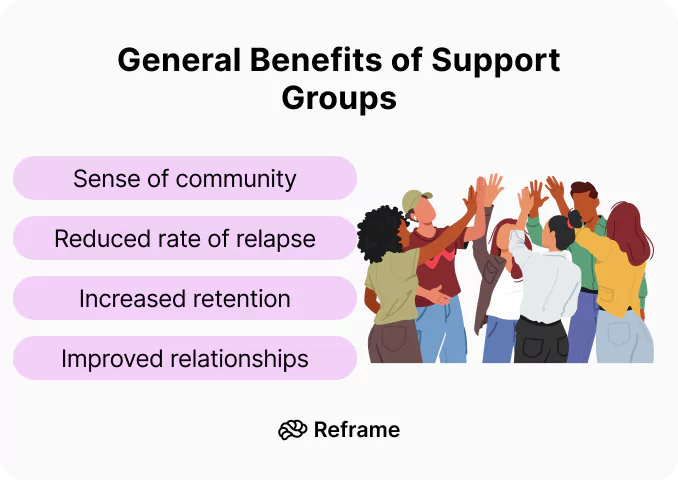
Support groups don’t need to be rigidly structured and formatted. They can be as tight-knit as a group of friends who’ve had similar experiences or as noncommittal as a public forum where we can share and learn from each other. No matter which format we prefer, support groups can provide many benefits:
Support groups like AA can help us on our path to recovery, but if we don’t align with some of AA’s values or just want to try something else, what other options are there?
Just as some of us may enjoy running while others prefer gentle movement like yoga for our daily exercise, some alcohol misuse treatment options may work better for us than others. Luckily, there are many options we can explore:
AA can be beneficial for some of us, but it does have its shortcomings. Fortunately, other options like those above can help us in our recovery by meeting our specific needs.
If traditional meetings don’t quite fit your lifestyle or you’re looking for extra support, technology offers a flexible and private way to get help. Sobriety apps put powerful tools and entire communities right in your pocket, allowing you to engage with your goals on your own terms and timeline. These apps cater to a wide range of needs, from tracking your progress and savings to connecting with peers or learning new coping mechanisms rooted in science. Whether you’re motivated by seeing your data, feeling a sense of community, or following a structured, science-backed program, there’s an app designed to support your specific journey toward changing your relationship with alcohol.
For many of us, feeling connected is a powerful motivator for change. Apps like I Am Sober are built around this very principle, creating a dedicated space to share your journey with others who truly understand. You can track your sober days and milestones, see exactly how much money you’ve saved by not drinking, and join community message boards to talk with people at the same stage as you. It helps you reflect on your progress through daily pledges and private journaling, making it a fantastic option if you thrive on shared experiences and mutual encouragement from a supportive group.
If you’re looking for a structured program grounded in psychology and neuroscience, an app like Reframe might be the perfect fit. Developed with insights from medical and mental health professionals, it uses a science-based approach to help you change your drinking habits for good. The app provides a comprehensive toolkit with over 100 resources, including guided meditations, cognitive exercises, and craving trackers, all part of a daily program designed to help you build healthier routines. It also features drink tracking to help you stay mindful, live group meetings with coaches, and an active community, giving you a complete support system for making lasting changes.
Changing your relationship with alcohol can also mean changing your social life, especially when it comes to dating and making new friends. Apps like Loosid are designed specifically to address the social side of sobriety. It functions as a dating app for sober people, but it also includes community forums and groups for finding sober friends and local events. This unique focus helps you build a supportive social circle with people who share your lifestyle, making it much easier to navigate social situations without alcohol and form meaningful connections that aren't centered around drinking.
Sometimes, all you need is a straightforward way to see your progress and stay motivated. Apps like Nomo offer a simple, no-frills approach to tracking your journey. You can create customizable "clocks" to count your sober days, which provides a powerful visual of how far you've come. The app also shows you the money and time you've saved and allows you to share your progress with accountability partners to stay on track. It even includes mini-games to help you get through cravings and awards digital chips for milestones, providing simple motivation without overwhelming you with extra features.
Finding the right sobriety app is a personal choice, because everyone’s path is different. The best option for you depends entirely on what you need most at this moment. If you’re looking for accountability and a feeling of belonging, a community-focused app could be ideal. If you prefer a structured, educational approach that explains the "why" behind your habits, science-based coaching might be more effective. Take a moment to think about your primary motivation—is it building new sober relationships, or do you just want a simple tool to track your days? Reflecting on your needs will help you select an app that truly supports your goals.
Beyond peer groups and digital apps, there are also robust, publicly funded resources available to help you. Government agencies provide free, confidential support and information for anyone dealing with substance use issues, serving as a reliable starting point if you’re looking for more formal treatment options. These services are designed to be accessible and can connect you with professional help in your local area. If you need immediate assistance or are ready to explore clinical care, these resources can guide you toward the right path with credible, evidence-based information from trained professionals.
The Substance Abuse and Mental Health Services Administration (SAMHSA) is a U.S. government agency dedicated to improving mental health and providing support for substance use issues across the country. Its core mission is to reduce the impact of substance misuse and mental illness on America's communities. As the nation's leading agency on this topic, SAMHSA offers a wealth of information, research, and programs that make it a central hub for public health efforts. For individuals, it serves as a trustworthy and authoritative source for finding evidence-based information and professional treatment resources.
One of SAMHSA’s most practical tools is its National Helpline, which is available 24/7 in both English and Spanish. This free, confidential service provides referrals to local treatment facilities, support groups, and community-based organizations. When you call, you’ll speak with a trained specialist who can help you understand your options and find the resources you need without judgment. SAMHSA also offers online treatment locators that allow you to search for mental health and substance use treatment centers near you, making it much easier to take that first step toward getting professional help.
AA is a bit like Cinderella’s glass slipper — the shoe doesn’t fit everyone. Its philosophy and support program have paved the way for other treatment models and can be beneficial for some seeking sobriety. Its spiritual basis and prescriptive structure, however, can prevent some of us from reaping AA’s peer-support benefits.
Happily, there are many ways we can stay on the path to recovery!
What’s the real difference between the 12 Steps and the 12 Traditions? Think of it this way: the 12 Steps are a personal roadmap for your individual recovery journey. They offer a framework for self-reflection and action. The 12 Traditions, on the other hand, are guidelines for the AA groups themselves. They ensure that every group stays focused on its primary purpose and operates in a healthy, unified way. So, the Steps are for you, and the Traditions are for the group.
Do I have to be religious to join AA? Not at all. While AA’s language is rooted in spiritual concepts, including a “Power greater than ourselves,” it’s not a religious program. Many members define that higher power in their own terms. For some, it’s the collective strength of the support group; for others, it’s nature, the universe, or an inner sense of guidance. The focus is on finding a source of strength outside of yourself, whatever that may look like for you.
What if I’m too nervous to share my story at my first meeting? That is completely okay, and you are definitely not alone in feeling that way. There is absolutely no pressure to speak. You can attend as many meetings as you like and simply listen. The main goal is for you to feel safe and absorb the support in the room. People only share when they feel ready and comfortable.
Is AA my only option if I want peer support? No, AA is just one of many options available. It’s one of the most well-known, but there are many other excellent peer support groups out there. Programs like SMART Recovery, LifeRing, and Women for Sobriety offer different philosophies, some of which are entirely secular and based on modern psychology. The best program is the one that feels right for you.
How do I choose between a program like AA and a sobriety app? The best choice depends on your personal needs and lifestyle. AA provides a valuable, structured community with in-person meetings and a long-established tradition. An app offers flexibility, privacy, and a personalized approach you can access anytime, anywhere. If you prefer a science-based program with daily exercises, progress tracking, and an online community that fits into a busy schedule, an app might be a more practical fit.
When you're ready to change your relationship with alcohol, Alcoholics Anonymous (AA) is often the first name you hear. It’s a symbol of hope for millions. But if you're unfamiliar with its principles, how it all works can be a mystery. What makes it so effective? And with support now on your phone, you might be looking for an official alcoholics anonymous app. We'll explore the core ideas behind AA, the benefits of its structure, and how a modern aa recovery app offers a different path to support your journey.
Whether you’re considering attending a meeting or you’re just curious about how AA works, understanding its concepts and the program’s support can help you decide whether it's right for you.
AA dates back to 1935 when a New York stockbroker (Bill W.) and an Akron, Ohio, surgeon (Dr. Bob) crossed paths. Both men had been in contact with the Oxford Group, a nonalcoholic fellowship that emphasized the spiritual values in daily living. It was only after the two met that they were able to achieve sobriety, sparking the founding of AA.
The first AA group started in Akron’s City Hospital. The second group formed in New York and the third in Cleveland. After four years, the three groups had helped 100 people achieve sobriety. In 1939, the founders published what is known as “The Big Book,” the basic textbook titled Alcoholics Anonymous, which explains AA’s philosophy and methods. It also offers case histories.
Over time, AA continued to expand, and its teachings became more popular and widespread. Significant events, including Dr. Bob’s work in hospital care for alcoholics and the AA General Service Conference, integrated AA’s teachings into medical care, introduced it to other agencies, and ensured the ongoing functioning of AA. Despite the passing of AA’s founders, its teachings and presence endure in some 180 nations around the world. Today, AA continues to promote the 12 Steps of recovery on which the group was founded. Let’s learn more about the 12 Steps and why they’ve helped many achieve sobriety.
The 12 Steps were created to establish a clear path to overcoming alcohol addiction. They were inspired by spiritual ideas centered around honesty, faith, humility, and repentance. Although the 12 Steps may vary slightly between groups, the core ideas remain intact.
These steps are the basis of AA’s program to help members achieve sobriety. Also integral to AA are the 12 Traditions (not to be confused with the 12 Steps).
AA helps its members achieve recovery by fostering a sense of community and promoting personal growth and responsibility. The 12 Traditions differ from the 12 Steps in that the traditions are less about individual acts and more about the principles of AA overall. The traditions aim to unite AA members and ensure the organizations stays true to its founding values.
A more thorough explanation and application can be found in a book written by one of AA’s founding members, Twelve Steps and Twelve Traditions. AA also has additional literature and resources that delve into other major concepts of the program and provide guidance on specific applications.
The practices of AA remain strong today, as many of its teachings are well-documented in key literature and resources of the program. Alcoholics Anonymous, also known as “The Big Book,” is one of the core components, as it provides background on AA, stories of how the first members got sober, and information on how to seek recovery. The basic text has helped many people recover from alcohol use disorder (AUD) since the first edition was published in 1939.
Another helpful resource written by AA members for AA members is Daily Reflections, a collection of inspirational messages about living sober every day of the year. More specific resources such as AA and the Armed Services, AA as a Resource for the Healthcare Professional, and AA for Alcoholics with Mental Health Issues can be found as pamphlets on the AA website.
Online resources can also be found on the AA Grapevine website and AA’s Meeting Guide App. The app not only identifies resources but also locates nearby meetings. So, If we decide to take the step to attend a meeting, what can we expect?
For those ready to find a meeting, A.A. offers a straightforward and free tool called the Meeting Guide app. Its primary purpose is to connect you with local A.A. meetings and other resources in your area, taking the guesswork out of finding support. The app is impressively comprehensive, listing over 100,000 weekly A.A. meetings, with information refreshed twice a day to ensure everything is current. Whether you’re at home or traveling, you can use its simple search tool to find meetings based on your location or by using specific keywords. This makes it an incredibly practical resource for anyone seeking the fellowship and structure that A.A. provides, putting a direct line to community support right in your pocket.
Accessibility is a key feature of the Meeting Guide app, which is available for both iOS and Android devices. The information you see comes directly from local A.A. service entities, so you can trust that it's reliable. A major benefit is that the app lists both in-person and online meetings, giving you the flexibility to choose what works best for your schedule and comfort level. For each listing, you’ll find essential details like the time, location (or virtual link), and the name of the meeting. This makes it easier than ever to find a welcoming space, whether you prefer connecting face-to-face or from the privacy of your own home, ensuring support is always within reach.
AA hosts two main types of meetings — open and closed. Open meetings are for anyone interested in AA’s program. Closed meetings are for members coping with alcohol misuse and seeking change and support. Both meetings are conducted by AA members who decide the format of the meetings. The common meeting formats include discussion meetings, speaker meetings, step meetings, and Big Book study meetings.
Although each type of meeting may differ slightly, the meeting elements remain similar:
After the meeting, some people may stay and chat. It’s a great opportunity to connect with others on a similar path. Despite the popularity of AA, however, its effectiveness remains in question. Let’s examine its success rate and challenges.
Although AA is one of the most widely known options for addressing alcohol addiction, its effectiveness is less clear. Some sources claim that AA has a low success rate at 5% while addiction specialists report a slightly higher rate at 8%–12%. The Big Book claims a success rate of 50%, and a 2020 review found that none of the studies found AA to be less effective than other interventions or no intervention. While the review shows that AA is at least effective across the board, research shows that about 40% drop out of the program within the first year. Overall, the effectiveness of AA is not definitive.
AA may be well known, but it does face skepticism. As we’ve learned, much of AA is based on the concept of a higher power, which everyone is not comfortable with. Additionally, AA is structured around meetings, and if we’re not able to attend regularly, we may not receive the full benefits of the program. An effective treatment program for alcohol misuse should meet an individual’s specific needs, which is why AA may not be a good fit for everyone.
Although AA may not work for everyone, the element of support during recovery can be beneficial. Let’s take a closer look at the positive aspects of support groups in general during the recovery process.
Support groups don’t need to be rigidly structured and formatted. They can be as tight-knit as a group of friends who’ve had similar experiences or as noncommittal as a public forum where we can share and learn from each other. No matter which format we prefer, support groups can provide many benefits:
Support groups like AA can help us on our path to recovery, but if we don’t align with some of AA’s values or just want to try something else, what other options are there?
Just as some of us may enjoy running while others prefer gentle movement like yoga for our daily exercise, some alcohol misuse treatment options may work better for us than others. Luckily, there are many options we can explore:
AA can be beneficial for some of us, but it does have its shortcomings. Fortunately, other options like those above can help us in our recovery by meeting our specific needs.
If traditional meetings don’t quite fit your lifestyle or you’re looking for extra support, technology offers a flexible and private way to get help. Sobriety apps put powerful tools and entire communities right in your pocket, allowing you to engage with your goals on your own terms and timeline. These apps cater to a wide range of needs, from tracking your progress and savings to connecting with peers or learning new coping mechanisms rooted in science. Whether you’re motivated by seeing your data, feeling a sense of community, or following a structured, science-backed program, there’s an app designed to support your specific journey toward changing your relationship with alcohol.
For many of us, feeling connected is a powerful motivator for change. Apps like I Am Sober are built around this very principle, creating a dedicated space to share your journey with others who truly understand. You can track your sober days and milestones, see exactly how much money you’ve saved by not drinking, and join community message boards to talk with people at the same stage as you. It helps you reflect on your progress through daily pledges and private journaling, making it a fantastic option if you thrive on shared experiences and mutual encouragement from a supportive group.
If you’re looking for a structured program grounded in psychology and neuroscience, an app like Reframe might be the perfect fit. Developed with insights from medical and mental health professionals, it uses a science-based approach to help you change your drinking habits for good. The app provides a comprehensive toolkit with over 100 resources, including guided meditations, cognitive exercises, and craving trackers, all part of a daily program designed to help you build healthier routines. It also features drink tracking to help you stay mindful, live group meetings with coaches, and an active community, giving you a complete support system for making lasting changes.
Changing your relationship with alcohol can also mean changing your social life, especially when it comes to dating and making new friends. Apps like Loosid are designed specifically to address the social side of sobriety. It functions as a dating app for sober people, but it also includes community forums and groups for finding sober friends and local events. This unique focus helps you build a supportive social circle with people who share your lifestyle, making it much easier to navigate social situations without alcohol and form meaningful connections that aren't centered around drinking.
Sometimes, all you need is a straightforward way to see your progress and stay motivated. Apps like Nomo offer a simple, no-frills approach to tracking your journey. You can create customizable "clocks" to count your sober days, which provides a powerful visual of how far you've come. The app also shows you the money and time you've saved and allows you to share your progress with accountability partners to stay on track. It even includes mini-games to help you get through cravings and awards digital chips for milestones, providing simple motivation without overwhelming you with extra features.
Finding the right sobriety app is a personal choice, because everyone’s path is different. The best option for you depends entirely on what you need most at this moment. If you’re looking for accountability and a feeling of belonging, a community-focused app could be ideal. If you prefer a structured, educational approach that explains the "why" behind your habits, science-based coaching might be more effective. Take a moment to think about your primary motivation—is it building new sober relationships, or do you just want a simple tool to track your days? Reflecting on your needs will help you select an app that truly supports your goals.
Beyond peer groups and digital apps, there are also robust, publicly funded resources available to help you. Government agencies provide free, confidential support and information for anyone dealing with substance use issues, serving as a reliable starting point if you’re looking for more formal treatment options. These services are designed to be accessible and can connect you with professional help in your local area. If you need immediate assistance or are ready to explore clinical care, these resources can guide you toward the right path with credible, evidence-based information from trained professionals.
The Substance Abuse and Mental Health Services Administration (SAMHSA) is a U.S. government agency dedicated to improving mental health and providing support for substance use issues across the country. Its core mission is to reduce the impact of substance misuse and mental illness on America's communities. As the nation's leading agency on this topic, SAMHSA offers a wealth of information, research, and programs that make it a central hub for public health efforts. For individuals, it serves as a trustworthy and authoritative source for finding evidence-based information and professional treatment resources.
One of SAMHSA’s most practical tools is its National Helpline, which is available 24/7 in both English and Spanish. This free, confidential service provides referrals to local treatment facilities, support groups, and community-based organizations. When you call, you’ll speak with a trained specialist who can help you understand your options and find the resources you need without judgment. SAMHSA also offers online treatment locators that allow you to search for mental health and substance use treatment centers near you, making it much easier to take that first step toward getting professional help.
AA is a bit like Cinderella’s glass slipper — the shoe doesn’t fit everyone. Its philosophy and support program have paved the way for other treatment models and can be beneficial for some seeking sobriety. Its spiritual basis and prescriptive structure, however, can prevent some of us from reaping AA’s peer-support benefits.
Happily, there are many ways we can stay on the path to recovery!
What’s the real difference between the 12 Steps and the 12 Traditions? Think of it this way: the 12 Steps are a personal roadmap for your individual recovery journey. They offer a framework for self-reflection and action. The 12 Traditions, on the other hand, are guidelines for the AA groups themselves. They ensure that every group stays focused on its primary purpose and operates in a healthy, unified way. So, the Steps are for you, and the Traditions are for the group.
Do I have to be religious to join AA? Not at all. While AA’s language is rooted in spiritual concepts, including a “Power greater than ourselves,” it’s not a religious program. Many members define that higher power in their own terms. For some, it’s the collective strength of the support group; for others, it’s nature, the universe, or an inner sense of guidance. The focus is on finding a source of strength outside of yourself, whatever that may look like for you.
What if I’m too nervous to share my story at my first meeting? That is completely okay, and you are definitely not alone in feeling that way. There is absolutely no pressure to speak. You can attend as many meetings as you like and simply listen. The main goal is for you to feel safe and absorb the support in the room. People only share when they feel ready and comfortable.
Is AA my only option if I want peer support? No, AA is just one of many options available. It’s one of the most well-known, but there are many other excellent peer support groups out there. Programs like SMART Recovery, LifeRing, and Women for Sobriety offer different philosophies, some of which are entirely secular and based on modern psychology. The best program is the one that feels right for you.
How do I choose between a program like AA and a sobriety app? The best choice depends on your personal needs and lifestyle. AA provides a valuable, structured community with in-person meetings and a long-established tradition. An app offers flexibility, privacy, and a personalized approach you can access anytime, anywhere. If you prefer a science-based program with daily exercises, progress tracking, and an online community that fits into a busy schedule, an app might be a more practical fit.

Curious about what trends are shaping the sober curious lifestyle? Learn how mindful drinking, wellness, and new social habits are changing the conversation.
Although it isn’t a treatment for alcohol use disorder (AUD), the Reframe app can help you cut back on drinking gradually, with the science-backed knowledge to empower you 100% of the way. Our proven program has helped millions of people around the world drink less and live more. And we want to help you get there, too!
The Reframe app equips you with the knowledge and skills you need to not only survive drinking less, but to thrive while you navigate the journey. Our daily research-backed readings teach you the neuroscience of alcohol, and our in-app Toolkit provides the resources and activities you need to navigate each challenge.
You’ll meet millions of fellow Reframers in our 24/7 Forum chat and daily Zoom check-in meetings. Receive encouragement from people worldwide who know exactly what you’re going through! You’ll also have the opportunity to connect with our licensed Reframe coaches for more personalized guidance.
Plus, we’re always introducing new features to optimize your in-app experience. We recently launched our in-app chatbot, Melody, powered by the world’s most powerful AI technology. Melody is here to help as you adjust to a life with less (or no) alcohol.
And that’s not all! Every month, we launch fun challenges, like Dry/Damp January, Mental Health May, and Outdoorsy June. You won’t want to miss out on the chance to participate alongside fellow Reframers (or solo if that’s more your thing!).
The Reframe app is free for 7 days, so you don’t have anything to lose by trying it. Are you ready to feel empowered and discover life beyond alcohol? Then download our app through the App Store or Google Play today!
For years, drinking felt like a non-negotiable part of adult life, from post-work happy hours to weekend celebrations. But that's changing. A growing number of people are embracing the sober curious movement, not by giving up alcohol completely, but by questioning its role in their lives. They're prioritizing wellness and making more intentional choices. This cultural shift makes you wonder, what trends are shaping the sober curious lifestyle? We'll explore the key drivers, from the boom in sophisticated non-alcoholic options to a deeper focus on mental and physical health.

The sober curious movement is not about complete abstinence from alcohol but rather about making more mindful choices regarding drinking. It encourages individuals to question their relationship with alcohol and explore the benefits of reducing or eliminating alcohol consumption.
It's easy to get these two terms mixed up, but they represent different approaches to alcohol. Being "teetotal" means you don't drink alcohol at all—period. It's a commitment to complete abstinence. On the other hand, being "sober curious" is more of an exploration. It's about questioning your drinking habits and becoming more intentional with your consumption. You might decide to drink less, take breaks from alcohol, or simply pay more attention to *why* you're drinking in the first place. Think of it as a shift toward mindful drinking rather than a hard-and-fast rule. This approach, which is becoming especially popular among younger generations, focuses on wellness and personal choice without the pressure of complete sobriety. It’s about finding what works for you and your lifestyle.
The reasons for exploring a sober curious lifestyle are as unique as the people who embrace it. It’s not a one-size-fits-all decision but a personal choice driven by a desire for something more—more clarity, more money, more control, or better health. For many, it starts with a simple question: "Is alcohol really serving me?" From there, the motivations to cut back often fall into a few key areas that resonate with a growing number of people looking to live more intentionally.
Let's be honest: drinking can be expensive. Whether it's a craft cocktail at a trendy bar or a few bottles of wine for the week, the costs add up quickly. As one person noted, it can come down to a choice between paying rent or buying a $22 drink. This financial reality is a major driver for many who are re-evaluating their spending habits. Cutting back on alcohol can free up a surprising amount of cash for other goals, like saving for a vacation, investing, or simply reducing financial stress. If you're curious about your own potential savings, using an alcohol spend calculator can be an eye-opening exercise that puts the real cost into perspective.
The conversation around health and wellness has shifted, and alcohol is a big part of it. We’re more aware than ever that alcohol isn't a health drink. As Forbes points out, "There's a lot of proof that alcohol can be bad for your health. Even small amounts can increase health risks." People are choosing to prioritize their well-being, seeking better sleep, more energy, clearer skin, and improved mental clarity. Beyond the immediate hangover, there's a growing understanding of the long-term effects on physical and mental health. This shift toward mindful drinking is about making conscious choices that support a healthier, more vibrant life, rather than detracting from it.
In a world where our lives are often documented online, managing our personal brand has become second nature. For many, especially younger generations, this means being more deliberate about the image they project. As one source puts it, "They live a lot of their lives online, and drunk photos don't look good on social media." The desire to maintain a polished and professional digital footprint is a powerful motivator. Choosing to drink less is a way to stay in control of your actions and ensure that the version of you that appears online is one you’re proud of—one that is sharp, composed, and authentic, without the risk of a regrettable post.
If you've noticed more mocktails on menus and friends skipping a round of drinks, you're not just imagining it. The data shows a clear and growing interest in drinking less. The "sober curious" lifestyle is particularly popular with Gen Z and millennials, who are increasingly choosing to reduce their alcohol intake for reasons like improving their physical health or mental clarity. For instance, research shared by ABC News shows the number of college students abstaining from alcohol grew from 20% in 2002 to 28% in 2018. And the trend is set to continue, with a quarter of Gen Z and millennials who drink planning to cut back. This shift isn't just about abstaining; it's about exploring alternatives, with 60% from these generations having already tried non-alcoholic drinks. This isn't a fleeting fad; it's a significant lifestyle change.
While the term "sober curious" might feel new, the practice of re-evaluating our relationship with alcohol has been building for years. This is more than a temporary trend; it's a deeper cultural shift in how we think about and interact with alcohol. As Forbes notes, it’s a change in the way entire generations are approaching alcohol use. This movement is about empowerment and choice, moving away from automatic drinking habits toward more intentional decisions. It represents a collective desire to live more consciously, questioning the default role alcohol plays in our social lives and daily routines. With Gen Z at the forefront, the momentum is only expected to grow. This points to a future where alcohol-free social events are not just an alternative but a normal, celebrated part of life, making it easier for everyone to explore mindful drinking without pressure.
One of the most visible trends is the rise in non-alcoholic beverages. From non-alcoholic beers to sophisticated mocktails, the market is expanding rapidly. This growth is driven by demand from sober curious individuals who still want to enjoy social rituals without consuming alcohol.
As more non-alcoholic options appear on shelves, it's helpful to know what the labels actually mean. It’s not always as straightforward as you might think. In the United States, for a beverage to be labeled "alcohol-free," it must contain less than 0.5% alcohol by volume (ABV). While this trace amount is negligible for most, it's an important distinction for anyone aiming for complete abstention. This explosion in variety is a direct response to changing tastes. People are actively seeking out interesting, complex drinks that feel celebratory, moving beyond the standard offerings of soda or juice. This growing demand is a cornerstone of the sober curious movement, encouraging brands to innovate and provide high-quality alternatives for mindful consumers.
Celebrities like Adele and Jada Pinkett Smith have publicly shared their decisions to cut back on alcohol, providing powerful role models for the movement. Their stories highlight the benefits of a sober curious lifestyle, such as improved health and well-being.
Gen Z is at the forefront of the sober curious movement. Unlike previous generations, many young people today are choosing to drink less or not at all. This shift is influenced by a greater awareness of health and wellness, as well as a desire to avoid the negative consequences associated with alcohol.
Several factors contribute to this generational shift. Gen Z is highly aware of the health risks associated with alcohol, viewing it with a caution similar to how previous generations saw cigarettes. Financial prudence also plays a significant role; in an era of high living costs, the price of alcohol is a major consideration. If you're curious about how much you're spending, using an alcohol spend calculator can be eye-opening. Beyond health and money, there's the digital footprint. This generation lives much of their lives online, and they are mindful of the image they project. Finally, a focus on safety and mindfulness means they often prefer experiences where they can be fully present and in control, which naturally leads to drinking less.
As the movement grows, we can expect to see an increase in sober events and social gatherings. These events cater to individuals who want to socialize without the presence of alcohol. From sober music festivals to alcohol-free bars, the options are expanding.
Dating culture has long been tied to alcohol — think “let’s grab a drink” as the go-to first date. But that's changing. As more people, particularly younger generations, embrace a sober curious lifestyle, the dating scene is evolving too. People are choosing to connect without the influence of alcohol, leading to more genuine interactions and deeper conversations. This shift is driven by a desire for better mental and physical health, and the growing acceptance of non-drinkers in social settings is reshaping dating culture entirely. Sober dating allows individuals to focus on compatibility and personality, creating a foundation for relationships built on clarity and mutual respect rather than liquid courage.
Technology will play a significant role in supporting the sober curious movement. Apps like Reframe provide resources and community support for individuals looking to reduce their alcohol consumption. These platforms offer tools for tracking progress, accessing educational content, and connecting with like-minded individuals.
Going sober curious doesn't mean you have to go it alone. In fact, having the right support system can make all the difference. This is where technology really shines, offering personalized tools and a sense of community right from your phone. Apps are designed to meet you where you are on your journey, providing resources for tracking progress, educational content to understand your habits, and guidance for building a new routine. Many people find that connecting with others who share similar goals helps them stay committed to mindful drinking. The most effective platforms, like Reframe, integrate these elements seamlessly. You get a comprehensive, neuroscience-backed toolkit to help you make lasting changes, along with a supportive community that gets what you're going through and is ready to celebrate your wins.
Employers are increasingly recognizing the benefits of supporting employees' wellness, including their relationship with alcohol. We can anticipate more workplace wellness programs that promote mindful drinking and provide resources for employees to make healthier choices.
The sober curious movement is challenging traditional social norms around alcohol. It is becoming more acceptable to decline a drink at social events, and there is less pressure to consume alcohol to fit in. This shift is leading to more inclusive social environments where everyone can feel comfortable, regardless of their drinking choices.
Individuals who embrace the sober curious movement often report significant improvements in their overall health. Better sleep, increased energy levels, and improved mental clarity are common benefits. As more people experience these positive changes, the movement is likely to continue growing.
If weight management is one of your goals, taking a closer look at your drinking habits is a great place to start. Alcoholic beverages are often packed with “empty calories,” meaning they offer little to no nutritional value. A single craft beer or a sugary cocktail can contain hundreds of calories, which can add up quickly and contribute to weight gain over time. By cutting back, you might find it easier to maintain a healthy weight without making other drastic changes to your diet. It’s a simple adjustment that can have a surprisingly big impact on your overall physical health and how you feel in your body.
Many people reach for a drink to unwind, but alcohol is a depressant that can actually disrupt the delicate balance of chemicals in your brain. In the long run, it can worsen feelings of anxiety or sadness. Reducing your intake can lead to a more stable, positive mood. At the same time, alcohol can be tough on your digestive system, irritating the stomach lining and causing discomfort. By drinking less, you give your gut a chance to heal, which can improve digestion. This powerful combination of better mental clarity and physical comfort is a key reason why so many people explore mindful drinking.
For anyone who enjoys being active, scaling back on alcohol can make a noticeable difference in physical performance. Alcohol is dehydrating, interferes with muscle recovery, and can ruin a good night’s sleep — all of which are essential for fitness. When you drink less, you’re better hydrated, your muscles can repair themselves more efficiently after a workout, and you’ll likely experience more restorative sleep. This means you can show up to your workouts with more energy and recover faster, helping you reach your fitness goals sooner and feel stronger in your daily activities.
Beyond the immediate benefits, one of the most compelling reasons to reduce alcohol consumption is the positive effect on your long-term health. Consistently drinking less can significantly lower your risk of developing serious health conditions down the road. According to research, this includes a reduced likelihood of liver disease, heart problems, and certain types of cancer. Making mindful choices about alcohol is a proactive step you can take to protect your future self. It’s an investment in your long-term well-being that empowers you to live a healthier, more vibrant life for years to come.
The rise of non-alcoholic beverages and sober events is creating new economic opportunities. Businesses that cater to the sober curious market are thriving, and there is a growing demand for products and services that support a sober lifestyle.
The sober curious movement is more than a trend; it is a cultural shift that is redefining our relationship with alcohol. By promoting mindful drinking and creating inclusive social spaces, the movement is fostering healthier lifestyles and challenging societal norms. As it continues to grow, we can expect to see even more innovations and positive changes in the way we approach alcohol consumption.
If you're curious about drinking less, the idea can feel both exciting and a little daunting. The key is to start small. You don’t need to have it all figured out overnight. Instead, think of it as an experiment in getting to know yourself better. By taking a few simple, practical steps, you can begin to explore your relationship with alcohol and see what a more mindful approach feels like for you. These first steps are all about gathering information and building a foundation for change, one day at a time, without pressure or judgment.
One of the most powerful first steps is to simply pay attention. Start a journal and, each time you have the urge to drink, take a moment to write down what’s happening. Note where you are, who you’re with, and how you’re feeling emotionally. This isn’t about judgment; it’s about curiosity. Over time, you’ll start to see patterns, or "triggers," that lead you to reach for a drink. Understanding these moments is the first step toward changing your response to them. Using a tool like the Reframe app can make this process even easier, allowing you to track your drinks and moods right on your phone.
A huge part of changing your drinking habits is discovering what you love to do without alcohol. Think about hobbies you used to enjoy or new ones you’ve always wanted to try. Maybe it’s joining a hiking group, signing up for a pottery class, or starting a weekend morning ritual of visiting a new coffee shop. When you fill your time with activities that bring you joy and fulfillment, alcohol naturally takes up less space in your life. This shift helps you build a new routine centered on wellness and fun, proving that you don’t need alcohol to have a good time.
Sharing your intentions with people you trust can make a world of difference. You don’t have to make a grand announcement, but letting close friends and family know you’re exploring a mindful drinking lifestyle can create a strong support system. Explain your reasons in a way that feels authentic to you. This helps them understand how to support you, whether it’s suggesting alcohol-free outings or simply being an encouraging voice. Having people in your corner, including the online community you can find in apps like Reframe, makes the journey feel much less lonely and far more achievable.
Being sober curious doesn’t mean you have to give up the ritual of enjoying a delicious, well-crafted drink. Exploring the world of mocktails is a fun and creative way to treat yourself. You can start with something simple, like mixing sparkling water with muddled berries and a sprig of mint, or trying a non-alcoholic sparkling wine with a splash of orange juice for a "mock-mosa." Having a go-to non-alcoholic option makes social situations feel more comfortable and gives you something special to sip on while you relax at home, keeping the experience celebratory.
Do I have to quit alcohol completely to be sober curious? Absolutely not. That's the key difference between being sober curious and being completely sober. Think of it as an exploration, not a strict rule. It’s about asking yourself if alcohol is truly serving you and then making more intentional choices. For some, that might mean drinking less, while for others, it could mean taking breaks. It's all about finding what feels right for your life and wellness goals without the pressure of an all-or-nothing approach.
Is the sober curious lifestyle only for young people? While it's true that younger generations like Gen Z are really driving this conversation, the sober curious movement is for anyone, at any age. The desire to improve your health, save money, or simply feel more present in your life isn't limited to a specific age group. People from all walks of life are questioning the default role of alcohol and finding that drinking more mindfully works for them.
What if my friends don't understand or support my decision to drink less? This is a common and valid concern. It can be helpful to have a simple, honest conversation with them. You don't need to give a long speech, but explaining that you're focusing on your health or just experimenting with drinking less can set expectations. You might be surprised by how supportive they are. It also helps to suggest activities that don't revolve around drinking, which shifts the focus from what you're not doing to the fun you can have together.
I'm worried I'll miss out on fun or feel awkward in social situations. How do I handle that? It's completely normal to feel that way, especially since so many social events are centered around alcohol. The great news is that this is changing. You can start by having a go-to non-alcoholic drink in hand, like a sparkling water with lime or a fun mocktail, so you don't feel empty-handed. Also, focus on the real reason you're there: to connect with people. You'll likely find that you can have more genuine conversations when you're fully present.
This all sounds great, but I feel overwhelmed. What's a realistic first step? The best way to start is by taking one small, manageable step. Don't think about forever; just think about today or this week. A great starting point is to simply become more aware of your habits. Try keeping a small journal for a week to note when and why you feel the urge to drink, without any judgment. This simple act of observation can give you powerful insights and help you decide what your next small step will be.
For years, drinking felt like a non-negotiable part of adult life, from post-work happy hours to weekend celebrations. But that's changing. A growing number of people are embracing the sober curious movement, not by giving up alcohol completely, but by questioning its role in their lives. They're prioritizing wellness and making more intentional choices. This cultural shift makes you wonder, what trends are shaping the sober curious lifestyle? We'll explore the key drivers, from the boom in sophisticated non-alcoholic options to a deeper focus on mental and physical health.
The sober curious movement is not about complete abstinence from alcohol but rather about making more mindful choices regarding drinking. It encourages individuals to question their relationship with alcohol and explore the benefits of reducing or eliminating alcohol consumption.
It's easy to get these two terms mixed up, but they represent different approaches to alcohol. Being "teetotal" means you don't drink alcohol at all—period. It's a commitment to complete abstinence. On the other hand, being "sober curious" is more of an exploration. It's about questioning your drinking habits and becoming more intentional with your consumption. You might decide to drink less, take breaks from alcohol, or simply pay more attention to *why* you're drinking in the first place. Think of it as a shift toward mindful drinking rather than a hard-and-fast rule. This approach, which is becoming especially popular among younger generations, focuses on wellness and personal choice without the pressure of complete sobriety. It’s about finding what works for you and your lifestyle.
The reasons for exploring a sober curious lifestyle are as unique as the people who embrace it. It’s not a one-size-fits-all decision but a personal choice driven by a desire for something more—more clarity, more money, more control, or better health. For many, it starts with a simple question: "Is alcohol really serving me?" From there, the motivations to cut back often fall into a few key areas that resonate with a growing number of people looking to live more intentionally.
Let's be honest: drinking can be expensive. Whether it's a craft cocktail at a trendy bar or a few bottles of wine for the week, the costs add up quickly. As one person noted, it can come down to a choice between paying rent or buying a $22 drink. This financial reality is a major driver for many who are re-evaluating their spending habits. Cutting back on alcohol can free up a surprising amount of cash for other goals, like saving for a vacation, investing, or simply reducing financial stress. If you're curious about your own potential savings, using an alcohol spend calculator can be an eye-opening exercise that puts the real cost into perspective.
The conversation around health and wellness has shifted, and alcohol is a big part of it. We’re more aware than ever that alcohol isn't a health drink. As Forbes points out, "There's a lot of proof that alcohol can be bad for your health. Even small amounts can increase health risks." People are choosing to prioritize their well-being, seeking better sleep, more energy, clearer skin, and improved mental clarity. Beyond the immediate hangover, there's a growing understanding of the long-term effects on physical and mental health. This shift toward mindful drinking is about making conscious choices that support a healthier, more vibrant life, rather than detracting from it.
In a world where our lives are often documented online, managing our personal brand has become second nature. For many, especially younger generations, this means being more deliberate about the image they project. As one source puts it, "They live a lot of their lives online, and drunk photos don't look good on social media." The desire to maintain a polished and professional digital footprint is a powerful motivator. Choosing to drink less is a way to stay in control of your actions and ensure that the version of you that appears online is one you’re proud of—one that is sharp, composed, and authentic, without the risk of a regrettable post.
If you've noticed more mocktails on menus and friends skipping a round of drinks, you're not just imagining it. The data shows a clear and growing interest in drinking less. The "sober curious" lifestyle is particularly popular with Gen Z and millennials, who are increasingly choosing to reduce their alcohol intake for reasons like improving their physical health or mental clarity. For instance, research shared by ABC News shows the number of college students abstaining from alcohol grew from 20% in 2002 to 28% in 2018. And the trend is set to continue, with a quarter of Gen Z and millennials who drink planning to cut back. This shift isn't just about abstaining; it's about exploring alternatives, with 60% from these generations having already tried non-alcoholic drinks. This isn't a fleeting fad; it's a significant lifestyle change.
While the term "sober curious" might feel new, the practice of re-evaluating our relationship with alcohol has been building for years. This is more than a temporary trend; it's a deeper cultural shift in how we think about and interact with alcohol. As Forbes notes, it’s a change in the way entire generations are approaching alcohol use. This movement is about empowerment and choice, moving away from automatic drinking habits toward more intentional decisions. It represents a collective desire to live more consciously, questioning the default role alcohol plays in our social lives and daily routines. With Gen Z at the forefront, the momentum is only expected to grow. This points to a future where alcohol-free social events are not just an alternative but a normal, celebrated part of life, making it easier for everyone to explore mindful drinking without pressure.
One of the most visible trends is the rise in non-alcoholic beverages. From non-alcoholic beers to sophisticated mocktails, the market is expanding rapidly. This growth is driven by demand from sober curious individuals who still want to enjoy social rituals without consuming alcohol.
As more non-alcoholic options appear on shelves, it's helpful to know what the labels actually mean. It’s not always as straightforward as you might think. In the United States, for a beverage to be labeled "alcohol-free," it must contain less than 0.5% alcohol by volume (ABV). While this trace amount is negligible for most, it's an important distinction for anyone aiming for complete abstention. This explosion in variety is a direct response to changing tastes. People are actively seeking out interesting, complex drinks that feel celebratory, moving beyond the standard offerings of soda or juice. This growing demand is a cornerstone of the sober curious movement, encouraging brands to innovate and provide high-quality alternatives for mindful consumers.
Celebrities like Adele and Jada Pinkett Smith have publicly shared their decisions to cut back on alcohol, providing powerful role models for the movement. Their stories highlight the benefits of a sober curious lifestyle, such as improved health and well-being.
Gen Z is at the forefront of the sober curious movement. Unlike previous generations, many young people today are choosing to drink less or not at all. This shift is influenced by a greater awareness of health and wellness, as well as a desire to avoid the negative consequences associated with alcohol.
Several factors contribute to this generational shift. Gen Z is highly aware of the health risks associated with alcohol, viewing it with a caution similar to how previous generations saw cigarettes. Financial prudence also plays a significant role; in an era of high living costs, the price of alcohol is a major consideration. If you're curious about how much you're spending, using an alcohol spend calculator can be eye-opening. Beyond health and money, there's the digital footprint. This generation lives much of their lives online, and they are mindful of the image they project. Finally, a focus on safety and mindfulness means they often prefer experiences where they can be fully present and in control, which naturally leads to drinking less.
As the movement grows, we can expect to see an increase in sober events and social gatherings. These events cater to individuals who want to socialize without the presence of alcohol. From sober music festivals to alcohol-free bars, the options are expanding.
Dating culture has long been tied to alcohol — think “let’s grab a drink” as the go-to first date. But that's changing. As more people, particularly younger generations, embrace a sober curious lifestyle, the dating scene is evolving too. People are choosing to connect without the influence of alcohol, leading to more genuine interactions and deeper conversations. This shift is driven by a desire for better mental and physical health, and the growing acceptance of non-drinkers in social settings is reshaping dating culture entirely. Sober dating allows individuals to focus on compatibility and personality, creating a foundation for relationships built on clarity and mutual respect rather than liquid courage.
Technology will play a significant role in supporting the sober curious movement. Apps like Reframe provide resources and community support for individuals looking to reduce their alcohol consumption. These platforms offer tools for tracking progress, accessing educational content, and connecting with like-minded individuals.
Going sober curious doesn't mean you have to go it alone. In fact, having the right support system can make all the difference. This is where technology really shines, offering personalized tools and a sense of community right from your phone. Apps are designed to meet you where you are on your journey, providing resources for tracking progress, educational content to understand your habits, and guidance for building a new routine. Many people find that connecting with others who share similar goals helps them stay committed to mindful drinking. The most effective platforms, like Reframe, integrate these elements seamlessly. You get a comprehensive, neuroscience-backed toolkit to help you make lasting changes, along with a supportive community that gets what you're going through and is ready to celebrate your wins.
Employers are increasingly recognizing the benefits of supporting employees' wellness, including their relationship with alcohol. We can anticipate more workplace wellness programs that promote mindful drinking and provide resources for employees to make healthier choices.
The sober curious movement is challenging traditional social norms around alcohol. It is becoming more acceptable to decline a drink at social events, and there is less pressure to consume alcohol to fit in. This shift is leading to more inclusive social environments where everyone can feel comfortable, regardless of their drinking choices.
Individuals who embrace the sober curious movement often report significant improvements in their overall health. Better sleep, increased energy levels, and improved mental clarity are common benefits. As more people experience these positive changes, the movement is likely to continue growing.
If weight management is one of your goals, taking a closer look at your drinking habits is a great place to start. Alcoholic beverages are often packed with “empty calories,” meaning they offer little to no nutritional value. A single craft beer or a sugary cocktail can contain hundreds of calories, which can add up quickly and contribute to weight gain over time. By cutting back, you might find it easier to maintain a healthy weight without making other drastic changes to your diet. It’s a simple adjustment that can have a surprisingly big impact on your overall physical health and how you feel in your body.
Many people reach for a drink to unwind, but alcohol is a depressant that can actually disrupt the delicate balance of chemicals in your brain. In the long run, it can worsen feelings of anxiety or sadness. Reducing your intake can lead to a more stable, positive mood. At the same time, alcohol can be tough on your digestive system, irritating the stomach lining and causing discomfort. By drinking less, you give your gut a chance to heal, which can improve digestion. This powerful combination of better mental clarity and physical comfort is a key reason why so many people explore mindful drinking.
For anyone who enjoys being active, scaling back on alcohol can make a noticeable difference in physical performance. Alcohol is dehydrating, interferes with muscle recovery, and can ruin a good night’s sleep — all of which are essential for fitness. When you drink less, you’re better hydrated, your muscles can repair themselves more efficiently after a workout, and you’ll likely experience more restorative sleep. This means you can show up to your workouts with more energy and recover faster, helping you reach your fitness goals sooner and feel stronger in your daily activities.
Beyond the immediate benefits, one of the most compelling reasons to reduce alcohol consumption is the positive effect on your long-term health. Consistently drinking less can significantly lower your risk of developing serious health conditions down the road. According to research, this includes a reduced likelihood of liver disease, heart problems, and certain types of cancer. Making mindful choices about alcohol is a proactive step you can take to protect your future self. It’s an investment in your long-term well-being that empowers you to live a healthier, more vibrant life for years to come.
The rise of non-alcoholic beverages and sober events is creating new economic opportunities. Businesses that cater to the sober curious market are thriving, and there is a growing demand for products and services that support a sober lifestyle.
The sober curious movement is more than a trend; it is a cultural shift that is redefining our relationship with alcohol. By promoting mindful drinking and creating inclusive social spaces, the movement is fostering healthier lifestyles and challenging societal norms. As it continues to grow, we can expect to see even more innovations and positive changes in the way we approach alcohol consumption.
If you're curious about drinking less, the idea can feel both exciting and a little daunting. The key is to start small. You don’t need to have it all figured out overnight. Instead, think of it as an experiment in getting to know yourself better. By taking a few simple, practical steps, you can begin to explore your relationship with alcohol and see what a more mindful approach feels like for you. These first steps are all about gathering information and building a foundation for change, one day at a time, without pressure or judgment.
One of the most powerful first steps is to simply pay attention. Start a journal and, each time you have the urge to drink, take a moment to write down what’s happening. Note where you are, who you’re with, and how you’re feeling emotionally. This isn’t about judgment; it’s about curiosity. Over time, you’ll start to see patterns, or "triggers," that lead you to reach for a drink. Understanding these moments is the first step toward changing your response to them. Using a tool like the Reframe app can make this process even easier, allowing you to track your drinks and moods right on your phone.
A huge part of changing your drinking habits is discovering what you love to do without alcohol. Think about hobbies you used to enjoy or new ones you’ve always wanted to try. Maybe it’s joining a hiking group, signing up for a pottery class, or starting a weekend morning ritual of visiting a new coffee shop. When you fill your time with activities that bring you joy and fulfillment, alcohol naturally takes up less space in your life. This shift helps you build a new routine centered on wellness and fun, proving that you don’t need alcohol to have a good time.
Sharing your intentions with people you trust can make a world of difference. You don’t have to make a grand announcement, but letting close friends and family know you’re exploring a mindful drinking lifestyle can create a strong support system. Explain your reasons in a way that feels authentic to you. This helps them understand how to support you, whether it’s suggesting alcohol-free outings or simply being an encouraging voice. Having people in your corner, including the online community you can find in apps like Reframe, makes the journey feel much less lonely and far more achievable.
Being sober curious doesn’t mean you have to give up the ritual of enjoying a delicious, well-crafted drink. Exploring the world of mocktails is a fun and creative way to treat yourself. You can start with something simple, like mixing sparkling water with muddled berries and a sprig of mint, or trying a non-alcoholic sparkling wine with a splash of orange juice for a "mock-mosa." Having a go-to non-alcoholic option makes social situations feel more comfortable and gives you something special to sip on while you relax at home, keeping the experience celebratory.
Do I have to quit alcohol completely to be sober curious? Absolutely not. That's the key difference between being sober curious and being completely sober. Think of it as an exploration, not a strict rule. It’s about asking yourself if alcohol is truly serving you and then making more intentional choices. For some, that might mean drinking less, while for others, it could mean taking breaks. It's all about finding what feels right for your life and wellness goals without the pressure of an all-or-nothing approach.
Is the sober curious lifestyle only for young people? While it's true that younger generations like Gen Z are really driving this conversation, the sober curious movement is for anyone, at any age. The desire to improve your health, save money, or simply feel more present in your life isn't limited to a specific age group. People from all walks of life are questioning the default role of alcohol and finding that drinking more mindfully works for them.
What if my friends don't understand or support my decision to drink less? This is a common and valid concern. It can be helpful to have a simple, honest conversation with them. You don't need to give a long speech, but explaining that you're focusing on your health or just experimenting with drinking less can set expectations. You might be surprised by how supportive they are. It also helps to suggest activities that don't revolve around drinking, which shifts the focus from what you're not doing to the fun you can have together.
I'm worried I'll miss out on fun or feel awkward in social situations. How do I handle that? It's completely normal to feel that way, especially since so many social events are centered around alcohol. The great news is that this is changing. You can start by having a go-to non-alcoholic drink in hand, like a sparkling water with lime or a fun mocktail, so you don't feel empty-handed. Also, focus on the real reason you're there: to connect with people. You'll likely find that you can have more genuine conversations when you're fully present.
This all sounds great, but I feel overwhelmed. What's a realistic first step? The best way to start is by taking one small, manageable step. Don't think about forever; just think about today or this week. A great starting point is to simply become more aware of your habits. Try keeping a small journal for a week to note when and why you feel the urge to drink, without any judgment. This simple act of observation can give you powerful insights and help you decide what your next small step will be.

Sober stories reveal how real people found clarity, joy, and connection by choosing a sober lifestyle. Find inspiration and support for your own journey.
Although it isn’t a treatment for alcohol use disorder (AUD), the Reframe app can help you cut back on drinking gradually with the science-backed knowledge to empower you 100% of the way. Our proven program has helped millions of people around the world drink less and live more. And we want to help you get there, too!
The Reframe app equips you with the knowledge and skills you need to not only survive drinking less, but to thrive while you navigate the journey. Our daily research-backed readings teach you the neuroscience of alcohol, and our in-app Toolkit provides the resources and activities you need to navigate each challenge.
You’ll meet millions of fellow Reframers in our 24/7 Forum chat and daily Zoom check-in meetings. Receive encouragement from people worldwide who know exactly what you’re going through! You’ll also have the opportunity to connect with our licensed Reframe coaches for more personalized guidance.
Plus, we’re always introducing new features to optimize your in-app experience. We recently launched our in-app chatbot, Melody, powered by the world’s most powerful AI technology. Melody is here to help as you adjust to a life with less (or no) alcohol.
And that’s not all! Every month, we launch fun challenges, like Dry/Damp January, Mental Health May, and Outdoorsy June. You won’t want to miss out on the chance to participate alongside fellow Reframers (or solo if that’s more your thing!).
The Reframe app is free for 7 days, so you don’t have anything to lose by trying it. Are you ready to feel empowered and discover life beyond alcohol? Then download our app through the App Store or Google Play today!
Rethinking your relationship with alcohol is about so much more than what you give up. Sure, better sleep and more energy are fantastic perks. But the real transformation lies in what you gain. It’s the newfound clarity, deeper friendships, and rediscovering passions you thought were long gone. These powerful sober stories show just that. Reading through these inspirational stories about quitting drinking, you'll see how different sober lifestyle experiences can open up a world of unexpected joy and fulfillment. Their journeys are proof of the amazing things that can happen.
When we think about drinking problems, our minds often jump to extremes. We picture either the person who can take it or leave it, or the person whose life has completely unraveled. But the reality is that our relationship with alcohol exists on a wide spectrum, and many of us fall somewhere in the middle. This middle ground can feel confusing and isolating because it doesn’t fit the neat, dramatic boxes we see in movies. You might be meeting all your responsibilities, have a great social life, and still have a nagging feeling that your drinking habits aren’t serving you. Recognizing that this is a valid and common experience is the first step toward making a change. Understanding terms like "gray area drinking" and "high-functioning alcoholism" can provide clarity and help you see your own patterns in a new light, free from judgment or stereotypes.
Gray area drinking describes the space between social drinking and severe alcohol dependence. It’s for the person who drinks more than they’d like but doesn’t fit the traditional image of an “alcoholic.” This often happens because our ideas about what a drinking problem looks like are so rigid. As one writer, Madeline Forrest, shared in her story of recovery, she spent a decade in this gray area, knowing her consumption was problematic but not identifying with the label of alcoholic. This is a common hurdle. If you find yourself questioning your habits, setting rules that you end up breaking, or feeling like alcohol is taking up too much mental space, you might be in the gray area. It’s a sign that exploring a more mindful approach to drinking could be incredibly beneficial for your well-being.
High-functioning alcoholism is another experience that defies stereotypes. This term describes individuals who, from the outside, seem to have it all together. They excel at work, maintain strong relationships, and meet all their obligations, all while privately struggling with alcohol dependency. Their external success becomes a shield, making it difficult for them—and others—to see the problem. One person’s amazing journey to sobriety began after years of academic and professional achievement, which masked the severity of his drinking. This creates a powerful internal conflict: “How can I have a problem when my life looks so good?” It’s a reminder that success doesn’t cancel out a struggle, and acknowledging the problem is a sign of strength, not weakness.
Sarah Hepola, an author and essayist, candidly shares her experience with alcohol in her memoir, "Blackout: Remembering the Things I Drank to Forget." Hepola's narrative is a raw and honest exploration of her struggles with alcohol-induced amnesia and the chaos it brought into her life. Through her journey, she discovered resilience and a renewed sense of self. Her story is a powerful testament to the transformative power of recovery, illustrating that even in the darkest moments, hope and renewal are always within reach.
When people decide to cut back on drinking, they often anticipate the physical perks: better sleep, clearer skin, and maybe a little weight loss. While those benefits are fantastic, the most profound changes are often the ones you don’t see coming. Moving away from alcohol isn’t about deprivation; it’s about discovery. You start to uncover a version of yourself that’s more present, clear-headed, and connected to what truly matters. It opens up space in your life—not just in your calendar on Saturday mornings, but mental and emotional space to build deeper relationships, explore new interests, and simply enjoy the quiet moments with a newfound sense of peace and clarity.
This journey is unique for everyone, but many share common threads of unexpected joy and personal growth. It’s about more than just subtracting alcohol; it’s about adding intention, authenticity, and richness to your daily experiences. You might find that your confidence grows, your creativity sparks, and your overall resilience strengthens. These lifestyle shifts can be subtle at first, but over time, they add up to a more fulfilling and vibrant way of living. Exploring what an alcohol-free life looks like for you can be an exciting adventure, especially when you have tools and communities like Reframe to guide you on your path toward mindful drinking.
Many of us have reached for a drink to take the edge off after a stressful day, believing it’s a reliable way to unwind and quiet a racing mind. However, alcohol often has the opposite effect, creating a cycle of anxiety. While it might offer temporary relief by depressing the central nervous system, the rebound effect can be intense, leaving you more anxious than before. One person shared that after they stopped drinking, they accidentally forgot to take their anxiety medication and realized their anxiety had almost completely disappeared. This experience shows how alcohol can be the source of the very feelings we’re trying to escape, fueling a fire it promises to put out.
Changing your relationship with alcohol often changes your relationships with people, usually for the better. When you remove alcohol from the equation, you connect with others on a more genuine level. One individual noted their long-term partnership became much stronger and more authentic after they quit drinking. Sobriety also frees up an incredible amount of time and energy, opening the door to rediscover old passions or find entirely new ones. Instead of spending weekends recovering, you can invest in activities that truly nourish your soul, whether that’s traveling, picking up a new skill, or simply enjoying a quiet evening at home with a good book and a clear mind.
Catherine Gray, an award-winning writer and editor, recounts her adventures in sobriety in "The Unexpected Joy of Being Sober." Gray’s story is not just about overcoming addiction but about discovering the myriad joys and unexpected benefits of living alcohol-free. Her narrative strikes a harmonious balance between introspective reflection and bubbly humor, making her journey both enlightening and delightful. Gray’s experiences highlight the beauty of rediscovering life’s possibilities when alcohol is no longer in the picture.
Holly Whitaker, in her book "Quit Like a Woman," challenges the societal norms and marketing tactics that glamorize alcohol, especially for women. Whitaker's approach to sobriety is multidimensional, offering practical advice, resources, and strategies for those exploring an alcohol-free lifestyle. Her story redefines sobriety not as deprivation but as liberation, empowering individuals to make conscious choices that align with their well-being.
The decision to change your relationship with alcohol is deeply personal, and it often begins with a single, clarifying moment. This turning point looks different for everyone. For some, it’s a dramatic event that makes it impossible to ignore the need for change. For others, it’s a quiet realization that their current habits are no longer serving them. Whatever the catalyst, this moment is powerful because it marks the beginning of a new chapter—one focused on health, clarity, and well-being. Understanding these different paths can help you recognize your own readiness for change.
For many, the motivation to stop drinking comes after hitting what is often called a "rock bottom." This isn't just a bad day; it's a significant crisis that serves as an unavoidable wake-up call. It could be a serious health scare, like the man whose journey to sobriety began only after he faced life-threatening withdrawal symptoms. In that moment of vulnerability, he knew he had to be honest with himself and finally ask for help. While these experiences are incredibly challenging, they can provide the powerful, undeniable push needed to commit to a new way of living and seek the support necessary for lasting change.
On the other hand, you don’t have to wait for a disaster to decide that you want something different for yourself. Many people recognize the need for change long before a crisis hits, a proactive choice that stems from self-awareness. Writer Madeline Forrest, who struggled with "gray area drinking," found her turning point in a simple but profound quote: "If there was a small fire in your kitchen, you wouldn’t wait until your whole house is in flames to put it out." This perspective is at the heart of mindful drinking. It’s about choosing to address your habits because you deserve to feel your best, not because you’re forced to by circumstance.
Clare Pooley, a UK-based mom and blogger, shares her first year of sobriety in "The Sober Diaries." Through a series of diary entries, Pooley offers readers an intimate look at her challenges and triumphs. Her raw authenticity and unfiltered honesty make her chronicle particularly captivating. Pooley’s experiences illustrate that choosing sobriety is not about giving up alcohol but about embracing a new, fulfilling life.
Changing your relationship with alcohol is a personal process, but you don’t have to go it alone. A whole world of tools, strategies, and support systems is available to help you find what works best. The key is building a personalized toolkit that feels right for you, whether that means connecting with a community or using practical mental exercises to manage cravings. Exploring these avenues can help you create a strong foundation for a fulfilling, alcohol-free life.
Connection is a powerful force, and finding your people can make all the difference. For decades, traditional groups like Alcoholics Anonymous (AA) have provided structured, in-person support and a strong sense of belonging. If that doesn't feel like the right fit, modern alternatives offer incredible flexibility. Virtual communities and comprehensive apps like Reframe bring support directly to your phone, offering neuroscience-backed programs and a network of peers who share your goals. Whether in-person or online, finding a space where you feel understood and encouraged is a crucial step in your journey toward mindful drinking.
Beyond community, having personal strategies is essential for navigating tough moments. One effective technique is "playing the tape forward"—when a craving hits, think through the real consequences of drinking, like how you’ll feel tomorrow morning. This helps you move past the romanticized idea of a drink. Another great tool is to immerse yourself in "Quit Lit" or create a personal list of your reasons for cutting back. You can even use an alcohol spend calculator to quantify one of the benefits. Having these tangible reminders of your "why" can ground you in your commitment when you need it most.
William Porter, a London-based lawyer, provides a comprehensive understanding of alcohol's effects on the brain and body in "Alcohol Explained." Porter’s objective, fact-based stance equips readers with the knowledge to make informed decisions about their alcohol consumption. His book is an invaluable resource for anyone seeking to understand their relationship with alcohol on a deeper level.
Ruby Warrington, author of "Sober Curious," invites us to view sobriety as an experiment in self-discovery. Warrington's approach is not about pushing total abstinence but about encouraging mindful and conscious choices. Her story challenges contemporary culture's fascination with alcohol and presents sobriety as an opportunity for renewed clarity and vigor.
Changing your relationship with alcohol is a journey, not a destination. While everyone's path is unique, there are common phases and milestones that many people experience along the way. Understanding these stages can help you prepare for the challenges and appreciate the progress you're making. From the initial period of adjustment to the long-term lifestyle shifts, each phase brings its own set of discoveries and rewards. Let's look at what you might expect as you move forward.
The beginning can feel like the hardest part. Many people report dealing with intense cravings and a rollercoaster of emotions as their bodies and minds adjust. But this is also when the most noticeable changes start to happen. As the initial fog begins to lift, you might find yourself sleeping more deeply and waking up with a clearer head. Small positive shifts start to add up, leading to stronger relationships and a newfound sense of freedom from the cycle of drinking. It’s a period of rediscovery where you begin to see the tangible benefits of your decision, building momentum for the road ahead.
As you move further into your journey, you'll find that sobriety becomes less about not drinking and more about building a life you genuinely enjoy. This is when new, healthier habits start to feel second nature. Many people notice a significant reduction in anxiety, realizing that alcohol was often a contributor rather than a solution. You might find deep satisfaction in quieter activities, like getting lost in a book or simply listening to music. This period is about more than just abstinence; it's about embracing mindful drinking principles and discovering a strength you may not have known you had. Like a bone that heals stronger after a break, overcoming this challenge can build incredible resilience.
Russell Brand, an English comedian and actor, shares his experiences with substance misuse and recovery in "Recovery: Freedom from Our Addictions." Brand reimagines the traditional twelve-step program, injecting his distinct voice, humor, and insight. His exploration of recovery is not just about cessation but about transcendence and breaking free from patterns that hinder true fulfillment.
While the memoirs of authors and celebrities offer incredible insight, there's a unique power in hearing from people who lead lives just like ours. These are the stories from coworkers, neighbors, and friends who navigated the same daily pressures—the happy hours, the weekend rituals, the glass of wine to unwind after a long day. Hearing how they decided to make a change can feel incredibly grounding and make the path to sobriety seem much more accessible. Sharing a recovery story is often a key part of the healing process, not just for the person sharing, but for everyone who listens. It builds a bridge of understanding and shows that you are not the only one feeling this way.
Podcasts like "Sober Stories from Everyday People" are a perfect example of this principle in action. They feature regular individuals talking openly about their relationship with alcohol and how they decided to stop drinking. These aren't tales of dramatic rock-bottom moments, but relatable narratives about how alcohol slowly took up more space in their lives. This kind of storytelling demystifies sobriety, stripping away the stigma and replacing it with authentic, human connection. It reminds us that making a change is not about being a certain "type" of person; it's a choice anyone can make to improve their well-being and live more intentionally.
One of the most comforting aspects of listening to these stories is the feeling of recognition. When a podcast guest mentions the social pressure to drink at every event or using alcohol as a reward for getting through the week, it can feel like they’re speaking directly to you. These shared experiences create an immediate sense of community and validation. Suddenly, the thoughts and feelings you might have kept to yourself are out in the open, normalized by someone else's honesty. This connection helps dissolve feelings of isolation and provides the encouragement needed to explore your own relationship with alcohol without judgment.
Reading and listening to stories is a fantastic way to feel inspired, but building a support system is crucial for navigating the journey ahead. Quitting drinking is often just the first step. The real, lasting change comes from doing the deeper work of building self-compassion, healing old wounds, and learning new ways to cope with life's challenges. This is where having a community becomes so important. Connecting with people who are on a similar path provides a space to share wins, ask for advice, and find encouragement when you need it most. It’s about finding your people who just "get it."
Finding the right support can look different for everyone. For some, it might be online forums or local meetups. For others, having a dedicated space on their phone makes all the difference. That’s a core part of what we do at Reframe; our app includes a thriving community forum where millions of users connect, share their experiences, and cheer each other on 24/7. It’s a private, judgment-free zone to help you feel less alone. Exploring diverse narratives, like Catherine Gray’s story about the unexpected joys of an alcohol-free life, can also open your eyes to the possibilities that await, making the journey feel less like a sacrifice and more like an adventure.
The stories shared in this article are just a few examples of the countless individuals who have transformed their lives by choosing sobriety. These narratives highlight the diverse paths to recovery and the profound changes that come with embracing a sober lifestyle. Whether through personal anecdotes, scientific insights, or practical advice, these stories offer hope and inspiration to anyone looking to reevaluate their relationship with alcohol.
Do I need to hit "rock bottom" before I decide to change my drinking habits? Absolutely not. Many people make a change long before a crisis hits. The decision often comes from a quiet realization that your current habits aren't making you happy or healthy. Waiting for a major problem is like waiting for your entire house to be on fire before you grab the extinguisher. Making a proactive choice for your well-being is a sign of strength and self-awareness.
What if I don't consider myself an "alcoholic"? Is this journey still for me? Yes, completely. This path is for anyone who feels that alcohol is taking up more space in their life than they'd like. You don't need a specific label to want to improve your health, gain clarity, or simply see what life is like with less alcohol. Many people exist in a "gray area" of drinking, and exploring a change is about what feels right for you, not about fitting a definition.
I'm worried about how sobriety will affect my social life. Will I have to give up my friends? This is a huge and valid concern, but the outcome is often surprising. You may find that your true friendships become stronger and more meaningful because they're no longer centered around one activity. While your social circle might shift slightly, you'll discover which connections are truly authentic and have more time and energy to build new relationships based on shared interests.
What are some of the first positive changes I can expect to see? While everyone's experience is unique, many people report better sleep and waking up with a clearer head almost immediately. Within the first few weeks, you might also notice a significant drop in your baseline anxiety levels. These early benefits can be incredibly motivating and serve as a powerful reminder that you're making a positive choice for your mind and body.
Besides just stopping drinking, what are some practical first steps I can take? A great place to start is by getting clear on your personal reasons for making a change. Write them down and keep them somewhere you can see them. It's also helpful to find sources of inspiration, like books or podcasts about sobriety, to keep you motivated. Finally, consider finding a community of people on a similar path. Sharing the experience can make you feel understood and much less alone.
Rethinking your relationship with alcohol is about so much more than what you give up. Sure, better sleep and more energy are fantastic perks. But the real transformation lies in what you gain. It’s the newfound clarity, deeper friendships, and rediscovering passions you thought were long gone. These powerful sober stories show just that. Reading through these inspirational stories about quitting drinking, you'll see how different sober lifestyle experiences can open up a world of unexpected joy and fulfillment. Their journeys are proof of the amazing things that can happen.
When we think about drinking problems, our minds often jump to extremes. We picture either the person who can take it or leave it, or the person whose life has completely unraveled. But the reality is that our relationship with alcohol exists on a wide spectrum, and many of us fall somewhere in the middle. This middle ground can feel confusing and isolating because it doesn’t fit the neat, dramatic boxes we see in movies. You might be meeting all your responsibilities, have a great social life, and still have a nagging feeling that your drinking habits aren’t serving you. Recognizing that this is a valid and common experience is the first step toward making a change. Understanding terms like "gray area drinking" and "high-functioning alcoholism" can provide clarity and help you see your own patterns in a new light, free from judgment or stereotypes.
Gray area drinking describes the space between social drinking and severe alcohol dependence. It’s for the person who drinks more than they’d like but doesn’t fit the traditional image of an “alcoholic.” This often happens because our ideas about what a drinking problem looks like are so rigid. As one writer, Madeline Forrest, shared in her story of recovery, she spent a decade in this gray area, knowing her consumption was problematic but not identifying with the label of alcoholic. This is a common hurdle. If you find yourself questioning your habits, setting rules that you end up breaking, or feeling like alcohol is taking up too much mental space, you might be in the gray area. It’s a sign that exploring a more mindful approach to drinking could be incredibly beneficial for your well-being.
High-functioning alcoholism is another experience that defies stereotypes. This term describes individuals who, from the outside, seem to have it all together. They excel at work, maintain strong relationships, and meet all their obligations, all while privately struggling with alcohol dependency. Their external success becomes a shield, making it difficult for them—and others—to see the problem. One person’s amazing journey to sobriety began after years of academic and professional achievement, which masked the severity of his drinking. This creates a powerful internal conflict: “How can I have a problem when my life looks so good?” It’s a reminder that success doesn’t cancel out a struggle, and acknowledging the problem is a sign of strength, not weakness.
Sarah Hepola, an author and essayist, candidly shares her experience with alcohol in her memoir, "Blackout: Remembering the Things I Drank to Forget." Hepola's narrative is a raw and honest exploration of her struggles with alcohol-induced amnesia and the chaos it brought into her life. Through her journey, she discovered resilience and a renewed sense of self. Her story is a powerful testament to the transformative power of recovery, illustrating that even in the darkest moments, hope and renewal are always within reach.
When people decide to cut back on drinking, they often anticipate the physical perks: better sleep, clearer skin, and maybe a little weight loss. While those benefits are fantastic, the most profound changes are often the ones you don’t see coming. Moving away from alcohol isn’t about deprivation; it’s about discovery. You start to uncover a version of yourself that’s more present, clear-headed, and connected to what truly matters. It opens up space in your life—not just in your calendar on Saturday mornings, but mental and emotional space to build deeper relationships, explore new interests, and simply enjoy the quiet moments with a newfound sense of peace and clarity.
This journey is unique for everyone, but many share common threads of unexpected joy and personal growth. It’s about more than just subtracting alcohol; it’s about adding intention, authenticity, and richness to your daily experiences. You might find that your confidence grows, your creativity sparks, and your overall resilience strengthens. These lifestyle shifts can be subtle at first, but over time, they add up to a more fulfilling and vibrant way of living. Exploring what an alcohol-free life looks like for you can be an exciting adventure, especially when you have tools and communities like Reframe to guide you on your path toward mindful drinking.
Many of us have reached for a drink to take the edge off after a stressful day, believing it’s a reliable way to unwind and quiet a racing mind. However, alcohol often has the opposite effect, creating a cycle of anxiety. While it might offer temporary relief by depressing the central nervous system, the rebound effect can be intense, leaving you more anxious than before. One person shared that after they stopped drinking, they accidentally forgot to take their anxiety medication and realized their anxiety had almost completely disappeared. This experience shows how alcohol can be the source of the very feelings we’re trying to escape, fueling a fire it promises to put out.
Changing your relationship with alcohol often changes your relationships with people, usually for the better. When you remove alcohol from the equation, you connect with others on a more genuine level. One individual noted their long-term partnership became much stronger and more authentic after they quit drinking. Sobriety also frees up an incredible amount of time and energy, opening the door to rediscover old passions or find entirely new ones. Instead of spending weekends recovering, you can invest in activities that truly nourish your soul, whether that’s traveling, picking up a new skill, or simply enjoying a quiet evening at home with a good book and a clear mind.
Catherine Gray, an award-winning writer and editor, recounts her adventures in sobriety in "The Unexpected Joy of Being Sober." Gray’s story is not just about overcoming addiction but about discovering the myriad joys and unexpected benefits of living alcohol-free. Her narrative strikes a harmonious balance between introspective reflection and bubbly humor, making her journey both enlightening and delightful. Gray’s experiences highlight the beauty of rediscovering life’s possibilities when alcohol is no longer in the picture.
Holly Whitaker, in her book "Quit Like a Woman," challenges the societal norms and marketing tactics that glamorize alcohol, especially for women. Whitaker's approach to sobriety is multidimensional, offering practical advice, resources, and strategies for those exploring an alcohol-free lifestyle. Her story redefines sobriety not as deprivation but as liberation, empowering individuals to make conscious choices that align with their well-being.
The decision to change your relationship with alcohol is deeply personal, and it often begins with a single, clarifying moment. This turning point looks different for everyone. For some, it’s a dramatic event that makes it impossible to ignore the need for change. For others, it’s a quiet realization that their current habits are no longer serving them. Whatever the catalyst, this moment is powerful because it marks the beginning of a new chapter—one focused on health, clarity, and well-being. Understanding these different paths can help you recognize your own readiness for change.
For many, the motivation to stop drinking comes after hitting what is often called a "rock bottom." This isn't just a bad day; it's a significant crisis that serves as an unavoidable wake-up call. It could be a serious health scare, like the man whose journey to sobriety began only after he faced life-threatening withdrawal symptoms. In that moment of vulnerability, he knew he had to be honest with himself and finally ask for help. While these experiences are incredibly challenging, they can provide the powerful, undeniable push needed to commit to a new way of living and seek the support necessary for lasting change.
On the other hand, you don’t have to wait for a disaster to decide that you want something different for yourself. Many people recognize the need for change long before a crisis hits, a proactive choice that stems from self-awareness. Writer Madeline Forrest, who struggled with "gray area drinking," found her turning point in a simple but profound quote: "If there was a small fire in your kitchen, you wouldn’t wait until your whole house is in flames to put it out." This perspective is at the heart of mindful drinking. It’s about choosing to address your habits because you deserve to feel your best, not because you’re forced to by circumstance.
Clare Pooley, a UK-based mom and blogger, shares her first year of sobriety in "The Sober Diaries." Through a series of diary entries, Pooley offers readers an intimate look at her challenges and triumphs. Her raw authenticity and unfiltered honesty make her chronicle particularly captivating. Pooley’s experiences illustrate that choosing sobriety is not about giving up alcohol but about embracing a new, fulfilling life.
Changing your relationship with alcohol is a personal process, but you don’t have to go it alone. A whole world of tools, strategies, and support systems is available to help you find what works best. The key is building a personalized toolkit that feels right for you, whether that means connecting with a community or using practical mental exercises to manage cravings. Exploring these avenues can help you create a strong foundation for a fulfilling, alcohol-free life.
Connection is a powerful force, and finding your people can make all the difference. For decades, traditional groups like Alcoholics Anonymous (AA) have provided structured, in-person support and a strong sense of belonging. If that doesn't feel like the right fit, modern alternatives offer incredible flexibility. Virtual communities and comprehensive apps like Reframe bring support directly to your phone, offering neuroscience-backed programs and a network of peers who share your goals. Whether in-person or online, finding a space where you feel understood and encouraged is a crucial step in your journey toward mindful drinking.
Beyond community, having personal strategies is essential for navigating tough moments. One effective technique is "playing the tape forward"—when a craving hits, think through the real consequences of drinking, like how you’ll feel tomorrow morning. This helps you move past the romanticized idea of a drink. Another great tool is to immerse yourself in "Quit Lit" or create a personal list of your reasons for cutting back. You can even use an alcohol spend calculator to quantify one of the benefits. Having these tangible reminders of your "why" can ground you in your commitment when you need it most.
William Porter, a London-based lawyer, provides a comprehensive understanding of alcohol's effects on the brain and body in "Alcohol Explained." Porter’s objective, fact-based stance equips readers with the knowledge to make informed decisions about their alcohol consumption. His book is an invaluable resource for anyone seeking to understand their relationship with alcohol on a deeper level.
Ruby Warrington, author of "Sober Curious," invites us to view sobriety as an experiment in self-discovery. Warrington's approach is not about pushing total abstinence but about encouraging mindful and conscious choices. Her story challenges contemporary culture's fascination with alcohol and presents sobriety as an opportunity for renewed clarity and vigor.
Changing your relationship with alcohol is a journey, not a destination. While everyone's path is unique, there are common phases and milestones that many people experience along the way. Understanding these stages can help you prepare for the challenges and appreciate the progress you're making. From the initial period of adjustment to the long-term lifestyle shifts, each phase brings its own set of discoveries and rewards. Let's look at what you might expect as you move forward.
The beginning can feel like the hardest part. Many people report dealing with intense cravings and a rollercoaster of emotions as their bodies and minds adjust. But this is also when the most noticeable changes start to happen. As the initial fog begins to lift, you might find yourself sleeping more deeply and waking up with a clearer head. Small positive shifts start to add up, leading to stronger relationships and a newfound sense of freedom from the cycle of drinking. It’s a period of rediscovery where you begin to see the tangible benefits of your decision, building momentum for the road ahead.
As you move further into your journey, you'll find that sobriety becomes less about not drinking and more about building a life you genuinely enjoy. This is when new, healthier habits start to feel second nature. Many people notice a significant reduction in anxiety, realizing that alcohol was often a contributor rather than a solution. You might find deep satisfaction in quieter activities, like getting lost in a book or simply listening to music. This period is about more than just abstinence; it's about embracing mindful drinking principles and discovering a strength you may not have known you had. Like a bone that heals stronger after a break, overcoming this challenge can build incredible resilience.
Russell Brand, an English comedian and actor, shares his experiences with substance misuse and recovery in "Recovery: Freedom from Our Addictions." Brand reimagines the traditional twelve-step program, injecting his distinct voice, humor, and insight. His exploration of recovery is not just about cessation but about transcendence and breaking free from patterns that hinder true fulfillment.
While the memoirs of authors and celebrities offer incredible insight, there's a unique power in hearing from people who lead lives just like ours. These are the stories from coworkers, neighbors, and friends who navigated the same daily pressures—the happy hours, the weekend rituals, the glass of wine to unwind after a long day. Hearing how they decided to make a change can feel incredibly grounding and make the path to sobriety seem much more accessible. Sharing a recovery story is often a key part of the healing process, not just for the person sharing, but for everyone who listens. It builds a bridge of understanding and shows that you are not the only one feeling this way.
Podcasts like "Sober Stories from Everyday People" are a perfect example of this principle in action. They feature regular individuals talking openly about their relationship with alcohol and how they decided to stop drinking. These aren't tales of dramatic rock-bottom moments, but relatable narratives about how alcohol slowly took up more space in their lives. This kind of storytelling demystifies sobriety, stripping away the stigma and replacing it with authentic, human connection. It reminds us that making a change is not about being a certain "type" of person; it's a choice anyone can make to improve their well-being and live more intentionally.
One of the most comforting aspects of listening to these stories is the feeling of recognition. When a podcast guest mentions the social pressure to drink at every event or using alcohol as a reward for getting through the week, it can feel like they’re speaking directly to you. These shared experiences create an immediate sense of community and validation. Suddenly, the thoughts and feelings you might have kept to yourself are out in the open, normalized by someone else's honesty. This connection helps dissolve feelings of isolation and provides the encouragement needed to explore your own relationship with alcohol without judgment.
Reading and listening to stories is a fantastic way to feel inspired, but building a support system is crucial for navigating the journey ahead. Quitting drinking is often just the first step. The real, lasting change comes from doing the deeper work of building self-compassion, healing old wounds, and learning new ways to cope with life's challenges. This is where having a community becomes so important. Connecting with people who are on a similar path provides a space to share wins, ask for advice, and find encouragement when you need it most. It’s about finding your people who just "get it."
Finding the right support can look different for everyone. For some, it might be online forums or local meetups. For others, having a dedicated space on their phone makes all the difference. That’s a core part of what we do at Reframe; our app includes a thriving community forum where millions of users connect, share their experiences, and cheer each other on 24/7. It’s a private, judgment-free zone to help you feel less alone. Exploring diverse narratives, like Catherine Gray’s story about the unexpected joys of an alcohol-free life, can also open your eyes to the possibilities that await, making the journey feel less like a sacrifice and more like an adventure.
The stories shared in this article are just a few examples of the countless individuals who have transformed their lives by choosing sobriety. These narratives highlight the diverse paths to recovery and the profound changes that come with embracing a sober lifestyle. Whether through personal anecdotes, scientific insights, or practical advice, these stories offer hope and inspiration to anyone looking to reevaluate their relationship with alcohol.
Do I need to hit "rock bottom" before I decide to change my drinking habits? Absolutely not. Many people make a change long before a crisis hits. The decision often comes from a quiet realization that your current habits aren't making you happy or healthy. Waiting for a major problem is like waiting for your entire house to be on fire before you grab the extinguisher. Making a proactive choice for your well-being is a sign of strength and self-awareness.
What if I don't consider myself an "alcoholic"? Is this journey still for me? Yes, completely. This path is for anyone who feels that alcohol is taking up more space in their life than they'd like. You don't need a specific label to want to improve your health, gain clarity, or simply see what life is like with less alcohol. Many people exist in a "gray area" of drinking, and exploring a change is about what feels right for you, not about fitting a definition.
I'm worried about how sobriety will affect my social life. Will I have to give up my friends? This is a huge and valid concern, but the outcome is often surprising. You may find that your true friendships become stronger and more meaningful because they're no longer centered around one activity. While your social circle might shift slightly, you'll discover which connections are truly authentic and have more time and energy to build new relationships based on shared interests.
What are some of the first positive changes I can expect to see? While everyone's experience is unique, many people report better sleep and waking up with a clearer head almost immediately. Within the first few weeks, you might also notice a significant drop in your baseline anxiety levels. These early benefits can be incredibly motivating and serve as a powerful reminder that you're making a positive choice for your mind and body.
Besides just stopping drinking, what are some practical first steps I can take? A great place to start is by getting clear on your personal reasons for making a change. Write them down and keep them somewhere you can see them. It's also helpful to find sources of inspiration, like books or podcasts about sobriety, to keep you motivated. Finally, consider finding a community of people on a similar path. Sharing the experience can make you feel understood and much less alone.
