

Curious about what does drinking do to your body? Learn how alcohol affects your health, from short-term impacts to long-term risks and practical tips.
It’s easy to see drinking in black and white: either you have a serious problem, or you don’t. But many of us live somewhere in the middle. You might be a “gray area drinker,” where a regular drink has started to impact your sleep or mood. Or perhaps your drinking has become more serious, leading to an alcohol use disorder (AUD). Understanding what does drinking do to your body is the first step toward making informed choices about alcohol and your health. Let's explore the real alcohol effects, from the subtle to the significant.
Regardless of labels, unhealthy alcohol use has the potential to take a toll on our physical, mental, and emotional well-being. Excessive drinking can lead to chronic health conditions, including liver disease, heart disease, stroke, and various types of cancer. In this blog post, we’ll explore how alcohol affects our health in both the short and long term and the importance of responsible drinking.
Short-term effects of alcohol on the body include impaired judgment, reduced coordination, and slowed reaction times. Many key areas of our brains — like the prefrontal cortex (involved in decision-making), the cerebellum (involved in balance), and the hippocampus (involved in memory formation) — lose their ability to do their job correctly while under the influence. These effects increase the risk of accidents and injuries, particularly when combined with activities such as driving or operating heavy machinery.
Regular heavy drinking can increase the risk of several chronic conditions. Robust evidence has linked heavy alcohol consumption to liver disease, heart disease, cognitive decline, digestive disorders, stroke, and certain cancers. Alcohol use also impairs our immune system, making us more susceptible to infections and illnesses.
The liver is responsible for breaking down and removing toxins from our body, including alcohol. When we drink alcohol, our liver kicks into overdrive to process and remove it. Over time, excessive alcohol consumption taxes the liver and damages it, leading to conditions such as fatty liver disease, hepatitis, and cirrhosis. These conditions can be irreversible, and in extreme cases, they may require a liver transplant to treat.
Alcohol can also have a significant impact on our cardiovascular system. Regular heavy drinking can lead to high blood pressure, increasing our risk of heart attack and stroke. Additionally, alcohol can increase levels of triglycerides, a type of fat in the blood, which also increases our risk of heart disease.
When we drink, we’re also impairing our gut health. Alcohol can disturb the delicate balance of bacteria in our digestive system, killing off healthy bacteria that help us digest our food. This can lead to bloating, alterations in bowel movements, GERD, and small intestinal bacterial overgrowth (SIBO).
Furthermore, heavy alcohol use can impair our cognition by leading to problems with attention, memory, verbal fluency, and spatial recognition in hours following consumption. Excessive drinking kills essential neurons, and with prolonged use, our brains aren’t able to bounce back and regenerate new cells. Over time, this has been associated with cognitive decline and conditions such as Alzheimer’s disease.
Finally, habitual drinking has been known to cause several types of cancer. In fact, the World Health Organization said that in 2020, 4% of cancers worldwide were attributed to alcohol use. The most common cancers associated with alcohol use are oral cancer, pharynx and larynx cancers, esophageal and colorectal cancers, and breast and liver cancers.
Alcohol doesn’t just affect your body, it also significantly impacts your mind and emotions. Because alcohol is a central nervous system depressant, it slows brain activity, which can lead to impaired judgment, memory loss, difficulty concentrating, and slowed responses. Heavy drinking increases the risk of depression and anxiety and can worsen existing mental health conditions. Over time, long-term heavy alcohol use can even lead to permanent brain damage in areas responsible for memory and learning.

So, what's happening inside our bodies on a microscopic level when we drink? When your body metabolizes alcohol, it produces a toxic chemical called acetaldehyde. This substance is a known troublemaker, directly damaging the DNA within your cells, which can set the stage for cancer. But the harm doesn't stop there. Alcohol also weakens your immune system, making it harder for your body to fight off infections — even a single night of heavy drinking can have this effect. It disrupts your gut lining, potentially allowing harmful toxins to leak into your bloodstream and throwing your gut's good bacteria out of balance. This cellular-level stress contributes to the long-term health issues we see in the liver, brain, and digestive system, showing just how deep the impact of alcohol can be.
Alcohol can significantly impact our mental health, particularly when consumed in large quantities or over extended periods of time. Heavy drinking can increase the risk of depression and anxiety, and it can exacerbate existing mental health conditions.
Alcohol is a central nervous system depressant: it slows down brain activity and can cause feelings of drowsiness and lethargy. While this can be relaxing in the short term, it can also lead to impaired judgment, memory loss, and difficulty concentrating. Long-term heavy drinking can even lead to permanent brain damage, particularly in areas of the brain responsible for memory and learning.
Alcohol can also increase the risk of suicidal ideation and behavior. Studies have shown that individuals who misuse alcohol are at a higher risk of suicide. If you or someone you know is struggling with thoughts of self-harm, please seek help from a medical or mental health professional immediately. If you’re based in the U.S., you can call the Suicide & Crisis Helpline at 988.
Beyond the immediate feelings of intoxication, the short-term effects of alcohol can range from unpleasant to life-threatening. While most of us are familiar with the dreaded hangover, it’s crucial to recognize the signs of alcohol poisoning, which is a serious medical emergency. This happens when someone drinks a toxic amount of alcohol, usually over a short time. The signs to watch for include confusion, vomiting, seizures, slow or irregular breathing, pale or bluish skin, and being unable to stay awake or be woken up. If you ever suspect someone has alcohol poisoning, it's vital to get medical help immediately, as it can be fatal if left untreated.
The consequences of regular, heavy drinking extend deep into our nervous system. Over time, excessive alcohol use can kill essential neurons, and our brains struggle to regenerate new cells. This process is linked to significant cognitive decline, affecting memory, learning, and overall brain function, and has even been associated with conditions like Alzheimer’s disease. Because alcohol is a central nervous system depressant, it slows down brain activity, which can worsen or contribute to mental health conditions like depression and anxiety. This can create a difficult cycle where alcohol is used to cope with negative feelings, while simultaneously making them more severe in the long run.
Alcohol can have a significant impact on our emotional well-being. While some people may turn to alcohol as a way to relieve stress or manage difficult emotions, excessive drinking can actually make these problems worse.
Alcohol is a mood-altering substance that can lead to feelings of euphoria and relaxation. However, these effects are often short-lived — they can be followed by a "crash" as the body processes the alcohol. As a result, we can feel sad, anxious, and irritable. This is because alcohol disrupts the body’s natural production of neurotransmitters like dopamine and serotonin, which are heavily involved in our mood. When we drink to excess, the body produces less of these and other feel-good hormones. This can push us to drink more to cope with the resulting depression and anxiety, perpetuating a vicious cycle.
Additionally, alcohol can impair our ability to form and maintain healthy relationships, both with ourselves and with others. Excessive drinking can lead to a loss of control, making it difficult to maintain boundaries and communicate effectively. Understandably, this can lead to a lot of additional stress in our lives, as we may struggle with ongoing conflicts. We may also struggle to uphold personal or professional responsibilities. Others may see us as unreliable and can struggle to trust us. Over time, we can lose certain privileges, like seeing particular friends or even holding down a steady job.
Many of us have reached for a glass of wine to help us unwind and fall asleep, but this habit often backfires. While alcohol might make you feel drowsy initially, it significantly disrupts your sleep cycle later in the night. According to experts at the MD Anderson Cancer Center, alcohol can cause "rebound insomnia," which means you might wake up after a few hours and find it impossible to get back to sleep. This happens because as your body metabolizes the alcohol, your sleep becomes lighter and more fragmented. The result is a night of poor-quality rest that leaves you feeling tired and unfocused the next day, affecting your ability to function well at work and at home.
The ripple effects of excessive drinking extend beyond our own bodies and into our relationships. When alcohol impairs our judgment and emotional regulation, it can lead to arguments, broken trust, and distance from loved ones. On top of the social strain, trying to cut back can introduce a physical challenge: withdrawal. For those who drink heavily and regularly, stopping can trigger uncomfortable and even dangerous symptoms. The NHS notes that with each attempt to stop, withdrawal symptoms like shaking, agitation, and even seizures can intensify. This is because the brain grows more sensitive to the absence of alcohol, making each subsequent attempt to quit more difficult without support.
While the short-term effects of alcohol are well-known, the cumulative damage from long-term, heavy drinking can be profound and widespread. It’s not just one part of your body that’s affected; alcohol can systematically break down your health over time. According to the Better Health Channel, drinking a lot for many years can damage vital organs including the brain, nervous system, heart, liver, and pancreas. This isn't something that happens overnight, but rather a gradual erosion of your body's core functions. It’s a process that can quietly lead to serious health crises down the road.
The damage often manifests as chronic diseases that can significantly reduce your quality of life. For example, long-term alcohol use can lead to high blood pressure and elevated cholesterol, which are major risk factors for heart attacks and strokes. Essentially, consistent heavy drinking puts a constant strain on your entire system, forcing your organs to work harder under toxic conditions. Understanding these full-body effects is a critical step in making informed choices about your health and recognizing the importance of mindful drinking practices.
Your endocrine system is the intricate network of glands that produces and regulates hormones, controlling everything from your metabolism and mood to your stress response and reproductive functions. Heavy drinking can throw this entire system out of balance. The National Institute on Alcohol Abuse and Alcoholism (NIAAA) explains that this disruption can contribute to a host of problems, including thyroid diseases, unhealthy cholesterol levels, and issues with reproduction. It can also impair your body's ability to handle stress and manage blood sugar, potentially leading to diabetes. When your hormones are out of sync, you can feel the effects in every aspect of your daily life.
Beyond the major organs we often hear about, alcohol’s reach extends to other critical parts of the body. The pancreas, for instance, can become dangerously inflamed from long-term alcohol misuse, a painful condition known as pancreatitis. Your respiratory system is also at risk. The NIAAA reports that alcohol misuse increases the likelihood of developing serious lung conditions like acute respiratory distress syndrome and bacterial pneumonia. It weakens your body's defenses, making you more susceptible to infections. Furthermore, chronic drinking can interfere with your body's ability to absorb calcium, leading to weaker bones and a higher risk of osteoporosis over time.
Your heart and circulatory system are under immense pressure from long-term heavy drinking. The NIAAA warns that alcohol can weaken the heart muscle, a condition called cardiomyopathy, which makes it harder for your heart to pump blood effectively. This strain often leads to high blood pressure, irregular heartbeats, and a faster heart rate. Over time, these conditions significantly increase the risk of having a heart attack or stroke. The damage isn't always immediately obvious, but consistently drinking to excess puts one of your body's most essential systems in jeopardy.
For those who are planning to start a family or are already pregnant, understanding alcohol's impact on reproductive health is crucial. Excessive drinking can affect fertility in both men and women by disrupting hormone levels and reproductive cycles. For expectant mothers, the risks are even more severe, as alcohol passes directly from the mother’s bloodstream to the fetus. There is no known safe amount of alcohol to consume during pregnancy. Drinking can have devastating and permanent consequences for the developing baby.
According to the MD Anderson Cancer Center, alcohol consumption during pregnancy can cause Fetal Alcohol Spectrum Disorders (FASD). This is a range of conditions that can cause lifelong physical, behavioral, and intellectual disabilities in a child. These issues can include problems with learning and memory, difficulty with attention, communication challenges, and poor judgment. The decision to abstain from alcohol during pregnancy is one of the most important choices an expectant mother can make to protect her child’s future health and well-being.
With all this information, it's natural to wonder: how much is too much? Health organizations provide guidelines to help people make safer choices. The core message from the Centers for Disease Control and Prevention (CDC) is straightforward: to protect your health, the best option is to drink less alcohol or not drink at all. For those who choose to drink, it's important to understand what "moderate" consumption looks like. This isn't about finding a loophole; it's about setting a clear boundary for your well-being.
The CDC defines moderate drinking as consuming one drink or less per day for women and two drinks or less per day for men. It's also important to note that these are not daily averages. This guideline refers to the amount consumed on any single day. Sticking to these limits can help reduce the risk of developing long-term health problems associated with alcohol. If you're curious about your own habits, using a tool like a sober days counter can provide valuable insight into your consumption patterns.
The term "excessive drinking" covers several different patterns of alcohol use, all of which carry significant health risks. The CDC provides a clear definition that includes a few key categories. Binge drinking, which is consuming four or more drinks on one occasion for a woman or five or more for a man, falls under this umbrella. So does heavy drinking, defined as eight or more drinks per week for a woman or 15 or more for a man. It's important to remember that any alcohol consumption by individuals under the age of 21 or by anyone who is pregnant is also considered excessive.
The statistics surrounding alcohol's impact are sobering. According to the CDC, excessive alcohol use is responsible for about 178,000 deaths in the United States each year. Furthermore, alcohol is a known carcinogen, contributing to more than 20,000 cancer deaths annually in the U.S. alone. These numbers highlight the real-world consequences of unhealthy drinking habits. The most effective way to avoid these risks is to reduce your intake or abstain from alcohol completely. Making a change can feel daunting, but it's a powerful step toward protecting your long-term health and reclaiming your well-being.
We’re always seeing ads that tell us to “drink responsibly,” suggesting that unhealthy drinking habits signal a lack of willpower on our part. We’re here to debunk that notion! Alcohol is a mind-altering substance that leads to many systemic changes at the chemical level — and when our entire system is out of whack, it’s incredibly difficult to break the cycle. So, unhealthy drinking habits are not a shortcoming on your part. Many factors go beyond our control: genetics, trauma, preexisting mental health conditions, and the intense cultural pressures to drink. Despite these factors, we want you to know that it is possible to drink mindfully and live a healthy life with less (or no) alcohol.
We’re not here to say you have to give up alcohol altogether. But we do want to emphasize the importance of being conscious about why you’re drinking in the first place and how alcohol makes you feel. Many of us turn to the bottle to numb out or because it’s what everyone else seems to be doing. But often, when we take a step back, we realize that alcohol isn’t truly serving us. And in its place, we can turn to healthier and more fulfilling behaviors — ones that truly enhance our well-being and even help us live longer.
At Reframe, we’ve helped hundreds of thousands of people just like you break free from unhealthy relationships with alcohol. We know how debilitating alcohol misuse can be, so we rely on expert guidance, our passionate team (many of whom are former Reframers themselves!), and user feedback to create a life-changing program.
On our #1 iOS-ranked app, you’ll find a treasure trove of resources at your fingertips. From our supportive 24/7 Forum chat to our camaraderie-driven challenges like Dry January and Sober Spring, you’ll find all the support you need while navigating your journey. Find alcohol-free or alcohol-conscious friends and cheer each other on as you adjust to a healthier lifestyle together.

We also want your cutback or sobriety journey to be a holistic experience. That’s why we offer courses on topics such as finding purpose in life, setting healthy boundaries, and coping with negative thought patterns. Reframing your relationship with alcohol is reframing the way you show up in the world. And we want to help you uncover your best, most vibrant self so you can share your gifts with the world and experience all that life has to offer.
So, head to the App Store and download Reframe today! We can’t wait to see you in the app!
If I cut back on drinking, can my body heal from the damage? Your body has an amazing capacity for recovery. When you reduce or stop drinking, many of the negative effects can begin to reverse. Your liver can start to repair itself, your sleep quality can improve dramatically, and your mood may stabilize as your brain chemistry rebalances. While some severe, long-term damage like cirrhosis can be permanent, making a change at any stage can significantly improve your overall health and prevent further harm.
I don't binge drink, so is my daily glass of wine still a problem? It's easy to think that as long as you're not bingeing, your drinking habits are fine. However, the guidelines for heavy drinking focus on weekly totals—that's eight or more drinks a week for women. A daily glass of wine puts you very close to that limit. The key is to honestly assess how that daily drink impacts your sleep, energy, and mood. If you feel like it's become a non-negotiable habit rather than a conscious choice, it might be worth exploring your relationship with it.
Why do I feel so anxious and down after a night of drinking? That wave of anxiety or sadness the day after drinking is incredibly common. Alcohol initially spikes feel-good chemicals like dopamine in your brain, but your body works hard to bring things back to normal. This leads to a "crash" where those chemical levels dip below their usual baseline, leaving you feeling irritable, anxious, or depressed. It's a physiological response that creates a difficult cycle, as you might feel tempted to drink again to escape those negative feelings.
What does 'mindful drinking' actually look like in practice? Mindful drinking is about shifting from drinking automatically to drinking with intention. In practice, this means pausing before you have a drink to ask yourself why you want one. Are you stressed, bored, or just celebrating? It also involves paying close attention to the experience—savoring the taste, noticing how it makes your body feel, and deciding when you've had enough. It's not about strict rules but about being present and making choices that truly serve your well-being.
Is there a point where it's too late to make a change? Absolutely not. It is never too late to improve your health by changing your relationship with alcohol. Regardless of how long you've been drinking or how much you consume, reducing your intake can have immediate and long-term benefits for your physical and mental health. Every step you take toward drinking less is a powerful investment in your future self.
It’s easy to see drinking in black and white: either you have a serious problem, or you don’t. But many of us live somewhere in the middle. You might be a “gray area drinker,” where a regular drink has started to impact your sleep or mood. Or perhaps your drinking has become more serious, leading to an alcohol use disorder (AUD). Understanding what does drinking do to your body is the first step toward making informed choices about alcohol and your health. Let's explore the real alcohol effects, from the subtle to the significant.
Regardless of labels, unhealthy alcohol use has the potential to take a toll on our physical, mental, and emotional well-being. Excessive drinking can lead to chronic health conditions, including liver disease, heart disease, stroke, and various types of cancer. In this blog post, we’ll explore how alcohol affects our health in both the short and long term and the importance of responsible drinking.
Short-term effects of alcohol on the body include impaired judgment, reduced coordination, and slowed reaction times. Many key areas of our brains — like the prefrontal cortex (involved in decision-making), the cerebellum (involved in balance), and the hippocampus (involved in memory formation) — lose their ability to do their job correctly while under the influence. These effects increase the risk of accidents and injuries, particularly when combined with activities such as driving or operating heavy machinery.
Regular heavy drinking can increase the risk of several chronic conditions. Robust evidence has linked heavy alcohol consumption to liver disease, heart disease, cognitive decline, digestive disorders, stroke, and certain cancers. Alcohol use also impairs our immune system, making us more susceptible to infections and illnesses.
The liver is responsible for breaking down and removing toxins from our body, including alcohol. When we drink alcohol, our liver kicks into overdrive to process and remove it. Over time, excessive alcohol consumption taxes the liver and damages it, leading to conditions such as fatty liver disease, hepatitis, and cirrhosis. These conditions can be irreversible, and in extreme cases, they may require a liver transplant to treat.
Alcohol can also have a significant impact on our cardiovascular system. Regular heavy drinking can lead to high blood pressure, increasing our risk of heart attack and stroke. Additionally, alcohol can increase levels of triglycerides, a type of fat in the blood, which also increases our risk of heart disease.
When we drink, we’re also impairing our gut health. Alcohol can disturb the delicate balance of bacteria in our digestive system, killing off healthy bacteria that help us digest our food. This can lead to bloating, alterations in bowel movements, GERD, and small intestinal bacterial overgrowth (SIBO).
Furthermore, heavy alcohol use can impair our cognition by leading to problems with attention, memory, verbal fluency, and spatial recognition in hours following consumption. Excessive drinking kills essential neurons, and with prolonged use, our brains aren’t able to bounce back and regenerate new cells. Over time, this has been associated with cognitive decline and conditions such as Alzheimer’s disease.
Finally, habitual drinking has been known to cause several types of cancer. In fact, the World Health Organization said that in 2020, 4% of cancers worldwide were attributed to alcohol use. The most common cancers associated with alcohol use are oral cancer, pharynx and larynx cancers, esophageal and colorectal cancers, and breast and liver cancers.
Alcohol doesn’t just affect your body, it also significantly impacts your mind and emotions. Because alcohol is a central nervous system depressant, it slows brain activity, which can lead to impaired judgment, memory loss, difficulty concentrating, and slowed responses. Heavy drinking increases the risk of depression and anxiety and can worsen existing mental health conditions. Over time, long-term heavy alcohol use can even lead to permanent brain damage in areas responsible for memory and learning.
So, what's happening inside our bodies on a microscopic level when we drink? When your body metabolizes alcohol, it produces a toxic chemical called acetaldehyde. This substance is a known troublemaker, directly damaging the DNA within your cells, which can set the stage for cancer. But the harm doesn't stop there. Alcohol also weakens your immune system, making it harder for your body to fight off infections — even a single night of heavy drinking can have this effect. It disrupts your gut lining, potentially allowing harmful toxins to leak into your bloodstream and throwing your gut's good bacteria out of balance. This cellular-level stress contributes to the long-term health issues we see in the liver, brain, and digestive system, showing just how deep the impact of alcohol can be.
Alcohol can significantly impact our mental health, particularly when consumed in large quantities or over extended periods of time. Heavy drinking can increase the risk of depression and anxiety, and it can exacerbate existing mental health conditions.
Alcohol is a central nervous system depressant: it slows down brain activity and can cause feelings of drowsiness and lethargy. While this can be relaxing in the short term, it can also lead to impaired judgment, memory loss, and difficulty concentrating. Long-term heavy drinking can even lead to permanent brain damage, particularly in areas of the brain responsible for memory and learning.
Alcohol can also increase the risk of suicidal ideation and behavior. Studies have shown that individuals who misuse alcohol are at a higher risk of suicide. If you or someone you know is struggling with thoughts of self-harm, please seek help from a medical or mental health professional immediately. If you’re based in the U.S., you can call the Suicide & Crisis Helpline at 988.
Beyond the immediate feelings of intoxication, the short-term effects of alcohol can range from unpleasant to life-threatening. While most of us are familiar with the dreaded hangover, it’s crucial to recognize the signs of alcohol poisoning, which is a serious medical emergency. This happens when someone drinks a toxic amount of alcohol, usually over a short time. The signs to watch for include confusion, vomiting, seizures, slow or irregular breathing, pale or bluish skin, and being unable to stay awake or be woken up. If you ever suspect someone has alcohol poisoning, it's vital to get medical help immediately, as it can be fatal if left untreated.
The consequences of regular, heavy drinking extend deep into our nervous system. Over time, excessive alcohol use can kill essential neurons, and our brains struggle to regenerate new cells. This process is linked to significant cognitive decline, affecting memory, learning, and overall brain function, and has even been associated with conditions like Alzheimer’s disease. Because alcohol is a central nervous system depressant, it slows down brain activity, which can worsen or contribute to mental health conditions like depression and anxiety. This can create a difficult cycle where alcohol is used to cope with negative feelings, while simultaneously making them more severe in the long run.
Alcohol can have a significant impact on our emotional well-being. While some people may turn to alcohol as a way to relieve stress or manage difficult emotions, excessive drinking can actually make these problems worse.
Alcohol is a mood-altering substance that can lead to feelings of euphoria and relaxation. However, these effects are often short-lived — they can be followed by a "crash" as the body processes the alcohol. As a result, we can feel sad, anxious, and irritable. This is because alcohol disrupts the body’s natural production of neurotransmitters like dopamine and serotonin, which are heavily involved in our mood. When we drink to excess, the body produces less of these and other feel-good hormones. This can push us to drink more to cope with the resulting depression and anxiety, perpetuating a vicious cycle.
Additionally, alcohol can impair our ability to form and maintain healthy relationships, both with ourselves and with others. Excessive drinking can lead to a loss of control, making it difficult to maintain boundaries and communicate effectively. Understandably, this can lead to a lot of additional stress in our lives, as we may struggle with ongoing conflicts. We may also struggle to uphold personal or professional responsibilities. Others may see us as unreliable and can struggle to trust us. Over time, we can lose certain privileges, like seeing particular friends or even holding down a steady job.
Many of us have reached for a glass of wine to help us unwind and fall asleep, but this habit often backfires. While alcohol might make you feel drowsy initially, it significantly disrupts your sleep cycle later in the night. According to experts at the MD Anderson Cancer Center, alcohol can cause "rebound insomnia," which means you might wake up after a few hours and find it impossible to get back to sleep. This happens because as your body metabolizes the alcohol, your sleep becomes lighter and more fragmented. The result is a night of poor-quality rest that leaves you feeling tired and unfocused the next day, affecting your ability to function well at work and at home.
The ripple effects of excessive drinking extend beyond our own bodies and into our relationships. When alcohol impairs our judgment and emotional regulation, it can lead to arguments, broken trust, and distance from loved ones. On top of the social strain, trying to cut back can introduce a physical challenge: withdrawal. For those who drink heavily and regularly, stopping can trigger uncomfortable and even dangerous symptoms. The NHS notes that with each attempt to stop, withdrawal symptoms like shaking, agitation, and even seizures can intensify. This is because the brain grows more sensitive to the absence of alcohol, making each subsequent attempt to quit more difficult without support.
While the short-term effects of alcohol are well-known, the cumulative damage from long-term, heavy drinking can be profound and widespread. It’s not just one part of your body that’s affected; alcohol can systematically break down your health over time. According to the Better Health Channel, drinking a lot for many years can damage vital organs including the brain, nervous system, heart, liver, and pancreas. This isn't something that happens overnight, but rather a gradual erosion of your body's core functions. It’s a process that can quietly lead to serious health crises down the road.
The damage often manifests as chronic diseases that can significantly reduce your quality of life. For example, long-term alcohol use can lead to high blood pressure and elevated cholesterol, which are major risk factors for heart attacks and strokes. Essentially, consistent heavy drinking puts a constant strain on your entire system, forcing your organs to work harder under toxic conditions. Understanding these full-body effects is a critical step in making informed choices about your health and recognizing the importance of mindful drinking practices.
Your endocrine system is the intricate network of glands that produces and regulates hormones, controlling everything from your metabolism and mood to your stress response and reproductive functions. Heavy drinking can throw this entire system out of balance. The National Institute on Alcohol Abuse and Alcoholism (NIAAA) explains that this disruption can contribute to a host of problems, including thyroid diseases, unhealthy cholesterol levels, and issues with reproduction. It can also impair your body's ability to handle stress and manage blood sugar, potentially leading to diabetes. When your hormones are out of sync, you can feel the effects in every aspect of your daily life.
Beyond the major organs we often hear about, alcohol’s reach extends to other critical parts of the body. The pancreas, for instance, can become dangerously inflamed from long-term alcohol misuse, a painful condition known as pancreatitis. Your respiratory system is also at risk. The NIAAA reports that alcohol misuse increases the likelihood of developing serious lung conditions like acute respiratory distress syndrome and bacterial pneumonia. It weakens your body's defenses, making you more susceptible to infections. Furthermore, chronic drinking can interfere with your body's ability to absorb calcium, leading to weaker bones and a higher risk of osteoporosis over time.
Your heart and circulatory system are under immense pressure from long-term heavy drinking. The NIAAA warns that alcohol can weaken the heart muscle, a condition called cardiomyopathy, which makes it harder for your heart to pump blood effectively. This strain often leads to high blood pressure, irregular heartbeats, and a faster heart rate. Over time, these conditions significantly increase the risk of having a heart attack or stroke. The damage isn't always immediately obvious, but consistently drinking to excess puts one of your body's most essential systems in jeopardy.
For those who are planning to start a family or are already pregnant, understanding alcohol's impact on reproductive health is crucial. Excessive drinking can affect fertility in both men and women by disrupting hormone levels and reproductive cycles. For expectant mothers, the risks are even more severe, as alcohol passes directly from the mother’s bloodstream to the fetus. There is no known safe amount of alcohol to consume during pregnancy. Drinking can have devastating and permanent consequences for the developing baby.
According to the MD Anderson Cancer Center, alcohol consumption during pregnancy can cause Fetal Alcohol Spectrum Disorders (FASD). This is a range of conditions that can cause lifelong physical, behavioral, and intellectual disabilities in a child. These issues can include problems with learning and memory, difficulty with attention, communication challenges, and poor judgment. The decision to abstain from alcohol during pregnancy is one of the most important choices an expectant mother can make to protect her child’s future health and well-being.
With all this information, it's natural to wonder: how much is too much? Health organizations provide guidelines to help people make safer choices. The core message from the Centers for Disease Control and Prevention (CDC) is straightforward: to protect your health, the best option is to drink less alcohol or not drink at all. For those who choose to drink, it's important to understand what "moderate" consumption looks like. This isn't about finding a loophole; it's about setting a clear boundary for your well-being.
The CDC defines moderate drinking as consuming one drink or less per day for women and two drinks or less per day for men. It's also important to note that these are not daily averages. This guideline refers to the amount consumed on any single day. Sticking to these limits can help reduce the risk of developing long-term health problems associated with alcohol. If you're curious about your own habits, using a tool like a sober days counter can provide valuable insight into your consumption patterns.
The term "excessive drinking" covers several different patterns of alcohol use, all of which carry significant health risks. The CDC provides a clear definition that includes a few key categories. Binge drinking, which is consuming four or more drinks on one occasion for a woman or five or more for a man, falls under this umbrella. So does heavy drinking, defined as eight or more drinks per week for a woman or 15 or more for a man. It's important to remember that any alcohol consumption by individuals under the age of 21 or by anyone who is pregnant is also considered excessive.
The statistics surrounding alcohol's impact are sobering. According to the CDC, excessive alcohol use is responsible for about 178,000 deaths in the United States each year. Furthermore, alcohol is a known carcinogen, contributing to more than 20,000 cancer deaths annually in the U.S. alone. These numbers highlight the real-world consequences of unhealthy drinking habits. The most effective way to avoid these risks is to reduce your intake or abstain from alcohol completely. Making a change can feel daunting, but it's a powerful step toward protecting your long-term health and reclaiming your well-being.
We’re always seeing ads that tell us to “drink responsibly,” suggesting that unhealthy drinking habits signal a lack of willpower on our part. We’re here to debunk that notion! Alcohol is a mind-altering substance that leads to many systemic changes at the chemical level — and when our entire system is out of whack, it’s incredibly difficult to break the cycle. So, unhealthy drinking habits are not a shortcoming on your part. Many factors go beyond our control: genetics, trauma, preexisting mental health conditions, and the intense cultural pressures to drink. Despite these factors, we want you to know that it is possible to drink mindfully and live a healthy life with less (or no) alcohol.
We’re not here to say you have to give up alcohol altogether. But we do want to emphasize the importance of being conscious about why you’re drinking in the first place and how alcohol makes you feel. Many of us turn to the bottle to numb out or because it’s what everyone else seems to be doing. But often, when we take a step back, we realize that alcohol isn’t truly serving us. And in its place, we can turn to healthier and more fulfilling behaviors — ones that truly enhance our well-being and even help us live longer.
At Reframe, we’ve helped hundreds of thousands of people just like you break free from unhealthy relationships with alcohol. We know how debilitating alcohol misuse can be, so we rely on expert guidance, our passionate team (many of whom are former Reframers themselves!), and user feedback to create a life-changing program.
On our #1 iOS-ranked app, you’ll find a treasure trove of resources at your fingertips. From our supportive 24/7 Forum chat to our camaraderie-driven challenges like Dry January and Sober Spring, you’ll find all the support you need while navigating your journey. Find alcohol-free or alcohol-conscious friends and cheer each other on as you adjust to a healthier lifestyle together.
We also want your cutback or sobriety journey to be a holistic experience. That’s why we offer courses on topics such as finding purpose in life, setting healthy boundaries, and coping with negative thought patterns. Reframing your relationship with alcohol is reframing the way you show up in the world. And we want to help you uncover your best, most vibrant self so you can share your gifts with the world and experience all that life has to offer.
So, head to the App Store and download Reframe today! We can’t wait to see you in the app!
If I cut back on drinking, can my body heal from the damage? Your body has an amazing capacity for recovery. When you reduce or stop drinking, many of the negative effects can begin to reverse. Your liver can start to repair itself, your sleep quality can improve dramatically, and your mood may stabilize as your brain chemistry rebalances. While some severe, long-term damage like cirrhosis can be permanent, making a change at any stage can significantly improve your overall health and prevent further harm.
I don't binge drink, so is my daily glass of wine still a problem? It's easy to think that as long as you're not bingeing, your drinking habits are fine. However, the guidelines for heavy drinking focus on weekly totals—that's eight or more drinks a week for women. A daily glass of wine puts you very close to that limit. The key is to honestly assess how that daily drink impacts your sleep, energy, and mood. If you feel like it's become a non-negotiable habit rather than a conscious choice, it might be worth exploring your relationship with it.
Why do I feel so anxious and down after a night of drinking? That wave of anxiety or sadness the day after drinking is incredibly common. Alcohol initially spikes feel-good chemicals like dopamine in your brain, but your body works hard to bring things back to normal. This leads to a "crash" where those chemical levels dip below their usual baseline, leaving you feeling irritable, anxious, or depressed. It's a physiological response that creates a difficult cycle, as you might feel tempted to drink again to escape those negative feelings.
What does 'mindful drinking' actually look like in practice? Mindful drinking is about shifting from drinking automatically to drinking with intention. In practice, this means pausing before you have a drink to ask yourself why you want one. Are you stressed, bored, or just celebrating? It also involves paying close attention to the experience—savoring the taste, noticing how it makes your body feel, and deciding when you've had enough. It's not about strict rules but about being present and making choices that truly serve your well-being.
Is there a point where it's too late to make a change? Absolutely not. It is never too late to improve your health by changing your relationship with alcohol. Regardless of how long you've been drinking or how much you consume, reducing your intake can have immediate and long-term benefits for your physical and mental health. Every step you take toward drinking less is a powerful investment in your future self.

Considering Dry January or Sober Spring? Your physical and mental health will improve in SO many ways when you participate in a 30-day alcohol-free challenge. Let’s take a look at what to expect.
Although it isn’t a treatment for alcohol use disorder (AUD), the Reframe app can help you cut back on drinking gradually, with the science-backed knowledge to empower you 100% of the way. Our proven program has helped millions of people around the world drink less and live more. And we want to help you get there, too!
The Reframe app equips you with the knowledge and skills you need to not only survive drinking less, but to thrive while you navigate the journey. Our daily research-backed readings teach you the neuroscience of alcohol, and our in-app Toolkit provides the resources and activities you need to navigate each challenge.
You’ll meet millions of fellow Reframers in our 24/7 Forum chat and daily Zoom check-in meetings. Receive encouragement from people worldwide who know exactly what you’re going through! You’ll also have the opportunity to connect with our licensed Reframe coaches for more personalized guidance.
Plus, we’re always introducing new features to optimize your in-app experience. We recently launched our in-app chatbot, Melody, powered by the world’s most powerful AI technology. Melody is here to help as you adjust to a life with less (or no) alcohol.
And that’s not all! Every month, we launch fun challenges, like Dry/Damp January, Mental Health May, and Outdoorsy June. You won’t want to miss out on the chance to participate alongside fellow Reframers (or solo if that’s more your thing!).
The Reframe app is free for 7 days, so you don’t have anything to lose by trying it. Are you ready to feel empowered and discover life beyond alcohol? Then download our app through the App Store or Google Play today!
Whether you’re just coming out of the long winter months in the Northern Hemisphere or finally getting through the hot summer Down Under, now is a great time to consider taking a pause on your drinking. Maybe you’re sick and tired of feeling sick and tired, or maybe you just want to test the waters to see what not drinking for a month would feel like. Regardless, you’ve come to the right place because Reframe has just kicked off its Sober Spring Challenge! That’s 30 days without alcohol to improve our health.
While you may think, “30 days no alcohol? No way!” we’re going to encourage you that many thousands of other people across the world just like you have already taken the Dry January Challenge this year and demonstrated that yes, it is possible — it just requires learning the right tools and having a supportive community to keep you encouraged. In this blog post, we’re going to show you all the benefits of no alcohol for a month so you can decide whether it’s right for you. Now, what happens to your body when you go 30 days sober?

First and foremost, when we don’t drink, our sleep is going to improve. Although alcohol has a sedative effect that can put us to sleep, once we drift off, it wrecks our REM cycles so that we aren’t really resting. Plus, since alcohol is a diuretic, we’re having to get up throughout the night to use the bathroom more. Additionally, alcohol creates imbalances in key neurotransmitters — we artificially spike our “happy hormone” dopamine, and when our brain rebalances this level later in the night, we can wake up feeling anxious. When we quit drinking for 30 days, our brain has the chance it needs to recover from the alcohol we’ve put into our body. And this sets us up for success with sleep!


When we’ve gotten a better night’s sleep, we’re more focused and ready for the day to come. Imagine waking up feeling refreshed and rejuvenated instead of hungover. No more waking up and worrying about what we said or did the previous night! By avoiding this “hangxiety,” we give ourselves the gift of a peaceful morning during which we can focus on all of our tasks ahead. We also feel less bloated and there isn’t any nausea or vertigo to distract us. We aren’t overly sensitive to light and sound and our head isn’t aching. Consider also the benefits of not smelling like alcohol because you’re still sweating it out in the morning! If you’ve been struggling to get things done, consider taking a month off from drinking so you can get through your to-do list with more clarity and energy.
Drinking alcohol on a regular basis can have a great deal of negative impacts on our body. For example, less alcohol means improved liver function for filtering out toxins, less risk of fatty liver and cirrhosis, and lower risk of our enzymes being out of whack. Our digestive tract is able to more efficiently process the vital nutrients we need (which it can’t do when our body is prioritizing alcohol over everything else).
Additionally, our immune system stays stronger because it isn’t distracted by alcohol (a toxin!), which means we don’t get sick as often. When we stop drinking, our heart rate isn’t being artificially elevated, our blood pressure is lower, and our heart muscle isn’t under additional stress and risk of damage. No alcohol means our skin isn’t dehydrated and it gets a chance to clear up and restore the natural glow we’re looking for. From head to toe, our body gets a well-deserved break — one of the best benefits of no alcohol!

Alcohol is classified as a known carcinogen and is directly linked to several kinds of cancer, including mouth, throat, colon, liver, and breast cancer. When alcohol is metabolized, it is converted into a toxic chemical called acetaldehyde, which interferes with our DNA and our body’s ability to repair our cells. This can lead to cancerous growths developing over time without us realizing the damage we’re doing. By eliminating alcohol from our body in the short term, we do ourselves a big favor in the long run by reducing the amount of toxins in our system. Wouldn’t it be nice to know that you’re living a healthier lifestyle by taking a break from drinking?
Alcoholic drinks are full of empty calories, and as a toxin, alcohol has no nutritional value. Therefore, our body prioritizes processing the alcohol first. The actual nutrients we’ve ingested end up being stored as fat instead of being properly digested and used as fuel. Imagine how quickly the calories add up if we even have just a couple of drinks per day! Over the course of a month, you could be saving tens of thousands of calories, which translates into pounds that you could lose. That’s not even taking into account the questionable food choices we often make when we’re drinking — we can start saving those calories, too! If you factor in an exercise plan, just think about the amazing progress you could make in a month. Losing weight is much easier when you quit alcohol.
Taking a break from drinking can also relieve your body from the bloating caused by alcohol. The process can be sped along by drinking plenty of water, although it can still take up to several weeks for the bloating to subside.
Because alcohol is a neurotoxin that artificially boosts our dopamine when we drink it, we can experience mental health changes when we drink on an ongoing basis. Instead of maintaining steady levels of mood-regulating neurotransmitters, alcohol throws our brain out of sync with the homeostasis — the balance — that it craves.
One of the benefits of quitting drinking is that you’re going to gain a great mental boost because your brain has the chance to reset itself. And thanks to the amazing benefits of neuroplasticity, we’re able to actually start rewiring the neural connections linked to sensations such as stress. As we learn more about mindfulness techniques like meditation and breathwork exercises, we retrain our brain to see anxiety and depression in a different light, making us less likely to use alcohol to cope with these issues after we stop drinking for a month.
Think about the strain alcohol is probably placing on your relationships with those you love, hang out with, and work with. If you’re ready for a relationship reset with family, friends, and colleagues, then taking a 30-day challenge may be the right step for you. Improving our relationships is one of the many positive effects of not drinking alcohol.
When we’re drinking alcohol, we tend to be less stable overall, which can negatively impact the way we interact with the people around us. From fighting a hangover at work during the day to hiding alcohol from our family at home at night, alcohol doesn’t serve us well. Even if we’re drinking to deal with social anxiety, what we learn from taking a month off is how to be comfortable in our own skin, even though this feels awkward and difficult at first. Imagine being your true self without resorting to alcohol to “help” you relax. Even if you are not ready yet, you can learn how to control drinking without quitting. It’s possible, and the only way to find out how is by trying it. The good news is that you’re not alone in this!
Whether you’re just coming out of the long winter months in the Northern Hemisphere or finally getting through the hot summer Down Under, now is a great time to consider taking a pause on your drinking. Maybe you’re sick and tired of feeling sick and tired, or maybe you just want to test the waters to see what not drinking for a month would feel like. Regardless, you’ve come to the right place because Reframe has just kicked off its Sober Spring Challenge! That’s 30 days without alcohol to improve our health.
While you may think, “30 days no alcohol? No way!” we’re going to encourage you that many thousands of other people across the world just like you have already taken the Dry January Challenge this year and demonstrated that yes, it is possible — it just requires learning the right tools and having a supportive community to keep you encouraged. In this blog post, we’re going to show you all the benefits of no alcohol for a month so you can decide whether it’s right for you. Now, what happens to your body when you go 30 days sober?
First and foremost, when we don’t drink, our sleep is going to improve. Although alcohol has a sedative effect that can put us to sleep, once we drift off, it wrecks our REM cycles so that we aren’t really resting. Plus, since alcohol is a diuretic, we’re having to get up throughout the night to use the bathroom more. Additionally, alcohol creates imbalances in key neurotransmitters — we artificially spike our “happy hormone” dopamine, and when our brain rebalances this level later in the night, we can wake up feeling anxious. When we quit drinking for 30 days, our brain has the chance it needs to recover from the alcohol we’ve put into our body. And this sets us up for success with sleep!
When we’ve gotten a better night’s sleep, we’re more focused and ready for the day to come. Imagine waking up feeling refreshed and rejuvenated instead of hungover. No more waking up and worrying about what we said or did the previous night! By avoiding this “hangxiety,” we give ourselves the gift of a peaceful morning during which we can focus on all of our tasks ahead. We also feel less bloated and there isn’t any nausea or vertigo to distract us. We aren’t overly sensitive to light and sound and our head isn’t aching. Consider also the benefits of not smelling like alcohol because you’re still sweating it out in the morning! If you’ve been struggling to get things done, consider taking a month off from drinking so you can get through your to-do list with more clarity and energy.
Drinking alcohol on a regular basis can have a great deal of negative impacts on our body. For example, less alcohol means improved liver function for filtering out toxins, less risk of fatty liver and cirrhosis, and lower risk of our enzymes being out of whack. Our digestive tract is able to more efficiently process the vital nutrients we need (which it can’t do when our body is prioritizing alcohol over everything else).
Additionally, our immune system stays stronger because it isn’t distracted by alcohol (a toxin!), which means we don’t get sick as often. When we stop drinking, our heart rate isn’t being artificially elevated, our blood pressure is lower, and our heart muscle isn’t under additional stress and risk of damage. No alcohol means our skin isn’t dehydrated and it gets a chance to clear up and restore the natural glow we’re looking for. From head to toe, our body gets a well-deserved break — one of the best benefits of no alcohol!
Alcohol is classified as a known carcinogen and is directly linked to several kinds of cancer, including mouth, throat, colon, liver, and breast cancer. When alcohol is metabolized, it is converted into a toxic chemical called acetaldehyde, which interferes with our DNA and our body’s ability to repair our cells. This can lead to cancerous growths developing over time without us realizing the damage we’re doing. By eliminating alcohol from our body in the short term, we do ourselves a big favor in the long run by reducing the amount of toxins in our system. Wouldn’t it be nice to know that you’re living a healthier lifestyle by taking a break from drinking?
Alcoholic drinks are full of empty calories, and as a toxin, alcohol has no nutritional value. Therefore, our body prioritizes processing the alcohol first. The actual nutrients we’ve ingested end up being stored as fat instead of being properly digested and used as fuel. Imagine how quickly the calories add up if we even have just a couple of drinks per day! Over the course of a month, you could be saving tens of thousands of calories, which translates into pounds that you could lose. That’s not even taking into account the questionable food choices we often make when we’re drinking — we can start saving those calories, too! If you factor in an exercise plan, just think about the amazing progress you could make in a month. Losing weight is much easier when you quit alcohol.
Taking a break from drinking can also relieve your body from the bloating caused by alcohol. The process can be sped along by drinking plenty of water, although it can still take up to several weeks for the bloating to subside.
Because alcohol is a neurotoxin that artificially boosts our dopamine when we drink it, we can experience mental health changes when we drink on an ongoing basis. Instead of maintaining steady levels of mood-regulating neurotransmitters, alcohol throws our brain out of sync with the homeostasis — the balance — that it craves.
One of the benefits of quitting drinking is that you’re going to gain a great mental boost because your brain has the chance to reset itself. And thanks to the amazing benefits of neuroplasticity, we’re able to actually start rewiring the neural connections linked to sensations such as stress. As we learn more about mindfulness techniques like meditation and breathwork exercises, we retrain our brain to see anxiety and depression in a different light, making us less likely to use alcohol to cope with these issues after we stop drinking for a month.
Think about the strain alcohol is probably placing on your relationships with those you love, hang out with, and work with. If you’re ready for a relationship reset with family, friends, and colleagues, then taking a 30-day challenge may be the right step for you. Improving our relationships is one of the many positive effects of not drinking alcohol.
When we’re drinking alcohol, we tend to be less stable overall, which can negatively impact the way we interact with the people around us. From fighting a hangover at work during the day to hiding alcohol from our family at home at night, alcohol doesn’t serve us well. Even if we’re drinking to deal with social anxiety, what we learn from taking a month off is how to be comfortable in our own skin, even though this feels awkward and difficult at first. Imagine being your true self without resorting to alcohol to “help” you relax. Even if you are not ready yet, you can learn how to control drinking without quitting. It’s possible, and the only way to find out how is by trying it. The good news is that you’re not alone in this!

Alcohol is one of the most commonly consumed beverages in the world. It’s common to pour a drink at social gatherings, while celebrating major milestones, and even after a long day at work. And many of us grew up believing that alcohol was conducive to a good time, and that, in small amounts, it could even boost our health.
Although it isn’t a treatment for alcohol use disorder (AUD), the Reframe app can help you cut back on drinking gradually, with the science-backed knowledge to empower you 100% of the way. Our proven program has helped millions of people around the world drink less and live more. And we want to help you get there, too!
The Reframe app equips you with the knowledge and skills you need to not only survive drinking less, but to thrive while you navigate the journey. Our daily research-backed readings teach you the neuroscience of alcohol, and our in-app Toolkit provides the resources and activities you need to navigate each challenge.
You’ll meet millions of fellow Reframers in our 24/7 Forum chat and daily Zoom check-in meetings. Receive encouragement from people worldwide who know exactly what you’re going through! You’ll also have the opportunity to connect with our licensed Reframe coaches for more personalized guidance.
Plus, we’re always introducing new features to optimize your in-app experience. We recently launched our in-app chatbot, Melody, powered by the world’s most powerful AI technology. Melody is here to help as you adjust to a life with less (or no) alcohol.
And that’s not all! Every month, we launch fun challenges, like Dry/Damp January, Mental Health May, and Outdoorsy June. You won’t want to miss out on the chance to participate alongside fellow Reframers (or solo if that’s more your thing!).
The Reframe app is free for 7 days, so you don’t have anything to lose by trying it. Are you ready to feel empowered and discover life beyond alcohol? Then download our app through the App Store or Google Play today!
Alcohol is one of the most widely-consumed beverages in the world. Many of us drink at social gatherings, while celebrating major milestones, and even out of sheer boredom. Socially, we’re taught from a young age that alcohol is conducive to a good time, and that, in small amounts, it can even boost our health.
However, while drinking is a customary social behavior, alcohol can have a significant impact on our gut health. In this blog post, we'll explore the ways in which alcohol can harm our gut and provide tips on how we can improve our gut health as we reduce our intake or quit drinking.
The gut microbiome is an intricate and complex ecosystem, home to trillions of microorganisms such as bacteria, viruses, and fungi. These microorganisms play a critical role in maintaining our gut’s health, regulating our immune system, and supporting our overall health and well-being.
In terms of our immune system, the gut microbiome helps distinguish between harmful and harmless bacteria, and it prevents harmful bacteria from entering the bloodstream. An imbalance in the gut microbiome can weaken the immune system, leading to chronic inflammation and autoimmune diseases.
The state of our microbiome has been linked to mental health, with research showing that changes in its composition can affect brain function and behavior. It’s also responsible for producing neurotransmitters such as serotonin, which plays a role in mood regulation. Gut microbiome imbalances have been linked to conditions such as depression, anxiety, and even autism.
Consuming alcohol can disrupt the balance of bacteria in the gut, leading to a decrease in beneficial bacteria and an increase in harmful ones. This imbalance can lead to gut dysbiosis, an unhealthy shift in the gut microbiome that can contribute to a range of health problems.
Dr. Aly Cohen, author of Non-Toxic: Guide to Living Healthy in a Chemical World and founder of The Smart Human health and wellness platform, is an integrative rheumatologist and environmental health expert. According to her, bacteria, mold, and viruses have not evolved to survive contact with alcohol. Drinking can kill good bacteria and disrupt our gut function, which leads to bloating. But bloating is a transient inconvenience — too much drinking can lead to more serious conditions, including small intestinal bacterial overgrowth, autoimmune diseases, or other chronic illnesses.
She stresses the importance of thinking of the gut not just as a tube but also as an immune organ.

The gut lining is a critical barrier separating the contents of our gut from the rest of our body. When the gut lining is compromised, toxins and harmful substances can leak into our bloodstream, leading to inflammation and a host of health problems.
Alcohol damages the gut lining, increasing its permeability and allowing harmful substances to leak through. This “leaky gut” often leads to chronic inflammation, which contributes to a range of gut health issues such as irritable bowel syndrome (IBS), celiac disease, and inflammatory bowel disease (IBD). Emerging research has even shown that intestinal permeability is associated with issues outside of the gut, including mood disorders, acne, and arthritis.
To figure out what’s going on, we turned to Dr. Bidhan Das, assistant professor of colorectal surgery with McGovern Medical School at UTHealth Houston. Dr. Das says, “Stomach acid production can be impacted by alcohol. This could decrease the stomach's capacity to eliminate bacteria upon entry, which might permit potentially hazardous bacteria to penetrate the upper small intestine.”
He goes on to explain that the stomach lining contains mucous cells that protect the stomach wall from being harmed from digestive enzymes and acid. “Even just one very excessive drinking session might cause inflammation and lesions in the stomach's mucous cells.”
Finally, Dr. Das shares that based on the latest evidence, compared to non-drinkers or occasional drinkers, those who drink moderately (up to 4 drinks a day) have a 21% increased risk of colorectal cancer. Those who drink heavily (more than 4 drinks a day) have a 52% increased risk of colorectal cancer.

Our gut is responsible for absorbing essential nutrients, such as vitamins and minerals, from the food we eat. However, alcohol can interfere with the absorption of these nutrients, which contributes to nutrient deficiencies seen in heavy drinkers.
Alcohol damages the lining of our gut, as discussed above, making it difficult for our body to absorb nutrients properly. This can lead to deficiencies in key nutrients such as B vitamins, which can impact our overall health and well-being.
Here are a few of the most common nutrient deficiencies that result from prolonged alcohol use:

Gut motility refers to the rate at which food moves through our digestive system. Most of us rarely think of our food moving through the digestive tract when we eat because this process is involuntary (we don’t have to give it any thought at all!). However, we may notice impaired gut motility when we have symptoms like constipation, bloating, and abdominal pain.
Alcohol is known to slow gut motility, leading to digestive problems and changes in bowel movements. This can make it more difficult for our body to remove waste, which may contribute to gut health issues over time.
According to Dr. Das, “High alcohol content beverages (more than 15% alcohol volume) can delay stomach emptying, which can result in bacterial degradation of the food, and cause abdominal discomfort.”
Alcohol can undoubtedly have negative impacts on gut health, and on our overall well-being. We seldom think of the gut as the key to our immune system, but prioritizing gut health and developing a healthier relationship with alcohol allow us to feel and function at our best.
If you’ve consumed alcohol to excess in the past, there’s good news — we promise! It’s possible to undo the negative effects of alcohol on the gut and heal your gut lining. Here are some tips to help you keep your gut healthy.
Our bodies, which are approximately 60% water, heavily depend on adequate hydration for cellular function, temperature regulation, digestion, and, as mentioned above, detoxification. Toxins and waste products are more efficiently removed from our system when we are well-hydrated. This ensures a smoother metabolic process and aids in mitigating inflammation, especially in the gut.
Dr. Cohen highlights the importance of consuming filtered water as much as possible, as chemicals (like plastics) can make their way into tap water. Such contaminants not only disturb our bodily functions but also hamper the delicate balance of our gut flora. Filtered water offers a solution by providing a cleaner, safer source of hydration, devoid of many of these potential hazards.
A diet rich in whole foods (fruits, vegetables, and whole grains) can help support a healthy gut microbiome and gut lining. These foods provide essential nutrients, fiber, and antioxidants, which collectively support a flourishing microbiome and a robust gut lining. By prioritizing whole foods, we also avoid many of the food additives found in processed and pre-packaged foods. These additives, as Dr. Cohen suggests, may disrupt the gut's natural environment and potentially damage its lining. This, in turn, could pave the way for various digestive disorders and systemic health issues.
Dr. Shoshana Ungerleider, board certified internal medicine physician in primary care and host of the TED Health Podcast, discussed the importance of probiotics and prebiotics for gut health. “Taking probiotic supplements or consuming foods high in probiotics, such as yogurt, kefir, or kimchi, can help restore the balance of healthy gut bacteria,” she says. “Prebiotic foods, such as garlic, onions, and asparagus, can also feed beneficial gut bacteria.”
Furthermore, Dr. Das wants our readers to know that “all parts of the body can heal naturally.” Using probiotics (after consulting with your physician) can “repopulate the ‘good’ bacteria and change the balance of the microbiome in such a way that your gut lining has a better support system, which, in turn, will support your overall immunity.”
“Avoiding foods that irritate the gut lining, such as spicy or acidic foods, can help promote healing,” says Dr. Ungerleider. “Similarly, avoiding alcohol, smoking, and nonsteroidal anti-inflammatory drugs (NSAIDs) can also reduce inflammation and promote gut health.”
Alcohol can erode the mucosal layer of the gut, potentially leading to ulcers. Smoking has a myriad of toxins that adversely impact gut health. NSAIDs, commonly used for pain management, can sometimes cause gastric irritation or even bleeding. By minimizing or eliminating these irritants, the gut has a fighting chance to reduce inflammation and initiate a healing process.
We’re all stressed out these days, and unfortunately, this stress can wreak havoc on our gut if not properly managed. According to Dr. Cohen, stress changes the acidity and alkalinity of the gut, which can throw off the balance of good and bad bacteria.
To counteract this, relaxation activities such as meditation, deep breathing exercises, and even hobbies can prove invaluable. Regular physical activity also plays a dual role: it not only helps manage stress but it can stimulate gut motility, aiding digestion and preventing constipation.
“Sleep is essential for gut health, as it allows the body to repair and regenerate the gut lining,” Dr. Ungerleider says. Each of us should aim for 7-9 hours of sleep each night to heal the gut lining and keep it in good shape.
During these hours of rest, the body focuses on repair and regeneration, and the gut lining is a prime focus. The cells rejuvenate, the mucosal barrier strengthens, and any potential damage — alcohol-related or otherwise — starts its healing process.
Taking a break from alcohol, even if we’re not ready to go sober, can give the gut a chance to heal and recover. Consider easing off alcohol for a few weeks or months to help support gut health. Reframe’s challenges — like Dry January, Sober Spring, or 1,000 Hours Dry — are an excellent way to do so with the support of the Reframe community. You’ll find effective, science-backed coping mechanisms and discover ways to enjoy life beyond alcohol.

Alcohol is one of the most widely-consumed beverages in the world. Many of us drink at social gatherings, while celebrating major milestones, and even out of sheer boredom. Socially, we’re taught from a young age that alcohol is conducive to a good time, and that, in small amounts, it can even boost our health.
However, while drinking is a customary social behavior, alcohol can have a significant impact on our gut health. In this blog post, we'll explore the ways in which alcohol can harm our gut and provide tips on how we can improve our gut health as we reduce our intake or quit drinking.
The gut microbiome is an intricate and complex ecosystem, home to trillions of microorganisms such as bacteria, viruses, and fungi. These microorganisms play a critical role in maintaining our gut’s health, regulating our immune system, and supporting our overall health and well-being.
In terms of our immune system, the gut microbiome helps distinguish between harmful and harmless bacteria, and it prevents harmful bacteria from entering the bloodstream. An imbalance in the gut microbiome can weaken the immune system, leading to chronic inflammation and autoimmune diseases.
The state of our microbiome has been linked to mental health, with research showing that changes in its composition can affect brain function and behavior. It’s also responsible for producing neurotransmitters such as serotonin, which plays a role in mood regulation. Gut microbiome imbalances have been linked to conditions such as depression, anxiety, and even autism.
Consuming alcohol can disrupt the balance of bacteria in the gut, leading to a decrease in beneficial bacteria and an increase in harmful ones. This imbalance can lead to gut dysbiosis, an unhealthy shift in the gut microbiome that can contribute to a range of health problems.
Dr. Aly Cohen, author of Non-Toxic: Guide to Living Healthy in a Chemical World and founder of The Smart Human health and wellness platform, is an integrative rheumatologist and environmental health expert. According to her, bacteria, mold, and viruses have not evolved to survive contact with alcohol. Drinking can kill good bacteria and disrupt our gut function, which leads to bloating. But bloating is a transient inconvenience — too much drinking can lead to more serious conditions, including small intestinal bacterial overgrowth, autoimmune diseases, or other chronic illnesses.
She stresses the importance of thinking of the gut not just as a tube but also as an immune organ.
The gut lining is a critical barrier separating the contents of our gut from the rest of our body. When the gut lining is compromised, toxins and harmful substances can leak into our bloodstream, leading to inflammation and a host of health problems.
Alcohol damages the gut lining, increasing its permeability and allowing harmful substances to leak through. This “leaky gut” often leads to chronic inflammation, which contributes to a range of gut health issues such as irritable bowel syndrome (IBS), celiac disease, and inflammatory bowel disease (IBD). Emerging research has even shown that intestinal permeability is associated with issues outside of the gut, including mood disorders, acne, and arthritis.
To figure out what’s going on, we turned to Dr. Bidhan Das, assistant professor of colorectal surgery with McGovern Medical School at UTHealth Houston. Dr. Das says, “Stomach acid production can be impacted by alcohol. This could decrease the stomach's capacity to eliminate bacteria upon entry, which might permit potentially hazardous bacteria to penetrate the upper small intestine.”
He goes on to explain that the stomach lining contains mucous cells that protect the stomach wall from being harmed from digestive enzymes and acid. “Even just one very excessive drinking session might cause inflammation and lesions in the stomach's mucous cells.”
Finally, Dr. Das shares that based on the latest evidence, compared to non-drinkers or occasional drinkers, those who drink moderately (up to 4 drinks a day) have a 21% increased risk of colorectal cancer. Those who drink heavily (more than 4 drinks a day) have a 52% increased risk of colorectal cancer.
Our gut is responsible for absorbing essential nutrients, such as vitamins and minerals, from the food we eat. However, alcohol can interfere with the absorption of these nutrients, which contributes to nutrient deficiencies seen in heavy drinkers.
Alcohol damages the lining of our gut, as discussed above, making it difficult for our body to absorb nutrients properly. This can lead to deficiencies in key nutrients such as B vitamins, which can impact our overall health and well-being.
Here are a few of the most common nutrient deficiencies that result from prolonged alcohol use:
Gut motility refers to the rate at which food moves through our digestive system. Most of us rarely think of our food moving through the digestive tract when we eat because this process is involuntary (we don’t have to give it any thought at all!). However, we may notice impaired gut motility when we have symptoms like constipation, bloating, and abdominal pain.
Alcohol is known to slow gut motility, leading to digestive problems and changes in bowel movements. This can make it more difficult for our body to remove waste, which may contribute to gut health issues over time.
According to Dr. Das, “High alcohol content beverages (more than 15% alcohol volume) can delay stomach emptying, which can result in bacterial degradation of the food, and cause abdominal discomfort.”
Alcohol can undoubtedly have negative impacts on gut health, and on our overall well-being. We seldom think of the gut as the key to our immune system, but prioritizing gut health and developing a healthier relationship with alcohol allow us to feel and function at our best.
If you’ve consumed alcohol to excess in the past, there’s good news — we promise! It’s possible to undo the negative effects of alcohol on the gut and heal your gut lining. Here are some tips to help you keep your gut healthy.
Our bodies, which are approximately 60% water, heavily depend on adequate hydration for cellular function, temperature regulation, digestion, and, as mentioned above, detoxification. Toxins and waste products are more efficiently removed from our system when we are well-hydrated. This ensures a smoother metabolic process and aids in mitigating inflammation, especially in the gut.
Dr. Cohen highlights the importance of consuming filtered water as much as possible, as chemicals (like plastics) can make their way into tap water. Such contaminants not only disturb our bodily functions but also hamper the delicate balance of our gut flora. Filtered water offers a solution by providing a cleaner, safer source of hydration, devoid of many of these potential hazards.
A diet rich in whole foods (fruits, vegetables, and whole grains) can help support a healthy gut microbiome and gut lining. These foods provide essential nutrients, fiber, and antioxidants, which collectively support a flourishing microbiome and a robust gut lining. By prioritizing whole foods, we also avoid many of the food additives found in processed and pre-packaged foods. These additives, as Dr. Cohen suggests, may disrupt the gut's natural environment and potentially damage its lining. This, in turn, could pave the way for various digestive disorders and systemic health issues.
Dr. Shoshana Ungerleider, board certified internal medicine physician in primary care and host of the TED Health Podcast, discussed the importance of probiotics and prebiotics for gut health. “Taking probiotic supplements or consuming foods high in probiotics, such as yogurt, kefir, or kimchi, can help restore the balance of healthy gut bacteria,” she says. “Prebiotic foods, such as garlic, onions, and asparagus, can also feed beneficial gut bacteria.”
Furthermore, Dr. Das wants our readers to know that “all parts of the body can heal naturally.” Using probiotics (after consulting with your physician) can “repopulate the ‘good’ bacteria and change the balance of the microbiome in such a way that your gut lining has a better support system, which, in turn, will support your overall immunity.”
“Avoiding foods that irritate the gut lining, such as spicy or acidic foods, can help promote healing,” says Dr. Ungerleider. “Similarly, avoiding alcohol, smoking, and nonsteroidal anti-inflammatory drugs (NSAIDs) can also reduce inflammation and promote gut health.”
Alcohol can erode the mucosal layer of the gut, potentially leading to ulcers. Smoking has a myriad of toxins that adversely impact gut health. NSAIDs, commonly used for pain management, can sometimes cause gastric irritation or even bleeding. By minimizing or eliminating these irritants, the gut has a fighting chance to reduce inflammation and initiate a healing process.
We’re all stressed out these days, and unfortunately, this stress can wreak havoc on our gut if not properly managed. According to Dr. Cohen, stress changes the acidity and alkalinity of the gut, which can throw off the balance of good and bad bacteria.
To counteract this, relaxation activities such as meditation, deep breathing exercises, and even hobbies can prove invaluable. Regular physical activity also plays a dual role: it not only helps manage stress but it can stimulate gut motility, aiding digestion and preventing constipation.
“Sleep is essential for gut health, as it allows the body to repair and regenerate the gut lining,” Dr. Ungerleider says. Each of us should aim for 7-9 hours of sleep each night to heal the gut lining and keep it in good shape.
During these hours of rest, the body focuses on repair and regeneration, and the gut lining is a prime focus. The cells rejuvenate, the mucosal barrier strengthens, and any potential damage — alcohol-related or otherwise — starts its healing process.
Taking a break from alcohol, even if we’re not ready to go sober, can give the gut a chance to heal and recover. Consider easing off alcohol for a few weeks or months to help support gut health. Reframe’s challenges — like Dry January, Sober Spring, or 1,000 Hours Dry — are an excellent way to do so with the support of the Reframe community. You’ll find effective, science-backed coping mechanisms and discover ways to enjoy life beyond alcohol.

Ever wonder how that drink really interacts with your body? From brain fog to sugar spikes, our latest blog explains the science behind alcohol and the major body systems!

Although it isn’t a treatment for alcohol use disorder (AUD), the Reframe app can help you cut back on drinking gradually, with the science-backed knowledge to empower you 100% of the way. Our proven program has helped millions of people around the world drink less and live more. And we want to help you get there, too!
The Reframe app equips you with the knowledge and skills you need to not only survive drinking less, but to thrive while you navigate the journey. Our daily research-backed readings teach you the neuroscience of alcohol, and our in-app Toolkit provides the resources and activities you need to navigate each challenge.
You’ll meet hundreds of fellow Reframers in our 24/7 Forum chat and daily Zoom check-in meetings. Receive encouragement from people worldwide who know exactly what you’re going through! You’ll also have the opportunity to connect with our licensed Reframe coaches for more personalized guidance.
Plus, we’re always introducing new features to optimize your in-app experience. We recently launched our in-app chatbot, Melody, powered by the world’s most powerful AI technology. Melody is here to help as you adjust to a life with less (or no) alcohol.
And that’s not all! Every month, we launch fun challenges, like Dry/Damp January, Mental Health May, and Outdoorsy June. You won’t want to miss out on the chance to participate alongside fellow Reframers (or solo if that’s more your thing!).
The Reframe app is free for 7 days, so you don’t have anything to lose by trying it. Are you ready to feel empowered and discover life beyond alcohol? Then download our app today!
Alcohol is all around us — at social gatherings, wedding and holiday celebrations, work functions, dinner parties, vacation resorts, or neighborhood restaurants. We see it, smell it, hear about it, and wonder whether to have that glass of wine, cocktail, or pint of beer. But what’s really going on in our bodies once alcohol is in the picture?
We all know about alcohol’s immediate effects, but alcohol’s interaction with our body’s biological systems is more complex. Let’s explore the nuanced effects of alcohol on vital organs such as the brain, heart, liver, and stomach. Armed with scientific insights, we can have a better understanding of the long-term implications — and make decisions that truly serve us best!
From the first sip, alcohol quickly enters the bloodstream and starts its journey to the brain. While wemight feel more talkative, relaxed,or even euphoric after the first fewsips, alcohol is actually depressingour central nervous system. This downer effect can lead to impaired judgment, slower reflexes, and distorted vision and hearing. With consistent alcohol consumption, the brain can undergo structural and functional changes that impact memory and learning.

Here’s a closer look at what happens:
Our heart is always hard at work, rhythmically pumping blood to ensure that every part of our body gets the nutrients and oxygen it needs. But what happens when we introduce alcohol to this intricate system?

The liver and booze have a complicated relationship. Because the liver tirelessly works behind the scenes, carrying out over 500 essential tasks, we often become acutely aware of its importance only when something goes amiss. And one of the things that can put undue stress on this critical organ? You guessed it — alcohol.
Once alcohol enters our system, the liver is the frontline defense, breaking it down so our body can eliminate it by using an enzyme called alcohol dehydrogenase (ADH) to convert alcohol into acetaldehyde, a toxic substance. Acetaldehyde is then further broken down into harmless water and carbon dioxide. However, the liver can only process a limited amount of alcohol per hour. Overwhelming it can lead to the toxic build-up of acetaldehyde, causing problems:
It's not only about how much we drink, but also how we drink. Binge drinking — consuming a lot of alcohol in a short period — can overwhelm the liver, leading to a sharp rise in blood alcohol concentration. This acute stress on the liver can lead to rapid liver damage.

Ever feel a burning sensation in your stomach after drinking? That's because alcohol stimulates acid production, leading to gastritis or inflammation. It can also damage the stomach lining, paving the way for ulcers. Here’s what happens in more detail:
While we might often associate sugar spikes with indulgent desserts or that extra dollop of syrup, alcohol can mess with our blood sugar levels as well. When we take that first sip — especially those sweet cocktails or sugary beers — our blood sugar can initially spike. But here's the twist: as our liver processes the alcohol, it's less efficient at producing glucose, leading to a potential rapid drop in blood sugar levels. This roller coaster of rising and then plummeting sugar levels can leave us feeling dizzy, disoriented, or shaky.
Few of us think about our immune system; we take our intricate, 24/7 defense system for granted. This network of cells and proteins is always on high alert, protecting us in ways we rarely appreciate.
But what happens when alcohol enters the scene? Science shows that regular drinking can weaken our immune system, making the body an easy target for diseases ranging from common colds to more severe infections:

Now that we know how alcohol impacts our body, is there anything we can do about it? Absolutely!
As for cutting back or starting your quitting journey, these tips can help:
The body is a remarkable assembly of interconnected systems, each playing a unique role yet collaborating seamlessly for our overall well-being. When alcohol enters the scene, it touches each bit, leaving both immediate and long-term imprints.
While understanding the glitches alcohol causes in the dynamics of our physiology is crucial, the picture isn’t all bleak — it’s heartening to realize our body’s incredible resilience and adaptability. By making informed choices and supporting our system with the right tools and practices, we can promote healing, harmony, and optimal functioning!
Alcohol is all around us — at social gatherings, wedding and holiday celebrations, work functions, dinner parties, vacation resorts, or neighborhood restaurants. We see it, smell it, hear about it, and wonder whether to have that glass of wine, cocktail, or pint of beer. But what’s really going on in our bodies once alcohol is in the picture?
We all know about alcohol’s immediate effects, but alcohol’s interaction with our body’s biological systems is more complex. Let’s explore the nuanced effects of alcohol on vital organs such as the brain, heart, liver, and stomach. Armed with scientific insights, we can have a better understanding of the long-term implications — and make decisions that truly serve us best!
From the first sip, alcohol quickly enters the bloodstream and starts its journey to the brain. While wemight feel more talkative, relaxed,or even euphoric after the first fewsips, alcohol is actually depressingour central nervous system. This downer effect can lead to impaired judgment, slower reflexes, and distorted vision and hearing. With consistent alcohol consumption, the brain can undergo structural and functional changes that impact memory and learning.
Here’s a closer look at what happens:
Our heart is always hard at work, rhythmically pumping blood to ensure that every part of our body gets the nutrients and oxygen it needs. But what happens when we introduce alcohol to this intricate system?
The liver and booze have a complicated relationship. Because the liver tirelessly works behind the scenes, carrying out over 500 essential tasks, we often become acutely aware of its importance only when something goes amiss. And one of the things that can put undue stress on this critical organ? You guessed it — alcohol.
Once alcohol enters our system, the liver is the frontline defense, breaking it down so our body can eliminate it by using an enzyme called alcohol dehydrogenase (ADH) to convert alcohol into acetaldehyde, a toxic substance. Acetaldehyde is then further broken down into harmless water and carbon dioxide. However, the liver can only process a limited amount of alcohol per hour. Overwhelming it can lead to the toxic build-up of acetaldehyde, causing problems:
It's not only about how much we drink, but also how we drink. Binge drinking — consuming a lot of alcohol in a short period — can overwhelm the liver, leading to a sharp rise in blood alcohol concentration. This acute stress on the liver can lead to rapid liver damage.
Ever feel a burning sensation in your stomach after drinking? That's because alcohol stimulates acid production, leading to gastritis or inflammation. It can also damage the stomach lining, paving the way for ulcers. Here’s what happens in more detail:
While we might often associate sugar spikes with indulgent desserts or that extra dollop of syrup, alcohol can mess with our blood sugar levels as well. When we take that first sip — especially those sweet cocktails or sugary beers — our blood sugar can initially spike. But here's the twist: as our liver processes the alcohol, it's less efficient at producing glucose, leading to a potential rapid drop in blood sugar levels. This roller coaster of rising and then plummeting sugar levels can leave us feeling dizzy, disoriented, or shaky.
Few of us think about our immune system; we take our intricate, 24/7 defense system for granted. This network of cells and proteins is always on high alert, protecting us in ways we rarely appreciate.
But what happens when alcohol enters the scene? Science shows that regular drinking can weaken our immune system, making the body an easy target for diseases ranging from common colds to more severe infections:
Now that we know how alcohol impacts our body, is there anything we can do about it? Absolutely!
As for cutting back or starting your quitting journey, these tips can help:
The body is a remarkable assembly of interconnected systems, each playing a unique role yet collaborating seamlessly for our overall well-being. When alcohol enters the scene, it touches each bit, leaving both immediate and long-term imprints.
While understanding the glitches alcohol causes in the dynamics of our physiology is crucial, the picture isn’t all bleak — it’s heartening to realize our body’s incredible resilience and adaptability. By making informed choices and supporting our system with the right tools and practices, we can promote healing, harmony, and optimal functioning!

By quitting drinking, we’re no longer taking in excess calories from alcohol. However, it’s still important that we focus on our caloric intake and overall diet to avoid gaining — or hanging onto — extra weight.
Whether you’re cutting back or quitting for good, Reframe has got you covered. Our #1 neuroscience-backed app has helped hundreds of thousands of people to drink less or stop drinking altogether.
We do science, not stigma! Our goal is to equip you with the tools and knowledge you need to succeed in your drinking and weight loss goals as part of living a healthier, happier lifestyle. If you feel like you’re alone by not drinking, then we’ve got a fantastic community of people just like you from around the world who are standing by in our 24/7 Forum chat and in our daily Zoom check-in calls. Get the support and encouragement you need to sustain you through the challenges of cutting back or transitioning to sobriety. We’re so excited that you’re embarking on this journey and we want to help you succeed, so we’re offering you a 7-day free trial to give our app a try and see for yourself whether it’s the right fit for you. Get ready to discover life beyond drinking. Download the Reframe app now and let’s get started!
Have you been thinking about no longer drinking alcohol, or are you already living alcohol-free? Either way, here at Reframe we want to congratulate you for taking a bold step towards improving your quality of life and your overall health!
One of the challenges that can come along with no longer drinking, however, is that we can easily start to gain weight. This happens because our bodies are missing the calories they’re used to getting from alcoholic drinks, so we can find ourselves substituting other food and drinks which might have even more calories than the original alcoholic beverages. Over time, this can add up to weight gain. If you’re considering the alcohol-free path, we want you to be aware of the possible pitfalls that can arise in your efforts to not drink. And, if you’re already on that path by avoiding alcohol, then we especially want to equip you with the knowledge and skills you need to thrive and continue on your alcohol-free journey.
So, let’s get to it! Here are some of the best tips we’ve found for how to lose weight when you quit drinking.
In order to compensate for the loss of calories from alcohol, it will be helpful to know what your baseline of calories is to begin with. Therefore, keeping a food journal can give you an idea of what you’re consuming on a daily basis so you know what to compare your diet to moving forward. You might keep track of calories the old fashioned way with a pen and paper, or you can find any number of calorie tracking apps on your phone. The more detailed your journal, the better — try to include things like when you ate or drank, what the portion or drink size was, and any other relevant details so you can have an accurate comparison from week to week.
This will be a great aid in your alcohol-free journey because now you’ll catch on to any unhealthy trends in how you’re eating during meals and when you’re snacking in between. Perhaps after quitting alcohol, you’ll find yourself being hungry at the times when you used to drink, or your body may signal that it wants more calories at different times. Each of us is different, which is why it’s so important for you to understand your unique body and habits. Doing so will be a great first step towards losing weight after you quit drinking!
When we’re trying to lose weight, the types of food we eat can make a big difference, not just the amount. Foods that are rich in protein, for example, can help give our metabolism a boost and this contributes to weight loss. Some ideas for protein include lean meats, fish, nuts, eggs, tofu, and beans. Because proteins require more time to be digested, you will likely feel full longer than after you eat other kinds of foods, and therefore you’ll be less likely to snack in between meals. Speaking of snacks, try to make your eating in between meals actually nutritional — this could be something as simple as a hard-boiled egg instead of a candy bar.
Another key group of food to include in your diet are vegetables because they’re low in calories but high in nutrients, so they can help fill you up without adding too many calories to your overall diet. Vegetables can be incorporated into every meal along with the proteins we discussed above — think about an egg-white omelette with your favorite veggies diced and mixed in. Vegetables can even be incorporated into your snack routine — in that case, it might be celery sticks with nut butter or carrots with hummus.
A key step to take in order to help boost your diet with these excellent sources of nutrition is to set aside time every week to plan out what you’ll eat each day. Think about the foods you enjoy the most and make a meal plan based on those — and then, if possible, consider doing your grocery shopping online so that you’ll only get the items that you really need and you’ll be less likely to throw those impulse purchases into your cart.

When you’re meal planning and shopping, you’ll also want to steer clear of processed foods which are high in calories but low in nutritional value. Sure, they taste good, but they won’t be digested as well as natural foods and they’ll leave you feeling worse in the long run than if you had stuck with the healthy stuff.
This doesn’t mean you can’t ever have a cookie or some chips, but it does mean that if you do indulge in them, they should be more of an occasional treat than an everyday staple of your diet. Try to stick to whole foods wherever you can, like fruits, vegetables, and whole grains. There are also many ways to enjoy your favorite treats in a more healthy way — for instance, you might try a health-conscious version of a cookie recipe and be pleasantly surprised at just how good it tastes (with way fewer calories!). And, if you’re a big fan of frozen meals, try to cook your own food on the weekends and freeze it to reheat during the week. This will still give you the convenience of frozen dinners but a lot more nutritional value and a lot less calories.
Every plan to lose weight should include some form of exercise because moving our body is going to increase our metabolism and burn more calories. You don’t have to sign up for a marathon in order to reap the benefits of intentional exercise — just try to set aside time at least a few times a week to do the activities that you most enjoy. Even walking for 30 minutes can be an excellent way to burn calories without having to do an intense workout.
Find the things you like doing so that you’ll be more likely to actually do them. And, as with your diet plan, sit down at the beginning of the week and schedule exactly when you’re going to exercise and what you’re going to do during that window of time. Depending on your ability level and preference, you can also try jogging, cycling, swimming, or an aerobics class. Group classes are especially helpful for encouraging us to get our exercise in. We have a set time and place to be, we develop relationships with our classmates, and we’re more likely to show up and get the workout in.

These two key factors will be extremely important to solidifying all the gains we’re making in the other areas. Drinking enough water (ideally eight glasses per day) helps our body stay hydrated and healthy by keeping our metabolism functioning at its peak efficiency. It also helps if we can drink a glass of water before we reach for another portion or an extra snack that we hadn’t planned on — sometimes just filling our stomach can help us stave off the craving for more food. If we find that plain water doesn’t sound good, we can always add some low-calorie flavoring to it by infusing herbs and fruits like strawberries and mint.
Additionally, we set ourselves up for success with weight loss when we get the right amount of sleep, which is usually seven to eight hours per night for most adults. Going to bed at the same time every night and waking up at the same time every day can also help your body get into a solid routine that will maximize your energy and performance, along with your metabolism. To get the best sleep, try to limit the amount of caffeine you drink, don’t use screens in your bedroom, and develop a relaxing routine in the evening that includes journaling, reading, stretching, or meditation before getting into bed.
Have you been thinking about no longer drinking alcohol, or are you already living alcohol-free? Either way, here at Reframe we want to congratulate you for taking a bold step towards improving your quality of life and your overall health!
One of the challenges that can come along with no longer drinking, however, is that we can easily start to gain weight. This happens because our bodies are missing the calories they’re used to getting from alcoholic drinks, so we can find ourselves substituting other food and drinks which might have even more calories than the original alcoholic beverages. Over time, this can add up to weight gain. If you’re considering the alcohol-free path, we want you to be aware of the possible pitfalls that can arise in your efforts to not drink. And, if you’re already on that path by avoiding alcohol, then we especially want to equip you with the knowledge and skills you need to thrive and continue on your alcohol-free journey.
So, let’s get to it! Here are some of the best tips we’ve found for how to lose weight when you quit drinking.
In order to compensate for the loss of calories from alcohol, it will be helpful to know what your baseline of calories is to begin with. Therefore, keeping a food journal can give you an idea of what you’re consuming on a daily basis so you know what to compare your diet to moving forward. You might keep track of calories the old fashioned way with a pen and paper, or you can find any number of calorie tracking apps on your phone. The more detailed your journal, the better — try to include things like when you ate or drank, what the portion or drink size was, and any other relevant details so you can have an accurate comparison from week to week.
This will be a great aid in your alcohol-free journey because now you’ll catch on to any unhealthy trends in how you’re eating during meals and when you’re snacking in between. Perhaps after quitting alcohol, you’ll find yourself being hungry at the times when you used to drink, or your body may signal that it wants more calories at different times. Each of us is different, which is why it’s so important for you to understand your unique body and habits. Doing so will be a great first step towards losing weight after you quit drinking!
When we’re trying to lose weight, the types of food we eat can make a big difference, not just the amount. Foods that are rich in protein, for example, can help give our metabolism a boost and this contributes to weight loss. Some ideas for protein include lean meats, fish, nuts, eggs, tofu, and beans. Because proteins require more time to be digested, you will likely feel full longer than after you eat other kinds of foods, and therefore you’ll be less likely to snack in between meals. Speaking of snacks, try to make your eating in between meals actually nutritional — this could be something as simple as a hard-boiled egg instead of a candy bar.
Another key group of food to include in your diet are vegetables because they’re low in calories but high in nutrients, so they can help fill you up without adding too many calories to your overall diet. Vegetables can be incorporated into every meal along with the proteins we discussed above — think about an egg-white omelette with your favorite veggies diced and mixed in. Vegetables can even be incorporated into your snack routine — in that case, it might be celery sticks with nut butter or carrots with hummus.
A key step to take in order to help boost your diet with these excellent sources of nutrition is to set aside time every week to plan out what you’ll eat each day. Think about the foods you enjoy the most and make a meal plan based on those — and then, if possible, consider doing your grocery shopping online so that you’ll only get the items that you really need and you’ll be less likely to throw those impulse purchases into your cart.
When you’re meal planning and shopping, you’ll also want to steer clear of processed foods which are high in calories but low in nutritional value. Sure, they taste good, but they won’t be digested as well as natural foods and they’ll leave you feeling worse in the long run than if you had stuck with the healthy stuff.
This doesn’t mean you can’t ever have a cookie or some chips, but it does mean that if you do indulge in them, they should be more of an occasional treat than an everyday staple of your diet. Try to stick to whole foods wherever you can, like fruits, vegetables, and whole grains. There are also many ways to enjoy your favorite treats in a more healthy way — for instance, you might try a health-conscious version of a cookie recipe and be pleasantly surprised at just how good it tastes (with way fewer calories!). And, if you’re a big fan of frozen meals, try to cook your own food on the weekends and freeze it to reheat during the week. This will still give you the convenience of frozen dinners but a lot more nutritional value and a lot less calories.
Every plan to lose weight should include some form of exercise because moving our body is going to increase our metabolism and burn more calories. You don’t have to sign up for a marathon in order to reap the benefits of intentional exercise — just try to set aside time at least a few times a week to do the activities that you most enjoy. Even walking for 30 minutes can be an excellent way to burn calories without having to do an intense workout.
Find the things you like doing so that you’ll be more likely to actually do them. And, as with your diet plan, sit down at the beginning of the week and schedule exactly when you’re going to exercise and what you’re going to do during that window of time. Depending on your ability level and preference, you can also try jogging, cycling, swimming, or an aerobics class. Group classes are especially helpful for encouraging us to get our exercise in. We have a set time and place to be, we develop relationships with our classmates, and we’re more likely to show up and get the workout in.
These two key factors will be extremely important to solidifying all the gains we’re making in the other areas. Drinking enough water (ideally eight glasses per day) helps our body stay hydrated and healthy by keeping our metabolism functioning at its peak efficiency. It also helps if we can drink a glass of water before we reach for another portion or an extra snack that we hadn’t planned on — sometimes just filling our stomach can help us stave off the craving for more food. If we find that plain water doesn’t sound good, we can always add some low-calorie flavoring to it by infusing herbs and fruits like strawberries and mint.
Additionally, we set ourselves up for success with weight loss when we get the right amount of sleep, which is usually seven to eight hours per night for most adults. Going to bed at the same time every night and waking up at the same time every day can also help your body get into a solid routine that will maximize your energy and performance, along with your metabolism. To get the best sleep, try to limit the amount of caffeine you drink, don’t use screens in your bedroom, and develop a relaxing routine in the evening that includes journaling, reading, stretching, or meditation before getting into bed.

Quitting drinking has many benefits, including weight loss. Learn more about how to make cutting back on drinking easier and healthier.
As soon as you quit drinking, your bloodstream will start to clear up. It may take up to 30 days for your hormones to properly balance out. Even though it might feel like 30 days is a long time to wait, this brief period of rest can make a world of difference when it comes to health benefits and improving metabolism. After you put an end to binge drinking, those large plates of fries won’t look so appetizing. You’ll also reap the rewards of improved sleep and digestion.
Excessive drinking is not good for your health and can take a toll on your body, one way being how it affects your weight. When you stop drinking alcohol, you may experience some quick weight loss in the days immediately following. This is usually fluids or water weight you’re losing, although the research on how soon after quitting alcohol people lose weight is limited. In addition to the initial pounds lost, studies suggest that long-term abstaining from alcohol can lead to further reductions in calories and fat, thus helping with overall weight regulation. Quitting alcohol can definitely help when it comes to reaching long-term goals of weight management, but remember that a healthful diet and physical activity will also be factors contributing to success.
Quitting alcohol is one of the most sensible and easy ways to reduce calories and lose weight. For many, cutting out alcohol can easily help them reduce their daily caloric intake from around 2,000 to 1,500 or even lower. How soon you start losing weight after quitting alcohol depends on how many calories those beverages contain.
Research reveals that sustained sleep deprivation or sleep of low quality increases stress hormones, making it more difficult to burn fat. To reduce stress and take control of your weight goals, ensuring you get enough quality rest is key. Inadequate sleep can lead to hormonal changes which raise appetite — yet another reason why proper sleeping habits are so important. Keeping a regular sleeping schedule while cutting back on alcohol consumption could improve the quality of your rest and potentially decrease your cravings.
Although it's easy to assume that most cocktails and mixers are high in added sugar, understanding how much natural sugar a glass of red wine or champagne contains is equally important. Grapes naturally contain sugars. Consuming 8 ounces of red wine or Champagne will give you around 2-3 grams of sugar — half the amount of sugar that is recommended for an entire day. It's important to note, however, that how soon after quitting alcohol you lose weight will depend on how much you've been drinking — higher quantities indicate higher sugar intake, which can result in weight gain as well as inflammation. The best way to ensure healthy weight loss is to limit your total sugar intake by reducing or eliminating sweeter alcoholic beverages and relying more on naturally sweetened drinks like red wine and Champagne.
It is commonly known that drinking alcohol can lead to increased cravings for unhealthy foods. Right after consuming alcohol, the brain will often want more calories. This means that cutting out alcohol altogether can help reduce those pesky cravings and potentially give you the opportunity to break your dieting cycle.

When it comes to alcohol intake, your body processes the alcohol before anything else, meaning that it can get used as an energy source instead of the glucose in carbohydrates you’ve consumed. This extra glucose is then likely to be stored as fat. As such, quitting drinking can lead to improved weight management since your stomach and intestines are able to break down and absorb more nutrients thanks to lower stress levels and fewer excess carbohydrates.
Quitting alcohol can have a great impact on your weight. When you give up alcohol, your metabolism is able to work more efficiently, enabling you to lose weight sooner than if you dieted but kept drinking. Alcohol is known to slow down how quickly the body burns fat while also increasing how easily glucose from carbs is converted into fat and stored away instead of used as fuel.
Alcohol consumption shrinks aerobic capacity and endurance. Any workouts taken on after drinking are usually less effective. Quitting alcohol could have an even greater positive impact; how soon after quitting do you actually start to see the benefits? Studies have found that within weeks of forgoing alcohol, there was an increase in metabolism and body fat burning; workout gains came later. Muscle gain is also significantly increased, showing how quitting alcohol can result in drastic changes when attempting to lose weight or gain muscle. Anything done with the goal of leaving out "liquid calories" will pay off in the end with long-lasting results.
Alcohol can provide short-term pleasure for some people, but overconsumption and addiction can lead to deteriorated physical and emotional stability. When we choose to reduce or eliminate our alcohol intake, it gives our brains the opportunity to heal and manage emotions better. Many have seen substantial changes in how they take care of themselves, such as increased exercise, lower stress levels and healthier food choices — all leading to weight loss. The effects can be noticed soon after quitting alcohol as weight loss is often a very visible change in how we look. Reducing excessive drinking habits may require time and effort, but the astonishing health benefits are worth it.
As soon as you quit drinking, your bloodstream will start to clear up. It may take up to 30 days for your hormones to properly balance out. Even though it might feel like 30 days is a long time to wait, this brief period of rest can make a world of difference when it comes to health benefits and improving metabolism. After you put an end to binge drinking, those large plates of fries won’t look so appetizing. You’ll also reap the rewards of improved sleep and digestion.
Excessive drinking is not good for your health and can take a toll on your body, one way being how it affects your weight. When you stop drinking alcohol, you may experience some quick weight loss in the days immediately following. This is usually fluids or water weight you’re losing, although the research on how soon after quitting alcohol people lose weight is limited. In addition to the initial pounds lost, studies suggest that long-term abstaining from alcohol can lead to further reductions in calories and fat, thus helping with overall weight regulation. Quitting alcohol can definitely help when it comes to reaching long-term goals of weight management, but remember that a healthful diet and physical activity will also be factors contributing to success.
Quitting alcohol is one of the most sensible and easy ways to reduce calories and lose weight. For many, cutting out alcohol can easily help them reduce their daily caloric intake from around 2,000 to 1,500 or even lower. How soon you start losing weight after quitting alcohol depends on how many calories those beverages contain.
Research reveals that sustained sleep deprivation or sleep of low quality increases stress hormones, making it more difficult to burn fat. To reduce stress and take control of your weight goals, ensuring you get enough quality rest is key. Inadequate sleep can lead to hormonal changes which raise appetite — yet another reason why proper sleeping habits are so important. Keeping a regular sleeping schedule while cutting back on alcohol consumption could improve the quality of your rest and potentially decrease your cravings.
Although it's easy to assume that most cocktails and mixers are high in added sugar, understanding how much natural sugar a glass of red wine or champagne contains is equally important. Grapes naturally contain sugars. Consuming 8 ounces of red wine or Champagne will give you around 2-3 grams of sugar — half the amount of sugar that is recommended for an entire day. It's important to note, however, that how soon after quitting alcohol you lose weight will depend on how much you've been drinking — higher quantities indicate higher sugar intake, which can result in weight gain as well as inflammation. The best way to ensure healthy weight loss is to limit your total sugar intake by reducing or eliminating sweeter alcoholic beverages and relying more on naturally sweetened drinks like red wine and Champagne.
It is commonly known that drinking alcohol can lead to increased cravings for unhealthy foods. Right after consuming alcohol, the brain will often want more calories. This means that cutting out alcohol altogether can help reduce those pesky cravings and potentially give you the opportunity to break your dieting cycle.
When it comes to alcohol intake, your body processes the alcohol before anything else, meaning that it can get used as an energy source instead of the glucose in carbohydrates you’ve consumed. This extra glucose is then likely to be stored as fat. As such, quitting drinking can lead to improved weight management since your stomach and intestines are able to break down and absorb more nutrients thanks to lower stress levels and fewer excess carbohydrates.
Quitting alcohol can have a great impact on your weight. When you give up alcohol, your metabolism is able to work more efficiently, enabling you to lose weight sooner than if you dieted but kept drinking. Alcohol is known to slow down how quickly the body burns fat while also increasing how easily glucose from carbs is converted into fat and stored away instead of used as fuel.
Alcohol consumption shrinks aerobic capacity and endurance. Any workouts taken on after drinking are usually less effective. Quitting alcohol could have an even greater positive impact; how soon after quitting do you actually start to see the benefits? Studies have found that within weeks of forgoing alcohol, there was an increase in metabolism and body fat burning; workout gains came later. Muscle gain is also significantly increased, showing how quitting alcohol can result in drastic changes when attempting to lose weight or gain muscle. Anything done with the goal of leaving out "liquid calories" will pay off in the end with long-lasting results.
Alcohol can provide short-term pleasure for some people, but overconsumption and addiction can lead to deteriorated physical and emotional stability. When we choose to reduce or eliminate our alcohol intake, it gives our brains the opportunity to heal and manage emotions better. Many have seen substantial changes in how they take care of themselves, such as increased exercise, lower stress levels and healthier food choices — all leading to weight loss. The effects can be noticed soon after quitting alcohol as weight loss is often a very visible change in how we look. Reducing excessive drinking habits may require time and effort, but the astonishing health benefits are worth it.

Hormonal imbalances can arise when we drink too much alcohol. Thankfully, when we quit drinking alcohol, our hormone levels can return to their baseline.
You’ve just learned how quitting alcohol can have a significant impact on your hormonal balance and overall health. By eliminating alcohol from your diet, you can improve insulin sensitivity, reduce cortisol levels, balance estrogen and testosterone levels, and improve serotonin levels. In addition to these hormonal benefits, quitting alcohol can also lead to improved liver function, better sleep, weight loss, improved cognitive function, better skin, a stronger immune system, and improved mental health.
Now, if you’re asking “How can I cut back or quit?” then we’ve got an answer!
Here at Reframe, we have a great solution for problem drinking. Our revolutionary, #1 iOS-rated app offers you access to the latest in the neuroscience of alcohol, a vibrant community of fellow Reframers across the world, access to licensed coaches, a library of courses on a wide variety of wellness-related topics, and so much more.
We make sure that you don’t have to go on this difficult journey alone — in the Reframe app, you’ll get access to a 24/7 Forum chat where you can connect with your peers for mutual support and encouragement. We also have daily Zoom check-in calls where you can listen in anonymously or share your own story.
Best of all, the Reframe app is free for seven days, so you can try it out without any pressure to commit. And that’s how we are overall here at Reframe — we do science, not stigma. There’s no judgment from us, no matter what your drinking goals are. We simply want to equip you with the knowledge and skills you need to make your own decisions about how much to drink and why.
Join the millions of others who have downloaded Reframe and changed their relationships with alcohol. Discover life beyond drinking and start to thrive again! Download the Reframe app today and start on the path toward your healthiest, happiest life. Let’s drink less together!
Alcohol has become a socially-accepted staple in social gatherings and a common way to unwind after a long day. However, excessive alcohol consumption can have detrimental effects on our health, including our hormonal balance. Hormones play a crucial role in our body's functioning, affecting our mood, energy levels, and overall well-being. But what is the connection between alcohol and hormones? Let’s take alcohol and cortisol, for example: does alcohol increase cortisol? And if it does, how long does it take to balance hormones after quitting? In this blog post, we will explore how quitting alcohol can help improve your hormonal balance and lead to better health.
Alcohol consumption can have a significant impact on various hormones in the body. Some of the most affected hormones include:
When you stop drinking, there are a wealth of benefits, including the following hormonal changes. How long does it take to balance hormones? It depends on how long you’ve been drinking (as well as on your overall health), but changes begin to happen within days to weeks and continue for months afterwards. Within a year, though, normal levels are often restored!
Quitting alcohol can help improve insulin sensitivity, allowing your body to better regulate blood sugar levels. This can lead to a reduced risk of developing type 2 diabetes and improved overall health. Additionally, improved insulin sensitivity can also help with weight management, as insulin plays a crucial role in fat storage and metabolism.
By quitting alcohol, you can help reduce cortisol levels in your body. This can lead to improved sleep, a stronger immune system, and better weight management. Lower cortisol levels can also help reduce feelings of stress and anxiety, leading to better mental health.
Eliminating alcohol from your diet can help balance estrogen levels in the body. This can reduce the risk of hormone-related health issues, such as breast and prostate cancer. Additionally, balanced estrogen levels can help improve mood, reduce symptoms of premenstrual syndrome (PMS) in women, and support healthy bone density.
Will quitting alcohol increase testosterone levels? It can! Quitting can also lead to improved muscle mass, increased libido, and better erectile function. Higher testosterone levels can also contribute to better mood, increased energy levels, and improved overall well-being.
By not drinking alcohol, you can help improve serotonin levels in the brain. This can lead to better mood regulation, reduced feelings of depression and anxiety, and improved overall mental health. Additionally, balanced serotonin levels can also help regulate appetite and sleep, leading to better overall health.

In addition to the hormonal benefits, quitting alcohol can also lead to several other health improvements, including:
If you're considering quitting alcohol to improve your hormonal balance and overall health, consider these tips when getting started.
First, start by setting small, achievable goals for reducing or eliminating alcohol consumption. This could include cutting back gradually — say, 10% at a time — or participating in a 30-Day Dry Challenge if you’re wanting to quit.
Additionally, seek support. Reach out to friends, family, or support groups for encouragement and accountability. Sharing your goals and progress with others can help keep you motivated and on track. Don’t try to do it alone!
Along with the last point, you should find alternative ways to relax and socialize. Replace alcohol with healthier alternatives such as herbal teas, sparkling water, or mocktails. Explore new hobbies and activities that don't involve alcohol, such as exercise, meditation, or joining a sports team or club.
Additionally, it’s important to focus on nutrition at this time. A balanced diet can help support hormonal balance and overall health. Incorporate hormone-balancing foods such as leafy greens, healthy fats, lean proteins, and whole grains into your diet.
Physical activity can also help improve hormonal balance, reduce stress, and support overall health. Aim for at least 150 minutes of moderate-intensity aerobic activity or 75 minutes of vigorous-intensity aerobic activity per week, along with muscle-strengthening activities on two or more days per week.
Furthermore, it’s essential to prioritize sleep. Establish a regular sleep schedule where you go to sleep and wake up at the same times each night and day. Also, create a relaxing bedtime routine to support healthy sleep habits and set your goal as 7-9 hours of quality sleep per night.
And finally, consider professional help. If you're struggling with alcohol addiction or withdrawal, seek professional help from a healthcare provider, therapist, or addiction specialist. Remember, seeking out help is not a sign of weakness — it’s the exact opposite!
Alcohol has become a socially-accepted staple in social gatherings and a common way to unwind after a long day. However, excessive alcohol consumption can have detrimental effects on our health, including our hormonal balance. Hormones play a crucial role in our body's functioning, affecting our mood, energy levels, and overall well-being. But what is the connection between alcohol and hormones? Let’s take alcohol and cortisol, for example: does alcohol increase cortisol? And if it does, how long does it take to balance hormones after quitting? In this blog post, we will explore how quitting alcohol can help improve your hormonal balance and lead to better health.
Alcohol consumption can have a significant impact on various hormones in the body. Some of the most affected hormones include:
When you stop drinking, there are a wealth of benefits, including the following hormonal changes. How long does it take to balance hormones? It depends on how long you’ve been drinking (as well as on your overall health), but changes begin to happen within days to weeks and continue for months afterwards. Within a year, though, normal levels are often restored!
Quitting alcohol can help improve insulin sensitivity, allowing your body to better regulate blood sugar levels. This can lead to a reduced risk of developing type 2 diabetes and improved overall health. Additionally, improved insulin sensitivity can also help with weight management, as insulin plays a crucial role in fat storage and metabolism.
By quitting alcohol, you can help reduce cortisol levels in your body. This can lead to improved sleep, a stronger immune system, and better weight management. Lower cortisol levels can also help reduce feelings of stress and anxiety, leading to better mental health.
Eliminating alcohol from your diet can help balance estrogen levels in the body. This can reduce the risk of hormone-related health issues, such as breast and prostate cancer. Additionally, balanced estrogen levels can help improve mood, reduce symptoms of premenstrual syndrome (PMS) in women, and support healthy bone density.
Will quitting alcohol increase testosterone levels? It can! Quitting can also lead to improved muscle mass, increased libido, and better erectile function. Higher testosterone levels can also contribute to better mood, increased energy levels, and improved overall well-being.
By not drinking alcohol, you can help improve serotonin levels in the brain. This can lead to better mood regulation, reduced feelings of depression and anxiety, and improved overall mental health. Additionally, balanced serotonin levels can also help regulate appetite and sleep, leading to better overall health.
In addition to the hormonal benefits, quitting alcohol can also lead to several other health improvements, including:
If you're considering quitting alcohol to improve your hormonal balance and overall health, consider these tips when getting started.
First, start by setting small, achievable goals for reducing or eliminating alcohol consumption. This could include cutting back gradually — say, 10% at a time — or participating in a 30-Day Dry Challenge if you’re wanting to quit.
Additionally, seek support. Reach out to friends, family, or support groups for encouragement and accountability. Sharing your goals and progress with others can help keep you motivated and on track. Don’t try to do it alone!
Along with the last point, you should find alternative ways to relax and socialize. Replace alcohol with healthier alternatives such as herbal teas, sparkling water, or mocktails. Explore new hobbies and activities that don't involve alcohol, such as exercise, meditation, or joining a sports team or club.
Additionally, it’s important to focus on nutrition at this time. A balanced diet can help support hormonal balance and overall health. Incorporate hormone-balancing foods such as leafy greens, healthy fats, lean proteins, and whole grains into your diet.
Physical activity can also help improve hormonal balance, reduce stress, and support overall health. Aim for at least 150 minutes of moderate-intensity aerobic activity or 75 minutes of vigorous-intensity aerobic activity per week, along with muscle-strengthening activities on two or more days per week.
Furthermore, it’s essential to prioritize sleep. Establish a regular sleep schedule where you go to sleep and wake up at the same times each night and day. Also, create a relaxing bedtime routine to support healthy sleep habits and set your goal as 7-9 hours of quality sleep per night.
And finally, consider professional help. If you're struggling with alcohol addiction or withdrawal, seek professional help from a healthcare provider, therapist, or addiction specialist. Remember, seeking out help is not a sign of weakness — it’s the exact opposite!

Find the best pregnancy mocktail recipes, tips for safe ingredients, and hydration advice to enjoy delicious, festive drinks throughout your pregnancy.
Also, remember that safety is key — at all times, but especially during pregnancy. Always consult with your physician before adding anything new to your diet that you’re unsure about or think you might have a reaction to.
The Reframe app is a great tool to foster lasting change if you're looking to reframe your relationship with alcohol. Developed in conjunction with professionals in the fields of neuroscience and mental health, Reframe provides regularly updated behavior strategies and helpful tools for users. It can even connect you with a network of supportive individuals who understand your journey toward self-improvement. Plus, various studies suggest that those who use Reframe have a significantly reduced rate of alcohol consumption. So why wait? Start your self-care journey today! Download Reframe now!
We all know water is essential when you're expecting. But let's be real, sipping plain water while everyone else enjoys a fun cocktail can feel a little isolating. You deserve something more festive! This is where the perfect pregnancy mocktail comes in. These are more than just tasty non alcoholic drinks for pregnancy; they're a way to feel included and celebrate any moment. A great mineral mocktail pregnancy recipe can even add extra nutrients, letting you raise a glass that's delicious, beautiful, and perfectly safe for you and your baby.
If pregnancy weight gain is a concern, water reduces the amount of calories and sugar that enters your body. Every cocktail has a non-alcoholic version. However, not all fruits should be included when making mocktails during pregnancy.

As our OBGYN, midwife, doula, and everyone else who knows about pregnancy and childbirth has probably told us, hydration is key during this time. Getting plenty of water is essential for everyone, but during pregnancy our hydration needs go up — way up. In fact, we need about 300 additional ml of fluids during pregnancy, according to the NIH.
But as we know, not everyone is a fan of plain water. This is where mocktails come in! Fun, tasty, and easy on the stomach, they’re the perfect solution for pregnancy hydration needs.
Mocktails have a vibrant and interesting history. Here are a few fun facts:
Choosing to forgo alcohol during pregnancy doesn’t mean you have to miss out on the fun of a celebratory drink. Mocktails are a fantastic way to create a festive, sophisticated beverage that’s completely safe for you and your baby. They offer all the enjoyment of a special drink — the clinking glass, the vibrant colors, the complex flavors — without any of the risks associated with alcohol. Think of it less as a restriction and more as an opportunity to get creative with fresh juices, sparkling waters, and fragrant herbs. It’s a simple way to celebrate and feel good, ensuring you’re nourishing your body while still enjoying a little treat.
Let’s be honest: it can feel a little isolating to be the only one at a party sipping on plain water while everyone else has a colorful cocktail. Holding a beautifully crafted mocktail helps you feel more included in the social ritual of drinking. It’s a simple visual cue that you’re part of the celebration, just in your own pregnancy-safe way. Having a fun, non-alcoholic option makes social events more comfortable and enjoyable, allowing you to focus on connecting with friends and family instead of feeling left out. It’s a tasty and simple way to stay hydrated and be part of the toast, whatever the occasion may be.
Staying properly hydrated is always important, but it becomes a top priority during pregnancy and the postpartum period. Your body is working overtime to grow and support a new life, and water is a critical component of nearly every process involved. From forming the placenta and amniotic sac to supporting a higher blood volume, your fluid needs increase significantly. Dehydration during pregnancy can lead to serious complications, including neural tube defects and premature labor, so keeping that water bottle close is essential. This increased need for hydration doesn’t end at delivery. In the postpartum phase, adequate fluid intake is crucial for your body’s recovery, maintaining your energy levels, and, if you choose to breastfeed, establishing a healthy milk supply. Making hydration a conscious habit during this time supports both your well-being and your baby’s health from the very beginning.
During pregnancy, water is the unsung hero doing a lot of heavy lifting behind the scenes. It’s essential for transporting vital nutrients from you to your baby through the placenta, ensuring they get everything they need to grow and develop. It also plays a key role in forming the amniotic fluid that cushions and protects your baby in the womb. On top of that, staying hydrated helps your own body cope with the demands of pregnancy. It can prevent common discomforts like constipation, reduce swelling, and lower your risk of urinary tract infections (UTIs), which are more common when you’re expecting. Think of every glass of water as a direct contribution to a healthier, more comfortable pregnancy for both of you.
After you’ve given birth, your body’s need for fluids remains high as you enter the recovery phase. Proper hydration is a cornerstone of postpartum healing, helping to replenish fluids lost during labor, restore your energy levels, and support tissue repair. If you are breastfeeding, your hydration status is even more critical. Breast milk is approximately 87% water, so your body needs a consistent and adequate supply of fluids to produce enough milk for your baby. Dehydration is a common reason for a dip in milk supply. Aiming to drink a glass of water every time you nurse or pump is a great habit to get into to ensure you’re meeting the needs of both your recovering body and your hungry newborn.
With all this talk about hydration, you’re probably wondering exactly how much you should be drinking. While individual needs can vary, the general recommendation for pregnant women is to drink about 8 to 12 cups (64 to 96 ounces) of water and other fluids each day. Some experts even suggest aiming for closer to 13 cups daily. An easy way to check your hydration level is to look at the color of your urine — it should be pale yellow or clear. If it’s dark yellow, it’s a sign you need to drink more. If you find plain water unappealing, especially during bouts of morning sickness, remember that mocktails, milk, and broth all count toward your daily fluid intake.
Navigating beverage choices during pregnancy can feel like walking through a minefield of conflicting advice. The good news is that it’s simpler than it seems. The core principle is to prioritize safety for your developing baby while ensuring you stay well-hydrated. Water should always be your go-to drink, but it’s certainly not your only option. Understanding which drinks to avoid completely, which to enjoy in moderation, and which to sip freely can give you peace of mind and make staying hydrated more enjoyable. This guide breaks down the do's and don'ts of pregnancy-safe beverages, so you can feel confident in what you’re drinking for the next nine months. From your morning cup to a special occasion toast, we’ve got you covered with clear, straightforward advice to support a healthy pregnancy.
When you're pregnant, some drinks are best left off the menu entirely to protect your baby's health. These beverages carry risks of harmful bacteria or substances that can cross the placenta and affect fetal development. Being diligent about avoiding them is one of the most important things you can do for your little one.
This is the most important one: there is no known safe amount of alcohol to consume during pregnancy. All major medical organizations, including the CDC, advise complete abstinence from alcohol when you’re expecting or trying to conceive. Drinking alcohol can lead to a range of lifelong physical, behavioral, and intellectual disabilities known as Fetal Alcohol Spectrum Disorders (FASDs). This is a perfect time to explore mindful drinking alternatives and embrace the world of delicious mocktails to keep both you and your baby safe.
Unpasteurized products, often labeled as "raw," can harbor dangerous bacteria like Listeria, Salmonella, and E. coli. These can cause severe foodborne illness, which is especially risky during pregnancy. Always check the labels on milk, cider, and other juices to ensure they have been pasteurized. If you’re getting a fresh-squeezed juice at a cafe or farmer’s market, it’s best to ask if the produce was washed thoroughly and to skip it if you have any doubts.
While kombucha is often praised for its probiotic benefits, it’s not recommended during pregnancy. There are two main reasons for this: it contains trace amounts of alcohol as a byproduct of fermentation, and it is typically unpasteurized. This combination presents a potential risk of both alcohol exposure and bacterial contamination, making it a drink to skip until after your baby arrives.
Beyond the hard-and-fast rules, there’s a category of drinks that are generally considered safe during pregnancy, but only in limited quantities. The key here is mindfulness and moderation. Paying attention to portion sizes and frequency can allow you to enjoy some of your favorite beverages without worry.
You don’t have to give up your morning coffee completely, but you should limit your intake. The American College of Obstetricians and Gynecologists (ACOG) recommends that pregnant women consume less than 200 milligrams (mg) of caffeine per day. That’s roughly the amount in one 12-ounce cup of coffee. Remember to account for caffeine from other sources like tea, soda, and chocolate when tracking your daily total.
Herbal teas can be tricky, as some are perfectly safe while others have been linked to pregnancy complications. Teas like peppermint, ginger, and rooibos are generally considered safe and can even help with pregnancy symptoms like nausea. However, you should avoid teas containing herbs like licorice root, ginseng, and dong quai. When in doubt, it’s always best to consult your doctor or midwife before brewing a cup.
As long as they are pasteurized or made at home with well-washed produce, juices and smoothies can be a great way to get in extra vitamins and fluids. The main thing to watch for is the sugar content. Many commercially prepared juices and smoothies are very high in sugar. Opt for homemade versions where you can control the ingredients, or choose 100% fruit juice and limit your serving size to keep your sugar intake in check.
Sparkling mineral water is a great, hydrating choice during pregnancy. Tonic water, however, should be consumed in moderation. It contains quinine, a substance that was once used to treat malaria. While the amount in modern tonic water is very small, there is still some debate about its safety in large quantities during pregnancy. An occasional gin-free tonic is likely fine, but it shouldn’t be your everyday beverage.
When it comes to the best drinks for a healthy pregnancy, simplicity is key. Your primary goal is hydration, and the most effective way to achieve that is with water. Aim to make water your main drink throughout the day. Beyond water, pasteurized milk and fortified milk alternatives are excellent choices, providing essential calcium and vitamin D for your baby’s bone development. And, of course, thoughtfully crafted mocktails using fresh, pregnancy-safe ingredients are a wonderful way to add variety and fun to your hydration routine. These beverages provide the fluids you need without any of the risks, making them the top-tier choices for you and your baby.
Making a great mocktail is about more than just leaving out the alcohol. It’s an opportunity to experiment with flavors, textures, and aromas to create a beverage that’s genuinely satisfying and special. The best mocktails are balanced, using a combination of sweet, sour, and sometimes bitter or savory elements to build complexity. Think about starting with a base of sparkling water, club soda, or ginger ale. Then, layer in flavor with freshly squeezed citrus juices, muddled fruits, and fragrant herbs. A simple syrup (made by dissolving equal parts sugar and water) can add sweetness, while a splash of unsweetened cranberry or pomegranate juice can provide a tart counterpoint. Don’t be afraid to play around with different combinations to find what you love. The goal is to create a drink that you’ll look forward to sipping.
The single best way to make your mocktails taste amazing is to use fresh ingredients. The difference between freshly squeezed lime juice and the stuff from a bottle is night and day. Muddle fresh berries, slices of peach, or chunks of watermelon at the bottom of your glass to release their juices and flavors. Fresh herbs like mint, basil, and rosemary can also add an incredible aromatic quality. Simply clap a few leaves between your hands to release their essential oils before adding them to your drink. Using fresh, seasonal produce not only provides superior taste but also adds a dose of vitamins and antioxidants to your beverage.
Why not make your mocktail work a little harder for you? You can easily incorporate ingredients that offer additional benefits for common pregnancy discomforts. Ginger, for example, is well-known for its ability to soothe an upset stomach and can be a great addition for anyone dealing with morning sickness. You can add it as fresh grated ginger, a ginger syrup, or by using a high-quality ginger beer as your base. Certain pregnancy-safe herbal teas, like chamomile or peppermint, can be brewed, chilled, and used as a flavorful base for a mocktail, potentially helping with relaxation or digestion. It’s a simple way to make your delicious drink even more beneficial.
Just because you’re not drinking alcohol doesn’t mean you’re stuck with soda or water when you’re out. Most bartenders are more than happy to create a non-alcoholic beverage for you, even if there aren’t any specific mocktails listed on the menu. Don’t be shy about asking. You can give them some guidance by saying something like, "I'd love something refreshing and not too sweet, maybe with citrus and mint," or simply ask the bartender to surprise you with their favorite non-alcoholic creation. This empowers you to enjoy a custom, handcrafted drink and feel fully part of the social experience.
The Mama Sunrise mocktail was designed specifically with pregnant women in mind, and it’s one of our favorite pregnancy juice recipes. Offering an abundance of nutritious ingredients, including orange juice and lime juice, this libation provides a refreshing alternative to the more calorie-laden alcoholic beverages that pregnant women usually have to give up.
Sweet orange juice is balanced by tart lime juice. Sipping on a Mama Sunrise not only offers something enjoyable and wholesome to drink, it also supports an overall healthier lifestyle while expecting!
Nutritional Information:
Make it gluten-free: This mocktail is already gluten-free!
Make it vegan: This mocktail is already vegan!
Low-sugar option: Opt for orange and lime juices that have no added sugar added (or dilute with more ice or water)
Garnish: Serve in a chilled highball glass with an orange twist! Add a fancy straw for an extra playful touch.
The Ginger Spritzer is a delightful beverage that combines zesty ginger syrup and fresh lemon juice, the perfect combination to refresh and hydrate. The presence of ginger adds an additional benefit, as it helps support digestion and is touted as a cure for morning sickness, making it one of the best mocktails for pregnancy
Nutritional Information:
Make it gluten-free: This mocktail is already gluten-free (but check the label on the soda to be sure).
Make it vegan: This mocktail is already vegan!
Low-sugar option: Choose a low-sugar or sugar-free version if available. Also, opt for a diet ginger ale.
Garnish: Garnish with a round of lime!
The Banana Mama is the perfect mocktail for expecting moms who want to bask in the experience of pregnancy without compromising their health. This scrumptious pitcher consists of pure bananas, vanilla extract, and lemon sherbet that helps bring out a subtle zing – perfect for any mood.
Nutritional Information:
Make it gluten-free: This mocktail is already gluten-free!
Make it vegan: Use a vegan sherbet or substitute with a dairy-free lemon sorbet or vegan vanilla ice cream.
Low-sugar option: Opt for a low-sugar or sugar-free sorbet, or make your own using lemon juice, a sweetener like stevia, and a vegan thickening agent.
Garnish: Add some sliced lemons, mint leaves, and grated nutmeg for a fun touch!
Lemons and strawberries are a magical combination, especially when pregnant. This sweet treat can be elevated with fresh strawberry puree.
Nutritional Information:
Make it gluten-free: This mocktail is already gluten-free (but check the juice label to make sure).
Make it vegan: Use a vegan-friendly lemonade, or make your own using lemon juice, water, and a vegan sweetener.
Low-sugar option: Opt for a low-sugar or sugar-free lemonade, or make your own using lemon juice, water, and a low-calorie sweetener like stevia or erythritol. Also, use fresh strawberries instead of frozen ones.
Garnish: Serve in a tall glass with fresh strawberries and a mint sprig.
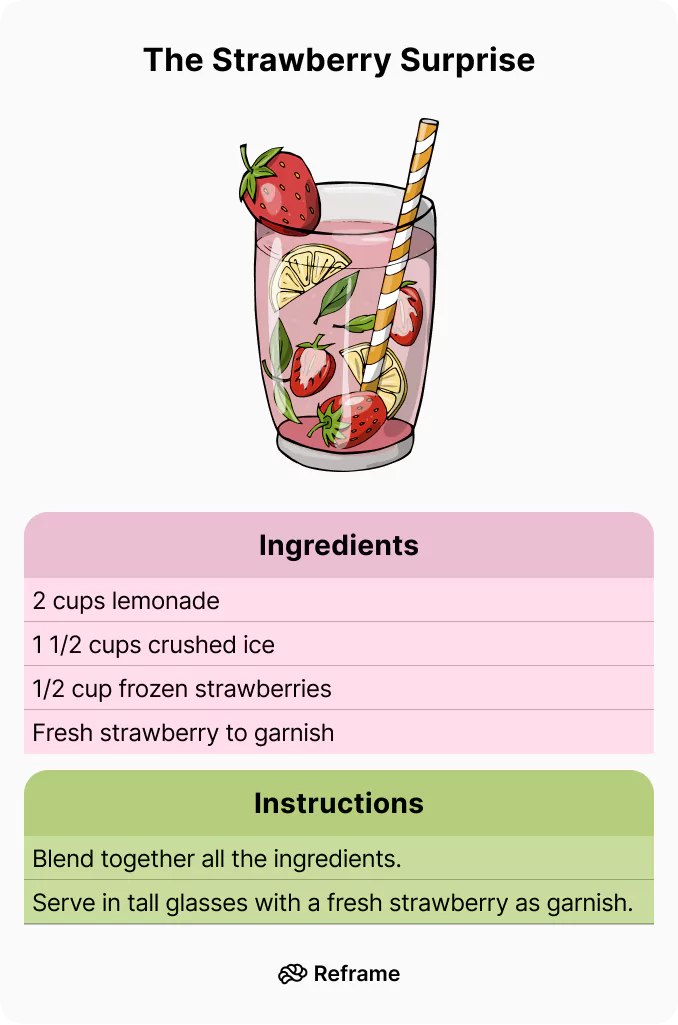
Sangria is a beloved beverage for many reasons. Every sip of sangria is a delight, from the eye to the palate. The flavor of the cocktail refreshes, with its fruity sweetness balanced by a subtle tartness that comes from the juice and citrus notes. Its complexity is alluring and its versatility allows it to be served on any occasion; it can be enjoyed alone as an aperitif or as one of the many delicious non-alcoholic drinks for pregnancy.
Nutritional Information:
Make it gluten-free: This mocktail is already gluten-free!
Make it vegan: This mocktail is already vegan!
Low-sugar option: Opt for 100% fruit juices with no added sugars (or dilute the juice with water).
Garnish: Serve in a chilled lowball glass with fresh fruit slices, mint sprigs, and edible flowers for an exotic touch!
There’s nothing quite like a fresh mojito to make you feel like you’re on vacation. The combination of mint, rum, lime and sugar creates an unmistakable flavor that is both sweet and tart, instantly transporting us to a beach somewhere warm with a cool ocean breeze, making one of the most refreshing pregnancy mocktails.
Nutritional Information:
Make it gluten-free: This mocktail is already gluten-free!
Make it vegan: This mocktail is already vegan!
Low-sugar option: Reduce the amount of caster sugar or substitute it with a natural, low-calorie sweetener like stevia.
Garnish: Serve in a chilled highball glass with mint sprigs, lime slices, and a sugar rim!
Bloody Marys are a classic brunch go-to for many. They offer a pleasant balance of bold flavors from the tomato juice, Worcestershire sauce, horseradish, lemon juice, and spices. Load up your glass of Mary with some celery sticks for a nutrient boost, including vitamin K and folate.
Nutritional Information:
Make it gluten-free: Worcestershire sauce is commonly used in traditional Bloody Mary recipes and often contains gluten. Since it's omitted here, ensure all other ingredients like hot sauce are labeled gluten-free.
Make it vegan: This mocktail is already vegan!
Low-sugar option: Choose a low-sodium and low-sugar variety of tomato juice or make your own fresh tomato juice to control the sugar and salt content.
Garnish: Serve in a tall glass with a salted rim. Add some lemon wedges and a rosemary sprig!
Pina coladas are a fun and refreshing summertime cocktail combining sweet, tangy pineapple and creamy coconut. Not only do they taste amazing, but they look beautiful in their glass tumbler, bedazzled with an umbrella or paper straws.
Nutritional Information:
Make it gluten-free: This mocktail is already gluten-free (but check the juice label to make sure)!
Make it vegan: Ensure the coconut syrup is vegan. Some syrups may use animal-derived ingredients for flavoring or processing.
Low-sugar option: Cut back on the coconut syrup or opt for a lower-sugar or sugar-free version. Or, try making your own coconut syrup by using coconut water and a sweetener like stevia.
Garnish: Serve in a lowball glass with pineapple chunks and a fun cocktail umbrella!
Going back to the Romans, mulled wine has long been a festive delight. Its combination of aromatics and spices make any cold evening cozy. Sipping on a glass of mulled wine has many health benefits due to its immune-boosting cinnamon, ginger and citrus components.
Nutritional Information:
Make it gluten-free: This mocktail is already gluten-free!
Make it vegan: This mocktail is already vegan!
Low-sugar option: Opt for juice that has no added sugar added (or dilute with more ice or water).
Garnish: Serve in a heat-proof glass with a cinnamon stick and orange slice!
These mocktails, many of which include natural ingredients such as cranberry juice and lime, are specially made to serve the needs of pregnant women by allowing them to lighten up their beverages without compromising on taste and flavor.
When you're pregnant, it can feel like there's a whole new rulebook for taking care of yourself, especially when it comes to food. Instead of getting overwhelmed by dos and don'ts, it helps to focus on the basics: nourishing your body with whole foods. Think colorful fruits and vegetables, lean proteins, healthy fats, and whole grains. These foods provide the essential building blocks your baby needs to grow and help you maintain your energy levels. It’s not about achieving a “perfect” diet, but rather about making balanced choices that make you feel good from the inside out. Listening to your body is key.
While we’re having fun exploring delicious mocktail recipes, it’s important to remember they are part of a larger nutritional picture. A solid foundation of healthy eating supports everything from your baby’s brain development to your own well-being. Nutrients like folate, iron, and calcium are working hard behind the scenes. A varied diet is the best way to get them, but you should always talk to your healthcare provider about a prenatal vitamin to cover all your bases. Think of good nutrition as the ultimate act of self-care during this special time, creating the best possible environment for your little one to thrive.
So, why does every pregnancy book and doctor emphasize drinking water? It’s because your body is performing some incredible feats right now. For starters, your blood volume increases by about 50% to support your growing baby and the placenta. That’s a massive change that requires a lot more fluid to keep everything circulating properly. Proper hydration is also essential for nutrient absorption. Water helps your cells pull vitamins and minerals from the food you eat and transport them to your baby. It’s a critical part of the supply line that keeps your baby nourished and healthy throughout your pregnancy.
The general guideline for pregnancy is to drink about 13 cups (or 3 liters) of water daily. If that number makes your eyes widen, you’re not alone! It can feel like a lot, especially if you’re dealing with morning sickness or just aren’t a big fan of plain water. This is where you can get creative. Making hydration enjoyable is the best way to stay on track. A refreshing mocktail or fruit-infused water can make meeting your fluid goals feel like a treat instead of a task. It’s a simple way to practice mindful drinking by making a conscious, healthy choice that benefits both you and your baby.
If you’re looking for some additional resources on staying healthy and nourishing your body during this special and important time, here are a few to start with:
During pregnancy, focusing on your nutrition is one of the best things you can do for yourself and your growing baby. A great place to start is by prioritizing whole foods. This simply means choosing foods that are as close to their natural state as possible — think fresh fruits and vegetables, lean meats, and whole grains. Minimally processed foods have few or no added chemicals, preservatives, or artificial ingredients, which is exactly what you want when you’re nourishing a new life. Shifting your diet to include more of these foundational foods helps ensure you’re getting a rich supply of essential vitamins and minerals without any unnecessary additives. It’s a straightforward way to support a healthy pregnancy from the inside out.
You don’t need to completely overhaul your diet overnight to make a positive impact. Instead, focus on making simple, healthy swaps. For example, reaching for a homemade mocktail instead of a sugary, store-bought soda is a fantastic choice. As the recipes above show, you can create delicious and hydrating drinks while controlling the amount of sugar you consume. This same principle applies to food: try swapping white bread for whole-wheat, or choose a piece of fresh fruit over a packaged sweet treat. These small adjustments add up, helping you feel more energized and confident in your food choices. It’s all part of practicing mindful drinking and eating, where you become more aware of what you’re putting into your body and why.
Protein is a vital building block for your baby's growth, playing a crucial role in the development of everything from their brain to their tiny fingernails. When you can, opt for high-quality protein sources like grass-fed and hormone-free meat and poultry. However, you don’t have to rely solely on animal products to meet your needs. There are plenty of fantastic plant-based options that are packed with protein and other essential nutrients. Lentils, beans, nuts, whole grains, and soy products like tofu and edamame are all excellent choices to incorporate into your meals. A varied approach ensures you and your baby get a wide range of amino acids and other benefits that different protein sources provide.
Are all mocktails automatically safe during pregnancy? Not necessarily. While leaving out the alcohol is the most important step, it’s also wise to pay attention to the other ingredients. The key is to avoid anything unpasteurized, like raw juices or ciders, which can carry harmful bacteria. You should also be mindful of certain herbal ingredients, as not all are recommended during pregnancy. When in doubt, stick to well-washed fresh fruits, pasteurized juices, and simple sparkling waters.
I'm struggling with morning sickness. Are there any mocktails that can help? Yes, you can definitely craft a mocktail to help soothe your stomach. Ginger is well-known for its nausea-quelling properties, so any drink featuring it is a great choice. The Ginger Spritzer recipe in this post is a perfect example. You can also try building your own simple drink with a base of ginger ale or a chilled, pregnancy-safe ginger tea, then add a squeeze of fresh lemon or lime for a refreshing twist.
Many of these recipes seem sweet. How can I reduce the sugar? That's a great question, as it's smart to be mindful of sugar intake. You can easily adjust almost any recipe to lower its sugar content. Start by using unsweetened sparkling water or club soda as your base instead of soda or sugary juices. When a recipe calls for juice, use 100% fruit juice with no added sugar and consider diluting it with water. You can also let muddled fresh fruit, like berries or peaches, provide natural sweetness instead of relying on syrups or grenadine.
What's the deal with non-alcoholic beer and wine? Are those okay? It's best to steer clear of non-alcoholic beer and wine during pregnancy. While the name is a bit misleading, many of these products still contain trace amounts of alcohol. Since medical experts agree that no amount of alcohol is proven safe during pregnancy, the most cautious and recommended approach is to avoid these beverages entirely and opt for a true zero-proof mocktail instead.
Can I simplify these recipes if I don't have all the ingredients? Absolutely! Think of these recipes as inspiration, not strict rules. The heart of a great mocktail is a simple formula: a flavorful base, some bubbles, and a nice garnish. You can easily swap one fruit for another based on what you have on hand, or use plain sparkling water if you don't have ginger ale. Don't be afraid to experiment with your favorite flavors to create a simple, delicious drink you love.
We all know water is essential when you're expecting. But let's be real, sipping plain water while everyone else enjoys a fun cocktail can feel a little isolating. You deserve something more festive! This is where the perfect pregnancy mocktail comes in. These are more than just tasty non alcoholic drinks for pregnancy; they're a way to feel included and celebrate any moment. A great mineral mocktail pregnancy recipe can even add extra nutrients, letting you raise a glass that's delicious, beautiful, and perfectly safe for you and your baby.
If pregnancy weight gain is a concern, water reduces the amount of calories and sugar that enters your body. Every cocktail has a non-alcoholic version. However, not all fruits should be included when making mocktails during pregnancy.
As our OBGYN, midwife, doula, and everyone else who knows about pregnancy and childbirth has probably told us, hydration is key during this time. Getting plenty of water is essential for everyone, but during pregnancy our hydration needs go up — way up. In fact, we need about 300 additional ml of fluids during pregnancy, according to the NIH.
But as we know, not everyone is a fan of plain water. This is where mocktails come in! Fun, tasty, and easy on the stomach, they’re the perfect solution for pregnancy hydration needs.
Mocktails have a vibrant and interesting history. Here are a few fun facts:
Choosing to forgo alcohol during pregnancy doesn’t mean you have to miss out on the fun of a celebratory drink. Mocktails are a fantastic way to create a festive, sophisticated beverage that’s completely safe for you and your baby. They offer all the enjoyment of a special drink — the clinking glass, the vibrant colors, the complex flavors — without any of the risks associated with alcohol. Think of it less as a restriction and more as an opportunity to get creative with fresh juices, sparkling waters, and fragrant herbs. It’s a simple way to celebrate and feel good, ensuring you’re nourishing your body while still enjoying a little treat.
Let’s be honest: it can feel a little isolating to be the only one at a party sipping on plain water while everyone else has a colorful cocktail. Holding a beautifully crafted mocktail helps you feel more included in the social ritual of drinking. It’s a simple visual cue that you’re part of the celebration, just in your own pregnancy-safe way. Having a fun, non-alcoholic option makes social events more comfortable and enjoyable, allowing you to focus on connecting with friends and family instead of feeling left out. It’s a tasty and simple way to stay hydrated and be part of the toast, whatever the occasion may be.
Staying properly hydrated is always important, but it becomes a top priority during pregnancy and the postpartum period. Your body is working overtime to grow and support a new life, and water is a critical component of nearly every process involved. From forming the placenta and amniotic sac to supporting a higher blood volume, your fluid needs increase significantly. Dehydration during pregnancy can lead to serious complications, including neural tube defects and premature labor, so keeping that water bottle close is essential. This increased need for hydration doesn’t end at delivery. In the postpartum phase, adequate fluid intake is crucial for your body’s recovery, maintaining your energy levels, and, if you choose to breastfeed, establishing a healthy milk supply. Making hydration a conscious habit during this time supports both your well-being and your baby’s health from the very beginning.
During pregnancy, water is the unsung hero doing a lot of heavy lifting behind the scenes. It’s essential for transporting vital nutrients from you to your baby through the placenta, ensuring they get everything they need to grow and develop. It also plays a key role in forming the amniotic fluid that cushions and protects your baby in the womb. On top of that, staying hydrated helps your own body cope with the demands of pregnancy. It can prevent common discomforts like constipation, reduce swelling, and lower your risk of urinary tract infections (UTIs), which are more common when you’re expecting. Think of every glass of water as a direct contribution to a healthier, more comfortable pregnancy for both of you.
After you’ve given birth, your body’s need for fluids remains high as you enter the recovery phase. Proper hydration is a cornerstone of postpartum healing, helping to replenish fluids lost during labor, restore your energy levels, and support tissue repair. If you are breastfeeding, your hydration status is even more critical. Breast milk is approximately 87% water, so your body needs a consistent and adequate supply of fluids to produce enough milk for your baby. Dehydration is a common reason for a dip in milk supply. Aiming to drink a glass of water every time you nurse or pump is a great habit to get into to ensure you’re meeting the needs of both your recovering body and your hungry newborn.
With all this talk about hydration, you’re probably wondering exactly how much you should be drinking. While individual needs can vary, the general recommendation for pregnant women is to drink about 8 to 12 cups (64 to 96 ounces) of water and other fluids each day. Some experts even suggest aiming for closer to 13 cups daily. An easy way to check your hydration level is to look at the color of your urine — it should be pale yellow or clear. If it’s dark yellow, it’s a sign you need to drink more. If you find plain water unappealing, especially during bouts of morning sickness, remember that mocktails, milk, and broth all count toward your daily fluid intake.
Navigating beverage choices during pregnancy can feel like walking through a minefield of conflicting advice. The good news is that it’s simpler than it seems. The core principle is to prioritize safety for your developing baby while ensuring you stay well-hydrated. Water should always be your go-to drink, but it’s certainly not your only option. Understanding which drinks to avoid completely, which to enjoy in moderation, and which to sip freely can give you peace of mind and make staying hydrated more enjoyable. This guide breaks down the do's and don'ts of pregnancy-safe beverages, so you can feel confident in what you’re drinking for the next nine months. From your morning cup to a special occasion toast, we’ve got you covered with clear, straightforward advice to support a healthy pregnancy.
When you're pregnant, some drinks are best left off the menu entirely to protect your baby's health. These beverages carry risks of harmful bacteria or substances that can cross the placenta and affect fetal development. Being diligent about avoiding them is one of the most important things you can do for your little one.
This is the most important one: there is no known safe amount of alcohol to consume during pregnancy. All major medical organizations, including the CDC, advise complete abstinence from alcohol when you’re expecting or trying to conceive. Drinking alcohol can lead to a range of lifelong physical, behavioral, and intellectual disabilities known as Fetal Alcohol Spectrum Disorders (FASDs). This is a perfect time to explore mindful drinking alternatives and embrace the world of delicious mocktails to keep both you and your baby safe.
Unpasteurized products, often labeled as "raw," can harbor dangerous bacteria like Listeria, Salmonella, and E. coli. These can cause severe foodborne illness, which is especially risky during pregnancy. Always check the labels on milk, cider, and other juices to ensure they have been pasteurized. If you’re getting a fresh-squeezed juice at a cafe or farmer’s market, it’s best to ask if the produce was washed thoroughly and to skip it if you have any doubts.
While kombucha is often praised for its probiotic benefits, it’s not recommended during pregnancy. There are two main reasons for this: it contains trace amounts of alcohol as a byproduct of fermentation, and it is typically unpasteurized. This combination presents a potential risk of both alcohol exposure and bacterial contamination, making it a drink to skip until after your baby arrives.
Beyond the hard-and-fast rules, there’s a category of drinks that are generally considered safe during pregnancy, but only in limited quantities. The key here is mindfulness and moderation. Paying attention to portion sizes and frequency can allow you to enjoy some of your favorite beverages without worry.
You don’t have to give up your morning coffee completely, but you should limit your intake. The American College of Obstetricians and Gynecologists (ACOG) recommends that pregnant women consume less than 200 milligrams (mg) of caffeine per day. That’s roughly the amount in one 12-ounce cup of coffee. Remember to account for caffeine from other sources like tea, soda, and chocolate when tracking your daily total.
Herbal teas can be tricky, as some are perfectly safe while others have been linked to pregnancy complications. Teas like peppermint, ginger, and rooibos are generally considered safe and can even help with pregnancy symptoms like nausea. However, you should avoid teas containing herbs like licorice root, ginseng, and dong quai. When in doubt, it’s always best to consult your doctor or midwife before brewing a cup.
As long as they are pasteurized or made at home with well-washed produce, juices and smoothies can be a great way to get in extra vitamins and fluids. The main thing to watch for is the sugar content. Many commercially prepared juices and smoothies are very high in sugar. Opt for homemade versions where you can control the ingredients, or choose 100% fruit juice and limit your serving size to keep your sugar intake in check.
Sparkling mineral water is a great, hydrating choice during pregnancy. Tonic water, however, should be consumed in moderation. It contains quinine, a substance that was once used to treat malaria. While the amount in modern tonic water is very small, there is still some debate about its safety in large quantities during pregnancy. An occasional gin-free tonic is likely fine, but it shouldn’t be your everyday beverage.
When it comes to the best drinks for a healthy pregnancy, simplicity is key. Your primary goal is hydration, and the most effective way to achieve that is with water. Aim to make water your main drink throughout the day. Beyond water, pasteurized milk and fortified milk alternatives are excellent choices, providing essential calcium and vitamin D for your baby’s bone development. And, of course, thoughtfully crafted mocktails using fresh, pregnancy-safe ingredients are a wonderful way to add variety and fun to your hydration routine. These beverages provide the fluids you need without any of the risks, making them the top-tier choices for you and your baby.
Making a great mocktail is about more than just leaving out the alcohol. It’s an opportunity to experiment with flavors, textures, and aromas to create a beverage that’s genuinely satisfying and special. The best mocktails are balanced, using a combination of sweet, sour, and sometimes bitter or savory elements to build complexity. Think about starting with a base of sparkling water, club soda, or ginger ale. Then, layer in flavor with freshly squeezed citrus juices, muddled fruits, and fragrant herbs. A simple syrup (made by dissolving equal parts sugar and water) can add sweetness, while a splash of unsweetened cranberry or pomegranate juice can provide a tart counterpoint. Don’t be afraid to play around with different combinations to find what you love. The goal is to create a drink that you’ll look forward to sipping.
The single best way to make your mocktails taste amazing is to use fresh ingredients. The difference between freshly squeezed lime juice and the stuff from a bottle is night and day. Muddle fresh berries, slices of peach, or chunks of watermelon at the bottom of your glass to release their juices and flavors. Fresh herbs like mint, basil, and rosemary can also add an incredible aromatic quality. Simply clap a few leaves between your hands to release their essential oils before adding them to your drink. Using fresh, seasonal produce not only provides superior taste but also adds a dose of vitamins and antioxidants to your beverage.
Why not make your mocktail work a little harder for you? You can easily incorporate ingredients that offer additional benefits for common pregnancy discomforts. Ginger, for example, is well-known for its ability to soothe an upset stomach and can be a great addition for anyone dealing with morning sickness. You can add it as fresh grated ginger, a ginger syrup, or by using a high-quality ginger beer as your base. Certain pregnancy-safe herbal teas, like chamomile or peppermint, can be brewed, chilled, and used as a flavorful base for a mocktail, potentially helping with relaxation or digestion. It’s a simple way to make your delicious drink even more beneficial.
Just because you’re not drinking alcohol doesn’t mean you’re stuck with soda or water when you’re out. Most bartenders are more than happy to create a non-alcoholic beverage for you, even if there aren’t any specific mocktails listed on the menu. Don’t be shy about asking. You can give them some guidance by saying something like, "I'd love something refreshing and not too sweet, maybe with citrus and mint," or simply ask the bartender to surprise you with their favorite non-alcoholic creation. This empowers you to enjoy a custom, handcrafted drink and feel fully part of the social experience.
The Mama Sunrise mocktail was designed specifically with pregnant women in mind, and it’s one of our favorite pregnancy juice recipes. Offering an abundance of nutritious ingredients, including orange juice and lime juice, this libation provides a refreshing alternative to the more calorie-laden alcoholic beverages that pregnant women usually have to give up.
Sweet orange juice is balanced by tart lime juice. Sipping on a Mama Sunrise not only offers something enjoyable and wholesome to drink, it also supports an overall healthier lifestyle while expecting!
Nutritional Information:
Make it gluten-free: This mocktail is already gluten-free!
Make it vegan: This mocktail is already vegan!
Low-sugar option: Opt for orange and lime juices that have no added sugar added (or dilute with more ice or water)
Garnish: Serve in a chilled highball glass with an orange twist! Add a fancy straw for an extra playful touch.
The Ginger Spritzer is a delightful beverage that combines zesty ginger syrup and fresh lemon juice, the perfect combination to refresh and hydrate. The presence of ginger adds an additional benefit, as it helps support digestion and is touted as a cure for morning sickness, making it one of the best mocktails for pregnancy
Nutritional Information:
Make it gluten-free: This mocktail is already gluten-free (but check the label on the soda to be sure).
Make it vegan: This mocktail is already vegan!
Low-sugar option: Choose a low-sugar or sugar-free version if available. Also, opt for a diet ginger ale.
Garnish: Garnish with a round of lime!
The Banana Mama is the perfect mocktail for expecting moms who want to bask in the experience of pregnancy without compromising their health. This scrumptious pitcher consists of pure bananas, vanilla extract, and lemon sherbet that helps bring out a subtle zing – perfect for any mood.
Nutritional Information:
Make it gluten-free: This mocktail is already gluten-free!
Make it vegan: Use a vegan sherbet or substitute with a dairy-free lemon sorbet or vegan vanilla ice cream.
Low-sugar option: Opt for a low-sugar or sugar-free sorbet, or make your own using lemon juice, a sweetener like stevia, and a vegan thickening agent.
Garnish: Add some sliced lemons, mint leaves, and grated nutmeg for a fun touch!
Lemons and strawberries are a magical combination, especially when pregnant. This sweet treat can be elevated with fresh strawberry puree.
Nutritional Information:
Make it gluten-free: This mocktail is already gluten-free (but check the juice label to make sure).
Make it vegan: Use a vegan-friendly lemonade, or make your own using lemon juice, water, and a vegan sweetener.
Low-sugar option: Opt for a low-sugar or sugar-free lemonade, or make your own using lemon juice, water, and a low-calorie sweetener like stevia or erythritol. Also, use fresh strawberries instead of frozen ones.
Garnish: Serve in a tall glass with fresh strawberries and a mint sprig.
Sangria is a beloved beverage for many reasons. Every sip of sangria is a delight, from the eye to the palate. The flavor of the cocktail refreshes, with its fruity sweetness balanced by a subtle tartness that comes from the juice and citrus notes. Its complexity is alluring and its versatility allows it to be served on any occasion; it can be enjoyed alone as an aperitif or as one of the many delicious non-alcoholic drinks for pregnancy.
Nutritional Information:
Make it gluten-free: This mocktail is already gluten-free!
Make it vegan: This mocktail is already vegan!
Low-sugar option: Opt for 100% fruit juices with no added sugars (or dilute the juice with water).
Garnish: Serve in a chilled lowball glass with fresh fruit slices, mint sprigs, and edible flowers for an exotic touch!
There’s nothing quite like a fresh mojito to make you feel like you’re on vacation. The combination of mint, rum, lime and sugar creates an unmistakable flavor that is both sweet and tart, instantly transporting us to a beach somewhere warm with a cool ocean breeze, making one of the most refreshing pregnancy mocktails.
Nutritional Information:
Make it gluten-free: This mocktail is already gluten-free!
Make it vegan: This mocktail is already vegan!
Low-sugar option: Reduce the amount of caster sugar or substitute it with a natural, low-calorie sweetener like stevia.
Garnish: Serve in a chilled highball glass with mint sprigs, lime slices, and a sugar rim!
Bloody Marys are a classic brunch go-to for many. They offer a pleasant balance of bold flavors from the tomato juice, Worcestershire sauce, horseradish, lemon juice, and spices. Load up your glass of Mary with some celery sticks for a nutrient boost, including vitamin K and folate.
Nutritional Information:
Make it gluten-free: Worcestershire sauce is commonly used in traditional Bloody Mary recipes and often contains gluten. Since it's omitted here, ensure all other ingredients like hot sauce are labeled gluten-free.
Make it vegan: This mocktail is already vegan!
Low-sugar option: Choose a low-sodium and low-sugar variety of tomato juice or make your own fresh tomato juice to control the sugar and salt content.
Garnish: Serve in a tall glass with a salted rim. Add some lemon wedges and a rosemary sprig!
Pina coladas are a fun and refreshing summertime cocktail combining sweet, tangy pineapple and creamy coconut. Not only do they taste amazing, but they look beautiful in their glass tumbler, bedazzled with an umbrella or paper straws.
Nutritional Information:
Make it gluten-free: This mocktail is already gluten-free (but check the juice label to make sure)!
Make it vegan: Ensure the coconut syrup is vegan. Some syrups may use animal-derived ingredients for flavoring or processing.
Low-sugar option: Cut back on the coconut syrup or opt for a lower-sugar or sugar-free version. Or, try making your own coconut syrup by using coconut water and a sweetener like stevia.
Garnish: Serve in a lowball glass with pineapple chunks and a fun cocktail umbrella!
Going back to the Romans, mulled wine has long been a festive delight. Its combination of aromatics and spices make any cold evening cozy. Sipping on a glass of mulled wine has many health benefits due to its immune-boosting cinnamon, ginger and citrus components.
Nutritional Information:
Make it gluten-free: This mocktail is already gluten-free!
Make it vegan: This mocktail is already vegan!
Low-sugar option: Opt for juice that has no added sugar added (or dilute with more ice or water).
Garnish: Serve in a heat-proof glass with a cinnamon stick and orange slice!
These mocktails, many of which include natural ingredients such as cranberry juice and lime, are specially made to serve the needs of pregnant women by allowing them to lighten up their beverages without compromising on taste and flavor.
When you're pregnant, it can feel like there's a whole new rulebook for taking care of yourself, especially when it comes to food. Instead of getting overwhelmed by dos and don'ts, it helps to focus on the basics: nourishing your body with whole foods. Think colorful fruits and vegetables, lean proteins, healthy fats, and whole grains. These foods provide the essential building blocks your baby needs to grow and help you maintain your energy levels. It’s not about achieving a “perfect” diet, but rather about making balanced choices that make you feel good from the inside out. Listening to your body is key.
While we’re having fun exploring delicious mocktail recipes, it’s important to remember they are part of a larger nutritional picture. A solid foundation of healthy eating supports everything from your baby’s brain development to your own well-being. Nutrients like folate, iron, and calcium are working hard behind the scenes. A varied diet is the best way to get them, but you should always talk to your healthcare provider about a prenatal vitamin to cover all your bases. Think of good nutrition as the ultimate act of self-care during this special time, creating the best possible environment for your little one to thrive.
So, why does every pregnancy book and doctor emphasize drinking water? It’s because your body is performing some incredible feats right now. For starters, your blood volume increases by about 50% to support your growing baby and the placenta. That’s a massive change that requires a lot more fluid to keep everything circulating properly. Proper hydration is also essential for nutrient absorption. Water helps your cells pull vitamins and minerals from the food you eat and transport them to your baby. It’s a critical part of the supply line that keeps your baby nourished and healthy throughout your pregnancy.
The general guideline for pregnancy is to drink about 13 cups (or 3 liters) of water daily. If that number makes your eyes widen, you’re not alone! It can feel like a lot, especially if you’re dealing with morning sickness or just aren’t a big fan of plain water. This is where you can get creative. Making hydration enjoyable is the best way to stay on track. A refreshing mocktail or fruit-infused water can make meeting your fluid goals feel like a treat instead of a task. It’s a simple way to practice mindful drinking by making a conscious, healthy choice that benefits both you and your baby.
If you’re looking for some additional resources on staying healthy and nourishing your body during this special and important time, here are a few to start with:
During pregnancy, focusing on your nutrition is one of the best things you can do for yourself and your growing baby. A great place to start is by prioritizing whole foods. This simply means choosing foods that are as close to their natural state as possible — think fresh fruits and vegetables, lean meats, and whole grains. Minimally processed foods have few or no added chemicals, preservatives, or artificial ingredients, which is exactly what you want when you’re nourishing a new life. Shifting your diet to include more of these foundational foods helps ensure you’re getting a rich supply of essential vitamins and minerals without any unnecessary additives. It’s a straightforward way to support a healthy pregnancy from the inside out.
You don’t need to completely overhaul your diet overnight to make a positive impact. Instead, focus on making simple, healthy swaps. For example, reaching for a homemade mocktail instead of a sugary, store-bought soda is a fantastic choice. As the recipes above show, you can create delicious and hydrating drinks while controlling the amount of sugar you consume. This same principle applies to food: try swapping white bread for whole-wheat, or choose a piece of fresh fruit over a packaged sweet treat. These small adjustments add up, helping you feel more energized and confident in your food choices. It’s all part of practicing mindful drinking and eating, where you become more aware of what you’re putting into your body and why.
Protein is a vital building block for your baby's growth, playing a crucial role in the development of everything from their brain to their tiny fingernails. When you can, opt for high-quality protein sources like grass-fed and hormone-free meat and poultry. However, you don’t have to rely solely on animal products to meet your needs. There are plenty of fantastic plant-based options that are packed with protein and other essential nutrients. Lentils, beans, nuts, whole grains, and soy products like tofu and edamame are all excellent choices to incorporate into your meals. A varied approach ensures you and your baby get a wide range of amino acids and other benefits that different protein sources provide.
Are all mocktails automatically safe during pregnancy? Not necessarily. While leaving out the alcohol is the most important step, it’s also wise to pay attention to the other ingredients. The key is to avoid anything unpasteurized, like raw juices or ciders, which can carry harmful bacteria. You should also be mindful of certain herbal ingredients, as not all are recommended during pregnancy. When in doubt, stick to well-washed fresh fruits, pasteurized juices, and simple sparkling waters.
I'm struggling with morning sickness. Are there any mocktails that can help? Yes, you can definitely craft a mocktail to help soothe your stomach. Ginger is well-known for its nausea-quelling properties, so any drink featuring it is a great choice. The Ginger Spritzer recipe in this post is a perfect example. You can also try building your own simple drink with a base of ginger ale or a chilled, pregnancy-safe ginger tea, then add a squeeze of fresh lemon or lime for a refreshing twist.
Many of these recipes seem sweet. How can I reduce the sugar? That's a great question, as it's smart to be mindful of sugar intake. You can easily adjust almost any recipe to lower its sugar content. Start by using unsweetened sparkling water or club soda as your base instead of soda or sugary juices. When a recipe calls for juice, use 100% fruit juice with no added sugar and consider diluting it with water. You can also let muddled fresh fruit, like berries or peaches, provide natural sweetness instead of relying on syrups or grenadine.
What's the deal with non-alcoholic beer and wine? Are those okay? It's best to steer clear of non-alcoholic beer and wine during pregnancy. While the name is a bit misleading, many of these products still contain trace amounts of alcohol. Since medical experts agree that no amount of alcohol is proven safe during pregnancy, the most cautious and recommended approach is to avoid these beverages entirely and opt for a true zero-proof mocktail instead.
Can I simplify these recipes if I don't have all the ingredients? Absolutely! Think of these recipes as inspiration, not strict rules. The heart of a great mocktail is a simple formula: a flavorful base, some bubbles, and a nice garnish. You can easily swap one fruit for another based on what you have on hand, or use plain sparkling water if you don't have ginger ale. Don't be afraid to experiment with your favorite flavors to create a simple, delicious drink you love.

Thankfully, when we cut back on our drinking, we can minimize (or avoid!) these unpleasant symptoms, while improving our overall health in the process.
Cutting back on our alcohol consumption is one of the best things we can do to improve our quality of life. So why not download Reframe right now and kickstart your journey to wellness?
Although it isn’t a treatment for alcohol use disorder (AUD), the Reframe app can help you cut back on drinking gradually and with the science-backed knowledge to empower you 100% of the way. Our proven program has helped millions of people around the world drink less and live more. And we want to help you get there, too!
The Reframe app equips you with the knowledge and skills you need to not only survive drinking less, but to thrive while you navigate the journey! Our daily research-backed readings teach you the neuroscience of alcohol, and our in-app Toolkit gives you the resources and activities you need to navigate each challenge.
You’ll meet millions of fellow Reframers in our 24/7 Forum chat and daily Zoom check-in meetings. Receive encouragement from people from around the world who are going through the exact same experiences as you! You also have the opportunity to connect with our licensed Reframe coaches for more personalized guidance.
The Reframe app is free for 7 days, so you don’t have anything to lose by trying it. Are you ready to feel empowered and discover life beyond alcohol? Then download our app today!
In the book of shared human experiences, the chapter on hangovers could fill volumes. Picture it: a gleeful night out with friends, laughter resonating through the air, glasses clinking, and everyone in good spirits. Yet, the morning after, we are met with an unwelcome visitor. This uninvited guest — the hangover — brings with it a suite of discomforting presents: a pounding headache, a stomach that seems to have embarked on a rebellion, and an overall feeling of exhaustion that clings to our being like a damp blanket. As we lay there, staring at the ceiling, there's a universal question that bubbles up: why does this happen to us, and is there a way to avoid this experience? This blog post aims to shed light on these questions.
A hangover is the body's response to excessive alcohol consumption. They consist of a variety of unpleasant physical and psychological symptoms that seem to manifest the next morning. Why does this occur now? Let's look more closely.
Alcohol disrupts the brain's communication pathways, impacting the way our brain functions. This explains why getting drunk may cause us to lose our coordination, react slowly, or forget things. But when the amount of alcohol in our system starts to decline, the dreaded hangover starts to play out. To our dismay, it usually reaches its peak when our blood alcohol content (BAC) hits zero.
But that's not all. Alcohol is a potent diuretic, which means it promotes urine production. This can lead to dehydration, a common accomplice of the hangover that often manifests as a throbbing headache and a parched mouth. Alcohol also triggers an inflammatory response from our immune system, leading to difficulty focusing, memory problems, and decreased appetite. If you've ever had an upset stomach after a night of drinking, it's because alcohol irritates the stomach lining, increases stomach acid production, and slows down stomach emptying. This trio can cause stomach pain, nausea, and vomiting — the last things we need while nursing a hangover.
Hangovers are often viewed as an inevitable aftermath of a good night or a badge of honor signifying a night well-spent. However, there is a simple, time-tested strategy to minimize or completely sidestep hangovers: drinking less. It's important to note that alcohol affects people differently, but as a general principle, the more alcohol we consume, the higher our chances of having a hangover and the more severe it's likely to be.
This is not just anecdotal evidence. Several scientific studies have demonstrated a clear correlation between the quantity of alcohol we drink and the severity of hangover symptoms. When we limit our alcohol intake, our body gets a chance to metabolize it more effectively. This reduces the likelihood of waking up with a full-blown hangover. So, it's not about giving up the fun; it's about changing to a more responsible, moderate drinking style that supports our general wellbeing.
It can be difficult to refuse another drink when social drinking is almost a ritual. However, as people who value our health and well-being, it's crucial for us to understand that it's perfectly okay to say no. Rejecting another serving of alcohol doesn't make us party spoilers or buzzkills. Instead, it portrays us as responsible adults who comprehend the importance of moderation.
It's critical to keep in mind that our true friends and companions respect us for who we are, not for how much we can drink. In the larger scheme of things, choosing a non-alcoholic beverage or a glass of water over yet another alcoholic drink may draw a few weird looks, but it sets a good example and might even inspire others to modify their drinking habits.
Moreover, setting personal boundaries around alcohol consumption contributes to a healthier social environment. It takes courage to stand up against peer pressure and choose what's best for us. The choices we make today will reflect on our health and wellness in the future.

If you’ve ever dealt with a hangover, you know firsthand how awful the symptoms can be. They usually begin 6-8 hours after the last drink, peaking around the 12-hour mark. While the after-effects of a heavy night of drinking vary from person to person, here are the most common symptoms you can expect.
One of the most universally felt hangover symptoms is a profound sense of exhaustion, regardless of the seemingly restful hours we spend in bed. Why does this happen? While alcohol might initially make us drowsy and induce a feeling of sleepiness, it wreaks havoc on our REM (rapid eye movement) sleep — the phase responsible for deep, restorative sleep. As a result, we might spend several hours sleeping but wake up feeling anything but refreshed. This fragmented sleep pattern translates into feelings of weariness, sluggishness, and a day in which even simple tasks seem daunting.
Have you awakened absolutely parched after a night of drinking, like you haven’t had water in days? That’s because alcohol is a diuretic, which means it increases urine production. As a consequence, vital fluids and electrolytes leave our system faster than they’re replaced. Our overpowering thirst is our body’s way of attempting to restore balance.
The pounding headache that often accompanies a hangover isn't just a result of dehydration; it's also a consequence of alcohol's effect on our blood vessels. Alcohol causes vasodilation, an expansion of blood vessels, which can increase the pressure inside the skull, resulting in a throbbing headache. For those predisposed to migraines, this vascular change can act as a trigger, turning the typical hangover headache into a full-blown, debilitating migraine.
It might seem puzzling to wake up feeling sore after a night of merely lifting drinks rather than weights. However, the science behind this discomfort is clear. Alcohol metabolism can lead to hangover body aches from an accumulation of lactic acid in the muscles. Lactic acid build-up, commonly associated with strenuous exercise, causes the feeling of muscle soreness and tension. This can explain why we feel tense and sore the morning after drinking, despite not having done any physically vigorous activity.
Perhaps one of the most dreaded hangover symptoms is nausea. Alcohol irritates the stomach lining, leading to inflammation and an increased production of stomach acid. This surge in acidity, combined with the inflammation, creates a hostile environment in the gut. As a result, that hangover upset stomach can make us feel queasy, lose our appetite, and in some cases, we even vomit.
Alcohol consumption stimulates the stomach lining to produce more acid. This heightened acidity not only irritates the stomach but can also result in gastritis or inflammation of the stomach lining.
Moreover, alcohol also decelerates the rate at which the stomach empties. This slowed digestion, combined with the effects of excess stomach acid, results in that familiar gnawing, cramp-like sensation. Over time, if this pattern of drinking and resultant inflammation continues, it can lead to more severe gastrointestinal issues.
Feeling dizzy or off-balance? Alcohol disrupts the inner ear's balance mechanism, leading to vertigo. The inner ear contains a fluid-filled canal that helps us perceive our body's position in space. Alcohol can alter the density of this fluid, confusing the inner ear and leading to feelings of dizziness, spinning, or vertigo. The vertigo hangover symptom can be particularly debilitating.
While vertigo during a hangover is typically a transient symptom that dissipates as alcohol exits our system, it's essential to be cautious. If this sensation lingers or is exceptionally intense, it may indicate other underlying conditions. In this case, it’s best to consult with a healthcare professional.
Are you feeling unusually anxious? Is your heart racing? Heavy drinking often leads to a spike in hangover blood pressure. This elevation in blood pressure can lead to feelings of anxiety, a racing heart, and even palpitations. That feeling of hangover-related heart racing is very common, and it’s generally not a sign of a larger cardiovascular issue.
It's essential to understand that this spike in blood pressure and the heart racing effect is transient, typically normalizing as the hangover subsides. However, chronic heavy drinking can lead to sustained high blood pressure, increasing the risk of heart disease.
Hangover-induced anxiety (aka “hangxiety”) is an unpleasant paradox. For many, alcohol acts as an anxiety-reducing agent — a glass of wine to “take the edge off.” Yet the subsequent morning can often bring a surge of inexplicable anxiety.
Why does this happen? Alcohol plays with several of the brain’s neurotransmitters, the chemicals responsible for our mood, behavior, and overall mental state. For instance, GABA, an inhibitory neurotransmitter that induces feelings of calmness, is enhanced during alcohol consumption. However, in the aftermath, as alcohol levels drop, there's a rebound effect, causing heightened alertness and anxiety.
Similarly, alcohol also interferes with other neurotransmitters such as glutamate and serotonin. The suppression of glutamate, an excitatory neurotransmitter, can lead to its rebound surge during a hangover, contributing to feelings of restlessness. Alcohol's impact on serotonin, the “feel-good” neurotransmitter, can result in mood swings, depression, and heightened anxiety.
As we’ve discussed, alcohol can both disrupt your sleep and tank your mood. While a drink might help you fall asleep faster, the quality of this sleep is compromised. The disruption of the REM cycle, as we discussed earlier, results in fragmented, non-restorative sleep. This lack of proper rest leaves us feeling fatigued and, unsurprisingly, irritable.
Also, there’s the neurochemical aspect. Chronic drinking can cause imbalances in these neurotransmitters, leading to mood swings and heightened irritability.
The morning after heavy drinking, the world can often seem assaultive — lights feel blinding, and ambient sounds seem cacophonous. Why does this heightened sensitivity occur? The answer lies in the central nervous system (CNS).
Alcohol acts as a CNS depressant, slowing down brain activity and dulling sensory perception. As the effects of alcohol begin to wear off, there’s a rebound overstimulation of the CNS. This results in heightened sensitivity, particularly to sensory stimuli like light and sound.
Excessive drinking can also result in profuse sweating.
Alcohol has a thermogenic effect, which is due to the metabolic processes involved in breaking down the substance. As the body works overtime to metabolize the drink, it generates heat, leading to an increased body temperature. Sweating, in this context, is the body's mechanism to regulate this sudden rise in temperature.
Furthermore, sweating post-alcohol consumption is also a detoxification process. The skin, our body's largest organ, plays a crucial role in expelling toxins. As the liver and kidneys work to process and eliminate alcohol, sweating assists in expelling the associated toxins, providing a supplementary route for detoxification.
However, this detoxification, while beneficial, is often accompanied by discomfort. The perspiration can be profuse and, given the toxins being expelled, it might also have a very unpleasant odor.
Allright! Now that we’ve covered the basics of what causes hangovers (and how to avoid them), let’s explore five ways for how to deal with hangovers.
Keep these tips in mind the next time you wake up with a hangover. Every hangover is only temporary, but these tips can help hasten them along.
The human experience includes enjoying life's pleasures, and there’s absolutely nothing wrong with the occasional celebration. However, our total well-being is shaped by the decisions we consistently make. By understanding how hangovers occur and choosing to consume less alcohol, we not only prevent a hangover but also make an investment in our long-term health and happiness.
Drinking less gives us the freedom to fully enjoy our social events without worrying about how we'll feel the next day. This well-rounded strategy helps us to keep our physical health, mental clarity, and general well-being — and it lets us completely appreciate the companionship of our loved ones.
Life is all about moderation and balance. We ought to treat booze the same way. We start down the path to a healthier, happier life when we are aware of the effects of our decisions and take action to limit our alcohol intake. It's not about missing out on fun; it's about having a good time at the party and still waking up the following morning without a hangover and ready to take on the day.
In the book of shared human experiences, the chapter on hangovers could fill volumes. Picture it: a gleeful night out with friends, laughter resonating through the air, glasses clinking, and everyone in good spirits. Yet, the morning after, we are met with an unwelcome visitor. This uninvited guest — the hangover — brings with it a suite of discomforting presents: a pounding headache, a stomach that seems to have embarked on a rebellion, and an overall feeling of exhaustion that clings to our being like a damp blanket. As we lay there, staring at the ceiling, there's a universal question that bubbles up: why does this happen to us, and is there a way to avoid this experience? This blog post aims to shed light on these questions.
A hangover is the body's response to excessive alcohol consumption. They consist of a variety of unpleasant physical and psychological symptoms that seem to manifest the next morning. Why does this occur now? Let's look more closely.
Alcohol disrupts the brain's communication pathways, impacting the way our brain functions. This explains why getting drunk may cause us to lose our coordination, react slowly, or forget things. But when the amount of alcohol in our system starts to decline, the dreaded hangover starts to play out. To our dismay, it usually reaches its peak when our blood alcohol content (BAC) hits zero.
But that's not all. Alcohol is a potent diuretic, which means it promotes urine production. This can lead to dehydration, a common accomplice of the hangover that often manifests as a throbbing headache and a parched mouth. Alcohol also triggers an inflammatory response from our immune system, leading to difficulty focusing, memory problems, and decreased appetite. If you've ever had an upset stomach after a night of drinking, it's because alcohol irritates the stomach lining, increases stomach acid production, and slows down stomach emptying. This trio can cause stomach pain, nausea, and vomiting — the last things we need while nursing a hangover.
Hangovers are often viewed as an inevitable aftermath of a good night or a badge of honor signifying a night well-spent. However, there is a simple, time-tested strategy to minimize or completely sidestep hangovers: drinking less. It's important to note that alcohol affects people differently, but as a general principle, the more alcohol we consume, the higher our chances of having a hangover and the more severe it's likely to be.
This is not just anecdotal evidence. Several scientific studies have demonstrated a clear correlation between the quantity of alcohol we drink and the severity of hangover symptoms. When we limit our alcohol intake, our body gets a chance to metabolize it more effectively. This reduces the likelihood of waking up with a full-blown hangover. So, it's not about giving up the fun; it's about changing to a more responsible, moderate drinking style that supports our general wellbeing.
It can be difficult to refuse another drink when social drinking is almost a ritual. However, as people who value our health and well-being, it's crucial for us to understand that it's perfectly okay to say no. Rejecting another serving of alcohol doesn't make us party spoilers or buzzkills. Instead, it portrays us as responsible adults who comprehend the importance of moderation.
It's critical to keep in mind that our true friends and companions respect us for who we are, not for how much we can drink. In the larger scheme of things, choosing a non-alcoholic beverage or a glass of water over yet another alcoholic drink may draw a few weird looks, but it sets a good example and might even inspire others to modify their drinking habits.
Moreover, setting personal boundaries around alcohol consumption contributes to a healthier social environment. It takes courage to stand up against peer pressure and choose what's best for us. The choices we make today will reflect on our health and wellness in the future.
If you’ve ever dealt with a hangover, you know firsthand how awful the symptoms can be. They usually begin 6-8 hours after the last drink, peaking around the 12-hour mark. While the after-effects of a heavy night of drinking vary from person to person, here are the most common symptoms you can expect.
One of the most universally felt hangover symptoms is a profound sense of exhaustion, regardless of the seemingly restful hours we spend in bed. Why does this happen? While alcohol might initially make us drowsy and induce a feeling of sleepiness, it wreaks havoc on our REM (rapid eye movement) sleep — the phase responsible for deep, restorative sleep. As a result, we might spend several hours sleeping but wake up feeling anything but refreshed. This fragmented sleep pattern translates into feelings of weariness, sluggishness, and a day in which even simple tasks seem daunting.
Have you awakened absolutely parched after a night of drinking, like you haven’t had water in days? That’s because alcohol is a diuretic, which means it increases urine production. As a consequence, vital fluids and electrolytes leave our system faster than they’re replaced. Our overpowering thirst is our body’s way of attempting to restore balance.
The pounding headache that often accompanies a hangover isn't just a result of dehydration; it's also a consequence of alcohol's effect on our blood vessels. Alcohol causes vasodilation, an expansion of blood vessels, which can increase the pressure inside the skull, resulting in a throbbing headache. For those predisposed to migraines, this vascular change can act as a trigger, turning the typical hangover headache into a full-blown, debilitating migraine.
It might seem puzzling to wake up feeling sore after a night of merely lifting drinks rather than weights. However, the science behind this discomfort is clear. Alcohol metabolism can lead to hangover body aches from an accumulation of lactic acid in the muscles. Lactic acid build-up, commonly associated with strenuous exercise, causes the feeling of muscle soreness and tension. This can explain why we feel tense and sore the morning after drinking, despite not having done any physically vigorous activity.
Perhaps one of the most dreaded hangover symptoms is nausea. Alcohol irritates the stomach lining, leading to inflammation and an increased production of stomach acid. This surge in acidity, combined with the inflammation, creates a hostile environment in the gut. As a result, that hangover upset stomach can make us feel queasy, lose our appetite, and in some cases, we even vomit.
Alcohol consumption stimulates the stomach lining to produce more acid. This heightened acidity not only irritates the stomach but can also result in gastritis or inflammation of the stomach lining.
Moreover, alcohol also decelerates the rate at which the stomach empties. This slowed digestion, combined with the effects of excess stomach acid, results in that familiar gnawing, cramp-like sensation. Over time, if this pattern of drinking and resultant inflammation continues, it can lead to more severe gastrointestinal issues.
Feeling dizzy or off-balance? Alcohol disrupts the inner ear's balance mechanism, leading to vertigo. The inner ear contains a fluid-filled canal that helps us perceive our body's position in space. Alcohol can alter the density of this fluid, confusing the inner ear and leading to feelings of dizziness, spinning, or vertigo. The vertigo hangover symptom can be particularly debilitating.
While vertigo during a hangover is typically a transient symptom that dissipates as alcohol exits our system, it's essential to be cautious. If this sensation lingers or is exceptionally intense, it may indicate other underlying conditions. In this case, it’s best to consult with a healthcare professional.
Are you feeling unusually anxious? Is your heart racing? Heavy drinking often leads to a spike in hangover blood pressure. This elevation in blood pressure can lead to feelings of anxiety, a racing heart, and even palpitations. That feeling of hangover-related heart racing is very common, and it’s generally not a sign of a larger cardiovascular issue.
It's essential to understand that this spike in blood pressure and the heart racing effect is transient, typically normalizing as the hangover subsides. However, chronic heavy drinking can lead to sustained high blood pressure, increasing the risk of heart disease.
Hangover-induced anxiety (aka “hangxiety”) is an unpleasant paradox. For many, alcohol acts as an anxiety-reducing agent — a glass of wine to “take the edge off.” Yet the subsequent morning can often bring a surge of inexplicable anxiety.
Why does this happen? Alcohol plays with several of the brain’s neurotransmitters, the chemicals responsible for our mood, behavior, and overall mental state. For instance, GABA, an inhibitory neurotransmitter that induces feelings of calmness, is enhanced during alcohol consumption. However, in the aftermath, as alcohol levels drop, there's a rebound effect, causing heightened alertness and anxiety.
Similarly, alcohol also interferes with other neurotransmitters such as glutamate and serotonin. The suppression of glutamate, an excitatory neurotransmitter, can lead to its rebound surge during a hangover, contributing to feelings of restlessness. Alcohol's impact on serotonin, the “feel-good” neurotransmitter, can result in mood swings, depression, and heightened anxiety.
As we’ve discussed, alcohol can both disrupt your sleep and tank your mood. While a drink might help you fall asleep faster, the quality of this sleep is compromised. The disruption of the REM cycle, as we discussed earlier, results in fragmented, non-restorative sleep. This lack of proper rest leaves us feeling fatigued and, unsurprisingly, irritable.
Also, there’s the neurochemical aspect. Chronic drinking can cause imbalances in these neurotransmitters, leading to mood swings and heightened irritability.
The morning after heavy drinking, the world can often seem assaultive — lights feel blinding, and ambient sounds seem cacophonous. Why does this heightened sensitivity occur? The answer lies in the central nervous system (CNS).
Alcohol acts as a CNS depressant, slowing down brain activity and dulling sensory perception. As the effects of alcohol begin to wear off, there’s a rebound overstimulation of the CNS. This results in heightened sensitivity, particularly to sensory stimuli like light and sound.
Excessive drinking can also result in profuse sweating.
Alcohol has a thermogenic effect, which is due to the metabolic processes involved in breaking down the substance. As the body works overtime to metabolize the drink, it generates heat, leading to an increased body temperature. Sweating, in this context, is the body's mechanism to regulate this sudden rise in temperature.
Furthermore, sweating post-alcohol consumption is also a detoxification process. The skin, our body's largest organ, plays a crucial role in expelling toxins. As the liver and kidneys work to process and eliminate alcohol, sweating assists in expelling the associated toxins, providing a supplementary route for detoxification.
However, this detoxification, while beneficial, is often accompanied by discomfort. The perspiration can be profuse and, given the toxins being expelled, it might also have a very unpleasant odor.
Allright! Now that we’ve covered the basics of what causes hangovers (and how to avoid them), let’s explore five ways for how to deal with hangovers.
Keep these tips in mind the next time you wake up with a hangover. Every hangover is only temporary, but these tips can help hasten them along.
The human experience includes enjoying life's pleasures, and there’s absolutely nothing wrong with the occasional celebration. However, our total well-being is shaped by the decisions we consistently make. By understanding how hangovers occur and choosing to consume less alcohol, we not only prevent a hangover but also make an investment in our long-term health and happiness.
Drinking less gives us the freedom to fully enjoy our social events without worrying about how we'll feel the next day. This well-rounded strategy helps us to keep our physical health, mental clarity, and general well-being — and it lets us completely appreciate the companionship of our loved ones.
Life is all about moderation and balance. We ought to treat booze the same way. We start down the path to a healthier, happier life when we are aware of the effects of our decisions and take action to limit our alcohol intake. It's not about missing out on fun; it's about having a good time at the party and still waking up the following morning without a hangover and ready to take on the day.
