

In the UK, pubs are a hub for people to enjoy their favorite alcoholic beverages. By the age of 18, many people have at least tried alcohol. Drinking under the age of 18 can be risky and lead to dangerous or lasting consequences.

Although it isn’t a treatment for alcohol use disorder (AUD), the Reframe app can help you cut back on drinking gradually, with the science-backed knowledge to empower you 100% of the way. Our proven program has helped millions of people around the world drink less and live more. And we want to help you get there, too!
The Reframe app equips you with the knowledge and skills you need to not only survive drinking less, but to thrive while you navigate the journey. Our daily research-backed readings teach you the neuroscience of alcohol, and our in-app Toolkit provides the resources and activities you need to navigate each challenge.
You’ll meet hundreds of fellow Reframers in our 24/7 Forum chat and daily Zoom check-in meetings. Receive encouragement from people worldwide who know exactly what you’re going through! You’ll also have the opportunity to connect with our licensed Reframe coaches for more personalized guidance.
Plus, we’re always introducing new features to optimize your in-app experience. We recently launched our in-app chatbot, Melody, powered by the world’s most powerful AI technology. Melody is here to help as you adjust to a life with less (or no) alcohol.
And that’s not all! Every month, we launch fun challenges, like Dry/Damp January, Mental Health May, and Outdoorsy June. You won’t want to miss out on the chance to participate alongside fellow Reframers (or solo if that’s more your thing!).
The Reframe app is free for 7 days, so you don’t have anything to lose by trying it. Are you ready to feel empowered and discover life beyond alcohol? Then download our app through the App Store or Google Play today!
We’ve all seen it. On social media, in books, on TV, or in the movies – drinking in the United Kingdom has its reputation. Old lads having a pint while fighting over the most recent football match, tourists visiting the “oldest pub in England,” or 16-year-olds enjoying a glass of wine while at a public restaurant may come to mind when thinking about drinking culture in the UK. What parts of these archetypes played in the media are true and which are an exaggeration? Keep reading to find out more about the drinking culture in the United Kingdom.

The United Kingdom (UK) encompasses regions of England, Scotland, Wales, and Northern Ireland. Throughout the UK, the consumption of alcohol increased from the postwar era in the 1930s until the 1980s. Between the 1980s and 1995, the amount of alcohol consumption started to level out but was on the rise until the mid-2000s since its last peak. The shifts in drinking vary based on social attitudes, marketing by alcohol companies, and the region's legislation.
Nowadays, the average amount of alcohol consumed per adult in the UK is 9.7 liters of pure alcohol per year or 18 units per week. This translates to about three glasses of a strong beer or large serving of wine per week — or 156 servings of beer or wine per year! Let’s dive into who is doing most of this drinking and in what regions.
Throughout the UK, people over the age of 18 are allowed to buy and drink alcohol. For 16- and 17-year-olds, it’s legal to have a beer, wine, or cider while having a sit-down meal if an adult is present and buys the drink for them. In public or licensed premises, people under the age of 18 are not permitted to drink alcohol. Let’s review when people are allowed to get alcohol throughout the UK:
We’ve established when alcohol can be served and the legal drinking age, but who does most of the drinking throughout the UK? About 80% of the UK population reports drinking alcohol and between 50-58% report drinking at least once per week. Heavy drinkers, or those who consume 8 or more drinks per week, are estimated to consume 30% of all the alcohol in the UK. Across all of the UK, 17–20% of adults reported they don’t drink alcohol. According to a study released in 2015, most nondrinkers in England fall in the age range of 16-24.

An integral part of UK culture around drinking is pubs. The term “pub” is short for public house, which has a deep history and heritage in communities within the UK. Pubs provide a public space for people to gather, socialize, or eat and drink while keeping culture alive and relevant.
Pubs around the UK serve as social gathering spaces and community hubs. Local residents often meet, share news, relax, and build relationships with friends, family, or community members. It’s common for pubs to host group events such as trivia nights. Pubs foster a sense of community and belonging.
Many pubs in the UK are dedicated to keeping cultural traditions alive. A cozy atmosphere with wooden features, fireplaces, and low ceilings set the stage for the cultural traditions upheld in pubs. Often, pubs contribute to the preservation of history through their association with historical events, famous figures, or historical architecture that can be up to centuries old. Pubs uphold history and culture through traditions such as pub quizzes, live music, and themed events. They tend to feature traditional regional music and dancing to highlight and keep aspects of culture alive.
Throughout the UK, pubs are more than a place to grab a pint; they foster a sense of community, history, and tradition that encapsulates the unique cultural landscapes of the United Kingdom.
While we often imagine Brits drinking pints at the pub, the real drinking culture in the UK is much more diverse. Today’s pubs serve a full menu of the UK’s most popular beverages:


As we learned above, the heaviest drinkers in the UK, which account for 4.4% of the drinking population, consume about 30% of the total alcohol consumed. On top of this, about 10% of adults who drink alcohol report consuming alcohol at least five days per week. Between 13% to 18% of drinkers over the age of 16 report binge drinking, which is defined as having five or more drinks (men) or four or more drinks (women) within two hours. Although the relative rates of drinking decreased in the UK over the last decade, harmful drinking such as binge drinking and alcohol dependence/misuse still occurs.
In England alone, there are an estimated 602,391 alcohol-dependent drinkers, but 82% of them are not seeking treatment for it. Alcohol-dependent drinkers crave alcohol, are unable to control their drinking habits, need more alcohol to create the same effect, or have withdrawal symptoms when they stop using alcohol. Alcohol dependence and binge drinking can lead to serious health risks such as heart attack, strokes, heart disease, liver disease, or increased risk of developing cancers.
For people between the ages of 15-49, alcohol misuse is the biggest risk factor for death, illness, and disability in the UK. For all age groups, alcohol misuse is the fifth leading risk factor. Paired with the fact that alcohol is more affordable now than it was in 1987, alcohol continues to be an issue for those in the UK. Misuse of alcohol is dangerous for adults, but drinking under the age of 18 brings extra dangers to the front.
Nearly 40% of young people between ages 11 and 15 in the UK have tried alcohol. By age 15, nearly 20% report drinking once a week, and 32% report drinking once a month. While the numbers are fewer than the adult population, the risks are higher. There are several reasons it is dangerous for those under 18 to drink:

There are many resources available to those who want to cut back or quit alcohol use in the UK.
Quitting or cutting back on alcohol is challenging to do alone. Using resources at our disposal can help us through the process.
Alcohol has a rich history throughout the UK and in the heart of this culture are pubs. While the number of people not drinking has increased in the recent 20 years, alcohol dependence and misuse are a problem in the UK. With looser drinking age laws compared to the US, the drinking age in the UK is 18, with some exceptions for those between the ages of 5 and 17 being allowed to drink in a private residence or those aged 16 or 17 having beer, wine, or cider when served with dinner. Drinking under the age of 18 can be more dangerous to a person with a developing brain and is not advised.
We’ve all seen it. On social media, in books, on TV, or in the movies – drinking in the United Kingdom has its reputation. Old lads having a pint while fighting over the most recent football match, tourists visiting the “oldest pub in England,” or 16-year-olds enjoying a glass of wine while at a public restaurant may come to mind when thinking about drinking culture in the UK. What parts of these archetypes played in the media are true and which are an exaggeration? Keep reading to find out more about the drinking culture in the United Kingdom.
The United Kingdom (UK) encompasses regions of England, Scotland, Wales, and Northern Ireland. Throughout the UK, the consumption of alcohol increased from the postwar era in the 1930s until the 1980s. Between the 1980s and 1995, the amount of alcohol consumption started to level out but was on the rise until the mid-2000s since its last peak. The shifts in drinking vary based on social attitudes, marketing by alcohol companies, and the region's legislation.
Nowadays, the average amount of alcohol consumed per adult in the UK is 9.7 liters of pure alcohol per year or 18 units per week. This translates to about three glasses of a strong beer or large serving of wine per week — or 156 servings of beer or wine per year! Let’s dive into who is doing most of this drinking and in what regions.
Throughout the UK, people over the age of 18 are allowed to buy and drink alcohol. For 16- and 17-year-olds, it’s legal to have a beer, wine, or cider while having a sit-down meal if an adult is present and buys the drink for them. In public or licensed premises, people under the age of 18 are not permitted to drink alcohol. Let’s review when people are allowed to get alcohol throughout the UK:
We’ve established when alcohol can be served and the legal drinking age, but who does most of the drinking throughout the UK? About 80% of the UK population reports drinking alcohol and between 50-58% report drinking at least once per week. Heavy drinkers, or those who consume 8 or more drinks per week, are estimated to consume 30% of all the alcohol in the UK. Across all of the UK, 17–20% of adults reported they don’t drink alcohol. According to a study released in 2015, most nondrinkers in England fall in the age range of 16-24.
An integral part of UK culture around drinking is pubs. The term “pub” is short for public house, which has a deep history and heritage in communities within the UK. Pubs provide a public space for people to gather, socialize, or eat and drink while keeping culture alive and relevant.
Pubs around the UK serve as social gathering spaces and community hubs. Local residents often meet, share news, relax, and build relationships with friends, family, or community members. It’s common for pubs to host group events such as trivia nights. Pubs foster a sense of community and belonging.
Many pubs in the UK are dedicated to keeping cultural traditions alive. A cozy atmosphere with wooden features, fireplaces, and low ceilings set the stage for the cultural traditions upheld in pubs. Often, pubs contribute to the preservation of history through their association with historical events, famous figures, or historical architecture that can be up to centuries old. Pubs uphold history and culture through traditions such as pub quizzes, live music, and themed events. They tend to feature traditional regional music and dancing to highlight and keep aspects of culture alive.
Throughout the UK, pubs are more than a place to grab a pint; they foster a sense of community, history, and tradition that encapsulates the unique cultural landscapes of the United Kingdom.
While we often imagine Brits drinking pints at the pub, the real drinking culture in the UK is much more diverse. Today’s pubs serve a full menu of the UK’s most popular beverages:
As we learned above, the heaviest drinkers in the UK, which account for 4.4% of the drinking population, consume about 30% of the total alcohol consumed. On top of this, about 10% of adults who drink alcohol report consuming alcohol at least five days per week. Between 13% to 18% of drinkers over the age of 16 report binge drinking, which is defined as having five or more drinks (men) or four or more drinks (women) within two hours. Although the relative rates of drinking decreased in the UK over the last decade, harmful drinking such as binge drinking and alcohol dependence/misuse still occurs.
In England alone, there are an estimated 602,391 alcohol-dependent drinkers, but 82% of them are not seeking treatment for it. Alcohol-dependent drinkers crave alcohol, are unable to control their drinking habits, need more alcohol to create the same effect, or have withdrawal symptoms when they stop using alcohol. Alcohol dependence and binge drinking can lead to serious health risks such as heart attack, strokes, heart disease, liver disease, or increased risk of developing cancers.
For people between the ages of 15-49, alcohol misuse is the biggest risk factor for death, illness, and disability in the UK. For all age groups, alcohol misuse is the fifth leading risk factor. Paired with the fact that alcohol is more affordable now than it was in 1987, alcohol continues to be an issue for those in the UK. Misuse of alcohol is dangerous for adults, but drinking under the age of 18 brings extra dangers to the front.
Nearly 40% of young people between ages 11 and 15 in the UK have tried alcohol. By age 15, nearly 20% report drinking once a week, and 32% report drinking once a month. While the numbers are fewer than the adult population, the risks are higher. There are several reasons it is dangerous for those under 18 to drink:
There are many resources available to those who want to cut back or quit alcohol use in the UK.
Quitting or cutting back on alcohol is challenging to do alone. Using resources at our disposal can help us through the process.
Alcohol has a rich history throughout the UK and in the heart of this culture are pubs. While the number of people not drinking has increased in the recent 20 years, alcohol dependence and misuse are a problem in the UK. With looser drinking age laws compared to the US, the drinking age in the UK is 18, with some exceptions for those between the ages of 5 and 17 being allowed to drink in a private residence or those aged 16 or 17 having beer, wine, or cider when served with dinner. Drinking under the age of 18 can be more dangerous to a person with a developing brain and is not advised.

The health and safety of our loved ones is of utmost importance. However, seeking treatment is not always an easy task. Learn more about the Marchman Act and other ways to help.
Although it isn’t a treatment for alcohol use disorder (AUD), the Reframe app can help you cut back on drinking gradually, with the science-backed knowledge to empower you 100% of the way. Our proven program has helped millions of people around the world drink less and live more. And we want to help you get there, too!
The Reframe app equips you with the knowledge and skills you need to not only survive drinking less, but to thrive while you navigate the journey. Our daily research-backed readings teach you the neuroscience of alcohol, and our in-app Toolkit provides the resources and activities you need to navigate each challenge.
You’ll meet hundreds of fellow Reframers in our 24/7 Forum chat and daily Zoom check-in meetings. Receive encouragement from people worldwide who know exactly what you’re going through! You’ll also have the opportunity to connect with our licensed Reframe coaches for more personalized guidance.
Plus, we’re always introducing new features to optimize your in-app experience. We recently launched our in-app chatbot, Melody, powered by the world’s most powerful AI technology. Melody is here to help as you adjust to a life with less (or no) alcohol.
And that’s not all! Every month, we launch fun challenges, like Dry/Damp January, Mental Health May, and Outdoorsy June. You won’t want to miss out on the chance to participate alongside fellow Reframers (or solo if that’s more your thing!).
The Reframe app is free for 7 days, so you don’t have anything to lose by trying it. Are you ready to feel empowered and discover life beyond alcohol? Then download our app through the App Store or Google Play today!
Ever been in a relationship and not realized how toxic it was until after it ended? Our relationship with alcohol can be the same. Luckily, there are systems in place to support us — even if we don’t realize we need them.
According to the Substance Abuse and Mental Health Services Administration (SAMHSA), over 94% of those of us with substance use disorder don’t receive treatment. Social and familial support are a major pillar of successful recovery. When supporting a loved one with alcohol use disorder (AUD), it can be helpful to understand the provisions of the Marchman Act, a Florida law that gives families certain rights to help loved ones through substance misuse treatment.
Let’s do an in-depth review of what it is, how to file for it, and how it can help us help our loved one.

Before the Marchman Act was enacted, two main laws existed to help Floridians with substance use disorder get care. Chapters 396 and 397 of the Florida Statute separated treatment for alcohol use disorder (AUD) from other substance use disorders. Florida lawmakers found that there was a high comorbidity with substance dependence, and the separate laws became a barrier to accessing treatment.
This prompted the development of the Marchman Act, which was enacted in 1993. The legislation was named after Rev. Hal Marchman, a renowned advocate for those who struggled with substance use disorder. It is also known as the Hal S. Marchman Alcohol and Other Drug Services Act of 1993, but is more commonly known as the Florida Marchman Act.
The Marchman Act was implemented to protect those struggling with substance use disorder by court order. Over the years there were several modifications made, with the most recent revision occurring in 2017. The Marchman Act is specific to the state of Florida, but most other states have similar laws for involuntary commitment.
Next, let's get into what exactly the law empowers Floridians to do.
The Marchman Act allows an emergency court order for the stabilization and evaluation of substance misuse. It affords family members or loved ones the right to request support for those of us affected by substance misuse who may be unwilling to seek treatment. For a court-ordered treatment petition to be considered, we must meet the following criteria:
The two main ways we can have the Marchman Act enacted on us are if law enforcement witnesses behavior that warrants the need for evaluation or if petitioned by our loved ones. Our parents, guardians, relatives, spouses, or three adults with concerns about our substance use can petition for the Marchman Act.
While the main provisions of the Marchman Act concern involuntary intervention, there are other areas pertaining to voluntary treatment. Now that we have a better grasp on the provisions of the Florida Marchman Act, let’s take a look at who may need it.

The Marchman Act caters to people over the age of 18. While parents can file a petition for the Act on behalf of minor children, the Act usually isn’t needed because parents of minors already have rights over medical decisions. The Act is intended to protect those struggling with substance misuse and who are a danger to themselves or others. It benefits those of us heavily affected by substance misuse who are unable to make rational decisions regarding treatment and may refuse treatment.
Like all legislation, there are many benefits and drawbacks of the Marchman Act. Let’s explore the benefits of the Act and some of its shortcomings.
Studies show that there are greater rates of treatment completion among those of us who are involuntarily committed. Let’s further explore the pros and cons of the Marchman Act to determine its efficacy.
Since the implementation of the Florida Marchman Act in 1993, it has been amended several times to better support the needs of those of us struggling with substance use disorder. Let’s review some of the positive impacts of the Act:
While the Marchman Act has provided beneficial results, there are also drawbacks of the Act that are important to acknowledge. Several challenges that those of us with substance use disorder face in regard to the Marchman Act include the following:
There are positive and negative aspects of the Marchman Act, but in certain circumstances, it may be the only option. Let’s walk through the steps to filing a petition for the Marchman Act.
Before opting to file a petition for the Marchman Act, exhausting other alternatives for intervention through voluntary treatment should be explored. Research shows that involuntary commitment causes higher rates of losing trust between us and our circle of support, damages to our social functioning, and interference with future employment.
After voluntary treatment options have been explored and exhausted, the Marchman Act may be the only option. Here are three different ways to file a petition for the Act:
Regardless of the filing method, the steps to file a petition remain the same:

A petition for the Act opens the door to a series of other procedures for obtaining adequate care. Let’s take a look at the next steps after a petition is filed.
Filing a petition for the Marchman Act is just an initial step in the process of recovery. Recovery from alcohol use disorder can be a long and challenging journey, but support from friends and family help.
Even the most independent movie characters have sidekicks or squads!
Getting treatment for AUD is no walk in the park, especially if and when the Marchman Act is needed. Support from loved ones can be instrumental in the success of recovery. Ways to support a loved one through this process include the following:
For those affected by alcohol use disorder, acknowledging the need for treatment can be difficult. In the event that our health and safety and those around us are at risk, the Florida Marchman Act is a possible lifeline. Voluntary treatment should be the first step, as there are limitations to the law. But as a last resort, the Marchman Act has shown to have positive impacts on initiating treatment for those of us struggling with alcohol misuse. Having a better understanding of the Florida Marchman Act helps us stay informed on legislation and resources designed to support recovery. Here’s to marching forward in recovery with the Marchman Act!
Ever been in a relationship and not realized how toxic it was until after it ended? Our relationship with alcohol can be the same. Luckily, there are systems in place to support us — even if we don’t realize we need them.
According to the Substance Abuse and Mental Health Services Administration (SAMHSA), over 94% of those of us with substance use disorder don’t receive treatment. Social and familial support are a major pillar of successful recovery. When supporting a loved one with alcohol use disorder (AUD), it can be helpful to understand the provisions of the Marchman Act, a Florida law that gives families certain rights to help loved ones through substance misuse treatment.
Let’s do an in-depth review of what it is, how to file for it, and how it can help us help our loved one.
Before the Marchman Act was enacted, two main laws existed to help Floridians with substance use disorder get care. Chapters 396 and 397 of the Florida Statute separated treatment for alcohol use disorder (AUD) from other substance use disorders. Florida lawmakers found that there was a high comorbidity with substance dependence, and the separate laws became a barrier to accessing treatment.
This prompted the development of the Marchman Act, which was enacted in 1993. The legislation was named after Rev. Hal Marchman, a renowned advocate for those who struggled with substance use disorder. It is also known as the Hal S. Marchman Alcohol and Other Drug Services Act of 1993, but is more commonly known as the Florida Marchman Act.
The Marchman Act was implemented to protect those struggling with substance use disorder by court order. Over the years there were several modifications made, with the most recent revision occurring in 2017. The Marchman Act is specific to the state of Florida, but most other states have similar laws for involuntary commitment.
Next, let's get into what exactly the law empowers Floridians to do.
The Marchman Act allows an emergency court order for the stabilization and evaluation of substance misuse. It affords family members or loved ones the right to request support for those of us affected by substance misuse who may be unwilling to seek treatment. For a court-ordered treatment petition to be considered, we must meet the following criteria:
The two main ways we can have the Marchman Act enacted on us are if law enforcement witnesses behavior that warrants the need for evaluation or if petitioned by our loved ones. Our parents, guardians, relatives, spouses, or three adults with concerns about our substance use can petition for the Marchman Act.
While the main provisions of the Marchman Act concern involuntary intervention, there are other areas pertaining to voluntary treatment. Now that we have a better grasp on the provisions of the Florida Marchman Act, let’s take a look at who may need it.
The Marchman Act caters to people over the age of 18. While parents can file a petition for the Act on behalf of minor children, the Act usually isn’t needed because parents of minors already have rights over medical decisions. The Act is intended to protect those struggling with substance misuse and who are a danger to themselves or others. It benefits those of us heavily affected by substance misuse who are unable to make rational decisions regarding treatment and may refuse treatment.
Like all legislation, there are many benefits and drawbacks of the Marchman Act. Let’s explore the benefits of the Act and some of its shortcomings.
Studies show that there are greater rates of treatment completion among those of us who are involuntarily committed. Let’s further explore the pros and cons of the Marchman Act to determine its efficacy.
Since the implementation of the Florida Marchman Act in 1993, it has been amended several times to better support the needs of those of us struggling with substance use disorder. Let’s review some of the positive impacts of the Act:
While the Marchman Act has provided beneficial results, there are also drawbacks of the Act that are important to acknowledge. Several challenges that those of us with substance use disorder face in regard to the Marchman Act include the following:
There are positive and negative aspects of the Marchman Act, but in certain circumstances, it may be the only option. Let’s walk through the steps to filing a petition for the Marchman Act.
Before opting to file a petition for the Marchman Act, exhausting other alternatives for intervention through voluntary treatment should be explored. Research shows that involuntary commitment causes higher rates of losing trust between us and our circle of support, damages to our social functioning, and interference with future employment.
After voluntary treatment options have been explored and exhausted, the Marchman Act may be the only option. Here are three different ways to file a petition for the Act:
Regardless of the filing method, the steps to file a petition remain the same:
A petition for the Act opens the door to a series of other procedures for obtaining adequate care. Let’s take a look at the next steps after a petition is filed.
Filing a petition for the Marchman Act is just an initial step in the process of recovery. Recovery from alcohol use disorder can be a long and challenging journey, but support from friends and family help.
Even the most independent movie characters have sidekicks or squads!
Getting treatment for AUD is no walk in the park, especially if and when the Marchman Act is needed. Support from loved ones can be instrumental in the success of recovery. Ways to support a loved one through this process include the following:
For those affected by alcohol use disorder, acknowledging the need for treatment can be difficult. In the event that our health and safety and those around us are at risk, the Florida Marchman Act is a possible lifeline. Voluntary treatment should be the first step, as there are limitations to the law. But as a last resort, the Marchman Act has shown to have positive impacts on initiating treatment for those of us struggling with alcohol misuse. Having a better understanding of the Florida Marchman Act helps us stay informed on legislation and resources designed to support recovery. Here’s to marching forward in recovery with the Marchman Act!

There are many alcohol treatment options out there, and outpatient rehab has its pros and cons. Find out more in our latest blog!

Although it isn’t a treatment for alcohol use disorder (AUD), the Reframe app can help you cut back on drinking gradually, with the science-backed knowledge to empower you 100% of the way. Our proven program has helped millions of people around the world drink less and live more. And we want to help you get there, too!
The Reframe app equips you with the knowledge and skills you need to not only survive drinking less, but to thrive while you navigate the journey. Our daily research-backed readings teach you the neuroscience of alcohol, and our in-app Toolkit provides the resources and activities you need to navigate each challenge.
You’ll meet hundreds of fellow Reframers in our 24/7 Forum chat and daily Zoom check-in meetings. Receive encouragement from people worldwide who know exactly what you’re going through! You’ll also have the opportunity to connect with our licensed Reframe coaches for more personalized guidance.
Plus, we’re always introducing new features to optimize your in-app experience. We recently launched our in-app chatbot, Melody, powered by the world’s most powerful AI technology. Melody is here to help as you adjust to a life with less (or no) alcohol.
And that’s not all! Every month, we launch fun challenges, like Dry/Damp January, Mental Health May, and Outdoorsy June. You won’t want to miss out on the chance to participate alongside fellow Reframers (or solo if that’s more your thing!).
The Reframe app is free for 7 days, so you don’t have anything to lose by trying it. Are you ready to feel empowered and discover life beyond alcohol? Then download our app through the App Store or Google Play today!
Alcohol can sneak up on us. What starts as an innocent glass of wine with friends over tapas on Saturday night turns into an additional mimosa or two on Saturday morning (hey, it’s the weekend, right?), and then a few more beers while watching reruns of Law and Order with your roommates on Thursdays, and so on. Before you know it, it’s easy to find yourself drinking multiple days a week, and maybe every night.
It’s notoriously difficult to spot just when the problem starts, but that’s beside the point. We all have our individual “triggers,” but once alcohol has enough of a hold of us, the main trigger for drinking is really our last drink. It’s a vicious cycle: no matter why we originally turned to booze, our desire for the next drink is now fueled by the aftereffects of the previous one.

So what do you do? Do you have to go to a detox? Alcoholics Anonymous meetings for the rest of your life? Rehab? Eek! It all sounds overwhelming. Then someone suggests outpatient rehab as a more “user-friendly” option. But what is outpatient rehab? And is it really worth it? Let’s explore outpatient alcohol treatment in more detail to help you decide.
There are a few reasons when going to a specialized facility for treatment makes sense.
As physical therapist Joerg Teichmann writes, “In rehabilitation there is no elevator. You have to take every step, meaning one step at a time.” And while this might be true for many types of recovery, including treatment for alcohol misuse, those “steps” can look and feel quite different depending on the option we choose.
Treatment facilities — or “rehab” centers, as they’re often called — come in all shapes and sizes. Let’s take a look at what’s out there.
For those who don’t need 24-hour supervision, IOP programs can be great alternatives. Their main goals? Setting up an effective psychological and social support system, helping prevent relapse, and teaching clients coping strategies. The idea is to put us back in the driver's seat of our own recovery and leave us feeling like we have the tools to keep going and steer ourselves back on course if things get rough.
Now, let’s take a closer look at what goes on inside on a day-to-day basis.
%2520Rehab.webp)
IOP has some definite advantages, especially when compared to more demanding forms of rehab:
At the same time, IOP does have its potential drawbacks. Here are the main ones:
Here are some things to keep in mind when deciding if IOP is right for you or if an alternative might be a better fit:
Finally, here are some words of wisdom from others who have been where you are and found hope.
In the end, whichever path you choose — and whether IOP or another form of treatment ends up being a part of your story — congratulations on being on this path. You are writing a new chapter in your own story, and even if it’s a challenging one, keep going. It’s most certainly worth the effort!
Alcohol can sneak up on us. What starts as an innocent glass of wine with friends over tapas on Saturday night turns into an additional mimosa or two on Saturday morning (hey, it’s the weekend, right?), and then a few more beers while watching reruns of Law and Order with your roommates on Thursdays, and so on. Before you know it, it’s easy to find yourself drinking multiple days a week, and maybe every night.
It’s notoriously difficult to spot just when the problem starts, but that’s beside the point. We all have our individual “triggers,” but once alcohol has enough of a hold of us, the main trigger for drinking is really our last drink. It’s a vicious cycle: no matter why we originally turned to booze, our desire for the next drink is now fueled by the aftereffects of the previous one.
So what do you do? Do you have to go to a detox? Alcoholics Anonymous meetings for the rest of your life? Rehab? Eek! It all sounds overwhelming. Then someone suggests outpatient rehab as a more “user-friendly” option. But what is outpatient rehab? And is it really worth it? Let’s explore outpatient alcohol treatment in more detail to help you decide.
There are a few reasons when going to a specialized facility for treatment makes sense.
As physical therapist Joerg Teichmann writes, “In rehabilitation there is no elevator. You have to take every step, meaning one step at a time.” And while this might be true for many types of recovery, including treatment for alcohol misuse, those “steps” can look and feel quite different depending on the option we choose.
Treatment facilities — or “rehab” centers, as they’re often called — come in all shapes and sizes. Let’s take a look at what’s out there.
For those who don’t need 24-hour supervision, IOP programs can be great alternatives. Their main goals? Setting up an effective psychological and social support system, helping prevent relapse, and teaching clients coping strategies. The idea is to put us back in the driver's seat of our own recovery and leave us feeling like we have the tools to keep going and steer ourselves back on course if things get rough.
Now, let’s take a closer look at what goes on inside on a day-to-day basis.
IOP has some definite advantages, especially when compared to more demanding forms of rehab:
At the same time, IOP does have its potential drawbacks. Here are the main ones:
Here are some things to keep in mind when deciding if IOP is right for you or if an alternative might be a better fit:
Finally, here are some words of wisdom from others who have been where you are and found hope.
In the end, whichever path you choose — and whether IOP or another form of treatment ends up being a part of your story — congratulations on being on this path. You are writing a new chapter in your own story, and even if it’s a challenging one, keep going. It’s most certainly worth the effort!

Curious about why Prohibition happened and why it ended up as a failure? Read our latest blog to find out!
Although it isn’t a treatment for alcohol use disorder (AUD), the Reframe app can help you cut back on drinking gradually, with the science-backed knowledge to empower you 100% of the way. Our proven program has helped millions of people around the world drink less and live more. And we want to help you get there, too!
The Reframe app equips you with the knowledge and skills you need to not only survive drinking less, but to thrive while you navigate the journey. Our daily research-backed readings teach you the neuroscience of alcohol, and our in-app Toolkit provides the resources and activities you need to navigate each challenge.
You’ll meet hundreds of fellow Reframers in our 24/7 Forum chat and daily Zoom check-in meetings. Receive encouragement from people worldwide who know exactly what you’re going through! You’ll also have the opportunity to connect with our licensed Reframe coaches for more personalized guidance.
Plus, we’re always introducing new features to optimize your in-app experience. We recently launched our in-app chatbot, Melody, powered by the world’s most powerful AI technology. Melody is here to help as you adjust to a life with less (or no) alcohol.
And that’s not all! Every month, we launch fun challenges, like Dry/Damp January, Mental Health May, and Outdoorsy June. You won’t want to miss out on the chance to participate alongside fellow Reframers (or solo if that’s more your thing!).
The Reframe app is free for 7 days, so you don’t have anything to lose by trying it. Are you ready to feel empowered and discover life beyond alcohol? Then download our app through the App Store or Google Play today!
Imagine a country where a drink at the bar could land you in jail! This is precisely what happened in America during the Prohibition Era. Beginning in 1919, the Temperance Movement got what its members wanted — a federal ban on alcohol— only to see Prohibition fail in 1933.
Why did Prohibition fail? There are a few reasons, but in short, it’s because telling people what to do when it comes to their personal habits doesn’t always work out! The 1920s Prohibition experiment is a prime example. Instead of the sought-after temperance, the results were actually quite the opposite: organized crime got more “organized,” the economy suffered, and public health ultimately took a hit.

Whether you know it as the Roaring Twenties or the Jazz Age, America in the ‘20s was abuzz with a unique postwar energy. Even the term itself — “the Age of Prohibition” — transports us to the glittery fashion of fringed dresses, chic bob haircuts, dapper hats, fast cars, and whispered passwords to enter the alcohol-infused world of the speakeasy.
The Prohibition was a brief attempt by the government to ban the sale of alcohol. In spite of the government’s intention to “purify” society of “Demon Rum,” however, the effect was quite the opposite: crime rates skyrocketed, illegal underground saloons replaced more legitimate establishments, and anyone who wanted a drink could still find a way to get one.
The ban certainly didn’t dampen the era’s spunky, rebellious spirit. Women pushed social boundaries for greater independence and the right to express themselves. It was also the time of the Teapot Dome scandal that exposed government corruption and involved “ornery oil tycoons, poker-playing politicians, illegal liquor sales, a murder-suicide, a womanizing president, and a bagful of bribery cash delivered on the sly.”
But why did Prohibition happen in the first place? And why did this grand experiment in public morality flop? Let’s take a brief look at the history of the Prohibition movement.
When did Prohibition start? Prohibition was the outcome of the Temperance movements and the anti-alcohol sentiment that was brewing (pardon the pun) since our country’s earliest days. However, it wasn’t until the late 1800s that the movement began gaining enough momentum to eventually achieve its goals.
Prohibition lasted 13 years — from 1920 until 1933, when it was officially repealed by the 21st Amendment. (Fun fact: This is the only time in American history when a whole new Amendment was passed to repeal a previous one!)

In hindsight it’s clear the project was doomed from the start, but let’s explore the more nuanced reasons in greater detail.
Rather than dismantling the liquor industry, Prohibition sent it underground — with dire results. As a current Popular Science article points out in discussing their own fear-mongering headlines from the ‘20s, it was the carelessness of bootleggers that led to the deaths of thousands who drank their tainted booze.
The rise of speakeasies and bootlegging also paved the way for the heyday of the mafia, “organizing” what became known as organized crime operating under the iron fists of characters like Chicago’s infamous gangster Al Capone.
The economic consequences of closed breweries, distilleries, and bars were substantial. In his PBS program on Prohibition, Ken Burns documents the unintended economic consequences. The closings meant the loss of thousands of jobs, for everyone from brewers to waiters, barrel makers, and truck drivers. Luckily, some found ways to convert their equipment into devices for making malt sugar out of barley, as well as soft drinks.
Prohibition also took its toll on the nation’s economy through lost liquor taxes. According to Burns’s documentary, a whopping $11 billion was lost in tax revenue as the result of a policy that cost a staggering $300 million to enforce!
Speaking of enforcing Prohibition laws, it turned out to be much harder than the government anticipated. And there were loopholes galore: pharmacists were allowed to sell alcohol for medicinal purposes, and many ingredients that people could use to make their own “bathtub gin” were freely available for sale.
The final “nail in the coffin” of Prohibition? The Great Depression dramatically shifted priorities to the nation’s economic crisis, paving the way for the 21st Amendment.
But while the 21st Amendment officially repealed the 18th and made the sale of alcohol legal again, alcohol wasn’t necessarily welcomed with open arms everywhere in the country.
Just as implementing the law across the country took a few years , it took some time for the laws to fade away. Two states — North and South Carolina — rejected the 21st Amendment, while another eight didn’t vote at all.
Mississippi, on the other hand, stands out from the rest as the only state that kept a version of Prohibition going until 1966!
Does everyone agree that Prohibition “failed” completely? Not exactly. Two papers that look at this period from a public health perspective arrive at different conclusions.
A paper in the journal Addiction titled “What Are the Policy Lessons of National Alcohol Prohibition in the United States, 1920-1933?” suggests that the Prohibition experience does not mean that prohibiting alcohol is necessarily doomed to failure. Rather, partial prohibitions can produce substantial public health benefits at an acceptable social cost.
However, another paper from the American Journal of Public Health highlights the fact that Prohibition ignored the key element of reducing how much we drink, both then and now: individual motivation. Titled “Did Prohibition Really Work? Alcohol Prohibition as a Public Health Innovation,” the paper posits that where Prohibition “pushers” went wrong was in seeing drinking as a social rather than individual issue.
Yes, there’s been plenty of talk about the “evils” of excessive drinking in American society and plenty of teetotalers willing to lead by example. However, most people didn’t think they were the ones who were drinking too much and felt like the government was trying to control something that wasn’t its business. The result? Off to the saloon we go!
As we can see, when it comes to changing drinking patterns, Prohibition-style is not the way to go. The key is that motivation has to come from within. Here are some examples of how we can become more self-aware about our drinking patterns.
As Abraham Lincoln said in response to Illinois' statewide prohibition of alcohol in the 1840s, “Prohibition goes beyond the bounds of reason in that it attempts to control a man's appetite by legislation and makes a crime out of things that are not crimes ... A prohibition law strikes a blow at the very principles upon which our government was founded.”
Let’s look at our own alcohol journeys as choices — not restrictions or personal “prohibitions.” We may end up having as much fun as those flappers in the saloons — just booze-free!
Imagine a country where a drink at the bar could land you in jail! This is precisely what happened in America during the Prohibition Era. Beginning in 1919, the Temperance Movement got what its members wanted — a federal ban on alcohol— only to see Prohibition fail in 1933.
Why did Prohibition fail? There are a few reasons, but in short, it’s because telling people what to do when it comes to their personal habits doesn’t always work out! The 1920s Prohibition experiment is a prime example. Instead of the sought-after temperance, the results were actually quite the opposite: organized crime got more “organized,” the economy suffered, and public health ultimately took a hit.
Whether you know it as the Roaring Twenties or the Jazz Age, America in the ‘20s was abuzz with a unique postwar energy. Even the term itself — “the Age of Prohibition” — transports us to the glittery fashion of fringed dresses, chic bob haircuts, dapper hats, fast cars, and whispered passwords to enter the alcohol-infused world of the speakeasy.
The Prohibition was a brief attempt by the government to ban the sale of alcohol. In spite of the government’s intention to “purify” society of “Demon Rum,” however, the effect was quite the opposite: crime rates skyrocketed, illegal underground saloons replaced more legitimate establishments, and anyone who wanted a drink could still find a way to get one.
The ban certainly didn’t dampen the era’s spunky, rebellious spirit. Women pushed social boundaries for greater independence and the right to express themselves. It was also the time of the Teapot Dome scandal that exposed government corruption and involved “ornery oil tycoons, poker-playing politicians, illegal liquor sales, a murder-suicide, a womanizing president, and a bagful of bribery cash delivered on the sly.”
But why did Prohibition happen in the first place? And why did this grand experiment in public morality flop? Let’s take a brief look at the history of the Prohibition movement.
When did Prohibition start? Prohibition was the outcome of the Temperance movements and the anti-alcohol sentiment that was brewing (pardon the pun) since our country’s earliest days. However, it wasn’t until the late 1800s that the movement began gaining enough momentum to eventually achieve its goals.
Prohibition lasted 13 years — from 1920 until 1933, when it was officially repealed by the 21st Amendment. (Fun fact: This is the only time in American history when a whole new Amendment was passed to repeal a previous one!)
In hindsight it’s clear the project was doomed from the start, but let’s explore the more nuanced reasons in greater detail.
Rather than dismantling the liquor industry, Prohibition sent it underground — with dire results. As a current Popular Science article points out in discussing their own fear-mongering headlines from the ‘20s, it was the carelessness of bootleggers that led to the deaths of thousands who drank their tainted booze.
The rise of speakeasies and bootlegging also paved the way for the heyday of the mafia, “organizing” what became known as organized crime operating under the iron fists of characters like Chicago’s infamous gangster Al Capone.
The economic consequences of closed breweries, distilleries, and bars were substantial. In his PBS program on Prohibition, Ken Burns documents the unintended economic consequences. The closings meant the loss of thousands of jobs, for everyone from brewers to waiters, barrel makers, and truck drivers. Luckily, some found ways to convert their equipment into devices for making malt sugar out of barley, as well as soft drinks.
Prohibition also took its toll on the nation’s economy through lost liquor taxes. According to Burns’s documentary, a whopping $11 billion was lost in tax revenue as the result of a policy that cost a staggering $300 million to enforce!
Speaking of enforcing Prohibition laws, it turned out to be much harder than the government anticipated. And there were loopholes galore: pharmacists were allowed to sell alcohol for medicinal purposes, and many ingredients that people could use to make their own “bathtub gin” were freely available for sale.
The final “nail in the coffin” of Prohibition? The Great Depression dramatically shifted priorities to the nation’s economic crisis, paving the way for the 21st Amendment.
But while the 21st Amendment officially repealed the 18th and made the sale of alcohol legal again, alcohol wasn’t necessarily welcomed with open arms everywhere in the country.
Just as implementing the law across the country took a few years , it took some time for the laws to fade away. Two states — North and South Carolina — rejected the 21st Amendment, while another eight didn’t vote at all.
Mississippi, on the other hand, stands out from the rest as the only state that kept a version of Prohibition going until 1966!
Does everyone agree that Prohibition “failed” completely? Not exactly. Two papers that look at this period from a public health perspective arrive at different conclusions.
A paper in the journal Addiction titled “What Are the Policy Lessons of National Alcohol Prohibition in the United States, 1920-1933?” suggests that the Prohibition experience does not mean that prohibiting alcohol is necessarily doomed to failure. Rather, partial prohibitions can produce substantial public health benefits at an acceptable social cost.
However, another paper from the American Journal of Public Health highlights the fact that Prohibition ignored the key element of reducing how much we drink, both then and now: individual motivation. Titled “Did Prohibition Really Work? Alcohol Prohibition as a Public Health Innovation,” the paper posits that where Prohibition “pushers” went wrong was in seeing drinking as a social rather than individual issue.
Yes, there’s been plenty of talk about the “evils” of excessive drinking in American society and plenty of teetotalers willing to lead by example. However, most people didn’t think they were the ones who were drinking too much and felt like the government was trying to control something that wasn’t its business. The result? Off to the saloon we go!
As we can see, when it comes to changing drinking patterns, Prohibition-style is not the way to go. The key is that motivation has to come from within. Here are some examples of how we can become more self-aware about our drinking patterns.
As Abraham Lincoln said in response to Illinois' statewide prohibition of alcohol in the 1840s, “Prohibition goes beyond the bounds of reason in that it attempts to control a man's appetite by legislation and makes a crime out of things that are not crimes ... A prohibition law strikes a blow at the very principles upon which our government was founded.”
Let’s look at our own alcohol journeys as choices — not restrictions or personal “prohibitions.” We may end up having as much fun as those flappers in the saloons — just booze-free!

Curious if a jagerbomb is more dangerous than a gin and tonic? Learn the real risks, ingredients, and effects of both drinks before your next night out.
Although it isn’t a treatment for alcohol use disorder (AUD), the Reframe app can help you cut back on drinking gradually, with the science-backed knowledge to empower you 100% of the way. Our proven program has helped millions of people around the world drink less and live more. And we want to help you get there, too!
The Reframe app equips you with the knowledge and skills you need to not only survive drinking less, but to thrive while you navigate the journey. Our daily research-backed readings teach you the neuroscience of alcohol, and our in-app Toolkit provides the resources and activities you need to navigate each challenge.
You’ll meet hundreds of fellow Reframers in our 24/7 Forum chat and daily Zoom check-in meetings. Receive encouragement from people worldwide who know exactly what you’re going through! You’ll also have the opportunity to connect with our licensed Reframe coaches for more personalized guidance.
Plus, we’re always introducing new features to optimize your in-app experience. We recently launched our in-app chatbot, Melody, powered by the world’s most powerful AI technology. Melody is here to help as you adjust to a life with less (or no) alcohol.
And that’s not all! Every month, we launch fun challenges, like Dry/Damp January, Mental Health May, and Outdoorsy June. You won’t want to miss out on the chance to participate alongside fellow Reframers (or solo if that’s more your thing!).
The Reframe app is free for 7 days, so you don’t have anything to lose by trying it. Are you ready to feel empowered and discover life beyond alcohol? Then download our app through the App Store or Google Play today!
Walk into any bar, and you'll see two drinks ordered over and over: the Jägerbomb and the gin and tonic. One sounds like an explosion in a glass, while the other sounds almost refined. The name—JägerBOMB—certainly makes you think it's the more dangerous choice. This potent mix of Jägermeister and an energy drink has a wild reputation. But how does a jager bomb really stack up against a classic G&T? The difference between these popular drinks might not be what you expect.
But what is the reality behind each one? Is a Jägerbomb more dangerous than a gin and tonic? Before you get caught up worrying about “how many Jägerbombs will kill you,” let’s take a deep breath and look at the facts. While Jägerbombs are, indeed, a bit more dangerous than gin and tonics due to the caffeine content, ultimately it all comes down to how much alcohol we end up consuming.

Before we take a closer look at the contenders, there’s one key fact to understand about them: both have alcohol — and a lot of it, at that. The CDC recommends an upper limit of two drinks per day for men and one for women and defines excessive drinking as five or more (and four or more) on a single occasion.
Drinking too much can have a number of short- and long-term consequences on our body and mind:
There are many other adverse outcomes from drinking alcohol, but for now, let’s take a closer look at the components and effects of Jägerbombs and gin and tonics in particular.
The infamous Jägerbomb has two main ingredients:
After exploring each component individually, we’ll see what happens when we mix them.
A Jägerbomb is a type of “bomb shot,” a mixed drink where a shot of liquor is dropped into a larger glass of another beverage. The name comes from the dramatic splash it makes. In this case, the recipe is simple and consists of just two components: the German liqueur Jägermeister and a caffeinated energy drink. While the ingredient list is short, the combination packs a punch due to the high alcohol, sugar, and caffeine content. Let’s break down what’s in each part of this popular drink.
First created in 1934, Jägermeister is a German herbal liqueur with a distinct and complex flavor. It’s made from a secret recipe of 56 different herbs, fruits, and spices, including star anise, citrus peel, and licorice root. With an alcohol by volume (ABV) of 35%, it’s slightly less potent than standard spirits like vodka or gin (which are typically 40% ABV), but it’s still a strong alcoholic beverage. Its deep, dark color and syrupy texture make it instantly recognizable.
The second ingredient is a high-caffeine, high-sugar energy drink, with Red Bull being the traditional choice. A standard 8.4-ounce can of Red Bull contains about 80 milligrams of caffeine and 27 grams of sugar. This combination of a stimulant (caffeine) and a depressant (alcohol) is what makes the Jägerbomb particularly risky. The caffeine can mask the intoxicating effects of the alcohol, potentially leading someone to drink more than they otherwise would, increasing their risk of alcohol-related harm.
The preparation of a Jägerbomb is more of a ritual than a recipe. It starts with pouring about half a can of a chilled energy drink into a pint glass or a highball glass. Next, a shot of Jägermeister (typically 1 to 1.5 ounces) is poured into a separate shot glass. The final step is the "bomb" itself: the shot glass of Jägermeister is dropped directly into the glass of the energy drink. The drink is meant to be consumed immediately and quickly, usually in one go.
The flavor of a Jägerbomb is intense and unique. Jägermeister itself has a strong, sweet taste dominated by black licorice and anise, with herbal and citrus undertones. When dropped into a sweet and tangy energy drink, the flavors combine to create a surprisingly palatable concoction for many. The energy drink’s sweetness helps to cut through the liqueur's potent herbal notes, making it easier to drink quickly. This taste combination is a big part of its popularity, as it masks the harshness of the alcohol, which can make it easier to consume more without realizing just how much alcohol you’re taking in. This is a key reason to practice mindful drinking when considering drinks like these.
The Jägerbomb feels like it’s been a fixture of nightlife forever, but its story is more recent than you might think. Jägermeister itself has a long history, but the high-octane drink combo we know today is a product of the late 20th century. Understanding how it went from a niche concoction to a global party starter reveals a lot about our drinking culture, especially the desire to keep the energy high and the night going. It’s a story that involves a shift in ingredients, a powerful social element, and the perceived benefit of mixing a depressant with a stimulant — a combination that has significant effects on our bodies and minds.
Before it was the star of the party, Jägermeister was created in 1934 in Germany. Its complex blend of 56 herbs, fruits, and spices was originally marketed for medicinal purposes. For decades, it was enjoyed as a digestif, sipped slowly after a meal. Its transformation into a party fuel ingredient happened much later. The Jägerbomb itself was likely invented around 1997, reportedly in Northern California. This new way of consuming the liqueur — dropping a shot into another beverage to be chugged quickly — completely changed its reputation and introduced it to a new, younger generation of drinkers looking for a fast and potent buzz.
Here’s a fact that might surprise you: the original Jägerbomb wasn’t made with an energy drink. Initially, the shot of Jägermeister was dropped into a pint of beer. This version, sometimes called a “turbo-shandy” in some places, offered a different kind of experience. The major shift occurred between the mid-nineties and the early 2000s, as energy drinks like Red Bull exploded in popularity. Bartenders and partygoers began swapping beer for the sweet, caffeinated mixer, and the modern Jägerbomb was born. This change is crucial because it introduced the high levels of caffeine and sugar that define the drink today and contribute to its specific risks.
So, what turned this specific drink into such a cultural phenomenon? It’s not just about the taste or the alcohol content. The popularity of the Jägerbomb is deeply tied to the environment in which it’s consumed. It’s a drink built on ritual and the promise of a specific kind of energy. For many, ordering a round of Jägerbombs isn’t just about getting a drink; it’s about participating in a shared social experience. The perceived benefits of the caffeine kick also play a huge role in its appeal, especially for those looking to extend their night out and fight off the sedative effects of alcohol.
A huge part of the Jägerbomb’s appeal is the ritual itself. The act of dropping the shot glass into the larger glass, the clinking sound it makes, and the communal nature of doing it with a group of friends all contribute to the experience. Research shows that mixing alcohol with energy drinks has become a common and normalized part of a night out, especially for young people. It’s a shared activity that signals the start of a big night or marks a moment of celebration. This communal aspect makes it more than just a drink; it’s a bonding experience that has cemented its place in party culture.
The primary reason people reach for a Jägerbomb is the promise of energy. The caffeine from the energy drink counteracts the drowsy effects of alcohol, making drinkers feel more alert, awake, and sober than they actually are. This can lead people to drink more than they otherwise would, as their body’s natural signals to slow down are masked. The drink is also designed to be consumed very quickly, which accelerates intoxication. This combination of rapid consumption and masked effects is a departure from mindful drinking, where the focus is on savoring a drink and being aware of its effects on your body.
Why is mixing caffeine and alcohol such a bad idea? There are a few reasons:
According to scientists from Purdue University, all of this put together makes Jägerbombs “as bad for your health as taking cocaine.” The mix not only affects your heart but also your brain. In fact, the mixture can quickly alter our brain neurochemistry, much like cocaine does.
As for “how many Jägerbombs will kill you”? There’s no exact amount, and they’re not inherently “deadly” in their own right. That said, they do make it more likely that we end up drinking too much — and alcohol poisoning can have a lethal effect.
So, what’s the big deal with mixing a stimulant (caffeine) with a depressant (alcohol)? The Centers for Disease Control and Prevention (CDC) warns that caffeine can effectively hide the depressant effects of alcohol. This makes you feel more alert and capable than you actually are. This false sense of security is risky because it can lead you to drink far more than you normally would, increasing your impairment without you even realizing it. You might feel sober enough to drive or make important decisions when, in reality, your judgment is significantly clouded and your blood alcohol content (BAC) is climbing to dangerous levels.
The consequences of mixing alcohol and energy drinks often go far beyond a typical hangover. While a headache and nausea are common, this specific combination can introduce a host of more severe issues. Research points to side effects like significant sleep disturbances, intense heart palpitations, and feelings of agitation or anxiety. The competing signals from a stimulant and a depressant put a major strain on your central nervous system and cardiovascular system. Instead of winding down, your body is stuck in a state of confused arousal, which can disrupt your heart’s rhythm and leave you feeling jittery and unwell long after the initial buzz wears off.
What’s truly concerning is how common this combination is, especially among young adults, and how little people know about the risks. One study found that a majority of young people who mix alcohol and energy drinks have a routine, consuming anywhere from two to five of these cocktails in a single night. A smaller but significant group reported drinking as many as eight to twelve. The same study revealed a major awareness gap: most participants didn't know the recommended daily limit for energy drinks (which is two) or the specific dangers of mixing them with alcohol, highlighting a critical need for better education on the topic.
To address these risks, health experts are pushing for clearer information and public awareness. Recommendations include placing explicit warnings on energy drink labels about the dangers of mixing them with alcohol. Broader public health campaigns using TV, radio, and social media are also suggested to educate people, particularly young adults, about the potential harms. On a personal level, the best approach is to be informed and proactive about your choices. Understanding how different substances affect your body is the first step toward building healthier habits. Using tools to practice mindful drinking can help you stay aware of your consumption and make choices that support your well-being.
Now, what about the good old gin and tonic? Is it a safe alternative? Yes and no.
First, let’s take a deeper look inside at the ingredients and their nutritional content.
At first glance, it looks like gin and tonic is a healthier choice — and in many ways, it might be. But there’s more to the story.
While there might be fewer obvious disadvantages when comparing a gin and tonic to a Jägerbomb, that’s true of most drinks when pitted against a liquor-loaded Red Bull. In reality, a gin and tonic isn’t as “pure” as it looks:
As we can see, the “tonic” might be a bit healthier than the “bomb,” but not by much. It certainly comes with its own set of potential hazards.
In the end, both Jägerbombs and gin and tonics have their dangers. Still, the risks of mixing energy drinks with alcohol are significant enough to earn the first contender the “more dangerous” label. Gin and tonic, on the other hand, “wins” in terms of having fewer immediate dangers.
That said, it’s crucial to keep in mind that both are alcoholic drinks, which automatically puts them in the risky beverage category. Both are based on liquors that are high in ABV (especially gin), and both come with risks to our physical, mental, and emotional health.

Given the dangers of excessive alcohol consumption in general, it’s wise to err on the side of safety when it comes to booze. Here are some tips for the journey:
Keep these tips in mind and remember — there’s so much more to your night out than what’s in your glass. Focus on soaking in the joy of laughter with friends, authentic connections, and adventures to remember!
Our daily choices matter, and when it comes to choosing between a Jägerbomb and a gin and tonic, it’s helpful to look at the science behind each in making our decision. It’s also crucial to keep the bigger picture in mind so that a fun night out doesn’t turn into a dangerous one, regardless of which drink you choose. Instead, focus on nourishing and taking care of your body. We’re cheering you on and are here to support you every step of the way!
So, which is actually the more dangerous drink: a Jägerbomb or a gin and tonic? While any alcoholic drink comes with risks, the Jägerbomb is the more dangerous choice. The combination of high caffeine from the energy drink and alcohol is particularly tricky. The caffeine can hide how intoxicated you are, making it dangerously easy to drink far more than you intended. A gin and tonic doesn't have this stimulant effect, but it's still a strong drink that often contains more alcohol per serving.
Why is mixing alcohol with an energy drink so much worse than just drinking alcohol on its own? When you mix a stimulant like caffeine with a depressant like alcohol, you're sending your body confusing signals. The caffeine makes you feel alert and energetic, which masks the typical signs of being drunk, like drowsiness or slowed reaction time. This can lead you to believe you're more sober than you actually are, which increases the risk of drinking past your limits and making unsafe decisions.
A gin and tonic seems so much lighter. Is it really that bad for you? It's easy to think of a G&T as a "healthier" option, but it has its own considerations. Gin typically has a higher alcohol content than Jägermeister, so a single drink can be quite potent. Also, tonic water isn't just bubbly water; it contains a surprising amount of sugar and calories, sometimes even more than the energy drink used in a Jägerbomb.
If caffeine masks how drunk I feel, how can I keep track of my intake? This is exactly why drinks like Jägerbombs require extra awareness. Instead of relying on how you feel, it's better to decide on a specific number of drinks before you start your night and stick to that plan. A great strategy is to alternate every alcoholic beverage with a full glass of water. This helps you stay hydrated and gives you a natural pause to check in with yourself.
Is there a safer way to get an energy kick on a night out? Absolutely. If you're looking for flavor and fun without the risks of mixing alcohol and caffeine, exploring the world of mocktails is a great start. Many bars and restaurants now offer creative, non-alcoholic drinks that are just as satisfying. You could also try starting your night with a flavorful herbal tea or simply focus on the natural energy you get from good company and great music.
Walk into any bar, and you'll see two drinks ordered over and over: the Jägerbomb and the gin and tonic. One sounds like an explosion in a glass, while the other sounds almost refined. The name—JägerBOMB—certainly makes you think it's the more dangerous choice. This potent mix of Jägermeister and an energy drink has a wild reputation. But how does a jager bomb really stack up against a classic G&T? The difference between these popular drinks might not be what you expect.
But what is the reality behind each one? Is a Jägerbomb more dangerous than a gin and tonic? Before you get caught up worrying about “how many Jägerbombs will kill you,” let’s take a deep breath and look at the facts. While Jägerbombs are, indeed, a bit more dangerous than gin and tonics due to the caffeine content, ultimately it all comes down to how much alcohol we end up consuming.
Before we take a closer look at the contenders, there’s one key fact to understand about them: both have alcohol — and a lot of it, at that. The CDC recommends an upper limit of two drinks per day for men and one for women and defines excessive drinking as five or more (and four or more) on a single occasion.
Drinking too much can have a number of short- and long-term consequences on our body and mind:
There are many other adverse outcomes from drinking alcohol, but for now, let’s take a closer look at the components and effects of Jägerbombs and gin and tonics in particular.
The infamous Jägerbomb has two main ingredients:
After exploring each component individually, we’ll see what happens when we mix them.
A Jägerbomb is a type of “bomb shot,” a mixed drink where a shot of liquor is dropped into a larger glass of another beverage. The name comes from the dramatic splash it makes. In this case, the recipe is simple and consists of just two components: the German liqueur Jägermeister and a caffeinated energy drink. While the ingredient list is short, the combination packs a punch due to the high alcohol, sugar, and caffeine content. Let’s break down what’s in each part of this popular drink.
First created in 1934, Jägermeister is a German herbal liqueur with a distinct and complex flavor. It’s made from a secret recipe of 56 different herbs, fruits, and spices, including star anise, citrus peel, and licorice root. With an alcohol by volume (ABV) of 35%, it’s slightly less potent than standard spirits like vodka or gin (which are typically 40% ABV), but it’s still a strong alcoholic beverage. Its deep, dark color and syrupy texture make it instantly recognizable.
The second ingredient is a high-caffeine, high-sugar energy drink, with Red Bull being the traditional choice. A standard 8.4-ounce can of Red Bull contains about 80 milligrams of caffeine and 27 grams of sugar. This combination of a stimulant (caffeine) and a depressant (alcohol) is what makes the Jägerbomb particularly risky. The caffeine can mask the intoxicating effects of the alcohol, potentially leading someone to drink more than they otherwise would, increasing their risk of alcohol-related harm.
The preparation of a Jägerbomb is more of a ritual than a recipe. It starts with pouring about half a can of a chilled energy drink into a pint glass or a highball glass. Next, a shot of Jägermeister (typically 1 to 1.5 ounces) is poured into a separate shot glass. The final step is the "bomb" itself: the shot glass of Jägermeister is dropped directly into the glass of the energy drink. The drink is meant to be consumed immediately and quickly, usually in one go.
The flavor of a Jägerbomb is intense and unique. Jägermeister itself has a strong, sweet taste dominated by black licorice and anise, with herbal and citrus undertones. When dropped into a sweet and tangy energy drink, the flavors combine to create a surprisingly palatable concoction for many. The energy drink’s sweetness helps to cut through the liqueur's potent herbal notes, making it easier to drink quickly. This taste combination is a big part of its popularity, as it masks the harshness of the alcohol, which can make it easier to consume more without realizing just how much alcohol you’re taking in. This is a key reason to practice mindful drinking when considering drinks like these.
The Jägerbomb feels like it’s been a fixture of nightlife forever, but its story is more recent than you might think. Jägermeister itself has a long history, but the high-octane drink combo we know today is a product of the late 20th century. Understanding how it went from a niche concoction to a global party starter reveals a lot about our drinking culture, especially the desire to keep the energy high and the night going. It’s a story that involves a shift in ingredients, a powerful social element, and the perceived benefit of mixing a depressant with a stimulant — a combination that has significant effects on our bodies and minds.
Before it was the star of the party, Jägermeister was created in 1934 in Germany. Its complex blend of 56 herbs, fruits, and spices was originally marketed for medicinal purposes. For decades, it was enjoyed as a digestif, sipped slowly after a meal. Its transformation into a party fuel ingredient happened much later. The Jägerbomb itself was likely invented around 1997, reportedly in Northern California. This new way of consuming the liqueur — dropping a shot into another beverage to be chugged quickly — completely changed its reputation and introduced it to a new, younger generation of drinkers looking for a fast and potent buzz.
Here’s a fact that might surprise you: the original Jägerbomb wasn’t made with an energy drink. Initially, the shot of Jägermeister was dropped into a pint of beer. This version, sometimes called a “turbo-shandy” in some places, offered a different kind of experience. The major shift occurred between the mid-nineties and the early 2000s, as energy drinks like Red Bull exploded in popularity. Bartenders and partygoers began swapping beer for the sweet, caffeinated mixer, and the modern Jägerbomb was born. This change is crucial because it introduced the high levels of caffeine and sugar that define the drink today and contribute to its specific risks.
So, what turned this specific drink into such a cultural phenomenon? It’s not just about the taste or the alcohol content. The popularity of the Jägerbomb is deeply tied to the environment in which it’s consumed. It’s a drink built on ritual and the promise of a specific kind of energy. For many, ordering a round of Jägerbombs isn’t just about getting a drink; it’s about participating in a shared social experience. The perceived benefits of the caffeine kick also play a huge role in its appeal, especially for those looking to extend their night out and fight off the sedative effects of alcohol.
A huge part of the Jägerbomb’s appeal is the ritual itself. The act of dropping the shot glass into the larger glass, the clinking sound it makes, and the communal nature of doing it with a group of friends all contribute to the experience. Research shows that mixing alcohol with energy drinks has become a common and normalized part of a night out, especially for young people. It’s a shared activity that signals the start of a big night or marks a moment of celebration. This communal aspect makes it more than just a drink; it’s a bonding experience that has cemented its place in party culture.
The primary reason people reach for a Jägerbomb is the promise of energy. The caffeine from the energy drink counteracts the drowsy effects of alcohol, making drinkers feel more alert, awake, and sober than they actually are. This can lead people to drink more than they otherwise would, as their body’s natural signals to slow down are masked. The drink is also designed to be consumed very quickly, which accelerates intoxication. This combination of rapid consumption and masked effects is a departure from mindful drinking, where the focus is on savoring a drink and being aware of its effects on your body.
Why is mixing caffeine and alcohol such a bad idea? There are a few reasons:
According to scientists from Purdue University, all of this put together makes Jägerbombs “as bad for your health as taking cocaine.” The mix not only affects your heart but also your brain. In fact, the mixture can quickly alter our brain neurochemistry, much like cocaine does.
As for “how many Jägerbombs will kill you”? There’s no exact amount, and they’re not inherently “deadly” in their own right. That said, they do make it more likely that we end up drinking too much — and alcohol poisoning can have a lethal effect.
So, what’s the big deal with mixing a stimulant (caffeine) with a depressant (alcohol)? The Centers for Disease Control and Prevention (CDC) warns that caffeine can effectively hide the depressant effects of alcohol. This makes you feel more alert and capable than you actually are. This false sense of security is risky because it can lead you to drink far more than you normally would, increasing your impairment without you even realizing it. You might feel sober enough to drive or make important decisions when, in reality, your judgment is significantly clouded and your blood alcohol content (BAC) is climbing to dangerous levels.
The consequences of mixing alcohol and energy drinks often go far beyond a typical hangover. While a headache and nausea are common, this specific combination can introduce a host of more severe issues. Research points to side effects like significant sleep disturbances, intense heart palpitations, and feelings of agitation or anxiety. The competing signals from a stimulant and a depressant put a major strain on your central nervous system and cardiovascular system. Instead of winding down, your body is stuck in a state of confused arousal, which can disrupt your heart’s rhythm and leave you feeling jittery and unwell long after the initial buzz wears off.
What’s truly concerning is how common this combination is, especially among young adults, and how little people know about the risks. One study found that a majority of young people who mix alcohol and energy drinks have a routine, consuming anywhere from two to five of these cocktails in a single night. A smaller but significant group reported drinking as many as eight to twelve. The same study revealed a major awareness gap: most participants didn't know the recommended daily limit for energy drinks (which is two) or the specific dangers of mixing them with alcohol, highlighting a critical need for better education on the topic.
To address these risks, health experts are pushing for clearer information and public awareness. Recommendations include placing explicit warnings on energy drink labels about the dangers of mixing them with alcohol. Broader public health campaigns using TV, radio, and social media are also suggested to educate people, particularly young adults, about the potential harms. On a personal level, the best approach is to be informed and proactive about your choices. Understanding how different substances affect your body is the first step toward building healthier habits. Using tools to practice mindful drinking can help you stay aware of your consumption and make choices that support your well-being.
Now, what about the good old gin and tonic? Is it a safe alternative? Yes and no.
First, let’s take a deeper look inside at the ingredients and their nutritional content.
At first glance, it looks like gin and tonic is a healthier choice — and in many ways, it might be. But there’s more to the story.
While there might be fewer obvious disadvantages when comparing a gin and tonic to a Jägerbomb, that’s true of most drinks when pitted against a liquor-loaded Red Bull. In reality, a gin and tonic isn’t as “pure” as it looks:
As we can see, the “tonic” might be a bit healthier than the “bomb,” but not by much. It certainly comes with its own set of potential hazards.
In the end, both Jägerbombs and gin and tonics have their dangers. Still, the risks of mixing energy drinks with alcohol are significant enough to earn the first contender the “more dangerous” label. Gin and tonic, on the other hand, “wins” in terms of having fewer immediate dangers.
That said, it’s crucial to keep in mind that both are alcoholic drinks, which automatically puts them in the risky beverage category. Both are based on liquors that are high in ABV (especially gin), and both come with risks to our physical, mental, and emotional health.
Given the dangers of excessive alcohol consumption in general, it’s wise to err on the side of safety when it comes to booze. Here are some tips for the journey:
Keep these tips in mind and remember — there’s so much more to your night out than what’s in your glass. Focus on soaking in the joy of laughter with friends, authentic connections, and adventures to remember!
Our daily choices matter, and when it comes to choosing between a Jägerbomb and a gin and tonic, it’s helpful to look at the science behind each in making our decision. It’s also crucial to keep the bigger picture in mind so that a fun night out doesn’t turn into a dangerous one, regardless of which drink you choose. Instead, focus on nourishing and taking care of your body. We’re cheering you on and are here to support you every step of the way!
So, which is actually the more dangerous drink: a Jägerbomb or a gin and tonic? While any alcoholic drink comes with risks, the Jägerbomb is the more dangerous choice. The combination of high caffeine from the energy drink and alcohol is particularly tricky. The caffeine can hide how intoxicated you are, making it dangerously easy to drink far more than you intended. A gin and tonic doesn't have this stimulant effect, but it's still a strong drink that often contains more alcohol per serving.
Why is mixing alcohol with an energy drink so much worse than just drinking alcohol on its own? When you mix a stimulant like caffeine with a depressant like alcohol, you're sending your body confusing signals. The caffeine makes you feel alert and energetic, which masks the typical signs of being drunk, like drowsiness or slowed reaction time. This can lead you to believe you're more sober than you actually are, which increases the risk of drinking past your limits and making unsafe decisions.
A gin and tonic seems so much lighter. Is it really that bad for you? It's easy to think of a G&T as a "healthier" option, but it has its own considerations. Gin typically has a higher alcohol content than Jägermeister, so a single drink can be quite potent. Also, tonic water isn't just bubbly water; it contains a surprising amount of sugar and calories, sometimes even more than the energy drink used in a Jägerbomb.
If caffeine masks how drunk I feel, how can I keep track of my intake? This is exactly why drinks like Jägerbombs require extra awareness. Instead of relying on how you feel, it's better to decide on a specific number of drinks before you start your night and stick to that plan. A great strategy is to alternate every alcoholic beverage with a full glass of water. This helps you stay hydrated and gives you a natural pause to check in with yourself.
Is there a safer way to get an energy kick on a night out? Absolutely. If you're looking for flavor and fun without the risks of mixing alcohol and caffeine, exploring the world of mocktails is a great start. Many bars and restaurants now offer creative, non-alcoholic drinks that are just as satisfying. You could also try starting your night with a flavorful herbal tea or simply focus on the natural energy you get from good company and great music.

Challenging negativity bias helps us shift to a more positive and motivated mindset to change our drinking habits. Check out our latest blog to learn how.
Although it isn’t a treatment for alcohol use disorder (AUD), the Reframe app can help you cut back on drinking gradually, with the science-backed knowledge to empower you 100% of the way. Our proven program has helped millions of people around the world drink less and live more. And we want to help you get there, too!
The Reframe app equips you with the knowledge and skills you need to not only survive drinking less, but to thrive while you navigate the journey. Our daily research-backed readings teach you the neuroscience of alcohol, and our in-app Toolkit provides the resources and activities you need to navigate each challenge.
You’ll meet hundreds of fellow Reframers in our 24/7 Forum chat and daily Zoom check-in meetings. Receive encouragement from people worldwide who know exactly what you’re going through! You’ll also have the opportunity to connect with our licensed Reframe coaches for more personalized guidance.
Plus, we’re always introducing new features to optimize your in-app experience. We recently launched our in-app chatbot, Melody, powered by the world’s most powerful AI technology. Melody is here to help as you adjust to a life with less (or no) alcohol.
And that’s not all! Every month, we launch fun challenges, like Dry/Damp January, Mental Health May, and Outdoorsy June. You won’t want to miss out on the chance to participate alongside fellow Reframers (or solo if that’s more your thing!).
The Reframe app is free for 7 days, so you don’t have anything to lose by trying it. Are you ready to feel empowered and discover life beyond alcohol? Then download our app through the App Store or Google Play today!
You’re back from a much-needed vacation, the kind you dream about during long work days. You soaked in amazing views, indulged in great food, and had a blast with your friends. But now, when you think back, all you can remember is that one rough night when you drank too much, tainting the entire trip. Instead of basking in memories of scenic hikes or late-night laughs, your mind seems glued to that one regrettable evening. Sound familiar? It’s known as negativity bias, which is our brain’s pesky tendency to focus more on the bad stuff than the good.
Overfocusing on the negative can make it easier to seek out unhealthy coping mechanisms and dampen our motivation to make positive change in our life. But when we learn to recognize this pattern, we can manage our thoughts and enjoy a more balanced view of our experiences. Let’s dig into why this happens, so we can shift into a positive mindset and begin making changes that stick.

Negativity bias is our brain’s natural tendency to focus on negative experiences more than positive ones. We might remember negative experiences more and be more affected by them. There’s actually a biological reason for this. Back in the hunter-gatherer days, when survival was the main focus, recognizing danger was what helped keep us alive. Recalling that terrifying moment of picking the poisonous berry helped us avoid it in the future.
These days, we may not be constantly dodging life-or-death threats, but negativity bias still works behind the scenes to keep us safe. That’s why a small hiccup — like the barista giving us the wrong coffee order — can overshadow an otherwise good morning. This negative focus can be frustrating, but it isn’t all bad and can help us learn and grow. When it comes to the coffee, we’ll most likely double-check next time.
When negativity takes over too often, or we’re lacking healthy coping skills, negativity bias can cloud our perspective and influence our choices in unfavorable ways. Add alcohol (a mind-altering drug) to the equation, and things get even more complicated. Let’s see how.
Negativity bias might cause us to overlook the positive aspects of life, increasing our negative emotions and bringing down our mood. As a result, we might find ourselves reaching for a drink. Negative emotions and alcohol consumption are closely tied, as they can trigger one another.
Alcohol gives us a fleeting moment of escape or distraction — tempting when we’re trying not to get overwhelmed with negative emotions. Drinking slows down messaging in our brain and body. Our heart rate slows, our muscles relax, and our thoughts can become hazy, offering us a temporary sense of calm.
On top of that, alcohol boosts the release of serotonin and dopamine, two “feel-good” hormones that cause our uncomfortable emotions to fade away. But this feeling is short-lived. When alcohol’s depressant effects wear off, its rebound effect kicks into high gear. An unpleasant mood, irritability, and anxiety can make the uncomfortable emotions and experiences we’re already facing even more challenging.
Negativity bias further amplifies negative experiences, digging us into even deeper holes. Without positive coping mechanisms in place, it can feel like our back is to the wall and the best way to feel better is to drink more. We develop a cycle of alcohol dependence that can be difficult to break. But that’s not the worst part. Let’s see how negativity bias can prevent us from living a healthier, alcohol-free life.

Negativity bias can prevent positive change by impacting our ability to initiate and maintain recovery from alcohol misuse. Here’s how.
You might be thinking, “Isn’t negativity bias supposed to protect me?” Well, yes, when we learn to balance it. But since alcohol can change how we think and feel, it can amplify the negatives. When our emotional balance gets thrown off, the benefits of negativity bias can be overshadowed. So, how can we manage this balance so we can set ourselves up for success in developing a healthier relationship with alcohol?
We can actually change the way we think, as our brain adapts and learns depending on what we expose it to — a concept known as neuroplasticity. By changing our behaviors, we can shift to a more positive mindset. Let’s explore the three main steps.
There are several other tweaks we can make to our daily life that can help us minimize negativity in our lives:
We might not be able to completely eliminate the negativity bias that’s hardwired into us, but we can reframe our thoughts so we can see things from a different perspective. As Greek philosopher Epictitus said, “it’s not what happens to you, but how you react to it that matters.”
While our mindset and willpower alone may not be able to make negative drinking habits go away (thanks to the alcohol’s impact on our brain chemistry), they can play a major role in change. Shifting to a positive mindset can boost our motivation, confidence, and resilience to quit or cut back on alcohol. So, let’s balance negativity bias with gratitude to start making the change we want to see!
You’re back from a much-needed vacation, the kind you dream about during long work days. You soaked in amazing views, indulged in great food, and had a blast with your friends. But now, when you think back, all you can remember is that one rough night when you drank too much, tainting the entire trip. Instead of basking in memories of scenic hikes or late-night laughs, your mind seems glued to that one regrettable evening. Sound familiar? It’s known as negativity bias, which is our brain’s pesky tendency to focus more on the bad stuff than the good.
Overfocusing on the negative can make it easier to seek out unhealthy coping mechanisms and dampen our motivation to make positive change in our life. But when we learn to recognize this pattern, we can manage our thoughts and enjoy a more balanced view of our experiences. Let’s dig into why this happens, so we can shift into a positive mindset and begin making changes that stick.
Negativity bias is our brain’s natural tendency to focus on negative experiences more than positive ones. We might remember negative experiences more and be more affected by them. There’s actually a biological reason for this. Back in the hunter-gatherer days, when survival was the main focus, recognizing danger was what helped keep us alive. Recalling that terrifying moment of picking the poisonous berry helped us avoid it in the future.
These days, we may not be constantly dodging life-or-death threats, but negativity bias still works behind the scenes to keep us safe. That’s why a small hiccup — like the barista giving us the wrong coffee order — can overshadow an otherwise good morning. This negative focus can be frustrating, but it isn’t all bad and can help us learn and grow. When it comes to the coffee, we’ll most likely double-check next time.
When negativity takes over too often, or we’re lacking healthy coping skills, negativity bias can cloud our perspective and influence our choices in unfavorable ways. Add alcohol (a mind-altering drug) to the equation, and things get even more complicated. Let’s see how.
Negativity bias might cause us to overlook the positive aspects of life, increasing our negative emotions and bringing down our mood. As a result, we might find ourselves reaching for a drink. Negative emotions and alcohol consumption are closely tied, as they can trigger one another.
Alcohol gives us a fleeting moment of escape or distraction — tempting when we’re trying not to get overwhelmed with negative emotions. Drinking slows down messaging in our brain and body. Our heart rate slows, our muscles relax, and our thoughts can become hazy, offering us a temporary sense of calm.
On top of that, alcohol boosts the release of serotonin and dopamine, two “feel-good” hormones that cause our uncomfortable emotions to fade away. But this feeling is short-lived. When alcohol’s depressant effects wear off, its rebound effect kicks into high gear. An unpleasant mood, irritability, and anxiety can make the uncomfortable emotions and experiences we’re already facing even more challenging.
Negativity bias further amplifies negative experiences, digging us into even deeper holes. Without positive coping mechanisms in place, it can feel like our back is to the wall and the best way to feel better is to drink more. We develop a cycle of alcohol dependence that can be difficult to break. But that’s not the worst part. Let’s see how negativity bias can prevent us from living a healthier, alcohol-free life.
Negativity bias can prevent positive change by impacting our ability to initiate and maintain recovery from alcohol misuse. Here’s how.
You might be thinking, “Isn’t negativity bias supposed to protect me?” Well, yes, when we learn to balance it. But since alcohol can change how we think and feel, it can amplify the negatives. When our emotional balance gets thrown off, the benefits of negativity bias can be overshadowed. So, how can we manage this balance so we can set ourselves up for success in developing a healthier relationship with alcohol?
We can actually change the way we think, as our brain adapts and learns depending on what we expose it to — a concept known as neuroplasticity. By changing our behaviors, we can shift to a more positive mindset. Let’s explore the three main steps.
There are several other tweaks we can make to our daily life that can help us minimize negativity in our lives:
We might not be able to completely eliminate the negativity bias that’s hardwired into us, but we can reframe our thoughts so we can see things from a different perspective. As Greek philosopher Epictitus said, “it’s not what happens to you, but how you react to it that matters.”
While our mindset and willpower alone may not be able to make negative drinking habits go away (thanks to the alcohol’s impact on our brain chemistry), they can play a major role in change. Shifting to a positive mindset can boost our motivation, confidence, and resilience to quit or cut back on alcohol. So, let’s balance negativity bias with gratitude to start making the change we want to see!

Wondering is drinking in front of your child bad? Learn how alcohol use around kids can affect their well-being and shape future attitudes toward drinking.
Although it isn’t a treatment for alcohol use disorder (AUD), the Reframe app can help you cut back on drinking gradually, with the science-backed knowledge to empower you 100% of the way. Our proven program has helped millions of people around the world drink less and live more. And we want to help you get there, too!
The Reframe app equips you with the knowledge and skills you need to not only survive drinking less, but to thrive while you navigate the journey. Our daily research-backed readings teach you the neuroscience of alcohol, and our in-app Toolkit provides the resources and activities you need to navigate each challenge.
You’ll meet hundreds of fellow Reframers in our 24/7 Forum chat and daily Zoom check-in meetings. Receive encouragement from people worldwide who know exactly what you’re going through! You’ll also have the opportunity to connect with our licensed Reframe coaches for more personalized guidance.
Plus, we’re always introducing new features to optimize your in-app experience. We recently launched our in-app chatbot, Melody, powered by the world’s most powerful AI technology. Melody is here to help as you adjust to a life with less (or no) alcohol.
And that’s not all! Every month, we launch fun challenges, like Dry/Damp January, Mental Health May, and Outdoorsy June. You won’t want to miss out on the chance to participate alongside fellow Reframers (or solo if that’s more your thing!).
The Reframe app is free for 7 days, so you don’t have anything to lose by trying it. Are you ready to feel empowered and discover life beyond alcohol? Then download our app through the App Store or Google Play today!
You pour a glass of wine after a long day of work, meetings, and finally getting the kids to bed. It’s your moment to unwind. But as you take a sip, you catch a glimpse of your child watching you, and a question pops into your head. We teach our kids about healthy habits, but what are we teaching them with this one? The debate over is drinking in front of your child bad is complex, with strong opinions on both sides. Some argue it normalizes alcohol and teaches moderation, while others worry about parents drinking in front of kids. This isn't about judgment; it's about understanding the impact of our actions.
You go through the usual lecture — adults do things that kids shouldn’t — but now you’re wondering the extent to which your actions impact your kids. Drinking comes to mind. You might have a glass of wine now and then with dinner or a couple of beers during football watch parties, but is it okay to drink in front of your kids? Let’s break down both sides of the argument to help you answer this question.

There’s a lot of nuance to this question and that makes it difficult to give a straight answer. To help you decide what’s best for you and your kids, let’s understand both sides of the argument.
If you’ve ever poured a glass of wine while making dinner or had a beer during a family barbecue, you’re certainly not alone. Drinking around children has become increasingly common, partly fueled by a culture that frames alcohol as a necessary tool for parental self-care and relaxation. The numbers reflect this trend: studies show that more than half of parents admit to having been tipsy in front of their kids, with nearly a third saying they’ve been drunk. While it might seem harmless, children are often more perceptive than we realize. They notice shifts in our mood and behavior, and seeing a parent intoxicated can leave them feeling worried, anxious, or embarrassed. Understanding this dynamic is the first step toward a more mindful drinking approach that considers the whole family’s well-being.
It’s true that kids pick up on what their parents do, but some parents believe that drinking in front of the kids could actually be a good thing, especially when done responsibly.
Drinking (moderately, of course) in front of the kids can make it more casual and less mysterious. Kids might be less inclined to be experimental or rebellious or start drinking at a young age. The transparency of drinking in front of the kids can be a way to introduce responsible drinking and teach them the harmful effects of drinking excessively. This approach takes away the “forbidden fruit” effect that could lead to underage or binge drinking.
Kids who see their parents drink moderately also may be more comfortable talking about it with their parents. This open communication can be important in teaching responsible drinking and ensuring our kids feel safe to ask for support if they need it. However, it’s important to note that there can be a significant difference between kids seeing their parents drink now and then and kids seeing their parents drinking every night.
Parents who don’t think it’s okay to drink in front of their kids might view the consequences of alcohol more heavily. They themselves may drink occasionally, maybe during special occasions or social gatherings, but they might not want to expose their kids to that. They may feel that casual drinking can normalize it.
While drinking is heavily ingrained in our social culture, kids pick up even greater influence from their parents. If kids see their parents drinking, they may not see it as something harmful and fail to recognize the serious consequences that come with it. This could negatively affect their future drinking habits because they think it’s okay.
They may be more likely to drink casually or even be inclined to start drinking at a younger age. Or worse, if parents have negative drinking habits, kids can pick up on those, increasing their risk of alcohol misuse in the future. Let’s explore the negative effects of a child seeing their parents drunk.
When we’re drunk, we’re not our usual selves. We say things we wouldn’t normally say or do things we wouldn’t normally do. Not only is this dangerous for ourselves and our kids, it can also shape the way they see alcohol and their idea of what a healthy family dynamic is. Here’s what they might see or think:
As we can see, drinking irresponsibly in front of kids can impact the way they think and act. Let’s take a closer look at the specific consequences of this behavior.

We might think a glass of wine to unwind is harmless, but our kids are incredibly perceptive. They pick up on subtle shifts in our mood and behavior, and what feels like simple relaxation to us can be a source of stress for them. Research shows that even a small amount of alcohol, like a single glass of wine, can make children feel anxious, embarrassed, and worried about their parents' behavior. When a parent is tipsy, a child might feel less comforted or notice that their parent is acting unpredictably, which can be unsettling.
Children can often tell the difference between a parent who is a little tipsy and one who is drunk. They notice when things are off, like when a bedtime story is forgotten or when parents start to argue more than usual. These moments can create an environment of emotional uncertainty. For a child who looks to their parents for stability, seeing them in an altered state can be confusing and frightening, chipping away at their sense of emotional safety and well-being.
Kids thrive on predictability. Consistent routines — like dinner at the same time every night or a regular bedtime — create a stable foundation that helps them feel safe and secure. Alcohol can disrupt this stability. A parent’s behavior when drinking can become unpredictable, which can be deeply upsetting for a child who relies on them for that sense of security. When a parent’s mood can swing unexpectedly, it leaves a child wondering what to expect, which can be a heavy burden for them to carry.
This disruption also affects how children view their parents as role models. When kids see their parents under the influence, they are less likely to see that behavior as a good example. They might feel worried or embarrassed when their parents drink too much, especially around others. This not only damages their immediate sense of security but can also shape their future relationship with alcohol. Modeling mindful drinking habits is one of the most powerful ways to set a positive example and protect that essential feeling of family security.
Alcohol affects our thoughts, feelings, and actions, and as parents with kids who depend on us for guidance and safety, drinking in front of them can be risky. Here are several key factors that come into play.
These are some potential consequences of drinking in front of kids. However, as much as we try to be good role models, we can’t completely control how our kids will turn out. The best we can do is equip them with the knowledge and resources to set them up for success. Let’s dive into some ways we can educate our kids about alcohol so they can develop a healthy relationship with alcohol for themselves.
Parents are the primary role models for their children, and the habits they witness at home can create a lasting blueprint for their own relationship with alcohol. When kids see their parents drinking frequently, they may not perceive it as something potentially harmful, which can negatively influence their future choices. This is especially true if alcohol is presented as a primary way to cope with stress or celebrate every occasion. Research consistently shows that children of parents who drink heavily are more likely to develop alcohol misuse issues themselves. However, modeling moderate, responsible drinking can also open the door for healthy conversations, demystifying alcohol and teaching kids about making safe choices from a young age.
Helping our kids learn and develop a healthy relationship with alcohol can be a delicate process. Here are some tips.
While we might not be able to control all the choices our kids make, these tips for increasing awareness about drinking can help them make better and more informed decisions.
Just as we try not to curse or fight in front of our children, drinking can be one of those things we try to minimize due to the serious consequences it has on our health and well-being. While it might be a way to teach responsible drinking, if we go overboard we’re not only influencing our kids’ future drinking habits but also their health and well-being. Let’s sow the seeds of positive well-being in our kids by first starting with ourselves!
If you choose to drink in front of your kids, modeling responsible behavior is key. It’s less about what you say and more about what you do. Kids are incredibly observant and learn by watching our actions. When you practice responsible drinking yourself—like having one drink with dinner and stopping—you show them what moderation looks like in real life. This approach also fosters open communication. When drinking isn't treated like a taboo secret, kids may feel more comfortable asking questions or coming to you if they need help. The goal is to create a safe, non-judgmental space where they can learn about alcohol from you, rather than from potentially unreliable outside sources.
Beyond setting a good example, it’s crucial to remember that alcohol directly impacts your ability to be a present and effective parent. Even a small amount of alcohol can impair judgment by slowing down the messages in your brain. This is a significant safety risk when you’re responsible for the well-being of children. Sound decision-making is essential, from handling a minor scrape to a major emergency. Furthermore, alcohol affects our thoughts and actions, which can disrupt the stable and secure environment kids need to thrive. Being mindful of these health and safety guidelines isn’t about perfection; it’s about prioritizing your child’s safety and your ability to care for them effectively.
So, is having a single glass of wine with dinner really that bad for my kids to see? This is less about a single glass and more about the message it sends over time. If a glass of wine is part of a relaxed family meal, it can be a way to model moderation. However, if that glass is consistently framed as the only way to cope with a stressful day, your kids may learn to associate alcohol with stress relief. The important thing is to be mindful of the “why” behind your drink and the role it plays in your daily routine.
What if I’ve already been drunk in front of my kids? How can I fix it? First, let go of the guilt. Parenting isn't about being perfect. The best next step is to have an honest, age-appropriate conversation. You can acknowledge that you made a mistake, apologize for making them feel worried or uncomfortable, and use it as a real-life lesson. This shows them that adults aren't perfect and that it's important to take responsibility for our actions, which is a powerful lesson in itself.
How can I explain to my child why I'm drinking alcohol but they can't? Keep the conversation clear and focused on health and responsibility. You can explain that alcohol is something for adults because their brains and bodies are fully grown and can process it differently. It’s similar to how only adults can drive cars or make certain big decisions. Framing it as a matter of physical development and safety, rather than just a rule, helps them understand the reasoning behind the boundary.
My partner and I have different views on drinking around the kids. Any advice? This is a common challenge, and the key is to present a united front. Find a time to talk privately, without the kids around, and listen to each other’s perspectives without judgment. The goal isn’t necessarily to agree on everything but to establish a set of shared family rules you can both stand by. Deciding on clear boundaries together, like how many drinks are appropriate during family time, ensures your kids get a consistent message.
Besides my own drinking habits, what's the most important thing I can do to encourage a healthy attitude toward alcohol in my kids? Build a strong, open relationship with them. When your kids know they can come to you with any question or problem without fear of being judged, you become their most trusted source of information. Fostering this open line of communication is more impactful than any lecture. It ensures that when they inevitably encounter alcohol outside the home, they feel comfortable talking to you about it.
You pour a glass of wine after a long day of work, meetings, and finally getting the kids to bed. It’s your moment to unwind. But as you take a sip, you catch a glimpse of your child watching you, and a question pops into your head. We teach our kids about healthy habits, but what are we teaching them with this one? The debate over is drinking in front of your child bad is complex, with strong opinions on both sides. Some argue it normalizes alcohol and teaches moderation, while others worry about parents drinking in front of kids. This isn't about judgment; it's about understanding the impact of our actions.
You go through the usual lecture — adults do things that kids shouldn’t — but now you’re wondering the extent to which your actions impact your kids. Drinking comes to mind. You might have a glass of wine now and then with dinner or a couple of beers during football watch parties, but is it okay to drink in front of your kids? Let’s break down both sides of the argument to help you answer this question.
There’s a lot of nuance to this question and that makes it difficult to give a straight answer. To help you decide what’s best for you and your kids, let’s understand both sides of the argument.
If you’ve ever poured a glass of wine while making dinner or had a beer during a family barbecue, you’re certainly not alone. Drinking around children has become increasingly common, partly fueled by a culture that frames alcohol as a necessary tool for parental self-care and relaxation. The numbers reflect this trend: studies show that more than half of parents admit to having been tipsy in front of their kids, with nearly a third saying they’ve been drunk. While it might seem harmless, children are often more perceptive than we realize. They notice shifts in our mood and behavior, and seeing a parent intoxicated can leave them feeling worried, anxious, or embarrassed. Understanding this dynamic is the first step toward a more mindful drinking approach that considers the whole family’s well-being.
It’s true that kids pick up on what their parents do, but some parents believe that drinking in front of the kids could actually be a good thing, especially when done responsibly.
Drinking (moderately, of course) in front of the kids can make it more casual and less mysterious. Kids might be less inclined to be experimental or rebellious or start drinking at a young age. The transparency of drinking in front of the kids can be a way to introduce responsible drinking and teach them the harmful effects of drinking excessively. This approach takes away the “forbidden fruit” effect that could lead to underage or binge drinking.
Kids who see their parents drink moderately also may be more comfortable talking about it with their parents. This open communication can be important in teaching responsible drinking and ensuring our kids feel safe to ask for support if they need it. However, it’s important to note that there can be a significant difference between kids seeing their parents drink now and then and kids seeing their parents drinking every night.
Parents who don’t think it’s okay to drink in front of their kids might view the consequences of alcohol more heavily. They themselves may drink occasionally, maybe during special occasions or social gatherings, but they might not want to expose their kids to that. They may feel that casual drinking can normalize it.
While drinking is heavily ingrained in our social culture, kids pick up even greater influence from their parents. If kids see their parents drinking, they may not see it as something harmful and fail to recognize the serious consequences that come with it. This could negatively affect their future drinking habits because they think it’s okay.
They may be more likely to drink casually or even be inclined to start drinking at a younger age. Or worse, if parents have negative drinking habits, kids can pick up on those, increasing their risk of alcohol misuse in the future. Let’s explore the negative effects of a child seeing their parents drunk.
When we’re drunk, we’re not our usual selves. We say things we wouldn’t normally say or do things we wouldn’t normally do. Not only is this dangerous for ourselves and our kids, it can also shape the way they see alcohol and their idea of what a healthy family dynamic is. Here’s what they might see or think:
As we can see, drinking irresponsibly in front of kids can impact the way they think and act. Let’s take a closer look at the specific consequences of this behavior.
We might think a glass of wine to unwind is harmless, but our kids are incredibly perceptive. They pick up on subtle shifts in our mood and behavior, and what feels like simple relaxation to us can be a source of stress for them. Research shows that even a small amount of alcohol, like a single glass of wine, can make children feel anxious, embarrassed, and worried about their parents' behavior. When a parent is tipsy, a child might feel less comforted or notice that their parent is acting unpredictably, which can be unsettling.
Children can often tell the difference between a parent who is a little tipsy and one who is drunk. They notice when things are off, like when a bedtime story is forgotten or when parents start to argue more than usual. These moments can create an environment of emotional uncertainty. For a child who looks to their parents for stability, seeing them in an altered state can be confusing and frightening, chipping away at their sense of emotional safety and well-being.
Kids thrive on predictability. Consistent routines — like dinner at the same time every night or a regular bedtime — create a stable foundation that helps them feel safe and secure. Alcohol can disrupt this stability. A parent’s behavior when drinking can become unpredictable, which can be deeply upsetting for a child who relies on them for that sense of security. When a parent’s mood can swing unexpectedly, it leaves a child wondering what to expect, which can be a heavy burden for them to carry.
This disruption also affects how children view their parents as role models. When kids see their parents under the influence, they are less likely to see that behavior as a good example. They might feel worried or embarrassed when their parents drink too much, especially around others. This not only damages their immediate sense of security but can also shape their future relationship with alcohol. Modeling mindful drinking habits is one of the most powerful ways to set a positive example and protect that essential feeling of family security.
Alcohol affects our thoughts, feelings, and actions, and as parents with kids who depend on us for guidance and safety, drinking in front of them can be risky. Here are several key factors that come into play.
These are some potential consequences of drinking in front of kids. However, as much as we try to be good role models, we can’t completely control how our kids will turn out. The best we can do is equip them with the knowledge and resources to set them up for success. Let’s dive into some ways we can educate our kids about alcohol so they can develop a healthy relationship with alcohol for themselves.
Parents are the primary role models for their children, and the habits they witness at home can create a lasting blueprint for their own relationship with alcohol. When kids see their parents drinking frequently, they may not perceive it as something potentially harmful, which can negatively influence their future choices. This is especially true if alcohol is presented as a primary way to cope with stress or celebrate every occasion. Research consistently shows that children of parents who drink heavily are more likely to develop alcohol misuse issues themselves. However, modeling moderate, responsible drinking can also open the door for healthy conversations, demystifying alcohol and teaching kids about making safe choices from a young age.
Helping our kids learn and develop a healthy relationship with alcohol can be a delicate process. Here are some tips.
While we might not be able to control all the choices our kids make, these tips for increasing awareness about drinking can help them make better and more informed decisions.
Just as we try not to curse or fight in front of our children, drinking can be one of those things we try to minimize due to the serious consequences it has on our health and well-being. While it might be a way to teach responsible drinking, if we go overboard we’re not only influencing our kids’ future drinking habits but also their health and well-being. Let’s sow the seeds of positive well-being in our kids by first starting with ourselves!
If you choose to drink in front of your kids, modeling responsible behavior is key. It’s less about what you say and more about what you do. Kids are incredibly observant and learn by watching our actions. When you practice responsible drinking yourself—like having one drink with dinner and stopping—you show them what moderation looks like in real life. This approach also fosters open communication. When drinking isn't treated like a taboo secret, kids may feel more comfortable asking questions or coming to you if they need help. The goal is to create a safe, non-judgmental space where they can learn about alcohol from you, rather than from potentially unreliable outside sources.
Beyond setting a good example, it’s crucial to remember that alcohol directly impacts your ability to be a present and effective parent. Even a small amount of alcohol can impair judgment by slowing down the messages in your brain. This is a significant safety risk when you’re responsible for the well-being of children. Sound decision-making is essential, from handling a minor scrape to a major emergency. Furthermore, alcohol affects our thoughts and actions, which can disrupt the stable and secure environment kids need to thrive. Being mindful of these health and safety guidelines isn’t about perfection; it’s about prioritizing your child’s safety and your ability to care for them effectively.
So, is having a single glass of wine with dinner really that bad for my kids to see? This is less about a single glass and more about the message it sends over time. If a glass of wine is part of a relaxed family meal, it can be a way to model moderation. However, if that glass is consistently framed as the only way to cope with a stressful day, your kids may learn to associate alcohol with stress relief. The important thing is to be mindful of the “why” behind your drink and the role it plays in your daily routine.
What if I’ve already been drunk in front of my kids? How can I fix it? First, let go of the guilt. Parenting isn't about being perfect. The best next step is to have an honest, age-appropriate conversation. You can acknowledge that you made a mistake, apologize for making them feel worried or uncomfortable, and use it as a real-life lesson. This shows them that adults aren't perfect and that it's important to take responsibility for our actions, which is a powerful lesson in itself.
How can I explain to my child why I'm drinking alcohol but they can't? Keep the conversation clear and focused on health and responsibility. You can explain that alcohol is something for adults because their brains and bodies are fully grown and can process it differently. It’s similar to how only adults can drive cars or make certain big decisions. Framing it as a matter of physical development and safety, rather than just a rule, helps them understand the reasoning behind the boundary.
My partner and I have different views on drinking around the kids. Any advice? This is a common challenge, and the key is to present a united front. Find a time to talk privately, without the kids around, and listen to each other’s perspectives without judgment. The goal isn’t necessarily to agree on everything but to establish a set of shared family rules you can both stand by. Deciding on clear boundaries together, like how many drinks are appropriate during family time, ensures your kids get a consistent message.
Besides my own drinking habits, what's the most important thing I can do to encourage a healthy attitude toward alcohol in my kids? Build a strong, open relationship with them. When your kids know they can come to you with any question or problem without fear of being judged, you become their most trusted source of information. Fostering this open line of communication is more impactful than any lecture. It ensures that when they inevitably encounter alcohol outside the home, they feel comfortable talking to you about it.

Understanding how alcohol affects us short and long term helps us make more informed decisions. Learn what to expect the first time drinking in our latest blog.
Although it isn’t a treatment for alcohol use disorder (AUD), the Reframe app can help you cut back on drinking gradually, with the science-backed knowledge to empower you 100% of the way. Our proven program has helped millions of people around the world drink less and live more. And we want to help you get there, too!
The Reframe app equips you with the knowledge and skills you need to not only survive drinking less, but to thrive while you navigate the journey. Our daily research-backed readings teach you the neuroscience of alcohol, and our in-app Toolkit provides the resources and activities you need to navigate each challenge.
You’ll meet hundreds of fellow Reframers in our 24/7 Forum chat and daily Zoom check-in meetings. Receive encouragement from people worldwide who know exactly what you’re going through! You’ll also have the opportunity to connect with our licensed Reframe coaches for more personalized guidance.
Plus, we’re always introducing new features to optimize your in-app experience. We recently launched our in-app chatbot, Melody, powered by the world’s most powerful AI technology. Melody is here to help as you adjust to a life with less (or no) alcohol.
And that’s not all! Every month, we launch fun challenges, like Dry/Damp January, Mental Health May, and Outdoorsy June. You won’t want to miss out on the chance to participate alongside fellow Reframers (or solo if that’s more your thing!).
The Reframe app is free for 7 days, so you don’t have anything to lose by trying it. Are you ready to feel empowered and discover life beyond alcohol? Then download our app through the App Store or Google Play today!
The first time for anything can be nerve-racking. The first day of a new job, your first time driving a car, and even your first time drinking. By no means are we encouraging drinking, but if we’re going to do it, it’s better to be informed. The more informed we are, the more mindful decisions we can make.
To help prepare, let’s get into everything we need to know about what can happen during and after drinking, and what the long-term consequences can be. Whether we’re looking to take that first drink or not, understanding alcohol’s effects can help us protect the safety and well-being of ourselves and those around us.

Maybe you’ve seen what being drunk is like from a TV show or movie, or you’ve heard first-hand from others what it’s like. But the truth is that we all respond to alcohol differently. And since it’s the first time our body is exposed to alcohol, we won’t know what to expect. Let’s take a closer look at some of the factors that can impact first-time drinking.
Alcohol affects us all differently and on top of that, these factors leave us even more in the dark when we’re drinking for the first time. To help us drink more safely and responsibly, let’s get a clearer picture of what to expect while we’re drinking, afterwards, and even in the long term.
We can start to feel alcohol’s effects in as little as 10 minutes after drinking. The effects we feel can depend on many factors, including how much we drink, how fast we drink, whether or not we ate prior to drinking, and individual factors like our weight, health, and gender.
At first, we might feel warmer, more relaxed, and more sociable. As more alcohol gets absorbed into our bloodstream and slows down messaging in our brain and body, we might start to feel more off balance; our judgment might be impaired;, we’re slower to respond; our vision can start to blur, and it’s harder to move our body the way we normally do. Alcohol also stimulates the release of the “feel-good” hormones serotonin and dopamine, and we might feel temporarily happy and euphoric.
These seem manageable, right? Well, it’s easy to go overboard. When we drink too much, more dangerous effects such as vomiting, headache, confusion, slowed breathing, loss of motor control, and even loss of consciousness can occur. For a more detailed breakdown of alcohol’s effects, check out “Understanding What Does Being Drunk Feel Like: A Comprehensive Guide to Physical Sensations and Effects.”
If you or someone you know is experiencing any severe symptoms, it’s vital to seek medication attention immediately, as intoxication can easily escalate to alcohol poisoning, which can be life-threatening.
Alcohol’s effects don’t end after we finish drinking. It takes time for our body to get rid of the alcohol in our system (it does so at the rate of approximately 1 standard drink per hour). The aftereffects of alcohol are known as hangovers.
When we drink, alcohol gets broken down into a toxic compound known as acetaldehyde. Acetaldehyde travels through our bloodstream, negatively affecting our cells and organs and causing unpleasant symptoms. Some common symptoms of an alcohol hangover include the following:
Hangovers last roughly 24 hours. When we’re drinking for the first time, we might feel more intensified effects as it’s the first time our body is exposed to alcohol. But it doesn’t end there. If we continue to drink long term, alcohol affects our health and well-being in many ways.
The toxins in alcohol cause damage to our cells and organs each time we drink. Over time, this adds up leading to poor mental health, dysfunction of our bodily systems, and increased risk of certain diseases and cancers. Alcohol is directly linked to many health issues:
These health issues can lead to alcohol-related mortality. In fact, research shows that about two-thirds of alcohol-related deaths are from chronic health issues.
Drinking for the first time can involve a more intensified reaction to alcohol since our body and brain haven’t developed any tolerance. While the number of drinks considered “too many” depends on different factors, it’s a good rule of thumb to stick to and even aim for below moderate drinking guidelines.
According to the CDC, moderate drinking refers to 2 standard drinks or fewer in a day for men and 1 standard drink or fewer in a day for women. But what’s one standard drink? While alcohol can be served in anything from a can to a pitcher, there are actually standard drink measurements. So, the “one drink” we order at the bar can actually be two to three “standard drinks.”
When we’re more informed, we can make more mindful and responsible drinking decisions. Here are some things we can do to make sure that if we’re making the choice to drink, we prioritize our well-being:
Drinking for the first time doesn’t have to be an anxiety-provoking experience, but it’s a decision that can greatly affect our well-being. By following these tips, we can stay mindful if we’re choosing to drink.

First-time drinking might seem intriguing or overwhelming, but it’s not something to take lightly. While we won’t be able to predict exactly what we’ll feel when we drink for the first time, having a general idea of alcohol’s effects will help us navigate the experience more mindfully and safely. Drinking for the first time might seem like a rite of passage into adulthood, but the reality is that it’s not, and in fact it opens the door to behaviors that can severely harm our health and well-being. If we’re making the decision to take that first drink, remember that it’s not all it’s cracked up to be, and the downsides outweigh any benefit.
The first time for anything can be nerve-racking. The first day of a new job, your first time driving a car, and even your first time drinking. By no means are we encouraging drinking, but if we’re going to do it, it’s better to be informed. The more informed we are, the more mindful decisions we can make.
To help prepare, let’s get into everything we need to know about what can happen during and after drinking, and what the long-term consequences can be. Whether we’re looking to take that first drink or not, understanding alcohol’s effects can help us protect the safety and well-being of ourselves and those around us.
Maybe you’ve seen what being drunk is like from a TV show or movie, or you’ve heard first-hand from others what it’s like. But the truth is that we all respond to alcohol differently. And since it’s the first time our body is exposed to alcohol, we won’t know what to expect. Let’s take a closer look at some of the factors that can impact first-time drinking.
Alcohol affects us all differently and on top of that, these factors leave us even more in the dark when we’re drinking for the first time. To help us drink more safely and responsibly, let’s get a clearer picture of what to expect while we’re drinking, afterwards, and even in the long term.
We can start to feel alcohol’s effects in as little as 10 minutes after drinking. The effects we feel can depend on many factors, including how much we drink, how fast we drink, whether or not we ate prior to drinking, and individual factors like our weight, health, and gender.
At first, we might feel warmer, more relaxed, and more sociable. As more alcohol gets absorbed into our bloodstream and slows down messaging in our brain and body, we might start to feel more off balance; our judgment might be impaired;, we’re slower to respond; our vision can start to blur, and it’s harder to move our body the way we normally do. Alcohol also stimulates the release of the “feel-good” hormones serotonin and dopamine, and we might feel temporarily happy and euphoric.
These seem manageable, right? Well, it’s easy to go overboard. When we drink too much, more dangerous effects such as vomiting, headache, confusion, slowed breathing, loss of motor control, and even loss of consciousness can occur. For a more detailed breakdown of alcohol’s effects, check out “Understanding What Does Being Drunk Feel Like: A Comprehensive Guide to Physical Sensations and Effects.”
If you or someone you know is experiencing any severe symptoms, it’s vital to seek medication attention immediately, as intoxication can easily escalate to alcohol poisoning, which can be life-threatening.
Alcohol’s effects don’t end after we finish drinking. It takes time for our body to get rid of the alcohol in our system (it does so at the rate of approximately 1 standard drink per hour). The aftereffects of alcohol are known as hangovers.
When we drink, alcohol gets broken down into a toxic compound known as acetaldehyde. Acetaldehyde travels through our bloodstream, negatively affecting our cells and organs and causing unpleasant symptoms. Some common symptoms of an alcohol hangover include the following:
Hangovers last roughly 24 hours. When we’re drinking for the first time, we might feel more intensified effects as it’s the first time our body is exposed to alcohol. But it doesn’t end there. If we continue to drink long term, alcohol affects our health and well-being in many ways.
The toxins in alcohol cause damage to our cells and organs each time we drink. Over time, this adds up leading to poor mental health, dysfunction of our bodily systems, and increased risk of certain diseases and cancers. Alcohol is directly linked to many health issues:
These health issues can lead to alcohol-related mortality. In fact, research shows that about two-thirds of alcohol-related deaths are from chronic health issues.
Drinking for the first time can involve a more intensified reaction to alcohol since our body and brain haven’t developed any tolerance. While the number of drinks considered “too many” depends on different factors, it’s a good rule of thumb to stick to and even aim for below moderate drinking guidelines.
According to the CDC, moderate drinking refers to 2 standard drinks or fewer in a day for men and 1 standard drink or fewer in a day for women. But what’s one standard drink? While alcohol can be served in anything from a can to a pitcher, there are actually standard drink measurements. So, the “one drink” we order at the bar can actually be two to three “standard drinks.”
When we’re more informed, we can make more mindful and responsible drinking decisions. Here are some things we can do to make sure that if we’re making the choice to drink, we prioritize our well-being:
Drinking for the first time doesn’t have to be an anxiety-provoking experience, but it’s a decision that can greatly affect our well-being. By following these tips, we can stay mindful if we’re choosing to drink.
First-time drinking might seem intriguing or overwhelming, but it’s not something to take lightly. While we won’t be able to predict exactly what we’ll feel when we drink for the first time, having a general idea of alcohol’s effects will help us navigate the experience more mindfully and safely. Drinking for the first time might seem like a rite of passage into adulthood, but the reality is that it’s not, and in fact it opens the door to behaviors that can severely harm our health and well-being. If we’re making the decision to take that first drink, remember that it’s not all it’s cracked up to be, and the downsides outweigh any benefit.

Worried about losing friends when you quit drinking? Learn how sobriety can reshape friendships and help you build more genuine, lasting connections.
Although it isn’t a treatment for alcohol use disorder (AUD), the Reframe app can help you cut back on drinking gradually, with the science-backed knowledge to empower you 100% of the way. Our proven program has helped millions of people around the world drink less and live more. And we want to help you get there, too!
The Reframe app equips you with the knowledge and skills you need to not only survive drinking less, but to thrive while you navigate the journey. Our daily research-backed readings teach you the neuroscience of alcohol, and our in-app Toolkit provides the resources and activities you need to navigate each challenge.
You’ll meet hundreds of fellow Reframers in our 24/7 Forum chat and daily Zoom check-in meetings. Receive encouragement from people worldwide who know exactly what you’re going through! You’ll also have the opportunity to connect with our licensed Reframe coaches for more personalized guidance.
Plus, we’re always introducing new features to optimize your in-app experience. We recently launched our in-app chatbot, Melody, powered by the world’s most powerful AI technology. Melody is here to help as you adjust to a life with less (or no) alcohol.
And that’s not all! Every month, we launch fun challenges, like Dry/Damp January, Mental Health May, and Outdoorsy June. You won’t want to miss out on the chance to participate alongside fellow Reframers (or solo if that’s more your thing!).
The Reframe app is free for 7 days, so you don’t have anything to lose by trying it. Are you ready to feel empowered and discover life beyond alcohol? Then download our app through the App Store or Google Play today!
You’ve committed to sobriety, but now a new thought creeps in: "I have no friends because I don’t drink." You're surrounded by people, yet you feel completely alone. If you're worried about losing friends when you quit drinking, please know these feelings are valid and incredibly common. But here’s a truth that might surprise you: alcohol doesn't actually strengthen friendships. In fact, it often gets in the way of authentic connection by altering our behavior and perception. True friendships can, and do, thrive without it.
Alcohol can give us a false sense of connection, so when we stop drinking, we might feel lonely, like we’ve severed the ties to our friends we used to drink with. Navigating this change can be difficult, but it’s a key step in developing more authentic friendships and connections.
It’s just a drink, right? Not exactly. Alcohol might seem like just a choice of beverage, but it can have a major impact on our friendships and connections. Let’s see how:
At first glance, alcohol can seem like the thing that brings people together. Alcohol lowers our inhibitions, making it easier to talk to others. We might be more open to meeting new people, giving us the false impression that alcohol might mean more friends.
Alcohol also boosts the release of our “feel-good” hormones dopamine and serotonin, giving us a temporary sense of pleasure and connection. On top of that, sharing a drink with others can help us feel closer to them. As a result, our friendships and the things we do together can start to revolve around alcohol. But hey, it’s a good time, right?
It might seem like it at first, but the truth is that alcohol is a mind-altering drug that changes the way we think and act. That camaraderie we feel with those around us when we drink can feel like connection, but it can also lead to inauthentic friendships. Let’s see how things can take a turn.
We might feel good when we’re drinking, but alcohol's depressant effects kick in shortly after that first sip. Our mood can drop, we might feel anxious, and to top it off, we’re also not feeling our best physically, especially the morning after. When our friendships revolve around drinking, we might just be looking forward to our next “hangout,” but in the meantime, we might feel lonely and empty, leading to anxious attachment and a greater drive to drink with friends.
This might lead to alcohol dependence. Maybe we start to drink more than our friends and it’s hard to stop. They may not agree or show concern about our drinking habits, also potentially affecting our friendships.
Not only that, but peer pressure among friends can affect friendships. In fact, one study in the UK found that 85% of people have at some point been pressured by their friends to drink more. If we don’t want to drink more but we do anyway, we might resent those friends later, and if we decide not to drink despite the pressure, we might feel judged. Not good either way!
As we can see, alcohol may seem like the “social glue” and the core of our friendships, but things can quickly get messy.
If you’re looking to develop more authentic connections and want to take that step toward sobriety, keep reading! We’ll explore how quitting alcohol can also affect friendships, so we can better navigate the situation.
We just said that sobriety brings more genuine connections with others, and while this is true, it may come with its own challenges at the beginning. Since alcohol gives us a false sense of connection, when we quit drinking, it may seem like we’re losing all our friends.
You’ve gone sober and you're left wondering “Why does my friend treat me differently now?” If the friendship revolved around drinking, it might seem like you don’t have much in common now. Navigating friendships during our sobriety journey can be complex. While it might seem as if we’re losing friends, our journey gives us a chance to develop new friendships that better align with our new lifestyle. And it’s possible that those new friends will enjoy us for who we are and not because we’re drinking. But to accomplish this transition, we need to first recognize that alcohol gives us a false sense of connection.
It’s one thing to understand that alcohol can create a false bond, but it’s another to feel the sting when a friendship starts to fade. This experience can be confusing and often painful. Understanding the common reasons these shifts happen can provide clarity and help you process the change without blaming yourself. It’s rarely about you personally and more about the dynamic that has been altered. Let’s look at some of the core reasons your social circle might be changing.
When you change your drinking habits, you inadvertently change the social dynamic. Your choice can act like a mirror, causing friends to reflect on their own relationship with alcohol, which isn't always comfortable for them. Even if you never say a word, your sobriety can feel like a quiet statement on the activity you once shared. As one person shared, "When you stop drinking, you are no longer 'on the same level' as your friends who still drink. This can make social gatherings feel different for them." This isn't about you judging them, but about their own internal reaction to your change, which can sometimes cause them to pull away.
Some friendships are built on a shared activity rather than a deep, personal connection. For many of us, that activity was drinking. Think about it: were your hangouts always at a bar or centered around alcohol? When you remove that central activity, you might find there isn't much substance left to the friendship. These friends aren't necessarily bad people; they were just part of a specific context. As one source puts it, "Some friends might only be around for 'good times' that involved substances. Now that you're sober, they move on because the party is over for them." The common ground has simply disappeared.
Sometimes, friends pull away not because they're upset with you, but because they simply don't know how to act. Your journey is new to them, too. They might worry about saying the wrong thing, tempting you, or bringing up a painful memory. This uncertainty can lead to avoidance. Some friends might feel guilty about past drinking escapades or feel helpless because they don't know how to support you. Instead of risking an awkward encounter, they create distance. This often comes from a place of confusion rather than malice, highlighting how important clear communication can be if you want to maintain the relationship.
Choosing to reduce or quit drinking is an act of profound personal growth. And with growth comes change in all areas of your life, including your relationships. It’s natural for people to grow apart as their values and priorities shift. The friendships you lose might have been real and meaningful, but sometimes people simply choose different paths. Embracing a lifestyle of mindful drinking is a healthy choice that leads to a better future, even if it means letting go of some friends along the way. This process makes room for new connections that are aligned with the person you are becoming.
When you decide to change your relationship with alcohol, you’re not just changing a habit; you’re rewiring your brain and rediscovering your emotional landscape. It can feel like a rollercoaster, but understanding the science behind it can make the ride a lot smoother. Knowing what’s happening in your brain and why you’re feeling certain emotions is empowering. It helps you see these challenges not as setbacks, but as signs of healing and progress. This neuroscience-based approach is at the heart of how we at Reframe help people build healthier habits that last.
Your brain is incredibly adaptable. When you drink regularly, it adjusts to the presence of alcohol. When you stop, it has to adjust all over again. This recalibration process is responsible for many of the physical and emotional challenges of early sobriety. The good news? Your brain is designed to heal. By giving it a break from alcohol, you’re creating the space for it to repair connections, rebalance its chemistry, and build new, healthier neural pathways. It’s a powerful reminder that change is always possible, and your brain is your biggest ally in this journey.
Initially, alcohol often feels good. It can temporarily quiet anxiety or make social situations feel easier by triggering a release of pleasure chemicals in the brain. But over time, the brain adapts to this artificial boost. According to the National Institute on Alcohol Abuse and Alcoholism (NIAAA), with frequent drinking, the brain’s reward system becomes less sensitive. The motivation for drinking can shift from seeking pleasure to simply trying to avoid the discomfort of withdrawal. You might find yourself drinking not to feel good, but to stop feeling bad, which is a key sign that your brain chemistry has changed.
Here’s the most hopeful part: your brain can bounce back. Research from the NIAAA shows that many of the changes alcohol causes in the brain can improve or even reverse after a few months of not drinking. As your brain heals, you’ll likely notice improvements in your thinking, memory, and emotional regulation. This healing process takes time and patience, but every day without alcohol is a step toward restoring your brain’s natural balance. This is why building a foundation of new routines and coping skills is so crucial for supporting your brain as it recovers.
If your emotions feel all over the place after you stop drinking, you’re not alone. It’s completely normal to experience intense mood swings and feelings that seem to come out of nowhere. For a long time, alcohol may have been suppressing or numbing your emotions. Now, your brain and body are learning how to process feelings without it. Think of it as your emotional system rebooting. It can be an uncomfortable process, but it’s also an opportunity to build a more honest and resilient relationship with yourself and your feelings, which is a key part of mindful drinking.
In early recovery, it’s common to feel irritable, anxious, sad, or even unusually happy. These mood swings happen because your brain’s chemical messengers, like dopamine and serotonin, are working to find their natural equilibrium again. Your system is used to alcohol influencing these levels, so it takes a while to get back to a stable baseline. Instead of fighting these feelings, try to acknowledge them without judgment. Tools like journaling, meditation, or connecting with a supportive community can provide an outlet and help you ride the emotional waves as your brain chemistry settles down.
Many of us use alcohol to cope with difficult emotions like stress, boredom, guilt, or shame. When you remove alcohol from the equation, those underlying feelings don’t just disappear—they surface. It can be overwhelming to face them head-on, but this is where real growth happens. Learning to sit with discomfort and develop new, healthier coping mechanisms is a core part of the journey. This is your chance to address what you were trying to escape from and build emotional strength, leading to a more authentic and fulfilling way of living.
When we overcome this feeling, we help ourselves open up to new friendships and redefine our inner circle. Here are some tips:
Now that we’re ready to meet new people, where do we begin? Is AA or any other support group the way to meet new friends?
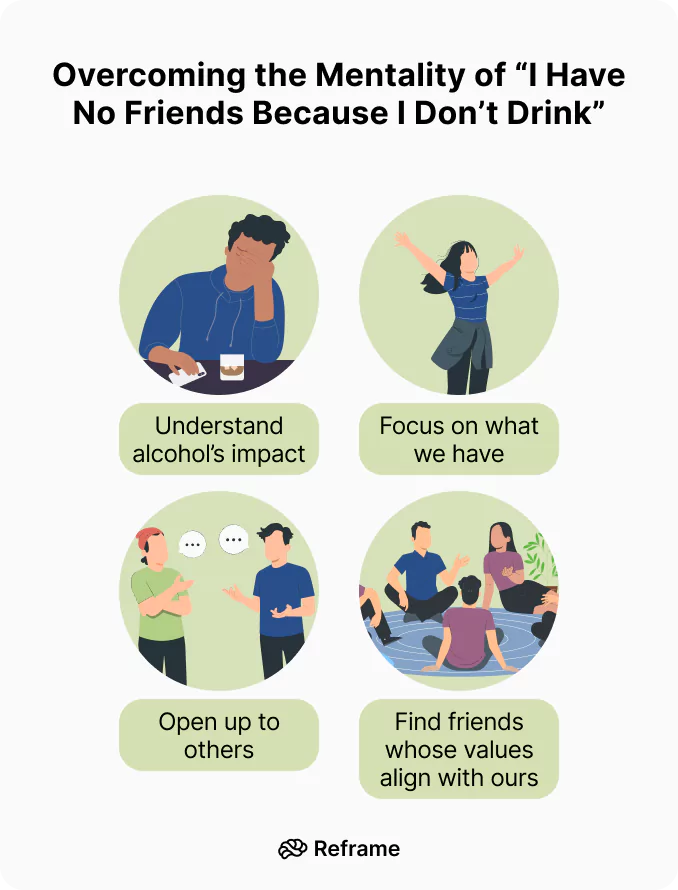
Adjusting to a new social life without alcohol takes time and patience. It’s completely normal to feel a bit lost as your friendships evolve. The good news is that there are concrete, practical steps you can take to manage these feelings and build a stronger foundation for your relationships. These strategies can help you feel more grounded and confident as you create a social life that truly supports your well-being. Think of them as your personal toolkit for navigating this new chapter with grace.
When you feel a pang of loneliness, your inner critic can get loud. It might whisper things like, “See? You’re losing all your friends.” It’s important to catch these negative thoughts and gently challenge them. Instead of letting that narrative take over, reframe it with the truth of your situation. Remind yourself, “I chose to stay home tonight because it’s what’s best for my health and peace of mind.” This isn’t about pretending everything is perfect; it’s about honoring your choices and reinforcing your own strength. Positive self-talk helps you become your own biggest supporter, which is essential when you’re making big, healthy changes in your life.
When your social life feels unpredictable, creating stability elsewhere can be a huge comfort. Building a consistent daily routine gives you a sense of control and predictability that can anchor you through emotional ups and downs. It doesn’t have to be complicated. It could be as simple as waking up at the same time, going for a morning walk, or dedicating 15 minutes to reading before bed. In the early days of changing your relationship with alcohol, this structure is incredibly valuable. It helps build new, healthier habits and gives your brain a break from the stress of uncertainty, allowing you to feel stronger and more centered in your journey.
Your mind and body are deeply connected. When you’re feeling emotionally vulnerable, taking care of your physical health can make a world of difference. Fueling your body with nutritious foods like fruits, vegetables, and lean proteins helps keep your blood sugar stable, which can reduce cravings and improve your mood. Don’t forget to stay hydrated with plenty of water, too! Prioritizing sleep, gentle movement, and good nutrition isn’t just about physical health; it’s a powerful act of self-care that equips you with the energy and resilience to handle social challenges. When you feel good physically, you’re better prepared to feel good mentally.
You might be surprised by which of your old friends are happy to connect without alcohol. The best way to find out is to extend an invitation. Suggest activities that don’t center around drinking, like grabbing coffee, going for a hike, checking out a new exhibit, or trying a pottery class. This shifts the focus from the substance to the actual activity and connection. It’s a great way to see if a friendship can thrive in your new lifestyle. Some friends may not be interested, and that’s okay. But by inviting them, you open the door to redefining your relationship and creating new, meaningful memories together, strengthening the bonds that are meant to last.
The focus of Alcoholics Anonymous (AA) and other support groups is to help us overcome negative drinking habits with the support of others. While it’s not exactly like Bumble BFF, it can be a great way to meet people who have similar values or are going through a similar experience.
However, it’s not the only way to make friends, and there can be some downsides. In a support group, others may also be struggling with their relationship with alcohol. As we’re making progress, others struggling or relapsing can be triggering. Plus, it can be easy to compare our journey to others, jeopardizing our own progress.
While support groups can be a way to meet new friends, we can also branch out. Let’s explore some practical strategies to help us redefine our inner circle.
Building a sober social circle is a fantastic goal, but you don’t have to do all the heavy lifting alone. Sometimes, adding a professional to your support system can make all the difference. Think of it as having an expert guide who can provide you with a personalized map for your journey. While apps like Reframe offer incredible neuroscience-based tools and community support, working with a professional can offer another layer of tailored guidance. If you feel like you need more structured support, exploring therapy or other medical options is a sign of strength, not weakness. Here are a few common and effective approaches.
Cognitive Behavioral Therapy, or CBT, is one of the most effective ways to change your relationship with alcohol. At its core, CBT helps you connect the dots between your thoughts, feelings, and actions. A therapist can help you identify the specific thought patterns that trigger your desire to drink and teach you practical skills to change those automatic responses. Instead of feeling powerless against a craving, you learn new ways to cope with stress, handle social situations, and solve problems without turning to alcohol. It’s about building a mental toolkit that empowers you to make lasting changes, which is why it's one of the most recognized psychotherapeutic approaches for alcohol use.
For some people, the physical side of cutting back can be a major hurdle. That’s where Medication-Assisted Treatment (MAT) can be incredibly helpful. This approach combines behavioral therapy with specific medications that are designed to treat substance use disorders. These medications can help reduce cravings and manage withdrawal symptoms, making it physically easier to stick with your goals. It’s not about replacing one substance with another; it’s about using medication as a tool to create stability so you can fully engage in therapy and build healthier habits for the long term.
It’s very common for drinking habits to be intertwined with other mental health challenges. Many people use alcohol to cope with feelings of anxiety or depression. When this is the case, it’s known as a dual diagnosis or having co-occurring conditions. An effective treatment plan addresses both issues at the same time. Trying to manage your drinking without addressing the underlying anxiety, for example, is like patching one hole in a boat while ignoring another. An integrated approach provides comprehensive care that helps you heal on all fronts, leading to much better and more sustainable outcomes in your recovery.
Not all our friends need to be sober to respect our choices, but having sober friends can be beneficial. They might feel few and far between with the way alcohol is often integrated into our social settings, but these practices can help us develop our sober friendships.
These tips can help us redefine our friendships and navigate the disruptions that alcohol and sobriety can have on our relationships.
Now that we understand how alcohol negatively affects our friendships, we can navigate the feeling of losing friends after committing to sobriety. Instead of losing friends, we’re gaining more authentic connections and finding people around us who support us and our values. As Tennessee Williams said, “Life is partly what we make it, and partly what it is made by the friends we choose.” And the nice thing about friends is that there’s always room for more of them.
As your social circle shifts, you might notice something amazing happen: other relationships in your life have room to grow. While some friendships based on drinking may fade, your family bonds can become stronger than ever. When you’re not drinking, you’re more present, clear-headed, and engaged in conversations and activities. This change can be a huge relief for family members who may have been worried, helping to rebuild trust and foster deeper connections. You’re giving them the chance to get to know the real you, without alcohol getting in the way. This journey is an opportunity to redefine your connections and discover the incredible support system you have in your family.
This newfound clarity also lets you create new, healthier traditions with your loved ones. Instead of every gathering centering on alcohol, you can suggest activities that build more authentic memories. Plan a weekend camping trip, start a monthly family game night, or cook a meal together. These experiences create genuine bonds based on shared interests and quality time, not just a shared drink. It’s a beautiful way to show your family how much you value them while building a supportive environment that celebrates your commitment to a healthier lifestyle. You’re not just changing your own life; you’re enriching the lives of those closest to you.
You’ve committed to sobriety, but now a new thought creeps in: "I have no friends because I don’t drink." You're surrounded by people, yet you feel completely alone. If you're worried about losing friends when you quit drinking, please know these feelings are valid and incredibly common. But here’s a truth that might surprise you: alcohol doesn't actually strengthen friendships. In fact, it often gets in the way of authentic connection by altering our behavior and perception. True friendships can, and do, thrive without it.
Alcohol can give us a false sense of connection, so when we stop drinking, we might feel lonely, like we’ve severed the ties to our friends we used to drink with. Navigating this change can be difficult, but it’s a key step in developing more authentic friendships and connections.
It’s just a drink, right? Not exactly. Alcohol might seem like just a choice of beverage, but it can have a major impact on our friendships and connections. Let’s see how:
At first glance, alcohol can seem like the thing that brings people together. Alcohol lowers our inhibitions, making it easier to talk to others. We might be more open to meeting new people, giving us the false impression that alcohol might mean more friends.
Alcohol also boosts the release of our “feel-good” hormones dopamine and serotonin, giving us a temporary sense of pleasure and connection. On top of that, sharing a drink with others can help us feel closer to them. As a result, our friendships and the things we do together can start to revolve around alcohol. But hey, it’s a good time, right?
It might seem like it at first, but the truth is that alcohol is a mind-altering drug that changes the way we think and act. That camaraderie we feel with those around us when we drink can feel like connection, but it can also lead to inauthentic friendships. Let’s see how things can take a turn.
We might feel good when we’re drinking, but alcohol's depressant effects kick in shortly after that first sip. Our mood can drop, we might feel anxious, and to top it off, we’re also not feeling our best physically, especially the morning after. When our friendships revolve around drinking, we might just be looking forward to our next “hangout,” but in the meantime, we might feel lonely and empty, leading to anxious attachment and a greater drive to drink with friends.
This might lead to alcohol dependence. Maybe we start to drink more than our friends and it’s hard to stop. They may not agree or show concern about our drinking habits, also potentially affecting our friendships.
Not only that, but peer pressure among friends can affect friendships. In fact, one study in the UK found that 85% of people have at some point been pressured by their friends to drink more. If we don’t want to drink more but we do anyway, we might resent those friends later, and if we decide not to drink despite the pressure, we might feel judged. Not good either way!
As we can see, alcohol may seem like the “social glue” and the core of our friendships, but things can quickly get messy.
If you’re looking to develop more authentic connections and want to take that step toward sobriety, keep reading! We’ll explore how quitting alcohol can also affect friendships, so we can better navigate the situation.
We just said that sobriety brings more genuine connections with others, and while this is true, it may come with its own challenges at the beginning. Since alcohol gives us a false sense of connection, when we quit drinking, it may seem like we’re losing all our friends.
You’ve gone sober and you're left wondering “Why does my friend treat me differently now?” If the friendship revolved around drinking, it might seem like you don’t have much in common now. Navigating friendships during our sobriety journey can be complex. While it might seem as if we’re losing friends, our journey gives us a chance to develop new friendships that better align with our new lifestyle. And it’s possible that those new friends will enjoy us for who we are and not because we’re drinking. But to accomplish this transition, we need to first recognize that alcohol gives us a false sense of connection.
It’s one thing to understand that alcohol can create a false bond, but it’s another to feel the sting when a friendship starts to fade. This experience can be confusing and often painful. Understanding the common reasons these shifts happen can provide clarity and help you process the change without blaming yourself. It’s rarely about you personally and more about the dynamic that has been altered. Let’s look at some of the core reasons your social circle might be changing.
When you change your drinking habits, you inadvertently change the social dynamic. Your choice can act like a mirror, causing friends to reflect on their own relationship with alcohol, which isn't always comfortable for them. Even if you never say a word, your sobriety can feel like a quiet statement on the activity you once shared. As one person shared, "When you stop drinking, you are no longer 'on the same level' as your friends who still drink. This can make social gatherings feel different for them." This isn't about you judging them, but about their own internal reaction to your change, which can sometimes cause them to pull away.
Some friendships are built on a shared activity rather than a deep, personal connection. For many of us, that activity was drinking. Think about it: were your hangouts always at a bar or centered around alcohol? When you remove that central activity, you might find there isn't much substance left to the friendship. These friends aren't necessarily bad people; they were just part of a specific context. As one source puts it, "Some friends might only be around for 'good times' that involved substances. Now that you're sober, they move on because the party is over for them." The common ground has simply disappeared.
Sometimes, friends pull away not because they're upset with you, but because they simply don't know how to act. Your journey is new to them, too. They might worry about saying the wrong thing, tempting you, or bringing up a painful memory. This uncertainty can lead to avoidance. Some friends might feel guilty about past drinking escapades or feel helpless because they don't know how to support you. Instead of risking an awkward encounter, they create distance. This often comes from a place of confusion rather than malice, highlighting how important clear communication can be if you want to maintain the relationship.
Choosing to reduce or quit drinking is an act of profound personal growth. And with growth comes change in all areas of your life, including your relationships. It’s natural for people to grow apart as their values and priorities shift. The friendships you lose might have been real and meaningful, but sometimes people simply choose different paths. Embracing a lifestyle of mindful drinking is a healthy choice that leads to a better future, even if it means letting go of some friends along the way. This process makes room for new connections that are aligned with the person you are becoming.
When you decide to change your relationship with alcohol, you’re not just changing a habit; you’re rewiring your brain and rediscovering your emotional landscape. It can feel like a rollercoaster, but understanding the science behind it can make the ride a lot smoother. Knowing what’s happening in your brain and why you’re feeling certain emotions is empowering. It helps you see these challenges not as setbacks, but as signs of healing and progress. This neuroscience-based approach is at the heart of how we at Reframe help people build healthier habits that last.
Your brain is incredibly adaptable. When you drink regularly, it adjusts to the presence of alcohol. When you stop, it has to adjust all over again. This recalibration process is responsible for many of the physical and emotional challenges of early sobriety. The good news? Your brain is designed to heal. By giving it a break from alcohol, you’re creating the space for it to repair connections, rebalance its chemistry, and build new, healthier neural pathways. It’s a powerful reminder that change is always possible, and your brain is your biggest ally in this journey.
Initially, alcohol often feels good. It can temporarily quiet anxiety or make social situations feel easier by triggering a release of pleasure chemicals in the brain. But over time, the brain adapts to this artificial boost. According to the National Institute on Alcohol Abuse and Alcoholism (NIAAA), with frequent drinking, the brain’s reward system becomes less sensitive. The motivation for drinking can shift from seeking pleasure to simply trying to avoid the discomfort of withdrawal. You might find yourself drinking not to feel good, but to stop feeling bad, which is a key sign that your brain chemistry has changed.
Here’s the most hopeful part: your brain can bounce back. Research from the NIAAA shows that many of the changes alcohol causes in the brain can improve or even reverse after a few months of not drinking. As your brain heals, you’ll likely notice improvements in your thinking, memory, and emotional regulation. This healing process takes time and patience, but every day without alcohol is a step toward restoring your brain’s natural balance. This is why building a foundation of new routines and coping skills is so crucial for supporting your brain as it recovers.
If your emotions feel all over the place after you stop drinking, you’re not alone. It’s completely normal to experience intense mood swings and feelings that seem to come out of nowhere. For a long time, alcohol may have been suppressing or numbing your emotions. Now, your brain and body are learning how to process feelings without it. Think of it as your emotional system rebooting. It can be an uncomfortable process, but it’s also an opportunity to build a more honest and resilient relationship with yourself and your feelings, which is a key part of mindful drinking.
In early recovery, it’s common to feel irritable, anxious, sad, or even unusually happy. These mood swings happen because your brain’s chemical messengers, like dopamine and serotonin, are working to find their natural equilibrium again. Your system is used to alcohol influencing these levels, so it takes a while to get back to a stable baseline. Instead of fighting these feelings, try to acknowledge them without judgment. Tools like journaling, meditation, or connecting with a supportive community can provide an outlet and help you ride the emotional waves as your brain chemistry settles down.
Many of us use alcohol to cope with difficult emotions like stress, boredom, guilt, or shame. When you remove alcohol from the equation, those underlying feelings don’t just disappear—they surface. It can be overwhelming to face them head-on, but this is where real growth happens. Learning to sit with discomfort and develop new, healthier coping mechanisms is a core part of the journey. This is your chance to address what you were trying to escape from and build emotional strength, leading to a more authentic and fulfilling way of living.
When we overcome this feeling, we help ourselves open up to new friendships and redefine our inner circle. Here are some tips:
Now that we’re ready to meet new people, where do we begin? Is AA or any other support group the way to meet new friends?
Adjusting to a new social life without alcohol takes time and patience. It’s completely normal to feel a bit lost as your friendships evolve. The good news is that there are concrete, practical steps you can take to manage these feelings and build a stronger foundation for your relationships. These strategies can help you feel more grounded and confident as you create a social life that truly supports your well-being. Think of them as your personal toolkit for navigating this new chapter with grace.
When you feel a pang of loneliness, your inner critic can get loud. It might whisper things like, “See? You’re losing all your friends.” It’s important to catch these negative thoughts and gently challenge them. Instead of letting that narrative take over, reframe it with the truth of your situation. Remind yourself, “I chose to stay home tonight because it’s what’s best for my health and peace of mind.” This isn’t about pretending everything is perfect; it’s about honoring your choices and reinforcing your own strength. Positive self-talk helps you become your own biggest supporter, which is essential when you’re making big, healthy changes in your life.
When your social life feels unpredictable, creating stability elsewhere can be a huge comfort. Building a consistent daily routine gives you a sense of control and predictability that can anchor you through emotional ups and downs. It doesn’t have to be complicated. It could be as simple as waking up at the same time, going for a morning walk, or dedicating 15 minutes to reading before bed. In the early days of changing your relationship with alcohol, this structure is incredibly valuable. It helps build new, healthier habits and gives your brain a break from the stress of uncertainty, allowing you to feel stronger and more centered in your journey.
Your mind and body are deeply connected. When you’re feeling emotionally vulnerable, taking care of your physical health can make a world of difference. Fueling your body with nutritious foods like fruits, vegetables, and lean proteins helps keep your blood sugar stable, which can reduce cravings and improve your mood. Don’t forget to stay hydrated with plenty of water, too! Prioritizing sleep, gentle movement, and good nutrition isn’t just about physical health; it’s a powerful act of self-care that equips you with the energy and resilience to handle social challenges. When you feel good physically, you’re better prepared to feel good mentally.
You might be surprised by which of your old friends are happy to connect without alcohol. The best way to find out is to extend an invitation. Suggest activities that don’t center around drinking, like grabbing coffee, going for a hike, checking out a new exhibit, or trying a pottery class. This shifts the focus from the substance to the actual activity and connection. It’s a great way to see if a friendship can thrive in your new lifestyle. Some friends may not be interested, and that’s okay. But by inviting them, you open the door to redefining your relationship and creating new, meaningful memories together, strengthening the bonds that are meant to last.
The focus of Alcoholics Anonymous (AA) and other support groups is to help us overcome negative drinking habits with the support of others. While it’s not exactly like Bumble BFF, it can be a great way to meet people who have similar values or are going through a similar experience.
However, it’s not the only way to make friends, and there can be some downsides. In a support group, others may also be struggling with their relationship with alcohol. As we’re making progress, others struggling or relapsing can be triggering. Plus, it can be easy to compare our journey to others, jeopardizing our own progress.
While support groups can be a way to meet new friends, we can also branch out. Let’s explore some practical strategies to help us redefine our inner circle.
Building a sober social circle is a fantastic goal, but you don’t have to do all the heavy lifting alone. Sometimes, adding a professional to your support system can make all the difference. Think of it as having an expert guide who can provide you with a personalized map for your journey. While apps like Reframe offer incredible neuroscience-based tools and community support, working with a professional can offer another layer of tailored guidance. If you feel like you need more structured support, exploring therapy or other medical options is a sign of strength, not weakness. Here are a few common and effective approaches.
Cognitive Behavioral Therapy, or CBT, is one of the most effective ways to change your relationship with alcohol. At its core, CBT helps you connect the dots between your thoughts, feelings, and actions. A therapist can help you identify the specific thought patterns that trigger your desire to drink and teach you practical skills to change those automatic responses. Instead of feeling powerless against a craving, you learn new ways to cope with stress, handle social situations, and solve problems without turning to alcohol. It’s about building a mental toolkit that empowers you to make lasting changes, which is why it's one of the most recognized psychotherapeutic approaches for alcohol use.
For some people, the physical side of cutting back can be a major hurdle. That’s where Medication-Assisted Treatment (MAT) can be incredibly helpful. This approach combines behavioral therapy with specific medications that are designed to treat substance use disorders. These medications can help reduce cravings and manage withdrawal symptoms, making it physically easier to stick with your goals. It’s not about replacing one substance with another; it’s about using medication as a tool to create stability so you can fully engage in therapy and build healthier habits for the long term.
It’s very common for drinking habits to be intertwined with other mental health challenges. Many people use alcohol to cope with feelings of anxiety or depression. When this is the case, it’s known as a dual diagnosis or having co-occurring conditions. An effective treatment plan addresses both issues at the same time. Trying to manage your drinking without addressing the underlying anxiety, for example, is like patching one hole in a boat while ignoring another. An integrated approach provides comprehensive care that helps you heal on all fronts, leading to much better and more sustainable outcomes in your recovery.
Not all our friends need to be sober to respect our choices, but having sober friends can be beneficial. They might feel few and far between with the way alcohol is often integrated into our social settings, but these practices can help us develop our sober friendships.
These tips can help us redefine our friendships and navigate the disruptions that alcohol and sobriety can have on our relationships.
Now that we understand how alcohol negatively affects our friendships, we can navigate the feeling of losing friends after committing to sobriety. Instead of losing friends, we’re gaining more authentic connections and finding people around us who support us and our values. As Tennessee Williams said, “Life is partly what we make it, and partly what it is made by the friends we choose.” And the nice thing about friends is that there’s always room for more of them.
As your social circle shifts, you might notice something amazing happen: other relationships in your life have room to grow. While some friendships based on drinking may fade, your family bonds can become stronger than ever. When you’re not drinking, you’re more present, clear-headed, and engaged in conversations and activities. This change can be a huge relief for family members who may have been worried, helping to rebuild trust and foster deeper connections. You’re giving them the chance to get to know the real you, without alcohol getting in the way. This journey is an opportunity to redefine your connections and discover the incredible support system you have in your family.
This newfound clarity also lets you create new, healthier traditions with your loved ones. Instead of every gathering centering on alcohol, you can suggest activities that build more authentic memories. Plan a weekend camping trip, start a monthly family game night, or cook a meal together. These experiences create genuine bonds based on shared interests and quality time, not just a shared drink. It’s a beautiful way to show your family how much you value them while building a supportive environment that celebrates your commitment to a healthier lifestyle. You’re not just changing your own life; you’re enriching the lives of those closest to you.
