
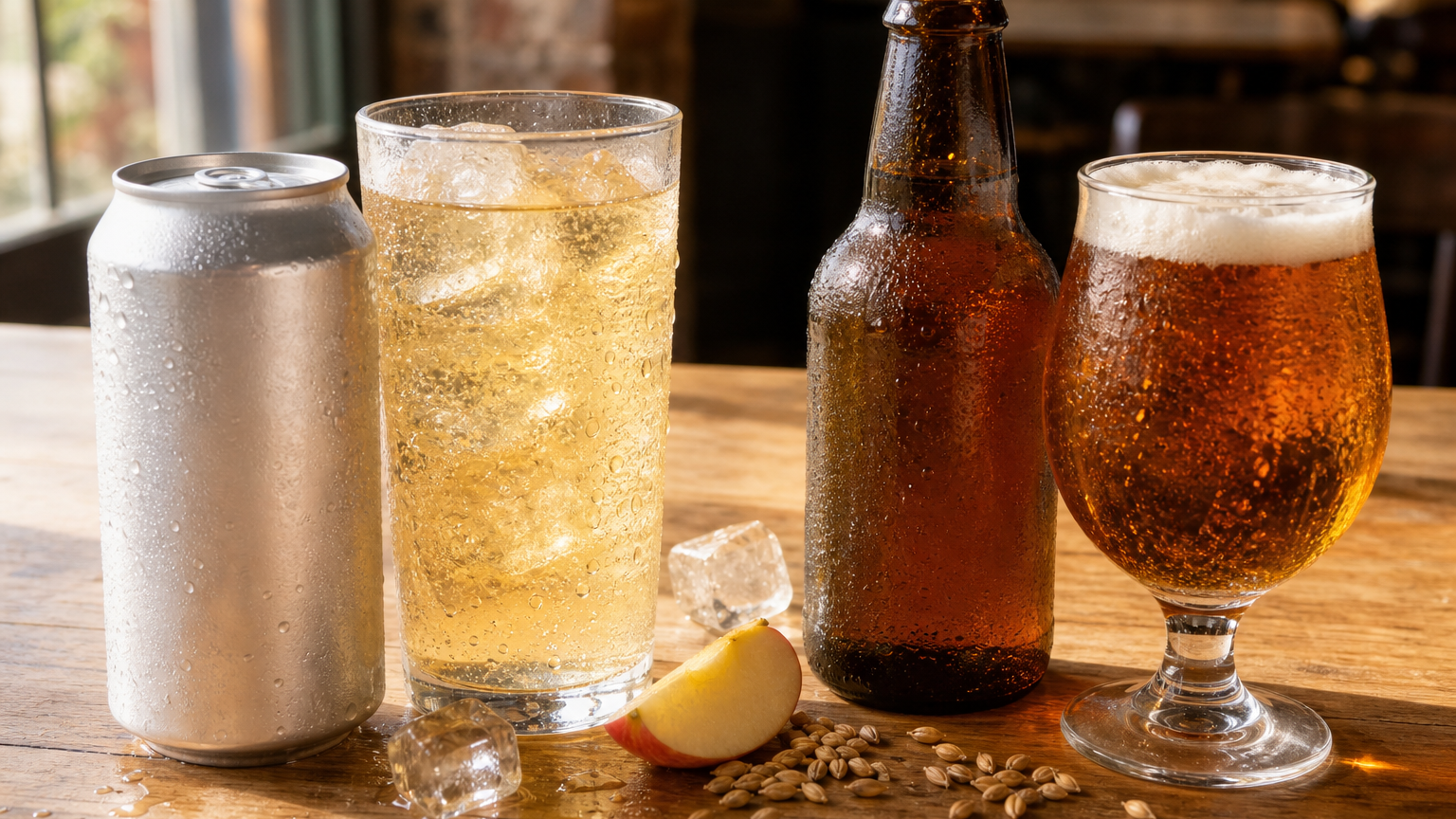
Hard cider vs beer on sugar, calories, ABV, and gluten. See why cider feels lighter than it is and how to count it if you're cutting back on alcohol.

Although it isn't a treatment for alcohol use disorder (AUD), the Reframe app can help you cut back on drinking gradually with the science-backed knowledge to empower you 100% of the way. Our proven program has helped millions of people around the world drink less and live more. And we want to help you get there, too!
The Reframe app equips you with the knowledge and skills you need to not only survive drinking less, but to thrive while you navigate the journey. Our daily research-backed readings teach you the neuroscience of alcohol, and our in-app Toolkit provides the resources and activities you need to navigate each challenge.
You'll meet millions of fellow Reframers in our 24/7 Forum chat and daily Zoom check-in meetings. Receive encouragement from people worldwide who know exactly what you're going through! You'll also have the opportunity to connect with our licensed Reframe coaches for more personalized guidance.
Plus, we're always introducing new features to optimize your in-app experience. We recently launched our in-app chatbot, Melody, powered by the world's most powerful AI technology. Melody is here to help as you adjust to a life with less (or no) alcohol.
And that's not all! Every month, we launch fun challenges, like Dry/Damp January, Mental Health May, and Outdoorsy June. You won't want to miss out on the chance to participate alongside fellow Reframers (or solo if that's more your thing!).
The Reframe app is free for 7 days, so you don't have anything to lose by trying it. Are you ready to feel empowered and discover life beyond alcohol? Then download our app through the App Store or Google Play today!
Neither hard cider nor beer is a "healthy choice," but they are different on paper: a 12 oz hard cider typically carries about 20 to 25 grams of sugar and 180 to 220 calories, while a 12 oz regular beer carries roughly 1 gram of sugar and 150 calories, and many ciders run 5 to 8 percent ABV compared to beer's typical 4 to 5 percent. That means a can of cider can quietly be more than one standard drink plus a soda's worth of sugar, which is why it often lands harder the next day even though it tastes lighter. If you're counting drinks or calories, the useful move is to check the ABV and sugar on the can rather than trusting the orchard-fresh packaging. Reframe helps you track what's actually in your glass so a swap you made to drink less doesn't quietly become a step sideways.
Let's talk honestly about the cider aisle. Somewhere in the last decade, hard cider became the drink people reach for when they want something that feels like a step in the right direction. It's fruit. It's gluten-free. The can has a tree on it. Compared to a pint of something heavy and hoppy, it reads like the lighter option, and plenty of us have made that exact swap while trying to cut back.
The trouble is that the numbers don't always cooperate with the vibe. A lot of ciders are stronger than the beer they replaced and carry the sugar load of a small soda alongside it. That's not a reason to feel bad about liking cider. It is a reason to know what's in the can, because the whole point of tracking is that your drink count reflects reality. Here's the full comparison, with real numbers and the arithmetic to check any can yourself.
Most mainstream hard ciders publish somewhere in the range of 20 to 25 grams of sugar per 12 oz, while regular beer usually lands around 1 gram. That gap is the single biggest nutritional difference between the two categories. It isn't because apples are sugary and barley isn't; it's because of what the producer decides to do at the end of fermentation.
A quick caveat before the details: there is no single federal table that publishes sugar content by cider category. Those ranges come from what brands disclose on their own nutrition pages, and they vary a lot. So treat them as a ballpark and read the specific can in your hand.
Apple juice is made almost entirely of simple fermentable sugars, which means a cider fermented all the way to completion actually finishes dry, not sweet. The sweetness in most cans is generally added back on purpose. Cider makers commonly backsweeten finished cider, often using apple juice concentrate, though other sugars can be used as well. Beer goes the other direction: brewer's yeast works through nearly all the available malt sugar, which is why the residual sugar figure on a beer label is usually close to nothing.
In other words, the sugar in your cider is a recipe decision, not a botanical fact. Which is also why it's so variable.
This is where the category label stops being useful. A dry or "brut" cider can come in around 2 to 5 grams of sugar per serving, putting it much closer to beer than to its sweet cousins. A dessert-style or heavily flavored cider can run well above the 25 gram mark. The spread within cider is wider than the spread between cider and beer, which means asking "how much sugar is in hard cider" without naming a style gets you a shrug.
Practical version: the style word on the front of the can (dry, semi-dry, crisp, original) tells you more about the sugar than the word "cider" does. If you've been tracking sugar as part of a broader effort at mindful drinking, the dry styles are the ones worth learning by name.

Usually yes, though the margin is modest. A 12 oz cider tends to land in the 180 to 220 calorie range, a 12 oz regular beer sits around 150, and light beer comes in closer to 95 to 110. USDA nutrient data for an amber hard cider puts a 12 fl oz serving at roughly 200 calories, with essentially all of the non-alcohol calories coming from carbohydrate, though that reference entry reflects a moderate-strength cider rather than a strong one.
For the beer side of the ledger we'll keep it to one line and point you elsewhere: federal dietary guidance puts a 12 oz regular beer at about 150 calories, of which roughly 98 come from the alcohol itself, and our full breakdown of calories in beer covers the styles in depth.
That 98-calorie figure is the useful one for reading a cider can, because it tells you where the extra comes from. Cider gets its calories from two taps at once. There's the alcohol, which supplies about 7 calories per gram, closer to fat than to carbohydrate. And there's the residual sugar, at roughly 4 calories per gram. A beer is mostly the first. A sweet, higher-ABV cider is meaningfully both, which is why the calorie count climbs faster than you'd expect when the ABV goes up a point or two.
Then there's the container. Cider is frequently sold in 16 oz cans, and a 16 oz pour is a third more of everything than a 12 oz pour: a third more calories, a third more sugar, a third more alcohol. If you want to see what that does across a typical week rather than a single evening, our alcohol calorie calculator does the math without any guilt attached, and if the weekly total surprises you, the alcohol spend calculator tends to be an equally bracing read.
Often more than one, and this is the part that quietly wrecks drink counts. A U.S. standard drink is any beverage containing 0.6 fluid ounces or 14 grams of pure alcohol, which works out to 12 oz of regular beer at about 5 percent ABV. Cider routinely runs above that, so the can and the drink stop being the same unit.
Here's the arithmetic, and it's genuinely easy enough to do at a bar. Multiply the ounces by the ABV percentage, then divide by 0.6.
Sit with those two numbers for a second. Two 16 oz ciders at that strength is roughly three and a half standard drinks, which is to say roughly three and a half regular beers' worth of alcohol from what your brain filed as "two." Nobody is being dishonest here. It's just that containers and standard drinks were never the same thing, and NIAAA says so directly, noting that standard drink amounts do not reflect customary serving sizes and that actual alcohol content varies by brand and type.
If you're working toward a weekly target, this is the difference between hitting it and thinking you hit it. Counting containers feels honest and produces a number that's wrong by 30 or 40 percent. Counting standard drinks keeps the goal intact, which is why tracking your drinking by alcohol content rather than by can is one of the highest-leverage habits in cutting back. Not sure where your current numbers land? The Am I Drinking Too Much? quiz is a five-minute starting point.


Because almost everything about the experience of drinking it is engineered to be pleasant, and pleasantness removes the cues we use to slow down. A stronger, sweeter drink that tastes like juice is a genuinely unusual combination, and our instincts aren't calibrated for it.
Start with the sensory side. Carbonation, cold serving temperature, sweetness, and fruit flavor all work against the taste of ethanol. Beer has bitterness; spirits have burn. Those are unpleasant, and unpleasantness is a pacing cue, the thing that makes you set the glass down between sips. Sweetness covers that signal, so a drink with more alcohol in it can taste like less. This is mechanism and observation rather than a settled research finding, but ask anyone who has switched from IPAs to cider on a hot afternoon how fast the first can went.
Then there's the packaging. Orchard photography, "craft," "natural," "real apples," "gluten-free," all of it reads as a wellness signal before you've looked at a single number. And that isn't just aesthetics. Research on food labeling describes a health halo effect, where a single positive claim leads people to judge a product as healthier overall, underestimate its calories, and sometimes eat more of it in the belief that it's lighter. A randomized experiment published in 2025 found that a wellness-signaling label caused participants to significantly underestimate the calorie content of high-calorie items specifically, and, in a genuinely humbling twist, that frequent readers of nutrition information were more susceptible rather than less. That study tested organic labels, not gluten-free ones, so read it as evidence that "free-from" style claims bias calorie perception downward, with the bias hitting hardest on the products that have the most calories to hide.
Which is a useful thing to know about ourselves. Reading the label is necessary. It is apparently not sufficient. Logging the actual number is what closes the gap, and it's part of why Reframe's mindful drinking program leans on data rather than intentions.
Gluten-free is a real and regulated claim on cider, and for some people it matters a great deal. It just isn't a health claim about the drink as a whole. Those are two different statements that the can tends to blur together.
The genuine part first. Cider is fermented from apples rather than barley or wheat, so it doesn't start with a gluten-containing grain. The regulatory picture backs this up: hard cider below 7 percent ABV falls under FDA rather than TTB jurisdiction, which is why many ciders can carry a compliant gluten-free label. For someone with celiac disease or gluten sensitivity, that's useful, specific information.
Here's where the label reading still matters, though. TTB has said it considers "gluten-free" claims on alcohol beverages fermented or distilled from gluten-containing grains such as barley to be misleading, including products made from gluten-containing ingredients that are then processed to remove gluten. Some ciders are conditioned, blended, or flavored with barley-derived ingredients. If you're avoiding gluten for medical reasons rather than preference, the ingredient list is still the document that counts.
And the honest frame on the rest: gluten-free says nothing about sugar, calories, ABV, or what alcohol does in the body. A gluten-free alcoholic drink is still an alcoholic drink. If you're curious about how the rest of the bar shakes out, our guide to which alcoholic beverages are gluten-free has the full list.

Plenty of people swear cider hits them harder the next morning, and there are two plausible reasons rather than one. Neither is the sugar alone, but the sugar isn't irrelevant either.
The first reason is simply more alcohol. Hangover symptoms are driven partly by acetaldehyde, a toxic short-lived byproduct of alcohol metabolism, alongside inflammation and a rebound mini-withdrawal effect. NIAAA is careful to say that no reliable number of drinks predicts who gets a hangover, so this is an inference rather than a published dose curve: if your cans are 6.9 percent instead of 4.5, the same number of containers means more ethanol metabolized, and more ethanol metabolized is the general direction of a rougher morning.
The second reason involves blood sugar, and the timing is the interesting part. A review of drug- and alcohol-induced hypoglycaemia notes that hepatic gluconeogenesis may be reduced substantially after a moderate amount of alcohol, that low blood sugar can appear 8 to 10 hours later once glycogen stores are used up, and that the incidence in healthy, well-nourished people with good glycogen reserve is low while risk is meaningfully higher for people with diabetes, impaired liver function, or poor nutrition. That 8 to 10 hour lag is exactly why this shows up as a next-morning phenomenon: the shakiness, fatigue, irritability, and loud demand for carbs at 8 a.m. rather than at midnight.
Layer a sugar load on top of the alcohol and you've set up a bigger swing in both directions, which is the most likely explanation for why sweet drinks have a reputation for producing sugar-seeking mornings. Worth noting that sugar cravings after drinking also run through the brain's reward circuitry, not glucose alone, so the craving can outlast the actual dip.
If you have diabetes or take glucose-lowering medication, this specific interaction is a conversation for your clinician rather than something to experiment with on your own; they can help you figure out what's safe for you. For everyone else, the unglamorous tactics still carry most of the weight: eat with the drink, space the cans out, keep water in the rotation, and count by standard drinks rather than by cans so tomorrow isn't a surprise.
As a straight swap for beer, cider is usually a poor trade, and it's worth being blunt about why. The typical can is both stronger and sweeter than what it replaced, so a change that felt like moderation can raise your standard-drink count and your calorie count at the same time. That's the whole "step sideways" problem in one sentence.
It can work, though, if you choose deliberately. A dry or brut style, in a 12 oz can, at 5 percent or under, logged at its true standard-drink value, is a perfectly reasonable drink to have. What makes it work isn't the cider; it's the specificity. The failure mode is grabbing whatever 16 oz can looks freshest and filing it mentally as "one."
If your goal is fewer standard drinks rather than a different flavor, a few swaps align better with the math: light beer, a non-alcoholic beer or non-alcoholic cider, a spritzer that you build yourself, or zebra-striping, where you alternate every alcoholic round with an alcohol-free one. That last one is the cheapest trick in the book and it works on pattern rather than product.
Read the can in this order, every time, and it becomes automatic:
And then the thing that actually matters more than any label. Pattern beats product. Which drink you choose is a smaller variable than how many you have and how often you have them, and that's the variable tracking makes visible. Cider isn't a trap and beer isn't a virtue; they're both alcohol with different packaging, and knowing your own numbers beats picking a team. If you want a sense of your own pattern before you change anything, the What Type of Drinker Are You? quiz is a decent mirror, and you can download Reframe to log drinks by standard-drink value rather than by container.
Neither hard cider nor beer is a "healthy choice," but they are different on paper: a 12 oz hard cider typically carries about 20 to 25 grams of sugar and 180 to 220 calories, while a 12 oz regular beer carries roughly 1 gram of sugar and 150 calories, and many ciders run 5 to 8 percent ABV compared to beer's typical 4 to 5 percent. That means a can of cider can quietly be more than one standard drink plus a soda's worth of sugar, which is why it often lands harder the next day even though it tastes lighter. If you're counting drinks or calories, the useful move is to check the ABV and sugar on the can rather than trusting the orchard-fresh packaging. Reframe helps you track what's actually in your glass so a swap you made to drink less doesn't quietly become a step sideways.
Let's talk honestly about the cider aisle. Somewhere in the last decade, hard cider became the drink people reach for when they want something that feels like a step in the right direction. It's fruit. It's gluten-free. The can has a tree on it. Compared to a pint of something heavy and hoppy, it reads like the lighter option, and plenty of us have made that exact swap while trying to cut back.
The trouble is that the numbers don't always cooperate with the vibe. A lot of ciders are stronger than the beer they replaced and carry the sugar load of a small soda alongside it. That's not a reason to feel bad about liking cider. It is a reason to know what's in the can, because the whole point of tracking is that your drink count reflects reality. Here's the full comparison, with real numbers and the arithmetic to check any can yourself.
Most mainstream hard ciders publish somewhere in the range of 20 to 25 grams of sugar per 12 oz, while regular beer usually lands around 1 gram. That gap is the single biggest nutritional difference between the two categories. It isn't because apples are sugary and barley isn't; it's because of what the producer decides to do at the end of fermentation.
A quick caveat before the details: there is no single federal table that publishes sugar content by cider category. Those ranges come from what brands disclose on their own nutrition pages, and they vary a lot. So treat them as a ballpark and read the specific can in your hand.
Apple juice is made almost entirely of simple fermentable sugars, which means a cider fermented all the way to completion actually finishes dry, not sweet. The sweetness in most cans is generally added back on purpose. Cider makers commonly backsweeten finished cider, often using apple juice concentrate, though other sugars can be used as well. Beer goes the other direction: brewer's yeast works through nearly all the available malt sugar, which is why the residual sugar figure on a beer label is usually close to nothing.
In other words, the sugar in your cider is a recipe decision, not a botanical fact. Which is also why it's so variable.
This is where the category label stops being useful. A dry or "brut" cider can come in around 2 to 5 grams of sugar per serving, putting it much closer to beer than to its sweet cousins. A dessert-style or heavily flavored cider can run well above the 25 gram mark. The spread within cider is wider than the spread between cider and beer, which means asking "how much sugar is in hard cider" without naming a style gets you a shrug.
Practical version: the style word on the front of the can (dry, semi-dry, crisp, original) tells you more about the sugar than the word "cider" does. If you've been tracking sugar as part of a broader effort at mindful drinking, the dry styles are the ones worth learning by name.
Usually yes, though the margin is modest. A 12 oz cider tends to land in the 180 to 220 calorie range, a 12 oz regular beer sits around 150, and light beer comes in closer to 95 to 110. USDA nutrient data for an amber hard cider puts a 12 fl oz serving at roughly 200 calories, with essentially all of the non-alcohol calories coming from carbohydrate, though that reference entry reflects a moderate-strength cider rather than a strong one.
For the beer side of the ledger we'll keep it to one line and point you elsewhere: federal dietary guidance puts a 12 oz regular beer at about 150 calories, of which roughly 98 come from the alcohol itself, and our full breakdown of calories in beer covers the styles in depth.
That 98-calorie figure is the useful one for reading a cider can, because it tells you where the extra comes from. Cider gets its calories from two taps at once. There's the alcohol, which supplies about 7 calories per gram, closer to fat than to carbohydrate. And there's the residual sugar, at roughly 4 calories per gram. A beer is mostly the first. A sweet, higher-ABV cider is meaningfully both, which is why the calorie count climbs faster than you'd expect when the ABV goes up a point or two.
Then there's the container. Cider is frequently sold in 16 oz cans, and a 16 oz pour is a third more of everything than a 12 oz pour: a third more calories, a third more sugar, a third more alcohol. If you want to see what that does across a typical week rather than a single evening, our alcohol calorie calculator does the math without any guilt attached, and if the weekly total surprises you, the alcohol spend calculator tends to be an equally bracing read.
Often more than one, and this is the part that quietly wrecks drink counts. A U.S. standard drink is any beverage containing 0.6 fluid ounces or 14 grams of pure alcohol, which works out to 12 oz of regular beer at about 5 percent ABV. Cider routinely runs above that, so the can and the drink stop being the same unit.
Here's the arithmetic, and it's genuinely easy enough to do at a bar. Multiply the ounces by the ABV percentage, then divide by 0.6.
Sit with those two numbers for a second. Two 16 oz ciders at that strength is roughly three and a half standard drinks, which is to say roughly three and a half regular beers' worth of alcohol from what your brain filed as "two." Nobody is being dishonest here. It's just that containers and standard drinks were never the same thing, and NIAAA says so directly, noting that standard drink amounts do not reflect customary serving sizes and that actual alcohol content varies by brand and type.
If you're working toward a weekly target, this is the difference between hitting it and thinking you hit it. Counting containers feels honest and produces a number that's wrong by 30 or 40 percent. Counting standard drinks keeps the goal intact, which is why tracking your drinking by alcohol content rather than by can is one of the highest-leverage habits in cutting back. Not sure where your current numbers land? The Am I Drinking Too Much? quiz is a five-minute starting point.
Because almost everything about the experience of drinking it is engineered to be pleasant, and pleasantness removes the cues we use to slow down. A stronger, sweeter drink that tastes like juice is a genuinely unusual combination, and our instincts aren't calibrated for it.
Start with the sensory side. Carbonation, cold serving temperature, sweetness, and fruit flavor all work against the taste of ethanol. Beer has bitterness; spirits have burn. Those are unpleasant, and unpleasantness is a pacing cue, the thing that makes you set the glass down between sips. Sweetness covers that signal, so a drink with more alcohol in it can taste like less. This is mechanism and observation rather than a settled research finding, but ask anyone who has switched from IPAs to cider on a hot afternoon how fast the first can went.
Then there's the packaging. Orchard photography, "craft," "natural," "real apples," "gluten-free," all of it reads as a wellness signal before you've looked at a single number. And that isn't just aesthetics. Research on food labeling describes a health halo effect, where a single positive claim leads people to judge a product as healthier overall, underestimate its calories, and sometimes eat more of it in the belief that it's lighter. A randomized experiment published in 2025 found that a wellness-signaling label caused participants to significantly underestimate the calorie content of high-calorie items specifically, and, in a genuinely humbling twist, that frequent readers of nutrition information were more susceptible rather than less. That study tested organic labels, not gluten-free ones, so read it as evidence that "free-from" style claims bias calorie perception downward, with the bias hitting hardest on the products that have the most calories to hide.
Which is a useful thing to know about ourselves. Reading the label is necessary. It is apparently not sufficient. Logging the actual number is what closes the gap, and it's part of why Reframe's mindful drinking program leans on data rather than intentions.
Gluten-free is a real and regulated claim on cider, and for some people it matters a great deal. It just isn't a health claim about the drink as a whole. Those are two different statements that the can tends to blur together.
The genuine part first. Cider is fermented from apples rather than barley or wheat, so it doesn't start with a gluten-containing grain. The regulatory picture backs this up: hard cider below 7 percent ABV falls under FDA rather than TTB jurisdiction, which is why many ciders can carry a compliant gluten-free label. For someone with celiac disease or gluten sensitivity, that's useful, specific information.
Here's where the label reading still matters, though. TTB has said it considers "gluten-free" claims on alcohol beverages fermented or distilled from gluten-containing grains such as barley to be misleading, including products made from gluten-containing ingredients that are then processed to remove gluten. Some ciders are conditioned, blended, or flavored with barley-derived ingredients. If you're avoiding gluten for medical reasons rather than preference, the ingredient list is still the document that counts.
And the honest frame on the rest: gluten-free says nothing about sugar, calories, ABV, or what alcohol does in the body. A gluten-free alcoholic drink is still an alcoholic drink. If you're curious about how the rest of the bar shakes out, our guide to which alcoholic beverages are gluten-free has the full list.
Plenty of people swear cider hits them harder the next morning, and there are two plausible reasons rather than one. Neither is the sugar alone, but the sugar isn't irrelevant either.
The first reason is simply more alcohol. Hangover symptoms are driven partly by acetaldehyde, a toxic short-lived byproduct of alcohol metabolism, alongside inflammation and a rebound mini-withdrawal effect. NIAAA is careful to say that no reliable number of drinks predicts who gets a hangover, so this is an inference rather than a published dose curve: if your cans are 6.9 percent instead of 4.5, the same number of containers means more ethanol metabolized, and more ethanol metabolized is the general direction of a rougher morning.
The second reason involves blood sugar, and the timing is the interesting part. A review of drug- and alcohol-induced hypoglycaemia notes that hepatic gluconeogenesis may be reduced substantially after a moderate amount of alcohol, that low blood sugar can appear 8 to 10 hours later once glycogen stores are used up, and that the incidence in healthy, well-nourished people with good glycogen reserve is low while risk is meaningfully higher for people with diabetes, impaired liver function, or poor nutrition. That 8 to 10 hour lag is exactly why this shows up as a next-morning phenomenon: the shakiness, fatigue, irritability, and loud demand for carbs at 8 a.m. rather than at midnight.
Layer a sugar load on top of the alcohol and you've set up a bigger swing in both directions, which is the most likely explanation for why sweet drinks have a reputation for producing sugar-seeking mornings. Worth noting that sugar cravings after drinking also run through the brain's reward circuitry, not glucose alone, so the craving can outlast the actual dip.
If you have diabetes or take glucose-lowering medication, this specific interaction is a conversation for your clinician rather than something to experiment with on your own; they can help you figure out what's safe for you. For everyone else, the unglamorous tactics still carry most of the weight: eat with the drink, space the cans out, keep water in the rotation, and count by standard drinks rather than by cans so tomorrow isn't a surprise.
As a straight swap for beer, cider is usually a poor trade, and it's worth being blunt about why. The typical can is both stronger and sweeter than what it replaced, so a change that felt like moderation can raise your standard-drink count and your calorie count at the same time. That's the whole "step sideways" problem in one sentence.
It can work, though, if you choose deliberately. A dry or brut style, in a 12 oz can, at 5 percent or under, logged at its true standard-drink value, is a perfectly reasonable drink to have. What makes it work isn't the cider; it's the specificity. The failure mode is grabbing whatever 16 oz can looks freshest and filing it mentally as "one."
If your goal is fewer standard drinks rather than a different flavor, a few swaps align better with the math: light beer, a non-alcoholic beer or non-alcoholic cider, a spritzer that you build yourself, or zebra-striping, where you alternate every alcoholic round with an alcohol-free one. That last one is the cheapest trick in the book and it works on pattern rather than product.
Read the can in this order, every time, and it becomes automatic:
And then the thing that actually matters more than any label. Pattern beats product. Which drink you choose is a smaller variable than how many you have and how often you have them, and that's the variable tracking makes visible. Cider isn't a trap and beer isn't a virtue; they're both alcohol with different packaging, and knowing your own numbers beats picking a team. If you want a sense of your own pattern before you change anything, the What Type of Drinker Are You? quiz is a decent mirror, and you can download Reframe to log drinks by standard-drink value rather than by container.
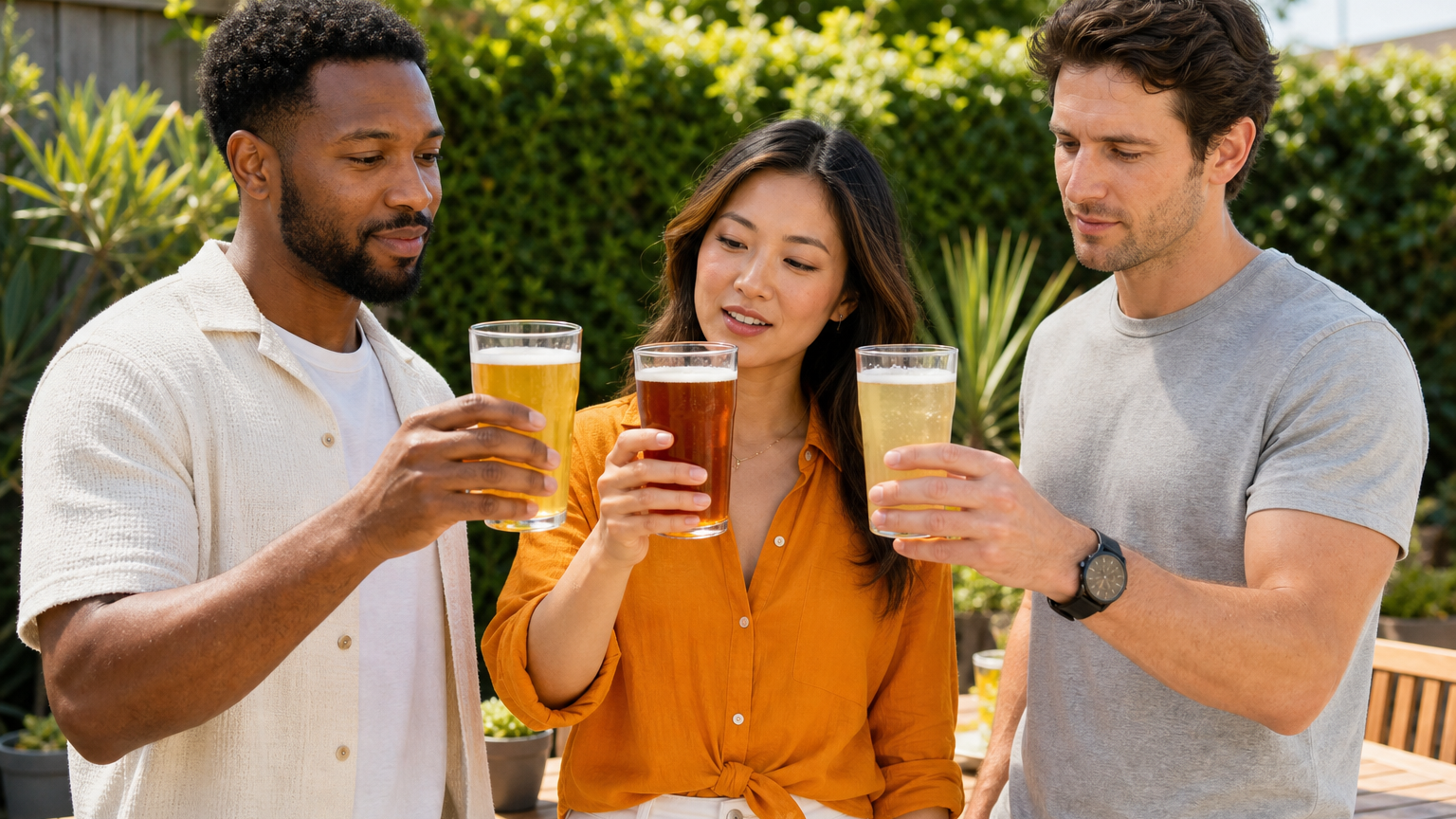
Light, regular, and non-alcoholic beer compared on ABV, standard drinks, calories, and brewing method, plus what swapping actually changes in your week.
Although it isn't a treatment for alcohol use disorder (AUD), the Reframe app can help you cut back on drinking gradually with the science-backed knowledge to empower you 100% of the way. Our proven program has helped millions of people around the world drink less and live more. And we want to help you get there, too!
The Reframe app equips you with the knowledge and skills you need to not only survive drinking less, but to thrive while you navigate the journey. Our daily research-backed readings teach you the neuroscience of alcohol, and our in-app Toolkit provides the resources and activities you need to navigate each challenge.
You'll meet millions of fellow Reframers in our 24/7 Forum chat and daily Zoom check-in meetings. Receive encouragement from people worldwide who know exactly what you're going through! You'll also have the opportunity to connect with our licensed Reframe coaches for more personalized guidance.
Plus, we're always introducing new features to optimize your in-app experience. We recently launched our in-app chatbot, Melody, powered by the world's most powerful AI technology. Melody is here to help as you adjust to a life with less (or no) alcohol.
And that's not all! Every month, we launch fun challenges, like Dry/Damp January, Mental Health May, and Outdoorsy June. You won't want to miss out on the chance to participate alongside fellow Reframers (or solo if that's more your thing!).
The Reframe app is free for 7 days, so you don't have anything to lose by trying it. Are you ready to feel empowered and discover life beyond alcohol? Then download our app through the App Store or Google Play today!
The three categories differ on four things that actually matter: alcohol by volume (regular beer averages about 5%, light beer typically lands near 4.2%, and non-alcoholic beer is labeled that way in the US only when it is under 0.5%), how much of a standard drink each one counts as, calories and carbs, and how they're brewed. In practical terms, one regular 12 oz beer is roughly one standard drink, one light beer is about 0.84 of a standard drink, and it would take more than ten NA beers to equal a single standard drink. Swapping two of four Friday beers for light beer trims a modest amount of alcohol and somewhere around 60 to 100 calories; swapping the same two for NA cuts close to half your alcohol for the night. If you're trying to bring your weekly total down, Reframe helps you see what those swaps actually add up to instead of guessing.
Here's the thing about the beer aisle: the labels are doing a lot of quiet work. "Light" sounds like a meaningful downgrade. "Non-alcoholic" sounds like zero. "Regular" sounds like a baseline. But the gap between those three words in marketing terms and the gap between them in actual grams of ethanol are not the same gap, and if you're trying to drink less, the second one is the only one that moves your numbers.
So let's do the math out loud. Not to talk anyone out of a beer, and definitely not to hand out gold stars for picking the "right" can. Just so that when you swap something, you know what you swapped.
Regular American lager sits around 5% ABV, light beer usually runs somewhere between 3.5% and 4.2%, and a beer sold as non-alcoholic in the US is under 0.5% ABV by federal labeling rule. That is the whole spread, and the two ends of it are not symmetrical: light beer is a shave off the top, while NA is a different order of magnitude.
Those light and craft figures are typical market ranges rather than official numbers, and the official framing is actually wider. NIAAA notes that alcohol content varies considerably within beverage categories, with some light beers containing about half as much alcohol as a regular beer while some craft and specialty beers contain twice as much. So "light" is a family of products, not a fixed strength, and the only number you can trust is the one printed on the can in front of you.
Once you step outside standard lager, the tidy comparison falls apart. A hazy IPA at 6.8% and a barrel-aged stout at 11% are both "a beer" socially and are nothing like each other chemically. If your baseline drink is a craft pour rather than a domestic lager, then your personal "regular beer" is already delivering more alcohol than the 5% reference point everyone quotes, and a light beer swap looks bigger by comparison. We cover the full landscape in our guide to alcohol percentage across beer, wine, and spirits, but the practical version is short: read the ABV, not the style name.
The 0.5% line is a labeling rule, not a taste descriptor. Under US federal rules, a malt beverage can be labeled non-alcoholic only when it carries a statement that it contains less than 0.5 percent alcohol by volume, and the term "alcohol free" is reserved for products containing no alcohol at all. Those are two different claims. A can that says 0.0% is making a stronger statement than one that says non-alcoholic, and the regulation treats them that way.
Where does 0.5% come from? It's roughly the range you'd find in some fermented foods and drinks, which is a useful intuition pump even though it isn't the stated regulatory rationale. The more important practical point is that ABV is a percentage of volume, so container size can quietly override strength. A 19.2 oz can of a weaker beer can deliver more total alcohol than a 12 oz can of a stronger one. Percentages don't drink themselves; ounces do.
One 12 oz regular beer at 5% ABV equals one standard drink. One 12 oz light beer at 4.2% equals about 0.84 of a standard drink. One 12 oz NA beer at the 0.5% ceiling equals roughly 0.1 of a standard drink, meaning it takes something like 10 to 12 of them to reach the alcohol in a single regular beer. That is the entire standard drink beer math in three lines.
The anchor here is the federal definition. NIAAA defines a US standard drink as any beverage containing 0.6 fluid ounces, or about 14 grams, of pure alcohol, which is exactly what a 12 oz beer at around 5% ABV delivers. Every weekly drinking guideline you've ever seen is counted in those units, not in cans, which is why "I only had three" is a sentence that can mean wildly different things depending on what the three were.
Ounces multiplied by ABV percentage, divided by 0.6, equals standard drinks.
That's it. A 12 oz at 5%: 12 x 5 = 60, divided by 0.6 = 1.0. A 12 oz light beer at 4.2%: 50.4 divided by 0.6 = 0.84. A 12 oz NA at 0.5%: 6 divided by 0.6 = 0.1. Once you've run it three times it becomes something you can do in your head at a bar, which is a genuinely useful party trick for a person trying to keep an honest count.
| Beer type | Typical ABV | Standard drinks per 12 oz | Typical calories per 12 oz | How it's made | |---|---|---|---|---| | Regular lager | ~5% | 1.0 | ~145 to 155 | Full fermentation, alcohol left in place | | Light beer | ~3.5% to 4.2% | ~0.7 to 0.84 | ~95 to 110 | Lighter mash or added enzymes, fewer residual sugars | | Non-alcoholic | under 0.5% | ~0.1 | ~50 to 90 | Arrested fermentation or dealcoholization |
Container size is where most people's mental arithmetic quietly breaks. NIAAA's own drink-size guidance puts a 16 oz serving of about 5% beer at roughly 1.3 standard drinks and a 22 oz serving at about 2, which means a bar pint is not a can. Run the formula on a 19.2 oz tallboy at 6% and it works out to nearly 2 standard drinks in a single vessel. Two of those on a patio is a four-drink night that felt like a two-drink night, and no amount of choosing carefully afterward changes the total.
Swapping matters, but the size of the effect depends entirely on what you swap in. Starting from four regular 12 oz beers, trading two for light beer takes you from 4.0 to about 3.7 standard drinks. Trading those same two for NA takes you to about 2.2, a cut of roughly 45%. The light swap is a trim. The NA swap is a structural change to the night.
All of these numbers are arithmetic from the standard drink formula, not study findings, so you can check them yourself. Two regular beers (1.0 each) plus two light beers (0.84 each) equals 3.68. Two regular plus two NA equals 2.2. Four NA beers total about 0.4 standard drinks, which is functionally a night without alcohol in it.
| Friday night lineup | Total standard drinks | Rough calories | |---|---|---| | 4 regular beers | 4.0 | ~600 | | 2 regular + 2 light | ~3.7 | ~520 | | 2 regular + 2 NA | ~2.2 | ~490 | | 4 NA beers | ~0.4 | ~280 |
Look at the calorie column and then look at the standard drink column. The calories barely move between the second and third rows. The alcohol nearly halves. That gap is the whole argument for why the alcohol number is the one worth tracking.
Total alcohol is one lever; the rate you take it in is another. Alternating regular and NA beers (the bar-industry nickname for this is zebra striping, though that phrase is marketing rather than science) stretches the same number of standard drinks across more hours, which keeps peak blood alcohol lower than front-loading does.
That matters for how you feel the next morning. Research on hangovers found that subjective intoxication and number of drinks both correlated with overall hangover severity, with subjective intoxication showing the strongest relationship. The same work pushed back on the idea of a clean blood alcohol threshold, since plenty of participants reported hangovers at lower levels than the traditional cutoff. Translation: cutting total intake reliably helps, but people vary enough that nobody should promise you a guaranteed clean morning. If you want the deeper version, our piece on why two beers can trigger next-day anxiety gets into individual variation.
Calories follow alcohol content more than anything else, which is why the three categories line up in roughly the order you'd expect. A typical 12 oz regular lager lands around 145 to 155 calories with 10 to 13 grams of carbs, a typical light beer around 95 to 110 calories with 3 to 7 grams, and a typical NA beer anywhere from 50 to 90 calories, often with carbs that look high relative to the calorie count because residual sugars stay behind when the alcohol doesn't develop or gets removed.
Treat all of those as typical ranges rather than exact values. If you want a specific product's numbers, the underlying reference data for US beverages lives in USDA FoodData Central, and the label on the can is usually derived from it. The bigger picture is that these numbers accumulate faster than people expect: NIH's consumer guidance on beverage calories notes that a couple of drinks on a night out can add 500 calories or more to a day's intake.
Alcohol itself is calorically dense, which is generally understood to be why lowering ABV lowers calories almost automatically. But two caveats keep this from being a clean story. First, not every NA beer is light: dealcoholized stouts and IPAs can match or beat a light lager on calories, because body and sweetness have to come from somewhere once the ethanol is gone. Second, volume beats category every time. Six NA beers is not a lower-calorie night than two regular ones. If the calorie side is your main interest, run your actual week through our alcohol calorie calculator and read our breakdown of calories in beer rather than eyeballing it here. Calories are one axis out of four, and honestly, they're usually the smallest real difference between these three cans.
Regular beer ferments fully and keeps its alcohol. Light beer is brewed to leave fewer fermentable sugars behind, usually through a lighter mash, added enzymes, or dilution, which lowers alcohol and calories together. Non-alcoholic beer takes one of two completely different routes, and which route a brewer picks explains more about how the finished beer tastes than the logo does.
A 2025 review in Foods describes those two routes as biological ethanol limitation and physical dealcoholization of a fully brewed beer. The same review makes the point that ethanol isn't just filler: it contributes to body, mouthfeel, aroma balance, and foam stability, which is precisely why taking it out is a hard engineering problem rather than a simple subtraction.
Arrested fermentation means stopping the process early, keeping it cold, or using yeast strains that produce very little ethanol in the first place. Less alcohol ever forms, which preserves some body but tends to leave a sweet, wort-like character behind.
Dealcoholization goes the other way: brew a full-strength beer, then remove the alcohol using vacuum distillation, reverse osmosis, or a spinning cone column, then restore carbonation and some aroma. The sensory evidence lines up with the process. Research comparing methods found that NA beers from restricted fermentation scored highest for worty aroma and sweetness, while physically dealcoholized beers were the thinnest and least sweet, and that the specific removal technique mattered less than the biological-versus-physical split. That's why "NA beer tastes bad" is an outdated generalization: you may simply have been drinking the wrong method for your palate. Our roundup of non-alcoholic beers covers what to look for without turning it into a rankings exercise.
Method also explains why trace alcohol can survive. Arrested fermentation produces a small amount of ethanol on purpose; dealcoholization removes most but not necessarily all of it. That's the practical reason the labels differ, and the regulatory framework mirrors it: non-alcoholic is a sub-0.5% claim, alcohol free is a no-alcohol claim, and a brewer chooses which one they can legally make based on what came out of the tank.
For most people moderating their drinking, no. At under 0.5% ABV, the amount of alcohol in a serving is small enough that blood alcohol stays effectively flat, since the body clears it at least as fast as most people can drink it. Clinicians often note that the body processes alcohol at a fairly steady rate, and at these concentrations you'd have to drink implausibly fast to outpace it.
The more interesting question isn't chemical, it's behavioral. Does the NA beer help you take fewer standard drinks, or does it keep the ritual warm in a way that eventually leads you back to the regular can? Both outcomes are real, and which one applies to you is genuinely personal. Some people find the bottle-in-hand ritual is exactly what lets them stop at two; others find that the cue itself is the problem. Our post on what the reality of non-alcoholic beer looks like sits with that ambivalence honestly.
There is one group for whom the trace amount is worth a real conversation rather than a blog post's opinion: people who are pregnant, taking medications that interact with alcohol, managing liver disease, or abstaining for recovery reasons should make this call with a clinician or their support team, who can weigh it against everything else going on. That's not a warning about NA beer so much as an acknowledgment that some decisions deserve a person who knows your history.
Pick based on your actual goal, because the three categories are good at different things. If you want fewer standard drinks per week, NA is the only swap that meaningfully moves the number; light beer shaves the edges. If you want a slower night without going alcohol-free, alternate regular and NA rather than downgrading every beer to light. If calories are the target, light beer and the leaner NA lagers are roughly comparable, and how much you drink matters more than which category you drink.
There's some evidence the substitution approach works in practice, not just on paper. A randomized controlled trial found that simply providing people with non-alcoholic beverages significantly reduced their alcohol consumption, with the effect persisting for eight weeks after the free drinks stopped. Worth noting: a senior author disclosed research funding from a brewing company, though the paper states the study ran independently, so read it as suggestive rather than final. The effect sizes in this literature are real but modest, which is about what you'd expect from a strategy this simple.
A few things to hold onto. Light beer is lower in alcohol and lower in calories; that doesn't make it healthy, and we're not going to pretend otherwise. The health gradient in beer is basically the alcohol gradient. Track by standard drinks rather than by cans, because can sizes and strengths vary more than the labels let on. And if you're not sure where your current baseline sits relative to guidelines, our explainer on how much alcohol is too much lays out the thresholds better than a comparison post can.
The honest close on light beer vs regular beer vs non-alcoholic beer is that no can is going to fix a pattern by itself. What swaps do is buy you room: fewer standard drinks, a lower peak, a better Saturday morning. Test one for two weeks and watch what happens to your sleep and your weekly total. Reframe's mindful drinking program is built to make that experiment legible, and if you want to know where you're starting from, the Am I Drinking Too Much? quiz takes about a minute.
The three categories differ on four things that actually matter: alcohol by volume (regular beer averages about 5%, light beer typically lands near 4.2%, and non-alcoholic beer is labeled that way in the US only when it is under 0.5%), how much of a standard drink each one counts as, calories and carbs, and how they're brewed. In practical terms, one regular 12 oz beer is roughly one standard drink, one light beer is about 0.84 of a standard drink, and it would take more than ten NA beers to equal a single standard drink. Swapping two of four Friday beers for light beer trims a modest amount of alcohol and somewhere around 60 to 100 calories; swapping the same two for NA cuts close to half your alcohol for the night. If you're trying to bring your weekly total down, Reframe helps you see what those swaps actually add up to instead of guessing.
Here's the thing about the beer aisle: the labels are doing a lot of quiet work. "Light" sounds like a meaningful downgrade. "Non-alcoholic" sounds like zero. "Regular" sounds like a baseline. But the gap between those three words in marketing terms and the gap between them in actual grams of ethanol are not the same gap, and if you're trying to drink less, the second one is the only one that moves your numbers.
So let's do the math out loud. Not to talk anyone out of a beer, and definitely not to hand out gold stars for picking the "right" can. Just so that when you swap something, you know what you swapped.
Regular American lager sits around 5% ABV, light beer usually runs somewhere between 3.5% and 4.2%, and a beer sold as non-alcoholic in the US is under 0.5% ABV by federal labeling rule. That is the whole spread, and the two ends of it are not symmetrical: light beer is a shave off the top, while NA is a different order of magnitude.
Those light and craft figures are typical market ranges rather than official numbers, and the official framing is actually wider. NIAAA notes that alcohol content varies considerably within beverage categories, with some light beers containing about half as much alcohol as a regular beer while some craft and specialty beers contain twice as much. So "light" is a family of products, not a fixed strength, and the only number you can trust is the one printed on the can in front of you.
Once you step outside standard lager, the tidy comparison falls apart. A hazy IPA at 6.8% and a barrel-aged stout at 11% are both "a beer" socially and are nothing like each other chemically. If your baseline drink is a craft pour rather than a domestic lager, then your personal "regular beer" is already delivering more alcohol than the 5% reference point everyone quotes, and a light beer swap looks bigger by comparison. We cover the full landscape in our guide to alcohol percentage across beer, wine, and spirits, but the practical version is short: read the ABV, not the style name.
The 0.5% line is a labeling rule, not a taste descriptor. Under US federal rules, a malt beverage can be labeled non-alcoholic only when it carries a statement that it contains less than 0.5 percent alcohol by volume, and the term "alcohol free" is reserved for products containing no alcohol at all. Those are two different claims. A can that says 0.0% is making a stronger statement than one that says non-alcoholic, and the regulation treats them that way.
Where does 0.5% come from? It's roughly the range you'd find in some fermented foods and drinks, which is a useful intuition pump even though it isn't the stated regulatory rationale. The more important practical point is that ABV is a percentage of volume, so container size can quietly override strength. A 19.2 oz can of a weaker beer can deliver more total alcohol than a 12 oz can of a stronger one. Percentages don't drink themselves; ounces do.
One 12 oz regular beer at 5% ABV equals one standard drink. One 12 oz light beer at 4.2% equals about 0.84 of a standard drink. One 12 oz NA beer at the 0.5% ceiling equals roughly 0.1 of a standard drink, meaning it takes something like 10 to 12 of them to reach the alcohol in a single regular beer. That is the entire standard drink beer math in three lines.
The anchor here is the federal definition. NIAAA defines a US standard drink as any beverage containing 0.6 fluid ounces, or about 14 grams, of pure alcohol, which is exactly what a 12 oz beer at around 5% ABV delivers. Every weekly drinking guideline you've ever seen is counted in those units, not in cans, which is why "I only had three" is a sentence that can mean wildly different things depending on what the three were.
Ounces multiplied by ABV percentage, divided by 0.6, equals standard drinks.
That's it. A 12 oz at 5%: 12 x 5 = 60, divided by 0.6 = 1.0. A 12 oz light beer at 4.2%: 50.4 divided by 0.6 = 0.84. A 12 oz NA at 0.5%: 6 divided by 0.6 = 0.1. Once you've run it three times it becomes something you can do in your head at a bar, which is a genuinely useful party trick for a person trying to keep an honest count.
| Beer type | Typical ABV | Standard drinks per 12 oz | Typical calories per 12 oz | How it's made | |---|---|---|---|---| | Regular lager | ~5% | 1.0 | ~145 to 155 | Full fermentation, alcohol left in place | | Light beer | ~3.5% to 4.2% | ~0.7 to 0.84 | ~95 to 110 | Lighter mash or added enzymes, fewer residual sugars | | Non-alcoholic | under 0.5% | ~0.1 | ~50 to 90 | Arrested fermentation or dealcoholization |
Container size is where most people's mental arithmetic quietly breaks. NIAAA's own drink-size guidance puts a 16 oz serving of about 5% beer at roughly 1.3 standard drinks and a 22 oz serving at about 2, which means a bar pint is not a can. Run the formula on a 19.2 oz tallboy at 6% and it works out to nearly 2 standard drinks in a single vessel. Two of those on a patio is a four-drink night that felt like a two-drink night, and no amount of choosing carefully afterward changes the total.
Swapping matters, but the size of the effect depends entirely on what you swap in. Starting from four regular 12 oz beers, trading two for light beer takes you from 4.0 to about 3.7 standard drinks. Trading those same two for NA takes you to about 2.2, a cut of roughly 45%. The light swap is a trim. The NA swap is a structural change to the night.
All of these numbers are arithmetic from the standard drink formula, not study findings, so you can check them yourself. Two regular beers (1.0 each) plus two light beers (0.84 each) equals 3.68. Two regular plus two NA equals 2.2. Four NA beers total about 0.4 standard drinks, which is functionally a night without alcohol in it.
| Friday night lineup | Total standard drinks | Rough calories | |---|---|---| | 4 regular beers | 4.0 | ~600 | | 2 regular + 2 light | ~3.7 | ~520 | | 2 regular + 2 NA | ~2.2 | ~490 | | 4 NA beers | ~0.4 | ~280 |
Look at the calorie column and then look at the standard drink column. The calories barely move between the second and third rows. The alcohol nearly halves. That gap is the whole argument for why the alcohol number is the one worth tracking.
Total alcohol is one lever; the rate you take it in is another. Alternating regular and NA beers (the bar-industry nickname for this is zebra striping, though that phrase is marketing rather than science) stretches the same number of standard drinks across more hours, which keeps peak blood alcohol lower than front-loading does.
That matters for how you feel the next morning. Research on hangovers found that subjective intoxication and number of drinks both correlated with overall hangover severity, with subjective intoxication showing the strongest relationship. The same work pushed back on the idea of a clean blood alcohol threshold, since plenty of participants reported hangovers at lower levels than the traditional cutoff. Translation: cutting total intake reliably helps, but people vary enough that nobody should promise you a guaranteed clean morning. If you want the deeper version, our piece on why two beers can trigger next-day anxiety gets into individual variation.
Calories follow alcohol content more than anything else, which is why the three categories line up in roughly the order you'd expect. A typical 12 oz regular lager lands around 145 to 155 calories with 10 to 13 grams of carbs, a typical light beer around 95 to 110 calories with 3 to 7 grams, and a typical NA beer anywhere from 50 to 90 calories, often with carbs that look high relative to the calorie count because residual sugars stay behind when the alcohol doesn't develop or gets removed.
Treat all of those as typical ranges rather than exact values. If you want a specific product's numbers, the underlying reference data for US beverages lives in USDA FoodData Central, and the label on the can is usually derived from it. The bigger picture is that these numbers accumulate faster than people expect: NIH's consumer guidance on beverage calories notes that a couple of drinks on a night out can add 500 calories or more to a day's intake.
Alcohol itself is calorically dense, which is generally understood to be why lowering ABV lowers calories almost automatically. But two caveats keep this from being a clean story. First, not every NA beer is light: dealcoholized stouts and IPAs can match or beat a light lager on calories, because body and sweetness have to come from somewhere once the ethanol is gone. Second, volume beats category every time. Six NA beers is not a lower-calorie night than two regular ones. If the calorie side is your main interest, run your actual week through our alcohol calorie calculator and read our breakdown of calories in beer rather than eyeballing it here. Calories are one axis out of four, and honestly, they're usually the smallest real difference between these three cans.
Regular beer ferments fully and keeps its alcohol. Light beer is brewed to leave fewer fermentable sugars behind, usually through a lighter mash, added enzymes, or dilution, which lowers alcohol and calories together. Non-alcoholic beer takes one of two completely different routes, and which route a brewer picks explains more about how the finished beer tastes than the logo does.
A 2025 review in Foods describes those two routes as biological ethanol limitation and physical dealcoholization of a fully brewed beer. The same review makes the point that ethanol isn't just filler: it contributes to body, mouthfeel, aroma balance, and foam stability, which is precisely why taking it out is a hard engineering problem rather than a simple subtraction.
Arrested fermentation means stopping the process early, keeping it cold, or using yeast strains that produce very little ethanol in the first place. Less alcohol ever forms, which preserves some body but tends to leave a sweet, wort-like character behind.
Dealcoholization goes the other way: brew a full-strength beer, then remove the alcohol using vacuum distillation, reverse osmosis, or a spinning cone column, then restore carbonation and some aroma. The sensory evidence lines up with the process. Research comparing methods found that NA beers from restricted fermentation scored highest for worty aroma and sweetness, while physically dealcoholized beers were the thinnest and least sweet, and that the specific removal technique mattered less than the biological-versus-physical split. That's why "NA beer tastes bad" is an outdated generalization: you may simply have been drinking the wrong method for your palate. Our roundup of non-alcoholic beers covers what to look for without turning it into a rankings exercise.
Method also explains why trace alcohol can survive. Arrested fermentation produces a small amount of ethanol on purpose; dealcoholization removes most but not necessarily all of it. That's the practical reason the labels differ, and the regulatory framework mirrors it: non-alcoholic is a sub-0.5% claim, alcohol free is a no-alcohol claim, and a brewer chooses which one they can legally make based on what came out of the tank.
For most people moderating their drinking, no. At under 0.5% ABV, the amount of alcohol in a serving is small enough that blood alcohol stays effectively flat, since the body clears it at least as fast as most people can drink it. Clinicians often note that the body processes alcohol at a fairly steady rate, and at these concentrations you'd have to drink implausibly fast to outpace it.
The more interesting question isn't chemical, it's behavioral. Does the NA beer help you take fewer standard drinks, or does it keep the ritual warm in a way that eventually leads you back to the regular can? Both outcomes are real, and which one applies to you is genuinely personal. Some people find the bottle-in-hand ritual is exactly what lets them stop at two; others find that the cue itself is the problem. Our post on what the reality of non-alcoholic beer looks like sits with that ambivalence honestly.
There is one group for whom the trace amount is worth a real conversation rather than a blog post's opinion: people who are pregnant, taking medications that interact with alcohol, managing liver disease, or abstaining for recovery reasons should make this call with a clinician or their support team, who can weigh it against everything else going on. That's not a warning about NA beer so much as an acknowledgment that some decisions deserve a person who knows your history.
Pick based on your actual goal, because the three categories are good at different things. If you want fewer standard drinks per week, NA is the only swap that meaningfully moves the number; light beer shaves the edges. If you want a slower night without going alcohol-free, alternate regular and NA rather than downgrading every beer to light. If calories are the target, light beer and the leaner NA lagers are roughly comparable, and how much you drink matters more than which category you drink.
There's some evidence the substitution approach works in practice, not just on paper. A randomized controlled trial found that simply providing people with non-alcoholic beverages significantly reduced their alcohol consumption, with the effect persisting for eight weeks after the free drinks stopped. Worth noting: a senior author disclosed research funding from a brewing company, though the paper states the study ran independently, so read it as suggestive rather than final. The effect sizes in this literature are real but modest, which is about what you'd expect from a strategy this simple.
A few things to hold onto. Light beer is lower in alcohol and lower in calories; that doesn't make it healthy, and we're not going to pretend otherwise. The health gradient in beer is basically the alcohol gradient. Track by standard drinks rather than by cans, because can sizes and strengths vary more than the labels let on. And if you're not sure where your current baseline sits relative to guidelines, our explainer on how much alcohol is too much lays out the thresholds better than a comparison post can.
The honest close on light beer vs regular beer vs non-alcoholic beer is that no can is going to fix a pattern by itself. What swaps do is buy you room: fewer standard drinks, a lower peak, a better Saturday morning. Test one for two weeks and watch what happens to your sleep and your weekly total. Reframe's mindful drinking program is built to make that experiment legible, and if you want to know where you're starting from, the Am I Drinking Too Much? quiz takes about a minute.
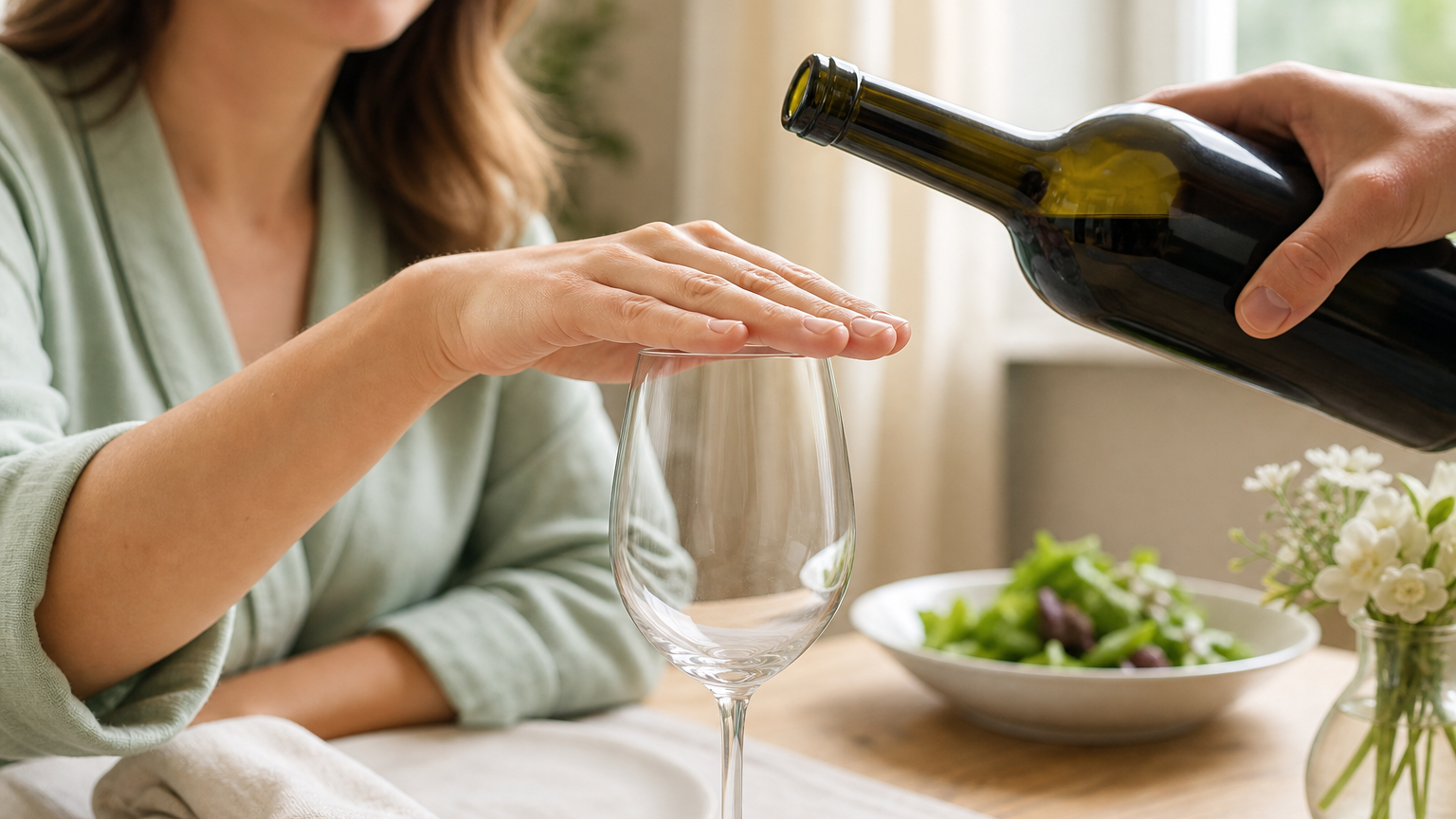
Keep restarting your plan to drink less? Here's why willpower fails at moderation, what the 5pm gap really is, and the structural fixes that actually hold.
Although it isn't a treatment for alcohol use disorder (AUD), the Reframe app can help you cut back on drinking gradually with the science-backed knowledge to empower you 100% of the way. Our proven program has helped millions of people around the world drink less and live more. And we want to help you get there, too!
The Reframe app equips you with the knowledge and skills you need to not only survive drinking less, but to thrive while you navigate the journey. Our daily research-backed readings teach you the neuroscience of alcohol, and our in-app Toolkit provides the resources and activities you need to navigate each challenge.
You'll meet millions of fellow Reframers in our 24/7 Forum chat and daily Zoom check-in meetings. Receive encouragement from people worldwide who know exactly what you're going through! You'll also have the opportunity to connect with our licensed Reframe coaches for more personalized guidance.
Plus, we're always introducing new features to optimize your in-app experience. We recently launched our in-app chatbot, Melody, powered by the world's most powerful AI technology. Melody is here to help as you adjust to a life with less (or no) alcohol.
And that's not all! Every month, we launch fun challenges, like Dry/Damp January, Mental Health May, and Outdoorsy June. You won't want to miss out on the chance to participate alongside fellow Reframers (or solo if that's more your thing!).
The Reframe app is free for 7 days, so you don't have anything to lose by trying it. Are you ready to feel empowered and discover life beyond alcohol? Then download our app through the App Store or Google Play today!
Let's talk honestly about the thing nobody puts in the plan: you already know how to cut back. You've done it. Maybe for nine days, maybe for three weeks. The question isn't whether you can drink less, it's why it keeps unraveling around the same point. The short version is that cutting back on drinking usually stops sticking because you're asking willpower to do a job it was never built for. Willpower is a limited, fatigue-prone resource that runs lowest at exactly the hour most people drink, while the drinking itself is an automatic, cue-triggered habit loop that fires before deliberation even starts. Moderation is also harder than quitting in one specific way: there's no bright line, so every single evening becomes a fresh negotiation. The fix isn't more discipline; it's building structure that decides for you in advance, which is the approach Reframe is designed around.
Here's the reframe that matters most before we get into the mechanics: repeated restarts are not a character report card. They're feedback about a system. If you keep making the same plan and it keeps breaking at 6:40pm on a Tuesday, the plan has a design flaw, not you. So let's find the flaw.
Self-control behaves like a resource you spend down over a day, and by evening there's not much left in the account. That's the plainest answer to why cutting back on drinking doesn't stick: the plan gets written by a rested brain and cashed by a depleted one. Experience-sampling research tracking people through their ordinary days found that desires occupy roughly half of waking life, and the ones that conflict with our other goals tend to provoke resistance with distinctly uneven success. Resisting isn't an occasional heroic act. It's a background tax you're paying all day.
Think of it as two different people sharing one calendar. Your morning self is well-slept, caffeinated, and optimistic. She looks at the week, decides three drinks total sounds reasonable, and writes it down with real conviction. Your 7pm self has answered 60 emails, sat in traffic, negotiated bedtime with a seven-year-old, and been mildly disrespected by a colleague named Greg. Same body, wildly different regulatory capacity. The morning self makes the commitment. The 7pm self has to fund it.
Whatever the ongoing lab debates about ego depletion conclude, the lived version of this is hard to argue with. You've spent the day regulating: your tone, your attention, your appetite, your face during a meeting. Fatigue and accumulated stress are widely considered to make resistance harder, and they don't arrive politely spaced out. They stack up in the same two-hour window.
The try-harder theory has a fatal structural problem: it loads all the effort onto the exact moment when you have the least available. It's like scheduling your hardest workout for the end of a double shift and then calling yourself lazy when you skip it.
People who sustain a change over months usually aren't out-resisting anyone. They've arranged their evenings so there's less to resist. This is the whole thesis of the post, and everything below is just implementation. If you're noticing a pattern of decision load draining you before the drink is even poured, alcohol decision fatigue is worth understanding as its own mechanism.
The 5pm gap is the unstructured stretch between the end of the workday and dinner, when the day's demands stop but nothing has replaced them. It's not a clinical term, just a useful name for the hour where most cut-back plans quietly die. Demands drop, energy is low, the house is full of cues, and the decision about the evening has not been made yet. Into that vacuum walks the oldest, smoothest habit you own.
Most people describe this hour as wanting a drink. What's usually happening is wanting a transition. Alcohol is functioning as punctuation, the period at the end of the working day, the thing that tells your nervous system it's allowed to stop. That's a real need, and it's a reasonable one. The problem is that a pour is a very fast, very available way to mark a boundary, so it gets the job by default.
Notice how rarely a cut-back plan addresses this. It'll specify a number ("two on weeknights") and say nothing whatsoever about what occupies 5:15 to 6:30. You've capped the outcome without touching the mechanism. Meanwhile, everything in the environment is voting the other way: the fridge, the cabinet, the specific chair, the sound of a partner opening something in the kitchen.
NIAAA's own cut-down guidance leans structural rather than motivational, suggesting you have a plan for handling urges when a trigger hits — like switching into a distracting, alcohol-free activity — along with keeping little or no alcohol at home, setting specific alcohol-free days, and pacing drinks. The through line is pre-decision. You're not supposed to be figuring this out at 5:40 with your shoes still on.
Concrete gap-fillers that people actually stick with: walk the block before you go inside, so the transition happens outside the house. Shower and change clothes the moment you get home. Cook with music on and make the cooking itself the ritual. Run a 20-minute errand. Move your workout to that slot permanently. None of these require you to want a drink less. They just get to the hour first. If you want more options, we've collected ways to replace alcohol in your evening routine that go beyond "drink sparkling water and hope."
In one specific and often underappreciated way, moderation is the harder engineering problem. Abstinence hands you a bright-line rule: one decision, made once, applied everywhere, with no in-the-moment arithmetic. Moderation hands you a fresh judgment call at every single occasion, and those calls get made while you're tired, while friends are ordering, and sometimes after a drink has already softened the edges of your reasoning.
Bright lines are cognitively cheap. "I don't drink" ends the conversation with yourself in under a second. "I'm having two" starts a negotiation that runs all evening: was that pour two ounces over? does a beer at the game count? is this a special occasion? Ambiguity is what the habit needs to operate, and moderation plans are full of it.
This is not an argument for quitting. Plenty of people moderate successfully for years. It's an argument for giving moderation its own bright lines instead of leaving it as a vibe. Specific counts, specific nights, pre-poured servings, a hard stop time. Reframe's mindful drinking program is built around exactly this kind of structured moderation, and if you're deciding between approaches, our comparison of alcohol moderation vs. abstinence lays out the tradeoffs honestly.
Here's the part that makes "I'll just decide in the moment" such a fragile plan: after a drink, the person making the call about the next one isn't quite the person who set the limit. Priorities shift, the future gets a little more abstract, and the case for one more becomes remarkably persuasive. You didn't lose your resolve. You handed the steering wheel to a slightly different driver.
Which means the only reliable place to enforce a limit is before the first drink. Every structural tool in the next section is really just a way of moving the decision upstream to where your judgment is intact.
Habits run on a loop: a cue fires, a routine executes, a reward lands. Once a habit is mature, the routine stops waiting for permission. You're not deciding to pour; you're noticing that you've poured. Intentions live in the slow, effortful part of your thinking. Cues act on the fast, automatic part. Intention loses on speed alone.
Cues come in five common flavors: time (the clock hitting six), place (the kitchen island, the back deck), people (one specific friend, one specific colleague), emotional state (irritation, boredom, relief), and preceding action (closing the laptop, pulling into the driveway). Most people have two or three that do the heavy lifting and never name them out loud.
A study combining lab and field measures in people being treated for alcohol dependence found that everyday alcohol cues reliably triggered measurable craving, and that participants reported substantial daily exposure to those cues in their normal environment. That sample was people in treatment, so the transfer to moderate drinkers is a reasonable inference rather than a proven one, but the direction is intuitive. Cues are everywhere and they work.
NIAAA frames urges as a normal part of changing your drinking and notes plainly that it isn't possible to avoid every tempting situation or block every internal trigger, which is why a range of strategies beats a single act of resistance. Identify your top three cues and you've got three intervention points that require no discipline at all. If you want a structured starting point, the What Type of Drinker Are You? quiz is a fast way to map your own pattern, and the habit loop explainer goes deeper on the mechanics.
Counterintuitive but common: people who hold the line beautifully at a restaurant fall apart on a Wednesday in their own kitchen. Cue density explains a lot of it. The bar is novel and socially observed. Home is where you have performed this exact sequence several hundred times, in the same chair, holding the same glass, at the same hour. Repetition is what builds automaticity, and your house has all the reps.
This is the part that answers "why cutting back on drinking doesn't stick" with something you can actually build. Every tool below shares one property: it works whether or not you feel like cooperating that evening.
Don't stock what you don't want to negotiate with. That's the whole principle, and it's also NIAAA's first practical tip. Beyond inventory, small friction changes punch above their weight: move the glassware to an inconvenient shelf, put a good non-alcoholic option at eye level in the fridge, sit in a different chair, eat dinner earlier. You're not testing yourself. You're removing the test.
Deciding in advance exactly when, where, and how you'll act is one of the best-supported tricks in behavioral science. As one review summarizes, earlier meta-analytic work by Gollwitzer and Sheeran found implementation intentions improved goal attainment with a medium-to-large effect size across achievement, relationship, and health goals (Cohen's d = 0.65). The mechanism matters as much as the effect size: an if-then plan pre-links a specific cue to a specific response, so the behavior gets triggered by the situation rather than launched by effort. That's you outsourcing the 7pm decision to the 9am version of yourself.
Write them in this exact shape: "If I walk in the door at six, then I change clothes and walk the block before anything else." "If someone offers a second round, then I order a soda water first." Specificity is the active ingredient. "I'll be more mindful" is not an if-then plan; it's a mood.
Tell one person your number for the week. Order first at the table so you're not anchoring off whatever the group does. Set the count before you leave the house, not in the Uber. Buy single servings instead of multipacks so the second one requires a trip, not a reach.
Pacing tools work for the same reason: they don't ask you to resist anything mid-evening. Alternate alcoholic and non-alcoholic drinks (zebra striping), put an hour between drinks, order your next round as a soda by default. NIAAA's guidance includes spacing drinks and setting specific alcohol-free days each week, which is essentially the same logic applied to the calendar. Our guide to how to drink less at restaurants has scripts for the social version of this.
Logging every drink converts a vague sense of "not that much" into a number you can respond to. Across behavior-change interventions, prompting people to self-monitor their own behavior is one of the techniques most consistently linked to better outcomes. That evidence base comes from eating and physical activity research rather than alcohol specifically, so treat the transfer as a strong rationale rather than a settled alcohol-specific finding. What tracking definitely does is show you your real pattern: which days, which hours, which company. That's the raw material for every structural change above. Tracking your drinking tends to be the least glamorous and most load-bearing habit in the whole system.
Some urges get through. Urge surfing comes out of mindfulness-based relapse prevention, an approach designed to change how you respond to craving and difficult emotional states rather than to suppress them, and it teaches you to observe an urge without fighting it or acting on it. Picture the urge as a wave you're riding rather than a wall you're pushing. Name it, watch it change, and let it do what waves do. We won't put a stopwatch on it, and no source promises a fixed duration, but the point is the same: an urge is a passing state rather than a permanent one.
Treat it as data, not a verdict. Four questions, asked without drama: what was the cue, what hour did it start, who was there, and what state did you arrive in? Those answers point at a variable you can change. "I'll be better next time" points at nothing.
The most expensive part of an overshoot is almost never the overshoot. It's the story afterward. In Marlatt's relapse-prevention model, the abstinence violation effect describes how a person's negative cognitive and emotional reaction to a single slip, rather than the slip itself, is what pushes a lapse toward a fuller return to old patterns. "I already blew it" becomes "so the week is ruined," and the week costs you far more than Thursday did.
So restart at the next drinking occasion, not next Monday. Keep the gap in hours rather than days. NIAAA puts it plainly: setbacks are common and each attempt brings you closer, and most people who drink heavily, including those with alcohol use disorder, can cut back significantly or quit. Harvard Health, summarizing the same guidance, notes that most people who successfully cut down or stop do so only after several attempts. Several attempts is the normal shape of this, not the exception.
Then change one thing. Not the whole plan, one variable. Move the drink home from the couch to the table. Shift the walk to before you enter the house. Buy four instead of twelve. Renewing the same promise with more intensity is the one move guaranteed to produce the same result. And grade the trend line across weeks, not individual nights; a month with two overshoots and eighteen quiet evenings is a good month, even though the two nights are what you'll remember.
One honest caveat, and only one. If the overshoots are constant, if drinking feels genuinely outside your control, or if you notice withdrawal symptoms like shaking, sweating, or nausea when you go without, that's a medical conversation rather than a willpower problem, and a clinician can help you change things safely. Not a judgment, just the right specialist for the job. If you're unsure where you land, the Am I Drinking Too Much? quiz is a low-stakes place to start.
Longer than 21 days and shorter than forever. Habit-formation research points to a range measured in weeks to months rather than a tidy number, and behaviors that are heavily cued (evening, home, social, emotional) sit toward the longer end of that range. Anyone promising you a fixed deadline is selling something.
Expect the first two to three weeks to feel effortful, because during that stretch you're actively overriding cues rather than having replaced them. That's not a sign it isn't working; it's what the work feels like. What speeds things up is consistency of the pairing: the same replacement, at the same trigger point, most days. Perfection isn't the lever. Repetition is.
Watch for early wins that aren't drink counts, because those arrive first. Sleeping through the night. Mornings without fog. Less mental airtime spent negotiating with yourself about the evening, which is the single most underrated benefit of learning how to drink less consistently. Progress looks like the decision getting quieter, not the craving vanishing overnight.
Reassess monthly. The structure that carried month one often doesn't fit month three, because by then your cues have changed, the novelty has worn off, and the season is different. If you'd rather not run all of this on sticky notes and good intentions, download Reframe and let the tracking, the daily program, and the community carry some of the load for you.
Let's talk honestly about the thing nobody puts in the plan: you already know how to cut back. You've done it. Maybe for nine days, maybe for three weeks. The question isn't whether you can drink less, it's why it keeps unraveling around the same point. The short version is that cutting back on drinking usually stops sticking because you're asking willpower to do a job it was never built for. Willpower is a limited, fatigue-prone resource that runs lowest at exactly the hour most people drink, while the drinking itself is an automatic, cue-triggered habit loop that fires before deliberation even starts. Moderation is also harder than quitting in one specific way: there's no bright line, so every single evening becomes a fresh negotiation. The fix isn't more discipline; it's building structure that decides for you in advance, which is the approach Reframe is designed around.
Here's the reframe that matters most before we get into the mechanics: repeated restarts are not a character report card. They're feedback about a system. If you keep making the same plan and it keeps breaking at 6:40pm on a Tuesday, the plan has a design flaw, not you. So let's find the flaw.
Self-control behaves like a resource you spend down over a day, and by evening there's not much left in the account. That's the plainest answer to why cutting back on drinking doesn't stick: the plan gets written by a rested brain and cashed by a depleted one. Experience-sampling research tracking people through their ordinary days found that desires occupy roughly half of waking life, and the ones that conflict with our other goals tend to provoke resistance with distinctly uneven success. Resisting isn't an occasional heroic act. It's a background tax you're paying all day.
Think of it as two different people sharing one calendar. Your morning self is well-slept, caffeinated, and optimistic. She looks at the week, decides three drinks total sounds reasonable, and writes it down with real conviction. Your 7pm self has answered 60 emails, sat in traffic, negotiated bedtime with a seven-year-old, and been mildly disrespected by a colleague named Greg. Same body, wildly different regulatory capacity. The morning self makes the commitment. The 7pm self has to fund it.
Whatever the ongoing lab debates about ego depletion conclude, the lived version of this is hard to argue with. You've spent the day regulating: your tone, your attention, your appetite, your face during a meeting. Fatigue and accumulated stress are widely considered to make resistance harder, and they don't arrive politely spaced out. They stack up in the same two-hour window.
The try-harder theory has a fatal structural problem: it loads all the effort onto the exact moment when you have the least available. It's like scheduling your hardest workout for the end of a double shift and then calling yourself lazy when you skip it.
People who sustain a change over months usually aren't out-resisting anyone. They've arranged their evenings so there's less to resist. This is the whole thesis of the post, and everything below is just implementation. If you're noticing a pattern of decision load draining you before the drink is even poured, alcohol decision fatigue is worth understanding as its own mechanism.
The 5pm gap is the unstructured stretch between the end of the workday and dinner, when the day's demands stop but nothing has replaced them. It's not a clinical term, just a useful name for the hour where most cut-back plans quietly die. Demands drop, energy is low, the house is full of cues, and the decision about the evening has not been made yet. Into that vacuum walks the oldest, smoothest habit you own.
Most people describe this hour as wanting a drink. What's usually happening is wanting a transition. Alcohol is functioning as punctuation, the period at the end of the working day, the thing that tells your nervous system it's allowed to stop. That's a real need, and it's a reasonable one. The problem is that a pour is a very fast, very available way to mark a boundary, so it gets the job by default.
Notice how rarely a cut-back plan addresses this. It'll specify a number ("two on weeknights") and say nothing whatsoever about what occupies 5:15 to 6:30. You've capped the outcome without touching the mechanism. Meanwhile, everything in the environment is voting the other way: the fridge, the cabinet, the specific chair, the sound of a partner opening something in the kitchen.
NIAAA's own cut-down guidance leans structural rather than motivational, suggesting you have a plan for handling urges when a trigger hits — like switching into a distracting, alcohol-free activity — along with keeping little or no alcohol at home, setting specific alcohol-free days, and pacing drinks. The through line is pre-decision. You're not supposed to be figuring this out at 5:40 with your shoes still on.
Concrete gap-fillers that people actually stick with: walk the block before you go inside, so the transition happens outside the house. Shower and change clothes the moment you get home. Cook with music on and make the cooking itself the ritual. Run a 20-minute errand. Move your workout to that slot permanently. None of these require you to want a drink less. They just get to the hour first. If you want more options, we've collected ways to replace alcohol in your evening routine that go beyond "drink sparkling water and hope."
In one specific and often underappreciated way, moderation is the harder engineering problem. Abstinence hands you a bright-line rule: one decision, made once, applied everywhere, with no in-the-moment arithmetic. Moderation hands you a fresh judgment call at every single occasion, and those calls get made while you're tired, while friends are ordering, and sometimes after a drink has already softened the edges of your reasoning.
Bright lines are cognitively cheap. "I don't drink" ends the conversation with yourself in under a second. "I'm having two" starts a negotiation that runs all evening: was that pour two ounces over? does a beer at the game count? is this a special occasion? Ambiguity is what the habit needs to operate, and moderation plans are full of it.
This is not an argument for quitting. Plenty of people moderate successfully for years. It's an argument for giving moderation its own bright lines instead of leaving it as a vibe. Specific counts, specific nights, pre-poured servings, a hard stop time. Reframe's mindful drinking program is built around exactly this kind of structured moderation, and if you're deciding between approaches, our comparison of alcohol moderation vs. abstinence lays out the tradeoffs honestly.
Here's the part that makes "I'll just decide in the moment" such a fragile plan: after a drink, the person making the call about the next one isn't quite the person who set the limit. Priorities shift, the future gets a little more abstract, and the case for one more becomes remarkably persuasive. You didn't lose your resolve. You handed the steering wheel to a slightly different driver.
Which means the only reliable place to enforce a limit is before the first drink. Every structural tool in the next section is really just a way of moving the decision upstream to where your judgment is intact.
Habits run on a loop: a cue fires, a routine executes, a reward lands. Once a habit is mature, the routine stops waiting for permission. You're not deciding to pour; you're noticing that you've poured. Intentions live in the slow, effortful part of your thinking. Cues act on the fast, automatic part. Intention loses on speed alone.
Cues come in five common flavors: time (the clock hitting six), place (the kitchen island, the back deck), people (one specific friend, one specific colleague), emotional state (irritation, boredom, relief), and preceding action (closing the laptop, pulling into the driveway). Most people have two or three that do the heavy lifting and never name them out loud.
A study combining lab and field measures in people being treated for alcohol dependence found that everyday alcohol cues reliably triggered measurable craving, and that participants reported substantial daily exposure to those cues in their normal environment. That sample was people in treatment, so the transfer to moderate drinkers is a reasonable inference rather than a proven one, but the direction is intuitive. Cues are everywhere and they work.
NIAAA frames urges as a normal part of changing your drinking and notes plainly that it isn't possible to avoid every tempting situation or block every internal trigger, which is why a range of strategies beats a single act of resistance. Identify your top three cues and you've got three intervention points that require no discipline at all. If you want a structured starting point, the What Type of Drinker Are You? quiz is a fast way to map your own pattern, and the habit loop explainer goes deeper on the mechanics.
Counterintuitive but common: people who hold the line beautifully at a restaurant fall apart on a Wednesday in their own kitchen. Cue density explains a lot of it. The bar is novel and socially observed. Home is where you have performed this exact sequence several hundred times, in the same chair, holding the same glass, at the same hour. Repetition is what builds automaticity, and your house has all the reps.
This is the part that answers "why cutting back on drinking doesn't stick" with something you can actually build. Every tool below shares one property: it works whether or not you feel like cooperating that evening.
Don't stock what you don't want to negotiate with. That's the whole principle, and it's also NIAAA's first practical tip. Beyond inventory, small friction changes punch above their weight: move the glassware to an inconvenient shelf, put a good non-alcoholic option at eye level in the fridge, sit in a different chair, eat dinner earlier. You're not testing yourself. You're removing the test.
Deciding in advance exactly when, where, and how you'll act is one of the best-supported tricks in behavioral science. As one review summarizes, earlier meta-analytic work by Gollwitzer and Sheeran found implementation intentions improved goal attainment with a medium-to-large effect size across achievement, relationship, and health goals (Cohen's d = 0.65). The mechanism matters as much as the effect size: an if-then plan pre-links a specific cue to a specific response, so the behavior gets triggered by the situation rather than launched by effort. That's you outsourcing the 7pm decision to the 9am version of yourself.
Write them in this exact shape: "If I walk in the door at six, then I change clothes and walk the block before anything else." "If someone offers a second round, then I order a soda water first." Specificity is the active ingredient. "I'll be more mindful" is not an if-then plan; it's a mood.
Tell one person your number for the week. Order first at the table so you're not anchoring off whatever the group does. Set the count before you leave the house, not in the Uber. Buy single servings instead of multipacks so the second one requires a trip, not a reach.
Pacing tools work for the same reason: they don't ask you to resist anything mid-evening. Alternate alcoholic and non-alcoholic drinks (zebra striping), put an hour between drinks, order your next round as a soda by default. NIAAA's guidance includes spacing drinks and setting specific alcohol-free days each week, which is essentially the same logic applied to the calendar. Our guide to how to drink less at restaurants has scripts for the social version of this.
Logging every drink converts a vague sense of "not that much" into a number you can respond to. Across behavior-change interventions, prompting people to self-monitor their own behavior is one of the techniques most consistently linked to better outcomes. That evidence base comes from eating and physical activity research rather than alcohol specifically, so treat the transfer as a strong rationale rather than a settled alcohol-specific finding. What tracking definitely does is show you your real pattern: which days, which hours, which company. That's the raw material for every structural change above. Tracking your drinking tends to be the least glamorous and most load-bearing habit in the whole system.
Some urges get through. Urge surfing comes out of mindfulness-based relapse prevention, an approach designed to change how you respond to craving and difficult emotional states rather than to suppress them, and it teaches you to observe an urge without fighting it or acting on it. Picture the urge as a wave you're riding rather than a wall you're pushing. Name it, watch it change, and let it do what waves do. We won't put a stopwatch on it, and no source promises a fixed duration, but the point is the same: an urge is a passing state rather than a permanent one.
Treat it as data, not a verdict. Four questions, asked without drama: what was the cue, what hour did it start, who was there, and what state did you arrive in? Those answers point at a variable you can change. "I'll be better next time" points at nothing.
The most expensive part of an overshoot is almost never the overshoot. It's the story afterward. In Marlatt's relapse-prevention model, the abstinence violation effect describes how a person's negative cognitive and emotional reaction to a single slip, rather than the slip itself, is what pushes a lapse toward a fuller return to old patterns. "I already blew it" becomes "so the week is ruined," and the week costs you far more than Thursday did.
So restart at the next drinking occasion, not next Monday. Keep the gap in hours rather than days. NIAAA puts it plainly: setbacks are common and each attempt brings you closer, and most people who drink heavily, including those with alcohol use disorder, can cut back significantly or quit. Harvard Health, summarizing the same guidance, notes that most people who successfully cut down or stop do so only after several attempts. Several attempts is the normal shape of this, not the exception.
Then change one thing. Not the whole plan, one variable. Move the drink home from the couch to the table. Shift the walk to before you enter the house. Buy four instead of twelve. Renewing the same promise with more intensity is the one move guaranteed to produce the same result. And grade the trend line across weeks, not individual nights; a month with two overshoots and eighteen quiet evenings is a good month, even though the two nights are what you'll remember.
One honest caveat, and only one. If the overshoots are constant, if drinking feels genuinely outside your control, or if you notice withdrawal symptoms like shaking, sweating, or nausea when you go without, that's a medical conversation rather than a willpower problem, and a clinician can help you change things safely. Not a judgment, just the right specialist for the job. If you're unsure where you land, the Am I Drinking Too Much? quiz is a low-stakes place to start.
Longer than 21 days and shorter than forever. Habit-formation research points to a range measured in weeks to months rather than a tidy number, and behaviors that are heavily cued (evening, home, social, emotional) sit toward the longer end of that range. Anyone promising you a fixed deadline is selling something.
Expect the first two to three weeks to feel effortful, because during that stretch you're actively overriding cues rather than having replaced them. That's not a sign it isn't working; it's what the work feels like. What speeds things up is consistency of the pairing: the same replacement, at the same trigger point, most days. Perfection isn't the lever. Repetition is.
Watch for early wins that aren't drink counts, because those arrive first. Sleeping through the night. Mornings without fog. Less mental airtime spent negotiating with yourself about the evening, which is the single most underrated benefit of learning how to drink less consistently. Progress looks like the decision getting quieter, not the craving vanishing overnight.
Reassess monthly. The structure that carried month one often doesn't fit month three, because by then your cues have changed, the novelty has worn off, and the season is different. If you'd rather not run all of this on sticky notes and good intentions, download Reframe and let the tracking, the daily program, and the community carry some of the load for you.

How sleep changes after you quit drinking, week by week: REM rebound, vivid dreams, early insomnia, and when deep sleep and sleep onset finally normalize.
Although it isn't a treatment for alcohol use disorder (AUD), the Reframe app can help you cut back on drinking gradually with the science-backed knowledge to empower you 100% of the way. Our proven program has helped millions of people around the world drink less and live more. And we want to help you get there, too!
The Reframe app equips you with the knowledge and skills you need to not only survive drinking less, but to thrive while you navigate the journey. Our daily research-backed readings teach you the neuroscience of alcohol, and our in-app Toolkit provides the resources and activities you need to navigate each challenge.
You'll meet millions of fellow Reframers in our 24/7 Forum chat and daily Zoom check-in meetings. Receive encouragement from people worldwide who know exactly what you're going through! You'll also have the opportunity to connect with our licensed Reframe coaches for more personalized guidance.
Plus, we're always introducing new features to optimize your in-app experience. We recently launched our in-app chatbot, Melody, powered by the world's most powerful AI technology. Melody is here to help as you adjust to a life with less (or no) alcohol.
And that's not all! Every month, we launch fun challenges, like Dry/Damp January, Mental Health May, and Outdoorsy June. You won't want to miss out on the chance to participate alongside fellow Reframers (or solo if that's more your thing!).
The Reframe app is free for 7 days, so you don't have anything to lose by trying it. Are you ready to feel empowered and discover life beyond alcohol? Then download our app through the App Store or Google Play today!
Sleep after quitting alcohol usually gets worse before it gets better: the first three to seven nights often bring trouble falling asleep, fragmented nights, and unusually vivid dreams as your brain rebounds from alcohol's suppression of REM sleep. Most people notice they fall asleep faster and wake less often somewhere in weeks two to four, while deep slow wave sleep, total sleep time, and next-day energy tend to keep consolidating over months two and three. The reason is simple biology: alcohol artificially sedates the brain and flattens sleep architecture, so when it leaves, the nervous system overcorrects before it re-learns a normal sleep cycle. Reframe's daily program includes sleep tracking, wind-down tools, and craving support for exactly this stretch, when better sleep is coming but hasn't arrived yet.
Here is the frustrating part nobody warns you about. You stop drinking partly because you are tired of waking up at 4 a.m. feeling like a dried-out sponge, and then for the first week or so, your sleep gets worse. You lie there wide awake. You have dreams so cinematic you wake up rattled. And a small voice starts whispering that maybe the wine was helping after all.
It wasn't. What you are experiencing is a nervous system recalibrating after months or years of chemical interference, and it follows a reasonably predictable arc. Let's walk through that arc week by week, with honest ranges instead of false promises, so you know roughly where you are and what's likely coming next.
Short version: your brain adapted to a sedative, and now it has to un-adapt. Alcohol was doing part of the work of shutting your system down at night. Remove it and the calming machinery is temporarily under-powered while the alerting machinery is still cranked up. That mismatch shows up as tossing, turning, and early waking, and it fades as the balance resets.
The mechanism is well described. Chronic heavy drinking reduces the function of the brain's calming GABA system while excitatory glutamate signaling stays elevated, and research on alcohol use disorder and sleep links that imbalance to longer sleep latency, more time awake during the night, less slow wave sleep, and altered REM in people who have stopped drinking. In plain terms: the brake pedal got worn down while the gas pedal kept working fine.
It helps to know that the sleep you had while drinking was not a neutral baseline you are now falling below. It was already distorted. A systematic review and meta-analysis of controlled studies in healthy adults found that even a low dose, roughly two standard drinks, delays the onset of REM sleep and shortens how much of it you get, with the disruption worsening as the dose rises. So "I only had a couple" still reshaped the architecture of the night.
Alcohol also front-loads sedation. You fall asleep fast, get a heavy first few hours, and then the second half of the night falls apart as your body metabolizes what you drank. Most people reading this recognize that pattern: dead asleep by 10:30, staring at the ceiling by 3:15. If you want the fuller picture of that nightly trade-off, we go deep on it in our guide to how alcohol worsens insomnia.
REM is the stage where most vivid dreaming happens, and alcohol had been suppressing it. When the suppression lifts, REM comes back with interest. One study found that time spent in REM sleep was reduced during acute withdrawal and returned to baseline levels during longer-term abstinence.
Experientially, REM rebound after quitting alcohol feels like your dream life switched from standard definition to IMAX overnight. More dreams, longer dreams, weirder dreams, and much sharper recall of all of them. It is unsettling, it is temporary, and it is arguably the clearest evidence you'll get that something was being held down before.
Expect the first three nights to be light, broken, and short on deep sleep. Falling asleep typically takes longer because you removed the thing you were using to knock yourself out. Waking up once or several times in the small hours is common, as are restlessness, night sweats, and a mind that will not stop generating to-do lists at 3 a.m.
Total sleep time often dips in this window even as the underlying quality measures are already beginning to shift. That is a genuinely annoying combination: fewer hours, and the hours you get feel thin. Some people also notice their heart seems to be running a little fast at night, or that they are unusually warm.
Vivid dreams can start as early as night one or two. The rebound does not wait politely for week two.
One important line to draw here. Ordinary rough sleep is one thing. Sleeplessness that arrives alongside shaking, heavy sweating, a racing heart, nausea, agitation, or confusion is a different thing entirely: it points toward alcohol withdrawal, and per clinical guidance on withdrawal timing, symptoms for most people with mild to moderate withdrawal peak and start easing somewhere in the 24 to 72 hour range, with more severe presentations carrying real risk in that same window. Anyone who has been drinking heavily and daily should talk with a clinician before stopping, because withdrawal can be dangerous and there are safe ways to manage it.
Because REM sleep is making up for lost time. Alcohol had been pushing REM later and cutting it shorter, especially in the first half of the night. Without it, REM shows up earlier and lasts longer. Add in more awakenings, which means you are more likely to surface directly out of a dream and actually remember it, and you get the full effect: vivid dreams after quitting alcohol that feel brand new, even though the dreaming machinery is simply working again.
That last point matters. You are not suddenly dreaming for the first time in years. You are recalling far more of what your brain was always trying to do. The intensity typically tapers over roughly one to four weeks as REM redistributes into a more normal share of the night, though the exact pace varies a lot from person to person.
Many people report a specific and deeply irritating variant: dreaming they drank. You wake up convinced you blew it, sometimes with real guilt attached, and it takes a few seconds to realize nothing happened.
We want to be careful here, because this is a place where the internet overstates things in both directions. There is no solid research we can point to on how common these dreams are or what they predict. What we can say from working with a lot of people in their first alcohol-free months is that these dreams come up constantly in conversation, they show up most in the early weeks, and treating them as a verdict on your future is not useful. A dream is your brain rehearsing an old, heavily practiced script while REM runs hot. Our post on what drinking dreams mean in sobriety unpacks that more.
A practical trick: keep a notebook by the bed and write two lines about the dream when you wake. Naming it tends to shrink it. It also gives you something to look back at in a month, when the dreams have quieted down and you can see the phase for what it was.
Days three through seven are, for many people with a heavier drinking history, the roughest patch. Sleep onset is still stubborn, night waking is still happening, and daytime tiredness can be worse than you expected, because fragmented nights plus a body spending energy on adjustment is a demanding combination.
But things do start moving inside week one. Middle-of-the-night wake-ups often get shorter even while falling asleep is still hard. And plenty of people, or more often their partners, notice quieter nights early on. That tracks with the fact that alcohol relaxes the muscles of the upper airway; clinicians often note that it worsens snoring and breathing interruptions, so removing it tends to help. We cover that connection in more depth in our piece on why you snore after drinking alcohol.
You cannot force sleep, but you can stop fighting it. These are the highest-yield moves for this specific stretch:
That's the concentrated version. If you want the full toolkit, our guide to improving sleep without alcohol goes tactic by tactic, and Reframe's mindful drinking program builds these into a daily structure so you're not white-knuckling it from memory at 11 p.m.
Weeks two through four are where most people report the first unmistakable turn. Falling asleep starts taking minutes instead of an hour. The 3 a.m. wake-up either stops happening or stops lasting. Sleep becomes more continuous, which is why the same seven hours suddenly feel more restorative than they did in week one.
Two things usually improve in a specific order. Mornings get better before nights do. Waking up without a dry mouth, a low-grade headache, or that vague sense of dread is frequently the first win people notice, and it arrives before the nights themselves feel fully normal. Meanwhile deep sleep percentage starts climbing and REM redistributes, so the dreams calm down from feature film to something closer to background noise.
The honest caveat, which is the whole point of talking in ranges: this is a typical pattern, not a schedule. The published evidence supports that insomnia is very common in early recovery and, in a review of insomnia in people treated for alcohol dependence, can persist for weeks to months after the last drink. That research comes from a treatment population, so it likely overstates the difficulty for someone who was drinking moderately, but it makes the key point: a few rough weeks is expected, not evidence that something has gone wrong.
Progress also zigzags. You will have a great run of four nights and then one terrible one, usually after a stressful day or a late meal or nothing identifiable at all. A bad night in week three does not put you back at day one. The trend line is what matters, which is one reason tracking helps more than remembering does. Our sleep-focused piece on sleeping better without alcohol is a good companion for this stage.
By months two and three, the dominant word people use is predictable. Consistent time to fall asleep, fewer awakenings, steadier total sleep time night to night. Deep slow wave sleep and REM tend to settle into a more normal balance, and the way you notice that is usually not through data but through daytime life: steadier energy, a less volatile mood, sharper focus in the late afternoon.
People using wearables or apps often report that their own numbers drift in a favorable direction across this window, with more consistent stage patterns night to night. Treat that as what users commonly observe in their own tracker data rather than as a research finding, and treat your own trend as more meaningful than any single night's score. If you like watching the broader picture change, our timeline of what happens when you quit drinking maps the non-sleep changes on a similar arc.
Two realistic caveats. First, timelines vary with drinking history, age, medications, stress load, and whether you have an underlying sleep disorder. The arc is reliable even when the dates are not. Second, and this one catches people off guard: long-standing sleep problems do not vanish just because alcohol did. If you had insomnia, sleep apnea, a shift-work schedule, or an anxiety disorder before you started drinking heavily, those are still on the table and may need their own treatment.
Start by ruling out the ordinary saboteurs, because they are more often the culprit than anything exotic. Caffeine creeping later in the day. Screens in bed. A wildly irregular schedule. Hard evening workouts. Long afternoon naps that steal your sleep pressure. A bedroom that's a couple of degrees too warm. Fix those first, give it two weeks, and see what's left.
If something is still left, consider what alcohol may have been covering up. Untreated insomnia. Sleep apnea, especially if there's loud snoring plus daytime sleepiness, or if someone has witnessed you stop breathing. Restless legs. Anxiety or depression that was being sedated rather than treated. This is a reasonable moment to take honest stock of the whole picture, and the Am I Drinking Too Much? quiz can be a useful, low-stakes starting point if you're also still working out where your drinking sits.
For persistent insomnia, the treatment with the strongest evidence is not a pill. Cognitive behavioral therapy for insomnia, usually shortened to CBT-I, is a structured short-term program that retrains your sleep patterns and scheduling, and the American College of Physicians recommends it as the initial treatment for chronic insomnia in adults, noting that sleep medications carry their own risks of adverse effects. It works better over the long run than sedation does, and it does not build dependence.
On that note: please talk to a healthcare provider before adding any sleep aid or supplement, prescription or over-the-counter. We are not going to name products or doses here, because the right answer depends on your history, your other medications, and what is actually driving the problem. Sedating sleep medications carry their own dependence risks, which is a particularly relevant consideration for someone who just stepped away from a sedative.
Bring data to that appointment. Track your nights for two weeks (bedtime, estimated sleep onset, awakenings, wake time, caffeine, alcohol, exercise, mood) so you arrive with patterns instead of impressions. Clinicians can do much more with two weeks of records than with "I think it's bad?"
Finally, the red flags that warrant medical attention rather than a better wind-down routine: withdrawal symptoms of any kind, severe insomnia dragging on for weeks, loud snoring paired with heavy daytime sleepiness, or a mood that is getting worse rather than better. Clinical reference material on withdrawal syndrome describes insomnia among the minor symptoms that follow alcohol cessation, and notes that withdrawal can progress to severe manifestations including hallucinations, seizures, and delirium. That is why sleeplessness accompanied by shaking, sweating, a racing heart, or confusion is generally treated as a reason to seek urgent medical care rather than sleep tips.
If you want structure through all of this rather than a pile of advice, you can download Reframe and use the daily program, sleep tracking, and 24/7 community to get through the stretch where better sleep is coming but hasn't arrived yet. Understanding the sleep after quitting alcohol timeline is the easy part. Getting through nights four through nine is the part where having support helps.
Sleep after quitting alcohol usually gets worse before it gets better: the first three to seven nights often bring trouble falling asleep, fragmented nights, and unusually vivid dreams as your brain rebounds from alcohol's suppression of REM sleep. Most people notice they fall asleep faster and wake less often somewhere in weeks two to four, while deep slow wave sleep, total sleep time, and next-day energy tend to keep consolidating over months two and three. The reason is simple biology: alcohol artificially sedates the brain and flattens sleep architecture, so when it leaves, the nervous system overcorrects before it re-learns a normal sleep cycle. Reframe's daily program includes sleep tracking, wind-down tools, and craving support for exactly this stretch, when better sleep is coming but hasn't arrived yet.
Here is the frustrating part nobody warns you about. You stop drinking partly because you are tired of waking up at 4 a.m. feeling like a dried-out sponge, and then for the first week or so, your sleep gets worse. You lie there wide awake. You have dreams so cinematic you wake up rattled. And a small voice starts whispering that maybe the wine was helping after all.
It wasn't. What you are experiencing is a nervous system recalibrating after months or years of chemical interference, and it follows a reasonably predictable arc. Let's walk through that arc week by week, with honest ranges instead of false promises, so you know roughly where you are and what's likely coming next.
Short version: your brain adapted to a sedative, and now it has to un-adapt. Alcohol was doing part of the work of shutting your system down at night. Remove it and the calming machinery is temporarily under-powered while the alerting machinery is still cranked up. That mismatch shows up as tossing, turning, and early waking, and it fades as the balance resets.
The mechanism is well described. Chronic heavy drinking reduces the function of the brain's calming GABA system while excitatory glutamate signaling stays elevated, and research on alcohol use disorder and sleep links that imbalance to longer sleep latency, more time awake during the night, less slow wave sleep, and altered REM in people who have stopped drinking. In plain terms: the brake pedal got worn down while the gas pedal kept working fine.
It helps to know that the sleep you had while drinking was not a neutral baseline you are now falling below. It was already distorted. A systematic review and meta-analysis of controlled studies in healthy adults found that even a low dose, roughly two standard drinks, delays the onset of REM sleep and shortens how much of it you get, with the disruption worsening as the dose rises. So "I only had a couple" still reshaped the architecture of the night.
Alcohol also front-loads sedation. You fall asleep fast, get a heavy first few hours, and then the second half of the night falls apart as your body metabolizes what you drank. Most people reading this recognize that pattern: dead asleep by 10:30, staring at the ceiling by 3:15. If you want the fuller picture of that nightly trade-off, we go deep on it in our guide to how alcohol worsens insomnia.
REM is the stage where most vivid dreaming happens, and alcohol had been suppressing it. When the suppression lifts, REM comes back with interest. One study found that time spent in REM sleep was reduced during acute withdrawal and returned to baseline levels during longer-term abstinence.
Experientially, REM rebound after quitting alcohol feels like your dream life switched from standard definition to IMAX overnight. More dreams, longer dreams, weirder dreams, and much sharper recall of all of them. It is unsettling, it is temporary, and it is arguably the clearest evidence you'll get that something was being held down before.
Expect the first three nights to be light, broken, and short on deep sleep. Falling asleep typically takes longer because you removed the thing you were using to knock yourself out. Waking up once or several times in the small hours is common, as are restlessness, night sweats, and a mind that will not stop generating to-do lists at 3 a.m.
Total sleep time often dips in this window even as the underlying quality measures are already beginning to shift. That is a genuinely annoying combination: fewer hours, and the hours you get feel thin. Some people also notice their heart seems to be running a little fast at night, or that they are unusually warm.
Vivid dreams can start as early as night one or two. The rebound does not wait politely for week two.
One important line to draw here. Ordinary rough sleep is one thing. Sleeplessness that arrives alongside shaking, heavy sweating, a racing heart, nausea, agitation, or confusion is a different thing entirely: it points toward alcohol withdrawal, and per clinical guidance on withdrawal timing, symptoms for most people with mild to moderate withdrawal peak and start easing somewhere in the 24 to 72 hour range, with more severe presentations carrying real risk in that same window. Anyone who has been drinking heavily and daily should talk with a clinician before stopping, because withdrawal can be dangerous and there are safe ways to manage it.
Because REM sleep is making up for lost time. Alcohol had been pushing REM later and cutting it shorter, especially in the first half of the night. Without it, REM shows up earlier and lasts longer. Add in more awakenings, which means you are more likely to surface directly out of a dream and actually remember it, and you get the full effect: vivid dreams after quitting alcohol that feel brand new, even though the dreaming machinery is simply working again.
That last point matters. You are not suddenly dreaming for the first time in years. You are recalling far more of what your brain was always trying to do. The intensity typically tapers over roughly one to four weeks as REM redistributes into a more normal share of the night, though the exact pace varies a lot from person to person.
Many people report a specific and deeply irritating variant: dreaming they drank. You wake up convinced you blew it, sometimes with real guilt attached, and it takes a few seconds to realize nothing happened.
We want to be careful here, because this is a place where the internet overstates things in both directions. There is no solid research we can point to on how common these dreams are or what they predict. What we can say from working with a lot of people in their first alcohol-free months is that these dreams come up constantly in conversation, they show up most in the early weeks, and treating them as a verdict on your future is not useful. A dream is your brain rehearsing an old, heavily practiced script while REM runs hot. Our post on what drinking dreams mean in sobriety unpacks that more.
A practical trick: keep a notebook by the bed and write two lines about the dream when you wake. Naming it tends to shrink it. It also gives you something to look back at in a month, when the dreams have quieted down and you can see the phase for what it was.
Days three through seven are, for many people with a heavier drinking history, the roughest patch. Sleep onset is still stubborn, night waking is still happening, and daytime tiredness can be worse than you expected, because fragmented nights plus a body spending energy on adjustment is a demanding combination.
But things do start moving inside week one. Middle-of-the-night wake-ups often get shorter even while falling asleep is still hard. And plenty of people, or more often their partners, notice quieter nights early on. That tracks with the fact that alcohol relaxes the muscles of the upper airway; clinicians often note that it worsens snoring and breathing interruptions, so removing it tends to help. We cover that connection in more depth in our piece on why you snore after drinking alcohol.
You cannot force sleep, but you can stop fighting it. These are the highest-yield moves for this specific stretch:
That's the concentrated version. If you want the full toolkit, our guide to improving sleep without alcohol goes tactic by tactic, and Reframe's mindful drinking program builds these into a daily structure so you're not white-knuckling it from memory at 11 p.m.
Weeks two through four are where most people report the first unmistakable turn. Falling asleep starts taking minutes instead of an hour. The 3 a.m. wake-up either stops happening or stops lasting. Sleep becomes more continuous, which is why the same seven hours suddenly feel more restorative than they did in week one.
Two things usually improve in a specific order. Mornings get better before nights do. Waking up without a dry mouth, a low-grade headache, or that vague sense of dread is frequently the first win people notice, and it arrives before the nights themselves feel fully normal. Meanwhile deep sleep percentage starts climbing and REM redistributes, so the dreams calm down from feature film to something closer to background noise.
The honest caveat, which is the whole point of talking in ranges: this is a typical pattern, not a schedule. The published evidence supports that insomnia is very common in early recovery and, in a review of insomnia in people treated for alcohol dependence, can persist for weeks to months after the last drink. That research comes from a treatment population, so it likely overstates the difficulty for someone who was drinking moderately, but it makes the key point: a few rough weeks is expected, not evidence that something has gone wrong.
Progress also zigzags. You will have a great run of four nights and then one terrible one, usually after a stressful day or a late meal or nothing identifiable at all. A bad night in week three does not put you back at day one. The trend line is what matters, which is one reason tracking helps more than remembering does. Our sleep-focused piece on sleeping better without alcohol is a good companion for this stage.
By months two and three, the dominant word people use is predictable. Consistent time to fall asleep, fewer awakenings, steadier total sleep time night to night. Deep slow wave sleep and REM tend to settle into a more normal balance, and the way you notice that is usually not through data but through daytime life: steadier energy, a less volatile mood, sharper focus in the late afternoon.
People using wearables or apps often report that their own numbers drift in a favorable direction across this window, with more consistent stage patterns night to night. Treat that as what users commonly observe in their own tracker data rather than as a research finding, and treat your own trend as more meaningful than any single night's score. If you like watching the broader picture change, our timeline of what happens when you quit drinking maps the non-sleep changes on a similar arc.
Two realistic caveats. First, timelines vary with drinking history, age, medications, stress load, and whether you have an underlying sleep disorder. The arc is reliable even when the dates are not. Second, and this one catches people off guard: long-standing sleep problems do not vanish just because alcohol did. If you had insomnia, sleep apnea, a shift-work schedule, or an anxiety disorder before you started drinking heavily, those are still on the table and may need their own treatment.
Start by ruling out the ordinary saboteurs, because they are more often the culprit than anything exotic. Caffeine creeping later in the day. Screens in bed. A wildly irregular schedule. Hard evening workouts. Long afternoon naps that steal your sleep pressure. A bedroom that's a couple of degrees too warm. Fix those first, give it two weeks, and see what's left.
If something is still left, consider what alcohol may have been covering up. Untreated insomnia. Sleep apnea, especially if there's loud snoring plus daytime sleepiness, or if someone has witnessed you stop breathing. Restless legs. Anxiety or depression that was being sedated rather than treated. This is a reasonable moment to take honest stock of the whole picture, and the Am I Drinking Too Much? quiz can be a useful, low-stakes starting point if you're also still working out where your drinking sits.
For persistent insomnia, the treatment with the strongest evidence is not a pill. Cognitive behavioral therapy for insomnia, usually shortened to CBT-I, is a structured short-term program that retrains your sleep patterns and scheduling, and the American College of Physicians recommends it as the initial treatment for chronic insomnia in adults, noting that sleep medications carry their own risks of adverse effects. It works better over the long run than sedation does, and it does not build dependence.
On that note: please talk to a healthcare provider before adding any sleep aid or supplement, prescription or over-the-counter. We are not going to name products or doses here, because the right answer depends on your history, your other medications, and what is actually driving the problem. Sedating sleep medications carry their own dependence risks, which is a particularly relevant consideration for someone who just stepped away from a sedative.
Bring data to that appointment. Track your nights for two weeks (bedtime, estimated sleep onset, awakenings, wake time, caffeine, alcohol, exercise, mood) so you arrive with patterns instead of impressions. Clinicians can do much more with two weeks of records than with "I think it's bad?"
Finally, the red flags that warrant medical attention rather than a better wind-down routine: withdrawal symptoms of any kind, severe insomnia dragging on for weeks, loud snoring paired with heavy daytime sleepiness, or a mood that is getting worse rather than better. Clinical reference material on withdrawal syndrome describes insomnia among the minor symptoms that follow alcohol cessation, and notes that withdrawal can progress to severe manifestations including hallucinations, seizures, and delirium. That is why sleeplessness accompanied by shaking, sweating, a racing heart, or confusion is generally treated as a reason to seek urgent medical care rather than sleep tips.
If you want structure through all of this rather than a pile of advice, you can download Reframe and use the daily program, sleep tracking, and 24/7 community to get through the stretch where better sleep is coming but hasn't arrived yet. Understanding the sleep after quitting alcohol timeline is the easy part. Getting through nights four through nine is the part where having support helps.

Sober September is a post-summer alcohol reset. See what a month off does for your sleep, liver, mood, and tolerance, and why fall timing makes it stick.
Although it isn't a treatment for alcohol use disorder (AUD), the Reframe app can help you cut back on drinking gradually with the science-backed knowledge to empower you 100% of the way. Our proven program has helped millions of people around the world drink less and live more. And we want to help you get there, too!
The Reframe app equips you with the knowledge and skills you need to not only survive drinking less, but to thrive while you navigate the journey. Our daily research-backed readings teach you the neuroscience of alcohol, and our in-app Toolkit provides the resources and activities you need to navigate each challenge.
You'll meet millions of fellow Reframers in our 24/7 Forum chat and daily Zoom check-in meetings. Receive encouragement from people worldwide who know exactly what you're going through! You'll also have the opportunity to connect with our licensed Reframe coaches for more personalized guidance.
Plus, we're always introducing new features to optimize your in-app experience. We recently launched our in-app chatbot, Melody, powered by the world's most powerful AI technology. Melody is here to help as you adjust to a life with less (or no) alcohol.
And that's not all! Every month, we launch fun challenges, like Dry/Damp January, Mental Health May, and Outdoorsy June. You won't want to miss out on the chance to participate alongside fellow Reframers (or solo if that's more your thing!).
The Reframe app is free for 7 days, so you don't have anything to lose by trying it. Are you ready to feel empowered and discover life beyond alcohol? Then download our app through the App Store or Google Play today!
Sober September is taking the month of September off alcohol as a reset after summer's heavier drinking season of barbecues, vacations, and patio nights. A month off gives your sleep, liver enzymes, mood, and alcohol tolerance real time to recover from a high-consumption stretch, and September's back-to-routine timing tends to make the change stick better than a mid-summer attempt. If you would rather build the habit than white-knuckle it, Reframe's mindful drinking tools help you notice patterns and design a reset that actually fits your life.
Let's be honest about how summer tends to go. Somewhere between the Memorial Day cookout and the last warm patio night, the drinks add up in a way they don't the rest of the year. That's not a personal failing, it's a season. And by the time September rolls around, a lot of us are quietly ready for a breather. Sober September is exactly that: a deliberate reset timed to land right when summer's steady stream of occasions finally slows down. It isn't about punishing yourself for a fun few months. It's about giving your body a stretch of calm to catch up on the recovery it hasn't had a chance to do since May.
Sober September is a voluntary month off alcohol, timed as a reset right after summer's peak drinking season. The whole appeal is the timing: you're recovering from a specific, identifiable high-consumption stretch rather than picking a random month to abstain. It's a personal choice, not a formal charity challenge, and a scaled-back or damp version absolutely counts.
Here's the thing that makes the "post-summer" part more than marketing. Alcohol use genuinely spikes in warm months. According to the University of Colorado Anschutz Medical Campus, clinical psychologist Joseph Schacht points to surveys, sales data, and hospital admissions all showing summer as the peak season, with one urine-test study finding people about 19% more likely to have consumed alcohol in July than in January. That pattern isn't new, either. A peer-reviewed seasonal analysis in the Journal of Studies on Alcohol found that, setting aside the December festive spike, drinking (and heavy drinking especially) runs highest in summer. So when we talk about a post-summer alcohol reset, we're talking about recovering from a real, measurable seasonal bump.
That's what separates this from a generic "month without booze." The barbecues, the vacations, the festivals, the long social calendars, the patio nights that turn into three rounds instead of one: summer stacks occasions on top of each other. September is when that calendar naturally exhales, which makes it a smart moment to let your body exhale too.
Reframe is firmly in the moderation camp here, so if a full dry month feels like too much, a scaled-back September still counts as a win. Some people go completely alcohol-free; others aim for a "damp" version with far fewer drinks. There's no all-or-nothing rule and no gold star for suffering. If you're not sure where your own summer landed you, a quick self-check with the Am I Drinking Too Much? quiz can help you set a goal that fits rather than one you copied from a headline.
The honest answer is that a month off tends to unfold as a trend of improvement, not a fixed calendar you can set your watch to. Your starting point, age, and health all move the timeline around. That said, there's a rough arc most people recognize, and it's worth walking through week by week so you know what to expect and don't quit on day four thinking nothing's happening.
The irony of week one is that sleep can actually get worse before it gets better. Alcohol makes you drowsy at first, but it undermines the quality of your rest, so your body has to relearn how to fall asleep without it. That's a mechanism worth understanding: a review summarized by Rheumatology Advisor reported that alcohol delays the onset of REM sleep (by roughly 18 minutes in the review's figures) in a dose-dependent way, which is why the "nightcap" is a lie your brain tells you. Once you clear the first few nights, deeper REM tends to return, and by week two many people notice steadier mornings and more even energy. Reframe has a fuller breakdown in its guide to better REM sleep in one week if you want the mechanics.
Your liver spends summer processing a cumulative load, and a break lets it catch up. In a controlled study published in BMJ Open, moderate-to-heavy drinkers who abstained for a month showed improvements in liver function, insulin resistance, weight, and blood pressure, while a comparison group who kept drinking did not. On the enzyme side, a small study in Alcohol and Alcoholism found that one month of abstinence significantly lowered gamma-glutamyl transferase (GGT), a liver enzyme, which then climbed back up after people resumed drinking. For many people, markers like GGT and ALT start trending down over the back half of the month, though with a study that small, it's best read as a direction rather than a guaranteed number.
Week three is often when the emotional weather clears. As the nervous system settles into life without the daily up-and-down of alcohol, hangxiety (that low-grade dread that trails a night of drinking) tends to ease, and mood evens out. This is generally understood to reflect the brain rebalancing after repeated alcohol exposure, and it's one of the more commonly reported wins. If morning anxiety has been a companion of your summer, Reframe's piece on what hangxiety is is a useful primer.
By week four, something a little sneaky happens: alcohol starts to feel stronger. Many people notice that a drink hits harder after a break, because tolerance built up over a heavy summer begins to recalibrate. There isn't a clean, single source for an exact one-month tolerance timeline, so treat this as a widely reported experience rather than a precise clinical promise. The upside is real either way. When two drinks feel like three used to, moderation gets easier almost by accident, and the new habits you've built over the month start to feel more automatic.
A break helps precisely because summer leaves a bill to pay, and September is when you get to settle it. The late nights and alcohol-disrupted rest of the warm months add up to real sleep debt, and a stretch of alcohol-free nights gives your body room to repay it. That's the difference between abstract "wellness" and a concrete post-summer recovery: you're addressing a specific deficit, not chasing a vague ideal.
The liver benefit follows the same logic. After a season of processing more alcohol than usual, a rest period lets it do maintenance it couldn't keep up with. The BMJ Open findings on improved liver function and metabolic markers after a month off are the clearest evidence here, and they're most relevant to exactly the kind of moderate-to-heavy summer drinker this reset is aimed at. If you're curious about the broader arc of physical change, Reframe's timeline of what happens when you quit drinking maps it out beyond just the liver.
Mood recovery is the third leg. As the nervous system settles, the hangxiety that so often shadows a big weekend tends to lift, and many people describe feeling more clear-headed and less on-edge as the weeks pass. Reduced inflammation and steadier hydration are generally understood to compound alongside these gains, though they're better treated as reasonable mechanisms than as precisely measured outcomes. Stack sleep, liver rest, and a calmer mood together, and you get the specific reason the post-summer timing is worth it: you're recovering from something, not just abstaining for its own sake.
September has one enormous advantage over July: structure. The return to routine that comes with the school year, tighter work rhythms, and a more predictable calendar gives new habits something to hold onto. Behavior change tends to thrive on structure, and September hands it to you for free, which is a big part of why a reset started now often outlasts one attempted mid-summer.
Compare that to trying to cut back in the thick of the season. Mid-summer, you're fighting the calendar itself: another cookout, another trip, another patio invitation, each one a small negotiation. It's not that people lack willpower in July, it's that they're swimming against a current of constant occasions. If you want to understand your own patterns before September, the What Type of Drinker Are You? quiz can surface the triggers that tend to trip you up.
The fall social calendar also runs lighter than summer's. Fewer high-pressure drinking events means fewer moments where you have to actively resist, and that lower friction makes the whole month more sustainable. In practice, September works like a natural reset point, a kind of personal new year that arrives without the champagne-soaked baggage of the actual one. That combination (routine plus a quieter calendar) is what turns a good intention into a habit that survives past the 30th.
Neither is objectively better than the others, they're the same core idea landing in different months, and each one's edge comes from its timing. Sober September's distinct angle is post-indulgence recovery: it starts a month earlier than October and lands right after peak summer drinking, when your body has the most to gain from a break and the social calendar is easing off. That's the differentiator, not the physiology, which overlaps across all three.
Sober October is the more established of the two fall challenges, often linked to charity fundraising, and it kicks off exactly one month later. If the October framing and its community energy suit you better, that's a genuinely great fit, and Reframe has plenty on it, from what a month of no alcohol can do to a rundown of the benefits of the Sober October challenge. The only real trade-off is timing: October starts later and, for some people, lands closer to the holiday build-up.
Dry January is the winter counterpart, following holiday excess and riding the new-year resolution wave. The research on it is instructive for any month-off attempt. Writing in The Conversation, researcher Richard de Visser reports that Dry January participants describe better sleep and more energy during the month, and a six-month follow-up found people felt more in control of their drinking. Crucially for anyone worried about doing it "perfectly," those benefits showed up even for people who didn't stay dry the entire time. September simply offers an earlier start and an easier social calendar than either. There's no shame in choosing whichever month, or whichever flexible version, actually works for your life.
Start by setting a goal that's clear but flexible, because a damp or scaled-back September still counts and a rigid pass-fail rule is the fastest way to quit. Decide up front what "success" means for you (fully alcohol-free, a specific low number of drinks, or dry weekdays), then build a little scaffolding around it. That scaffolding, not sheer willpower, is what carries most people to the 30th.
Plan for the predictable stuff. Map out the social events on your calendar and line up alcohol-free swaps in advance so you're not improvising under pressure at a party. Track your progress so the wins are visible, because watching the days add up is genuinely motivating, and rope in some support so you're not doing this solo. This is where Reframe's mindful drinking program earns its keep: it helps you notice the patterns behind your drinking and build the habit rather than grit your teeth through it. If tracking dollars motivates you more than days, the alcohol spend calculator can turn a month off into a surprisingly satisfying number.
Here's the part the internet usually gets wrong: if you don't make it through the whole month, that's data, not failure. The University of Sussex research on month-off attempts found that people tend to drink less months afterward, and that these reductions appeared even among those who didn't complete the full dry stretch. So a "failed" September that leaves you drinking less in November was actually a success in disguise. If it feels good, there's nothing stopping you from extending the streak year-round.
One important caveat, because we'd rather be straight with you than sell a clean story. This post is written for casual and moderate summer drinkers. If you drink heavily every day, suddenly stopping is a different situation. Abrupt cessation after prolonged heavy drinking can trigger withdrawal, so it's worth getting medical help to plan a safe recovery. The National Institute on Alcohol Abuse and Alcoholism is a resource for finding treatment for alcohol problems. For a sense of where the line sits, Cleveland Clinic notes that alcohol withdrawal can develop after stopping or significantly cutting back following more than about two weeks of heavy use, and that severe withdrawal (delirium tremens) can be life-threatening. If that sounds like you, a clinician can help you do this safely, and that's the empowering move, not a sign anything is wrong with you. Whenever you're ready to start, you can download Reframe and build a plan that fits your actual life.
Sober September is taking the month of September off alcohol as a reset after summer's heavier drinking season of barbecues, vacations, and patio nights. A month off gives your sleep, liver enzymes, mood, and alcohol tolerance real time to recover from a high-consumption stretch, and September's back-to-routine timing tends to make the change stick better than a mid-summer attempt. If you would rather build the habit than white-knuckle it, Reframe's mindful drinking tools help you notice patterns and design a reset that actually fits your life.
Let's be honest about how summer tends to go. Somewhere between the Memorial Day cookout and the last warm patio night, the drinks add up in a way they don't the rest of the year. That's not a personal failing, it's a season. And by the time September rolls around, a lot of us are quietly ready for a breather. Sober September is exactly that: a deliberate reset timed to land right when summer's steady stream of occasions finally slows down. It isn't about punishing yourself for a fun few months. It's about giving your body a stretch of calm to catch up on the recovery it hasn't had a chance to do since May.
Sober September is a voluntary month off alcohol, timed as a reset right after summer's peak drinking season. The whole appeal is the timing: you're recovering from a specific, identifiable high-consumption stretch rather than picking a random month to abstain. It's a personal choice, not a formal charity challenge, and a scaled-back or damp version absolutely counts.
Here's the thing that makes the "post-summer" part more than marketing. Alcohol use genuinely spikes in warm months. According to the University of Colorado Anschutz Medical Campus, clinical psychologist Joseph Schacht points to surveys, sales data, and hospital admissions all showing summer as the peak season, with one urine-test study finding people about 19% more likely to have consumed alcohol in July than in January. That pattern isn't new, either. A peer-reviewed seasonal analysis in the Journal of Studies on Alcohol found that, setting aside the December festive spike, drinking (and heavy drinking especially) runs highest in summer. So when we talk about a post-summer alcohol reset, we're talking about recovering from a real, measurable seasonal bump.
That's what separates this from a generic "month without booze." The barbecues, the vacations, the festivals, the long social calendars, the patio nights that turn into three rounds instead of one: summer stacks occasions on top of each other. September is when that calendar naturally exhales, which makes it a smart moment to let your body exhale too.
Reframe is firmly in the moderation camp here, so if a full dry month feels like too much, a scaled-back September still counts as a win. Some people go completely alcohol-free; others aim for a "damp" version with far fewer drinks. There's no all-or-nothing rule and no gold star for suffering. If you're not sure where your own summer landed you, a quick self-check with the Am I Drinking Too Much? quiz can help you set a goal that fits rather than one you copied from a headline.
The honest answer is that a month off tends to unfold as a trend of improvement, not a fixed calendar you can set your watch to. Your starting point, age, and health all move the timeline around. That said, there's a rough arc most people recognize, and it's worth walking through week by week so you know what to expect and don't quit on day four thinking nothing's happening.
The irony of week one is that sleep can actually get worse before it gets better. Alcohol makes you drowsy at first, but it undermines the quality of your rest, so your body has to relearn how to fall asleep without it. That's a mechanism worth understanding: a review summarized by Rheumatology Advisor reported that alcohol delays the onset of REM sleep (by roughly 18 minutes in the review's figures) in a dose-dependent way, which is why the "nightcap" is a lie your brain tells you. Once you clear the first few nights, deeper REM tends to return, and by week two many people notice steadier mornings and more even energy. Reframe has a fuller breakdown in its guide to better REM sleep in one week if you want the mechanics.
Your liver spends summer processing a cumulative load, and a break lets it catch up. In a controlled study published in BMJ Open, moderate-to-heavy drinkers who abstained for a month showed improvements in liver function, insulin resistance, weight, and blood pressure, while a comparison group who kept drinking did not. On the enzyme side, a small study in Alcohol and Alcoholism found that one month of abstinence significantly lowered gamma-glutamyl transferase (GGT), a liver enzyme, which then climbed back up after people resumed drinking. For many people, markers like GGT and ALT start trending down over the back half of the month, though with a study that small, it's best read as a direction rather than a guaranteed number.
Week three is often when the emotional weather clears. As the nervous system settles into life without the daily up-and-down of alcohol, hangxiety (that low-grade dread that trails a night of drinking) tends to ease, and mood evens out. This is generally understood to reflect the brain rebalancing after repeated alcohol exposure, and it's one of the more commonly reported wins. If morning anxiety has been a companion of your summer, Reframe's piece on what hangxiety is is a useful primer.
By week four, something a little sneaky happens: alcohol starts to feel stronger. Many people notice that a drink hits harder after a break, because tolerance built up over a heavy summer begins to recalibrate. There isn't a clean, single source for an exact one-month tolerance timeline, so treat this as a widely reported experience rather than a precise clinical promise. The upside is real either way. When two drinks feel like three used to, moderation gets easier almost by accident, and the new habits you've built over the month start to feel more automatic.
A break helps precisely because summer leaves a bill to pay, and September is when you get to settle it. The late nights and alcohol-disrupted rest of the warm months add up to real sleep debt, and a stretch of alcohol-free nights gives your body room to repay it. That's the difference between abstract "wellness" and a concrete post-summer recovery: you're addressing a specific deficit, not chasing a vague ideal.
The liver benefit follows the same logic. After a season of processing more alcohol than usual, a rest period lets it do maintenance it couldn't keep up with. The BMJ Open findings on improved liver function and metabolic markers after a month off are the clearest evidence here, and they're most relevant to exactly the kind of moderate-to-heavy summer drinker this reset is aimed at. If you're curious about the broader arc of physical change, Reframe's timeline of what happens when you quit drinking maps it out beyond just the liver.
Mood recovery is the third leg. As the nervous system settles, the hangxiety that so often shadows a big weekend tends to lift, and many people describe feeling more clear-headed and less on-edge as the weeks pass. Reduced inflammation and steadier hydration are generally understood to compound alongside these gains, though they're better treated as reasonable mechanisms than as precisely measured outcomes. Stack sleep, liver rest, and a calmer mood together, and you get the specific reason the post-summer timing is worth it: you're recovering from something, not just abstaining for its own sake.
September has one enormous advantage over July: structure. The return to routine that comes with the school year, tighter work rhythms, and a more predictable calendar gives new habits something to hold onto. Behavior change tends to thrive on structure, and September hands it to you for free, which is a big part of why a reset started now often outlasts one attempted mid-summer.
Compare that to trying to cut back in the thick of the season. Mid-summer, you're fighting the calendar itself: another cookout, another trip, another patio invitation, each one a small negotiation. It's not that people lack willpower in July, it's that they're swimming against a current of constant occasions. If you want to understand your own patterns before September, the What Type of Drinker Are You? quiz can surface the triggers that tend to trip you up.
The fall social calendar also runs lighter than summer's. Fewer high-pressure drinking events means fewer moments where you have to actively resist, and that lower friction makes the whole month more sustainable. In practice, September works like a natural reset point, a kind of personal new year that arrives without the champagne-soaked baggage of the actual one. That combination (routine plus a quieter calendar) is what turns a good intention into a habit that survives past the 30th.
Neither is objectively better than the others, they're the same core idea landing in different months, and each one's edge comes from its timing. Sober September's distinct angle is post-indulgence recovery: it starts a month earlier than October and lands right after peak summer drinking, when your body has the most to gain from a break and the social calendar is easing off. That's the differentiator, not the physiology, which overlaps across all three.
Sober October is the more established of the two fall challenges, often linked to charity fundraising, and it kicks off exactly one month later. If the October framing and its community energy suit you better, that's a genuinely great fit, and Reframe has plenty on it, from what a month of no alcohol can do to a rundown of the benefits of the Sober October challenge. The only real trade-off is timing: October starts later and, for some people, lands closer to the holiday build-up.
Dry January is the winter counterpart, following holiday excess and riding the new-year resolution wave. The research on it is instructive for any month-off attempt. Writing in The Conversation, researcher Richard de Visser reports that Dry January participants describe better sleep and more energy during the month, and a six-month follow-up found people felt more in control of their drinking. Crucially for anyone worried about doing it "perfectly," those benefits showed up even for people who didn't stay dry the entire time. September simply offers an earlier start and an easier social calendar than either. There's no shame in choosing whichever month, or whichever flexible version, actually works for your life.
Start by setting a goal that's clear but flexible, because a damp or scaled-back September still counts and a rigid pass-fail rule is the fastest way to quit. Decide up front what "success" means for you (fully alcohol-free, a specific low number of drinks, or dry weekdays), then build a little scaffolding around it. That scaffolding, not sheer willpower, is what carries most people to the 30th.
Plan for the predictable stuff. Map out the social events on your calendar and line up alcohol-free swaps in advance so you're not improvising under pressure at a party. Track your progress so the wins are visible, because watching the days add up is genuinely motivating, and rope in some support so you're not doing this solo. This is where Reframe's mindful drinking program earns its keep: it helps you notice the patterns behind your drinking and build the habit rather than grit your teeth through it. If tracking dollars motivates you more than days, the alcohol spend calculator can turn a month off into a surprisingly satisfying number.
Here's the part the internet usually gets wrong: if you don't make it through the whole month, that's data, not failure. The University of Sussex research on month-off attempts found that people tend to drink less months afterward, and that these reductions appeared even among those who didn't complete the full dry stretch. So a "failed" September that leaves you drinking less in November was actually a success in disguise. If it feels good, there's nothing stopping you from extending the streak year-round.
One important caveat, because we'd rather be straight with you than sell a clean story. This post is written for casual and moderate summer drinkers. If you drink heavily every day, suddenly stopping is a different situation. Abrupt cessation after prolonged heavy drinking can trigger withdrawal, so it's worth getting medical help to plan a safe recovery. The National Institute on Alcohol Abuse and Alcoholism is a resource for finding treatment for alcohol problems. For a sense of where the line sits, Cleveland Clinic notes that alcohol withdrawal can develop after stopping or significantly cutting back following more than about two weeks of heavy use, and that severe withdrawal (delirium tremens) can be life-threatening. If that sounds like you, a clinician can help you do this safely, and that's the empowering move, not a sign anything is wrong with you. Whenever you're ready to start, you can download Reframe and build a plan that fits your actual life.
How much does alcohol cost over a lifetime? See real dollar estimates by drinking tier, the hidden costs most people forget, and what that money could become.
Although it isn't a treatment for alcohol use disorder (AUD), the Reframe app can help you cut back on drinking gradually with the science-backed knowledge to empower you 100% of the way. Our proven program has helped millions of people around the world drink less and live more. And we want to help you get there, too!
The Reframe app equips you with the knowledge and skills you need to not only survive drinking less, but to thrive while you navigate the journey. Our daily research-backed readings teach you the neuroscience of alcohol, and our in-app Toolkit provides the resources and activities you need to navigate each challenge.
You'll meet millions of fellow Reframers in our 24/7 Forum chat and daily Zoom check-in meetings. Receive encouragement from people worldwide who know exactly what you're going through! You'll also have the opportunity to connect with our licensed Reframe coaches for more personalized guidance.
Plus, we're always introducing new features to optimize your in-app experience. We recently launched our in-app chatbot, Melody, powered by the world's most powerful AI technology. Melody is here to help as you adjust to a life with less (or no) alcohol.
And that's not all! Every month, we launch fun challenges, like Dry/Damp January, Mental Health May, and Outdoorsy June. You won't want to miss out on the chance to participate alongside fellow Reframers (or solo if that's more your thing!).
The Reframe app is free for 7 days, so you don't have anything to lose by trying it. Are you ready to feel empowered and discover life beyond alcohol? Then download our app through the App Store or Google Play today!
Over a lifetime of drinking (roughly ages 21 to 65), a light drinker who has a few drinks a week typically spends around $20,000 to $40,000 on alcohol, a moderate drinker $60,000 to $120,000, and a heavier drinker $200,000 or more, before hidden costs like rideshares, late-night food, and missed work are added in. The range is wide because the total is simply drinks per week times average price times the number of adult years, and small differences in each compound over decades. Seeing your own number, and what it could become if even part of it were redirected, is often more motivating than any health statistic, which is exactly the kind of clarity Reframe is built to give you.
Nobody sets out to spend a six-figure sum on drinks. It happens the way most large numbers happen: five dollars here, a round of shots there, a Tuesday glass of wine that felt like nothing at the time. Then you multiply by 52 weeks and a few decades, and the total lands somewhere that can genuinely surprise you. This isn't about guilt. It's about doing the arithmetic you've probably never done, seeing the real figure, and deciding what you'd rather do with it. Every dollar figure below is an illustrative estimate built from a transparent formula, and we'll show you the assumptions each time so you can swap in your own.
The math is refreshingly simple: drinks per week times average price per drink times 52 weeks times the number of adult drinking years. That's the whole formula. Everything else is just plugging in numbers that fit your life. If any of those four inputs is off, the total shifts, which is why two people with similar habits can land thousands of dollars apart.
Let's walk one example all the way through so the number feels real instead of abstract. Say you have 6 drinks a week at a blended price of $6 each (some poured at home, some bought out). That's $36 a week, which comes to about $1,870 a year. Stretch that across a typical adult drinking span of 44 years (age 21 to 65), and you're looking at roughly $82,000, spent one modest round at a time. Change any input and the figure moves: bump the price to $8 and the same 6 drinks a week climb past $109,000 over those 44 years.
That drinking span matters as much as the weekly count. Forty-four years is our working assumption here, but plenty of people drink well past 65, which only pushes the total higher. The point of writing it out isn't precision to the penny. It's watching how a "small" weekly habit balloons once time does its thing. The easiest way to personalize this is to plug your own numbers into Reframe's alcohol spend calculator rather than trusting a mental estimate, because mental estimates almost always run low.
Most people underestimate their spend for one specific reason: they anchor to the bottle price. A $15 bottle of wine feels like the cost of the wine. But if half your drinking happens at restaurants and bars, your real average price per drink is far higher than the store shelf suggests. Federal spending data captures this split clearly. In 2024, U.S. households spent an average of $269 on alcohol consumed at home and $374 on alcohol consumed away from home, according to the U.S. Bureau of Labor Statistics. Those are per-household averages that include non-drinking homes, so an actual regular drinker spends more, but the pattern is the useful part: away-from-home drinking pulls more money than drinking at home, even though households do less of it.
The practical move is to use a blended price. Roughly $2 to $4 covers a drink poured at home, while $8 to $15 (or more) is closer to a drink out. Estimate what share of your drinking happens in each setting, weight the price accordingly, and you'll get a number that reflects reality instead of wishful thinking. If you're curious how your patterns compare to common types, the What Type of Drinker Are You? quiz is a low-stakes place to start.
Here's where most people want to locate themselves, so let's build honest benchmarks by tier. To keep the categories grounded rather than arbitrary, we've anchored them to established thresholds: the National Institute on Alcohol Abuse and Alcoholism defines heavy drinking as 5 or more drinks on any day or 15 or more drinks per week for men, and 4 or more on any day or 8 or more per week for women. Every lifetime figure below is an illustrative estimate from the formula, not a published statistic, and each covers the drinks themselves, not the hidden costs we get to next.
A light drinker having about 2 to 4 drinks a week lands, over a lifetime, in the neighborhood of $20,000 to $40,000. In annual terms that's roughly $300 to $900 a year depending on where those drinks happen, which is why the range is wide. It's the kind of spending that genuinely feels invisible in the moment, a few dollars folded into a dinner out or a weekend at home. The lifetime figure isn't alarming, but it's real money, and seeing it written down is often the first time a light drinker realizes there's any number at all attached to the habit.
Move up to about 7 to 10 drinks a week, and the lifetime estimate jumps to roughly $60,000 to $120,000. Annually that's somewhere around $1,400 to $3,000, again depending heavily on the home-versus-out mix. This is the tier where the compounding starts to feel almost unfair: you didn't change your behavior dramatically compared to a light drinker, you just added a few drinks a week, and the total tripled. That's the nature of multiplying anything by 52 weeks and four decades. If you're not sure whether your pattern has crept upward over the years, the Am I Drinking Too Much? quiz can help you take stock without judgment.
At about 15 or more drinks a week, a level that aligns with NIAAA's heavy-drinking threshold, lifetime spending commonly tops $200,000 and keeps climbing from there. The annual figure alone often runs past $4,000 or $5,000, and if a meaningful share of that drinking happens at bars, it can be far higher. We're stating this plainly, not to shame anyone, but because a number this size deserves to be seen clearly. You can locate yourself in a tier without it being a verdict on your character. It's just data, and data is what makes a decision possible.
Where you drink can matter as much as how much you drink. Off-premise drinks (bought at a store) run roughly $2 to $4 each, while on-premise drinks (bar or restaurant) run $8 to $15 or more, and that gap is not an accident. Bars and restaurants mark alcohol up several times over wholesale to cover rent, staff, and profit. The standard liquor markup in bars sits around 400% to 500%, with the average drink priced between about $5 and $15, according to industry pricing data from BinWise. Spirits and cocktails tend to carry the steepest markups of all.
Run the same weekly drink count through both settings and the difference is stark. Someone drinking 5 drinks a week entirely out, at a $12 average, spends about $3,120 a year. Someone drinking 15 drinks a week entirely at home, at a $3 average, spends about $2,340 a year. Read that again: the person having a third as many drinks spends more, purely because of venue. Over 44 years, that venue choice alone is worth tens of thousands of dollars. It's one of the least intuitive facts about drinking costs, and one of the most useful, because it means you can move your lifetime total without necessarily changing how much you drink.
Beverage type layers on top of venue. A glass of house wine, a craft beer, and a cocktail carry very different price points, and the cocktail almost always wins the expensive prize because the markup on spirits is highest. This is also why shifting even part of your drinking from bars to home, or simply cutting the rounds you buy out, moves the lifetime figure substantially. You don't have to quit to bend the curve. Trimming the most expensive drinks in the most expensive settings captures a large share of the savings while leaving the rest of your habits intact. That harm-reduction angle is central to how Reframe's mindful drinking program approaches change: smaller, sustainable shifts, not all-or-nothing rules.
Honestly, this is the part people forget entirely. The direct cost of the drinks is only the visible layer. Underneath it sits a whole category of spending that drinking sets in motion, and for regular drinkers these extras can add roughly 20 to 50 percent on top of the beverage spend. That percentage is an illustrative estimate, not a measured figure, so treat it as a way to think rather than a precise multiplier. But the individual line items are real, recurring, and easy to overlook.
Rideshares and taxis home are the classic one. A single ride rarely feels like much, but over years of nights out, the transportation tab quietly becomes its own budget line. Then there's food: the late-night order on the way home (the drunchies are undefeated) and the next-day hangover takeout that somehow always sounds necessary. Add cover charges, the rounds you buy for friends, and the impulse purchases that feel like a great idea three drinks in, and the "cost of a night out" turns out to be much more than the drinks alone. None of these need a citation to be true; you've lived them.
The harder-to-see cost is productivity. A sluggish morning after drinking, or an occasional missed day, carries a real dollar value even if it never shows up as a line on a receipt. This is measurable at scale: excessive drinking cost the U.S. an estimated $249 billion in 2010, or about $2.05 per drink, with most of that stemming from reduced workplace productivity, according to the Centers for Disease Control and Prevention. That's a societal figure for excessive drinking, not a bill any single person pays, so we're not going to pretend it's your personal number. We flag it because it shows productivity loss is genuine and quantifiable, not a wellness talking point. Longer-term ripples like health costs are also real but much harder to pin to a dollar figure per person, so we'd rather name them than inflate them.
Now for the more interesting question. Instead of dwelling on what was spent, look forward: what could the same money do from here? This is the reframe that tends to stick, because it turns an abstract regret into a concrete choice. And you don't have to quit entirely to capture most of it. Cutting a moderate habit from 8 drinks a week to 3 could save well over $1,000 a year, which becomes tens of thousands across a lifetime, and that saved money can go somewhere you'll actually feel.
Consider redirecting that roughly $1,870 a year into a broad index fund and letting it compound. Historically, the S&P 500 has returned about 10% per year on average over the long term, according to Fidelity. We want to be careful here: any projected future value is illustrative only, it assumes that historical average rate holds, and past performance does not guarantee future results. With that hedge firmly in place, the general point stands. Money invested consistently over decades tends to grow into something meaningfully larger than the sum of the deposits, thanks to compounding. The exact figure is unknowable; the direction is not.
If investing isn't your thing, the same money maps onto experiences and goals just as easily. A moderate drinker's annual spend could cover several international vacations over a decade. A heavier drinker's lifetime total could seed an emergency fund, contribute to a home down payment, or bankroll a hobby you've been putting off for years. The goal here isn't to shame past spending; that money is gone and dwelling on it helps no one. The goal is to make the trade-off visible going forward, because a visible trade-off is a motivating one. A practical first step is simply to track your own spend, see the number honestly, and decide what part of it you'd rather redirect. When you're ready to make that shift stick, you can download Reframe to track drinks, savings, and progress in one place, and the FAQ answers the common questions about how the app works.
One note before you run your own numbers: if you're a heavy daily drinker thinking about cutting back sharply, do it thoughtfully rather than abruptly, because stopping heavy drinking suddenly can carry real health risks, and a clinician can help you taper safely. The financial math is a great motivator; your safety comes first.
Over a lifetime of drinking (roughly ages 21 to 65), a light drinker who has a few drinks a week typically spends around $20,000 to $40,000 on alcohol, a moderate drinker $60,000 to $120,000, and a heavier drinker $200,000 or more, before hidden costs like rideshares, late-night food, and missed work are added in. The range is wide because the total is simply drinks per week times average price times the number of adult years, and small differences in each compound over decades. Seeing your own number, and what it could become if even part of it were redirected, is often more motivating than any health statistic, which is exactly the kind of clarity Reframe is built to give you.
Nobody sets out to spend a six-figure sum on drinks. It happens the way most large numbers happen: five dollars here, a round of shots there, a Tuesday glass of wine that felt like nothing at the time. Then you multiply by 52 weeks and a few decades, and the total lands somewhere that can genuinely surprise you. This isn't about guilt. It's about doing the arithmetic you've probably never done, seeing the real figure, and deciding what you'd rather do with it. Every dollar figure below is an illustrative estimate built from a transparent formula, and we'll show you the assumptions each time so you can swap in your own.
The math is refreshingly simple: drinks per week times average price per drink times 52 weeks times the number of adult drinking years. That's the whole formula. Everything else is just plugging in numbers that fit your life. If any of those four inputs is off, the total shifts, which is why two people with similar habits can land thousands of dollars apart.
Let's walk one example all the way through so the number feels real instead of abstract. Say you have 6 drinks a week at a blended price of $6 each (some poured at home, some bought out). That's $36 a week, which comes to about $1,870 a year. Stretch that across a typical adult drinking span of 44 years (age 21 to 65), and you're looking at roughly $82,000, spent one modest round at a time. Change any input and the figure moves: bump the price to $8 and the same 6 drinks a week climb past $109,000 over those 44 years.
That drinking span matters as much as the weekly count. Forty-four years is our working assumption here, but plenty of people drink well past 65, which only pushes the total higher. The point of writing it out isn't precision to the penny. It's watching how a "small" weekly habit balloons once time does its thing. The easiest way to personalize this is to plug your own numbers into Reframe's alcohol spend calculator rather than trusting a mental estimate, because mental estimates almost always run low.
Most people underestimate their spend for one specific reason: they anchor to the bottle price. A $15 bottle of wine feels like the cost of the wine. But if half your drinking happens at restaurants and bars, your real average price per drink is far higher than the store shelf suggests. Federal spending data captures this split clearly. In 2024, U.S. households spent an average of $269 on alcohol consumed at home and $374 on alcohol consumed away from home, according to the U.S. Bureau of Labor Statistics. Those are per-household averages that include non-drinking homes, so an actual regular drinker spends more, but the pattern is the useful part: away-from-home drinking pulls more money than drinking at home, even though households do less of it.
The practical move is to use a blended price. Roughly $2 to $4 covers a drink poured at home, while $8 to $15 (or more) is closer to a drink out. Estimate what share of your drinking happens in each setting, weight the price accordingly, and you'll get a number that reflects reality instead of wishful thinking. If you're curious how your patterns compare to common types, the What Type of Drinker Are You? quiz is a low-stakes place to start.
Here's where most people want to locate themselves, so let's build honest benchmarks by tier. To keep the categories grounded rather than arbitrary, we've anchored them to established thresholds: the National Institute on Alcohol Abuse and Alcoholism defines heavy drinking as 5 or more drinks on any day or 15 or more drinks per week for men, and 4 or more on any day or 8 or more per week for women. Every lifetime figure below is an illustrative estimate from the formula, not a published statistic, and each covers the drinks themselves, not the hidden costs we get to next.
A light drinker having about 2 to 4 drinks a week lands, over a lifetime, in the neighborhood of $20,000 to $40,000. In annual terms that's roughly $300 to $900 a year depending on where those drinks happen, which is why the range is wide. It's the kind of spending that genuinely feels invisible in the moment, a few dollars folded into a dinner out or a weekend at home. The lifetime figure isn't alarming, but it's real money, and seeing it written down is often the first time a light drinker realizes there's any number at all attached to the habit.
Move up to about 7 to 10 drinks a week, and the lifetime estimate jumps to roughly $60,000 to $120,000. Annually that's somewhere around $1,400 to $3,000, again depending heavily on the home-versus-out mix. This is the tier where the compounding starts to feel almost unfair: you didn't change your behavior dramatically compared to a light drinker, you just added a few drinks a week, and the total tripled. That's the nature of multiplying anything by 52 weeks and four decades. If you're not sure whether your pattern has crept upward over the years, the Am I Drinking Too Much? quiz can help you take stock without judgment.
At about 15 or more drinks a week, a level that aligns with NIAAA's heavy-drinking threshold, lifetime spending commonly tops $200,000 and keeps climbing from there. The annual figure alone often runs past $4,000 or $5,000, and if a meaningful share of that drinking happens at bars, it can be far higher. We're stating this plainly, not to shame anyone, but because a number this size deserves to be seen clearly. You can locate yourself in a tier without it being a verdict on your character. It's just data, and data is what makes a decision possible.
Where you drink can matter as much as how much you drink. Off-premise drinks (bought at a store) run roughly $2 to $4 each, while on-premise drinks (bar or restaurant) run $8 to $15 or more, and that gap is not an accident. Bars and restaurants mark alcohol up several times over wholesale to cover rent, staff, and profit. The standard liquor markup in bars sits around 400% to 500%, with the average drink priced between about $5 and $15, according to industry pricing data from BinWise. Spirits and cocktails tend to carry the steepest markups of all.
Run the same weekly drink count through both settings and the difference is stark. Someone drinking 5 drinks a week entirely out, at a $12 average, spends about $3,120 a year. Someone drinking 15 drinks a week entirely at home, at a $3 average, spends about $2,340 a year. Read that again: the person having a third as many drinks spends more, purely because of venue. Over 44 years, that venue choice alone is worth tens of thousands of dollars. It's one of the least intuitive facts about drinking costs, and one of the most useful, because it means you can move your lifetime total without necessarily changing how much you drink.
Beverage type layers on top of venue. A glass of house wine, a craft beer, and a cocktail carry very different price points, and the cocktail almost always wins the expensive prize because the markup on spirits is highest. This is also why shifting even part of your drinking from bars to home, or simply cutting the rounds you buy out, moves the lifetime figure substantially. You don't have to quit to bend the curve. Trimming the most expensive drinks in the most expensive settings captures a large share of the savings while leaving the rest of your habits intact. That harm-reduction angle is central to how Reframe's mindful drinking program approaches change: smaller, sustainable shifts, not all-or-nothing rules.
Honestly, this is the part people forget entirely. The direct cost of the drinks is only the visible layer. Underneath it sits a whole category of spending that drinking sets in motion, and for regular drinkers these extras can add roughly 20 to 50 percent on top of the beverage spend. That percentage is an illustrative estimate, not a measured figure, so treat it as a way to think rather than a precise multiplier. But the individual line items are real, recurring, and easy to overlook.
Rideshares and taxis home are the classic one. A single ride rarely feels like much, but over years of nights out, the transportation tab quietly becomes its own budget line. Then there's food: the late-night order on the way home (the drunchies are undefeated) and the next-day hangover takeout that somehow always sounds necessary. Add cover charges, the rounds you buy for friends, and the impulse purchases that feel like a great idea three drinks in, and the "cost of a night out" turns out to be much more than the drinks alone. None of these need a citation to be true; you've lived them.
The harder-to-see cost is productivity. A sluggish morning after drinking, or an occasional missed day, carries a real dollar value even if it never shows up as a line on a receipt. This is measurable at scale: excessive drinking cost the U.S. an estimated $249 billion in 2010, or about $2.05 per drink, with most of that stemming from reduced workplace productivity, according to the Centers for Disease Control and Prevention. That's a societal figure for excessive drinking, not a bill any single person pays, so we're not going to pretend it's your personal number. We flag it because it shows productivity loss is genuine and quantifiable, not a wellness talking point. Longer-term ripples like health costs are also real but much harder to pin to a dollar figure per person, so we'd rather name them than inflate them.
Now for the more interesting question. Instead of dwelling on what was spent, look forward: what could the same money do from here? This is the reframe that tends to stick, because it turns an abstract regret into a concrete choice. And you don't have to quit entirely to capture most of it. Cutting a moderate habit from 8 drinks a week to 3 could save well over $1,000 a year, which becomes tens of thousands across a lifetime, and that saved money can go somewhere you'll actually feel.
Consider redirecting that roughly $1,870 a year into a broad index fund and letting it compound. Historically, the S&P 500 has returned about 10% per year on average over the long term, according to Fidelity. We want to be careful here: any projected future value is illustrative only, it assumes that historical average rate holds, and past performance does not guarantee future results. With that hedge firmly in place, the general point stands. Money invested consistently over decades tends to grow into something meaningfully larger than the sum of the deposits, thanks to compounding. The exact figure is unknowable; the direction is not.
If investing isn't your thing, the same money maps onto experiences and goals just as easily. A moderate drinker's annual spend could cover several international vacations over a decade. A heavier drinker's lifetime total could seed an emergency fund, contribute to a home down payment, or bankroll a hobby you've been putting off for years. The goal here isn't to shame past spending; that money is gone and dwelling on it helps no one. The goal is to make the trade-off visible going forward, because a visible trade-off is a motivating one. A practical first step is simply to track your own spend, see the number honestly, and decide what part of it you'd rather redirect. When you're ready to make that shift stick, you can download Reframe to track drinks, savings, and progress in one place, and the FAQ answers the common questions about how the app works.
One note before you run your own numbers: if you're a heavy daily drinker thinking about cutting back sharply, do it thoughtfully rather than abruptly, because stopping heavy drinking suddenly can carry real health risks, and a clinician can help you taper safely. The financial math is a great motivator; your safety comes first.
September's back-to-school energy is a research-backed moment to cut back on alcohol. Learn how the fresh start effect makes new drinking habits stick.
Although it isn't a treatment for alcohol use disorder (AUD), the Reframe app can help you cut back on drinking gradually with the science-backed knowledge to empower you 100% of the way. Our proven program has helped millions of people around the world drink less and live more. And we want to help you get there, too!
The Reframe app equips you with the knowledge and skills you need to not only survive drinking less, but to thrive while you navigate the journey. Our daily research-backed readings teach you the neuroscience of alcohol, and our in-app Toolkit provides the resources and activities you need to navigate each challenge.
You'll meet millions of fellow Reframers in our 24/7 Forum chat and daily Zoom check-in meetings. Receive encouragement from people worldwide who know exactly what you're going through! You'll also have the opportunity to connect with our licensed Reframe coaches for more personalized guidance.
Plus, we're always introducing new features to optimize your in-app experience. We recently launched our in-app chatbot, Melody, powered by the world's most powerful AI technology. Melody is here to help as you adjust to a life with less (or no) alcohol.
And that's not all! Every month, we launch fun challenges, like Dry/Damp January, Mental Health May, and Outdoorsy June. You won't want to miss out on the chance to participate alongside fellow Reframers (or solo if that's more your thing!).
The Reframe app is free for 7 days, so you don't have anything to lose by trying it. Are you ready to feel empowered and discover life beyond alcohol? Then download our app through the App Store or Google Play today!
September is one of the best times of year to reset your drinking, and the reason is behavioral science, not just vibes. Researchers Hengchen Dai, Katherine Milkman, and Jason Riis call it the "fresh start effect": temporal landmarks like a new week, a birthday, or the start of a school year create a psychological break from your past self that makes people more motivated to pursue new goals. September works especially well because the fall schedule naturally restructures your routine, giving new habits real scaffolding to hang on rather than relying on willpower alone. Reframe is built around exactly this kind of moment, helping you anchor a specific, realistic drinking goal to the reset your calendar is already handing you.
Here's the thing most "new season, new you" pep talks miss: motivation is not the hard part. Most of us can summon a burst of resolve on any given afternoon. What we struggle with is making the resolve outlast the week. The value of a september reset drinking plan isn't that fall gives you more willpower. It's that fall gives your new habit somewhere to live. When your commute changes, your evenings change, and your calendar changes all at once, you get a rare window where old cues loosen their grip and new ones can move in. That's a mechanism, not a mood. Let's talk honestly about how it works and how to use it, without turning it into a joyless all-or-nothing crusade.
The fresh start effect is the tendency to feel newly motivated to chase a goal right after a temporal landmark, whether that's a Monday, the first of the month, a birthday, or the start of a school term. In their 2014 study in Management Science, Dai, Milkman, and Riis documented spikes in goal-directed behavior like gym visits and healthy-goal commitments right after these calendar markers. (Their landmark set explicitly includes the start of a new school period, which is what makes September so relevant here.)
Why would an arbitrary date change your behavior at all? The researchers' explanation is that landmarks work by carving up time. A landmark creates a mental line between "old me" (the one with the imperfect track record) and "new me" (the aspirational one). Once your past mistakes belong to a version of you that feels like it's on the other side of that line, pursuing the goal feels lighter. You're not dragging every disappointing Tuesday along with you. Note the mechanism is about self-image and motivation timing, so it's a nudge, not a magic switch.
Applied to alcohol, this is genuinely useful. A lot of people who want to drink less feel quietly defined by their habits: "I'm just someone who has wine every night." A landmark gives you permission to draw a line and start a new chapter without feeling like a hypocrite for how last month went. You get to be a person who's changing, starting now, rather than a person carrying a ledger of every past slip. If you've never mapped your patterns before, a quick tool like the What Type of Drinker Are You? quiz can give you a starting picture of the "old me" you're stepping away from.
That's why September tends to outlast a random Tuesday resolution. A Tuesday is just a day. A season change is a landmark your whole environment agrees on, which brings us to why the calendar around it matters even more than the date itself.
For a lot of adults, September beats January as a reset point because it pairs fresh-start motivation with a real change in daily life, and it skips the exhausted, over-promised energy that sinks so many January plans. January asks you to overhaul everything during the darkest, most depleted stretch of the year. September asks you to make one adjustment while your schedule is already shifting under you anyway.
Even if you don't have kids and haven't sat in a classroom in decades, the rhythm of "summer ends, real life resumes" is deeply conditioned. We spent our formative years learning that September means fresh notebooks, new routines, and a clean slate. That instinct doesn't fully switch off in adulthood. It's fair to frame this as a reasoned extension of the fresh-start effect (school-term starts are one of the documented landmarks) rather than a separately proven "September drinking-reset" phenomenon. What we can say with more confidence is that interest in health information is genuinely seasonal: one analysis of Google search patterns found mental-health-related searches follow a predictable seasonal rhythm, peaking in winter and dipping in summer. Our attention to how we feel simply isn't flat across the year.
January resolutions carry a specific curse: the all-or-nothing framing. "This year I quit everything" is thrilling on December 31 and brittle by mid-January, because one slip feels like total failure. Add the post-holiday fatigue, the cold, and the short days, and the willpower tank runs dry fast. September asks less of you emotionally. The weather and the social calendar are already pulling you away from summer's heavy-drinking cues (the endless patios, the vacation "anything goes" energy, the barbecues that run till midnight). You're moving with the current instead of against it. And to be clear, this is a moderation reset, not a mandate to quit entirely. Drinking less is a completely legitimate goal, which we'll come back to.
The fall schedule helps because behavior is driven far more by context and cues than by conscious motivation, and fall rearranges your context wholesale. When your commute, your evenings, your meals, and your bedtime all shift at once, the automatic triggers that used to launch a drink lose their footing, and that gap is the ideal moment to install something new.
We like to believe our choices come from willpower and intention. Research on habit says otherwise. A review in the Annual Review of Psychology describes habitual behaviors as largely automatic, cue-driven responses shaped by context and repetition rather than by conscious decision-making in the moment. In plain terms: you don't decide to pour a glass at 6 p.m. so much as 6 p.m. decides for you. The couch, the quiet, the end-of-workday exhale, those are the real drivers. Which means the most powerful lever isn't gritting your teeth harder. It's changing the cue.
This is where fall does something willpower can't. Behavior researchers describe a "habit discontinuity" effect: when your surrounding context changes, established habits temporarily break down and become easier to reshape. It's the reason people who move house or change jobs often find it's a surprisingly good moment to change other behaviors too. Fall hands you a mild, natural version of that disruption. Darker, earlier evenings quietly reduce spontaneous patio-and-happy-hour drinking. Kids' schedules, work rhythms, and dinner times all reset. Every one of those shifts is a chance to slide a new anchor into place before the old wine o'clock cue re-forms. Reframe's mindful drinking program is essentially built to help you spot and rewire those cues while the window is open.
The trick is to be deliberate about it. A disrupted routine will re-settle into something within a few weeks. The only question is whether it re-settles into your old pattern or a better one. So let's get specific about what to attach.
The most durable September goals aren't floating intentions ("drink less this fall"). They're bolted onto a routine you already have. This works because of implementation intentions: specific "when X happens, then I'll do Y" plans that tie a behavior to a concrete situational cue. Peter Gollwitzer's foundational research shows that these if-then plans reliably improve follow-through, because they hand control of the response over to a cue you'll actually encounter instead of leaving it to in-the-moment resolve.
Start with the transitions, because that's where the old cues live. If your drive or walk home is the on-ramp to drinking, build a rule for it: "When I get home, I put on a podcast and take a ten-minute walk before I do anything else." If wine o'clock is the reflex the moment the workday ends, anchor a replacement to that exact slot, an alcohol-free ritual you actually look forward to (a real cup of tea, a fizzy something in your favorite glass, five minutes with a book). Earlier, darker fall evenings make this easier, since the whole social pull toward "let's grab a drink" softens. Move dinner up half an hour and you've quietly shrunk the after-dinner drinking window too.
Meal patterns are another sturdy anchor. A Sunday batch-cook means weeknight dinners aren't a stressed, hungry scramble that ends with a drink to take the edge off. And then there's the number itself. "Drink less" is not a goal; it's a wish. A goal is "no more than four drinks per week" or "alcohol-free Monday through Thursday." Pick something concrete, measurable, and tied to an existing fall routine. Before you set the target, though, measure where you actually are. A quick self-check like the Am I Drinking Too Much? quiz or a week of honest tracking gives you a real baseline instead of an idealized guess. If money is part of your motivation, running your numbers through the alcohol spend calculator can make the target feel a lot more concrete.
You set a realistic goal by starting from your actual baseline, choosing a specific number, and treating any off night as information rather than a verdict on your character. Cutting back is a valid, evidence-supported goal in its own right, not a consolation prize for people who "can't" quit. The federal Rethinking Drinking resource from the NIAAA offers tools and strategies for adults who want to cut down or quit.
The all-or-nothing trap is what wrecks most resets. When "success" means perfection, a single Friday out feels like the whole project collapsed, so people quit the goal instead of the drink. Reframing helps: your target is a weekly average and a direction of travel, not a spotless record. If you drink less over the month than you did before, the reset worked, full stop. That mindset is exactly what Reframe's approach to moderation is designed around, and it's a far more durable foundation than white-knuckling toward zero.
Assume some weeks will be messy. A wedding, a rough Monday, a friend passing through town. Plan for those in advance rather than being ambushed by them, and treat a slip as data ("okay, unstructured social nights are my weak spot") instead of failure. Build in one review point, say, the end of September, to look at what actually happened and adjust the number up or down rather than abandoning the whole thing. And anchor the goal to a why that outlasts the fresh-start motivation spike, because that initial surge of enthusiasm is real but temporary. Better sleep, more money, clearer mornings, whatever genuinely matters to you. When the September novelty wears off, the reason is what carries the habit forward. If you want structure and a community while you build it, you can always download Reframe and let the app hold the scaffolding for you. Note that if you're a heavy daily drinker, sudden large cuts can carry real physical risk, so it's worth checking with a clinician before making a dramatic change.
September is one of the best times of year to reset your drinking, and the reason is behavioral science, not just vibes. Researchers Hengchen Dai, Katherine Milkman, and Jason Riis call it the "fresh start effect": temporal landmarks like a new week, a birthday, or the start of a school year create a psychological break from your past self that makes people more motivated to pursue new goals. September works especially well because the fall schedule naturally restructures your routine, giving new habits real scaffolding to hang on rather than relying on willpower alone. Reframe is built around exactly this kind of moment, helping you anchor a specific, realistic drinking goal to the reset your calendar is already handing you.
Here's the thing most "new season, new you" pep talks miss: motivation is not the hard part. Most of us can summon a burst of resolve on any given afternoon. What we struggle with is making the resolve outlast the week. The value of a september reset drinking plan isn't that fall gives you more willpower. It's that fall gives your new habit somewhere to live. When your commute changes, your evenings change, and your calendar changes all at once, you get a rare window where old cues loosen their grip and new ones can move in. That's a mechanism, not a mood. Let's talk honestly about how it works and how to use it, without turning it into a joyless all-or-nothing crusade.
The fresh start effect is the tendency to feel newly motivated to chase a goal right after a temporal landmark, whether that's a Monday, the first of the month, a birthday, or the start of a school term. In their 2014 study in Management Science, Dai, Milkman, and Riis documented spikes in goal-directed behavior like gym visits and healthy-goal commitments right after these calendar markers. (Their landmark set explicitly includes the start of a new school period, which is what makes September so relevant here.)
Why would an arbitrary date change your behavior at all? The researchers' explanation is that landmarks work by carving up time. A landmark creates a mental line between "old me" (the one with the imperfect track record) and "new me" (the aspirational one). Once your past mistakes belong to a version of you that feels like it's on the other side of that line, pursuing the goal feels lighter. You're not dragging every disappointing Tuesday along with you. Note the mechanism is about self-image and motivation timing, so it's a nudge, not a magic switch.
Applied to alcohol, this is genuinely useful. A lot of people who want to drink less feel quietly defined by their habits: "I'm just someone who has wine every night." A landmark gives you permission to draw a line and start a new chapter without feeling like a hypocrite for how last month went. You get to be a person who's changing, starting now, rather than a person carrying a ledger of every past slip. If you've never mapped your patterns before, a quick tool like the What Type of Drinker Are You? quiz can give you a starting picture of the "old me" you're stepping away from.
That's why September tends to outlast a random Tuesday resolution. A Tuesday is just a day. A season change is a landmark your whole environment agrees on, which brings us to why the calendar around it matters even more than the date itself.
For a lot of adults, September beats January as a reset point because it pairs fresh-start motivation with a real change in daily life, and it skips the exhausted, over-promised energy that sinks so many January plans. January asks you to overhaul everything during the darkest, most depleted stretch of the year. September asks you to make one adjustment while your schedule is already shifting under you anyway.
Even if you don't have kids and haven't sat in a classroom in decades, the rhythm of "summer ends, real life resumes" is deeply conditioned. We spent our formative years learning that September means fresh notebooks, new routines, and a clean slate. That instinct doesn't fully switch off in adulthood. It's fair to frame this as a reasoned extension of the fresh-start effect (school-term starts are one of the documented landmarks) rather than a separately proven "September drinking-reset" phenomenon. What we can say with more confidence is that interest in health information is genuinely seasonal: one analysis of Google search patterns found mental-health-related searches follow a predictable seasonal rhythm, peaking in winter and dipping in summer. Our attention to how we feel simply isn't flat across the year.
January resolutions carry a specific curse: the all-or-nothing framing. "This year I quit everything" is thrilling on December 31 and brittle by mid-January, because one slip feels like total failure. Add the post-holiday fatigue, the cold, and the short days, and the willpower tank runs dry fast. September asks less of you emotionally. The weather and the social calendar are already pulling you away from summer's heavy-drinking cues (the endless patios, the vacation "anything goes" energy, the barbecues that run till midnight). You're moving with the current instead of against it. And to be clear, this is a moderation reset, not a mandate to quit entirely. Drinking less is a completely legitimate goal, which we'll come back to.
The fall schedule helps because behavior is driven far more by context and cues than by conscious motivation, and fall rearranges your context wholesale. When your commute, your evenings, your meals, and your bedtime all shift at once, the automatic triggers that used to launch a drink lose their footing, and that gap is the ideal moment to install something new.
We like to believe our choices come from willpower and intention. Research on habit says otherwise. A review in the Annual Review of Psychology describes habitual behaviors as largely automatic, cue-driven responses shaped by context and repetition rather than by conscious decision-making in the moment. In plain terms: you don't decide to pour a glass at 6 p.m. so much as 6 p.m. decides for you. The couch, the quiet, the end-of-workday exhale, those are the real drivers. Which means the most powerful lever isn't gritting your teeth harder. It's changing the cue.
This is where fall does something willpower can't. Behavior researchers describe a "habit discontinuity" effect: when your surrounding context changes, established habits temporarily break down and become easier to reshape. It's the reason people who move house or change jobs often find it's a surprisingly good moment to change other behaviors too. Fall hands you a mild, natural version of that disruption. Darker, earlier evenings quietly reduce spontaneous patio-and-happy-hour drinking. Kids' schedules, work rhythms, and dinner times all reset. Every one of those shifts is a chance to slide a new anchor into place before the old wine o'clock cue re-forms. Reframe's mindful drinking program is essentially built to help you spot and rewire those cues while the window is open.
The trick is to be deliberate about it. A disrupted routine will re-settle into something within a few weeks. The only question is whether it re-settles into your old pattern or a better one. So let's get specific about what to attach.
The most durable September goals aren't floating intentions ("drink less this fall"). They're bolted onto a routine you already have. This works because of implementation intentions: specific "when X happens, then I'll do Y" plans that tie a behavior to a concrete situational cue. Peter Gollwitzer's foundational research shows that these if-then plans reliably improve follow-through, because they hand control of the response over to a cue you'll actually encounter instead of leaving it to in-the-moment resolve.
Start with the transitions, because that's where the old cues live. If your drive or walk home is the on-ramp to drinking, build a rule for it: "When I get home, I put on a podcast and take a ten-minute walk before I do anything else." If wine o'clock is the reflex the moment the workday ends, anchor a replacement to that exact slot, an alcohol-free ritual you actually look forward to (a real cup of tea, a fizzy something in your favorite glass, five minutes with a book). Earlier, darker fall evenings make this easier, since the whole social pull toward "let's grab a drink" softens. Move dinner up half an hour and you've quietly shrunk the after-dinner drinking window too.
Meal patterns are another sturdy anchor. A Sunday batch-cook means weeknight dinners aren't a stressed, hungry scramble that ends with a drink to take the edge off. And then there's the number itself. "Drink less" is not a goal; it's a wish. A goal is "no more than four drinks per week" or "alcohol-free Monday through Thursday." Pick something concrete, measurable, and tied to an existing fall routine. Before you set the target, though, measure where you actually are. A quick self-check like the Am I Drinking Too Much? quiz or a week of honest tracking gives you a real baseline instead of an idealized guess. If money is part of your motivation, running your numbers through the alcohol spend calculator can make the target feel a lot more concrete.
You set a realistic goal by starting from your actual baseline, choosing a specific number, and treating any off night as information rather than a verdict on your character. Cutting back is a valid, evidence-supported goal in its own right, not a consolation prize for people who "can't" quit. The federal Rethinking Drinking resource from the NIAAA offers tools and strategies for adults who want to cut down or quit.
The all-or-nothing trap is what wrecks most resets. When "success" means perfection, a single Friday out feels like the whole project collapsed, so people quit the goal instead of the drink. Reframing helps: your target is a weekly average and a direction of travel, not a spotless record. If you drink less over the month than you did before, the reset worked, full stop. That mindset is exactly what Reframe's approach to moderation is designed around, and it's a far more durable foundation than white-knuckling toward zero.
Assume some weeks will be messy. A wedding, a rough Monday, a friend passing through town. Plan for those in advance rather than being ambushed by them, and treat a slip as data ("okay, unstructured social nights are my weak spot") instead of failure. Build in one review point, say, the end of September, to look at what actually happened and adjust the number up or down rather than abandoning the whole thing. And anchor the goal to a why that outlasts the fresh-start motivation spike, because that initial surge of enthusiasm is real but temporary. Better sleep, more money, clearer mornings, whatever genuinely matters to you. When the September novelty wears off, the reason is what carries the habit forward. If you want structure and a community while you build it, you can always download Reframe and let the app hold the scaffolding for you. Note that if you're a heavy daily drinker, sudden large cuts can carry real physical risk, so it's worth checking with a clinician before making a dramatic change.
A practical guide to tailgating with little or no alcohol: parking-lot NA swaps, drink-free rituals, and how to handle the "why aren't you drinking?" question.
Although it isn't a treatment for alcohol use disorder (AUD), the Reframe app can help you cut back on drinking gradually with the science-backed knowledge to empower you 100% of the way. Our proven program has helped millions of people around the world drink less and live more. And we want to help you get there, too!
The Reframe app equips you with the knowledge and skills you need to not only survive drinking less, but to thrive while you navigate the journey. Our daily research-backed readings teach you the neuroscience of alcohol, and our in-app Toolkit provides the resources and activities you need to navigate each challenge.
You'll meet millions of fellow Reframers in our 24/7 Forum chat and daily Zoom check-in meetings. Receive encouragement from people worldwide who know exactly what you're going through! You'll also have the opportunity to connect with our licensed Reframe coaches for more personalized guidance.
Plus, we're always introducing new features to optimize your in-app experience. We recently launched our in-app chatbot, Melody, powered by the world's most powerful AI technology. Melody is here to help as you adjust to a life with less (or no) alcohol.
And that's not all! Every month, we launch fun challenges, like Dry/Damp January, Mental Health May, and Outdoorsy June. You won't want to miss out on the chance to participate alongside fellow Reframers (or solo if that's more your thing!).
The Reframe app is free for 7 days, so you don't have anything to lose by trying it. Are you ready to feel empowered and discover life beyond alcohol? Then download our app through the App Store or Google Play today!
Yes, you can absolutely tailgate with little or no alcohol by planning ahead. Stock the cooler with non-alcoholic beers and travel-ready mocktail ingredients, lean into the parts of tailgating that were never really about drinking (the food, the games, the fantasy talk), and keep a simple, drama-free answer ready for anyone who asks why you aren't drinking. The tailgate ritual is mostly social scaffolding, so once you keep a drink in your hand and stay in the middle of the action, the alcohol turns out to be the least important ingredient.
Here's the thing nobody tells you until you try it: the tailgate barely notices whether your can has beer in it. The chants, the ridiculous predictions, the guy who insists this is finally the year, the smell of something on the grill that's either genius or a fire hazard, all of that runs on people, not on booze. If game days have quietly become the hardest drinking stretch of your week, you don't have to give up the parking lot to change that. You just have to change your cup. Let's walk through exactly how, from what to pack to what to say, so figuring out how to tailgate without alcohol feels easy instead of like white-knuckling.
Tailgating is uniquely built to keep a drink in your hand. It's not your imagination, and it's not a willpower problem. A few specific pressure points stack up, and naming each one makes it solvable instead of one vague wall of temptation you have to muscle through.
The math is brutal on this one. A tailgate opens hours before kickoff, then the game itself runs another three or four, so you can easily be in the lot and stands for five hours or more. That's a long time to fill, and drinking is the default filler when there's no other structure between arrival and the first snap. For context on why that window matters so much, the National Institute on Alcohol Abuse and Alcoholism defines binge drinking as a pattern that brings blood alcohol concentration to 0.08%, typically five or more drinks for men or four or more for women in about two hours. A tailgate-plus-game session runs roughly twice that long, which means a "normal" day-drinking pace can quietly clear the binge threshold without anyone feeling like they went hard.
There's a demographic wrinkle too. The people most likely to be in that parking lot lot on a Saturday skew toward the age group that already drinks the heaviest. According to CDC survey data from 2018, past-30-day binge drinking prevalence was highest among adults aged 25 to 34, at 26.0%, per the agency's Morbidity and Mortality Weekly Report. None of that means you're doomed, but it does explain why the crowd around you is primed to keep the cans coming, and why swimming against that current takes a plan rather than good intentions.
Beyond the clock, there's the social uniform. A can in your hand is basically the dress code of the parking lot, the thing that signals you're here, you're in, you're one of the crew. Opt out of the can and you can suddenly feel like you opted out of the group, even when nobody meant to make you feel that way. Group buy-in makes it stickier: everyone chipped in for the case or the keg, so passing on it can read like passing on the whole ritual. The good news is that this pressure is social, not chemical, which means the fixes are social too. If you're curious where your own patterns fall on the spectrum, the What Type of Drinker Are You? quiz is a low-stakes way to see what's actually driving your game-day habit.
The short answer: anything that looks like everyone else's drink, survives a hot parking lot, and pours all day. The best swap is a non-alcoholic craft beer, because it does all three and needs zero prep. This is not a consolation-prize situation anymore, and there's real evidence behind the swap working.
A 2023 randomized controlled trial published in BMC Medicine found that simply giving heavy drinkers free non-alcoholic beverages significantly reduced their alcohol consumption, an effect that held for eight weeks after the study ended. The likely mechanism is boring and beautiful: people swapped the alcoholic drink for the non-alcoholic one and just kept the ritual. That's exactly the move at a tailgate. (Worth a light note that some of that study's funding came from a brewery, so take it as one supportive data point rather than gospel.)
Athletic-style non-alcoholic craft brews are the easiest swap on this whole list because they demand nothing from you. They come cold, they look identical in a koozie, and they hold their own in flavor next to a full-strength beer, so nobody clocks the difference and neither do you. Pack them in a dedicated NA cooler with plenty of ice so they're as grab-and-go as anyone else's beer, buried in the same slush. And bring extras. Offering someone a cold NA brew instantly flips your role from the person not drinking to the person with the good stash, which is a much better seat at the table. For a deeper rundown of which styles taste closest to the real thing, our NA beer guide breaks it down.
If beer isn't your thing, batch a ranch water mocktail: sparkling water, fresh lime, a splash of agave, and a salt rim. It travels in a jug or a big drink dispenser and pours cleanly all afternoon, which is the whole point. The rule for a parking lot is that anything requiring a muddler, a shaker, or precise measuring is going to lose, so pre-mix everything at home the night before and pour it into a growler or dispenser. You want to walk up, fill your cup, and get back to the cornhole line, not run a cocktail station off your tailgate. Keep a cup or can in hand at all times and you blend into the crowd, which is half the battle right there. For more portable ideas, Reframe's mindful drinking program is built around swaps exactly like these.
Plenty, and honestly the best stuff was never about the beer to begin with. The trick is to grab a role that keeps your hands and attention busy, because idle hands are what reach for the cooler out of pure boredom. Pick something with a job attached and the drinking question basically answers itself.
Games are the obvious first move. Cornhole, ladder toss, or just a football to throw around give your hands something to do and pull you into the center of the group instead of leaving you hovering near the drinks. Better yet, take over the grill or the food prep. Being the person cooking is a built-in, respected role that keeps you occupied for hours and makes you genuinely useful, and a well-fed crowd tends to pace itself anyway.
Then there's the talk. Lead the fantasy football breakdown, run the betting-pool logistics, or appoint yourself keeper of the group's increasingly unhinged game predictions. If organizing is more your speed, be the logistics person: set up the tent, wrangle the speakers, arrange the chairs, and become the one the crew relies on to make the day happen. You can also just walk the lot, visit other tailgates, and take photos, which keeps you moving instead of parked by the cooler. These rituals were always the real point of tailgating. The alcohol was just riding along for free. For a bigger menu of things to do with your hands and attention, 12 fun things to do instead of drinking has more.
If you're the one throwing the tailgate, you have more power than anyone to make the alcohol-free path effortless, and you can do it without ever making it a Thing. The goal is to set the table so the non-alcoholic choice looks like a real choice, not a sad afterthought buried behind the beer.
Start by stocking the NA options first and in visible quantity. Give them their own labeled cooler with the best ice, front and center, so they read as an equal option rather than a consolation prize somebody grudgingly remembered. Then build the day around an activity, a cornhole bracket, a chili cook-off, a live fantasy-draft recap, so drinking is never the main event. When there's a thing happening, the beer becomes background instead of the whole point.
Serve food early and often, because a full stomach slows everyone's pace naturally, and a slower pace is quietly the most effective host move there is. The NIAAA notes that heavy drinking starts at 4 or more drinks in a day for women and 5 or more for men, and a long unstructured day of grazing and pouring is exactly how people drift into that range without noticing. Feeding people well and keeping them busy heads that off. Above all, never announce or police anyone's drinking. Just make the low-alcohol path easy and let people take it, and model it yourself by holding an NA drink so guests see it as completely normal. If you're the host who also wants to gently open the door for anyone rethinking their habits, pointing a curious friend toward the Am I Drinking Too Much? quiz is far kinder than any lecture.
Decide your line before you arrive, and you'll never get caught flat-footed by a regular who notices. Most people ask exactly once, out of pure habit, and move on the second you give any confident answer. The question is almost never a challenge. It's a reflex, and a reflex only needs a reflex-sized response.
Short and light wins every time. "I'm the designated driver," "pacing myself for the fourth quarter," or "on a health kick this season" all end the conversation before it starts. You don't owe anyone a full explanation, and a smile plus a quick pivot back to the game usually closes it out. Even better, preempt the whole thing by holding a cold NA beer, because if you visibly already have a drink, the question mostly never comes up in the first place.
When someone does press, redirect. Ask about their fantasy lineup, hand them a plate, or drag them into the prediction argument. People love talking about themselves and their team far more than about your cup, so give them a better target. If saying no still feels awkward for you, that's normal and worth practicing, and our roundup of excuses to not drink and how to say no has a script for nearly every situation. A little rehearsal beforehand means the moment lands as a shrug, not a standoff.
This is the part that separates a good plan from a great one, because the long window is where most low-alcohol days quietly fall apart. Break the stretch into two problems, hydration and cravings, and tackle each on purpose rather than hoping willpower holds for five hours.
On the physical side, zebra-stripe the whole day: alternate a non-alcoholic drink with plain water so you stay hydrated across the entire window instead of running on salty snacks and sun. Eat on a schedule rather than grazing, since a steady stream of pretzels and chips ramps up thirst and makes everything feel drier and more urgent. Remember that a standard drink is about 14 grams of pure alcohol and that the binge threshold is calibrated to roughly two hours, so a genuinely long day gives alcohol a lot of runway. Structuring your intake with food and water takes that runway away. Our full breakdown of the zebra-striping approach and the NA-beer research goes deeper if you want the science.
The other half of the game is the mental one. Cravings are real, time-limited urges that play a central role in relapse and are recognized as a diagnostic criterion in the DSM-5, according to a systematic review of anti-craving treatments. The practical upshot is that a craving is a wave, not a permanent state: it tends to spike around a tipping point and then pass if you don't feed it. Watch for the classic triggers, halftime, a huge play, the group announcing they're heading to the bar afterward, and have a loose plan for each one. Keep your hands busy, keep water moving, and ride out the peak. It also helps to set a transition plan for after the game so the day doesn't automatically roll into an all-night session. Tools like Reframe are built to help you spot those tipping points before they hit and have a move ready.
Decide your line before you arrive, and you'll never get caught flat-footed by a regular who notices. Most people ask exactly once, out of pure habit, and move on the second you give any confident answer. The question is almost never a challenge. It's a reflex, and a reflex only needs a reflex-sized response.
Short and light wins every time. "I'm the designated driver," "pacing myself for the fourth quarter," or "on a health kick this season" all end the conversation before it starts. You don't owe anyone a full explanation, and a smile plus a quick pivot back to the game usually closes it out. Even better, preempt the whole thing by holding a cold NA beer, because if you visibly already have a drink, the question mostly never comes up in the first place.
When someone does press, redirect. Ask about their fantasy lineup, hand them a plate, or drag them into the prediction argument. People love talking about themselves and their team far more than about your cup, so give them a better target. If saying no still feels awkward for you, that's normal and worth practicing, and our roundup of excuses to not drink and how to say no has a script for nearly every situation. A little rehearsal beforehand means the moment lands as a shrug, not a standoff.
This is the part that separates a good plan from a great one, because the long window is where most low-alcohol days quietly fall apart. Break the stretch into two problems, hydration and cravings, and tackle each on purpose rather than hoping willpower holds for five hours.
On the physical side, zebra-stripe the whole day: alternate a non-alcoholic drink with plain water so you stay hydrated across the entire window instead of running on salty snacks and sun. Eat on a schedule rather than grazing, since a steady stream of pretzels and chips ramps up thirst and makes everything feel drier and more urgent. Remember that a standard drink is about 14 grams of pure alcohol and that the binge threshold is calibrated to roughly two hours, so a genuinely long day gives alcohol a lot of runway. Structuring your intake with food and water takes that runway away. Our full breakdown of the zebra-striping approach and the NA-beer research goes deeper if you want the science.
The other half of the game is the mental one. Cravings are real, time-limited urges that play a central role in relapse and are recognized as a diagnostic criterion in the DSM-5, according to a systematic review of anti-craving treatments. The practical upshot is that a craving is a wave, not a permanent state: it tends to spike around a tipping point and then pass if you don't feed it. Watch for the classic triggers, halftime, a huge play, the group announcing they're heading to the bar afterward, and have a loose plan for each one. Keep your hands busy, keep water moving, and ride out the peak. It also helps to set a transition plan for after the game so the day doesn't automatically roll into an all-night session. Tools like Reframe are built to help you spot those tipping points before they hit and have a move ready.
Yes, you can absolutely tailgate with little or no alcohol by planning ahead. Stock the cooler with non-alcoholic beers and travel-ready mocktail ingredients, lean into the parts of tailgating that were never really about drinking (the food, the games, the fantasy talk), and keep a simple, drama-free answer ready for anyone who asks why you aren't drinking. The tailgate ritual is mostly social scaffolding, so once you keep a drink in your hand and stay in the middle of the action, the alcohol turns out to be the least important ingredient.
Here's the thing nobody tells you until you try it: the tailgate barely notices whether your can has beer in it. The chants, the ridiculous predictions, the guy who insists this is finally the year, the smell of something on the grill that's either genius or a fire hazard, all of that runs on people, not on booze. If game days have quietly become the hardest drinking stretch of your week, you don't have to give up the parking lot to change that. You just have to change your cup. Let's walk through exactly how, from what to pack to what to say, so figuring out how to tailgate without alcohol feels easy instead of like white-knuckling.
Tailgating is uniquely built to keep a drink in your hand. It's not your imagination, and it's not a willpower problem. A few specific pressure points stack up, and naming each one makes it solvable instead of one vague wall of temptation you have to muscle through.
The math is brutal on this one. A tailgate opens hours before kickoff, then the game itself runs another three or four, so you can easily be in the lot and stands for five hours or more. That's a long time to fill, and drinking is the default filler when there's no other structure between arrival and the first snap. For context on why that window matters so much, the National Institute on Alcohol Abuse and Alcoholism defines binge drinking as a pattern that brings blood alcohol concentration to 0.08%, typically five or more drinks for men or four or more for women in about two hours. A tailgate-plus-game session runs roughly twice that long, which means a "normal" day-drinking pace can quietly clear the binge threshold without anyone feeling like they went hard.
There's a demographic wrinkle too. The people most likely to be in that parking lot lot on a Saturday skew toward the age group that already drinks the heaviest. According to CDC survey data from 2018, past-30-day binge drinking prevalence was highest among adults aged 25 to 34, at 26.0%, per the agency's Morbidity and Mortality Weekly Report. None of that means you're doomed, but it does explain why the crowd around you is primed to keep the cans coming, and why swimming against that current takes a plan rather than good intentions.
Beyond the clock, there's the social uniform. A can in your hand is basically the dress code of the parking lot, the thing that signals you're here, you're in, you're one of the crew. Opt out of the can and you can suddenly feel like you opted out of the group, even when nobody meant to make you feel that way. Group buy-in makes it stickier: everyone chipped in for the case or the keg, so passing on it can read like passing on the whole ritual. The good news is that this pressure is social, not chemical, which means the fixes are social too. If you're curious where your own patterns fall on the spectrum, the What Type of Drinker Are You? quiz is a low-stakes way to see what's actually driving your game-day habit.
The short answer: anything that looks like everyone else's drink, survives a hot parking lot, and pours all day. The best swap is a non-alcoholic craft beer, because it does all three and needs zero prep. This is not a consolation-prize situation anymore, and there's real evidence behind the swap working.
A 2023 randomized controlled trial published in BMC Medicine found that simply giving heavy drinkers free non-alcoholic beverages significantly reduced their alcohol consumption, an effect that held for eight weeks after the study ended. The likely mechanism is boring and beautiful: people swapped the alcoholic drink for the non-alcoholic one and just kept the ritual. That's exactly the move at a tailgate. (Worth a light note that some of that study's funding came from a brewery, so take it as one supportive data point rather than gospel.)
Athletic-style non-alcoholic craft brews are the easiest swap on this whole list because they demand nothing from you. They come cold, they look identical in a koozie, and they hold their own in flavor next to a full-strength beer, so nobody clocks the difference and neither do you. Pack them in a dedicated NA cooler with plenty of ice so they're as grab-and-go as anyone else's beer, buried in the same slush. And bring extras. Offering someone a cold NA brew instantly flips your role from the person not drinking to the person with the good stash, which is a much better seat at the table. For a deeper rundown of which styles taste closest to the real thing, our NA beer guide breaks it down.
If beer isn't your thing, batch a ranch water mocktail: sparkling water, fresh lime, a splash of agave, and a salt rim. It travels in a jug or a big drink dispenser and pours cleanly all afternoon, which is the whole point. The rule for a parking lot is that anything requiring a muddler, a shaker, or precise measuring is going to lose, so pre-mix everything at home the night before and pour it into a growler or dispenser. You want to walk up, fill your cup, and get back to the cornhole line, not run a cocktail station off your tailgate. Keep a cup or can in hand at all times and you blend into the crowd, which is half the battle right there. For more portable ideas, Reframe's mindful drinking program is built around swaps exactly like these.
Plenty, and honestly the best stuff was never about the beer to begin with. The trick is to grab a role that keeps your hands and attention busy, because idle hands are what reach for the cooler out of pure boredom. Pick something with a job attached and the drinking question basically answers itself.
Games are the obvious first move. Cornhole, ladder toss, or just a football to throw around give your hands something to do and pull you into the center of the group instead of leaving you hovering near the drinks. Better yet, take over the grill or the food prep. Being the person cooking is a built-in, respected role that keeps you occupied for hours and makes you genuinely useful, and a well-fed crowd tends to pace itself anyway.
Then there's the talk. Lead the fantasy football breakdown, run the betting-pool logistics, or appoint yourself keeper of the group's increasingly unhinged game predictions. If organizing is more your speed, be the logistics person: set up the tent, wrangle the speakers, arrange the chairs, and become the one the crew relies on to make the day happen. You can also just walk the lot, visit other tailgates, and take photos, which keeps you moving instead of parked by the cooler. These rituals were always the real point of tailgating. The alcohol was just riding along for free. For a bigger menu of things to do with your hands and attention, 12 fun things to do instead of drinking has more.
If you're the one throwing the tailgate, you have more power than anyone to make the alcohol-free path effortless, and you can do it without ever making it a Thing. The goal is to set the table so the non-alcoholic choice looks like a real choice, not a sad afterthought buried behind the beer.
Start by stocking the NA options first and in visible quantity. Give them their own labeled cooler with the best ice, front and center, so they read as an equal option rather than a consolation prize somebody grudgingly remembered. Then build the day around an activity, a cornhole bracket, a chili cook-off, a live fantasy-draft recap, so drinking is never the main event. When there's a thing happening, the beer becomes background instead of the whole point.
Serve food early and often, because a full stomach slows everyone's pace naturally, and a slower pace is quietly the most effective host move there is. The NIAAA notes that heavy drinking starts at 4 or more drinks in a day for women and 5 or more for men, and a long unstructured day of grazing and pouring is exactly how people drift into that range without noticing. Feeding people well and keeping them busy heads that off. Above all, never announce or police anyone's drinking. Just make the low-alcohol path easy and let people take it, and model it yourself by holding an NA drink so guests see it as completely normal. If you're the host who also wants to gently open the door for anyone rethinking their habits, pointing a curious friend toward the Am I Drinking Too Much? quiz is far kinder than any lecture.
Decide your line before you arrive, and you'll never get caught flat-footed by a regular who notices. Most people ask exactly once, out of pure habit, and move on the second you give any confident answer. The question is almost never a challenge. It's a reflex, and a reflex only needs a reflex-sized response.
Short and light wins every time. "I'm the designated driver," "pacing myself for the fourth quarter," or "on a health kick this season" all end the conversation before it starts. You don't owe anyone a full explanation, and a smile plus a quick pivot back to the game usually closes it out. Even better, preempt the whole thing by holding a cold NA beer, because if you visibly already have a drink, the question mostly never comes up in the first place.
When someone does press, redirect. Ask about their fantasy lineup, hand them a plate, or drag them into the prediction argument. People love talking about themselves and their team far more than about your cup, so give them a better target. If saying no still feels awkward for you, that's normal and worth practicing, and our roundup of excuses to not drink and how to say no has a script for nearly every situation. A little rehearsal beforehand means the moment lands as a shrug, not a standoff.
This is the part that separates a good plan from a great one, because the long window is where most low-alcohol days quietly fall apart. Break the stretch into two problems, hydration and cravings, and tackle each on purpose rather than hoping willpower holds for five hours.
On the physical side, zebra-stripe the whole day: alternate a non-alcoholic drink with plain water so you stay hydrated across the entire window instead of running on salty snacks and sun. Eat on a schedule rather than grazing, since a steady stream of pretzels and chips ramps up thirst and makes everything feel drier and more urgent. Remember that a standard drink is about 14 grams of pure alcohol and that the binge threshold is calibrated to roughly two hours, so a genuinely long day gives alcohol a lot of runway. Structuring your intake with food and water takes that runway away. Our full breakdown of the zebra-striping approach and the NA-beer research goes deeper if you want the science.
The other half of the game is the mental one. Cravings are real, time-limited urges that play a central role in relapse and are recognized as a diagnostic criterion in the DSM-5, according to a systematic review of anti-craving treatments. The practical upshot is that a craving is a wave, not a permanent state: it tends to spike around a tipping point and then pass if you don't feed it. Watch for the classic triggers, halftime, a huge play, the group announcing they're heading to the bar afterward, and have a loose plan for each one. Keep your hands busy, keep water moving, and ride out the peak. It also helps to set a transition plan for after the game so the day doesn't automatically roll into an all-night session. Tools like Reframe are built to help you spot those tipping points before they hit and have a move ready.
Decide your line before you arrive, and you'll never get caught flat-footed by a regular who notices. Most people ask exactly once, out of pure habit, and move on the second you give any confident answer. The question is almost never a challenge. It's a reflex, and a reflex only needs a reflex-sized response.
Short and light wins every time. "I'm the designated driver," "pacing myself for the fourth quarter," or "on a health kick this season" all end the conversation before it starts. You don't owe anyone a full explanation, and a smile plus a quick pivot back to the game usually closes it out. Even better, preempt the whole thing by holding a cold NA beer, because if you visibly already have a drink, the question mostly never comes up in the first place.
When someone does press, redirect. Ask about their fantasy lineup, hand them a plate, or drag them into the prediction argument. People love talking about themselves and their team far more than about your cup, so give them a better target. If saying no still feels awkward for you, that's normal and worth practicing, and our roundup of excuses to not drink and how to say no has a script for nearly every situation. A little rehearsal beforehand means the moment lands as a shrug, not a standoff.
This is the part that separates a good plan from a great one, because the long window is where most low-alcohol days quietly fall apart. Break the stretch into two problems, hydration and cravings, and tackle each on purpose rather than hoping willpower holds for five hours.
On the physical side, zebra-stripe the whole day: alternate a non-alcoholic drink with plain water so you stay hydrated across the entire window instead of running on salty snacks and sun. Eat on a schedule rather than grazing, since a steady stream of pretzels and chips ramps up thirst and makes everything feel drier and more urgent. Remember that a standard drink is about 14 grams of pure alcohol and that the binge threshold is calibrated to roughly two hours, so a genuinely long day gives alcohol a lot of runway. Structuring your intake with food and water takes that runway away. Our full breakdown of the zebra-striping approach and the NA-beer research goes deeper if you want the science.
The other half of the game is the mental one. Cravings are real, time-limited urges that play a central role in relapse and are recognized as a diagnostic criterion in the DSM-5, according to a systematic review of anti-craving treatments. The practical upshot is that a craving is a wave, not a permanent state: it tends to spike around a tipping point and then pass if you don't feed it. Watch for the classic triggers, halftime, a huge play, the group announcing they're heading to the bar afterward, and have a loose plan for each one. Keep your hands busy, keep water moving, and ride out the peak. It also helps to set a transition plan for after the game so the day doesn't automatically roll into an all-night session. Tools like Reframe are built to help you spot those tipping points before they hit and have a move ready.
Gen Z is drinking less than any recent generation. Here's the 2026 data, the real drivers behind the shift, and how it compares to Millennials at the same age.
Although it isn't a treatment for alcohol use disorder (AUD), the Reframe app can help you cut back on drinking gradually with the science-backed knowledge to empower you 100% of the way. Our proven program has helped millions of people around the world drink less and live more. And we want to help you get there, too!
The Reframe app equips you with the knowledge and skills you need to not only survive drinking less, but to thrive while you navigate the journey. Our daily research-backed readings teach you the neuroscience of alcohol, and our in-app Toolkit provides the resources and activities you need to navigate each challenge.
You'll meet millions of fellow Reframers in our 24/7 Forum chat and daily Zoom check-in meetings. Receive encouragement from people worldwide who know exactly what you're going through! You'll also have the opportunity to connect with our licensed Reframe coaches for more personalized guidance.
Plus, we're always introducing new features to optimize your in-app experience. We recently launched our in-app chatbot, Melody, powered by the world's most powerful AI technology. Melody is here to help as you adjust to a life with less (or no) alcohol.
And that's not all! Every month, we launch fun challenges, like Dry/Damp January, Mental Health May, and Outdoorsy June. You won't want to miss out on the chance to participate alongside fellow Reframers (or solo if that's more your thing!).
The Reframe app is free for 7 days, so you don't have anything to lose by trying it. Are you ready to feel empowered and discover life beyond alcohol? Then download our app through the App Store or Google Play today!
Over the last two decades, each new wave of young adults has been less likely to drink than the one before it, and Gen Z is the lightest-drinking generation yet at the same age. In Gallup's 2025 data, drinking among adults under 35 fell from 59% in 2023 to 50% in 2025, the first time that group drank less than middle-aged or older Americans. The decline is driven by a stack of overlapping forces: tighter budgets, a health- and wellness-tracking culture, rising mental-health awareness, the spread of GLP-1 weight-management drugs, and a booming market of no- and low-alcohol alternatives that make skipping a drink easy. Worth knowing up front: the newest 2025-2026 industry data shows a partial rebound, so the honest story is that Gen Z drinks less often and more deliberately, not that it has uniformly quit. If you are rethinking your own relationship with alcohol, Reframe offers evidence-based tools to help you drink intentionally rather than by default.
Ask around and you will hear it framed as a vibe shift: the "sober-curious" generation, kids who would rather film a run than a rager. That is part of it, but vibes do not show up in survey data the way numbers do, and the numbers are genuinely interesting. They are also easy to cherry-pick, which is exactly why we want to walk through them slowly, date every figure, and be upfront about where the data disagrees with itself. This is a look at what the 2025 and 2026 evidence actually says about Gen Z alcohol consumption, why the shift is happening, and what it means if you are trying to drink less yourself, at any age.
The clearest way to answer this is with participation, volume, and the market that has grown up around not-drinking, because those three tell a more reliable story than any single headline stat. The long-run trend is a real, measurable decline in how many young adults drink and how much they drink when they do, even though the most recent short-term data adds an important wrinkle.
Start with participation, because it is the cleanest signal. According to Gallup's 2025 survey, just 54% of U.S. adults said they drink alcohol, the lowest rate Gallup has recorded since it began tracking in 1939, and drinking among adults under 35 fell from 59% in 2023 to 50% in 2025. That was the first time the under-35 drinking rate dropped below that of middle-aged and older adults, which is a genuinely new pattern in the data. It also caps three straight years of decline in overall drinking, so this is a trend line, not a one-year blip.
Here is the part people miss: this is not only about more young adults going fully dry. It is also a drop in volume among those who still drink. Gallup found that among Americans who do drink, the mean number of drinks in the past week fell to 2.8 in 2025, the lightest it has recorded since the mid-1990s and down from 3.8 in 2024, while a record-low share said they had had a drink in the past 24 hours. In plain terms, the people still drinking are drinking less on any given week. We would steer clear of any blanket "young people spend less on booze" claim, since the spending picture is muddier than the volume picture: some 2026 data actually shows Gen Z shifting away from wine and toward occasional, more deliberate purchases rather than cutting total spend. If the money question is what is nagging you, our alcohol spend calculator is a more honest mirror than any generational average.
The market is a useful demand signal, because companies do not build shelves for a trend that isn't there. The no- and low-alcohol category is booming: industry data reported by eMarketer shows non-alcoholic beer volume rose 9% in the past year even as overall beer consumption fell 1%. When zero-proof options are stocked at every bar and grocery store, skipping the real thing stops feeling like a statement and starts feeling like a menu choice. That said, read every figure here with its year and source attached. Generational stats are easy to cherry-pick, and the same industry sources that document the sober streak also document where it is wobbling, which brings us to the drivers and the nuance underneath them.
There is no single cause, and anyone selling you one is oversimplifying. The most useful way to think about it is a set of overlapping pressures that reinforce each other: money, a data-driven view of the body, more openness about mental health, a new class of medications, and social norms that no longer treat heavy drinking as the default. Pull any one thread and the others are still pulling.
Let's talk honestly about the least glamorous driver first: cost. For a generation navigating expensive rent and an uncertain job market, a night out where each drink runs double digits is a discretionary line item that is easy to trim. Survey data backs this up as a stated motivation. In Penn State Extension's summary of NCSolutions data, a meaningful share of people who cut back named financial pressure as a reason, alongside other motivations. Drinking less is one of the few lifestyle changes that saves money immediately rather than eventually, and that matters when budgets are tight.
If you have ever had a smartwatch scold you about your resting heart rate the morning after two beers, you already understand this driver. Gen Z came of age with wearables, sleep scores, and a habit of treating the body as something you can see data about, and alcohol looks bad in that data. Attitudes have shifted fast to match. Gallup found that in 2025, for the first time, a majority of Americans (53%) said even one or two drinks a day is bad for health, and young adults lead this shift, with roughly two-thirds (66%) of 18- to 34-year-olds viewing moderate drinking as harmful, compared with 50% of those 35 to 54 and 48% of those 55 and older, per Gallup's reporting. That is a change in perceived risk, not a verdict on the underlying science, but perception drives behavior. Mental health is tangled up in this too: in the NCSolutions data summarized by Penn State Extension, 58% of Gen Z respondents who cut back said improving their mental health was a motivator. Many young drinkers have simply noticed that alcohol and next-day anxiety travel together, and our What Type of Drinker Are You? quiz can help you spot your own pattern there.
A newer thread is pharmacological. GLP-1 medications like semaglutide, sold as Ozempic and Wegovy, have exploded in use, and there is early evidence they blunt interest in alcohol for some people. A USC-led randomized clinical trial published in JAMA Psychiatry found that weekly semaglutide injections reduced alcohol craving, drinking quantity, and the frequency of heavy drinking days in adults with alcohol use disorder compared with placebo. Important context: that was a small early trial, the researchers themselves called for larger studies, and the population-level effect on Gen Z drinking specifically has not been quantified. These are prescription medications, and any decision about starting or stopping one belongs with your prescriber, not a trend piece. Treat GLP-1s as one driver among many, not the whole story. Social media plays a quieter role too: there is less pressure to document a blackout night for the feed, and far more visible content normalizing the person holding a mocktail. When abstaining is the content, abstaining stops feeling like the odd choice.
The fair comparison is at the same life stage, not cohort-versus-cohort today, and by that measure Gen Z drinks less in early adulthood than Millennials did at the same age. This is a behavioral and cultural shift, not evidence that one generation is more disciplined or virtuous than another, and the honest version of the story includes a real caveat about the newest data.
Comparing generations at the moment they are drinking today would be unfair, since a 22-year-old and a 55-year-old are in completely different chapters. The better approach is to line up each cohort at the same age. Gallup's analysis of three-year time periods (2001 to 2003, 2011 to 2013, and 2021 to 2023) found that 18- to 34-year-olds became progressively less likely to drink across those windows, meaning today's young adults drink less than Millennials did at the same age, who in turn drank less than the young adults before them. The decline held across racial groups, and Gallup points to growing health concern as a likely reason. The trajectory is what matters: each cohort is starting adulthood a little lighter than the last.
For context without judgment, drinking has trended up among older Americans and held roughly steady among the middle-aged, according to that same Gallup analysis. Boomers came of age in a heavier-drinking era, and that cultural imprint shows up in their numbers. None of this makes older drinkers a cautionary tale, and framing it that way would miss the point. Now for the caveat we promised. More recent industry data complicates the clean "Gen Z quit drinking" narrative. IWSR, an alcohol-industry data provider, reported that the gap in drinking rates between legal-drinking-age Gen Z and all adults narrowed to just 3% in Autumn 2025, down from 9% in Spring 2023, the smallest gap it has ever recorded, and monthlong-abstinence take-up among Gen Z fell in most markets it surveyed. The two-decade Gallup decline is real; the 2025-2026 short-term picture is contested. The most accurate reading is that Gen Z drinks less often and more deliberately as they age into legal drinking, not that the whole cohort is abstaining. What they are choosing instead, more often, is the occasional deliberate drink rather than the default one.
Cutting back is linked to better sleep, steadier mood, more energy, and lower long-term health risk, and the encouraging part is that you do not have to quit entirely to see the payoff. That "reduction counts" finding is exactly why the wellness-tracking driver has teeth: young drinkers are reporting real, noticeable changes, not just chasing an aesthetic.
The clinical picture supports what people describe anecdotally. Mass General Brigham clinicians note that cutting back on alcohol, not only quitting entirely, is linked to better sleep, improved mood, weight loss, and reduced heartburn, and they are explicit that you may notice benefits even if you don't eliminate alcohol completely. That framing, treating alcohol as something to be mindful about rather than something to swear off forever, pairs neatly with an intentional-drinking approach.
The research is getting stronger and more recent, too. A 2026 Brown University review of 16 studies covering more than 150,000 participants found that a temporary pause in drinking led to improved sleep, better mood, weight loss, and healthier liver function and blood pressure, and that even participants who did not abstain completely still experienced benefits, including better mental health. In the interest of honesty, that same review flagged a rebound effect: a small number of people who couldn't finish the month reported drinking more afterward, which is a good reminder that a rigid all-or-nothing month backfires for some. The practical takeaway is that measurable benefits scale with reduction, so any move in the lighter direction is worth something. If you want to see what your own math looks like, our alcohol calorie calculator turns "a few drinks a week" into a number you can actually react to, and it tends to be more motivating than any general statistic.
Read the trend as permission, not pressure. A whole generation quietly deciding that drinking less is normal has done something useful for everyone: it has made the choice to skip a round unremarkable at any age. You do not need to be 24 to benefit from the social cover that Gen Z has, frankly, created by accident.
The practical starting points are boring in the best way. Tracking what you actually drink, rather than what you think you drink, is usually the single highest-value first move, because the gap between the two is often where the surprise lives. From there, setting a weekly limit gives you a number to steer toward, and swapping in a no- or low-alcohol option at the moments you would normally reach for the real thing lets you keep the ritual without the load. The market that Gen Z helped build means those swaps are genuinely good now, not the sad near-beer of a decade ago.
The social piece has quietly gotten easier. Ordering a zero-proof drink at a wedding or a work dinner no longer invites an interrogation, because enough people are doing it that it reads as a normal preference. If you are not sure whether your own drinking is worth adjusting, a low-stakes self-assessment is a good first step: our Am I Drinking Too Much? quiz takes a few minutes and gives you something concrete to think about, with no lecture attached. And if you want structure rather than willpower, Reframe's mindful drinking program is built around exactly this idea of drinking on purpose instead of by default. You can download Reframe to get started, or browse Reframe's FAQ if you want to know how the approach works first. The generational data is interesting, but the only trend line that changes your life is your own.
Over the last two decades, each new wave of young adults has been less likely to drink than the one before it, and Gen Z is the lightest-drinking generation yet at the same age. In Gallup's 2025 data, drinking among adults under 35 fell from 59% in 2023 to 50% in 2025, the first time that group drank less than middle-aged or older Americans. The decline is driven by a stack of overlapping forces: tighter budgets, a health- and wellness-tracking culture, rising mental-health awareness, the spread of GLP-1 weight-management drugs, and a booming market of no- and low-alcohol alternatives that make skipping a drink easy. Worth knowing up front: the newest 2025-2026 industry data shows a partial rebound, so the honest story is that Gen Z drinks less often and more deliberately, not that it has uniformly quit. If you are rethinking your own relationship with alcohol, Reframe offers evidence-based tools to help you drink intentionally rather than by default.
Ask around and you will hear it framed as a vibe shift: the "sober-curious" generation, kids who would rather film a run than a rager. That is part of it, but vibes do not show up in survey data the way numbers do, and the numbers are genuinely interesting. They are also easy to cherry-pick, which is exactly why we want to walk through them slowly, date every figure, and be upfront about where the data disagrees with itself. This is a look at what the 2025 and 2026 evidence actually says about Gen Z alcohol consumption, why the shift is happening, and what it means if you are trying to drink less yourself, at any age.
The clearest way to answer this is with participation, volume, and the market that has grown up around not-drinking, because those three tell a more reliable story than any single headline stat. The long-run trend is a real, measurable decline in how many young adults drink and how much they drink when they do, even though the most recent short-term data adds an important wrinkle.
Start with participation, because it is the cleanest signal. According to Gallup's 2025 survey, just 54% of U.S. adults said they drink alcohol, the lowest rate Gallup has recorded since it began tracking in 1939, and drinking among adults under 35 fell from 59% in 2023 to 50% in 2025. That was the first time the under-35 drinking rate dropped below that of middle-aged and older adults, which is a genuinely new pattern in the data. It also caps three straight years of decline in overall drinking, so this is a trend line, not a one-year blip.
Here is the part people miss: this is not only about more young adults going fully dry. It is also a drop in volume among those who still drink. Gallup found that among Americans who do drink, the mean number of drinks in the past week fell to 2.8 in 2025, the lightest it has recorded since the mid-1990s and down from 3.8 in 2024, while a record-low share said they had had a drink in the past 24 hours. In plain terms, the people still drinking are drinking less on any given week. We would steer clear of any blanket "young people spend less on booze" claim, since the spending picture is muddier than the volume picture: some 2026 data actually shows Gen Z shifting away from wine and toward occasional, more deliberate purchases rather than cutting total spend. If the money question is what is nagging you, our alcohol spend calculator is a more honest mirror than any generational average.
The market is a useful demand signal, because companies do not build shelves for a trend that isn't there. The no- and low-alcohol category is booming: industry data reported by eMarketer shows non-alcoholic beer volume rose 9% in the past year even as overall beer consumption fell 1%. When zero-proof options are stocked at every bar and grocery store, skipping the real thing stops feeling like a statement and starts feeling like a menu choice. That said, read every figure here with its year and source attached. Generational stats are easy to cherry-pick, and the same industry sources that document the sober streak also document where it is wobbling, which brings us to the drivers and the nuance underneath them.
There is no single cause, and anyone selling you one is oversimplifying. The most useful way to think about it is a set of overlapping pressures that reinforce each other: money, a data-driven view of the body, more openness about mental health, a new class of medications, and social norms that no longer treat heavy drinking as the default. Pull any one thread and the others are still pulling.
Let's talk honestly about the least glamorous driver first: cost. For a generation navigating expensive rent and an uncertain job market, a night out where each drink runs double digits is a discretionary line item that is easy to trim. Survey data backs this up as a stated motivation. In Penn State Extension's summary of NCSolutions data, a meaningful share of people who cut back named financial pressure as a reason, alongside other motivations. Drinking less is one of the few lifestyle changes that saves money immediately rather than eventually, and that matters when budgets are tight.
If you have ever had a smartwatch scold you about your resting heart rate the morning after two beers, you already understand this driver. Gen Z came of age with wearables, sleep scores, and a habit of treating the body as something you can see data about, and alcohol looks bad in that data. Attitudes have shifted fast to match. Gallup found that in 2025, for the first time, a majority of Americans (53%) said even one or two drinks a day is bad for health, and young adults lead this shift, with roughly two-thirds (66%) of 18- to 34-year-olds viewing moderate drinking as harmful, compared with 50% of those 35 to 54 and 48% of those 55 and older, per Gallup's reporting. That is a change in perceived risk, not a verdict on the underlying science, but perception drives behavior. Mental health is tangled up in this too: in the NCSolutions data summarized by Penn State Extension, 58% of Gen Z respondents who cut back said improving their mental health was a motivator. Many young drinkers have simply noticed that alcohol and next-day anxiety travel together, and our What Type of Drinker Are You? quiz can help you spot your own pattern there.
A newer thread is pharmacological. GLP-1 medications like semaglutide, sold as Ozempic and Wegovy, have exploded in use, and there is early evidence they blunt interest in alcohol for some people. A USC-led randomized clinical trial published in JAMA Psychiatry found that weekly semaglutide injections reduced alcohol craving, drinking quantity, and the frequency of heavy drinking days in adults with alcohol use disorder compared with placebo. Important context: that was a small early trial, the researchers themselves called for larger studies, and the population-level effect on Gen Z drinking specifically has not been quantified. These are prescription medications, and any decision about starting or stopping one belongs with your prescriber, not a trend piece. Treat GLP-1s as one driver among many, not the whole story. Social media plays a quieter role too: there is less pressure to document a blackout night for the feed, and far more visible content normalizing the person holding a mocktail. When abstaining is the content, abstaining stops feeling like the odd choice.
The fair comparison is at the same life stage, not cohort-versus-cohort today, and by that measure Gen Z drinks less in early adulthood than Millennials did at the same age. This is a behavioral and cultural shift, not evidence that one generation is more disciplined or virtuous than another, and the honest version of the story includes a real caveat about the newest data.
Comparing generations at the moment they are drinking today would be unfair, since a 22-year-old and a 55-year-old are in completely different chapters. The better approach is to line up each cohort at the same age. Gallup's analysis of three-year time periods (2001 to 2003, 2011 to 2013, and 2021 to 2023) found that 18- to 34-year-olds became progressively less likely to drink across those windows, meaning today's young adults drink less than Millennials did at the same age, who in turn drank less than the young adults before them. The decline held across racial groups, and Gallup points to growing health concern as a likely reason. The trajectory is what matters: each cohort is starting adulthood a little lighter than the last.
For context without judgment, drinking has trended up among older Americans and held roughly steady among the middle-aged, according to that same Gallup analysis. Boomers came of age in a heavier-drinking era, and that cultural imprint shows up in their numbers. None of this makes older drinkers a cautionary tale, and framing it that way would miss the point. Now for the caveat we promised. More recent industry data complicates the clean "Gen Z quit drinking" narrative. IWSR, an alcohol-industry data provider, reported that the gap in drinking rates between legal-drinking-age Gen Z and all adults narrowed to just 3% in Autumn 2025, down from 9% in Spring 2023, the smallest gap it has ever recorded, and monthlong-abstinence take-up among Gen Z fell in most markets it surveyed. The two-decade Gallup decline is real; the 2025-2026 short-term picture is contested. The most accurate reading is that Gen Z drinks less often and more deliberately as they age into legal drinking, not that the whole cohort is abstaining. What they are choosing instead, more often, is the occasional deliberate drink rather than the default one.
Cutting back is linked to better sleep, steadier mood, more energy, and lower long-term health risk, and the encouraging part is that you do not have to quit entirely to see the payoff. That "reduction counts" finding is exactly why the wellness-tracking driver has teeth: young drinkers are reporting real, noticeable changes, not just chasing an aesthetic.
The clinical picture supports what people describe anecdotally. Mass General Brigham clinicians note that cutting back on alcohol, not only quitting entirely, is linked to better sleep, improved mood, weight loss, and reduced heartburn, and they are explicit that you may notice benefits even if you don't eliminate alcohol completely. That framing, treating alcohol as something to be mindful about rather than something to swear off forever, pairs neatly with an intentional-drinking approach.
The research is getting stronger and more recent, too. A 2026 Brown University review of 16 studies covering more than 150,000 participants found that a temporary pause in drinking led to improved sleep, better mood, weight loss, and healthier liver function and blood pressure, and that even participants who did not abstain completely still experienced benefits, including better mental health. In the interest of honesty, that same review flagged a rebound effect: a small number of people who couldn't finish the month reported drinking more afterward, which is a good reminder that a rigid all-or-nothing month backfires for some. The practical takeaway is that measurable benefits scale with reduction, so any move in the lighter direction is worth something. If you want to see what your own math looks like, our alcohol calorie calculator turns "a few drinks a week" into a number you can actually react to, and it tends to be more motivating than any general statistic.
Read the trend as permission, not pressure. A whole generation quietly deciding that drinking less is normal has done something useful for everyone: it has made the choice to skip a round unremarkable at any age. You do not need to be 24 to benefit from the social cover that Gen Z has, frankly, created by accident.
The practical starting points are boring in the best way. Tracking what you actually drink, rather than what you think you drink, is usually the single highest-value first move, because the gap between the two is often where the surprise lives. From there, setting a weekly limit gives you a number to steer toward, and swapping in a no- or low-alcohol option at the moments you would normally reach for the real thing lets you keep the ritual without the load. The market that Gen Z helped build means those swaps are genuinely good now, not the sad near-beer of a decade ago.
The social piece has quietly gotten easier. Ordering a zero-proof drink at a wedding or a work dinner no longer invites an interrogation, because enough people are doing it that it reads as a normal preference. If you are not sure whether your own drinking is worth adjusting, a low-stakes self-assessment is a good first step: our Am I Drinking Too Much? quiz takes a few minutes and gives you something concrete to think about, with no lecture attached. And if you want structure rather than willpower, Reframe's mindful drinking program is built around exactly this idea of drinking on purpose instead of by default. You can download Reframe to get started, or browse Reframe's FAQ if you want to know how the approach works first. The generational data is interesting, but the only trend line that changes your life is your own.
