

We’re always looking for new ways to avoid a hangover. Check out our latest blog for a comparison of white claw alcohol content vs beer and other influential factors to help us decide which is better for hangovers.
Although it isn’t a treatment for alcohol use disorder (AUD), the Reframe app can help you cut back on drinking gradually, with the science-backed knowledge to empower you 100% of the way. Our proven program has helped millions of people around the world drink less and live more. And we want to help you get there, too!
The Reframe app equips you with the knowledge and skills you need to not only survive drinking less, but to thrive while you navigate the journey. Our daily research-backed readings teach you the neuroscience of alcohol, and our in-app Toolkit provides the resources and activities you need to navigate each challenge.
You’ll meet millions of fellow Reframers in our 24/7 Forum chat and daily Zoom check-in meetings. Receive encouragement from people worldwide who know exactly what you’re going through! You’ll also have the opportunity to connect with our licensed Reframe coaches for more personalized guidance.
Plus, we’re always introducing new features to optimize your in-app experience. We recently launched our in-app chatbot, Melody, powered by the world’s most powerful AI technology. Melody is here to help as you adjust to a life with less (or no) alcohol.
And that’s not all! Every month, we launch fun challenges, like Dry/Damp January, Mental Health May, and Outdoorsy June. You won’t want to miss out on the chance to participate alongside fellow Reframers (or solo if that’s more your thing!).
The Reframe app is free for 7 days, so you don’t have anything to lose by trying it. Are you ready to feel empowered and discover life beyond alcohol? Then download our app through the App Store or Google Play today!
Have you ever had a hangover so bad you’d vowed to never drink again (fingers crossed behind your back) just so the pounding headache, gut-wrenching nausea, and relentless spins would go away in an instant? Many of us have been here before. And that’s why many of us are also looking for better options to avoid the dreaded aftermath of drinking.
A popular newcomer on the market promising fewer calories and lower alcohol content, hard seltzer may seem like it’s a better choice for preventing hangovers. But is it? Let’s probe the different components of hard seltzer and beer to see how they stack up against each other. Join us as we uncover the truth so we can make more mindful drinking decisions.
Hangovers refer to those unpleasant symptoms that occur after drinking excessively. Common symptoms include fatigue, dehydration, headaches, GI disturbances, dizziness, and light and sound sensitivity. Hangovers occur when there’s a buildup of acetaldehyde (the toxic compound in alcohol) in our body.
Our liver is tasked with breaking down most of the alcohol we consume, but it can only do so at a certain rate. When it can’t keep up with the amount we’re drinking or how quickly we’re drinking it, acetaldehyde sits in our body for longer, giving it more of a chance to cause harm.
Since hangovers are impacted by the process of breaking down alcohol (metabolization), some factors that affect hangovers include the amount of alcohol we drink, the timing, our individual tolerance, genetics, and even our perception. Research shows that what we think about our drink can influence how we feel — explaining why some of us may describe wine headaches differently than beer headaches. To see which drinks may be better options for preventing hangovers, let’s look at our two contenders side by side — beer and hard seltzer.

Hard seltzers are slowly taking over the beer market. Both are bubbly alcoholic beverages, so what’s the difference?
Beer is one of the world’s oldest alcoholic beverages and remains one of the most widely consumed. It’s made from fermented cereal grains, which include barley, wheat, corn, and rice.
Hard seltzer is a much newer alcoholic beverage. It’s alcohol mixed with carbonated water. The alcohol in hard seltzer can differ, but it’s typically fermented cane sugar or barley. White Claw, one of the most popular hard seltzer brands, is made from gluten-free grains.
While beer’s base ingredients are relatively similar to hard seltzer, beer contains hops (flowers of the hop plant), which gives beer its distinct taste and preserves its natural foam from the fermentation process. Hard seltzer, on the other hand, is flavored with additives (usually fruit flavors), giving it a more refreshing profile. Beer and hard seltzers are similar and different in many ways, but how do their alcohol contents compare?
Because there are many different types of beers and producers, beer typically ranges more widely in alcohol by volume (ABV) than hard seltzer does. Think anything from Coors Light to custom-brewed local craft beers. Light beers are slightly under the average 5% ABV of regular beers; craft beers usually range from 6% to 10% but can exceed even 15% ABV.
Hard seltzers commonly range from 4% to 6% ABV. However, more recently, companies have been producing higher ABV options ranging from 7% to 8% (on-brand with higher ABV beers). For example, like most standard beers, regular White Claw hard seltzer has an ABV of 5%, but White Claw Surge has an ABV of 8%, similar to most craft beers or IPAs.
Often advertised as a better alternative with less alcohol and fewer calories, some people may be wondering, “Can you get drunk off White Claw?” or “How many White Claws to get drunk?” While the answer to how much hard seltzer it takes to get drunk can differ based on individual and situational factors, hard seltzer can definitely cause intoxication, and, for that matter, hangovers as well. Let’s break down the components in each to see how this “better alternative” stacks up against beer.

Now that we have a better understanding of the basics of beer and hard seltzer, let’s get down to the nitty-gritty of how their components make one better or worse for hangovers.
While the type of alcohol matters, alcohol content — alcohol by volume — also matters: more alcohol means more acetaldehyde for our liver to break down.
As we’ve mentioned before, beer and hard seltzer are similar in alcohol content. Hard seltzers can be lower in ABV than some craft beers. and, at the same time, higher ABV seltzers can contain more alcohol than lighter beers.
When it comes to the alcohol content, it’s not so much whether beer or hard seltzer is worse, but more the specific alcohol content of the drink we’re choosing. But there’s even more to consider: carbonation, congeners, and additives!
The sparkling, fizzy quality of beer and hard seltzer comes from carbon dioxide. Carbonation in beer is produced naturally, as carbon dioxide is a byproduct of fermentation. Certain brewers may choose to add carbon dioxide after fermentation to increase the bubbly qualities of the drink.
Carbonation in hard seltzer is added at the end, before packaging. Although the alcoholic base of hard seltzers also may have some natural carbonation like beer, hard seltzers go through additional filtration processes that remove this fizz. Once purified and flavored, high carbonation (typically higher than beer) is added to enhance the taste and overall refreshing quality of hard seltzers.
The fizz may be refreshing, but not so much the day after. This is because carbon dioxide increases pressure inside our stomach and small intestine, forcing alcohol to be absorbed more quickly into our bloodstream. Faster absorption means our liver may not be able to keep up — setting the stage for a hangover.
These chemical byproducts play a significant role in the severity of hangovers. During the fermentation process when yeast turns sugars into ethanol (creating alcohol), byproducts such as water, carbon dioxide, and congeners are also produced.
These chemicals contribute to the taste of alcohol but can also affect how we feel after drinking. Research shows that drinking alcohol high in congeners is linked to worse hangovers.
Higher levels of congeners are found in darker alcohols like red wine and bourbon in comparison to lighter alcohols like vodka and tequila. When we’re looking at beer versus hard seltzer, beer is likely to have more congeners than hard seltzer, especially darker beers such as porters and stouts.
Last but not least, additives that are combined with the alcohol for taste, such as sweeteners and flavorings, can impact how we feel in the aftermath.
While sugar, used in sweeteners and flavorings, doesn't directly cause hangovers, it can make them worse. This is because sugar can increase dehydration, making hangover symptoms even more severe. Sweetened drinks that hide the taste of alcohol can also be easier to drink more of, potentially influencing the amount of alcohol we drink.
When comparing additives in beer and hard seltzer, beer is better on this front. Since beer gets its distinct taste through its fermentation process and the hops that are added, beer usually doesn’t contain any added sweeteners or flavorings.
So, now that we’ve taken a look at each of the components separately, which one is the better option when it comes to preventing hangovers?

After looking at all the variables for beer and hard seltzer, only one thing is clear: neither beverage is clearly worse than the other for hangovers. One might be better in some areas and worse in others, but beer and hard seltzer end up pretty much on equal footing when it comes to hangovers. That said, there still may be subtle differences in how the two drinks can make us feel.
Anecdotal reports document that White Claw hangovers are associated with greater GI symptoms, possibly due to additives and high carbonation that can aggravate our stomach. Beer hangovers, on the other hand, are associated with more general hangover symptoms. At the end of the day, individual reactions to alcohol may have a greater impact on the effects we feel than whether we’re drinking beer or hard seltzer.
Both beer and hard seltzer can cause hangovers and negatively impact our health. Regardless of what we’re drinking, a hangover is a sign that we’ve had too much. So, instead of scouring the internet for reasons to choose one or the other, we can focus on limiting both to reduce the risk of getting a hangover in the first place!


At the end of the day, quitting alcohol is the only surefire way to prevent hangovers. However, we can implement mindful drinking strategies to limit the risks:
By practicing these mindful drinking strategies, you can limit the risks of an unpleasant aftermath no matter what beverage you’re choosing.
While hard seltzer is often marketed as a “better alternative,” at the end of the day, alcohol is still alcohol. Both beer and hard seltzer are harmful to our health and can cause nasty hangovers. We can exercise mindful consumption by limiting our drinks (beer or hard seltzer) or by opting for zero-alcohol alternatives. Just like there are still laws when drinking Claws, we’re not immune to hangovers with High Noon!
Have you ever had a hangover so bad you’d vowed to never drink again (fingers crossed behind your back) just so the pounding headache, gut-wrenching nausea, and relentless spins would go away in an instant? Many of us have been here before. And that’s why many of us are also looking for better options to avoid the dreaded aftermath of drinking.
A popular newcomer on the market promising fewer calories and lower alcohol content, hard seltzer may seem like it’s a better choice for preventing hangovers. But is it? Let’s probe the different components of hard seltzer and beer to see how they stack up against each other. Join us as we uncover the truth so we can make more mindful drinking decisions.
Hangovers refer to those unpleasant symptoms that occur after drinking excessively. Common symptoms include fatigue, dehydration, headaches, GI disturbances, dizziness, and light and sound sensitivity. Hangovers occur when there’s a buildup of acetaldehyde (the toxic compound in alcohol) in our body.
Our liver is tasked with breaking down most of the alcohol we consume, but it can only do so at a certain rate. When it can’t keep up with the amount we’re drinking or how quickly we’re drinking it, acetaldehyde sits in our body for longer, giving it more of a chance to cause harm.
Since hangovers are impacted by the process of breaking down alcohol (metabolization), some factors that affect hangovers include the amount of alcohol we drink, the timing, our individual tolerance, genetics, and even our perception. Research shows that what we think about our drink can influence how we feel — explaining why some of us may describe wine headaches differently than beer headaches. To see which drinks may be better options for preventing hangovers, let’s look at our two contenders side by side — beer and hard seltzer.
Hard seltzers are slowly taking over the beer market. Both are bubbly alcoholic beverages, so what’s the difference?
Beer is one of the world’s oldest alcoholic beverages and remains one of the most widely consumed. It’s made from fermented cereal grains, which include barley, wheat, corn, and rice.
Hard seltzer is a much newer alcoholic beverage. It’s alcohol mixed with carbonated water. The alcohol in hard seltzer can differ, but it’s typically fermented cane sugar or barley. White Claw, one of the most popular hard seltzer brands, is made from gluten-free grains.
While beer’s base ingredients are relatively similar to hard seltzer, beer contains hops (flowers of the hop plant), which gives beer its distinct taste and preserves its natural foam from the fermentation process. Hard seltzer, on the other hand, is flavored with additives (usually fruit flavors), giving it a more refreshing profile. Beer and hard seltzers are similar and different in many ways, but how do their alcohol contents compare?
Because there are many different types of beers and producers, beer typically ranges more widely in alcohol by volume (ABV) than hard seltzer does. Think anything from Coors Light to custom-brewed local craft beers. Light beers are slightly under the average 5% ABV of regular beers; craft beers usually range from 6% to 10% but can exceed even 15% ABV.
Hard seltzers commonly range from 4% to 6% ABV. However, more recently, companies have been producing higher ABV options ranging from 7% to 8% (on-brand with higher ABV beers). For example, like most standard beers, regular White Claw hard seltzer has an ABV of 5%, but White Claw Surge has an ABV of 8%, similar to most craft beers or IPAs.
Often advertised as a better alternative with less alcohol and fewer calories, some people may be wondering, “Can you get drunk off White Claw?” or “How many White Claws to get drunk?” While the answer to how much hard seltzer it takes to get drunk can differ based on individual and situational factors, hard seltzer can definitely cause intoxication, and, for that matter, hangovers as well. Let’s break down the components in each to see how this “better alternative” stacks up against beer.
Now that we have a better understanding of the basics of beer and hard seltzer, let’s get down to the nitty-gritty of how their components make one better or worse for hangovers.
While the type of alcohol matters, alcohol content — alcohol by volume — also matters: more alcohol means more acetaldehyde for our liver to break down.
As we’ve mentioned before, beer and hard seltzer are similar in alcohol content. Hard seltzers can be lower in ABV than some craft beers. and, at the same time, higher ABV seltzers can contain more alcohol than lighter beers.
When it comes to the alcohol content, it’s not so much whether beer or hard seltzer is worse, but more the specific alcohol content of the drink we’re choosing. But there’s even more to consider: carbonation, congeners, and additives!
The sparkling, fizzy quality of beer and hard seltzer comes from carbon dioxide. Carbonation in beer is produced naturally, as carbon dioxide is a byproduct of fermentation. Certain brewers may choose to add carbon dioxide after fermentation to increase the bubbly qualities of the drink.
Carbonation in hard seltzer is added at the end, before packaging. Although the alcoholic base of hard seltzers also may have some natural carbonation like beer, hard seltzers go through additional filtration processes that remove this fizz. Once purified and flavored, high carbonation (typically higher than beer) is added to enhance the taste and overall refreshing quality of hard seltzers.
The fizz may be refreshing, but not so much the day after. This is because carbon dioxide increases pressure inside our stomach and small intestine, forcing alcohol to be absorbed more quickly into our bloodstream. Faster absorption means our liver may not be able to keep up — setting the stage for a hangover.
These chemical byproducts play a significant role in the severity of hangovers. During the fermentation process when yeast turns sugars into ethanol (creating alcohol), byproducts such as water, carbon dioxide, and congeners are also produced.
These chemicals contribute to the taste of alcohol but can also affect how we feel after drinking. Research shows that drinking alcohol high in congeners is linked to worse hangovers.
Higher levels of congeners are found in darker alcohols like red wine and bourbon in comparison to lighter alcohols like vodka and tequila. When we’re looking at beer versus hard seltzer, beer is likely to have more congeners than hard seltzer, especially darker beers such as porters and stouts.
Last but not least, additives that are combined with the alcohol for taste, such as sweeteners and flavorings, can impact how we feel in the aftermath.
While sugar, used in sweeteners and flavorings, doesn't directly cause hangovers, it can make them worse. This is because sugar can increase dehydration, making hangover symptoms even more severe. Sweetened drinks that hide the taste of alcohol can also be easier to drink more of, potentially influencing the amount of alcohol we drink.
When comparing additives in beer and hard seltzer, beer is better on this front. Since beer gets its distinct taste through its fermentation process and the hops that are added, beer usually doesn’t contain any added sweeteners or flavorings.
So, now that we’ve taken a look at each of the components separately, which one is the better option when it comes to preventing hangovers?
After looking at all the variables for beer and hard seltzer, only one thing is clear: neither beverage is clearly worse than the other for hangovers. One might be better in some areas and worse in others, but beer and hard seltzer end up pretty much on equal footing when it comes to hangovers. That said, there still may be subtle differences in how the two drinks can make us feel.
Anecdotal reports document that White Claw hangovers are associated with greater GI symptoms, possibly due to additives and high carbonation that can aggravate our stomach. Beer hangovers, on the other hand, are associated with more general hangover symptoms. At the end of the day, individual reactions to alcohol may have a greater impact on the effects we feel than whether we’re drinking beer or hard seltzer.
Both beer and hard seltzer can cause hangovers and negatively impact our health. Regardless of what we’re drinking, a hangover is a sign that we’ve had too much. So, instead of scouring the internet for reasons to choose one or the other, we can focus on limiting both to reduce the risk of getting a hangover in the first place!
At the end of the day, quitting alcohol is the only surefire way to prevent hangovers. However, we can implement mindful drinking strategies to limit the risks:
By practicing these mindful drinking strategies, you can limit the risks of an unpleasant aftermath no matter what beverage you’re choosing.
While hard seltzer is often marketed as a “better alternative,” at the end of the day, alcohol is still alcohol. Both beer and hard seltzer are harmful to our health and can cause nasty hangovers. We can exercise mindful consumption by limiting our drinks (beer or hard seltzer) or by opting for zero-alcohol alternatives. Just like there are still laws when drinking Claws, we’re not immune to hangovers with High Noon!

Engaging in sports and team activities fosters community and reduces alcohol consumption by promoting physical health, mental well-being, and positive social interactions, offering an effective strategy for a healthier lifestyle.
Although it isn’t a treatment for alcohol use disorder (AUD), the Reframe app can help you cut back on drinking gradually with the science-backed knowledge to empower you 100% of the way. Our proven program has helped millions of people around the world drink less and live more. And we want to help you get there, too!
The Reframe app equips you with the knowledge and skills you need to not only survive drinking less, but to thrive while you navigate the journey. Our daily research-backed readings teach you the neuroscience of alcohol, and our in-app Toolkit provides the resources and activities you need to navigate each challenge.
You’ll meet millions of fellow Reframers in our 24/7 Forum chat and daily Zoom check-in meetings. Receive encouragement from people worldwide who know exactly what you’re going through! You’ll also have the opportunity to connect with our licensed Reframe coaches for more personalized guidance.
Plus, we’re always introducing new features to optimize your in-app experience. We recently launched our in-app chatbot, Melody, powered by the world’s most powerful AI technology. Melody is here to help as you adjust to a life with less (or no) alcohol.
And that’s not all! Every month, we launch fun challenges, like Dry/Damp January, Mental Health May, and Outdoorsy June. You won’t want to miss out on the chance to participate alongside fellow Reframers (or solo if that’s more your thing!).
The Reframe app is free for 7 days, so you don’t have anything to lose by trying it. Are you ready to feel empowered and discover life beyond alcohol? Then download our app through the App Store or Google Play today!
Certainly! Here is the revised article:
Alcohol consumption has long been a societal norm, often associated with social gatherings and leisure activities. However, the excessive intake of alcohol poses numerous health risks and can significantly impact one’s quality of life. In recent years, there has been a growing interest in understanding how physical activities, particularly sports and team activities, can play a pivotal role in reducing alcohol consumption. This article explores how engaging in sports and team activities fosters a sense of community and offers an effective strategy to cut down on alcohol intake.
Social behavior plays a significant role in alcohol consumption. People often drink in social settings to enhance their social experiences or alleviate social anxiety. This behavior can stem from peer pressure, a desire to fit in, or the association of alcohol with relaxation and enjoyment. However, chronic drinking can lead to dependence and several health complications, including liver disease, cardiovascular issues, and mental health disorders.
Moreover, alcohol consumption can interfere with personal goals and responsibilities, leading to strained relationships and decreased productivity. Understanding the social dynamics of alcohol intake is crucial for developing effective strategies to mitigate its consumption.
Physical activity is a powerful and proactive approach to combating alcohol dependency. Engaging in sports and team activities can provide a wealth of benefits that contribute to a healthier lifestyle and a reduction in alcohol consumption. These activities not only promote physical health but also foster emotional and social well-being.
Regular participation in physical activities results in numerous physiological benefits that can counter some of the adverse effects of alcohol. Exercise enhances cardiovascular health, strengthens muscles, and improves endurance. It also stimulates the release of endorphins, often referred to as “feel-good” hormones, which can improve mood and reduce stress, decreasing the desire to resort to alcohol for emotional relief.
Exercise has been shown to have a profound effect on mental health. It can help alleviate symptoms of depression and anxiety, common triggers for excessive drinking. Physical activity serves as a natural and healthy outlet for stress and emotional tension, providing an alternative to alcohol consumption.
One of the most compelling aspects of participating in sports and team activities is the sense of community it fosters. Humans are inherently social beings, and the need for belonging and connection is fundamental. Sports and team activities create opportunities for individuals to connect with others, build relationships, and develop a supportive network—all of which can be protective factors against alcohol misuse.
The communal aspects of sports and team activities play a crucial role in reducing alcohol consumption. Here's how:
Team sports and group activities often involve setting collective goals, whether it’s winning a game, improving skills, or achieving fitness milestones. These shared objectives promote a sense of camaraderie and mutual accountability. Knowing that teammates rely on each other can motivate individuals to stay committed to the sport and, by extension, reduce behaviors such as excessive drinking that could hinder their performance.
Engaging in sports provides ample opportunities for positive social interactions, which can fulfill the human need for connection. These interactions can reduce feelings of loneliness and isolation that often drive people to drink excessively. The friendships and bonds formed on the playing field or court extend beyond the sport itself, creating a robust support system that reinforces healthy habits.
Regular participation in sports and team activities introduces structure and routine into an individual’s life. Scheduled practices, games, and team meetings provide a framework that can help individuals manage their time more effectively and create a balanced lifestyle. This structure can reduce idle time that might otherwise be spent consuming alcohol.
The competitive nature of sports can be a significant motivator for personal growth and improvement. Engaging in healthy competition can enhance self-esteem and provide a sense of accomplishment. This positive reinforcement can shift an individual’s focus away from alcohol as a source of validation and towards their achievements within the sport.
Several studies support the notion that physical activity can reduce alcohol consumption. For instance, a study published in the journal Addictive Behaviors found that individuals who engaged in regular physical activity were less likely to engage in heavy drinking. Another study in Alcohol Research & Health highlighted the role of sports in providing an alternative to drinking, especially among young adults.
Moreover, community-based sports programs aimed at at-risk youth have demonstrated success in reducing substance abuse. These programs offer structured activities that keep youth engaged and provide them with positive role models and peer support.
To leverage the benefits of sports and team activities in reducing alcohol consumption, consider the following practical tips:
The role of physical activities, particularly sports and team activities, in reducing alcohol consumption is profound. By fostering a sense of community, promoting physical and mental well-being, and providing a structured and supportive environment, these activities offer a compelling strategy to combat excessive alcohol intake. Embracing sports and team activities can lead to a healthier, more fulfilling life, free from the negative impacts of alcohol misuse.
Certainly! Here is the revised article:
Alcohol consumption has long been a societal norm, often associated with social gatherings and leisure activities. However, the excessive intake of alcohol poses numerous health risks and can significantly impact one’s quality of life. In recent years, there has been a growing interest in understanding how physical activities, particularly sports and team activities, can play a pivotal role in reducing alcohol consumption. This article explores how engaging in sports and team activities fosters a sense of community and offers an effective strategy to cut down on alcohol intake.
Social behavior plays a significant role in alcohol consumption. People often drink in social settings to enhance their social experiences or alleviate social anxiety. This behavior can stem from peer pressure, a desire to fit in, or the association of alcohol with relaxation and enjoyment. However, chronic drinking can lead to dependence and several health complications, including liver disease, cardiovascular issues, and mental health disorders.
Moreover, alcohol consumption can interfere with personal goals and responsibilities, leading to strained relationships and decreased productivity. Understanding the social dynamics of alcohol intake is crucial for developing effective strategies to mitigate its consumption.
Physical activity is a powerful and proactive approach to combating alcohol dependency. Engaging in sports and team activities can provide a wealth of benefits that contribute to a healthier lifestyle and a reduction in alcohol consumption. These activities not only promote physical health but also foster emotional and social well-being.
Regular participation in physical activities results in numerous physiological benefits that can counter some of the adverse effects of alcohol. Exercise enhances cardiovascular health, strengthens muscles, and improves endurance. It also stimulates the release of endorphins, often referred to as “feel-good” hormones, which can improve mood and reduce stress, decreasing the desire to resort to alcohol for emotional relief.
Exercise has been shown to have a profound effect on mental health. It can help alleviate symptoms of depression and anxiety, common triggers for excessive drinking. Physical activity serves as a natural and healthy outlet for stress and emotional tension, providing an alternative to alcohol consumption.
One of the most compelling aspects of participating in sports and team activities is the sense of community it fosters. Humans are inherently social beings, and the need for belonging and connection is fundamental. Sports and team activities create opportunities for individuals to connect with others, build relationships, and develop a supportive network—all of which can be protective factors against alcohol misuse.
The communal aspects of sports and team activities play a crucial role in reducing alcohol consumption. Here's how:
Team sports and group activities often involve setting collective goals, whether it’s winning a game, improving skills, or achieving fitness milestones. These shared objectives promote a sense of camaraderie and mutual accountability. Knowing that teammates rely on each other can motivate individuals to stay committed to the sport and, by extension, reduce behaviors such as excessive drinking that could hinder their performance.
Engaging in sports provides ample opportunities for positive social interactions, which can fulfill the human need for connection. These interactions can reduce feelings of loneliness and isolation that often drive people to drink excessively. The friendships and bonds formed on the playing field or court extend beyond the sport itself, creating a robust support system that reinforces healthy habits.
Regular participation in sports and team activities introduces structure and routine into an individual’s life. Scheduled practices, games, and team meetings provide a framework that can help individuals manage their time more effectively and create a balanced lifestyle. This structure can reduce idle time that might otherwise be spent consuming alcohol.
The competitive nature of sports can be a significant motivator for personal growth and improvement. Engaging in healthy competition can enhance self-esteem and provide a sense of accomplishment. This positive reinforcement can shift an individual’s focus away from alcohol as a source of validation and towards their achievements within the sport.
Several studies support the notion that physical activity can reduce alcohol consumption. For instance, a study published in the journal Addictive Behaviors found that individuals who engaged in regular physical activity were less likely to engage in heavy drinking. Another study in Alcohol Research & Health highlighted the role of sports in providing an alternative to drinking, especially among young adults.
Moreover, community-based sports programs aimed at at-risk youth have demonstrated success in reducing substance abuse. These programs offer structured activities that keep youth engaged and provide them with positive role models and peer support.
To leverage the benefits of sports and team activities in reducing alcohol consumption, consider the following practical tips:
The role of physical activities, particularly sports and team activities, in reducing alcohol consumption is profound. By fostering a sense of community, promoting physical and mental well-being, and providing a structured and supportive environment, these activities offer a compelling strategy to combat excessive alcohol intake. Embracing sports and team activities can lead to a healthier, more fulfilling life, free from the negative impacts of alcohol misuse.

Explore various therapies like CBT, MI, DBT, Family Therapy, Group Therapy, and MBSR that help reduce alcohol consumption by addressing psychological and emotional issues for lasting positive change.

Although it isn’t a treatment for alcohol use disorder (AUD), the Reframe app can help you cut back on drinking gradually, with the science-backed knowledge to empower you 100% of the way. Our proven program has helped millions of people around the world drink less and live more. And we want to help you get there, too!
The Reframe app equips you with the knowledge and skills you need to not only survive drinking less, but to thrive while you navigate the journey. Our daily research-backed readings teach you the neuroscience of alcohol, and our in-app Toolkit provides the resources and activities you need to navigate each challenge.
You’ll meet hundreds of fellow Reframers in our 24/7 Forum chat and daily Zoom check-in meetings. Receive encouragement from people worldwide who know exactly what you’re going through! You’ll also have the opportunity to connect with our licensed Reframe coaches for more personalized guidance.
Plus, we’re always introducing new features to optimize your in-app experience. We recently launched our in-app chatbot, Melody, powered by the world’s most powerful AI technology. Melody is here to help as you adjust to a life with less (or no) alcohol.
And that’s not all! Every month, we launch fun challenges, like Dry/Damp January, Mental Health May, and Outdoorsy June. You won’t want to miss out on the chance to participate alongside fellow Reframers (or solo if that’s more your thing!).
The Reframe app is free for 7 days, so you don’t have anything to lose by trying it. Are you ready to feel empowered and discover life beyond alcohol? Then download our app through the App Store or Google Play today!
Reducing alcohol consumption is a significant step toward improving overall health and well-being. The journey, however, is not just a physical one but involves deep psychological and emotional exploration. Therapy can play a crucial role in this process by offering support and strategies tailored to individual needs. In this article, we will explore various types of therapy that can assist in reducing alcohol consumption, emphasizing how they address the psychological and emotional aspects of this journey.
Before delving into specific therapies, it's vital to understand why addressing the psychological and emotional components is essential. Alcohol consumption often becomes a coping mechanism for dealing with stress, anxiety, depression, or other mental health issues. Therefore, simply stopping drinking without addressing the underlying problems can lead to relapse. Therapy helps individuals identify and manage these underlying issues, fostering a healthier relationship with alcohol and a more balanced emotional state.
Cognitive Behavioral Therapy (CBT) is a widely-used therapeutic approach that focuses on changing negative thought patterns and behaviors. It is highly effective in treating various mental health conditions, including addiction.
CBT not only assists in reducing alcohol consumption but also enhances overall emotional resilience and psychological health. Individuals learn to cope with life's challenges more effectively, reducing the reliance on alcohol as a crutch.
Motivational Interviewing (MI) is a client-centered therapeutic approach that focuses on enhancing an individual's motivation to change. It is particularly effective for individuals who may be ambivalent about reducing alcohol consumption.
MI supports individuals in developing a stronger sense of self-efficacy and empowerment. By clarifying their values and goals, they build a more positive and motivated mindset, essential for long-term success.
Dialectical Behavior Therapy (DBT) is a type of cognitive-behavioral therapy that emphasizes the balance between acceptance and change. Originally developed for treating borderline personality disorder, it is now used for a variety of conditions, including addiction.
DBT's emphasis on mindfulness and acceptance fosters a more balanced emotional state. Individuals learn to navigate life's ups and downs with greater equanimity, reducing the need for alcohol to cope.
Family Therapy involves the participation of family members in the therapeutic process. It addresses the dynamics within the family that may contribute to or be affected by an individual's alcohol consumption.
Family therapy fosters a supportive and understanding environment. Individuals feel less isolated in their journey, enhancing their emotional well-being and motivation to change.
Group Therapy involves multiple individuals with similar issues coming together under the guidance of a therapist. It provides a supportive environment where members can share experiences and learn from each other.
Group therapy offers a unique combination of support and accountability. It helps individuals feel understood and validated, fostering a greater sense of belonging and emotional resilience.
Mindfulness-Based Stress Reduction (MBSR) is a therapeutic approach that incorporates mindfulness practices to reduce stress and improve overall well-being. It is effective in treating various conditions, including addiction.
MBSR promotes a greater sense of inner peace and emotional balance. Individuals learn to approach their feelings with curiosity and compassion, reducing the impulsive need to use alcohol to escape discomfort.
Reducing alcohol consumption is a multifaceted journey that involves addressing the psychological and emotional aspects that underpin drinking behaviors. Various therapeutic approaches, such as Cognitive Behavioral Therapy, Motivational Interviewing, Dialectical Behavior Therapy, Family Therapy, Group Therapy, and Mindfulness-Based Stress Reduction, offer valuable tools and support systems for individuals on this path. By engaging in therapy, individuals can develop healthier coping mechanisms, improve emotional resilience, and build a more balanced relationship with alcohol, leading to lasting positive changes in their lives.
Reducing alcohol consumption is a significant step toward improving overall health and well-being. The journey, however, is not just a physical one but involves deep psychological and emotional exploration. Therapy can play a crucial role in this process by offering support and strategies tailored to individual needs. In this article, we will explore various types of therapy that can assist in reducing alcohol consumption, emphasizing how they address the psychological and emotional aspects of this journey.
Before delving into specific therapies, it's vital to understand why addressing the psychological and emotional components is essential. Alcohol consumption often becomes a coping mechanism for dealing with stress, anxiety, depression, or other mental health issues. Therefore, simply stopping drinking without addressing the underlying problems can lead to relapse. Therapy helps individuals identify and manage these underlying issues, fostering a healthier relationship with alcohol and a more balanced emotional state.
Cognitive Behavioral Therapy (CBT) is a widely-used therapeutic approach that focuses on changing negative thought patterns and behaviors. It is highly effective in treating various mental health conditions, including addiction.
CBT not only assists in reducing alcohol consumption but also enhances overall emotional resilience and psychological health. Individuals learn to cope with life's challenges more effectively, reducing the reliance on alcohol as a crutch.
Motivational Interviewing (MI) is a client-centered therapeutic approach that focuses on enhancing an individual's motivation to change. It is particularly effective for individuals who may be ambivalent about reducing alcohol consumption.
MI supports individuals in developing a stronger sense of self-efficacy and empowerment. By clarifying their values and goals, they build a more positive and motivated mindset, essential for long-term success.
Dialectical Behavior Therapy (DBT) is a type of cognitive-behavioral therapy that emphasizes the balance between acceptance and change. Originally developed for treating borderline personality disorder, it is now used for a variety of conditions, including addiction.
DBT's emphasis on mindfulness and acceptance fosters a more balanced emotional state. Individuals learn to navigate life's ups and downs with greater equanimity, reducing the need for alcohol to cope.
Family Therapy involves the participation of family members in the therapeutic process. It addresses the dynamics within the family that may contribute to or be affected by an individual's alcohol consumption.
Family therapy fosters a supportive and understanding environment. Individuals feel less isolated in their journey, enhancing their emotional well-being and motivation to change.
Group Therapy involves multiple individuals with similar issues coming together under the guidance of a therapist. It provides a supportive environment where members can share experiences and learn from each other.
Group therapy offers a unique combination of support and accountability. It helps individuals feel understood and validated, fostering a greater sense of belonging and emotional resilience.
Mindfulness-Based Stress Reduction (MBSR) is a therapeutic approach that incorporates mindfulness practices to reduce stress and improve overall well-being. It is effective in treating various conditions, including addiction.
MBSR promotes a greater sense of inner peace and emotional balance. Individuals learn to approach their feelings with curiosity and compassion, reducing the impulsive need to use alcohol to escape discomfort.
Reducing alcohol consumption is a multifaceted journey that involves addressing the psychological and emotional aspects that underpin drinking behaviors. Various therapeutic approaches, such as Cognitive Behavioral Therapy, Motivational Interviewing, Dialectical Behavior Therapy, Family Therapy, Group Therapy, and Mindfulness-Based Stress Reduction, offer valuable tools and support systems for individuals on this path. By engaging in therapy, individuals can develop healthier coping mechanisms, improve emotional resilience, and build a more balanced relationship with alcohol, leading to lasting positive changes in their lives.

Learn how to practice mindful drinking and see how mindful eating can support your goals for better health, self-awareness, and more intentional choices.
Although it isn’t a treatment for alcohol use disorder (AUD), the Reframe app can help you cut back on drinking gradually, with the science-backed knowledge to empower you 100% of the way. Our proven program has helped millions of people around the world drink less and live more. And we want to help you get there, too!
The Reframe app equips you with the knowledge and skills you need to not only survive drinking less, but to thrive while you navigate the journey. Our daily research-backed readings teach you the neuroscience of alcohol, and our in-app Toolkit provides the resources and activities you need to navigate each challenge.
You’ll meet hundreds of fellow Reframers in our 24/7 Forum chat and daily Zoom check-in meetings. Receive encouragement from people worldwide who know exactly what you’re going through! You’ll also have the opportunity to connect with our licensed Reframe coaches for more personalized guidance.
Plus, we’re always introducing new features to optimize your in-app experience. We recently launched our in-app chatbot, Melody, powered by the world’s most powerful AI technology. Melody is here to help as you adjust to a life with less (or no) alcohol.
And that’s not all! Every month, we launch fun challenges, like Dry/Damp January, Mental Health May, and Outdoorsy June. You won’t want to miss out on the chance to participate alongside fellow Reframers (or solo if that’s more your thing!).
The Reframe app is free for 7 days, so you don’t have anything to lose by trying it. Are you ready to feel empowered and discover life beyond alcohol? Then download our app through the App Store or Google Play today!
When we decide to build healthier habits, we often focus on one thing at a time. Maybe you’re trying to cut back on alcohol, or perhaps you’re working on your relationship with food. But what if these two goals weren't separate challenges, but deeply connected parts of the same journey? Understanding how to practice mindful drinking becomes so much more effective when you also apply that same awareness to your plate. This isn't about adding another rule to your list. It’s about seeing how tuning into your body’s cues can strengthen your ability to make intentional choices about alcohol, leading to a more balanced sense of well-being.
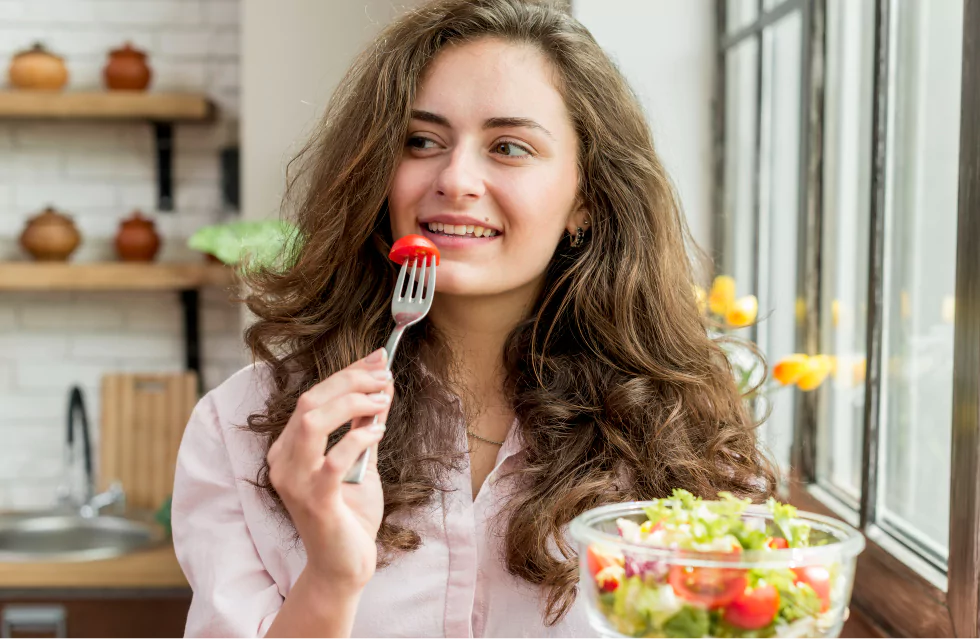
Mindful eating involves paying full attention to the experience of eating and drinking, both inside and outside the body. It means being aware of the colors, smells, textures, flavors, temperatures, and even the sounds of our food. It also means being aware of the body and mind while eating, such as recognizing hunger and fullness cues, and understanding the emotional triggers that lead to eating.
Mindful drinking, as discussed in The Benefits of Mindful Drinking, involves being conscious of the drinking habits and making intentional decisions about alcohol consumption. This practice includes acknowledging the impact of alcohol on mental and physical health and understanding both the positive and negative influences. It encourages drinking in moderation with a full understanding of the consequences of overdrinking.
Mindful drinking is becoming more common because it offers a flexible, judgment-free approach to changing your habits. It’s not about quitting alcohol cold turkey, but rather about becoming more aware of why you drink, how much you drink, and how it truly makes you feel. For many people who want to cut back but aren't ready to stop completely, this practice provides a sustainable middle ground. It shifts the focus from rigid rules to genuine curiosity, empowering you to make conscious choices that align with your health and wellness goals. This approach resonates because it’s about personal insight, not external pressure.
If you've ever questioned your relationship with alcohol, you might be sober curious. This mindset is all about examining your drinking patterns with an inquisitive and honest lens. It involves pausing to ask yourself questions like, “Do I actually want this drink, or am I just on autopilot?” or “How will this second glass of wine affect my morning tomorrow?” Being sober curious doesn’t require a commitment to total sobriety; instead, it’s about gathering information. By understanding your personal triggers and motivations, you can make more informed decisions that serve your well-being, one sip at a time.
One of the most freeing aspects of mindful drinking is that it releases you from the pressure of perfection. This isn't a pass-fail test. Instead, it's a long-term practice of building self-awareness. Some days will be easier than others, and that’s completely okay. The goal is to remain flexible and compassionate with yourself, which ultimately gives you a greater sense of control over your choices. Tools like the Reframe app are designed to support this journey, offering guidance and community without demanding an all-or-nothing approach. It’s about celebrating small wins and learning from every experience, not about achieving a flawless record.
Both mindful eating and drinking require a heightened sense of awareness. When practiced together, they can reinforce each other. For instance, by paying attention to what and how much we eat, we can better understand our body's responses to alcohol. This awareness can help in recognizing when our drinking habits are influenced by what we eat and vice versa.
Mindful eating encourages the consumption of nutrient-dense foods that support overall health. When combined with mindful drinking, which promotes moderation in alcohol intake, the result is a balanced approach to physical well-being. Eating well can mitigate some of the negative effects of alcohol, such as dehydration and nutrient depletion.
Many people use alcohol to cope with emotions. Mindful eating can help manage these emotions by fostering a healthier relationship with food. By recognizing emotional eating triggers, we can develop healthier coping mechanisms that do not rely on alcohol. This synergy is particularly beneficial in reducing stress and anxiety, which are common triggers for excessive drinking.
If you've ever thought about cutting back on alcohol, you're in good company. It turns out that nearly half of all adults who drink want to reduce their consumption but not necessarily quit altogether. This desire for moderation is becoming more common, with studies showing that almost 40% of drinkers have considered trying mindful drinking. The interesting part is that while so many people want to make a change, very few actively seek out traditional support systems. This tells us that there's a huge group of people looking for a different path—one that focuses on awareness and intentionality rather than an all-or-nothing approach. It’s about building healthier habits that fit your life, not completely overhauling it overnight.
When you start thinking about your own habits, it helps to have a benchmark. Health experts define low-risk drinking as consuming 14 or fewer standard drinks per week for men and 7 or fewer for women. It's important to see these numbers not as rigid rules, but as guidelines to help you assess your own patterns. This isn't about judging yourself; it's about gaining clarity. Mindful drinking is the practice of being aware of how much you drink and, more importantly, how it makes you feel. Understanding these guidelines can be the first step in making more conscious choices that align with your personal wellness goals and help you track your progress toward a healthier relationship with alcohol.
Before eating or drinking, set an intention. For example, decide to enjoy a meal slowly and with full attention. Similarly, set a limit for alcohol consumption and stick to it. This practice, highlighted in How To Practice Mindful Drinking, helps in making conscious decisions and avoiding overindulgence.
Before you pour that next glass, take a moment to pause and check in with yourself. Ask the simple but powerful question: “Do I really want this right now?” Sometimes we drink out of habit, social pressure, or just because it’s there. Mindful drinking is about understanding your “why.” Are you reaching for a drink to genuinely enhance an experience, or are you just going through the motions? Consider how it will make you feel—not just in the moment, but physically and mentally later on. This small pause creates space between impulse and action, giving you the power to make a choice that truly aligns with your well-being goals instead of operating on autopilot.
Take your time with each bite and sip. Chew your food thoroughly and savor each flavor. When drinking, take small sips and notice the taste and effect of the alcohol on your body. Slowing down can prevent overeating and overdrinking by giving your body time to signal fullness and satisfaction.
Going beyond just slowing down, savoring is about fully engaging your senses with what's in front of you. Instead of just tasting your drink, really notice its complexities. What does it smell like? What are the different flavor notes you can pick out? Pay attention to the temperature and the feel of the glass in your hand. This level of focus helps you appreciate the drink more deeply, making one glass feel more satisfying than three you might have had on autopilot. By paying attention to the taste, smell, and sensation of the drink, you're making a conscious choice to be present. This simple shift can transform your relationship with both food and alcohol, turning mindless consumption into a mindful, enjoyable experience.
Pay attention to hunger and fullness cues. Eat when you are hungry and stop when you are full. Similarly, drink water along with alcohol to stay hydrated and listen to your body's signals to stop drinking when you feel satisfied.
Both eating and drinking mindfully are enhanced by a pleasant environment. Set the table, avoid distractions like TV or smartphones, and focus on the experience. This practice can make meals and drinks more enjoyable and satisfying.
After eating or drinking, take a moment to reflect on how you feel. Notice any physical sensations, emotions, or thoughts that arise. This reflection can help in understanding the effects of different foods and drinks on your body and mind, and guide future choices.
Monitoring your alcohol intake is a simple but powerful way to build awareness around your habits. When you start tracking what you drink, you move from autopilot to a more conscious state, allowing you to see patterns you might have otherwise missed. Do you tend to drink more on certain days of the week, with specific people, or in response to particular emotions like stress or boredom? Keeping a log helps you connect the dots. You can use a tool like the Reframe app to easily track your drinks, or simply jot down notes in a journal. The goal isn’t to judge yourself, but to gather information. This data becomes your personal guide, helping you understand your triggers and make intentional decisions that align with your health goals.
Heading out for the night feels less stressful when you have a game plan. Before you leave, decide what a successful, mindful night looks like for you. This could mean setting a specific drink limit and having a go-to non-alcoholic option ready for when you reach it. Think of it less as a rule and more as a personal goal that empowers you. Knowing your plan makes it easier to politely decline another round and stick to the choices that make you feel your best. This simple act of mindful drinking puts you in the driver's seat of your evening.
One of the most effective ways to stay mindful is to slow things down. Instead of going from one alcoholic drink to the next, try alternating with a glass of water. This simple trick keeps you hydrated, gives your body time to process the alcohol, and helps you stay present and aware of how you're feeling. Having a meal before you start drinking also makes a huge difference, as it helps slow the absorption of alcohol. Pacing yourself isn't about deprivation; it's about savoring the experience and respecting your body's limits, which can help you better understand your blood alcohol content.
Sometimes the best way to drink mindfully is to change the scenery. If your social circle's default activity is meeting at a bar, be the one to suggest something new. Propose a group hike, a board game night, a trip to a new exhibit, or grabbing coffee instead of cocktails. You might be surprised how many of your friends are open to activities that don't center on alcohol. Shifting the focus from drinking to a shared experience can lead to deeper connections and more memorable moments. It helps redefine socializing on your own terms, creating fun that aligns with your wellness goals.
Mindful eating and drinking can lead to improved physical health by promoting balanced nutrition and moderate alcohol consumption. This combination can reduce the risk of chronic diseases, improve digestion, and enhance overall well-being.
The positive changes you'll feel aren't just about digestion or weight. When you practice mindful drinking, you might notice you sleep more deeply and wake up feeling genuinely rested. That's because even small amounts of alcohol can disrupt your natural sleep cycles. You'll likely see a difference in the mirror, too. Since alcohol is dehydrating, drinking less can lead to clearer, more hydrated skin. Beyond the physical, many people report a significant improvement in mental clarity. By being more intentional with your alcohol consumption, you can better understand how it affects your body and mind, leading to sharper focus and more consistent energy throughout the day.
By managing stress and emotional triggers through mindful eating, and reducing alcohol intake through mindful drinking, mental health can significantly improve. This approach can lead to reduced anxiety, better mood regulation, and enhanced cognitive function.
Practicing mindfulness in eating and drinking can improve relationships by reducing conflict and increasing presence in social interactions. Being fully present during meals and social gatherings can strengthen connections with others and create more meaningful experiences.
When you practice mindful drinking, you're not just cutting back; you're building self-awareness. This practice is about making conscious choices rather than letting habits run the show. By thinking about why and how much you drink, you gain control, which is a huge confidence builder. The goal isn't necessarily to quit alcohol entirely, but to enjoy it more intentionally, reducing negative side effects like hangovers and anxiety. Tracking your drinks is a simple yet powerful first step in this process. Plus, there's a clear financial upside. Drinking less means spending less on alcohol, Ubers, and late-night food. You might be surprised to see how much you can save over time.
Mindful drinking is one of the best things you can do for your long-term physical and mental health. When you're more aware of your consumption, you're less likely to drink in excess, which directly lowers your risk for health issues like liver disease and high blood pressure. The benefits don't stop there. Cutting back on alcohol can lead to better sleep, less anxiety, easier weight management, and even clearer skin. It’s a practice that helps you understand how alcohol personally affects your body and mind, empowering you to make choices that align with your wellness goals for years to come.
Mindful eating and drinking can lead to greater satisfaction with food and drink experiences. By savoring each bite and sip, you can enjoy the flavors more fully and feel more content with smaller quantities.
Mindful practices are incredible tools for self-awareness and change, but it's also important to recognize when you might need a little extra backup. Reaching out for help isn't a sign that you've failed; it's a sign that you're deeply committed to your well-being. If you feel like your habits are deeply tangled with your emotions, or if you’re struggling to make progress on your own, bringing in a professional or joining a community can make all the difference. It’s about adding more tools to your toolkit and building a stronger support system to help you on your path.
If you notice that strong emotions consistently trigger your desire to eat or drink, speaking with a doctor or therapist can be a game-changing step. They can help you explore the "why" behind your habits in a safe, confidential space. While mindful eating can help you consume less food without feeling deprived, a professional can help you address any underlying emotional issues that mindfulness alone might not resolve. Think of it as getting a personalized roadmap to understand your own patterns, helping you develop coping strategies that are tailored specifically to you and your experiences.
There is incredible power in knowing you’re not alone. Connecting with others who share similar goals and challenges can provide a unique sense of validation and encouragement. Support groups, whether in-person or online, offer a space to share experiences, exchange tips, and hold each other accountable. As one resource notes, mindfulness helps reduce stress and promote overall well-being, and sharing that journey with others can amplify those benefits. This is why community is a cornerstone of the Reframe app—having a built-in network of peers who just *get it* can be a powerful motivator to keep moving forward.
Integrating mindful eating with mindful drinking can create a powerful synergy that enhances overall well-being. By paying attention to both what and how we consume, we can build healthier habits, improve physical and mental health, and enjoy more satisfying and meaningful experiences. Start today by setting intentions, slowing down, listening to your body, creating a pleasant environment, and reflecting on your experiences. This holistic approach can lead to a more balanced and fulfilling life.
Is mindful drinking just another way of saying I have to quit alcohol? Not at all. Mindful drinking is about changing your relationship with alcohol, not necessarily ending it. The focus is on awareness and intention. Instead of drinking on autopilot, you learn to pause and check in with yourself, making conscious choices about when, why, and how much you drink. For some, this might lead to drinking less, while for others, it simply means enjoying the drinks they do have more fully and without the negative side effects.
I'm focused on my drinking right now. Do I really need to practice mindful eating too? You can absolutely start with just one, but they work so well together because they build the same core skill: listening to your body. When you start paying attention to your hunger and fullness cues with food, you get better at recognizing your body’s signals related to alcohol, like when you’re feeling the effects or when you’ve had enough. Think of it as cross-training for your self-awareness.
What's the most important first step if I feel overwhelmed by all these tips? If you're feeling overwhelmed, just pick one small thing to focus on. A great place to start is simply tracking your drinks for a week without any pressure to change anything. The goal isn't to judge yourself, but to gather information. This simple act of observation can reveal patterns you never noticed and is often the most powerful step in moving from mindless habits to mindful choices.
How do I handle social pressure from friends who expect me to drink like I used to? This is a common concern, and it helps to have a simple plan. You don't need to make a big announcement. Often, just holding a club soda with lime is enough to prevent questions. If someone does offer you a drink you don't want, a simple, "I'm good for now, thanks!" usually works. Remember, you're in control of your choices, and setting this boundary is a way of showing respect for your own well-being.
What if I slip up and have more than I intended? Does that mean I've failed? This is a practice, not a pass-fail test. Having more than you planned doesn't mean you've failed; it means you have a new piece of information. Instead of beating yourself up, get curious. What was the situation? How were you feeling? Use that experience as a learning moment. The goal is progress and self-compassion, not perfection. Every day is a new opportunity to check in with yourself and make a choice that feels right.
When we decide to build healthier habits, we often focus on one thing at a time. Maybe you’re trying to cut back on alcohol, or perhaps you’re working on your relationship with food. But what if these two goals weren't separate challenges, but deeply connected parts of the same journey? Understanding how to practice mindful drinking becomes so much more effective when you also apply that same awareness to your plate. This isn't about adding another rule to your list. It’s about seeing how tuning into your body’s cues can strengthen your ability to make intentional choices about alcohol, leading to a more balanced sense of well-being.
Mindful eating involves paying full attention to the experience of eating and drinking, both inside and outside the body. It means being aware of the colors, smells, textures, flavors, temperatures, and even the sounds of our food. It also means being aware of the body and mind while eating, such as recognizing hunger and fullness cues, and understanding the emotional triggers that lead to eating.
Mindful drinking, as discussed in The Benefits of Mindful Drinking, involves being conscious of the drinking habits and making intentional decisions about alcohol consumption. This practice includes acknowledging the impact of alcohol on mental and physical health and understanding both the positive and negative influences. It encourages drinking in moderation with a full understanding of the consequences of overdrinking.
Mindful drinking is becoming more common because it offers a flexible, judgment-free approach to changing your habits. It’s not about quitting alcohol cold turkey, but rather about becoming more aware of why you drink, how much you drink, and how it truly makes you feel. For many people who want to cut back but aren't ready to stop completely, this practice provides a sustainable middle ground. It shifts the focus from rigid rules to genuine curiosity, empowering you to make conscious choices that align with your health and wellness goals. This approach resonates because it’s about personal insight, not external pressure.
If you've ever questioned your relationship with alcohol, you might be sober curious. This mindset is all about examining your drinking patterns with an inquisitive and honest lens. It involves pausing to ask yourself questions like, “Do I actually want this drink, or am I just on autopilot?” or “How will this second glass of wine affect my morning tomorrow?” Being sober curious doesn’t require a commitment to total sobriety; instead, it’s about gathering information. By understanding your personal triggers and motivations, you can make more informed decisions that serve your well-being, one sip at a time.
One of the most freeing aspects of mindful drinking is that it releases you from the pressure of perfection. This isn't a pass-fail test. Instead, it's a long-term practice of building self-awareness. Some days will be easier than others, and that’s completely okay. The goal is to remain flexible and compassionate with yourself, which ultimately gives you a greater sense of control over your choices. Tools like the Reframe app are designed to support this journey, offering guidance and community without demanding an all-or-nothing approach. It’s about celebrating small wins and learning from every experience, not about achieving a flawless record.
Both mindful eating and drinking require a heightened sense of awareness. When practiced together, they can reinforce each other. For instance, by paying attention to what and how much we eat, we can better understand our body's responses to alcohol. This awareness can help in recognizing when our drinking habits are influenced by what we eat and vice versa.
Mindful eating encourages the consumption of nutrient-dense foods that support overall health. When combined with mindful drinking, which promotes moderation in alcohol intake, the result is a balanced approach to physical well-being. Eating well can mitigate some of the negative effects of alcohol, such as dehydration and nutrient depletion.
Many people use alcohol to cope with emotions. Mindful eating can help manage these emotions by fostering a healthier relationship with food. By recognizing emotional eating triggers, we can develop healthier coping mechanisms that do not rely on alcohol. This synergy is particularly beneficial in reducing stress and anxiety, which are common triggers for excessive drinking.
If you've ever thought about cutting back on alcohol, you're in good company. It turns out that nearly half of all adults who drink want to reduce their consumption but not necessarily quit altogether. This desire for moderation is becoming more common, with studies showing that almost 40% of drinkers have considered trying mindful drinking. The interesting part is that while so many people want to make a change, very few actively seek out traditional support systems. This tells us that there's a huge group of people looking for a different path—one that focuses on awareness and intentionality rather than an all-or-nothing approach. It’s about building healthier habits that fit your life, not completely overhauling it overnight.
When you start thinking about your own habits, it helps to have a benchmark. Health experts define low-risk drinking as consuming 14 or fewer standard drinks per week for men and 7 or fewer for women. It's important to see these numbers not as rigid rules, but as guidelines to help you assess your own patterns. This isn't about judging yourself; it's about gaining clarity. Mindful drinking is the practice of being aware of how much you drink and, more importantly, how it makes you feel. Understanding these guidelines can be the first step in making more conscious choices that align with your personal wellness goals and help you track your progress toward a healthier relationship with alcohol.
Before eating or drinking, set an intention. For example, decide to enjoy a meal slowly and with full attention. Similarly, set a limit for alcohol consumption and stick to it. This practice, highlighted in How To Practice Mindful Drinking, helps in making conscious decisions and avoiding overindulgence.
Before you pour that next glass, take a moment to pause and check in with yourself. Ask the simple but powerful question: “Do I really want this right now?” Sometimes we drink out of habit, social pressure, or just because it’s there. Mindful drinking is about understanding your “why.” Are you reaching for a drink to genuinely enhance an experience, or are you just going through the motions? Consider how it will make you feel—not just in the moment, but physically and mentally later on. This small pause creates space between impulse and action, giving you the power to make a choice that truly aligns with your well-being goals instead of operating on autopilot.
Take your time with each bite and sip. Chew your food thoroughly and savor each flavor. When drinking, take small sips and notice the taste and effect of the alcohol on your body. Slowing down can prevent overeating and overdrinking by giving your body time to signal fullness and satisfaction.
Going beyond just slowing down, savoring is about fully engaging your senses with what's in front of you. Instead of just tasting your drink, really notice its complexities. What does it smell like? What are the different flavor notes you can pick out? Pay attention to the temperature and the feel of the glass in your hand. This level of focus helps you appreciate the drink more deeply, making one glass feel more satisfying than three you might have had on autopilot. By paying attention to the taste, smell, and sensation of the drink, you're making a conscious choice to be present. This simple shift can transform your relationship with both food and alcohol, turning mindless consumption into a mindful, enjoyable experience.
Pay attention to hunger and fullness cues. Eat when you are hungry and stop when you are full. Similarly, drink water along with alcohol to stay hydrated and listen to your body's signals to stop drinking when you feel satisfied.
Both eating and drinking mindfully are enhanced by a pleasant environment. Set the table, avoid distractions like TV or smartphones, and focus on the experience. This practice can make meals and drinks more enjoyable and satisfying.
After eating or drinking, take a moment to reflect on how you feel. Notice any physical sensations, emotions, or thoughts that arise. This reflection can help in understanding the effects of different foods and drinks on your body and mind, and guide future choices.
Monitoring your alcohol intake is a simple but powerful way to build awareness around your habits. When you start tracking what you drink, you move from autopilot to a more conscious state, allowing you to see patterns you might have otherwise missed. Do you tend to drink more on certain days of the week, with specific people, or in response to particular emotions like stress or boredom? Keeping a log helps you connect the dots. You can use a tool like the Reframe app to easily track your drinks, or simply jot down notes in a journal. The goal isn’t to judge yourself, but to gather information. This data becomes your personal guide, helping you understand your triggers and make intentional decisions that align with your health goals.
Heading out for the night feels less stressful when you have a game plan. Before you leave, decide what a successful, mindful night looks like for you. This could mean setting a specific drink limit and having a go-to non-alcoholic option ready for when you reach it. Think of it less as a rule and more as a personal goal that empowers you. Knowing your plan makes it easier to politely decline another round and stick to the choices that make you feel your best. This simple act of mindful drinking puts you in the driver's seat of your evening.
One of the most effective ways to stay mindful is to slow things down. Instead of going from one alcoholic drink to the next, try alternating with a glass of water. This simple trick keeps you hydrated, gives your body time to process the alcohol, and helps you stay present and aware of how you're feeling. Having a meal before you start drinking also makes a huge difference, as it helps slow the absorption of alcohol. Pacing yourself isn't about deprivation; it's about savoring the experience and respecting your body's limits, which can help you better understand your blood alcohol content.
Sometimes the best way to drink mindfully is to change the scenery. If your social circle's default activity is meeting at a bar, be the one to suggest something new. Propose a group hike, a board game night, a trip to a new exhibit, or grabbing coffee instead of cocktails. You might be surprised how many of your friends are open to activities that don't center on alcohol. Shifting the focus from drinking to a shared experience can lead to deeper connections and more memorable moments. It helps redefine socializing on your own terms, creating fun that aligns with your wellness goals.
Mindful eating and drinking can lead to improved physical health by promoting balanced nutrition and moderate alcohol consumption. This combination can reduce the risk of chronic diseases, improve digestion, and enhance overall well-being.
The positive changes you'll feel aren't just about digestion or weight. When you practice mindful drinking, you might notice you sleep more deeply and wake up feeling genuinely rested. That's because even small amounts of alcohol can disrupt your natural sleep cycles. You'll likely see a difference in the mirror, too. Since alcohol is dehydrating, drinking less can lead to clearer, more hydrated skin. Beyond the physical, many people report a significant improvement in mental clarity. By being more intentional with your alcohol consumption, you can better understand how it affects your body and mind, leading to sharper focus and more consistent energy throughout the day.
By managing stress and emotional triggers through mindful eating, and reducing alcohol intake through mindful drinking, mental health can significantly improve. This approach can lead to reduced anxiety, better mood regulation, and enhanced cognitive function.
Practicing mindfulness in eating and drinking can improve relationships by reducing conflict and increasing presence in social interactions. Being fully present during meals and social gatherings can strengthen connections with others and create more meaningful experiences.
When you practice mindful drinking, you're not just cutting back; you're building self-awareness. This practice is about making conscious choices rather than letting habits run the show. By thinking about why and how much you drink, you gain control, which is a huge confidence builder. The goal isn't necessarily to quit alcohol entirely, but to enjoy it more intentionally, reducing negative side effects like hangovers and anxiety. Tracking your drinks is a simple yet powerful first step in this process. Plus, there's a clear financial upside. Drinking less means spending less on alcohol, Ubers, and late-night food. You might be surprised to see how much you can save over time.
Mindful drinking is one of the best things you can do for your long-term physical and mental health. When you're more aware of your consumption, you're less likely to drink in excess, which directly lowers your risk for health issues like liver disease and high blood pressure. The benefits don't stop there. Cutting back on alcohol can lead to better sleep, less anxiety, easier weight management, and even clearer skin. It’s a practice that helps you understand how alcohol personally affects your body and mind, empowering you to make choices that align with your wellness goals for years to come.
Mindful eating and drinking can lead to greater satisfaction with food and drink experiences. By savoring each bite and sip, you can enjoy the flavors more fully and feel more content with smaller quantities.
Mindful practices are incredible tools for self-awareness and change, but it's also important to recognize when you might need a little extra backup. Reaching out for help isn't a sign that you've failed; it's a sign that you're deeply committed to your well-being. If you feel like your habits are deeply tangled with your emotions, or if you’re struggling to make progress on your own, bringing in a professional or joining a community can make all the difference. It’s about adding more tools to your toolkit and building a stronger support system to help you on your path.
If you notice that strong emotions consistently trigger your desire to eat or drink, speaking with a doctor or therapist can be a game-changing step. They can help you explore the "why" behind your habits in a safe, confidential space. While mindful eating can help you consume less food without feeling deprived, a professional can help you address any underlying emotional issues that mindfulness alone might not resolve. Think of it as getting a personalized roadmap to understand your own patterns, helping you develop coping strategies that are tailored specifically to you and your experiences.
There is incredible power in knowing you’re not alone. Connecting with others who share similar goals and challenges can provide a unique sense of validation and encouragement. Support groups, whether in-person or online, offer a space to share experiences, exchange tips, and hold each other accountable. As one resource notes, mindfulness helps reduce stress and promote overall well-being, and sharing that journey with others can amplify those benefits. This is why community is a cornerstone of the Reframe app—having a built-in network of peers who just *get it* can be a powerful motivator to keep moving forward.
Integrating mindful eating with mindful drinking can create a powerful synergy that enhances overall well-being. By paying attention to both what and how we consume, we can build healthier habits, improve physical and mental health, and enjoy more satisfying and meaningful experiences. Start today by setting intentions, slowing down, listening to your body, creating a pleasant environment, and reflecting on your experiences. This holistic approach can lead to a more balanced and fulfilling life.
Is mindful drinking just another way of saying I have to quit alcohol? Not at all. Mindful drinking is about changing your relationship with alcohol, not necessarily ending it. The focus is on awareness and intention. Instead of drinking on autopilot, you learn to pause and check in with yourself, making conscious choices about when, why, and how much you drink. For some, this might lead to drinking less, while for others, it simply means enjoying the drinks they do have more fully and without the negative side effects.
I'm focused on my drinking right now. Do I really need to practice mindful eating too? You can absolutely start with just one, but they work so well together because they build the same core skill: listening to your body. When you start paying attention to your hunger and fullness cues with food, you get better at recognizing your body’s signals related to alcohol, like when you’re feeling the effects or when you’ve had enough. Think of it as cross-training for your self-awareness.
What's the most important first step if I feel overwhelmed by all these tips? If you're feeling overwhelmed, just pick one small thing to focus on. A great place to start is simply tracking your drinks for a week without any pressure to change anything. The goal isn't to judge yourself, but to gather information. This simple act of observation can reveal patterns you never noticed and is often the most powerful step in moving from mindless habits to mindful choices.
How do I handle social pressure from friends who expect me to drink like I used to? This is a common concern, and it helps to have a simple plan. You don't need to make a big announcement. Often, just holding a club soda with lime is enough to prevent questions. If someone does offer you a drink you don't want, a simple, "I'm good for now, thanks!" usually works. Remember, you're in control of your choices, and setting this boundary is a way of showing respect for your own well-being.
What if I slip up and have more than I intended? Does that mean I've failed? This is a practice, not a pass-fail test. Having more than you planned doesn't mean you've failed; it means you have a new piece of information. Instead of beating yourself up, get curious. What was the situation? How were you feeling? Use that experience as a learning moment. The goal is progress and self-compassion, not perfection. Every day is a new opportunity to check in with yourself and make a choice that feels right.

Explore tools and apps that help track money saved by drinking less, offering insights into financial and health benefits, and supporting healthier drinking habits.
Although it isn’t a treatment for alcohol use disorder (AUD), the Reframe app can help you cut back on drinking gradually, with the science-backed knowledge to empower you 100% of the way. Our proven program has helped millions of people around the world drink less and live more. And we want to help you get there, too!
The Reframe app equips you with the knowledge and skills you need to not only survive drinking less, but to thrive while you navigate the journey. Our daily research-backed readings teach you the neuroscience of alcohol, and our in-app Toolkit provides the resources and activities you need to navigate each challenge.
You’ll meet hundreds of fellow Reframers in our 24/7 Forum chat and daily Zoom check-in meetings. Receive encouragement from people worldwide who know exactly what you’re going through! You’ll also have the opportunity to connect with our licensed Reframe coaches for more personalized guidance.
Plus, we’re always introducing new features to optimize your in-app experience. We recently launched our in-app chatbot, Melody, powered by the world’s most powerful AI technology. Melody is here to help as you adjust to a life with less (or no) alcohol.
And that’s not all! Every month, we launch fun challenges, like Dry/Damp January, Mental Health May, and Outdoorsy June. You won’t want to miss out on the chance to participate alongside fellow Reframers (or solo if that’s more your thing!).
The Reframe app is free for 7 days, so you don’t have anything to lose by trying it. Are you ready to feel empowered and discover life beyond alcohol? Then download our app through the App Store or Google Play today!
In today's fast-paced world, many people are rethinking their relationship with alcohol, not only for health reasons but also for financial benefits. Reducing alcohol consumption can lead to significant savings, which can then be redirected towards more meaningful and productive endeavors. This article explores various tools and apps that can help you track the money saved by drinking less, ultimately reinforcing your journey towards healthier drinking habits.
Before diving into the tools and apps, it’s essential to understand how alcohol consumption impacts your finances. Alcohol is not just about the cost of drinks; it includes hidden expenses like transportation, health costs, and impulsive purchases. According to an article on Alcohol and Money Management, reducing alcohol consumption enhances both financial and physical health.
When you think about the cost of alcohol, you might initially consider the price of drinks at a bar or liquor store. However, there are often hidden expenses associated with drinking, such as transportation costs, food expenses, and healthcare costs. Cutting back on alcohol can save you money that can be redirected towards paying off debts, investing in long-term goals, or saving for future needs.
Several apps and tools can help you track the money saved by reducing alcohol consumption. These apps not only provide financial insights but also offer features to support your journey towards healthier drinking habits.
The Reframe App is a comprehensive tool that adopts a neuroscience-based approach to sobriety. It provides education on how alcohol affects the brain and body, empowering users with in-depth knowledge. The app includes features like a money-saved calculator and health-based statistics, showing financial and health improvements over time. The Reframe App also offers daily readings, an in-app toolkit, and a community forum for support.
DrinkControl is a user-friendly app designed to help you gain better control over your drinking habits. It allows you to track alcohol intake and provides useful feedback based on guidelines from the National Institute on Alcohol Abuse and Alcoholism (NIAAA). The app also tracks the money spent on alcohol, helping you understand your spending patterns and set financial goals.
Less is an app that focuses on reducing alcohol consumption by setting realistic goals and tracking progress. It uses cognitive behavioral principles to help users make lasting changes. The app includes a feature for tracking money saved, making it easier to see the financial benefits of drinking less.
Alcogram provides a science-savvy perspective on how alcohol affects the body over time. It includes features for tracking Blood Alcohol Content (BAC) and educating users on the physical impact of drinking. The app also tracks the money spent on alcohol, offering insights into how reducing consumption can lead to financial savings.
Coach.me combines AI-driven insights with human coaching to help users manage their drinking habits. The app offers personalized coaching sessions and tracks money saved by reducing alcohol intake. It provides a blend of AI and human interaction, making it a comprehensive tool for those seeking personalized support.
DryDays is an app designed to celebrate alcohol-free days as victories. It encourages users to increase their alcohol-free days gradually and tracks the money saved in the process. The app is user-friendly and focuses on making moderation achievable and fun.
Reducing alcohol consumption not only improves your financial health but also offers several other benefits. According to an article on the benefits of quitting or cutting back on alcohol, these benefits include improved physical health, better mental health, higher energy levels, healthier relationships, and fewer memory issues.
Alcohol consumption can lead to various health issues, including liver damage, cardiovascular problems, and weight gain. Reducing alcohol intake can significantly lower the risk of these ailments, leading to better overall health.
Alcohol can exacerbate mental health issues like depression and anxiety. Cutting back on alcohol allows your brain to return to its baseline, improving mental health and emotional well-being.
Alcohol interferes with sleep cycles, leading to fragmented sleep and fatigue. Reducing alcohol consumption can improve sleep quality, resulting in higher energy levels throughout the day.
Unhealthy drinking habits can strain relationships with friends and family. Cutting back on alcohol can improve communication and emotional availability, leading to healthier and more supportive relationships.
Alcohol impairs memory formation, leading to forgetfulness and blackouts. Reducing alcohol intake can improve memory and cognitive function.
Reducing alcohol consumption offers numerous financial and health benefits. By using tools and apps to track the money saved, you can gain better control over your finances and reinforce your journey towards healthier drinking habits. Whether you choose the Reframe App, DrinkControl, Less, Alcogram, Coach.me, or DryDays, these tools provide valuable insights and support to help you achieve your goals.
In today's fast-paced world, many people are rethinking their relationship with alcohol, not only for health reasons but also for financial benefits. Reducing alcohol consumption can lead to significant savings, which can then be redirected towards more meaningful and productive endeavors. This article explores various tools and apps that can help you track the money saved by drinking less, ultimately reinforcing your journey towards healthier drinking habits.
Before diving into the tools and apps, it’s essential to understand how alcohol consumption impacts your finances. Alcohol is not just about the cost of drinks; it includes hidden expenses like transportation, health costs, and impulsive purchases. According to an article on Alcohol and Money Management, reducing alcohol consumption enhances both financial and physical health.
When you think about the cost of alcohol, you might initially consider the price of drinks at a bar or liquor store. However, there are often hidden expenses associated with drinking, such as transportation costs, food expenses, and healthcare costs. Cutting back on alcohol can save you money that can be redirected towards paying off debts, investing in long-term goals, or saving for future needs.
Several apps and tools can help you track the money saved by reducing alcohol consumption. These apps not only provide financial insights but also offer features to support your journey towards healthier drinking habits.
The Reframe App is a comprehensive tool that adopts a neuroscience-based approach to sobriety. It provides education on how alcohol affects the brain and body, empowering users with in-depth knowledge. The app includes features like a money-saved calculator and health-based statistics, showing financial and health improvements over time. The Reframe App also offers daily readings, an in-app toolkit, and a community forum for support.
DrinkControl is a user-friendly app designed to help you gain better control over your drinking habits. It allows you to track alcohol intake and provides useful feedback based on guidelines from the National Institute on Alcohol Abuse and Alcoholism (NIAAA). The app also tracks the money spent on alcohol, helping you understand your spending patterns and set financial goals.
Less is an app that focuses on reducing alcohol consumption by setting realistic goals and tracking progress. It uses cognitive behavioral principles to help users make lasting changes. The app includes a feature for tracking money saved, making it easier to see the financial benefits of drinking less.
Alcogram provides a science-savvy perspective on how alcohol affects the body over time. It includes features for tracking Blood Alcohol Content (BAC) and educating users on the physical impact of drinking. The app also tracks the money spent on alcohol, offering insights into how reducing consumption can lead to financial savings.
Coach.me combines AI-driven insights with human coaching to help users manage their drinking habits. The app offers personalized coaching sessions and tracks money saved by reducing alcohol intake. It provides a blend of AI and human interaction, making it a comprehensive tool for those seeking personalized support.
DryDays is an app designed to celebrate alcohol-free days as victories. It encourages users to increase their alcohol-free days gradually and tracks the money saved in the process. The app is user-friendly and focuses on making moderation achievable and fun.
Reducing alcohol consumption not only improves your financial health but also offers several other benefits. According to an article on the benefits of quitting or cutting back on alcohol, these benefits include improved physical health, better mental health, higher energy levels, healthier relationships, and fewer memory issues.
Alcohol consumption can lead to various health issues, including liver damage, cardiovascular problems, and weight gain. Reducing alcohol intake can significantly lower the risk of these ailments, leading to better overall health.
Alcohol can exacerbate mental health issues like depression and anxiety. Cutting back on alcohol allows your brain to return to its baseline, improving mental health and emotional well-being.
Alcohol interferes with sleep cycles, leading to fragmented sleep and fatigue. Reducing alcohol consumption can improve sleep quality, resulting in higher energy levels throughout the day.
Unhealthy drinking habits can strain relationships with friends and family. Cutting back on alcohol can improve communication and emotional availability, leading to healthier and more supportive relationships.
Alcohol impairs memory formation, leading to forgetfulness and blackouts. Reducing alcohol intake can improve memory and cognitive function.
Reducing alcohol consumption offers numerous financial and health benefits. By using tools and apps to track the money saved, you can gain better control over your finances and reinforce your journey towards healthier drinking habits. Whether you choose the Reframe App, DrinkControl, Less, Alcogram, Coach.me, or DryDays, these tools provide valuable insights and support to help you achieve your goals.

Explore mindful drinking to consciously manage alcohol intake, focusing on intentional decisions and understanding its effects. Learn to set realistic goals and find support to enhance your journey.
Although it isn’t a treatment for alcohol use disorder (AUD), the Reframe app can help you cut back on drinking gradually with the science-backed knowledge to empower you 100% of the way. Our proven program has helped millions of people around the world drink less and live more. And we want to help you get there, too!
The Reframe app equips you with the knowledge and skills you need to not only survive drinking less, but to thrive while you navigate the journey. Our daily research-backed readings teach you the neuroscience of alcohol, and our in-app Toolkit provides the resources and activities you need to navigate each challenge.
You’ll meet millions of fellow Reframers in our 24/7 Forum chat and daily Zoom check-in meetings. Receive encouragement from people worldwide who know exactly what you’re going through! You’ll also have the opportunity to connect with our licensed Reframe coaches for more personalized guidance.
Plus, we’re always introducing new features to optimize your in-app experience. We recently launched our in-app chatbot, Melody, powered by the world’s most powerful AI technology. Melody is here to help as you adjust to a life with less (or no) alcohol.
And that’s not all! Every month, we launch fun challenges, like Dry/Damp January, Mental Health May, and Outdoorsy June. You won’t want to miss out on the chance to participate alongside fellow Reframers (or solo if that’s more your thing!).
The Reframe app is free for 7 days, so you don’t have anything to lose by trying it. Are you ready to feel empowered and discover life beyond alcohol? Then download our app through the App Store or Google Play today!
Mindful drinking is an approach that encourages individuals to be more conscious about their alcohol consumption. Rather than completely abstaining from alcohol, mindful drinking focuses on making intentional decisions, understanding the reasons behind drinking, and recognizing the impact of alcohol on mental and physical health. This guide will help beginners start their journey towards mindful drinking by setting realistic goals and finding the necessary support.
Mindful drinking involves being aware of why and how much you consume alcohol. It means drinking with intention and being conscious of the effects alcohol has on your body and mind. This practice is not about giving up alcohol entirely but about enjoying it in a way that is healthy and balanced.
The benefits of mindful drinking are numerous. According to The Benefits of Mindful Drinking, practicing mindful drinking can lead to improved physical health, better mental health, stronger relationships, enhanced cognition, and a healthier complexion. By being more conscious of your drinking habits, you can reduce the risk of various health issues and improve your overall well-being.
Setting realistic goals is crucial for anyone starting their journey towards mindful drinking. Here are some steps to help you set achievable goals:
Support is essential when making changes to your drinking habits. Here are some ways to find support:
Joining a community of like-minded individuals can provide motivation and accountability. According to How To Practice Mindful Drinking, connecting with others who are on a similar journey can offer valuable insights and encouragement. Online forums, support groups, and social media communities are great places to start.
There are several apps designed to help you practice mindful drinking. These apps offer features like drink tracking, goal setting, and educational resources. For example, the Best 10 Mindful Drinking Apps provide a variety of tools to support your journey towards healthier drinking habits.
If you find it challenging to manage your drinking on your own, seeking professional help can be beneficial. Therapists, counselors, and coaches can offer personalized guidance and support. The Reframe App provides access to licensed coaches and evidence-based strategies to help you cut back on drinking.
Finding new hobbies and activities can help reduce your reliance on alcohol. Engaging in physical exercise, exploring creative outlets, or joining clubs and groups can provide alternative ways to spend your time and cope with stress.
Here are some practical tips to help you practice mindful drinking:
By setting realistic goals and finding the right support, you can successfully embark on your journey towards mindful drinking. Remember, the key is to be patient with yourself and take it one step at a time. Celebrate your progress and enjoy the benefits of a healthier relationship with alcohol.
Mindful drinking is an approach that encourages individuals to be more conscious about their alcohol consumption. Rather than completely abstaining from alcohol, mindful drinking focuses on making intentional decisions, understanding the reasons behind drinking, and recognizing the impact of alcohol on mental and physical health. This guide will help beginners start their journey towards mindful drinking by setting realistic goals and finding the necessary support.
Mindful drinking involves being aware of why and how much you consume alcohol. It means drinking with intention and being conscious of the effects alcohol has on your body and mind. This practice is not about giving up alcohol entirely but about enjoying it in a way that is healthy and balanced.
The benefits of mindful drinking are numerous. According to The Benefits of Mindful Drinking, practicing mindful drinking can lead to improved physical health, better mental health, stronger relationships, enhanced cognition, and a healthier complexion. By being more conscious of your drinking habits, you can reduce the risk of various health issues and improve your overall well-being.
Setting realistic goals is crucial for anyone starting their journey towards mindful drinking. Here are some steps to help you set achievable goals:
Support is essential when making changes to your drinking habits. Here are some ways to find support:
Joining a community of like-minded individuals can provide motivation and accountability. According to How To Practice Mindful Drinking, connecting with others who are on a similar journey can offer valuable insights and encouragement. Online forums, support groups, and social media communities are great places to start.
There are several apps designed to help you practice mindful drinking. These apps offer features like drink tracking, goal setting, and educational resources. For example, the Best 10 Mindful Drinking Apps provide a variety of tools to support your journey towards healthier drinking habits.
If you find it challenging to manage your drinking on your own, seeking professional help can be beneficial. Therapists, counselors, and coaches can offer personalized guidance and support. The Reframe App provides access to licensed coaches and evidence-based strategies to help you cut back on drinking.
Finding new hobbies and activities can help reduce your reliance on alcohol. Engaging in physical exercise, exploring creative outlets, or joining clubs and groups can provide alternative ways to spend your time and cope with stress.
Here are some practical tips to help you practice mindful drinking:
By setting realistic goals and finding the right support, you can successfully embark on your journey towards mindful drinking. Remember, the key is to be patient with yourself and take it one step at a time. Celebrate your progress and enjoy the benefits of a healthier relationship with alcohol.

Get answers to what are some practical tips for moderating alcohol at social events? Learn how to enjoy parties while staying in control of your choices.
Although it isn’t a treatment for alcohol use disorder (AUD), the Reframe app can help you cut back on drinking gradually with the science-backed knowledge to empower you 100% of the way. Our proven program has helped millions of people around the world drink less and live more. And we want to help you get there, too!
The Reframe app equips you with the knowledge and skills you need to not only survive drinking less, but to thrive while you navigate the journey. Our daily research-backed readings teach you the neuroscience of alcohol, and our in-app Toolkit provides the resources and activities you need to navigate each challenge.
You’ll meet millions of fellow Reframers in our 24/7 Forum chat and daily Zoom check-in meetings. Receive encouragement from people worldwide who know exactly what you’re going through! You’ll also have the opportunity to connect with our licensed Reframe coaches for more personalized guidance.
Plus, we’re always introducing new features to optimize your in-app experience. We recently launched our in-app chatbot, Melody, powered by the world’s most powerful AI technology. Melody is here to help as you adjust to a life with less (or no) alcohol.
And that’s not all! Every month, we launch fun challenges, like Dry/Damp January, Mental Health May, and Outdoorsy June. You won’t want to miss out on the chance to participate alongside fellow Reframers (or solo if that’s more your thing!).
The Reframe app is free for 7 days, so you don’t have anything to lose by trying it. Are you ready to feel empowered and discover life beyond alcohol? Then download our app today!
Going to a party when you're drinking less can feel tricky. The lively atmosphere and social pressure can make it hard to stick to your goals. But mindful drinking isn't about missing out—it's about enjoying yourself without the next-day regrets. If you're asking yourself, what are some practical tips for moderating alcohol at social events?, you've found your guide. We'll give you actionable strategies, from setting your limits beforehand to knowing what are the top drinks for mindful social occasions, so you can feel confident and in control.

Mindful drinking is a practice that involves being conscious and present in the act of drinking. It's about making intentional choices regarding alcohol consumption and understanding the reasons behind your drinking habits. This approach can help you develop a healthier relationship with alcohol by allowing you to make more informed decisions.
The rise of intentional alcohol consumption has shown that mindful drinking can lead to better physical health, improved mental well-being, and more fulfilling social interactions.
Before you can set personal goals for mindful drinking, it helps to know what the general health recommendations are. Think of these guidelines not as strict rules, but as a helpful baseline to inform your choices. They are based on extensive research into how alcohol affects the body and are designed to help people minimize potential health risks. Understanding these recommendations gives you the power to make decisions that align with your personal wellness goals, whether you're at a party, a restaurant, or just relaxing at home. It’s all about having the information you need to take care of yourself.
So, what do the experts say? A common benchmark comes from organizations like the American Association for Cancer Research, which suggests that women have no more than one drink per day and men have no more than two. It's also important to understand what counts as "one drink," as it's often less than what we're served. A standard drink is typically defined as 12 ounces of regular beer, 5 ounces of wine, or 1.5 ounces of distilled spirits. Keeping this in mind can help you more accurately track your intake and stay within the limits that support your long-term health.
If you feel like alcohol is everywhere, you're not wrong. For example, about 75% of people in Canada drink alcohol, which shows just how ingrained it is in many social cultures. However, there's a growing shift in attitudes. In places like Australia, more and more people, especially younger generations, are choosing to drink less or not at all. This trend highlights that you are part of a larger movement toward mindful drinking. Knowing these numbers can be validating; it shows that while social drinking is common, so is the conscious choice to reduce consumption for better well-being.
Before attending a social event, set clear intentions regarding your alcohol consumption. Decide in advance how many drinks you will have and stick to that limit. This pre-planning can help you stay in control and avoid impulsive decisions.
Showing up to a party hungry is a recipe for drinking more than you intended. A simple but effective strategy is to eat a substantial meal before you head out. According to Energize Nutrition, having a good meal before an event can slow down how quickly alcohol affects your body. Food in your stomach, particularly protein and healthy fats, helps to moderate alcohol absorption, which means you’ll feel the effects more gradually. This gives you more time to assess how you’re feeling and make conscious decisions about your next drink, rather than getting caught up in the moment and losing track.
One of the best ways to stay mindful during a night out is to give yourself a compelling reason to wake up fresh the next day. Whether it’s a morning hike, a coffee date with a friend, or an early gym session, having a commitment can be a powerful motivator. The Alcohol and Drug Foundation suggests that planning an early morning activity helps you focus on things that don't involve drinking. This simple shift in perspective can make it much easier to say "no" to that extra drink, as you’ll be thinking about how great you’ll feel in the morning instead of just focusing on the immediate social setting.
Walking into a social situation without a plan can make it easy to fall back into old habits. Instead, take a moment to set a clear, specific goal for your alcohol consumption. This could be deciding to have only two drinks, or maybe none at all. It’s crucial to also remind yourself *why* this goal is important to you. As experts point out, remembering your motivation helps you maintain control when faced with social pressure. Your goal acts as a personal anchor, keeping you grounded in your commitment to mindful drinking throughout the event.
Volunteering to be the designated driver is a fantastic way to set a firm boundary for yourself while also doing something great for your friends. When you’re responsible for getting everyone home safely, the decision not to drink becomes straightforward and non-negotiable. This approach removes any ambiguity and makes it easy to decline drinks without feeling awkward. Plus, driving yourself to an event ensures you can leave whenever you feel ready, giving you complete control over your night and helping you stay safe and legal.
A practical way to reduce alcohol intake is to alternate alcoholic beverages with non-alcoholic ones. For example, after having a glass of wine, switch to a sparkling water or a mocktail. This not only helps in reducing overall alcohol consumption but also keeps you hydrated.
This might sound simple, but it's one of the most effective tricks in the book. When you already have a drink, people are far less likely to offer you another one or ask why you aren't partaking. According to the Alcohol and Drug Foundation, this simple act serves as a social buffer, allowing you to sidestep potentially awkward conversations. Whether it's a club soda with lime or your first and only beer of the night, holding a glass keeps you in the social loop without drawing unwanted attention to your drinking choices. It’s a subtle but powerful way to manage your environment and stay true to your intentions without having to explain yourself repeatedly.
Beyond avoiding pressure from others, this strategy helps you feel more included. There's a certain comfort in the ritual of holding a drink at a party, and as experts at Energize Nutrition point out, a non-alcoholic option can prevent you from feeling left out. It gives you that same sense of participation, helping you feel part of the group without compromising your goals. This simple act of practicing mindful drinking allows you to focus on the conversations and connections, which is what social events are really all about. You get to enjoy the company and the atmosphere on your own terms.
Mindful drinking involves truly experiencing the act of drinking. Take the time to savor each sip, paying attention to the taste, texture, and aroma of the beverage. This deliberate approach can enhance your enjoyment and make you less likely to overindulge. The practice of savoring your drink is key to mindful drinking and can help you remain present in the moment.
Not all drinks pack the same punch. If you choose to drink, opting for lighter alcoholic beverages is a simple yet effective way to practice moderation. Instead of a high-alcohol-content craft beer or a spirit-heavy cocktail, consider a light beer, a glass of wine, or a spritzer. This small adjustment allows you to enjoy a drink and participate in the social aspect of the event without consuming as much alcohol. It’s a practical strategy that aligns with the core principles of mindful drinking, helping you stay present and in control of your choices throughout the evening.
How you order your drink matters just as much as what you order. Vague requests at a busy bar can sometimes result in a much stronger drink than you intended. To avoid this, be specific with your order. Instead of using ambiguous measurements like “fingers,” clearly ask for a “single” or “double” pour. This simple clarification ensures you know exactly how much alcohol is in your glass, giving you the power to accurately track your intake. Being precise helps you stick to your predetermined limits and better estimate your Blood Alcohol Content (BAC), making it easier to stay within your comfort zone.
Social events can sometimes become overwhelming, and the temptation to drink excessively may increase. Having an escape plan can be a lifesaver. This could mean setting a time to leave the event or having a trusted friend who can help you stay accountable.
Walking into a party where everyone seems to be drinking can feel like a pop quiz you didn't study for. Having a simple, go-to response ready is your cheat sheet. It takes the pressure off so you don't have to invent an excuse on the spot. Something as simple as, "I'm not drinking tonight, but I'd love a sparkling water," or "I'm driving, so I'll stick to soda," works perfectly. The key is to be confident and direct, without feeling like you owe anyone a lengthy explanation. This isn't about being deceptive; it's about setting a boundary that protects your peace and your goals. You're in control of your choices, and a prepared line helps you own that control gracefully.
It also helps to let a trusted friend at the event know about your intentions beforehand. They can be your ally, helping to deflect questions or simply offering a supportive presence. If you're feeling pressured, having someone who gets it can make all the difference. This is one of the core principles we explore at Reframe: community and connection are powerful tools for change. When you feel supported, you're better equipped to handle social pressures. According to the National Institute on Alcohol Abuse and Alcoholism, having a strong support system is a key factor in successfully changing drinking patterns. Your "excuse" becomes less of a defense and more of a simple statement of fact when you know someone has your back.
It's common to feel pressured to drink in social settings. Practicing polite ways to decline an alcoholic drink can empower you to stick to your intentions. For example, you could say, "I'm taking a break from alcohol tonight" or "I'll have a mocktail instead." Being prepared with these responses can make it easier to navigate social pressures.
It helps to have a few responses ready for when someone offers you a drink. Thinking on your feet can be tough, and preparing a simple phrase beforehand makes it easier to stick to your plan with confidence. You don’t owe anyone a lengthy explanation; a brief, polite response is all you need. The goal is to have an answer that feels natural and comfortable for you to say.
Here are a few simple phrases you can use:
Having these lines in your back pocket is a simple yet effective strategy for mindful drinking. It removes the pressure of the moment and empowers you to stay in control of your choices, allowing you to enjoy the social connection without the stress.
After the event, take some time to reflect on your drinking habits. Consider how much you drank, how it made you feel, and whether it aligned with your intentions. This reflection can provide valuable insights and help you make better choices in the future.
Building new habits is a big deal, and every success deserves recognition. When you stick to your mindful drinking goals at a social event, give yourself a little something to celebrate. This isn't about a "cheat day," but about positive reinforcement. Think of a non-alcoholic treat you've been wanting — maybe it's a new book, a massage, or that cozy sweater you've been eyeing. By rewarding your efforts, you create a positive association with your choices, making it easier to stay on track next time. You might be surprised to see how much you can save by drinking less, and redirecting that money toward something that genuinely enriches your life is a powerful motivator.
It’s easy to get caught up in what you feel you’re missing out on, but shifting your focus to what you’re gaining can change everything. Remind yourself of your "why." Are you cutting back for better sleep, more energy, or clearer mental health? Concentrate on the immediate benefits you experience, like having more meaningful conversations without the haze of alcohol or waking up the next morning feeling refreshed and ready for the day. This practice of mindful drinking isn't about deprivation; it's about adding more quality and intention to your life. When you focus on these positive outcomes, your decision to drink less feels less like a sacrifice and more like an act of self-care.
Changing your habits is much easier when you don't have to do it alone. Building a support system gives you accountability, encouragement, and a safe space to share your challenges and successes. Whether it's a single trusted friend or an entire community, having people in your corner can make all the difference in sticking to your mindful drinking goals, especially when navigating social situations. A strong network reminds you that you're not the only one on this path and provides the strength you need to keep moving forward.
One of the most effective strategies is to bring a friend into the loop. Before you head to an event, let someone know you plan to drink mindfully or not at all. This person can be your ally, helping you deflect unwanted attention or simply offering a knowing glance of encouragement when you need it most. Having someone there who understands your goals can make you feel more confident in your choices and less isolated in a setting where drinking might be the main focus. It turns a personal challenge into a team effort.
Connecting with others who share your goals can be incredibly powerful. You can ask a family member or a close friend to help you stay on track, but sometimes the best support comes from those on the exact same journey. Online groups and forums provide a space to share experiences and advice with people who truly understand what you're going through. The Reframe app, for example, has a thriving community where members can connect, find encouragement, and celebrate milestones together, offering support whenever you need it.
While self-guided strategies and community support are fantastic tools, there are times when professional guidance is the best path forward. If you find it consistently difficult to manage your drinking, it might be time to speak with a doctor or therapist. Over time, alcohol can cause changes in the brain that make it harder to cut back on your own. Seeking professional help isn't a sign of failure; it's a proactive and courageous step toward taking control of your health and well-being for the long term.
Cutting back on alcohol can lead to numerous health benefits, including better sleep, increased energy levels, and improved overall health. Mindful drinking allows you to enjoy these benefits while still participating in social events.
Mindful drinking can lead to more meaningful and enjoyable social interactions. When you're not focused on drinking, you can be more present and engaged with the people around you. This can enhance your connections and make social events more fulfilling.
Practicing mindful drinking can give you a greater sense of control over your alcohol consumption. This can boost your confidence in social situations and make you less likely to behave impulsively under the influence of alcohol.
Engaging in mindful drinking can also inspire you to explore new activities that don't revolve around alcohol. This could include hiking, trying new restaurants, or participating in hobbies that bring you joy and fulfillment.
Instead of defaulting to "let's grab a drink," try suggesting activities where alcohol isn't the main event. This could be anything from a morning hike or a walk through a local museum to trying a new pottery class or exploring a farmers market. The idea is to shift the focus from drinking to a shared experience. When you do host, you can create a comfortable space by offering a fun variety of non-alcoholic drinks, so no one feels like they have to explain their choice. The goal is to connect with your friends, and you'll find that genuine connection happens just as easily over coffee or a shared activity as it does over cocktails. It's all part of a more mindful approach to your social life.
Mindful drinking during social events is about finding a balance that allows you to enjoy the occasion while maintaining control over your alcohol consumption. By setting clear intentions, savoring each sip, and having an escape plan, you can practice mindful drinking and reap its numerous benefits. Remember, it's not about complete abstention but making conscious choices that support your overall well-being.
For more insights on how to practice mindful drinking, check out our article on how to practice mindful drinking. Additionally, understanding the cultural and psychological aspects of social drinking can further enhance your approach, as discussed in our post on how social drinking influences alcohol use.
Going to a party when you're drinking less can feel tricky. The lively atmosphere and social pressure can make it hard to stick to your goals. But mindful drinking isn't about missing out—it's about enjoying yourself without the next-day regrets. If you're asking yourself, what are some practical tips for moderating alcohol at social events?, you've found your guide. We'll give you actionable strategies, from setting your limits beforehand to knowing what are the top drinks for mindful social occasions, so you can feel confident and in control.
Mindful drinking is a practice that involves being conscious and present in the act of drinking. It's about making intentional choices regarding alcohol consumption and understanding the reasons behind your drinking habits. This approach can help you develop a healthier relationship with alcohol by allowing you to make more informed decisions.
The rise of intentional alcohol consumption has shown that mindful drinking can lead to better physical health, improved mental well-being, and more fulfilling social interactions.
Before you can set personal goals for mindful drinking, it helps to know what the general health recommendations are. Think of these guidelines not as strict rules, but as a helpful baseline to inform your choices. They are based on extensive research into how alcohol affects the body and are designed to help people minimize potential health risks. Understanding these recommendations gives you the power to make decisions that align with your personal wellness goals, whether you're at a party, a restaurant, or just relaxing at home. It’s all about having the information you need to take care of yourself.
So, what do the experts say? A common benchmark comes from organizations like the American Association for Cancer Research, which suggests that women have no more than one drink per day and men have no more than two. It's also important to understand what counts as "one drink," as it's often less than what we're served. A standard drink is typically defined as 12 ounces of regular beer, 5 ounces of wine, or 1.5 ounces of distilled spirits. Keeping this in mind can help you more accurately track your intake and stay within the limits that support your long-term health.
If you feel like alcohol is everywhere, you're not wrong. For example, about 75% of people in Canada drink alcohol, which shows just how ingrained it is in many social cultures. However, there's a growing shift in attitudes. In places like Australia, more and more people, especially younger generations, are choosing to drink less or not at all. This trend highlights that you are part of a larger movement toward mindful drinking. Knowing these numbers can be validating; it shows that while social drinking is common, so is the conscious choice to reduce consumption for better well-being.
Before attending a social event, set clear intentions regarding your alcohol consumption. Decide in advance how many drinks you will have and stick to that limit. This pre-planning can help you stay in control and avoid impulsive decisions.
Showing up to a party hungry is a recipe for drinking more than you intended. A simple but effective strategy is to eat a substantial meal before you head out. According to Energize Nutrition, having a good meal before an event can slow down how quickly alcohol affects your body. Food in your stomach, particularly protein and healthy fats, helps to moderate alcohol absorption, which means you’ll feel the effects more gradually. This gives you more time to assess how you’re feeling and make conscious decisions about your next drink, rather than getting caught up in the moment and losing track.
One of the best ways to stay mindful during a night out is to give yourself a compelling reason to wake up fresh the next day. Whether it’s a morning hike, a coffee date with a friend, or an early gym session, having a commitment can be a powerful motivator. The Alcohol and Drug Foundation suggests that planning an early morning activity helps you focus on things that don't involve drinking. This simple shift in perspective can make it much easier to say "no" to that extra drink, as you’ll be thinking about how great you’ll feel in the morning instead of just focusing on the immediate social setting.
Walking into a social situation without a plan can make it easy to fall back into old habits. Instead, take a moment to set a clear, specific goal for your alcohol consumption. This could be deciding to have only two drinks, or maybe none at all. It’s crucial to also remind yourself *why* this goal is important to you. As experts point out, remembering your motivation helps you maintain control when faced with social pressure. Your goal acts as a personal anchor, keeping you grounded in your commitment to mindful drinking throughout the event.
Volunteering to be the designated driver is a fantastic way to set a firm boundary for yourself while also doing something great for your friends. When you’re responsible for getting everyone home safely, the decision not to drink becomes straightforward and non-negotiable. This approach removes any ambiguity and makes it easy to decline drinks without feeling awkward. Plus, driving yourself to an event ensures you can leave whenever you feel ready, giving you complete control over your night and helping you stay safe and legal.
A practical way to reduce alcohol intake is to alternate alcoholic beverages with non-alcoholic ones. For example, after having a glass of wine, switch to a sparkling water or a mocktail. This not only helps in reducing overall alcohol consumption but also keeps you hydrated.
This might sound simple, but it's one of the most effective tricks in the book. When you already have a drink, people are far less likely to offer you another one or ask why you aren't partaking. According to the Alcohol and Drug Foundation, this simple act serves as a social buffer, allowing you to sidestep potentially awkward conversations. Whether it's a club soda with lime or your first and only beer of the night, holding a glass keeps you in the social loop without drawing unwanted attention to your drinking choices. It’s a subtle but powerful way to manage your environment and stay true to your intentions without having to explain yourself repeatedly.
Beyond avoiding pressure from others, this strategy helps you feel more included. There's a certain comfort in the ritual of holding a drink at a party, and as experts at Energize Nutrition point out, a non-alcoholic option can prevent you from feeling left out. It gives you that same sense of participation, helping you feel part of the group without compromising your goals. This simple act of practicing mindful drinking allows you to focus on the conversations and connections, which is what social events are really all about. You get to enjoy the company and the atmosphere on your own terms.
Mindful drinking involves truly experiencing the act of drinking. Take the time to savor each sip, paying attention to the taste, texture, and aroma of the beverage. This deliberate approach can enhance your enjoyment and make you less likely to overindulge. The practice of savoring your drink is key to mindful drinking and can help you remain present in the moment.
Not all drinks pack the same punch. If you choose to drink, opting for lighter alcoholic beverages is a simple yet effective way to practice moderation. Instead of a high-alcohol-content craft beer or a spirit-heavy cocktail, consider a light beer, a glass of wine, or a spritzer. This small adjustment allows you to enjoy a drink and participate in the social aspect of the event without consuming as much alcohol. It’s a practical strategy that aligns with the core principles of mindful drinking, helping you stay present and in control of your choices throughout the evening.
How you order your drink matters just as much as what you order. Vague requests at a busy bar can sometimes result in a much stronger drink than you intended. To avoid this, be specific with your order. Instead of using ambiguous measurements like “fingers,” clearly ask for a “single” or “double” pour. This simple clarification ensures you know exactly how much alcohol is in your glass, giving you the power to accurately track your intake. Being precise helps you stick to your predetermined limits and better estimate your Blood Alcohol Content (BAC), making it easier to stay within your comfort zone.
Social events can sometimes become overwhelming, and the temptation to drink excessively may increase. Having an escape plan can be a lifesaver. This could mean setting a time to leave the event or having a trusted friend who can help you stay accountable.
Walking into a party where everyone seems to be drinking can feel like a pop quiz you didn't study for. Having a simple, go-to response ready is your cheat sheet. It takes the pressure off so you don't have to invent an excuse on the spot. Something as simple as, "I'm not drinking tonight, but I'd love a sparkling water," or "I'm driving, so I'll stick to soda," works perfectly. The key is to be confident and direct, without feeling like you owe anyone a lengthy explanation. This isn't about being deceptive; it's about setting a boundary that protects your peace and your goals. You're in control of your choices, and a prepared line helps you own that control gracefully.
It also helps to let a trusted friend at the event know about your intentions beforehand. They can be your ally, helping to deflect questions or simply offering a supportive presence. If you're feeling pressured, having someone who gets it can make all the difference. This is one of the core principles we explore at Reframe: community and connection are powerful tools for change. When you feel supported, you're better equipped to handle social pressures. According to the National Institute on Alcohol Abuse and Alcoholism, having a strong support system is a key factor in successfully changing drinking patterns. Your "excuse" becomes less of a defense and more of a simple statement of fact when you know someone has your back.
It's common to feel pressured to drink in social settings. Practicing polite ways to decline an alcoholic drink can empower you to stick to your intentions. For example, you could say, "I'm taking a break from alcohol tonight" or "I'll have a mocktail instead." Being prepared with these responses can make it easier to navigate social pressures.
It helps to have a few responses ready for when someone offers you a drink. Thinking on your feet can be tough, and preparing a simple phrase beforehand makes it easier to stick to your plan with confidence. You don’t owe anyone a lengthy explanation; a brief, polite response is all you need. The goal is to have an answer that feels natural and comfortable for you to say.
Here are a few simple phrases you can use:
Having these lines in your back pocket is a simple yet effective strategy for mindful drinking. It removes the pressure of the moment and empowers you to stay in control of your choices, allowing you to enjoy the social connection without the stress.
After the event, take some time to reflect on your drinking habits. Consider how much you drank, how it made you feel, and whether it aligned with your intentions. This reflection can provide valuable insights and help you make better choices in the future.
Building new habits is a big deal, and every success deserves recognition. When you stick to your mindful drinking goals at a social event, give yourself a little something to celebrate. This isn't about a "cheat day," but about positive reinforcement. Think of a non-alcoholic treat you've been wanting — maybe it's a new book, a massage, or that cozy sweater you've been eyeing. By rewarding your efforts, you create a positive association with your choices, making it easier to stay on track next time. You might be surprised to see how much you can save by drinking less, and redirecting that money toward something that genuinely enriches your life is a powerful motivator.
It’s easy to get caught up in what you feel you’re missing out on, but shifting your focus to what you’re gaining can change everything. Remind yourself of your "why." Are you cutting back for better sleep, more energy, or clearer mental health? Concentrate on the immediate benefits you experience, like having more meaningful conversations without the haze of alcohol or waking up the next morning feeling refreshed and ready for the day. This practice of mindful drinking isn't about deprivation; it's about adding more quality and intention to your life. When you focus on these positive outcomes, your decision to drink less feels less like a sacrifice and more like an act of self-care.
Changing your habits is much easier when you don't have to do it alone. Building a support system gives you accountability, encouragement, and a safe space to share your challenges and successes. Whether it's a single trusted friend or an entire community, having people in your corner can make all the difference in sticking to your mindful drinking goals, especially when navigating social situations. A strong network reminds you that you're not the only one on this path and provides the strength you need to keep moving forward.
One of the most effective strategies is to bring a friend into the loop. Before you head to an event, let someone know you plan to drink mindfully or not at all. This person can be your ally, helping you deflect unwanted attention or simply offering a knowing glance of encouragement when you need it most. Having someone there who understands your goals can make you feel more confident in your choices and less isolated in a setting where drinking might be the main focus. It turns a personal challenge into a team effort.
Connecting with others who share your goals can be incredibly powerful. You can ask a family member or a close friend to help you stay on track, but sometimes the best support comes from those on the exact same journey. Online groups and forums provide a space to share experiences and advice with people who truly understand what you're going through. The Reframe app, for example, has a thriving community where members can connect, find encouragement, and celebrate milestones together, offering support whenever you need it.
While self-guided strategies and community support are fantastic tools, there are times when professional guidance is the best path forward. If you find it consistently difficult to manage your drinking, it might be time to speak with a doctor or therapist. Over time, alcohol can cause changes in the brain that make it harder to cut back on your own. Seeking professional help isn't a sign of failure; it's a proactive and courageous step toward taking control of your health and well-being for the long term.
Cutting back on alcohol can lead to numerous health benefits, including better sleep, increased energy levels, and improved overall health. Mindful drinking allows you to enjoy these benefits while still participating in social events.
Mindful drinking can lead to more meaningful and enjoyable social interactions. When you're not focused on drinking, you can be more present and engaged with the people around you. This can enhance your connections and make social events more fulfilling.
Practicing mindful drinking can give you a greater sense of control over your alcohol consumption. This can boost your confidence in social situations and make you less likely to behave impulsively under the influence of alcohol.
Engaging in mindful drinking can also inspire you to explore new activities that don't revolve around alcohol. This could include hiking, trying new restaurants, or participating in hobbies that bring you joy and fulfillment.
Instead of defaulting to "let's grab a drink," try suggesting activities where alcohol isn't the main event. This could be anything from a morning hike or a walk through a local museum to trying a new pottery class or exploring a farmers market. The idea is to shift the focus from drinking to a shared experience. When you do host, you can create a comfortable space by offering a fun variety of non-alcoholic drinks, so no one feels like they have to explain their choice. The goal is to connect with your friends, and you'll find that genuine connection happens just as easily over coffee or a shared activity as it does over cocktails. It's all part of a more mindful approach to your social life.
Mindful drinking during social events is about finding a balance that allows you to enjoy the occasion while maintaining control over your alcohol consumption. By setting clear intentions, savoring each sip, and having an escape plan, you can practice mindful drinking and reap its numerous benefits. Remember, it's not about complete abstention but making conscious choices that support your overall well-being.
For more insights on how to practice mindful drinking, check out our article on how to practice mindful drinking. Additionally, understanding the cultural and psychological aspects of social drinking can further enhance your approach, as discussed in our post on how social drinking influences alcohol use.

Explore the multifaceted journey of recovering from alcoholism, from acknowledging the issue to achieving long-term sobriety, including detox, rehabilitation, and relapse prevention strategies.
Although it isn’t a treatment for alcohol use disorder (AUD), the Reframe app can help you cut back on drinking gradually with the science-backed knowledge to empower you 100% of the way. Our proven program has helped millions of people around the world drink less and live more. And we want to help you get there, too!
The Reframe app equips you with the knowledge and skills you need to not only survive drinking less, but to thrive while you navigate the journey. Our daily research-backed readings teach you the neuroscience of alcohol, and our in-app Toolkit provides the resources and activities you need to navigate each challenge.
You’ll meet millions of fellow Reframers in our 24/7 Forum chat and daily Zoom check-in meetings. Receive encouragement from people worldwide who know exactly what you’re going through! You’ll also have the opportunity to connect with our licensed Reframe coaches for more personalized guidance.
Plus, we’re always introducing new features to optimize your in-app experience. We recently launched our in-app chatbot, Melody, powered by the world’s most powerful AI technology. Melody is here to help as you adjust to a life with less (or no) alcohol.
And that’s not all! Every month, we launch fun challenges, like Dry/Damp January, Mental Health May, and Outdoorsy June. You won’t want to miss out on the chance to participate alongside fellow Reframers (or solo if that’s more your thing!).
The Reframe app is free for 7 days, so you don’t have anything to lose by trying it. Are you ready to feel empowered and discover life beyond alcohol? Then download our app today!
Recovering from alcoholism is a multifaceted journey that involves several stages, each critical to achieving long-term sobriety. This article will break down the various steps involved in recovering from alcoholism, highlighting the journey from detox to long-term sobriety.
Alcoholism, or Alcohol Use Disorder (AUD), is a chronic disease characterized by an inability to stop or control alcohol use despite adverse social, occupational, or health consequences. It often requires a comprehensive approach to treatment that addresses both the physical and psychological aspects of the disorder.
The first step in recovering from alcoholism is acknowledging the problem. This can be a challenging and emotional realization for many. Seeking help often involves reaching out to healthcare professionals, support groups, or rehab centers. The support of family and friends can also play a crucial role during this initial stage.
Detoxification, or detox, is the process of allowing the body to rid itself of alcohol. It is often the first step after acknowledging the problem and seeking help. Detox can be a difficult process, as the body experiences withdrawal symptoms once alcohol is no longer present. These symptoms can range from mild to severe and may include:
Due to the potential severity of withdrawal symptoms, detox should be conducted under medical supervision. In some cases, medications may be used to manage symptoms and ensure safety.
Alcohol Withdrawal Timeline: Causes, Symptoms and Treatments provides a detailed look at what to expect during the withdrawal process, helping individuals prepare for this challenging phase.
Once detox is complete, the next step is rehabilitation. Rehab can take place in an inpatient or outpatient setting, depending on the severity of the addiction and the individual's circumstances. Rehabilitation focuses on addressing the underlying causes of alcoholism and developing coping mechanisms to prevent relapse. Key components of rehab include:
A strong support system is crucial for maintaining sobriety. This can include:
The article How To Help an Alcoholic Who Doesn’t Want Help explores the importance of a supportive environment and strategies to assist a loved one on the path to recovery.
Building new, healthy habits is essential for long-term sobriety. This can include:
Maintaining sobriety is an ongoing process. It requires vigilance and a commitment to the strategies and habits developed during rehabilitation. This stage often involves:
Relapse is a common part of the recovery process, but it doesn't mean failure. Developing a relapse prevention plan can help individuals recognize and address triggers before they lead to a return to drinking. This plan might include:
Recovering from alcoholism is a complex and ongoing journey. It involves multiple stages, from detox and rehabilitation to building a support system and developing healthy habits. Each stage is crucial for achieving and maintaining long-term sobriety. By understanding the steps involved and seeking the necessary support, individuals can successfully navigate the path to recovery and lead a healthier, more fulfilling life.
Recovering from alcoholism is a multifaceted journey that involves several stages, each critical to achieving long-term sobriety. This article will break down the various steps involved in recovering from alcoholism, highlighting the journey from detox to long-term sobriety.
Alcoholism, or Alcohol Use Disorder (AUD), is a chronic disease characterized by an inability to stop or control alcohol use despite adverse social, occupational, or health consequences. It often requires a comprehensive approach to treatment that addresses both the physical and psychological aspects of the disorder.
The first step in recovering from alcoholism is acknowledging the problem. This can be a challenging and emotional realization for many. Seeking help often involves reaching out to healthcare professionals, support groups, or rehab centers. The support of family and friends can also play a crucial role during this initial stage.
Detoxification, or detox, is the process of allowing the body to rid itself of alcohol. It is often the first step after acknowledging the problem and seeking help. Detox can be a difficult process, as the body experiences withdrawal symptoms once alcohol is no longer present. These symptoms can range from mild to severe and may include:
Due to the potential severity of withdrawal symptoms, detox should be conducted under medical supervision. In some cases, medications may be used to manage symptoms and ensure safety.
Alcohol Withdrawal Timeline: Causes, Symptoms and Treatments provides a detailed look at what to expect during the withdrawal process, helping individuals prepare for this challenging phase.
Once detox is complete, the next step is rehabilitation. Rehab can take place in an inpatient or outpatient setting, depending on the severity of the addiction and the individual's circumstances. Rehabilitation focuses on addressing the underlying causes of alcoholism and developing coping mechanisms to prevent relapse. Key components of rehab include:
A strong support system is crucial for maintaining sobriety. This can include:
The article How To Help an Alcoholic Who Doesn’t Want Help explores the importance of a supportive environment and strategies to assist a loved one on the path to recovery.
Building new, healthy habits is essential for long-term sobriety. This can include:
Maintaining sobriety is an ongoing process. It requires vigilance and a commitment to the strategies and habits developed during rehabilitation. This stage often involves:
Relapse is a common part of the recovery process, but it doesn't mean failure. Developing a relapse prevention plan can help individuals recognize and address triggers before they lead to a return to drinking. This plan might include:
Recovering from alcoholism is a complex and ongoing journey. It involves multiple stages, from detox and rehabilitation to building a support system and developing healthy habits. Each stage is crucial for achieving and maintaining long-term sobriety. By understanding the steps involved and seeking the necessary support, individuals can successfully navigate the path to recovery and lead a healthier, more fulfilling life.

Explore digital tools and support networks that can help maintain sobriety during Blackout Wednesday, a challenging day known for heavy drinking, with apps like Reframe and Sober Grid.
Although it isn’t a treatment for alcohol use disorder (AUD), the Reframe app can help you cut back on drinking gradually with the science-backed knowledge to empower you 100% of the way. Our proven program has helped millions of people around the world drink less and live more. And we want to help you get there, too!
The Reframe app equips you with the knowledge and skills you need to not only survive drinking less, but to thrive while you navigate the journey. Our daily research-backed readings teach you the neuroscience of alcohol, and our in-app Toolkit provides the resources and activities you need to navigate each challenge.
You’ll meet millions of fellow Reframers in our 24/7 Forum chat and daily Zoom check-in meetings. Receive encouragement from people worldwide who know exactly what you’re going through! You’ll also have the opportunity to connect with our licensed Reframe coaches for more personalized guidance.
Plus, we’re always introducing new features to optimize your in-app experience. We recently launched our in-app chatbot, Melody, powered by the world’s most powerful AI technology. Melody is here to help as you adjust to a life with less (or no) alcohol.
And that’s not all! Every month, we launch fun challenges, like Dry/Damp January, Mental Health May, and Outdoorsy June. You won’t want to miss out on the chance to participate alongside fellow Reframers (or solo if that’s more your thing!).
The Reframe app is free for 7 days, so you don’t have anything to lose by trying it. Are you ready to feel empowered and discover life beyond alcohol? Then download our app today!
Blackout Wednesday, also known as "Drinksgiving," is the night before Thanksgiving and is often associated with heavy drinking. For those on a sobriety journey, this day can be particularly challenging. However, with the right tools and support networks, you can navigate this day and maintain your sobriety.
Reframe is a neuroscience-based app that provides comprehensive education on how alcohol affects the brain and body. It offers daily research-backed readings, an in-app toolkit, and a 24/7 forum to connect with others on the same journey. Reframe is ideal for those looking to understand the neurological reasons behind their drinking habits.
Sober Grid is a digital sobriety community designed to provide round-the-clock support. The app harnesses the power of social networking to help users on their alcohol-free journey. It stands out for its 24/7 peer support network and the "Burning Desire" button for immediate help, creating a robust community-focused experience. Learn more about Sober Grid.
Nomo celebrates every sober moment, making it a motivational tool perfect for anyone who is motivated by seeing tangible evidence of their progress. The app makes the journey feel achievable by breaking sobriety into manageable increments. Discover Nomo.
EasyQuit simplifies the process of quitting alcohol by providing clear, tangible metrics such as money saved and health-based statistics. This app focuses on relaxation and mindfulness techniques, using guided sessions and positive affirmations to reduce stress and anxiety. Explore EasyQuit.
Al-Anon and Alateen offer support for friends and families of problem drinkers. Al-Anon is geared towards adults, while Alateen focuses on teenagers dealing with family members who misuse alcohol. These groups provide emotional support, coping strategies, and a safe space for sharing experiences. Learn about Al-Anon and Alateen.
The Reframe blog offers a wealth of information on sobriety, including tips for maintaining sobriety, understanding the challenges, and navigating the road to recovery. Explore the Reframe Blog.
The Sober Curious movement, coined by Ruby Warrington, encourages individuals to question their relationship with alcohol. This movement promotes healthier lifestyle choices by challenging the normalization of heavy drinking. Read more about the Sober Curious Movement.
The Sober Grid community offers a supportive network that understands and encourages sobriety. This app is particularly beneficial for those who thrive on community support and accountability. Join the Sober Grid Community.
Reframe's 24/7 forum allows users to connect with others worldwide who are on the same journey. This constant access to support can be crucial on challenging days like Blackout Wednesday. Participate in Reframe's Forum.
Al-Anon and Alateen meetings provide a space to share experiences and learn from others who have faced similar challenges. These meetings can offer valuable insights and coping strategies. Attend Al-Anon or Alateen Meetings.
Intentional planning can help you avoid situations that may trigger a relapse. Decide in advance how you will spend the evening and who you will spend it with.
Reach out to your support network, whether it's through an app, a website, or a meeting. Maintaining connections with those who understand your journey can provide the encouragement you need.
Celebrate the evening in a way that aligns with your sobriety goals. Focus on making meaningful memories rather than consuming alcohol.
Don't hesitate to use the tools and resources available to you. Whether it's a quick check-in on an app or attending a support meeting, taking proactive steps can make a significant difference.
Understanding the risks and challenges associated with Blackout Wednesday can help you stay vigilant. Learn more about Blackout Wednesday.
Maintaining sobriety on challenging days like Blackout Wednesday is entirely possible with the right tools and support networks. By leveraging apps, websites, and support groups, you can navigate this day with confidence and stay true to your sobriety goals.
Blackout Wednesday, also known as "Drinksgiving," is the night before Thanksgiving and is often associated with heavy drinking. For those on a sobriety journey, this day can be particularly challenging. However, with the right tools and support networks, you can navigate this day and maintain your sobriety.
Reframe is a neuroscience-based app that provides comprehensive education on how alcohol affects the brain and body. It offers daily research-backed readings, an in-app toolkit, and a 24/7 forum to connect with others on the same journey. Reframe is ideal for those looking to understand the neurological reasons behind their drinking habits.
Sober Grid is a digital sobriety community designed to provide round-the-clock support. The app harnesses the power of social networking to help users on their alcohol-free journey. It stands out for its 24/7 peer support network and the "Burning Desire" button for immediate help, creating a robust community-focused experience. Learn more about Sober Grid.
Nomo celebrates every sober moment, making it a motivational tool perfect for anyone who is motivated by seeing tangible evidence of their progress. The app makes the journey feel achievable by breaking sobriety into manageable increments. Discover Nomo.
EasyQuit simplifies the process of quitting alcohol by providing clear, tangible metrics such as money saved and health-based statistics. This app focuses on relaxation and mindfulness techniques, using guided sessions and positive affirmations to reduce stress and anxiety. Explore EasyQuit.
Al-Anon and Alateen offer support for friends and families of problem drinkers. Al-Anon is geared towards adults, while Alateen focuses on teenagers dealing with family members who misuse alcohol. These groups provide emotional support, coping strategies, and a safe space for sharing experiences. Learn about Al-Anon and Alateen.
The Reframe blog offers a wealth of information on sobriety, including tips for maintaining sobriety, understanding the challenges, and navigating the road to recovery. Explore the Reframe Blog.
The Sober Curious movement, coined by Ruby Warrington, encourages individuals to question their relationship with alcohol. This movement promotes healthier lifestyle choices by challenging the normalization of heavy drinking. Read more about the Sober Curious Movement.
The Sober Grid community offers a supportive network that understands and encourages sobriety. This app is particularly beneficial for those who thrive on community support and accountability. Join the Sober Grid Community.
Reframe's 24/7 forum allows users to connect with others worldwide who are on the same journey. This constant access to support can be crucial on challenging days like Blackout Wednesday. Participate in Reframe's Forum.
Al-Anon and Alateen meetings provide a space to share experiences and learn from others who have faced similar challenges. These meetings can offer valuable insights and coping strategies. Attend Al-Anon or Alateen Meetings.
Intentional planning can help you avoid situations that may trigger a relapse. Decide in advance how you will spend the evening and who you will spend it with.
Reach out to your support network, whether it's through an app, a website, or a meeting. Maintaining connections with those who understand your journey can provide the encouragement you need.
Celebrate the evening in a way that aligns with your sobriety goals. Focus on making meaningful memories rather than consuming alcohol.
Don't hesitate to use the tools and resources available to you. Whether it's a quick check-in on an app or attending a support meeting, taking proactive steps can make a significant difference.
Understanding the risks and challenges associated with Blackout Wednesday can help you stay vigilant. Learn more about Blackout Wednesday.
Maintaining sobriety on challenging days like Blackout Wednesday is entirely possible with the right tools and support networks. By leveraging apps, websites, and support groups, you can navigate this day with confidence and stay true to your sobriety goals.
