

See the real health and financial impact of drinking 6 beers a day for 30 years, plus practical tips for making healthier choices and cutting back.
Although it isn’t a treatment for alcohol use disorder (AUD), the Reframe app can help you cut back on drinking gradually, with the science-backed knowledge to empower you 100% of the way. Our proven program has helped millions of people around the world drink less and live more. And we want to help you get there, too!
The Reframe app equips you with the knowledge and skills you need to not only survive drinking less, but to thrive while you navigate the journey. Our daily research-backed readings teach you the neuroscience of alcohol, and our in-app Toolkit provides the resources and activities you need to navigate each challenge.
You’ll meet millions of fellow Reframers in our 24/7 Forum chat and daily Zoom check-in meetings. Receive encouragement from people worldwide who know exactly what you’re going through! You’ll also have the opportunity to connect with our licensed Reframe coaches for more personalized guidance.
Plus, we’re always introducing new features to optimize your in-app experience. We recently launched our in-app chatbot, Melody, powered by the world’s most powerful AI technology. Melody is here to help as you adjust to a life with less (or no) alcohol.
And that’s not all! Every month, we launch fun challenges, like Dry/Damp January, Mental Health May, and Outdoorsy June. You won’t want to miss out on the chance to participate alongside fellow Reframers (or solo if that’s more your thing!).
The Reframe app is free for 7 days, so you don’t have anything to lose by trying it. Are you ready to feel empowered and discover life beyond alcohol? Then download our app through the App Store or Google Play today!
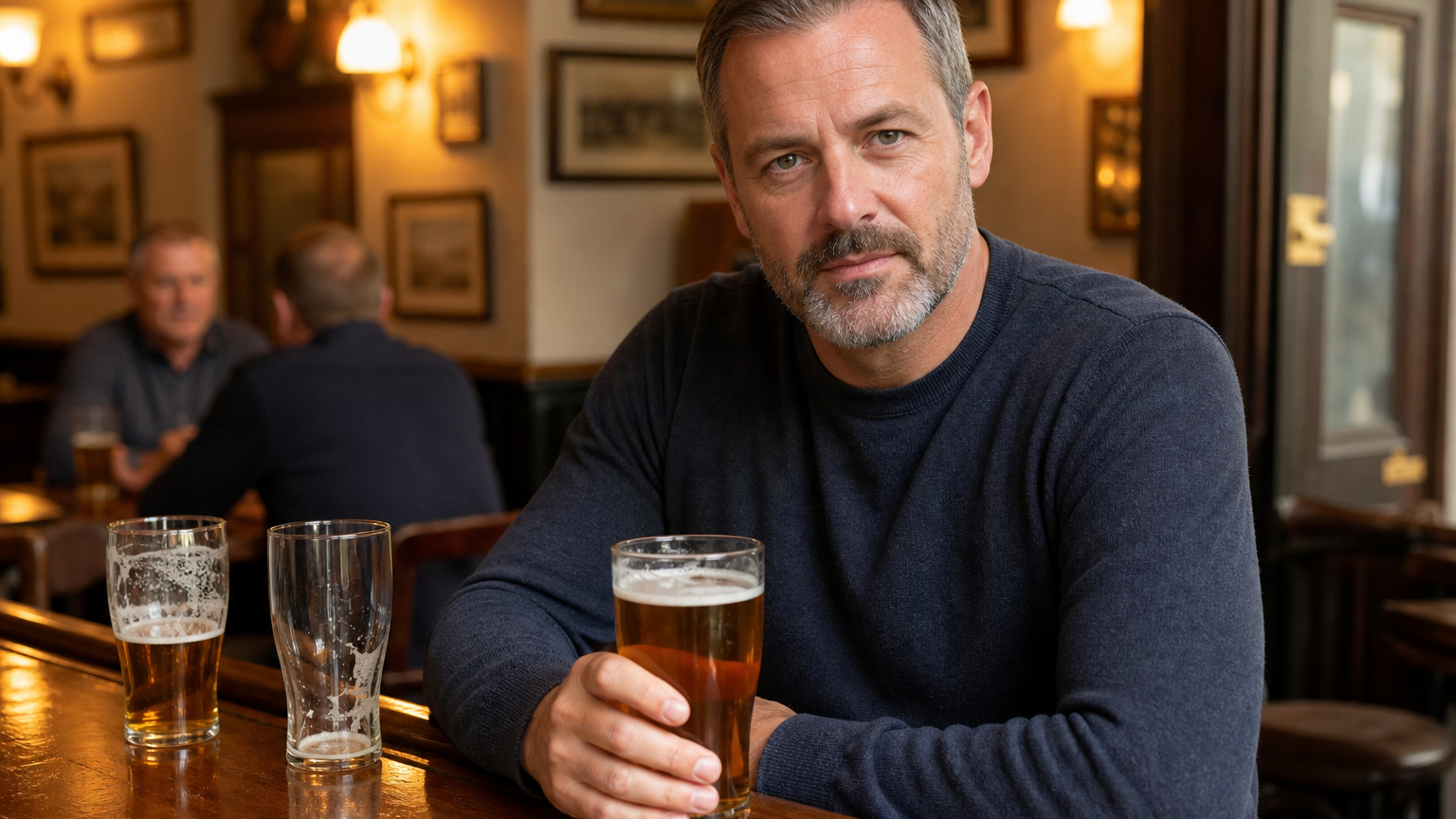
A daily beer can feel like a small, harmless reward. But what happens when that habit becomes 6 beers a day? The routine of drinking beer everyday can quietly stack up, impacting your health and your finances in ways you might not expect. The real question is, what's the cumulative toll? The cost of drinking 6 beers a day for 30 years is staggering. Here, we'll look past the temporary buzz to understand the true, long-term price of this daily ritual.
Track Your Drinking Habits! Start For Free!
Click to Know More!To figure out if a habit like drinking six beers a day is problematic, it helps to know what the official guidelines are. Health experts have defined specific patterns of drinking that are associated with higher health risks. These aren't meant to be rigid rules to make you feel bad, but rather signposts to help you gauge your own consumption. Understanding terms like "binge drinking" and "alcohol use disorder" can give you the clarity you need to assess your relationship with alcohol and decide if you want to make a change.
You’ve probably heard the term “binge drinking,” but its clinical definition might be different from what you imagine. It’s not just about drinking to the point of blacking out. According to health authorities, binge drinking is a pattern of consumption that brings your blood alcohol concentration to 0.08% or higher. This typically happens when a man has five or more drinks, or a woman has four or more drinks, in about two hours. So, if you’re having six beers in an evening, you could easily be in the binge-drinking category, depending on the timeframe. It’s a pattern that, over time, can put significant strain on your body and mind.
When a drinking pattern becomes a daily habit, it might be time to consider the possibility of Alcohol Use Disorder (AUD). AUD is a medical condition characterized by an impaired ability to stop or control alcohol use despite adverse social, occupational, or health consequences. It exists on a spectrum from mild to severe. If you find yourself drinking six or more beers daily, it's a clear signal to think about cutting back. The good news is that support is available. Programs and tools focused on mindful drinking can help you reduce your intake without the pressure of quitting entirely, empowering you to build a healthier relationship with alcohol on your own terms.
Many people believe that sticking to beer is less harmful than drinking hard liquor, but this is a common misconception. The truth is that alcohol is alcohol, and the total amount you consume is what matters most. Drinking a lot of beer can be just as damaging as drinking a lot of spirits. The long-term health risks are linked to the ethanol itself, not the form it comes in. In fact, alcohol is linked to a higher risk for several types of cancer. It’s estimated to cause about 6% of all cancers and 4% of cancer deaths in the United States. Understanding your blood alcohol content (BAC) can help you see that multiple beers can have the same impact as several shots of liquor.
According to the Centers for Disease Control and Prevention (CDC), moderate drinking is defined as two standard drinks per day (or less) for men and one standard drink per day (or less) for women. A standard drink in the United States is equivalent to 14 grams (0.6 ounces) of pure alcohol, the amount typically found in a 12-ounce beer. When we consistently consume six beers a day, we're well into the realm of heavy drinking and alcohol misuse.
When we consistently drink in excess, the health implications can be both acute and chronic. Here are seven potential health impacts of drinking six (or more) beers a day.
A standard beer carries around 150 calories. When we consume six beers, we're looking at an intake of approximately 900 extra calories a day. Over a week, that totals up to an extra 6,300 calories! Given that it takes approximately 3,500 extra calories to gain a pound, we could be looking at a potential weight gain of up to two pounds a week, if all other factors remain constant. The beer belly isn't a myth; it's the result of this high-caloric intake. And with extra weight gain comes an array of associated health issues — risk of heart disease, stroke, high blood pressure, and type 2 diabetes.


It’s not just the calories themselves, but how your body processes them when alcohol is involved. When you drink, your body treats alcohol as a priority—a toxin it needs to get rid of. It puts everything else on hold, including metabolizing the nutrients from your food (or the beer itself). So, instead of burning fat and carbohydrates for energy, your body is busy processing the alcohol. This metabolic traffic jam means that those other calories are more likely to be stored as fat, particularly around the abdomen. This is why chronic heavy drinking is so closely linked to weight gain and changes in body composition, even beyond the simple calorie count.
This disruption goes even deeper. Consistent, heavy alcohol consumption can interfere with your body's ability to manage blood sugar, leading to impaired glucose metabolism. It can also block the absorption of essential vitamins and nutrients, which your body needs to function correctly. This creates a challenging cycle: your body isn't getting the nutrients it needs, and its ability to process energy is compromised, which can lead to fatigue and further health complications. Understanding these metabolic effects is a crucial step toward making more mindful choices about drinking and protecting your long-term well-being.
Our liver is responsible for breaking down alcohol and removing it from our bodies. But there's only so much it can process at a time. Drinking six beers a day can overload our liver, leading to alcohol-induced liver disease. This condition presents itself in three stages: fatty liver, alcohol-induced hepatitis, and cirrhosis, each more severe than the previous. Cirrhosis, the final stage, is a potentially life-threatening condition in which the liver is significantly scarred and its function severely compromised.
Think of your liver as a dedicated filtration system. It works tirelessly, but it has a set processing speed. On average, the liver can metabolize the amount of alcohol in about one standard drink per hour. When you drink six beers, you’re introducing a volume of alcohol that far exceeds your liver’s hourly capacity. The excess alcohol doesn’t just wait patiently in line; it continues to circulate throughout your body, which is why your blood alcohol content (BAC) can remain elevated for hours. This constant overload is what puts the liver under immense stress, leading to the damage we discussed. For anyone who has already developed alcohol-associated liver disease, it’s crucial to understand that there is no safe amount of alcohol. The only way to prevent further harm is to stop drinking completely.
Consuming six beers a day can lead to hypertension (high blood pressure), one of the most important risk factors for premature death due to its role in promoting conditions like heart disease and stroke. Additionally, heavy alcohol use can also lead to cardiomyopathy: the heart muscle weakens, preventing the heart from pumping blood efficiently.
Beyond blood pressure, consistent heavy drinking can also throw your cholesterol levels out of whack. Alcohol can increase the levels of triglycerides, a type of fat found in your blood. When you combine high triglycerides with high LDL (bad) cholesterol or low HDL (good) cholesterol, your risk for heart attack and stroke climbs. Health authorities confirm that heavy alcohol use can increase blood cholesterol levels, a major risk factor for serious cardiovascular events. It’s a domino effect: the daily habit of drinking six beers contributes to higher cholesterol, which in turn puts significant strain on your heart's health over time, increasing the likelihood of developing chronic heart conditions.
Drinking six beers a day can lead to increased tolerance, making us drink more to feel the same effects — a surefire path towards alcohol dependence. As dependence progresses, we may feel a compulsive need to drink and experience withdrawal symptoms (tremors, hallucinations, and seizures) if we stop. Dependence can take a massive toll on our personal lives, affecting relationships, work, and our overall quality of life.
Start Your Drink Less Journey Now!
Start For Free!Mental health and alcohol consumption have a complex relationship. Alcohol might seem like a temporary escape from feelings of anxiety or depressive thoughts, but in reality, it can exacerbate these issues. Heavy drinking can lead to increased risk of mental health disorders, including depression and anxiety disorders. Furthermore, alcohol is a depressant, which means it can disrupt the balance of chemicals in our brain, leading to changes in our mood, thinking, behavior, and coordination.
Beyond mood, heavy alcohol consumption directly impacts our central nervous system. Alcohol is a depressant that slows communication between brain cells, which is why we might experience slurred speech or impaired coordination. While these effects seem temporary, consistently drinking six beers a day can lead to more permanent damage. Long-term heavy use can impair cognitive function, affecting our memory and ability to think clearly. It literally changes brain chemistry. For those who develop a physical dependence, the nervous system's response can be even more severe. Attempting to stop can trigger dangerous withdrawal symptoms like tremors and seizures as the nervous system struggles to function without alcohol, highlighting the profound physical hold it can establish.
Alcohol starts affecting our digestive system the moment it enters our mouth. Drinking six beers a day can lead to issues like gastritis (inflammation of the stomach lining) and pancreatitis (inflammation of the pancreas). Moreover, alcohol can disrupt the gut's microbiome, leading to a range of gastrointestinal symptoms like bloating, gas, diarrhea, and discomfort.
Beyond the immediate feeling of thirst the morning after, drinking six beers daily can create a chronic state of dehydration. Alcohol is a diuretic, which means it makes you lose more water than you consume by affecting your kidneys. This constant fluid loss is just one part of the problem. Heavy drinking can also interfere with nutrient absorption, preventing your body from getting the vitamins and minerals it needs from the food you eat. Even with a healthy diet, your body may struggle to process essential nutrients, leading to deficiencies that impact everything from your energy levels to your immune system. This creates a cycle where your body is both under-fueled and constantly working to manage the toxic effects of alcohol.
Regular, heavy drinking increases the risk of several types of cancer, including oral, esophagus, larynx, liver, colon, and even breast cancer. While the mechanisms linking alcohol to cancer are not fully understood, acetaldehyde, the harmful chemical alcohol becomes in our body, is believed to be carcinogenic.
While a single beer may seem innocuous, the cumulative effect of regularly drinking six beers a day can bring about these potential health risks, painting a troubling picture. Yet, it's important to remember that awareness is the first step towards change. With this understanding, we can make informed decisions about our alcohol consumption.
This doesn't mean we need to eliminate beer from our lives completely. Enjoying a chilled bottle on a hot day or celebrating a milestone with friends is perfectly fine, if that’s what we choose to do. The key is moderation. By being mindful of our consumption, understanding the risks associated with heavy drinking, and seeking help if needed, we can ensure our relationship with alcohol is balanced.
There's no escaping the fact that we are social beings, and alcohol often plays a role in our socialization. But the potential health implications of heavy drinking serve as a crucial reminder of the need for mindful drinking. It's our responsibility to take care of our health, to ensure that our lives are not just filled with years, but our years are filled with life.
Beyond the more visible effects on our organs and weight, a daily six-pack habit quietly disrupts two of our body’s most essential functions: sleep and immunity. While we might not connect a restless night or a lingering cold to our drinking habits, the link is stronger than you might think. These systems are fundamental to our daily energy and long-term health, and protecting them is a key part of overall well-being. Understanding how alcohol interferes with them can be a powerful motivator for change.
Many people reach for a drink to help them unwind and fall asleep faster, and it’s true that alcohol can make you feel drowsy. However, it’s a wolf in sheep’s clothing when it comes to rest. Even a small amount of alcohol disrupts your natural sleep cycle, particularly the crucial REM stage responsible for memory consolidation and emotional regulation. As your liver works overtime to process the alcohol, your body is kicked into a more alert state, leading to restless, fragmented sleep. You might wake up frequently throughout the night, leaving you feeling groggy and unrested the next day, no matter how many hours you spent in bed.
If you find yourself catching every cold that goes around, your drinking habits could be the culprit. Heavy, consistent alcohol consumption can weaken your immune system, reducing your body's ability to produce the white blood cells needed to fight off infections. This leaves you more vulnerable to getting sick from common viruses and bacteria. Over time, this suppressed immune response can make it harder for your body to recover from illness and can contribute to chronic inflammation, which is linked to a host of other health problems. A strong immune system is your best defense, and heavy drinking lowers its guard.
Sometimes, seeing the data can put things into perspective. The numbers surrounding heavy alcohol use aren't just abstract figures; they represent real-life consequences that affect individuals and families every day. Understanding these statistics can be a powerful motivator for re-evaluating your relationship with alcohol and making choices that better support your long-term health and happiness. The facts paint a clear picture of the risks involved with excessive drinking, moving the conversation from abstract worries to concrete realities that are hard to ignore.
The long-term consequences of heavy drinking can be profound. Research shows that individuals with alcohol use disorder (AUD) may have a significantly shorter life expectancy—potentially by as much as 24 to 28 years compared to the general population. This startling statistic reflects the cumulative damage that chronic alcohol misuse can inflict on nearly every system in the body, from the liver and heart to the brain. While this number is jarring, it’s also a powerful reminder of what’s at stake and the incredible health benefits that come with reducing your intake.
Looking at the bigger picture, excessive alcohol use is a major public health concern. In the United States, it’s considered the third leading cause of preventable death. The key word here is "preventable." This statistic highlights that the most severe outcomes associated with alcohol are not inevitable. By making conscious changes to our drinking habits, we can actively reduce our risk of developing alcohol-related diseases and improve our odds of living a long, healthy life. It’s a choice that puts the power back in your hands.
While long-term diseases are a major concern, the immediate risks of heavy drinking are just as serious. Consuming six beers in a session significantly impairs judgment, coordination, and reaction time. This can lead to a host of dangerous situations, including accidents, falls, and car crashes. It also increases the likelihood of engaging in risky behaviors, experiencing alcohol poisoning, or having memory blackouts. Understanding your blood alcohol content (BAC) can help you recognize when you’ve had too much, but the safest bet is to avoid drinking to a level that puts you and others in harm's way.
Deciding to change your drinking habits is a huge and positive step. But how you approach that change matters. It’s not always as simple as just stopping, and it’s important to be armed with the right information to ensure you’re making changes in a way that is both safe and sustainable. Before you begin, taking a moment to understand the process can set you up for long-term success and help you avoid potential pitfalls along the way. This preparation is just as important as the decision itself.
If you’ve been drinking heavily every day, your body may have developed a physical dependence on alcohol. In this situation, stopping abruptly—often called going "cold turkey"—can be dangerous and even life-threatening. Alcohol withdrawal syndrome (AWS) can cause severe symptoms, including tremors, anxiety, hallucinations, and seizures. For this reason, it is absolutely essential to speak with a doctor or medical professional before making any sudden, drastic changes to your alcohol intake. They can help you create a safe plan to reduce your consumption without putting your health at risk.
The idea of quitting forever can feel overwhelming, which is why a gradual, supported approach is often more effective. This is where tools designed for mindful drinking can make a world of difference. The Reframe app, for example, is built on a foundation of neuroscience and psychology to help you change the underlying habits that drive you to drink. Instead of focusing on an all-or-nothing approach, it provides a personalized program, daily support, and a toolkit of coping mechanisms to help you cut back at a pace that feels right for you. This method empowers you to build a healthier relationship with alcohol that lasts.
It’s important to remember that alcohol doesn’t affect everyone in the same way. Your personal risk for developing health problems is influenced by a unique combination of factors, including your genetics, family history, body weight, and any pre-existing health conditions. For example, someone with a family history of liver disease may be at a higher risk than someone without. As noted by health organizations like the NHS, these individual variables mean there’s no universal "safe" amount of alcohol. Being honest with yourself about your personal risk factors is a key part of making informed decisions about your health.
You’ve probably heard that a glass of red wine can be good for your heart, but this idea requires a closer look. Any potential health benefits linked to alcohol are associated with true moderation—defined as one drink per day for women and up to two for men. When you’re drinking six beers a day, you are far outside this range, and any minor benefits are completely erased by the significant health risks. Heavy drinking cancels out any positive effects and instead puts immense strain on your heart, liver, and overall health. Relying on a potential small benefit to justify excessive consumption is a dangerous trade-off.
I drink about six beers a day but I feel fine. Why should I be concerned? It's common to feel okay on a day-to-day basis even with a heavy drinking habit, but many of the most serious risks develop silently over time. Think of it like this: the damage to your liver, heart, and metabolism doesn't happen overnight. Instead, it's a cumulative effect. Each day, the habit adds a little more strain, and you might not notice the consequences until they become significant health problems. The concern is less about how you feel today and more about protecting your long-term health from these gradual impacts.
I thought beer was a lighter option than liquor. Is that true? This is a very common misconception. When it comes to your health, what matters is the total amount of alcohol (ethanol) you consume, not the type of drink it comes in. A standard 12-ounce beer has about the same amount of alcohol as a shot of liquor or a glass of wine. Drinking six beers can put just as much stress on your body as having six cocktails. The health risks are tied to the alcohol itself, so viewing beer as a "safer" choice can be misleading.
I want to stop drinking so much, but I'm worried about quitting cold turkey. What's the safest way to start? That's a really important concern to have. If your body has become accustomed to a daily intake of alcohol, stopping suddenly can be dangerous and lead to severe withdrawal symptoms. The safest first step is always to talk to a doctor. They can help you assess your situation and create a plan to cut back safely. Often, a gradual reduction is a more sustainable and safer approach than stopping all at once, which is a method that focuses on building new habits rather than just removing an old one.
Besides the major health risks, what are some of the less obvious ways this habit could be affecting me? A daily six-pack habit can disrupt your life in ways you might not connect to drinking. For example, alcohol is notorious for wrecking sleep quality. While it might make you feel drowsy at first, it disrupts your sleep cycle later in the night, leaving you feeling tired no matter how long you were in bed. It can also weaken your immune system, making you more likely to catch colds, and subtly affect your mood and cognitive function, making it harder to think clearly and manage stress.
Will I actually see a difference in my weight if I cut back on beer? Yes, it’s very likely you will. A single beer can contain around 150 calories, so a six-pack adds up to about 900 extra calories a day. Beyond the calories themselves, alcohol changes how your body processes energy. Your system prioritizes getting rid of the alcohol, which means other calories from your food are more likely to be stored as fat. Reducing your beer intake removes those empty calories and allows your metabolism to function more effectively, which can lead to noticeable weight loss.
A daily beer can feel like a small, harmless reward. But what happens when that habit becomes 6 beers a day? The routine of drinking beer everyday can quietly stack up, impacting your health and your finances in ways you might not expect. The real question is, what's the cumulative toll? The cost of drinking 6 beers a day for 30 years is staggering. Here, we'll look past the temporary buzz to understand the true, long-term price of this daily ritual.
Track Your Drinking Habits! Start For Free!
Click to Know More!To figure out if a habit like drinking six beers a day is problematic, it helps to know what the official guidelines are. Health experts have defined specific patterns of drinking that are associated with higher health risks. These aren't meant to be rigid rules to make you feel bad, but rather signposts to help you gauge your own consumption. Understanding terms like "binge drinking" and "alcohol use disorder" can give you the clarity you need to assess your relationship with alcohol and decide if you want to make a change.
You’ve probably heard the term “binge drinking,” but its clinical definition might be different from what you imagine. It’s not just about drinking to the point of blacking out. According to health authorities, binge drinking is a pattern of consumption that brings your blood alcohol concentration to 0.08% or higher. This typically happens when a man has five or more drinks, or a woman has four or more drinks, in about two hours. So, if you’re having six beers in an evening, you could easily be in the binge-drinking category, depending on the timeframe. It’s a pattern that, over time, can put significant strain on your body and mind.
When a drinking pattern becomes a daily habit, it might be time to consider the possibility of Alcohol Use Disorder (AUD). AUD is a medical condition characterized by an impaired ability to stop or control alcohol use despite adverse social, occupational, or health consequences. It exists on a spectrum from mild to severe. If you find yourself drinking six or more beers daily, it's a clear signal to think about cutting back. The good news is that support is available. Programs and tools focused on mindful drinking can help you reduce your intake without the pressure of quitting entirely, empowering you to build a healthier relationship with alcohol on your own terms.
Many people believe that sticking to beer is less harmful than drinking hard liquor, but this is a common misconception. The truth is that alcohol is alcohol, and the total amount you consume is what matters most. Drinking a lot of beer can be just as damaging as drinking a lot of spirits. The long-term health risks are linked to the ethanol itself, not the form it comes in. In fact, alcohol is linked to a higher risk for several types of cancer. It’s estimated to cause about 6% of all cancers and 4% of cancer deaths in the United States. Understanding your blood alcohol content (BAC) can help you see that multiple beers can have the same impact as several shots of liquor.
According to the Centers for Disease Control and Prevention (CDC), moderate drinking is defined as two standard drinks per day (or less) for men and one standard drink per day (or less) for women. A standard drink in the United States is equivalent to 14 grams (0.6 ounces) of pure alcohol, the amount typically found in a 12-ounce beer. When we consistently consume six beers a day, we're well into the realm of heavy drinking and alcohol misuse.
When we consistently drink in excess, the health implications can be both acute and chronic. Here are seven potential health impacts of drinking six (or more) beers a day.
A standard beer carries around 150 calories. When we consume six beers, we're looking at an intake of approximately 900 extra calories a day. Over a week, that totals up to an extra 6,300 calories! Given that it takes approximately 3,500 extra calories to gain a pound, we could be looking at a potential weight gain of up to two pounds a week, if all other factors remain constant. The beer belly isn't a myth; it's the result of this high-caloric intake. And with extra weight gain comes an array of associated health issues — risk of heart disease, stroke, high blood pressure, and type 2 diabetes.
It’s not just the calories themselves, but how your body processes them when alcohol is involved. When you drink, your body treats alcohol as a priority—a toxin it needs to get rid of. It puts everything else on hold, including metabolizing the nutrients from your food (or the beer itself). So, instead of burning fat and carbohydrates for energy, your body is busy processing the alcohol. This metabolic traffic jam means that those other calories are more likely to be stored as fat, particularly around the abdomen. This is why chronic heavy drinking is so closely linked to weight gain and changes in body composition, even beyond the simple calorie count.
This disruption goes even deeper. Consistent, heavy alcohol consumption can interfere with your body's ability to manage blood sugar, leading to impaired glucose metabolism. It can also block the absorption of essential vitamins and nutrients, which your body needs to function correctly. This creates a challenging cycle: your body isn't getting the nutrients it needs, and its ability to process energy is compromised, which can lead to fatigue and further health complications. Understanding these metabolic effects is a crucial step toward making more mindful choices about drinking and protecting your long-term well-being.
Our liver is responsible for breaking down alcohol and removing it from our bodies. But there's only so much it can process at a time. Drinking six beers a day can overload our liver, leading to alcohol-induced liver disease. This condition presents itself in three stages: fatty liver, alcohol-induced hepatitis, and cirrhosis, each more severe than the previous. Cirrhosis, the final stage, is a potentially life-threatening condition in which the liver is significantly scarred and its function severely compromised.
Think of your liver as a dedicated filtration system. It works tirelessly, but it has a set processing speed. On average, the liver can metabolize the amount of alcohol in about one standard drink per hour. When you drink six beers, you’re introducing a volume of alcohol that far exceeds your liver’s hourly capacity. The excess alcohol doesn’t just wait patiently in line; it continues to circulate throughout your body, which is why your blood alcohol content (BAC) can remain elevated for hours. This constant overload is what puts the liver under immense stress, leading to the damage we discussed. For anyone who has already developed alcohol-associated liver disease, it’s crucial to understand that there is no safe amount of alcohol. The only way to prevent further harm is to stop drinking completely.
Consuming six beers a day can lead to hypertension (high blood pressure), one of the most important risk factors for premature death due to its role in promoting conditions like heart disease and stroke. Additionally, heavy alcohol use can also lead to cardiomyopathy: the heart muscle weakens, preventing the heart from pumping blood efficiently.
Beyond blood pressure, consistent heavy drinking can also throw your cholesterol levels out of whack. Alcohol can increase the levels of triglycerides, a type of fat found in your blood. When you combine high triglycerides with high LDL (bad) cholesterol or low HDL (good) cholesterol, your risk for heart attack and stroke climbs. Health authorities confirm that heavy alcohol use can increase blood cholesterol levels, a major risk factor for serious cardiovascular events. It’s a domino effect: the daily habit of drinking six beers contributes to higher cholesterol, which in turn puts significant strain on your heart's health over time, increasing the likelihood of developing chronic heart conditions.
Drinking six beers a day can lead to increased tolerance, making us drink more to feel the same effects — a surefire path towards alcohol dependence. As dependence progresses, we may feel a compulsive need to drink and experience withdrawal symptoms (tremors, hallucinations, and seizures) if we stop. Dependence can take a massive toll on our personal lives, affecting relationships, work, and our overall quality of life.
Start Your Drink Less Journey Now!
Start For Free!Mental health and alcohol consumption have a complex relationship. Alcohol might seem like a temporary escape from feelings of anxiety or depressive thoughts, but in reality, it can exacerbate these issues. Heavy drinking can lead to increased risk of mental health disorders, including depression and anxiety disorders. Furthermore, alcohol is a depressant, which means it can disrupt the balance of chemicals in our brain, leading to changes in our mood, thinking, behavior, and coordination.
Beyond mood, heavy alcohol consumption directly impacts our central nervous system. Alcohol is a depressant that slows communication between brain cells, which is why we might experience slurred speech or impaired coordination. While these effects seem temporary, consistently drinking six beers a day can lead to more permanent damage. Long-term heavy use can impair cognitive function, affecting our memory and ability to think clearly. It literally changes brain chemistry. For those who develop a physical dependence, the nervous system's response can be even more severe. Attempting to stop can trigger dangerous withdrawal symptoms like tremors and seizures as the nervous system struggles to function without alcohol, highlighting the profound physical hold it can establish.
Alcohol starts affecting our digestive system the moment it enters our mouth. Drinking six beers a day can lead to issues like gastritis (inflammation of the stomach lining) and pancreatitis (inflammation of the pancreas). Moreover, alcohol can disrupt the gut's microbiome, leading to a range of gastrointestinal symptoms like bloating, gas, diarrhea, and discomfort.
Beyond the immediate feeling of thirst the morning after, drinking six beers daily can create a chronic state of dehydration. Alcohol is a diuretic, which means it makes you lose more water than you consume by affecting your kidneys. This constant fluid loss is just one part of the problem. Heavy drinking can also interfere with nutrient absorption, preventing your body from getting the vitamins and minerals it needs from the food you eat. Even with a healthy diet, your body may struggle to process essential nutrients, leading to deficiencies that impact everything from your energy levels to your immune system. This creates a cycle where your body is both under-fueled and constantly working to manage the toxic effects of alcohol.
Regular, heavy drinking increases the risk of several types of cancer, including oral, esophagus, larynx, liver, colon, and even breast cancer. While the mechanisms linking alcohol to cancer are not fully understood, acetaldehyde, the harmful chemical alcohol becomes in our body, is believed to be carcinogenic.
While a single beer may seem innocuous, the cumulative effect of regularly drinking six beers a day can bring about these potential health risks, painting a troubling picture. Yet, it's important to remember that awareness is the first step towards change. With this understanding, we can make informed decisions about our alcohol consumption.
This doesn't mean we need to eliminate beer from our lives completely. Enjoying a chilled bottle on a hot day or celebrating a milestone with friends is perfectly fine, if that’s what we choose to do. The key is moderation. By being mindful of our consumption, understanding the risks associated with heavy drinking, and seeking help if needed, we can ensure our relationship with alcohol is balanced.
There's no escaping the fact that we are social beings, and alcohol often plays a role in our socialization. But the potential health implications of heavy drinking serve as a crucial reminder of the need for mindful drinking. It's our responsibility to take care of our health, to ensure that our lives are not just filled with years, but our years are filled with life.
Beyond the more visible effects on our organs and weight, a daily six-pack habit quietly disrupts two of our body’s most essential functions: sleep and immunity. While we might not connect a restless night or a lingering cold to our drinking habits, the link is stronger than you might think. These systems are fundamental to our daily energy and long-term health, and protecting them is a key part of overall well-being. Understanding how alcohol interferes with them can be a powerful motivator for change.
Many people reach for a drink to help them unwind and fall asleep faster, and it’s true that alcohol can make you feel drowsy. However, it’s a wolf in sheep’s clothing when it comes to rest. Even a small amount of alcohol disrupts your natural sleep cycle, particularly the crucial REM stage responsible for memory consolidation and emotional regulation. As your liver works overtime to process the alcohol, your body is kicked into a more alert state, leading to restless, fragmented sleep. You might wake up frequently throughout the night, leaving you feeling groggy and unrested the next day, no matter how many hours you spent in bed.
If you find yourself catching every cold that goes around, your drinking habits could be the culprit. Heavy, consistent alcohol consumption can weaken your immune system, reducing your body's ability to produce the white blood cells needed to fight off infections. This leaves you more vulnerable to getting sick from common viruses and bacteria. Over time, this suppressed immune response can make it harder for your body to recover from illness and can contribute to chronic inflammation, which is linked to a host of other health problems. A strong immune system is your best defense, and heavy drinking lowers its guard.
Sometimes, seeing the data can put things into perspective. The numbers surrounding heavy alcohol use aren't just abstract figures; they represent real-life consequences that affect individuals and families every day. Understanding these statistics can be a powerful motivator for re-evaluating your relationship with alcohol and making choices that better support your long-term health and happiness. The facts paint a clear picture of the risks involved with excessive drinking, moving the conversation from abstract worries to concrete realities that are hard to ignore.
The long-term consequences of heavy drinking can be profound. Research shows that individuals with alcohol use disorder (AUD) may have a significantly shorter life expectancy—potentially by as much as 24 to 28 years compared to the general population. This startling statistic reflects the cumulative damage that chronic alcohol misuse can inflict on nearly every system in the body, from the liver and heart to the brain. While this number is jarring, it’s also a powerful reminder of what’s at stake and the incredible health benefits that come with reducing your intake.
Looking at the bigger picture, excessive alcohol use is a major public health concern. In the United States, it’s considered the third leading cause of preventable death. The key word here is "preventable." This statistic highlights that the most severe outcomes associated with alcohol are not inevitable. By making conscious changes to our drinking habits, we can actively reduce our risk of developing alcohol-related diseases and improve our odds of living a long, healthy life. It’s a choice that puts the power back in your hands.
While long-term diseases are a major concern, the immediate risks of heavy drinking are just as serious. Consuming six beers in a session significantly impairs judgment, coordination, and reaction time. This can lead to a host of dangerous situations, including accidents, falls, and car crashes. It also increases the likelihood of engaging in risky behaviors, experiencing alcohol poisoning, or having memory blackouts. Understanding your blood alcohol content (BAC) can help you recognize when you’ve had too much, but the safest bet is to avoid drinking to a level that puts you and others in harm's way.
Deciding to change your drinking habits is a huge and positive step. But how you approach that change matters. It’s not always as simple as just stopping, and it’s important to be armed with the right information to ensure you’re making changes in a way that is both safe and sustainable. Before you begin, taking a moment to understand the process can set you up for long-term success and help you avoid potential pitfalls along the way. This preparation is just as important as the decision itself.
If you’ve been drinking heavily every day, your body may have developed a physical dependence on alcohol. In this situation, stopping abruptly—often called going "cold turkey"—can be dangerous and even life-threatening. Alcohol withdrawal syndrome (AWS) can cause severe symptoms, including tremors, anxiety, hallucinations, and seizures. For this reason, it is absolutely essential to speak with a doctor or medical professional before making any sudden, drastic changes to your alcohol intake. They can help you create a safe plan to reduce your consumption without putting your health at risk.
The idea of quitting forever can feel overwhelming, which is why a gradual, supported approach is often more effective. This is where tools designed for mindful drinking can make a world of difference. The Reframe app, for example, is built on a foundation of neuroscience and psychology to help you change the underlying habits that drive you to drink. Instead of focusing on an all-or-nothing approach, it provides a personalized program, daily support, and a toolkit of coping mechanisms to help you cut back at a pace that feels right for you. This method empowers you to build a healthier relationship with alcohol that lasts.
It’s important to remember that alcohol doesn’t affect everyone in the same way. Your personal risk for developing health problems is influenced by a unique combination of factors, including your genetics, family history, body weight, and any pre-existing health conditions. For example, someone with a family history of liver disease may be at a higher risk than someone without. As noted by health organizations like the NHS, these individual variables mean there’s no universal "safe" amount of alcohol. Being honest with yourself about your personal risk factors is a key part of making informed decisions about your health.
You’ve probably heard that a glass of red wine can be good for your heart, but this idea requires a closer look. Any potential health benefits linked to alcohol are associated with true moderation—defined as one drink per day for women and up to two for men. When you’re drinking six beers a day, you are far outside this range, and any minor benefits are completely erased by the significant health risks. Heavy drinking cancels out any positive effects and instead puts immense strain on your heart, liver, and overall health. Relying on a potential small benefit to justify excessive consumption is a dangerous trade-off.
I drink about six beers a day but I feel fine. Why should I be concerned? It's common to feel okay on a day-to-day basis even with a heavy drinking habit, but many of the most serious risks develop silently over time. Think of it like this: the damage to your liver, heart, and metabolism doesn't happen overnight. Instead, it's a cumulative effect. Each day, the habit adds a little more strain, and you might not notice the consequences until they become significant health problems. The concern is less about how you feel today and more about protecting your long-term health from these gradual impacts.
I thought beer was a lighter option than liquor. Is that true? This is a very common misconception. When it comes to your health, what matters is the total amount of alcohol (ethanol) you consume, not the type of drink it comes in. A standard 12-ounce beer has about the same amount of alcohol as a shot of liquor or a glass of wine. Drinking six beers can put just as much stress on your body as having six cocktails. The health risks are tied to the alcohol itself, so viewing beer as a "safer" choice can be misleading.
I want to stop drinking so much, but I'm worried about quitting cold turkey. What's the safest way to start? That's a really important concern to have. If your body has become accustomed to a daily intake of alcohol, stopping suddenly can be dangerous and lead to severe withdrawal symptoms. The safest first step is always to talk to a doctor. They can help you assess your situation and create a plan to cut back safely. Often, a gradual reduction is a more sustainable and safer approach than stopping all at once, which is a method that focuses on building new habits rather than just removing an old one.
Besides the major health risks, what are some of the less obvious ways this habit could be affecting me? A daily six-pack habit can disrupt your life in ways you might not connect to drinking. For example, alcohol is notorious for wrecking sleep quality. While it might make you feel drowsy at first, it disrupts your sleep cycle later in the night, leaving you feeling tired no matter how long you were in bed. It can also weaken your immune system, making you more likely to catch colds, and subtly affect your mood and cognitive function, making it harder to think clearly and manage stress.
Will I actually see a difference in my weight if I cut back on beer? Yes, it’s very likely you will. A single beer can contain around 150 calories, so a six-pack adds up to about 900 extra calories a day. Beyond the calories themselves, alcohol changes how your body processes energy. Your system prioritizes getting rid of the alcohol, which means other calories from your food are more likely to be stored as fat. Reducing your beer intake removes those empty calories and allows your metabolism to function more effectively, which can lead to noticeable weight loss.
Seven drinks spread over a week or crammed into two nights? Here's what the research says about how each drinking pattern damages the body differently.

Although it isn't a treatment for alcohol use disorder (AUD), the Reframe app can help you cut back on drinking gradually with the science-backed knowledge to empower you 100% of the way. Our proven program has helped millions of people around the world drink less and live more. And we want to help you get there, too!
The Reframe app equips you with the knowledge and skills you need to not only survive drinking less, but to thrive while you navigate the journey. Our daily research-backed readings teach you the neuroscience of alcohol, and our in-app Toolkit provides the resources and activities you need to navigate each challenge.
You'll meet millions of fellow Reframers in our 24/7 Forum chat and daily Zoom check-in meetings. Receive encouragement from people worldwide who know exactly what you're going through! You'll also have the opportunity to connect with our licensed Reframe coaches for more personalized guidance.
Plus, we're always introducing new features to optimize your in-app experience. We recently launched our in-app chatbot, Melody, powered by the world's most powerful AI technology. Melody is here to help as you adjust to a life with less (or no) alcohol.
And that's not all! Every month, we launch fun challenges, like Dry/Damp January, Mental Health May, and Outdoorsy June. You won't want to miss out on the chance to participate alongside fellow Reframers (or solo if that's more your thing!).
The Reframe app is free for 7 days, so you don't have anything to lose by trying it. Are you ready to feel empowered and discover life beyond alcohol? Then download our app through the App Store or Google Play today!
At the same weekly volume, neither pattern is safe, and they damage you in different ways. Concentrating drinks into a weekend drives a higher peak blood alcohol level and a bigger acetaldehyde spike, which hits the heart, brain, and stomach harder in the short term. Spreading the same drinks across every night gives the liver almost no recovery window and builds tolerance and nightly habit cues faster. Total weekly volume still predicts long-term risk like cancer and liver disease more strongly than distribution, so trading one pattern for the other rarely lowers your actual risk. The most protective change is not choosing a pattern but lowering the total: fewer drinks per occasion plus several genuinely alcohol-free days each week.
Most of us have run this argument in our heads at some point. The nightly-glass-of-wine person thinks the Saturday-night crowd is the one with the problem. The Saturday-night crowd points out that they go six days without touching anything. Both sides feel a little smug, and both are partly wrong.
Here's the thing that makes this comparison interesting rather than academic: the research doesn't actually crown a winner. What it does show is that frequency and intensity are two separate dials, each doing its own kind of damage, and that the number most strongly tied to long-term disease is the one almost nobody tracks. Let's take the daily drinking vs weekend binge drinking question seriously, hold the weekly total constant, and look at what each pattern does organ by organ.
Neither pattern comes out clean at matched volume. The honest answer is that they distribute harm differently: weekend concentration loads risk onto single nights (injury, arrhythmia, blackout), while daily drinking loads it onto continuous exposure (no recovery interval, faster tolerance, stronger habit conditioning). No major body of research names one as the safer choice.
To make this comparison mean anything, we need a unit. A US standard drink contains about 14 grams of pure alcohol, which the National Institute on Alcohol Abuse and Alcoholism translates as roughly 12 ounces of regular beer, 5 ounces of wine, or 1.5 ounces of spirits. That same page defines binge drinking as the pattern that brings blood alcohol concentration to 0.08% or higher, which typically means about five or more drinks for men or four or more for women in roughly two hours.
So picture two people, each drinking 7 standard drinks a week. Person A has one glass of wine with dinner, every night, seven nights. Person B has nothing Monday through Thursday, then three drinks Friday and four drinks Saturday. Same 98 grams of ethanol. Wildly different experiences of it.
Person B crosses the binge threshold on Saturday. Person A never comes close to it on any single night. If you only asked "how much do you drink per week?" you'd call them identical. If you only asked "do you binge?" you'd call one of them fine.
Researchers have noticed this problem too. A Norwegian cohort that followed adults for more than two decades concluded that questions about drinking frequency and questions about binge drinking capture different effects of alcohol use within the same population, which is a polite way of saying that the two measures don't collapse into one another. Research suggests you can't rank them on a single axis because they aren't measuring the same thing.
You can see the same two-dial structure baked into official definitions. The NIAAA's Core Resource notes that heavy drinking has both a per-day and a per-week arm: for women, 4 or more drinks on any day or 8 or more per week; for men, 5 or more drinks on any day or 15 or more per week. You can trip either one without tripping the other. That is the structural point of this entire post: there are two levers, and rearranging your calendar only touches one of them.
One honest caveat before we go further. Most large-scale epidemiology measures drinking through self-reported questionnaires, which capture weekly averages poorly and per-occasion peaks even worse. When you read a study comparing patterns, the underlying exposure data is noisier than the confidence intervals make it look.

Blood alcohol concentration is a measure of concentration, not quantity, and that distinction drives most of the short-term difference between the two patterns. Four drinks in two hours produces a peak your body has to ride out; one drink a night for four nights never builds a peak at all. The damage from high peaks is largely damage from having too much ethanol in circulation at once.
Your liver clears alcohol at a roughly fixed rate, commonly described as about one standard drink per hour, and that rate doesn't speed up because you asked it to. Drink faster than that and the excess doesn't wait politely in your stomach. It stacks in your bloodstream, and your BAC climbs until intake slows below the clearance rate. Think of it like water going into a sink with a fixed drain: the drain size is the same whether you turn the tap on low or blast it.
What's in that rising tide matters. Alcohol is broken down into acetaldehyde, which the National Cancer Institute describes as a carcinogenic metabolite produced mainly in the liver by alcohol dehydrogenase. A 2025 National Academies review goes further on the mechanism, describing acetaldehyde as a highly reactive substance with DNA-damaging properties that forms adducts leading to mutations and DNA strand breaks. Concentrating your week's drinks into two nights means producing that metabolite in a short, dense burst rather than a trickle.
Then there's everything peak BAC does above the neck and outside the body. Blackouts are a peak-phenomenon, not a volume-phenomenon. So are falls, vomiting, and at the extreme end, alcohol poisoning. High BAC is also where judgment degrades exactly when it's needed most, which is how "I'll have two" becomes five and how people end up behind a wheel. If you've ever wondered what happens when you black out from drinking, the short version is that it's a memory-encoding failure tied to how fast your BAC rose, not to your weekly total.
This is why a reassuring weekly average can hide a genuinely risky pattern. Someone who reports "about seven drinks a week" might be having one a night, or might be having all seven on Saturday between 9pm and 1am. The average is the same. The Saturday is not.
The liver is where the volume-versus-pattern argument gets most interesting, because it cares about both. It processes ethanol at a fixed rate no matter how you arrange the drinking, so the total weekly load is what determines how much work it does. But the timing determines whether it ever gets to do anything else.
A heavy single session delivers a concentrated wave of acetaldehyde and oxidative stress, and clinicians often describe a short-lived fat-accumulation response in the liver after a big night. It's a shock followed by a recovery period. Daily drinking inverts that: smaller shocks, but the recovery period never arrives. There's no stretch of days where the liver is simply metabolizing the ordinary business of a body rather than clearing ethanol.
Over years, what's generally understood to drive steatosis, fibrosis, and eventually cirrhosis is cumulative grams of ethanol, with pattern acting as a modifier rather than the main event. That's the uncomfortable math for the nightly-glass crowd: a small nightly dose is still a dose, and it adds up on the same ledger as the weekend's.
There's real evidence that stepping away helps, though it's more modest than the January headlines suggest. A prospective observational study in BMJ Open found that one month without alcohol was associated with improvements in insulin resistance, weight, blood pressure, and cancer-related growth factors among moderate-to-heavy drinkers, with no equivalent changes in a comparison group who kept drinking. The important caveats: participants self-selected into the abstinence group, it wasn't randomized, and people with known liver disease or dependence were excluded.
So drink-free days appear to do something real. What they do not do is cancel out a high weekly total. Four dry days followed by a three-day blowout is not the same intervention as four dry days followed by moderate drinking, even if the calendar looks similar.
As for blood work, liver enzymes like ALT, AST, and GGT are widely used as rough markers, but they're blunt instruments. They can stay in the normal range while damage accumulates, and they can drift up for reasons that have nothing to do with drinking. A normal panel is not a permission slip, and an abnormal one is a conversation with a doctor rather than a diagnosis on its own. If you want more on what those numbers do and don't say, we've written about the signs your liver is healing.
Here the two patterns diverge most sharply, and it's the clearest case where concentration is genuinely worse in the short run. Heavy single sessions can trigger acute rhythm disturbances. Daily drinking does something quieter and more cumulative to your resting numbers.
The acute version has a nickname. A 2025 literature review describes holiday heart syndrome as atrial fibrillation and other tachyarrhythmias following episodes of binge drinking in people with no pre-existing cardiac disease, typically presenting as palpitations and sometimes chest discomfort, breathlessness, or dizziness. The review describes ethanol as having a direct arrhythmogenic effect, which is a clinical way of saying your heart's electrical timing doesn't love a big night. We've covered holiday heart syndrome and how to reduce the risk in more depth if that's your concern.
In the 24 to 48 hours after a heavy session, many people also notice an uncomfortable rebound: elevated resting heart rate, a blood pressure bump, that wired-but-exhausted feeling. It's the flip side of a depressant clearing your system, and it's part of why Sunday can feel physically worse than Saturday night did.
Daily drinking produces less drama and more drift. Large population research supports the link between regular intake and higher blood pressure. In the HAPIEE study, which sampled more than 15,000 adults across Russia, Poland, and the Czech Republic who weren't taking blood pressure medication, annual alcohol intake and drinking frequency were both strongly associated with blood pressure in men. The study was designed specifically to test whether binge pattern affects blood pressure separately from total volume, which tells you the field treats these as two distinct exposures. It's cross-sectional, so read it as a strong association rather than a settled causal story.
Both patterns raise cardiovascular risk as volume climbs. And the old line about moderate daily drinking protecting the heart has not held up well under newer analyses, which have gotten much better at separating light drinkers from people who quit because they were already sick. If you're tracking your own numbers, our piece on how to slow your heart rate after drinking covers what people commonly see.
Sleep is where almost everyone gets fooled, and both patterns do the fooling. Alcohol reliably shortens the time it takes to fall asleep, which is why it has a reputation as a sleep aid, and then it degrades the back half of the night. Binges do this dramatically. Nightly drinking does it quietly, every night, so there's no unimpaired baseline to compare against.
After a heavy session, the second half of the night tends to fragment: more awakenings, suppressed REM, the 3am stare at the ceiling. After a single nightly drink, the disruption is smaller but it's also constant, which means the sleep debt compounds instead of resolving. Person A in our matched-volume example may never have a spectacularly bad night, but they also may not have had a genuinely restorative one in months. Our guide to how alcohol affects sleep quality digs into the mechanics.
The morning-after anxiety that follows a big night is generally understood as a rebound effect: alcohol enhances the brain's calming signaling while it's on board, and the system overcorrects in the other direction as it clears. Bigger swing, bigger crash. That's why hangxiety tends to scale with how much you drank in a session rather than how many sessions you've had.
Daily drinking produces a different texture. Instead of an acute crash, many people describe a persistent low-grade flatness, a morning irritability that they stop attributing to alcohol because it's simply how mornings feel now. Technically that morning state often includes a mild withdrawal component, which is easy to miss when it never gets severe enough to be alarming.
There's one claim worth being careful about. Researchers have documented a kindling process in which the severity of withdrawal symptoms increases after repeated withdrawal episodes in people who drink heavily and regularly. That's a real and well-supported phenomenon, but it's been studied in the context of repeated clinical detoxification, not in weekend drinkers who feel rough on Sunday. It's a reason to take repeated heavy-withdrawal cycles seriously, not a reason to assume every Saturday night is compounding.
On cognition, the split is familiar by now: blackouts belong to peak BAC, while chronic daily exposure is more associated with a gradual dulling that's harder to notice from the inside. Neither pattern gives you the restorative sleep or the mental clarity people believe they're buying.
Daily drinking has the edge here, and it's not particularly close. A nightly drink is a near-perfect conditioning setup: same time, same cue, same reward, repeated hundreds of times a year. Habits form on repetition, and nothing repeats like a nightly ritual.
Tolerance follows. With regular exposure, the same number of drinks stops producing the same effect, and the usual response isn't to accept a smaller effect but to add a little more. That creep is slow enough to be invisible month to month and obvious year to year. Our piece on alcohol tolerance and its risks covers why rising tolerance is a warning sign rather than a party trick.
Weekend drinking builds its own loop, just a different shape. The conditioning gets welded to context: Friday, the end of the workweek, a specific bar, a specific group. Cravings under that pattern can be intense but tend to be situation-bound, which is why weekend drinkers often report no urge at all on a Tuesday and enormous urge at 6pm Friday. That's not weaker conditioning; it's narrower conditioning.
Physical dependence is the more serious divergence. Sustained daily exposure carries the higher risk of the body adapting to alcohol's constant presence, which means stopping abruptly can produce genuine withdrawal symptoms. That's a medical situation, not a character issue, and we'll come back to it.
The escalation patterns differ too. People who drink daily tend to add volume: the pour gets bigger, the second glass becomes standard. People who drink on weekends tend to add occasions: Thursday counts as the weekend now, then Sunday. Both roads lead to a higher weekly total, just via different routes.
And the phrase worth retiring: "I only drink on weekends" describes a schedule, not a risk level. Problems are defined by consequences and by loss of control, not by which squares on the calendar are marked. If you're genuinely unsure where you land, the Am I Drinking Too Much? quiz takes a few minutes and asks better questions than a calendar does. We've also written about what drinking every night might mean for readers on the other side of this comparison.

For the long-horizon diseases, yes. For the things that can go wrong tonight, no. That split is the most useful thing to take from the whole daily drinking vs weekend binge drinking debate, because it tells you which lever matters for which risk.
Start with cancer, where the evidence is most one-directional. The National Academies review notes that acetaldehyde's DNA-damaging effects contribute to carcinogenesis, and the mechanism doesn't care what day of the week the ethanol arrives. Cumulative lifetime exposure is the driver, and no safe threshold has been established. That same review also observes there's little evidence of a difference in cancer risk by beverage type, which quietly disposes of the "but it's only wine" defense. For the organ-by-organ picture, see our overview of the types of cancer linked to alcohol.
Liver disease and hypertension follow a similar logic, with total volume dominating and pattern acting as a modifier that makes a given total worse rather than replacing it.
Flip to acute outcomes and the ranking inverts. In a large US cohort linking National Health Interview Survey data to death records, binge drinking at least one day per week was associated with higher risk of death from all causes, from cancer, and from accidents, with the association strongest for unintentional injuries. Injury risk is a pattern problem. You cannot fall down the stairs a little bit on each of seven nights.
Guidance from major health bodies has drifted accordingly, away from endorsing any particular drinking style and toward a plain "less is better" framing. Nobody credible is recommending a schedule.
The practical implication is unglamorous: reducing the number of drinks beats rearranging them. Moving your seven drinks from one column of the calendar to another changes which risks you're carrying, not how many.
One more caveat, and it's a big one. People routinely undercount pours, especially at home, where a "glass of wine" can easily be two standard drinks. That means the "moderate" arm in most self-report research, and in most of our own mental accounting, is heavier than it looks. If you've never measured an actual pour against a standard drink, it's a genuinely surprising exercise. Our explainer on what a standard drink measurement is for is a good place to start.
Stop choosing between the two patterns and start pulling both levers. The changes that actually move risk are a cap on how much you drink per occasion and a set number of genuinely alcohol-free days per week. One addresses peak BAC; the other addresses cumulative load and conditioning. Together they lower the weekly total, which is the number that matters most.
A cap is the direct control on peak blood alcohol, which is the driver of essentially every acute harm we've covered: arrhythmia, blackout, injury, the worst of the next-day anxiety. Decide the number before the occasion starts, not during it, because the whole problem with peak BAC is that judgment degrades right as the decision arises.
Tactics that help: space drinks so intake stays closer to your clearance rate, alternate each alcoholic drink with something non-alcoholic (zebra-striping, if you want the term), eat beforehand, and avoid buying rounds, which outsource your pace to the fastest drinker at the table.
Many clinicians suggest building several alcohol-free days into the week, and consecutive days seem more useful than scattered ones. The logic is straightforward: consecutive days interrupt the nightly cue, slow the tolerance creep, and give your body an uninterrupted stretch with no ethanol to process. The BMJ Open findings on a month off are the strongest signal we have that stepping away produces measurable changes, though that study looked at a full month rather than a few days.
Pick which days are off before the week starts. "I'll take a night off when I feel like it" reliably becomes zero nights off, because the decision keeps getting made at the exact moment you least want to make it.
The reason to track both numbers instead of one is that they can move in opposite directions. Cutting from five drinks to three on Friday while adding a Wednesday isn't progress, it's redistribution, and it feels like progress from the inside. Watching frequency and per-occasion volume side by side is what Reframe's mindful drinking program is built around, and if you're curious how your own habits sort, the What Type of Drinker Are You? quiz is a low-stakes starting point.
One important exception to all of the above. If you drink daily and heavily, stopping abruptly is not the safe move it sounds like. Withdrawal can escalate, and an American Family Physician review notes that withdrawal seizures are more common in people with a history of multiple episodes of detoxification. Severe withdrawal, including seizures and delirium tremens, is a medical emergency and needs supervision.
That's not a reason to keep drinking. It's a reason to bring a clinician into the plan so you can reduce safely, with monitoring if you need it. A doctor can help you do this in a way that doesn't trade one risk for a sharper one, and that conversation is much less dramatic than people expect. Plenty of people combine medical guidance with a tracking tool, and you can download Reframe to handle the daily logging side while your clinician handles the medical side.
The takeaway from the whole comparison is almost anticlimactic. There's no clever schedule that makes seven drinks safe. But there is a real, measurable difference between seven and four, and between four-in-one-night and two-plus-two. That's the lever worth pulling.
At the same weekly volume, neither pattern is safe, and they damage you in different ways. Concentrating drinks into a weekend drives a higher peak blood alcohol level and a bigger acetaldehyde spike, which hits the heart, brain, and stomach harder in the short term. Spreading the same drinks across every night gives the liver almost no recovery window and builds tolerance and nightly habit cues faster. Total weekly volume still predicts long-term risk like cancer and liver disease more strongly than distribution, so trading one pattern for the other rarely lowers your actual risk. The most protective change is not choosing a pattern but lowering the total: fewer drinks per occasion plus several genuinely alcohol-free days each week.
Most of us have run this argument in our heads at some point. The nightly-glass-of-wine person thinks the Saturday-night crowd is the one with the problem. The Saturday-night crowd points out that they go six days without touching anything. Both sides feel a little smug, and both are partly wrong.
Here's the thing that makes this comparison interesting rather than academic: the research doesn't actually crown a winner. What it does show is that frequency and intensity are two separate dials, each doing its own kind of damage, and that the number most strongly tied to long-term disease is the one almost nobody tracks. Let's take the daily drinking vs weekend binge drinking question seriously, hold the weekly total constant, and look at what each pattern does organ by organ.
Neither pattern comes out clean at matched volume. The honest answer is that they distribute harm differently: weekend concentration loads risk onto single nights (injury, arrhythmia, blackout), while daily drinking loads it onto continuous exposure (no recovery interval, faster tolerance, stronger habit conditioning). No major body of research names one as the safer choice.
To make this comparison mean anything, we need a unit. A US standard drink contains about 14 grams of pure alcohol, which the National Institute on Alcohol Abuse and Alcoholism translates as roughly 12 ounces of regular beer, 5 ounces of wine, or 1.5 ounces of spirits. That same page defines binge drinking as the pattern that brings blood alcohol concentration to 0.08% or higher, which typically means about five or more drinks for men or four or more for women in roughly two hours.
So picture two people, each drinking 7 standard drinks a week. Person A has one glass of wine with dinner, every night, seven nights. Person B has nothing Monday through Thursday, then three drinks Friday and four drinks Saturday. Same 98 grams of ethanol. Wildly different experiences of it.
Person B crosses the binge threshold on Saturday. Person A never comes close to it on any single night. If you only asked "how much do you drink per week?" you'd call them identical. If you only asked "do you binge?" you'd call one of them fine.
Researchers have noticed this problem too. A Norwegian cohort that followed adults for more than two decades concluded that questions about drinking frequency and questions about binge drinking capture different effects of alcohol use within the same population, which is a polite way of saying that the two measures don't collapse into one another. Research suggests you can't rank them on a single axis because they aren't measuring the same thing.
You can see the same two-dial structure baked into official definitions. The NIAAA's Core Resource notes that heavy drinking has both a per-day and a per-week arm: for women, 4 or more drinks on any day or 8 or more per week; for men, 5 or more drinks on any day or 15 or more per week. You can trip either one without tripping the other. That is the structural point of this entire post: there are two levers, and rearranging your calendar only touches one of them.
One honest caveat before we go further. Most large-scale epidemiology measures drinking through self-reported questionnaires, which capture weekly averages poorly and per-occasion peaks even worse. When you read a study comparing patterns, the underlying exposure data is noisier than the confidence intervals make it look.
Blood alcohol concentration is a measure of concentration, not quantity, and that distinction drives most of the short-term difference between the two patterns. Four drinks in two hours produces a peak your body has to ride out; one drink a night for four nights never builds a peak at all. The damage from high peaks is largely damage from having too much ethanol in circulation at once.
Your liver clears alcohol at a roughly fixed rate, commonly described as about one standard drink per hour, and that rate doesn't speed up because you asked it to. Drink faster than that and the excess doesn't wait politely in your stomach. It stacks in your bloodstream, and your BAC climbs until intake slows below the clearance rate. Think of it like water going into a sink with a fixed drain: the drain size is the same whether you turn the tap on low or blast it.
What's in that rising tide matters. Alcohol is broken down into acetaldehyde, which the National Cancer Institute describes as a carcinogenic metabolite produced mainly in the liver by alcohol dehydrogenase. A 2025 National Academies review goes further on the mechanism, describing acetaldehyde as a highly reactive substance with DNA-damaging properties that forms adducts leading to mutations and DNA strand breaks. Concentrating your week's drinks into two nights means producing that metabolite in a short, dense burst rather than a trickle.
Then there's everything peak BAC does above the neck and outside the body. Blackouts are a peak-phenomenon, not a volume-phenomenon. So are falls, vomiting, and at the extreme end, alcohol poisoning. High BAC is also where judgment degrades exactly when it's needed most, which is how "I'll have two" becomes five and how people end up behind a wheel. If you've ever wondered what happens when you black out from drinking, the short version is that it's a memory-encoding failure tied to how fast your BAC rose, not to your weekly total.
This is why a reassuring weekly average can hide a genuinely risky pattern. Someone who reports "about seven drinks a week" might be having one a night, or might be having all seven on Saturday between 9pm and 1am. The average is the same. The Saturday is not.
The liver is where the volume-versus-pattern argument gets most interesting, because it cares about both. It processes ethanol at a fixed rate no matter how you arrange the drinking, so the total weekly load is what determines how much work it does. But the timing determines whether it ever gets to do anything else.
A heavy single session delivers a concentrated wave of acetaldehyde and oxidative stress, and clinicians often describe a short-lived fat-accumulation response in the liver after a big night. It's a shock followed by a recovery period. Daily drinking inverts that: smaller shocks, but the recovery period never arrives. There's no stretch of days where the liver is simply metabolizing the ordinary business of a body rather than clearing ethanol.
Over years, what's generally understood to drive steatosis, fibrosis, and eventually cirrhosis is cumulative grams of ethanol, with pattern acting as a modifier rather than the main event. That's the uncomfortable math for the nightly-glass crowd: a small nightly dose is still a dose, and it adds up on the same ledger as the weekend's.
There's real evidence that stepping away helps, though it's more modest than the January headlines suggest. A prospective observational study in BMJ Open found that one month without alcohol was associated with improvements in insulin resistance, weight, blood pressure, and cancer-related growth factors among moderate-to-heavy drinkers, with no equivalent changes in a comparison group who kept drinking. The important caveats: participants self-selected into the abstinence group, it wasn't randomized, and people with known liver disease or dependence were excluded.
So drink-free days appear to do something real. What they do not do is cancel out a high weekly total. Four dry days followed by a three-day blowout is not the same intervention as four dry days followed by moderate drinking, even if the calendar looks similar.
As for blood work, liver enzymes like ALT, AST, and GGT are widely used as rough markers, but they're blunt instruments. They can stay in the normal range while damage accumulates, and they can drift up for reasons that have nothing to do with drinking. A normal panel is not a permission slip, and an abnormal one is a conversation with a doctor rather than a diagnosis on its own. If you want more on what those numbers do and don't say, we've written about the signs your liver is healing.
Here the two patterns diverge most sharply, and it's the clearest case where concentration is genuinely worse in the short run. Heavy single sessions can trigger acute rhythm disturbances. Daily drinking does something quieter and more cumulative to your resting numbers.
The acute version has a nickname. A 2025 literature review describes holiday heart syndrome as atrial fibrillation and other tachyarrhythmias following episodes of binge drinking in people with no pre-existing cardiac disease, typically presenting as palpitations and sometimes chest discomfort, breathlessness, or dizziness. The review describes ethanol as having a direct arrhythmogenic effect, which is a clinical way of saying your heart's electrical timing doesn't love a big night. We've covered holiday heart syndrome and how to reduce the risk in more depth if that's your concern.
In the 24 to 48 hours after a heavy session, many people also notice an uncomfortable rebound: elevated resting heart rate, a blood pressure bump, that wired-but-exhausted feeling. It's the flip side of a depressant clearing your system, and it's part of why Sunday can feel physically worse than Saturday night did.
Daily drinking produces less drama and more drift. Large population research supports the link between regular intake and higher blood pressure. In the HAPIEE study, which sampled more than 15,000 adults across Russia, Poland, and the Czech Republic who weren't taking blood pressure medication, annual alcohol intake and drinking frequency were both strongly associated with blood pressure in men. The study was designed specifically to test whether binge pattern affects blood pressure separately from total volume, which tells you the field treats these as two distinct exposures. It's cross-sectional, so read it as a strong association rather than a settled causal story.
Both patterns raise cardiovascular risk as volume climbs. And the old line about moderate daily drinking protecting the heart has not held up well under newer analyses, which have gotten much better at separating light drinkers from people who quit because they were already sick. If you're tracking your own numbers, our piece on how to slow your heart rate after drinking covers what people commonly see.
Sleep is where almost everyone gets fooled, and both patterns do the fooling. Alcohol reliably shortens the time it takes to fall asleep, which is why it has a reputation as a sleep aid, and then it degrades the back half of the night. Binges do this dramatically. Nightly drinking does it quietly, every night, so there's no unimpaired baseline to compare against.
After a heavy session, the second half of the night tends to fragment: more awakenings, suppressed REM, the 3am stare at the ceiling. After a single nightly drink, the disruption is smaller but it's also constant, which means the sleep debt compounds instead of resolving. Person A in our matched-volume example may never have a spectacularly bad night, but they also may not have had a genuinely restorative one in months. Our guide to how alcohol affects sleep quality digs into the mechanics.
The morning-after anxiety that follows a big night is generally understood as a rebound effect: alcohol enhances the brain's calming signaling while it's on board, and the system overcorrects in the other direction as it clears. Bigger swing, bigger crash. That's why hangxiety tends to scale with how much you drank in a session rather than how many sessions you've had.
Daily drinking produces a different texture. Instead of an acute crash, many people describe a persistent low-grade flatness, a morning irritability that they stop attributing to alcohol because it's simply how mornings feel now. Technically that morning state often includes a mild withdrawal component, which is easy to miss when it never gets severe enough to be alarming.
There's one claim worth being careful about. Researchers have documented a kindling process in which the severity of withdrawal symptoms increases after repeated withdrawal episodes in people who drink heavily and regularly. That's a real and well-supported phenomenon, but it's been studied in the context of repeated clinical detoxification, not in weekend drinkers who feel rough on Sunday. It's a reason to take repeated heavy-withdrawal cycles seriously, not a reason to assume every Saturday night is compounding.
On cognition, the split is familiar by now: blackouts belong to peak BAC, while chronic daily exposure is more associated with a gradual dulling that's harder to notice from the inside. Neither pattern gives you the restorative sleep or the mental clarity people believe they're buying.
Daily drinking has the edge here, and it's not particularly close. A nightly drink is a near-perfect conditioning setup: same time, same cue, same reward, repeated hundreds of times a year. Habits form on repetition, and nothing repeats like a nightly ritual.
Tolerance follows. With regular exposure, the same number of drinks stops producing the same effect, and the usual response isn't to accept a smaller effect but to add a little more. That creep is slow enough to be invisible month to month and obvious year to year. Our piece on alcohol tolerance and its risks covers why rising tolerance is a warning sign rather than a party trick.
Weekend drinking builds its own loop, just a different shape. The conditioning gets welded to context: Friday, the end of the workweek, a specific bar, a specific group. Cravings under that pattern can be intense but tend to be situation-bound, which is why weekend drinkers often report no urge at all on a Tuesday and enormous urge at 6pm Friday. That's not weaker conditioning; it's narrower conditioning.
Physical dependence is the more serious divergence. Sustained daily exposure carries the higher risk of the body adapting to alcohol's constant presence, which means stopping abruptly can produce genuine withdrawal symptoms. That's a medical situation, not a character issue, and we'll come back to it.
The escalation patterns differ too. People who drink daily tend to add volume: the pour gets bigger, the second glass becomes standard. People who drink on weekends tend to add occasions: Thursday counts as the weekend now, then Sunday. Both roads lead to a higher weekly total, just via different routes.
And the phrase worth retiring: "I only drink on weekends" describes a schedule, not a risk level. Problems are defined by consequences and by loss of control, not by which squares on the calendar are marked. If you're genuinely unsure where you land, the Am I Drinking Too Much? quiz takes a few minutes and asks better questions than a calendar does. We've also written about what drinking every night might mean for readers on the other side of this comparison.
For the long-horizon diseases, yes. For the things that can go wrong tonight, no. That split is the most useful thing to take from the whole daily drinking vs weekend binge drinking debate, because it tells you which lever matters for which risk.
Start with cancer, where the evidence is most one-directional. The National Academies review notes that acetaldehyde's DNA-damaging effects contribute to carcinogenesis, and the mechanism doesn't care what day of the week the ethanol arrives. Cumulative lifetime exposure is the driver, and no safe threshold has been established. That same review also observes there's little evidence of a difference in cancer risk by beverage type, which quietly disposes of the "but it's only wine" defense. For the organ-by-organ picture, see our overview of the types of cancer linked to alcohol.
Liver disease and hypertension follow a similar logic, with total volume dominating and pattern acting as a modifier that makes a given total worse rather than replacing it.
Flip to acute outcomes and the ranking inverts. In a large US cohort linking National Health Interview Survey data to death records, binge drinking at least one day per week was associated with higher risk of death from all causes, from cancer, and from accidents, with the association strongest for unintentional injuries. Injury risk is a pattern problem. You cannot fall down the stairs a little bit on each of seven nights.
Guidance from major health bodies has drifted accordingly, away from endorsing any particular drinking style and toward a plain "less is better" framing. Nobody credible is recommending a schedule.
The practical implication is unglamorous: reducing the number of drinks beats rearranging them. Moving your seven drinks from one column of the calendar to another changes which risks you're carrying, not how many.
One more caveat, and it's a big one. People routinely undercount pours, especially at home, where a "glass of wine" can easily be two standard drinks. That means the "moderate" arm in most self-report research, and in most of our own mental accounting, is heavier than it looks. If you've never measured an actual pour against a standard drink, it's a genuinely surprising exercise. Our explainer on what a standard drink measurement is for is a good place to start.
Stop choosing between the two patterns and start pulling both levers. The changes that actually move risk are a cap on how much you drink per occasion and a set number of genuinely alcohol-free days per week. One addresses peak BAC; the other addresses cumulative load and conditioning. Together they lower the weekly total, which is the number that matters most.
A cap is the direct control on peak blood alcohol, which is the driver of essentially every acute harm we've covered: arrhythmia, blackout, injury, the worst of the next-day anxiety. Decide the number before the occasion starts, not during it, because the whole problem with peak BAC is that judgment degrades right as the decision arises.
Tactics that help: space drinks so intake stays closer to your clearance rate, alternate each alcoholic drink with something non-alcoholic (zebra-striping, if you want the term), eat beforehand, and avoid buying rounds, which outsource your pace to the fastest drinker at the table.
Many clinicians suggest building several alcohol-free days into the week, and consecutive days seem more useful than scattered ones. The logic is straightforward: consecutive days interrupt the nightly cue, slow the tolerance creep, and give your body an uninterrupted stretch with no ethanol to process. The BMJ Open findings on a month off are the strongest signal we have that stepping away produces measurable changes, though that study looked at a full month rather than a few days.
Pick which days are off before the week starts. "I'll take a night off when I feel like it" reliably becomes zero nights off, because the decision keeps getting made at the exact moment you least want to make it.
The reason to track both numbers instead of one is that they can move in opposite directions. Cutting from five drinks to three on Friday while adding a Wednesday isn't progress, it's redistribution, and it feels like progress from the inside. Watching frequency and per-occasion volume side by side is what Reframe's mindful drinking program is built around, and if you're curious how your own habits sort, the What Type of Drinker Are You? quiz is a low-stakes starting point.
One important exception to all of the above. If you drink daily and heavily, stopping abruptly is not the safe move it sounds like. Withdrawal can escalate, and an American Family Physician review notes that withdrawal seizures are more common in people with a history of multiple episodes of detoxification. Severe withdrawal, including seizures and delirium tremens, is a medical emergency and needs supervision.
That's not a reason to keep drinking. It's a reason to bring a clinician into the plan so you can reduce safely, with monitoring if you need it. A doctor can help you do this in a way that doesn't trade one risk for a sharper one, and that conversation is much less dramatic than people expect. Plenty of people combine medical guidance with a tracking tool, and you can download Reframe to handle the daily logging side while your clinician handles the medical side.
The takeaway from the whole comparison is almost anticlimactic. There's no clever schedule that makes seven drinks safe. But there is a real, measurable difference between seven and four, and between four-in-one-night and two-plus-two. That's the lever worth pulling.

New Year's Eve, Super Bowl Sunday, St. Patrick's Day and more: here are the 8 riskiest drinking days of the year, why each spikes, and how to plan ahead.
Although it isn't a treatment for alcohol use disorder (AUD), the Reframe app can help you cut back on drinking gradually with the science-backed knowledge to empower you 100% of the way. Our proven program has helped millions of people around the world drink less and live more. And we want to help you get there, too!
The Reframe app equips you with the knowledge and skills you need to not only survive drinking less, but to thrive while you navigate the journey. Our daily research-backed readings teach you the neuroscience of alcohol, and our in-app Toolkit provides the resources and activities you need to navigate each challenge.
You'll meet millions of fellow Reframers in our 24/7 Forum chat and daily Zoom check-in meetings. Receive encouragement from people worldwide who know exactly what you're going through! You'll also have the opportunity to connect with our licensed Reframe coaches for more personalized guidance.
Plus, we're always introducing new features to optimize your in-app experience. We recently launched our in-app chatbot, Melody, powered by the world's most powerful AI technology. Melody is here to help as you adjust to a life with less (or no) alcohol.
And that's not all! Every month, we launch fun challenges, like Dry/Damp January, Mental Health May, and Outdoorsy June. You won't want to miss out on the chance to participate alongside fellow Reframers (or solo if that's more your thing!).
The Reframe app is free for 7 days, so you don't have anything to lose by trying it. Are you ready to feel empowered and discover life beyond alcohol? Then download our app through the App Store or Google Play today!
The most dangerous drinking days of the year in the United States cluster around eight dates: New Year's Eve and New Year's Day, Super Bowl Sunday, St. Patrick's Day, Cinco de Mayo, the Fourth of July, Halloween, Blackout Wednesday (the night before Thanksgiving), and Christmas Eve through Christmas Day. What makes them risky is not the holiday itself but a repeatable pattern: long open-ended drinking windows, group pacing, day drinking that starts early, and more impaired drivers on the road at once. Federal safety campaign materials do include dedicated impaired-driving topics for the Super Bowl, St. Patrick's Day, the Fourth of July, Halloween, Thanksgiving, and the winter holidays, rather than treating those dates as ordinary nights. The good news is that predictable risk is plannable risk, and a single decision made in advance (a ride booked, a drink count set, an exit time) does more than willpower on the night. Reframe helps you build that plan before the date arrives instead of improvising in the middle of it.
We want to be clear up front about what this post is not. It is not a list of holidays you should skip, and it is not an argument that celebrating is reckless. Plenty of people have a great Fourth of July, a great St. Patrick's Day, and a completely uneventful New Year's Eve.
The useful thing about holiday drinking is that the day doesn't sneak up on you. You know Super Bowl Sunday is coming. You know Christmas Eve is coming. Unlike a random Tuesday that turns into four drinks for no obvious reason, these dates are on the calendar months ahead, which means every one of them can be handled with a decision you make while sober. Below, we walk through the eight dates, what actually drives the risk on each one, and one concrete move that changes the outcome.
A dangerous drinking day is not simply a day when people drink more. It is a day when four things stack: the drinking window stretches long, the group sets the pace instead of the individual, drinking starts before anyone has eaten a real meal, and a lot of impaired drivers end up on the road within the same couple of hours. Volume matters, but density and timing matter more.
A long window. A normal evening out runs two or three hours. A tailgate, a family Christmas, or a Fourth of July cookout can run eight or more. Even modest pacing across eight hours adds up to a number most people would never choose on purpose, partly because nobody is counting from hour one.
Group pacing. When drinks arrive in rounds, your intake is set by whoever in the group drinks fastest. This is the mechanism behind most "I only meant to have two" nights, and it has nothing to do with willpower.
Drinking before eating. On holidays, the food schedule and the drink schedule rarely match. The snacks come out early, then stop; dinner lands hours later. That matters because eating before and while you drink actually blunts how hard the alcohol hits: NIAAA notes that food can slow alcohol absorption and reduce the peak level of alcohol in the body by about one-third. Skipping food entirely while drinking heavily carries its own risk, and NIAAA describes ketoacidosis as a condition that can occur when someone consumes a large amount of alcohol and then does not eat enough.
Simultaneous departure. This is the one nobody plans for. Parties end at the same time, bars close at the same time, and fireworks finish at the same time, which puts a concentrated wave of impaired drivers on the road in a narrow window.
There is also an "amateur night" effect worth naming without judgment. On these dates, a lot of people who normally have a glass of wine on Saturday are drinking at the pace of people who drink every night. Low tolerance plus group pacing plus an eight-hour window is a very different experience than the same eight drinks would be for a regular heavy drinker, and it is a big part of why emergency departments and crash data light up on specific calendar days.
None of this means the holiday is the problem. It means you can look at any date on this list, identify which of the four mechanisms is going to be in play, and pull one lever in advance. If you are not sure where your own patterns sit, the What Type of Drinker Are You? quiz is a quick way to find out which mechanism tends to get you.
New Year's Eve is the clearest example of the after-midnight risk window in the entire year. Rather than being dangerous because of raw volume, it concentrates almost every mechanism at once and then pushes the peak into the worst possible hours. December as a whole is a heavy month for impaired driving, and NHTSA reports that in December 2023 alone, 1,038 people died in alcohol-impaired-driving crashes, with the share of drunk drivers in fatal crashes rising to 47% between midnight and 2:59 a.m.
Look at the structure of the night and the pattern makes sense. The drinking window often runs six to ten hours. There is a mandatory toast at the exact moment most people would otherwise be winding down, which resets pacing right when tolerance is lowest. And then everyone leaves within the same forty-five minutes.
There is a second, quieter risk: the next morning. Alcohol clears slowly, and a late heavy night can leave you impaired well into New Year's Day, which is part of why that morning shows elevated crash risk rather than a clean slate.
One tactic: book the ride home before you leave the house, and set a hard departure time instead of an open-ended "whenever." A car booked at 6 p.m. is a decision made by a sober version of you. If New Year's Day tends to be rough, our guide to handling a New Year's Day hangover covers the recovery side.
Super Bowl Sunday earns its place on this list for structural reasons rather than dramatic ones, and it is widely treated as an impaired-driving risk date by safety campaigns. We are not going to quote a beer-volume statistic here, because the ones floating around online are hard to verify.
The mechanism is unusually clean. You get five to seven hours of continuous, seated, cue-dense drinking. Every commercial break is a refill prompt. The food comes out before kickoff and is mostly gone by halftime, so the back half of the game is drinking on an increasingly empty stomach. Nobody tracks a count because the game, not the clock, is what everyone is watching.
Then there is the emotional accelerator. A blowout, a bad call, or your team losing changes drinking intent mid-event in a way that a dinner party never does. Plenty of people drink to a plan through the third quarter and abandon it in the fourth.
One tactic: use a quarter rule. One alcohol-free drink between every quarter, and decide your total number before kickoff. Four quarters gives you four natural, socially invisible pacing breaks, and the structure does the work so you are not negotiating with yourself in real time.
St. Patrick's Day is consistently among the highest-risk holidays for alcohol-impaired driving, and like New Year's Eve, the danger concentrates overnight. Using 2023 holiday data, NHTSA reports that 41% of drivers in fatal crashes between midnight and 2:59 a.m. on St. Patrick's Day were drunk, compared with 32% across the broader overnight window. Drivers aged 21 to 34 made up the largest share of impaired drivers in those fatal crashes.
What makes the day distinct is the format. Drinking often starts at brunch, which means the window is already ten hours long before the evening even begins. Bar crawls move the group between venues, and every move resets the round. And between green beer, pints of varying sizes, and shots handed to you, the standard-drink count becomes genuinely unknowable. If you have ever wondered how your count got away from you, our breakdown of how much alcohol is actually in your drink is worth ten minutes.
One tactic: decide your last venue in advance. A crawl with no endpoint is the actual risk, because the decision to stop never gets made by anyone. Naming the final bar turns an open-ended night into a night with a finish line.
Cinco de Mayo belongs on any honest list of the riskiest drinking holidays, and it is probably the most underestimated date here. Federal safety campaigns treat May 5 as an impaired-driving risk date, and MADD, citing NHTSA, reports that historically about one-third of all crashes on May 5 involve a drunk driver, with 47 people killed in drunk driving crashes during Cinco de Mayo in 2019. Those are 2019 figures, not current-year ones, and we are flagging that rather than presenting them as this year's numbers.
Two mechanisms drive the day. First, drink format: a single restaurant margarita or a pitcher-poured glass can hold well more than one standard drink, so the count you carry in your head is almost always lower than the count in your bloodstream. Second, heat and sun. Patio day drinking in May means hours outdoors, and warm-weather drinking tends to hit differently, something we get into in why alcohol hits harder in heat.
One tactic: order by the standard glass rather than the pitcher, and put a glass of water between rounds when you are in the sun. If you would rather sit this one out entirely, there are genuinely good ways to celebrate Cinco de Mayo sober.
Of all the summer dates, the Fourth of July carries the heaviest toll, and the risk extends well past driving. NHTSA reports that in 2024 alone, 579 people were killed in traffic crashes during the Fourth of July holiday period, with a large share of those crashes involving drunk drivers and the 21 to 34 age group overrepresented among drivers killed.
The structure is the most extended on this list. It is often a multi-day window, not a single evening. Drinking is outdoors and all-day, which erases the usual time cues. And the Fourth uniquely mixes alcohol with a long list of physical hazards: boats, pools, lakes, grills, and fireworks. Impairment on the water carries its own legal exposure too, which we cover in our piece on boating under the influence. We are not going to throw drowning statistics at you, because the common-sense version is enough: water plus alcohol plus an eight-hour window is a bad combination, and everyone already knows it.
One tactic: name a designated sober person for anything involving water, a boat, or fireworks, and do it before the day starts rather than in the moment when nobody wants the job. For more on the whole weekend, see our Fourth of July drinking breakdown.
Halloween has quietly become an adult drinking holiday, and its signature risk is pedestrians rather than just drivers. Looking at Halloween nights from 2019 through 2024, NHTSA reports that 201 people were killed in alcohol-related crashes, and the victims of those drunk-driving crashes included 31 pedestrians along with 144 drivers and passengers.
The mechanism is specific to the night. Costume parties often serve punch of unknown strength, which makes counting standard drinks essentially impossible. Residential streets are full of walkers, many of them children, in the dark, in costumes that were not designed for visibility. And adults are drinking in exactly those neighborhoods.
There is one more variable: Halloween drifts across the week. When October 31 lands midweek, the parties spread over the preceding weekend too, so the risk stretches across several nights instead of concentrating in one.
One tactic: pick your role before the night starts. If you are drinking, you are not the person driving through residential streets, full stop. If you are walking, plan lit routes and crosswalks rather than cutting through dark blocks.
Blackout Wednesday, the night before Thanksgiving, is one of the biggest bar nights of the year in many American cities, and federal safety messaging around the Thanksgiving holiday reflects that. The mechanics are easy to see: no work the next day, hometown friends back in town at once, and a "nothing counts tonight" framing that removes the usual brakes.
We are keeping this section short on purpose, because we have covered the day in depth elsewhere. For the full breakdown, including the social dynamics and a practical game plan, read our dedicated guide to safer drinking on Blackout Wednesday.
One tactic: treat it as a normal Wednesday night with an end time. It sits at the front of a four-day holiday window, so whatever happens Wednesday shapes Thursday, Friday, and the weekend that follows.
Christmas reads as the gentlest holiday on this list, which is exactly why it catches people off guard. Impaired-driving deaths are concentrated across December, with NHTSA counting 4,931 people killed in alcohol-impaired-driving crashes during the 2019 through 2023 December months. Cardiac events also cluster in this window, under a name clinicians actually use: holiday heart syndrome. Cleveland Clinic notes that alcohol can lead to atrial fibrillation for a day or two after you stop drinking.
The mechanism here is different from the bar-night dates. Christmas drinking is multi-day, largely at home, and emotionally loaded. Family stress, grief, and loneliness all push people toward drinking for relief rather than pleasure, and relief drinking rarely stops at a predetermined number. On top of that is the home-pour problem: nobody measures at home, and a generous glass of wine can hold well more than one standard drink, which means self-reported counts over the holidays run systematically low.
One tactic: pour with a measuring cup exactly once, look at what one standard glass actually looks like in your own glassware, and then build one alcohol-free day into the holiday block. Our guide to reducing drinking while still having holiday fun has more on making that stick.
A plan for one of these eight dates takes about five minutes and beats any amount of in-the-moment resolve. The whole idea is to move decisions from the middle of the night (when you are tired, social, and several drinks in) to the afternoon before, when you are none of those things.
Decide the number, in standard drinks. Not "a couple of glasses." A specific count, defined in standard drinks, because glasses and pours vary wildly and cans of seltzer are not all the same strength.
Handle transportation first. This is the single highest-leverage decision on every date on this list. Book the ride, arrange the driver, or plan to stay over. Do it before you have had anything at all.
Pick a pacing structure. Zebra striping (alternating alcoholic and alcohol-free drinks), one drink per hour, or water between every round. Any structure beats monitoring how you feel, because how you feel lags behind your actual blood alcohol level by a long way.
Eat before, not during. Food arriving late is one of the most common mechanisms on this whole list, and eating first is one of the cheapest interventions available.
Pre-write two lines. One refusal line ("I'm good with this one, thanks") and one exit line ("I've got an early morning, I'm heading out at eleven"). Having them ready means you are not composing social scripts while impaired. If saying no is the sticking point, we have a whole piece on how to say no to alcohol.
Track the night. Logging as you go does two things: it keeps the count honest in the moment, and it gives you a record so next year's version of this holiday starts from data instead of vibes. Reframe's mindful drinking program is built around exactly that loop, and if you are unsure whether your holiday drinking is part of a bigger pattern, the Am I Drinking Too Much? quiz takes a couple of minutes.
Assume you may still be impaired. Alcohol clears slowly, roughly on the order of one standard drink an hour for many people, so a heavy midnight-to-2 a.m. stretch can leave you over the limit at breakfast. If you drank heavily late, take driving off the table for the morning rather than guessing from how alert you feel. Then hydrate, eat, and get the day back on track without turning it into a referendum on your character. One rough night is a data point, not a verdict.
Some situations are not pacing problems, and it is worth knowing the line. NIAAA lists the signs of an alcohol overdose that warrant an immediate 911 call: mental confusion, difficulty remaining conscious, vomiting, seizures, trouble breathing, slow heart rate, clammy skin, a dulled gag reflex, and extremely low body temperature. NIAAA is also explicit that you should not wait for someone to show every symptom, that a person who has passed out can die, and that cold showers, coffee, and walking do not reverse an overdose.
So: do not let someone sleep it off if you cannot wake them. Turn an unconscious person onto their side, stay with them, and call for help. That is the whole protocol, and it is not an overreaction.
Cardiac symptoms deserve the same seriousness. Chest pain, fainting, shortness of breath, or a racing irregular heartbeat after heavy drinking warrants urgent care rather than a wait-and-see night. Timing can be deceptive here: StatPearls notes that holiday heart syndrome frequently shows up in emergency departments 12 to 36 hours after a drinking binge ends, so symptoms can arrive a full day after the party. Cleveland Clinic's guidance is to go to the emergency room for palpitations with chest pain and shortness of breath, and not to drive yourself. We also have a reader-friendly overview of holiday heart syndrome and how to lower the risk.
One last thing, and it matters. If you have been drinking heavily every day and you are thinking about stopping abruptly before a holiday, talk to a clinician first. Unsupervised withdrawal from daily heavy drinking can be genuinely dangerous, and a doctor can help you taper or detox safely. That is a medical decision, not a willpower decision, and getting support for it is the opposite of weakness. When you are ready to work on the longer pattern, you can download Reframe and start with the next date on the calendar rather than the whole year at once.
The most dangerous drinking days of the year in the United States cluster around eight dates: New Year's Eve and New Year's Day, Super Bowl Sunday, St. Patrick's Day, Cinco de Mayo, the Fourth of July, Halloween, Blackout Wednesday (the night before Thanksgiving), and Christmas Eve through Christmas Day. What makes them risky is not the holiday itself but a repeatable pattern: long open-ended drinking windows, group pacing, day drinking that starts early, and more impaired drivers on the road at once. Federal safety campaign materials do include dedicated impaired-driving topics for the Super Bowl, St. Patrick's Day, the Fourth of July, Halloween, Thanksgiving, and the winter holidays, rather than treating those dates as ordinary nights. The good news is that predictable risk is plannable risk, and a single decision made in advance (a ride booked, a drink count set, an exit time) does more than willpower on the night. Reframe helps you build that plan before the date arrives instead of improvising in the middle of it.
We want to be clear up front about what this post is not. It is not a list of holidays you should skip, and it is not an argument that celebrating is reckless. Plenty of people have a great Fourth of July, a great St. Patrick's Day, and a completely uneventful New Year's Eve.
The useful thing about holiday drinking is that the day doesn't sneak up on you. You know Super Bowl Sunday is coming. You know Christmas Eve is coming. Unlike a random Tuesday that turns into four drinks for no obvious reason, these dates are on the calendar months ahead, which means every one of them can be handled with a decision you make while sober. Below, we walk through the eight dates, what actually drives the risk on each one, and one concrete move that changes the outcome.
A dangerous drinking day is not simply a day when people drink more. It is a day when four things stack: the drinking window stretches long, the group sets the pace instead of the individual, drinking starts before anyone has eaten a real meal, and a lot of impaired drivers end up on the road within the same couple of hours. Volume matters, but density and timing matter more.
A long window. A normal evening out runs two or three hours. A tailgate, a family Christmas, or a Fourth of July cookout can run eight or more. Even modest pacing across eight hours adds up to a number most people would never choose on purpose, partly because nobody is counting from hour one.
Group pacing. When drinks arrive in rounds, your intake is set by whoever in the group drinks fastest. This is the mechanism behind most "I only meant to have two" nights, and it has nothing to do with willpower.
Drinking before eating. On holidays, the food schedule and the drink schedule rarely match. The snacks come out early, then stop; dinner lands hours later. That matters because eating before and while you drink actually blunts how hard the alcohol hits: NIAAA notes that food can slow alcohol absorption and reduce the peak level of alcohol in the body by about one-third. Skipping food entirely while drinking heavily carries its own risk, and NIAAA describes ketoacidosis as a condition that can occur when someone consumes a large amount of alcohol and then does not eat enough.
Simultaneous departure. This is the one nobody plans for. Parties end at the same time, bars close at the same time, and fireworks finish at the same time, which puts a concentrated wave of impaired drivers on the road in a narrow window.
There is also an "amateur night" effect worth naming without judgment. On these dates, a lot of people who normally have a glass of wine on Saturday are drinking at the pace of people who drink every night. Low tolerance plus group pacing plus an eight-hour window is a very different experience than the same eight drinks would be for a regular heavy drinker, and it is a big part of why emergency departments and crash data light up on specific calendar days.
None of this means the holiday is the problem. It means you can look at any date on this list, identify which of the four mechanisms is going to be in play, and pull one lever in advance. If you are not sure where your own patterns sit, the What Type of Drinker Are You? quiz is a quick way to find out which mechanism tends to get you.
New Year's Eve is the clearest example of the after-midnight risk window in the entire year. Rather than being dangerous because of raw volume, it concentrates almost every mechanism at once and then pushes the peak into the worst possible hours. December as a whole is a heavy month for impaired driving, and NHTSA reports that in December 2023 alone, 1,038 people died in alcohol-impaired-driving crashes, with the share of drunk drivers in fatal crashes rising to 47% between midnight and 2:59 a.m.
Look at the structure of the night and the pattern makes sense. The drinking window often runs six to ten hours. There is a mandatory toast at the exact moment most people would otherwise be winding down, which resets pacing right when tolerance is lowest. And then everyone leaves within the same forty-five minutes.
There is a second, quieter risk: the next morning. Alcohol clears slowly, and a late heavy night can leave you impaired well into New Year's Day, which is part of why that morning shows elevated crash risk rather than a clean slate.
One tactic: book the ride home before you leave the house, and set a hard departure time instead of an open-ended "whenever." A car booked at 6 p.m. is a decision made by a sober version of you. If New Year's Day tends to be rough, our guide to handling a New Year's Day hangover covers the recovery side.
Super Bowl Sunday earns its place on this list for structural reasons rather than dramatic ones, and it is widely treated as an impaired-driving risk date by safety campaigns. We are not going to quote a beer-volume statistic here, because the ones floating around online are hard to verify.
The mechanism is unusually clean. You get five to seven hours of continuous, seated, cue-dense drinking. Every commercial break is a refill prompt. The food comes out before kickoff and is mostly gone by halftime, so the back half of the game is drinking on an increasingly empty stomach. Nobody tracks a count because the game, not the clock, is what everyone is watching.
Then there is the emotional accelerator. A blowout, a bad call, or your team losing changes drinking intent mid-event in a way that a dinner party never does. Plenty of people drink to a plan through the third quarter and abandon it in the fourth.
One tactic: use a quarter rule. One alcohol-free drink between every quarter, and decide your total number before kickoff. Four quarters gives you four natural, socially invisible pacing breaks, and the structure does the work so you are not negotiating with yourself in real time.
St. Patrick's Day is consistently among the highest-risk holidays for alcohol-impaired driving, and like New Year's Eve, the danger concentrates overnight. Using 2023 holiday data, NHTSA reports that 41% of drivers in fatal crashes between midnight and 2:59 a.m. on St. Patrick's Day were drunk, compared with 32% across the broader overnight window. Drivers aged 21 to 34 made up the largest share of impaired drivers in those fatal crashes.
What makes the day distinct is the format. Drinking often starts at brunch, which means the window is already ten hours long before the evening even begins. Bar crawls move the group between venues, and every move resets the round. And between green beer, pints of varying sizes, and shots handed to you, the standard-drink count becomes genuinely unknowable. If you have ever wondered how your count got away from you, our breakdown of how much alcohol is actually in your drink is worth ten minutes.
One tactic: decide your last venue in advance. A crawl with no endpoint is the actual risk, because the decision to stop never gets made by anyone. Naming the final bar turns an open-ended night into a night with a finish line.
Cinco de Mayo belongs on any honest list of the riskiest drinking holidays, and it is probably the most underestimated date here. Federal safety campaigns treat May 5 as an impaired-driving risk date, and MADD, citing NHTSA, reports that historically about one-third of all crashes on May 5 involve a drunk driver, with 47 people killed in drunk driving crashes during Cinco de Mayo in 2019. Those are 2019 figures, not current-year ones, and we are flagging that rather than presenting them as this year's numbers.
Two mechanisms drive the day. First, drink format: a single restaurant margarita or a pitcher-poured glass can hold well more than one standard drink, so the count you carry in your head is almost always lower than the count in your bloodstream. Second, heat and sun. Patio day drinking in May means hours outdoors, and warm-weather drinking tends to hit differently, something we get into in why alcohol hits harder in heat.
One tactic: order by the standard glass rather than the pitcher, and put a glass of water between rounds when you are in the sun. If you would rather sit this one out entirely, there are genuinely good ways to celebrate Cinco de Mayo sober.
Of all the summer dates, the Fourth of July carries the heaviest toll, and the risk extends well past driving. NHTSA reports that in 2024 alone, 579 people were killed in traffic crashes during the Fourth of July holiday period, with a large share of those crashes involving drunk drivers and the 21 to 34 age group overrepresented among drivers killed.
The structure is the most extended on this list. It is often a multi-day window, not a single evening. Drinking is outdoors and all-day, which erases the usual time cues. And the Fourth uniquely mixes alcohol with a long list of physical hazards: boats, pools, lakes, grills, and fireworks. Impairment on the water carries its own legal exposure too, which we cover in our piece on boating under the influence. We are not going to throw drowning statistics at you, because the common-sense version is enough: water plus alcohol plus an eight-hour window is a bad combination, and everyone already knows it.
One tactic: name a designated sober person for anything involving water, a boat, or fireworks, and do it before the day starts rather than in the moment when nobody wants the job. For more on the whole weekend, see our Fourth of July drinking breakdown.
Halloween has quietly become an adult drinking holiday, and its signature risk is pedestrians rather than just drivers. Looking at Halloween nights from 2019 through 2024, NHTSA reports that 201 people were killed in alcohol-related crashes, and the victims of those drunk-driving crashes included 31 pedestrians along with 144 drivers and passengers.
The mechanism is specific to the night. Costume parties often serve punch of unknown strength, which makes counting standard drinks essentially impossible. Residential streets are full of walkers, many of them children, in the dark, in costumes that were not designed for visibility. And adults are drinking in exactly those neighborhoods.
There is one more variable: Halloween drifts across the week. When October 31 lands midweek, the parties spread over the preceding weekend too, so the risk stretches across several nights instead of concentrating in one.
One tactic: pick your role before the night starts. If you are drinking, you are not the person driving through residential streets, full stop. If you are walking, plan lit routes and crosswalks rather than cutting through dark blocks.
Blackout Wednesday, the night before Thanksgiving, is one of the biggest bar nights of the year in many American cities, and federal safety messaging around the Thanksgiving holiday reflects that. The mechanics are easy to see: no work the next day, hometown friends back in town at once, and a "nothing counts tonight" framing that removes the usual brakes.
We are keeping this section short on purpose, because we have covered the day in depth elsewhere. For the full breakdown, including the social dynamics and a practical game plan, read our dedicated guide to safer drinking on Blackout Wednesday.
One tactic: treat it as a normal Wednesday night with an end time. It sits at the front of a four-day holiday window, so whatever happens Wednesday shapes Thursday, Friday, and the weekend that follows.
Christmas reads as the gentlest holiday on this list, which is exactly why it catches people off guard. Impaired-driving deaths are concentrated across December, with NHTSA counting 4,931 people killed in alcohol-impaired-driving crashes during the 2019 through 2023 December months. Cardiac events also cluster in this window, under a name clinicians actually use: holiday heart syndrome. Cleveland Clinic notes that alcohol can lead to atrial fibrillation for a day or two after you stop drinking.
The mechanism here is different from the bar-night dates. Christmas drinking is multi-day, largely at home, and emotionally loaded. Family stress, grief, and loneliness all push people toward drinking for relief rather than pleasure, and relief drinking rarely stops at a predetermined number. On top of that is the home-pour problem: nobody measures at home, and a generous glass of wine can hold well more than one standard drink, which means self-reported counts over the holidays run systematically low.
One tactic: pour with a measuring cup exactly once, look at what one standard glass actually looks like in your own glassware, and then build one alcohol-free day into the holiday block. Our guide to reducing drinking while still having holiday fun has more on making that stick.
A plan for one of these eight dates takes about five minutes and beats any amount of in-the-moment resolve. The whole idea is to move decisions from the middle of the night (when you are tired, social, and several drinks in) to the afternoon before, when you are none of those things.
Decide the number, in standard drinks. Not "a couple of glasses." A specific count, defined in standard drinks, because glasses and pours vary wildly and cans of seltzer are not all the same strength.
Handle transportation first. This is the single highest-leverage decision on every date on this list. Book the ride, arrange the driver, or plan to stay over. Do it before you have had anything at all.
Pick a pacing structure. Zebra striping (alternating alcoholic and alcohol-free drinks), one drink per hour, or water between every round. Any structure beats monitoring how you feel, because how you feel lags behind your actual blood alcohol level by a long way.
Eat before, not during. Food arriving late is one of the most common mechanisms on this whole list, and eating first is one of the cheapest interventions available.
Pre-write two lines. One refusal line ("I'm good with this one, thanks") and one exit line ("I've got an early morning, I'm heading out at eleven"). Having them ready means you are not composing social scripts while impaired. If saying no is the sticking point, we have a whole piece on how to say no to alcohol.
Track the night. Logging as you go does two things: it keeps the count honest in the moment, and it gives you a record so next year's version of this holiday starts from data instead of vibes. Reframe's mindful drinking program is built around exactly that loop, and if you are unsure whether your holiday drinking is part of a bigger pattern, the Am I Drinking Too Much? quiz takes a couple of minutes.
Assume you may still be impaired. Alcohol clears slowly, roughly on the order of one standard drink an hour for many people, so a heavy midnight-to-2 a.m. stretch can leave you over the limit at breakfast. If you drank heavily late, take driving off the table for the morning rather than guessing from how alert you feel. Then hydrate, eat, and get the day back on track without turning it into a referendum on your character. One rough night is a data point, not a verdict.
Some situations are not pacing problems, and it is worth knowing the line. NIAAA lists the signs of an alcohol overdose that warrant an immediate 911 call: mental confusion, difficulty remaining conscious, vomiting, seizures, trouble breathing, slow heart rate, clammy skin, a dulled gag reflex, and extremely low body temperature. NIAAA is also explicit that you should not wait for someone to show every symptom, that a person who has passed out can die, and that cold showers, coffee, and walking do not reverse an overdose.
So: do not let someone sleep it off if you cannot wake them. Turn an unconscious person onto their side, stay with them, and call for help. That is the whole protocol, and it is not an overreaction.
Cardiac symptoms deserve the same seriousness. Chest pain, fainting, shortness of breath, or a racing irregular heartbeat after heavy drinking warrants urgent care rather than a wait-and-see night. Timing can be deceptive here: StatPearls notes that holiday heart syndrome frequently shows up in emergency departments 12 to 36 hours after a drinking binge ends, so symptoms can arrive a full day after the party. Cleveland Clinic's guidance is to go to the emergency room for palpitations with chest pain and shortness of breath, and not to drive yourself. We also have a reader-friendly overview of holiday heart syndrome and how to lower the risk.
One last thing, and it matters. If you have been drinking heavily every day and you are thinking about stopping abruptly before a holiday, talk to a clinician first. Unsupervised withdrawal from daily heavy drinking can be genuinely dangerous, and a doctor can help you taper or detox safely. That is a medical decision, not a willpower decision, and getting support for it is the opposite of weakness. When you are ready to work on the longer pattern, you can download Reframe and start with the next date on the calendar rather than the whole year at once.

Binge drinking in your 40s and 50s carries different risks than it did at 25. Here is what changes in your body, why episodes escalate quietly, and how to recalibrate.
Although it isn't a treatment for alcohol use disorder (AUD), the Reframe app can help you cut back on drinking gradually with the science-backed knowledge to empower you 100% of the way. Our proven program has helped millions of people around the world drink less and live more. And we want to help you get there, too!
The Reframe app equips you with the knowledge and skills you need to not only survive drinking less, but to thrive while you navigate the journey. Our daily research-backed readings teach you the neuroscience of alcohol, and our in-app Toolkit provides the resources and activities you need to navigate each challenge.
You'll meet millions of fellow Reframers in our 24/7 Forum chat and daily Zoom check-in meetings. Receive encouragement from people worldwide who know exactly what you're going through! You'll also have the opportunity to connect with our licensed Reframe coaches for more personalized guidance.
Plus, we're always introducing new features to optimize your in-app experience. We recently launched our in-app chatbot, Melody, powered by the world's most powerful AI technology. Melody is here to help as you adjust to a life with less (or no) alcohol.
And that's not all! Every month, we launch fun challenges, like Dry/Damp January, Mental Health May, and Outdoorsy June. You won't want to miss out on the chance to participate alongside fellow Reframers (or solo if that's more your thing!).
The Reframe app is free for 7 days, so you don't have anything to lose by trying it. Are you ready to feel empowered and discover life beyond alcohol? Then download our app through the App Store or Google Play today!
Yes, binge drinking genuinely hits harder in your 40s and 50s, even when the number of drinks has not changed. Shifts in body composition, slower liver processing, overlapping medications, and cardiovascular strain mean the same four or five drinks produce bigger effects and higher-risk consequences than they did at 25, often while the episodes themselves become quieter and less frequent. If you have noticed the recovery getting longer or the aftermath feeling different, Reframe can help you notice the pattern and recalibrate without judgment.
Here is something a lot of us bump into somewhere in our 40s: the drinks did not change, but you did. The two glasses of wine that used to feel like a pleasant Friday now leave you foggy on Saturday and a little wrecked by Sunday. It is tempting to chalk that up to a bad night's sleep or a busy week, and sometimes it is. But often it is your body quietly renegotiating the deal it once had with alcohol.
This post is about what actually shifts in the midlife decade, why the same amount lands differently, and what to do about it without spiraling into guilt. We are going to talk honestly about the physiology, the sneaky ways drinking creeps up at this life stage, and the real health stakes, then walk through how to recalibrate. No shaming, no "you should have known." Just the science and a plan.
Here is the part that surprises people: the definition of binge drinking in your 40s and 50s is exactly the same as it was at 22. According to the National Institute on Alcohol Abuse and Alcoholism, a binge is any pattern that brings blood alcohol to about 0.08 percent, which for most adults means roughly 4 or more drinks for women or 5 or more for men within about two hours. The threshold does not budge with age. What changes is what that threshold does to you.
A U.S. standard drink is any beverage with about 14 grams of pure alcohol, which is a 12-ounce beer, a 5-ounce glass of wine, or a 1.5-ounce shot of spirits. Do the math on a typical evening and it adds up faster than it feels. Pour yourself generous glasses of wine over dinner and a nightcap, and you can quietly clear the binge line without ever feeling out of control. The number is a measurement, not a moral verdict, and it does not care whether you were at a rager or on your couch.
The word "binge" carries a mental image: college, red plastic cups, someone doing something they will regret. That picture is exactly why so many midlife drinkers do not see their own pattern. When the drinking happens at home, over a slow dinner, or across a quiet weekend, it does not look like the stereotype, so we file it under "just relaxing." A bottle of wine poured slowly across an evening can still meet the binge threshold even when nothing about the night feels dramatic. Reframing "binge" away from the party image is the first step to seeing your real pattern clearly, and if you are curious where you actually land, the What Type of Drinker Are You? quiz is a low-pressure place to start.
The blunt answer is that your body has quietly changed how it handles alcohol. As we age, our bodies hold less water and more fat, and lean muscle declines, so the same drinks are diluted less and concentrated more. The NIAAA notes that because of these body changes, older adults can reach higher blood alcohol concentrations than younger people after drinking the same amount, and may run into alcohol-related problems at lower amounts. That is the whole "hits harder" story in one sentence.
Alcohol is water-soluble, not fat-soluble, so it distributes into the water in your body but not the fat. As lean body mass falls with age, total body water drops while fat rises, which means the same dose ends up in a smaller water pool and produces a higher blood alcohol concentration. A SAMHSA treatment reference describes this shift and adds that a decline in gastric alcohol dehydrogenase, an enzyme that starts breaking down alcohol before it even reaches the bloodstream, compounds the effect. Fewer places for the alcohol to go plus less early breakdown equals a bigger hit. If the calorie and metabolism angle is on your mind too, our alcohol calorie calculator can put some real numbers to it.
Your liver is the workhorse here, and it slows down with age like everything else. When it processes alcohol more slowly, the alcohol lingers longer in your bloodstream, which stretches out both the intoxication and the recovery. This is a big part of why the next day feels rougher and lasts longer than it used to. Clinicians often note that this slower clearance, layered on top of the body-composition shift, is why a modest amount can produce an outsized aftermath in midlife. It is not that you have gotten "worse" at drinking; your equipment is simply running at a different speed.
For many women, perimenopause adds another layer. The same liver that metabolizes alcohol also processes estrogen, and an NIAAA research review examines how alcohol interacts with estrogen and shifts cardiovascular and cancer risk around and after the menopausal transition. Research in this area suggests the hormonal changes of midlife can alter how the body reacts to alcohol, though the science does not pin down a precise metabolism slowdown you can put a number on. The practical takeaway is gentle: if drinking feels different than it did a few years ago and your hormones are in flux, you are not imagining it. This is a supporting thread in a bigger story, and if it is central to your experience, our guide to mindful drinking for women over 40 goes deeper.
Midlife binge drinking tends to get quieter, not louder. The episodes often become less frequent but carry higher stakes per episode, and the whole thing migrates from public and social to private and routine. That combination is exactly what makes it easy to underestimate: it looks calmer from the outside while the actual risk is climbing.
Most of us are not out multiple nights a week in our 50s the way we might have been in our 20s. The frequency drops, and that can feel like progress. But each individual episode now lands on a body that reaches higher blood alcohol from the same drinks and takes longer to clear it, so a single heavy night carries more consequence than it once did. Fewer episodes with bigger effects per episode is a genuinely different risk profile than frequent-but-milder drinking, and it is easy to miss because you are comparing yourself to your younger, more frequent self.
This decade is stacked with transitions: kids leaving home, aging parents needing care, careers peaking or pivoting, relationships shifting. Each one can quietly recruit alcohol as a coping tool. Empty nest drinking is a real and common pattern; the house gets quiet, the evenings open up, and a nightly glass fills the space that used to be full of noise and logistics. None of this makes anyone weak. It makes them human, dealing with big changes using the tool that happens to be in the cupboard. Naming the trigger is what makes it possible to choose a different tool.
Here is the sneaky part. A single wind-down drink becomes two, two becomes a routine, and the routine slowly thickens without any single dramatic turning point to mark it. Because there is no obvious before-and-after, the increase is genuinely hard to see from the inside. This silent escalation is one of the most common midlife patterns, and it is why honest tracking beats memory every time. If you want a structured self-check, the Am I Drinking Too Much? quiz can hold up a mirror without any lecture attached.
The stakes rise in midlife because binge episodes now land on a body with more accumulated wear and, often, more medications in the mix. The heart is a particular concern. Binge drinking can trigger irregular heart rhythms, and a large study in the Journal of the American Heart Association found that in middle-aged and older adults, binge drinking is associated with an increased risk of heart attack, stroke, and hypertension. Layer that on top of liver stress, medication interactions, injury risk, and cancer associations that build over decades, and a single episode simply carries more weight than it did at 25.
There is a named phenomenon for this: "holiday heart syndrome," which describes cardiac arrhythmias, most often atrial fibrillation, that follow a bout of binge drinking. Per a StatPearls clinical reference, it can show up even in people with no known heart disease who only drink heavily on occasion. A midlife heart is often less resilient than a younger one, and binge drinking may also nudge up blood pressure that may already be creeping with age. That overlap is the concern: an occasional heavy night interacting with a cardiovascular system that has less margin than it used to. If you ever notice chest pain or an irregular heartbeat after drinking, that is a "get checked" situation, not a "sleep it off" one.
This is arguably the single biggest reason midlife bingeing carries higher stakes. By our 40s and 50s, many of us are taking something regularly, whether that is a blood pressure medication, a statin, a sleep aid, or an antidepressant. The NIAAA warns in its consumer guidance on alcohol-medication interactions that mixing alcohol with common medications can lead to consequences ranging from gastrointestinal bleeding and liver damage to falls, traffic accidents, and overdose deaths, with older adults at particular risk because they take more medications and clear alcohol more slowly. That is a lot of variables to stack on one heavy night. We will come back to what to do about it, but the short version is that this belongs in a conversation with your prescriber, not in trial and error.
Beyond the acute risks, there is the slow-building one. There is a well-established causal link between alcohol consumption and an increased risk of at least seven cancers, including breast, colorectum, esophagus, liver, mouth, throat, and voice box, with risk climbing as consumption accumulates over time. Midlife is simply further along that timeline, which is one more reason the math shifts in this decade.
Sometimes binge drinking in your 40s and 50s crosses from "worth adjusting" into "worth a clinician's eyes," and knowing the difference matters. A single heavy episode combined with certain medications can be dangerous on its own, so that overlap is a conversation for a healthcare provider rather than a self-help fix. Certain symptoms after a binge, and certain signs between drinking episodes, are cues to bring a professional in.
After a heavy night, symptoms like chest pain, an irregular or racing heartbeat, confusion, or severe and persistent vomiting warrant medical attention rather than waiting it out. These are not "tough it out" situations. On the other side, if you notice shakes, sweating, or spiking anxiety when you are not drinking, those can be signs your body has become physically dependent, and tapering in that case should be medically supervised rather than attempted abruptly at home, because stopping suddenly can itself be dangerous. A clinician can help you do it safely, and our overview of safe alcohol tapering explains why supervision matters.
The medication piece deserves its own flag: do not start, stop, or adjust any medication around your drinking without talking to your prescriber. That includes skipping a dose so you can drink, which people sometimes do quietly and which can backfire badly. Looping in a healthcare provider here is not an admission of failure. It is a form of self-respect, the same way you would consult someone before making any other significant change to how your body runs.
Recalibrating starts with seeing clearly, then working upstream of the drink itself. Because midlife bingeing hides in routine, the goal is not white-knuckle willpower; it is making the pattern visible, updating your assumptions to match your current body, and addressing what the drinking is actually doing for you. Here is how that breaks down in practice.
You cannot recalibrate what you cannot see, and memory is a generous liar when it comes to how much we drink. Honest tracking, even for a couple of weeks, tends to surprise people, because the slow escalation only becomes visible once it is written down. Note what you drank, when, and what was going on. Patterns pop out fast: the Tuesday-night creep, the "one becomes three" on quiet evenings, the pour that follows a specific stressor. This is not about scoring yourself. It is about trading a vague sense of things for actual data you can work with.
Willpower aimed straight at the glass tends to lose, because the glass is usually standing in for something else. The more durable move is to recalibrate what "normal" does to your current body, and to go after the underlying trigger directly. If the drink is filling the silence of an empty house, the work is about the silence. If it is smoothing over stress or bad sleep, those are the levers. Treating the trigger rather than just the symptom is what makes change stick, and Reframe's mindful drinking program is built around exactly that upstream approach rather than sheer restriction.
For a lot of midlife drinkers, alcohol is not really the point; the ritual is. The pour signals "the day is over, I am off the clock." Take away the ritual without replacing it and you leave a hole that a drink will happily fill again. So build a new close-of-day cue that does the same job: a walk, tea and a book, a short breathing routine, a genuinely good non-alcoholic drink. The aim is not deprivation but substitution, giving that transition moment somewhere else to land. When you are ready to make it structured and gentle rather than all-or-nothing, you can download Reframe and let it help you notice the pattern and step it down over time.
Yes, binge drinking genuinely hits harder in your 40s and 50s, even when the number of drinks has not changed. Shifts in body composition, slower liver processing, overlapping medications, and cardiovascular strain mean the same four or five drinks produce bigger effects and higher-risk consequences than they did at 25, often while the episodes themselves become quieter and less frequent. If you have noticed the recovery getting longer or the aftermath feeling different, Reframe can help you notice the pattern and recalibrate without judgment.
Here is something a lot of us bump into somewhere in our 40s: the drinks did not change, but you did. The two glasses of wine that used to feel like a pleasant Friday now leave you foggy on Saturday and a little wrecked by Sunday. It is tempting to chalk that up to a bad night's sleep or a busy week, and sometimes it is. But often it is your body quietly renegotiating the deal it once had with alcohol.
This post is about what actually shifts in the midlife decade, why the same amount lands differently, and what to do about it without spiraling into guilt. We are going to talk honestly about the physiology, the sneaky ways drinking creeps up at this life stage, and the real health stakes, then walk through how to recalibrate. No shaming, no "you should have known." Just the science and a plan.
Here is the part that surprises people: the definition of binge drinking in your 40s and 50s is exactly the same as it was at 22. According to the National Institute on Alcohol Abuse and Alcoholism, a binge is any pattern that brings blood alcohol to about 0.08 percent, which for most adults means roughly 4 or more drinks for women or 5 or more for men within about two hours. The threshold does not budge with age. What changes is what that threshold does to you.
A U.S. standard drink is any beverage with about 14 grams of pure alcohol, which is a 12-ounce beer, a 5-ounce glass of wine, or a 1.5-ounce shot of spirits. Do the math on a typical evening and it adds up faster than it feels. Pour yourself generous glasses of wine over dinner and a nightcap, and you can quietly clear the binge line without ever feeling out of control. The number is a measurement, not a moral verdict, and it does not care whether you were at a rager or on your couch.
The word "binge" carries a mental image: college, red plastic cups, someone doing something they will regret. That picture is exactly why so many midlife drinkers do not see their own pattern. When the drinking happens at home, over a slow dinner, or across a quiet weekend, it does not look like the stereotype, so we file it under "just relaxing." A bottle of wine poured slowly across an evening can still meet the binge threshold even when nothing about the night feels dramatic. Reframing "binge" away from the party image is the first step to seeing your real pattern clearly, and if you are curious where you actually land, the What Type of Drinker Are You? quiz is a low-pressure place to start.
The blunt answer is that your body has quietly changed how it handles alcohol. As we age, our bodies hold less water and more fat, and lean muscle declines, so the same drinks are diluted less and concentrated more. The NIAAA notes that because of these body changes, older adults can reach higher blood alcohol concentrations than younger people after drinking the same amount, and may run into alcohol-related problems at lower amounts. That is the whole "hits harder" story in one sentence.
Alcohol is water-soluble, not fat-soluble, so it distributes into the water in your body but not the fat. As lean body mass falls with age, total body water drops while fat rises, which means the same dose ends up in a smaller water pool and produces a higher blood alcohol concentration. A SAMHSA treatment reference describes this shift and adds that a decline in gastric alcohol dehydrogenase, an enzyme that starts breaking down alcohol before it even reaches the bloodstream, compounds the effect. Fewer places for the alcohol to go plus less early breakdown equals a bigger hit. If the calorie and metabolism angle is on your mind too, our alcohol calorie calculator can put some real numbers to it.
Your liver is the workhorse here, and it slows down with age like everything else. When it processes alcohol more slowly, the alcohol lingers longer in your bloodstream, which stretches out both the intoxication and the recovery. This is a big part of why the next day feels rougher and lasts longer than it used to. Clinicians often note that this slower clearance, layered on top of the body-composition shift, is why a modest amount can produce an outsized aftermath in midlife. It is not that you have gotten "worse" at drinking; your equipment is simply running at a different speed.
For many women, perimenopause adds another layer. The same liver that metabolizes alcohol also processes estrogen, and an NIAAA research review examines how alcohol interacts with estrogen and shifts cardiovascular and cancer risk around and after the menopausal transition. Research in this area suggests the hormonal changes of midlife can alter how the body reacts to alcohol, though the science does not pin down a precise metabolism slowdown you can put a number on. The practical takeaway is gentle: if drinking feels different than it did a few years ago and your hormones are in flux, you are not imagining it. This is a supporting thread in a bigger story, and if it is central to your experience, our guide to mindful drinking for women over 40 goes deeper.
Midlife binge drinking tends to get quieter, not louder. The episodes often become less frequent but carry higher stakes per episode, and the whole thing migrates from public and social to private and routine. That combination is exactly what makes it easy to underestimate: it looks calmer from the outside while the actual risk is climbing.
Most of us are not out multiple nights a week in our 50s the way we might have been in our 20s. The frequency drops, and that can feel like progress. But each individual episode now lands on a body that reaches higher blood alcohol from the same drinks and takes longer to clear it, so a single heavy night carries more consequence than it once did. Fewer episodes with bigger effects per episode is a genuinely different risk profile than frequent-but-milder drinking, and it is easy to miss because you are comparing yourself to your younger, more frequent self.
This decade is stacked with transitions: kids leaving home, aging parents needing care, careers peaking or pivoting, relationships shifting. Each one can quietly recruit alcohol as a coping tool. Empty nest drinking is a real and common pattern; the house gets quiet, the evenings open up, and a nightly glass fills the space that used to be full of noise and logistics. None of this makes anyone weak. It makes them human, dealing with big changes using the tool that happens to be in the cupboard. Naming the trigger is what makes it possible to choose a different tool.
Here is the sneaky part. A single wind-down drink becomes two, two becomes a routine, and the routine slowly thickens without any single dramatic turning point to mark it. Because there is no obvious before-and-after, the increase is genuinely hard to see from the inside. This silent escalation is one of the most common midlife patterns, and it is why honest tracking beats memory every time. If you want a structured self-check, the Am I Drinking Too Much? quiz can hold up a mirror without any lecture attached.
The stakes rise in midlife because binge episodes now land on a body with more accumulated wear and, often, more medications in the mix. The heart is a particular concern. Binge drinking can trigger irregular heart rhythms, and a large study in the Journal of the American Heart Association found that in middle-aged and older adults, binge drinking is associated with an increased risk of heart attack, stroke, and hypertension. Layer that on top of liver stress, medication interactions, injury risk, and cancer associations that build over decades, and a single episode simply carries more weight than it did at 25.
There is a named phenomenon for this: "holiday heart syndrome," which describes cardiac arrhythmias, most often atrial fibrillation, that follow a bout of binge drinking. Per a StatPearls clinical reference, it can show up even in people with no known heart disease who only drink heavily on occasion. A midlife heart is often less resilient than a younger one, and binge drinking may also nudge up blood pressure that may already be creeping with age. That overlap is the concern: an occasional heavy night interacting with a cardiovascular system that has less margin than it used to. If you ever notice chest pain or an irregular heartbeat after drinking, that is a "get checked" situation, not a "sleep it off" one.
This is arguably the single biggest reason midlife bingeing carries higher stakes. By our 40s and 50s, many of us are taking something regularly, whether that is a blood pressure medication, a statin, a sleep aid, or an antidepressant. The NIAAA warns in its consumer guidance on alcohol-medication interactions that mixing alcohol with common medications can lead to consequences ranging from gastrointestinal bleeding and liver damage to falls, traffic accidents, and overdose deaths, with older adults at particular risk because they take more medications and clear alcohol more slowly. That is a lot of variables to stack on one heavy night. We will come back to what to do about it, but the short version is that this belongs in a conversation with your prescriber, not in trial and error.
Beyond the acute risks, there is the slow-building one. There is a well-established causal link between alcohol consumption and an increased risk of at least seven cancers, including breast, colorectum, esophagus, liver, mouth, throat, and voice box, with risk climbing as consumption accumulates over time. Midlife is simply further along that timeline, which is one more reason the math shifts in this decade.
Sometimes binge drinking in your 40s and 50s crosses from "worth adjusting" into "worth a clinician's eyes," and knowing the difference matters. A single heavy episode combined with certain medications can be dangerous on its own, so that overlap is a conversation for a healthcare provider rather than a self-help fix. Certain symptoms after a binge, and certain signs between drinking episodes, are cues to bring a professional in.
After a heavy night, symptoms like chest pain, an irregular or racing heartbeat, confusion, or severe and persistent vomiting warrant medical attention rather than waiting it out. These are not "tough it out" situations. On the other side, if you notice shakes, sweating, or spiking anxiety when you are not drinking, those can be signs your body has become physically dependent, and tapering in that case should be medically supervised rather than attempted abruptly at home, because stopping suddenly can itself be dangerous. A clinician can help you do it safely, and our overview of safe alcohol tapering explains why supervision matters.
The medication piece deserves its own flag: do not start, stop, or adjust any medication around your drinking without talking to your prescriber. That includes skipping a dose so you can drink, which people sometimes do quietly and which can backfire badly. Looping in a healthcare provider here is not an admission of failure. It is a form of self-respect, the same way you would consult someone before making any other significant change to how your body runs.
Recalibrating starts with seeing clearly, then working upstream of the drink itself. Because midlife bingeing hides in routine, the goal is not white-knuckle willpower; it is making the pattern visible, updating your assumptions to match your current body, and addressing what the drinking is actually doing for you. Here is how that breaks down in practice.
You cannot recalibrate what you cannot see, and memory is a generous liar when it comes to how much we drink. Honest tracking, even for a couple of weeks, tends to surprise people, because the slow escalation only becomes visible once it is written down. Note what you drank, when, and what was going on. Patterns pop out fast: the Tuesday-night creep, the "one becomes three" on quiet evenings, the pour that follows a specific stressor. This is not about scoring yourself. It is about trading a vague sense of things for actual data you can work with.
Willpower aimed straight at the glass tends to lose, because the glass is usually standing in for something else. The more durable move is to recalibrate what "normal" does to your current body, and to go after the underlying trigger directly. If the drink is filling the silence of an empty house, the work is about the silence. If it is smoothing over stress or bad sleep, those are the levers. Treating the trigger rather than just the symptom is what makes change stick, and Reframe's mindful drinking program is built around exactly that upstream approach rather than sheer restriction.
For a lot of midlife drinkers, alcohol is not really the point; the ritual is. The pour signals "the day is over, I am off the clock." Take away the ritual without replacing it and you leave a hole that a drink will happily fill again. So build a new close-of-day cue that does the same job: a walk, tea and a book, a short breathing routine, a genuinely good non-alcoholic drink. The aim is not deprivation but substitution, giving that transition moment somewhere else to land. When you are ready to make it structured and gentle rather than all-or-nothing, you can download Reframe and let it help you notice the pattern and step it down over time.
Daily summer rose feels casual, but the calories, sugar, sleep loss, and creeping weekly volume add up fast. Here is what a season of wine o'clock does to your body.
Although it isn't a treatment for alcohol use disorder (AUD), the Reframe app can help you cut back on drinking gradually with the science-backed knowledge to empower you 100% of the way. Our proven program has helped millions of people around the world drink less and live more. And we want to help you get there, too!
The Reframe app equips you with the knowledge and skills you need to not only survive drinking less, but to thrive while you navigate the journey. Our daily research-backed readings teach you the neuroscience of alcohol, and our in-app Toolkit provides the resources and activities you need to navigate each challenge.
You'll meet millions of fellow Reframers in our 24/7 Forum chat and daily Zoom check-in meetings. Receive encouragement from people worldwide who know exactly what you're going through! You'll also have the opportunity to connect with our licensed Reframe coaches for more personalized guidance.
Plus, we're always introducing new features to optimize your in-app experience. We recently launched our in-app chatbot, Melody, powered by the world's most powerful AI technology. Melody is here to help as you adjust to a life with less (or no) alcohol.
And that's not all! Every month, we launch fun challenges, like Dry/Damp January, Mental Health May, and Outdoorsy June. You won't want to miss out on the chance to participate alongside fellow Reframers (or solo if that's more your thing!).
The Reframe app is free for 7 days, so you don't have anything to lose by trying it. Are you ready to feel empowered and discover life beyond alcohol? Then download our app through the App Store or Google Play today!
Drinking a glass or two of rose every day through the summer quietly adds up in ways a single evening never shows: a season of daily wine can mean tens of thousands of extra calories and a steady sugar load, more dehydration in the heat, fragmented sleep on those long light evenings, and a weekly volume that creeps well past where you think it is. The "rose all day" habit feels casual precisely because it is spread out, which is exactly what makes the cumulative toll easy to miss. None of this makes you a problem drinker; it is just what a normalized daily pattern does over three months. Reframe helps you see that pattern clearly and decide, glass by glass, whether it is still serving you.
Let's talk honestly about the drink that basically became a summer personality trait. Rose earned its "all day" reputation because it is light, pink, easy, and socially frictionless: nobody blinks at a chilled glass on a patio at 4 p.m. That ease is the whole point, and also the whole problem. A big night out gets remembered, counted, and sometimes regretted. A nightly glass just evaporates from memory. This post is not here to talk you out of rose or make you feel bad about wine o'clock. It is here to run the arithmetic that usually goes unrun, because once you can actually see the season-long numbers, you get to make a real choice instead of a default one.
Here is the short version: a nightly glass of rose across a three-month summer stacks up to roughly 11,000 calories, and two glasses a night roughly doubles that to over 22,000, plus a steady drip of sugar that varies with how sweet your bottle is. The reason it sneaks up on you is structural. Daily-and-casual hides the total in a way a single big night never could.
A standard 5-ounce glass of dry table wine contains roughly 120 to 130 calories, according to USDA data cited by Wine Spectator. Higher-alcohol wines run a little more, lower-alcohol ones a little less, but 125 or so is a fair working number for a glass of rose. Now do the multiplication that almost nobody actually does. One glass a night, times 90 summer days, lands around 11,250 calories. Make it two glasses a night, and you are at roughly 22,500 for the season, and that is before you count the chips, the cheese board, and the "well, I'm already snacking" momentum that tends to ride along with wine. Those calories are what many sources describe as "empty," meaning they arrive with almost no nutrition attached. As the NIAAA notes, alcohol supplies calories but few nutrients and may contribute to unwanted weight gain, which is why these are often described as "empty" calories. If you want to see your own season-long figure instead of ours, Reframe's alcohol calorie calculator turns your actual pours into a number you can look at.
Rose is not automatically sugary, but it is not automatically dry either, and that ambiguity is where people get surprised. The sugar and carbohydrate load in wine varies widely by style: a typical dry wine has around 4 grams of carbohydrate per 5-ounce pour, while a sweet dessert wine can deliver about 20 grams, per Wine Spectator. Rose sits somewhere on that spectrum depending on whether you reached for a crisp Provence-style bottle or something distinctly fruitier and off-dry. The point is not to hunt down the exact grams in your glass; it is to notice that when you drink daily rather than occasionally, even a modest sugar load compounds across the summer. Drier styles carry much less, which is worth knowing if you want the ritual without as much of the residual sweetness.
The deeper issue is that the casual framing hides the total. Nobody tallies wine o'clock the way they would a blowout weekend, so the season-long sum stays invisible. And there is a volume-creep problem baked in: a single nightly glass at a backyard hangout easily becomes two or three when the weather is perfect and the social calendar cooperates. Each individual pour still feels moderate, which is exactly why the running total escapes notice.
Summer stacks two dehydrating forces on top of each other, and daily drinking keeps both of them running. Alcohol acts as a diuretic, partly by suppressing vasopressin, the hormone that tells your kidneys to hold onto water, so you shed more fluid than you take in. Layer that on top of a hot day where you are already sweating out water and electrolytes, and you are effectively starting each drink from a fluid deficit.
Think of your body in July as a bucket with a slow leak already in it. Heat and sweating are the leak; the diuretic effect of alcohol is you tipping a little more water out on purpose. Poolside and daytime drinking is where this gets sneaky, because you are often reaching for that first rose while already mildly dehydrated from the sun, not before. That combined deficit is what tends to intensify the next-day fatigue, dry mouth, and low-grade headaches that make a hot-weather glass feel like it punched above its weight. Reframe has written more about why alcohol seems to hit harder in the heat if you want to go deeper on the mechanism.
None of this means you have to swear off a patio glass. It means the usual advice runs backwards in summer: hydration and pacing matter more when it is hot, not less. Alternating water with wine, front-loading fluids before you start, and eating alongside the glass all blunt the compounding effect. If you want a practical, non-preachy version of that, Reframe's guide to drinking safely in the heat lays it out.
Even one evening drink degrades sleep quality, and doing it nightly across a whole summer turns an occasional rough night into a standing debt. The frustrating part is that alcohol genuinely helps you fall asleep faster, which is why it feels like it is working. What it does after that is the problem: it suppresses REM sleep and fragments the back half of the night, so your total hours can look fine while the quality quietly craters. Reframe covers this in more detail in its piece on how alcohol affects REM sleep.
Summer makes this worse before you have even poured. Long daylight and late sunsets already push your bedtime later and shorten the window your body has to work with, so you are compressing already-compromised sleep into a smaller slot. Do that seven nights a week for three months and you are not having a bad night here and there; you are carrying a chronic sleep debt across the season.
Here is the loop that quietly closes. Poor sleep feeds next-day fatigue, flatter mood, and stronger cravings, and those are exactly the conditions under which the evening drink starts to feel more earned. You slept badly, you dragged through the day, and now the rose reads like a reward you deserve. That is not a character flaw; it is a self-reinforcing cycle where worse sleep makes tomorrow's pour more automatic. Recognizing the loop is most of what it takes to interrupt it.
The honest answer is that it rarely feels like escalation while it is happening, because escalation on a daily pattern is almost impossible to feel one glass at a time. The mechanism is a habit loop, and it is worth understanding because it is doing more of the driving than your conscious preference is.
A habit loop has three parts, a cue, a routine, and a reward, which lets the brain run a learned behavior automatically once the cue fires, as Psychology Today describes. For summer rose, the cue is reliable and everywhere: the sun dropping, the workday ending, the patio, the specific hour. Once that cue is wired to the pour, you are not really deciding to drink each night; you are running a routine on autopilot, and the reward (relaxation, transition, a little dopamine) reinforces it every single time. That is why "I'll just have one" so often stops being a decision. If you are curious where your own patterns sit, the What Type of Drinker Are You? quiz is a low-stakes way to look. Reframe's mindful drinking program is essentially built around catching that cue-routine-reward sequence before it runs.
Then there is the pour itself, which almost nobody measures. Home wine servings routinely run larger than the official 5-ounce standard, and research shows drinkers fail to gauge serving size, with one study finding the average pour into a wide glass was 11.9 percent higher than into a standard one, per Wine Spectator. Those big-bowl summer glasses are working against you. So is topping up a glass that still has wine in it, which erases the mental "that's one" checkpoint entirely. Stack a slightly generous pour on a nightly habit and your weekly total climbs without any single night ever feeling like too much.
Two more forces push the same direction. Tolerance tends to nudge upward over a season, so the same relaxation gradually asks for a little more wine, a shift that is generally understood as a normal adaptation rather than anything alarming. And because each night reads as moderate, the weekly total almost never gets counted. The single most clarifying thing you can do is track one honest week, every pour, actual size. People are frequently startled to find their real number sits well above low-risk guidelines, without a single "bad" night anywhere in it. If that lands, Reframe has a straightforward guide to how much wine is genuinely too much.
The upside of a cumulative habit is that it works in reverse too: ease off and the season's math starts unwinding, often faster than you would guess. This is not an all-or-nothing proposition. Even trimming the pour or adding a couple of alcohol-free nights a week shifts the totals in your favor.
Sleep tends to be the first thing you notice. Controlled sleep research supports a REM rebound once nightly alcohol stops, meaning the deep, restorative stages your evening glass was suppressing start returning. The studies are small and short, so the exact timeline is fuzzy, but many people report sharper, more consolidated sleep within days to a couple of weeks. Reframe's one-week better-sleep plan is built around exactly that window.
Over a longer stretch, the calorie and sugar arithmetic runs backwards. Cutting a nightly glass or two removes a meaningful, steady input, and across roughly a month that can show up as shifts in weight, steadier energy, and a more even mood. Daytime hydration improves once you are not compounding a summer fluid deficit every evening, which tends to mean fewer of those low-grade afternoon headaches. And as the sleep debt lifts, the wine o'clock loop weakens on its own: better-rested days generate fewer late-afternoon cravings, so the evening pour stops feeling quite so earned. The whole pattern loosens from both ends at once.
Most of the time, a normalized summer rose habit is exactly that, a habit, and the response is honest curiosity rather than concern. But there are signals worth noticing, and the goal here is information, not a label. It is worth looking closer if you find yourself drinking earlier in the day, needing the drink to relax rather than simply enjoying it, or genuinely struggling to skip a night when you intend to.
Some signs point past habit toward physical dependence and warrant a clinician's input. the NIAAA describes withdrawal symptoms when alcohol wears off, such as trouble sleeping, shakiness, restlessness, nausea, sweating, or a racing heart, as part of the criteria used to assess alcohol use disorder. If those show up on the days you do not drink, that is a conversation to have with a medical professional, not something to muscle through alone. And here is the one genuinely important safety note in this whole piece: the American Psychiatric Association notes that stopping or reducing drinking can bring on withdrawal symptoms such as shakiness, restlessness, nausea, or sweating, and in people who have been drinking heavily for a long time, quitting suddenly can be dangerous. So if you are drinking heavily every day and notice withdrawal symptoms, do not quit abruptly on your own; a clinician can help you do it safely.
Short of that, a self-assessment can help you locate yourself without any labeling. The Am I Drinking Too Much? quiz is a private way to gauge where you fall, and if you would rather just start noticing your own patterns, you can download Reframe and begin tracking. What actually shifts a pattern is not shame, which mostly makes people defensive and secretive. It is honest data and a little curiosity about what the habit is really giving you, and whether it is still worth what it costs.
Drinking a glass or two of rose every day through the summer quietly adds up in ways a single evening never shows: a season of daily wine can mean tens of thousands of extra calories and a steady sugar load, more dehydration in the heat, fragmented sleep on those long light evenings, and a weekly volume that creeps well past where you think it is. The "rose all day" habit feels casual precisely because it is spread out, which is exactly what makes the cumulative toll easy to miss. None of this makes you a problem drinker; it is just what a normalized daily pattern does over three months. Reframe helps you see that pattern clearly and decide, glass by glass, whether it is still serving you.
Let's talk honestly about the drink that basically became a summer personality trait. Rose earned its "all day" reputation because it is light, pink, easy, and socially frictionless: nobody blinks at a chilled glass on a patio at 4 p.m. That ease is the whole point, and also the whole problem. A big night out gets remembered, counted, and sometimes regretted. A nightly glass just evaporates from memory. This post is not here to talk you out of rose or make you feel bad about wine o'clock. It is here to run the arithmetic that usually goes unrun, because once you can actually see the season-long numbers, you get to make a real choice instead of a default one.
Here is the short version: a nightly glass of rose across a three-month summer stacks up to roughly 11,000 calories, and two glasses a night roughly doubles that to over 22,000, plus a steady drip of sugar that varies with how sweet your bottle is. The reason it sneaks up on you is structural. Daily-and-casual hides the total in a way a single big night never could.
A standard 5-ounce glass of dry table wine contains roughly 120 to 130 calories, according to USDA data cited by Wine Spectator. Higher-alcohol wines run a little more, lower-alcohol ones a little less, but 125 or so is a fair working number for a glass of rose. Now do the multiplication that almost nobody actually does. One glass a night, times 90 summer days, lands around 11,250 calories. Make it two glasses a night, and you are at roughly 22,500 for the season, and that is before you count the chips, the cheese board, and the "well, I'm already snacking" momentum that tends to ride along with wine. Those calories are what many sources describe as "empty," meaning they arrive with almost no nutrition attached. As the NIAAA notes, alcohol supplies calories but few nutrients and may contribute to unwanted weight gain, which is why these are often described as "empty" calories. If you want to see your own season-long figure instead of ours, Reframe's alcohol calorie calculator turns your actual pours into a number you can look at.
Rose is not automatically sugary, but it is not automatically dry either, and that ambiguity is where people get surprised. The sugar and carbohydrate load in wine varies widely by style: a typical dry wine has around 4 grams of carbohydrate per 5-ounce pour, while a sweet dessert wine can deliver about 20 grams, per Wine Spectator. Rose sits somewhere on that spectrum depending on whether you reached for a crisp Provence-style bottle or something distinctly fruitier and off-dry. The point is not to hunt down the exact grams in your glass; it is to notice that when you drink daily rather than occasionally, even a modest sugar load compounds across the summer. Drier styles carry much less, which is worth knowing if you want the ritual without as much of the residual sweetness.
The deeper issue is that the casual framing hides the total. Nobody tallies wine o'clock the way they would a blowout weekend, so the season-long sum stays invisible. And there is a volume-creep problem baked in: a single nightly glass at a backyard hangout easily becomes two or three when the weather is perfect and the social calendar cooperates. Each individual pour still feels moderate, which is exactly why the running total escapes notice.
Summer stacks two dehydrating forces on top of each other, and daily drinking keeps both of them running. Alcohol acts as a diuretic, partly by suppressing vasopressin, the hormone that tells your kidneys to hold onto water, so you shed more fluid than you take in. Layer that on top of a hot day where you are already sweating out water and electrolytes, and you are effectively starting each drink from a fluid deficit.
Think of your body in July as a bucket with a slow leak already in it. Heat and sweating are the leak; the diuretic effect of alcohol is you tipping a little more water out on purpose. Poolside and daytime drinking is where this gets sneaky, because you are often reaching for that first rose while already mildly dehydrated from the sun, not before. That combined deficit is what tends to intensify the next-day fatigue, dry mouth, and low-grade headaches that make a hot-weather glass feel like it punched above its weight. Reframe has written more about why alcohol seems to hit harder in the heat if you want to go deeper on the mechanism.
None of this means you have to swear off a patio glass. It means the usual advice runs backwards in summer: hydration and pacing matter more when it is hot, not less. Alternating water with wine, front-loading fluids before you start, and eating alongside the glass all blunt the compounding effect. If you want a practical, non-preachy version of that, Reframe's guide to drinking safely in the heat lays it out.
Even one evening drink degrades sleep quality, and doing it nightly across a whole summer turns an occasional rough night into a standing debt. The frustrating part is that alcohol genuinely helps you fall asleep faster, which is why it feels like it is working. What it does after that is the problem: it suppresses REM sleep and fragments the back half of the night, so your total hours can look fine while the quality quietly craters. Reframe covers this in more detail in its piece on how alcohol affects REM sleep.
Summer makes this worse before you have even poured. Long daylight and late sunsets already push your bedtime later and shorten the window your body has to work with, so you are compressing already-compromised sleep into a smaller slot. Do that seven nights a week for three months and you are not having a bad night here and there; you are carrying a chronic sleep debt across the season.
Here is the loop that quietly closes. Poor sleep feeds next-day fatigue, flatter mood, and stronger cravings, and those are exactly the conditions under which the evening drink starts to feel more earned. You slept badly, you dragged through the day, and now the rose reads like a reward you deserve. That is not a character flaw; it is a self-reinforcing cycle where worse sleep makes tomorrow's pour more automatic. Recognizing the loop is most of what it takes to interrupt it.
The honest answer is that it rarely feels like escalation while it is happening, because escalation on a daily pattern is almost impossible to feel one glass at a time. The mechanism is a habit loop, and it is worth understanding because it is doing more of the driving than your conscious preference is.
A habit loop has three parts, a cue, a routine, and a reward, which lets the brain run a learned behavior automatically once the cue fires, as Psychology Today describes. For summer rose, the cue is reliable and everywhere: the sun dropping, the workday ending, the patio, the specific hour. Once that cue is wired to the pour, you are not really deciding to drink each night; you are running a routine on autopilot, and the reward (relaxation, transition, a little dopamine) reinforces it every single time. That is why "I'll just have one" so often stops being a decision. If you are curious where your own patterns sit, the What Type of Drinker Are You? quiz is a low-stakes way to look. Reframe's mindful drinking program is essentially built around catching that cue-routine-reward sequence before it runs.
Then there is the pour itself, which almost nobody measures. Home wine servings routinely run larger than the official 5-ounce standard, and research shows drinkers fail to gauge serving size, with one study finding the average pour into a wide glass was 11.9 percent higher than into a standard one, per Wine Spectator. Those big-bowl summer glasses are working against you. So is topping up a glass that still has wine in it, which erases the mental "that's one" checkpoint entirely. Stack a slightly generous pour on a nightly habit and your weekly total climbs without any single night ever feeling like too much.
Two more forces push the same direction. Tolerance tends to nudge upward over a season, so the same relaxation gradually asks for a little more wine, a shift that is generally understood as a normal adaptation rather than anything alarming. And because each night reads as moderate, the weekly total almost never gets counted. The single most clarifying thing you can do is track one honest week, every pour, actual size. People are frequently startled to find their real number sits well above low-risk guidelines, without a single "bad" night anywhere in it. If that lands, Reframe has a straightforward guide to how much wine is genuinely too much.
The upside of a cumulative habit is that it works in reverse too: ease off and the season's math starts unwinding, often faster than you would guess. This is not an all-or-nothing proposition. Even trimming the pour or adding a couple of alcohol-free nights a week shifts the totals in your favor.
Sleep tends to be the first thing you notice. Controlled sleep research supports a REM rebound once nightly alcohol stops, meaning the deep, restorative stages your evening glass was suppressing start returning. The studies are small and short, so the exact timeline is fuzzy, but many people report sharper, more consolidated sleep within days to a couple of weeks. Reframe's one-week better-sleep plan is built around exactly that window.
Over a longer stretch, the calorie and sugar arithmetic runs backwards. Cutting a nightly glass or two removes a meaningful, steady input, and across roughly a month that can show up as shifts in weight, steadier energy, and a more even mood. Daytime hydration improves once you are not compounding a summer fluid deficit every evening, which tends to mean fewer of those low-grade afternoon headaches. And as the sleep debt lifts, the wine o'clock loop weakens on its own: better-rested days generate fewer late-afternoon cravings, so the evening pour stops feeling quite so earned. The whole pattern loosens from both ends at once.
Most of the time, a normalized summer rose habit is exactly that, a habit, and the response is honest curiosity rather than concern. But there are signals worth noticing, and the goal here is information, not a label. It is worth looking closer if you find yourself drinking earlier in the day, needing the drink to relax rather than simply enjoying it, or genuinely struggling to skip a night when you intend to.
Some signs point past habit toward physical dependence and warrant a clinician's input. the NIAAA describes withdrawal symptoms when alcohol wears off, such as trouble sleeping, shakiness, restlessness, nausea, sweating, or a racing heart, as part of the criteria used to assess alcohol use disorder. If those show up on the days you do not drink, that is a conversation to have with a medical professional, not something to muscle through alone. And here is the one genuinely important safety note in this whole piece: the American Psychiatric Association notes that stopping or reducing drinking can bring on withdrawal symptoms such as shakiness, restlessness, nausea, or sweating, and in people who have been drinking heavily for a long time, quitting suddenly can be dangerous. So if you are drinking heavily every day and notice withdrawal symptoms, do not quit abruptly on your own; a clinician can help you do it safely.
Short of that, a self-assessment can help you locate yourself without any labeling. The Am I Drinking Too Much? quiz is a private way to gauge where you fall, and if you would rather just start noticing your own patterns, you can download Reframe and begin tracking. What actually shifts a pattern is not shame, which mostly makes people defensive and secretive. It is honest data and a little curiosity about what the habit is really giving you, and whether it is still worth what it costs.
Day-drinking at a pool party? Here is how heat and sun speed up intoxication, plus concrete pacing tactics to enjoy an all-day event without overdoing it.
Although it isn't a treatment for alcohol use disorder (AUD), the Reframe app can help you cut back on drinking gradually with the science-backed knowledge to empower you 100% of the way. Our proven program has helped millions of people around the world drink less and live more. And we want to help you get there, too!
The Reframe app equips you with the knowledge and skills you need to not only survive drinking less, but to thrive while you navigate the journey. Our daily research-backed readings teach you the neuroscience of alcohol, and our in-app Toolkit provides the resources and activities you need to navigate each challenge.
You'll meet millions of fellow Reframers in our 24/7 Forum chat and daily Zoom check-in meetings. Receive encouragement from people worldwide who know exactly what you're going through! You'll also have the opportunity to connect with our licensed Reframe coaches for more personalized guidance.
Plus, we're always introducing new features to optimize your in-app experience. We recently launched our in-app chatbot, Melody, powered by the world's most powerful AI technology. Melody is here to help as you adjust to a life with less (or no) alcohol.
And that's not all! Every month, we launch fun challenges, like Dry/Damp January, Mental Health May, and Outdoorsy June. You won't want to miss out on the chance to participate alongside fellow Reframers (or solo if that's more your thing!).
The Reframe app is free for 7 days, so you don't have anything to lose by trying it. Are you ready to feel empowered and discover life beyond alcohol? Then download our app through the App Store or Google Play today!
To pace yourself drinking at a pool party, anchor every alcoholic drink to a glass of water, slow your cadence to no more than one drink per hour, and treat an all-day event like a marathon rather than a sprint since there is no clear "end of night" cutoff to stop you. Heat, sun, and physical activity accelerate both dehydration and how drunk you feel, so the same number of drinks hits harder poolside than it would indoors at night. Reframe can help you plan a cadence ahead of time so a fun day in the sun does not quietly turn into a binge.
There is a specific kind of afternoon that starts with sunscreen and a cold drink at noon and ends, somehow, with you feeling wrecked by 4 p.m. and wondering where the day went. Nobody plans for that. It usually happens because a pool party breaks all the normal rules that keep a night out contained: there is no last call, no closing time, no cab arriving at eleven. Just sun, snacks, a cooler that keeps refilling itself, and hours that blur together.
The good news is that pacing drinking at a pool party is mostly about a few small, repeatable habits, not willpower or white-knuckling through the whole event. We are not here to talk you out of having fun in the sun. We are here to help you still feel like a person at the end of it. Let's get into how heat changes the math, how to build a cadence that survives a six-hour day, and where the line between a pacing question and a genuine safety one actually sits.
The honest answer is that a lot of what feels like "getting drunk faster in the heat" is a felt experience rather than a proven chemistry change. Drinks tend to hit harder poolside because your body is already under strain from sun, sweat, and movement, so alcohol lands on top of a system that is working overtime. The subjective intensity can easily outrun your actual blood alcohol level, which is exactly why the surprise sneaks up on people.
One real mechanism at play is what alcohol does to your circulation. Alcohol widens the blood vessels near your skin, shunting warm blood from your core toward the surface, which is why a drink makes you feel flushed and warm, according to toxicologist Ted Simon via Live Science. In a hot, sunny setting, that warm-and-loose feeling stacks onto the heat you are already absorbing, and the whole thing can read as "wow, this is hitting me." Worth noting: there is no strong evidence that ambient heat measurably speeds up how fast your body absorbs alcohol, so we are talking about how it feels, not a faster pharmacological clock.
Then there is dehydration, which is the bigger practical culprit. Alcohol works as a diuretic by suppressing vasopressin, a hormone that tells your kidneys to hold on to fluid, so it increases urination and nudges you toward mild dehydration, as the NIAAA describes. Now add a sun that has you sweating steadily for hours. The fluid loss from drinking and the fluid loss from heat compound each other, and dehydration is a big part of why alcohol's rougher effects (thirst, fatigue, that pounding head) show up faster and feel worse.
The setting itself does the rest of the work. Physical activity, swimming laps, tossing a ball, standing in the sun, burns through energy and can mask how much you have actually had, because you feel active and alert instead of sluggish. Festive, sunny gatherings also encourage faster, more frequent sipping without you clocking it, since a drink in the sun goes down easy and there is always someone topping off the cooler. Put it together and the takeaway is simple: poolside, the same drink count that would feel fine on a Friday night indoors can leave you noticeably more affected. Curious where your own patterns land? Reframe's What Type of Drinker Are You? quiz is a low-pressure place to start.
The single most useful move for pacing drinking at a pool party is to decide your cadence before you arrive, when you are clear-headed and not standing next to a cooler. A workable baseline is no more than one standard drink per hour, alternating each drink with a full glass of water, front-loading food, and reaching for lower-strength options to stretch the day. Set a rough total for the whole event too, so you have a number to steer by rather than a vibe.
That one-drink-per-hour rule is not arbitrary. Your liver can only clear roughly one standard drink per hour, so anything faster and the alcohol starts to accumulate in your blood rather than getting processed, per the California Department of Alcoholic Beverage Control. Individual rates vary, so treat it as an approximate ceiling, not a precision guarantee. And "one standard drink" is doing a lot of work here: in the U.S. that means about 14 grams of pure alcohol, roughly a 12 oz beer at 5% ABV, 5 oz of wine at 12% ABV, or 1.5 oz of spirits at 40% ABV, according to the NIAAA. A generous pour or a strong craft beer can quietly count as two, which throws off your whole hourly math if you are not watching.
Anchor each drink to water. The technique sometimes called zebra-striping, alternating one alcoholic drink with one non-alcoholic one, does two jobs at once: it keeps you hydrated and it naturally halves your pace without you having to think hard about it. Keep a go-to non-alcoholic drink you actually like for the gaps, so your hand is never empty and nobody is asking why you are not drinking. This is also where lower-ABV choices earn their keep: a wine spritzer, a light beer, or a splash of wine over soda water lets you keep something festive in hand while dramatically slowing how fast alcohol builds up over a long day.
Food is the other lever, and it is a strong one. Eating before or alongside alcohol slows how quickly it hits by slowing gastric emptying. One study found that a roughly 700-kcal meal eaten just before drinking cut peak blood alcohol and total bioavailability by over 50%, according to a study in the Journal of Medicinal Food. The catch, and it matters: food lowers and flattens the peak, it does not make it safe to drink more or to drive. Front-load a real meal and keep snacking through the day rather than drinking on an empty, sun-baked stomach. If building these habits into an actual plan appeals to you, Reframe's mindful drinking program is designed around exactly this kind of intentional cadence.
Hydration at a pool party is not a one-to-one water-per-drink equation, because the sun is taxing your fluids on top of whatever the alcohol is doing. When you are drinking in the sun, plan to take in more water than you would indoors, start the day already hydrated, and treat those water breaks as both a rehydration tool and a built-in pacing brake.
Getting ahead of it is the key. Trying to "catch up" on hydration after you already feel parched and headachy is a losing game, so drink water before the party starts rather than chasing your losses all afternoon. Since alcohol's diuretic effect already tips you toward mild dehydration, and that dehydration feeds directly into thirst, fatigue, and headache, as the NIAAA notes, stacking heat and sweat on top means plain water alone, and more of it, is your baseline defense.
If you are sweating heavily, electrolytes can help replace some of what you lose, though for most casual drinkers plain water plus a few salty snacks does the job just as well. There is no need to over-engineer this. The bigger win is simply learning to read your own early-warning signs. Watch for a creeping headache, dizziness, dark-colored urine, or that specific feeling of being overheated and foggy. Those are your body flagging that you have fallen behind, and the fix is shade and water, not one more drink. The quiet bonus of all this is that every water break is also a pacing break, which is why hydration and slowing down tend to solve each other.
The trap of an all-day event is that you can hit binge-level drinking without a single dramatic moment. There is no shot lineup, no fast rush, just steady sipping over six or eight hours that adds up. Binge drinking is defined as bringing your blood alcohol to 0.08% or higher, typically about 4 drinks for women or 5 for men within roughly two hours, according to the NIAAA. Stretch that same total across a whole afternoon and it stops feeling like a binge, even though the drink count says otherwise.
This is really the core problem with daytime drinking, and it is worth naming plainly. A night out has natural cutoffs built in: the bar closes, the restaurant clears, the event wraps up and everyone heads home. A pool party has none of that. The day just keeps going, and without a closing time to cap you, the only boundary is the one you bring yourself. That is why setting a personal stopping point in advance, either a time ("I'm done drinking by 4") or a number ("five drinks, that's it"), is so much more effective than waiting to feel like stopping. The feeling rarely arrives on schedule.
The other habit that helps is a simple hourly check-in. Instead of waiting for an obvious signal, pause each hour and ask yourself a real question: how many have I had, how do I feel, am I still enjoying this or just refilling out of habit? It sounds almost too basic, but the whole reason all-day drinking sneaks up on people is that nobody is keeping count. If you are not sure whether your patterns are worth a closer look, the Am I Drinking Too Much? quiz is a quick, private gut-check, and if binges are a recurring theme for you, our guide on how to stop binge drinking goes deeper.
Most of this guide is about comfort and control, but there is a point where heat and alcohol stop being a pacing question and become a genuine safety one. Two situations deserve real respect: heat illness and water. Neither is something to push through or drink past, and knowing the warning signs ahead of time is the whole game.
Heat stroke is the serious one. It happens when your body can no longer regulate its own temperature: the temperature climbs fast, the sweating mechanism fails, and the body simply cannot cool itself, which is why it can cause permanent harm or death without emergency treatment, as the CDC explains. The warning signs to watch for in yourself or a friend include confusion, nausea, a racing heartbeat, feeling faint, and changes in sweating, whether hot, dry skin or heavy sweating. Confusion is a particularly important flag, because that brain-level dysfunction is among the symptoms of life-threatening heat stroke, according to the Cleveland Clinic. Alcohol muddies all of this, because a little drunkenness and early heat illness can look similar, so err on the side of taking it seriously.
If someone shows those signs, the response is straightforward: move them to a shaded, cool area, help them cool down and rehydrate, stay with them, and call 911 for emergency medical care if symptoms are severe, which is the CDC's guidance. This is one spot where we will gently defer to professionals: severe heat illness needs medical care, not a nap in the shade and hope.
The water piece is just as important and easy to underestimate. Alcohol impairs judgment, balance, and coordination, which is a dangerous combination anywhere near a pool, lake, or boat. Alcohol is involved in up to 70% of deaths associated with water recreation like boating and swimming among adolescents and adults, and in nearly 1 in 4 emergency department visits for drowning, per the CDC. We are sharing that not to scare you off the water but because it is genuinely one of the strongest reasons to keep your pace in check. The practical rule writes itself: never mix heavy day-drinking with driving home, swimming alone, or being the adult responsible for kids in the water. Pace yourself partly so you can still be the reliable person when it counts. If you want ongoing support building steadier summer habits, you can download Reframe and plan your cadence day by day.
To pace yourself drinking at a pool party, anchor every alcoholic drink to a glass of water, slow your cadence to no more than one drink per hour, and treat an all-day event like a marathon rather than a sprint since there is no clear "end of night" cutoff to stop you. Heat, sun, and physical activity accelerate both dehydration and how drunk you feel, so the same number of drinks hits harder poolside than it would indoors at night. Reframe can help you plan a cadence ahead of time so a fun day in the sun does not quietly turn into a binge.
There is a specific kind of afternoon that starts with sunscreen and a cold drink at noon and ends, somehow, with you feeling wrecked by 4 p.m. and wondering where the day went. Nobody plans for that. It usually happens because a pool party breaks all the normal rules that keep a night out contained: there is no last call, no closing time, no cab arriving at eleven. Just sun, snacks, a cooler that keeps refilling itself, and hours that blur together.
The good news is that pacing drinking at a pool party is mostly about a few small, repeatable habits, not willpower or white-knuckling through the whole event. We are not here to talk you out of having fun in the sun. We are here to help you still feel like a person at the end of it. Let's get into how heat changes the math, how to build a cadence that survives a six-hour day, and where the line between a pacing question and a genuine safety one actually sits.
The honest answer is that a lot of what feels like "getting drunk faster in the heat" is a felt experience rather than a proven chemistry change. Drinks tend to hit harder poolside because your body is already under strain from sun, sweat, and movement, so alcohol lands on top of a system that is working overtime. The subjective intensity can easily outrun your actual blood alcohol level, which is exactly why the surprise sneaks up on people.
One real mechanism at play is what alcohol does to your circulation. Alcohol widens the blood vessels near your skin, shunting warm blood from your core toward the surface, which is why a drink makes you feel flushed and warm, according to toxicologist Ted Simon via Live Science. In a hot, sunny setting, that warm-and-loose feeling stacks onto the heat you are already absorbing, and the whole thing can read as "wow, this is hitting me." Worth noting: there is no strong evidence that ambient heat measurably speeds up how fast your body absorbs alcohol, so we are talking about how it feels, not a faster pharmacological clock.
Then there is dehydration, which is the bigger practical culprit. Alcohol works as a diuretic by suppressing vasopressin, a hormone that tells your kidneys to hold on to fluid, so it increases urination and nudges you toward mild dehydration, as the NIAAA describes. Now add a sun that has you sweating steadily for hours. The fluid loss from drinking and the fluid loss from heat compound each other, and dehydration is a big part of why alcohol's rougher effects (thirst, fatigue, that pounding head) show up faster and feel worse.
The setting itself does the rest of the work. Physical activity, swimming laps, tossing a ball, standing in the sun, burns through energy and can mask how much you have actually had, because you feel active and alert instead of sluggish. Festive, sunny gatherings also encourage faster, more frequent sipping without you clocking it, since a drink in the sun goes down easy and there is always someone topping off the cooler. Put it together and the takeaway is simple: poolside, the same drink count that would feel fine on a Friday night indoors can leave you noticeably more affected. Curious where your own patterns land? Reframe's What Type of Drinker Are You? quiz is a low-pressure place to start.
The single most useful move for pacing drinking at a pool party is to decide your cadence before you arrive, when you are clear-headed and not standing next to a cooler. A workable baseline is no more than one standard drink per hour, alternating each drink with a full glass of water, front-loading food, and reaching for lower-strength options to stretch the day. Set a rough total for the whole event too, so you have a number to steer by rather than a vibe.
That one-drink-per-hour rule is not arbitrary. Your liver can only clear roughly one standard drink per hour, so anything faster and the alcohol starts to accumulate in your blood rather than getting processed, per the California Department of Alcoholic Beverage Control. Individual rates vary, so treat it as an approximate ceiling, not a precision guarantee. And "one standard drink" is doing a lot of work here: in the U.S. that means about 14 grams of pure alcohol, roughly a 12 oz beer at 5% ABV, 5 oz of wine at 12% ABV, or 1.5 oz of spirits at 40% ABV, according to the NIAAA. A generous pour or a strong craft beer can quietly count as two, which throws off your whole hourly math if you are not watching.
Anchor each drink to water. The technique sometimes called zebra-striping, alternating one alcoholic drink with one non-alcoholic one, does two jobs at once: it keeps you hydrated and it naturally halves your pace without you having to think hard about it. Keep a go-to non-alcoholic drink you actually like for the gaps, so your hand is never empty and nobody is asking why you are not drinking. This is also where lower-ABV choices earn their keep: a wine spritzer, a light beer, or a splash of wine over soda water lets you keep something festive in hand while dramatically slowing how fast alcohol builds up over a long day.
Food is the other lever, and it is a strong one. Eating before or alongside alcohol slows how quickly it hits by slowing gastric emptying. One study found that a roughly 700-kcal meal eaten just before drinking cut peak blood alcohol and total bioavailability by over 50%, according to a study in the Journal of Medicinal Food. The catch, and it matters: food lowers and flattens the peak, it does not make it safe to drink more or to drive. Front-load a real meal and keep snacking through the day rather than drinking on an empty, sun-baked stomach. If building these habits into an actual plan appeals to you, Reframe's mindful drinking program is designed around exactly this kind of intentional cadence.
Hydration at a pool party is not a one-to-one water-per-drink equation, because the sun is taxing your fluids on top of whatever the alcohol is doing. When you are drinking in the sun, plan to take in more water than you would indoors, start the day already hydrated, and treat those water breaks as both a rehydration tool and a built-in pacing brake.
Getting ahead of it is the key. Trying to "catch up" on hydration after you already feel parched and headachy is a losing game, so drink water before the party starts rather than chasing your losses all afternoon. Since alcohol's diuretic effect already tips you toward mild dehydration, and that dehydration feeds directly into thirst, fatigue, and headache, as the NIAAA notes, stacking heat and sweat on top means plain water alone, and more of it, is your baseline defense.
If you are sweating heavily, electrolytes can help replace some of what you lose, though for most casual drinkers plain water plus a few salty snacks does the job just as well. There is no need to over-engineer this. The bigger win is simply learning to read your own early-warning signs. Watch for a creeping headache, dizziness, dark-colored urine, or that specific feeling of being overheated and foggy. Those are your body flagging that you have fallen behind, and the fix is shade and water, not one more drink. The quiet bonus of all this is that every water break is also a pacing break, which is why hydration and slowing down tend to solve each other.
The trap of an all-day event is that you can hit binge-level drinking without a single dramatic moment. There is no shot lineup, no fast rush, just steady sipping over six or eight hours that adds up. Binge drinking is defined as bringing your blood alcohol to 0.08% or higher, typically about 4 drinks for women or 5 for men within roughly two hours, according to the NIAAA. Stretch that same total across a whole afternoon and it stops feeling like a binge, even though the drink count says otherwise.
This is really the core problem with daytime drinking, and it is worth naming plainly. A night out has natural cutoffs built in: the bar closes, the restaurant clears, the event wraps up and everyone heads home. A pool party has none of that. The day just keeps going, and without a closing time to cap you, the only boundary is the one you bring yourself. That is why setting a personal stopping point in advance, either a time ("I'm done drinking by 4") or a number ("five drinks, that's it"), is so much more effective than waiting to feel like stopping. The feeling rarely arrives on schedule.
The other habit that helps is a simple hourly check-in. Instead of waiting for an obvious signal, pause each hour and ask yourself a real question: how many have I had, how do I feel, am I still enjoying this or just refilling out of habit? It sounds almost too basic, but the whole reason all-day drinking sneaks up on people is that nobody is keeping count. If you are not sure whether your patterns are worth a closer look, the Am I Drinking Too Much? quiz is a quick, private gut-check, and if binges are a recurring theme for you, our guide on how to stop binge drinking goes deeper.
Most of this guide is about comfort and control, but there is a point where heat and alcohol stop being a pacing question and become a genuine safety one. Two situations deserve real respect: heat illness and water. Neither is something to push through or drink past, and knowing the warning signs ahead of time is the whole game.
Heat stroke is the serious one. It happens when your body can no longer regulate its own temperature: the temperature climbs fast, the sweating mechanism fails, and the body simply cannot cool itself, which is why it can cause permanent harm or death without emergency treatment, as the CDC explains. The warning signs to watch for in yourself or a friend include confusion, nausea, a racing heartbeat, feeling faint, and changes in sweating, whether hot, dry skin or heavy sweating. Confusion is a particularly important flag, because that brain-level dysfunction is among the symptoms of life-threatening heat stroke, according to the Cleveland Clinic. Alcohol muddies all of this, because a little drunkenness and early heat illness can look similar, so err on the side of taking it seriously.
If someone shows those signs, the response is straightforward: move them to a shaded, cool area, help them cool down and rehydrate, stay with them, and call 911 for emergency medical care if symptoms are severe, which is the CDC's guidance. This is one spot where we will gently defer to professionals: severe heat illness needs medical care, not a nap in the shade and hope.
The water piece is just as important and easy to underestimate. Alcohol impairs judgment, balance, and coordination, which is a dangerous combination anywhere near a pool, lake, or boat. Alcohol is involved in up to 70% of deaths associated with water recreation like boating and swimming among adolescents and adults, and in nearly 1 in 4 emergency department visits for drowning, per the CDC. We are sharing that not to scare you off the water but because it is genuinely one of the strongest reasons to keep your pace in check. The practical rule writes itself: never mix heavy day-drinking with driving home, swimming alone, or being the adult responsible for kids in the water. Pace yourself partly so you can still be the reliable person when it counts. If you want ongoing support building steadier summer habits, you can download Reframe and plan your cadence day by day.

Binged last night? Here's an hour-by-hour recovery plan for today: rehydration, food, sleep, the hangxiety peak, and the signs that mean call a doctor.
Although it isn't a treatment for alcohol use disorder (AUD), the Reframe app can help you cut back on drinking gradually with the science-backed knowledge to empower you 100% of the way. Our proven program has helped millions of people around the world drink less and live more. And we want to help you get there, too!
The Reframe app equips you with the knowledge and skills you need to not only survive drinking less, but to thrive while you navigate the journey. Our daily research-backed readings teach you the neuroscience of alcohol, and our in-app Toolkit provides the resources and activities you need to navigate each challenge.
You'll meet millions of fellow Reframers in our 24/7 Forum chat and daily Zoom check-in meetings. Receive encouragement from people worldwide who know exactly what you're going through! You'll also have the opportunity to connect with our licensed Reframe coaches for more personalized guidance.
Plus, we're always introducing new features to optimize your in-app experience. We recently launched our in-app chatbot, Melody, powered by the world's most powerful AI technology. Melody is here to help as you adjust to a life with less (or no) alcohol.
And that's not all! Every month, we launch fun challenges, like Dry/Damp January, Mental Health May, and Outdoorsy June. You won't want to miss out on the chance to participate alongside fellow Reframers (or solo if that's more your thing!).
The Reframe app is free for 7 days, so you don't have anything to lose by trying it. Are you ready to feel empowered and discover life beyond alcohol? Then download our app through the App Store or Google Play today!
If you binged last night, the most useful thing you can do today is rehydrate steadily, eat gentle food, rest, and move a little, in that order, while going easy on yourself. Your body is clearing alcohol and rebalancing fluids and blood sugar, which is why you feel wrung out physically and often anxious by mid-afternoon; that "hangxiety" spike around the 24 hour mark is a predictable brain chemistry rebound, not a sign something is wrong with you. This is one day, not a verdict on who you are. If you want a calmer, more structured way to reset your relationship with alcohol beyond today, Reframe is built for exactly that.
Let's be honest about what today probably feels like. Your head is pounding, your stomach is uneasy, and there's a low hum of dread you can't quite explain. Maybe you woke up replaying the night, wincing at something you said. The good news, and it is genuinely good news, is that the morning after a binge follows a fairly predictable arc. Once you know what's happening in your body and what actually helps, you can stop white-knuckling through the day and start giving yourself the specific things that shorten it. Everything below is about today: hydration, food, rest, movement, and a bit of self-talk that doesn't make it worse.
Start with water, not coffee, and sip it slowly. Your body is dehydrated because alcohol suppresses the hormone that helps you retain fluid, so replacing that fluid gently is the single most useful first move. According to Cleveland Clinic, the most reliable way to ease a hangover is to wait it out while drinking plenty of water, since that fluid loss drives the thirst, fatigue, and headache you're feeling right now.
Reach for water first, and sip steadily instead of chugging a huge glass all at once, which can turn your already queasy stomach against you. If plain water feels boring or your stomach wants something with a little more to it, a sports drink or some broth is fine, mostly because it helps you feel better and keeps you drinking fluids. Worth a quiet note: the National Institute on Alcohol Abuse and Alcoholism is actually skeptical that added electrolytes do much for hangover severity, and your body tends to rebalance its own salts once the alcohol clears. So think of electrolytes as an optional comfort, not a miracle fix. The point is steady fluid, whatever form makes that easiest for you today.
Once you can keep something down, go carb-forward and gentle. Toast, a banana, plain broth, or a couple of eggs give your blood sugar something to lean on without asking your stomach to do heavy lifting. Cleveland Clinic specifically favors easy-to-digest options like a banana over the greasy fry-up so many of us reach for out of habit. The greasy breakfast is a myth that tends to backfire; keep it small, keep it bland, and add more once your appetite comes back.
A headache is one of the most common morning-after complaints, and a standard over-the-counter pain reliever can take the edge off. Be thoughtful about which one and when, though, because some pain relievers are hard on the stomach and others are hard on the liver, and your liver is already busy processing last night. This is a good place to read the label and, if you take medications regularly or aren't sure what's safe for you, check with a pharmacist rather than guessing. And if your body is begging to go back to sleep, let it. Recovery sleep is doing real repair work, and there is no prize for powering through on three restless hours.
Picture today as a low-demand reset rather than a normal day you happen to feel bad on. NIAAA is blunt that there is no cure for a hangover other than time, because your body has to clear the byproducts of alcohol, rehydrate, and settle your brain back to baseline on its own schedule. You can't speed that up, but you can make the waiting far more bearable. Here's a rough map.
Ease in slowly. Rehydrate, eat something small, and keep the lights low and the noise down; a taxed nervous system does not want stimulation right now. This is not the morning to answer hard emails or make any decision you'd regret. If you can nap, nap. Think of the first few hours as triage: fluids in, calm environment, no pressure to be productive.
By the middle of the day you'll usually feel a little steadier. Have a light meal, keep drinking water, and get some fresh air. A short, gentle walk around the block does more for your mood than you'd expect. This is also the window where a bit of movement helps without straining you, which is very different from a hard workout. If you use a tool to notice your patterns, this is a calm moment to jot down what happened, and Reframe's mindful drinking program is designed to make that kind of low-key reflection feel supportive rather than like homework.
Brace a little for the afternoon, because this is often when the low mood and anxiety peak, roughly around the time the alcohol has fully left your system. Plan for it by keeping the afternoon low-stimulation: an easy show, a slow errand, a call with someone who won't stress you out. Skip the doom-scrolling, which pours fuel on hangxiety. In the evening, eat a light dinner, do not add any more alcohol, and start winding down early to protect tonight's sleep. The whole arc, from rough morning to a calmer evening, tends to resolve within about a day of steady care.
The dread isn't in your head, and it isn't a character flaw. When you drink, alcohol quiets your brain by boosting a calming chemical called GABA and dialing down an excitatory one called glutamate. The next day your brain overcorrects in the opposite direction, leaving you wired, jittery, and anxious. Reassuringly, NIAAA lists anxiety and irritability directly among normal hangover symptoms, so feeling on edge is an expected part of the process, not evidence that something has gone wrong with you.
Here's the mechanism, in plain terms. Research on alcohol withdrawal links hyperexcitability to altered brain inhibition, which can show up as anxiety, insomnia, agitation, and palpitations. That research is about clinical withdrawal in dependence, so for a single heavy night, think of it as the same directional rebound running on a milder, shorter scale. Your brain leaned one way all evening and is now swinging back. Dehydration, patchy sleep, and blood sugar dips all amplify the feeling, which is exactly why fluids, food, and rest help so directly.
A lot of people expect to feel worst first thing in the morning and are blindsided when the anxiety actually crests later. It often peaks around the time alcohol has fully cleared your system, roughly the 24 hour mark, which is consistent with NIAAA's observation that hangover symptoms peak as your blood alcohol returns to zero. The upside of that predictability is that it's ridable: it climbs, it crests, and it comes down. If you want the deeper science on this timing, our explainer on what hangxiety is breaks down the curve and the ways to soften it. Slow breathing, fresh air, food, and hydration all shorten the ride.
Treat last night as a single data point, not a label about who you are. One binge is information, not a verdict, and the way you talk to yourself in the next few hours matters more than you'd think. Piling on shame feels like accountability, but it usually does the opposite of what you want.
Here's the uncomfortable loop: guilt and self-blame tend to fuel more drinking, which makes shame actively counterproductive when your goal is to drink less. Beating yourself up doesn't prevent the next binge; it often sets it up, because feeling awful about yourself is a classic trigger to reach for the thing that numbs it. This is well-trodden ground, and our piece on guilt and shame with past alcohol use digs into why the harsh inner voice tends to keep the cycle spinning rather than breaking it.
So try naming what happened plainly, without the editorializing. "I drank more than I meant to last night. I noticed it started when I got stressed at dinner. Today I'm going to rest and drink water." That's it. Note the trigger if there was one, because that's genuinely useful information for next time, then do one small caring thing for yourself: a shower, a real meal, a walk, a text to a friend. The goal today is to decide the next thing, not the rest of your life. A single reset is plenty. If part of you is quietly wondering where your drinking sits overall, a low-pressure Am I Drinking Too Much? quiz can turn a vague worry into something concrete, but that's a tomorrow question, not a today one.
Most morning-after symptoms are miserable but not dangerous, and they resolve with rest and fluids. A minority of situations are genuinely medical, though, and knowing the line matters. If someone is showing signs of alcohol poisoning, this is a call-for-help decision, not a wait-it-out one, and it's worth being clear on the red flags before you ever need them.
Call 911 immediately for signs of an alcohol overdose. NIAAA lists mental confusion, trouble staying conscious, vomiting, seizures, slow or irregular breathing, a slow heart rate, clammy skin, no gag reflex, and dangerously low body temperature as emergency warning signs, and stresses not waiting for every symptom to appear before getting help. Cleveland Clinic adds specifics to watch for, including cold, clammy, or bluish skin around the lips and fingernails, low body temperature, and being unable to wake the person. A person who has passed out can be in real danger, so if any of these show up, get emergency care rather than putting them to bed to "sleep it off." Coffee, a cold shower, and a walk do not reverse alcohol poisoning. Our overview of the symptoms of alcohol poisoning is worth bookmarking for anyone who's ever the sober one at the party.
Not every worrying symptom is a 911 call, but some still deserve medical attention. Seek care for a severe headache that won't lift, chest pain, vomiting blood, or a fever that persists. And here's a quieter signal worth taking seriously: if you regularly wake up shaky, sweaty, or intensely anxious the morning after drinking, that pattern can point to physical dependence, and it's genuinely worth a conversation with a clinician who can help you sort out what's going on safely. That's not a diagnosis or a scare tactic, just an honest flag that the morning-after feeling has more than one possible cause.
Skip the hair-of-the-dog. It's tempting when you feel this rough, but NIAAA notes that a morning drink may briefly mask symptoms while actually prolonging the hangover. In brain-chemistry terms, re-dosing just resets the rebound clock, so you trade an hour of relief for a worse afternoon and a rougher tomorrow. Give your body one alcohol-free day to actually reset.
Guard your sleep like it's the main event, because tonight it is. Keep caffeine to the morning so it isn't still working against you at bedtime, and treat late-afternoon coffee as a false friend today. Wind down early with a dark, cool room and a real break from screens; your nervous system is still settling, and a good night's sleep is where a lot of the recovery actually lands. Then set yourself up for tomorrow with something small and forward-looking rather than a grand overhaul.
A short, honest reflection on what led to last night can quietly prevent a repeat, and it works best without the self-punishment. Maybe you noticed the night got away from you at a specific point, or that a certain setting or feeling nudged you. Understanding your own patterns, like whether you tend to drink to loosen up socially or to take the edge off stress, is genuinely useful, and a quick What Type of Drinker Are You? quiz can make those patterns easier to see. If today has you thinking about a steadier approach going forward, you can download Reframe and let the small next-day habits, tracking, a plan for the next social event, build a little momentum. One reset day is enough for today.
If you binged last night, the most useful thing you can do today is rehydrate steadily, eat gentle food, rest, and move a little, in that order, while going easy on yourself. Your body is clearing alcohol and rebalancing fluids and blood sugar, which is why you feel wrung out physically and often anxious by mid-afternoon; that "hangxiety" spike around the 24 hour mark is a predictable brain chemistry rebound, not a sign something is wrong with you. This is one day, not a verdict on who you are. If you want a calmer, more structured way to reset your relationship with alcohol beyond today, Reframe is built for exactly that.
Let's be honest about what today probably feels like. Your head is pounding, your stomach is uneasy, and there's a low hum of dread you can't quite explain. Maybe you woke up replaying the night, wincing at something you said. The good news, and it is genuinely good news, is that the morning after a binge follows a fairly predictable arc. Once you know what's happening in your body and what actually helps, you can stop white-knuckling through the day and start giving yourself the specific things that shorten it. Everything below is about today: hydration, food, rest, movement, and a bit of self-talk that doesn't make it worse.
Start with water, not coffee, and sip it slowly. Your body is dehydrated because alcohol suppresses the hormone that helps you retain fluid, so replacing that fluid gently is the single most useful first move. According to Cleveland Clinic, the most reliable way to ease a hangover is to wait it out while drinking plenty of water, since that fluid loss drives the thirst, fatigue, and headache you're feeling right now.
Reach for water first, and sip steadily instead of chugging a huge glass all at once, which can turn your already queasy stomach against you. If plain water feels boring or your stomach wants something with a little more to it, a sports drink or some broth is fine, mostly because it helps you feel better and keeps you drinking fluids. Worth a quiet note: the National Institute on Alcohol Abuse and Alcoholism is actually skeptical that added electrolytes do much for hangover severity, and your body tends to rebalance its own salts once the alcohol clears. So think of electrolytes as an optional comfort, not a miracle fix. The point is steady fluid, whatever form makes that easiest for you today.
Once you can keep something down, go carb-forward and gentle. Toast, a banana, plain broth, or a couple of eggs give your blood sugar something to lean on without asking your stomach to do heavy lifting. Cleveland Clinic specifically favors easy-to-digest options like a banana over the greasy fry-up so many of us reach for out of habit. The greasy breakfast is a myth that tends to backfire; keep it small, keep it bland, and add more once your appetite comes back.
A headache is one of the most common morning-after complaints, and a standard over-the-counter pain reliever can take the edge off. Be thoughtful about which one and when, though, because some pain relievers are hard on the stomach and others are hard on the liver, and your liver is already busy processing last night. This is a good place to read the label and, if you take medications regularly or aren't sure what's safe for you, check with a pharmacist rather than guessing. And if your body is begging to go back to sleep, let it. Recovery sleep is doing real repair work, and there is no prize for powering through on three restless hours.
Picture today as a low-demand reset rather than a normal day you happen to feel bad on. NIAAA is blunt that there is no cure for a hangover other than time, because your body has to clear the byproducts of alcohol, rehydrate, and settle your brain back to baseline on its own schedule. You can't speed that up, but you can make the waiting far more bearable. Here's a rough map.
Ease in slowly. Rehydrate, eat something small, and keep the lights low and the noise down; a taxed nervous system does not want stimulation right now. This is not the morning to answer hard emails or make any decision you'd regret. If you can nap, nap. Think of the first few hours as triage: fluids in, calm environment, no pressure to be productive.
By the middle of the day you'll usually feel a little steadier. Have a light meal, keep drinking water, and get some fresh air. A short, gentle walk around the block does more for your mood than you'd expect. This is also the window where a bit of movement helps without straining you, which is very different from a hard workout. If you use a tool to notice your patterns, this is a calm moment to jot down what happened, and Reframe's mindful drinking program is designed to make that kind of low-key reflection feel supportive rather than like homework.
Brace a little for the afternoon, because this is often when the low mood and anxiety peak, roughly around the time the alcohol has fully left your system. Plan for it by keeping the afternoon low-stimulation: an easy show, a slow errand, a call with someone who won't stress you out. Skip the doom-scrolling, which pours fuel on hangxiety. In the evening, eat a light dinner, do not add any more alcohol, and start winding down early to protect tonight's sleep. The whole arc, from rough morning to a calmer evening, tends to resolve within about a day of steady care.
The dread isn't in your head, and it isn't a character flaw. When you drink, alcohol quiets your brain by boosting a calming chemical called GABA and dialing down an excitatory one called glutamate. The next day your brain overcorrects in the opposite direction, leaving you wired, jittery, and anxious. Reassuringly, NIAAA lists anxiety and irritability directly among normal hangover symptoms, so feeling on edge is an expected part of the process, not evidence that something has gone wrong with you.
Here's the mechanism, in plain terms. Research on alcohol withdrawal links hyperexcitability to altered brain inhibition, which can show up as anxiety, insomnia, agitation, and palpitations. That research is about clinical withdrawal in dependence, so for a single heavy night, think of it as the same directional rebound running on a milder, shorter scale. Your brain leaned one way all evening and is now swinging back. Dehydration, patchy sleep, and blood sugar dips all amplify the feeling, which is exactly why fluids, food, and rest help so directly.
A lot of people expect to feel worst first thing in the morning and are blindsided when the anxiety actually crests later. It often peaks around the time alcohol has fully cleared your system, roughly the 24 hour mark, which is consistent with NIAAA's observation that hangover symptoms peak as your blood alcohol returns to zero. The upside of that predictability is that it's ridable: it climbs, it crests, and it comes down. If you want the deeper science on this timing, our explainer on what hangxiety is breaks down the curve and the ways to soften it. Slow breathing, fresh air, food, and hydration all shorten the ride.
Treat last night as a single data point, not a label about who you are. One binge is information, not a verdict, and the way you talk to yourself in the next few hours matters more than you'd think. Piling on shame feels like accountability, but it usually does the opposite of what you want.
Here's the uncomfortable loop: guilt and self-blame tend to fuel more drinking, which makes shame actively counterproductive when your goal is to drink less. Beating yourself up doesn't prevent the next binge; it often sets it up, because feeling awful about yourself is a classic trigger to reach for the thing that numbs it. This is well-trodden ground, and our piece on guilt and shame with past alcohol use digs into why the harsh inner voice tends to keep the cycle spinning rather than breaking it.
So try naming what happened plainly, without the editorializing. "I drank more than I meant to last night. I noticed it started when I got stressed at dinner. Today I'm going to rest and drink water." That's it. Note the trigger if there was one, because that's genuinely useful information for next time, then do one small caring thing for yourself: a shower, a real meal, a walk, a text to a friend. The goal today is to decide the next thing, not the rest of your life. A single reset is plenty. If part of you is quietly wondering where your drinking sits overall, a low-pressure Am I Drinking Too Much? quiz can turn a vague worry into something concrete, but that's a tomorrow question, not a today one.
Most morning-after symptoms are miserable but not dangerous, and they resolve with rest and fluids. A minority of situations are genuinely medical, though, and knowing the line matters. If someone is showing signs of alcohol poisoning, this is a call-for-help decision, not a wait-it-out one, and it's worth being clear on the red flags before you ever need them.
Call 911 immediately for signs of an alcohol overdose. NIAAA lists mental confusion, trouble staying conscious, vomiting, seizures, slow or irregular breathing, a slow heart rate, clammy skin, no gag reflex, and dangerously low body temperature as emergency warning signs, and stresses not waiting for every symptom to appear before getting help. Cleveland Clinic adds specifics to watch for, including cold, clammy, or bluish skin around the lips and fingernails, low body temperature, and being unable to wake the person. A person who has passed out can be in real danger, so if any of these show up, get emergency care rather than putting them to bed to "sleep it off." Coffee, a cold shower, and a walk do not reverse alcohol poisoning. Our overview of the symptoms of alcohol poisoning is worth bookmarking for anyone who's ever the sober one at the party.
Not every worrying symptom is a 911 call, but some still deserve medical attention. Seek care for a severe headache that won't lift, chest pain, vomiting blood, or a fever that persists. And here's a quieter signal worth taking seriously: if you regularly wake up shaky, sweaty, or intensely anxious the morning after drinking, that pattern can point to physical dependence, and it's genuinely worth a conversation with a clinician who can help you sort out what's going on safely. That's not a diagnosis or a scare tactic, just an honest flag that the morning-after feeling has more than one possible cause.
Skip the hair-of-the-dog. It's tempting when you feel this rough, but NIAAA notes that a morning drink may briefly mask symptoms while actually prolonging the hangover. In brain-chemistry terms, re-dosing just resets the rebound clock, so you trade an hour of relief for a worse afternoon and a rougher tomorrow. Give your body one alcohol-free day to actually reset.
Guard your sleep like it's the main event, because tonight it is. Keep caffeine to the morning so it isn't still working against you at bedtime, and treat late-afternoon coffee as a false friend today. Wind down early with a dark, cool room and a real break from screens; your nervous system is still settling, and a good night's sleep is where a lot of the recovery actually lands. Then set yourself up for tomorrow with something small and forward-looking rather than a grand overhaul.
A short, honest reflection on what led to last night can quietly prevent a repeat, and it works best without the self-punishment. Maybe you noticed the night got away from you at a specific point, or that a certain setting or feeling nudged you. Understanding your own patterns, like whether you tend to drink to loosen up socially or to take the edge off stress, is genuinely useful, and a quick What Type of Drinker Are You? quiz can make those patterns easier to see. If today has you thinking about a steadier approach going forward, you can download Reframe and let the small next-day habits, tracking, a plan for the next social event, build a little momentum. One reset day is enough for today.
Boating under the influence is a real offense with its own BAC limits and penalties, and alcohol sharply raises drowning risk. Here's what to know before a day on the water.
Although it isn't a treatment for alcohol use disorder (AUD), the Reframe app can help you cut back on drinking gradually with the science-backed knowledge to empower you 100% of the way. Our proven program has helped millions of people around the world drink less and live more. And we want to help you get there, too!
The Reframe app equips you with the knowledge and skills you need to not only survive drinking less, but to thrive while you navigate the journey. Our daily research-backed readings teach you the neuroscience of alcohol, and our in-app Toolkit provides the resources and activities you need to navigate each challenge.
You'll meet millions of fellow Reframers in our 24/7 Forum chat and daily Zoom check-in meetings. Receive encouragement from people worldwide who know exactly what you're going through! You'll also have the opportunity to connect with our licensed Reframe coaches for more personalized guidance.
Plus, we're always introducing new features to optimize your in-app experience. We recently launched our in-app chatbot, Melody, powered by the world's most powerful AI technology. Melody is here to help as you adjust to a life with less (or no) alcohol.
And that's not all! Every month, we launch fun challenges, like Dry/Damp January, Mental Health May, and Outdoorsy June. You won't want to miss out on the chance to participate alongside fellow Reframers (or solo if that's more your thing!).
The Reframe app is free for 7 days, so you don't have anything to lose by trying it. Are you ready to feel empowered and discover life beyond alcohol? Then download our app through the App Store or Google Play today!
Boating under the influence (BUI) is a specific criminal offense in all 50 states, usually triggered at the same 0.08 percent blood alcohol level as a DUI, and it carries real penalties including fines, jail time, and loss of your driver's license in many states. Beyond the legal risk, alcohol is a factor in a large share of boating deaths because it magnifies drowning, cold-water shock, and capsizing dangers that sun, heat, and open water already create. Deciding how you'll handle drinks before you leave the dock is easier than making that call once you're on the water, and Reframe can help you plan those choices in advance.
Nobody plans a lake day around a citation or a search-and-rescue call. The plan is usually simpler than that: sun, a cooler, some friends, and a stretch of open water. But the mix of alcohol and boating carries risks that are easy to underestimate precisely because the setting feels relaxed. This post walks through the two things worth knowing before you cast off: what boating under the influence actually means legally, and why the same drink hits harder and cuts deeper on the water than it does in your backyard. No lecture, just the facts you can use to make a call you won't regret.
Yes, and everywhere. Boating under the influence is a distinct crime in all 50 states and the District of Columbia, and federal law adds its own separate prohibition against operating any vessel while impaired, according to a policy scan from the Network for Public Health Law. That federal rule reaches everything from a canoe to a large ship in U.S.-jurisdiction waters, with the U.S. Coast Guard enforcing it alongside state marine agencies. So there is no "it's just a boat" loophole. Which vessels and situations a given state covers can differ, so your local rules are worth a quick check.
For recreational operators, the federal blood alcohol limit is 0.08 percent, though a state may set its own threshold for waters inside its boundaries, per U.S. Coast Guard guidance. That's the same number you'd see behind the wheel of a car. Some states set lower limits for boat operators, and many apply zero-tolerance standards to anyone under 21. The rule generally applies when you're "operating," meaning you have an essential role while the vessel is underway, rather than anchored, tied to shore, or run aground.
Here's the part people miss: you can be charged below that number. The same Coast Guard guidance notes that documented observations of your manner, speech, movement, and appearance can support an intoxication finding on their own, without a chemical test. In practice, an officer's notes about how you looked and acted can be enough. Passengers are generally not charged; the operator carries the liability.
This is one of the sharpest differences between land and water. Under federal law, the Coast Guard and state marine patrols can board and inspect a vessel for a routine safety check without the probable cause a roadside traffic stop requires. Nobody has to suspect a crime first. If, during that check, they notice signs of impairment, a BUI investigation can follow from there. It's worth knowing that going in, because the "they had no reason to pull me over" defense that sometimes surfaces on the road doesn't map onto the water the same way. If you're wondering where your own habits sit before a trip, Reframe's Am I Drinking Too Much? quiz is a low-stakes place to start.
The offense rhymes with a DUI, but the enforcement and knock-on consequences diverge in ways that catch people off guard. The biggest is the one above: officers can board and inspect a boat without suspecting a crime, where a traffic stop needs a specific reason. Field sobriety testing changes too, because the standard roadside walk-and-turn makes no sense on a rocking deck. Marine officers use adapted tasks, sometimes seated coordination tests or float tests, designed for an unstable platform.
The consequences travel further than you might expect. In many states a BUI conviction can add points to your driving record or trigger a suspension of your car license, even though the offense happened on the water. Penalties commonly include fines, mandatory boater safety courses, and possible jail time, and they escalate sharply with prior offenses or if an incident causes injury or death. Because this varies so much by state, treat the specifics as a range and confirm how your state handles it rather than assuming.
One more factor stacks the deck against you out there. "Boater fatigue," the drain from sun, wind, engine noise, and constant motion, means a smaller amount of alcohol can impair you faster than the same drink on land. The pharmacology of why on-water drinking feels amplified is covered in depth in our companion piece on passengers and operators; the short version is that the environment is already working against your reaction time before the first drink lands.
Because it dismantles the exact skills you'd need to survive going into the water. Alcohol is the leading known contributing factor in fatal boating incidents; in 2024 it accounted for 92 deaths, or 20 percent of boating fatalities where the primary cause was known, according to the U.S. Coast Guard's Recreational Boating Statistics report. Slowed reaction time and reduced coordination make a fall overboard more likely and much harder to recover from, and declining balance and depth perception raise the odds of a capsize or collision.
The drowning piece is stark. Broader research is consistent here: alcohol impairs judgment, balance, and coordination and is involved in up to 70 percent of deaths tied to water recreation like boating or swimming, reports the CDC. A peer-reviewed systematic review in Injury Prevention found alcohol is an important risk factor for drowning in recreational aquatic activity, with the risk of death rising at all blood alcohol levels, not just high ones. Even strong swimmers lose the edge that keeps them afloat.
Then there's cold water, which is where things get fast and unforgiving. Sudden immersion triggers a cold shock response, an involuntary gasp followed by uncontrollable hyperventilation, that can cause someone to inhale water and drown within minutes, as documented in research published in Frontiers in Psychology. That reflex is life-threatening even for capable swimmers, and alcohol blunts the body's ability to manage it. Add it up and the water leaves very little margin once you're in it unexpectedly.
The setting itself softens you up before alcohol even enters the picture. A long day of glare, wind, engine vibration, and heat produces a kind of sensory fatigue that drains judgment and stamina. Federal health authorities are direct about the interaction: alcohol's effects on the water are heightened by sun exposure and heat, notes the CDC. So the drink you'd handle fine on your couch can hit differently at 3 p.m. on a hot lake.
Dehydration is the other quiet multiplier. Heat and sun pull fluid out of you all day, and being under-hydrated tends to make alcohol's dizziness and fatigue land harder. Many sources describe dehydration as worsening how impaired and worn down you feel, though the specific mechanics are less settled than the general pattern. The practical takeaway doesn't require knowing the exact physiology: the deck is already tilted against clear thinking before the cooler opens.
None of this means the day has to be miserable or dry. It means pacing. Alternating water with any alcoholic drink, seeking shade, eating, and slowing the timeline all blunt the compounding effect. If you're rethinking how much the day's drinks actually add up to, our alcohol calorie calculator is a surprisingly clarifying way to see the numbers, and the What Type of Drinker Are You? quiz can help you spot the patterns that tend to show up on relaxed days like these.
A life jacket helps enormously, but it does not cancel out impairment. Life jackets reduce the risk of drowning while boating for people of all ages and swimming abilities, according to the CDC. The catch is that the jacket only works if it's on and working with you. In 2024, where cause of death was known, 76 percent of fatal boating victims drowned, and where life jacket usage was known, 87 percent of those who drowned were not wearing one, per the Coast Guard's 2024 statistics.
Impairment interferes at exactly the wrong moments. Someone who's been drinking may struggle to fasten a jacket in a chaotic fall overboard, or fail to keep their airway clear even while wearing one. Cold-water shock can overwhelm a drinker before the flotation has a chance to matter. The jacket buys time and buoyancy; it doesn't restore the coordination and clear thinking alcohol has already taken.
The rule that actually works is simple: put the jacket on before you drink, not after something goes wrong. A life jacket reduces the added danger alcohol introduces, but it doesn't erase it. Treating it as a backstop for impaired boating gets the order exactly backward.
Make the decision on land, where it's easy, instead of on the water, where sun and social momentum blur it. Federal health and safety authorities recommend designating a sober operator and avoiding alcohol before and during boating, advises the CDC. Think of the sober operator exactly like a designated driver: one person keeps a clear head so everyone gets home. That single choice removes most of the legal and safety risk in one move.
A few small logistics carry a lot of the load. Stock the cooler with water and non-alcoholic options so the clear-headed choice is also the easy one to reach for. Set a stop time before you leave, especially a hard cutoff before piloting back to the dock, and hold it. Even passengers benefit from staying clearer, because a fall-overboard emergency doesn't check who was steering. The goal isn't a joyless trip; it's keeping the day fun enough to want to repeat.
This is where planning ahead beats willpower in the moment. Deciding your limit in advance and having a way to hold it is a skill you can build, and it's exactly what tools like Reframe's mindful drinking program are designed to help with. If you want to rehearse your approach before the trip, you can download Reframe and set the plan while you're still on dry land. A clear decision made early is worth ten made under a hot afternoon sun.
Boating under the influence (BUI) is a specific criminal offense in all 50 states, usually triggered at the same 0.08 percent blood alcohol level as a DUI, and it carries real penalties including fines, jail time, and loss of your driver's license in many states. Beyond the legal risk, alcohol is a factor in a large share of boating deaths because it magnifies drowning, cold-water shock, and capsizing dangers that sun, heat, and open water already create. Deciding how you'll handle drinks before you leave the dock is easier than making that call once you're on the water, and Reframe can help you plan those choices in advance.
Nobody plans a lake day around a citation or a search-and-rescue call. The plan is usually simpler than that: sun, a cooler, some friends, and a stretch of open water. But the mix of alcohol and boating carries risks that are easy to underestimate precisely because the setting feels relaxed. This post walks through the two things worth knowing before you cast off: what boating under the influence actually means legally, and why the same drink hits harder and cuts deeper on the water than it does in your backyard. No lecture, just the facts you can use to make a call you won't regret.
Yes, and everywhere. Boating under the influence is a distinct crime in all 50 states and the District of Columbia, and federal law adds its own separate prohibition against operating any vessel while impaired, according to a policy scan from the Network for Public Health Law. That federal rule reaches everything from a canoe to a large ship in U.S.-jurisdiction waters, with the U.S. Coast Guard enforcing it alongside state marine agencies. So there is no "it's just a boat" loophole. Which vessels and situations a given state covers can differ, so your local rules are worth a quick check.
For recreational operators, the federal blood alcohol limit is 0.08 percent, though a state may set its own threshold for waters inside its boundaries, per U.S. Coast Guard guidance. That's the same number you'd see behind the wheel of a car. Some states set lower limits for boat operators, and many apply zero-tolerance standards to anyone under 21. The rule generally applies when you're "operating," meaning you have an essential role while the vessel is underway, rather than anchored, tied to shore, or run aground.
Here's the part people miss: you can be charged below that number. The same Coast Guard guidance notes that documented observations of your manner, speech, movement, and appearance can support an intoxication finding on their own, without a chemical test. In practice, an officer's notes about how you looked and acted can be enough. Passengers are generally not charged; the operator carries the liability.
This is one of the sharpest differences between land and water. Under federal law, the Coast Guard and state marine patrols can board and inspect a vessel for a routine safety check without the probable cause a roadside traffic stop requires. Nobody has to suspect a crime first. If, during that check, they notice signs of impairment, a BUI investigation can follow from there. It's worth knowing that going in, because the "they had no reason to pull me over" defense that sometimes surfaces on the road doesn't map onto the water the same way. If you're wondering where your own habits sit before a trip, Reframe's Am I Drinking Too Much? quiz is a low-stakes place to start.
The offense rhymes with a DUI, but the enforcement and knock-on consequences diverge in ways that catch people off guard. The biggest is the one above: officers can board and inspect a boat without suspecting a crime, where a traffic stop needs a specific reason. Field sobriety testing changes too, because the standard roadside walk-and-turn makes no sense on a rocking deck. Marine officers use adapted tasks, sometimes seated coordination tests or float tests, designed for an unstable platform.
The consequences travel further than you might expect. In many states a BUI conviction can add points to your driving record or trigger a suspension of your car license, even though the offense happened on the water. Penalties commonly include fines, mandatory boater safety courses, and possible jail time, and they escalate sharply with prior offenses or if an incident causes injury or death. Because this varies so much by state, treat the specifics as a range and confirm how your state handles it rather than assuming.
One more factor stacks the deck against you out there. "Boater fatigue," the drain from sun, wind, engine noise, and constant motion, means a smaller amount of alcohol can impair you faster than the same drink on land. The pharmacology of why on-water drinking feels amplified is covered in depth in our companion piece on passengers and operators; the short version is that the environment is already working against your reaction time before the first drink lands.
Because it dismantles the exact skills you'd need to survive going into the water. Alcohol is the leading known contributing factor in fatal boating incidents; in 2024 it accounted for 92 deaths, or 20 percent of boating fatalities where the primary cause was known, according to the U.S. Coast Guard's Recreational Boating Statistics report. Slowed reaction time and reduced coordination make a fall overboard more likely and much harder to recover from, and declining balance and depth perception raise the odds of a capsize or collision.
The drowning piece is stark. Broader research is consistent here: alcohol impairs judgment, balance, and coordination and is involved in up to 70 percent of deaths tied to water recreation like boating or swimming, reports the CDC. A peer-reviewed systematic review in Injury Prevention found alcohol is an important risk factor for drowning in recreational aquatic activity, with the risk of death rising at all blood alcohol levels, not just high ones. Even strong swimmers lose the edge that keeps them afloat.
Then there's cold water, which is where things get fast and unforgiving. Sudden immersion triggers a cold shock response, an involuntary gasp followed by uncontrollable hyperventilation, that can cause someone to inhale water and drown within minutes, as documented in research published in Frontiers in Psychology. That reflex is life-threatening even for capable swimmers, and alcohol blunts the body's ability to manage it. Add it up and the water leaves very little margin once you're in it unexpectedly.
The setting itself softens you up before alcohol even enters the picture. A long day of glare, wind, engine vibration, and heat produces a kind of sensory fatigue that drains judgment and stamina. Federal health authorities are direct about the interaction: alcohol's effects on the water are heightened by sun exposure and heat, notes the CDC. So the drink you'd handle fine on your couch can hit differently at 3 p.m. on a hot lake.
Dehydration is the other quiet multiplier. Heat and sun pull fluid out of you all day, and being under-hydrated tends to make alcohol's dizziness and fatigue land harder. Many sources describe dehydration as worsening how impaired and worn down you feel, though the specific mechanics are less settled than the general pattern. The practical takeaway doesn't require knowing the exact physiology: the deck is already tilted against clear thinking before the cooler opens.
None of this means the day has to be miserable or dry. It means pacing. Alternating water with any alcoholic drink, seeking shade, eating, and slowing the timeline all blunt the compounding effect. If you're rethinking how much the day's drinks actually add up to, our alcohol calorie calculator is a surprisingly clarifying way to see the numbers, and the What Type of Drinker Are You? quiz can help you spot the patterns that tend to show up on relaxed days like these.
A life jacket helps enormously, but it does not cancel out impairment. Life jackets reduce the risk of drowning while boating for people of all ages and swimming abilities, according to the CDC. The catch is that the jacket only works if it's on and working with you. In 2024, where cause of death was known, 76 percent of fatal boating victims drowned, and where life jacket usage was known, 87 percent of those who drowned were not wearing one, per the Coast Guard's 2024 statistics.
Impairment interferes at exactly the wrong moments. Someone who's been drinking may struggle to fasten a jacket in a chaotic fall overboard, or fail to keep their airway clear even while wearing one. Cold-water shock can overwhelm a drinker before the flotation has a chance to matter. The jacket buys time and buoyancy; it doesn't restore the coordination and clear thinking alcohol has already taken.
The rule that actually works is simple: put the jacket on before you drink, not after something goes wrong. A life jacket reduces the added danger alcohol introduces, but it doesn't erase it. Treating it as a backstop for impaired boating gets the order exactly backward.
Make the decision on land, where it's easy, instead of on the water, where sun and social momentum blur it. Federal health and safety authorities recommend designating a sober operator and avoiding alcohol before and during boating, advises the CDC. Think of the sober operator exactly like a designated driver: one person keeps a clear head so everyone gets home. That single choice removes most of the legal and safety risk in one move.
A few small logistics carry a lot of the load. Stock the cooler with water and non-alcoholic options so the clear-headed choice is also the easy one to reach for. Set a stop time before you leave, especially a hard cutoff before piloting back to the dock, and hold it. Even passengers benefit from staying clearer, because a fall-overboard emergency doesn't check who was steering. The goal isn't a joyless trip; it's keeping the day fun enough to want to repeat.
This is where planning ahead beats willpower in the moment. Deciding your limit in advance and having a way to hold it is a skill you can build, and it's exactly what tools like Reframe's mindful drinking program are designed to help with. If you want to rehearse your approach before the trip, you can download Reframe and set the plan while you're still on dry land. A clear decision made early is worth ten made under a hot afternoon sun.

Learn the real-time warning signs that a blackout is coming, the BAC where they typically start, and exactly what to do the moment you notice them.
Although it isn't a treatment for alcohol use disorder (AUD), the Reframe app can help you cut back on drinking gradually with the science-backed knowledge to empower you 100% of the way. Our proven program has helped millions of people around the world drink less and live more. And we want to help you get there, too!
The Reframe app equips you with the knowledge and skills you need to not only survive drinking less, but to thrive while you navigate the journey. Our daily research-backed readings teach you the neuroscience of alcohol, and our in-app Toolkit provides the resources and activities you need to navigate each challenge.
You'll meet millions of fellow Reframers in our 24/7 Forum chat and daily Zoom check-in meetings. Receive encouragement from people worldwide who know exactly what you're going through! You'll also have the opportunity to connect with our licensed Reframe coaches for more personalized guidance.
Plus, we're always introducing new features to optimize your in-app experience. We recently launched our in-app chatbot, Melody, powered by the world's most powerful AI technology. Melody is here to help as you adjust to a life with less (or no) alcohol.
And that's not all! Every month, we launch fun challenges, like Dry/Damp January, Mental Health May, and Outdoorsy June. You won't want to miss out on the chance to participate alongside fellow Reframers (or solo if that's more your thing!).
The Reframe app is free for 7 days, so you don't have anything to lose by trying it. Are you ready to feel empowered and discover life beyond alcohol? Then download our app through the App Store or Google Play today!
The most common warning signs that a blackout may be coming are trouble forming or holding onto new memories in the moment (repeating yourself, forgetting what was just said), slurred or sloppy speech, poor coordination, and a fast, steep climb in how drunk you feel. These signs tend to cluster once blood alcohol concentration (BAC) rises past roughly 0.16 percent, especially when alcohol was consumed quickly or on an empty stomach, though the exact threshold varies a lot from person to person and blackouts are never fully predictable. If you notice them, the move is simple: stop drinking, switch to water, eat something, and get yourself somewhere safe with someone you trust. Reframe helps you spot these patterns before a night gets away from you, so drinking stays something you steer rather than something that steers you.
Here's the uncomfortable truth about a blackout: you almost never feel it start. That's the whole problem. You can be laughing, telling a story, ordering another round, and your brain has quietly stopped saving the footage. So learning the signs you're about to black out from drinking isn't about reading your own mind in the moment. It's about knowing the outside cues, the ones your friends usually clock before you do, and knowing what a rising BAC actually does to you. Let's walk through what a blackout really is, the warning signs worth watching, the BAC territory where risk climbs, and the practical steps that keep a big night from turning into a blank one.
A blackout is a memory-formation failure, not a loss of consciousness. You can walk, talk, order drinks, text, and seem completely functional to everyone around you while your brain quietly stops recording. According to the National Institute on Alcohol Abuse and Alcoholism, a blackout happens when alcohol temporarily blocks the transfer of memories from short-term to long-term storage, a process called memory consolidation, in a brain region called the hippocampus.
That mechanism is exactly why you can't feel a blackout begin. The part of your brain in charge of saving the experience is the part going offline, so there's no internal alarm. As NIAAA puts it, a blackout is not the same as passing out; during a blackout a person is still awake and interacting, but the brain isn't creating new memories, and continued drinking can carry someone from a blackout into passing out. This is the reason the warning signs matter so much: you can't rely on sensing it from the inside, only on external cues and behavior.
There are also two flavors, and they're not equally common. NIAAA describes fragmentary blackouts, sometimes called brownouts or grayouts, as the most common type, involving spotty memory with "islands" of recall that cues can sometimes bring back. The heavier version, en bloc blackouts, involves complete amnesia often spanning hours, where the memories simply never formed and can't be retrieved later. Fragmentary blackouts start at lower intensities and are far more frequent, which means most people who black out do so partially without ever crossing into a total void.
One quick note on scope. This post is about catching the run-up in real time, the signs you're about to black out from drinking, not the aftermath or the full neuroscience. If you want the deeper explainer on the mechanism and what a blackout does over the following days, that's a different read. Here, we're focused on the live moment: what to watch for, and what to do about it.
The clearest tell is what's happening with your memory right now. Memory impairment is dose-graded and shows up early, well before a full blackout. NIAAA notes that even a small amount of alcohol can cause subtle memory impairment while drinking, and that the more you drink, the more significant that impairment becomes. In practice, that looks like repeating a story you already told, asking the same question twice, or forgetting what someone said to you a minute ago. When your short-term memory starts slipping, your brain is already struggling with the very process a blackout shuts down entirely.
Some cues you can catch on your own, if you're paying attention. Slurred, thick, or unusually loud speech is a common one, along with reaching for words that won't come. Coordination goes next: stumbling, fumbling your phone or your drink, suddenly finding stairs harder than they should be. Another underrated signal is a sudden, steep jump in how drunk you feel, a lurch that feels faster than the drinks in front of you should explain. That mismatch usually means your BAC is still climbing hard, and your judgment is climbing down. At higher intensities, most cognitive abilities, including impulse control, attention, judgment, and decision-making, are significantly impaired, which is why emotional volatility and impulsive choices often show up right alongside the memory slips.
Because the memory failure is invisible from the inside, the people around you are your best early-warning system. They'll notice you repeating yourself before you do. They'll hear the speech change, see the stumble, and often say some version of "you seem gone" or "that's not like you" while you feel more or less fine. Trust that feedback. If a friend tells you that you seem out of it, or you "come to" and realize you're not sure how you got to the next bar, those are loud signals even when your internal read says everything's okay. This is exactly why agreeing on a check-in with someone you trust beats trying to self-monitor. If you're starting to wonder how often these nights happen, the Am I Drinking Too Much? quiz is a low-stakes way to take stock.
Blackouts tend to begin once blood alcohol concentration climbs into a specific range, but the honest answer is that it's a guide, not a guarantee. NIAAA states that blackouts tend to begin at blood alcohol concentrations of about 0.16 percent, nearly twice the legal driving limit, and higher, with denser memory loss more likely as BAC rises above that. At those levels, judgment and impulse control are already significantly compromised, which is part of why the decision to keep drinking gets easier and worse at the same time.
But the number alone undersells how much the speed of the rise matters. A rapid climb in BAC, from drinking quickly, doing shots, playing drinking games, or drinking on an empty stomach, is strongly associated with blackouts. NIAAA also notes that because females on average weigh less and have less water in their bodies pound for pound, they tend to reach higher peak BAC levels than males with each drink, and reach them faster. That's an average across populations, not a rule about any one person, but it's a real reason the same three drinks can land very differently for two people at the same table.
Here's the caveat that matters most, and the reason "what BAC causes a blackout" doesn't have one clean answer. A peer-reviewed review by Wetherill and Fromme found that blackouts don't appear to occur until BAC reaches roughly 0.06 percent or greater, yet at comparable BACs some people black out while others don't, which points to an inherent individual vulnerability to alcohol's memory effects. In plain terms: some people black out at lower levels, some rarely do at all, and no single threshold predicts it for everyone. Medications add another wrinkle. NIAAA notes blackouts can occur at much lower BACs in people taking certain sleep and anti-anxiety medications, so if you take a prescription, it's worth asking your prescriber how it interacts with alcohol.
Tolerance is the sneaky part of all this. You can feel less drunk than you are while your BAC and your blackout risk keep climbing. Feeling fine is not the same as being fine, and it's a poor gauge to steer by. If you're curious how your own patterns stack up, the What Type of Drinker Are You? quiz can help you see your tendencies more clearly.
Stop drinking. That's the single most effective move, full stop, and everything else is secondary to it. Once you spot the alcohol blackout warning signs in yourself or a friend flags them, putting down the next drink is what actually changes the trajectory, because it stops your BAC from climbing further while your body starts to catch up.
Then switch to water and eat something. Food in your stomach slows further absorption, and water helps you rehydrate and pace out the rest of the night. It won't reverse the alcohol already in your bloodstream, but it takes your foot off the accelerator. Set your glass down between sips, and if you're going to keep the night going, make the next thing you hold a non-alcoholic one.
Just as important, tell a trusted friend what's happening so someone is tracking you and can step in if things slide. Get yourself to a safe place and lock in a safe way home; do not drive, and don't wander off alone. These aren't dramatic steps, they're small pauses, and building those pauses into your nights is exactly what Reframe's mindful drinking program is designed to help you do, so that catching the signs early becomes a habit rather than a scramble.
Blackout territory overlaps with alcohol poisoning risk, and knowing the difference can save a life. A blackout is a memory problem; an alcohol overdose is a life-support problem. NIAAA explains that continuing to drink despite clear signs of impairment can lead to an alcohol overdose, which happens when there's so much alcohol in the bloodstream that the brain areas controlling breathing, heart rate, and temperature begin to shut down. That is no longer a self-help moment.
Call emergency services right away for warning signs of an overdose, which NIAAA lists as mental confusion, difficulty staying conscious, vomiting, seizures, slow or irregular breathing, slow heart rate, clammy skin, dulled responses such as no gag reflex, and low body temperature that can show up as pale or bluish skin. Don't wait for every symptom to appear before acting. A person who has passed out can die, and coffee, a cold shower, or walking it off do not reverse an overdose.
Never leave someone who has passed out alone to "sleep it off." NIAAA warns that a person who has passed out is at real risk of choking, including on their own vomit, and of injury from falling. As a standard first-aid practice, turning an unresponsive person onto their side while you wait for help can reduce choking risk. Above all, this is a medical decision: when in doubt, get professional help rather than waiting to see what happens. And zooming out, a repeating pattern of blackouts is itself a signal worth raising with a clinician, not because you've done something wrong, but because a clinician can help you understand what's driving it.
Prevention starts before the first drink and mostly comes down to slowing the rise of your BAC. Eat before and while you drink, and decide on a drink count before you head out, when your judgment is still fully online. It helps to know the categories: the CDC defines binge drinking as a pattern that brings BAC to 0.08 percent or higher, which typically happens when men have 5 or more drinks or women have 4 or more in about 2 hours. Naming that line ahead of time gives you something concrete to steer by.
Pacing is the next lever. A common rule of thumb is roughly one standard drink per hour, alternating each alcoholic drink with water, a habit sometimes called zebra striping. These are practical heuristics rather than precise science, but they work because they directly counter the rapid-rise pattern that drives blackouts. In the same spirit, skip shots and drinking games, which spike BAC fast and are among the most reliable ways to overshoot without noticing.
Beyond the mechanics, build in a human check. Watch for the early cues in yourself, and agree with a friend to flag it if either of you seems to be sliding. Tracking your drinking over time is how you learn your own patterns and thresholds, which are more useful to you than any population average. And if you notice a lot of close calls stacking up, it may be worth reconsidering your relationship with alcohol altogether. That doesn't have to mean quitting; it can simply mean deciding drinking stays something you steer. When you're ready to make that easier, you can download Reframe, and if you have questions about how it works, Reframe's FAQ is a good place to start.
The most common warning signs that a blackout may be coming are trouble forming or holding onto new memories in the moment (repeating yourself, forgetting what was just said), slurred or sloppy speech, poor coordination, and a fast, steep climb in how drunk you feel. These signs tend to cluster once blood alcohol concentration (BAC) rises past roughly 0.16 percent, especially when alcohol was consumed quickly or on an empty stomach, though the exact threshold varies a lot from person to person and blackouts are never fully predictable. If you notice them, the move is simple: stop drinking, switch to water, eat something, and get yourself somewhere safe with someone you trust. Reframe helps you spot these patterns before a night gets away from you, so drinking stays something you steer rather than something that steers you.
Here's the uncomfortable truth about a blackout: you almost never feel it start. That's the whole problem. You can be laughing, telling a story, ordering another round, and your brain has quietly stopped saving the footage. So learning the signs you're about to black out from drinking isn't about reading your own mind in the moment. It's about knowing the outside cues, the ones your friends usually clock before you do, and knowing what a rising BAC actually does to you. Let's walk through what a blackout really is, the warning signs worth watching, the BAC territory where risk climbs, and the practical steps that keep a big night from turning into a blank one.
A blackout is a memory-formation failure, not a loss of consciousness. You can walk, talk, order drinks, text, and seem completely functional to everyone around you while your brain quietly stops recording. According to the National Institute on Alcohol Abuse and Alcoholism, a blackout happens when alcohol temporarily blocks the transfer of memories from short-term to long-term storage, a process called memory consolidation, in a brain region called the hippocampus.
That mechanism is exactly why you can't feel a blackout begin. The part of your brain in charge of saving the experience is the part going offline, so there's no internal alarm. As NIAAA puts it, a blackout is not the same as passing out; during a blackout a person is still awake and interacting, but the brain isn't creating new memories, and continued drinking can carry someone from a blackout into passing out. This is the reason the warning signs matter so much: you can't rely on sensing it from the inside, only on external cues and behavior.
There are also two flavors, and they're not equally common. NIAAA describes fragmentary blackouts, sometimes called brownouts or grayouts, as the most common type, involving spotty memory with "islands" of recall that cues can sometimes bring back. The heavier version, en bloc blackouts, involves complete amnesia often spanning hours, where the memories simply never formed and can't be retrieved later. Fragmentary blackouts start at lower intensities and are far more frequent, which means most people who black out do so partially without ever crossing into a total void.
One quick note on scope. This post is about catching the run-up in real time, the signs you're about to black out from drinking, not the aftermath or the full neuroscience. If you want the deeper explainer on the mechanism and what a blackout does over the following days, that's a different read. Here, we're focused on the live moment: what to watch for, and what to do about it.
The clearest tell is what's happening with your memory right now. Memory impairment is dose-graded and shows up early, well before a full blackout. NIAAA notes that even a small amount of alcohol can cause subtle memory impairment while drinking, and that the more you drink, the more significant that impairment becomes. In practice, that looks like repeating a story you already told, asking the same question twice, or forgetting what someone said to you a minute ago. When your short-term memory starts slipping, your brain is already struggling with the very process a blackout shuts down entirely.
Some cues you can catch on your own, if you're paying attention. Slurred, thick, or unusually loud speech is a common one, along with reaching for words that won't come. Coordination goes next: stumbling, fumbling your phone or your drink, suddenly finding stairs harder than they should be. Another underrated signal is a sudden, steep jump in how drunk you feel, a lurch that feels faster than the drinks in front of you should explain. That mismatch usually means your BAC is still climbing hard, and your judgment is climbing down. At higher intensities, most cognitive abilities, including impulse control, attention, judgment, and decision-making, are significantly impaired, which is why emotional volatility and impulsive choices often show up right alongside the memory slips.
Because the memory failure is invisible from the inside, the people around you are your best early-warning system. They'll notice you repeating yourself before you do. They'll hear the speech change, see the stumble, and often say some version of "you seem gone" or "that's not like you" while you feel more or less fine. Trust that feedback. If a friend tells you that you seem out of it, or you "come to" and realize you're not sure how you got to the next bar, those are loud signals even when your internal read says everything's okay. This is exactly why agreeing on a check-in with someone you trust beats trying to self-monitor. If you're starting to wonder how often these nights happen, the Am I Drinking Too Much? quiz is a low-stakes way to take stock.
Blackouts tend to begin once blood alcohol concentration climbs into a specific range, but the honest answer is that it's a guide, not a guarantee. NIAAA states that blackouts tend to begin at blood alcohol concentrations of about 0.16 percent, nearly twice the legal driving limit, and higher, with denser memory loss more likely as BAC rises above that. At those levels, judgment and impulse control are already significantly compromised, which is part of why the decision to keep drinking gets easier and worse at the same time.
But the number alone undersells how much the speed of the rise matters. A rapid climb in BAC, from drinking quickly, doing shots, playing drinking games, or drinking on an empty stomach, is strongly associated with blackouts. NIAAA also notes that because females on average weigh less and have less water in their bodies pound for pound, they tend to reach higher peak BAC levels than males with each drink, and reach them faster. That's an average across populations, not a rule about any one person, but it's a real reason the same three drinks can land very differently for two people at the same table.
Here's the caveat that matters most, and the reason "what BAC causes a blackout" doesn't have one clean answer. A peer-reviewed review by Wetherill and Fromme found that blackouts don't appear to occur until BAC reaches roughly 0.06 percent or greater, yet at comparable BACs some people black out while others don't, which points to an inherent individual vulnerability to alcohol's memory effects. In plain terms: some people black out at lower levels, some rarely do at all, and no single threshold predicts it for everyone. Medications add another wrinkle. NIAAA notes blackouts can occur at much lower BACs in people taking certain sleep and anti-anxiety medications, so if you take a prescription, it's worth asking your prescriber how it interacts with alcohol.
Tolerance is the sneaky part of all this. You can feel less drunk than you are while your BAC and your blackout risk keep climbing. Feeling fine is not the same as being fine, and it's a poor gauge to steer by. If you're curious how your own patterns stack up, the What Type of Drinker Are You? quiz can help you see your tendencies more clearly.
Stop drinking. That's the single most effective move, full stop, and everything else is secondary to it. Once you spot the alcohol blackout warning signs in yourself or a friend flags them, putting down the next drink is what actually changes the trajectory, because it stops your BAC from climbing further while your body starts to catch up.
Then switch to water and eat something. Food in your stomach slows further absorption, and water helps you rehydrate and pace out the rest of the night. It won't reverse the alcohol already in your bloodstream, but it takes your foot off the accelerator. Set your glass down between sips, and if you're going to keep the night going, make the next thing you hold a non-alcoholic one.
Just as important, tell a trusted friend what's happening so someone is tracking you and can step in if things slide. Get yourself to a safe place and lock in a safe way home; do not drive, and don't wander off alone. These aren't dramatic steps, they're small pauses, and building those pauses into your nights is exactly what Reframe's mindful drinking program is designed to help you do, so that catching the signs early becomes a habit rather than a scramble.
Blackout territory overlaps with alcohol poisoning risk, and knowing the difference can save a life. A blackout is a memory problem; an alcohol overdose is a life-support problem. NIAAA explains that continuing to drink despite clear signs of impairment can lead to an alcohol overdose, which happens when there's so much alcohol in the bloodstream that the brain areas controlling breathing, heart rate, and temperature begin to shut down. That is no longer a self-help moment.
Call emergency services right away for warning signs of an overdose, which NIAAA lists as mental confusion, difficulty staying conscious, vomiting, seizures, slow or irregular breathing, slow heart rate, clammy skin, dulled responses such as no gag reflex, and low body temperature that can show up as pale or bluish skin. Don't wait for every symptom to appear before acting. A person who has passed out can die, and coffee, a cold shower, or walking it off do not reverse an overdose.
Never leave someone who has passed out alone to "sleep it off." NIAAA warns that a person who has passed out is at real risk of choking, including on their own vomit, and of injury from falling. As a standard first-aid practice, turning an unresponsive person onto their side while you wait for help can reduce choking risk. Above all, this is a medical decision: when in doubt, get professional help rather than waiting to see what happens. And zooming out, a repeating pattern of blackouts is itself a signal worth raising with a clinician, not because you've done something wrong, but because a clinician can help you understand what's driving it.
Prevention starts before the first drink and mostly comes down to slowing the rise of your BAC. Eat before and while you drink, and decide on a drink count before you head out, when your judgment is still fully online. It helps to know the categories: the CDC defines binge drinking as a pattern that brings BAC to 0.08 percent or higher, which typically happens when men have 5 or more drinks or women have 4 or more in about 2 hours. Naming that line ahead of time gives you something concrete to steer by.
Pacing is the next lever. A common rule of thumb is roughly one standard drink per hour, alternating each alcoholic drink with water, a habit sometimes called zebra striping. These are practical heuristics rather than precise science, but they work because they directly counter the rapid-rise pattern that drives blackouts. In the same spirit, skip shots and drinking games, which spike BAC fast and are among the most reliable ways to overshoot without noticing.
Beyond the mechanics, build in a human check. Watch for the early cues in yourself, and agree with a friend to flag it if either of you seems to be sliding. Tracking your drinking over time is how you learn your own patterns and thresholds, which are more useful to you than any population average. And if you notice a lot of close calls stacking up, it may be worth reconsidering your relationship with alcohol altogether. That doesn't have to mean quitting; it can simply mean deciding drinking stays something you steer. When you're ready to make that easier, you can download Reframe, and if you have questions about how it works, Reframe's FAQ is a good place to start.
