

Damp January offers a flexible way to cut back on alcohol. Learn the key benefits of trying the damp january challenge for your health and lifestyle.

Although it isn’t a treatment for alcohol use disorder (AUD), the Reframe app can help you cut back on drinking gradually, with the science-backed knowledge to empower you 100% of the way. Our proven program has helped millions of people around the world drink less and live more. And we want to help you get there, too!
The Reframe app equips you with the knowledge and skills you need to not only survive drinking less, but to thrive while you navigate the journey. Our daily research-backed readings teach you the neuroscience of alcohol, and our in-app Toolkit provides the resources and activities you need to navigate each challenge.
You’ll meet millions of fellow Reframers in our 24/7 Forum chat and daily Zoom check-in meetings. Receive encouragement from people worldwide who know exactly what you’re going through! You’ll also have the opportunity to connect with our licensed Reframe coaches for more personalized guidance.
Plus, we’re always introducing new features to optimize your in-app experience. We recently launched our in-app chatbot, Melody, powered by the world’s most powerful AI technology. Melody is here to help as you adjust to a life with less (or no) alcohol.
And that’s not all! Every month, we launch fun challenges, like Dry/Damp January, Mental Health May, and Outdoorsy June. You won’t want to miss out on the chance to participate alongside fellow Reframers (or solo if that’s more your thing!).
The Reframe app is free for 7 days, so you don’t have anything to lose by trying it. Are you ready to feel empowered and discover life beyond alcohol? Then download our app through the App Store or Google Play today!
Does the thought of a completely Dry January feel a bit... much? You're not alone. Going cold turkey for a whole month can seem intimidating or just unrealistic. Enter Damp January, the flexible, less-stress alternative. So, what is Damp January? It’s a semi-Dry January focused on drinking less, not giving it up entirely. This mindful approach allows you to reap amazing health benefits without sacrificing your social life. In fact, studies find that moderation often helps social interactions. It’s about creating sustainable habits, not just surviving a restrictive challenge.
In this post, we’ll explore what Damp January is and how we can benefit from participating in the Damp January challenge. Let’s get started!

As the name suggests, Damp January is an offshoot of Dry January. Dry January originated in January 2013 by Alcohol Change UK, a British charity that works to reduce alcohol-related harm. Today, a mere decade later, it’s a global phenomenon with millions of participants each year.
However, for many people, the idea of not drinking any alcohol for a month can seem too extreme. Some people may want to cut back on drinking or make changes to their relationship with alcohol rather than saying goodbye to alcohol for good. This is where Damp January comes into the picture.
Instead of giving up alcohol for a month, Damp January is geared toward cultivating healthier drinking habits. It’s all about making progress toward a healthier relationship with alcohol — whatever that looks like for you.
For instance, as our CEO and co-founder Vedant Pradeep explained, “If you typically drink 15 drinks a week, you may aim to cut out a handful of those each week during the month and slowly curb your alcohol consumption. Alternatively, you may choose drinks with lower alcohol content. Someone may keep their glass of wine with dinner but forgo alcohol in work or social settings. Others may drink on certain days or times of the week. It’s a personal decision, which can be empowering.”
In essence, as Pradeep noted, “Damp January is a less extreme and potentially much more sustainable version of the challenge that is focused on reducing our alcohol intake during the month of January.”

While Dry January has been a global movement for over a decade, "Damp January" is a much newer term. It really started gaining traction in late 2023 as a more flexible alternative to the all-or-nothing approach. Think of it as Dry January's more laid-back cousin. The phrase emerged from a growing cultural conversation around moderation and mindful drinking, which encourages being more intentional with your alcohol consumption rather than cutting it out completely. This shift was also supported by the rise of non-alcoholic beverage companies and wellness apps designed to help people reduce their intake. Essentially, "Damp January" gives a name to the practice of simply drinking less for a month, offering a middle ground that feels more achievable and sustainable for many people.
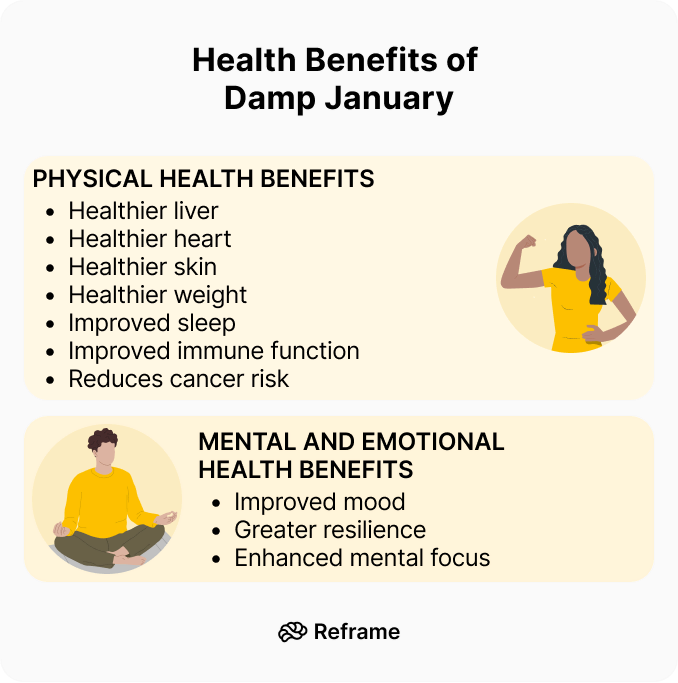
So does Damp January really work? Simply put, yes! Many people who participate in the Damp January challenge experience a number of benefits — from improved sleep to better mental health. Indeed, cutting back on alcohol can do wonders for nearly every aspect of our well-being. Let’s take a closer look at the benefits of participating in Damp January:
What about the mental and emotional health benefits of participating in Damp January? While we often associate drinking with pleasure — thanks to the flood of dopamine, that “feel good” chemical, in our brain — alcohol is a depressant. It not only slows our central nervous system, but it also impacts our mood, thoughts, and behavior. In fact, research shows that regularly misusing alcohol disrupts our brain’s chemical equilibrium, altering mood, behavior, and emotions in the long term.
With that in mind, let’s look at some of the mental and emotional health benefits of cutting back on drinking:
The bottom line? Cutting back on alcohol can lead to significant improvements in our physical and mental health. One study observed that those with alcohol use disorders who significantly reduced their alcohol intake had a reduced mortality risk. Furthermore, research shows that even a brief break from alcohol for moderate to heavy drinkers can produce health benefits, such as better sleep, weight loss, improved mood, and higher energy levels.
But don’t just take our word for it! Participate in Damp January and experience these benefits yourself!


While the physical and mental health benefits are incredible, sometimes seeing the cold, hard numbers is what really makes a difference. Let’s talk about your wallet first. If you typically spend about $35 a week on drinks, participating in Damp January could leave you with an extra $140 by the end of the month. Over a year, that adds up to more than $1,800! Curious about your own potential savings? You can use a tool to calculate exactly how much you could put back in your pocket by cutting back.
The financial perks are great, but the impact on your calorie intake is just as surprising. Think about this: drinking five pints of lager a week adds up to 44,200 extra calories over a year. That’s the equivalent of eating 221 doughnuts! Even if you’re more of a wine drinker, a moderate habit can still tack on an extra 2,000 calories each month. Cutting back on alcohol is a simple way to sidestep these empty calories, which can support your weight management goals and leave you feeling more energetic without having to overhaul your entire diet.
While the improvements to your physical and mental health are incredible motivators, the benefits of Damp January don't stop there. Cutting back on alcohol can have a ripple effect, positively impacting other areas of your life in ways you might not expect. Think of it as a bonus round of perks. Beyond feeling better, you might notice some very practical, tangible changes in your day-to-day life, particularly when it comes to your wallet and your social calendar. Let's look at how a month of mindful drinking can streamline your life and leave you with more resources for the things that truly matter to you.
It’s no secret that alcohol can be expensive. Whether it’s a few craft beers at the bar, a bottle of wine with dinner, or stocking up for the weekend, the costs add up quickly. Participating in Damp January means you’ll naturally spend less on drinks, leaving more money in your bank account right after the holiday season, a time when many of us are looking to tighten our budgets. This extra cash can be put toward a savings goal, a new hobby, or simply reducing financial stress. If you’re curious to see exactly how much you could save by cutting back, you can use an alcohol spend calculator to get a clearer picture of the financial benefits. You might be surprised by how much you can save in just one month.
Social situations can sometimes feel centered around drinking, which can be tricky if you’re trying to cut back. Damp January gives you a clear and simple framework for making different choices. It’s an easy explanation for why you’re opting for a mocktail or skipping a round, which can reduce social pressure. More importantly, it encourages you to be more intentional with your social time. You might find that you enjoy conversations more, feel more present with your friends, and discover new activities that don’t involve alcohol. This month of mindful drinking can help you re-evaluate your social habits and build connections that are more genuine and less reliant on alcohol as a social lubricant.
So who would benefit most from Damp January or who should try it? If you’re not quite ready to completely quit drinking or are curious about cultivating a healthier relationship with alcohol, Damp January is a great place to begin. Or if you’re looking to take “new year, new me” to a whole new level, the Damp January challenge is a great way to get your health on track after the holiday season.
Indeed, as our CEO and co-founder Vedant Pradeep said, Damp January can be beneficial for “pretty much anyone that wants to make positive adjustments and experience all the health and emotional benefits of drinking less, while not eliminating alcohol completely from their lives.”
Plus, those who try Damp January and start noticing its benefits might be inclined to continue changing their relationship with alcohol. For some, Damp January is more convenient than Dry January. As Pradeep explained, “By not cutting out alcohol completely, but instead being mindful about consumption, those who attempt Damp January may find that it’s easier to continue the trend beyond the first month of the year, and increase the possibility of a meaningful life change."
In fact, according to our survey results from last year’s Damp January challenge, 78.8% of participants planned to continue working on staying “damp” or moderate after the challenge. And 21.2% planned on trying out a “dry” or alcohol-free period in the future.
When it comes down to it, participating in the Damp January challenge can be a great launching pad to feeling, looking, and living healthier. It also serves as a great confidence and resilience-building tool. By successfully completing the challenge, we realize we have the ability to make changes and incorporate healthier habits into our life.
Before you jump into any challenge, it’s important to think about your personal health and safety. While reducing alcohol is a positive goal for many, the approach matters, especially if you have a history of heavy drinking. As one expert shared with Self magazine, "If you drink heavily for many years, talk to a doctor before making big changes. Stopping suddenly can be dangerous." Abruptly quitting alcohol when your body has become dependent on it can lead to serious withdrawal symptoms. A healthcare professional can help you create a plan that is both safe and effective for your specific situation. Your well-being is the top priority, so don't hesitate to seek medical advice before starting your journey.
A damp approach is often perfect for the "sober-curious" or anyone who feels overwhelmed by the idea of complete abstinence. If you’re not quite ready to completely quit drinking or are curious about cultivating a healthier relationship with alcohol, Damp January is a great place to begin. It’s a flexible, low-pressure way to explore your habits without the fear of "failing." This method is less about rigid rules and more about mindful reduction, which can feel more achievable and sustainable. It’s an excellent starting point if your goal is to identify your triggers, practice saying "no" in certain situations, and build confidence in your ability to make conscious choices about drinking.
While a damp month offers flexibility, going completely dry has its own set of powerful benefits. For some, the clear-cut rule of "no alcohol" is simpler to follow than the nuances of moderation, as it removes the daily mental load of deciding when or how much to drink. A full month of abstinence can also act as a powerful reset, giving you a clean slate to observe how your body and mind feel without alcohol's influence. As some health experts suggest, this total break can provide incredible clarity on your sleep quality, energy levels, and mood, helping you better understand your motivations for drinking in the first place.
Since "Damp January" is a relatively new idea compared to its all-or-nothing counterpart, you’ll find a spectrum of opinions from health and wellness professionals. The discussion often highlights two different philosophies of behavior change: harm reduction versus total abstinence. Those who support a damp approach view it as a realistic and sustainable form of harm reduction that empowers people to make positive changes without demanding perfection. On the other hand, some critics worry that it doesn't create enough separation from alcohol for a person to truly re-evaluate their relationship with it. Both perspectives offer valuable points to consider as you decide which path aligns best with your personal goals.
One of the biggest advantages of a damp approach is its psychological flexibility. All-or-nothing challenges can sometimes set us up for a cycle of guilt and shame. According to Healthline, "Being too strict (like with Dry January) can make people feel like a failure if they have even one drink. This can lead them to give up completely and sometimes even drink more than before." This is known as the abstinence violation effect, where one small slip-up feels like a total failure, causing you to abandon your goal. A moderation-focused challenge like Damp January reframes these moments as learning opportunities, not setbacks. This fosters self-compassion and resilience, which are key components of creating lasting habits around mindful drinking.
On the flip side, some experts argue that a damp approach might not be impactful enough to spark real change. A primary concern is that it "makes people too relaxed about their drinking habits. It doesn't help them truly understand how alcohol affects their health," as noted by professionals at the Priory Group. The argument is that by keeping alcohol in your routine, you may not experience the full physical and mental benefits of a complete break, making it harder to see a clear contrast. These experts believe that "only fully stopping alcohol for a month (Dry January) truly helps people understand their drinking habits and the positive effects of not drinking." For some individuals, the ambiguity of "drinking less" could become a loophole that prevents meaningful progress.
If you’re thinking about cutting back on alcohol or curious about drinking less, our Damp January Challenge is a great place to start. We can help you develop a customized plan to help you reach your drinking goals — whatever they are. We’ll also equip you with personalized daily activities and a toolkit, and we’ll connect you with a 24/7 community for encouragement along the way.
It’s worth noting that being part of a community can be incredibly helpful for participating in this challenge. It not only allows you a safe space to share your struggles, but it also can help provide you with encouragement and support as you work toward healthier habits. Furthermore, a group can help keep you accountable throughout the challenge.

The beauty of Damp January is its flexibility. Unlike the all-or-nothing approach of Dry January, this challenge is about defining what moderation means for you. The first step is to set clear, personal guidelines that feel both meaningful and achievable. This isn't about following someone else's plan; it's about creating your own. Your rules could be anything from only drinking on weekends, limiting yourself to two drinks per social outing, or deciding to have three alcohol-free days each week. The goal is to cultivate healthier drinking habits in a way that feels sustainable for your lifestyle, making progress toward a relationship with alcohol that you feel good about.
Social gatherings can often feel like the biggest test during a month of mindful drinking. Instead of leaving your choices to the last minute, a little planning can make all the difference. Take a look at your calendar and identify any parties, dinners, or happy hours coming up. Decide on your strategy before you even walk out the door. This could mean offering to be the designated driver, setting a firm one-drink limit for yourself, or planning to leave an event a bit earlier. Having a non-alcoholic beverage in hand can also prevent unwanted offers. A simple plan removes the pressure of in-the-moment decisions and empowers you to stick to your goals with confidence.
For many of us, drinking is tied to specific routines — the glass of wine while cooking, the beer after a long workday, or the cocktail to signal the start of the weekend. Damp January is the perfect opportunity to examine these rituals and see where you can make a change. If you drink to unwind, try swapping that habit for a new one, like a short walk, a relaxing bath with a good book, or brewing a special cup of herbal tea. By consciously replacing an old routine with a new, healthier one, you’re not just removing something from your life; you’re adding a positive new practice that can serve you well beyond January.
Gone are the days when your only non-alcoholic options were soda or juice. The world of alcohol-free alternatives has completely transformed, offering sophisticated and delicious choices for any occasion. You can now find craft non-alcoholic beers, complex spirits for amazing mocktails, and even high-quality dealcoholized wines. Think of this as a fun exploration. Trying new beverages can become an exciting part of your Damp January experience, making you feel like you’re discovering something new rather than depriving yourself. Head to a local specialty shop or look up a few mocktail recipes online and get creative — you might just find a new favorite drink.
Making any kind of lifestyle change is easier when you have people in your corner. Sharing your Damp January goals with a trusted friend, partner, or family member can make a huge difference. You could even ask a friend to join you in the challenge for mutual accountability. Being part of a community provides a safe space to share your progress and struggles, offering encouragement when you need it most. For structured support, apps like Reframe offer dedicated communities where you can connect with thousands of others on a similar path. Leaning on others can provide the motivation you need to stay on track and make the experience more enjoyable.
The Damp January challenge is a great opportunity to make small changes to our personal drinking habits. It’s a more relaxed approach to Dry January for those who don’t want to completely remove alcohol from their lives. Participating in the Damp January challenge can offer a number of physical, mental, and emotional health benefits — from a healthier weight and heart to better sleep and improved mood. Keep in mind that Damp January doesn’t mean we’re saying goodbye to alcohol entirely — or forever. But using Damp January to build a healthier relationship with alcohol can put us on the path to a healthier and happier future.
Reframe can help guide and support you during the Damp January challenge. We’re a science-backed app that has helped millions of people cut back on their alcohol consumption and enhance their physical, mental, and emotional well-being.
How is Damp January really different from Dry January? Think of it as setting a personal goal versus following a strict, universal rule. Dry January is an all-or-nothing challenge where the single rule is zero alcohol. Damp January is all about mindful reduction. You get to define what “drinking less” looks like for you, making it a more flexible and personalized approach to re-evaluating your habits.
What are some examples of "rules" I can set for myself? The best rules are the ones that feel realistic for your life. You could decide to only drink on weekends, set a two-drink maximum when you do go out, or commit to having three or four alcohol-free days each week. Some people choose to stick to drinks with a lower alcohol content. The goal is to create a clear guideline that helps you be more intentional with your consumption.
What if I mess up and drink more than I planned? Did I fail? Absolutely not. This is the key difference between a moderation mindset and an abstinence one. A slip-up isn't a failure; it's just a moment to learn from. Instead of giving up on the whole month, just acknowledge it and get back to your plan the next day. This challenge is about building resilience and self-awareness, not perfection.
Can I really expect to see health benefits if I'm not quitting completely? Yes, you certainly can. Any reduction in alcohol gives your body a break. You might notice you’re sleeping more soundly, your skin looks clearer, or you have more energy in the mornings. Reducing your intake also lowers your consumption of empty calories and gives your liver more time to repair itself. Even small changes can lead to significant positive effects on your physical and mental well-being.
How do I handle social events without feeling awkward or pressured? A little planning goes a long way. Decide on your strategy before you arrive, whether that’s setting a one-drink limit or sticking to mocktails. Having a non-alcoholic drink in your hand often prevents people from offering you another. If someone asks, a simple "I'm cutting back this month" is usually all you need to say. You might be surprised how many people respect the decision or are even curious about it themselves.
Does the thought of a completely Dry January feel a bit... much? You're not alone. Going cold turkey for a whole month can seem intimidating or just unrealistic. Enter Damp January, the flexible, less-stress alternative. So, what is Damp January? It’s a semi-Dry January focused on drinking less, not giving it up entirely. This mindful approach allows you to reap amazing health benefits without sacrificing your social life. In fact, studies find that moderation often helps social interactions. It’s about creating sustainable habits, not just surviving a restrictive challenge.
In this post, we’ll explore what Damp January is and how we can benefit from participating in the Damp January challenge. Let’s get started!
As the name suggests, Damp January is an offshoot of Dry January. Dry January originated in January 2013 by Alcohol Change UK, a British charity that works to reduce alcohol-related harm. Today, a mere decade later, it’s a global phenomenon with millions of participants each year.
However, for many people, the idea of not drinking any alcohol for a month can seem too extreme. Some people may want to cut back on drinking or make changes to their relationship with alcohol rather than saying goodbye to alcohol for good. This is where Damp January comes into the picture.
Instead of giving up alcohol for a month, Damp January is geared toward cultivating healthier drinking habits. It’s all about making progress toward a healthier relationship with alcohol — whatever that looks like for you.
For instance, as our CEO and co-founder Vedant Pradeep explained, “If you typically drink 15 drinks a week, you may aim to cut out a handful of those each week during the month and slowly curb your alcohol consumption. Alternatively, you may choose drinks with lower alcohol content. Someone may keep their glass of wine with dinner but forgo alcohol in work or social settings. Others may drink on certain days or times of the week. It’s a personal decision, which can be empowering.”
In essence, as Pradeep noted, “Damp January is a less extreme and potentially much more sustainable version of the challenge that is focused on reducing our alcohol intake during the month of January.”
While Dry January has been a global movement for over a decade, "Damp January" is a much newer term. It really started gaining traction in late 2023 as a more flexible alternative to the all-or-nothing approach. Think of it as Dry January's more laid-back cousin. The phrase emerged from a growing cultural conversation around moderation and mindful drinking, which encourages being more intentional with your alcohol consumption rather than cutting it out completely. This shift was also supported by the rise of non-alcoholic beverage companies and wellness apps designed to help people reduce their intake. Essentially, "Damp January" gives a name to the practice of simply drinking less for a month, offering a middle ground that feels more achievable and sustainable for many people.
So does Damp January really work? Simply put, yes! Many people who participate in the Damp January challenge experience a number of benefits — from improved sleep to better mental health. Indeed, cutting back on alcohol can do wonders for nearly every aspect of our well-being. Let’s take a closer look at the benefits of participating in Damp January:
What about the mental and emotional health benefits of participating in Damp January? While we often associate drinking with pleasure — thanks to the flood of dopamine, that “feel good” chemical, in our brain — alcohol is a depressant. It not only slows our central nervous system, but it also impacts our mood, thoughts, and behavior. In fact, research shows that regularly misusing alcohol disrupts our brain’s chemical equilibrium, altering mood, behavior, and emotions in the long term.
With that in mind, let’s look at some of the mental and emotional health benefits of cutting back on drinking:
The bottom line? Cutting back on alcohol can lead to significant improvements in our physical and mental health. One study observed that those with alcohol use disorders who significantly reduced their alcohol intake had a reduced mortality risk. Furthermore, research shows that even a brief break from alcohol for moderate to heavy drinkers can produce health benefits, such as better sleep, weight loss, improved mood, and higher energy levels.
But don’t just take our word for it! Participate in Damp January and experience these benefits yourself!
While the physical and mental health benefits are incredible, sometimes seeing the cold, hard numbers is what really makes a difference. Let’s talk about your wallet first. If you typically spend about $35 a week on drinks, participating in Damp January could leave you with an extra $140 by the end of the month. Over a year, that adds up to more than $1,800! Curious about your own potential savings? You can use a tool to calculate exactly how much you could put back in your pocket by cutting back.
The financial perks are great, but the impact on your calorie intake is just as surprising. Think about this: drinking five pints of lager a week adds up to 44,200 extra calories over a year. That’s the equivalent of eating 221 doughnuts! Even if you’re more of a wine drinker, a moderate habit can still tack on an extra 2,000 calories each month. Cutting back on alcohol is a simple way to sidestep these empty calories, which can support your weight management goals and leave you feeling more energetic without having to overhaul your entire diet.
While the improvements to your physical and mental health are incredible motivators, the benefits of Damp January don't stop there. Cutting back on alcohol can have a ripple effect, positively impacting other areas of your life in ways you might not expect. Think of it as a bonus round of perks. Beyond feeling better, you might notice some very practical, tangible changes in your day-to-day life, particularly when it comes to your wallet and your social calendar. Let's look at how a month of mindful drinking can streamline your life and leave you with more resources for the things that truly matter to you.
It’s no secret that alcohol can be expensive. Whether it’s a few craft beers at the bar, a bottle of wine with dinner, or stocking up for the weekend, the costs add up quickly. Participating in Damp January means you’ll naturally spend less on drinks, leaving more money in your bank account right after the holiday season, a time when many of us are looking to tighten our budgets. This extra cash can be put toward a savings goal, a new hobby, or simply reducing financial stress. If you’re curious to see exactly how much you could save by cutting back, you can use an alcohol spend calculator to get a clearer picture of the financial benefits. You might be surprised by how much you can save in just one month.
Social situations can sometimes feel centered around drinking, which can be tricky if you’re trying to cut back. Damp January gives you a clear and simple framework for making different choices. It’s an easy explanation for why you’re opting for a mocktail or skipping a round, which can reduce social pressure. More importantly, it encourages you to be more intentional with your social time. You might find that you enjoy conversations more, feel more present with your friends, and discover new activities that don’t involve alcohol. This month of mindful drinking can help you re-evaluate your social habits and build connections that are more genuine and less reliant on alcohol as a social lubricant.
So who would benefit most from Damp January or who should try it? If you’re not quite ready to completely quit drinking or are curious about cultivating a healthier relationship with alcohol, Damp January is a great place to begin. Or if you’re looking to take “new year, new me” to a whole new level, the Damp January challenge is a great way to get your health on track after the holiday season.
Indeed, as our CEO and co-founder Vedant Pradeep said, Damp January can be beneficial for “pretty much anyone that wants to make positive adjustments and experience all the health and emotional benefits of drinking less, while not eliminating alcohol completely from their lives.”
Plus, those who try Damp January and start noticing its benefits might be inclined to continue changing their relationship with alcohol. For some, Damp January is more convenient than Dry January. As Pradeep explained, “By not cutting out alcohol completely, but instead being mindful about consumption, those who attempt Damp January may find that it’s easier to continue the trend beyond the first month of the year, and increase the possibility of a meaningful life change."
In fact, according to our survey results from last year’s Damp January challenge, 78.8% of participants planned to continue working on staying “damp” or moderate after the challenge. And 21.2% planned on trying out a “dry” or alcohol-free period in the future.
When it comes down to it, participating in the Damp January challenge can be a great launching pad to feeling, looking, and living healthier. It also serves as a great confidence and resilience-building tool. By successfully completing the challenge, we realize we have the ability to make changes and incorporate healthier habits into our life.
Before you jump into any challenge, it’s important to think about your personal health and safety. While reducing alcohol is a positive goal for many, the approach matters, especially if you have a history of heavy drinking. As one expert shared with Self magazine, "If you drink heavily for many years, talk to a doctor before making big changes. Stopping suddenly can be dangerous." Abruptly quitting alcohol when your body has become dependent on it can lead to serious withdrawal symptoms. A healthcare professional can help you create a plan that is both safe and effective for your specific situation. Your well-being is the top priority, so don't hesitate to seek medical advice before starting your journey.
A damp approach is often perfect for the "sober-curious" or anyone who feels overwhelmed by the idea of complete abstinence. If you’re not quite ready to completely quit drinking or are curious about cultivating a healthier relationship with alcohol, Damp January is a great place to begin. It’s a flexible, low-pressure way to explore your habits without the fear of "failing." This method is less about rigid rules and more about mindful reduction, which can feel more achievable and sustainable. It’s an excellent starting point if your goal is to identify your triggers, practice saying "no" in certain situations, and build confidence in your ability to make conscious choices about drinking.
While a damp month offers flexibility, going completely dry has its own set of powerful benefits. For some, the clear-cut rule of "no alcohol" is simpler to follow than the nuances of moderation, as it removes the daily mental load of deciding when or how much to drink. A full month of abstinence can also act as a powerful reset, giving you a clean slate to observe how your body and mind feel without alcohol's influence. As some health experts suggest, this total break can provide incredible clarity on your sleep quality, energy levels, and mood, helping you better understand your motivations for drinking in the first place.
Since "Damp January" is a relatively new idea compared to its all-or-nothing counterpart, you’ll find a spectrum of opinions from health and wellness professionals. The discussion often highlights two different philosophies of behavior change: harm reduction versus total abstinence. Those who support a damp approach view it as a realistic and sustainable form of harm reduction that empowers people to make positive changes without demanding perfection. On the other hand, some critics worry that it doesn't create enough separation from alcohol for a person to truly re-evaluate their relationship with it. Both perspectives offer valuable points to consider as you decide which path aligns best with your personal goals.
One of the biggest advantages of a damp approach is its psychological flexibility. All-or-nothing challenges can sometimes set us up for a cycle of guilt and shame. According to Healthline, "Being too strict (like with Dry January) can make people feel like a failure if they have even one drink. This can lead them to give up completely and sometimes even drink more than before." This is known as the abstinence violation effect, where one small slip-up feels like a total failure, causing you to abandon your goal. A moderation-focused challenge like Damp January reframes these moments as learning opportunities, not setbacks. This fosters self-compassion and resilience, which are key components of creating lasting habits around mindful drinking.
On the flip side, some experts argue that a damp approach might not be impactful enough to spark real change. A primary concern is that it "makes people too relaxed about their drinking habits. It doesn't help them truly understand how alcohol affects their health," as noted by professionals at the Priory Group. The argument is that by keeping alcohol in your routine, you may not experience the full physical and mental benefits of a complete break, making it harder to see a clear contrast. These experts believe that "only fully stopping alcohol for a month (Dry January) truly helps people understand their drinking habits and the positive effects of not drinking." For some individuals, the ambiguity of "drinking less" could become a loophole that prevents meaningful progress.
If you’re thinking about cutting back on alcohol or curious about drinking less, our Damp January Challenge is a great place to start. We can help you develop a customized plan to help you reach your drinking goals — whatever they are. We’ll also equip you with personalized daily activities and a toolkit, and we’ll connect you with a 24/7 community for encouragement along the way.
It’s worth noting that being part of a community can be incredibly helpful for participating in this challenge. It not only allows you a safe space to share your struggles, but it also can help provide you with encouragement and support as you work toward healthier habits. Furthermore, a group can help keep you accountable throughout the challenge.
The beauty of Damp January is its flexibility. Unlike the all-or-nothing approach of Dry January, this challenge is about defining what moderation means for you. The first step is to set clear, personal guidelines that feel both meaningful and achievable. This isn't about following someone else's plan; it's about creating your own. Your rules could be anything from only drinking on weekends, limiting yourself to two drinks per social outing, or deciding to have three alcohol-free days each week. The goal is to cultivate healthier drinking habits in a way that feels sustainable for your lifestyle, making progress toward a relationship with alcohol that you feel good about.
Social gatherings can often feel like the biggest test during a month of mindful drinking. Instead of leaving your choices to the last minute, a little planning can make all the difference. Take a look at your calendar and identify any parties, dinners, or happy hours coming up. Decide on your strategy before you even walk out the door. This could mean offering to be the designated driver, setting a firm one-drink limit for yourself, or planning to leave an event a bit earlier. Having a non-alcoholic beverage in hand can also prevent unwanted offers. A simple plan removes the pressure of in-the-moment decisions and empowers you to stick to your goals with confidence.
For many of us, drinking is tied to specific routines — the glass of wine while cooking, the beer after a long workday, or the cocktail to signal the start of the weekend. Damp January is the perfect opportunity to examine these rituals and see where you can make a change. If you drink to unwind, try swapping that habit for a new one, like a short walk, a relaxing bath with a good book, or brewing a special cup of herbal tea. By consciously replacing an old routine with a new, healthier one, you’re not just removing something from your life; you’re adding a positive new practice that can serve you well beyond January.
Gone are the days when your only non-alcoholic options were soda or juice. The world of alcohol-free alternatives has completely transformed, offering sophisticated and delicious choices for any occasion. You can now find craft non-alcoholic beers, complex spirits for amazing mocktails, and even high-quality dealcoholized wines. Think of this as a fun exploration. Trying new beverages can become an exciting part of your Damp January experience, making you feel like you’re discovering something new rather than depriving yourself. Head to a local specialty shop or look up a few mocktail recipes online and get creative — you might just find a new favorite drink.
Making any kind of lifestyle change is easier when you have people in your corner. Sharing your Damp January goals with a trusted friend, partner, or family member can make a huge difference. You could even ask a friend to join you in the challenge for mutual accountability. Being part of a community provides a safe space to share your progress and struggles, offering encouragement when you need it most. For structured support, apps like Reframe offer dedicated communities where you can connect with thousands of others on a similar path. Leaning on others can provide the motivation you need to stay on track and make the experience more enjoyable.
The Damp January challenge is a great opportunity to make small changes to our personal drinking habits. It’s a more relaxed approach to Dry January for those who don’t want to completely remove alcohol from their lives. Participating in the Damp January challenge can offer a number of physical, mental, and emotional health benefits — from a healthier weight and heart to better sleep and improved mood. Keep in mind that Damp January doesn’t mean we’re saying goodbye to alcohol entirely — or forever. But using Damp January to build a healthier relationship with alcohol can put us on the path to a healthier and happier future.
Reframe can help guide and support you during the Damp January challenge. We’re a science-backed app that has helped millions of people cut back on their alcohol consumption and enhance their physical, mental, and emotional well-being.
How is Damp January really different from Dry January? Think of it as setting a personal goal versus following a strict, universal rule. Dry January is an all-or-nothing challenge where the single rule is zero alcohol. Damp January is all about mindful reduction. You get to define what “drinking less” looks like for you, making it a more flexible and personalized approach to re-evaluating your habits.
What are some examples of "rules" I can set for myself? The best rules are the ones that feel realistic for your life. You could decide to only drink on weekends, set a two-drink maximum when you do go out, or commit to having three or four alcohol-free days each week. Some people choose to stick to drinks with a lower alcohol content. The goal is to create a clear guideline that helps you be more intentional with your consumption.
What if I mess up and drink more than I planned? Did I fail? Absolutely not. This is the key difference between a moderation mindset and an abstinence one. A slip-up isn't a failure; it's just a moment to learn from. Instead of giving up on the whole month, just acknowledge it and get back to your plan the next day. This challenge is about building resilience and self-awareness, not perfection.
Can I really expect to see health benefits if I'm not quitting completely? Yes, you certainly can. Any reduction in alcohol gives your body a break. You might notice you’re sleeping more soundly, your skin looks clearer, or you have more energy in the mornings. Reducing your intake also lowers your consumption of empty calories and gives your liver more time to repair itself. Even small changes can lead to significant positive effects on your physical and mental well-being.
How do I handle social events without feeling awkward or pressured? A little planning goes a long way. Decide on your strategy before you arrive, whether that’s setting a one-drink limit or sticking to mocktails. Having a non-alcoholic drink in your hand often prevents people from offering you another. If someone asks, a simple "I'm cutting back this month" is usually all you need to say. You might be surprised how many people respect the decision or are even curious about it themselves.

Transform your relationship with alcohol using the power of technology! Our latest blog unveils the top 10 mindful drinking apps, packed with tips and strategies for a healthier lifestyle.
Although it isn’t a treatment for alcohol use disorder (AUD), the Reframe app can help you cut back on drinking gradually, with the science-backed knowledge to empower you 100% of the way. Our proven program has helped millions of people around the world drink less and live more. And we want to help you get there, too!
The Reframe app equips you with the knowledge and skills you need to not only survive drinking less, but to thrive while you navigate the journey. Our daily research-backed readings teach you the neuroscience of alcohol, and our in-app Toolkit provides the resources and activities you need to navigate each challenge.
You’ll meet millions of fellow Reframers in our 24/7 Forum chat and daily Zoom check-in meetings. Receive encouragement from people worldwide who know exactly what you’re going through! You’ll also have the opportunity to connect with our licensed Reframe coaches for more personalized guidance.
Plus, we’re always introducing new features to optimize your in-app experience. We recently launched our in-app chatbot, Melody, powered by the world’s most powerful AI technology. Melody is here to help as you adjust to a life with less (or no) alcohol.
And that’s not all! Every month, we launch fun challenges, like Dry/Damp January, Mental Health May, and Outdoorsy June. You won’t want to miss out on the chance to participate alongside fellow Reframers (or solo if that’s more your thing!).
The Reframe app is free for 7 days, so you don’t have anything to lose by trying it. Are you ready to feel empowered and discover life beyond alcohol? Then download our app through the App Store or Google Play today!
In today’s busy world of work schedules, family obligations, and daily routines, finding balance in our habits — including those around booze — can be a challenge. Welcome to the world of mindful drinking, a movement that's redefining our relationship with alcohol in the most positive way! For those looking to moderate their alcohol intake or learn to drink more mindfully, technology offers a helping hand. Let’s explore the top 10 mindful drinking apps that can support your journey towards a healthier relationship with alcohol.

Mindfulness has become a bit of a buzzword, especially in health and wellness circles, but what does it really mean? While the concept might seem modern, it’s much more than a recent fad, with roots going back to Buddhist philosophy, Eastern traditions, and yogic practices.
The surge in the popularity of mindfulness, combined with a growing awareness of health and wellness, has naturally flowed into our drinking habits, giving birth to what we now know as mindful drinking. And no, we’re not talking about taking shots between vinyasa rounds or sipping a margarita while tuning in to our root chakra. Instead, mindful drinking is about savoring each sip with intention and awareness. It's a conscious decision to understand why we’re drinking — is it to socialize, to escape, or just because it's a habit? Mindful drinking encourages us to tune into our body's responses and to recognize how each drink affects our mood and well-being.
If we’re not careful about our drinking habits, they can easily get out of hand, leading to a host of health problems such as sleep disturbances, liver problems, heart disease, digestive issues, immune system glitches, and even certain cancers. Mindful drinking is all about breaking out of autopilot mode when it comes to booze. Instead of mindlessly downing a glass, we pause, we reflect, and we choose. This could mean opting for a non-alcoholic beer at a party, savoring a single glass of wine with dinner, or exploring the wide world of mocktails.
Mindful drinking fits perfectly with the growing desire for a healthier lifestyle, mental clarity, and improved social experiences. It's not about total abstinence — although it can be for some — but about making choices that align with our personal goals and health.
Mindful drinking also taps into the creative side of beverages. It has led to a boom in artisanal non-alcoholic spirits, craft mocktails, and a whole new world of flavors that don't rely on alcohol content for their appeal. Let’s embrace this delightful journey, one mindful sip at a time, and take a closer look at 10 apps that can make the journey to healthier drinking habits a mindful experience.
When it comes to rethinking our relationship with alcohol and building mindful drinking habits, the Reframe App has no equal. It’s perfect for those seeking a comprehensive, science-based approach to shift their mindset around booze! With its unique blend of neuroscience, psychology, user-friendly tools, and community support, Reframe is more than just an app — it's a life-changing, mind-reshaping toolbox in your pocket.
Pro Tip: Dive into the daily educational content! These lessons are not just informative but also help you stay engaged with your goals every day while deepening your understanding of your own mind and how to reshape it. Those bits of knowledge really do add up!
The Verdict: Reframe is an empowering tool that offers a science-backed approach to understanding and changing drinking habits by actually reshaping — reframing! — our mindset around alcohol. Its combination of educational content, daily habit tracking, journaling, and hands-on exercises make it an ideal choice for anyone looking to embark on a healthier relationship with alcohol, whatever that might mean — even if those goals change along the way!

The Drink Control App is a fantastic tool for anyone looking to gain a better understanding and control of their drinking habits. What makes this app particularly engaging is its user-friendly interface and its commitment to helping users track their alcohol intake in a simple, yet effective manner.
Pro Tip: Don’t just use the app to track; engage with it. Set personal goals, look into your trends, and let the app’s feedback guide you towards healthier habits.
The Verdict: With its user-friendly interface, Drink Control is great at tracking money spent on booze, and it provides useful feedback based on NIAAA guidelines. At the same time, it might be a bit too basic for users wanting a more comprehensive approach, while for others cost tracking could actually be stressful.

LifeBac merges psychological strategies with pharmacotherapy by using the Sinclair Method, a scientifically supported treatment using naltrexone to reduce cravings. The app offers a blend of medication management and cognitive behavioral techniques, making it a comprehensive tool for those seeking a multifaceted approach to reducing or quitting alcohol.
Pro Tip: Take full advantage of the app’s community feature. Engaging with others who are on a similar journey can provide an extra layer of support and motivation.
The Verdict: Combining medication management with cognitive-behavioral techniques is great for those using naltrexone to control their drinking. That said, the medication route isn’t for everyone, so the narrow focus naturally limits LifeBac’s overall scope and relevance.
Less is your cheerful companion in the journey to moderate drinking; it’s designed for those who aim to drink less and drink smarter. It’s all about setting realistic goals, tracking progress, and understanding drinking habits in a friendly, engaging way while using cognitive behavioral principles to make lasting changes.
Pro Tip: Use the insights feature to its fullest. The more you know about your habits, the better equipped you’ll be to make lasting changes!
The Verdict: This app focuses on reduction rather than abstinence by using time-tested CBT principles. It’s great for those seeking to moderate rather than quit, but does require self-discipline to stick to goals.
Drydays is the bubbly buddy for those on the quest for more alcohol-free days. It's the perfect app for anyone looking to sprinkle more sobriety into their week without the pressure of complete abstinence. This app is all about celebrating each alcohol-free day as a victory and making moderation both achievable and fun.
Pro Tip: Embrace the challenge of increasing your alcohol-free days gradually. Start with a manageable goal, nudging it up as you go.
The Verdict: Drydays is great at encouraging goal-setting and offering motivational support. But while it’s simple and user-friendly, it might be a bit superficial when it comes to helping users deal with the underlying causes of drinking and might not offer enough support for heavy drinkers.
Alcogram stands out in the world of mindful drinking apps by providing a unique science-savvy perspective on how alcohol affects the body over time.
Pro Tip: Use the BAC tracking feature as a guide to learn about your limits. Understanding how your body metabolizes alcohol can help you make smarter drinking decisions!
The Verdict: While tracking BAC and educating users about the physical impact of drinking are both useful features, the estimates are based on user input and may not be entirely accurate. Alcogram also lacks the psychological support features of other apps.
Coachme is a personal trainer for our drinking habits — supportive, personalized, and always there to guide us towards healthier choices. It’s a fantastic blend of AI-driven insights and human coaching, making it a standout choice for those seeking a more personalized approach to manage their drinking.
Pro Tip: Make the most of the coaching sessions. These are great opportunities to get personalized advice, ask questions, and receive encouragement tailored just for you.
The Verdict: While the app combines AI-driven insights with human interaction, goal setting and progress tracking, the emphasis on AI might not appeal to those preferring human-only guidance.

Mind the Sip is an exceptional app for those who want to enjoy their drinks more responsibly and with greater awareness. Focusing on the philosophy of being fully present and aware during drinking occasions, Mind the Sip makes each sip a more conscious experience.
Pro Tip: Make the most of the journaling feature. Documenting your thoughts and experiences with each drink can be an eye-opening exercise!
The Verdict: The focus on mindful drinking and awareness tools are helpful, but the concepts might be a bit too abstract for some. This particular app also lacks features for tracking and rigorous goal setting.
Drinkers Helper combines the power of community support with evidence-based strategies, making it a fantastic choice for anyone looking to explore mindful drinking.
Pro Tip: Dive into the community features. Sharing your journey and learning from others can be incredibly empowering and enlightening.
The Verdict: Community support, evidence-based strategies, goal setting, and personalized exercises set this app apart, but it may not appeal to those seeking more privacy.
Vorvida is like having a scientific guide at our side, specifically tailored to help us manage our drinking habits. This app stands out with its algorithm-driven, personalized approach to reducing alcohol consumption, making it a great fit for anyone looking for a tech-savvy, scientifically validated tool.
Pro Tip: Take full advantage of the interactive exercises. These are insightful, and they help reinforce the strategies you learn, making your journey more effective and personalized.
The Verdict: The scientifically validated approach, personalized feedback and strategies, and interactive structure are all standout features. However, the algorithm-driven approach may not cater to all nuances of individual experiences, and it lacks the personal touch of human interaction.
Adopting a mindful approach to drinking is an exciting journey of self-awareness and change, and the mindful drinking apps we introduced all provide various tools and strategies to provide support tailored to your needs and goals while cheering you on along the way. Put these resources to use, and start your journey to a healthier relationship with alcohol, one sip at a time!
In today’s busy world of work schedules, family obligations, and daily routines, finding balance in our habits — including those around booze — can be a challenge. Welcome to the world of mindful drinking, a movement that's redefining our relationship with alcohol in the most positive way! For those looking to moderate their alcohol intake or learn to drink more mindfully, technology offers a helping hand. Let’s explore the top 10 mindful drinking apps that can support your journey towards a healthier relationship with alcohol.
Mindfulness has become a bit of a buzzword, especially in health and wellness circles, but what does it really mean? While the concept might seem modern, it’s much more than a recent fad, with roots going back to Buddhist philosophy, Eastern traditions, and yogic practices.
The surge in the popularity of mindfulness, combined with a growing awareness of health and wellness, has naturally flowed into our drinking habits, giving birth to what we now know as mindful drinking. And no, we’re not talking about taking shots between vinyasa rounds or sipping a margarita while tuning in to our root chakra. Instead, mindful drinking is about savoring each sip with intention and awareness. It's a conscious decision to understand why we’re drinking — is it to socialize, to escape, or just because it's a habit? Mindful drinking encourages us to tune into our body's responses and to recognize how each drink affects our mood and well-being.
If we’re not careful about our drinking habits, they can easily get out of hand, leading to a host of health problems such as sleep disturbances, liver problems, heart disease, digestive issues, immune system glitches, and even certain cancers. Mindful drinking is all about breaking out of autopilot mode when it comes to booze. Instead of mindlessly downing a glass, we pause, we reflect, and we choose. This could mean opting for a non-alcoholic beer at a party, savoring a single glass of wine with dinner, or exploring the wide world of mocktails.
Mindful drinking fits perfectly with the growing desire for a healthier lifestyle, mental clarity, and improved social experiences. It's not about total abstinence — although it can be for some — but about making choices that align with our personal goals and health.
Mindful drinking also taps into the creative side of beverages. It has led to a boom in artisanal non-alcoholic spirits, craft mocktails, and a whole new world of flavors that don't rely on alcohol content for their appeal. Let’s embrace this delightful journey, one mindful sip at a time, and take a closer look at 10 apps that can make the journey to healthier drinking habits a mindful experience.
When it comes to rethinking our relationship with alcohol and building mindful drinking habits, the Reframe App has no equal. It’s perfect for those seeking a comprehensive, science-based approach to shift their mindset around booze! With its unique blend of neuroscience, psychology, user-friendly tools, and community support, Reframe is more than just an app — it's a life-changing, mind-reshaping toolbox in your pocket.
Pro Tip: Dive into the daily educational content! These lessons are not just informative but also help you stay engaged with your goals every day while deepening your understanding of your own mind and how to reshape it. Those bits of knowledge really do add up!
The Verdict: Reframe is an empowering tool that offers a science-backed approach to understanding and changing drinking habits by actually reshaping — reframing! — our mindset around alcohol. Its combination of educational content, daily habit tracking, journaling, and hands-on exercises make it an ideal choice for anyone looking to embark on a healthier relationship with alcohol, whatever that might mean — even if those goals change along the way!
The Drink Control App is a fantastic tool for anyone looking to gain a better understanding and control of their drinking habits. What makes this app particularly engaging is its user-friendly interface and its commitment to helping users track their alcohol intake in a simple, yet effective manner.
Pro Tip: Don’t just use the app to track; engage with it. Set personal goals, look into your trends, and let the app’s feedback guide you towards healthier habits.
The Verdict: With its user-friendly interface, Drink Control is great at tracking money spent on booze, and it provides useful feedback based on NIAAA guidelines. At the same time, it might be a bit too basic for users wanting a more comprehensive approach, while for others cost tracking could actually be stressful.
LifeBac merges psychological strategies with pharmacotherapy by using the Sinclair Method, a scientifically supported treatment using naltrexone to reduce cravings. The app offers a blend of medication management and cognitive behavioral techniques, making it a comprehensive tool for those seeking a multifaceted approach to reducing or quitting alcohol.
Pro Tip: Take full advantage of the app’s community feature. Engaging with others who are on a similar journey can provide an extra layer of support and motivation.
The Verdict: Combining medication management with cognitive-behavioral techniques is great for those using naltrexone to control their drinking. That said, the medication route isn’t for everyone, so the narrow focus naturally limits LifeBac’s overall scope and relevance.
Less is your cheerful companion in the journey to moderate drinking; it’s designed for those who aim to drink less and drink smarter. It’s all about setting realistic goals, tracking progress, and understanding drinking habits in a friendly, engaging way while using cognitive behavioral principles to make lasting changes.
Pro Tip: Use the insights feature to its fullest. The more you know about your habits, the better equipped you’ll be to make lasting changes!
The Verdict: This app focuses on reduction rather than abstinence by using time-tested CBT principles. It’s great for those seeking to moderate rather than quit, but does require self-discipline to stick to goals.
Drydays is the bubbly buddy for those on the quest for more alcohol-free days. It's the perfect app for anyone looking to sprinkle more sobriety into their week without the pressure of complete abstinence. This app is all about celebrating each alcohol-free day as a victory and making moderation both achievable and fun.
Pro Tip: Embrace the challenge of increasing your alcohol-free days gradually. Start with a manageable goal, nudging it up as you go.
The Verdict: Drydays is great at encouraging goal-setting and offering motivational support. But while it’s simple and user-friendly, it might be a bit superficial when it comes to helping users deal with the underlying causes of drinking and might not offer enough support for heavy drinkers.
Alcogram stands out in the world of mindful drinking apps by providing a unique science-savvy perspective on how alcohol affects the body over time.
Pro Tip: Use the BAC tracking feature as a guide to learn about your limits. Understanding how your body metabolizes alcohol can help you make smarter drinking decisions!
The Verdict: While tracking BAC and educating users about the physical impact of drinking are both useful features, the estimates are based on user input and may not be entirely accurate. Alcogram also lacks the psychological support features of other apps.
Coachme is a personal trainer for our drinking habits — supportive, personalized, and always there to guide us towards healthier choices. It’s a fantastic blend of AI-driven insights and human coaching, making it a standout choice for those seeking a more personalized approach to manage their drinking.
Pro Tip: Make the most of the coaching sessions. These are great opportunities to get personalized advice, ask questions, and receive encouragement tailored just for you.
The Verdict: While the app combines AI-driven insights with human interaction, goal setting and progress tracking, the emphasis on AI might not appeal to those preferring human-only guidance.
Mind the Sip is an exceptional app for those who want to enjoy their drinks more responsibly and with greater awareness. Focusing on the philosophy of being fully present and aware during drinking occasions, Mind the Sip makes each sip a more conscious experience.
Pro Tip: Make the most of the journaling feature. Documenting your thoughts and experiences with each drink can be an eye-opening exercise!
The Verdict: The focus on mindful drinking and awareness tools are helpful, but the concepts might be a bit too abstract for some. This particular app also lacks features for tracking and rigorous goal setting.
Drinkers Helper combines the power of community support with evidence-based strategies, making it a fantastic choice for anyone looking to explore mindful drinking.
Pro Tip: Dive into the community features. Sharing your journey and learning from others can be incredibly empowering and enlightening.
The Verdict: Community support, evidence-based strategies, goal setting, and personalized exercises set this app apart, but it may not appeal to those seeking more privacy.
Vorvida is like having a scientific guide at our side, specifically tailored to help us manage our drinking habits. This app stands out with its algorithm-driven, personalized approach to reducing alcohol consumption, making it a great fit for anyone looking for a tech-savvy, scientifically validated tool.
Pro Tip: Take full advantage of the interactive exercises. These are insightful, and they help reinforce the strategies you learn, making your journey more effective and personalized.
The Verdict: The scientifically validated approach, personalized feedback and strategies, and interactive structure are all standout features. However, the algorithm-driven approach may not cater to all nuances of individual experiences, and it lacks the personal touch of human interaction.
Adopting a mindful approach to drinking is an exciting journey of self-awareness and change, and the mindful drinking apps we introduced all provide various tools and strategies to provide support tailored to your needs and goals while cheering you on along the way. Put these resources to use, and start your journey to a healthier relationship with alcohol, one sip at a time!

This blog explores how yoga can aid in reducing alcohol consumption. It highlights how yoga enhances self-awareness, reduces stress, promotes mindfulness, builds resilience, and fosters a sense of community, providing a holistic approach to managing our relationship with alcohol for a healthier, happier lifestyle.

Although it isn’t a treatment for alcohol use disorder (AUD), the Reframe app can help you cut back on drinking gradually, with the science-backed knowledge to empower you 100% of the way. Our proven program has helped millions of people around the world drink less and live more. And we want to help you get there, too!
The Reframe app equips you with the knowledge and skills you need to not only survive drinking less, but to thrive while you navigate the journey. Our daily research-backed readings teach you the neuroscience of alcohol, and our in-app Toolkit provides the resources and activities you need to navigate each challenge.
You’ll meet millions of fellow Reframers in our 24/7 Forum chat and daily Zoom check-in meetings. Receive encouragement from people worldwide who know exactly what you’re going through! You’ll also have the opportunity to connect with our licensed Reframe coaches for more personalized guidance.
Plus, we’re always introducing new features to optimize your in-app experience. We recently launched our in-app chatbot, Melody, powered by the world’s most powerful AI technology. Melody is here to help as you adjust to a life with less (or no) alcohol.
And that’s not all! Every month, we launch fun challenges, like Dry/Damp January, Mental Health May, and Outdoorsy June. You won’t want to miss out on the chance to participate alongside fellow Reframers (or solo if that’s more your thing!).
The Reframe app is free for 7 days, so you don’t have anything to lose by trying it. Are you ready to feel empowered and discover life beyond alcohol? Then download our app through the App Store or Google Play today!
Yoga, an ancient practice that originated thousands of years ago in the East, has become a global phenomenon, embraced by millions for its physical and mental benefits. Combining physical postures, breathing exercises, and meditation, yoga is a holistic approach to well-being. However, beyond its well-known benefits for flexibility, strength, and stress reduction, yoga can also play a significant role in helping us reduce or even eliminate our alcohol consumption.
At the heart of this approach lies the concept of mindfulness, a state of being fully present and engaged in the moment, free from distraction or judgment, and aware of our thoughts and feelings without being consumed by them. Mindfulness is a powerful tool in managing our habits and behaviors, including our relationship with alcohol. So, how exactly does yoga help us cultivate mindfulness and support us in our journey towards reducing alcohol intake? Let's explore the intriguing connection between yoga and sobriety and dive into ways we can use yoga for alcohol recovery in depth.

One of the fundamental principles of yoga is the cultivation of self-awareness. Through the practice of various asanas (postures) and pranayama (breathing exercises), yoga encourages practitioners to tune into their bodies and minds, fostering a heightened sense of self-awareness. This increased awareness can be particularly beneficial for those attempting to reduce or eliminate their alcohol consumption.
When we become more in tune with our bodies, we start to notice the effects that alcohol has on our physical and mental state. We become acutely aware of the sluggishness that follows a night of heavy drinking or the creeping anxiety that sets in as the effects of alcohol wear off. This heightened awareness can act as a powerful deterrent, prompting us to make healthier choices that align with our well-being.

Stress is a common trigger for alcohol consumption. Many of us turn to drinking as a coping mechanism to deal with the pressures and demands of daily life. However, yoga — an inherently sober activity with its emphasis on deep breathing and physical movement — serves as a natural stress reliever.
The practice of yoga stimulates the parasympathetic nervous system, which is responsible for rest and relaxation. This stimulation helps to lower heart rate, blood pressure, and cortisol levels, all of which are associated with stress. By reducing stress, yoga can help to remove one of the primary triggers for alcohol consumption, providing a healthier alternative for managing challenging emotions.
Yoga is not merely about physical movement; it's also about cultivating mindfulness. During a yoga session, we are encouraged to focus on our breath and to be fully present in the moment. This practice of mindfulness can be incredibly beneficial for those of us attempting to reduce or stop our alcohol consumption.
Mindfulness helps us break free from habitual patterns of behavior. When we are mindful, we are more likely to recognize the urge to drink as just that — an urge. This awareness allows us to respond to this craving in a healthier way, rather than automatically reaching for a drink. By cultivating mindfulness through yoga, we can develop healthier responses to our cravings and urges.

Yoga is a practice that requires patience, persistence, and resilience. Some postures can be challenging, and progress may be slow. However, this process of overcoming challenges on the yoga mat can help build resilience, a crucial attribute for those of us changing our drinking habits.
Resilience is the ability to bounce back from adversity. It's about having the mental strength to cope with life's challenges without resorting to unhealthy coping mechanisms, such as alcohol. By building resilience through the practice of yoga, we can navigate the ups and downs of life without relying on alcohol as a crutch.
Lastly, yoga fosters a sense of community. Many of us attempting to cut back or quit drinking alcohol find it helpful to surround ourselves with supportive individuals who understand our journey. Yoga classes provide a safe, supportive environment where we can connect with others who are also committed to living a healthier lifestyle. And sober yoga retreats add another great option for harnessing the power of this ancient practice and using yoga for alcohol recovery.
Yoga is a powerful tool that can support us in our journey towards reducing or stopping alcohol consumption. By enhancing self-awareness, reducing stress, promoting mindfulness, building resilience, and fostering a sense of community, yoga provides a holistic approach to managing our relationship with alcohol.
If you're on a journey towards cutting back on alcohol or eliminating it from your life, why not give yoga a try? You may find that it's just the tool you need to support your journey towards a healthier, happier you!
Yoga, an ancient practice that originated thousands of years ago in the East, has become a global phenomenon, embraced by millions for its physical and mental benefits. Combining physical postures, breathing exercises, and meditation, yoga is a holistic approach to well-being. However, beyond its well-known benefits for flexibility, strength, and stress reduction, yoga can also play a significant role in helping us reduce or even eliminate our alcohol consumption.
At the heart of this approach lies the concept of mindfulness, a state of being fully present and engaged in the moment, free from distraction or judgment, and aware of our thoughts and feelings without being consumed by them. Mindfulness is a powerful tool in managing our habits and behaviors, including our relationship with alcohol. So, how exactly does yoga help us cultivate mindfulness and support us in our journey towards reducing alcohol intake? Let's explore the intriguing connection between yoga and sobriety and dive into ways we can use yoga for alcohol recovery in depth.
One of the fundamental principles of yoga is the cultivation of self-awareness. Through the practice of various asanas (postures) and pranayama (breathing exercises), yoga encourages practitioners to tune into their bodies and minds, fostering a heightened sense of self-awareness. This increased awareness can be particularly beneficial for those attempting to reduce or eliminate their alcohol consumption.
When we become more in tune with our bodies, we start to notice the effects that alcohol has on our physical and mental state. We become acutely aware of the sluggishness that follows a night of heavy drinking or the creeping anxiety that sets in as the effects of alcohol wear off. This heightened awareness can act as a powerful deterrent, prompting us to make healthier choices that align with our well-being.
Stress is a common trigger for alcohol consumption. Many of us turn to drinking as a coping mechanism to deal with the pressures and demands of daily life. However, yoga — an inherently sober activity with its emphasis on deep breathing and physical movement — serves as a natural stress reliever.
The practice of yoga stimulates the parasympathetic nervous system, which is responsible for rest and relaxation. This stimulation helps to lower heart rate, blood pressure, and cortisol levels, all of which are associated with stress. By reducing stress, yoga can help to remove one of the primary triggers for alcohol consumption, providing a healthier alternative for managing challenging emotions.
Yoga is not merely about physical movement; it's also about cultivating mindfulness. During a yoga session, we are encouraged to focus on our breath and to be fully present in the moment. This practice of mindfulness can be incredibly beneficial for those of us attempting to reduce or stop our alcohol consumption.
Mindfulness helps us break free from habitual patterns of behavior. When we are mindful, we are more likely to recognize the urge to drink as just that — an urge. This awareness allows us to respond to this craving in a healthier way, rather than automatically reaching for a drink. By cultivating mindfulness through yoga, we can develop healthier responses to our cravings and urges.
Yoga is a practice that requires patience, persistence, and resilience. Some postures can be challenging, and progress may be slow. However, this process of overcoming challenges on the yoga mat can help build resilience, a crucial attribute for those of us changing our drinking habits.
Resilience is the ability to bounce back from adversity. It's about having the mental strength to cope with life's challenges without resorting to unhealthy coping mechanisms, such as alcohol. By building resilience through the practice of yoga, we can navigate the ups and downs of life without relying on alcohol as a crutch.
Lastly, yoga fosters a sense of community. Many of us attempting to cut back or quit drinking alcohol find it helpful to surround ourselves with supportive individuals who understand our journey. Yoga classes provide a safe, supportive environment where we can connect with others who are also committed to living a healthier lifestyle. And sober yoga retreats add another great option for harnessing the power of this ancient practice and using yoga for alcohol recovery.
Yoga is a powerful tool that can support us in our journey towards reducing or stopping alcohol consumption. By enhancing self-awareness, reducing stress, promoting mindfulness, building resilience, and fostering a sense of community, yoga provides a holistic approach to managing our relationship with alcohol.
If you're on a journey towards cutting back on alcohol or eliminating it from your life, why not give yoga a try? You may find that it's just the tool you need to support your journey towards a healthier, happier you!

Ready to discover what life has to offer when you leave alcohol behind? Dive into our latest blog for a thrilling journey filled with science-backed advice, creative alternatives, and practical steps.
Although it isn’t a treatment for alcohol use disorder (AUD), the Reframe app can help you cut back on drinking gradually, with the science-backed knowledge to empower you 100% of the way. Our proven program has helped millions of people around the world drink less and live more. And we want to help you get there, too!
The Reframe app equips you with the knowledge and skills you need to not only survive drinking less, but to thrive while you navigate the journey. Our daily research-backed readings teach you the neuroscience of alcohol, and our in-app Toolkit provides the resources and activities you need to navigate each challenge.
You’ll meet millions of fellow Reframers in our 24/7 Forum chat and daily Zoom check-in meetings. Receive encouragement from people worldwide who know exactly what you’re going through! You’ll also have the opportunity to connect with our licensed Reframe coaches for more personalized guidance.
Plus, we’re always introducing new features to optimize your in-app experience. We recently launched our in-app chatbot, Melody, powered by the world’s most powerful AI technology. Melody is here to help as you adjust to a life with less (or no) alcohol.
And that’s not all! Every month, we launch fun challenges, like Dry/Damp January, Mental Health May, and Outdoorsy June. You won’t want to miss out on the chance to participate alongside fellow Reframers (or solo if that’s more your thing!).
The Reframe app is free for 7 days, so you don’t have anything to lose by trying it. Are you ready to feel empowered and discover life beyond alcohol? Then download our app today!
Lots of sitcoms revolve around the characters meeting up for drinks — take the iconic Boston bar from Cheers, its modern New York counterpart in How I Met Your Mother, or the raunchy version from It’s Always Sunny in Philadelphia. There might be comedic gold in the crazy bar shenanigans, and trivia night is fun, but that doesn’t mean there are no other options for an entertaining Friday night than the local pub.
The truth is, magic and memories can be made beyond the confines of a hazy nightclub or row of beer taps. What are some great alcohol substitutes or alcohol alternatives? Travel with us through compelling alternatives to the age-old narrative of booze-fueled fun. Cheers to a world beyond the bar!
The brain is an incredibly efficient organ that’s always on the lookout for potential ways to save energy. When we repeat a behavior consistently, our brains begin to process it with less and less conscious thought, transforming that behavior into a habit. This happens in a region of the brain known as the basal ganglia.
Three elements make up the habit loop:
Over time, as this loop is continually reinforced, the habit becomes more ingrained. When it comes to alcohol, the association of drinking with fun makes the habit feel like a given simply because it’s reinforced by our own behaviors, as well as by society. But what if it’s simply one of many options? In other words, what if we could replace the habit of drinking to relax and let loose with something else that’s just as satisfying?
Knowing how habits form gives us the roadmap to alter or replace them. The key is to identify the cue and the reward, then find a different routine that delivers the same reward without the negatives associated with the old behavior.
Dopamine plays a pivotal role in this process. By consciously selecting alternative activities that trigger dopamine release in healthier ways — such as exercise, accomplishing tasks, or even enjoying good food — we can build up a reserve of alternatives to drinking.
When setting out to find alternatives for alcohol cravings, it’s best to start with a bit of self-exploration. To find an activity that will do the trick, look for something that adds to your life in a meaningful way. Every story has its motive. What's yours? Are you looking for better health, stronger relationships, or improved mental well-being? Your “why” is the plot twist that changes everything! Science says when we attach a strong personal motive to a behavior change, we're more likely to stick with it. This is because your “why” directly stimulates your brain's reward system, releasing feel-good neurotransmitters such as dopamine, creating a sense of pleasure and reward.
Once you have identified your goal, it’s time to start exploring new activities. Who knows? You might find some new favorites!
Let's talk about some brain-boosting activities. While alcohol can do a number on your brain, the body is extremely resilient. By immersing yourself in brain-boosting activities, you're not just avoiding the negative effects of alcohol, you're actively elevating your cognitive potential.
There are plenty of ways to relax and feel good — all while boosting your brainpower! Here are a few favorites:
Both of these practices are like a workout for our brain, helping to strengthen and build new neural connections. They also encourage relaxation and stress relief, replacing those "relaxing" benefits we often associate with alcohol.
Learning a new language exercises your brain while opening doors to understanding different cultures. Apps like Duolingo make this process fun and accessible.
Sign up for workshops, online courses, or lectures on topics you're unfamiliar with. The options are endless, ranging from astrophysics to zoonoses. Grappling with unfamiliar concepts and information can stimulate neural growth and connectivity.
While walking in nature is therapeutic, add an element of brain-boosting activity by turning it into a learning expedition. Identify plants, birds, or stars. Apps like iNaturalist can help you catalog and learn about various species.
Want to stay closer to home? Try gardening! Explore the science behind plant growth and watch your efforts turn into a beautiful garden in your backyard or on your windowsill. Tending to plants is not only rewarding, but it also has therapeutic benefits. “Horticultural therapy” reduces stress and improves mood by increasing levels of serotonin, the neurotransmitter responsible for feelings of well-being and happiness.

The health benefits of reducing alcohol intake are numerous, ranging from lower blood pressure to reduced risk of certain cancers. But there are also more immediate ways to give your body a wellness boost.
Regular exercise releases endorphins, those lovely chemicals that make us feel happy and relaxed. Whether it's yoga, running, or dancing in the living room, physical activity is a fantastic substitute for the temporary high alcohol provides.
If swimming is your thing — even better! Water has incredible therapeutic properties. Beyond just swimming, explore activities such as aqua aerobics, cold water immersion (known for boosting immunity and mood), or even attend floatation tank sessions for deep relaxation and mindfulness.
Delve into the world of traditional healing practices such as Ayurveda, acupuncture, or reflexology. Attend workshops or sessions to understand your body type, imbalances, and remedies. These holistic approaches look at health as an interplay of body, mind, and environment.
Why not replace that wine bottle with an adrenaline rush? Engaging in thrilling activities can trigger a dopamine release similar to the effects of alcohol.
Whether indoor or outdoor, rock climbing provides a physical and mental challenge that can quickly turn into a passion. If you're near the water, scuba diving can offer a whole new world to explore, and it’s a fantastic way to build new experiences.
Adventure sports not only give an adrenaline rush but also offer immense health benefits. Kayaking, whitewater rafting, or mountain biking can provide full-body workouts, increase endurance, and foster a deeper connection with nature.
Engaging in artistic endeavors can not only provide a creative outlet but also boost your mood and lower stress levels.
The digital age brings with it a plethora of tools to create digital paintings, graphic designs, and animations. Software such as Adobe Creative Cloud or Procreate can help you bring your visions to virtual life.
On the other hand, with the ubiquity of digital photography, going old school with film can be a refreshing change. The process is mindful, and the results can be truly rewarding.
Explore digital music creation. Apps and software such as GarageBand or Ableton allow users to compose tunes, mix tracks, and create their own soundscapes.
Attend or create interactive art installations, immersive theater experiences, or escape rooms for an engaging mix of art, story, and experience.
Plan trips or retreats specifically focused on art. For example, sign up for a pottery workshop in a remote village, visit art festivals, or explore the art and architecture of a historic city.
Just because you're giving up alcohol doesn't mean you have to give up socializing. In fact, you might even find your social interactions become more meaningful! Socializing without alcohol might seem daunting, but it can be incredibly enriching.
Switch your boozy brunch for a hike with friends, join a book club, or host a movie night. There are countless alcohol-free ways to socialize that can enhance relationships.
Why not meet up for a cup of joe instead of a pint? Exploring new coffee shops and trying different roasts can become an adventure that leads you to discover all sorts of wine alternatives and alcohol replacement drinks. Plus, coffee can provide a bit of a pick-me-up without the downsides of alcohol.
Remember that change takes time and patience. Don’t worry if you slip up now and then, and certainly don’t beat yourself up about it. Just take it one day at a time, keep trying new things, and before you know it, you'll be creating new memories that don’t need alcohol to be enjoyable.
In a world awash with clinking glasses and celebratory toasts, there's more to socializing and relaxation than the familiar fizz and burn of alcohol. Stepping outside the liquor spotlight, there’s a vast and vibrant world of experiences waiting to be explored. Whether you're seeking better health, deeper connections, or simply a change of pace, there's a fresh chapter waiting for you, no bottle required.
Every activity you undertake is an opportunity to weave a new storyline — one that doesn't rely on the crutch of alcohol. So get out there, try new things, and start creating your healthier, happier narrative. Now, that's a show worth binge watching!
Lots of sitcoms revolve around the characters meeting up for drinks — take the iconic Boston bar from Cheers, its modern New York counterpart in How I Met Your Mother, or the raunchy version from It’s Always Sunny in Philadelphia. There might be comedic gold in the crazy bar shenanigans, and trivia night is fun, but that doesn’t mean there are no other options for an entertaining Friday night than the local pub.
The truth is, magic and memories can be made beyond the confines of a hazy nightclub or row of beer taps. What are some great alcohol substitutes or alcohol alternatives? Travel with us through compelling alternatives to the age-old narrative of booze-fueled fun. Cheers to a world beyond the bar!
The brain is an incredibly efficient organ that’s always on the lookout for potential ways to save energy. When we repeat a behavior consistently, our brains begin to process it with less and less conscious thought, transforming that behavior into a habit. This happens in a region of the brain known as the basal ganglia.
Three elements make up the habit loop:
Over time, as this loop is continually reinforced, the habit becomes more ingrained. When it comes to alcohol, the association of drinking with fun makes the habit feel like a given simply because it’s reinforced by our own behaviors, as well as by society. But what if it’s simply one of many options? In other words, what if we could replace the habit of drinking to relax and let loose with something else that’s just as satisfying?
Knowing how habits form gives us the roadmap to alter or replace them. The key is to identify the cue and the reward, then find a different routine that delivers the same reward without the negatives associated with the old behavior.
Dopamine plays a pivotal role in this process. By consciously selecting alternative activities that trigger dopamine release in healthier ways — such as exercise, accomplishing tasks, or even enjoying good food — we can build up a reserve of alternatives to drinking.
When setting out to find alternatives for alcohol cravings, it’s best to start with a bit of self-exploration. To find an activity that will do the trick, look for something that adds to your life in a meaningful way. Every story has its motive. What's yours? Are you looking for better health, stronger relationships, or improved mental well-being? Your “why” is the plot twist that changes everything! Science says when we attach a strong personal motive to a behavior change, we're more likely to stick with it. This is because your “why” directly stimulates your brain's reward system, releasing feel-good neurotransmitters such as dopamine, creating a sense of pleasure and reward.
Once you have identified your goal, it’s time to start exploring new activities. Who knows? You might find some new favorites!
Let's talk about some brain-boosting activities. While alcohol can do a number on your brain, the body is extremely resilient. By immersing yourself in brain-boosting activities, you're not just avoiding the negative effects of alcohol, you're actively elevating your cognitive potential.
There are plenty of ways to relax and feel good — all while boosting your brainpower! Here are a few favorites:
Both of these practices are like a workout for our brain, helping to strengthen and build new neural connections. They also encourage relaxation and stress relief, replacing those "relaxing" benefits we often associate with alcohol.
Learning a new language exercises your brain while opening doors to understanding different cultures. Apps like Duolingo make this process fun and accessible.
Sign up for workshops, online courses, or lectures on topics you're unfamiliar with. The options are endless, ranging from astrophysics to zoonoses. Grappling with unfamiliar concepts and information can stimulate neural growth and connectivity.
While walking in nature is therapeutic, add an element of brain-boosting activity by turning it into a learning expedition. Identify plants, birds, or stars. Apps like iNaturalist can help you catalog and learn about various species.
Want to stay closer to home? Try gardening! Explore the science behind plant growth and watch your efforts turn into a beautiful garden in your backyard or on your windowsill. Tending to plants is not only rewarding, but it also has therapeutic benefits. “Horticultural therapy” reduces stress and improves mood by increasing levels of serotonin, the neurotransmitter responsible for feelings of well-being and happiness.
The health benefits of reducing alcohol intake are numerous, ranging from lower blood pressure to reduced risk of certain cancers. But there are also more immediate ways to give your body a wellness boost.
Regular exercise releases endorphins, those lovely chemicals that make us feel happy and relaxed. Whether it's yoga, running, or dancing in the living room, physical activity is a fantastic substitute for the temporary high alcohol provides.
If swimming is your thing — even better! Water has incredible therapeutic properties. Beyond just swimming, explore activities such as aqua aerobics, cold water immersion (known for boosting immunity and mood), or even attend floatation tank sessions for deep relaxation and mindfulness.
Delve into the world of traditional healing practices such as Ayurveda, acupuncture, or reflexology. Attend workshops or sessions to understand your body type, imbalances, and remedies. These holistic approaches look at health as an interplay of body, mind, and environment.
Why not replace that wine bottle with an adrenaline rush? Engaging in thrilling activities can trigger a dopamine release similar to the effects of alcohol.
Whether indoor or outdoor, rock climbing provides a physical and mental challenge that can quickly turn into a passion. If you're near the water, scuba diving can offer a whole new world to explore, and it’s a fantastic way to build new experiences.
Adventure sports not only give an adrenaline rush but also offer immense health benefits. Kayaking, whitewater rafting, or mountain biking can provide full-body workouts, increase endurance, and foster a deeper connection with nature.
Engaging in artistic endeavors can not only provide a creative outlet but also boost your mood and lower stress levels.
The digital age brings with it a plethora of tools to create digital paintings, graphic designs, and animations. Software such as Adobe Creative Cloud or Procreate can help you bring your visions to virtual life.
On the other hand, with the ubiquity of digital photography, going old school with film can be a refreshing change. The process is mindful, and the results can be truly rewarding.
Explore digital music creation. Apps and software such as GarageBand or Ableton allow users to compose tunes, mix tracks, and create their own soundscapes.
Attend or create interactive art installations, immersive theater experiences, or escape rooms for an engaging mix of art, story, and experience.
Plan trips or retreats specifically focused on art. For example, sign up for a pottery workshop in a remote village, visit art festivals, or explore the art and architecture of a historic city.
Just because you're giving up alcohol doesn't mean you have to give up socializing. In fact, you might even find your social interactions become more meaningful! Socializing without alcohol might seem daunting, but it can be incredibly enriching.
Switch your boozy brunch for a hike with friends, join a book club, or host a movie night. There are countless alcohol-free ways to socialize that can enhance relationships.
Why not meet up for a cup of joe instead of a pint? Exploring new coffee shops and trying different roasts can become an adventure that leads you to discover all sorts of wine alternatives and alcohol replacement drinks. Plus, coffee can provide a bit of a pick-me-up without the downsides of alcohol.
Remember that change takes time and patience. Don’t worry if you slip up now and then, and certainly don’t beat yourself up about it. Just take it one day at a time, keep trying new things, and before you know it, you'll be creating new memories that don’t need alcohol to be enjoyable.
In a world awash with clinking glasses and celebratory toasts, there's more to socializing and relaxation than the familiar fizz and burn of alcohol. Stepping outside the liquor spotlight, there’s a vast and vibrant world of experiences waiting to be explored. Whether you're seeking better health, deeper connections, or simply a change of pace, there's a fresh chapter waiting for you, no bottle required.
Every activity you undertake is an opportunity to weave a new storyline — one that doesn't rely on the crutch of alcohol. So get out there, try new things, and start creating your healthier, happier narrative. Now, that's a show worth binge watching!

Curious about mindful drinking? Learn how celebrities like John Legend approach alcohol moderation and find out, does John Legend drink alcohol?
Although it isn’t a treatment for alcohol use disorder (AUD), the Reframe app can help you cut back on drinking gradually, with the science-backed knowledge to empower you 100% of the way. Our proven program has helped millions of people around the world drink less and live more. And we want to help you get there, too!
The Reframe app equips you with the knowledge and skills you need to not only survive drinking less, but to thrive while you navigate the journey. Our daily research-backed readings teach you the neuroscience of alcohol, and our in-app Toolkit provides the resources and activities you need to navigate each challenge.
You’ll meet millions of fellow Reframers in our 24/7 Forum chat and daily Zoom check-in meetings. Receive encouragement from people worldwide who know exactly what you’re going through! You’ll also have the opportunity to connect with our licensed Reframe coaches for more personalized guidance.
Plus, we’re always introducing new features to optimize your in-app experience. We recently launched our in-app chatbot, Melody, powered by the world’s most powerful AI technology. Melody is here to help as you adjust to a life with less (or no) alcohol. And that’s not all! Every month, we launch fun challenges, like Dry/Damp January, Mental Health May, and Outdoorsy June. You won’t want to miss out on the chance to participate alongside fellow Reframers (or solo if that’s more your thing!).
The Reframe app is free for 7 days, so you don’t have anything to lose by trying it. Are you ready to feel empowered and discover life beyond alcohol? Then download our app through the App Store or Google Play today!
When a celebrity changes their habits, we get curious. It’s why questions like “does John Legend drink alcohol” or “what about Gwyneth Paltrow’s alcohol intake?” pop up so often. These aren't just gossip—they mirror a shift many of us are feeling. We're seeing more sober curious celebrities, and it makes us think about our own choices. This growing movement of "sober curiosity" or "mindful drinking" isn't about total abstinence. It’s about finding a more moderate approach and making informed choices that feel right for you.
Many famous alcoholics, like celebrities, have also joined this trend, proving that it’s possible to enjoy a glamorous lifestyle while still being mindful of your alcohol intake. In this blog, we’ll look at five famous alcoholics who became mindful drinkers and how they have incorporated this approach into their lives.
Actress Jennifer Garner is known for her healthy lifestyle and dedication to fitness. In a recent interview with Yahoo! Life, Garner revealed that she has been cutting back on alcohol, and explained that she prefers to enjoy a glass of wine, rather than indulging in excessive amounts of alcohol. This mindful approach to drinking allows Garner to maintain her healthy lifestyle and focus on her well-being, while still enjoying the occasional treat.
Gwyneth Paltrow, actress and founder of the lifestyle brand Goop, is no stranger to promoting health and wellness. In an interview with People, Paltrow shared that she currently allows herself one drink per week. She also mentioned that she had been drinking too much during the pandemic, and that she sleeps way better when she doesn’t drink. Paltrow's mindful approach to alcohol demonstrates that it’s possible to enjoy a balanced lifestyle while still indulging in the occasional drink.

Pop star Katy Perry has been open about her journey with sobriety and mindful drinking. In an interview with E! News, Perry stated that she and her fiancé, actor Orlando Bloom, made a pact in February 2023 to be sober for three months. Now that they made it through that challenge, she’s adopted a moderate approach and only drinks on the weekends.
Singer-songwriter John Legend has also embraced the concept of mindful drinking. In a recent interview with People, Legend shared that he has been trying to drink less since his wife, model and cookbook author Chrissy Teigen, went alcohol-free. He explained that he wants to support Teigen in her journey and be more mindful of his own alcohol consumption. Legend's decision to cut back on alcohol demonstrates the importance of finding balance and making healthier choices for both oneself and one's loved ones.
John Legend’s choice to cut back is a powerful example of partnership. He has been open about his decision to drink less in solidarity with his wife, Chrissy Teigen, who is on her own alcohol-free journey. Rather than quitting entirely, he’s embracing moderation to support her and be more present. This approach shows that changing your relationship with alcohol doesn't have to be an all-or-nothing decision. For many, the goal is simply to be more intentional. Legend’s actions highlight how mindful drinking can be a way to strengthen relationships and align your habits with your values, making conscious choices that benefit both you and the people you care about most.
Beyond supporting his wife, John Legend has practical, personal reasons for drinking less. He’s acknowledged that alcohol has a negative effect on his sleep, which is a non-negotiable for a world-class singer. For Legend, quality sleep isn't just about feeling rested; it's essential for his vocal health and even his creative process, as he has mentioned getting musical ideas from his dreams. This is a relatable concern for many of us. Even if you’re not a Grammy-winning artist, you’ve likely noticed how a night of drinking can lead to restless sleep and a groggy morning. His experience is a great reminder that cutting back can have tangible benefits for your physical health, mental clarity, and professional performance.
The story of John and Chrissy is a testament to navigating lifestyle changes as a team. By choosing to reduce his own consumption, Legend isn’t just being a supportive partner; he’s actively participating in building a healthier environment for his family. This shared journey demonstrates the importance of finding a sustainable balance that works for your household. Making these changes alongside a loved one can create a powerful sense of connection and mutual encouragement. If you’re considering a similar path, you might have questions about how to start, which is completely normal. Having a strong support system, whether it's a partner or a community, can make all the difference. You can find answers to common questions in our FAQ.
British singer-songwriter Ed Sheeran has also made headlines for his decision to cut back on alcohol. In an interview with BuzzFeed News, Sheeran revealed that since becoming a father, he has been much more conscious about how much he drinks so that he can be a great dad to his daughter, Lyra.
Famous alcoholics are known for their notoriety but these five celebrities are showing that it is possible to enjoy a successful career in the entertainment industry while still maintaining a healthy relationship with alcohol. By embracing the concept of mindful drinking, they have demonstrated that finding balance and making informed choices is key to living a healthy and fulfilling life. Whether you are sober-curious or simply trying to cut back on alcohol consumption, these celebrities serve as inspiring examples of how to incorporate mindful drinking into your lifestyle.
What does "mindful drinking" actually mean? Is it just another word for quitting alcohol? Not at all. Think of mindful drinking as being more intentional with your choices rather than following a strict set of rules. It’s about moving away from drinking out of habit and instead asking yourself if you truly want a drink and why. It’s not about complete abstinence unless that’s your personal goal. For many, it’s simply about enjoying a drink on their own terms, whether that means having one glass of wine instead of three or skipping weeknight drinks to feel better in the morning.
The celebrities in the article have a lot of resources. What’s a realistic first step for someone like me to start cutting back? A great way to begin is by setting a small, manageable goal. Don't overwhelm yourself by thinking you have to change everything overnight. You could start by committing to one or two alcohol-free days this week. Another simple step is to find a non-alcoholic drink you genuinely love, so you have a go-to option that doesn't feel like a sacrifice. The key is to start small and build momentum from there.
How do I handle social situations when my friends or partner are drinking and I’m trying not to? This is a common concern, and it’s mostly about setting a gentle boundary. You don’t need to make a big announcement. Often, a simple, "I'm not drinking tonight, I've got an early morning," is all you need. If you feel comfortable sharing more, you can say you’re cutting back to improve your sleep or save some money. The focus should be on your choice, not theirs. You can still be fully present and have a great time without a drink in your hand.
Besides better sleep, what are some other benefits I might notice when I start drinking less? While better sleep is a huge one, many people are surprised by the other positive changes. You might notice having more energy, especially in the mornings. Your skin may look clearer and more hydrated. You’ll also likely save a significant amount of money. Beyond the physical, many people report feeling more mental clarity and being more present in their relationships and daily activities.
Is it okay if I slip up and have a drink when I planned not to? Absolutely. Changing any long-standing habit is a process, and it’s rarely a straight line. The goal isn't perfection; it's progress and awareness. If you have a drink when you didn't intend to, the most important thing is to be kind to yourself. Instead of feeling guilty, get curious about what led to that choice. Then, you can simply refocus on your goals tomorrow. This journey is about learning what works for you, not about being perfect.
When a celebrity changes their habits, we get curious. It’s why questions like “does John Legend drink alcohol” or “what about Gwyneth Paltrow’s alcohol intake?” pop up so often. These aren't just gossip—they mirror a shift many of us are feeling. We're seeing more sober curious celebrities, and it makes us think about our own choices. This growing movement of "sober curiosity" or "mindful drinking" isn't about total abstinence. It’s about finding a more moderate approach and making informed choices that feel right for you.
Many famous alcoholics, like celebrities, have also joined this trend, proving that it’s possible to enjoy a glamorous lifestyle while still being mindful of your alcohol intake. In this blog, we’ll look at five famous alcoholics who became mindful drinkers and how they have incorporated this approach into their lives.
Actress Jennifer Garner is known for her healthy lifestyle and dedication to fitness. In a recent interview with Yahoo! Life, Garner revealed that she has been cutting back on alcohol, and explained that she prefers to enjoy a glass of wine, rather than indulging in excessive amounts of alcohol. This mindful approach to drinking allows Garner to maintain her healthy lifestyle and focus on her well-being, while still enjoying the occasional treat.
Gwyneth Paltrow, actress and founder of the lifestyle brand Goop, is no stranger to promoting health and wellness. In an interview with People, Paltrow shared that she currently allows herself one drink per week. She also mentioned that she had been drinking too much during the pandemic, and that she sleeps way better when she doesn’t drink. Paltrow's mindful approach to alcohol demonstrates that it’s possible to enjoy a balanced lifestyle while still indulging in the occasional drink.
Pop star Katy Perry has been open about her journey with sobriety and mindful drinking. In an interview with E! News, Perry stated that she and her fiancé, actor Orlando Bloom, made a pact in February 2023 to be sober for three months. Now that they made it through that challenge, she’s adopted a moderate approach and only drinks on the weekends.
Singer-songwriter John Legend has also embraced the concept of mindful drinking. In a recent interview with People, Legend shared that he has been trying to drink less since his wife, model and cookbook author Chrissy Teigen, went alcohol-free. He explained that he wants to support Teigen in her journey and be more mindful of his own alcohol consumption. Legend's decision to cut back on alcohol demonstrates the importance of finding balance and making healthier choices for both oneself and one's loved ones.
John Legend’s choice to cut back is a powerful example of partnership. He has been open about his decision to drink less in solidarity with his wife, Chrissy Teigen, who is on her own alcohol-free journey. Rather than quitting entirely, he’s embracing moderation to support her and be more present. This approach shows that changing your relationship with alcohol doesn't have to be an all-or-nothing decision. For many, the goal is simply to be more intentional. Legend’s actions highlight how mindful drinking can be a way to strengthen relationships and align your habits with your values, making conscious choices that benefit both you and the people you care about most.
Beyond supporting his wife, John Legend has practical, personal reasons for drinking less. He’s acknowledged that alcohol has a negative effect on his sleep, which is a non-negotiable for a world-class singer. For Legend, quality sleep isn't just about feeling rested; it's essential for his vocal health and even his creative process, as he has mentioned getting musical ideas from his dreams. This is a relatable concern for many of us. Even if you’re not a Grammy-winning artist, you’ve likely noticed how a night of drinking can lead to restless sleep and a groggy morning. His experience is a great reminder that cutting back can have tangible benefits for your physical health, mental clarity, and professional performance.
The story of John and Chrissy is a testament to navigating lifestyle changes as a team. By choosing to reduce his own consumption, Legend isn’t just being a supportive partner; he’s actively participating in building a healthier environment for his family. This shared journey demonstrates the importance of finding a sustainable balance that works for your household. Making these changes alongside a loved one can create a powerful sense of connection and mutual encouragement. If you’re considering a similar path, you might have questions about how to start, which is completely normal. Having a strong support system, whether it's a partner or a community, can make all the difference. You can find answers to common questions in our FAQ.
British singer-songwriter Ed Sheeran has also made headlines for his decision to cut back on alcohol. In an interview with BuzzFeed News, Sheeran revealed that since becoming a father, he has been much more conscious about how much he drinks so that he can be a great dad to his daughter, Lyra.
Famous alcoholics are known for their notoriety but these five celebrities are showing that it is possible to enjoy a successful career in the entertainment industry while still maintaining a healthy relationship with alcohol. By embracing the concept of mindful drinking, they have demonstrated that finding balance and making informed choices is key to living a healthy and fulfilling life. Whether you are sober-curious or simply trying to cut back on alcohol consumption, these celebrities serve as inspiring examples of how to incorporate mindful drinking into your lifestyle.
What does "mindful drinking" actually mean? Is it just another word for quitting alcohol? Not at all. Think of mindful drinking as being more intentional with your choices rather than following a strict set of rules. It’s about moving away from drinking out of habit and instead asking yourself if you truly want a drink and why. It’s not about complete abstinence unless that’s your personal goal. For many, it’s simply about enjoying a drink on their own terms, whether that means having one glass of wine instead of three or skipping weeknight drinks to feel better in the morning.
The celebrities in the article have a lot of resources. What’s a realistic first step for someone like me to start cutting back? A great way to begin is by setting a small, manageable goal. Don't overwhelm yourself by thinking you have to change everything overnight. You could start by committing to one or two alcohol-free days this week. Another simple step is to find a non-alcoholic drink you genuinely love, so you have a go-to option that doesn't feel like a sacrifice. The key is to start small and build momentum from there.
How do I handle social situations when my friends or partner are drinking and I’m trying not to? This is a common concern, and it’s mostly about setting a gentle boundary. You don’t need to make a big announcement. Often, a simple, "I'm not drinking tonight, I've got an early morning," is all you need. If you feel comfortable sharing more, you can say you’re cutting back to improve your sleep or save some money. The focus should be on your choice, not theirs. You can still be fully present and have a great time without a drink in your hand.
Besides better sleep, what are some other benefits I might notice when I start drinking less? While better sleep is a huge one, many people are surprised by the other positive changes. You might notice having more energy, especially in the mornings. Your skin may look clearer and more hydrated. You’ll also likely save a significant amount of money. Beyond the physical, many people report feeling more mental clarity and being more present in their relationships and daily activities.
Is it okay if I slip up and have a drink when I planned not to? Absolutely. Changing any long-standing habit is a process, and it’s rarely a straight line. The goal isn't perfection; it's progress and awareness. If you have a drink when you didn't intend to, the most important thing is to be kind to yourself. Instead of feeling guilty, get curious about what led to that choice. Then, you can simply refocus on your goals tomorrow. This journey is about learning what works for you, not about being perfect.

Curious about the soberish meaning? Learn how a flexible, mindful approach to drinking can help you feel better and set your own healthy boundaries.
Whether you're considering a life without alcohol or are simply sober-curious, remember that making positive changes is always worth it — and the Reframe app is here to help! You will have access to tools and skills that can help you explore a sober or soberish lifestyle in a fun and intuitive way.
With our # 1-rated app, you’ll have access to daily readings that help you develop new habits and sharpen your problem-solving skills. You will also receive a set of daily tasks, journal prompts, guided meditations, and motivational quotes to keep you inspired.
When you join, you’ll have a chance to interact with a worldwide community of caring, compassionate people just like you, eager to share their stories and advice in our 24/7 Forum chat. You can also connect with licensed coaches for one-on-one counseling sessions, as well as daily check-in calls via Zoom if you would like extra support.
The Reframe in-app Toolkit is a treasure trove of resources that will arm you with additional knowledge and help you hone your new skills. Most importantly, the Reframe app is free for 7 days — so try it today risk-free! We would love to be a part of your healing journey. Hope to see you in the app!
The conversation around alcohol is changing. You might have heard people talking about being "soberish" or living a "damp" lifestyle. But what is soberish, really? It’s not about strict rules or total abstinence. The core soberish meaning is all about mindful consumption and being more intentional with your choices. It’s a flexible approach for anyone who wants to drink less and feel better, without the pressure of quitting completely. This is about finding a middle path that works for you and your well-being.
What exactly does “soberish” mean? And what is a “damp” lifestyle? They’re terms that have come to define a state of selective sobriety — people who are “soberish” or “damp” aren’t completely abstinent from alcohol, but they’re intentional and mindful about their consumption. It's about setting your own rules and finding balance. You're not a teetotaler, but you're also not partaking in boozy blowouts. You're treading the path of moderation and maybe even becoming “sober-curious.”
The “soberish” approach acknowledges the detrimental effects excessive alcohol can have on both physical and mental health. Picture your body as a well-oiled machine. If alcohol is added in excess, it's like throwing a wrench in the works; it can disrupt various bodily functions. As just one example, it can strain the liver, leading to diseases like cirrhosis, in which the liver cells get damaged and replaced by scar tissue. It can also increase the risk of various cancers, including mouth, esophagus, colorectal, stomach, liver, pancreatic, and breast cancer. Moreover, alcohol has been associated with an increased risk of diabetes and can be detrimental to gut health, too.
Excessive alcohol can impact our mental well-being, too. Alcohol tends to amplify our feelings, so if we’re feeling anxious, alcohol might increase those feelings instead of suppressing them. While drinking might feel like a temporary relief, alcohol can exacerbate anxiety symptoms in the long run.
So where does “soberish” fall in all this? It's like taking the steering wheel of our health and well-being into our own hands. We’re in the driver’s seat, deciding when to hit the brakes on our alcohol intake and when to gently press the accelerator, always ensuring we’re in control.
The idea of sobriety isn't as black-and-white as it used to be. Traditionally, it meant complete and total abstinence from alcohol. But today, the definition has expanded to include a wide spectrum of choices. Many people are choosing to drink less for personal reasons, whether it's to improve their physical health, gain mental clarity, or simply out of curiosity. This modern approach isn't about following rigid rules set by others. Instead, it’s about taking control and practicing mindful drinking — a way of being more intentional and aware of how, when, and why you consume alcohol, ensuring it aligns with your personal wellness goals.
While they sound similar, "soberish" and "sober curious" describe two different points on the path to mindful drinking. Being sober curious is the exploratory phase. It’s about questioning your relationship with alcohol and its role in your life. This might involve taking breaks from drinking, like participating in Dry January, to observe how you feel without it. In contrast, a "soberish" lifestyle is the result of that curiosity. It’s a more permanent, balanced approach where you’ve consciously decided to reduce your alcohol consumption for the long term, but not necessarily eliminate it entirely. Think of it this way: being sober curious is asking the questions, and living soberish is living with the answer you’ve created for yourself.
This shift toward mindful drinking isn't just something you're imagining; it's a real movement with numbers to back it up. More and more people are re-evaluating their relationship with alcohol, moving away from an all-or-nothing mindset and toward a more intentional approach. They're asking themselves how drinking fits into their lives, rather than letting it be a default social activity. This cultural current is gaining momentum because it offers a flexible, shame-free way to improve well-being. Let's look at what the data says about these changing habits and who is driving this change.
The reasons people are choosing to drink less are becoming more diverse. It's no longer just about recovering from addiction; many are simply curious or want to make healthier choices for their overall well-being. This cultural shift is happening even as some data points to concerning patterns. For instance, a 2021 survey found that 17% of U.S. adults engaged in heavy drinking, with women experiencing a notable rise in heavy drinking days. This contrast highlights why the mindful drinking movement is gaining so much traction — it offers a balanced, sustainable alternative for those who feel caught between extremes and want to regain control over their habits.
Younger generations, particularly Gen Z, are leading the charge in this new approach to alcohol. They are drinking significantly less than older generations did at the same age, largely because they place a higher value on health and wellness. Unlike previous generations, they've grown up with social media, which not only glamorizes drinking but also openly displays its downsides — from "hangxiety" to long-term health risks. This constant stream of information has made them more aware and intentional consumers. For them, mindful drinking isn't a temporary trend; it's an integral part of a health-conscious lifestyle.
Going “damp” is a similar idea with an even more casual, user-friendly flavor. Like being “soberish,” it’s all about finding a sweet spot between complete sobriety (being bone-dry) and drinking regularly. This particular spin on the concept first appeared thanks to a TikToker named Hana Elson. She's whipped up a bunch of videos teaching people about the upsides of “damp” drinking, and boy, has it struck a chord! The #damplifestyle hashtag on TikTok is up to nearly 20 million views and still going strong.
The “damp” lifestyle is a down-to-earth way to handle drinking. Picture it like the mindful eating trend but swapping out food for alcohol. You can still have a drink, but you're setting some ground rules for yourself.
Being “damp” is all about spotting why you're drinking and the fallout that might come from it. The goal is similar to the “soberish” approach – making your relationship with alcohol a whole lot healthier.
Some may ask, "Why not go entirely sober?" Absolutely, sure — complete abstinence works for some. However, absolute sobriety can be a drastic change, and the idea of never having a drink again can be daunting — especially at the beginning, when we’re still trying to determine what relationship with alcohol is right for us. Being “soberish” allows for flexibility in the way we see our relationship with alcohol. It's about choosing when, where, and how much we drink, putting the power back in our own hands.
Adopting a soberish lifestyle isn't about what you're giving up; it's about what you stand to gain. This shift toward mindful drinking is rooted in the desire for a healthier, more balanced life. When you intentionally reduce your alcohol intake, you open the door to a wide range of positive changes that can affect everything from your physical health and appearance to your bank account and social life. It’s about taking charge and discovering that the benefits of cutting back often far outweigh the temporary buzz of a drink.
One of the most immediate rewards of drinking less is how much better you feel and look. Reducing alcohol gives your body a much-needed break, allowing it to repair and function more efficiently. Your liver, which works hard to process alcohol, can recover, and your immune system gets stronger. Many people also notice significant changes in their appearance, like clearer, more hydrated skin and brighter eyes. Cutting back on the empty calories in alcoholic drinks can also make weight management easier and give you a welcome surge of natural energy that you just don't get when you're nursing even a mild hangover.
Waking up without that familiar groggy feeling is a game-changer. Better sleep is a common side effect of drinking less, leading to more energy and mental clarity throughout the day. This newfound vitality often translates into greater productivity, both at work and in your personal life. And let's not forget the financial perks. Drinks are expensive, and the costs add up quickly. Have you ever stopped to calculate how much you spend on alcohol each month? Redirecting that money toward hobbies, travel, or savings is a powerful motivator for sticking with a soberish lifestyle.
Many of us worry that drinking less will make social situations awkward, but the opposite is often true. The soberish approach gives you the flexibility to enjoy social events without relying on alcohol as a crutch. You might find that you're more present, engaged, and articulate in conversations. Since alcohol can sometimes amplify feelings of anxiety, cutting back can actually make you feel more comfortable and confident in social settings. It allows you to build genuine connections based on your personality, not on a shared buzz, proving you can have fun and loosen up all on your own.
This approach of mindful drinking is empowering for so many people, but it’s wise to acknowledge that it might not be the perfect fit for everyone. The key is radical honesty with yourself. Being “soberish” is about making conscious choices to improve your well-being, not finding a loophole to continue patterns that no longer serve you. It requires a strong sense of self-awareness to know when moderation is working and when it might be preventing you from addressing a deeper issue. Before you commit to a “damp” lifestyle, it’s worth taking a moment to reflect on your personal relationship with alcohol and what you truly hope to achieve by cutting back.
One of the biggest cautions around the “soberish” trend is that it can sometimes allow a more serious drinking problem to fly under the radar. It’s a common misconception that you only have a problem with alcohol if you’re unable to function in your daily life. As one expert noted, many people with alcohol issues can still excel at work and maintain their responsibilities. If you find that your attempts at moderation consistently lead back to heavy drinking, or if the rules you set for yourself are constantly being broken, it might be a sign that a “soberish” approach isn’t providing the support you need. Understanding your own drinking triggers is a crucial first step in making a change that lasts.
With the rise of mindful drinking, the market for “sober-friendly” alternatives has exploded. While having more options like non-alcoholic beers and sophisticated mocktails is fantastic, it’s important to approach them with care. Just because a product is labeled as “natural” or alcohol-free doesn’t mean it’s entirely without risk. Some non-alcoholic beverages can contain trace amounts of alcohol, which could be problematic for someone in recovery. Furthermore, for some people, these alternatives can mimic the ritual of drinking so closely that they keep cravings alive rather than helping to build new, healthier habits. It’s all about knowing what works for you and being mindful of the products you consume on your journey.
The concept of being “soberish” or “damp” goes hand-in-hand with the principles of mindful drinking. It's like turning on the GPS to navigate our journey with alcohol. We become more aware of our speed (rate of consumption), our destination (how we feel after drinking), and any bumps on the road (unwanted side effects). This mindful approach lets us enjoy the journey without veering off the healthy path.
Non-alcoholic alternatives play a significant role in the “soberish” or “damp” journey. Think of them as rest stops along the road. We still get to enjoy the ride — parties, celebrations, and social gatherings — without adding road wear to our health. Non-alcoholic drinks have been shown not only to help reduce alcohol intake but also to improve overall quality of life. So the next time you're at a social gathering, don't hesitate to reach for that mocktail or sparkling water!
Navigating social events can feel like a challenge when you’re changing your drinking habits, but a little planning goes a long way. Being “soberish” means you get to define your own terms, whether that’s drinking less often or more carefully. Before you head out, decide what your limit will be for the night, or if you’ll be skipping alcohol altogether. At parties or bars, you can confidently choose drinks like sparkling water with lime, seltzers, or one of the many great-tasting non-alcoholic beers now available. This isn’t about missing out; it’s about being present and in control of your experience. You might be surprised how many people don’t even notice what’s in your cup, and you’ll definitely appreciate waking up feeling clear-headed the next day.
The core idea behind lifestyles like “Damp and Soberish” is to put you in charge of your drinking, not to label alcohol as inherently bad. It’s about pursuing a healthier, more balanced life on your own terms. A huge part of this is practicing mindful drinking, which simply means paying close attention to why you’re reaching for a drink, how much you’re consuming, and how it truly makes you feel physically and emotionally. You don’t have to do it alone, either. Talking to friends, joining supportive groups, or seeking professional guidance can make a world of difference. Online communities, like the Reframe Forum, offer a safe space to connect with others who are on a similar path and share experiences without judgment.
For daily support right in your pocket, technology can be an incredible ally. The Reframe app, for example, has already helped over two million people worldwide build healthier drinking habits through its neuroscience-based program. It offers a flexible approach that empowers you to reduce your consumption without feeling pressured to quit completely. With tools for tracking drinks, understanding your triggers, and participating in daily readings and exercises, it provides a structured way to make mindful changes. This method allows you to improve your health and social life without feeling like you have to give up fun, making it a perfect fit for a soberish lifestyle.
Don’t know how to shift toward a “soberish” or “damp” lifestyle? Here are a few practical tips:
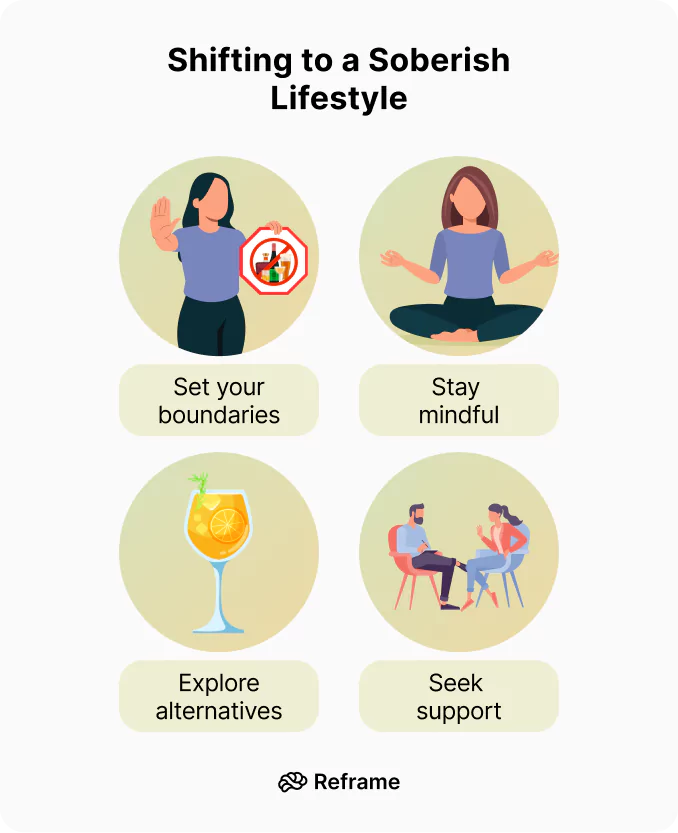
One of the best ways to give the “damp” or “soberish” lifestyle a go is to explore Reframe’s Damp January challenge.
The Damp January challenge is exactly what it sounds like: during the entire month of January, try to be conscious about drinking less than you usually do. Unlike the traditional Dry January, this challenge is perfect for those of us who aren’t looking to go sober for the entire month (or at all), but would like to be more mindful of their alcohol intake and improve their relationship with it.
In a nutshell, being “soberish” — or “damp,” if you prefer — means you're the one in the driver's seat, taking control of your journey with alcohol, making conscious choices to ensure you enjoy the ride while maintaining your physical and mental well-being.
The idea behind being soberish or damp is not about demonizing alcohol; it’s about promoting a balanced, healthier lifestyle. It's about enjoying a glass of wine on a special occasion without feeling the pressure to finish a whole bottle or choosing a mocktail over a cocktail without any insecurity.
Being “soberish” or “damp” gives you the freedom to define your own relationship with alcohol, giving you control and the opportunity to lead a happier, healthier life.
How is being "soberish" different from just being "sober curious"? Think of it like this: being sober curious is the research phase, while living a soberish lifestyle is putting that research into practice. When you're sober curious, you're asking questions and exploring your relationship with alcohol, maybe by taking a break from drinking to see how you feel. Being soberish is the next step, where you've decided to permanently reduce your alcohol intake in a way that feels right for you, without necessarily quitting altogether.
I'm worried a soberish lifestyle might make social events awkward. How do I handle that? This is a super common concern, but it's often less of an issue than we imagine. The key is to have a plan. Decide on your drinking limit before you even leave the house. You can also get comfortable ordering non-alcoholic options like sparkling water with lime or a mocktail. You'll likely find that you're more present and engaged in conversations, and most people are too focused on their own night to notice what's in your glass.
Is a soberish or damp lifestyle a good fit for everyone? While it’s a fantastic approach for many, it’s not a universal solution. A soberish lifestyle requires a lot of self-awareness and honesty. If you find that your attempts to moderate often fail or that you're constantly breaking the rules you set for yourself, it might be a sign that this flexible approach isn't providing the level of support you need. It's about finding a path that genuinely serves your well-being, not one that masks a deeper issue.
What's the first step I should take if I want to try being soberish? A great first step is to simply become more aware of your current habits without judgment. Before you pour a drink, ask yourself why you want it. Is it a craving, a social habit, or a way to unwind? Just noticing your patterns is a powerful move. From there, you can set a small, achievable goal, like having two alcohol-free days during the week or setting a two-drink maximum when you go out.
Do I have to use non-alcoholic drinks to be soberish? Not at all! Non-alcoholic beers, wines, and mocktails are simply tools you can use if you find them helpful. For some, they are a great way to enjoy the ritual or flavor of a drink without the alcohol. For others, they might feel too close to the real thing. The soberish lifestyle is all about personal choice, so if you'd rather have a seltzer or a cup of tea, that works perfectly too. The goal is to find what supports you in drinking more mindfully.
The conversation around alcohol is changing. You might have heard people talking about being "soberish" or living a "damp" lifestyle. But what is soberish, really? It’s not about strict rules or total abstinence. The core soberish meaning is all about mindful consumption and being more intentional with your choices. It’s a flexible approach for anyone who wants to drink less and feel better, without the pressure of quitting completely. This is about finding a middle path that works for you and your well-being.
What exactly does “soberish” mean? And what is a “damp” lifestyle? They’re terms that have come to define a state of selective sobriety — people who are “soberish” or “damp” aren’t completely abstinent from alcohol, but they’re intentional and mindful about their consumption. It's about setting your own rules and finding balance. You're not a teetotaler, but you're also not partaking in boozy blowouts. You're treading the path of moderation and maybe even becoming “sober-curious.”
The “soberish” approach acknowledges the detrimental effects excessive alcohol can have on both physical and mental health. Picture your body as a well-oiled machine. If alcohol is added in excess, it's like throwing a wrench in the works; it can disrupt various bodily functions. As just one example, it can strain the liver, leading to diseases like cirrhosis, in which the liver cells get damaged and replaced by scar tissue. It can also increase the risk of various cancers, including mouth, esophagus, colorectal, stomach, liver, pancreatic, and breast cancer. Moreover, alcohol has been associated with an increased risk of diabetes and can be detrimental to gut health, too.
Excessive alcohol can impact our mental well-being, too. Alcohol tends to amplify our feelings, so if we’re feeling anxious, alcohol might increase those feelings instead of suppressing them. While drinking might feel like a temporary relief, alcohol can exacerbate anxiety symptoms in the long run.
So where does “soberish” fall in all this? It's like taking the steering wheel of our health and well-being into our own hands. We’re in the driver’s seat, deciding when to hit the brakes on our alcohol intake and when to gently press the accelerator, always ensuring we’re in control.
The idea of sobriety isn't as black-and-white as it used to be. Traditionally, it meant complete and total abstinence from alcohol. But today, the definition has expanded to include a wide spectrum of choices. Many people are choosing to drink less for personal reasons, whether it's to improve their physical health, gain mental clarity, or simply out of curiosity. This modern approach isn't about following rigid rules set by others. Instead, it’s about taking control and practicing mindful drinking — a way of being more intentional and aware of how, when, and why you consume alcohol, ensuring it aligns with your personal wellness goals.
While they sound similar, "soberish" and "sober curious" describe two different points on the path to mindful drinking. Being sober curious is the exploratory phase. It’s about questioning your relationship with alcohol and its role in your life. This might involve taking breaks from drinking, like participating in Dry January, to observe how you feel without it. In contrast, a "soberish" lifestyle is the result of that curiosity. It’s a more permanent, balanced approach where you’ve consciously decided to reduce your alcohol consumption for the long term, but not necessarily eliminate it entirely. Think of it this way: being sober curious is asking the questions, and living soberish is living with the answer you’ve created for yourself.
This shift toward mindful drinking isn't just something you're imagining; it's a real movement with numbers to back it up. More and more people are re-evaluating their relationship with alcohol, moving away from an all-or-nothing mindset and toward a more intentional approach. They're asking themselves how drinking fits into their lives, rather than letting it be a default social activity. This cultural current is gaining momentum because it offers a flexible, shame-free way to improve well-being. Let's look at what the data says about these changing habits and who is driving this change.
The reasons people are choosing to drink less are becoming more diverse. It's no longer just about recovering from addiction; many are simply curious or want to make healthier choices for their overall well-being. This cultural shift is happening even as some data points to concerning patterns. For instance, a 2021 survey found that 17% of U.S. adults engaged in heavy drinking, with women experiencing a notable rise in heavy drinking days. This contrast highlights why the mindful drinking movement is gaining so much traction — it offers a balanced, sustainable alternative for those who feel caught between extremes and want to regain control over their habits.
Younger generations, particularly Gen Z, are leading the charge in this new approach to alcohol. They are drinking significantly less than older generations did at the same age, largely because they place a higher value on health and wellness. Unlike previous generations, they've grown up with social media, which not only glamorizes drinking but also openly displays its downsides — from "hangxiety" to long-term health risks. This constant stream of information has made them more aware and intentional consumers. For them, mindful drinking isn't a temporary trend; it's an integral part of a health-conscious lifestyle.
Going “damp” is a similar idea with an even more casual, user-friendly flavor. Like being “soberish,” it’s all about finding a sweet spot between complete sobriety (being bone-dry) and drinking regularly. This particular spin on the concept first appeared thanks to a TikToker named Hana Elson. She's whipped up a bunch of videos teaching people about the upsides of “damp” drinking, and boy, has it struck a chord! The #damplifestyle hashtag on TikTok is up to nearly 20 million views and still going strong.
The “damp” lifestyle is a down-to-earth way to handle drinking. Picture it like the mindful eating trend but swapping out food for alcohol. You can still have a drink, but you're setting some ground rules for yourself.
Being “damp” is all about spotting why you're drinking and the fallout that might come from it. The goal is similar to the “soberish” approach – making your relationship with alcohol a whole lot healthier.
Some may ask, "Why not go entirely sober?" Absolutely, sure — complete abstinence works for some. However, absolute sobriety can be a drastic change, and the idea of never having a drink again can be daunting — especially at the beginning, when we’re still trying to determine what relationship with alcohol is right for us. Being “soberish” allows for flexibility in the way we see our relationship with alcohol. It's about choosing when, where, and how much we drink, putting the power back in our own hands.
Adopting a soberish lifestyle isn't about what you're giving up; it's about what you stand to gain. This shift toward mindful drinking is rooted in the desire for a healthier, more balanced life. When you intentionally reduce your alcohol intake, you open the door to a wide range of positive changes that can affect everything from your physical health and appearance to your bank account and social life. It’s about taking charge and discovering that the benefits of cutting back often far outweigh the temporary buzz of a drink.
One of the most immediate rewards of drinking less is how much better you feel and look. Reducing alcohol gives your body a much-needed break, allowing it to repair and function more efficiently. Your liver, which works hard to process alcohol, can recover, and your immune system gets stronger. Many people also notice significant changes in their appearance, like clearer, more hydrated skin and brighter eyes. Cutting back on the empty calories in alcoholic drinks can also make weight management easier and give you a welcome surge of natural energy that you just don't get when you're nursing even a mild hangover.
Waking up without that familiar groggy feeling is a game-changer. Better sleep is a common side effect of drinking less, leading to more energy and mental clarity throughout the day. This newfound vitality often translates into greater productivity, both at work and in your personal life. And let's not forget the financial perks. Drinks are expensive, and the costs add up quickly. Have you ever stopped to calculate how much you spend on alcohol each month? Redirecting that money toward hobbies, travel, or savings is a powerful motivator for sticking with a soberish lifestyle.
Many of us worry that drinking less will make social situations awkward, but the opposite is often true. The soberish approach gives you the flexibility to enjoy social events without relying on alcohol as a crutch. You might find that you're more present, engaged, and articulate in conversations. Since alcohol can sometimes amplify feelings of anxiety, cutting back can actually make you feel more comfortable and confident in social settings. It allows you to build genuine connections based on your personality, not on a shared buzz, proving you can have fun and loosen up all on your own.
This approach of mindful drinking is empowering for so many people, but it’s wise to acknowledge that it might not be the perfect fit for everyone. The key is radical honesty with yourself. Being “soberish” is about making conscious choices to improve your well-being, not finding a loophole to continue patterns that no longer serve you. It requires a strong sense of self-awareness to know when moderation is working and when it might be preventing you from addressing a deeper issue. Before you commit to a “damp” lifestyle, it’s worth taking a moment to reflect on your personal relationship with alcohol and what you truly hope to achieve by cutting back.
One of the biggest cautions around the “soberish” trend is that it can sometimes allow a more serious drinking problem to fly under the radar. It’s a common misconception that you only have a problem with alcohol if you’re unable to function in your daily life. As one expert noted, many people with alcohol issues can still excel at work and maintain their responsibilities. If you find that your attempts at moderation consistently lead back to heavy drinking, or if the rules you set for yourself are constantly being broken, it might be a sign that a “soberish” approach isn’t providing the support you need. Understanding your own drinking triggers is a crucial first step in making a change that lasts.
With the rise of mindful drinking, the market for “sober-friendly” alternatives has exploded. While having more options like non-alcoholic beers and sophisticated mocktails is fantastic, it’s important to approach them with care. Just because a product is labeled as “natural” or alcohol-free doesn’t mean it’s entirely without risk. Some non-alcoholic beverages can contain trace amounts of alcohol, which could be problematic for someone in recovery. Furthermore, for some people, these alternatives can mimic the ritual of drinking so closely that they keep cravings alive rather than helping to build new, healthier habits. It’s all about knowing what works for you and being mindful of the products you consume on your journey.
The concept of being “soberish” or “damp” goes hand-in-hand with the principles of mindful drinking. It's like turning on the GPS to navigate our journey with alcohol. We become more aware of our speed (rate of consumption), our destination (how we feel after drinking), and any bumps on the road (unwanted side effects). This mindful approach lets us enjoy the journey without veering off the healthy path.
Non-alcoholic alternatives play a significant role in the “soberish” or “damp” journey. Think of them as rest stops along the road. We still get to enjoy the ride — parties, celebrations, and social gatherings — without adding road wear to our health. Non-alcoholic drinks have been shown not only to help reduce alcohol intake but also to improve overall quality of life. So the next time you're at a social gathering, don't hesitate to reach for that mocktail or sparkling water!
Navigating social events can feel like a challenge when you’re changing your drinking habits, but a little planning goes a long way. Being “soberish” means you get to define your own terms, whether that’s drinking less often or more carefully. Before you head out, decide what your limit will be for the night, or if you’ll be skipping alcohol altogether. At parties or bars, you can confidently choose drinks like sparkling water with lime, seltzers, or one of the many great-tasting non-alcoholic beers now available. This isn’t about missing out; it’s about being present and in control of your experience. You might be surprised how many people don’t even notice what’s in your cup, and you’ll definitely appreciate waking up feeling clear-headed the next day.
The core idea behind lifestyles like “Damp and Soberish” is to put you in charge of your drinking, not to label alcohol as inherently bad. It’s about pursuing a healthier, more balanced life on your own terms. A huge part of this is practicing mindful drinking, which simply means paying close attention to why you’re reaching for a drink, how much you’re consuming, and how it truly makes you feel physically and emotionally. You don’t have to do it alone, either. Talking to friends, joining supportive groups, or seeking professional guidance can make a world of difference. Online communities, like the Reframe Forum, offer a safe space to connect with others who are on a similar path and share experiences without judgment.
For daily support right in your pocket, technology can be an incredible ally. The Reframe app, for example, has already helped over two million people worldwide build healthier drinking habits through its neuroscience-based program. It offers a flexible approach that empowers you to reduce your consumption without feeling pressured to quit completely. With tools for tracking drinks, understanding your triggers, and participating in daily readings and exercises, it provides a structured way to make mindful changes. This method allows you to improve your health and social life without feeling like you have to give up fun, making it a perfect fit for a soberish lifestyle.
Don’t know how to shift toward a “soberish” or “damp” lifestyle? Here are a few practical tips:
One of the best ways to give the “damp” or “soberish” lifestyle a go is to explore Reframe’s Damp January challenge.
The Damp January challenge is exactly what it sounds like: during the entire month of January, try to be conscious about drinking less than you usually do. Unlike the traditional Dry January, this challenge is perfect for those of us who aren’t looking to go sober for the entire month (or at all), but would like to be more mindful of their alcohol intake and improve their relationship with it.
In a nutshell, being “soberish” — or “damp,” if you prefer — means you're the one in the driver's seat, taking control of your journey with alcohol, making conscious choices to ensure you enjoy the ride while maintaining your physical and mental well-being.
The idea behind being soberish or damp is not about demonizing alcohol; it’s about promoting a balanced, healthier lifestyle. It's about enjoying a glass of wine on a special occasion without feeling the pressure to finish a whole bottle or choosing a mocktail over a cocktail without any insecurity.
Being “soberish” or “damp” gives you the freedom to define your own relationship with alcohol, giving you control and the opportunity to lead a happier, healthier life.
How is being "soberish" different from just being "sober curious"? Think of it like this: being sober curious is the research phase, while living a soberish lifestyle is putting that research into practice. When you're sober curious, you're asking questions and exploring your relationship with alcohol, maybe by taking a break from drinking to see how you feel. Being soberish is the next step, where you've decided to permanently reduce your alcohol intake in a way that feels right for you, without necessarily quitting altogether.
I'm worried a soberish lifestyle might make social events awkward. How do I handle that? This is a super common concern, but it's often less of an issue than we imagine. The key is to have a plan. Decide on your drinking limit before you even leave the house. You can also get comfortable ordering non-alcoholic options like sparkling water with lime or a mocktail. You'll likely find that you're more present and engaged in conversations, and most people are too focused on their own night to notice what's in your glass.
Is a soberish or damp lifestyle a good fit for everyone? While it’s a fantastic approach for many, it’s not a universal solution. A soberish lifestyle requires a lot of self-awareness and honesty. If you find that your attempts to moderate often fail or that you're constantly breaking the rules you set for yourself, it might be a sign that this flexible approach isn't providing the level of support you need. It's about finding a path that genuinely serves your well-being, not one that masks a deeper issue.
What's the first step I should take if I want to try being soberish? A great first step is to simply become more aware of your current habits without judgment. Before you pour a drink, ask yourself why you want it. Is it a craving, a social habit, or a way to unwind? Just noticing your patterns is a powerful move. From there, you can set a small, achievable goal, like having two alcohol-free days during the week or setting a two-drink maximum when you go out.
Do I have to use non-alcoholic drinks to be soberish? Not at all! Non-alcoholic beers, wines, and mocktails are simply tools you can use if you find them helpful. For some, they are a great way to enjoy the ritual or flavor of a drink without the alcohol. For others, they might feel too close to the real thing. The soberish lifestyle is all about personal choice, so if you'd rather have a seltzer or a cup of tea, that works perfectly too. The goal is to find what supports you in drinking more mindfully.

Peer pressure plays a significant role in alcohol use and can make cutting back in a social setting tricky. However, there are several strategies that can help get around this problem.
Although it isn’t a treatment for alcohol use disorder (AUD), the Reframe app can help you cut back on drinking gradually, with the science-backed knowledge to empower you 100% of the way. Our proven program has helped millions of people around the world drink less and live more. And we want to help you get there, too!
The Reframe app equips you with the knowledge and skills you need to not only survive drinking less, but to thrive while you navigate the journey. Our daily research-backed readings teach you the neuroscience of alcohol, and our in-app Toolkit provides the resources and activities you need to navigate each challenge.
You’ll meet millions of fellow Reframers in our 24/7 Forum chat and daily Zoom check-in meetings. Receive encouragement from people worldwide who know exactly what you’re going through! You’ll also have the opportunity to connect with our licensed Reframe coaches for more personalized guidance.
Plus, we’re always introducing new features to optimize your in-app experience. We recently launched our in-app chatbot, Melody, powered by the world’s most powerful AI technology. Melody is here to help as you adjust to a life with less (or no) alcohol.
And that’s not all! Every month, we launch fun challenges, like Dry/Damp January, Mental Health May, and Outdoorsy June. You won’t want to miss out on the chance to participate alongside fellow Reframers (or solo if that’s more your thing!).
The Reframe app is free for 7 days, so you don’t have anything to lose by trying it. Are you ready to feel empowered and discover life beyond alcohol? Then download our app through the App Store or Google Play today!
Alcohol often finds its way into the picture when we’re painting the town red with our pals. But what happens when we decide to cut back on the booze, or maybe quit entirely? It's no easy feat, especially when faced with social situations involving alcohol. Here's a bit of encouragement, some scientific insight, and a few tricks of the trade to help you stay on your path, even when the party's in full swing.
To start, it’s worth acknowledging that peer pressure is very real. Contrary to popular belief, peer pressure isn't just a teenage phenomenon. As a 2020 BMC Public Health study showed, it follows us into adulthood, sneakily shaping our choices and behaviors, especially when it comes to alcohol. Likewise, a 2019 survey of UK drinkers found that more than 30% of the participants reported drinking more than they intended because of pressure, and more than half wished there was less pressure around alcohol. For those of us figuring out how to control drinking without quitting, peer pressure can be a major barrier.
Just imagine: a hard day at work, a casual after-hours drink, and a colleague cheerfully insisting "One more won't hurt!" But why does this happen? Here are some of the most common reasons people tend to experience peer pressure around alcohol:
So, how do we arm ourselves against this invisible foe when we're aiming to cut back on alcohol? We certainly don’t want to avoid social gatherings entirely — that’s neither fun nor practical. If you’ve gotten to the point where you’re wondering how to cut back or stop drinking on your own, we’re here to remind you that you can still have friends even if you change your relationship with alcohol. Here are some proven strategies:


It’s vital to remember that cutting back on alcohol isn't about going from 100 to 0 instantly. It's about making conscious decisions that suit our lifestyles and our health. Studies show that gradual reductions in alcohol intake are more sustainable in the long run than abrupt changes.
As we take on this journey of reduced drinking, it’s okay to have setbacks. The point is to keep trying and to keep learning about ourselves and our patterns. Cutting back on alcohol doesn't mean we have to cut back on fun! It just means we're choosing a different way to enjoy ourselves, one that's healthier and more sustainable.
Alcohol often finds its way into the picture when we’re painting the town red with our pals. But what happens when we decide to cut back on the booze, or maybe quit entirely? It's no easy feat, especially when faced with social situations involving alcohol. Here's a bit of encouragement, some scientific insight, and a few tricks of the trade to help you stay on your path, even when the party's in full swing.
To start, it’s worth acknowledging that peer pressure is very real. Contrary to popular belief, peer pressure isn't just a teenage phenomenon. As a 2020 BMC Public Health study showed, it follows us into adulthood, sneakily shaping our choices and behaviors, especially when it comes to alcohol. Likewise, a 2019 survey of UK drinkers found that more than 30% of the participants reported drinking more than they intended because of pressure, and more than half wished there was less pressure around alcohol. For those of us figuring out how to control drinking without quitting, peer pressure can be a major barrier.
Just imagine: a hard day at work, a casual after-hours drink, and a colleague cheerfully insisting "One more won't hurt!" But why does this happen? Here are some of the most common reasons people tend to experience peer pressure around alcohol:
So, how do we arm ourselves against this invisible foe when we're aiming to cut back on alcohol? We certainly don’t want to avoid social gatherings entirely — that’s neither fun nor practical. If you’ve gotten to the point where you’re wondering how to cut back or stop drinking on your own, we’re here to remind you that you can still have friends even if you change your relationship with alcohol. Here are some proven strategies:
It’s vital to remember that cutting back on alcohol isn't about going from 100 to 0 instantly. It's about making conscious decisions that suit our lifestyles and our health. Studies show that gradual reductions in alcohol intake are more sustainable in the long run than abrupt changes.
As we take on this journey of reduced drinking, it’s okay to have setbacks. The point is to keep trying and to keep learning about ourselves and our patterns. Cutting back on alcohol doesn't mean we have to cut back on fun! It just means we're choosing a different way to enjoy ourselves, one that's healthier and more sustainable.

Learn to navigate social situations where alcohol is involved when you’re cutting back on drinking. Discover suggestions for navigating conversations about your decision and embracing your ‘why.’ Embrace your choices to cut back with confidence and ease!
Although it isn’t a treatment for alcohol use disorder (AUD), the Reframe app can help you cut back on drinking gradually, with the science-backed knowledge to empower you 100% of the way. Our proven program has helped millions of people around the world drink less and live more. And we want to help you get there, too!
The Reframe app equips you with the knowledge and skills you need to not only survive drinking less, but to thrive while you navigate the journey. Our daily research-backed readings teach you the neuroscience of alcohol, and our in-app Toolkit provides the resources and activities you need to navigate each challenge.
You’ll meet millions of fellow Reframers in our 24/7 Forum chat and daily Zoom check-in meetings. Receive encouragement from people worldwide who know exactly what you’re going through! You’ll also have the opportunity to connect with our licensed Reframe coaches for more personalized guidance.
Plus, we’re always introducing new features to optimize your in-app experience. We recently launched our in-app chatbot, Melody, powered by the world’s most powerful AI technology. Melody is here to help as you adjust to a life with less (or no) alcohol.
And that’s not all! Every month, we launch fun challenges, like Dry/Damp January, Mental Health May, and Outdoorsy June. You won’t want to miss out on the chance to participate alongside fellow Reframers (or solo if that’s more your thing!).
The Reframe app is free for 7 days, so you don’t have anything to lose by trying it. Are you ready to feel empowered and discover life beyond alcohol? Then download our app through the App Store or Google Play today!
Cheers to a healthier and happier you! You've made the decision to cut back on alcohol, and that's something to be celebrated.
Taking charge of your well-being is a bold step towards a better life, and we're here to help you navigate the journey –– with confidence. Whether you're looking to cut back on drinking for health reasons, personal growth, or simply to feel more in control, assertiveness is the key to success.
In this article, we'll explore the art of being assertive about your decision, equipping you with the tools and mindset to embrace a mindful drinking lifestyle. Let’s talk about how to cut back on drinking and be more assertive with our decisions.
You're at a social gathering, surrounded by friends and acquaintances. The room is buzzing with conversations and laughter, and the clinking of glasses fills the air. You decide to stick to your commitment of cutting back on drinking, opting for sparkling water instead. As you hold the can in your hand, someone approaches you with a puzzled expression.
"Why aren't you drinking?” they ask. “Are you on some kind of diet?"
Sound familiar? In situations like these, being assertive can be a challenge — but it's essential to stay true to yourself and your goals.
You must first remember to embrace your “why.” Understanding and embracing the reasons you’re changing your relationship with alcohol can empower you in social situations. Whether it's for your physical health, mental clarity, or personal growth, reminding yourself of your motivations will help you stand firm and confidently express your decision.
Let's explore some strategies to help you become more assertive about your decision:
Remember, it’s not about being aggressive or confrontational. Assertiveness is about confidently expressing your needs and boundaries while respecting others.

There are plenty of reasons why we cut back. People are curious, but the truth of it is –– it’s truly no one’s business knowing the reasons behind our personal decision to do so. However, if you feel like sharing your why with someone who asks, here are some ways to navigate those conversations.
1. For health reasons. If your primary motivation is health-related, you can use these statements:
2. For mindful drinking. If cutting back is driven by a need to observe or improve your relationship to alcohol, try using these explanations:
3. For mental clarity. By reducing alcohol consumption, you open the door to enhanced focus, improved cognitive function, and a heightened sense of awareness. Say goodbye to the mental noise and hello to a sharp, vibrant mind ready to conquer whatever comes your way.
4. For personal growth. If drinking makes you feel shame or regret the next morning, that’s a good sign you need to cut back. Embrace those feelings on your path to personal growth.
Keep it brief! There are many whys and ways to cut back on drinking, but you can share as much or as little as you like. No one is entitled to know the reasons behind something this personal, so these phrases are just here to support you if you want to share. Be prepared for all kinds of responses –– including defensiveness and resistance –– and stand your ground as you remember your why. That’s enough.
In the final section, we'll explore how to embrace empowerment and build a strong support network to bolster your assertiveness.
By practicing assertiveness and embracing empowerment, you're not only standing up for your choices but also inspiring those around you to embrace healthier habits. Remember, assertiveness is a skill that improves with practice. Celebrate your victories, no matter how small, and learn from any challenges you encounter along the way.
And remember, if you ever need a little pep talk or advice, Reframe and the community you’ll find there is ready to support you every step of the way. You've got this!
Cheers to a healthier and happier you! You've made the decision to cut back on alcohol, and that's something to be celebrated.
Taking charge of your well-being is a bold step towards a better life, and we're here to help you navigate the journey –– with confidence. Whether you're looking to cut back on drinking for health reasons, personal growth, or simply to feel more in control, assertiveness is the key to success.
In this article, we'll explore the art of being assertive about your decision, equipping you with the tools and mindset to embrace a mindful drinking lifestyle. Let’s talk about how to cut back on drinking and be more assertive with our decisions.
You're at a social gathering, surrounded by friends and acquaintances. The room is buzzing with conversations and laughter, and the clinking of glasses fills the air. You decide to stick to your commitment of cutting back on drinking, opting for sparkling water instead. As you hold the can in your hand, someone approaches you with a puzzled expression.
"Why aren't you drinking?” they ask. “Are you on some kind of diet?"
Sound familiar? In situations like these, being assertive can be a challenge — but it's essential to stay true to yourself and your goals.
You must first remember to embrace your “why.” Understanding and embracing the reasons you’re changing your relationship with alcohol can empower you in social situations. Whether it's for your physical health, mental clarity, or personal growth, reminding yourself of your motivations will help you stand firm and confidently express your decision.
Let's explore some strategies to help you become more assertive about your decision:
Remember, it’s not about being aggressive or confrontational. Assertiveness is about confidently expressing your needs and boundaries while respecting others.
There are plenty of reasons why we cut back. People are curious, but the truth of it is –– it’s truly no one’s business knowing the reasons behind our personal decision to do so. However, if you feel like sharing your why with someone who asks, here are some ways to navigate those conversations.
1. For health reasons. If your primary motivation is health-related, you can use these statements:
2. For mindful drinking. If cutting back is driven by a need to observe or improve your relationship to alcohol, try using these explanations:
3. For mental clarity. By reducing alcohol consumption, you open the door to enhanced focus, improved cognitive function, and a heightened sense of awareness. Say goodbye to the mental noise and hello to a sharp, vibrant mind ready to conquer whatever comes your way.
4. For personal growth. If drinking makes you feel shame or regret the next morning, that’s a good sign you need to cut back. Embrace those feelings on your path to personal growth.
Keep it brief! There are many whys and ways to cut back on drinking, but you can share as much or as little as you like. No one is entitled to know the reasons behind something this personal, so these phrases are just here to support you if you want to share. Be prepared for all kinds of responses –– including defensiveness and resistance –– and stand your ground as you remember your why. That’s enough.
In the final section, we'll explore how to embrace empowerment and build a strong support network to bolster your assertiveness.
By practicing assertiveness and embracing empowerment, you're not only standing up for your choices but also inspiring those around you to embrace healthier habits. Remember, assertiveness is a skill that improves with practice. Celebrate your victories, no matter how small, and learn from any challenges you encounter along the way.
And remember, if you ever need a little pep talk or advice, Reframe and the community you’ll find there is ready to support you every step of the way. You've got this!

The sober curious movement is quickly gaining momentum. What exactly does it entail, though? Let’s take a look.
Being sober curious is about starting a conversation — a conversation with ourselves and with others. Embracing this way of life is about creating a space in which we feel free to choose, question, and explore, all in pursuit of our well-being, happiness, and authentic selves.
So, are you ready to explore your own sober curiosity? The Reframe app is here to support you! Whether your goal is to stop drinking or reduce how much you drink, we’ll give you the tools and guidance you need to succeed. We’ve helped hundreds of thousands of people break free from the societal pressure to drink and develop healthier habits, and we’ll help you do the same too.
We understand that everyone’ bodies, life experiences, and goals are unique. That’s why our daily readings present neuroscientific facts that will help you discern the impact alcohol has on your life. When you join the Reframe community, you’ll gain access to our 24/7 Forum chat and daily Zoom check-in calls. We’re a diverse and engaging group of people from around the world who are asking the same questions you are, and wrestling with the same challenges. Remember that you’re never alone!
Best of all, you can try Reframe free for 7 days, so there’s no risk — and a lot of potential gain! We want you to be fully satisfied with your experience, which is why we’re committed to a 100% money-back guarantee.
Consider how it would feel to finally live with the mental clarity, energy, and empowerment you deserve. If you feel that it’s time to ditch the booze, you’ve come to the right place. We want you to live your best life. Break free from an unhealthy relationship with alcohol, lean into your sober curiosity, and live more with Reframe! We look forward to meeting you!
You're at a lively party on a Friday night. The room is abuzz with animated conversations, bursts of laughter echo through the air, and clinking glasses filled with colorful beverages are omnipresent. In this situation, most of us would feel obliged to accept the next glass of wine or beer offered to us, fearing that a refusal might tarnish our social image. But, have we ever considered what it would be like to say "no" to alcohol and still have a good time? This question is at the core of the sober curious movement.
Sober curiosity isn't about imposing an absolute ban on alcohol; rather, the movement embraces a mindful approach toward drinking habits. Sober curiosity demands that we question why we automatically reach for alcohol and what sobriety might hold for us. The intriguing concept isn't anchored on any hard-and-fast rule, but on the freedom to choose and question our choices, and the willingness to explore alternatives. It represents an attitudinal shift towards our relationship with alcohol.
Drinking is traditionally viewed as a bonding tool and form of pleasure. Happy hours, boozy brunches, and celebratory wine tastings are omnipresent in today’s society, and many cultures’ social events center around alcohol. The sober curious movement challenges the conventional belief that alcohol is required to have fun, be sociable, or feel relaxed. The philosophy nudges us toward an introspective journey that will ultimately help us decipher whether our drinking habits are born out of genuine enjoyment or mere societal pressure and norms.
Sober curiosity doesn’t aim to instill fear or guilt at the thought of enjoying a glass of wine or beer. Rather, it aims to create an atmosphere in which we can openly question and talk about our relationship with alcohol without judgment or stigma. Those who are sober curious believe in nurturing a culture in which choosing a non-alcoholic drink at a party is as normal and accepted as choosing a cocktail.
Science continues to support the concept of sober curiosity. Countless studies have shown that people who abstain from alcohol even for short periods experience significant improvements in their physical and emotional well-being.
Other studies have suggested that even moderate drinking can impact our health. Alcohol is associated with a range of health issues, from liver disease to heart conditions to some forms of cancer. On a psychological level, alcohol can contribute to feelings of depression and anxiety.
And despite the common belief that alcohol helps us sleep better, science has shown that alcohol can disrupt sleep patterns. A review of several studies published in the journal Alcoholism: Clinical and Experimental Research suggested that alcohol may help us fall asleep quicker, but it can also disrupt our rapid eye movement (REM) sleep, which is vital for memory, concentration, and learning.
Many of those who've embraced the sober curious movement have reported having better sleep, more energy, and an improvement in their skin. They often gain a newfound clarity of mind and enhanced productivity.
But being sober curious isn’t just about the health benefits. It's about breaking free from the shackles of societal expectations and norms, challenging the status quo, and finding our own path. When we change our relationship with alcohol, we discover our true selves and the authentic ways in which we enjoy life unfettered by its influence. The sober curious movement is about being comfortable and confident in our decisions without fear of judgment or prejudice.

Celebrities from various backgrounds, generations, and fields have embraced the sober curious movement, providing a rich tapestry of inspiring journeys that echo the universal appeal of the trend.
Consider Hollywood legend Samuel L. Jackson, who has been sober for over two decades. His decision to quit drinking wasn't driven by a moment of curiosity but a profound realization of alcohol’s impact on his life and career. Jackson's inspiring journey continues to inspire people from all walks of life to reassess their relationship with alcohol.
British singer-songwriter Adele made headlines when she announced her decision to drastically cut down her alcohol consumption. She admitted that, although her love for wine remained, she chose to limit it, focusing instead on her health and well-being. Adele's journey offers a great example of how one can balance a sober curious approach and still occasionally enjoy a drink.
Jada Pinkett Smith, a revered actress and talk show host, decided to drastically cut back her drinking years ago after noticing that she was becoming reliant on it. Her story is a stirring example of how the sober curious movement empowers us to take control of our choices.
These examples support the sober curious movement by illustrating that even those in the limelight are turning their backs on the societal expectation to habitually drink.

The sober curious movement is about exploration and experimentation. We can begin with small steps, perhaps opting for a non-alcoholic drink at a party, or choosing to spend one weekend entirely sober. We can even try different non-alcoholic cocktails or “mocktails,” and experiment with other ways to relax and have fun that don't involve alcohol. There's no rulebook, no right or wrong way. The path to becoming sober curious is as unique as we are.
The sober curious movement invites us to share our experiences, learn from each other, and support one another. As we emphasize at Reframe, it’s about fostering a community where we don't feel isolated or alienated for choosing sobriety, even if it's just for a night, a week, or a month.
Remember, being sober curious doesn't necessarily mean being anti-alcohol. It simply means being pro-questioning and pro-exploration. When we explore this new way of being, we value our well-being and happiness, recognize the role that alcohol plays in our lives, and consider if we might want to change that role. And if we decide to make that change, it's about doing so with understanding, compassion, and acceptance, both for ourselves and others.
Questions, doubts, and challenges might arise as we embrace sober curiosity, but this is all part of the process. We might discover that we enjoy life more without alcohol, or that we still enjoy the occasional glass of wine or beer. The key is that we make this decision consciously, mindfully, and authentically — not because we feel we have to, but because we want to.
You're at a lively party on a Friday night. The room is abuzz with animated conversations, bursts of laughter echo through the air, and clinking glasses filled with colorful beverages are omnipresent. In this situation, most of us would feel obliged to accept the next glass of wine or beer offered to us, fearing that a refusal might tarnish our social image. But, have we ever considered what it would be like to say "no" to alcohol and still have a good time? This question is at the core of the sober curious movement.
Sober curiosity isn't about imposing an absolute ban on alcohol; rather, the movement embraces a mindful approach toward drinking habits. Sober curiosity demands that we question why we automatically reach for alcohol and what sobriety might hold for us. The intriguing concept isn't anchored on any hard-and-fast rule, but on the freedom to choose and question our choices, and the willingness to explore alternatives. It represents an attitudinal shift towards our relationship with alcohol.
Drinking is traditionally viewed as a bonding tool and form of pleasure. Happy hours, boozy brunches, and celebratory wine tastings are omnipresent in today’s society, and many cultures’ social events center around alcohol. The sober curious movement challenges the conventional belief that alcohol is required to have fun, be sociable, or feel relaxed. The philosophy nudges us toward an introspective journey that will ultimately help us decipher whether our drinking habits are born out of genuine enjoyment or mere societal pressure and norms.
Sober curiosity doesn’t aim to instill fear or guilt at the thought of enjoying a glass of wine or beer. Rather, it aims to create an atmosphere in which we can openly question and talk about our relationship with alcohol without judgment or stigma. Those who are sober curious believe in nurturing a culture in which choosing a non-alcoholic drink at a party is as normal and accepted as choosing a cocktail.
Science continues to support the concept of sober curiosity. Countless studies have shown that people who abstain from alcohol even for short periods experience significant improvements in their physical and emotional well-being.
Other studies have suggested that even moderate drinking can impact our health. Alcohol is associated with a range of health issues, from liver disease to heart conditions to some forms of cancer. On a psychological level, alcohol can contribute to feelings of depression and anxiety.
And despite the common belief that alcohol helps us sleep better, science has shown that alcohol can disrupt sleep patterns. A review of several studies published in the journal Alcoholism: Clinical and Experimental Research suggested that alcohol may help us fall asleep quicker, but it can also disrupt our rapid eye movement (REM) sleep, which is vital for memory, concentration, and learning.
Many of those who've embraced the sober curious movement have reported having better sleep, more energy, and an improvement in their skin. They often gain a newfound clarity of mind and enhanced productivity.
But being sober curious isn’t just about the health benefits. It's about breaking free from the shackles of societal expectations and norms, challenging the status quo, and finding our own path. When we change our relationship with alcohol, we discover our true selves and the authentic ways in which we enjoy life unfettered by its influence. The sober curious movement is about being comfortable and confident in our decisions without fear of judgment or prejudice.
Celebrities from various backgrounds, generations, and fields have embraced the sober curious movement, providing a rich tapestry of inspiring journeys that echo the universal appeal of the trend.
Consider Hollywood legend Samuel L. Jackson, who has been sober for over two decades. His decision to quit drinking wasn't driven by a moment of curiosity but a profound realization of alcohol’s impact on his life and career. Jackson's inspiring journey continues to inspire people from all walks of life to reassess their relationship with alcohol.
British singer-songwriter Adele made headlines when she announced her decision to drastically cut down her alcohol consumption. She admitted that, although her love for wine remained, she chose to limit it, focusing instead on her health and well-being. Adele's journey offers a great example of how one can balance a sober curious approach and still occasionally enjoy a drink.
Jada Pinkett Smith, a revered actress and talk show host, decided to drastically cut back her drinking years ago after noticing that she was becoming reliant on it. Her story is a stirring example of how the sober curious movement empowers us to take control of our choices.
These examples support the sober curious movement by illustrating that even those in the limelight are turning their backs on the societal expectation to habitually drink.
The sober curious movement is about exploration and experimentation. We can begin with small steps, perhaps opting for a non-alcoholic drink at a party, or choosing to spend one weekend entirely sober. We can even try different non-alcoholic cocktails or “mocktails,” and experiment with other ways to relax and have fun that don't involve alcohol. There's no rulebook, no right or wrong way. The path to becoming sober curious is as unique as we are.
The sober curious movement invites us to share our experiences, learn from each other, and support one another. As we emphasize at Reframe, it’s about fostering a community where we don't feel isolated or alienated for choosing sobriety, even if it's just for a night, a week, or a month.
Remember, being sober curious doesn't necessarily mean being anti-alcohol. It simply means being pro-questioning and pro-exploration. When we explore this new way of being, we value our well-being and happiness, recognize the role that alcohol plays in our lives, and consider if we might want to change that role. And if we decide to make that change, it's about doing so with understanding, compassion, and acceptance, both for ourselves and others.
Questions, doubts, and challenges might arise as we embrace sober curiosity, but this is all part of the process. We might discover that we enjoy life more without alcohol, or that we still enjoy the occasional glass of wine or beer. The key is that we make this decision consciously, mindfully, and authentically — not because we feel we have to, but because we want to.
