

Curious about mixing kratom and alcohol? Our latest blog sheds light on why this is not a good idea — check it out for tips to stay safe!

Although it isn’t a treatment for alcohol use disorder (AUD), the Reframe app can help you cut back on drinking gradually, with the science-backed knowledge to empower you 100% of the way. Our proven program has helped millions of people around the world drink less and live more. And we want to help you get there, too!
The Reframe app equips you with the knowledge and skills you need to not only survive drinking less, but to thrive while you navigate the journey. Our daily research-backed readings teach you the neuroscience of alcohol, and our in-app Toolkit provides the resources and activities you need to navigate each challenge.
You’ll meet millions of fellow Reframers in our 24/7 Forum chat and daily Zoom check-in meetings. Receive encouragement from people worldwide who know exactly what you’re going through! You’ll also have the opportunity to connect with our licensed Reframe coaches for more personalized guidance.
Plus, we’re always introducing new features to optimize your in-app experience. We recently launched our in-app chatbot, Melody, powered by the world’s most powerful AI technology. Melody is here to help as you adjust to a life with less (or no) alcohol.
And that’s not all! Every month, we launch fun challenges, like Dry/Damp January, Mental Health May, and Outdoorsy June. You won’t want to miss out on the chance to participate alongside fellow Reframers (or solo if that’s more your thing!).
The Reframe app is free for 7 days, so you don’t have anything to lose by trying it. Are you ready to feel empowered and discover life beyond alcohol? Then download our app through the App Store or Google Play today!
Kratom, a plant scientifically known as Mitragyna speciosa, looks innocent enough — a leafy green plant that’s often dried and ground up into a tea. But there’s a lot more to it.
Native to Southeast Asia, kratom comes from a tropical tree that grows in Thailand, Malaysia, Indonesia, and Papua New Guinea. Its leaves contain compounds with mind-altering effects. Some people chew the leaves, others brew it as a tea, and some smoke or eat them in food. (These days, it’s often encapsulated or sold as a fine powder). Kratom is often touted for its potential pain-relieving properties, but like any other mind-altering substance, it’s got a dark side.
For one thing, mixing kratom with alcohol isn’t a great idea due to a number of potentially dangerous side effects. And if you’re not careful, it’s easy to end up with a full-blown addiction — whether or not booze is even in the picture.

The history of kratom dates back centuries. Indigenous communities have long used its leaves in ritual ceremonies and cultural traditions. For these communities, kratom wasn't necessarily a recreational drug; it was a part of their daily life and was often used as a pain remedy.

In the 20th century, several countries in Southeast Asia began recognizing the potential risks of kratom, leading them to impose bans or restrictions. For instance, Thailand, where kratom was deeply rooted in society, banned its use in 1943 due to increasing concerns about its addictive properties.
In the past few decades, the U.S. has seen a rise in kratom's popularity. The digital age, with its viral trends and internet marketing, played a pivotal role in kratom's surge in the West. Online forums and communities began discussing it, leading to increased curiosity and demand. By the 2000s and 2010s, kratom was being marketed as a natural supplement or herbal remedy, making its way into teas, capsules, and powders across the country.
But as its popularity grew, so did concerns about its safety and potential health implications. Regulatory bodies like the FDA have continually warned against the use of kratom, emphasizing its possible harmful effects and questioning the marketing strategies that present it as a harmless natural product.
The rise of kratom in the U.S. serves as a reminder that while traditions and ancient practices offer valuable insights, it's crucial to approach such substances with caution and awareness of potential risks.

Kratom's allure in various parts of the world can be attributed to the compounds found in its leaves, primarily mitragynine and 7-hydroxymitragynine. These compounds interact with the brain's opioid receptors, producing a range of effects. However, these interactions don't come without a cost. Let's unpack what kratom does to the body and mind:
In a nutshell, while kratom might seem like a natural alternative to certain medications or recreational substances, it comes with a laundry list of potential adverse effects. Always prioritize your health and safety, and approach such substances with caution and knowledge.


Kratom’s seemingly beneficial properties are what we hear about, but it's crucial to know about its dangers.

Mixing substances is almost never a good idea, and when it comes to kratom and alcohol, that’s certainly the case. Alone, each has their risks, but mix them together, and we’re in for a whirlwind of potential dangers.
Reducing or eliminating our alcohol intake, especially if we’re considering or currently using kratom, is vital. In addition to lowering the risk of dangerous side effects, it also preserves our overall health and well-being. Cutting back can boost our immune system, improve sleep, and reduce the risk of chronic diseases!
At the same time, it’s also a good idea to tread carefully when it comes to kratom, which can be habit-forming in itself. Many former drinkers have found themselves in the kratom trap by using it as a replacement for booze. Transfer addictions are sneaky! Before you know it, you can find yourself stuck in the same cycle with a new substance.


While kratom and alcohol might seem harmless at first glance, they’re not — and combining them can be perilous. Your well-being and safety are paramount, so remember to always make informed choices.
If we zoom out further, however, we can see that there’s a larger narrative unfolding here. It's not just about the immediate effects of alcohol and kratom or the consequences of mixing the two — it’s about finding a path to genuine freedom.
Both kratom and alcohol have a way of intertwining themselves into the fabric of our lives, sometimes so subtly that we might not even notice. Dependency isn't just about the physical cravings — it's also about the mental and emotional spaces these substances can invade and occupy. And when they're combined, the challenge of disentangling ourselves can be even more formidable.
But here's some good news: once we see that true freedom isn't found in a bottle or a leaf, our “need” for substances fades, and we gain mental space to see the exciting possibilities that lie beyond them. If you're working to reduce or eliminate your reliance on kratom, alcohol, or any other substance, remember this: every step you take, no matter how small, brings you closer to an authentic experience of life — and it’s absolutely worth it!
Kratom, a plant scientifically known as Mitragyna speciosa, looks innocent enough — a leafy green plant that’s often dried and ground up into a tea. But there’s a lot more to it.
Native to Southeast Asia, kratom comes from a tropical tree that grows in Thailand, Malaysia, Indonesia, and Papua New Guinea. Its leaves contain compounds with mind-altering effects. Some people chew the leaves, others brew it as a tea, and some smoke or eat them in food. (These days, it’s often encapsulated or sold as a fine powder). Kratom is often touted for its potential pain-relieving properties, but like any other mind-altering substance, it’s got a dark side.
For one thing, mixing kratom with alcohol isn’t a great idea due to a number of potentially dangerous side effects. And if you’re not careful, it’s easy to end up with a full-blown addiction — whether or not booze is even in the picture.
The history of kratom dates back centuries. Indigenous communities have long used its leaves in ritual ceremonies and cultural traditions. For these communities, kratom wasn't necessarily a recreational drug; it was a part of their daily life and was often used as a pain remedy.
In the 20th century, several countries in Southeast Asia began recognizing the potential risks of kratom, leading them to impose bans or restrictions. For instance, Thailand, where kratom was deeply rooted in society, banned its use in 1943 due to increasing concerns about its addictive properties.
In the past few decades, the U.S. has seen a rise in kratom's popularity. The digital age, with its viral trends and internet marketing, played a pivotal role in kratom's surge in the West. Online forums and communities began discussing it, leading to increased curiosity and demand. By the 2000s and 2010s, kratom was being marketed as a natural supplement or herbal remedy, making its way into teas, capsules, and powders across the country.
But as its popularity grew, so did concerns about its safety and potential health implications. Regulatory bodies like the FDA have continually warned against the use of kratom, emphasizing its possible harmful effects and questioning the marketing strategies that present it as a harmless natural product.
The rise of kratom in the U.S. serves as a reminder that while traditions and ancient practices offer valuable insights, it's crucial to approach such substances with caution and awareness of potential risks.
Kratom's allure in various parts of the world can be attributed to the compounds found in its leaves, primarily mitragynine and 7-hydroxymitragynine. These compounds interact with the brain's opioid receptors, producing a range of effects. However, these interactions don't come without a cost. Let's unpack what kratom does to the body and mind:
In a nutshell, while kratom might seem like a natural alternative to certain medications or recreational substances, it comes with a laundry list of potential adverse effects. Always prioritize your health and safety, and approach such substances with caution and knowledge.
Kratom’s seemingly beneficial properties are what we hear about, but it's crucial to know about its dangers.
Mixing substances is almost never a good idea, and when it comes to kratom and alcohol, that’s certainly the case. Alone, each has their risks, but mix them together, and we’re in for a whirlwind of potential dangers.
Reducing or eliminating our alcohol intake, especially if we’re considering or currently using kratom, is vital. In addition to lowering the risk of dangerous side effects, it also preserves our overall health and well-being. Cutting back can boost our immune system, improve sleep, and reduce the risk of chronic diseases!
At the same time, it’s also a good idea to tread carefully when it comes to kratom, which can be habit-forming in itself. Many former drinkers have found themselves in the kratom trap by using it as a replacement for booze. Transfer addictions are sneaky! Before you know it, you can find yourself stuck in the same cycle with a new substance.
While kratom and alcohol might seem harmless at first glance, they’re not — and combining them can be perilous. Your well-being and safety are paramount, so remember to always make informed choices.
If we zoom out further, however, we can see that there’s a larger narrative unfolding here. It's not just about the immediate effects of alcohol and kratom or the consequences of mixing the two — it’s about finding a path to genuine freedom.
Both kratom and alcohol have a way of intertwining themselves into the fabric of our lives, sometimes so subtly that we might not even notice. Dependency isn't just about the physical cravings — it's also about the mental and emotional spaces these substances can invade and occupy. And when they're combined, the challenge of disentangling ourselves can be even more formidable.
But here's some good news: once we see that true freedom isn't found in a bottle or a leaf, our “need” for substances fades, and we gain mental space to see the exciting possibilities that lie beyond them. If you're working to reduce or eliminate your reliance on kratom, alcohol, or any other substance, remember this: every step you take, no matter how small, brings you closer to an authentic experience of life — and it’s absolutely worth it!

Liver recovery from alcohol misuse is possible with the right strategies. Our guide offers 7 action steps to boost liver health, from diet and exercise to mindfulness and regular check-ups.
Although it isn’t a treatment for alcohol use disorder (AUD), the Reframe app can help you cut back on drinking gradually, with the science-backed knowledge to empower you 100% of the way. Our proven program has helped millions of people around the world drink less and live more. And we want to help you get there, too!
The Reframe app equips you with the knowledge and skills you need to not only survive drinking less, but to thrive while you navigate the journey. Our daily research-backed readings teach you the neuroscience of alcohol, and our in-app Toolkit provides the resources and activities you need to navigate each challenge.
You’ll meet millions of fellow Reframers in our 24/7 Forum chat and daily Zoom check-in meetings. Receive encouragement from people worldwide who know exactly what you’re going through! You’ll also have the opportunity to connect with our licensed Reframe coaches for more personalized guidance.
Plus, we’re always introducing new features to optimize your in-app experience. We recently launched our in-app chatbot, Melody, powered by the world’s most powerful AI technology. Melody is here to help as you adjust to a life with less (or no) alcohol.
And that’s not all! Every month, we launch fun challenges, like Dry/Damp January, Mental Health May, and Outdoorsy June. You won’t want to miss out on the chance to participate alongside fellow Reframers (or solo if that’s more your thing!).
The Reframe app is free for 7 days, so you don’t have anything to lose by trying it. Are you ready to feel empowered and discover life beyond alcohol? Then download our app through the App Store or Google Play today!
Picture a retirement party, complete with balloons, finger foods, and heartwarming speeches. Every raise of the glass is a tribute to achievements and the beginning of a new chapter. Laughter fills the air, yet deep down the guest of honor wonders about those countless glasses lifted over the years. What about the liver that has processed all that alcohol? A big question looms: how fast does the liver heal (if it does), and how long does it take the liver to heal from alcohol misuse? Let’s explore further.
Many people might not even be aware of how hardworking their liver really is. In fact, if the body were a sprawling city, the liver would be its most versatile utility service, attending to things like waste management, energy production, and chemical balancing. It metabolizes fats, proteins, and carbohydrates, produces bile for digestion, stores essential nutrients, and even takes on the massive task of detoxifying the blood.

What really sets the liver apart from other organs is its ability to regenerate. This is more than a simple repair process; the liver can actually grow back to its full size from as little as 25% of its tissue. This astounding feat is accomplished through a combination of cellular growth and restructuring, essentially creating a new, healthy organ from the remnants of the old one. The reason for such capacity lies in the liver's unique cells, known as hepatocytes, which can divide and multiply under the right conditions.
Now, let's add an intriguing layer to the conversation: the relationship between the liver and the brain. Researchers have found that the liver can "communicate" with the brain to regulate energy metabolism and systemic inflammation. Interestingly, neuroinflammatory conditions can exacerbate liver diseases. It's a two-way street that again underscores the importance of holistic health, including mental well-being, in fostering liver resilience.
Several biochemical markers indicate liver function and can provide valuable insights into how well it's healing. Liver function tests look at enzymes such as alanine transaminase (ALT) and aspartate transaminase (AST), whose elevated levels typically signify liver damage. Albumin levels give an idea of the liver's synthetic function, while bilirubin levels indicate how effectively the liver is clearing toxins. Continuous monitoring of these markers is crucial in tracking recovery.
While the liver’s regenerative ability is genuinely impressive, alcohol misuse can disrupt this intricate system. Ethanol, the active component in alcoholic beverages, has to be metabolized by the liver. But in doing so, it produces acetaldehyde, a toxic compound that damages liver cells and leads to inflammation. Prolonged exposure to ethanol can cause fatty deposits to accumulate in the liver, leading to what is medically known as alcoholic liver disease (ALD).
ALD is not a one-size-fits-all diagnosis; rather, it can manifest in different stages. The earliest is fatty liver or hepatic steatosis. If drinking continues, inflammation can set in, resulting in alcoholic hepatitis. Cirrhosis is the end-stage liver disease, where the liver tissue becomes severely scarred, affecting its structure and function irreversibly.
How fast does the liver heal? Though everyone’s body is different, here are the typical stages of the liver’s healing process after prolonged alcohol use.
The first week of alcohol abstinence is crucial for the liver. During this period, the liver prioritizes detoxification. Acetaldehyde levels start to decrease, and the liver diverts its resources to manage inflammation and begin minor cell repairs. This period might also see a reduction in elevated liver enzyme levels, such as ALT and AST, signaling that the liver is no longer under immediate distress. The liver starts to break down fatty deposits, which is a promising initial step in reversing hepatic steatosis or fatty liver.
As abstinence continues into the second week, hepatocytes, the primary liver cells, initiate a more organized regeneration process. Fatty deposits decrease, and the liver continues its detoxification routines. In the case of mild alcoholic liver disease, one can expect gradual relief from symptoms such as jaundice, fatigue, and abdominal discomfort.
By the end of the first month, hepatocytes have proliferated enough to replace a significant number of damaged cells. The liver function tests often show near-normal enzyme levels at this point. The liver becomes more efficient at producing proteins like albumin, which is vital for nutrient transport, showing signs of improved synthetic function.
Around the 5- to 6-week mark, those with mild alcoholic liver disease may experience significant improvements. The liver has drastically reduced fatty deposits and may have regenerated a considerable amount of hepatocytes, showing impressive resilience. For some people, liver function may nearly normalize, indicated by liver function tests.
Unfortunately, not all conditions have a speedy recovery route. For individuals with cirrhosis, the scarring is so extensive that even the liver's remarkable regenerative capabilities are inhibited. The fibrotic tissue impedes the normal function and structure of the liver, slowing down the healing process significantly.
By understanding this timeline, it becomes clear that liver regeneration isn't just an on-or-off phenomenon; it's a matter of degree, highly dependent on the severity of the liver condition and other influencing factors like overall health, nutrition, and mental well-being. While the liver's resilience is undoubtedly impressive, it is not an invitation to test its limits.

Prevention is the best medicine, and the liver is no exception to this rule. By taking steps to keep our overall well-being in check, we can give time for our liver to heal and regain its function, increasing our chances of optimal recovery.
Taking a break from alcohol, even for a short time, can make a world of difference. Try a one-week, alcohol-free challenge designed to not only give the liver a much-needed break but also to illuminate the benefits of a life less dependent on alcohol. If you’re feeling ambitious, you can also check out our 30-day dry challenge or sign up for a themed event like Dry/Damp January or Mental Health May on the Reframe app!
A week (or month) without alcohol allows the liver to focus on detoxification and damage control. During this period, the liver gets busy breaking down stored fats and sugars. Hepatocytes, the liver's primary cells, are no longer burdened by having to process alcohol, which means they can focus on repair and regeneration.
Beyond the liver, a week or month without alcohol can also bring about discernible changes in mental and emotional well-being. Alcohol impacts serotonin and dopamine levels, leading to mood swings and potential bouts of anxiety or depression. A week free from alcohol helps restore the natural balance of neurotransmitters, resulting in mood stabilization.
Using the Personal Journey in the Reframe app or a simple diary, keep tabs on how well you sleep. Make note of your energy levels and any mood swings. The absence of alcohol can promote deeper sleep cycles and result in waking up more refreshed. Most people find their energy levels to be consistently higher during the day.
Water is a catalyst in many of the liver’s essential functions, including metabolism and detoxification. Consuming sufficient water enhances the liver's ability to process fats and flush out toxins effectively.
Invest in a good-quality, refillable water bottle as a constant reminder to stay hydrated. Aim to consume at least 64 ounces of water each day. For those of us who miss the ritual of sipping a drink, herbal teas like chamomile or peppermint serve as excellent replacements. Freshly squeezed fruit and vegetable juices are another option, providing both hydration and essential nutrients that aid liver function. You can even mix up a tasty mocktail!
Nutrition plays a pivotal role in liver health. A balanced diet ensures that the liver gets all the essential nutrients required for optimal function and regeneration.
Fruits and vegetables are rich in antioxidants like beta-carotene, vitamin C, and selenium. Antioxidants neutralize the harmful free radicals that can damage liver cells. Berries, particularly blueberries and cranberries, have been proven to improve liver function. Fish, especially those rich in Omega-3 fatty acids like salmon and mackerel, reduce inflammation in the liver. Walnuts, too, are high in both antioxidants and Omega-3s.
Aim to include at least three colors on each plate. For instance, leafy greens, carrots, and beets make a vibrant and nutritious salad. Incorporating colorful fruits and vegetables ensures a broad range of nutrients that support liver function.
Physical activity is a powerhouse when it comes to overall well-being, and its benefits extend right down to liver health. Exercise doesn't just torch calories or build muscle; it plays an essential role in liver function, too.
Moderate exercise boosts the liver's ability to metabolize lipids and sugars. When you're active, the liver shifts from a state of storage to one of energy production. This is particularly beneficial for reducing fatty liver disease, a condition that is exacerbated by alcohol consumption.
Aim for at least 30 minutes of moderate exercise per day. It doesn't have to be an elaborate gym workout; even a brisk walk, a swim, or a bike ride counts. Exercise increases circulation, enhancing the liver's ability to filter blood, process nutrients, and flush out toxins. So, grab those walking shoes or hop on a bike; your liver will thank you.
Many might not connect emotional well-being with liver health, but the two are more related than one might think.
Stress hormones like cortisol and adrenaline can trigger inflammation throughout the body, including in the liver. Over time, chronic stress can exacerbate conditions like fatty liver disease and even contribute to liver fibrosis.
Taking just 10 minutes a day to engage in mindfulness or meditation activities can significantly reduce stress levels. Practicing deep breathing, focusing on the present moment, or simply taking a pause to reflect can lower the production of stress hormones and, in turn, reduce liver inflammation.
Regular medical checkups serve as a litmus test for liver health, helping identify any issues before they escalate into significant problems.
Liver function tests, often part of a comprehensive metabolic panel, include various markers like ALT, AST, albumin, and bilirubin. Monitoring these levels over time can provide invaluable insights into how well the liver is healing and functioning.
Consistency is key. Make it a habit to consult with a healthcare provider at least twice a year to get a detailed understanding of your liver health.
Embarking on a journey towards better liver health needn't be a solo adventure. Support groups offer a treasure trove of resources, encouragement, and a shared sense of purpose. (You can find a group of like-minded individuals in the Reframe Forum or through our daily check-in meetings!)
Members often share tips, advice, and personal experiences that can serve as valuable lessons. This collective knowledge is particularly helpful for those of us newly committed to changing our drinking habits and adopting a healthier lifestyle.
Let's not underestimate the power of emotional support in facilitating lifestyle changes. Virtual connections can offer a much-needed boost, especially during moments of weakness or self-doubt.
Each of these steps offers a unique but complementary pathway toward better liver health. The liver, with its remarkable abilities, doesn't have to fight the good fight alone. Support it with thoughtful lifestyle choices, and it'll continue to serve you well, from detoxification to nutrient storage and beyond.
A future filled with promise isn't just a comforting thought — it's a scientific likelihood when it comes to liver health. The liver, by its very nature, is an organ inclined toward resilience and renewal. It has an astonishing knack for regenerating cells and optimizing function under improved conditions. In other words, taking action today means a healthier tomorrow is not just possible but highly probable.
The road ahead may have its curves and bumps, but armed with the right strategies, navigating the path to better liver health becomes a journey filled with achievable milestones. The best part? The journey doesn't have to be walked alone. Between healthcare providers, virtual communities, and the intrinsic capabilities of the liver itself, there's a whole team rallying to support each of our unique health journeys.
So, looking toward the future, it isn't a stretch to see it filled with promise — a future where the liver isn’t just surviving, but thriving. The health-filled years that lie ahead are not just a hopeful wish; they're a tangible outcome of conscious choices made today!
Picture a retirement party, complete with balloons, finger foods, and heartwarming speeches. Every raise of the glass is a tribute to achievements and the beginning of a new chapter. Laughter fills the air, yet deep down the guest of honor wonders about those countless glasses lifted over the years. What about the liver that has processed all that alcohol? A big question looms: how fast does the liver heal (if it does), and how long does it take the liver to heal from alcohol misuse? Let’s explore further.
Many people might not even be aware of how hardworking their liver really is. In fact, if the body were a sprawling city, the liver would be its most versatile utility service, attending to things like waste management, energy production, and chemical balancing. It metabolizes fats, proteins, and carbohydrates, produces bile for digestion, stores essential nutrients, and even takes on the massive task of detoxifying the blood.
What really sets the liver apart from other organs is its ability to regenerate. This is more than a simple repair process; the liver can actually grow back to its full size from as little as 25% of its tissue. This astounding feat is accomplished through a combination of cellular growth and restructuring, essentially creating a new, healthy organ from the remnants of the old one. The reason for such capacity lies in the liver's unique cells, known as hepatocytes, which can divide and multiply under the right conditions.
Now, let's add an intriguing layer to the conversation: the relationship between the liver and the brain. Researchers have found that the liver can "communicate" with the brain to regulate energy metabolism and systemic inflammation. Interestingly, neuroinflammatory conditions can exacerbate liver diseases. It's a two-way street that again underscores the importance of holistic health, including mental well-being, in fostering liver resilience.
Several biochemical markers indicate liver function and can provide valuable insights into how well it's healing. Liver function tests look at enzymes such as alanine transaminase (ALT) and aspartate transaminase (AST), whose elevated levels typically signify liver damage. Albumin levels give an idea of the liver's synthetic function, while bilirubin levels indicate how effectively the liver is clearing toxins. Continuous monitoring of these markers is crucial in tracking recovery.
While the liver’s regenerative ability is genuinely impressive, alcohol misuse can disrupt this intricate system. Ethanol, the active component in alcoholic beverages, has to be metabolized by the liver. But in doing so, it produces acetaldehyde, a toxic compound that damages liver cells and leads to inflammation. Prolonged exposure to ethanol can cause fatty deposits to accumulate in the liver, leading to what is medically known as alcoholic liver disease (ALD).
ALD is not a one-size-fits-all diagnosis; rather, it can manifest in different stages. The earliest is fatty liver or hepatic steatosis. If drinking continues, inflammation can set in, resulting in alcoholic hepatitis. Cirrhosis is the end-stage liver disease, where the liver tissue becomes severely scarred, affecting its structure and function irreversibly.
How fast does the liver heal? Though everyone’s body is different, here are the typical stages of the liver’s healing process after prolonged alcohol use.
The first week of alcohol abstinence is crucial for the liver. During this period, the liver prioritizes detoxification. Acetaldehyde levels start to decrease, and the liver diverts its resources to manage inflammation and begin minor cell repairs. This period might also see a reduction in elevated liver enzyme levels, such as ALT and AST, signaling that the liver is no longer under immediate distress. The liver starts to break down fatty deposits, which is a promising initial step in reversing hepatic steatosis or fatty liver.
As abstinence continues into the second week, hepatocytes, the primary liver cells, initiate a more organized regeneration process. Fatty deposits decrease, and the liver continues its detoxification routines. In the case of mild alcoholic liver disease, one can expect gradual relief from symptoms such as jaundice, fatigue, and abdominal discomfort.
By the end of the first month, hepatocytes have proliferated enough to replace a significant number of damaged cells. The liver function tests often show near-normal enzyme levels at this point. The liver becomes more efficient at producing proteins like albumin, which is vital for nutrient transport, showing signs of improved synthetic function.
Around the 5- to 6-week mark, those with mild alcoholic liver disease may experience significant improvements. The liver has drastically reduced fatty deposits and may have regenerated a considerable amount of hepatocytes, showing impressive resilience. For some people, liver function may nearly normalize, indicated by liver function tests.
Unfortunately, not all conditions have a speedy recovery route. For individuals with cirrhosis, the scarring is so extensive that even the liver's remarkable regenerative capabilities are inhibited. The fibrotic tissue impedes the normal function and structure of the liver, slowing down the healing process significantly.
By understanding this timeline, it becomes clear that liver regeneration isn't just an on-or-off phenomenon; it's a matter of degree, highly dependent on the severity of the liver condition and other influencing factors like overall health, nutrition, and mental well-being. While the liver's resilience is undoubtedly impressive, it is not an invitation to test its limits.
Prevention is the best medicine, and the liver is no exception to this rule. By taking steps to keep our overall well-being in check, we can give time for our liver to heal and regain its function, increasing our chances of optimal recovery.
Taking a break from alcohol, even for a short time, can make a world of difference. Try a one-week, alcohol-free challenge designed to not only give the liver a much-needed break but also to illuminate the benefits of a life less dependent on alcohol. If you’re feeling ambitious, you can also check out our 30-day dry challenge or sign up for a themed event like Dry/Damp January or Mental Health May on the Reframe app!
A week (or month) without alcohol allows the liver to focus on detoxification and damage control. During this period, the liver gets busy breaking down stored fats and sugars. Hepatocytes, the liver's primary cells, are no longer burdened by having to process alcohol, which means they can focus on repair and regeneration.
Beyond the liver, a week or month without alcohol can also bring about discernible changes in mental and emotional well-being. Alcohol impacts serotonin and dopamine levels, leading to mood swings and potential bouts of anxiety or depression. A week free from alcohol helps restore the natural balance of neurotransmitters, resulting in mood stabilization.
Using the Personal Journey in the Reframe app or a simple diary, keep tabs on how well you sleep. Make note of your energy levels and any mood swings. The absence of alcohol can promote deeper sleep cycles and result in waking up more refreshed. Most people find their energy levels to be consistently higher during the day.
Water is a catalyst in many of the liver’s essential functions, including metabolism and detoxification. Consuming sufficient water enhances the liver's ability to process fats and flush out toxins effectively.
Invest in a good-quality, refillable water bottle as a constant reminder to stay hydrated. Aim to consume at least 64 ounces of water each day. For those of us who miss the ritual of sipping a drink, herbal teas like chamomile or peppermint serve as excellent replacements. Freshly squeezed fruit and vegetable juices are another option, providing both hydration and essential nutrients that aid liver function. You can even mix up a tasty mocktail!
Nutrition plays a pivotal role in liver health. A balanced diet ensures that the liver gets all the essential nutrients required for optimal function and regeneration.
Fruits and vegetables are rich in antioxidants like beta-carotene, vitamin C, and selenium. Antioxidants neutralize the harmful free radicals that can damage liver cells. Berries, particularly blueberries and cranberries, have been proven to improve liver function. Fish, especially those rich in Omega-3 fatty acids like salmon and mackerel, reduce inflammation in the liver. Walnuts, too, are high in both antioxidants and Omega-3s.
Aim to include at least three colors on each plate. For instance, leafy greens, carrots, and beets make a vibrant and nutritious salad. Incorporating colorful fruits and vegetables ensures a broad range of nutrients that support liver function.
Physical activity is a powerhouse when it comes to overall well-being, and its benefits extend right down to liver health. Exercise doesn't just torch calories or build muscle; it plays an essential role in liver function, too.
Moderate exercise boosts the liver's ability to metabolize lipids and sugars. When you're active, the liver shifts from a state of storage to one of energy production. This is particularly beneficial for reducing fatty liver disease, a condition that is exacerbated by alcohol consumption.
Aim for at least 30 minutes of moderate exercise per day. It doesn't have to be an elaborate gym workout; even a brisk walk, a swim, or a bike ride counts. Exercise increases circulation, enhancing the liver's ability to filter blood, process nutrients, and flush out toxins. So, grab those walking shoes or hop on a bike; your liver will thank you.
Many might not connect emotional well-being with liver health, but the two are more related than one might think.
Stress hormones like cortisol and adrenaline can trigger inflammation throughout the body, including in the liver. Over time, chronic stress can exacerbate conditions like fatty liver disease and even contribute to liver fibrosis.
Taking just 10 minutes a day to engage in mindfulness or meditation activities can significantly reduce stress levels. Practicing deep breathing, focusing on the present moment, or simply taking a pause to reflect can lower the production of stress hormones and, in turn, reduce liver inflammation.
Regular medical checkups serve as a litmus test for liver health, helping identify any issues before they escalate into significant problems.
Liver function tests, often part of a comprehensive metabolic panel, include various markers like ALT, AST, albumin, and bilirubin. Monitoring these levels over time can provide invaluable insights into how well the liver is healing and functioning.
Consistency is key. Make it a habit to consult with a healthcare provider at least twice a year to get a detailed understanding of your liver health.
Embarking on a journey towards better liver health needn't be a solo adventure. Support groups offer a treasure trove of resources, encouragement, and a shared sense of purpose. (You can find a group of like-minded individuals in the Reframe Forum or through our daily check-in meetings!)
Members often share tips, advice, and personal experiences that can serve as valuable lessons. This collective knowledge is particularly helpful for those of us newly committed to changing our drinking habits and adopting a healthier lifestyle.
Let's not underestimate the power of emotional support in facilitating lifestyle changes. Virtual connections can offer a much-needed boost, especially during moments of weakness or self-doubt.
Each of these steps offers a unique but complementary pathway toward better liver health. The liver, with its remarkable abilities, doesn't have to fight the good fight alone. Support it with thoughtful lifestyle choices, and it'll continue to serve you well, from detoxification to nutrient storage and beyond.
A future filled with promise isn't just a comforting thought — it's a scientific likelihood when it comes to liver health. The liver, by its very nature, is an organ inclined toward resilience and renewal. It has an astonishing knack for regenerating cells and optimizing function under improved conditions. In other words, taking action today means a healthier tomorrow is not just possible but highly probable.
The road ahead may have its curves and bumps, but armed with the right strategies, navigating the path to better liver health becomes a journey filled with achievable milestones. The best part? The journey doesn't have to be walked alone. Between healthcare providers, virtual communities, and the intrinsic capabilities of the liver itself, there's a whole team rallying to support each of our unique health journeys.
So, looking toward the future, it isn't a stretch to see it filled with promise — a future where the liver isn’t just surviving, but thriving. The health-filled years that lie ahead are not just a hopeful wish; they're a tangible outcome of conscious choices made today!

Alcohol and gallbladder issues often go hand-in-hand. Learn 7 actionable steps for healthier habits that benefit not only your gallbladder but also your overall well-being.

Although it isn’t a treatment for alcohol use disorder (AUD), the Reframe app can help you cut back on drinking gradually, with the science-backed knowledge to empower you 100% of the way. Our proven program has helped millions of people around the world drink less and live more. And we want to help you get there, too!
The Reframe app equips you with the knowledge and skills you need to not only survive drinking less, but to thrive while you navigate the journey. Our daily research-backed readings teach you the neuroscience of alcohol, and our in-app Toolkit provides the resources and activities you need to navigate each challenge.
You’ll meet millions of fellow Reframers in our 24/7 Forum chat and daily Zoom check-in meetings. Receive encouragement from people worldwide who know exactly what you’re going through! You’ll also have the opportunity to connect with our licensed Reframe coaches for more personalized guidance.
Plus, we’re always introducing new features to optimize your in-app experience. We recently launched our in-app chatbot, Melody, powered by the world’s most powerful AI technology. Melody is here to help as you adjust to a life with less (or no) alcohol.
And that’s not all! Every month, we launch fun challenges, like Dry/Damp January, Mental Health May, and Outdoorsy June. You won’t want to miss out on the chance to participate alongside fellow Reframers (or solo if that’s more your thing!).
The Reframe app is free for 7 days, so you don’t have anything to lose by trying it. Are you ready to feel empowered and discover life beyond alcohol? Then download our app through the App Store or Google Play today!
It's Friday evening, the workweek has ended, and a sense of relief fills the air. Social media is buzzing with photos of gatherings and happy hours. Friends text: "Hey, come join us for drinks!" Who could resist the urge? Drinks flow, laughter ensues, and for a moment, all feels right in the world.
But while everyone is having a blast, the gallbladder is gearing up for a different kind of party, one we seldom think of.
So how does frequent alcohol consumption mess with this seemingly innocent organ? And most importantly, what can be done to keep it healthy? In this blog, we’ll explore alcohol’s impact on gallbladder health in greater depth. How does alcohol affect gallbladder issues? Can you drink alcohol after gallbladder removal? And does alcohol make gallbladder pain worse? Let’s find out!
Nestled under the liver like a trusty sidekick, the gallbladder is a fascinating, yet often overlooked, part of the human digestive system. This tiny organ's main job is to store bile, a fluid produced by the liver that aids in the digestion of fats. With bile at the ready, the gallbladder swings into action, releasing it into the small intestine whenever fatty foods enter the system. In its prime, the gallbladder is a model of efficiency, adding that extra digestive boost when needed.
When we eat, the liver gets into action by producing bile, which is then sent to the gallbladder for storage. Bile is a mix of cholesterol, bilirubin, bile salts, and water. When a meal rich in fats enters the digestive system, the gallbladder contracts, releasing the stored bile into the small intestine via the bile ducts. This bile emulsifies fats, making them easier for enzymes to break down. But if something disrupts this balance — like excessive alcohol intake — the gallbladder struggles, and problems can arise. The gallbladder and alcohol compete for the same resources, leaving us at risk for various complications. Let’s find out more!

How are alcohol and gallbladder issues connected? When alcohol enters the system, it's quickly absorbed by the stomach and small intestine, then transported to the liver for metabolism. The liver has its hands full, breaking down the alcohol and cleansing the blood. With all this extra work, the liver has less time and fewer resources to produce bile, creating a backlog that affects gallbladder function.
As bile sits in the gallbladder, the cholesterol and bilirubin can solidify, forming gallstones. These tiny, pebble-like objects vary in size, from a grain of sand to a golf ball. If a gallstone blocks a bile duct, severe pain — known as a gallbladder attack — can occur.
Does alcohol cause gallstones? While it doesn’t cause them directly, alcohol can contribute to the problem. Drinking creates an imbalance in bile chemistry, making it more conducive for gallstones to form.
Inflammation of the gallbladder, also known as cholecystitis, can be another consequence of disrupted bile flow. Reduced bile release leads to irritation and swelling in the gallbladder wall. If left untreated, this inflammation can become chronic, posing serious health risks such as infection or a ruptured gallbladder.
And does alcohol make gallbladder pain worse? It can. Alcohol increases inflammation in the body, which can exacerbate existing issues, such as cholecystitis.
Although rare, gallbladder cancer is another concern. Regular alcohol consumption has been linked to a variety of cancers, including those in the digestive system. While direct correlations between alcohol and gallbladder cancer are still under investigation, the heightened risk due to other gallbladder problems could be a potential pathway.
The brain plays an underrated role in the health of the gallbladder, and alcohol can make things worse. Alcohol is a central nervous system depressant that impairs cognition and decision-making abilities. Neuroscientific research has indicated that consistent alcohol intake can hinder the brain's ability to make sound health decisions. This could mean ignoring or downplaying symptoms like abdominal discomfort or pain, leading to late-stage diagnoses of gallbladder issues when they become more difficult to treat.
The gallbladder isn't an isolated entity; it's part of an intricate digestive system. When it struggles, other organs like the liver, pancreas, and intestines can also be affected. For instance, a blocked bile duct can lead to jaundice, and in more severe cases, pancreatitis. This creates a cascade of health problems that can escalate into life-threatening conditions.
The gallbladder is incredibly sensitive to lifestyle choices, particularly alcohol consumption. A series of interconnected biochemical and neuroscientific factors show how the gallbladder responds — or rather, suffers — from the frequent intake of alcohol. Awareness of these intricate relationships can empower us to make informed decisions, steering clear of gallbladder issues and the cascade of problems that can follow.
Can you drink alcohol after gallbladder surgery? It’s not a good idea. Our body needs time to recover, and adding alcohol to the mix will prolong the process and leave us at risk of complications.

The following steps can help us keep our gallbladder health in check while also supporting our overall well-being.
Many of us dread Mondays, as they can often drag on and feel daunting with the rest of the week ahead. Thankfully, Mocktail Mondays can bridge that gap with a delightful zing that boosts spirits without dampening gallbladder health. The idea is simple: craft a delicious mocktail using fresh, high-quality ingredients like mint leaves, lemon juice, and sparkling water. Not only does this serve as a flavorful alternative to alcohol, but it also brings an element of creativity and excitement to the often-dreary Mondays.
To make this happen, there's no need for fancy mixology skills. Start with a basic recipe that calls for a handful of mint leaves muddled at the bottom of a glass, topped with freshly squeezed lemon juice, a teaspoon of honey, and filled to the brim with sparkling water. Stir well, garnish with a lemon wedge, and voila — Mocktail Monday is served!
Don't keep this goodness to yourself. Invite friends or family to join in on the Mocktail Monday tradition. It's a fun way to socialize without the repercussions of alcohol, and you'll have a selection of different mocktails to try as everyone gets into the spirit of creating their own signature drinks.
Just steer clear of ingredients that can make gallbladder problems worse. In addition to alcohol, here’s a list of drinks to avoid with gallbladder issues:
Let’s be real; socializing usually involves some level of alcohol consumption. And there's nothing inherently wrong with that — until it starts impacting our health. The key is moderation. When going out with friends, make it a rule to limit alcohol intake to one or two drinks (or none at all!).
Go for drinks with a lower alcohol content, such as light beers or wine spritzers. Additionally, try to space out the drinks by consuming a full glass of water in between each. This not only reduces the rate of alcohol consumption but also keeps the body hydrated — a win-win situation.
It might raise eyebrows at first, but setting these limits shows a commitment to health. And who knows? It could encourage others to make more conscious choices as well.

We've all heard it before: exercise is good for you. But its benefits extend beyond weight management and aesthetic appeal. Regular physical activity, even as simple as a 30-minute walk a day, plays a crucial role in organ health, including that of the gallbladder.
Physical activity increases metabolic rate, which, in turn, improves the gallbladder’s efficiency in processing bile. Less sedentary time means less opportunity for gallstones to form, giving the gallbladder a better chance at optimal function.
The goal here isn't to train for a marathon (unless that's your thing), but rather to integrate a level of consistent physical activity into everyday life. Start with a modest 30-minute walk and gradually incorporate more vigorous exercises like jogging, cycling, or swimming.
When it comes to nurturing the gallbladder, dietary choices play a starring role. Enter fiber, the gallbladder’s ultimate ally. A diet rich in fiber promotes healthy digestion and may even offer some protection against gallstone formation.
Fiber works by binding to bile salts, which helps to regulate the digestive system and reduces the risk of gallstone formation. Essentially, fiber ensures that bile is used effectively in digestion, making it less likely to accumulate and cause issues in the gallbladder.
Adding fiber to the diet doesn’t require a complete culinary overhaul. Simple switches, like opting for whole-grain bread instead of white or including more fruits and vegetables in meals, can be incredibly effective. Consider snacking on carrot sticks or apple slices, and perhaps making a hearty vegetable stew for dinner. Oats, barley, and legumes like lentils and chickpeas are also fiber-rich choices that can be easily integrated into a meal plan.
Health is not a one-and-done affair; it requires regular monitoring. A weekly check-up at home can be an effective way to keep track of any symptoms related to gallbladder health.
Note any sensations of abdominal pain or discomfort. While a little indigestion here and there may not raise alarms, persistent symptoms should not be ignored.
If symptoms persist, it's crucial to schedule an appointment with a healthcare provider for a proper diagnosis. Early detection can make treatment easier and less invasive.

Sometimes the mind needs as much care as the body, especially when it comes to cravings for alcohol. Mindfulness techniques, backed by neuroscience, offer an effective way to control these urges.
Deep breathing exercises, meditation, and even mindful eating can activate the parasympathetic nervous system, reducing stress and decreasing cravings. This has a domino effect on overall health, potentially improving gallbladder function by reducing the likelihood of unhealthy choices.
Set aside at least ten minutes each day for mindfulness activities. Over time, these practices can build mental resilience and contribute to better gallbladder health.
Knowledge is power, and sharing it multiplies its impact. Once familiarized with the link between alcohol and overall health, it can be incredibly empowering to share this information.
Talk to friends and family about the importance of reducing or quitting alcohol for better health. This helps build a support system that fosters healthier choices. Discussing these health goals openly can add an element of accountability, as well. It's easier to stick to healthier habits when surrounded by people who understand and support those goals.
The more people know about the impact of alcohol on health (especially the gallbladder), the more they can make informed choices. Sharing articles, studies, or even personal stories on social platforms can raise collective awareness and potentially help others make healthier choices.
Taking proactive steps like these can not only preserve gallbladder health but also contribute to a greater sense of overall well-being. Each step, from dietary changes to mindfulness practices, works in synergy to create a healthier, happier you.
Embracing gallbladder-friendly habits doesn't have to come at the expense of a fulfilling social life or culinary joy. The actionable steps outlined — be it sipping mocktails, indulging in fiber-rich foods, or adopting mindfulness practices — can seamlessly weave into the everyday fabric of life, enhancing its quality while safeguarding health.
And let's not overlook the power of community and conversation. Sharing knowledge and building a supportive network encourages a communal sense of well-being. It's about transforming our health from an individual endeavor into a shared goal, replete with the emotional and psychological benefits that come with community support. By doing so, it sets up a cycle of positivity and health-conscious decision-making that benefits not just one person but an entire community.
Health is a lifelong journey, and it's never too late to embark on a more gallbladder-friendly path. Small, manageable shifts in lifestyle choices can yield outsized benefits over time, leading to a tomorrow that's as bright as it is health-friendly. Every step taken today lights the way for a healthier, happier future. Reframe is here to cheer you on as you make choices that not only bring immediate gratification but also long-term wellness.
It's Friday evening, the workweek has ended, and a sense of relief fills the air. Social media is buzzing with photos of gatherings and happy hours. Friends text: "Hey, come join us for drinks!" Who could resist the urge? Drinks flow, laughter ensues, and for a moment, all feels right in the world.
But while everyone is having a blast, the gallbladder is gearing up for a different kind of party, one we seldom think of.
So how does frequent alcohol consumption mess with this seemingly innocent organ? And most importantly, what can be done to keep it healthy? In this blog, we’ll explore alcohol’s impact on gallbladder health in greater depth. How does alcohol affect gallbladder issues? Can you drink alcohol after gallbladder removal? And does alcohol make gallbladder pain worse? Let’s find out!
Nestled under the liver like a trusty sidekick, the gallbladder is a fascinating, yet often overlooked, part of the human digestive system. This tiny organ's main job is to store bile, a fluid produced by the liver that aids in the digestion of fats. With bile at the ready, the gallbladder swings into action, releasing it into the small intestine whenever fatty foods enter the system. In its prime, the gallbladder is a model of efficiency, adding that extra digestive boost when needed.
When we eat, the liver gets into action by producing bile, which is then sent to the gallbladder for storage. Bile is a mix of cholesterol, bilirubin, bile salts, and water. When a meal rich in fats enters the digestive system, the gallbladder contracts, releasing the stored bile into the small intestine via the bile ducts. This bile emulsifies fats, making them easier for enzymes to break down. But if something disrupts this balance — like excessive alcohol intake — the gallbladder struggles, and problems can arise. The gallbladder and alcohol compete for the same resources, leaving us at risk for various complications. Let’s find out more!
How are alcohol and gallbladder issues connected? When alcohol enters the system, it's quickly absorbed by the stomach and small intestine, then transported to the liver for metabolism. The liver has its hands full, breaking down the alcohol and cleansing the blood. With all this extra work, the liver has less time and fewer resources to produce bile, creating a backlog that affects gallbladder function.
As bile sits in the gallbladder, the cholesterol and bilirubin can solidify, forming gallstones. These tiny, pebble-like objects vary in size, from a grain of sand to a golf ball. If a gallstone blocks a bile duct, severe pain — known as a gallbladder attack — can occur.
Does alcohol cause gallstones? While it doesn’t cause them directly, alcohol can contribute to the problem. Drinking creates an imbalance in bile chemistry, making it more conducive for gallstones to form.
Inflammation of the gallbladder, also known as cholecystitis, can be another consequence of disrupted bile flow. Reduced bile release leads to irritation and swelling in the gallbladder wall. If left untreated, this inflammation can become chronic, posing serious health risks such as infection or a ruptured gallbladder.
And does alcohol make gallbladder pain worse? It can. Alcohol increases inflammation in the body, which can exacerbate existing issues, such as cholecystitis.
Although rare, gallbladder cancer is another concern. Regular alcohol consumption has been linked to a variety of cancers, including those in the digestive system. While direct correlations between alcohol and gallbladder cancer are still under investigation, the heightened risk due to other gallbladder problems could be a potential pathway.
The brain plays an underrated role in the health of the gallbladder, and alcohol can make things worse. Alcohol is a central nervous system depressant that impairs cognition and decision-making abilities. Neuroscientific research has indicated that consistent alcohol intake can hinder the brain's ability to make sound health decisions. This could mean ignoring or downplaying symptoms like abdominal discomfort or pain, leading to late-stage diagnoses of gallbladder issues when they become more difficult to treat.
The gallbladder isn't an isolated entity; it's part of an intricate digestive system. When it struggles, other organs like the liver, pancreas, and intestines can also be affected. For instance, a blocked bile duct can lead to jaundice, and in more severe cases, pancreatitis. This creates a cascade of health problems that can escalate into life-threatening conditions.
The gallbladder is incredibly sensitive to lifestyle choices, particularly alcohol consumption. A series of interconnected biochemical and neuroscientific factors show how the gallbladder responds — or rather, suffers — from the frequent intake of alcohol. Awareness of these intricate relationships can empower us to make informed decisions, steering clear of gallbladder issues and the cascade of problems that can follow.
Can you drink alcohol after gallbladder surgery? It’s not a good idea. Our body needs time to recover, and adding alcohol to the mix will prolong the process and leave us at risk of complications.
The following steps can help us keep our gallbladder health in check while also supporting our overall well-being.
Many of us dread Mondays, as they can often drag on and feel daunting with the rest of the week ahead. Thankfully, Mocktail Mondays can bridge that gap with a delightful zing that boosts spirits without dampening gallbladder health. The idea is simple: craft a delicious mocktail using fresh, high-quality ingredients like mint leaves, lemon juice, and sparkling water. Not only does this serve as a flavorful alternative to alcohol, but it also brings an element of creativity and excitement to the often-dreary Mondays.
To make this happen, there's no need for fancy mixology skills. Start with a basic recipe that calls for a handful of mint leaves muddled at the bottom of a glass, topped with freshly squeezed lemon juice, a teaspoon of honey, and filled to the brim with sparkling water. Stir well, garnish with a lemon wedge, and voila — Mocktail Monday is served!
Don't keep this goodness to yourself. Invite friends or family to join in on the Mocktail Monday tradition. It's a fun way to socialize without the repercussions of alcohol, and you'll have a selection of different mocktails to try as everyone gets into the spirit of creating their own signature drinks.
Just steer clear of ingredients that can make gallbladder problems worse. In addition to alcohol, here’s a list of drinks to avoid with gallbladder issues:
Let’s be real; socializing usually involves some level of alcohol consumption. And there's nothing inherently wrong with that — until it starts impacting our health. The key is moderation. When going out with friends, make it a rule to limit alcohol intake to one or two drinks (or none at all!).
Go for drinks with a lower alcohol content, such as light beers or wine spritzers. Additionally, try to space out the drinks by consuming a full glass of water in between each. This not only reduces the rate of alcohol consumption but also keeps the body hydrated — a win-win situation.
It might raise eyebrows at first, but setting these limits shows a commitment to health. And who knows? It could encourage others to make more conscious choices as well.
We've all heard it before: exercise is good for you. But its benefits extend beyond weight management and aesthetic appeal. Regular physical activity, even as simple as a 30-minute walk a day, plays a crucial role in organ health, including that of the gallbladder.
Physical activity increases metabolic rate, which, in turn, improves the gallbladder’s efficiency in processing bile. Less sedentary time means less opportunity for gallstones to form, giving the gallbladder a better chance at optimal function.
The goal here isn't to train for a marathon (unless that's your thing), but rather to integrate a level of consistent physical activity into everyday life. Start with a modest 30-minute walk and gradually incorporate more vigorous exercises like jogging, cycling, or swimming.
When it comes to nurturing the gallbladder, dietary choices play a starring role. Enter fiber, the gallbladder’s ultimate ally. A diet rich in fiber promotes healthy digestion and may even offer some protection against gallstone formation.
Fiber works by binding to bile salts, which helps to regulate the digestive system and reduces the risk of gallstone formation. Essentially, fiber ensures that bile is used effectively in digestion, making it less likely to accumulate and cause issues in the gallbladder.
Adding fiber to the diet doesn’t require a complete culinary overhaul. Simple switches, like opting for whole-grain bread instead of white or including more fruits and vegetables in meals, can be incredibly effective. Consider snacking on carrot sticks or apple slices, and perhaps making a hearty vegetable stew for dinner. Oats, barley, and legumes like lentils and chickpeas are also fiber-rich choices that can be easily integrated into a meal plan.
Health is not a one-and-done affair; it requires regular monitoring. A weekly check-up at home can be an effective way to keep track of any symptoms related to gallbladder health.
Note any sensations of abdominal pain or discomfort. While a little indigestion here and there may not raise alarms, persistent symptoms should not be ignored.
If symptoms persist, it's crucial to schedule an appointment with a healthcare provider for a proper diagnosis. Early detection can make treatment easier and less invasive.
Sometimes the mind needs as much care as the body, especially when it comes to cravings for alcohol. Mindfulness techniques, backed by neuroscience, offer an effective way to control these urges.
Deep breathing exercises, meditation, and even mindful eating can activate the parasympathetic nervous system, reducing stress and decreasing cravings. This has a domino effect on overall health, potentially improving gallbladder function by reducing the likelihood of unhealthy choices.
Set aside at least ten minutes each day for mindfulness activities. Over time, these practices can build mental resilience and contribute to better gallbladder health.
Knowledge is power, and sharing it multiplies its impact. Once familiarized with the link between alcohol and overall health, it can be incredibly empowering to share this information.
Talk to friends and family about the importance of reducing or quitting alcohol for better health. This helps build a support system that fosters healthier choices. Discussing these health goals openly can add an element of accountability, as well. It's easier to stick to healthier habits when surrounded by people who understand and support those goals.
The more people know about the impact of alcohol on health (especially the gallbladder), the more they can make informed choices. Sharing articles, studies, or even personal stories on social platforms can raise collective awareness and potentially help others make healthier choices.
Taking proactive steps like these can not only preserve gallbladder health but also contribute to a greater sense of overall well-being. Each step, from dietary changes to mindfulness practices, works in synergy to create a healthier, happier you.
Embracing gallbladder-friendly habits doesn't have to come at the expense of a fulfilling social life or culinary joy. The actionable steps outlined — be it sipping mocktails, indulging in fiber-rich foods, or adopting mindfulness practices — can seamlessly weave into the everyday fabric of life, enhancing its quality while safeguarding health.
And let's not overlook the power of community and conversation. Sharing knowledge and building a supportive network encourages a communal sense of well-being. It's about transforming our health from an individual endeavor into a shared goal, replete with the emotional and psychological benefits that come with community support. By doing so, it sets up a cycle of positivity and health-conscious decision-making that benefits not just one person but an entire community.
Health is a lifelong journey, and it's never too late to embark on a more gallbladder-friendly path. Small, manageable shifts in lifestyle choices can yield outsized benefits over time, leading to a tomorrow that's as bright as it is health-friendly. Every step taken today lights the way for a healthier, happier future. Reframe is here to cheer you on as you make choices that not only bring immediate gratification but also long-term wellness.

Get clear answers on alcohol detection times, BAC, and how long does it take for alcohol to leave your system calculator tools for smarter choices.
Do you want to up your health game by cutting back on booze or ditching it entirely? The Reframe app is here to help! When you join our caring community, you’ll gain access to science-backed daily readings and a 24/7 anonymous chat forum. We even release a new challenge monthly to keep you motivated and help you foster stronger bonds with fellow Reframers. We’re always available to answer any questions you have, so why not take the leap to healthier and happier you?
Our app has been downloaded over 2.1 million times and counting!. We're gradually redefining what it means to be sober or sober-curious. Why not give the Reframe app a shot and begin your personal journey today? You can try it for 7 days for free, so there’s absolutely no risk. We're excited for you to join our amazing community!
Ever wondered, "how long will alcohol stay in my system?" It seems simple, right? You have a drink, feel the effects, and then it's gone. But the process is way more complex than that. While a how long does it take for alcohol to leave your system calculator can give you a rough estimate, it doesn't tell the whole story. The real answer depends on your unique body. Understanding this process, from how long does alcohol stay in your saliva to how far a urine test can detect alcohol, is key to making informed choices.
Alcohol behaves in the bloodstream like an unwelcome house guest who never quite realizes they're not wanted.
Our organs really don’t care for alcohol. How long does alcohol stay in your system? The liver breaks down alcohol at a rate of around one standard drink per hour. That’s a 5-ounce glass of wine, a 12-ounce beer, or a 1.5-ounce shot of distilled spirits — all of which contain roughly 14 grams of pure alcohol.
Alcohol dehydrogenases are a group of enzymes that the liver uses to metabolize alcohol. These enzymes turn alcohol into the poisonous substance acetaldehyde, which is then broken down into the non-toxic substances water and carbon dioxide.
The liver has remarkable alcohol metabolism capabilities, but it takes time. Alcohol is detectable in different physiological systems for varying amounts of time due to this delay.
The precise time frame varies from person to person because so many variables, including weight, sex, age, metabolism, food intake, the type and amount of alcohol ingested, and hereditary factors, can affect how quickly someone breaks down alcohol.
To get a clearer picture of how long alcohol sticks around, it helps to understand its "half-life." This is simply the time it takes for your body to get rid of half the alcohol you've consumed. For alcohol, the half-life is typically around four to five hours. But that doesn't mean you're in the clear after 10 hours. It actually takes about five of these half-life cycles—so, roughly 25 hours—for your system to be completely free of alcohol. It’s a powerful reminder that long after the initial effects have worn off, your body is still working hard to metabolize what’s left behind.
As a general rule, your body processes about one standard drink per hour, but this isn't a one-size-fits-all situation. Your personal processing speed is influenced by a whole host of factors, like your metabolism, age, and even what you had for dinner. Your Blood Alcohol Content (BAC), which measures the amount of alcohol in your bloodstream, decreases at a pretty steady rate. Unfortunately, there are no shortcuts to speed this up. Despite what you might have heard, things like drinking coffee or taking a cold shower won't help your liver work any faster. They might make you feel more awake, but they do nothing to lower your BAC. The only thing that truly works is time.
Our blood alcohol concentration (BAC) typically peaks between 30 to 90 minutes after we finish our last drink. After that, it decreases by 0.015 every hour on average. As a result, it takes a while for alcohol to completely leave the body if we’ve had more than one drink. Alcohol typically lingers in the blood for up to a day.
Blood Alcohol Concentration, or BAC, is the standard way we measure the amount of alcohol present in your bloodstream. It’s expressed as a percentage, so a BAC of 0.08% means that for every 100 milliliters of your blood, there are 0.08 grams of pure alcohol. This simple number provides a clear, objective snapshot of how intoxicated a person is at any given moment. Of course, reaching a certain BAC isn't the same for everyone; it's influenced by a mix of factors like your weight, sex, metabolism, and even what you’ve had to eat that day. Understanding what BAC represents is a powerful first step toward making more mindful decisions about your drinking. If you're curious about how different drinks might affect your own levels, using a Blood Alcohol Content (BAC) calculator can offer a personalized and insightful estimate.
As your BAC begins to climb, the effects of alcohol become increasingly more noticeable, shifting from a subtle sense of calm to serious impairment. It’s not like flipping a switch from sober to drunk; it’s a gradual spectrum of changes that impact your mood, physical coordination, and, most importantly, your judgment. At the lowest levels, you might not even register a difference in how you feel. As you continue to drink, however, the changes become undeniable. Knowing what’s happening inside your body and brain at each stage can help you recognize your personal limits and make choices that keep you safe. Let’s break down the typical effects you can expect at different BAC levels, from the initial buzz to the point of real danger.
This is the range where many people experience the pleasant, initial effects of alcohol that they’re often seeking. You might feel more relaxed, a bit happier, and less inhibited in social situations, which is why alcohol is often called a "social lubricant." At this stage, conversations can feel easier and you might notice a sense of mild euphoria. But it's important to remember that even at this low level, your focus and judgment are already beginning to be affected. This is a crucial moment for practicing mindful drinking, as it’s very easy to continue past this point without realizing you’re crossing the line from a pleasant buzz into the early stages of impairment.
In most places, a BAC of 0.08% is the legal threshold for driving, and for good reason. By this point, the effects on your body are significant and measurable. Your muscle coordination becomes noticeably poorer, which can affect your balance, speech, and even your vision. More critically, your judgment and self-control are substantially reduced, and your ability to reason clearly is impaired. This combination is precisely why getting behind the wheel with a BAC at or above this level is illegal and incredibly dangerous. You become more likely to take risks you wouldn’t normally consider, and your reaction time slows down considerably, making it difficult to respond to unexpected situations on the road.
Once your BAC reaches this level, you are considered severely intoxicated. You’ll likely feel confused, dazed, and may experience significant nausea and vomiting as your body desperately tries to expel the alcohol, which it recognizes as a poison. This is also the stage where alcohol-induced blackouts can happen. A blackout isn't the same as passing out; it’s a period of amnesia where your brain is unable to create and store long-term memories. You might be awake, talking, and interacting with people, but you will have no recollection of these events the next day. It’s a definitive sign that you’ve consumed a dangerous amount of alcohol.
A BAC of 0.400% or higher is a life-threatening situation. At this extreme level of alcohol poisoning, your body’s most basic vital functions begin to shut down. Your breathing can become slow, shallow, and irregular, and your heart rate can be severely depressed, which can easily lead to a coma or even death. This is a full-blown medical emergency that requires immediate intervention. The part of your brain responsible for managing the automatic functions that keep you alive is essentially being anesthetized by the alcohol. It’s a stark and serious reminder of just how potent alcohol is and why understanding its effects is so critical for your health and safety.
Many people find that the most enjoyable effects of alcohol—like feeling relaxed, more confident, and sociable—actually occur at a BAC of 0.05% or less. This is often referred to as the "sweet spot." Once you drink past this point, the positive feelings don't typically increase. Instead, the negative effects, such as impaired coordination, slurred speech, and poor judgment, start to take over, making the experience less and less pleasant. Aiming to stay within this sweet spot is a core principle of mindful drinking. It allows you to enjoy the social aspects of a drink without sliding into the negative consequences that come with higher levels of intoxication.
It’s a common misconception that your BAC peaks the moment you finish a drink. In reality, it can take anywhere from 30 to 70 minutes for alcohol to be fully absorbed into your bloodstream and for your BAC to reach its highest point. This is why you might feel the effects of a drink "creep up" on you well after you’ve put the glass down. This delay is incredibly important to keep in mind, particularly if you’re thinking about driving. Having one drink and immediately getting behind the wheel is a gamble, because your BAC will continue to rise as that alcohol is absorbed, potentially putting you over the legal limit while you’re already on the road.
What about all those other tests to detect alcohol? How long after I've had alcohol can they detect it? How long does alcohol stay in urine? How long can alcohol be detected in a saliva test? How long is alcohol in your blood? Unfortunately, if you've had a wild night and need to pass an alcohol test the next day, you might be in a bit of a pickle.
Here’s a breakdown of how long alcohol might be detected by various methods:
Beyond the times specified, alcohol may not be detectable in the system, although regular and excessive drinking can have long-lasting consequences. The body and brain may need weeks or even months to become used to life without alcohol, especially if we’ve been drinking heavily for a long time. Reframe can equip you with the knowledge and support to help you quit or cutback on drinking.
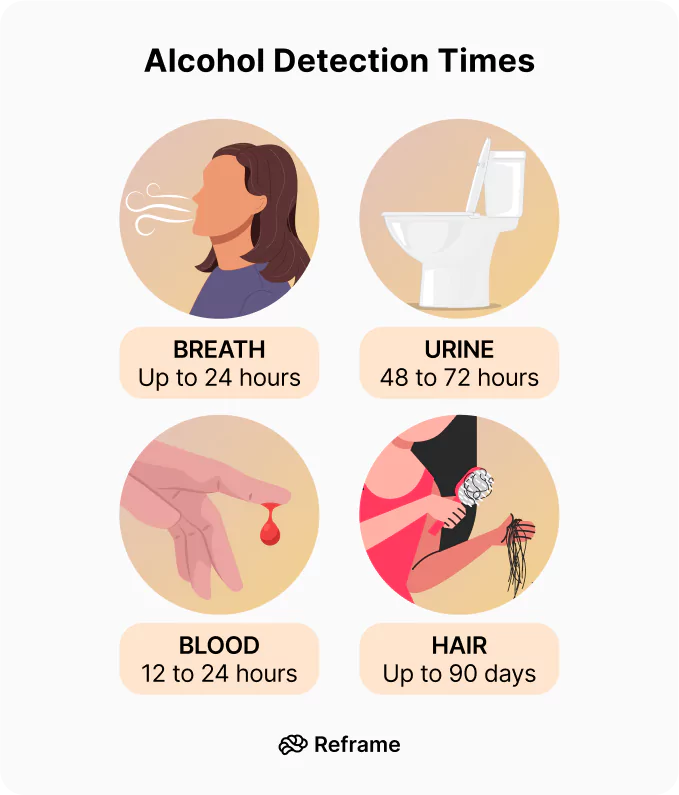
It’s easy to lose track of how much we’re actually drinking, especially since not all drinks are created equal. The concept of a “standard drink” helps clear things up. In the U.S., a standard drink contains about 0.6 ounces (or 14 grams) of pure alcohol. This looks different depending on what’s in your glass: it’s a 12-ounce regular beer, a 5-ounce glass of table wine, or a 1.5-ounce shot of 80-proof spirits like vodka or whiskey. It’s important to remember that many craft beers have a higher alcohol content, and a generous pour of wine at home might be closer to two standard drinks than one. Being aware of these measurements is a key first step in practicing mindful drinking.
The old “one drink per hour” rule is more of a loose guideline than a hard fact. How your body processes alcohol is unique to you. A whole host of factors come into play, including your weight, sex, age, metabolism, and even your genetics. What you’ve eaten that day and the specific type of alcohol you’re drinking also make a big difference. This is why two people can have the exact same number of drinks but end up with very different Blood Alcohol Concentration (BAC) levels. Understanding these variables can help you make more informed decisions about your consumption and better predict how your body might react.
Your general health, particularly the condition of your liver, plays a huge role in how you metabolize alcohol. Since the liver does most of the heavy lifting in breaking down alcohol, any existing health issues can slow down this process. It’s also critical to consider any medications you’re taking. Many common prescriptions and over-the-counter drugs can interact negatively with alcohol, sometimes in dangerous ways. This can alter how both the medication and the alcohol affect your body, so it’s always a good idea to check the labels or talk with your doctor about potential interactions before you drink.
Ever noticed that a drink hits you harder on an empty stomach? There’s a scientific reason for that. Food in your stomach slows the absorption of alcohol into your bloodstream, giving your liver more time to process it. Staying hydrated with water also helps. Your personal drinking history matters, too. If you drink regularly, you might develop a tolerance, meaning you need more alcohol to feel its effects. However, a higher tolerance doesn’t mean your BAC is lower or that your body is processing alcohol any faster. The internal impact remains the same, which is an important fact to keep in mind as you evaluate your habits.
Some of you may be saying, "Okay, fine. But how can we eliminate alcohol more quickly? Can I pee alcohol out of my system?” We can’t. Contrary to popular opinion, drinking coffee, taking a cold shower, or working out won't help us get sober faster. The liver is already processing alcohol as best as it can at its most efficient rate.
We’ve all heard the tricks for sobering up quickly: chug coffee, jump in a cold shower, or eat a greasy meal. Unfortunately, these are just myths. While a cup of coffee might make you feel more alert, it doesn’t actually lower your blood alcohol content (BAC). The same goes for a cold shower; it might wake you up, but it won’t speed up your liver’s metabolizing process. Your liver breaks down alcohol at a consistent rate—roughly one standard drink per hour—and nothing can rush that process. These "quick fixes" can be misleading, giving you a false sense of security when your coordination and judgment are still impaired. The only real solution for sobering up is giving your body the time it needs to process the alcohol.
Which method reduces alcohol in the body the most effectively, then? Cutting back or quitting. The good news is that this is definitely doable, and the journey can be thrilling, profoundly satisfying, and even enjoyable. A range of expert support services and self-help techniques can help you along the way.
If you're considering cutting back or quitting alcohol, understanding how long alcohol stays in the body might help you control expectations and avoid a relapse. Here are some strategies to help on your journey:
Beyond just knowing how long alcohol is detectable in your system, it’s crucial to understand the immediate safety implications, especially when it comes to driving. Blood Alcohol Concentration (BAC) isn't just a scientific term; it's a legal standard that has very real consequences. Knowing where the legal line is drawn helps put the effects of alcohol into a practical, real-world context. It’s not about figuring out how much you can drink before getting behind the wheel — it’s about recognizing the point at which your ability to operate a vehicle safely and legally is compromised.
In the United States, the legal BAC limit for driving is typically 0.08%. If your BAC is at or above this number, it is illegal to drive, period. This standard exists because a 0.08% BAC is the threshold where motor skills, judgment, and reaction times are significantly impaired for most people. It’s important to remember that this isn’t a target to aim for. Even with a BAC below 0.08%, your cognitive functions can be affected, making driving more dangerous than it would be with zero alcohol in your system. The safest choice is always to avoid driving after drinking any amount of alcohol.
You’ve probably seen online tools that claim to calculate your BAC. These calculators can be a helpful way to estimate your BAC based on factors like the type and amount of alcohol consumed, your weight, your gender, and the time spent drinking. However, they are just that — estimates. Your actual BAC can be influenced by many other variables, including your metabolism, what you’ve eaten, and any medications you’re taking. While a calculator can offer a general idea, it should never be used to decide if you’re “safe enough” to drive. They are better used as educational tools to build awareness around how different amounts of alcohol might affect you.
While the immediate risks of drinking, like impaired driving, are serious, it's equally important to consider the cumulative effects of alcohol on your body over time. Consistent heavy drinking can lead to significant health problems that may not be apparent right away. Understanding what qualifies as heavy drinking and the potential long-term consequences is a key step in making informed decisions about your health. This isn't about fear, but about awareness and empowering yourself with knowledge to build a healthier future.
The definition of "heavy drinking" can sometimes feel vague, but health organizations provide clear guidelines. For women and for men over the age of 65, heavy drinking is defined as consuming more than three drinks on any given day. For men under 65, it’s defined as having more than four drinks a day or more than 14 drinks in a week. Seeing these numbers can be eye-opening and can help you objectively assess your own drinking patterns. It provides a concrete benchmark to understand if your habits fall into a category that could increase your long-term health risks.
It’s a common misconception that some forms of heavy drinking might have benefits, but the science is clear: heavy drinking offers no health advantages. In fact, it significantly increases the risk of serious health issues. These can include a higher likelihood of developing certain cancers, heart damage, stroke, high blood pressure, and liver disease. Beyond chronic illness, it also contributes to a higher risk of serious accidents and can cause brain damage. The body is resilient, but it needs time to heal from the effects of alcohol, which is why making a change toward mindful drinking is one of the best things you can do for your long-term well-being.
The physical traces of alcohol exit your system within a few hours to a few days, but recovering from habitual alcohol use is a journey that requires patience, support, and an understanding of your body's many systems and processes. Every step you take toward reducing alcohol consumption is a step toward better health, and even small changes matter.
Reducing your alcohol intake or cutting out alcohol altogether can be challenging, but it's an act of self-care that will reward you with better health and well-being. Armed with the right knowledge and support, you're well equipped to navigate the path toward a healthier you.
Why do I feel the effects of alcohol differently than my friends, even if we drink the same amount? How your body handles alcohol is completely unique to you. Think of it like a personal metabolic signature. Factors like your body weight, sex, age, and even your genetic makeup play a huge role in how quickly you process alcohol. What you’ve eaten that day also makes a big difference, as food can slow down alcohol absorption. So, while you and a friend might have the same number of drinks, your individual bodies are running two very different internal processes.
Is there anything I can actually do to get sober faster? This is a question I get all the time, and the honest answer is no. Despite the popular myths about cold showers, greasy food, or strong coffee, nothing can speed up your liver. Your liver metabolizes alcohol at a steady, fixed pace, and it can’t be rushed. While a cup of coffee might make you feel more awake, it doesn’t lower your blood alcohol content. The only thing that truly sobers you up is giving your body the time it needs to do its job.
How long does it take for alcohol to be completely out of my system? While your body processes about one standard drink per hour, it takes much longer for alcohol to be completely eliminated. The concept of a "half-life" helps explain this. It takes about four to five hours for your body to clear half the alcohol you consumed. To be fully clear of it, your system needs to go through about five of these cycles, which adds up to roughly 25 hours. It’s a powerful reminder that your body is still working long after the initial buzz has faded.
If a urine test can detect alcohol days later, does that mean I'm still impaired? No, being able to detect alcohol doesn't mean you are still intoxicated. Standard urine tests can often pick up on alcohol metabolites—the byproducts left over after your liver breaks down alcohol—for up to three or four days. Your body has already processed the active alcohol, and the intoxicating effects are long gone, but the evidence of its presence can linger.
What's the difference between a blackout and just passing out from drinking? This is a really important distinction. Passing out is when you lose consciousness from drinking too much. A blackout, on the other hand, is a period of amnesia. You might be awake, walking around, and even having conversations, but your brain is so impaired by alcohol that it’s unable to form and store new long-term memories. Waking up with no memory of the night before is a clear sign of a blackout and an indication of dangerous drinking.
Ever wondered, "how long will alcohol stay in my system?" It seems simple, right? You have a drink, feel the effects, and then it's gone. But the process is way more complex than that. While a how long does it take for alcohol to leave your system calculator can give you a rough estimate, it doesn't tell the whole story. The real answer depends on your unique body. Understanding this process, from how long does alcohol stay in your saliva to how far a urine test can detect alcohol, is key to making informed choices.
Alcohol behaves in the bloodstream like an unwelcome house guest who never quite realizes they're not wanted.
Our organs really don’t care for alcohol. How long does alcohol stay in your system? The liver breaks down alcohol at a rate of around one standard drink per hour. That’s a 5-ounce glass of wine, a 12-ounce beer, or a 1.5-ounce shot of distilled spirits — all of which contain roughly 14 grams of pure alcohol.
Alcohol dehydrogenases are a group of enzymes that the liver uses to metabolize alcohol. These enzymes turn alcohol into the poisonous substance acetaldehyde, which is then broken down into the non-toxic substances water and carbon dioxide.
The liver has remarkable alcohol metabolism capabilities, but it takes time. Alcohol is detectable in different physiological systems for varying amounts of time due to this delay.
The precise time frame varies from person to person because so many variables, including weight, sex, age, metabolism, food intake, the type and amount of alcohol ingested, and hereditary factors, can affect how quickly someone breaks down alcohol.
To get a clearer picture of how long alcohol sticks around, it helps to understand its "half-life." This is simply the time it takes for your body to get rid of half the alcohol you've consumed. For alcohol, the half-life is typically around four to five hours. But that doesn't mean you're in the clear after 10 hours. It actually takes about five of these half-life cycles—so, roughly 25 hours—for your system to be completely free of alcohol. It’s a powerful reminder that long after the initial effects have worn off, your body is still working hard to metabolize what’s left behind.
As a general rule, your body processes about one standard drink per hour, but this isn't a one-size-fits-all situation. Your personal processing speed is influenced by a whole host of factors, like your metabolism, age, and even what you had for dinner. Your Blood Alcohol Content (BAC), which measures the amount of alcohol in your bloodstream, decreases at a pretty steady rate. Unfortunately, there are no shortcuts to speed this up. Despite what you might have heard, things like drinking coffee or taking a cold shower won't help your liver work any faster. They might make you feel more awake, but they do nothing to lower your BAC. The only thing that truly works is time.
Our blood alcohol concentration (BAC) typically peaks between 30 to 90 minutes after we finish our last drink. After that, it decreases by 0.015 every hour on average. As a result, it takes a while for alcohol to completely leave the body if we’ve had more than one drink. Alcohol typically lingers in the blood for up to a day.
Blood Alcohol Concentration, or BAC, is the standard way we measure the amount of alcohol present in your bloodstream. It’s expressed as a percentage, so a BAC of 0.08% means that for every 100 milliliters of your blood, there are 0.08 grams of pure alcohol. This simple number provides a clear, objective snapshot of how intoxicated a person is at any given moment. Of course, reaching a certain BAC isn't the same for everyone; it's influenced by a mix of factors like your weight, sex, metabolism, and even what you’ve had to eat that day. Understanding what BAC represents is a powerful first step toward making more mindful decisions about your drinking. If you're curious about how different drinks might affect your own levels, using a Blood Alcohol Content (BAC) calculator can offer a personalized and insightful estimate.
As your BAC begins to climb, the effects of alcohol become increasingly more noticeable, shifting from a subtle sense of calm to serious impairment. It’s not like flipping a switch from sober to drunk; it’s a gradual spectrum of changes that impact your mood, physical coordination, and, most importantly, your judgment. At the lowest levels, you might not even register a difference in how you feel. As you continue to drink, however, the changes become undeniable. Knowing what’s happening inside your body and brain at each stage can help you recognize your personal limits and make choices that keep you safe. Let’s break down the typical effects you can expect at different BAC levels, from the initial buzz to the point of real danger.
This is the range where many people experience the pleasant, initial effects of alcohol that they’re often seeking. You might feel more relaxed, a bit happier, and less inhibited in social situations, which is why alcohol is often called a "social lubricant." At this stage, conversations can feel easier and you might notice a sense of mild euphoria. But it's important to remember that even at this low level, your focus and judgment are already beginning to be affected. This is a crucial moment for practicing mindful drinking, as it’s very easy to continue past this point without realizing you’re crossing the line from a pleasant buzz into the early stages of impairment.
In most places, a BAC of 0.08% is the legal threshold for driving, and for good reason. By this point, the effects on your body are significant and measurable. Your muscle coordination becomes noticeably poorer, which can affect your balance, speech, and even your vision. More critically, your judgment and self-control are substantially reduced, and your ability to reason clearly is impaired. This combination is precisely why getting behind the wheel with a BAC at or above this level is illegal and incredibly dangerous. You become more likely to take risks you wouldn’t normally consider, and your reaction time slows down considerably, making it difficult to respond to unexpected situations on the road.
Once your BAC reaches this level, you are considered severely intoxicated. You’ll likely feel confused, dazed, and may experience significant nausea and vomiting as your body desperately tries to expel the alcohol, which it recognizes as a poison. This is also the stage where alcohol-induced blackouts can happen. A blackout isn't the same as passing out; it’s a period of amnesia where your brain is unable to create and store long-term memories. You might be awake, talking, and interacting with people, but you will have no recollection of these events the next day. It’s a definitive sign that you’ve consumed a dangerous amount of alcohol.
A BAC of 0.400% or higher is a life-threatening situation. At this extreme level of alcohol poisoning, your body’s most basic vital functions begin to shut down. Your breathing can become slow, shallow, and irregular, and your heart rate can be severely depressed, which can easily lead to a coma or even death. This is a full-blown medical emergency that requires immediate intervention. The part of your brain responsible for managing the automatic functions that keep you alive is essentially being anesthetized by the alcohol. It’s a stark and serious reminder of just how potent alcohol is and why understanding its effects is so critical for your health and safety.
Many people find that the most enjoyable effects of alcohol—like feeling relaxed, more confident, and sociable—actually occur at a BAC of 0.05% or less. This is often referred to as the "sweet spot." Once you drink past this point, the positive feelings don't typically increase. Instead, the negative effects, such as impaired coordination, slurred speech, and poor judgment, start to take over, making the experience less and less pleasant. Aiming to stay within this sweet spot is a core principle of mindful drinking. It allows you to enjoy the social aspects of a drink without sliding into the negative consequences that come with higher levels of intoxication.
It’s a common misconception that your BAC peaks the moment you finish a drink. In reality, it can take anywhere from 30 to 70 minutes for alcohol to be fully absorbed into your bloodstream and for your BAC to reach its highest point. This is why you might feel the effects of a drink "creep up" on you well after you’ve put the glass down. This delay is incredibly important to keep in mind, particularly if you’re thinking about driving. Having one drink and immediately getting behind the wheel is a gamble, because your BAC will continue to rise as that alcohol is absorbed, potentially putting you over the legal limit while you’re already on the road.
What about all those other tests to detect alcohol? How long after I've had alcohol can they detect it? How long does alcohol stay in urine? How long can alcohol be detected in a saliva test? How long is alcohol in your blood? Unfortunately, if you've had a wild night and need to pass an alcohol test the next day, you might be in a bit of a pickle.
Here’s a breakdown of how long alcohol might be detected by various methods:
Beyond the times specified, alcohol may not be detectable in the system, although regular and excessive drinking can have long-lasting consequences. The body and brain may need weeks or even months to become used to life without alcohol, especially if we’ve been drinking heavily for a long time. Reframe can equip you with the knowledge and support to help you quit or cutback on drinking.
It’s easy to lose track of how much we’re actually drinking, especially since not all drinks are created equal. The concept of a “standard drink” helps clear things up. In the U.S., a standard drink contains about 0.6 ounces (or 14 grams) of pure alcohol. This looks different depending on what’s in your glass: it’s a 12-ounce regular beer, a 5-ounce glass of table wine, or a 1.5-ounce shot of 80-proof spirits like vodka or whiskey. It’s important to remember that many craft beers have a higher alcohol content, and a generous pour of wine at home might be closer to two standard drinks than one. Being aware of these measurements is a key first step in practicing mindful drinking.
The old “one drink per hour” rule is more of a loose guideline than a hard fact. How your body processes alcohol is unique to you. A whole host of factors come into play, including your weight, sex, age, metabolism, and even your genetics. What you’ve eaten that day and the specific type of alcohol you’re drinking also make a big difference. This is why two people can have the exact same number of drinks but end up with very different Blood Alcohol Concentration (BAC) levels. Understanding these variables can help you make more informed decisions about your consumption and better predict how your body might react.
Your general health, particularly the condition of your liver, plays a huge role in how you metabolize alcohol. Since the liver does most of the heavy lifting in breaking down alcohol, any existing health issues can slow down this process. It’s also critical to consider any medications you’re taking. Many common prescriptions and over-the-counter drugs can interact negatively with alcohol, sometimes in dangerous ways. This can alter how both the medication and the alcohol affect your body, so it’s always a good idea to check the labels or talk with your doctor about potential interactions before you drink.
Ever noticed that a drink hits you harder on an empty stomach? There’s a scientific reason for that. Food in your stomach slows the absorption of alcohol into your bloodstream, giving your liver more time to process it. Staying hydrated with water also helps. Your personal drinking history matters, too. If you drink regularly, you might develop a tolerance, meaning you need more alcohol to feel its effects. However, a higher tolerance doesn’t mean your BAC is lower or that your body is processing alcohol any faster. The internal impact remains the same, which is an important fact to keep in mind as you evaluate your habits.
Some of you may be saying, "Okay, fine. But how can we eliminate alcohol more quickly? Can I pee alcohol out of my system?” We can’t. Contrary to popular opinion, drinking coffee, taking a cold shower, or working out won't help us get sober faster. The liver is already processing alcohol as best as it can at its most efficient rate.
We’ve all heard the tricks for sobering up quickly: chug coffee, jump in a cold shower, or eat a greasy meal. Unfortunately, these are just myths. While a cup of coffee might make you feel more alert, it doesn’t actually lower your blood alcohol content (BAC). The same goes for a cold shower; it might wake you up, but it won’t speed up your liver’s metabolizing process. Your liver breaks down alcohol at a consistent rate—roughly one standard drink per hour—and nothing can rush that process. These "quick fixes" can be misleading, giving you a false sense of security when your coordination and judgment are still impaired. The only real solution for sobering up is giving your body the time it needs to process the alcohol.
Which method reduces alcohol in the body the most effectively, then? Cutting back or quitting. The good news is that this is definitely doable, and the journey can be thrilling, profoundly satisfying, and even enjoyable. A range of expert support services and self-help techniques can help you along the way.
If you're considering cutting back or quitting alcohol, understanding how long alcohol stays in the body might help you control expectations and avoid a relapse. Here are some strategies to help on your journey:
Beyond just knowing how long alcohol is detectable in your system, it’s crucial to understand the immediate safety implications, especially when it comes to driving. Blood Alcohol Concentration (BAC) isn't just a scientific term; it's a legal standard that has very real consequences. Knowing where the legal line is drawn helps put the effects of alcohol into a practical, real-world context. It’s not about figuring out how much you can drink before getting behind the wheel — it’s about recognizing the point at which your ability to operate a vehicle safely and legally is compromised.
In the United States, the legal BAC limit for driving is typically 0.08%. If your BAC is at or above this number, it is illegal to drive, period. This standard exists because a 0.08% BAC is the threshold where motor skills, judgment, and reaction times are significantly impaired for most people. It’s important to remember that this isn’t a target to aim for. Even with a BAC below 0.08%, your cognitive functions can be affected, making driving more dangerous than it would be with zero alcohol in your system. The safest choice is always to avoid driving after drinking any amount of alcohol.
You’ve probably seen online tools that claim to calculate your BAC. These calculators can be a helpful way to estimate your BAC based on factors like the type and amount of alcohol consumed, your weight, your gender, and the time spent drinking. However, they are just that — estimates. Your actual BAC can be influenced by many other variables, including your metabolism, what you’ve eaten, and any medications you’re taking. While a calculator can offer a general idea, it should never be used to decide if you’re “safe enough” to drive. They are better used as educational tools to build awareness around how different amounts of alcohol might affect you.
While the immediate risks of drinking, like impaired driving, are serious, it's equally important to consider the cumulative effects of alcohol on your body over time. Consistent heavy drinking can lead to significant health problems that may not be apparent right away. Understanding what qualifies as heavy drinking and the potential long-term consequences is a key step in making informed decisions about your health. This isn't about fear, but about awareness and empowering yourself with knowledge to build a healthier future.
The definition of "heavy drinking" can sometimes feel vague, but health organizations provide clear guidelines. For women and for men over the age of 65, heavy drinking is defined as consuming more than three drinks on any given day. For men under 65, it’s defined as having more than four drinks a day or more than 14 drinks in a week. Seeing these numbers can be eye-opening and can help you objectively assess your own drinking patterns. It provides a concrete benchmark to understand if your habits fall into a category that could increase your long-term health risks.
It’s a common misconception that some forms of heavy drinking might have benefits, but the science is clear: heavy drinking offers no health advantages. In fact, it significantly increases the risk of serious health issues. These can include a higher likelihood of developing certain cancers, heart damage, stroke, high blood pressure, and liver disease. Beyond chronic illness, it also contributes to a higher risk of serious accidents and can cause brain damage. The body is resilient, but it needs time to heal from the effects of alcohol, which is why making a change toward mindful drinking is one of the best things you can do for your long-term well-being.
The physical traces of alcohol exit your system within a few hours to a few days, but recovering from habitual alcohol use is a journey that requires patience, support, and an understanding of your body's many systems and processes. Every step you take toward reducing alcohol consumption is a step toward better health, and even small changes matter.
Reducing your alcohol intake or cutting out alcohol altogether can be challenging, but it's an act of self-care that will reward you with better health and well-being. Armed with the right knowledge and support, you're well equipped to navigate the path toward a healthier you.
Why do I feel the effects of alcohol differently than my friends, even if we drink the same amount? How your body handles alcohol is completely unique to you. Think of it like a personal metabolic signature. Factors like your body weight, sex, age, and even your genetic makeup play a huge role in how quickly you process alcohol. What you’ve eaten that day also makes a big difference, as food can slow down alcohol absorption. So, while you and a friend might have the same number of drinks, your individual bodies are running two very different internal processes.
Is there anything I can actually do to get sober faster? This is a question I get all the time, and the honest answer is no. Despite the popular myths about cold showers, greasy food, or strong coffee, nothing can speed up your liver. Your liver metabolizes alcohol at a steady, fixed pace, and it can’t be rushed. While a cup of coffee might make you feel more awake, it doesn’t lower your blood alcohol content. The only thing that truly sobers you up is giving your body the time it needs to do its job.
How long does it take for alcohol to be completely out of my system? While your body processes about one standard drink per hour, it takes much longer for alcohol to be completely eliminated. The concept of a "half-life" helps explain this. It takes about four to five hours for your body to clear half the alcohol you consumed. To be fully clear of it, your system needs to go through about five of these cycles, which adds up to roughly 25 hours. It’s a powerful reminder that your body is still working long after the initial buzz has faded.
If a urine test can detect alcohol days later, does that mean I'm still impaired? No, being able to detect alcohol doesn't mean you are still intoxicated. Standard urine tests can often pick up on alcohol metabolites—the byproducts left over after your liver breaks down alcohol—for up to three or four days. Your body has already processed the active alcohol, and the intoxicating effects are long gone, but the evidence of its presence can linger.
What's the difference between a blackout and just passing out from drinking? This is a really important distinction. Passing out is when you lose consciousness from drinking too much. A blackout, on the other hand, is a period of amnesia. You might be awake, walking around, and even having conversations, but your brain is so impaired by alcohol that it’s unable to form and store new long-term memories. Waking up with no memory of the night before is a clear sign of a blackout and an indication of dangerous drinking.

Concerned about alcohol's impact on rheumatoid arthritis? Discover the fascinating connection between that glass of wine and RA symptoms in our newest blog!
Although it isn’t a treatment for alcohol use disorder (AUD), the Reframe app can help you cut back on drinking gradually, with the science-backed knowledge to empower you 100% of the way. Our proven program has helped millions of people around the world drink less and live more. And we want to help you get there, too!
The Reframe app equips you with the knowledge and skills you need to not only survive drinking less, but to thrive while you navigate the journey. Our daily research-backed readings teach you the neuroscience of alcohol, and our in-app Toolkit provides the resources and activities you need to navigate each challenge.
You’ll meet millions of fellow Reframers in our 24/7 Forum chat and daily Zoom check-in meetings. Receive encouragement from people worldwide who know exactly what you’re going through! You’ll also have the opportunity to connect with our licensed Reframe coaches for more personalized guidance.
Plus, we’re always introducing new features to optimize your in-app experience. We recently launched our in-app chatbot, Melody, powered by the world’s most powerful AI technology. Melody is here to help as you adjust to a life with less (or no) alcohol.
And that’s not all! Every month, we launch fun challenges, like Dry/Damp January, Mental Health May, and Outdoorsy June. You won’t want to miss out on the chance to participate alongside fellow Reframers (or solo if that’s more your thing!).
The Reframe app is free for 7 days, so you don’t have anything to lose by trying it. Are you ready to feel empowered and discover life beyond alcohol? Then download our app through the App Store or Google Play today!
In a perfect world, your immune system would be your own personal superhero, protecting your body from harmful invaders like viruses and bacteria. But with rheumatoid arthritis (RA), things go off track: the immune system gets a little confused, starts seeing your body's own tissues as the bad guys, and begins to attack them.
Adding to the complexity, some studies suggest that alcohol might have a relationship with RA. But how, exactly? Let's break it down!
First, let’s get a bit more acquainted with rheumatoid arthritis. RA is more than just occasional joint pain. It's a chronic inflammatory disorder that doesn’t only affect our joints — it can also damage other systems in the body.
RA doesn't discriminate: it can affect anyone, at any age. However, it often starts in middle age, and women are more likely to get it than men. A combination of genes and environmental factors (like smoking) might tip the scales toward developing RA.
Symptoms of RA can vary widely, but here are some of the most common:
The tricky thing about RA is that it can come and go. We might have periods when we feel fine, followed by “flares” when symptoms worsen. It's like a roller coaster of discomfort, making it hard to pin down clear patterns. As a result, RA can easily throw off our daily routines: simple tasks might become challenging and our work and hobbies can be hard to keep up with.
The underlying mechanism of RA involves a mistaken attack on the synovium, the thin membrane that lines our joints. This attack causes inflammation, which leads to the symptoms we've discussed. It's like a friendly fire incident in a warzone where the soldiers (immune cells) mistakenly attack their own side (the joints).
RA's elusive nature means that diagnosing it can be a challenge. Doctors often use a combination of physical examinations, blood tests, and imaging like X-rays to get to the bottom of it. Treatment typically involves medications to reduce inflammation and slow the disease's progress.
While it's easy to enjoy a celebratory clink of glasses, it's essential to understand what alcohol can mean for someone with RA.
In the world of science, results are not alway clear or conclusive. For those diagnosed with RA, the interaction can be complex and individualized. Research is ongoing, and there's no one-size-fits-all answer.

If you're looking to quit or cut back on alcohol due to RA, here's a list of steps that can help:
Remember, living with RA doesn't mean you have to forego all the fun. With knowledge, understanding, and a proactive approach, you can enjoy laughter, competition, and good company in ways that are right for you.
In a perfect world, your immune system would be your own personal superhero, protecting your body from harmful invaders like viruses and bacteria. But with rheumatoid arthritis (RA), things go off track: the immune system gets a little confused, starts seeing your body's own tissues as the bad guys, and begins to attack them.
Adding to the complexity, some studies suggest that alcohol might have a relationship with RA. But how, exactly? Let's break it down!
First, let’s get a bit more acquainted with rheumatoid arthritis. RA is more than just occasional joint pain. It's a chronic inflammatory disorder that doesn’t only affect our joints — it can also damage other systems in the body.
RA doesn't discriminate: it can affect anyone, at any age. However, it often starts in middle age, and women are more likely to get it than men. A combination of genes and environmental factors (like smoking) might tip the scales toward developing RA.
Symptoms of RA can vary widely, but here are some of the most common:
The tricky thing about RA is that it can come and go. We might have periods when we feel fine, followed by “flares” when symptoms worsen. It's like a roller coaster of discomfort, making it hard to pin down clear patterns. As a result, RA can easily throw off our daily routines: simple tasks might become challenging and our work and hobbies can be hard to keep up with.
The underlying mechanism of RA involves a mistaken attack on the synovium, the thin membrane that lines our joints. This attack causes inflammation, which leads to the symptoms we've discussed. It's like a friendly fire incident in a warzone where the soldiers (immune cells) mistakenly attack their own side (the joints).
RA's elusive nature means that diagnosing it can be a challenge. Doctors often use a combination of physical examinations, blood tests, and imaging like X-rays to get to the bottom of it. Treatment typically involves medications to reduce inflammation and slow the disease's progress.
While it's easy to enjoy a celebratory clink of glasses, it's essential to understand what alcohol can mean for someone with RA.
In the world of science, results are not alway clear or conclusive. For those diagnosed with RA, the interaction can be complex and individualized. Research is ongoing, and there's no one-size-fits-all answer.
If you're looking to quit or cut back on alcohol due to RA, here's a list of steps that can help:
Remember, living with RA doesn't mean you have to forego all the fun. With knowledge, understanding, and a proactive approach, you can enjoy laughter, competition, and good company in ways that are right for you.

Learn how your happy hour could impact your brain health, and get some tips to keep your memories crisp and your neurons nimble. Dive into our latest blog post for the sobering scoop on “Wet Brain Syndrome” and how to avoid it.
Although it isn’t a treatment for alcohol use disorder (AUD), the Reframe app can help you cut back on drinking gradually, with the science-backed knowledge to empower you 100% of the way. Our proven program has helped millions of people around the world drink less and live more. And we want to help you get there, too!
The Reframe app equips you with the knowledge and skills you need to not only survive drinking less, but to thrive while you navigate the journey. Our daily research-backed readings teach you the neuroscience of alcohol, and our in-app Toolkit provides the resources and activities you need to navigate each challenge.
You’ll meet millions of fellow Reframers in our 24/7 Forum chat and daily Zoom check-in meetings. Receive encouragement from people worldwide who know exactly what you’re going through! You’ll also have the opportunity to connect with our licensed Reframe coaches for more personalized guidance.
Plus, we’re always introducing new features to optimize your in-app experience. We recently launched our in-app chatbot, Melody, powered by the world’s most powerful AI technology. Melody is here to help as you adjust to a life with less (or no) alcohol.
And that’s not all! Every month, we launch fun challenges, like Dry/Damp January, Mental Health May, and Outdoorsy June. You won’t want to miss out on the chance to participate alongside fellow Reframers (or solo if that’s more your thing!).
The Reframe app is free for 7 days, so you don’t have anything to lose by trying it. Are you ready to feel empowered and discover life beyond alcohol? Then download our app through the App Store or Google Play today!
Hearing the term “wet brain” for the first time might be a bit confusing. How can a brain get wet? And wait, when was it ever dry to begin with?
While the term is a bit odd, it represents an important concept — the long-term effects of alcohol misuse on the brain. Let's dive into the science behind this condition and learn how to protect our brain health.

Don't worry, your brain isn't going to dissolve into a puddle! “Wet brain” is a colloquial term for Wernicke-Korsakoff Syndrome (WKS), a condition primarily seen in people who have had prolonged periods of heavy drinking. The "wet" part of “wet brain” has nothing to do with your brain getting soaked in alcohol (thank goodness!) — rather, it refers to the harmful effect that alcohol can have on the brain's health over time.
Imagine hosting a party where every guest was allergic to peanuts, but you served a peanut butter pie anyway. Just as you wouldn't expect your guests to thrive in that environment, the same goes for your brain with a prolonged exposure to alcohol.
At the center of this story is vitamin B1 (thiamine), a crucial cog that our brain needs to keep the wheels turning smoothly. It’s essential for the brain's energy metabolism: it helps the brain convert food into the energy it needs to function properly. Without thiamine, things go haywire — the brain can't produce enough energy to carry out its tasks effectively, leading to damage in areas that are responsible for memory, learning, and muscle coordination.
So where does booze come in? For one thing, chronic, heavy alcohol use can cause poor nutrition — people are less likely to consume enough vitamin-rich foods, so vitamin B stores get depleted. Moreover, alcohol interferes with the absorption, metabolism, and storage of thiamine, leading to Wernicke's encephalopathy.
Named after German neurologist Carl Wernicke, who described the condition in the late 19th century, Wernicke’s encephalopathy is the first stage of WKS; it tends to be short-lived and severe. While it’s often associated with alcohol misuse, the condition can also occur in people with severe malnutrition from other causes, such as prolonged vomiting or those with certain eating disorders.
This inefficiency shows up as a characteristic triad of symptoms: mental confusion, ophthalmoplegia (eye muscle paralysis), and ataxia (unsteady, uncoordinated movements).
The silver lining in the case of Wernicke's encephalopathy is that it can be treated, and its effects can be reversed if caught early enough. This is typically done by administering high doses of thiamine, usually through an IV in a hospital setting. Unfortunately, however, these three symptoms don't always appear together, and they can vary in intensity, which can sometimes make Wernicke's encephalopathy difficult to diagnose, leading to more permanent brain damage.
Here's the sobering part: yes, it could. The second stage of wet brain syndrome — Korsakoff's psychosis — is where the condition gets its notorious reputation for memory loss. Named after Sergei Korsakoff, the Russian neuropsychiatrist who first characterized the syndrome in the late 19th century, this stage is often a chronic, long-term condition that follows or is accompanied by the symptoms of Wernicke's encephalopathy.
During this stage, people can have difficulty forming new memories, experience long-term memory gaps, and in some cases, even hallucinate. And it's not just a "where did I put my keys?" kind of forgetfulness, but more of a "did I have breakfast this morning?" type of scenario.
To make matters more complicated, people with Korsakoff's psychosis may experience confabulation, in which a person fills in their memory gaps with information that may not be true, but that they believe to be accurate. For instance, they might insist they had lunch with a friend today, when, in fact, they had lunch alone. They’re not lying; their brain is trying to make sense of missing pieces. Think of Korsakoff's as a game of "Memory" with some cards missing from the deck: it's frustrating and confusing to play with an incomplete set.
Korsakoff's psychosis can also cause personality changes. An individual may seem indifferent, apathetic, or lacking initiative. They might also have trouble with tasks that require planning or organizing.
Now here's the scary part: while treatment with thiamine can help stop the progression of Korsakoff's psychosis and improve some symptoms, it often doesn't reverse memory loss or cognitive changes. That's why early detection and prevention are absolutely key.

Ah, the million-dollar question. Of course, the main thing is to minimize alcohol use — especially over the long term. Having a healthy, balanced diet rich in thiamine can help, as can taking thiamine supplements if you're concerned about your intake. And, of course, seeking help if you're finding it difficult to manage your alcohol consumption is key.
Here are some things to keep in mind:
At the end of the day, our brains are our personal supercomputers, involved in every decision we make, every emotion we feel, every memory we cherish. So, next time you're planning a night out or a chill evening with a bottle of wine, remember — moderation is your friend. Here's to keeping our brains dry and our spirits high!
Hearing the term “wet brain” for the first time might be a bit confusing. How can a brain get wet? And wait, when was it ever dry to begin with?
While the term is a bit odd, it represents an important concept — the long-term effects of alcohol misuse on the brain. Let's dive into the science behind this condition and learn how to protect our brain health.
Don't worry, your brain isn't going to dissolve into a puddle! “Wet brain” is a colloquial term for Wernicke-Korsakoff Syndrome (WKS), a condition primarily seen in people who have had prolonged periods of heavy drinking. The "wet" part of “wet brain” has nothing to do with your brain getting soaked in alcohol (thank goodness!) — rather, it refers to the harmful effect that alcohol can have on the brain's health over time.
Imagine hosting a party where every guest was allergic to peanuts, but you served a peanut butter pie anyway. Just as you wouldn't expect your guests to thrive in that environment, the same goes for your brain with a prolonged exposure to alcohol.
At the center of this story is vitamin B1 (thiamine), a crucial cog that our brain needs to keep the wheels turning smoothly. It’s essential for the brain's energy metabolism: it helps the brain convert food into the energy it needs to function properly. Without thiamine, things go haywire — the brain can't produce enough energy to carry out its tasks effectively, leading to damage in areas that are responsible for memory, learning, and muscle coordination.
So where does booze come in? For one thing, chronic, heavy alcohol use can cause poor nutrition — people are less likely to consume enough vitamin-rich foods, so vitamin B stores get depleted. Moreover, alcohol interferes with the absorption, metabolism, and storage of thiamine, leading to Wernicke's encephalopathy.
Named after German neurologist Carl Wernicke, who described the condition in the late 19th century, Wernicke’s encephalopathy is the first stage of WKS; it tends to be short-lived and severe. While it’s often associated with alcohol misuse, the condition can also occur in people with severe malnutrition from other causes, such as prolonged vomiting or those with certain eating disorders.
This inefficiency shows up as a characteristic triad of symptoms: mental confusion, ophthalmoplegia (eye muscle paralysis), and ataxia (unsteady, uncoordinated movements).
The silver lining in the case of Wernicke's encephalopathy is that it can be treated, and its effects can be reversed if caught early enough. This is typically done by administering high doses of thiamine, usually through an IV in a hospital setting. Unfortunately, however, these three symptoms don't always appear together, and they can vary in intensity, which can sometimes make Wernicke's encephalopathy difficult to diagnose, leading to more permanent brain damage.
Here's the sobering part: yes, it could. The second stage of wet brain syndrome — Korsakoff's psychosis — is where the condition gets its notorious reputation for memory loss. Named after Sergei Korsakoff, the Russian neuropsychiatrist who first characterized the syndrome in the late 19th century, this stage is often a chronic, long-term condition that follows or is accompanied by the symptoms of Wernicke's encephalopathy.
During this stage, people can have difficulty forming new memories, experience long-term memory gaps, and in some cases, even hallucinate. And it's not just a "where did I put my keys?" kind of forgetfulness, but more of a "did I have breakfast this morning?" type of scenario.
To make matters more complicated, people with Korsakoff's psychosis may experience confabulation, in which a person fills in their memory gaps with information that may not be true, but that they believe to be accurate. For instance, they might insist they had lunch with a friend today, when, in fact, they had lunch alone. They’re not lying; their brain is trying to make sense of missing pieces. Think of Korsakoff's as a game of "Memory" with some cards missing from the deck: it's frustrating and confusing to play with an incomplete set.
Korsakoff's psychosis can also cause personality changes. An individual may seem indifferent, apathetic, or lacking initiative. They might also have trouble with tasks that require planning or organizing.
Now here's the scary part: while treatment with thiamine can help stop the progression of Korsakoff's psychosis and improve some symptoms, it often doesn't reverse memory loss or cognitive changes. That's why early detection and prevention are absolutely key.
Ah, the million-dollar question. Of course, the main thing is to minimize alcohol use — especially over the long term. Having a healthy, balanced diet rich in thiamine can help, as can taking thiamine supplements if you're concerned about your intake. And, of course, seeking help if you're finding it difficult to manage your alcohol consumption is key.
Here are some things to keep in mind:
At the end of the day, our brains are our personal supercomputers, involved in every decision we make, every emotion we feel, every memory we cherish. So, next time you're planning a night out or a chill evening with a bottle of wine, remember — moderation is your friend. Here's to keeping our brains dry and our spirits high!

Alcohol and metabolism have a complex relationship, but balance is possible. Our guide offers seven actionable steps to make every sip a smarter choice.
Although it isn’t a treatment for alcohol use disorder (AUD), the Reframe app can help you cut back on drinking gradually, with the science-backed knowledge to empower you 100% of the way. Our proven program has helped millions of people around the world drink less and live more. And we want to help you get there, too!
The Reframe app equips you with the knowledge and skills you need to not only survive drinking less, but to thrive while you navigate the journey. Our daily research-backed readings teach you the neuroscience of alcohol, and our in-app Toolkit provides the resources and activities you need to navigate each challenge.
You’ll meet millions of fellow Reframers in our 24/7 Forum chat and daily Zoom check-in meetings. Receive encouragement from people worldwide who know exactly what you’re going through! You’ll also have the opportunity to connect with our licensed Reframe coaches for more personalized guidance.
Plus, we’re always introducing new features to optimize your in-app experience. We recently launched our in-app chatbot, Melody, powered by the world’s most powerful AI technology. Melody is here to help as you adjust to a life with less (or no) alcohol.
And that’s not all! Every month, we launch fun challenges, like Dry/Damp January, Mental Health May, and Outdoorsy June. You won’t want to miss out on the chance to participate alongside fellow Reframers (or solo if that’s more your thing!).
The Reframe app is free for 7 days, so you don’t have anything to lose by trying it. Are you ready to feel empowered and discover life beyond alcohol? Then download our app through the App Store or Google Play today!
TGIF, right? Everyone's at the local bar, laughing, eating wings and nachos, and ordering another pitcher of beer. What a great way to kickstart the weekend! But what’s that alcohol doing to your metabolism? And is there a way to socialize and stay healthy?
In this blog post, we’ll explore the science behind alcohol and metabolism and uncover ways to support our health.
The relationship between alcohol and metabolism is intricate. Alcohol's effects ripple through a complex metabolic network comprised of various organs, biochemical pathways, and even neurotransmitters in the brain.
One of the most well-studied aspects of alcohol metabolism centers on the liver, the organ responsible for breaking down ethanol into less toxic substances. On a biochemical level, the liver metabolizes alcohol in a two-step process. The first step converts alcohol into acetaldehyde, a highly toxic substance that is then further metabolized to acetate, a less harmful compound.
However, the liver's processing capacity has its limits. When there's too much alcohol, the liver gets overwhelmed, leading to the accumulation of acetaldehyde in the bloodstream. This build-up can cause symptoms like flushing, nausea, and rapid heartbeat.
While the liver is busy handling alcohol, other metabolic processes get sidelined. Among the affected processes is gluconeogenesis, where the liver synthesizes glucose from non-carbohydrate sources. When alcohol takes precedence, the liver’s ability to produce glucose diminishes, increasing the risk of low blood sugar levels (hypoglycemia). For people with diabetes, this poses an added concern as it can exacerbate blood sugar management issues.
While ghrelin and cortisol are pivotal players in alcohol's metabolic impact, they're just the tip of the iceberg. Leptin, a hormone that signals satiety, often decreases following alcohol consumption, encouraging eating.
Insulin, the hormone responsible for glucose uptake into cells, is also affected. Alcohol can increase insulin resistance, making it harder for cells to absorb sugar from the bloodstream. Over time, this may contribute to the development of type 2 diabetes.
Alcohol's influence extends to neurotransmitters, chemicals that facilitate communication between nerve cells. Dopamine, the "feel-good" neurotransmitter, surges in response to pleasurable activities, including drinking alcohol. This surge may dampen the body's response to leptin, making us feel hungrier and promoting overeating.
Interestingly, alcohol has a thermogenic effect, meaning it temporarily increases our metabolic rate. However, this effect can’t counterbalance the caloric intake from drinking alcohol. Moreover, the thermogenic effect is often short-lived and may decline with regular drinking, eventually contributing to weight gain.
Gender differences in alcohol metabolism are rooted in biology, and they can significantly impact how alcohol affects men and women. While both genders face metabolic challenges when consuming alcohol, the biological differences make the experience markedly distinct for men and women. One critical enzyme involved in alcohol metabolism is alcohol dehydrogenase. Women generally have lower levels of it than men, which reduces their alcohol metabolism efficiency.
This enzymatic disparity means that when women consume alcohol, they are likely to have higher blood alcohol concentrations for a more extended period, even if they drink the same amount as a man. Because their bodies take longer to break down alcohol, women often experience more intense and prolonged effects, including potential disruptions in metabolic function. For instance, the increase in ghrelin — the hunger hormone — is generally more pronounced in women, which makes those midnight snacks hard to resist. Similarly, elevated cortisol levels due to alcohol consumption can more drastically impact women, contributing to increased fat storage, particularly in the abdominal area.
Understanding these gender-specific metabolic responses to alcohol doesn't just inform individual choices; it also has broader implications for public health initiatives aimed at reducing alcohol’s negative impacts. The guidelines for what constitutes "moderate" alcohol intake may need to be reevaluated through a gender-sensitive lens, and people of all genders could benefit from targeted strategies to offset alcohol's metabolic effects.
The reality is that when it comes to alcohol and metabolism, one size does not fit all. Tailoring approaches to account for these biological differences can make a significant difference in how people of all genders experience, manage, and mitigate the metabolic consequences of alcohol consumption.

Optimize your drinking schedule to avoid metabolic pitfalls. Avoid drinking late at night, as your metabolism naturally slows then, making it harder for your body to process alcohol. It’s generally best to consume alcohol earlier in the evening, and preferably during a meal to slow its absorption. Eating a balanced meal before you start drinking also provides essential nutrients depleted by alcohol, like B vitamins.
Protein is an essential macronutrient, and in addition to building muscle and repairing tissues after injury, it also keeps us full. This helps us avoid mindless snacking and keeps our energy levels stable. Any protein-rich food is effective: Greek yogurt, almonds or lean turkey slices are just a few great choices. Their benefit lies in their ability to slow stomach emptying, helping moderate blood sugar spikes and dips.
Fiber is another metabolism-friendly food. A fibrous snack like apple slices or whole-grain toast can help maintain blood sugar levels, buffering against alcohol-induced hypoglycemia. The slow absorption of sugar provides a steady energy source, helping you resist those fried calamari or late-night nachos. High-fiber foods are also gut-friendly, promoting a healthier microbiome, which can be adversely affected by alcohol.
It’s common knowledge that exercise boosts metabolism, but it can also aid in alcohol metabolism. Exercise increases the liver's efficiency in processing toxins, including alcohol. Even a brisk 20-minute walk before or after consuming alcohol can give your metabolism a mini-boost, leading to quicker alcohol breakdown and reducing its storage as fat. Prefer a more intense workout? Great! High-intensity interval training (HIIT) can accelerate metabolism for several hours, providing an even more extended benefit.
It’s essential to counterbalance the hormonal shifts caused by alcohol. One way to do this is through stress management techniques such as meditation, deep-breathing exercises, or even a simple walk in nature. These activities can help lower cortisol levels, reducing fat storage, especially in the abdominal area. For those more inclined to rejuvenate through sleep, a good night's rest can do wonders for hormone regulation, including reducing ghrelin and increasing leptin levels, which helps control hunger and satiety. A relaxed body is a more efficient one. Stress management not only benefits your mind but also helps reorient your hormonal balance, giving your metabolism a fighting chance against alcohol’s effects.
Socializing doesn't have to be all about sitting around and sipping drinks. Active socializing swaps the bar stool for something a bit more dynamic. Whether it's bowling, dancing, or a frisbee match at the park, the options are endless and far more exciting. The key is to choose activities that get the heart rate up, offering a dual advantage: enjoying time with friends while simultaneously engaging in physical activity. It's a win-win, enhancing metabolic health and elevating mood, thanks to the endorphins released during physical activity.
Alcohol can seriously stimulate appetite, sometimes leading to regrettable fast-food runs or late-night fridge raids. While it's often a social convention to grab a late-night snack after a night out, this habit can wreak havoc on your metabolism. So how to resist? Make a pact with friends before heading out, committing to avoid the post-bar fast food dash. If cravings kick in, opt for healthier snacks like mixed nuts or fruit, which offer nutrients and fiber without the metabolic aftermath of greasy, carb-laden foods. Having a strategy in place empowers you to break the cycle and make healthier choices, even in the face of alcohol-induced hunger.
Sleep is not a luxury; it's a necessity, especially when considering metabolism. Alcohol has a two-faced relationship with sleep: while it might help you fall asleep faster, it certainly won't improve the quality of that sleep. It can disrupt the REM cycle, leading to a less restful slumber that impacts everything from your mood to your metabolic efficiency the next day. The aim should be for seven to eight hours of high-quality sleep, even on the weekends when social activities might tempt you to skimp on rest. The earlier in the evening you can curtail your drinking, the better your chances of achieving restorative sleep. If falling asleep naturally is a challenge, consider winding down with a calming herbal tea or engaging in a relaxation technique like progressive muscle relaxation before hitting the sack.
Modern life often involves balancing work, relationships, self-care, and, yes, even leisure activities that might involve alcohol. The narrative isn't about demonizing alcohol but rather about managing its metabolic impact so that we can enjoy life fully and healthily. By implementing the steps outlined in this blog post, we can healthily reshape our relationship with alcohol in a way that complements rather than compromises our metabolic health.
Think of it not as a list of restrictions but as a toolkit for empowerment. Each strategy is a tool to recalibrate how alcohol fits into a balanced lifestyle. Imagine a future where social gatherings no longer come with metabolic concerns, where every sip is taken with awareness, and every choice reflects a deeper understanding of individual well-being. The steps for healthier living provide not just a roadmap but also a mindset, a new way to conceptualize the role of alcohol in life.
So here’s to a brighter, healthier future — a future that doesn't ask for sacrifices but rather invites smarter choices, strategic planning, and a proactive approach to metabolic health. Let the toast not only be a moment of celebration but also a symbol of commitment to a lifestyle that embraces both enjoyment and well-being. Cheers to that!
TGIF, right? Everyone's at the local bar, laughing, eating wings and nachos, and ordering another pitcher of beer. What a great way to kickstart the weekend! But what’s that alcohol doing to your metabolism? And is there a way to socialize and stay healthy?
In this blog post, we’ll explore the science behind alcohol and metabolism and uncover ways to support our health.
The relationship between alcohol and metabolism is intricate. Alcohol's effects ripple through a complex metabolic network comprised of various organs, biochemical pathways, and even neurotransmitters in the brain.
One of the most well-studied aspects of alcohol metabolism centers on the liver, the organ responsible for breaking down ethanol into less toxic substances. On a biochemical level, the liver metabolizes alcohol in a two-step process. The first step converts alcohol into acetaldehyde, a highly toxic substance that is then further metabolized to acetate, a less harmful compound.
However, the liver's processing capacity has its limits. When there's too much alcohol, the liver gets overwhelmed, leading to the accumulation of acetaldehyde in the bloodstream. This build-up can cause symptoms like flushing, nausea, and rapid heartbeat.
While the liver is busy handling alcohol, other metabolic processes get sidelined. Among the affected processes is gluconeogenesis, where the liver synthesizes glucose from non-carbohydrate sources. When alcohol takes precedence, the liver’s ability to produce glucose diminishes, increasing the risk of low blood sugar levels (hypoglycemia). For people with diabetes, this poses an added concern as it can exacerbate blood sugar management issues.
While ghrelin and cortisol are pivotal players in alcohol's metabolic impact, they're just the tip of the iceberg. Leptin, a hormone that signals satiety, often decreases following alcohol consumption, encouraging eating.
Insulin, the hormone responsible for glucose uptake into cells, is also affected. Alcohol can increase insulin resistance, making it harder for cells to absorb sugar from the bloodstream. Over time, this may contribute to the development of type 2 diabetes.
Alcohol's influence extends to neurotransmitters, chemicals that facilitate communication between nerve cells. Dopamine, the "feel-good" neurotransmitter, surges in response to pleasurable activities, including drinking alcohol. This surge may dampen the body's response to leptin, making us feel hungrier and promoting overeating.
Interestingly, alcohol has a thermogenic effect, meaning it temporarily increases our metabolic rate. However, this effect can’t counterbalance the caloric intake from drinking alcohol. Moreover, the thermogenic effect is often short-lived and may decline with regular drinking, eventually contributing to weight gain.
Gender differences in alcohol metabolism are rooted in biology, and they can significantly impact how alcohol affects men and women. While both genders face metabolic challenges when consuming alcohol, the biological differences make the experience markedly distinct for men and women. One critical enzyme involved in alcohol metabolism is alcohol dehydrogenase. Women generally have lower levels of it than men, which reduces their alcohol metabolism efficiency.
This enzymatic disparity means that when women consume alcohol, they are likely to have higher blood alcohol concentrations for a more extended period, even if they drink the same amount as a man. Because their bodies take longer to break down alcohol, women often experience more intense and prolonged effects, including potential disruptions in metabolic function. For instance, the increase in ghrelin — the hunger hormone — is generally more pronounced in women, which makes those midnight snacks hard to resist. Similarly, elevated cortisol levels due to alcohol consumption can more drastically impact women, contributing to increased fat storage, particularly in the abdominal area.
Understanding these gender-specific metabolic responses to alcohol doesn't just inform individual choices; it also has broader implications for public health initiatives aimed at reducing alcohol’s negative impacts. The guidelines for what constitutes "moderate" alcohol intake may need to be reevaluated through a gender-sensitive lens, and people of all genders could benefit from targeted strategies to offset alcohol's metabolic effects.
The reality is that when it comes to alcohol and metabolism, one size does not fit all. Tailoring approaches to account for these biological differences can make a significant difference in how people of all genders experience, manage, and mitigate the metabolic consequences of alcohol consumption.
Optimize your drinking schedule to avoid metabolic pitfalls. Avoid drinking late at night, as your metabolism naturally slows then, making it harder for your body to process alcohol. It’s generally best to consume alcohol earlier in the evening, and preferably during a meal to slow its absorption. Eating a balanced meal before you start drinking also provides essential nutrients depleted by alcohol, like B vitamins.
Protein is an essential macronutrient, and in addition to building muscle and repairing tissues after injury, it also keeps us full. This helps us avoid mindless snacking and keeps our energy levels stable. Any protein-rich food is effective: Greek yogurt, almonds or lean turkey slices are just a few great choices. Their benefit lies in their ability to slow stomach emptying, helping moderate blood sugar spikes and dips.
Fiber is another metabolism-friendly food. A fibrous snack like apple slices or whole-grain toast can help maintain blood sugar levels, buffering against alcohol-induced hypoglycemia. The slow absorption of sugar provides a steady energy source, helping you resist those fried calamari or late-night nachos. High-fiber foods are also gut-friendly, promoting a healthier microbiome, which can be adversely affected by alcohol.
It’s common knowledge that exercise boosts metabolism, but it can also aid in alcohol metabolism. Exercise increases the liver's efficiency in processing toxins, including alcohol. Even a brisk 20-minute walk before or after consuming alcohol can give your metabolism a mini-boost, leading to quicker alcohol breakdown and reducing its storage as fat. Prefer a more intense workout? Great! High-intensity interval training (HIIT) can accelerate metabolism for several hours, providing an even more extended benefit.
It’s essential to counterbalance the hormonal shifts caused by alcohol. One way to do this is through stress management techniques such as meditation, deep-breathing exercises, or even a simple walk in nature. These activities can help lower cortisol levels, reducing fat storage, especially in the abdominal area. For those more inclined to rejuvenate through sleep, a good night's rest can do wonders for hormone regulation, including reducing ghrelin and increasing leptin levels, which helps control hunger and satiety. A relaxed body is a more efficient one. Stress management not only benefits your mind but also helps reorient your hormonal balance, giving your metabolism a fighting chance against alcohol’s effects.
Socializing doesn't have to be all about sitting around and sipping drinks. Active socializing swaps the bar stool for something a bit more dynamic. Whether it's bowling, dancing, or a frisbee match at the park, the options are endless and far more exciting. The key is to choose activities that get the heart rate up, offering a dual advantage: enjoying time with friends while simultaneously engaging in physical activity. It's a win-win, enhancing metabolic health and elevating mood, thanks to the endorphins released during physical activity.
Alcohol can seriously stimulate appetite, sometimes leading to regrettable fast-food runs or late-night fridge raids. While it's often a social convention to grab a late-night snack after a night out, this habit can wreak havoc on your metabolism. So how to resist? Make a pact with friends before heading out, committing to avoid the post-bar fast food dash. If cravings kick in, opt for healthier snacks like mixed nuts or fruit, which offer nutrients and fiber without the metabolic aftermath of greasy, carb-laden foods. Having a strategy in place empowers you to break the cycle and make healthier choices, even in the face of alcohol-induced hunger.
Sleep is not a luxury; it's a necessity, especially when considering metabolism. Alcohol has a two-faced relationship with sleep: while it might help you fall asleep faster, it certainly won't improve the quality of that sleep. It can disrupt the REM cycle, leading to a less restful slumber that impacts everything from your mood to your metabolic efficiency the next day. The aim should be for seven to eight hours of high-quality sleep, even on the weekends when social activities might tempt you to skimp on rest. The earlier in the evening you can curtail your drinking, the better your chances of achieving restorative sleep. If falling asleep naturally is a challenge, consider winding down with a calming herbal tea or engaging in a relaxation technique like progressive muscle relaxation before hitting the sack.
Modern life often involves balancing work, relationships, self-care, and, yes, even leisure activities that might involve alcohol. The narrative isn't about demonizing alcohol but rather about managing its metabolic impact so that we can enjoy life fully and healthily. By implementing the steps outlined in this blog post, we can healthily reshape our relationship with alcohol in a way that complements rather than compromises our metabolic health.
Think of it not as a list of restrictions but as a toolkit for empowerment. Each strategy is a tool to recalibrate how alcohol fits into a balanced lifestyle. Imagine a future where social gatherings no longer come with metabolic concerns, where every sip is taken with awareness, and every choice reflects a deeper understanding of individual well-being. The steps for healthier living provide not just a roadmap but also a mindset, a new way to conceptualize the role of alcohol in life.
So here’s to a brighter, healthier future — a future that doesn't ask for sacrifices but rather invites smarter choices, strategic planning, and a proactive approach to metabolic health. Let the toast not only be a moment of celebration but also a symbol of commitment to a lifestyle that embraces both enjoyment and well-being. Cheers to that!

Learn about the real risks of people playing beer pong and other drinking games, from health hazards to peer pressure and ways to stay safe at parties.
Although it isn’t a treatment for alcohol use disorder (AUD), the Reframe app can help you cut back on drinking gradually, with the science-backed knowledge to empower you 100% of the way. Our proven program has helped millions of people around the world drink less and live more. And we want to help you get there, too!
The Reframe app equips you with the knowledge and skills you need to not only survive drinking less, but to thrive while you navigate the journey. Our daily research-backed readings teach you the neuroscience of alcohol, and our in-app Toolkit provides the resources and activities you need to navigate each challenge.
You’ll meet millions of fellow Reframers in our 24/7 Forum chat and daily Zoom check-in meetings. Receive encouragement from people worldwide who know exactly what you’re going through! You’ll also have the opportunity to connect with our licensed Reframe coaches for more personalized guidance.
Plus, we’re always introducing new features to optimize your in-app experience. We recently launched our in-app chatbot, Melody, powered by the world’s most powerful AI technology. Melody is here to help as you adjust to a life with less (or no) alcohol.
And that’s not all! Every month, we launch fun challenges, like Dry/Damp January, Mental Health May, and Outdoorsy June. You won’t want to miss out on the chance to participate alongside fellow Reframers (or solo if that’s more your thing!).
The Reframe app is free for 7 days, so you don’t have anything to lose by trying it. Are you ready to feel empowered and discover life beyond alcohol? Then download our app through the App Store or Google Play today!
We’ve all been at a party where the familiar sound of a ping pong ball hitting a plastic cup cuts through the music. The social gravity of the game is strong, pulling people in with the promise of teamwork and lighthearted fun. While watching people playing beer pong, it’s easy to get swept up in the excitement. But the core mechanic of these popular alcohol games isn't about athletic skill—it's about consumption. This article is for anyone who has felt uneasy about the pace of drinking during these games. We’ll break down the hidden dangers, from hygiene concerns to serious health risks.
In fact, an overwhelming majority of Americans — 95%— have played a drinking game at some point in their life, according to an American Addiction Centers online survey of more than 1,000 Americans aged 18 and older. There are even drinking games based on movies: The Hangover drinking game and the Home Alone drinking game.
While these might seem fun and innocent, they can actually be extremely detrimental to our health — and even result in hospitalization and death. In fact, several years ago, five people died from Neknominate, a drinking game that went viral on social media. What is it about drinking games that makes them so dangerous? Let’s dive in below.
Beer pong is one of the most recognizable drinking games out there, a staple at parties and tailgates for decades. At its core, it’s a game of skill where two teams compete to throw ping pong balls into their opponent's cups. The game combines hand-eye coordination with a social drinking element, making it a popular icebreaker. While it seems straightforward, there are specific rules and setups that most players follow. The objective is simple: be the first team to successfully land a ball in every one of your opponent's cups. Each time a ball lands in a cup, a member of the opposing team is required to drink the contents, and that cup is removed from play. The game continues until one team has no cups left, declaring the other team the winner.
The main goal in beer pong is to eliminate all of your opponent's cups before they eliminate yours. This is achieved by successfully tossing a ping pong ball into their cups, forcing them to drink the beer and remove the cup from the table. The game is typically played by two teams of two, but one-on-one variations are also common. Each team stands at opposite ends of a long table, taking turns to throw. The game requires a mix of focus and a steady hand, which can become increasingly difficult as the game progresses and more drinks are consumed. Understanding the rules is key, but so is recognizing how the game encourages rapid consumption of alcohol, which can quickly affect your judgment and physical coordination.
To play beer pong, you don’t need much. The standard setup includes a long table (like a folding table or even a ping pong table), at least 20 plastic cups (usually 16-ounce red Solo cups), two ping pong balls, and of course, beer or another beverage to fill the cups. Each team arranges ten cups in a tight triangle formation at their end of the table, with the point of the triangle facing the opposing team. The cups are typically filled about one-third of the way with beer. Some players also use a separate cup of water to rinse the ball between throws, which is a good idea for keeping things a little cleaner as the ball inevitably ends up on the floor.
Once the game is set up, teams take turns throwing the ping pong balls. Each team gets two shots per turn, with each player on the team throwing one ball. When a ball lands directly in a cup, the defending team must drink the beer in that cup and remove it from the table. There are different types of shots, like an arc shot or a faster "fastball" shot. If a player bounces the ball on the table before it lands in a cup, it often counts as two cups. However, the defending team is allowed to swat away a bounced ball, adding a defensive element to the game. These rules can vary from house to house, so it's common to clarify the "house rules" before starting.
Victory in beer pong is straightforward: the first team to make a ball in all of their opponent's cups wins. As cups are removed, the remaining cups are often rearranged or "racked" back into a smaller triangle or diamond shape to make them easier to hit. The game ends when the last cup is hit. Sometimes, the losing team has a chance for "redemption," where they get to keep shooting until they miss. If they can sink all the remaining cups without missing, the game can go into overtime. It’s a simple concept, but the escalating alcohol consumption is a critical factor, making it important to be aware of how much you're actually drinking and how it affects your blood alcohol content.
Beer pong didn't just appear out of nowhere; it has a history that traces back to college campuses in the mid-20th century. The original version of the game was actually played with paddles, much like a real game of ping pong, and is thought to have originated at Dartmouth College in the 1950s. The objective was similar, involving cups of beer on the table. Over time, players ditched the paddles, and the version we know today—often called "Beirut"—began to take shape and spread to other universities. By the 1980s, the paddle-less game had become a fixture in dorm rooms and fraternity houses across the country, solidifying its place in American college culture and setting the stage for its eventual mainstream popularity.
What started as a niche college pastime has since exploded into a mainstream cultural phenomenon. Beer pong is now featured in movies, TV shows, and music videos, often portrayed as the quintessential party activity. This media exposure has helped carry the game far beyond university life, making it a common sight at backyard barbecues, holiday gatherings, and even some bars. Its simple rules and social nature make it accessible to almost anyone, regardless of athletic ability. This widespread acceptance has cemented beer pong's status as more than just a game—it's a cultural symbol of celebration and social bonding for many, though it's also closely tied to binge drinking culture.
You might hear beer pong called by another name: Beirut. The two terms are often used interchangeably, but they originally referred to slightly different games. "Beer pong" was the name for the original version played with paddles, while "Beirut" was the name given to the paddle-less version that became popular in the 1980s. The origin of the name "Beirut" is debated, but some believe it was a reference to the Lebanese capital, which was a conflict zone during that time, drawing a parallel to the back-and-forth nature of the game. Today, most people use "beer pong" to describe the modern, paddle-less game, though you'll still hear it called Beirut in some regions of the United States.
Believe it or not, for some, beer pong is more than just a casual party game—it's a competitive sport. The game's simple premise belies a surprising amount of strategy and skill, from perfecting your throwing arc to mastering defensive plays. This competitive aspect has given rise to organized leagues and tournaments held in bars and event venues across the country. Players form teams, practice regularly, and compete for bragging rights and sometimes even cash prizes. This shift from a casual drinking game to a structured competition highlights how deeply ingrained beer pong has become in social culture. It's treated with a level of seriousness that can sometimes overshadow the health risks associated with competitive drinking.
The competitive beer pong scene has reached a professional level with large-scale, high-stakes tournaments. The most famous of these is The World Series of Beer Pong (WSOBP), an annual event that draws hundreds of competitors from all over the world to Las Vegas. This isn't just a small gathering; it's a major event with official rules, referees, and substantial rewards. For example, a past WSOBP event featured a grand prize of $50,000, attracting over 800 participants. These tournaments are sponsored by companies and often use official BPONG tables and equipment, lending them an air of legitimacy. The existence of a professional circuit shows just how far the game has come from its humble dorm room beginnings.

Many people are introduced to drinking games in high school or college as a way to socialize. The idea is to have fun with others by drinking alcohol and engaging in some friendly competition. Great, right?
What’s actually happening with a drinking competition, though, is that we’re consuming large amounts of alcohol in a short period of time. And while each game has different rules of play, the intention is usually the same: to get each other drunk.
But because drinking games are often played in a social setting, it’s easy to get swept up in the peer pressure and excitement of the games — especially for young adults. In fact, research from 2019 found that 60% of 18-34 year olds believe peer pressure to drink is common, with this age group also the most likely to say they have drunk more than expected to “keep up” with others.

While most people think these games are harmless fun, they can be extremely dangerous. After all, they’re largely designed to facilitate inebriation by promoting the rapid consumption of large amounts of alcohol. For instance, playing the game Flip Cup, our blood alcohol concentration (BAC) can reach .05 in 10 minutes and up to .15 in just a span of 30 minutes. At this level, we can experience amnesia, vomiting, or a loss of consciousness.
While the short-term effects of intoxication are obvious, other social, health and safety risks can also occur. Here are several:
When we’re caught up in the fun of a drinking game, hygiene is probably the last thing on our minds. But it’s worth thinking about. Take a game like beer pong, for example. The cups sit on a table, and the ball often bounces on the floor before landing in a drink. Those surfaces can be covered in germs, and one study even found E. coli in the cups used during a game. This means players can easily consume harmful bacteria along with their drinks, leading to sickness that has nothing to do with the alcohol itself. A simple way to avoid this is to keep a separate, clean cup just for drinking and use the game cups only as targets.
Let's be direct: drinking games are often just a structured way to binge drink. The National Institute on Alcohol Abuse and Alcoholism (NIAAA) defines binge drinking as a pattern that brings a person’s blood alcohol concentration (BAC) to 0.08% or higher. This typically happens after 4 drinks for women and 5 drinks for men in about two hours. Most drinking games are specifically designed to make players consume alcohol at this rapid pace, pushing their BAC past the legal limit for impairment in the U.S. Recognizing these dangers, some cities and states have even tried to ban games like beer pong in bars and other public areas because they directly promote excessive drinking.
Are there alternatives for drinking games out there? You bet!
Here are a few ideas:
With these games and other fun activities, who needs booze?
Although many of us play drinking games on our way to adulthood, they’re far from harmless fun. Their competitive nature distracts us from knowing how much we’re drinking, causing us to drink more than we intend or realize. This increases our risk of accidents, alcohol poisoning, and other harmful consequences.
Drinking alcohol is very much embedded in our culture. At nearly every social gathering, alcohol is usually involved, which might lead to drinking games. But we can choose not to participate. At Reframe, we not only help you rethink your relationship with alcohol, but we give you the tools you need to successfully navigate social situations without drinking. Even if you’re just looking to cut back on your drinking, Reframe can help.
I only play beer pong occasionally at parties. Is it really that risky? It’s easy to think of it as just a one-off game, but the structure of beer pong is designed for rapid consumption. Even one game can easily meet the definition of binge drinking, which is what makes it risky. The competitive, fast-paced nature of the game makes it hard to track how much you're actually drinking, and your blood alcohol content can rise much faster than you realize. It’s less about how often you play and more about what happens during that single game.
How can I turn down a game of beer pong without killing the party vibe? This is a common concern, and the key is to be casual and confident. You can simply say, "I'm going to sit this one out, but I'll be your biggest cheerleader!" or suggest an alternative. Offering to be the DJ, grabbing snacks, or starting a conversation nearby are all great ways to stay social without participating. Most people are focused on the game and won't question your decision if you handle it smoothly.
Can't I just play with water or another non-alcoholic drink? Absolutely! This is a fantastic way to join in on the fun without the pressure to drink alcohol. You can fill your cups with water, soda, or any other drink you enjoy. This allows you to be part of the social activity and the competition without any of the associated health risks. It’s a simple switch that puts you in control of your consumption.
The article mentions germs on the ball. Is using a water cup to rinse it off enough? While rinsing the ball is better than nothing, it doesn't guarantee it's clean. Think about where that ball has been—the floor, people's hands, the table. A quick dip in water won't kill bacteria like E. coli. The safest approach, if you choose to drink, is to have a separate, clean cup for your beverage. Use the cups on the table as targets only and pour your drink from a can or bottle into your personal cup.
How do I know when a 'fun' game has crossed the line into being dangerous? Look for signs that the focus has shifted from friendly competition to excessive consumption. If players are slurring their words heavily, struggling with balance, getting aggressive, or being pressured to drink even when they look unwell, the game has become dangerous. Alcohol poisoning is a real risk, so if someone is vomiting, becomes unresponsive, or has irregular breathing, it's time to stop the game immediately and seek medical help.
We’ve all been at a party where the familiar sound of a ping pong ball hitting a plastic cup cuts through the music. The social gravity of the game is strong, pulling people in with the promise of teamwork and lighthearted fun. While watching people playing beer pong, it’s easy to get swept up in the excitement. But the core mechanic of these popular alcohol games isn't about athletic skill—it's about consumption. This article is for anyone who has felt uneasy about the pace of drinking during these games. We’ll break down the hidden dangers, from hygiene concerns to serious health risks.
In fact, an overwhelming majority of Americans — 95%— have played a drinking game at some point in their life, according to an American Addiction Centers online survey of more than 1,000 Americans aged 18 and older. There are even drinking games based on movies: The Hangover drinking game and the Home Alone drinking game.
While these might seem fun and innocent, they can actually be extremely detrimental to our health — and even result in hospitalization and death. In fact, several years ago, five people died from Neknominate, a drinking game that went viral on social media. What is it about drinking games that makes them so dangerous? Let’s dive in below.
Beer pong is one of the most recognizable drinking games out there, a staple at parties and tailgates for decades. At its core, it’s a game of skill where two teams compete to throw ping pong balls into their opponent's cups. The game combines hand-eye coordination with a social drinking element, making it a popular icebreaker. While it seems straightforward, there are specific rules and setups that most players follow. The objective is simple: be the first team to successfully land a ball in every one of your opponent's cups. Each time a ball lands in a cup, a member of the opposing team is required to drink the contents, and that cup is removed from play. The game continues until one team has no cups left, declaring the other team the winner.
The main goal in beer pong is to eliminate all of your opponent's cups before they eliminate yours. This is achieved by successfully tossing a ping pong ball into their cups, forcing them to drink the beer and remove the cup from the table. The game is typically played by two teams of two, but one-on-one variations are also common. Each team stands at opposite ends of a long table, taking turns to throw. The game requires a mix of focus and a steady hand, which can become increasingly difficult as the game progresses and more drinks are consumed. Understanding the rules is key, but so is recognizing how the game encourages rapid consumption of alcohol, which can quickly affect your judgment and physical coordination.
To play beer pong, you don’t need much. The standard setup includes a long table (like a folding table or even a ping pong table), at least 20 plastic cups (usually 16-ounce red Solo cups), two ping pong balls, and of course, beer or another beverage to fill the cups. Each team arranges ten cups in a tight triangle formation at their end of the table, with the point of the triangle facing the opposing team. The cups are typically filled about one-third of the way with beer. Some players also use a separate cup of water to rinse the ball between throws, which is a good idea for keeping things a little cleaner as the ball inevitably ends up on the floor.
Once the game is set up, teams take turns throwing the ping pong balls. Each team gets two shots per turn, with each player on the team throwing one ball. When a ball lands directly in a cup, the defending team must drink the beer in that cup and remove it from the table. There are different types of shots, like an arc shot or a faster "fastball" shot. If a player bounces the ball on the table before it lands in a cup, it often counts as two cups. However, the defending team is allowed to swat away a bounced ball, adding a defensive element to the game. These rules can vary from house to house, so it's common to clarify the "house rules" before starting.
Victory in beer pong is straightforward: the first team to make a ball in all of their opponent's cups wins. As cups are removed, the remaining cups are often rearranged or "racked" back into a smaller triangle or diamond shape to make them easier to hit. The game ends when the last cup is hit. Sometimes, the losing team has a chance for "redemption," where they get to keep shooting until they miss. If they can sink all the remaining cups without missing, the game can go into overtime. It’s a simple concept, but the escalating alcohol consumption is a critical factor, making it important to be aware of how much you're actually drinking and how it affects your blood alcohol content.
Beer pong didn't just appear out of nowhere; it has a history that traces back to college campuses in the mid-20th century. The original version of the game was actually played with paddles, much like a real game of ping pong, and is thought to have originated at Dartmouth College in the 1950s. The objective was similar, involving cups of beer on the table. Over time, players ditched the paddles, and the version we know today—often called "Beirut"—began to take shape and spread to other universities. By the 1980s, the paddle-less game had become a fixture in dorm rooms and fraternity houses across the country, solidifying its place in American college culture and setting the stage for its eventual mainstream popularity.
What started as a niche college pastime has since exploded into a mainstream cultural phenomenon. Beer pong is now featured in movies, TV shows, and music videos, often portrayed as the quintessential party activity. This media exposure has helped carry the game far beyond university life, making it a common sight at backyard barbecues, holiday gatherings, and even some bars. Its simple rules and social nature make it accessible to almost anyone, regardless of athletic ability. This widespread acceptance has cemented beer pong's status as more than just a game—it's a cultural symbol of celebration and social bonding for many, though it's also closely tied to binge drinking culture.
You might hear beer pong called by another name: Beirut. The two terms are often used interchangeably, but they originally referred to slightly different games. "Beer pong" was the name for the original version played with paddles, while "Beirut" was the name given to the paddle-less version that became popular in the 1980s. The origin of the name "Beirut" is debated, but some believe it was a reference to the Lebanese capital, which was a conflict zone during that time, drawing a parallel to the back-and-forth nature of the game. Today, most people use "beer pong" to describe the modern, paddle-less game, though you'll still hear it called Beirut in some regions of the United States.
Believe it or not, for some, beer pong is more than just a casual party game—it's a competitive sport. The game's simple premise belies a surprising amount of strategy and skill, from perfecting your throwing arc to mastering defensive plays. This competitive aspect has given rise to organized leagues and tournaments held in bars and event venues across the country. Players form teams, practice regularly, and compete for bragging rights and sometimes even cash prizes. This shift from a casual drinking game to a structured competition highlights how deeply ingrained beer pong has become in social culture. It's treated with a level of seriousness that can sometimes overshadow the health risks associated with competitive drinking.
The competitive beer pong scene has reached a professional level with large-scale, high-stakes tournaments. The most famous of these is The World Series of Beer Pong (WSOBP), an annual event that draws hundreds of competitors from all over the world to Las Vegas. This isn't just a small gathering; it's a major event with official rules, referees, and substantial rewards. For example, a past WSOBP event featured a grand prize of $50,000, attracting over 800 participants. These tournaments are sponsored by companies and often use official BPONG tables and equipment, lending them an air of legitimacy. The existence of a professional circuit shows just how far the game has come from its humble dorm room beginnings.
Many people are introduced to drinking games in high school or college as a way to socialize. The idea is to have fun with others by drinking alcohol and engaging in some friendly competition. Great, right?
What’s actually happening with a drinking competition, though, is that we’re consuming large amounts of alcohol in a short period of time. And while each game has different rules of play, the intention is usually the same: to get each other drunk.
But because drinking games are often played in a social setting, it’s easy to get swept up in the peer pressure and excitement of the games — especially for young adults. In fact, research from 2019 found that 60% of 18-34 year olds believe peer pressure to drink is common, with this age group also the most likely to say they have drunk more than expected to “keep up” with others.
While most people think these games are harmless fun, they can be extremely dangerous. After all, they’re largely designed to facilitate inebriation by promoting the rapid consumption of large amounts of alcohol. For instance, playing the game Flip Cup, our blood alcohol concentration (BAC) can reach .05 in 10 minutes and up to .15 in just a span of 30 minutes. At this level, we can experience amnesia, vomiting, or a loss of consciousness.
While the short-term effects of intoxication are obvious, other social, health and safety risks can also occur. Here are several:
When we’re caught up in the fun of a drinking game, hygiene is probably the last thing on our minds. But it’s worth thinking about. Take a game like beer pong, for example. The cups sit on a table, and the ball often bounces on the floor before landing in a drink. Those surfaces can be covered in germs, and one study even found E. coli in the cups used during a game. This means players can easily consume harmful bacteria along with their drinks, leading to sickness that has nothing to do with the alcohol itself. A simple way to avoid this is to keep a separate, clean cup just for drinking and use the game cups only as targets.
Let's be direct: drinking games are often just a structured way to binge drink. The National Institute on Alcohol Abuse and Alcoholism (NIAAA) defines binge drinking as a pattern that brings a person’s blood alcohol concentration (BAC) to 0.08% or higher. This typically happens after 4 drinks for women and 5 drinks for men in about two hours. Most drinking games are specifically designed to make players consume alcohol at this rapid pace, pushing their BAC past the legal limit for impairment in the U.S. Recognizing these dangers, some cities and states have even tried to ban games like beer pong in bars and other public areas because they directly promote excessive drinking.
Are there alternatives for drinking games out there? You bet!
Here are a few ideas:
With these games and other fun activities, who needs booze?
Although many of us play drinking games on our way to adulthood, they’re far from harmless fun. Their competitive nature distracts us from knowing how much we’re drinking, causing us to drink more than we intend or realize. This increases our risk of accidents, alcohol poisoning, and other harmful consequences.
Drinking alcohol is very much embedded in our culture. At nearly every social gathering, alcohol is usually involved, which might lead to drinking games. But we can choose not to participate. At Reframe, we not only help you rethink your relationship with alcohol, but we give you the tools you need to successfully navigate social situations without drinking. Even if you’re just looking to cut back on your drinking, Reframe can help.
I only play beer pong occasionally at parties. Is it really that risky? It’s easy to think of it as just a one-off game, but the structure of beer pong is designed for rapid consumption. Even one game can easily meet the definition of binge drinking, which is what makes it risky. The competitive, fast-paced nature of the game makes it hard to track how much you're actually drinking, and your blood alcohol content can rise much faster than you realize. It’s less about how often you play and more about what happens during that single game.
How can I turn down a game of beer pong without killing the party vibe? This is a common concern, and the key is to be casual and confident. You can simply say, "I'm going to sit this one out, but I'll be your biggest cheerleader!" or suggest an alternative. Offering to be the DJ, grabbing snacks, or starting a conversation nearby are all great ways to stay social without participating. Most people are focused on the game and won't question your decision if you handle it smoothly.
Can't I just play with water or another non-alcoholic drink? Absolutely! This is a fantastic way to join in on the fun without the pressure to drink alcohol. You can fill your cups with water, soda, or any other drink you enjoy. This allows you to be part of the social activity and the competition without any of the associated health risks. It’s a simple switch that puts you in control of your consumption.
The article mentions germs on the ball. Is using a water cup to rinse it off enough? While rinsing the ball is better than nothing, it doesn't guarantee it's clean. Think about where that ball has been—the floor, people's hands, the table. A quick dip in water won't kill bacteria like E. coli. The safest approach, if you choose to drink, is to have a separate, clean cup for your beverage. Use the cups on the table as targets only and pour your drink from a can or bottle into your personal cup.
How do I know when a 'fun' game has crossed the line into being dangerous? Look for signs that the focus has shifted from friendly competition to excessive consumption. If players are slurring their words heavily, struggling with balance, getting aggressive, or being pressured to drink even when they look unwell, the game has become dangerous. Alcohol poisoning is a real risk, so if someone is vomiting, becomes unresponsive, or has irregular breathing, it's time to stop the game immediately and seek medical help.

Ever wondered if your favorite cocktail doubles as a blood thinner — and if wine is good for cholesterol levels? Perhaps, but there’s more to the story — dive into our latest blog to find out more.
Looking to give your body and mind — including your circulatory system — a little (or not so little) vacation from alcohol? The Reframe app is here and ready to be your sidekick! While it's not a cure for alcohol use disorder (AUD), it’s a handy helper that guides you to reconsider alcohol's role in your life. Hundreds of thousands of people worldwide have found our science-backed approach helpful in managing their drinking, and we're stoked you can, too!
Reframe is all about giving you the skills and tools not just to get by with less alcohol, but to thrive and feel fantastic along the way. We provide daily readings that make sense of the science behind alcohol, as well as an in-app Toolkit filled with helpful resources and activities to help you tackle any obstacles on your path.
Join our global community of Reframers on our 24/7 Forum chat. It's your chance to draw motivation from folks worldwide who get what you're going through. Plus, you can chat with our certified coaches for advice and guidance tailored to you.
We're always adding new features to enhance your experience with our app. The newest is Melody — an in-app chatbot powered by top-notch AI technology. She’s all set to support you as you journey towards a life with less booze — or even none at all. And there's more! Each month, we roll out exciting challenges like Dry/Damp January, Mental Health May, and Outdoorsy June. Join in with fellow Reframers or fly solo — it's all up to you!
Curious? Give the Reframe app a whirl with a free seven-day trial. There's nothing to lose, so why not dive in? If you’re up for discovering what life beyond alcohol looks like, download our app today!
Most of us have heard this claim at some point: a glass of red wine a day keeps the doctor away. The science behind this has to do with resveratrol, a heart-friendly antioxidant found in red wine — well, in the grapes that are used to make it, to be exact. But when it comes to alcohol and our bodies, there's more to the story than meets the glass. So, does alcohol really thin our blood and help our cholesterol levels? Let’s find out!
Our bodies are fantastic at staying in balance, including maintaining the viscosity — or thickness — of our blood. Alcohol, however, tends to make our blood thinner — which isn’t necessarily a bad thing, at least from one perspective.
Alcohol inhibits platelet aggregation: it prevents the sticky bits in our blood from clumping together. It's like pouring a bit of oil into a jar of honey — it just makes everything slide around a bit easier. Alcohol also increases fibrinolysis, the process that breaks down clots.

So, yes, alcohol can thin our blood, but there's a catch: these effects are temporary and, worse, inconsistent. It's not a predictable, steady influence — you just never know what you're going to get.
Cholesterol is a waxy substance that your body needs to build cells. But too much of a good thing can be detrimental. There are two types of cholesterol: low-density lipoprotein (LDL) and high-density lipoprotein (HDL). LDL is the "bad" cholesterol that can build up in the walls of your arteries, while HDL is the "good" kind that takes the bad variety back to your liver to be broken down.
Moderate alcohol consumption — particularly red wine (there's our friend resveratrol again) — has been associated with increasing levels of HDL or "good" cholesterol. But don't get too excited! While it's true that higher HDL levels can be beneficial, the rise from moderate alcohol consumption is likely not be enough to impact your heart disease risk significantly. Plus, any potential benefits must be weighed against the potential harms, including misuse, liver disease, heart disease, and more.
Excessive alcohol consumption, on the other hand, can have quite a negative impact on your cholesterol levels. It can increase both your bad LDL cholesterol and triglycerides — a type of fat in your blood. When your body has too much of these, they can build up on the inside of your arteries, narrowing them and increasing your risk for heart disease and stroke.

While all this “blood thinning” might sound like a good thing — who doesn't want free-flowing, clot-free blood? — we need to remember that our body is well-equipped to maintain balance, and disrupting its natural rhythm can lead to unpleasant side effects.
Likewise, alcohol, in moderation, might have some effects on cholesterol, but it's not a magic bullet, and overdoing it can actually cause more harm than good. And remember, there are many other, more effective ways to manage your cholesterol levels and protect your heart health — for example, a healthy diet, regular exercise, and not smoking.
Too much alcohol can lead to irregular heart rhythms, increased heart rate, and high blood pressure. It's like cranking the stereo to full blast — it might feel great for a moment, but it won't be long before the neighbors (or, in this case, our bodies) start complaining.
Moreover, chronic heavy drinking weakens the heart muscle and causes it to be less efficient in pumping blood — a condition called alcoholic cardiomyopathy. And that’s definitely not something we want.
If you're looking to cut back on alcohol, that’s fantastic! We're rooting for you! Here are some practical steps to take:
Remember, cutting back or quitting alcohol is a personal decision and can be challenging. Seek professional help if you need it. We're all in this together, and we believe in you!
Most of us have heard this claim at some point: a glass of red wine a day keeps the doctor away. The science behind this has to do with resveratrol, a heart-friendly antioxidant found in red wine — well, in the grapes that are used to make it, to be exact. But when it comes to alcohol and our bodies, there's more to the story than meets the glass. So, does alcohol really thin our blood and help our cholesterol levels? Let’s find out!
Our bodies are fantastic at staying in balance, including maintaining the viscosity — or thickness — of our blood. Alcohol, however, tends to make our blood thinner — which isn’t necessarily a bad thing, at least from one perspective.
Alcohol inhibits platelet aggregation: it prevents the sticky bits in our blood from clumping together. It's like pouring a bit of oil into a jar of honey — it just makes everything slide around a bit easier. Alcohol also increases fibrinolysis, the process that breaks down clots.
So, yes, alcohol can thin our blood, but there's a catch: these effects are temporary and, worse, inconsistent. It's not a predictable, steady influence — you just never know what you're going to get.
Cholesterol is a waxy substance that your body needs to build cells. But too much of a good thing can be detrimental. There are two types of cholesterol: low-density lipoprotein (LDL) and high-density lipoprotein (HDL). LDL is the "bad" cholesterol that can build up in the walls of your arteries, while HDL is the "good" kind that takes the bad variety back to your liver to be broken down.
Moderate alcohol consumption — particularly red wine (there's our friend resveratrol again) — has been associated with increasing levels of HDL or "good" cholesterol. But don't get too excited! While it's true that higher HDL levels can be beneficial, the rise from moderate alcohol consumption is likely not be enough to impact your heart disease risk significantly. Plus, any potential benefits must be weighed against the potential harms, including misuse, liver disease, heart disease, and more.
Excessive alcohol consumption, on the other hand, can have quite a negative impact on your cholesterol levels. It can increase both your bad LDL cholesterol and triglycerides — a type of fat in your blood. When your body has too much of these, they can build up on the inside of your arteries, narrowing them and increasing your risk for heart disease and stroke.
While all this “blood thinning” might sound like a good thing — who doesn't want free-flowing, clot-free blood? — we need to remember that our body is well-equipped to maintain balance, and disrupting its natural rhythm can lead to unpleasant side effects.
Likewise, alcohol, in moderation, might have some effects on cholesterol, but it's not a magic bullet, and overdoing it can actually cause more harm than good. And remember, there are many other, more effective ways to manage your cholesterol levels and protect your heart health — for example, a healthy diet, regular exercise, and not smoking.
Too much alcohol can lead to irregular heart rhythms, increased heart rate, and high blood pressure. It's like cranking the stereo to full blast — it might feel great for a moment, but it won't be long before the neighbors (or, in this case, our bodies) start complaining.
Moreover, chronic heavy drinking weakens the heart muscle and causes it to be less efficient in pumping blood — a condition called alcoholic cardiomyopathy. And that’s definitely not something we want.
If you're looking to cut back on alcohol, that’s fantastic! We're rooting for you! Here are some practical steps to take:
Remember, cutting back or quitting alcohol is a personal decision and can be challenging. Seek professional help if you need it. We're all in this together, and we believe in you!
