

Learn what alcohol withdrawal feels like, how it compares to caffeine withdrawal symptoms, and get practical tips to manage both with confidence.

Although it isn’t a treatment for alcohol use disorder (AUD), the Reframe app can help you cut back on drinking gradually, with the science-backed knowledge to empower you 100% of the way. Our proven program has helped millions of people around the world drink less and live more. And we want to help you get there, too!
The Reframe app equips you with the knowledge and skills you need to not only survive drinking less, but to thrive while you navigate the journey. Our daily research-backed readings teach you the neuroscience of alcohol, and our in-app Toolkit provides the resources and activities you need to navigate each challenge.
You’ll meet millions of fellow Reframers in our 24/7 Forum chat and daily Zoom check-in meetings. Receive encouragement from people worldwide who know exactly what you’re going through! You’ll also have the opportunity to connect with our licensed Reframe coaches for more personalized guidance.
Plus, we’re always introducing new features to optimize your in-app experience. We recently launched our in-app chatbot, Melody, powered by the world’s most powerful AI technology. Melody is here to help as you adjust to a life with less (or no) alcohol.
And that’s not all! Every month, we launch fun challenges, like Dry/Damp January, Mental Health May, and Outdoorsy June. You won’t want to miss out on the chance to participate alongside fellow Reframers (or solo if that’s more your thing!).
The Reframe app is free for 7 days, so you don’t have anything to lose by trying it. Are you ready to feel empowered and discover life beyond alcohol? Then download our app through the App Store or Google Play today!
There's a line in The Gargoyle that perfectly describes withdrawal: it happens “gradually, then suddenly.” This feeling can apply to many things, from alcohol to your daily coffee. The discomfort is temporary, but in the moment, it can feel intense and overwhelming. This is especially true when you're dealing with caffeine withdrawal symptoms. Understanding what's happening in your body is the first step. We'll cover what to expect, what it reveals about your brain chemistry, and how you can support yourself through this temporary adjustment with kindness and care.
For many of us, alcohol becomes a companion. On festive days, after a tough day at work, or even just as a weekend treat, we rely on alcohol. When we decide to take a step back from it, the body, which might have become used to its regular presence, reacts with withdrawal symptoms.
When it comes to alcohol withdrawal, understanding what lies ahead on this journey is crucial. Let’s walk through what it feels like and explore some actions to make this journey a tad bit smoother.

Many of us have a daily ritual that involves caffeine, whether it's a morning coffee, an afternoon tea, or a soda with lunch. It feels like a harmless pick-me-up. But if you've ever tried to skip it, you might have noticed some unpleasant effects. This reaction is known as caffeine withdrawal. It’s the collection of symptoms your body experiences when you suddenly stop or reduce your intake of a substance it has become used to. While it’s a different experience from alcohol withdrawal, understanding this common process can shed light on how our bodies adapt to the things we consume regularly.
So, what’s actually happening in your body? Caffeine works by blocking adenosine, a chemical in your brain that makes you feel sleepy. When you drink coffee or tea regularly, your brain gets used to this and produces more adenosine receptors to compensate. When you suddenly stop the caffeine, all those extra receptors are open for business with nothing to block them. This sudden rush of adenosine is what causes the classic withdrawal symptoms like fatigue and headaches. It’s a fascinating, albeit uncomfortable, example of your body’s incredible ability to adapt. Understanding this process can make the symptoms feel less random and more like a predictable, temporary adjustment period.
If you’ve ever blamed a splitting headache on missing your morning coffee, you’re not just being dramatic. Caffeine withdrawal is a real and recognized medical condition. In fact, it’s officially listed in the Diagnostic and Statistical Manual of Mental Disorders (DSM-5), the guide that mental health professionals use. This recognition validates what many people experience: the symptoms are predictable and can be intense enough to disrupt your day. So, that foggy feeling, irritability, and pounding head are legitimate physiological responses from your body as it adjusts to the absence of its regular caffeine dose. It’s a testament to how powerfully this common substance can affect our systems.
It’s no surprise that caffeine withdrawal is so common when you consider how many of us use it. Around 80-90% of adults in North America consume caffeine regularly. The average person in the US takes in about 280 mg daily, which is roughly the amount in one or two mugs of coffee. If you decide to cut back, you can expect withdrawal symptoms to appear within 12 to 24 hours. These effects, like headaches and fatigue, are typically at their worst between 20 and 51 hours after your last dose and can linger for two to nine days. Knowing this timeline can help you prepare and choose the right time to start reducing your intake.
To understand alcohol withdrawal, it's essential to know what alcohol does to the brain.
The brain is a master of balance: it constantly strives to maintain a state of equilibrium known as homeostasis. Neurotransmitters — chemical messengers in the brain — play a vital role in this balancing act. They ensure that everything, from our emotions to our physical reactions, remains stable and predictable.
Alcohol, however, throws a wrench in this system through the impact it has on two main neurotransmitters: GABA and glutamate.
So when we drink, we’re turning up the volume on GABA and turning down the volume on glutamate. The brain is then operating under a new, alcohol-induced normal. As it becomes accustomed to the presence of alcohol, it adjusts its neurotransmitter production accordingly by producing more excitatory neurotransmitters and fewer inhibitory ones, trying to counterbalance alcohol's effects.
When you suddenly remove alcohol, the brain doesn't get the memo right away. It continues to operate in that counterbalanced, high-alert state it created to function with alcohol. This sudden shift from sedation to overstimulation is what triggers the physical and emotional symptoms of withdrawal. It’s your brain working overtime to find its balance again, and this recalibration process can feel intense. Let's look at a couple of the most common symptoms and the science behind why they happen.
Alcohol might make you feel sleepy initially, but it actually disrupts your natural sleep cycle, particularly the deep, restorative REM sleep. Your body gets used to alcohol's sedative effects. When you stop drinking, your central nervous system, which was suppressed by alcohol, rebounds into an overactive state. This can lead to insomnia, restlessness, and poor-quality sleep, leaving you feeling exhausted. Your body is essentially relearning how to regulate sleep without the depressant effects of alcohol, and this adjustment period often results in significant fatigue as your brain and body work hard to find a new equilibrium.
That throbbing headache is one of the most common complaints during withdrawal. Alcohol is a diuretic, which means it makes you urinate more and can easily lead to dehydration — a classic headache trigger. But there's more to it. Alcohol also causes the blood vessels in your body and brain to expand. When you stop drinking, these blood vessels can constrict and fluctuate as your body readjusts. This vascular change, combined with dehydration and the nervous system's general state of hyperactivity, creates the perfect storm for a persistent and painful withdrawal headache.
Deciding to take a break or quitting drinking altogether is like pulling the rug out from under the neurotransmitter production process. Our brain still operates under the assumption that it needs to counteract the alcohol; however, without the actual alcohol present, the result is a chemical imbalance that manifests itself as withdrawal symptoms. The brain is still going into overdrive producing excitatory neurotransmitters in an attempt to combat alcohol’s depressive effects. At the same time, the production of inhibitory neurotransmitters is reduced.
The result is that the nervous system becomes hyperactive, and it ultimately leads to a range of withdrawal symptoms we recognize, from the physical shakes and sweats to the emotional anxiety and irritability. Let’s explore the situation in more detail.
If you’ve decided to cut back on your daily coffee or soda and are feeling a bit off, you’re not imagining things. Caffeine withdrawal is a recognized medical condition that can affect anyone who regularly consumes caffeine and then stops. Symptoms typically show up 12 to 24 hours after your last dose and can last anywhere from two to nine days. The most common complaint is the dreaded caffeine headache, which affects about half of the people going through withdrawal. You might also experience a range of other unwelcome feelings as your body adjusts.
The most frequently reported symptoms include:
While headaches and fatigue get most of the attention, your body can react to the absence of caffeine in other surprising ways. Some people report experiencing flu-like feelings, complete with muscle stiffness, joint pain, and even nausea or vomiting. It’s your body’s way of protesting the change in its routine. Don’t be surprised if you also notice some digestive issues, like an upset stomach or constipation, as your system recalibrates.
Other less common but possible signs include shaky hands, a faster heart rate, or changes in blood pressure. While these symptoms are usually mild and temporary, they can be unsettling. In very rare instances, withdrawal can be severe enough to interfere with daily activities for a short period. Being aware of these possibilities helps you understand what’s happening and reminds you that it’s a temporary phase on the path to changing your habits.
Without alcohol's depressive effects, our nervous system goes on high alert. Depending on how much and how often we’ve been drinking, alcohol withdrawal can bring about:
It might sound challenging, but remember, every change, every twinge, every bead of sweat is a sign of your body healing, readjusting, and rebooting for a healthier you. Keep hydrated, rest up, and know that with each passing day, you're taking another step towards a renewed state of health. In the meantime, rest, take it easy, but also be aware of more severe symptoms like high fevers, severe confusion, or seizures. If any of these appear, it's crucial to seek medical attention immediately.

When the usual supply of alcohol is suddenly removed, your brain goes into a bit of a frenzy trying to find its balance, leading to heightened feelings of anxiety, irritability, and in some cases, depression. One can feel:
While the above symptoms are common, it's essential to understand that everyone's body is different. Some might just feel a bit “off,” while others might experience more intense reactions.
You might experience all, some, or none of the listed symptoms. And that’s okay! It’s all part of your unique journey. Everyone has their own unique path to trek. Let's dive into why this is the case and what it means for your personal expedition:
With all these variables, it's easy to see why everyone's experience is so individual. But there's beauty in this variety. By sharing stories, tips, and insights, people can find solace in knowing they're not alone, even if their journey looks a bit different from someone else's.
While anyone who drinks regularly can experience withdrawal, some factors can increase the likelihood of more severe symptoms. The most significant predictors are the quantity and duration of your alcohol use; a long history of heavy drinking puts you at a much higher risk for a difficult withdrawal period. Previous experiences also matter. If you’ve gone through withdrawal before, subsequent episodes can be more intense due to a phenomenon known as the kindling effect, where the brain becomes more sensitive each time. Additionally, co-occurring health issues, from physical ailments to mental health conditions like anxiety or depression, can complicate the process. Your overall physical health, nutrition, and hydration levels also play a crucial role in how your body copes. Understanding these risk factors isn’t about comparison, but about awareness. Knowing where you stand can help you better prepare and ensure you have the right support system in place for a safe and successful journey toward change.
Here's the uplifting part: the human body is incredibly adaptable and resilient. As days go by without alcohol, the body starts recalibrating. It shifts back towards its natural state, reducing and eventually eliminating withdrawal symptoms.
As time progresses and the brain realizes alcohol is no longer in the picture, it starts recalibrating. Neurotransmitter production gradually returns to its natural state, and withdrawal symptoms lessen and eventually disappear.
Knowing what to expect can make the process feel more manageable. While everyone’s journey is unique, a general withdrawal timeline offers a helpful roadmap for what’s ahead. Symptoms typically begin within 6 to 12 hours after your last drink, often bringing on anxiety, shaky hands, a headache, nausea, and trouble sleeping. It can feel like a bad flu, but it's really your body’s first signal that it’s noticed a change and is beginning the hard work of recalibrating its chemistry back to its natural state without alcohol.
The symptoms tend to intensify over the next 24 to 72 hours, which is often when they peak. This can be the most challenging part of the process, and it's when more severe symptoms like hallucinations or seizures might occur. This is the most critical window to monitor how you’re feeling and seek immediate medical help if you experience severe confusion or seizures. After this peak, the most intense physical symptoms usually begin to subside. Milder effects can linger, but this marks a turning point where your brain and body truly start to heal, and you can begin tracking your progress.
Navigating withdrawal can be tough, but it’s not impossible. Here are some concrete, science-backed steps to help you through.


In addition to documenting your daily experiences and symptoms, keep track of your progress. It’s a tangible record of how far you’ve come!

While the idea of quitting cold turkey can feel decisive, it’s not always the kindest or most effective approach for your body. Think of it like stepping off a fast-moving treadmill instead of gradually slowing it down. Tapering, or slowly reducing your alcohol intake over time, gives your brain the chance to adjust to lower levels of alcohol without sending your system into shock. This method can significantly lessen the severity of withdrawal symptoms, making the entire process feel more manageable and less jarring. A gradual reduction helps your neurotransmitters rebalance at a steadier pace, preventing the intense rebound effect that causes the most discomfort. This is an especially important strategy if you’ve been a heavy or long-term drinker, as it can help you avoid more dangerous complications.
Headaches are one of the most common complaints during alcohol withdrawal, and they can be incredibly draining. Fortunately, you don’t always have to just power through the pain. Simple, over-the-counter pain relievers like ibuprofen or acetaminophen can be very effective at taking the edge off a withdrawal-related headache or other muscle aches. Having them on hand can make a big difference in your comfort level during the first few days. However, it's crucial to remember that your liver is working overtime to process toxins. Before you take any medication, even an over-the-counter one, it is always best to consult with your doctor to make sure it’s a safe choice for you and to get the correct dosage instructions.
Supporting your body with healthy habits is fundamental when you’re going through withdrawal. Staying hydrated is at the top of the list; drinking plenty of water helps flush out toxins and can ease symptoms like fatigue and headaches. At the same time, prioritize rest. Your body is doing some serious repair work, and getting enough sleep gives it the energy it needs to heal. Finally, be gentle with your mind. Your nervous system is in a hyper-alert state, so practicing stress-relief techniques can be a game-changer. Simple activities like deep breathing, meditation, or a quiet walk can help calm your system and manage feelings of anxiety, making the emotional side of withdrawal much smoother.
The road to a healthier you starts with understanding what you’re up against. Now armed with science, strategies, and actionable tips, you’re more prepared to make this journey a successful one. Remember, you're not just quitting alcohol — you're starting a life where you’re in control. How empowering is that?
So go ahead, reclaim your body and your life. You’ve got this!
Why do I feel so anxious and irritable when I stop drinking? Your brain is a master of balance. It got used to alcohol's calming effects and, to compensate, it started producing more stimulating chemicals to keep you level. When you remove the alcohol, those stimulating chemicals are still firing on all cylinders, leaving your nervous system in a temporary state of high alert. This chemical recalibration is what causes those feelings of anxiety and irritability. It’s a sign your brain is working hard to find its natural equilibrium again.
Is it safer to quit cold turkey or gradually reduce my intake? While going cold turkey can feel decisive, gradually tapering your intake is often a kinder and safer approach. Suddenly stopping can be a shock to your system, potentially leading to more severe withdrawal symptoms. Reducing your consumption slowly gives your brain and body the time they need to adjust to the change. This can make the entire process feel much more manageable and less intense.
How long do I have to deal with these withdrawal symptoms? The most challenging physical symptoms typically peak within the first 72 hours and then begin to subside. While the exact timeline is different for everyone, you can generally expect the most intense phase to last for about a week. Some milder symptoms, like mood changes or sleep disruptions, might linger a bit longer as your body continues to heal. Be patient with yourself; this adjustment period is temporary.
Besides drinking water, what's one simple thing I can do to feel better right now? Focus on calming your nervous system with some intentional breathing. When you feel overwhelmed, find a quiet space and take a few slow, deep breaths, focusing on a long exhale. This simple action sends a direct signal to your brain that it's okay to relax, which can immediately help ease feelings of anxiety and give you a much-needed moment of peace.
My friend had a much easier time quitting than I am. Why is my experience so different? It’s completely normal for your journey to look different from anyone else's. Factors like your personal drinking history, your unique biology, and even your current stress levels all influence how your body responds. Try not to get caught in the comparison trap. This is your path, and every step you take is a personal victory. Focus on your own progress and be proud of the work you're doing.
There's a line in The Gargoyle that perfectly describes withdrawal: it happens “gradually, then suddenly.” This feeling can apply to many things, from alcohol to your daily coffee. The discomfort is temporary, but in the moment, it can feel intense and overwhelming. This is especially true when you're dealing with caffeine withdrawal symptoms. Understanding what's happening in your body is the first step. We'll cover what to expect, what it reveals about your brain chemistry, and how you can support yourself through this temporary adjustment with kindness and care.
For many of us, alcohol becomes a companion. On festive days, after a tough day at work, or even just as a weekend treat, we rely on alcohol. When we decide to take a step back from it, the body, which might have become used to its regular presence, reacts with withdrawal symptoms.
When it comes to alcohol withdrawal, understanding what lies ahead on this journey is crucial. Let’s walk through what it feels like and explore some actions to make this journey a tad bit smoother.
Many of us have a daily ritual that involves caffeine, whether it's a morning coffee, an afternoon tea, or a soda with lunch. It feels like a harmless pick-me-up. But if you've ever tried to skip it, you might have noticed some unpleasant effects. This reaction is known as caffeine withdrawal. It’s the collection of symptoms your body experiences when you suddenly stop or reduce your intake of a substance it has become used to. While it’s a different experience from alcohol withdrawal, understanding this common process can shed light on how our bodies adapt to the things we consume regularly.
So, what’s actually happening in your body? Caffeine works by blocking adenosine, a chemical in your brain that makes you feel sleepy. When you drink coffee or tea regularly, your brain gets used to this and produces more adenosine receptors to compensate. When you suddenly stop the caffeine, all those extra receptors are open for business with nothing to block them. This sudden rush of adenosine is what causes the classic withdrawal symptoms like fatigue and headaches. It’s a fascinating, albeit uncomfortable, example of your body’s incredible ability to adapt. Understanding this process can make the symptoms feel less random and more like a predictable, temporary adjustment period.
If you’ve ever blamed a splitting headache on missing your morning coffee, you’re not just being dramatic. Caffeine withdrawal is a real and recognized medical condition. In fact, it’s officially listed in the Diagnostic and Statistical Manual of Mental Disorders (DSM-5), the guide that mental health professionals use. This recognition validates what many people experience: the symptoms are predictable and can be intense enough to disrupt your day. So, that foggy feeling, irritability, and pounding head are legitimate physiological responses from your body as it adjusts to the absence of its regular caffeine dose. It’s a testament to how powerfully this common substance can affect our systems.
It’s no surprise that caffeine withdrawal is so common when you consider how many of us use it. Around 80-90% of adults in North America consume caffeine regularly. The average person in the US takes in about 280 mg daily, which is roughly the amount in one or two mugs of coffee. If you decide to cut back, you can expect withdrawal symptoms to appear within 12 to 24 hours. These effects, like headaches and fatigue, are typically at their worst between 20 and 51 hours after your last dose and can linger for two to nine days. Knowing this timeline can help you prepare and choose the right time to start reducing your intake.
To understand alcohol withdrawal, it's essential to know what alcohol does to the brain.
The brain is a master of balance: it constantly strives to maintain a state of equilibrium known as homeostasis. Neurotransmitters — chemical messengers in the brain — play a vital role in this balancing act. They ensure that everything, from our emotions to our physical reactions, remains stable and predictable.
Alcohol, however, throws a wrench in this system through the impact it has on two main neurotransmitters: GABA and glutamate.
So when we drink, we’re turning up the volume on GABA and turning down the volume on glutamate. The brain is then operating under a new, alcohol-induced normal. As it becomes accustomed to the presence of alcohol, it adjusts its neurotransmitter production accordingly by producing more excitatory neurotransmitters and fewer inhibitory ones, trying to counterbalance alcohol's effects.
When you suddenly remove alcohol, the brain doesn't get the memo right away. It continues to operate in that counterbalanced, high-alert state it created to function with alcohol. This sudden shift from sedation to overstimulation is what triggers the physical and emotional symptoms of withdrawal. It’s your brain working overtime to find its balance again, and this recalibration process can feel intense. Let's look at a couple of the most common symptoms and the science behind why they happen.
Alcohol might make you feel sleepy initially, but it actually disrupts your natural sleep cycle, particularly the deep, restorative REM sleep. Your body gets used to alcohol's sedative effects. When you stop drinking, your central nervous system, which was suppressed by alcohol, rebounds into an overactive state. This can lead to insomnia, restlessness, and poor-quality sleep, leaving you feeling exhausted. Your body is essentially relearning how to regulate sleep without the depressant effects of alcohol, and this adjustment period often results in significant fatigue as your brain and body work hard to find a new equilibrium.
That throbbing headache is one of the most common complaints during withdrawal. Alcohol is a diuretic, which means it makes you urinate more and can easily lead to dehydration — a classic headache trigger. But there's more to it. Alcohol also causes the blood vessels in your body and brain to expand. When you stop drinking, these blood vessels can constrict and fluctuate as your body readjusts. This vascular change, combined with dehydration and the nervous system's general state of hyperactivity, creates the perfect storm for a persistent and painful withdrawal headache.
Deciding to take a break or quitting drinking altogether is like pulling the rug out from under the neurotransmitter production process. Our brain still operates under the assumption that it needs to counteract the alcohol; however, without the actual alcohol present, the result is a chemical imbalance that manifests itself as withdrawal symptoms. The brain is still going into overdrive producing excitatory neurotransmitters in an attempt to combat alcohol’s depressive effects. At the same time, the production of inhibitory neurotransmitters is reduced.
The result is that the nervous system becomes hyperactive, and it ultimately leads to a range of withdrawal symptoms we recognize, from the physical shakes and sweats to the emotional anxiety and irritability. Let’s explore the situation in more detail.
If you’ve decided to cut back on your daily coffee or soda and are feeling a bit off, you’re not imagining things. Caffeine withdrawal is a recognized medical condition that can affect anyone who regularly consumes caffeine and then stops. Symptoms typically show up 12 to 24 hours after your last dose and can last anywhere from two to nine days. The most common complaint is the dreaded caffeine headache, which affects about half of the people going through withdrawal. You might also experience a range of other unwelcome feelings as your body adjusts.
The most frequently reported symptoms include:
While headaches and fatigue get most of the attention, your body can react to the absence of caffeine in other surprising ways. Some people report experiencing flu-like feelings, complete with muscle stiffness, joint pain, and even nausea or vomiting. It’s your body’s way of protesting the change in its routine. Don’t be surprised if you also notice some digestive issues, like an upset stomach or constipation, as your system recalibrates.
Other less common but possible signs include shaky hands, a faster heart rate, or changes in blood pressure. While these symptoms are usually mild and temporary, they can be unsettling. In very rare instances, withdrawal can be severe enough to interfere with daily activities for a short period. Being aware of these possibilities helps you understand what’s happening and reminds you that it’s a temporary phase on the path to changing your habits.
Without alcohol's depressive effects, our nervous system goes on high alert. Depending on how much and how often we’ve been drinking, alcohol withdrawal can bring about:
It might sound challenging, but remember, every change, every twinge, every bead of sweat is a sign of your body healing, readjusting, and rebooting for a healthier you. Keep hydrated, rest up, and know that with each passing day, you're taking another step towards a renewed state of health. In the meantime, rest, take it easy, but also be aware of more severe symptoms like high fevers, severe confusion, or seizures. If any of these appear, it's crucial to seek medical attention immediately.
When the usual supply of alcohol is suddenly removed, your brain goes into a bit of a frenzy trying to find its balance, leading to heightened feelings of anxiety, irritability, and in some cases, depression. One can feel:
While the above symptoms are common, it's essential to understand that everyone's body is different. Some might just feel a bit “off,” while others might experience more intense reactions.
You might experience all, some, or none of the listed symptoms. And that’s okay! It’s all part of your unique journey. Everyone has their own unique path to trek. Let's dive into why this is the case and what it means for your personal expedition:
With all these variables, it's easy to see why everyone's experience is so individual. But there's beauty in this variety. By sharing stories, tips, and insights, people can find solace in knowing they're not alone, even if their journey looks a bit different from someone else's.
While anyone who drinks regularly can experience withdrawal, some factors can increase the likelihood of more severe symptoms. The most significant predictors are the quantity and duration of your alcohol use; a long history of heavy drinking puts you at a much higher risk for a difficult withdrawal period. Previous experiences also matter. If you’ve gone through withdrawal before, subsequent episodes can be more intense due to a phenomenon known as the kindling effect, where the brain becomes more sensitive each time. Additionally, co-occurring health issues, from physical ailments to mental health conditions like anxiety or depression, can complicate the process. Your overall physical health, nutrition, and hydration levels also play a crucial role in how your body copes. Understanding these risk factors isn’t about comparison, but about awareness. Knowing where you stand can help you better prepare and ensure you have the right support system in place for a safe and successful journey toward change.
Here's the uplifting part: the human body is incredibly adaptable and resilient. As days go by without alcohol, the body starts recalibrating. It shifts back towards its natural state, reducing and eventually eliminating withdrawal symptoms.
As time progresses and the brain realizes alcohol is no longer in the picture, it starts recalibrating. Neurotransmitter production gradually returns to its natural state, and withdrawal symptoms lessen and eventually disappear.
Knowing what to expect can make the process feel more manageable. While everyone’s journey is unique, a general withdrawal timeline offers a helpful roadmap for what’s ahead. Symptoms typically begin within 6 to 12 hours after your last drink, often bringing on anxiety, shaky hands, a headache, nausea, and trouble sleeping. It can feel like a bad flu, but it's really your body’s first signal that it’s noticed a change and is beginning the hard work of recalibrating its chemistry back to its natural state without alcohol.
The symptoms tend to intensify over the next 24 to 72 hours, which is often when they peak. This can be the most challenging part of the process, and it's when more severe symptoms like hallucinations or seizures might occur. This is the most critical window to monitor how you’re feeling and seek immediate medical help if you experience severe confusion or seizures. After this peak, the most intense physical symptoms usually begin to subside. Milder effects can linger, but this marks a turning point where your brain and body truly start to heal, and you can begin tracking your progress.
Navigating withdrawal can be tough, but it’s not impossible. Here are some concrete, science-backed steps to help you through.
In addition to documenting your daily experiences and symptoms, keep track of your progress. It’s a tangible record of how far you’ve come!
While the idea of quitting cold turkey can feel decisive, it’s not always the kindest or most effective approach for your body. Think of it like stepping off a fast-moving treadmill instead of gradually slowing it down. Tapering, or slowly reducing your alcohol intake over time, gives your brain the chance to adjust to lower levels of alcohol without sending your system into shock. This method can significantly lessen the severity of withdrawal symptoms, making the entire process feel more manageable and less jarring. A gradual reduction helps your neurotransmitters rebalance at a steadier pace, preventing the intense rebound effect that causes the most discomfort. This is an especially important strategy if you’ve been a heavy or long-term drinker, as it can help you avoid more dangerous complications.
Headaches are one of the most common complaints during alcohol withdrawal, and they can be incredibly draining. Fortunately, you don’t always have to just power through the pain. Simple, over-the-counter pain relievers like ibuprofen or acetaminophen can be very effective at taking the edge off a withdrawal-related headache or other muscle aches. Having them on hand can make a big difference in your comfort level during the first few days. However, it's crucial to remember that your liver is working overtime to process toxins. Before you take any medication, even an over-the-counter one, it is always best to consult with your doctor to make sure it’s a safe choice for you and to get the correct dosage instructions.
Supporting your body with healthy habits is fundamental when you’re going through withdrawal. Staying hydrated is at the top of the list; drinking plenty of water helps flush out toxins and can ease symptoms like fatigue and headaches. At the same time, prioritize rest. Your body is doing some serious repair work, and getting enough sleep gives it the energy it needs to heal. Finally, be gentle with your mind. Your nervous system is in a hyper-alert state, so practicing stress-relief techniques can be a game-changer. Simple activities like deep breathing, meditation, or a quiet walk can help calm your system and manage feelings of anxiety, making the emotional side of withdrawal much smoother.
The road to a healthier you starts with understanding what you’re up against. Now armed with science, strategies, and actionable tips, you’re more prepared to make this journey a successful one. Remember, you're not just quitting alcohol — you're starting a life where you’re in control. How empowering is that?
So go ahead, reclaim your body and your life. You’ve got this!
Why do I feel so anxious and irritable when I stop drinking? Your brain is a master of balance. It got used to alcohol's calming effects and, to compensate, it started producing more stimulating chemicals to keep you level. When you remove the alcohol, those stimulating chemicals are still firing on all cylinders, leaving your nervous system in a temporary state of high alert. This chemical recalibration is what causes those feelings of anxiety and irritability. It’s a sign your brain is working hard to find its natural equilibrium again.
Is it safer to quit cold turkey or gradually reduce my intake? While going cold turkey can feel decisive, gradually tapering your intake is often a kinder and safer approach. Suddenly stopping can be a shock to your system, potentially leading to more severe withdrawal symptoms. Reducing your consumption slowly gives your brain and body the time they need to adjust to the change. This can make the entire process feel much more manageable and less intense.
How long do I have to deal with these withdrawal symptoms? The most challenging physical symptoms typically peak within the first 72 hours and then begin to subside. While the exact timeline is different for everyone, you can generally expect the most intense phase to last for about a week. Some milder symptoms, like mood changes or sleep disruptions, might linger a bit longer as your body continues to heal. Be patient with yourself; this adjustment period is temporary.
Besides drinking water, what's one simple thing I can do to feel better right now? Focus on calming your nervous system with some intentional breathing. When you feel overwhelmed, find a quiet space and take a few slow, deep breaths, focusing on a long exhale. This simple action sends a direct signal to your brain that it's okay to relax, which can immediately help ease feelings of anxiety and give you a much-needed moment of peace.
My friend had a much easier time quitting than I am. Why is my experience so different? It’s completely normal for your journey to look different from anyone else's. Factors like your personal drinking history, your unique biology, and even your current stress levels all influence how your body responds. Try not to get caught in the comparison trap. This is your path, and every step you take is a personal victory. Focus on your own progress and be proud of the work you're doing.

Embrace the power of Sober October! Dive deep into health perks, reconnect with passions, and explore actionable steps for a mindful, alcohol-free month.

Although it isn’t a treatment for alcohol use disorder (AUD), the Reframe app can help you cut back on drinking gradually with the science-backed knowledge to empower you 100% of the way. Our proven program has helped millions of people around the world drink less and live more. And we want to help you get there, too!
The Reframe app equips you with the knowledge and skills you need to not only survive drinking less, but to thrive while you navigate the journey. Our daily research-backed readings teach you the neuroscience of alcohol, and our in-app Toolkit provides the resources and activities you need to navigate each challenge.
You’ll meet millions of fellow Reframers in our 24/7 Forum chat and daily Zoom check-in meetings. Receive encouragement from people worldwide who know exactly what you’re going through! You’ll also have the opportunity to connect with our licensed Reframe coaches for more personalized guidance.
Plus, we’re always introducing new features to optimize your in-app experience. We recently launched our in-app chatbot, Melody, powered by the world’s most powerful AI technology. Melody is here to help as you adjust to a life with less (or no) alcohol.
And that’s not all! Every month, we launch fun challenges, like Dry/Damp January, Mental Health May, and Outdoorsy June. You won’t want to miss out on the chance to participate alongside fellow Reframers (or solo if that’s more your thing!).
The Reframe app is free for 7 days, so you don’t have anything to lose by trying it. Are you ready to feel empowered and discover life beyond alcohol? Then download our app today!
“Sober October” isn’t just a catchy phrase; it’s a global movement that has garnered attention and participants across continents in the past several years. Rooted in the idea of health, self-awareness, and self-care, Sober October challenges individuals to take a conscious break from alcohol for the entire span of October, lasting from October 1st to October 31st. Originating in the UK, Sober October began as a health campaign to raise funds for Macmillan Cancer Support. Participants pledged to abstain from alcohol for the month and, in return, seek sponsorships from friends and family. The money raised went to support those affected by cancer. The initiative aimed to shed light on the negative impacts of excessive alcohol consumption on health, particularly its potential link to certain types of cancers.
Taking a month away from alcohol provides a unique opportunity, a chance to step back and evaluate our relationship with drinking. For some, it’s a revelation about the frequency and quantity of their consumption. For others, it’s more about understanding the “why” behind their drinking patterns — is it social pressure, stress, boredom, or something deeper?
All in all, Sober October isn’t just a detox for the body; it’s a refresh for the mind and spirit. It’s a reminder that every person holds the reins to their choices, habits, and ultimately, their well-being.

In a society where social gatherings, celebrations, and even stressful days often revolve around a drink, challenging ourselves to a month without alcohol can be both daunting and enlightening. Sober October offers a structured, community-driven approach to changing our drinking habits.
Beyond the immediate health benefits, this challenge provides us a profound opportunity to introspect and recalibrate our relationship with drinking. Let’s explore several tangible benefits of participating in the Sober October challenge.
When we discuss the perks of reducing alcohol consumption, the conversation often pivots to physical health. The advantages are evident and numerous:
Beyond the physical, alcohol has profound effects on our mental health:

It's easy to underestimate how much we neglect our relationships when we’re caught in a cycle of habitual alcohol use. Whether it's a weekly night out, a bottle of wine for dinner, or grabbing a beer after work, these drinking sessions add up — and not in a good way.
Going alcohol-free for a month can result in significant improvements in our social lives:
Drinking alcohol, while often a social activity, can also be a significant time consumer. Those evening hours spent at bars or weekends nursing hangovers can now be directed towards rediscovering old hobbies or finding new ones. Whether it's picking up a forgotten musical instrument, delving into a new book, or exploring nature trails, Sober October offers the time and energy to re-engage with passions.
Perhaps the most profound benefit in taking time away from alcohol is the space we create for introspection. The introspection that comes from a month without alcohol can help us understand some important patterns and reasons we drink:
Each of the aforementioned benefits can serve as the catalyst for our Sober October journey. Taking a month off drinking and noticing the positive changes can sustain our motivation to stay alcohol-free or alcohol-conscious into the future.
While the name "Sober October" implies a focus on sobriety, its implications run much deeper. It's not about deprivation but rather an exploration — an opportunity to examine our psyche, to better understand personal habits, desires, triggers, and relationships. Each day of abstaining offers a chance to rediscover facets of ourselves that might have been overshadowed or forgotten.

Embarking on the Sober October journey is both a commitment and an adventure. While the primary focus is on abstaining from alcohol, it’s also a chance to discover new activities, habits, and ways of enjoying life. Here's how to make the most of this transformative month:
Going alcohol-free doesn’t mean you need to miss out on the festivity: explore the diverse and delicious world of mocktails! With a myriad of online recipes, you can concoct beverages that are vibrant, refreshing, and satisfying. Whether it’s a berry-infused sparkling water or a spiced apple cider, these non-alcoholic alternatives ensure that your glass is always celebratory.
Embracing Sober October can feel isolating, especially if you're used to social drinking. Thankfully, the Reframe app offers ample ways to connect with like-minded individuals. Dive into our online Forum (which has several different support groups) or join one of our daily community meetings to connect with fellow Reframers worldwide. Sharing experiences, challenges, and milestones within these communities can provide invaluable support and motivation.
Alcohol often takes a toll on our physical health. Sober October offers an opportune window to prioritize physical well-being. Set yourself achievable fitness targets. Maybe it’s a month-long yoga challenge, or perhaps it’s exploring a dance class you've always been curious about. As you engage your body, you'll notice the dual benefit: as the physical activity enhances your health, the surge of endorphins can deter your alcohol cravings.
Self-reflection is a cornerstone of the Sober October experience. Keeping a daily journal acts as a conduit for this introspection. Note your highs and lows, your cravings, your moments of clarity, and your milestones. As days turn into weeks, this journal becomes a testament to resilience, growth, and transformation. We also offer thoughtful journal prompts for each day of the challenge in the Reframe app!

Sober October presents a golden opportunity to rekindle your forgotten passions. The visual arts can unleash a torrent of creativity, offering both an emotional outlet and a momentary escape. Picking up a book can transport you to a different world, allowing for reflection and growth. Reconnecting with nature through hiking can provide both a physical challenge and a soul-soothing experience. Beyond serving as a distraction from the temptation of alcohol, these activities offer therapeutic benefits, helping to heal, inspire, and energize.
A moment of stress can, for many, culminate in reaching for that glass of wine or bottle of beer. However, the decision to embrace Sober October brings the need to find alternative, healthier coping mechanisms. This is where relaxation techniques come into play. Meditation, with its focus on mindfulness and grounding, offers a sanctuary from external chaos. It instills a sense of inner peace and clarity. Yoga, blending physical postures with deep breathing, harmonizes the body and mind, fostering a sense of balance. Even simple deep-breathing exercises can act as a balm, alleviating stress and anchoring the present moment.
In embracing these avenues, Sober October transforms from a mere challenge of avoidance to a holistic journey of rediscovery, relaxation, and enlightenment. Sober October 2023 was a resounding success, and this year is bound to be just as powerful!
Ready to embrace a fresh start this fall? Whether or not you participated in Sober October 2023, Sober October 2024 is the perfect opportunity to change your relationship with booze and reap the benefits from the collective energy of a global movement. By taking part in this challenge, you’ll not only give your body and mind a chance to reset, but you’ll also discover new passions, boost your health, and connect with a supportive community.

While Sober October lasts for only a month, the lessons and habits cultivated during this period can last a lifetime. It’s not about vilifying alcohol but about introspecting, gaining clarity, and making informed choices. This challenge equips you with the self-awareness to decide what’s best for you: a return to drinking, a reduced intake, or continued abstainence.
As the cool breeze of November rolls in, and you look back on your Sober October journey, remember that every step taken was a step towards understanding yourself a bit better. Embrace the journey, celebrate the little wins, and here's to a brighter, clearer tomorrow.
“Sober October” isn’t just a catchy phrase; it’s a global movement that has garnered attention and participants across continents in the past several years. Rooted in the idea of health, self-awareness, and self-care, Sober October challenges individuals to take a conscious break from alcohol for the entire span of October, lasting from October 1st to October 31st. Originating in the UK, Sober October began as a health campaign to raise funds for Macmillan Cancer Support. Participants pledged to abstain from alcohol for the month and, in return, seek sponsorships from friends and family. The money raised went to support those affected by cancer. The initiative aimed to shed light on the negative impacts of excessive alcohol consumption on health, particularly its potential link to certain types of cancers.
Taking a month away from alcohol provides a unique opportunity, a chance to step back and evaluate our relationship with drinking. For some, it’s a revelation about the frequency and quantity of their consumption. For others, it’s more about understanding the “why” behind their drinking patterns — is it social pressure, stress, boredom, or something deeper?
All in all, Sober October isn’t just a detox for the body; it’s a refresh for the mind and spirit. It’s a reminder that every person holds the reins to their choices, habits, and ultimately, their well-being.
In a society where social gatherings, celebrations, and even stressful days often revolve around a drink, challenging ourselves to a month without alcohol can be both daunting and enlightening. Sober October offers a structured, community-driven approach to changing our drinking habits.
Beyond the immediate health benefits, this challenge provides us a profound opportunity to introspect and recalibrate our relationship with drinking. Let’s explore several tangible benefits of participating in the Sober October challenge.
When we discuss the perks of reducing alcohol consumption, the conversation often pivots to physical health. The advantages are evident and numerous:
Beyond the physical, alcohol has profound effects on our mental health:
It's easy to underestimate how much we neglect our relationships when we’re caught in a cycle of habitual alcohol use. Whether it's a weekly night out, a bottle of wine for dinner, or grabbing a beer after work, these drinking sessions add up — and not in a good way.
Going alcohol-free for a month can result in significant improvements in our social lives:
Drinking alcohol, while often a social activity, can also be a significant time consumer. Those evening hours spent at bars or weekends nursing hangovers can now be directed towards rediscovering old hobbies or finding new ones. Whether it's picking up a forgotten musical instrument, delving into a new book, or exploring nature trails, Sober October offers the time and energy to re-engage with passions.
Perhaps the most profound benefit in taking time away from alcohol is the space we create for introspection. The introspection that comes from a month without alcohol can help us understand some important patterns and reasons we drink:
Each of the aforementioned benefits can serve as the catalyst for our Sober October journey. Taking a month off drinking and noticing the positive changes can sustain our motivation to stay alcohol-free or alcohol-conscious into the future.
While the name "Sober October" implies a focus on sobriety, its implications run much deeper. It's not about deprivation but rather an exploration — an opportunity to examine our psyche, to better understand personal habits, desires, triggers, and relationships. Each day of abstaining offers a chance to rediscover facets of ourselves that might have been overshadowed or forgotten.
Embarking on the Sober October journey is both a commitment and an adventure. While the primary focus is on abstaining from alcohol, it’s also a chance to discover new activities, habits, and ways of enjoying life. Here's how to make the most of this transformative month:
Going alcohol-free doesn’t mean you need to miss out on the festivity: explore the diverse and delicious world of mocktails! With a myriad of online recipes, you can concoct beverages that are vibrant, refreshing, and satisfying. Whether it’s a berry-infused sparkling water or a spiced apple cider, these non-alcoholic alternatives ensure that your glass is always celebratory.
Embracing Sober October can feel isolating, especially if you're used to social drinking. Thankfully, the Reframe app offers ample ways to connect with like-minded individuals. Dive into our online Forum (which has several different support groups) or join one of our daily community meetings to connect with fellow Reframers worldwide. Sharing experiences, challenges, and milestones within these communities can provide invaluable support and motivation.
Alcohol often takes a toll on our physical health. Sober October offers an opportune window to prioritize physical well-being. Set yourself achievable fitness targets. Maybe it’s a month-long yoga challenge, or perhaps it’s exploring a dance class you've always been curious about. As you engage your body, you'll notice the dual benefit: as the physical activity enhances your health, the surge of endorphins can deter your alcohol cravings.
Self-reflection is a cornerstone of the Sober October experience. Keeping a daily journal acts as a conduit for this introspection. Note your highs and lows, your cravings, your moments of clarity, and your milestones. As days turn into weeks, this journal becomes a testament to resilience, growth, and transformation. We also offer thoughtful journal prompts for each day of the challenge in the Reframe app!
Sober October presents a golden opportunity to rekindle your forgotten passions. The visual arts can unleash a torrent of creativity, offering both an emotional outlet and a momentary escape. Picking up a book can transport you to a different world, allowing for reflection and growth. Reconnecting with nature through hiking can provide both a physical challenge and a soul-soothing experience. Beyond serving as a distraction from the temptation of alcohol, these activities offer therapeutic benefits, helping to heal, inspire, and energize.
A moment of stress can, for many, culminate in reaching for that glass of wine or bottle of beer. However, the decision to embrace Sober October brings the need to find alternative, healthier coping mechanisms. This is where relaxation techniques come into play. Meditation, with its focus on mindfulness and grounding, offers a sanctuary from external chaos. It instills a sense of inner peace and clarity. Yoga, blending physical postures with deep breathing, harmonizes the body and mind, fostering a sense of balance. Even simple deep-breathing exercises can act as a balm, alleviating stress and anchoring the present moment.
In embracing these avenues, Sober October transforms from a mere challenge of avoidance to a holistic journey of rediscovery, relaxation, and enlightenment. Sober October 2023 was a resounding success, and this year is bound to be just as powerful!
Ready to embrace a fresh start this fall? Whether or not you participated in Sober October 2023, Sober October 2024 is the perfect opportunity to change your relationship with booze and reap the benefits from the collective energy of a global movement. By taking part in this challenge, you’ll not only give your body and mind a chance to reset, but you’ll also discover new passions, boost your health, and connect with a supportive community.
While Sober October lasts for only a month, the lessons and habits cultivated during this period can last a lifetime. It’s not about vilifying alcohol but about introspecting, gaining clarity, and making informed choices. This challenge equips you with the self-awareness to decide what’s best for you: a return to drinking, a reduced intake, or continued abstainence.
As the cool breeze of November rolls in, and you look back on your Sober October journey, remember that every step taken was a step towards understanding yourself a bit better. Embrace the journey, celebrate the little wins, and here's to a brighter, clearer tomorrow.

Sober tourism and alcohol-free vacation experiences are on the rise, offering travelers genuine rejuvenation and connection. Dive into the world of mindful travel and its myriad advantages.

Although it isn’t a treatment for alcohol use disorder (AUD), the Reframe app can help you cut back on drinking gradually, with the science-backed knowledge to empower you 100% of the way. Our proven program has helped millions of people around the world drink less and live more. And we want to help you get there, too!
The Reframe app equips you with the knowledge and skills you need to not only survive drinking less, but to thrive while you navigate the journey. Our daily research-backed readings teach you the neuroscience of alcohol, and our in-app Toolkit provides the resources and activities you need to navigate each challenge.
You’ll meet millions of fellow Reframers in our 24/7 Forum chat and daily Zoom check-in meetings. Receive encouragement from people worldwide who know exactly what you’re going through! You’ll also have the opportunity to connect with our licensed Reframe coaches for more personalized guidance.
Plus, we’re always introducing new features to optimize your in-app experience. We recently launched our in-app chatbot, Melody, powered by the world’s most powerful AI technology. Melody is here to help as you adjust to a life with less (or no) alcohol.
And that’s not all! Every month, we launch fun challenges, like Dry/Damp January, Mental Health May, and Outdoorsy June. You won’t want to miss out on the chance to participate alongside fellow Reframers (or solo if that’s more your thing!).
The Reframe app is free for 7 days, so you don’t have anything to lose by trying it. Are you ready to feel empowered and discover life beyond alcohol? Then download our app through the App Store or Google Play today!
Imagine walking down the pristine white beaches of Bali, the morning sun gently warming your skin, or hiking through the lush rainforests of Costa Rica, every bird call and rustle of leaves vividly clear. The best part? Recollecting every moment, every sensation, because this holiday, there's no alcohol fogging the memories.
Sober tourism has become a growing trend in recent years, and it can dramatically change the way we travel. Not only does it allow us to stick to our health goals, but it gives us the opportunity to be more present in the beautiful surroundings we visit.
Sober tourism is all about experiencing the joys of travel without alcohol. In recent years, it has become a growing trend, with tour groups, resorts, and cruises dedicated especially to sober travelers. According to National Geographic, it’s especially popular among millennials and Gen Z, who are drinking less.
Travel has always been about exploration of landscapes, cultures, cuisines, and ourselves. Yet, in recent times, the ethos behind travel seems to be evolving in an interesting direction. The rise of sober tourism heralds an era where vacations aren’t just about escapism but about genuine experiences, about connecting deeply with a place and its people, and about rejuvenating both body and soul.
Over the past decade, health and wellness have taken center stage in many people’s lives. Yoga studios, organic cafes, and mindfulness apps have skyrocketed in popularity, pointing to an increased global consciousness about well-being. In parallel, there's been a surge in sober tourism. No longer relegated to a niche corner, it's rapidly entering mainstream consciousness. Tour operators, resorts, and entire destinations are recognizing the potential and catering to this demand with specialized offerings.
These days, sober tourism is more popular than ever. In fact, according to a recent Expedia survey, 40% of respondents said they were up for taking a “detox trip” this year! Organizations like We Love Lucid and many others have picked up on the global trend.
Sober cruises, for example, have taken off recently. These specially curated voyages that provide all the excitement and luxury of a traditional cruise, such as interesting destinations, full-service amenities, and entertainment, without the focus on booze.
Likewise, there are many sober travel groups we can join to share the journey with other like-minded people. For example, Sober Vacations International is a great place to start. (Anyone up for exploring the “Secrets of the Nile?”)
With the rise of the wellness movement and increased awareness about the benefits of sobriety, many are seeking vacations that don’t revolve around alcohol. Here's a deep dive into seven steps to ensuring a fulfilling and successful sober vacation:
Taking the time to research our accommodation, the surrounding eateries and cafés, and our excursions can help us prepare and have the best sober vacations possible. We can find alcohol-free drink options or even locate any sober bars if there are any.
Moreover, a well-researched trip reduces unforeseen challenges, such as triggers. For example, looking into local customs and knowing where to go for sober-friendly fun can prevent potential pitfalls. The right destination and thought-out schedule, discovered through thorough research, lays the foundation for an unforgettable sober journey.
Preparation extends beyond just picking the right location. What we pack can be pivotal in setting the tone for the entire trip. This is where the personal sobriety kit comes in: a collection of familiar, comforting items that act as a tangible commitment to our sobriety journey.
Additionally, packing self-help books, motivational quotes, or even a personal journal can be great items to include. These items serve as gentle reminders of our reasons for choosing to follow the sober trend, providing strength during moments of vulnerability.
The journey to sobriety, while deeply personal, doesn't have to be solitary. With the advent of digital platforms (such as our app!) and the increasing recognition of the sober trend, finding sober people—even while traveling—has become a breeze.
Websites like Meetup.com have also tapped into the sober trend, allowing travelers to engage with communities that resonate with their alcohol-free intent. Being part of such groups also opens up opportunities to share experiences, coping strategies, and even build lifelong friendships.
In the context of sober vacations, idle time can inadvertently steer us towards temptation. The antidote is to plan, and plan thoroughly. A carefully planned itinerary can be the ideal distraction!
From culinary workshops that delve into the heart of local cuisine to art classes that capture the essence of the region; there are countless experiences waiting to be unraveled. Every activity not only distracts from the pull of alcohol but also enriches our experiences, making the trip memorable for all the right reasons.

Mindful dining is about being present, about savoring every bite, appreciating the artistry on the plate, and understanding the combination of flavors as they unravel. Instead of the hazy experience that often accompanies meals with alcohol, sober dining offers clarity. Choosing restaurants that prioritize authentic, quality culinary experiences over their alcoholic beverage list ensures that we take in the very best of what a region has to offer.
Moreover, without the distraction of alcohol, conversations with sober people at the dinner table become more meaningful. It becomes less about the act of eating and more about the joy of connecting!
In today's digital age, staying connected is simpler than ever. For those of us striving to maintain our sobriety while traveling, this connectivity is a boon. Whether it's a counselor, a support group, or trusted friends and family, having a channel to reach out, share, or seek guidance from other sober people can make a world of difference.
A quick video call or chat can offer reassurance and perspective. Especially in moments of doubt or temptation, knowing that there's someone to turn to can be the anchor we need to stay on course.
For the sober traveler, travel is a testament to our resilience, commitment, and the joys of experiencing the world with clarity.
Documenting our sober vacations becomes an act of introspection. A travel diary, for instance, is a space where we can pour out feelings, pen down epiphanies, or simply capture the essence of a moment. For those of us inclined towards the digital realm, vlogging presents a dynamic canvas. Chronicling our adventures, sharing insights about sober cruises or hikes, or simply connecting with a wider audience can be both therapeutic and inspiring.
So, what's driving this shift? A key factor is the growing realization of the adverse effects of alcohol and substance abuse on both physical and mental health. Chronic consumption can lead to a plethora of health issues ranging from liver diseases to mental health disorders. But beyond the physiological impacts, there's the desire among modern travelers to remember and cherish every moment of their journeys. Alcohol, for many, has been a factor that blurs memories and sometimes even leads to regrettable incidents.
Moreover, in the age of social media, where every moment is captured and shared, there's a preference for authentic experiences. The allure of posing with a cocktail on a beach has been overshadowed by the charm of engaging in a traditional dance, learning local crafts, or indulging in authentic culinary experiences.
The neuroscience behind this shift is fascinating as well. The human brain, ever so complex and malleable, has pathways designed for pleasure and reward. Historically, substances like alcohol have been known to activate these pathways, providing temporary euphoria.
However, recent studies have illuminated how novelty—a core element of travel—also stimulates these same pathways. When we immerse ourselves in a new culture, taste a novel cuisine, or gaze upon a landscape we've never seen before, our brains release dopamine, the so-called "feel-good" neurotransmitter. In essence, the very act of traveling and soaking in new experiences can give us the euphoria that some seek in substances.
Given the natural high that travel provides, it's no wonder that sober tourism is blossoming. Why muffle the intense emotions, the vibrant colors, and the symphony of sounds with the haze of alcohol? There's a world out there, waiting to be felt in its raw, unfiltered splendor.
In modern society, there's a widespread perception that alcohol is synonymous with relaxation. Pictures of sun-kissed beaches with cocktails in hand or wine-filled dinners under a starry sky seem to dominate the idea of a "perfect vacation." But how accurate is this portrayal when we delve deep into the effects of alcohol on our well-being?
While advertising paints a picturesque scenario of alcohol as the bridge to relaxation and fun, scientific evidence suggests otherwise. Regular consumption, especially in larger quantities, can indeed lead to a range of adverse health effects. From the obvious hangovers, characterized by headaches and nausea, to the more insidious effects like increased cancer, the impact of alcohol is pervasive.
Deep sleep, also known as the REM phase, is vital for mental rejuvenation and memory consolidation. Alcohol, however, severely interferes with this phase, often leading to a restless night. Consequently, what was imagined as a refreshing vacation could quickly turn into days characterized by fatigue and sluggishness.
Moreover, while a few drinks might offer temporary relief from stress, in the long run, alcohol can exacerbate anxiety. It acts as a depressant on the central nervous system, which can lead to increased feelings of sadness or lethargy. Therefore, contrary to popular belief, alcohol can paradoxically negate the essential experience of a vacation, which is relaxation and rejuvenation.
When alcohol is removed from the equation, a vacation can truly transform into an exercise in mindfulness. The term "mindfulness" has been a buzzword in psychology for some time, and for a good reason. Rooted in ancient Buddhist traditions, mindfulness emphasizes being acutely aware and present in the current moment.
Now, imagine watching a sunset without the haze of alcohol. The vivid hues of orange and pink, the gentle lapping of waves, and the whispers of a gentle breeze all become intensely palpable. Similarly, dining becomes a multisensory experience. Every flavor and texture is heightened, even turning meals into memorable experiences.
Such heightened presence has profound therapeutic benefits. Studies have indicated that practicing mindfulness can significantly reduce symptoms of anxiety and depression. By truly immersing ourselves in the environment and being present, we can attain a mental clarity while traveling that has long-term positive implications for mental health.
Every seasoned traveler is familiar with the "tourist tax." Be it Venice, Ibiza, or Santorini, popular destinations often come with inflated prices, especially for commodities like alcohol. A cocktail that might cost a few dollars in our hometown could be triple the price in a touristy locale.
By choosing to forgo alcohol, we open up a realm of financial flexibility. The money saved can be channeled towards unique, often once-in-a-lifetime experiences. Think about floating over ancient terrains in Cappadocia in a hot air balloon or exploring the vibrant marine life in the azure waters of the Maldives. Such experiences not only make for incredible memories but also offer a deeper connection to the destination.
As the landscape of tourism undergoes a transformative shift, the definition of a “perfect vacation” is being rewritten. The days of equating relaxation with alcohol are waning, making way for a more mindful approach to travel. This shift isn't just about abstaining from alcohol. It's also about immersing ourselves deeply and authentically into the experiences that each destination offers.
In this new era, the tales of sober adventures resonate with a unique message. They aren't just stories of places visited but introspective journeys undertaken. Each echo carries a promise: that every sober step taken is a step towards deeper understanding, clearer insights, and a truer connection with the world and oneself.
Imagine walking down the pristine white beaches of Bali, the morning sun gently warming your skin, or hiking through the lush rainforests of Costa Rica, every bird call and rustle of leaves vividly clear. The best part? Recollecting every moment, every sensation, because this holiday, there's no alcohol fogging the memories.
Sober tourism has become a growing trend in recent years, and it can dramatically change the way we travel. Not only does it allow us to stick to our health goals, but it gives us the opportunity to be more present in the beautiful surroundings we visit.
Sober tourism is all about experiencing the joys of travel without alcohol. In recent years, it has become a growing trend, with tour groups, resorts, and cruises dedicated especially to sober travelers. According to National Geographic, it’s especially popular among millennials and Gen Z, who are drinking less.
Travel has always been about exploration of landscapes, cultures, cuisines, and ourselves. Yet, in recent times, the ethos behind travel seems to be evolving in an interesting direction. The rise of sober tourism heralds an era where vacations aren’t just about escapism but about genuine experiences, about connecting deeply with a place and its people, and about rejuvenating both body and soul.
Over the past decade, health and wellness have taken center stage in many people’s lives. Yoga studios, organic cafes, and mindfulness apps have skyrocketed in popularity, pointing to an increased global consciousness about well-being. In parallel, there's been a surge in sober tourism. No longer relegated to a niche corner, it's rapidly entering mainstream consciousness. Tour operators, resorts, and entire destinations are recognizing the potential and catering to this demand with specialized offerings.
These days, sober tourism is more popular than ever. In fact, according to a recent Expedia survey, 40% of respondents said they were up for taking a “detox trip” this year! Organizations like We Love Lucid and many others have picked up on the global trend.
Sober cruises, for example, have taken off recently. These specially curated voyages that provide all the excitement and luxury of a traditional cruise, such as interesting destinations, full-service amenities, and entertainment, without the focus on booze.
Likewise, there are many sober travel groups we can join to share the journey with other like-minded people. For example, Sober Vacations International is a great place to start. (Anyone up for exploring the “Secrets of the Nile?”)
With the rise of the wellness movement and increased awareness about the benefits of sobriety, many are seeking vacations that don’t revolve around alcohol. Here's a deep dive into seven steps to ensuring a fulfilling and successful sober vacation:
Taking the time to research our accommodation, the surrounding eateries and cafés, and our excursions can help us prepare and have the best sober vacations possible. We can find alcohol-free drink options or even locate any sober bars if there are any.
Moreover, a well-researched trip reduces unforeseen challenges, such as triggers. For example, looking into local customs and knowing where to go for sober-friendly fun can prevent potential pitfalls. The right destination and thought-out schedule, discovered through thorough research, lays the foundation for an unforgettable sober journey.
Preparation extends beyond just picking the right location. What we pack can be pivotal in setting the tone for the entire trip. This is where the personal sobriety kit comes in: a collection of familiar, comforting items that act as a tangible commitment to our sobriety journey.
Additionally, packing self-help books, motivational quotes, or even a personal journal can be great items to include. These items serve as gentle reminders of our reasons for choosing to follow the sober trend, providing strength during moments of vulnerability.
The journey to sobriety, while deeply personal, doesn't have to be solitary. With the advent of digital platforms (such as our app!) and the increasing recognition of the sober trend, finding sober people—even while traveling—has become a breeze.
Websites like Meetup.com have also tapped into the sober trend, allowing travelers to engage with communities that resonate with their alcohol-free intent. Being part of such groups also opens up opportunities to share experiences, coping strategies, and even build lifelong friendships.
In the context of sober vacations, idle time can inadvertently steer us towards temptation. The antidote is to plan, and plan thoroughly. A carefully planned itinerary can be the ideal distraction!
From culinary workshops that delve into the heart of local cuisine to art classes that capture the essence of the region; there are countless experiences waiting to be unraveled. Every activity not only distracts from the pull of alcohol but also enriches our experiences, making the trip memorable for all the right reasons.
Mindful dining is about being present, about savoring every bite, appreciating the artistry on the plate, and understanding the combination of flavors as they unravel. Instead of the hazy experience that often accompanies meals with alcohol, sober dining offers clarity. Choosing restaurants that prioritize authentic, quality culinary experiences over their alcoholic beverage list ensures that we take in the very best of what a region has to offer.
Moreover, without the distraction of alcohol, conversations with sober people at the dinner table become more meaningful. It becomes less about the act of eating and more about the joy of connecting!
In today's digital age, staying connected is simpler than ever. For those of us striving to maintain our sobriety while traveling, this connectivity is a boon. Whether it's a counselor, a support group, or trusted friends and family, having a channel to reach out, share, or seek guidance from other sober people can make a world of difference.
A quick video call or chat can offer reassurance and perspective. Especially in moments of doubt or temptation, knowing that there's someone to turn to can be the anchor we need to stay on course.
For the sober traveler, travel is a testament to our resilience, commitment, and the joys of experiencing the world with clarity.
Documenting our sober vacations becomes an act of introspection. A travel diary, for instance, is a space where we can pour out feelings, pen down epiphanies, or simply capture the essence of a moment. For those of us inclined towards the digital realm, vlogging presents a dynamic canvas. Chronicling our adventures, sharing insights about sober cruises or hikes, or simply connecting with a wider audience can be both therapeutic and inspiring.
So, what's driving this shift? A key factor is the growing realization of the adverse effects of alcohol and substance abuse on both physical and mental health. Chronic consumption can lead to a plethora of health issues ranging from liver diseases to mental health disorders. But beyond the physiological impacts, there's the desire among modern travelers to remember and cherish every moment of their journeys. Alcohol, for many, has been a factor that blurs memories and sometimes even leads to regrettable incidents.
Moreover, in the age of social media, where every moment is captured and shared, there's a preference for authentic experiences. The allure of posing with a cocktail on a beach has been overshadowed by the charm of engaging in a traditional dance, learning local crafts, or indulging in authentic culinary experiences.
The neuroscience behind this shift is fascinating as well. The human brain, ever so complex and malleable, has pathways designed for pleasure and reward. Historically, substances like alcohol have been known to activate these pathways, providing temporary euphoria.
However, recent studies have illuminated how novelty—a core element of travel—also stimulates these same pathways. When we immerse ourselves in a new culture, taste a novel cuisine, or gaze upon a landscape we've never seen before, our brains release dopamine, the so-called "feel-good" neurotransmitter. In essence, the very act of traveling and soaking in new experiences can give us the euphoria that some seek in substances.
Given the natural high that travel provides, it's no wonder that sober tourism is blossoming. Why muffle the intense emotions, the vibrant colors, and the symphony of sounds with the haze of alcohol? There's a world out there, waiting to be felt in its raw, unfiltered splendor.
In modern society, there's a widespread perception that alcohol is synonymous with relaxation. Pictures of sun-kissed beaches with cocktails in hand or wine-filled dinners under a starry sky seem to dominate the idea of a "perfect vacation." But how accurate is this portrayal when we delve deep into the effects of alcohol on our well-being?
While advertising paints a picturesque scenario of alcohol as the bridge to relaxation and fun, scientific evidence suggests otherwise. Regular consumption, especially in larger quantities, can indeed lead to a range of adverse health effects. From the obvious hangovers, characterized by headaches and nausea, to the more insidious effects like increased cancer, the impact of alcohol is pervasive.
Deep sleep, also known as the REM phase, is vital for mental rejuvenation and memory consolidation. Alcohol, however, severely interferes with this phase, often leading to a restless night. Consequently, what was imagined as a refreshing vacation could quickly turn into days characterized by fatigue and sluggishness.
Moreover, while a few drinks might offer temporary relief from stress, in the long run, alcohol can exacerbate anxiety. It acts as a depressant on the central nervous system, which can lead to increased feelings of sadness or lethargy. Therefore, contrary to popular belief, alcohol can paradoxically negate the essential experience of a vacation, which is relaxation and rejuvenation.
When alcohol is removed from the equation, a vacation can truly transform into an exercise in mindfulness. The term "mindfulness" has been a buzzword in psychology for some time, and for a good reason. Rooted in ancient Buddhist traditions, mindfulness emphasizes being acutely aware and present in the current moment.
Now, imagine watching a sunset without the haze of alcohol. The vivid hues of orange and pink, the gentle lapping of waves, and the whispers of a gentle breeze all become intensely palpable. Similarly, dining becomes a multisensory experience. Every flavor and texture is heightened, even turning meals into memorable experiences.
Such heightened presence has profound therapeutic benefits. Studies have indicated that practicing mindfulness can significantly reduce symptoms of anxiety and depression. By truly immersing ourselves in the environment and being present, we can attain a mental clarity while traveling that has long-term positive implications for mental health.
Every seasoned traveler is familiar with the "tourist tax." Be it Venice, Ibiza, or Santorini, popular destinations often come with inflated prices, especially for commodities like alcohol. A cocktail that might cost a few dollars in our hometown could be triple the price in a touristy locale.
By choosing to forgo alcohol, we open up a realm of financial flexibility. The money saved can be channeled towards unique, often once-in-a-lifetime experiences. Think about floating over ancient terrains in Cappadocia in a hot air balloon or exploring the vibrant marine life in the azure waters of the Maldives. Such experiences not only make for incredible memories but also offer a deeper connection to the destination.
As the landscape of tourism undergoes a transformative shift, the definition of a “perfect vacation” is being rewritten. The days of equating relaxation with alcohol are waning, making way for a more mindful approach to travel. This shift isn't just about abstaining from alcohol. It's also about immersing ourselves deeply and authentically into the experiences that each destination offers.
In this new era, the tales of sober adventures resonate with a unique message. They aren't just stories of places visited but introspective journeys undertaken. Each echo carries a promise: that every sober step taken is a step towards deeper understanding, clearer insights, and a truer connection with the world and oneself.

10 sober books for your alcohol-free journey: explore compelling tales of recovery, gain scientific insights, and find inspirational guides. Empower your sober path today!
Although it isn’t a treatment for alcohol use disorder (AUD), the Reframe app can help you cut back on drinking gradually, with the science-backed knowledge to empower you 100% of the way. Our proven program has helped millions of people around the world drink less and live more. And we want to help you get there, too!
The Reframe app equips you with the knowledge and skills you need to not only survive drinking less, but to thrive while you navigate the journey. Our daily research-backed readings teach you the neuroscience of alcohol, and our in-app Toolkit provides the resources and activities you need to navigate each challenge.
You’ll meet millions of fellow Reframers in our 24/7 Forum chat and daily Zoom check-in meetings. Receive encouragement from people worldwide who know exactly what you’re going through! You’ll also have the opportunity to connect with our licensed Reframe coaches for more personalized guidance.
Plus, we’re always introducing new features to optimize your in-app experience. We recently launched our in-app chatbot, Melody, powered by the world’s most powerful AI technology. Melody is here to help as you adjust to a life with less (or no) alcohol.
And that’s not all! Every month, we launch fun challenges, like Dry/Damp January, Mental Health May, and Outdoorsy June. You won’t want to miss out on the chance to participate alongside fellow Reframers (or solo if that’s more your thing!).
The Reframe app is free for 7 days, so you don’t have anything to lose by trying it. Are you ready to feel empowered and discover life beyond alcohol? Then download our app through the App Store or Google Play today!
Wine after work. Beer with buddies. Champagne to celebrate. Alcohol often weaves its way through our daily lives, promising relaxation, camaraderie, or just an escape from the mundane. Yet those of us feeling its pull a little too strongly might be hoping to break free. Thankfully, changing our relationship with alcohol isn’t a solo journey; there’s a whole library of resources out there.
On our alcohol-free journey, books can be a great source of solace. Reading others’ recovery journeys can give us the hope and inspiration we need to make lasting changes ourselves. Furthermore, understanding the neuroscience behind dependence can empower us to break free from bad habits.
What are some great books about sobriety, or books about alcoholism? The following ten books might just provide the nudge you need to forge a clearer, brighter path.

In This Naked Mind, coach, author, and podcaster Annie Grace masterfully unravels the intricate web of societal norms and expectations surrounding alcohol. The book — one of the best sober books out there — presents a deep analysis of drinking culture and examines how these practices have become ingrained in our daily lives, almost to the point of inevitability. Grace explores our many alcohol-related subconscious beliefs, from its association with fun and relaxation to its role as a social lubricant.
What sets Grace's work apart is her methodical approach to breaking down these ingrained beliefs. Through scientific data, personal anecdotes, and psychological insights, she uncovers the oft-overlooked harms of alcohol. Grace empowers us to critically assess our own drinking habits, challenging us to question whether our relationship with alcohol is by choice or by conditioning.
By the end of the book, we’ve been given a transformative perspective. Instead of perceiving alcohol as a must-have for social acceptance or personal relaxation, we’re prompted to see it as optional. This renewed perspective may give us the motivation to change our relationship with drinking, fostering a life of clarity and authentic joy.
When it comes to books about alcoholism, Dry is more than just a memoir; it’s a deeply personal chronicle of New York Times bestselling author Augusten Burroughs' tumultuous journey from the depths of addiction to the liberating path of sobriety. The narrative is raw, brutally honest, and at times, heart-wrenchingly painful — yet it’s punctuated by moments of humor, hope, and profound insight.
Burroughs doesn't shy away from detailing his addiction’s darkest moments. From dysfunctional relationships to professional mishaps, he lays bare the chaos that alcohol created in his life. However, amid the despair, Burroughs' resilience shines through. His journey towards recovery, fraught with relapses, challenges, and self-discoveries, offers us an intimate look into the complexities of alcohol misuse.
While Dry provides a candid portrayal of alcohol’s harsh realities, it also serves as a beacon of hope. Through Burroughs' experiences, we can witness the transformative power of recovery. The narrative showcases that, regardless of how low we might sink in our addiction, redemption and renewal are always within reach.
In a society where drinking is often glamorized and romanticized, especially for women, Holly Whitaker's New York Times bestseller, Quit Like a Woman, stands out as a refreshing, revolutionary perspective. Challenging deeply ingrained societal norms surrounding alcohol and femininity, Whitaker questions the status quo, prompting us to reconsider the narratives we’ve been taught.
Whitaker's approach is multidimensional. She delves into the alcohol industry's marketing tactics, highlighting how they target women by associating drinking with liberation, sophistication, and empowerment. This critique is set against the backdrop of a society that often stigmatizes sobriety, portraying it as a sign of weakness or a lack of fun.
However, Whitaker's real triumph lies in her ability to redefine sobriety. Through her lens, choosing an alcohol-free life isn't about deprivation; it's about liberation. She reframes sobriety as a radical act of self-care, a decision to reclaim our body, mind, and life from societal pressures.
Furthermore, Quit Like a Woman offers more than just analysis: it provides a roadmap. Whitaker shares practical advice, resources, and strategies for those looking to explore an alcohol-free lifestyle, making it essential reading for anyone questioning how alcohol fits into their life.
In The Unexpected Joy of Being Sober, another great alcohol sobriety book, award-winning writer and editor Catherine Gray transforms a subject often steeped in stigma and shame into a spirited narrative full of wit, charm, and unflinching honesty. Gray's recounting of her own adventures in sobriety strikes a harmonious balance between introspective reflection and bubbly humor, making the read both enlightening and delightful.
While many works on sobriety center around the struggles and challenges of quitting alcohol, Gray's book highlights the numerous joys and unexpected benefits of living alcohol-free. From sharper mental clarity and improved physical health to deeper, more genuine relationships, she paints a vivid picture of life’s potential and passion.
Gray intertwines tidbits of advice, personal anecdotes, and empowering affirmations through the book, offering readers both a tale of transformation and a guidebook to finding their own path to sobriety. She elevates the narrative from mere memoir to a source of hope for those seeking a life of sobriety
London-based lawyer William Porter offers an enlightening deep dive into the multifaceted relationship between humans and alcohol in Alcohol Explained. Steering clear of moralistic preaching, Porter adopts a scientific and analytical approach, meticulously breaking down how alcohol interacts with our brains and bodies.
Through a seamless blend of neuroscience, psychology, and personal insights, Porter provides a comprehensive understanding of alcohol's allure and its effects. He delves into the reasons behind why that first sip can feel so rewarding, how casual drinks can gradually spiral into dependence, and the many ways alcohol impacts our mental and physical well-being.
One standout feature of Alcohol Explained is its objective, fact-based stance. Instead of telling us what to do, Porter equips us with knowledge, allowing us to make informed decisions about our alcohol consumption. By shedding light on the often-misunderstood dynamics of drinking, this book is an invaluable resource for those of us seeking to understand our relationship with alcohol more deeply.
The Sober Diaries is an intimate voyage into blogger and UK-based mom Clare Pooley's transformative first year without alcohol. Through a series of diary entries, Pooley offers readers a front-row seat to the rollercoaster of emotions, challenges, and triumphs on her journey to sobriety.
What makes Pooley's chronicle particularly captivating is its raw authenticity. She doesn't gloss over the tough moments or sugarcoat the struggles. Whether she's grappling with social pressures, confronting personal demons, or navigating the ebbs and flows of early sobriety, her narrative is candid and relatable.
However, amid the challenges, Pooley's diary is also a testament to resilience, hope, and rebirth. She shares moments of profound clarity, unexpected joys, and the myriad ways she thrived once alcohol was no longer in the picture. Her experiences illustrate the beauty of rediscovering ourselves and the possibilities that emerge when we choose sobriety.
The Sober Diaries isn’t just about giving up alcohol; it's a heartening tale of personal evolution, capturing what it means to truly live and not just exist.

Author and essayist Sarah Hepola's memoir, Blackout: Remembering the Things I Drank to Forget, is a candid look into the abyss of alcohol misuse and stands out as one of the most memorable and haunting books about alcoholism. But more than just an exploration of substance misuse, it's a powerful story of a woman's search for herself amid the fragments of forgotten nights.
Hepola's narrative is an uncompromising examination of the vulnerability, shame, and confusion of losing entire chunks of time to alcohol-induced amnesia, commonly known as blackouts. These aren't mere gaps; they are voids, moments where the writer has vanished, replaced by someone she doesn't recognize. But it isn't just about the fear of the unknown; it's the dread of confronting the known — piecing together the stories of the previous night and confronting who she was and what she did.
Yet, amid the disarray, Hepola's memoir shines with resilience. She shares her journey of rediscovering her identity and purpose, reassembling her fragmented self, and building a new foundation for herself. Her narrative is both a cautionary tale and an emblem of hope, showing us that while the past can't be undone, the future remains unwritten.
In the realm of sobriety and recovery, few resources are as expansive and insightful as The Recovery Book by Dr. Al J. Mooney and Howard Eisenberg. Crafted with precision and care, this guide serves as a source of hope for those of us working toward recovery.
The book covers the entire recovery process, from the initial decision to seek help to the intricacies of maintaining long-term sobriety. Mooney and Eisenberg dive into the physiological, psychological, and sociological aspects of alcohol misuse, offering clarity on a topic often shrouded in misconceptions.
One standout aspect of this guide is its holistic approach. Recovery, as depicted here, isn't just about abstaining from substance use; it's about rebuilding our life from the ground up. The authors present an array of strategies, from detoxification and therapy modalities to personal growth and wellness techniques. It's a comprehensive resource, meticulously designed to provide readers with the tools they need to thrive.
Russell Brand, the English comedian and actor best known for his flamboyant persona and sharp wit, takes us on an unexpected journey in Recovery: Freedom from Our Addictions. Using his own experiences with substance misuse as a backdrop, Brand offers a reimagined take on the classic twelve-step program.
While the traditional twelve-step approach has been a cornerstone of addiction recovery for decades, Brand introduces a fresh spin. He injects his distinct voice, humor, and insight into each step, making the process more relatable and engaging. But beyond the humor, there's an undeniable depth to Brand's exploration. He delves into the root causes of substance misuse, the societal structures that enable it, and the transformative power of self-awareness and connection.
Brand's take on recovery isn't just about cessation; it's a call to transcendence. It's about breaking free from not just substance misuse patterns but from all forms of attachment that keep us from true fulfillment.
Author, editor, and podcaster Ruby Warrington's Sober Curious is a refreshing departure from conventional sobriety narratives. Instead of a dire warning or a chronicle of rock bottoms, Warrington invites us to view sobriety as an experiment — a journey of exploration and self-discovery.
At the heart of her book is a challenge to contemporary culture's fascination with alcohol. Warrington prompts us to question the norms, to wonder if life might be a tad brighter, sharper, and more meaningful without alcohol. She presents sobriety not as a sacrifice but as an opportunity — a chance to experience the world with renewed clarity and vigor.
Warrington doesn't push for abstinence. Instead, she encourages a mindful approach to drinking, advocating for conscious choices over societal pressures. It's a fresh perspective on an age-old subject, prompting us to redefine our relationship with alcohol and, in turn, with ourselves.
Embarking on the path to sobriety is commendable. Yet it's not just about eliminating alcohol; it's about rediscovering ourselves, forging new relationships, and establishing rewarding routines. Here are seven steps to help ensure your success.
1. Bookmark Your Progress
An essential aspect of personal growth is the ability to recognize and celebrate small victories. Investing in a journal serves this purpose impeccably. By writing about the daily experiences, emotions, challenges, and triumphs associated with sobriety, we create a tangible record of our progress. Revisiting these entries can provide motivation during moments of doubt, showing just how far we have come.
2. Initiate a Book Club
Sobriety is not a solitary journey. Building a support system can make all the difference. Forming or joining a book club focused on sobriety themes can offer dual benefits. First, it provides an avenue for education and enlightenment. Also, discussions with peers who share similar goals or challenges can be immensely supportive. Such platforms foster understanding and offer fresh perspectives on the alcohol-free journey.
3. Do a Digital Detox
In today's digital age, our worldview is heavily influenced by social media. Unfortunately, these platforms often glamorize alcohol, portraying it as synonymous with fun, relaxation, or sophistication. Such portrayals can be triggering for those of us seeking sobriety. A periodic digital detox — stepping away from social media — can provide a much-needed respite. It allows us to rejuvenate our mind and realign with our sobriety goals.
4. Sip on Alternatives
One challenge faced by many of us on the sobriety path is the ingrained habit of having a drink in hand, especially in social settings. But who said that drink has to be alcoholic? The world of non-alcoholic beverages is vast and varied. Herbal teas offer warmth and comfort, sparkling water with a slice of lime can be refreshing, and mocktails, with their myriad flavors, can be a tasty treat. These alternatives cater to the habit without compromising our commitment to an alcohol-free life.
5. Set Monthly Goals
Long-term objectives can seem overwhelming. Breaking them down into smaller, monthly goals makes the journey more manageable and provides frequent moments of achievement. Whether it's attending a certain number of sobriety workshops, reading a set number of books, or simply marking each alcohol-free day on the calendar, these milestones serve as continual motivation. And don't forget to celebrate these victories! Give yourself a special treat, a day out, or any reward that resonates.
6. Attend Support Groups
Many communities, recognizing the increasing number of people opting for sobriety, have begun to host relevant events or support groups. These gatherings are more than just educational. They introduce us to new habits, coping strategies, and most importantly, to a community of like-minded people. Making friends who understand and support our sobriety journey can be incredibly rewarding. For a comprehensive selection of daily community meetings, be sure to check out the “Discover” tab on our app!
7. Engage in Reflection Retreats
The journey to sobriety, though rewarding, can have its challenges. External noise can cloud our judgment and commitment. This is where reflection retreats come into play. Whether it's a weekend away in nature, a meditation session, or a day dedicated to introspection, a retreat offers clarity. It’s a chance to disconnect, reevaluate goals, and emerge with a renewed sense of purpose.
Every profound journey presents its set of challenges, and a journey to sobriety is no different. There might be days of doubt, moments of temptation, and instances of regression. However, with each step forward, the horizon becomes clearer, promising a life of renewed purpose, unmatched clarity, and unbridled zest. As all of the above authors testify, this journey, with all its ups and downs, is beautiful in all its messiness and reward.
Wine after work. Beer with buddies. Champagne to celebrate. Alcohol often weaves its way through our daily lives, promising relaxation, camaraderie, or just an escape from the mundane. Yet those of us feeling its pull a little too strongly might be hoping to break free. Thankfully, changing our relationship with alcohol isn’t a solo journey; there’s a whole library of resources out there.
On our alcohol-free journey, books can be a great source of solace. Reading others’ recovery journeys can give us the hope and inspiration we need to make lasting changes ourselves. Furthermore, understanding the neuroscience behind dependence can empower us to break free from bad habits.
What are some great books about sobriety, or books about alcoholism? The following ten books might just provide the nudge you need to forge a clearer, brighter path.
In This Naked Mind, coach, author, and podcaster Annie Grace masterfully unravels the intricate web of societal norms and expectations surrounding alcohol. The book — one of the best sober books out there — presents a deep analysis of drinking culture and examines how these practices have become ingrained in our daily lives, almost to the point of inevitability. Grace explores our many alcohol-related subconscious beliefs, from its association with fun and relaxation to its role as a social lubricant.
What sets Grace's work apart is her methodical approach to breaking down these ingrained beliefs. Through scientific data, personal anecdotes, and psychological insights, she uncovers the oft-overlooked harms of alcohol. Grace empowers us to critically assess our own drinking habits, challenging us to question whether our relationship with alcohol is by choice or by conditioning.
By the end of the book, we’ve been given a transformative perspective. Instead of perceiving alcohol as a must-have for social acceptance or personal relaxation, we’re prompted to see it as optional. This renewed perspective may give us the motivation to change our relationship with drinking, fostering a life of clarity and authentic joy.
When it comes to books about alcoholism, Dry is more than just a memoir; it’s a deeply personal chronicle of New York Times bestselling author Augusten Burroughs' tumultuous journey from the depths of addiction to the liberating path of sobriety. The narrative is raw, brutally honest, and at times, heart-wrenchingly painful — yet it’s punctuated by moments of humor, hope, and profound insight.
Burroughs doesn't shy away from detailing his addiction’s darkest moments. From dysfunctional relationships to professional mishaps, he lays bare the chaos that alcohol created in his life. However, amid the despair, Burroughs' resilience shines through. His journey towards recovery, fraught with relapses, challenges, and self-discoveries, offers us an intimate look into the complexities of alcohol misuse.
While Dry provides a candid portrayal of alcohol’s harsh realities, it also serves as a beacon of hope. Through Burroughs' experiences, we can witness the transformative power of recovery. The narrative showcases that, regardless of how low we might sink in our addiction, redemption and renewal are always within reach.
In a society where drinking is often glamorized and romanticized, especially for women, Holly Whitaker's New York Times bestseller, Quit Like a Woman, stands out as a refreshing, revolutionary perspective. Challenging deeply ingrained societal norms surrounding alcohol and femininity, Whitaker questions the status quo, prompting us to reconsider the narratives we’ve been taught.
Whitaker's approach is multidimensional. She delves into the alcohol industry's marketing tactics, highlighting how they target women by associating drinking with liberation, sophistication, and empowerment. This critique is set against the backdrop of a society that often stigmatizes sobriety, portraying it as a sign of weakness or a lack of fun.
However, Whitaker's real triumph lies in her ability to redefine sobriety. Through her lens, choosing an alcohol-free life isn't about deprivation; it's about liberation. She reframes sobriety as a radical act of self-care, a decision to reclaim our body, mind, and life from societal pressures.
Furthermore, Quit Like a Woman offers more than just analysis: it provides a roadmap. Whitaker shares practical advice, resources, and strategies for those looking to explore an alcohol-free lifestyle, making it essential reading for anyone questioning how alcohol fits into their life.
In The Unexpected Joy of Being Sober, another great alcohol sobriety book, award-winning writer and editor Catherine Gray transforms a subject often steeped in stigma and shame into a spirited narrative full of wit, charm, and unflinching honesty. Gray's recounting of her own adventures in sobriety strikes a harmonious balance between introspective reflection and bubbly humor, making the read both enlightening and delightful.
While many works on sobriety center around the struggles and challenges of quitting alcohol, Gray's book highlights the numerous joys and unexpected benefits of living alcohol-free. From sharper mental clarity and improved physical health to deeper, more genuine relationships, she paints a vivid picture of life’s potential and passion.
Gray intertwines tidbits of advice, personal anecdotes, and empowering affirmations through the book, offering readers both a tale of transformation and a guidebook to finding their own path to sobriety. She elevates the narrative from mere memoir to a source of hope for those seeking a life of sobriety
London-based lawyer William Porter offers an enlightening deep dive into the multifaceted relationship between humans and alcohol in Alcohol Explained. Steering clear of moralistic preaching, Porter adopts a scientific and analytical approach, meticulously breaking down how alcohol interacts with our brains and bodies.
Through a seamless blend of neuroscience, psychology, and personal insights, Porter provides a comprehensive understanding of alcohol's allure and its effects. He delves into the reasons behind why that first sip can feel so rewarding, how casual drinks can gradually spiral into dependence, and the many ways alcohol impacts our mental and physical well-being.
One standout feature of Alcohol Explained is its objective, fact-based stance. Instead of telling us what to do, Porter equips us with knowledge, allowing us to make informed decisions about our alcohol consumption. By shedding light on the often-misunderstood dynamics of drinking, this book is an invaluable resource for those of us seeking to understand our relationship with alcohol more deeply.
The Sober Diaries is an intimate voyage into blogger and UK-based mom Clare Pooley's transformative first year without alcohol. Through a series of diary entries, Pooley offers readers a front-row seat to the rollercoaster of emotions, challenges, and triumphs on her journey to sobriety.
What makes Pooley's chronicle particularly captivating is its raw authenticity. She doesn't gloss over the tough moments or sugarcoat the struggles. Whether she's grappling with social pressures, confronting personal demons, or navigating the ebbs and flows of early sobriety, her narrative is candid and relatable.
However, amid the challenges, Pooley's diary is also a testament to resilience, hope, and rebirth. She shares moments of profound clarity, unexpected joys, and the myriad ways she thrived once alcohol was no longer in the picture. Her experiences illustrate the beauty of rediscovering ourselves and the possibilities that emerge when we choose sobriety.
The Sober Diaries isn’t just about giving up alcohol; it's a heartening tale of personal evolution, capturing what it means to truly live and not just exist.
Author and essayist Sarah Hepola's memoir, Blackout: Remembering the Things I Drank to Forget, is a candid look into the abyss of alcohol misuse and stands out as one of the most memorable and haunting books about alcoholism. But more than just an exploration of substance misuse, it's a powerful story of a woman's search for herself amid the fragments of forgotten nights.
Hepola's narrative is an uncompromising examination of the vulnerability, shame, and confusion of losing entire chunks of time to alcohol-induced amnesia, commonly known as blackouts. These aren't mere gaps; they are voids, moments where the writer has vanished, replaced by someone she doesn't recognize. But it isn't just about the fear of the unknown; it's the dread of confronting the known — piecing together the stories of the previous night and confronting who she was and what she did.
Yet, amid the disarray, Hepola's memoir shines with resilience. She shares her journey of rediscovering her identity and purpose, reassembling her fragmented self, and building a new foundation for herself. Her narrative is both a cautionary tale and an emblem of hope, showing us that while the past can't be undone, the future remains unwritten.
In the realm of sobriety and recovery, few resources are as expansive and insightful as The Recovery Book by Dr. Al J. Mooney and Howard Eisenberg. Crafted with precision and care, this guide serves as a source of hope for those of us working toward recovery.
The book covers the entire recovery process, from the initial decision to seek help to the intricacies of maintaining long-term sobriety. Mooney and Eisenberg dive into the physiological, psychological, and sociological aspects of alcohol misuse, offering clarity on a topic often shrouded in misconceptions.
One standout aspect of this guide is its holistic approach. Recovery, as depicted here, isn't just about abstaining from substance use; it's about rebuilding our life from the ground up. The authors present an array of strategies, from detoxification and therapy modalities to personal growth and wellness techniques. It's a comprehensive resource, meticulously designed to provide readers with the tools they need to thrive.
Russell Brand, the English comedian and actor best known for his flamboyant persona and sharp wit, takes us on an unexpected journey in Recovery: Freedom from Our Addictions. Using his own experiences with substance misuse as a backdrop, Brand offers a reimagined take on the classic twelve-step program.
While the traditional twelve-step approach has been a cornerstone of addiction recovery for decades, Brand introduces a fresh spin. He injects his distinct voice, humor, and insight into each step, making the process more relatable and engaging. But beyond the humor, there's an undeniable depth to Brand's exploration. He delves into the root causes of substance misuse, the societal structures that enable it, and the transformative power of self-awareness and connection.
Brand's take on recovery isn't just about cessation; it's a call to transcendence. It's about breaking free from not just substance misuse patterns but from all forms of attachment that keep us from true fulfillment.
Author, editor, and podcaster Ruby Warrington's Sober Curious is a refreshing departure from conventional sobriety narratives. Instead of a dire warning or a chronicle of rock bottoms, Warrington invites us to view sobriety as an experiment — a journey of exploration and self-discovery.
At the heart of her book is a challenge to contemporary culture's fascination with alcohol. Warrington prompts us to question the norms, to wonder if life might be a tad brighter, sharper, and more meaningful without alcohol. She presents sobriety not as a sacrifice but as an opportunity — a chance to experience the world with renewed clarity and vigor.
Warrington doesn't push for abstinence. Instead, she encourages a mindful approach to drinking, advocating for conscious choices over societal pressures. It's a fresh perspective on an age-old subject, prompting us to redefine our relationship with alcohol and, in turn, with ourselves.
Embarking on the path to sobriety is commendable. Yet it's not just about eliminating alcohol; it's about rediscovering ourselves, forging new relationships, and establishing rewarding routines. Here are seven steps to help ensure your success.
1. Bookmark Your Progress
An essential aspect of personal growth is the ability to recognize and celebrate small victories. Investing in a journal serves this purpose impeccably. By writing about the daily experiences, emotions, challenges, and triumphs associated with sobriety, we create a tangible record of our progress. Revisiting these entries can provide motivation during moments of doubt, showing just how far we have come.
2. Initiate a Book Club
Sobriety is not a solitary journey. Building a support system can make all the difference. Forming or joining a book club focused on sobriety themes can offer dual benefits. First, it provides an avenue for education and enlightenment. Also, discussions with peers who share similar goals or challenges can be immensely supportive. Such platforms foster understanding and offer fresh perspectives on the alcohol-free journey.
3. Do a Digital Detox
In today's digital age, our worldview is heavily influenced by social media. Unfortunately, these platforms often glamorize alcohol, portraying it as synonymous with fun, relaxation, or sophistication. Such portrayals can be triggering for those of us seeking sobriety. A periodic digital detox — stepping away from social media — can provide a much-needed respite. It allows us to rejuvenate our mind and realign with our sobriety goals.
4. Sip on Alternatives
One challenge faced by many of us on the sobriety path is the ingrained habit of having a drink in hand, especially in social settings. But who said that drink has to be alcoholic? The world of non-alcoholic beverages is vast and varied. Herbal teas offer warmth and comfort, sparkling water with a slice of lime can be refreshing, and mocktails, with their myriad flavors, can be a tasty treat. These alternatives cater to the habit without compromising our commitment to an alcohol-free life.
5. Set Monthly Goals
Long-term objectives can seem overwhelming. Breaking them down into smaller, monthly goals makes the journey more manageable and provides frequent moments of achievement. Whether it's attending a certain number of sobriety workshops, reading a set number of books, or simply marking each alcohol-free day on the calendar, these milestones serve as continual motivation. And don't forget to celebrate these victories! Give yourself a special treat, a day out, or any reward that resonates.
6. Attend Support Groups
Many communities, recognizing the increasing number of people opting for sobriety, have begun to host relevant events or support groups. These gatherings are more than just educational. They introduce us to new habits, coping strategies, and most importantly, to a community of like-minded people. Making friends who understand and support our sobriety journey can be incredibly rewarding. For a comprehensive selection of daily community meetings, be sure to check out the “Discover” tab on our app!
7. Engage in Reflection Retreats
The journey to sobriety, though rewarding, can have its challenges. External noise can cloud our judgment and commitment. This is where reflection retreats come into play. Whether it's a weekend away in nature, a meditation session, or a day dedicated to introspection, a retreat offers clarity. It’s a chance to disconnect, reevaluate goals, and emerge with a renewed sense of purpose.
Every profound journey presents its set of challenges, and a journey to sobriety is no different. There might be days of doubt, moments of temptation, and instances of regression. However, with each step forward, the horizon becomes clearer, promising a life of renewed purpose, unmatched clarity, and unbridled zest. As all of the above authors testify, this journey, with all its ups and downs, is beautiful in all its messiness and reward.

Navigate the path to sobriety with evidence-based insights and a 7-step guide. Unlock improved cognitive function, heart health, better sleep, and mental well-being.
Although it isn’t a treatment for alcohol use disorder (AUD), the Reframe app can help you cut back on drinking gradually, with the science-backed knowledge to empower you 100% of the way. Our proven program has helped millions of people around the world drink less and live more. And we want to help you get there, too!
The Reframe app equips you with the knowledge and skills you need to not only survive drinking less, but to thrive while you navigate the journey. Our daily research-backed readings teach you the neuroscience of alcohol, and our in-app Toolkit provides the resources and activities you need to navigate each challenge.
You’ll meet millions of fellow Reframers in our 24/7 Forum chat and daily Zoom check-in meetings. Receive encouragement from people worldwide who know exactly what you’re going through! You’ll also have the opportunity to connect with our licensed Reframe coaches for more personalized guidance.
Plus, we’re always introducing new features to optimize your in-app experience. We recently launched our in-app chatbot, Melody, powered by the world’s most powerful AI technology. Melody is here to help as you adjust to a life with less (or no) alcohol.
And that’s not all! Every month, we launch fun challenges, like Dry/Damp January, Mental Health May, and Outdoorsy June. You won’t want to miss out on the chance to participate alongside fellow Reframers (or solo if that’s more your thing!).
The Reframe app is free for 7 days, so you don’t have anything to lose by trying it. Are you ready to feel empowered and discover life beyond alcohol? Then download our app through the App Store or Google Play today!
Mara sat in her favorite cafe, a cozy spot that had witnessed countless memories and milestones. Around her, laughter echoed and music played, setting the perfect backdrop for the milestone she was celebrating. As she toasted with her friends, the shimmering liquid in their glasses wasn’t the usual champagne but sparkling water tinged with a zesty hint of lime. For Mara, this gathering marked a victorious month of choosing to live alcohol-free.
The decision had transformed her in more ways than one. The clarity of mind she now enjoyed was unparalleled, every morning met without the hangover haze. Her mental and physical energy was genuine and untainted. And the bond she felt with her friends? It was deeper, more genuine, not blurred by the effects of alcohol. Mara's choice might resonate with many of us who have, at one point or another, considered letting go of alcohol altogether.
If that decision has been on your mind lately, then you’re in exactly the right place. We’re doing a deep dive into the benefits of an alcohol-free lifestyle.
One of the brain’s most remarkable abilities is its capability to adapt and change, a phenomenon called neuroplasticity. Understanding this quality has paved the way for countless advancements in neuroscientific research. Alcohol consumption is no different: the neuroplasticity repercussions of a drinking habit are significant and multifaceted.
Neurotransmitters are the brain's chemical messengers, and their production and balance are integral to almost every function our brain undertakes. Alcohol has a direct impact on the production of several neurotransmitters, most notably serotonin and dopamine. These neurotransmitters play pivotal roles in regulating our mood, our feelings of pleasure, and our overall well-being. Consistent alcohol consumption can disrupt the delicate balance of neurotransmitters, leading to mood fluctuations, decreased motivation, and an overall feeling of lethargy.
But there's hope! Abstaining from alcohol can reverse many of these mental and emotional effects. The brain begins to realign its production of neurotransmitters, gradually restoring balance. Moreover, neuroplasticity allows for the strengthening of existing neural pathways and — very exciting! — even the creation of new ones. This means cognitive functions such as memory, attention, and decision-making can see marked improvements. Some research even suggests that abstinence can lead to the growth of new brain cells, especially in the hippocampus, a region crucial for memory and learning.
Cardiovascular health is foundational for overall well-being. The intricate network of arteries, veins, and the heart works tirelessly, ensuring every cell gets the oxygen and nutrients it needs.
Alcohol, especially when consumed consistently, is known to raise blood pressure. Chronic elevated blood pressure (hypertension) can lead to various heart diseases, including stroke, heart attack, and even heart failure.
When we abstain from alcohol, the heart responds positively. Blood pressure levels begin to normalize, reducing strain on the heart. This leads to a healthier heart, capable of efficient functioning and less prone to diseases.
It's not uncommon to hear someone claim that a drink helps them sleep. While alcohol might induce drowsiness, it's important to understand that not all sleep is created equal.
REM (rapid eye movement) sleep is a vital phase in our sleep cycle, playing a key role in memory consolidation, mood regulation, and cognitive function. Alcohol consumption, especially close to bedtime, can disrupt the REM phase, leading to fragmented sleep and waking up feeling unrefreshed.
By sidelining alcohol, we can restore our sleep cycle. Over time, with sustained abstinence, our quality of sleep improves, our REM phases get longer, and our mornings become easier.
Alcohol’s allure often lies in its immediate effects. It can temporarily numb feelings, provide a fleeting escape, or give a momentary high.
However, alcohol is, at its core, a depressant. Regular consumption dampens the brain's natural mechanisms to handle stress, anxiety, and negative emotions. Over time, this can lead to exacerbated feelings of anxiety, depression, and even social withdrawal. Going alcohol-free can reverse many of these effects. Over time, the brain regains its natural capability to regulate emotions. When this happens, our anxiety levels drop, our mood stabilizes, and our overall sense of emotional well-being is restored.

Transitioning to an alcohol-free lifestyle doesn’t have to be complicated. With these simple steps, we can get started on a life without alcohol today.
The path to sobriety, like the path to any change, starts with awareness. Setting aside a specific day each week to review alcohol consumption patterns gives us the time we need for conscious recognition. This isn't about immediate drastic changes; it's about noticing trends. By understanding our consumption habits, it's easier to set realistic goals. Perhaps you notice a pattern of drinking more during weekends or after stressful work days. (Maybe you dig deeper and notice “stressful work days” always includes that one day you have your team check-in!) Recognizing these triggers is the first step in forming a strategy to gradually reduce and eventually eliminate alcohol from your routine.
Going alcohol-free doesn't have to mean compromising on taste. The world of non-alcoholic beverages is vast and exciting. Herbal teas, for instance, come in an array of flavors — and they can even have therapeutic properties. Mocktails, with their burst of flavors, can be as sophisticated and delightful as their alcoholic counterparts. Even a glass of sparkling water with a slice of lemon or cucumber can be refreshingly satisfying. Exploring these alternatives can keep you from feeling deprived.
Just like a road trip, a sobriety journey is more manageable with a friend. Teaming up with someone who shares the same goal of quitting alcohol can be both motivating and comforting. Sharing challenges, progress, and successes becomes a source of encouragement. When your desire to continue wanes, your friend can provide the necessary nudge, and vice versa. This accountability and camaraderie can ease the journey toward an alcohol-free life.
Cravings are powerful, and they often act as significant roadblocks. However, mindfulness meditation offers a potent tool against them. By focusing on the present moment, mindfulness teaches the brain to observe cravings without satisfying them. Starting with just a 10-minute daily session can instill this practice, making it easier to resist those urges when they arise.
Understanding the science behind alcohol consumption can be a significant motivator. The Reframe app’s comprehensive program offers insights into the tangible benefits of going alcohol-free. This education not only strengthens your resolve — it also arms you with facts and figures to counter any societal pressures or misconceptions.
Happy hour. Tailgating. Touring a winery. Social situations often trigger alcohol consumption. The key is to diversify the social circle and activities. Engaging in outdoor activities, joining a book club, or enrolling in a hobby class can offer social interaction without the emphasis on alcohol. Over time, these alcohol-free environments become the norm rather than the exception.
Every step towards an alcohol-free life deserves acknowledgment. It's essential to celebrate the small victories along the way. Whether it's a week, a month, or a year without alcohol, each milestone is a testament to your determination, effort, and progress. These celebrations reinforce your positive changes and strengthen your commitment.
Choosing to eliminate alcohol comes with a slew of scientific-backed benefits. From heightened mental clarity to a rejuvenated body, the benefits are profound. From cognitive renewal to emotional resilience, the sobriety journey promises a holistic revival, nourishing your mind, body, and soul.
As more of us toast to our successes with glasses not filled with alcohol but with promise, there's an air of hope — a hope for healthier, more connected tomorrows!
Mara sat in her favorite cafe, a cozy spot that had witnessed countless memories and milestones. Around her, laughter echoed and music played, setting the perfect backdrop for the milestone she was celebrating. As she toasted with her friends, the shimmering liquid in their glasses wasn’t the usual champagne but sparkling water tinged with a zesty hint of lime. For Mara, this gathering marked a victorious month of choosing to live alcohol-free.
The decision had transformed her in more ways than one. The clarity of mind she now enjoyed was unparalleled, every morning met without the hangover haze. Her mental and physical energy was genuine and untainted. And the bond she felt with her friends? It was deeper, more genuine, not blurred by the effects of alcohol. Mara's choice might resonate with many of us who have, at one point or another, considered letting go of alcohol altogether.
If that decision has been on your mind lately, then you’re in exactly the right place. We’re doing a deep dive into the benefits of an alcohol-free lifestyle.
One of the brain’s most remarkable abilities is its capability to adapt and change, a phenomenon called neuroplasticity. Understanding this quality has paved the way for countless advancements in neuroscientific research. Alcohol consumption is no different: the neuroplasticity repercussions of a drinking habit are significant and multifaceted.
Neurotransmitters are the brain's chemical messengers, and their production and balance are integral to almost every function our brain undertakes. Alcohol has a direct impact on the production of several neurotransmitters, most notably serotonin and dopamine. These neurotransmitters play pivotal roles in regulating our mood, our feelings of pleasure, and our overall well-being. Consistent alcohol consumption can disrupt the delicate balance of neurotransmitters, leading to mood fluctuations, decreased motivation, and an overall feeling of lethargy.
But there's hope! Abstaining from alcohol can reverse many of these mental and emotional effects. The brain begins to realign its production of neurotransmitters, gradually restoring balance. Moreover, neuroplasticity allows for the strengthening of existing neural pathways and — very exciting! — even the creation of new ones. This means cognitive functions such as memory, attention, and decision-making can see marked improvements. Some research even suggests that abstinence can lead to the growth of new brain cells, especially in the hippocampus, a region crucial for memory and learning.
Cardiovascular health is foundational for overall well-being. The intricate network of arteries, veins, and the heart works tirelessly, ensuring every cell gets the oxygen and nutrients it needs.
Alcohol, especially when consumed consistently, is known to raise blood pressure. Chronic elevated blood pressure (hypertension) can lead to various heart diseases, including stroke, heart attack, and even heart failure.
When we abstain from alcohol, the heart responds positively. Blood pressure levels begin to normalize, reducing strain on the heart. This leads to a healthier heart, capable of efficient functioning and less prone to diseases.
It's not uncommon to hear someone claim that a drink helps them sleep. While alcohol might induce drowsiness, it's important to understand that not all sleep is created equal.
REM (rapid eye movement) sleep is a vital phase in our sleep cycle, playing a key role in memory consolidation, mood regulation, and cognitive function. Alcohol consumption, especially close to bedtime, can disrupt the REM phase, leading to fragmented sleep and waking up feeling unrefreshed.
By sidelining alcohol, we can restore our sleep cycle. Over time, with sustained abstinence, our quality of sleep improves, our REM phases get longer, and our mornings become easier.
Alcohol’s allure often lies in its immediate effects. It can temporarily numb feelings, provide a fleeting escape, or give a momentary high.
However, alcohol is, at its core, a depressant. Regular consumption dampens the brain's natural mechanisms to handle stress, anxiety, and negative emotions. Over time, this can lead to exacerbated feelings of anxiety, depression, and even social withdrawal. Going alcohol-free can reverse many of these effects. Over time, the brain regains its natural capability to regulate emotions. When this happens, our anxiety levels drop, our mood stabilizes, and our overall sense of emotional well-being is restored.
Transitioning to an alcohol-free lifestyle doesn’t have to be complicated. With these simple steps, we can get started on a life without alcohol today.
The path to sobriety, like the path to any change, starts with awareness. Setting aside a specific day each week to review alcohol consumption patterns gives us the time we need for conscious recognition. This isn't about immediate drastic changes; it's about noticing trends. By understanding our consumption habits, it's easier to set realistic goals. Perhaps you notice a pattern of drinking more during weekends or after stressful work days. (Maybe you dig deeper and notice “stressful work days” always includes that one day you have your team check-in!) Recognizing these triggers is the first step in forming a strategy to gradually reduce and eventually eliminate alcohol from your routine.
Going alcohol-free doesn't have to mean compromising on taste. The world of non-alcoholic beverages is vast and exciting. Herbal teas, for instance, come in an array of flavors — and they can even have therapeutic properties. Mocktails, with their burst of flavors, can be as sophisticated and delightful as their alcoholic counterparts. Even a glass of sparkling water with a slice of lemon or cucumber can be refreshingly satisfying. Exploring these alternatives can keep you from feeling deprived.
Just like a road trip, a sobriety journey is more manageable with a friend. Teaming up with someone who shares the same goal of quitting alcohol can be both motivating and comforting. Sharing challenges, progress, and successes becomes a source of encouragement. When your desire to continue wanes, your friend can provide the necessary nudge, and vice versa. This accountability and camaraderie can ease the journey toward an alcohol-free life.
Cravings are powerful, and they often act as significant roadblocks. However, mindfulness meditation offers a potent tool against them. By focusing on the present moment, mindfulness teaches the brain to observe cravings without satisfying them. Starting with just a 10-minute daily session can instill this practice, making it easier to resist those urges when they arise.
Understanding the science behind alcohol consumption can be a significant motivator. The Reframe app’s comprehensive program offers insights into the tangible benefits of going alcohol-free. This education not only strengthens your resolve — it also arms you with facts and figures to counter any societal pressures or misconceptions.
Happy hour. Tailgating. Touring a winery. Social situations often trigger alcohol consumption. The key is to diversify the social circle and activities. Engaging in outdoor activities, joining a book club, or enrolling in a hobby class can offer social interaction without the emphasis on alcohol. Over time, these alcohol-free environments become the norm rather than the exception.
Every step towards an alcohol-free life deserves acknowledgment. It's essential to celebrate the small victories along the way. Whether it's a week, a month, or a year without alcohol, each milestone is a testament to your determination, effort, and progress. These celebrations reinforce your positive changes and strengthen your commitment.
Choosing to eliminate alcohol comes with a slew of scientific-backed benefits. From heightened mental clarity to a rejuvenated body, the benefits are profound. From cognitive renewal to emotional resilience, the sobriety journey promises a holistic revival, nourishing your mind, body, and soul.
As more of us toast to our successes with glasses not filled with alcohol but with promise, there's an air of hope — a hope for healthier, more connected tomorrows!

Drinking alcohol interferes with our metabolism and keeps our body from burning fat. When we stop drinking alcohol and consuming its empty calories, our body can return to its normal metabolic function, which can help us shed weight.
Although it isn’t a treatment for alcohol use disorder (AUD), the Reframe app can help you cut back on drinking gradually, with the science-backed knowledge to empower you 100% of the way. Our proven program has helped millions of people around the world drink less and live more. And we want to help you get there, too!
The Reframe app equips you with the knowledge and skills you need to not only survive drinking less, but to thrive while you navigate the journey. Our daily research-backed readings teach you the neuroscience of alcohol, and our in-app Toolkit provides the resources and activities you need to navigate each challenge.
You’ll meet millions of fellow Reframers in our 24/7 Forum chat and daily Zoom check-in meetings. Receive encouragement from people worldwide who know exactly what you’re going through! You’ll also have the opportunity to connect with our licensed Reframe coaches for more personalized guidance.
Plus, we’re always introducing new features to optimize your in-app experience. We recently launched our in-app chatbot, Melody, powered by the world’s most powerful AI technology. Melody is here to help as you adjust to a life with less (or no) alcohol.
And that’s not all! Every month, we launch fun challenges, like Dry/Damp January, Mental Health May, and Outdoorsy June. You won’t want to miss out on the chance to participate alongside fellow Reframers (or solo if that’s more your thing!).
The Reframe app is free for 7 days, so you don’t have anything to lose by trying it. Are you ready to feel empowered and discover life beyond alcohol? Then download our app through the App Store or Google Play today!
They’re everywhere: tips, tricks, diets, and pills for losing weight. But how many of them encourage reducing or eliminating alcohol from our diet entirely?
We probably know that drinking alcohol can make us gain weight. After all, there’s a reason the terms “beer belly” and “wine belly” exist. So, if alcohol can cause us to gain weight, then cutting back on alcohol or cutting it out entirely can probably help us lose weight, right? Let’s dive in.
Before we look at how alcohol helps us lose weight, it’s helpful to know the many different ways alcohol can cause us to gain weight — from affecting our hormones and sleep quality to causing us to feel hungry.
However, one of the most significant ways alcohol causes weight gain is by interfering with our metabolism. In fact, heavy drinkers and binge drinkers are at a higher risk for obesity due to the metabolic changes that occur when our body is frequently metabolizing alcohol.
Simply put: alcohol keeps our body from burning fat. So every time we drink, we’re essentially shutting down our metabolism, which causes a build up of fat that leads to weight gain.
Here’s how it works: alcohol isn’t processed in the same way we digest other drinks or food. Because alcohol is a toxin, our liver and digestive system have to work extra hard to eliminate it from our body. This prevents our body from accessing all of our other stored macronutrients, such as carbs, proteins, and fat. Even if we have a nutritious meal with an alcoholic beverage, our body struggles to absorb those nutrients because of how hard it works to eliminate alcohol. In other words, our body prioritizes processing alcohol over other nutrients, leading us to store fat.
Furthermore, alcohol is loaded with calories, but they’re considered “empty calories” — they contain little to no beneficial nutrients or minerals. For instance, a standard glass of wine contains approximately 125 calories, and a bottle of beer has about 155 calories. That’s the equivalent of eating a small slice of pizza or a handful of chips!
When we stop drinking alcohol and consuming empty calories, our body can return to its normal metabolic function and start burning fat. In the first few days after we stop drinking alcohol, we might notice a quick drop in weight. This is usually just water weight.
But studies suggest that long-term abstention from alcohol can lead to further reductions in calories and fat, thus helping with overall weight reduction. One study noted that participants who abstained from alcohol for one month experienced a significant reduction in their weight.
Apart from restoring metabolic function and eliminating empty calories, cutting out alcohol also has numerous health benefits that can contribute to weight loss. Here are some:

While cutting alcohol can certainly help us lose weight, it’s not a magic wand for weight loss. It’s equally important to eat a healthy diet and stay physically active. But when we do stop drinking, both of those things become a little easier!
If you want to stop drinking and start losing weight, Reframe can help. We not only help you cut back on your alcohol consumption, but equip you with everything you need to become the healthiest possible version of you.
They’re everywhere: tips, tricks, diets, and pills for losing weight. But how many of them encourage reducing or eliminating alcohol from our diet entirely?
We probably know that drinking alcohol can make us gain weight. After all, there’s a reason the terms “beer belly” and “wine belly” exist. So, if alcohol can cause us to gain weight, then cutting back on alcohol or cutting it out entirely can probably help us lose weight, right? Let’s dive in.
Before we look at how alcohol helps us lose weight, it’s helpful to know the many different ways alcohol can cause us to gain weight — from affecting our hormones and sleep quality to causing us to feel hungry.
However, one of the most significant ways alcohol causes weight gain is by interfering with our metabolism. In fact, heavy drinkers and binge drinkers are at a higher risk for obesity due to the metabolic changes that occur when our body is frequently metabolizing alcohol.
Simply put: alcohol keeps our body from burning fat. So every time we drink, we’re essentially shutting down our metabolism, which causes a build up of fat that leads to weight gain.
Here’s how it works: alcohol isn’t processed in the same way we digest other drinks or food. Because alcohol is a toxin, our liver and digestive system have to work extra hard to eliminate it from our body. This prevents our body from accessing all of our other stored macronutrients, such as carbs, proteins, and fat. Even if we have a nutritious meal with an alcoholic beverage, our body struggles to absorb those nutrients because of how hard it works to eliminate alcohol. In other words, our body prioritizes processing alcohol over other nutrients, leading us to store fat.
Furthermore, alcohol is loaded with calories, but they’re considered “empty calories” — they contain little to no beneficial nutrients or minerals. For instance, a standard glass of wine contains approximately 125 calories, and a bottle of beer has about 155 calories. That’s the equivalent of eating a small slice of pizza or a handful of chips!
When we stop drinking alcohol and consuming empty calories, our body can return to its normal metabolic function and start burning fat. In the first few days after we stop drinking alcohol, we might notice a quick drop in weight. This is usually just water weight.
But studies suggest that long-term abstention from alcohol can lead to further reductions in calories and fat, thus helping with overall weight reduction. One study noted that participants who abstained from alcohol for one month experienced a significant reduction in their weight.
Apart from restoring metabolic function and eliminating empty calories, cutting out alcohol also has numerous health benefits that can contribute to weight loss. Here are some:
While cutting alcohol can certainly help us lose weight, it’s not a magic wand for weight loss. It’s equally important to eat a healthy diet and stay physically active. But when we do stop drinking, both of those things become a little easier!
If you want to stop drinking and start losing weight, Reframe can help. We not only help you cut back on your alcohol consumption, but equip you with everything you need to become the healthiest possible version of you.

Ready for a journey to a healthier, happier you? Our latest blog post is your guide to home remedies and alternative treatments that can help you on your path.
Although it isn’t a treatment for alcohol use disorder (AUD), the Reframe app can help you cut back on drinking gradually, with the science-backed knowledge to empower you 100% of the way. Our proven program has helped millions of people around the world drink less and live more. And we want to help you get there, too!
The Reframe app equips you with the knowledge and skills you need to not only survive drinking less, but to thrive while you navigate the journey. Our daily research-backed readings teach you the neuroscience of alcohol, and our in-app Toolkit provides the resources and activities you need to navigate each challenge.
You’ll meet millions of fellow Reframers in our 24/7 Forum chat and daily Zoom check-in meetings. Receive encouragement from people worldwide who know exactly what you’re going through! You’ll also have the opportunity to connect with our licensed Reframe coaches for more personalized guidance.
Plus, we’re always introducing new features to optimize your in-app experience. We recently launched our in-app chatbot, Melody, powered by the world’s most powerful AI technology. Melody is here to help as you adjust to a life with less (or no) alcohol.
And that’s not all! Every month, we launch fun challenges, like Dry/Damp January, Mental Health May, and Outdoorsy June. You won’t want to miss out on the chance to participate alongside fellow Reframers (or solo if that’s more your thing!).
The Reframe app is free for 7 days, so you don’t have anything to lose by trying it. Are you ready to feel empowered and discover life beyond alcohol? Then download our app through the App Store or Google Play today!
If you're considering ways to stop drinking, you might want to try some home remedies that have helped others. Just remember, home remedies are not one-size-fits-all; what works for someone else might not work for you. But don’t be discouraged! Finding the right strategy just takes some patience.
To start, it's important to know what you're up against. Alcohol dependency — a condition that develops when the brain becomes used to the effects of alcohol and starts demanding more — might seem manageable for a while, but left unchecked, it can get messy.
The reason behind this has to do with the chemical havoc that alcohol wreaks in the brain. It boosts the effects of gamma - aminobutyric acid GABA — a neurotransmitter responsible for feelings of relaxation and euphoria. Over time, our brain compensates by producing less GABA naturally, leading to dependency.
A similar thing happens with dopamine, the “feel-good” neurotransmitter responsible for motivation and feelings of reward.
It’s important to set yourself up for success by making sure you stick to a healthy lifestyle. There are three main factors in this: a healthy diet, hydration, and exercise.
Alcohol withdrawal can range from mild to severe, and in some cases, it may require medical attention. It's important to consult with a healthcare professional before starting any new regimen.
Several herbal treatments may provide some assistance during alcohol withdrawal. It's crucial to remember that these should be used in conjunction with (not as a substitute for!) professional medical advice and treatment. Here we go:
Remember, everyone's body reacts differently to herbal treatments. It's essential to start with small doses, monitor your body's reactions, and adjust as needed, always under the supervision of a healthcare professional. Consider these herbal remedies as supporting actors in your sobriety journey.

If home remedies aren’t quite cutting it, or if you want to step up your game, consider some alternative treatments.
Remember, everyone's journey to sobriety is unique. What works for one person might not work for another. The most important thing is not to get discouraged. Keep trying different strategies until you find what works best for you.
If you're considering ways to stop drinking, you might want to try some home remedies that have helped others. Just remember, home remedies are not one-size-fits-all; what works for someone else might not work for you. But don’t be discouraged! Finding the right strategy just takes some patience.
To start, it's important to know what you're up against. Alcohol dependency — a condition that develops when the brain becomes used to the effects of alcohol and starts demanding more — might seem manageable for a while, but left unchecked, it can get messy.
The reason behind this has to do with the chemical havoc that alcohol wreaks in the brain. It boosts the effects of gamma - aminobutyric acid GABA — a neurotransmitter responsible for feelings of relaxation and euphoria. Over time, our brain compensates by producing less GABA naturally, leading to dependency.
A similar thing happens with dopamine, the “feel-good” neurotransmitter responsible for motivation and feelings of reward.
It’s important to set yourself up for success by making sure you stick to a healthy lifestyle. There are three main factors in this: a healthy diet, hydration, and exercise.
Alcohol withdrawal can range from mild to severe, and in some cases, it may require medical attention. It's important to consult with a healthcare professional before starting any new regimen.
Several herbal treatments may provide some assistance during alcohol withdrawal. It's crucial to remember that these should be used in conjunction with (not as a substitute for!) professional medical advice and treatment. Here we go:
Remember, everyone's body reacts differently to herbal treatments. It's essential to start with small doses, monitor your body's reactions, and adjust as needed, always under the supervision of a healthcare professional. Consider these herbal remedies as supporting actors in your sobriety journey.
If home remedies aren’t quite cutting it, or if you want to step up your game, consider some alternative treatments.
Remember, everyone's journey to sobriety is unique. What works for one person might not work for another. The most important thing is not to get discouraged. Keep trying different strategies until you find what works best for you.

Ready to spice up your October while doing a world of good for your health? Dive into our latest blog where we explore Sober October, a life-affirming challenge that's all about health, happiness, and giving back.
Although it isn’t a treatment for alcohol use disorder (AUD), the Reframe app can help you cut back on drinking gradually, with the science-backed knowledge to empower you 100% of the way. Our proven program has helped millions of people around the world drink less and live more. And we want to help you get there, too!
The Reframe app equips you with the knowledge and skills you need to not only survive drinking less, but to thrive while you navigate the journey. Our daily research-backed readings teach you the neuroscience of alcohol, and our in-app Toolkit provides the resources and activities you need to navigate each challenge.
You’ll meet hundreds of fellow Reframers in our 24/7 Forum chat and daily Zoom check-in meetings. Receive encouragement from people worldwide who know exactly what you’re going through! You’ll also have the opportunity to connect with our licensed Reframe coaches for more personalized guidance.
Plus, we’re always introducing new features to optimize your in-app experience. We recently launched our in-app chatbot, Melody, powered by the world’s most powerful AI technology. Melody is here to help as you adjust to a life with less (or no) alcohol.
And that’s not all! Every month, we launch fun challenges, like Dry/Damp January, Mental Health May, and Outdoorsy June. You won’t want to miss out on the chance to participate alongside fellow Reframers (or solo if that’s more your thing!).
The Reframe app is free for 7 days, so you don’t have anything to lose by trying it. Are you ready to feel empowered and discover life beyond alcohol? Then download our app through the App Store or Google Play today!
October has a definite feel to it. As the air turns crisp and the days grow shorter, there's a palpable shift in the rhythm of life. The smell of home-baked pies wafts through the neighborhood, as do the enticing aromas of hearty stews and spiced pumpkin lattes. Pumpkins start appearing on porches, and stores display Disney princesses, Pennywise the clown, and Harry Potter costumes.
October is a time to gather and connect with loved ones over shared activities. Whether it's picking apples in the orchard, navigating a corn maze, or just raking up leaves in the yard, these are the moments to treasure forever. This year, consider doing it sober.
Now, how about we add a new twist to our October evenings this year? One that will not only fill your mental memory box but also offers a health-boosting challenge? We’re talking about Sober October 2024: a chance to give your liver a month-long vacation while doing good for others.


The concept of the Sober October Challenge started with a simple idea. Back in 2010, an Australian non-profit organization called Life Education launched the so-called "Ocsober". The idea was straightforward: stay away from booze and have a dry October to raise funds for alcohol and drug education in schools. This sparked a trend, which has since caught fire globally, including the UK and the U.S.
In recent years, Sober October has grown into a powerful movement. In addition to fundraising, it’s also about personal growth, boosting health, and experiencing alcohol-free life. So, how exactly does ditching the booze for a month help your health?
The Sober October challenge is all about experiencing the benefits of life without alcohol. Alcohol, when consumed in excess, adversely affects our bodies. It can lead to liver disease, affect brain function, increase the risk of certain cancers, and weaken our immune system.
Research suggests that abstaining from alcohol, even for a month, can have significant health benefits. A University of Sussex study found participants benefiting from improved sleep and weight loss, not to mention the financial savings from not buying alcohol!
Additionally, a 2018 Royal Free Hospital study showed that a booze-free month led to lower blood pressure, reduced diabetes risk, and lower cholesterol levels. A whole month without alcohol can help your body reset, giving your liver a well-deserved break to repair itself.
Are you ready to embark on the Sober October challenge? Great! Here’s a step-by-step guide on how you can make the most out of this journey:
Next, check out these tips to make the journey easier!
The benefits of the Sober October Challenge go beyond physical health. It’s not just your body that gets a health boost from Sober October. Going alcohol-free for a month can have profound psychological benefits, too. Just 31 days sober offers you the chance to reassess your relationship with alcohol and perhaps even break the cycle of dependency.
It might just give you a new perspective on the parts of your life that used to come with a side of alcohol — watching movies, going out on the weekend, visiting friends. Imagine enjoying every moment with crystal clear senses, being fully present, and waking up without the nagging worry that you might have drunk-dialed your ex the night before. All it takes is 31 days no alcohol!

Not quite ready to go completely alcohol-free for Sober October? No problem! Try Soberish October instead. It's all about cutting back, making mindful choices, and reducing your alcohol intake without quitting completely. You'll still reap the benefits of drinking less — your sleep will improve, you’ll have more energy, and your liver and heart will benefit as well. This flexible approach is perfect for those who want to test the waters without diving all the way in!
We’ve explored the benefits of an alcohol break, but what exactly happens when you put down the bottle for 30 days? Here’s a preview:
Ready to see for yourself? There’s so much to look forward to!
Here are some tips to get the most out of Sober October 2024:
The most important thing is to find what works for you and helps you enjoy your Sober October experience to the fullest. It's about embracing healthier habits, having fun, and learning more about yourself along the way.
Remember, the Sober October Challenge isn't about deprivation — it's about making positive changes and raising awareness about the effects of alcohol. Who knows? This new tradition might just become a yearly event in your household.
Embrace the sober curious movement as part of your journey beyond Sober October. It’s all about exploration, not deprivation. Once you get the taste of the benefits of life without booze, you might find yourself inspired to keep going!
Apps such as Reframe are a great way to tap into the benefits of drinking less with the power of neuroscience at your side. A motivational coach, resource library, science-backed toolkit of personalized tips and tricks to help you coast through cravings and build a better understanding of habits all in one, it can help you build momentum and keep going.
Here's to a healthy, happy, and sober October!
October has a definite feel to it. As the air turns crisp and the days grow shorter, there's a palpable shift in the rhythm of life. The smell of home-baked pies wafts through the neighborhood, as do the enticing aromas of hearty stews and spiced pumpkin lattes. Pumpkins start appearing on porches, and stores display Disney princesses, Pennywise the clown, and Harry Potter costumes.
October is a time to gather and connect with loved ones over shared activities. Whether it's picking apples in the orchard, navigating a corn maze, or just raking up leaves in the yard, these are the moments to treasure forever. This year, consider doing it sober.
Now, how about we add a new twist to our October evenings this year? One that will not only fill your mental memory box but also offers a health-boosting challenge? We’re talking about Sober October 2024: a chance to give your liver a month-long vacation while doing good for others.
The concept of the Sober October Challenge started with a simple idea. Back in 2010, an Australian non-profit organization called Life Education launched the so-called "Ocsober". The idea was straightforward: stay away from booze and have a dry October to raise funds for alcohol and drug education in schools. This sparked a trend, which has since caught fire globally, including the UK and the U.S.
In recent years, Sober October has grown into a powerful movement. In addition to fundraising, it’s also about personal growth, boosting health, and experiencing alcohol-free life. So, how exactly does ditching the booze for a month help your health?
The Sober October challenge is all about experiencing the benefits of life without alcohol. Alcohol, when consumed in excess, adversely affects our bodies. It can lead to liver disease, affect brain function, increase the risk of certain cancers, and weaken our immune system.
Research suggests that abstaining from alcohol, even for a month, can have significant health benefits. A University of Sussex study found participants benefiting from improved sleep and weight loss, not to mention the financial savings from not buying alcohol!
Additionally, a 2018 Royal Free Hospital study showed that a booze-free month led to lower blood pressure, reduced diabetes risk, and lower cholesterol levels. A whole month without alcohol can help your body reset, giving your liver a well-deserved break to repair itself.
Are you ready to embark on the Sober October challenge? Great! Here’s a step-by-step guide on how you can make the most out of this journey:
Next, check out these tips to make the journey easier!
The benefits of the Sober October Challenge go beyond physical health. It’s not just your body that gets a health boost from Sober October. Going alcohol-free for a month can have profound psychological benefits, too. Just 31 days sober offers you the chance to reassess your relationship with alcohol and perhaps even break the cycle of dependency.
It might just give you a new perspective on the parts of your life that used to come with a side of alcohol — watching movies, going out on the weekend, visiting friends. Imagine enjoying every moment with crystal clear senses, being fully present, and waking up without the nagging worry that you might have drunk-dialed your ex the night before. All it takes is 31 days no alcohol!
Not quite ready to go completely alcohol-free for Sober October? No problem! Try Soberish October instead. It's all about cutting back, making mindful choices, and reducing your alcohol intake without quitting completely. You'll still reap the benefits of drinking less — your sleep will improve, you’ll have more energy, and your liver and heart will benefit as well. This flexible approach is perfect for those who want to test the waters without diving all the way in!
We’ve explored the benefits of an alcohol break, but what exactly happens when you put down the bottle for 30 days? Here’s a preview:
Ready to see for yourself? There’s so much to look forward to!
Here are some tips to get the most out of Sober October 2024:
The most important thing is to find what works for you and helps you enjoy your Sober October experience to the fullest. It's about embracing healthier habits, having fun, and learning more about yourself along the way.
Remember, the Sober October Challenge isn't about deprivation — it's about making positive changes and raising awareness about the effects of alcohol. Who knows? This new tradition might just become a yearly event in your household.
Embrace the sober curious movement as part of your journey beyond Sober October. It’s all about exploration, not deprivation. Once you get the taste of the benefits of life without booze, you might find yourself inspired to keep going!
Apps such as Reframe are a great way to tap into the benefits of drinking less with the power of neuroscience at your side. A motivational coach, resource library, science-backed toolkit of personalized tips and tricks to help you coast through cravings and build a better understanding of habits all in one, it can help you build momentum and keep going.
Here's to a healthy, happy, and sober October!

Find out how long after quitting drinking does fertility come back female, with insights on recovery timelines and tips for boosting reproductive health.
Thinking about starting a family often means taking a closer look at your lifestyle, including that occasional glass of wine or weekend beer. You might be wondering how alcohol consumption can affect fertility, and it’s a valid question for both men and women. The good news? The effects are largely reversible. This leads to the most important question: how long after quitting drinking does fertility come back female? The simple act of stopping drinking does increase fertility, and your body has an amazing ability to recover once you call it quits.
Before we get to the rebound, it's crucial to understand how alcohol impacts fertility in the first place. For women, regular consumption of alcohol can lead to irregular menstrual cycles and abnormal hormone levels, both of which can make it harder to conceive. In men, alcohol can decrease testosterone levels and sperm count, which can take a toll on fertility.
A study that looked at 7,393 women who were trying to conceive found that knocking back something like two or more bottles of wine every week could decrease fecundity — the odds of having a live birth in any given cycle — by 18 percent. Another study found heavy drinkers were more likely to end up needing to go through infertility check-ups.
The exact mechanisms behind these effects are complex, but it’s thought that alcohol interferes with the delicate balance of hormones that govern our reproductive systems. Additionally, alcohol can damage our bodies on a cellular level, leading to poor quality eggs in women and suboptimal sperm in men.
That said, we do know that in large quantities, alcohol does seem to have an effect on ovulation. Occasionally, alcohol use disorder can even put a stop to ovulation entirely, causing premature menopause — although the details surrounding the mechanism behind this haven’t quite been nailed down.
When we talk about getting pregnant, the focus often lands squarely on the woman. But fertility is a team sport, and alcohol consumption can affect the reproductive health of both partners. For anyone on the path to parenthood, understanding these effects is a powerful first step. Alcohol can interfere with the delicate hormonal symphony that governs our reproductive systems, impact the health of eggs and sperm at a cellular level, and even influence our overall physical well-being in ways that make conception more difficult. It’s not just about heavy drinking, either; even moderate, regular consumption can play a role.
The good news is that knowledge gives you control. By learning how alcohol interacts with your body, you can make informed choices that align with your family-planning goals. The effects are often not permanent, and many people see their fertility improve after they decide to drink less or stop altogether. Let’s look at the specific ways alcohol can influence fertility for both women and men, as well as its impact on related factors like IVF success, miscarriage risk, and even your desire to be intimate in the first place. This isn't about fear; it's about empowerment.
For women, the journey to conception is closely tied to the rhythm of the menstrual cycle and the health of the reproductive system. Alcohol can throw a wrench in these finely tuned processes. It has the potential to disrupt your monthly cycle, alter crucial hormone levels, and diminish the quality of your eggs, all of which can make getting pregnant more challenging. Think of your reproductive system as a complex ecosystem where everything needs to be in balance. Alcohol can act as a pollutant, upsetting that delicate equilibrium and making it harder for life to thrive. Let's break down exactly how this happens.
Your menstrual cycle runs on a precise schedule dictated by hormones like estrogen, progesterone, and luteinizing hormone (LH). Alcohol can directly interfere with the production and regulation of these key players. This disruption can lead to irregular periods, making it difficult to predict your fertile window. In some cases, it can even cause anovulatory cycles, which are months where you don't release an egg at all. When your hormones are out of sync, your body doesn't get the clear signals it needs to prepare for a potential pregnancy, which can significantly delay your ability to conceive.
It’s not just about how much you drink, but also when and how often. Research shows that consistent, heavy drinking—defined in some studies as more than six drinks per week—can make it significantly harder to get pregnant. This isn't limited to a single phase of your cycle; the negative effects can persist throughout the month. For those actively trying to conceive, this means that even moderate but regular drinking could be working against your goals. Reducing your intake, especially during your fertile window, can be a simple yet effective way to support your body’s natural reproductive processes.
Here’s a connection you might not have considered: regular alcohol consumption can contribute to an increase in body fat, which in turn can affect fertility. Fat cells don't just store energy; they also produce estrogen. When you have an excess amount of body fat, this can lead to higher overall estrogen levels, throwing your natural hormonal balance off-kilter. This hormonal imbalance can interfere with ovulation and make your cycles irregular. Cutting back on alcohol can support a healthier body composition, which is one more way you can create a more favorable environment for conception. You can even use an alcohol spend calculator to see how reducing your intake benefits both your health and your wallet.
Fertility isn't a one-sided issue, and male reproductive health is just as critical to the conception equation. Lifestyle choices, including alcohol consumption, can have a direct impact on a man's ability to father a child. Alcohol can affect everything from testosterone levels and sperm production to long-term physical function. It’s important for men who are planning to start a family to understand that their habits matter deeply. Let’s explore the specific ways alcohol can influence male fertility and what you can do about it.
Healthy sperm are essential for fertilization, and alcohol can seriously compromise their integrity. Chronic drinking can lower sperm count, meaning there are fewer sperm available to make the journey to the egg. Beyond just the numbers, alcohol can also affect sperm morphology (their shape and size) and motility (their ability to swim effectively). Abnormally shaped sperm may struggle to penetrate the egg, while poor swimmers may never reach their destination at all. Essentially, alcohol can reduce both the size of the team and the skill of its players, making the goal of fertilization much harder to achieve.
The impact of alcohol on male fertility can be both short-term and long-term. The great news is that some of the damage from drinking is reversible. It takes about three months for the body to produce new sperm, so quitting or cutting back on alcohol for at least that long can lead to significant improvements in sperm health. However, long-term, heavy alcohol use can cause more lasting harm. In some cases, it can lead to permanent damage to the cells that produce sperm and may even contribute to issues like impotence. Tracking your progress with a tool like a sober days counter can be a fantastic motivator as you work toward a healthier future.
Alcohol's influence on fertility extends beyond just the ability to conceive naturally. It can also affect the outcomes of assisted reproductive technologies like IVF, increase the risk of early pregnancy loss, and even dampen the very desire that leads to intimacy. These factors are crucial pieces of the overall puzzle for aspiring parents. Whether you're just starting to try or are already on a path that includes medical assistance, understanding these broader impacts is essential for giving yourself the best possible chance at a healthy pregnancy.
For couples turning to In Vitro Fertilization (IVF), every single factor counts. The process is an emotional, physical, and financial investment, so it’s vital to control any variables you can. Studies have shown a clear link between alcohol consumption and lower IVF success rates. For example, one study found that women who had four or more drinks per week were 16% less likely to have a live birth through IVF. For both partners, drinking can impact egg and sperm quality, which are foundational to a successful IVF cycle. Eliminating alcohol is one of the most direct ways to support your investment and improve your odds.
This is a sensitive topic, but an important one. Some research suggests a connection between alcohol consumption around the time of conception and an increased risk of miscarriage. A few studies have indicated that heavy drinking (around 10 or more drinks per week) by either partner could raise the risk of an early miscarriage by two to three times. While the exact mechanisms are still being studied, it’s thought that alcohol can affect the quality of the egg or sperm, or interfere with the healthy development of the early embryo. Reducing alcohol intake is a proactive step you can take to help create the healthiest possible start for a pregnancy.
It’s a common misconception that alcohol is an aphrodisiac. While a drink might lower your inhibitions, alcohol is technically a depressant. This means it can have the opposite effect on your libido, or sex drive. For both men and women, excessive drinking can dampen desire and negatively impact performance. For men, it can contribute to erectile dysfunction, while for women, it can reduce lubrication and make arousal more difficult. If you’re trying to conceive, a healthy sex life is key. By practicing mindful drinking, you can support not only your physical fertility but also the intimacy that’s a core part of the journey.
Here's the part you're eagerly waiting for: when does fertility return after quitting alcohol? Science tells us it's not instant. After all, your body needs time to heal and restore its natural balance.
Studies suggest that women may see improvements in fertility within a month of stopping alcohol consumption. However, for optimal fertility, it's best to go booze-free for at least three months before trying to conceive. This period allows the body to produce healthy, mature eggs ready for fertilization.
The story is similar for men. Sperm takes about three months to fully mature, so a period of abstinence of at least three months is recommended. This pause allows for the production of healthy sperm, ready to embark on that important journey!
But here's the thing: everyone's different. Some people might see improvements sooner, while others might take a bit longer. It’s just like anything else — we can talk about averages, but lots of us fall on either side of that median.
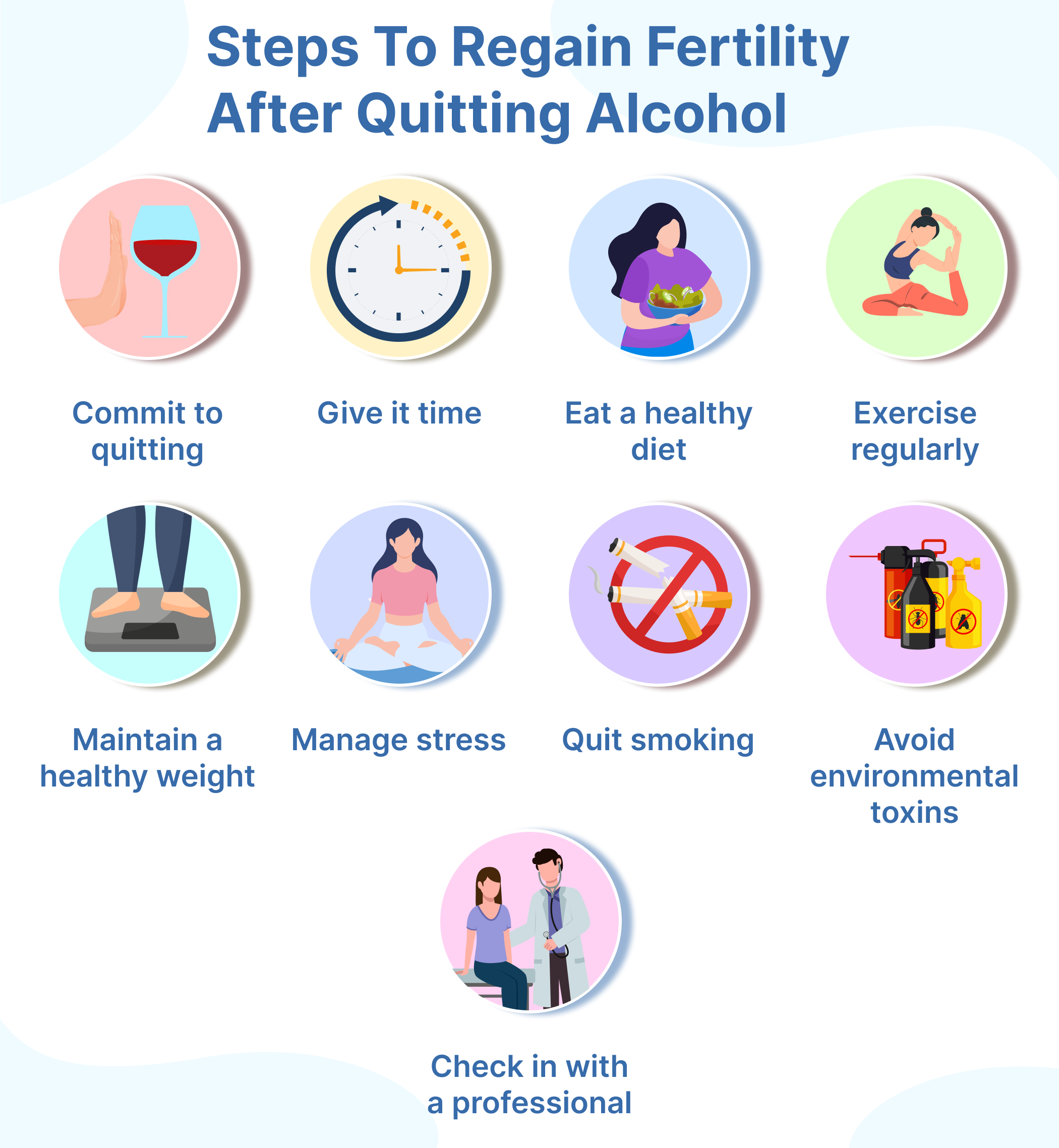
So, how long does it take for your body to get back on track? The recovery timeline really depends on your personal history with alcohol, like how much and how often you were drinking. For women, fertility can start to improve within one to three menstrual cycles after quitting. However, it’s generally recommended to stop drinking for at least three months before you start trying to conceive. This isn’t an arbitrary number — it takes about that long for your body to produce new, healthy eggs and sperm. For those who were drinking heavily for a long time, it might take six months or more to see a full return to normal hormone levels.
This is a question I hear a lot, and the medical consensus is pretty clear: the safest choice is to avoid alcohol completely when you’re trying for a baby. There is no known safe amount of alcohol for a developing fetus, and since you might not know you’re pregnant for the first several weeks, abstaining is the best way to protect a potential pregnancy from the start. If the idea of cutting it out entirely feels daunting, you could explore mindful drinking techniques to help you reduce your intake and build healthier habits that align with your family planning goals.
Even if having kids isn't on your immediate radar, thinking about your reproductive health is still a smart move. How long it takes for fertility to bounce back after you stop drinking is tied to your past consumption habits. If you think you might want to become a parent someday, consider this an invitation to be kind to your future self. Reducing or eliminating alcohol now can help support your body’s overall wellness, making things potentially smoother down the road. It’s all about making small, sustainable changes that contribute to your long-term health, which is a core part of the Reframe philosophy.
In the process of regaining fertility after quitting alcohol, patience is key. Your body is complex and needs time to adjust. Factors such as your overall health, age, and lifestyle can all play a role in how quickly your fertility will bounce back.
Quitting alcohol is a big step, and it's definitely something to be proud of. But if you want to improve your fertility, there are other changes you can make as well. It's like you've started building a puzzle by finding the corner pieces, and now it's time to fill in the rest.
Remember, these changes don't have to happen overnight. It's like you're climbing a mountain. You don't have to reach the peak immediately — you can take your time, enjoy the journey, and celebrate each milestone along the way.
Now that you're equipped with this knowledge, let's go through some actionable steps you can take:
With these steps, regaining fertility after quitting alcohol becomes a more manageable task. It's important to remember that this process is a journey. While it may seem daunting, the end result — a healthy, happy baby — makes it all worthwhile.
Remember, whether you're thinking about starting a family or just want to improve your overall health, every step towards reducing alcohol consumption is a step in the right direction. Happy healing!
When we talk about cutting back, it helps to know what we’re actually measuring. That’s where the concept of an “alcohol unit” comes in. Think of it as a standard way to talk about the amount of pure alcohol in any drink. One unit is equivalent to 10ml of pure alcohol. This is useful because a “single drink” can vary wildly — a pint of strong craft beer has a lot more alcohol than a small glass of light wine. For reference, a small 125ml glass of wine is about 1.5 units, and a pint of lower-strength beer is around 2 units. Health guidelines often suggest that moderate drinking is less than 14 units per week, but when you’re trying to conceive, the healthiest choice is to abstain completely.
So, how do you figure out the units in your favorite drink? There’s a simple formula you can use: multiply the alcohol by volume (ABV) percentage by the volume of the drink in milliliters (ml), and then divide by 1,000. For example, a standard 175ml glass of wine with 13% ABV contains about 2.3 units (13 x 175 / 1000). Knowing this can be a real eye-opener and a powerful first step toward mindful drinking. If doing math every time you pour a drink sounds like a chore, you’re not alone. Thankfully, technology can help. Apps like Reframe offer personalized drink tracking, making it easy to see your patterns without having to pull out a calculator each time.
It’s not just about alcohol in isolation. Other lifestyle choices can interact with alcohol and affect your fertility journey. A big one is caffeine. While your morning coffee on its own might not be a major issue for conception, research shows that caffeine can amplify the negative effects of alcohol on fertility for both men and women. So, if you’re having a few drinks in the evening after a day of lattes, the combined impact could be greater than you think. This is another reason why being mindful of your overall habits is so important when you’re preparing your body for pregnancy. It’s about seeing the bigger picture of your health, not just focusing on one single element.
Making a significant lifestyle change, like cutting back on alcohol, is so much easier when you have support. This could mean asking your partner or a close friend to join you on the journey, creating a sense of teamwork. It also helps to understand your personal reasons for drinking and find new, fun activities to replace it. To get a clearer picture of your habits, using an app or a journal to track your intake can be incredibly insightful. The Reframe app was designed for this very purpose, offering tools to monitor your progress, neuroscience-based courses to help you understand your brain, and a supportive community of people on the same path. Having that structure and connection can make all the difference.
Whether you’re trying to start a family or just thinking about it, the Reframe app is here for you! While it’s not a treatment for alcohol use disorder (AUD), our app serves as a dependable ally, helping you reevaluate the role of alcohol in your life. Our science-backed approach has helped hundreds of thousands of people around the world change their relationship with alcohol. We believe in you, and we're here to support you!
Reframe aims to arm you with the right wisdom and tools to not just get by with less alcohol, but to truly thrive. We offer daily nuggets of knowledge based on neuroscience research that explains the science behind alcohol and the brain. Our in-app Toolkit is full of helpful resources and activities to assist you in getting over any hurdles.
Want to join a global community walking the same path? Dive into our 24/7 Forum chat, where you can soak up motivation from people around the world who get you and are there for you. Plus, our accredited coaches are always available for some personalized guidance and advice.
We constantly update our app with new features to enhance your experience. Meet Melody, our latest in-app chatbot. Equipped with the most advanced AI technology, she's ready to guide you towards a life with minimal or no alcohol.
But wait, there's more! Every month, we introduce exciting challenges like Dry/Damp January, Mental Health May, and Outdoorsy June. Participate with fellow Reframers or go it alone — the choice is yours!
Try the Reframe app for an entire week for free! There’s absolutely nothing to lose — and a world of benefits to gain! Ready to take charge and discover what existence beyond alcohol feels like? Then download our app through the App Store or Google Play today!
Is the three-month alcohol-free period before trying to conceive a strict rule? Think of it less as a strict rule and more as a strong, science-backed recommendation. It takes about three months for sperm to fully mature and for an egg to go through its final development stages before ovulation. Giving your body this 90-day window is about setting the stage for the healthiest possible start for both your cells and a potential pregnancy. While every person's body is different, this timeframe gives you the best odds for your reproductive system to reset and be in top shape.
My partner and I are trying for a baby. Do we both really need to stop drinking completely? Since fertility is a team effort, the best approach is for both partners to abstain from alcohol. It can be a tough change, but it’s one of the most supportive things you can do for each other and your future family. Alcohol can impact both sperm and egg quality, so when both of you stop, you’re maximizing your chances from both sides. It also makes the lifestyle change easier when you have a built-in support system and aren’t navigating it alone.
I used to drink quite a bit in my twenties. Have I permanently damaged my fertility? This is a really common concern, and it’s completely understandable. The great news is that the body has an incredible capacity for healing. For most people, the negative effects of alcohol on fertility are reversible, and you’ll see significant improvements after you stop drinking. If you have a history of very heavy, long-term consumption and are worried, speaking with a healthcare professional can give you personalized answers and peace of mind.
How can I tell if alcohol is affecting my menstrual cycle or hormones? The most obvious sign is a change in your cycle’s regularity. You might notice your periods becoming unpredictable, or the length of your cycle might get shorter or longer than what’s normal for you. However, sometimes the hormonal disruption is more subtle and doesn't produce clear symptoms. This is why choosing to stop drinking is such a powerful, proactive step—you’re removing a potential obstacle even if you can’t see its effects directly.
If we're already doing IVF, does quitting alcohol still make a big difference? Yes, it absolutely does. IVF is a huge emotional and financial investment, and you want to control every variable you possibly can. Research clearly shows that alcohol consumption by either partner can lower IVF success rates. Quitting is one of the most direct ways to protect your investment by ensuring the best possible quality of the eggs and sperm that are foundational to the entire process.
Thinking about starting a family often means taking a closer look at your lifestyle, including that occasional glass of wine or weekend beer. You might be wondering how alcohol consumption can affect fertility, and it’s a valid question for both men and women. The good news? The effects are largely reversible. This leads to the most important question: how long after quitting drinking does fertility come back female? The simple act of stopping drinking does increase fertility, and your body has an amazing ability to recover once you call it quits.
Before we get to the rebound, it's crucial to understand how alcohol impacts fertility in the first place. For women, regular consumption of alcohol can lead to irregular menstrual cycles and abnormal hormone levels, both of which can make it harder to conceive. In men, alcohol can decrease testosterone levels and sperm count, which can take a toll on fertility.
A study that looked at 7,393 women who were trying to conceive found that knocking back something like two or more bottles of wine every week could decrease fecundity — the odds of having a live birth in any given cycle — by 18 percent. Another study found heavy drinkers were more likely to end up needing to go through infertility check-ups.
The exact mechanisms behind these effects are complex, but it’s thought that alcohol interferes with the delicate balance of hormones that govern our reproductive systems. Additionally, alcohol can damage our bodies on a cellular level, leading to poor quality eggs in women and suboptimal sperm in men.
That said, we do know that in large quantities, alcohol does seem to have an effect on ovulation. Occasionally, alcohol use disorder can even put a stop to ovulation entirely, causing premature menopause — although the details surrounding the mechanism behind this haven’t quite been nailed down.
When we talk about getting pregnant, the focus often lands squarely on the woman. But fertility is a team sport, and alcohol consumption can affect the reproductive health of both partners. For anyone on the path to parenthood, understanding these effects is a powerful first step. Alcohol can interfere with the delicate hormonal symphony that governs our reproductive systems, impact the health of eggs and sperm at a cellular level, and even influence our overall physical well-being in ways that make conception more difficult. It’s not just about heavy drinking, either; even moderate, regular consumption can play a role.
The good news is that knowledge gives you control. By learning how alcohol interacts with your body, you can make informed choices that align with your family-planning goals. The effects are often not permanent, and many people see their fertility improve after they decide to drink less or stop altogether. Let’s look at the specific ways alcohol can influence fertility for both women and men, as well as its impact on related factors like IVF success, miscarriage risk, and even your desire to be intimate in the first place. This isn't about fear; it's about empowerment.
For women, the journey to conception is closely tied to the rhythm of the menstrual cycle and the health of the reproductive system. Alcohol can throw a wrench in these finely tuned processes. It has the potential to disrupt your monthly cycle, alter crucial hormone levels, and diminish the quality of your eggs, all of which can make getting pregnant more challenging. Think of your reproductive system as a complex ecosystem where everything needs to be in balance. Alcohol can act as a pollutant, upsetting that delicate equilibrium and making it harder for life to thrive. Let's break down exactly how this happens.
Your menstrual cycle runs on a precise schedule dictated by hormones like estrogen, progesterone, and luteinizing hormone (LH). Alcohol can directly interfere with the production and regulation of these key players. This disruption can lead to irregular periods, making it difficult to predict your fertile window. In some cases, it can even cause anovulatory cycles, which are months where you don't release an egg at all. When your hormones are out of sync, your body doesn't get the clear signals it needs to prepare for a potential pregnancy, which can significantly delay your ability to conceive.
It’s not just about how much you drink, but also when and how often. Research shows that consistent, heavy drinking—defined in some studies as more than six drinks per week—can make it significantly harder to get pregnant. This isn't limited to a single phase of your cycle; the negative effects can persist throughout the month. For those actively trying to conceive, this means that even moderate but regular drinking could be working against your goals. Reducing your intake, especially during your fertile window, can be a simple yet effective way to support your body’s natural reproductive processes.
Here’s a connection you might not have considered: regular alcohol consumption can contribute to an increase in body fat, which in turn can affect fertility. Fat cells don't just store energy; they also produce estrogen. When you have an excess amount of body fat, this can lead to higher overall estrogen levels, throwing your natural hormonal balance off-kilter. This hormonal imbalance can interfere with ovulation and make your cycles irregular. Cutting back on alcohol can support a healthier body composition, which is one more way you can create a more favorable environment for conception. You can even use an alcohol spend calculator to see how reducing your intake benefits both your health and your wallet.
Fertility isn't a one-sided issue, and male reproductive health is just as critical to the conception equation. Lifestyle choices, including alcohol consumption, can have a direct impact on a man's ability to father a child. Alcohol can affect everything from testosterone levels and sperm production to long-term physical function. It’s important for men who are planning to start a family to understand that their habits matter deeply. Let’s explore the specific ways alcohol can influence male fertility and what you can do about it.
Healthy sperm are essential for fertilization, and alcohol can seriously compromise their integrity. Chronic drinking can lower sperm count, meaning there are fewer sperm available to make the journey to the egg. Beyond just the numbers, alcohol can also affect sperm morphology (their shape and size) and motility (their ability to swim effectively). Abnormally shaped sperm may struggle to penetrate the egg, while poor swimmers may never reach their destination at all. Essentially, alcohol can reduce both the size of the team and the skill of its players, making the goal of fertilization much harder to achieve.
The impact of alcohol on male fertility can be both short-term and long-term. The great news is that some of the damage from drinking is reversible. It takes about three months for the body to produce new sperm, so quitting or cutting back on alcohol for at least that long can lead to significant improvements in sperm health. However, long-term, heavy alcohol use can cause more lasting harm. In some cases, it can lead to permanent damage to the cells that produce sperm and may even contribute to issues like impotence. Tracking your progress with a tool like a sober days counter can be a fantastic motivator as you work toward a healthier future.
Alcohol's influence on fertility extends beyond just the ability to conceive naturally. It can also affect the outcomes of assisted reproductive technologies like IVF, increase the risk of early pregnancy loss, and even dampen the very desire that leads to intimacy. These factors are crucial pieces of the overall puzzle for aspiring parents. Whether you're just starting to try or are already on a path that includes medical assistance, understanding these broader impacts is essential for giving yourself the best possible chance at a healthy pregnancy.
For couples turning to In Vitro Fertilization (IVF), every single factor counts. The process is an emotional, physical, and financial investment, so it’s vital to control any variables you can. Studies have shown a clear link between alcohol consumption and lower IVF success rates. For example, one study found that women who had four or more drinks per week were 16% less likely to have a live birth through IVF. For both partners, drinking can impact egg and sperm quality, which are foundational to a successful IVF cycle. Eliminating alcohol is one of the most direct ways to support your investment and improve your odds.
This is a sensitive topic, but an important one. Some research suggests a connection between alcohol consumption around the time of conception and an increased risk of miscarriage. A few studies have indicated that heavy drinking (around 10 or more drinks per week) by either partner could raise the risk of an early miscarriage by two to three times. While the exact mechanisms are still being studied, it’s thought that alcohol can affect the quality of the egg or sperm, or interfere with the healthy development of the early embryo. Reducing alcohol intake is a proactive step you can take to help create the healthiest possible start for a pregnancy.
It’s a common misconception that alcohol is an aphrodisiac. While a drink might lower your inhibitions, alcohol is technically a depressant. This means it can have the opposite effect on your libido, or sex drive. For both men and women, excessive drinking can dampen desire and negatively impact performance. For men, it can contribute to erectile dysfunction, while for women, it can reduce lubrication and make arousal more difficult. If you’re trying to conceive, a healthy sex life is key. By practicing mindful drinking, you can support not only your physical fertility but also the intimacy that’s a core part of the journey.
Here's the part you're eagerly waiting for: when does fertility return after quitting alcohol? Science tells us it's not instant. After all, your body needs time to heal and restore its natural balance.
Studies suggest that women may see improvements in fertility within a month of stopping alcohol consumption. However, for optimal fertility, it's best to go booze-free for at least three months before trying to conceive. This period allows the body to produce healthy, mature eggs ready for fertilization.
The story is similar for men. Sperm takes about three months to fully mature, so a period of abstinence of at least three months is recommended. This pause allows for the production of healthy sperm, ready to embark on that important journey!
But here's the thing: everyone's different. Some people might see improvements sooner, while others might take a bit longer. It’s just like anything else — we can talk about averages, but lots of us fall on either side of that median.
So, how long does it take for your body to get back on track? The recovery timeline really depends on your personal history with alcohol, like how much and how often you were drinking. For women, fertility can start to improve within one to three menstrual cycles after quitting. However, it’s generally recommended to stop drinking for at least three months before you start trying to conceive. This isn’t an arbitrary number — it takes about that long for your body to produce new, healthy eggs and sperm. For those who were drinking heavily for a long time, it might take six months or more to see a full return to normal hormone levels.
This is a question I hear a lot, and the medical consensus is pretty clear: the safest choice is to avoid alcohol completely when you’re trying for a baby. There is no known safe amount of alcohol for a developing fetus, and since you might not know you’re pregnant for the first several weeks, abstaining is the best way to protect a potential pregnancy from the start. If the idea of cutting it out entirely feels daunting, you could explore mindful drinking techniques to help you reduce your intake and build healthier habits that align with your family planning goals.
Even if having kids isn't on your immediate radar, thinking about your reproductive health is still a smart move. How long it takes for fertility to bounce back after you stop drinking is tied to your past consumption habits. If you think you might want to become a parent someday, consider this an invitation to be kind to your future self. Reducing or eliminating alcohol now can help support your body’s overall wellness, making things potentially smoother down the road. It’s all about making small, sustainable changes that contribute to your long-term health, which is a core part of the Reframe philosophy.
In the process of regaining fertility after quitting alcohol, patience is key. Your body is complex and needs time to adjust. Factors such as your overall health, age, and lifestyle can all play a role in how quickly your fertility will bounce back.
Quitting alcohol is a big step, and it's definitely something to be proud of. But if you want to improve your fertility, there are other changes you can make as well. It's like you've started building a puzzle by finding the corner pieces, and now it's time to fill in the rest.
Remember, these changes don't have to happen overnight. It's like you're climbing a mountain. You don't have to reach the peak immediately — you can take your time, enjoy the journey, and celebrate each milestone along the way.
Now that you're equipped with this knowledge, let's go through some actionable steps you can take:
With these steps, regaining fertility after quitting alcohol becomes a more manageable task. It's important to remember that this process is a journey. While it may seem daunting, the end result — a healthy, happy baby — makes it all worthwhile.
Remember, whether you're thinking about starting a family or just want to improve your overall health, every step towards reducing alcohol consumption is a step in the right direction. Happy healing!
When we talk about cutting back, it helps to know what we’re actually measuring. That’s where the concept of an “alcohol unit” comes in. Think of it as a standard way to talk about the amount of pure alcohol in any drink. One unit is equivalent to 10ml of pure alcohol. This is useful because a “single drink” can vary wildly — a pint of strong craft beer has a lot more alcohol than a small glass of light wine. For reference, a small 125ml glass of wine is about 1.5 units, and a pint of lower-strength beer is around 2 units. Health guidelines often suggest that moderate drinking is less than 14 units per week, but when you’re trying to conceive, the healthiest choice is to abstain completely.
So, how do you figure out the units in your favorite drink? There’s a simple formula you can use: multiply the alcohol by volume (ABV) percentage by the volume of the drink in milliliters (ml), and then divide by 1,000. For example, a standard 175ml glass of wine with 13% ABV contains about 2.3 units (13 x 175 / 1000). Knowing this can be a real eye-opener and a powerful first step toward mindful drinking. If doing math every time you pour a drink sounds like a chore, you’re not alone. Thankfully, technology can help. Apps like Reframe offer personalized drink tracking, making it easy to see your patterns without having to pull out a calculator each time.
It’s not just about alcohol in isolation. Other lifestyle choices can interact with alcohol and affect your fertility journey. A big one is caffeine. While your morning coffee on its own might not be a major issue for conception, research shows that caffeine can amplify the negative effects of alcohol on fertility for both men and women. So, if you’re having a few drinks in the evening after a day of lattes, the combined impact could be greater than you think. This is another reason why being mindful of your overall habits is so important when you’re preparing your body for pregnancy. It’s about seeing the bigger picture of your health, not just focusing on one single element.
Making a significant lifestyle change, like cutting back on alcohol, is so much easier when you have support. This could mean asking your partner or a close friend to join you on the journey, creating a sense of teamwork. It also helps to understand your personal reasons for drinking and find new, fun activities to replace it. To get a clearer picture of your habits, using an app or a journal to track your intake can be incredibly insightful. The Reframe app was designed for this very purpose, offering tools to monitor your progress, neuroscience-based courses to help you understand your brain, and a supportive community of people on the same path. Having that structure and connection can make all the difference.
Whether you’re trying to start a family or just thinking about it, the Reframe app is here for you! While it’s not a treatment for alcohol use disorder (AUD), our app serves as a dependable ally, helping you reevaluate the role of alcohol in your life. Our science-backed approach has helped hundreds of thousands of people around the world change their relationship with alcohol. We believe in you, and we're here to support you!
Reframe aims to arm you with the right wisdom and tools to not just get by with less alcohol, but to truly thrive. We offer daily nuggets of knowledge based on neuroscience research that explains the science behind alcohol and the brain. Our in-app Toolkit is full of helpful resources and activities to assist you in getting over any hurdles.
Want to join a global community walking the same path? Dive into our 24/7 Forum chat, where you can soak up motivation from people around the world who get you and are there for you. Plus, our accredited coaches are always available for some personalized guidance and advice.
We constantly update our app with new features to enhance your experience. Meet Melody, our latest in-app chatbot. Equipped with the most advanced AI technology, she's ready to guide you towards a life with minimal or no alcohol.
But wait, there's more! Every month, we introduce exciting challenges like Dry/Damp January, Mental Health May, and Outdoorsy June. Participate with fellow Reframers or go it alone — the choice is yours!
Try the Reframe app for an entire week for free! There’s absolutely nothing to lose — and a world of benefits to gain! Ready to take charge and discover what existence beyond alcohol feels like? Then download our app through the App Store or Google Play today!
Is the three-month alcohol-free period before trying to conceive a strict rule? Think of it less as a strict rule and more as a strong, science-backed recommendation. It takes about three months for sperm to fully mature and for an egg to go through its final development stages before ovulation. Giving your body this 90-day window is about setting the stage for the healthiest possible start for both your cells and a potential pregnancy. While every person's body is different, this timeframe gives you the best odds for your reproductive system to reset and be in top shape.
My partner and I are trying for a baby. Do we both really need to stop drinking completely? Since fertility is a team effort, the best approach is for both partners to abstain from alcohol. It can be a tough change, but it’s one of the most supportive things you can do for each other and your future family. Alcohol can impact both sperm and egg quality, so when both of you stop, you’re maximizing your chances from both sides. It also makes the lifestyle change easier when you have a built-in support system and aren’t navigating it alone.
I used to drink quite a bit in my twenties. Have I permanently damaged my fertility? This is a really common concern, and it’s completely understandable. The great news is that the body has an incredible capacity for healing. For most people, the negative effects of alcohol on fertility are reversible, and you’ll see significant improvements after you stop drinking. If you have a history of very heavy, long-term consumption and are worried, speaking with a healthcare professional can give you personalized answers and peace of mind.
How can I tell if alcohol is affecting my menstrual cycle or hormones? The most obvious sign is a change in your cycle’s regularity. You might notice your periods becoming unpredictable, or the length of your cycle might get shorter or longer than what’s normal for you. However, sometimes the hormonal disruption is more subtle and doesn't produce clear symptoms. This is why choosing to stop drinking is such a powerful, proactive step—you’re removing a potential obstacle even if you can’t see its effects directly.
If we're already doing IVF, does quitting alcohol still make a big difference? Yes, it absolutely does. IVF is a huge emotional and financial investment, and you want to control every variable you possibly can. Research clearly shows that alcohol consumption by either partner can lower IVF success rates. Quitting is one of the most direct ways to protect your investment by ensuring the best possible quality of the eggs and sperm that are foundational to the entire process.
