

Explore new treatments in alcoholism recovery with reframe digital health tools and holistic approaches for a comprehensive path to lasting change.

Although it isn’t a treatment for alcohol use disorder (AUD), the Reframe app can help you cut back on drinking gradually with the science-backed knowledge to empower you 100% of the way. Our proven program has helped millions of people around the world drink less and live more. And we want to help you get there, too!
The Reframe app equips you with the knowledge and skills you need to not only survive drinking less, but to thrive while you navigate the journey. Our daily research-backed readings teach you the neuroscience of alcohol, and our in-app Toolkit provides the resources and activities you need to navigate each challenge.
You’ll meet millions of fellow Reframers in our 24/7 Forum chat and daily Zoom check-in meetings. Receive encouragement from people worldwide who know exactly what you’re going through! You’ll also have the opportunity to connect with our licensed Reframe coaches for more personalized guidance.
Plus, we’re always introducing new features to optimize your in-app experience. We recently launched our in-app chatbot, Melody, powered by the world’s most powerful AI technology. Melody is here to help as you adjust to a life with less (or no) alcohol.
And that’s not all! Every month, we launch fun challenges, like Dry/Damp January, Mental Health May, and Outdoorsy June. You won’t want to miss out on the chance to participate alongside fellow Reframers (or solo if that’s more your thing!).
The Reframe app is free for 7 days, so you don’t have anything to lose by trying it. Are you ready to feel empowered and discover life beyond alcohol? Then download our app today!
Changing your relationship with alcohol is about more than just quitting. It’s about rebuilding your life with better support and healthier habits. Thankfully, the resources available for recovery have evolved. We now have access to powerful tools right from our phones. This guide explores these modern methods, from effective apps to help quit drinking to adopting a holistic approach to alcoholism. We'll look at how combining alcoholism apps, like the Reframe digital health program, with other supportive practices can create a system for lasting change that truly fits your life.
If you’ve ever used an app to track your steps or a smartwatch to monitor your sleep, you’re already familiar with digital health tools. In short, they use technology like apps, wearables, and even video calls to help you manage your health and wellness. They bring support out of the traditional clinic setting and into your daily life, making it more accessible and easier to integrate with your routines. The main idea is to give you the resources and information you need to take an active, informed role in your own well-being, often right from the palm of your hand.
These tools are becoming especially important for mental health and habit change. For anyone looking to adjust their relationship with alcohol, digital platforms can offer a private, flexible, and supportive path forward. They provide structure when you need it and data that helps you understand your personal patterns much better. Instead of feeling like you have to figure it all out on your own, these resources can act as a constant companion, guiding you with evidence-based techniques and a sense of community, all without having to schedule a single in-person appointment.
Digital health isn't just one thing; it's a whole collection of different technologies designed to meet a wide variety of needs. You might even be using some of them already. The most common types include:
Perhaps the biggest advantage of using digital health tools is how they put you in the driver's seat of your own health journey. They make support more convenient, personalized, and empowering, which can be a complete game-changer when you're working on changing your drinking habits. You get access to information and encouragement anytime and anywhere, which is incredibly helpful when you’re facing a craving or just need a little motivation. These tools provide the structure and education to build healthier routines and practice mindful drinking. Instead of a one-size-fits-all plan, you receive personalized advice and can see your progress in real-time, helping you make informed choices that last.

Digital tools have revolutionized the way individuals approach alcoholism recovery. Mobile apps and online platforms offer accessible, convenient, and personalized support for those looking to reduce or quit alcohol consumption.
One notable example is the Reframe App, which provides a comprehensive program to help users cut back on drinking. The app combines daily readings, activities, and a toolkit to manage cravings and stress, offering a science-backed approach to reducing alcohol consumption.
At its core, Reframe is an app designed to help you drink less and build healthier habits. It’s not just a tracker; it’s a comprehensive program that uses a neuroscience-based approach to help you understand and change your relationship with alcohol. The program includes daily educational readings, a toolkit with over 20 coping strategies for managing cravings, and a supportive, anonymous community. You also get access to in-depth courses, progress tracking, and personalized goal setting. This multi-faceted approach empowers you to make lasting changes by addressing the thoughts and behaviors behind your drinking patterns, rather than just focusing on willpower alone.
The results speak for themselves. According to our data, an incredible 91% of Reframe users report a significant reduction in their alcohol consumption within three months of using the app. The program’s effectiveness comes from its focus on education and cognitive behavioral techniques. Instead of simply telling you to stop, Reframe helps you explore the reasons you drink and equips you with practical tools to handle triggers and stress in healthier ways. This method helps create new neural pathways, making it easier to choose alternatives to alcohol and build habits that stick for the long term.
Investing in your well-being is one of the best decisions you can make. On average, a Reframe subscription costs about $100 per year, which breaks down to around $8 a month. When you think about how much you might be spending on alcohol, the value becomes clear. If you’re curious, you can use our Alcohol Spend Calculator to see how much you could save. We offer a few different subscription plans to fit your needs, and you can find all the details on our FAQ page. The goal is to make this transformative program accessible so you can focus on what really matters: your health and happiness.
Reframe is designed for any adult who feels they could benefit from drinking less, whether their goal is to cut back or quit completely. It’s perfect for those interested in mindful drinking and developing a healthier, more intentional relationship with alcohol. However, it’s important to know that Reframe is not a substitute for medical treatment. The app is not intended for individuals with a severe alcohol use disorder (AUD) or those who may experience medical withdrawal symptoms. If you fall into that category, please consult a healthcare professional for guidance on the safest path forward.
We hear from users all the time that Reframe has been a life-changing tool in their journey with alcohol. Many people share that the daily readings and community support were exactly what they needed to finally make a change. On the other hand, some users find the amount of content in the app a bit extensive at first. Because the program is so comprehensive, we recommend taking it one day at a time to avoid feeling overwhelmed. We also encourage everyone to carefully review the subscription terms during the free trial to avoid any unexpected charges, ensuring a smooth and positive experience from the start.
With so many wellness apps available, it can be tough to figure out which one is the right fit. Each app offers a unique approach to changing your drinking habits. Some focus on tracking sobriety streaks, while others provide community forums or simple tracking tools. Here’s a quick look at how Reframe stands apart from other popular options, so you can make an informed choice that aligns with your personal goals.
The main difference here is the underlying philosophy. Reframe uses neuroscience and psychology to help you shift your entire mindset around alcohol. In contrast, I Am Sober is more focused on tracking your sober time, celebrating milestones, and connecting with a community for support. If you’re looking to understand the “why” behind your habits and learn new coping skills, Reframe’s educational approach is likely a better fit. If you thrive on tracking progress and community pledges, I Am Sober is a solid choice.
Sunnyside primarily uses a text-message-based system for support and accountability, which some people find very convenient. It’s also generally a bit cheaper. Reframe, however, is a more robust, in-app experience with a wider range of features, including daily lessons, a full toolkit of coping mechanisms, and live coaching sessions. If you want a comprehensive, structured program all in one place, Reframe offers a deeper and more immersive experience than the text-based coaching of Sunnyside.
Try Dry is a fantastic free app, especially for campaigns like Dry January. It helps you track your alcohol intake, the money you’ve saved, and its impact on your sleep and mood. It’s a great entry-level tool for monitoring your habits. However, it doesn’t include the educational content, community groups, or live coaching that are central to the Reframe experience. If you need structured guidance and support to make a lasting change, Reframe’s paid features provide a much more comprehensive toolkit.
This is a critical distinction based on need. WEConnect Health is specifically designed to support individuals in recovery from a severe substance use disorder (SUD) or alcohol use disorder (AUD), often providing free virtual meetings and clinical-level support. As mentioned earlier, Reframe is not designed for those with a severe AUD. If you require clinical support for addiction recovery, WEConnect Health is the more appropriate choice. Reframe is built for those in the sub-clinical space who want to proactively change their drinking habits.
Telehealth services and virtual counseling have become increasingly popular, especially in the wake of the COVID-19 pandemic. These services provide individuals with access to professional support from the comfort of their own homes. Virtual counseling sessions can be scheduled at convenient times, making it easier for individuals to maintain regular therapy sessions.
Online support communities, such as forums and social media groups, offer a platform for individuals to share their experiences and receive encouragement from others on a similar journey. These communities can be a valuable source of support, providing a sense of belonging and understanding.
Sobergrid is a digital sobriety community that offers round-the-clock support for those seeking to cut back or quit drinking. The app harnesses the power of social networking to help users on their alcohol recovery journey.

Holistic approaches to alcoholism recovery focus on treating the whole person, addressing physical, mental, emotional, and spiritual aspects of well-being. These methods often complement traditional treatments, offering a more comprehensive approach to recovery.
Mindfulness and meditation practices have been shown to reduce stress, improve mental health, and enhance self-awareness. These practices can help individuals manage cravings and develop healthier coping mechanisms.
Mindfulness-Based Stress Reduction (MBSR) is a program that incorporates mindfulness meditation to help individuals manage stress, pain, and illness. It has been adapted to support those in recovery from alcoholism by promoting relaxation and emotional regulation.
Yoga and physical exercise are powerful tools for supporting recovery. They promote physical health, reduce stress, and improve mood. Engaging in regular physical activity can also help repair the damage caused by long-term alcohol use.
A balanced diet is crucial for those recovering from alcoholism, as it helps replenish nutrients that may have been depleted by excessive alcohol consumption. Nutritional therapy focuses on providing the body with the essential vitamins and minerals needed for optimal health.
Acupuncture and Traditional Chinese Medicine (TCM) have been used for centuries to treat various ailments, including addiction. Acupuncture can help reduce withdrawal symptoms, manage cravings, and promote overall well-being.
Spending time in nature has been shown to have numerous benefits for mental and physical health. Nature-based therapies, such as wilderness therapy and eco-therapy, use outdoor activities to promote healing and recovery.
Nature-based approaches, as discussed in Exploring Spirituality in Recovery, can include activities like hiking, gardening, or simply spending time in a natural setting. These activities help individuals reconnect with themselves and the world around them, fostering a sense of peace and well-being.

Digital health tools are powerful, but it's wise to approach them with a clear understanding of their landscape. Like any tool, they come with their own set of challenges and things to keep in mind. Thinking about these aspects can help you choose the right resources for your journey and use them in a way that truly supports your well-being, ensuring technology works for you, not the other way around.
While digital tools offer incredible convenience, it's crucial that they don't lose the "human touch." True support goes beyond algorithms and data points; it involves empathy, understanding, and genuine connection. When you're working on changing your relationship with alcohol, feeling seen and heard as an individual is essential for progress. The most effective digital platforms recognize this, often incorporating features like peer support communities or access to coaches. This blend ensures you get the benefits of technology without sacrificing the warmth and encouragement that comes from human interaction. After all, people are more than just their data, and that personal connection is a cornerstone of any successful wellness journey.
Let's be honest: the healthcare system can feel like a maze. It's often fragmented, with different specialists and services that don't always communicate with each other. Digital health tools have the potential to simplify things, but they can also add another layer of complexity if they aren't designed thoughtfully. The goal should be to create a more connected and streamlined experience for you. A well-designed app can act as a central hub for your journey, bringing together resources, tracking, and support in one place. This helps cut through the noise and gives you a clearer, more manageable path forward instead of leaving you to piece together a plan from scattered sources.
As you explore digital health options, it's smart to be aware of a few potential risks. First, your privacy is paramount. Since you'll be sharing personal health information, always choose tools from reputable companies that have clear privacy policies. You should be able to easily understand how your data is being used and protected. Second, it's important to recognize the limits of digital "empowerment." Simply having access to data about your habits doesn't automatically lead to change. Real-life factors like your financial situation, stress levels, and even your comfort with technology can create barriers. The best tools don't just hand you information; they provide actionable, supportive guidance that helps you build new skills and handle those real-world challenges.
Combining digital tools with holistic approaches can provide a well-rounded support system for those in recovery. For example, using a mobile app like Reframe to track progress and manage cravings, while also incorporating mindfulness practices and physical exercise, can create a comprehensive recovery plan.
Personalization is key to successful recovery. Each individual’s journey is unique, and what works for one person may not work for another. By combining various tools and approaches, individuals can create a personalized recovery plan that addresses their specific needs and goals.
New and emerging treatments in alcoholism recovery, including digital tools and holistic approaches, offer promising options for individuals seeking to build healthier drinking habits. By leveraging the power of technology and incorporating holistic practices, those in recovery can find the support they need to achieve lasting change.
How do I know if a digital tool like an app is the right first step for me? Deciding on your first step is a personal choice. An app can be a fantastic starting point if you're looking for structure, education, and a private way to explore your relationship with alcohol. If your goal is to build awareness, learn new coping skills, and connect with a supportive community from the comfort of home, a digital program is likely a great fit. However, it's important to be honest with yourself. If you believe you might experience medical withdrawal symptoms, your first step should always be to consult a healthcare professional.
The blog mentions combining digital tools with holistic practices. What does that actually look like on a typical day? It’s simpler than it sounds and is all about weaving small, healthy actions into your routine. For example, you might start your morning with a daily lesson in an app like Reframe while you have your coffee. During a stressful moment at work, instead of thinking about a drink later, you could use a guided breathing exercise from the app's toolkit. In the evening, you might go for a walk in a local park or try a new yoga video online to move your body and clear your head. It's about using the app for structure and support while using holistic practices as healthy, real-world alternatives.
I'm worried about privacy with health apps. What should I look for to make sure my information is safe? That's a very smart concern to have. When considering any digital health tool, always look for a clear and easy-to-find privacy policy. Reputable companies will be transparent about what data they collect and how they protect it. Before committing, take a few minutes to read through their terms. You want to feel confident that your personal information is secure and used responsibly to support your journey, not for other purposes.
There are so many apps and tools mentioned. How do I choose the one that's best for my specific goals? The best way to choose is to first get clear on what you need most right now. Are you looking for a deep, educational program to understand the science behind your habits? Or do you primarily want a simple tracker to celebrate milestones? Perhaps a strong community element is your top priority. Think about your primary goal—whether it's mindful drinking, cutting back, or quitting—and then review the descriptions of each app with that goal in mind. Most offer free trials, which are a great way to see if the approach and features feel right for you before you commit.
Is it possible to rely too much on technology for this kind of change? That’s a great question, and the answer is yes. It's important to remember that an app is a tool to help you build a better life, not a replacement for one. The goal is to use the resources to develop skills and habits that you can apply in the real world, away from your screen. The most effective approach uses technology as a guide and a support system, while you actively practice new behaviors, connect with people, and engage in activities that bring you joy. The app should support your life, not become the center of it.
Changing your relationship with alcohol is about more than just quitting. It’s about rebuilding your life with better support and healthier habits. Thankfully, the resources available for recovery have evolved. We now have access to powerful tools right from our phones. This guide explores these modern methods, from effective apps to help quit drinking to adopting a holistic approach to alcoholism. We'll look at how combining alcoholism apps, like the Reframe digital health program, with other supportive practices can create a system for lasting change that truly fits your life.
If you’ve ever used an app to track your steps or a smartwatch to monitor your sleep, you’re already familiar with digital health tools. In short, they use technology like apps, wearables, and even video calls to help you manage your health and wellness. They bring support out of the traditional clinic setting and into your daily life, making it more accessible and easier to integrate with your routines. The main idea is to give you the resources and information you need to take an active, informed role in your own well-being, often right from the palm of your hand.
These tools are becoming especially important for mental health and habit change. For anyone looking to adjust their relationship with alcohol, digital platforms can offer a private, flexible, and supportive path forward. They provide structure when you need it and data that helps you understand your personal patterns much better. Instead of feeling like you have to figure it all out on your own, these resources can act as a constant companion, guiding you with evidence-based techniques and a sense of community, all without having to schedule a single in-person appointment.
Digital health isn't just one thing; it's a whole collection of different technologies designed to meet a wide variety of needs. You might even be using some of them already. The most common types include:
Perhaps the biggest advantage of using digital health tools is how they put you in the driver's seat of your own health journey. They make support more convenient, personalized, and empowering, which can be a complete game-changer when you're working on changing your drinking habits. You get access to information and encouragement anytime and anywhere, which is incredibly helpful when you’re facing a craving or just need a little motivation. These tools provide the structure and education to build healthier routines and practice mindful drinking. Instead of a one-size-fits-all plan, you receive personalized advice and can see your progress in real-time, helping you make informed choices that last.
Digital tools have revolutionized the way individuals approach alcoholism recovery. Mobile apps and online platforms offer accessible, convenient, and personalized support for those looking to reduce or quit alcohol consumption.
One notable example is the Reframe App, which provides a comprehensive program to help users cut back on drinking. The app combines daily readings, activities, and a toolkit to manage cravings and stress, offering a science-backed approach to reducing alcohol consumption.
At its core, Reframe is an app designed to help you drink less and build healthier habits. It’s not just a tracker; it’s a comprehensive program that uses a neuroscience-based approach to help you understand and change your relationship with alcohol. The program includes daily educational readings, a toolkit with over 20 coping strategies for managing cravings, and a supportive, anonymous community. You also get access to in-depth courses, progress tracking, and personalized goal setting. This multi-faceted approach empowers you to make lasting changes by addressing the thoughts and behaviors behind your drinking patterns, rather than just focusing on willpower alone.
The results speak for themselves. According to our data, an incredible 91% of Reframe users report a significant reduction in their alcohol consumption within three months of using the app. The program’s effectiveness comes from its focus on education and cognitive behavioral techniques. Instead of simply telling you to stop, Reframe helps you explore the reasons you drink and equips you with practical tools to handle triggers and stress in healthier ways. This method helps create new neural pathways, making it easier to choose alternatives to alcohol and build habits that stick for the long term.
Investing in your well-being is one of the best decisions you can make. On average, a Reframe subscription costs about $100 per year, which breaks down to around $8 a month. When you think about how much you might be spending on alcohol, the value becomes clear. If you’re curious, you can use our Alcohol Spend Calculator to see how much you could save. We offer a few different subscription plans to fit your needs, and you can find all the details on our FAQ page. The goal is to make this transformative program accessible so you can focus on what really matters: your health and happiness.
Reframe is designed for any adult who feels they could benefit from drinking less, whether their goal is to cut back or quit completely. It’s perfect for those interested in mindful drinking and developing a healthier, more intentional relationship with alcohol. However, it’s important to know that Reframe is not a substitute for medical treatment. The app is not intended for individuals with a severe alcohol use disorder (AUD) or those who may experience medical withdrawal symptoms. If you fall into that category, please consult a healthcare professional for guidance on the safest path forward.
We hear from users all the time that Reframe has been a life-changing tool in their journey with alcohol. Many people share that the daily readings and community support were exactly what they needed to finally make a change. On the other hand, some users find the amount of content in the app a bit extensive at first. Because the program is so comprehensive, we recommend taking it one day at a time to avoid feeling overwhelmed. We also encourage everyone to carefully review the subscription terms during the free trial to avoid any unexpected charges, ensuring a smooth and positive experience from the start.
With so many wellness apps available, it can be tough to figure out which one is the right fit. Each app offers a unique approach to changing your drinking habits. Some focus on tracking sobriety streaks, while others provide community forums or simple tracking tools. Here’s a quick look at how Reframe stands apart from other popular options, so you can make an informed choice that aligns with your personal goals.
The main difference here is the underlying philosophy. Reframe uses neuroscience and psychology to help you shift your entire mindset around alcohol. In contrast, I Am Sober is more focused on tracking your sober time, celebrating milestones, and connecting with a community for support. If you’re looking to understand the “why” behind your habits and learn new coping skills, Reframe’s educational approach is likely a better fit. If you thrive on tracking progress and community pledges, I Am Sober is a solid choice.
Sunnyside primarily uses a text-message-based system for support and accountability, which some people find very convenient. It’s also generally a bit cheaper. Reframe, however, is a more robust, in-app experience with a wider range of features, including daily lessons, a full toolkit of coping mechanisms, and live coaching sessions. If you want a comprehensive, structured program all in one place, Reframe offers a deeper and more immersive experience than the text-based coaching of Sunnyside.
Try Dry is a fantastic free app, especially for campaigns like Dry January. It helps you track your alcohol intake, the money you’ve saved, and its impact on your sleep and mood. It’s a great entry-level tool for monitoring your habits. However, it doesn’t include the educational content, community groups, or live coaching that are central to the Reframe experience. If you need structured guidance and support to make a lasting change, Reframe’s paid features provide a much more comprehensive toolkit.
This is a critical distinction based on need. WEConnect Health is specifically designed to support individuals in recovery from a severe substance use disorder (SUD) or alcohol use disorder (AUD), often providing free virtual meetings and clinical-level support. As mentioned earlier, Reframe is not designed for those with a severe AUD. If you require clinical support for addiction recovery, WEConnect Health is the more appropriate choice. Reframe is built for those in the sub-clinical space who want to proactively change their drinking habits.
Telehealth services and virtual counseling have become increasingly popular, especially in the wake of the COVID-19 pandemic. These services provide individuals with access to professional support from the comfort of their own homes. Virtual counseling sessions can be scheduled at convenient times, making it easier for individuals to maintain regular therapy sessions.
Online support communities, such as forums and social media groups, offer a platform for individuals to share their experiences and receive encouragement from others on a similar journey. These communities can be a valuable source of support, providing a sense of belonging and understanding.
Sobergrid is a digital sobriety community that offers round-the-clock support for those seeking to cut back or quit drinking. The app harnesses the power of social networking to help users on their alcohol recovery journey.
Holistic approaches to alcoholism recovery focus on treating the whole person, addressing physical, mental, emotional, and spiritual aspects of well-being. These methods often complement traditional treatments, offering a more comprehensive approach to recovery.
Mindfulness and meditation practices have been shown to reduce stress, improve mental health, and enhance self-awareness. These practices can help individuals manage cravings and develop healthier coping mechanisms.
Mindfulness-Based Stress Reduction (MBSR) is a program that incorporates mindfulness meditation to help individuals manage stress, pain, and illness. It has been adapted to support those in recovery from alcoholism by promoting relaxation and emotional regulation.
Yoga and physical exercise are powerful tools for supporting recovery. They promote physical health, reduce stress, and improve mood. Engaging in regular physical activity can also help repair the damage caused by long-term alcohol use.
A balanced diet is crucial for those recovering from alcoholism, as it helps replenish nutrients that may have been depleted by excessive alcohol consumption. Nutritional therapy focuses on providing the body with the essential vitamins and minerals needed for optimal health.
Acupuncture and Traditional Chinese Medicine (TCM) have been used for centuries to treat various ailments, including addiction. Acupuncture can help reduce withdrawal symptoms, manage cravings, and promote overall well-being.
Spending time in nature has been shown to have numerous benefits for mental and physical health. Nature-based therapies, such as wilderness therapy and eco-therapy, use outdoor activities to promote healing and recovery.
Nature-based approaches, as discussed in Exploring Spirituality in Recovery, can include activities like hiking, gardening, or simply spending time in a natural setting. These activities help individuals reconnect with themselves and the world around them, fostering a sense of peace and well-being.
Digital health tools are powerful, but it's wise to approach them with a clear understanding of their landscape. Like any tool, they come with their own set of challenges and things to keep in mind. Thinking about these aspects can help you choose the right resources for your journey and use them in a way that truly supports your well-being, ensuring technology works for you, not the other way around.
While digital tools offer incredible convenience, it's crucial that they don't lose the "human touch." True support goes beyond algorithms and data points; it involves empathy, understanding, and genuine connection. When you're working on changing your relationship with alcohol, feeling seen and heard as an individual is essential for progress. The most effective digital platforms recognize this, often incorporating features like peer support communities or access to coaches. This blend ensures you get the benefits of technology without sacrificing the warmth and encouragement that comes from human interaction. After all, people are more than just their data, and that personal connection is a cornerstone of any successful wellness journey.
Let's be honest: the healthcare system can feel like a maze. It's often fragmented, with different specialists and services that don't always communicate with each other. Digital health tools have the potential to simplify things, but they can also add another layer of complexity if they aren't designed thoughtfully. The goal should be to create a more connected and streamlined experience for you. A well-designed app can act as a central hub for your journey, bringing together resources, tracking, and support in one place. This helps cut through the noise and gives you a clearer, more manageable path forward instead of leaving you to piece together a plan from scattered sources.
As you explore digital health options, it's smart to be aware of a few potential risks. First, your privacy is paramount. Since you'll be sharing personal health information, always choose tools from reputable companies that have clear privacy policies. You should be able to easily understand how your data is being used and protected. Second, it's important to recognize the limits of digital "empowerment." Simply having access to data about your habits doesn't automatically lead to change. Real-life factors like your financial situation, stress levels, and even your comfort with technology can create barriers. The best tools don't just hand you information; they provide actionable, supportive guidance that helps you build new skills and handle those real-world challenges.
Combining digital tools with holistic approaches can provide a well-rounded support system for those in recovery. For example, using a mobile app like Reframe to track progress and manage cravings, while also incorporating mindfulness practices and physical exercise, can create a comprehensive recovery plan.
Personalization is key to successful recovery. Each individual’s journey is unique, and what works for one person may not work for another. By combining various tools and approaches, individuals can create a personalized recovery plan that addresses their specific needs and goals.
New and emerging treatments in alcoholism recovery, including digital tools and holistic approaches, offer promising options for individuals seeking to build healthier drinking habits. By leveraging the power of technology and incorporating holistic practices, those in recovery can find the support they need to achieve lasting change.
How do I know if a digital tool like an app is the right first step for me? Deciding on your first step is a personal choice. An app can be a fantastic starting point if you're looking for structure, education, and a private way to explore your relationship with alcohol. If your goal is to build awareness, learn new coping skills, and connect with a supportive community from the comfort of home, a digital program is likely a great fit. However, it's important to be honest with yourself. If you believe you might experience medical withdrawal symptoms, your first step should always be to consult a healthcare professional.
The blog mentions combining digital tools with holistic practices. What does that actually look like on a typical day? It’s simpler than it sounds and is all about weaving small, healthy actions into your routine. For example, you might start your morning with a daily lesson in an app like Reframe while you have your coffee. During a stressful moment at work, instead of thinking about a drink later, you could use a guided breathing exercise from the app's toolkit. In the evening, you might go for a walk in a local park or try a new yoga video online to move your body and clear your head. It's about using the app for structure and support while using holistic practices as healthy, real-world alternatives.
I'm worried about privacy with health apps. What should I look for to make sure my information is safe? That's a very smart concern to have. When considering any digital health tool, always look for a clear and easy-to-find privacy policy. Reputable companies will be transparent about what data they collect and how they protect it. Before committing, take a few minutes to read through their terms. You want to feel confident that your personal information is secure and used responsibly to support your journey, not for other purposes.
There are so many apps and tools mentioned. How do I choose the one that's best for my specific goals? The best way to choose is to first get clear on what you need most right now. Are you looking for a deep, educational program to understand the science behind your habits? Or do you primarily want a simple tracker to celebrate milestones? Perhaps a strong community element is your top priority. Think about your primary goal—whether it's mindful drinking, cutting back, or quitting—and then review the descriptions of each app with that goal in mind. Most offer free trials, which are a great way to see if the approach and features feel right for you before you commit.
Is it possible to rely too much on technology for this kind of change? That’s a great question, and the answer is yes. It's important to remember that an app is a tool to help you build a better life, not a replacement for one. The goal is to use the resources to develop skills and habits that you can apply in the real world, away from your screen. The most effective approach uses technology as a guide and a support system, while you actively practice new behaviors, connect with people, and engage in activities that bring you joy. The app should support your life, not become the center of it.

Explore effective strategies for managing alcohol withdrawal symptoms, recognize when to seek professional help, and learn about the resources available for a successful recovery from alcohol addiction.

Although it isn’t a treatment for alcohol use disorder (AUD), the Reframe app can help you cut back on drinking gradually with the science-backed knowledge to empower you 100% of the way. Our proven program has helped millions of people around the world drink less and live more. And we want to help you get there, too!
The Reframe app equips you with the knowledge and skills you need to not only survive drinking less, but to thrive while you navigate the journey. Our daily research-backed readings teach you the neuroscience of alcohol, and our in-app Toolkit provides the resources and activities you need to navigate each challenge.
You’ll meet millions of fellow Reframers in our 24/7 Forum chat and daily Zoom check-in meetings. Receive encouragement from people worldwide who know exactly what you’re going through! You’ll also have the opportunity to connect with our licensed Reframe coaches for more personalized guidance.
Plus, we’re always introducing new features to optimize your in-app experience. We recently launched our in-app chatbot, Melody, powered by the world’s most powerful AI technology. Melody is here to help as you adjust to a life with less (or no) alcohol.
And that’s not all! Every month, we launch fun challenges, like Dry/Damp January, Mental Health May, and Outdoorsy June. You won’t want to miss out on the chance to participate alongside fellow Reframers (or solo if that’s more your thing!).
The Reframe app is free for 7 days, so you don’t have anything to lose by trying it. Are you ready to feel empowered and discover life beyond alcohol? Then download our app through the App Store or Google Play today!
Alcohol withdrawal can be a daunting and challenging experience for many individuals aiming to quit drinking. The symptoms can range from mild to severe, and understanding how to manage them effectively is crucial for a successful recovery. This article explores the challenges of alcohol withdrawal, offers tips for managing symptoms, and provides advice on when to seek professional help for alcohol addiction.
Alcohol withdrawal occurs when a person who has been drinking heavily and regularly suddenly stops or significantly reduces their alcohol intake. This can lead to a range of physical and psychological symptoms due to the body's dependence on alcohol. The severity of withdrawal symptoms can vary based on several factors, including the duration and amount of alcohol consumption, as well as the individual's overall health.
It's essential to recognize these symptoms early and take appropriate steps to manage them effectively.
Dehydration is a common issue during alcohol withdrawal. Drinking plenty of water and electrolyte-rich fluids can help alleviate some symptoms, such as headaches and nausea.
Consuming a nutritious diet can provide your body with the necessary vitamins and minerals to support recovery. Focus on eating fruits, vegetables, lean proteins, and whole grains.
Rest is crucial for your body to heal and recover. Aim for at least 7-8 hours of sleep each night and take naps if needed.
Stress and anxiety are common withdrawal symptoms. Techniques such as deep breathing, meditation, and yoga can help calm your mind and reduce stress levels.
Having a strong support system is vital for recovery. Reach out to friends, family, or support groups who can provide encouragement and understanding during this challenging time. If you're experiencing cravings, it's helpful to understand that alcohol cravings often occur as an automatic response to a trigger. Recognizing these triggers can help you manage cravings more effectively.
Identify and avoid situations or environments that may trigger the urge to drink. This could include certain social settings, people, or emotional states.
For some individuals, gradually reducing alcohol intake rather than quitting abruptly can help manage withdrawal symptoms. However, this should be done under medical supervision.
While some individuals may manage mild withdrawal symptoms at home, others may require professional assistance. It's essential to seek help if:
Professional detox centers and rehabilitation programs offer medical supervision and support during the withdrawal process. These facilities can provide medications to manage symptoms and ensure a safe and comfortable detoxification.
Therapy and counseling can address the psychological aspects of alcohol addiction. Cognitive-behavioral therapy (CBT) and other therapeutic approaches can help you develop coping strategies and address underlying issues contributing to alcohol use.
In some cases, medication-assisted treatment (MAT) may be recommended to help reduce cravings and prevent relapse. Medications such as naltrexone, disulfiram, and acamprosate can be part of a comprehensive treatment plan.
Joining support groups such as Alcoholics Anonymous (AA) or other recovery groups can provide a sense of community and shared experience. These groups offer a platform to share challenges, successes, and receive encouragement from others who understand what you're going through.
Alcohol withdrawal is a challenging but manageable process. By understanding the symptoms, implementing effective strategies to manage them, and seeking professional help when necessary, you can successfully navigate this critical phase of recovery. Remember, overcoming alcohol addiction is a journey that requires patience, support, and dedication. Taking the first step towards a healthier, alcohol-free life is a commendable and courageous decision.
By integrating these resources into your recovery plan, you can gain additional insights and support to help you on your journey towards a healthier relationship with alcohol.

Alcoholism can occur at any age. Check out our latest blog for more info on the alcohol-related challenges seniors face and how to overcome them.
Although it isn’t a treatment for alcohol use disorder (AUD), the Reframe app can help you cut back on drinking gradually with the science-backed knowledge to empower you 100% of the way. Our proven program has helped millions of people around the world drink less and live more. And we want to help you get there, too!
The Reframe app equips you with the knowledge and skills you need to not only survive drinking less, but to thrive while you navigate the journey. Our daily research-backed readings teach you the neuroscience of alcohol, and our in-app Toolkit provides the resources and activities you need to navigate each challenge.
You’ll meet millions of fellow Reframers in our 24/7 Forum chat and daily Zoom check-in meetings. Receive encouragement from people worldwide who know exactly what you’re going through! You’ll also have the opportunity to connect with our licensed Reframe coaches for more personalized guidance.
Plus, we’re always introducing new features to optimize your in-app experience. We recently launched our in-app chatbot, Melody, powered by the world’s most powerful AI technology. Melody is here to help as you adjust to a life with less (or no) alcohol.
And that’s not all! Every month, we launch fun challenges, like Dry/Damp January, Mental Health May, and Outdoorsy June. You won’t want to miss out on the chance to participate alongside fellow Reframers (or solo if that’s more your thing!).
The Reframe app is free for 7 days, so you don’t have anything to lose by trying it. Are you ready to feel empowered and discover life beyond alcohol? Then download our app today!
“Alcoholism” or alcohol use disorder (AUD) is commonly associated with young or middle-aged adults. Following a stint of college partying, the stress of adulthood and major life changes can contribute to excessive drinking in these age groups. However, contrary to the belief that the elderly are wise, older adults don’t always have it figured out either.
Although less frequent than in younger adults, excessive drinking and AUD in seniors are common occurrences. While we often hear of younger people attending rehab and getting their life back on track, AUD in the elderly is not discussed as frequently — adding to its unique challenges. To help us or a loved one overcome these specific hurdles, let’s first come to a better understanding of how excessive drinking and AUD affect the older population.
As with other age groups, alcohol consumption has increased among the older adult population. According to the National Survery on Drug Use and Health (NSDUH), 20% of adults in the U.S. aged 60-64 and 10% aged 65 and over report current binge drinking. We often attribute excessive drinking to the stressors of adulthood and the partying behavior of younger adults, but many factors can also drive seniors to drink:
While many of us often view retirement as the light at the end of the tunnel, older adult life comes with its unique challenges. Excessive drinking is harmful at any age, but how do the dangers differ between older and younger adults?
Aging comes with unique challenges that make excessive drinking in the older adult population more dangerous than in younger adults. Several factors make alcohol affect seniors differently.
Excessive drinking can lead to dependence and AUD. How can we better identify signs of AUD in the older adult population?
Alcohol use disorder, commonly referred to as “alcoholism,” is sometimes more difficult to diagnose in older adults for a number of reasons.
Fortunately, there are some ways we can overcome these challenges and better assess for alcohol misuse and AUD in seniors:
Once alcohol dependence or AUD is identified in older adults, is it treated in the same way as the younger population?
AUD is treated through four main approaches for any age group. Treating AUD in seniors may require additional considerations (we’ll discuss specifics in the next section), but the methods remain the same.
1. Medication management. Medication is used throughout various stages of treatment such as detox to address neurological dependence, and with managing co-occurring medical conditions. Medication adherence is often crucial to the success of treatment — making management crucial to recovery when medications are needed.
2. Psychotherapy. Psychotherapy is often used in conjunction with medication-assisted treatment and supportive interventions. Different types of therapies can help us develop positive coping strategies and create healthier habits:
3. Supportive interventions. Supportive services can further aid our recovery through social support and accountability. There are many great options for supportive interventions:
4. Holistic approaches. Some of us may opt for a more holistic approach to treatment or use it as a supporting treatment. It is beneficial for those of us who may not have access to traditional treatments. Some holistic practices to aid recovery include the following:
These approaches can help treat AUD in all age groups, but what specific considerations are there when treating the elderly?
It’s important to tailor any treatment plan to meet the needs of an individual, but treating AUD in older adults may require specific considerations. Common experiences of older individuals warrant the need for additional modifications.
In addition to general considerations when treating seniors with AUD, individual preferences and needs should also be taken into account. Treatment can require an all-around approach.


Having a support system during recovery is highly beneficial. How can we support an older family member with AUD?
Support isn’t necessary in acute recovery only but also in aftercare. This aftercare can help prevent relapses. Let’s get a better idea of what aftercare can consist of for seniors recovering from AUD.
Aftercare in recovery is important, as the physical and neurological dependence associated with AUD can lead to relapses. Some important aspects of aftercare for seniors in recovery include the following:
Treatment for AUD in the elderly requires comprehensive care and support. To set ourselves up for success, what specific challenges should we be aware of?
Knowing what barriers are present helps us better navigate treatment for AUD in the older adult population. Some specific challenges include the following:
Although treatment for AUD in older adults requires additional consideration and comes with unique challenges, recovery is worth it and possible.
AUD in the older adult population often goes untreated, contributing to greater alcohol-related harm and mortality. Understanding the challenges in detecting and treating AUD in seniors can help decrease the chances of missed prevention opportunities. While a support system is beneficial for any one of us who may be recovering from AUD, family and caregiver involvement is even more crucial for seniors. No need to gauge if it’s worth it — recovery is beneficial at any age!
“Alcoholism” or alcohol use disorder (AUD) is commonly associated with young or middle-aged adults. Following a stint of college partying, the stress of adulthood and major life changes can contribute to excessive drinking in these age groups. However, contrary to the belief that the elderly are wise, older adults don’t always have it figured out either.
Although less frequent than in younger adults, excessive drinking and AUD in seniors are common occurrences. While we often hear of younger people attending rehab and getting their life back on track, AUD in the elderly is not discussed as frequently — adding to its unique challenges. To help us or a loved one overcome these specific hurdles, let’s first come to a better understanding of how excessive drinking and AUD affect the older population.
As with other age groups, alcohol consumption has increased among the older adult population. According to the National Survery on Drug Use and Health (NSDUH), 20% of adults in the U.S. aged 60-64 and 10% aged 65 and over report current binge drinking. We often attribute excessive drinking to the stressors of adulthood and the partying behavior of younger adults, but many factors can also drive seniors to drink:
While many of us often view retirement as the light at the end of the tunnel, older adult life comes with its unique challenges. Excessive drinking is harmful at any age, but how do the dangers differ between older and younger adults?
Aging comes with unique challenges that make excessive drinking in the older adult population more dangerous than in younger adults. Several factors make alcohol affect seniors differently.
Excessive drinking can lead to dependence and AUD. How can we better identify signs of AUD in the older adult population?
Alcohol use disorder, commonly referred to as “alcoholism,” is sometimes more difficult to diagnose in older adults for a number of reasons.
Fortunately, there are some ways we can overcome these challenges and better assess for alcohol misuse and AUD in seniors:
Once alcohol dependence or AUD is identified in older adults, is it treated in the same way as the younger population?
AUD is treated through four main approaches for any age group. Treating AUD in seniors may require additional considerations (we’ll discuss specifics in the next section), but the methods remain the same.
1. Medication management. Medication is used throughout various stages of treatment such as detox to address neurological dependence, and with managing co-occurring medical conditions. Medication adherence is often crucial to the success of treatment — making management crucial to recovery when medications are needed.
2. Psychotherapy. Psychotherapy is often used in conjunction with medication-assisted treatment and supportive interventions. Different types of therapies can help us develop positive coping strategies and create healthier habits:
3. Supportive interventions. Supportive services can further aid our recovery through social support and accountability. There are many great options for supportive interventions:
4. Holistic approaches. Some of us may opt for a more holistic approach to treatment or use it as a supporting treatment. It is beneficial for those of us who may not have access to traditional treatments. Some holistic practices to aid recovery include the following:
These approaches can help treat AUD in all age groups, but what specific considerations are there when treating the elderly?
It’s important to tailor any treatment plan to meet the needs of an individual, but treating AUD in older adults may require specific considerations. Common experiences of older individuals warrant the need for additional modifications.
In addition to general considerations when treating seniors with AUD, individual preferences and needs should also be taken into account. Treatment can require an all-around approach.
Having a support system during recovery is highly beneficial. How can we support an older family member with AUD?
Support isn’t necessary in acute recovery only but also in aftercare. This aftercare can help prevent relapses. Let’s get a better idea of what aftercare can consist of for seniors recovering from AUD.
Aftercare in recovery is important, as the physical and neurological dependence associated with AUD can lead to relapses. Some important aspects of aftercare for seniors in recovery include the following:
Treatment for AUD in the elderly requires comprehensive care and support. To set ourselves up for success, what specific challenges should we be aware of?
Knowing what barriers are present helps us better navigate treatment for AUD in the older adult population. Some specific challenges include the following:
Although treatment for AUD in older adults requires additional consideration and comes with unique challenges, recovery is worth it and possible.
AUD in the older adult population often goes untreated, contributing to greater alcohol-related harm and mortality. Understanding the challenges in detecting and treating AUD in seniors can help decrease the chances of missed prevention opportunities. While a support system is beneficial for any one of us who may be recovering from AUD, family and caregiver involvement is even more crucial for seniors. No need to gauge if it’s worth it — recovery is beneficial at any age!

Create a healthy daily schedule to support your recovery journey. Learn practical tips for building a routine that promotes stability and well-being.
Although it isn’t a treatment for alcohol use disorder (AUD), the Reframe app can help you cut back on drinking gradually with the science-backed knowledge to empower you 100% of the way. Our proven program has helped millions of people around the world drink less and live more. And we want to help you get there, too!
The Reframe app equips you with the knowledge and skills you need to not only survive drinking less, but to thrive while you navigate the journey. Our daily research-backed readings teach you the neuroscience of alcohol, and our in-app Toolkit provides the resources and activities you need to navigate each challenge.
You’ll meet millions of fellow Reframers in our 24/7 Forum chat and daily Zoom check-in meetings. Receive encouragement from people worldwide who know exactly what you’re going through! You’ll also have the opportunity to connect with our licensed Reframe coaches for more personalized guidance.
Plus, we’re always introducing new features to optimize your in-app experience. We recently launched our in-app chatbot, Melody, powered by the world’s most powerful AI technology. Melody is here to help as you adjust to a life with less (or no) alcohol.
And that’s not all! Every month, we launch fun challenges, like Dry/Damp January, Mental Health May, and Outdoorsy June. You won’t want to miss out on the chance to participate alongside fellow Reframers (or solo if that’s more your thing!).
The Reframe app is free for 7 days, so you don’t have anything to lose by trying it. Are you ready to feel empowered and discover life beyond alcohol? Then download our app today!
You’ve cleared your calendar of happy hours and cleaned out the liquor cabinet. That’s a huge first step, and you should be proud. But what comes next? The real work begins when you start building a life you don't feel the need to escape from. This is where a healthy daily schedule becomes your most powerful tool. It’s not about rigid rules, but creating a healthy routine schedule that supports your new freedom. It’s a foundational practice, whether you're working with a reframe recovery coach or navigating this path on your own.
Quitting alcohol is a profound step on your journey to recovery, and the next step is to establish a healthy routine. A well-structured daily schedule can provide you with stability, help you avoid triggers, and manage difficult emotions during this time.
So how do you establish such a routine? Let’s find out!

Recovery from alcohol dependence or addiction can often feel like a roller coaster. Some days we feel like we can conquer the world, and some days we feel like the world is crushing us. These feelings and all the ones in between are normal. (Learn more in our blog post “What to Expect When We Quit Drinking.”)
Those who decide to recover at a treatment center will find that the center will have a structured daily schedule in place filled with meals, individual therapy, group therapy, wellness training, recreation, and more. The schedule is an important part of rehabilitation; it provides structure and predictability.
For those who choose to recover at home, it’s equally important to stick to a daily routine. It may seem more challenging at first, and it requires more self-discipline, but the nice thing about it is that we can create a schedule that works for us and stay in the comfort of our own home.
As we mentioned earlier, treatment centers create a strict daily schedule. There are several important benefits to establishing such a routine.
All in all, building a healthy routine is a vital part of recovery. So how do we build one that works?
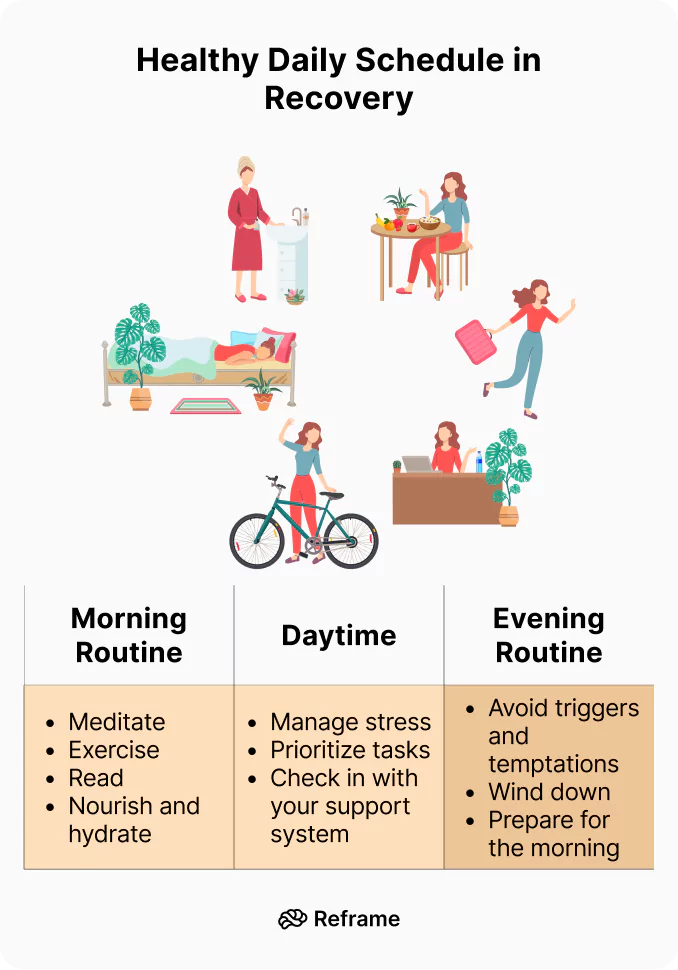
It may seem daunting at first, but once we start planning out our day, the schedule starts to fill itself in.
The morning routine sets the tone for our day. A successful morning routine can pave the way to success for the rest of the day, so it’s important to start the day right. Here are a few things to include in the morning schedule.
And voila! We’ve made it through the morning. Even if we don’t check off all of these, we can give ourselves a pat on the back for the ones we do, take a deep breath, and move on to the next portion of our day.
Once we begin our typical daytime routine, whether it's work or whatever else, things might start to feel more chaotic. Deadlines might loom, tasks might pile up, and we might feel super tired. Fortunately, we can make a plan to cope with these challenges.
Once we’ve made it through a long day, we can reward ourselves with a non-alcoholic treat, whether it’s a power nap or a favorite candy bar.
Whew! The day is almost done. Some exhaustion is normal, and with exhaustion comes temptation. With a consistent wind-down routine, we can skirt temptations and call the day a success.
And just like that, the day is done. All that’s left to do is rest. While you sleep, your body will be hard at work repairing and restoring itself.
It might take some time to figure out a routine that works — that’s okay! Be flexible and make changes as needed. Once you’ve figured out a general structure that works for you, write it down, and put it where you can easily see it, like on the front of the refrigerator.
When we stop drinking, our sleep patterns can get a little chaotic. Alcohol disrupts restorative REM sleep, so it takes time for our bodies to readjust. Making quality sleep a top priority is one of the best things we can do for our overall well-being. When we’re well-rested, we have more energy to tackle our goals, manage cravings, and regulate our emotions. Think of sleep as the foundation upon which you build the rest of your healthy routine. Without a solid base, everything else feels a lot shakier. Let’s look at a few simple ways to improve our sleep hygiene.
Getting enough sleep is non-negotiable for recovery. Experts recommend aiming for seven to nine hours each night. This consistent rest helps our brains and bodies heal from the effects of alcohol. When we make getting a good night's sleep a top priority, it helps us achieve our other wellness goals. A full night of rest restores our mental clarity and physical energy, making it easier to stick with our new habits, like exercising or eating well. It’s a simple but powerful commitment to our health.
Our bedroom should be a sanctuary for sleep. To make it as restful as possible, we can prepare our bedroom to be dark, quiet, and cool. Blackout curtains can block out streetlights, and a white noise machine or earplugs can drown out disruptive sounds. It’s also a good idea to avoid screens like our phones or the TV right before bed. The goal is to signal to our brain that this space is for rest and relaxation, not for work or entertainment.
The blue light from our phones, tablets, and computers tells our brain to stay awake, making it harder to fall asleep. Try to turn off electronics at least an hour before bedtime. If we absolutely must use a screen, we can use apps or built-in settings that reduce blue light. Swapping screen time for a relaxing activity like reading a book, listening to calming music, or doing some light journaling can make a huge difference in how quickly we drift off.
What we eat and drink has a massive impact on how we feel, both physically and mentally. Alcohol can deplete our bodies of essential nutrients, so focusing on a balanced diet is a key part of the healing process. Proper nutrition helps stabilize our mood, reduce cravings, and restore our energy levels. It’s not about perfection; it’s about making small, consistent choices that nourish our bodies. Paired with staying hydrated, a healthy diet gives us the fuel we need to thrive in recovery.
A great way to support our bodies is to eat more lean meats, fruits, vegetables, and whole grains. These foods provide the vitamins and minerals we need to repair and rebuild. We can also make simple swaps, like trading sugary drinks for water and reaching for nuts instead of sugary snacks. This approach to mindful drinking and eating isn’t about restriction; it’s about consciously choosing foods that make us feel good from the inside out.
When we’re hungry and unprepared, it’s easy to reach for whatever is quickest, which often isn’t the healthiest option. That’s why it helps to plan our meals ahead of time. Taking a little time on the weekend to map out our breakfasts, lunches, and dinners for the week can save us from decision fatigue. Having healthy snacks like fruit, yogurt, or pre-cut veggies on hand also helps us stay on track when hunger strikes between meals.
Eating a large meal right before bed can interfere with our sleep, as our body is busy digesting instead of resting. It’s best to eat dinner at least three hours before we plan to sleep. We can also choose foods that help us sleep better, like salmon, whole grains, yogurt, or bananas. These foods contain nutrients that support the production of sleep-regulating hormones, helping us wind down naturally and wake up feeling refreshed.
Moving our bodies is one of the most effective ways to manage stress, improve our mood, and support our recovery journey. Exercise releases endorphins, which are natural mood-lifters, and it can provide a healthy outlet for difficult emotions. It doesn’t have to be an intense, hour-long workout at the gym. The key is finding activities we enjoy and incorporating them into our routine consistently. Whether it’s a brisk walk, a dance class, or a bike ride, regular movement makes a world of difference.
To get the most benefits from exercise, a good target is to aim for at least 150 minutes of moderate activity each week. That breaks down to just over 20 minutes a day. Brisk walking, swimming, or cycling are all great examples of moderate exercise. We can track our progress to stay motivated and celebrate our achievements along the way. Reaching this goal helps improve our cardiovascular health, build strength, and create a positive new habit.
While intense exercise is best avoided right before bed, some gentle movement can actually help us sleep better. Light stretching before bed can help our bodies relax, ease muscle tension, and prepare us for a restful night. A few simple yoga poses or a short stretching routine can calm our nervous system and quiet our minds. It’s a peaceful way to end the day and connect with our bodies before drifting off to sleep.
Recovery is as much an emotional journey as it is a physical one. Taking care of our mental health is crucial for building resilience and preventing relapse. This means finding healthy ways to process our feelings, cultivate a positive mindset, and connect with others. Creating rituals that support our emotional well-being gives us the tools to handle challenges with grace and confidence. In the Reframe app, we offer daily readings, guided meditations, and a supportive community to help you on this path.
Shifting our focus toward the positive can have a profound effect on our outlook. A simple but powerful practice is to think about or write down three things we're thankful for each day. This helps us focus on the good things in our lives, no matter how small. Pairing this with positive affirmations—short, encouraging statements about ourselves—can help rewire our thought patterns and build self-compassion. It’s a small daily habit that nurtures a more optimistic mindset.
We aren’t meant to go through this journey alone. Spending time with supportive friends and family is important for our well-being. Meaningful social connection builds a strong support system, increases empathy, and can even improve our self-esteem. Whether it’s a phone call with a friend, a coffee date, or engaging with an online group like the Reframe community, connecting with others reminds us that we’re part of something bigger than ourselves.
For many of us, work takes up a significant portion of our day. Learning how to manage our time and energy at work is key to maintaining balance and avoiding burnout. A structured workday helps us stay focused, productive, and less stressed. By setting clear boundaries and being intentional with our time, we can accomplish our professional goals without sacrificing our well-being. This is especially important in recovery, when our energy is a precious resource.
Sitting at a desk for hours on end can drain our energy and focus. It’s important to incorporate short breaks throughout the day to move around, stretch, or engage in activities we enjoy. Even a five-minute break to walk around the office, listen to a favorite song, or do some deep breathing can reset our minds. These intentional pauses help us return to our work feeling refreshed and more productive.
Multitasking is often seen as a badge of honor, but it’s usually just a recipe for stress and sloppy work. When we start our workday, we should decide what's most important to do first. Then, we can turn off our phone, email, and social media notifications, or set them to "do not disturb" for about 90 minutes at a time to avoid distractions. Focusing on one thing at a time allows us to do better work and feel more accomplished at the end of the day.
Even with the best-laid plans, sometimes we miss a step or two. Sometimes we fall off track. It’s part of being human. Remember that progress is not linear, and we can always get back on track, no matter how many times we stumble. Here are some strategies to help.
Recovery is hard, but those who blazed this trail before you can remind you that it’s worth the struggle. Keep moving forward toward your goals.
When you decide to build a new routine, it’s easy to get swept up in the excitement and try to change everything at once. You might map out a perfect day filled with meditation, a 5-mile run, three gourmet meals, and journaling. While the ambition is great, trying to do too much too soon can lead to burnout. Instead, start small. Pick just one or two new habits to focus on first. Maybe it’s simply drinking a glass of water as soon as you wake up, or perhaps it's a five-minute walk after lunch. By focusing on small, manageable changes, you build a foundation for success. These tiny habits will become second nature over time, making it easier to add more as you go.
A great way to introduce a new behavior is to use a technique called “habit stacking.” This involves linking a new habit you want to form with an existing one you already do without thinking. The formula is simple: "After [current habit], I will [new habit]." For example, if you want to start meditating, you could say, "After I brush my teeth in the morning, I will meditate for two minutes." Or, if you want to incorporate more movement, "After I finish my workday, I will change into workout clothes." This method removes the guesswork of when to do your new habit and helps it slot more easily into your day, making it feel less like a chore and more like a natural part of your routine.
Acknowledging how far you’ve come is a powerful motivator. Tracking your progress helps you see the tangible results of your efforts, which is especially important on days when you feel discouraged. You can use a simple journal, a fitness tracker, or an app like Reframe to monitor your new habits. Seeing your consistency build over time is incredibly rewarding. Don’t forget to celebrate the small wins along the way! Did you stick to your morning routine for a week? That’s a win. Did you choose a mocktail at dinner instead of a beer? Celebrate it. These small victories build the confidence and resilience you need to keep moving forward on your journey.
Building a healthy routine during recovery can set you up for long-term sobriety success. As you plan out your days, be sure to include exercise, healthy meals, stress management, and contact with your support team. And should you stumble, your routine will help you get back on track. As difficult as it may be, you will look back on this time with gratitude for the quality of life it will grant you down the road.
This all sounds great, but I'm not a "schedule person." Won't a strict routine feel restrictive? I completely understand that. Think of this less as a rigid, minute-by-minute itinerary and more as a supportive framework for your day. The goal isn't to add stress but to reduce it by taking the guesswork out of your hours. When you're not constantly deciding what to do next, you free up mental energy to handle cravings and emotions. Start by creating gentle guideposts for your day, like a consistent wake-up time or a planned evening activity, and see how that structure actually creates more freedom, not less.
I'm feeling overwhelmed. What's the one thing I should focus on first? If you're feeling overwhelmed by all the suggestions, just focus on your sleep. Seriously. Getting consistent, quality rest is the foundation for everything else. When you're well-rested, you have more mental and emotional resources to manage cravings, stick to healthy eating, and find the energy to exercise. Try starting with one small change, like putting your phone away an hour before bed and creating a calm, dark environment. Nailing your sleep routine will make tackling the other parts of your schedule feel much more manageable.
What do I do when I have a bad day and my whole routine falls apart? First, take a deep breath and be kind to yourself. One off-day doesn't erase all your progress. The goal is consistency, not perfection. Instead of writing off the entire day and saying "I'll start again tomorrow," just start again with the next thing on your schedule. If you skipped your morning workout, you can still take an intentional break in the afternoon. If your whole day was a wash, you can still focus on your wind-down ritual before bed. The most important thing is to simply begin again without judgment.
My evenings are the hardest part. Any extra tips for getting through them without alcohol? Evenings are a common challenge because they're often when we're tired and our willpower is low. The key is to create a new wind-down ritual that you genuinely look forward to. This is your chance to get creative. Explore the world of sophisticated non-alcoholic drinks, find a podcast or audiobook series you can't wait to listen to, or pick up a hands-on hobby like knitting or sketching. The idea is to actively replace the old habit with something that nourishes your mind and body, making the evening a time for true rest and recovery.
How can I stick with this when my life is unpredictable or I have a demanding job? When your schedule is out of your control, focus on "anchor habits" instead of a full, detailed plan. These are one to three non-negotiable actions you take every single day, no matter what. For example, your anchors could be five minutes of quiet meditation before you check your phone, a 15-minute walk during your lunch break, and writing down three things you're grateful for before bed. These small, consistent actions provide stability and a sense of control, even when the rest of your day feels chaotic.
You’ve cleared your calendar of happy hours and cleaned out the liquor cabinet. That’s a huge first step, and you should be proud. But what comes next? The real work begins when you start building a life you don't feel the need to escape from. This is where a healthy daily schedule becomes your most powerful tool. It’s not about rigid rules, but creating a healthy routine schedule that supports your new freedom. It’s a foundational practice, whether you're working with a reframe recovery coach or navigating this path on your own.
Quitting alcohol is a profound step on your journey to recovery, and the next step is to establish a healthy routine. A well-structured daily schedule can provide you with stability, help you avoid triggers, and manage difficult emotions during this time.
So how do you establish such a routine? Let’s find out!
Recovery from alcohol dependence or addiction can often feel like a roller coaster. Some days we feel like we can conquer the world, and some days we feel like the world is crushing us. These feelings and all the ones in between are normal. (Learn more in our blog post “What to Expect When We Quit Drinking.”)
Those who decide to recover at a treatment center will find that the center will have a structured daily schedule in place filled with meals, individual therapy, group therapy, wellness training, recreation, and more. The schedule is an important part of rehabilitation; it provides structure and predictability.
For those who choose to recover at home, it’s equally important to stick to a daily routine. It may seem more challenging at first, and it requires more self-discipline, but the nice thing about it is that we can create a schedule that works for us and stay in the comfort of our own home.
As we mentioned earlier, treatment centers create a strict daily schedule. There are several important benefits to establishing such a routine.
All in all, building a healthy routine is a vital part of recovery. So how do we build one that works?
It may seem daunting at first, but once we start planning out our day, the schedule starts to fill itself in.
The morning routine sets the tone for our day. A successful morning routine can pave the way to success for the rest of the day, so it’s important to start the day right. Here are a few things to include in the morning schedule.
And voila! We’ve made it through the morning. Even if we don’t check off all of these, we can give ourselves a pat on the back for the ones we do, take a deep breath, and move on to the next portion of our day.
Once we begin our typical daytime routine, whether it's work or whatever else, things might start to feel more chaotic. Deadlines might loom, tasks might pile up, and we might feel super tired. Fortunately, we can make a plan to cope with these challenges.
Once we’ve made it through a long day, we can reward ourselves with a non-alcoholic treat, whether it’s a power nap or a favorite candy bar.
Whew! The day is almost done. Some exhaustion is normal, and with exhaustion comes temptation. With a consistent wind-down routine, we can skirt temptations and call the day a success.
And just like that, the day is done. All that’s left to do is rest. While you sleep, your body will be hard at work repairing and restoring itself.
It might take some time to figure out a routine that works — that’s okay! Be flexible and make changes as needed. Once you’ve figured out a general structure that works for you, write it down, and put it where you can easily see it, like on the front of the refrigerator.
When we stop drinking, our sleep patterns can get a little chaotic. Alcohol disrupts restorative REM sleep, so it takes time for our bodies to readjust. Making quality sleep a top priority is one of the best things we can do for our overall well-being. When we’re well-rested, we have more energy to tackle our goals, manage cravings, and regulate our emotions. Think of sleep as the foundation upon which you build the rest of your healthy routine. Without a solid base, everything else feels a lot shakier. Let’s look at a few simple ways to improve our sleep hygiene.
Getting enough sleep is non-negotiable for recovery. Experts recommend aiming for seven to nine hours each night. This consistent rest helps our brains and bodies heal from the effects of alcohol. When we make getting a good night's sleep a top priority, it helps us achieve our other wellness goals. A full night of rest restores our mental clarity and physical energy, making it easier to stick with our new habits, like exercising or eating well. It’s a simple but powerful commitment to our health.
Our bedroom should be a sanctuary for sleep. To make it as restful as possible, we can prepare our bedroom to be dark, quiet, and cool. Blackout curtains can block out streetlights, and a white noise machine or earplugs can drown out disruptive sounds. It’s also a good idea to avoid screens like our phones or the TV right before bed. The goal is to signal to our brain that this space is for rest and relaxation, not for work or entertainment.
The blue light from our phones, tablets, and computers tells our brain to stay awake, making it harder to fall asleep. Try to turn off electronics at least an hour before bedtime. If we absolutely must use a screen, we can use apps or built-in settings that reduce blue light. Swapping screen time for a relaxing activity like reading a book, listening to calming music, or doing some light journaling can make a huge difference in how quickly we drift off.
What we eat and drink has a massive impact on how we feel, both physically and mentally. Alcohol can deplete our bodies of essential nutrients, so focusing on a balanced diet is a key part of the healing process. Proper nutrition helps stabilize our mood, reduce cravings, and restore our energy levels. It’s not about perfection; it’s about making small, consistent choices that nourish our bodies. Paired with staying hydrated, a healthy diet gives us the fuel we need to thrive in recovery.
A great way to support our bodies is to eat more lean meats, fruits, vegetables, and whole grains. These foods provide the vitamins and minerals we need to repair and rebuild. We can also make simple swaps, like trading sugary drinks for water and reaching for nuts instead of sugary snacks. This approach to mindful drinking and eating isn’t about restriction; it’s about consciously choosing foods that make us feel good from the inside out.
When we’re hungry and unprepared, it’s easy to reach for whatever is quickest, which often isn’t the healthiest option. That’s why it helps to plan our meals ahead of time. Taking a little time on the weekend to map out our breakfasts, lunches, and dinners for the week can save us from decision fatigue. Having healthy snacks like fruit, yogurt, or pre-cut veggies on hand also helps us stay on track when hunger strikes between meals.
Eating a large meal right before bed can interfere with our sleep, as our body is busy digesting instead of resting. It’s best to eat dinner at least three hours before we plan to sleep. We can also choose foods that help us sleep better, like salmon, whole grains, yogurt, or bananas. These foods contain nutrients that support the production of sleep-regulating hormones, helping us wind down naturally and wake up feeling refreshed.
Moving our bodies is one of the most effective ways to manage stress, improve our mood, and support our recovery journey. Exercise releases endorphins, which are natural mood-lifters, and it can provide a healthy outlet for difficult emotions. It doesn’t have to be an intense, hour-long workout at the gym. The key is finding activities we enjoy and incorporating them into our routine consistently. Whether it’s a brisk walk, a dance class, or a bike ride, regular movement makes a world of difference.
To get the most benefits from exercise, a good target is to aim for at least 150 minutes of moderate activity each week. That breaks down to just over 20 minutes a day. Brisk walking, swimming, or cycling are all great examples of moderate exercise. We can track our progress to stay motivated and celebrate our achievements along the way. Reaching this goal helps improve our cardiovascular health, build strength, and create a positive new habit.
While intense exercise is best avoided right before bed, some gentle movement can actually help us sleep better. Light stretching before bed can help our bodies relax, ease muscle tension, and prepare us for a restful night. A few simple yoga poses or a short stretching routine can calm our nervous system and quiet our minds. It’s a peaceful way to end the day and connect with our bodies before drifting off to sleep.
Recovery is as much an emotional journey as it is a physical one. Taking care of our mental health is crucial for building resilience and preventing relapse. This means finding healthy ways to process our feelings, cultivate a positive mindset, and connect with others. Creating rituals that support our emotional well-being gives us the tools to handle challenges with grace and confidence. In the Reframe app, we offer daily readings, guided meditations, and a supportive community to help you on this path.
Shifting our focus toward the positive can have a profound effect on our outlook. A simple but powerful practice is to think about or write down three things we're thankful for each day. This helps us focus on the good things in our lives, no matter how small. Pairing this with positive affirmations—short, encouraging statements about ourselves—can help rewire our thought patterns and build self-compassion. It’s a small daily habit that nurtures a more optimistic mindset.
We aren’t meant to go through this journey alone. Spending time with supportive friends and family is important for our well-being. Meaningful social connection builds a strong support system, increases empathy, and can even improve our self-esteem. Whether it’s a phone call with a friend, a coffee date, or engaging with an online group like the Reframe community, connecting with others reminds us that we’re part of something bigger than ourselves.
For many of us, work takes up a significant portion of our day. Learning how to manage our time and energy at work is key to maintaining balance and avoiding burnout. A structured workday helps us stay focused, productive, and less stressed. By setting clear boundaries and being intentional with our time, we can accomplish our professional goals without sacrificing our well-being. This is especially important in recovery, when our energy is a precious resource.
Sitting at a desk for hours on end can drain our energy and focus. It’s important to incorporate short breaks throughout the day to move around, stretch, or engage in activities we enjoy. Even a five-minute break to walk around the office, listen to a favorite song, or do some deep breathing can reset our minds. These intentional pauses help us return to our work feeling refreshed and more productive.
Multitasking is often seen as a badge of honor, but it’s usually just a recipe for stress and sloppy work. When we start our workday, we should decide what's most important to do first. Then, we can turn off our phone, email, and social media notifications, or set them to "do not disturb" for about 90 minutes at a time to avoid distractions. Focusing on one thing at a time allows us to do better work and feel more accomplished at the end of the day.
Even with the best-laid plans, sometimes we miss a step or two. Sometimes we fall off track. It’s part of being human. Remember that progress is not linear, and we can always get back on track, no matter how many times we stumble. Here are some strategies to help.
Recovery is hard, but those who blazed this trail before you can remind you that it’s worth the struggle. Keep moving forward toward your goals.
When you decide to build a new routine, it’s easy to get swept up in the excitement and try to change everything at once. You might map out a perfect day filled with meditation, a 5-mile run, three gourmet meals, and journaling. While the ambition is great, trying to do too much too soon can lead to burnout. Instead, start small. Pick just one or two new habits to focus on first. Maybe it’s simply drinking a glass of water as soon as you wake up, or perhaps it's a five-minute walk after lunch. By focusing on small, manageable changes, you build a foundation for success. These tiny habits will become second nature over time, making it easier to add more as you go.
A great way to introduce a new behavior is to use a technique called “habit stacking.” This involves linking a new habit you want to form with an existing one you already do without thinking. The formula is simple: "After [current habit], I will [new habit]." For example, if you want to start meditating, you could say, "After I brush my teeth in the morning, I will meditate for two minutes." Or, if you want to incorporate more movement, "After I finish my workday, I will change into workout clothes." This method removes the guesswork of when to do your new habit and helps it slot more easily into your day, making it feel less like a chore and more like a natural part of your routine.
Acknowledging how far you’ve come is a powerful motivator. Tracking your progress helps you see the tangible results of your efforts, which is especially important on days when you feel discouraged. You can use a simple journal, a fitness tracker, or an app like Reframe to monitor your new habits. Seeing your consistency build over time is incredibly rewarding. Don’t forget to celebrate the small wins along the way! Did you stick to your morning routine for a week? That’s a win. Did you choose a mocktail at dinner instead of a beer? Celebrate it. These small victories build the confidence and resilience you need to keep moving forward on your journey.
Building a healthy routine during recovery can set you up for long-term sobriety success. As you plan out your days, be sure to include exercise, healthy meals, stress management, and contact with your support team. And should you stumble, your routine will help you get back on track. As difficult as it may be, you will look back on this time with gratitude for the quality of life it will grant you down the road.
This all sounds great, but I'm not a "schedule person." Won't a strict routine feel restrictive? I completely understand that. Think of this less as a rigid, minute-by-minute itinerary and more as a supportive framework for your day. The goal isn't to add stress but to reduce it by taking the guesswork out of your hours. When you're not constantly deciding what to do next, you free up mental energy to handle cravings and emotions. Start by creating gentle guideposts for your day, like a consistent wake-up time or a planned evening activity, and see how that structure actually creates more freedom, not less.
I'm feeling overwhelmed. What's the one thing I should focus on first? If you're feeling overwhelmed by all the suggestions, just focus on your sleep. Seriously. Getting consistent, quality rest is the foundation for everything else. When you're well-rested, you have more mental and emotional resources to manage cravings, stick to healthy eating, and find the energy to exercise. Try starting with one small change, like putting your phone away an hour before bed and creating a calm, dark environment. Nailing your sleep routine will make tackling the other parts of your schedule feel much more manageable.
What do I do when I have a bad day and my whole routine falls apart? First, take a deep breath and be kind to yourself. One off-day doesn't erase all your progress. The goal is consistency, not perfection. Instead of writing off the entire day and saying "I'll start again tomorrow," just start again with the next thing on your schedule. If you skipped your morning workout, you can still take an intentional break in the afternoon. If your whole day was a wash, you can still focus on your wind-down ritual before bed. The most important thing is to simply begin again without judgment.
My evenings are the hardest part. Any extra tips for getting through them without alcohol? Evenings are a common challenge because they're often when we're tired and our willpower is low. The key is to create a new wind-down ritual that you genuinely look forward to. This is your chance to get creative. Explore the world of sophisticated non-alcoholic drinks, find a podcast or audiobook series you can't wait to listen to, or pick up a hands-on hobby like knitting or sketching. The idea is to actively replace the old habit with something that nourishes your mind and body, making the evening a time for true rest and recovery.
How can I stick with this when my life is unpredictable or I have a demanding job? When your schedule is out of your control, focus on "anchor habits" instead of a full, detailed plan. These are one to three non-negotiable actions you take every single day, no matter what. For example, your anchors could be five minutes of quiet meditation before you check your phone, a 15-minute walk during your lunch break, and writing down three things you're grateful for before bed. These small, consistent actions provide stability and a sense of control, even when the rest of your day feels chaotic.

Despite the simple sobriety definitions found online, navigating it can be complex. Check out our latest blog for everything you need to know about sobriety.
Although it isn’t a treatment for alcohol use disorder (AUD), the Reframe app can help you cut back on drinking gradually with the science-backed knowledge to empower you 100% of the way. Our proven program has helped millions of people around the world drink less and live more. And we want to help you get there, too!
The Reframe app equips you with the knowledge and skills you need to not only survive drinking less, but to thrive while you navigate the journey. Our daily research-backed readings teach you the neuroscience of alcohol, and our in-app Toolkit provides the resources and activities you need to navigate each challenge.
You’ll meet millions of fellow Reframers in our 24/7 Forum chat and daily Zoom check-in meetings. Receive encouragement from people worldwide who know exactly what you’re going through! You’ll also have the opportunity to connect with our licensed Reframe coaches for more personalized guidance.
Plus, we’re always introducing new features to optimize your in-app experience. We recently launched our in-app chatbot, Melody, powered by the world’s most powerful AI technology. Melody is here to help as you adjust to a life with less (or no) alcohol.
And that’s not all! Every month, we launch fun challenges, like Dry/Damp January, Mental Health May, and Outdoorsy June. You won’t want to miss out on the chance to participate alongside fellow Reframers (or solo if that’s more your thing!).
The Reframe app is free for 7 days, so you don’t have anything to lose by trying it. Are you ready to feel empowered and discover life beyond alcohol? Then download our app today!
Have you ever made a New Year’s resolution to eat healthier or work out every day only to find yourself not sticking to these goals several weeks later? Don’t worry, we’ve all been there. Like other goals we may set for ourselves, committing to sobriety may not be as simple as quitting alcohol cold turkey.
Understanding the challenges that may come with sobriety and learning to overcome them can help us stay on track to reach our goals. To set us up for success, let’s first define what being sober and committing to sobriety means.
The term “sober” typically refers to not being affected or under the influence of intoxicating substances. Being sober can have different meanings because the term is used in the context of alcohol, other drugs, or both.
In the context of alcohol, being sober can mean not intoxicated or abstaining from alcohol — a term that can apply to different points on the spectrum of sobriety (which we’ll explore in further detail shortly).
The term “sober curious” was coined by Ruby Warrington, a British author. It refers to the idea of questioning our relationship with alcohol by examining the personal and societal reasons that we drink. Being “sober curious” can include thinking about sobriety, even if we may not be fully ready to commit.
The cultural shift known as the “sober curious movement” gained traction in the late 2010s after the release of Warrington’s book and the growing popularity of wellness trends. Being “sober curious” challenges the normalization of heavy drinking and promotes a healthier lifestyle by quitting or cutting back on alcohol. How does this differ from sobriety?
As we mentioned briefly, sobriety is a spectrum. On one end of the spectrum is being “sober curious.” On the other end is complete abstinence from alcohol — the most common definition of sobriety.
The term sobriety is inclusive of all points on the spectrum of sobriety, but stages of the spectrum often all work towards the goal of complete abstinence. How is this different from being sober?
The terms sober and sobriety are often used interchangeably. However, sober is more frequently referred to as the state of not being intoxicated, and sobriety is more commonly referred to as the act of staying sober. When talking about sobriety, however, it’s important to remember that sobriety is not black and white.
Now that we better understand what sobriety means, how do we achieve it?
Quitting alcohol is a significant component of sobriety, but it’s often not as simple as it sounds. Here are some steps to help us begin our journey to sobriety:
Once we’ve made a commitment to sobriety, we have better chance of achieving that goal and maintaining it when we incorporate the following strategies into our day-to-day lives.
Maintaining sobriety isn’t always easy, especially in a culture where drinking is deeply ingrained. However, implementing the following strategies can help set us up for success:
Even if we implement these tips to help us stay on the path to sobriety, relapses can occur. Let’s explore how we can navigate relapses in recovery.

Despite the unfortunate stigma surrounding relapses, they’re a common experience in sobriety. Research shows that roughly 69% of those of us recovering from alcohol use disorder will have a relapse. Let’s learn some ways we can deal with setbacks and continue on our journey to sobriety.
Although relapses in recovery are common, they can be tough to work through. Let’s explore some ways to meet the challenge.
Support from friends and family on the journey to sobriety can make it less arduous and isolating for anyone. Let’s look at some ways we can better support a loved one — or they can support us!
Social support is beneficial but isn’t necessary to stay on track in sobriety. What can we do if we’re on our own?
The road to sobriety isn’t always linear. The challenges we overcome along the way often strengthen our commitment to sobriety. So how do we overcome them? Here are some tried and true strategies.
The road to recovery can be bumpy. But there is freedom at the end of the tunnel, and sobriety brings little wins that are worth celebrating.
Just as we might treat ourselves to a five-dollar latte on the weekends to celebrate getting through the week, small wins in sobriety also deserve celebrating. So often we can get caught up in the negative, but acknowledging our wins can remind us of the positives and motivate us to continue our journey. Let’s explore some ways we can stay positive.
Despite the misconception that sobriety is only for those with alcohol use disorder or dependence, sobriety can be beneficial for anyone. While sobriety comes with many benefits, the road to get there isn’t always smooth. Learning to handle the bumps will help us reach our goal. So go ahead: embrace sobriety and change the course of your life!
Have you ever made a New Year’s resolution to eat healthier or work out every day only to find yourself not sticking to these goals several weeks later? Don’t worry, we’ve all been there. Like other goals we may set for ourselves, committing to sobriety may not be as simple as quitting alcohol cold turkey.
Understanding the challenges that may come with sobriety and learning to overcome them can help us stay on track to reach our goals. To set us up for success, let’s first define what being sober and committing to sobriety means.
The term “sober” typically refers to not being affected or under the influence of intoxicating substances. Being sober can have different meanings because the term is used in the context of alcohol, other drugs, or both.
In the context of alcohol, being sober can mean not intoxicated or abstaining from alcohol — a term that can apply to different points on the spectrum of sobriety (which we’ll explore in further detail shortly).
The term “sober curious” was coined by Ruby Warrington, a British author. It refers to the idea of questioning our relationship with alcohol by examining the personal and societal reasons that we drink. Being “sober curious” can include thinking about sobriety, even if we may not be fully ready to commit.
The cultural shift known as the “sober curious movement” gained traction in the late 2010s after the release of Warrington’s book and the growing popularity of wellness trends. Being “sober curious” challenges the normalization of heavy drinking and promotes a healthier lifestyle by quitting or cutting back on alcohol. How does this differ from sobriety?
As we mentioned briefly, sobriety is a spectrum. On one end of the spectrum is being “sober curious.” On the other end is complete abstinence from alcohol — the most common definition of sobriety.
The term sobriety is inclusive of all points on the spectrum of sobriety, but stages of the spectrum often all work towards the goal of complete abstinence. How is this different from being sober?
The terms sober and sobriety are often used interchangeably. However, sober is more frequently referred to as the state of not being intoxicated, and sobriety is more commonly referred to as the act of staying sober. When talking about sobriety, however, it’s important to remember that sobriety is not black and white.
Now that we better understand what sobriety means, how do we achieve it?
Quitting alcohol is a significant component of sobriety, but it’s often not as simple as it sounds. Here are some steps to help us begin our journey to sobriety:
Once we’ve made a commitment to sobriety, we have better chance of achieving that goal and maintaining it when we incorporate the following strategies into our day-to-day lives.
Maintaining sobriety isn’t always easy, especially in a culture where drinking is deeply ingrained. However, implementing the following strategies can help set us up for success:
Even if we implement these tips to help us stay on the path to sobriety, relapses can occur. Let’s explore how we can navigate relapses in recovery.
Despite the unfortunate stigma surrounding relapses, they’re a common experience in sobriety. Research shows that roughly 69% of those of us recovering from alcohol use disorder will have a relapse. Let’s learn some ways we can deal with setbacks and continue on our journey to sobriety.
Although relapses in recovery are common, they can be tough to work through. Let’s explore some ways to meet the challenge.
Support from friends and family on the journey to sobriety can make it less arduous and isolating for anyone. Let’s look at some ways we can better support a loved one — or they can support us!
Social support is beneficial but isn’t necessary to stay on track in sobriety. What can we do if we’re on our own?
The road to sobriety isn’t always linear. The challenges we overcome along the way often strengthen our commitment to sobriety. So how do we overcome them? Here are some tried and true strategies.
The road to recovery can be bumpy. But there is freedom at the end of the tunnel, and sobriety brings little wins that are worth celebrating.
Just as we might treat ourselves to a five-dollar latte on the weekends to celebrate getting through the week, small wins in sobriety also deserve celebrating. So often we can get caught up in the negative, but acknowledging our wins can remind us of the positives and motivate us to continue our journey. Let’s explore some ways we can stay positive.
Despite the misconception that sobriety is only for those with alcohol use disorder or dependence, sobriety can be beneficial for anyone. While sobriety comes with many benefits, the road to get there isn’t always smooth. Learning to handle the bumps will help us reach our goal. So go ahead: embrace sobriety and change the course of your life!

Some people speak of sobriety as the light at the end of the tunnel. But have you ever thought, “If it’s so great, why do I hate being sober?” Let’s unpack and explore!

Although it isn’t a treatment for alcohol use disorder (AUD), the Reframe app can help you cut back on drinking gradually with the science-backed knowledge to empower you 100% of the way. Our proven program has helped millions of people around the world drink less and live more. And we want to help you get there, too!
The Reframe app equips you with the knowledge and skills you need to not only survive drinking less, but to thrive while you navigate the journey. Our daily research-backed readings teach you the neuroscience of alcohol, and our in-app Toolkit provides the resources and activities you need to navigate each challenge.
You’ll meet millions of fellow Reframers in our 24/7 Forum chat and daily Zoom check-in meetings. Receive encouragement from people worldwide who know exactly what you’re going through! You’ll also have the opportunity to connect with our licensed Reframe coaches for more personalized guidance.
Plus, we’re always introducing new features to optimize your in-app experience. We recently launched our in-app chatbot, Melody, powered by the world’s most powerful AI technology. Melody is here to help as you adjust to a life with less (or no) alcohol.
And that’s not all! Every month, we launch fun challenges, like Dry/Damp January, Mental Health May, and Outdoorsy June. You won’t want to miss out on the chance to participate alongside fellow Reframers (or solo if that’s more your thing!).
The Reframe app is free for 7 days, so you don’t have anything to lose by trying it. Are you ready to feel empowered and discover life beyond alcohol? Then download our app today!
Sobriety is often portrayed as sunshine and rainbows — a life where everything is suddenly great. While it’s true that a sober life comes with an abundance of positive changes, there are plenty of challenges that don’t often get discussed. Many sober people ask, “Why do I hate being sober?” When we don’t hear other perspectives, we may begin to think there is something wrong with us.
If you feel this way, you’re not alone! It can feel isolating or even shameful when thoughts like these arise, but they’re more common than you may think. Today we’ll dive into the neuroscience behind alcohol and how it can provoke these negative feelings. Thankfully, there are many ways to move forward and thrive in a sober life!
Sobriety means something different to everyone. Some people define it as abstaining from all mind-altering substances (including psychiatric medications), while others introduce different degrees of nuance. The definition of sobriety is complex and better understood as a spectrum.
For today, let’s define “sobriety” as completely free from alcohol. There’s another important distinction to make: the terms “sober” and “dry” are commonly used to describe those of us who have stopped drinking. They are often used interchangeably, but there’s some nuance. Someone "dry" has not yet fully addressed the underlying issues of alcohol misuse, while the term "sober" encompasses actively engaging in recovery.
Now, with a clear understanding of “sobriety,” let’s take a look at the science at why it can be difficult.
Some of us may perceive alcohol dependence as a poor habit or a lack of self-control, but the science tells a much more complex story. Alcohol is considered a drug, since it has severe impacts on our physical and mental well-being. A main characteristic of a drug is its ability to create dependence, and alcohol’s chemical composition makes it highly addictive.
After alcohol enters our body, it travels in our bloodstream throughout our whole body. Once it reaches our brain, it starts to affect our neurotransmitters, the chemical messengers responsible for our thoughts, emotions, and bodily functions. It affects a wide variety of neurotransmitters but has particularly strong effects on two mood-regulating chemicals:
The temporary feeling of happiness that alcohol creates can cover up negative emotions we may be trying to avoid. Quitting alcohol takes away our safety blanket, exposing us to thoughts and feelings we may be running from and making sobriety difficult to appreciate.
Alcohol is commonly brushed off as a fun and casual drink for socializing and relaxing, but it’s actually a powerful mind-altering drug that can quickly trap us in a cycle of dependence. The nature of alcohol can make it difficult to be sober, and we can even grow to resent our sobriety.
Let’s explore why we may hate being sober. The exact causes will vary from person to person, but there are several common reasons for hating sobriety:
There may be other personal reasons why we persistently think, “I hate being sober.” Identifying these reasons is the first step in overcoming the obstacles and working towards sobriety. With ongoing negative feelings around sobriety, we may continue to romanticize a life of drinking, which can have serious consequences for us.
Our aversion to the feeling of being sober can prevent us from maintaining our commitment to sobriety and hinder us from developing a healthier relationship with alcohol. The consequences of avoiding sobriety can impact all areas of our life.
Alcohol-related deaths are also one of the leading causes of preventable deaths in the United States. The toxins in alcohol affect every system in our body, causing a greater risk of disease and chronic illness. In particular, alcohol affects the following aspects of our health:
Unfortunately, chronic alcohol misuse is not limited to physical effects.
Alcohol’s chemical composition as a drug means it affects us not only physically but mentally as well. Excessive alcohol consumption is linked to many mental health disorders including the following:
When our mental health suffers, our social health suffers. When we are low energy and have a poor outlook, we tend to neglect or even sabotage our personal relationships.
Alcohol causes adverse consequences in our personal relationships in many different ways. All relationships require a balance of communication, understanding, and effort, which can all be compromised when alcohol enters the picture. Drinking often strains or severs relationships due to three main factors:
Alcohol can take up a majority of our mental space and occupy much of our time, distracting us from goals we have for our life:
Now that we’ve determined the ways alcohol can negatively affect different areas of our life, let’s take a look at all the things we have to look forward to in a sober life. We can stay motivated on our way to sobriety by keeping these targets in mind:
But how can we overcome the negative feelings behind the thought that “I hate being sober!”?

If the idea of “sobriety” brings on feelings of shame or uncertainty, working through these difficult emotions can help us with recovery. These five action steps can move us forward in a positive way:
Sobriety may sound like a distant “promised land,” and the road to getting there an arduous trek. Thoughts of hating the feeling of being sober can dissuade us from committing to or even attempting sobriety. With all the negative impacts that alcohol can have on our life, settling for a negative relationship with alcohol can prove to be a step in the wrong direction. A teetering mindset around sobriety can be a hindrance in recovery, taking action on the strategies explored here can help us reach the light at the end of the tunnel. Cheers to putting the brakes on negativity and starting to heal!
Sobriety is often portrayed as sunshine and rainbows — a life where everything is suddenly great. While it’s true that a sober life comes with an abundance of positive changes, there are plenty of challenges that don’t often get discussed. Many sober people ask, “Why do I hate being sober?” When we don’t hear other perspectives, we may begin to think there is something wrong with us.
If you feel this way, you’re not alone! It can feel isolating or even shameful when thoughts like these arise, but they’re more common than you may think. Today we’ll dive into the neuroscience behind alcohol and how it can provoke these negative feelings. Thankfully, there are many ways to move forward and thrive in a sober life!
Sobriety means something different to everyone. Some people define it as abstaining from all mind-altering substances (including psychiatric medications), while others introduce different degrees of nuance. The definition of sobriety is complex and better understood as a spectrum.
For today, let’s define “sobriety” as completely free from alcohol. There’s another important distinction to make: the terms “sober” and “dry” are commonly used to describe those of us who have stopped drinking. They are often used interchangeably, but there’s some nuance. Someone "dry" has not yet fully addressed the underlying issues of alcohol misuse, while the term "sober" encompasses actively engaging in recovery.
Now, with a clear understanding of “sobriety,” let’s take a look at the science at why it can be difficult.
Some of us may perceive alcohol dependence as a poor habit or a lack of self-control, but the science tells a much more complex story. Alcohol is considered a drug, since it has severe impacts on our physical and mental well-being. A main characteristic of a drug is its ability to create dependence, and alcohol’s chemical composition makes it highly addictive.
After alcohol enters our body, it travels in our bloodstream throughout our whole body. Once it reaches our brain, it starts to affect our neurotransmitters, the chemical messengers responsible for our thoughts, emotions, and bodily functions. It affects a wide variety of neurotransmitters but has particularly strong effects on two mood-regulating chemicals:
The temporary feeling of happiness that alcohol creates can cover up negative emotions we may be trying to avoid. Quitting alcohol takes away our safety blanket, exposing us to thoughts and feelings we may be running from and making sobriety difficult to appreciate.
Alcohol is commonly brushed off as a fun and casual drink for socializing and relaxing, but it’s actually a powerful mind-altering drug that can quickly trap us in a cycle of dependence. The nature of alcohol can make it difficult to be sober, and we can even grow to resent our sobriety.
Let’s explore why we may hate being sober. The exact causes will vary from person to person, but there are several common reasons for hating sobriety:
There may be other personal reasons why we persistently think, “I hate being sober.” Identifying these reasons is the first step in overcoming the obstacles and working towards sobriety. With ongoing negative feelings around sobriety, we may continue to romanticize a life of drinking, which can have serious consequences for us.
Our aversion to the feeling of being sober can prevent us from maintaining our commitment to sobriety and hinder us from developing a healthier relationship with alcohol. The consequences of avoiding sobriety can impact all areas of our life.
Alcohol-related deaths are also one of the leading causes of preventable deaths in the United States. The toxins in alcohol affect every system in our body, causing a greater risk of disease and chronic illness. In particular, alcohol affects the following aspects of our health:
Unfortunately, chronic alcohol misuse is not limited to physical effects.
Alcohol’s chemical composition as a drug means it affects us not only physically but mentally as well. Excessive alcohol consumption is linked to many mental health disorders including the following:
When our mental health suffers, our social health suffers. When we are low energy and have a poor outlook, we tend to neglect or even sabotage our personal relationships.
Alcohol causes adverse consequences in our personal relationships in many different ways. All relationships require a balance of communication, understanding, and effort, which can all be compromised when alcohol enters the picture. Drinking often strains or severs relationships due to three main factors:
Alcohol can take up a majority of our mental space and occupy much of our time, distracting us from goals we have for our life:
Now that we’ve determined the ways alcohol can negatively affect different areas of our life, let’s take a look at all the things we have to look forward to in a sober life. We can stay motivated on our way to sobriety by keeping these targets in mind:
But how can we overcome the negative feelings behind the thought that “I hate being sober!”?
If the idea of “sobriety” brings on feelings of shame or uncertainty, working through these difficult emotions can help us with recovery. These five action steps can move us forward in a positive way:
Sobriety may sound like a distant “promised land,” and the road to getting there an arduous trek. Thoughts of hating the feeling of being sober can dissuade us from committing to or even attempting sobriety. With all the negative impacts that alcohol can have on our life, settling for a negative relationship with alcohol can prove to be a step in the wrong direction. A teetering mindset around sobriety can be a hindrance in recovery, taking action on the strategies explored here can help us reach the light at the end of the tunnel. Cheers to putting the brakes on negativity and starting to heal!

Curious how much did Tom Holland drink? Learn how his honest approach to sobriety and mindful choices can inspire your own Dryish January journey.
Although it isn’t a treatment for alcohol use disorder (AUD), the Reframe app can help you cut back on drinking gradually with the science-backed knowledge to empower you 100% of the way. Our proven program has helped millions of people around the world drink less and live more. And we want to help you get there, too!
The Reframe app equips you with the knowledge and skills you need to not only survive drinking less, but to thrive while you navigate the journey. Our daily research-backed readings teach you the neuroscience of alcohol, and our in-app Toolkit provides the resources and activities you need to navigate each challenge.
You’ll meet millions of fellow Reframers in our 24/7 Forum chat and daily Zoom check-in meetings. Receive encouragement from people worldwide who know exactly what you’re going through! You’ll also have the opportunity to connect with our licensed Reframe coaches for more personalized guidance.
Plus, we’re always introducing new features to optimize your in-app experience. We recently launched our in-app chatbot, Melody, powered by the world’s most powerful AI technology. Melody is here to help as you adjust to a life with less (or no) alcohol.
And that’s not all! Every month, we launch fun challenges, like Dry/Damp January, Mental Health May, and Outdoorsy June. You won’t want to miss out on the chance to participate alongside fellow Reframers (or solo if that’s more your thing!).
The Reframe app is free for 7 days, so you don’t have anything to lose by trying it. Are you ready to feel empowered and discover life beyond alcohol? Then download our app today!
Tom Holland is known for playing a superhero on screen, but his real strength might be how candidly he’s shared his personal struggles. He's one of many sober celebrities speaking out. He spoke openly about how his social life became tangled up with drinking, a feeling many of us can understand. It wasn't about one rock-bottom moment, but a slow realization that he had lost control. The question of how much did Tom Holland drink is less about a specific number and more about a pattern that left him feeling trapped. His journey with Tom Holland alcohol use offers a powerful roadmap for making meaningful, lasting change in your own life.
In this post, we’ll gain insight from Tom Holland’s struggle with alcohol and how he transformed his life through sobriety. We’ll also offer tips for cutting back on alcohol consumption. Let’s dive in!

First things first: who is Tom Holland? Holland is a London-born actor who achieved international fame for his portrayal of Spider-Man in six Marvel Cinematic Universe superhero films, beginning with Captain America: Civil War in 2016.
While he began his acting career at age 9 in musicals and theater, Holland’s career started to take off when he played Billy Elliot in the West End musical of the same name. He later made his film debut in 2012 in the disaster drama The Impossible, where he played a teenage tourist trapped in a tsunami. Following this film, he was cast for roles in How I Live Now (2013), In the Heart of the Sea (2015), and the miniseries Wolf Half (2015).
But behind the glitz and glamor of Hollywood, Holland began facing a battle all too familiar for many celebrities: alcohol. In fact, during a podcast interview with Jay Shetty, he admitted to not just struggling with alcohol but to being “enslaved” by it. “I’m happy to say it — I was definitely addicted to alcohol,” he said in the interview. “I’m not shying away from that at all.”
Looking back, Holland attributes his drinking habits to the need to “feel more comfortable in a social environment” — a common sentiment shared by many former drinkers. As he explained to Shetty, "I would look back and recognize that I would go to events for work, and I can't enjoy myself until I've had a few beers, and I just felt so much pressure.”
Holland's story starts in a way that many of us can probably relate to. He mentioned that his drinking began with having "just a pint" to feel more at ease in social settings. It's a common crutch, but for him, it became a slippery slope. He later admitted that after that first drink, he would often "just go too far," leading to nights that would completely "ruin my next day." This progression from a casual social habit to something that negatively impacts your life is a classic sign that a change might be needed. It highlights how easily a tool for social comfort can turn into a pattern of overconsumption, making the practice of mindful drinking feel out of reach.
For many people, there’s a single moment when the reality of their drinking habits hits home. For Holland, that eye-opening moment came at a party. He realized he couldn't enjoy himself without alcohol, a thought that deeply troubled him. He shared a story about needing his younger brother to drive him home after a night out, which served as a major wake-up call. This led to a period of serious self-reflection. He confessed, "I found it very hard to go without alcohol, constantly thinking about having a drink," which sparked the worry that he might have a real problem. This kind of self-awareness is the first, crucial step toward making a change and starting to track the benefits of cutting back.
Much like other people who embark on the road to sobriety, Holland’s decision to give up drinking unfolded slowly and came in stages. It started after a boozy Christmas holiday in 2021. “It's interesting. I didn’t one day wake up and say, ‘I’m giving up drinking,’” he told Jay Shetty during the interview. “I, just like many Brits, had a very, very boozy December … I’ve always been able to drink a lot.”
But in the beginning of 2022, Tom Holland decided to take up the challenge of Dry January — a commitment to giving up alcohol for the first month of the year. Interestingly, Dry January began as a movement in the United Kingdom in 2013. Today it’s a global phenomenon supported by mobile apps, websites, and communities in which participants share their experiences, tips, and insights.
During Dry January, Holland found himself constantly thinking about having a drink. “I was waking up thinking about it. I was checking the clock ‘when’s it 12?’ It really scared me,” he said to Shetty. “I just was like, ‘Wow, maybe I have a little bit of an alcohol thing.'”
To prove to himself that he didn’t have a problem, he decided to refrain from drinking alcohol for the following month — and would ultimately end up challenging himself to quit drinking until his birthday on June 1, 2022. But, it wasn’t easy.
“Two months go by and I was still really struggling,” he said to Shetty. Particularly in England, where alcohol and socializing go hand in hand, Holland felt the pressure. “I felt like I couldn’t be social. I felt like I couldn’t go to the pub and have a lime soda,” he said. “I couldn’t go out for dinner. I was really, really struggling, and I started to really worry that maybe I had an alcohol problem.”
Holland found that he had to distance himself from friends in the rugby community in particular because “so much” of the environment is “about how much can you drink?” But Holland stuck with it — and by the time his 26th birthday rolled around, he had gone five whole months without drinking.
Maintaining sobriety is challenging enough, but doing it under intense pressure adds another layer of difficulty. This was the reality for Holland while filming his TV series, "The Crowded Room." He described the set as not being a happy place, which put his newfound sobriety to the test. In that tough environment, he worried that turning back to alcohol would only make things worse. This moment of clarity is powerful—recognizing that alcohol isn't a true solution for stress is a huge step in changing your relationship with it. It highlights the mental strength required to stick to your goals, even when external circumstances are working against you.
There's a common belief that quitting drinking requires a formal rehab program, but Holland’s journey shows another path. He didn't check into a facility; instead, he built a strong support system around himself. He leaned on his family, friends, and even sober colleagues who understood what he was going through. By connecting with other people who were also sober, he found a community that could help him handle the challenges. This approach underscores the power of connection. Having people to talk to who just *get it* can make all the difference, whether it's a close friend or a supportive online community like the one we have at Reframe.
Holland has noted multiple benefits from forgoing alcohol and being sober. As he told Shetty, "By the time I got to June 1, I was the happiest I've ever been in my life." He recalled, "I could sleep better. I could handle problems better, things that would go wrong on set, that would normally set me off, I could take in my stride. I had so much better mental clarity. I felt healthier, I felt fitter."
He also said sobriety helped him reconnect with his authentic self: “Once I really started feeling the health benefits, and once I really started feeling like my full self, I was like ‘Oh my God, this is the best.’”
Holland’s newfound clarity made him question why he’d ever pick up another drink. “I just sort of said to myself, ‘Why? Why am I enslaved to this drink? Why am I so obsessed with the idea of having this drink?’”
While Holland had made previous attempts to quit alcohol, he said this time was different because he started addressing the reasons he felt like he needed a drink — most of which came down to feeling more comfortable in social situations.
Having been sober since then, Holland says drinking doesn’t even cross his mind anymore and that the decision to become sober was the “best thing” he’s ever done.
Holland also described the support and encouragement he received from his friends, who never pressured him to have a drink. Interestingly, Holland’s sobriety journey inspired his mother to give up drinking as well. “She’s loving it, and it’s been amazing,” he said. “I can’t believe the difference that I feel from not drinking. Yeah, I feel amazing.”
Tom Holland’s story highlights a crucial point: the benefits of cutting back on alcohol extend far beyond the physical. For him, sobriety wasn't just about avoiding hangovers; it was about a profound improvement in his mental well-being. He discovered he could sleep better, handle problems with a clearer head, and feel healthier and more fit. This journey allowed him to reconnect with his "full self," leading to a state of happiness he hadn't experienced before. His realization begs the question he asked himself: “Why am I enslaved to this drink?” Breaking free from that cycle is a powerful step in prioritizing your mental health and exploring what a life with more intentional choices, or mindful drinking, can feel like.
Sustaining a change like sobriety isn't just about white-knuckling through cravings; it's about discovering something more fulfilling. Tom Holland’s experience is a perfect example of finding a "higher taste." He says the decision to stop drinking was the "best thing" he's ever done and that he feels "amazing." When the positive effects—like improved clarity, better relationships, and genuine happiness—become so apparent, the desire for alcohol naturally fades. It no longer holds the same appeal because you've found something far more rewarding. This shift in perspective is what makes the change stick. You're not just giving something up; you're gaining a better quality of life, and you can even calculate the tangible benefits to see how far you've come.
Even though Holland has publicly shared his struggle with alcohol and now his sobriety journey, he told Shetty that he doesn’t want to be “that person that’s saying to people, ‘You should get sober.’” But he said that if he “could encourage someone to drink less, that would be great.”
He added: “I don’t want to start getting into the world of, ‘You need to stop drinking,’ because it’s not for me to say. I went on my own little journey. I’m really enjoying it.” Indeed, Holland has repeatedly echoed what many previous drinkers have said — that being alcohol-free is the best he’s ever felt.
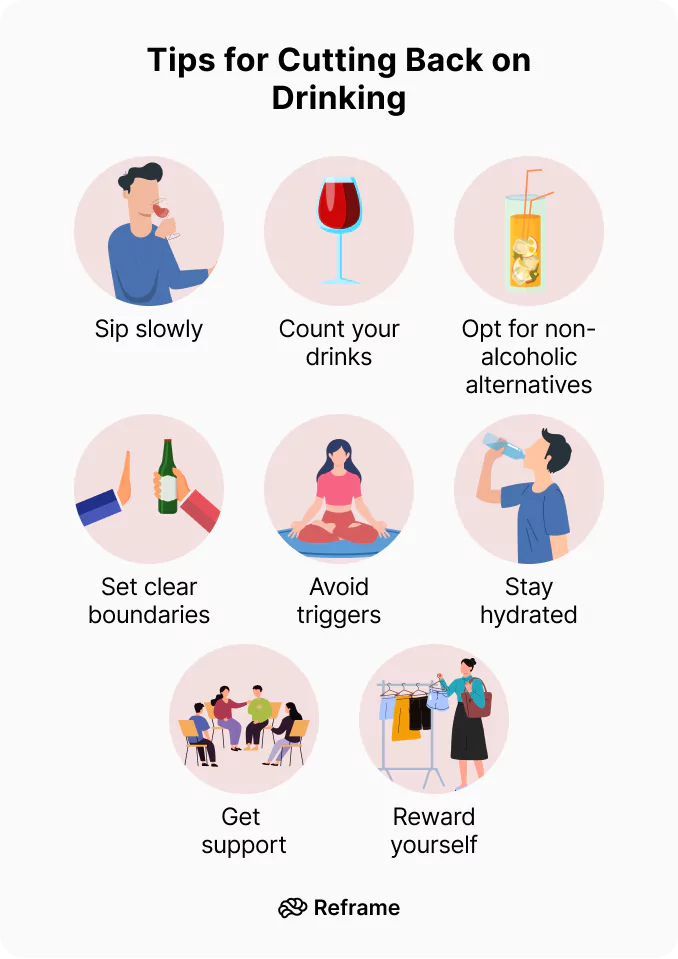
During his journey, Tom Holland received a piece of advice from his lawyer that completely shifted his perspective. The statement was simple yet profound: “You’ll never wake up the morning after a night out and wish you had a drink.” This resonated deeply with him, cutting through the noise of social pressure and short-term cravings. It’s a powerful reframe that focuses on the guaranteed positive outcome of not drinking — waking up clear-headed and regret-free. This kind of mental shift is a cornerstone of mindful drinking, helping you focus on how you want to feel long-term rather than what you think you’re missing in the moment.
Beyond his personal transformation, Holland has taken his commitment to a healthier lifestyle a step further by launching his own brand of non-alcoholic beers called Bero. This move isn't just a business venture; it's a statement. It shows his dedication to providing enjoyable alternatives for people who want to socialize without alcohol. By creating a high-quality, non-alcoholic option, he’s helping to normalize sobriety and challenge the idea that you need alcohol to have a good time. This initiative provides a tangible solution for others looking to change their relationship with alcohol and embrace a vibrant, alcohol-free social life.
As Tom Holland’s journey to sobriety illustrates, cutting back on alcohol or eliminating it entirely is not always easy. It’s a process that requires patience, resilience, and dedication. But, the physical and mental health benefits are so worth the effort! With that in mind, here are eight tips for cutting back on alcohol consumption:
Remember, cutting back on alcohol consumption is a journey that can be full of ups and downs. The important thing is to practice self-compassion and not give up!
Tom Holland’s story brings up a great question: What does “normal” drinking actually look like? In a world where happy hours and bottomless mimosas are common, it’s easy for our perception to get skewed. Health experts, however, offer some clear benchmarks. The U.S. Dietary Guidelines, for example, define moderate drinking as up to one drink per day for women and up to two for men. The general consensus among medical professionals is that drinking less alcohol is always better for your health than drinking more. These guidelines aren’t meant to be rigid rules, but they can be a helpful reference point to check in with yourself and understand your own patterns, empowering you to make choices that align with your well-being goals.
Tom Holland is one among many celebrities who has shown the courage to confront his issues with alcohol and the determination to overcome them. He may have struggled through Dry January in the beginning, but as the benefits became more noticeable, it was easier for him to maintain his commitment to an alcohol-free lifestyle. From improved sleep to better clarity and focus, ditching alcohol is one of the best things we can do for our physical and mental health. And if stars like Tom Holland can do it, we can too!
If you want to change your drinking habits but don’t know where or how to start, consider trying Reframe. Our science-backed app has helped millions of people reduce their alcohol consumption and enhance their physical, mental, and emotional well-being.
Tom Holland's story is powerful, and it's a reminder that you're never alone when re-evaluating your relationship with alcohol. He joins a growing list of public figures who have openly shared their sobriety journeys. For instance, actor Bradley Cooper has spoken about how getting sober at 29 completely changed his life's trajectory. Blake Lively, who has never been a big drinker, chose to abstain entirely to stay clear-headed and fully present. Daniel Radcliffe also quit drinking in his early twenties after realizing he was becoming reliant on it to enjoy himself. These stories, much like Holland's, highlight a common theme: choosing sobriety is a powerful step toward greater self-awareness and well-being.
How much alcohol was Tom Holland actually drinking? While he never gave a specific number of drinks, the more important part of his story is about his relationship with alcohol. He shared that he felt "enslaved" by it and realized he was relying on it to feel comfortable in social situations. The issue wasn't a certain quantity, but the pattern of needing a drink to enjoy himself and how that dependency made him feel.
Did Tom Holland have a big "rock bottom" moment before he quit? No, and that’s what makes his story so relatable. His decision wasn't sparked by a single dramatic event. Instead, it was a slow realization that began after a particularly boozy holiday season. When he tried Dry January, he found it incredibly difficult and was constantly thinking about alcohol, which scared him and made him question his reliance on it.
Does this mean I have to go to rehab to change my drinking habits? Not at all. Tom Holland’s journey is a great example of finding a path that works for you without formal rehab. He built a strong support system by leaning on his family, close friends, and even sober colleagues who understood what he was going through. Finding your community, whether in person or through an app like Reframe, can be a powerful way to make a change.
What were the biggest benefits Tom Holland noticed after he stopped drinking? He described feeling like the happiest he's ever been. Specifically, he mentioned that he could sleep better and handle problems with much more clarity. He felt healthier and fitter overall, and things that used to stress him out on set became much easier to manage. Essentially, sobriety helped him feel more like his authentic self.
Is quitting alcohol completely the only option? Tom Holland chose to become completely sober, but he also said his goal isn't to tell everyone they must do the same. His story is about taking control back. For many people, the goal isn't total abstinence but mindful drinking—becoming more intentional about when and how much you drink. It's all about finding the approach that improves your own well-being.
Tom Holland is known for playing a superhero on screen, but his real strength might be how candidly he’s shared his personal struggles. He's one of many sober celebrities speaking out. He spoke openly about how his social life became tangled up with drinking, a feeling many of us can understand. It wasn't about one rock-bottom moment, but a slow realization that he had lost control. The question of how much did Tom Holland drink is less about a specific number and more about a pattern that left him feeling trapped. His journey with Tom Holland alcohol use offers a powerful roadmap for making meaningful, lasting change in your own life.
In this post, we’ll gain insight from Tom Holland’s struggle with alcohol and how he transformed his life through sobriety. We’ll also offer tips for cutting back on alcohol consumption. Let’s dive in!
First things first: who is Tom Holland? Holland is a London-born actor who achieved international fame for his portrayal of Spider-Man in six Marvel Cinematic Universe superhero films, beginning with Captain America: Civil War in 2016.
While he began his acting career at age 9 in musicals and theater, Holland’s career started to take off when he played Billy Elliot in the West End musical of the same name. He later made his film debut in 2012 in the disaster drama The Impossible, where he played a teenage tourist trapped in a tsunami. Following this film, he was cast for roles in How I Live Now (2013), In the Heart of the Sea (2015), and the miniseries Wolf Half (2015).
But behind the glitz and glamor of Hollywood, Holland began facing a battle all too familiar for many celebrities: alcohol. In fact, during a podcast interview with Jay Shetty, he admitted to not just struggling with alcohol but to being “enslaved” by it. “I’m happy to say it — I was definitely addicted to alcohol,” he said in the interview. “I’m not shying away from that at all.”
Looking back, Holland attributes his drinking habits to the need to “feel more comfortable in a social environment” — a common sentiment shared by many former drinkers. As he explained to Shetty, "I would look back and recognize that I would go to events for work, and I can't enjoy myself until I've had a few beers, and I just felt so much pressure.”
Holland's story starts in a way that many of us can probably relate to. He mentioned that his drinking began with having "just a pint" to feel more at ease in social settings. It's a common crutch, but for him, it became a slippery slope. He later admitted that after that first drink, he would often "just go too far," leading to nights that would completely "ruin my next day." This progression from a casual social habit to something that negatively impacts your life is a classic sign that a change might be needed. It highlights how easily a tool for social comfort can turn into a pattern of overconsumption, making the practice of mindful drinking feel out of reach.
For many people, there’s a single moment when the reality of their drinking habits hits home. For Holland, that eye-opening moment came at a party. He realized he couldn't enjoy himself without alcohol, a thought that deeply troubled him. He shared a story about needing his younger brother to drive him home after a night out, which served as a major wake-up call. This led to a period of serious self-reflection. He confessed, "I found it very hard to go without alcohol, constantly thinking about having a drink," which sparked the worry that he might have a real problem. This kind of self-awareness is the first, crucial step toward making a change and starting to track the benefits of cutting back.
Much like other people who embark on the road to sobriety, Holland’s decision to give up drinking unfolded slowly and came in stages. It started after a boozy Christmas holiday in 2021. “It's interesting. I didn’t one day wake up and say, ‘I’m giving up drinking,’” he told Jay Shetty during the interview. “I, just like many Brits, had a very, very boozy December … I’ve always been able to drink a lot.”
But in the beginning of 2022, Tom Holland decided to take up the challenge of Dry January — a commitment to giving up alcohol for the first month of the year. Interestingly, Dry January began as a movement in the United Kingdom in 2013. Today it’s a global phenomenon supported by mobile apps, websites, and communities in which participants share their experiences, tips, and insights.
During Dry January, Holland found himself constantly thinking about having a drink. “I was waking up thinking about it. I was checking the clock ‘when’s it 12?’ It really scared me,” he said to Shetty. “I just was like, ‘Wow, maybe I have a little bit of an alcohol thing.'”
To prove to himself that he didn’t have a problem, he decided to refrain from drinking alcohol for the following month — and would ultimately end up challenging himself to quit drinking until his birthday on June 1, 2022. But, it wasn’t easy.
“Two months go by and I was still really struggling,” he said to Shetty. Particularly in England, where alcohol and socializing go hand in hand, Holland felt the pressure. “I felt like I couldn’t be social. I felt like I couldn’t go to the pub and have a lime soda,” he said. “I couldn’t go out for dinner. I was really, really struggling, and I started to really worry that maybe I had an alcohol problem.”
Holland found that he had to distance himself from friends in the rugby community in particular because “so much” of the environment is “about how much can you drink?” But Holland stuck with it — and by the time his 26th birthday rolled around, he had gone five whole months without drinking.
Maintaining sobriety is challenging enough, but doing it under intense pressure adds another layer of difficulty. This was the reality for Holland while filming his TV series, "The Crowded Room." He described the set as not being a happy place, which put his newfound sobriety to the test. In that tough environment, he worried that turning back to alcohol would only make things worse. This moment of clarity is powerful—recognizing that alcohol isn't a true solution for stress is a huge step in changing your relationship with it. It highlights the mental strength required to stick to your goals, even when external circumstances are working against you.
There's a common belief that quitting drinking requires a formal rehab program, but Holland’s journey shows another path. He didn't check into a facility; instead, he built a strong support system around himself. He leaned on his family, friends, and even sober colleagues who understood what he was going through. By connecting with other people who were also sober, he found a community that could help him handle the challenges. This approach underscores the power of connection. Having people to talk to who just *get it* can make all the difference, whether it's a close friend or a supportive online community like the one we have at Reframe.
Holland has noted multiple benefits from forgoing alcohol and being sober. As he told Shetty, "By the time I got to June 1, I was the happiest I've ever been in my life." He recalled, "I could sleep better. I could handle problems better, things that would go wrong on set, that would normally set me off, I could take in my stride. I had so much better mental clarity. I felt healthier, I felt fitter."
He also said sobriety helped him reconnect with his authentic self: “Once I really started feeling the health benefits, and once I really started feeling like my full self, I was like ‘Oh my God, this is the best.’”
Holland’s newfound clarity made him question why he’d ever pick up another drink. “I just sort of said to myself, ‘Why? Why am I enslaved to this drink? Why am I so obsessed with the idea of having this drink?’”
While Holland had made previous attempts to quit alcohol, he said this time was different because he started addressing the reasons he felt like he needed a drink — most of which came down to feeling more comfortable in social situations.
Having been sober since then, Holland says drinking doesn’t even cross his mind anymore and that the decision to become sober was the “best thing” he’s ever done.
Holland also described the support and encouragement he received from his friends, who never pressured him to have a drink. Interestingly, Holland’s sobriety journey inspired his mother to give up drinking as well. “She’s loving it, and it’s been amazing,” he said. “I can’t believe the difference that I feel from not drinking. Yeah, I feel amazing.”
Tom Holland’s story highlights a crucial point: the benefits of cutting back on alcohol extend far beyond the physical. For him, sobriety wasn't just about avoiding hangovers; it was about a profound improvement in his mental well-being. He discovered he could sleep better, handle problems with a clearer head, and feel healthier and more fit. This journey allowed him to reconnect with his "full self," leading to a state of happiness he hadn't experienced before. His realization begs the question he asked himself: “Why am I enslaved to this drink?” Breaking free from that cycle is a powerful step in prioritizing your mental health and exploring what a life with more intentional choices, or mindful drinking, can feel like.
Sustaining a change like sobriety isn't just about white-knuckling through cravings; it's about discovering something more fulfilling. Tom Holland’s experience is a perfect example of finding a "higher taste." He says the decision to stop drinking was the "best thing" he's ever done and that he feels "amazing." When the positive effects—like improved clarity, better relationships, and genuine happiness—become so apparent, the desire for alcohol naturally fades. It no longer holds the same appeal because you've found something far more rewarding. This shift in perspective is what makes the change stick. You're not just giving something up; you're gaining a better quality of life, and you can even calculate the tangible benefits to see how far you've come.
Even though Holland has publicly shared his struggle with alcohol and now his sobriety journey, he told Shetty that he doesn’t want to be “that person that’s saying to people, ‘You should get sober.’” But he said that if he “could encourage someone to drink less, that would be great.”
He added: “I don’t want to start getting into the world of, ‘You need to stop drinking,’ because it’s not for me to say. I went on my own little journey. I’m really enjoying it.” Indeed, Holland has repeatedly echoed what many previous drinkers have said — that being alcohol-free is the best he’s ever felt.
During his journey, Tom Holland received a piece of advice from his lawyer that completely shifted his perspective. The statement was simple yet profound: “You’ll never wake up the morning after a night out and wish you had a drink.” This resonated deeply with him, cutting through the noise of social pressure and short-term cravings. It’s a powerful reframe that focuses on the guaranteed positive outcome of not drinking — waking up clear-headed and regret-free. This kind of mental shift is a cornerstone of mindful drinking, helping you focus on how you want to feel long-term rather than what you think you’re missing in the moment.
Beyond his personal transformation, Holland has taken his commitment to a healthier lifestyle a step further by launching his own brand of non-alcoholic beers called Bero. This move isn't just a business venture; it's a statement. It shows his dedication to providing enjoyable alternatives for people who want to socialize without alcohol. By creating a high-quality, non-alcoholic option, he’s helping to normalize sobriety and challenge the idea that you need alcohol to have a good time. This initiative provides a tangible solution for others looking to change their relationship with alcohol and embrace a vibrant, alcohol-free social life.
As Tom Holland’s journey to sobriety illustrates, cutting back on alcohol or eliminating it entirely is not always easy. It’s a process that requires patience, resilience, and dedication. But, the physical and mental health benefits are so worth the effort! With that in mind, here are eight tips for cutting back on alcohol consumption:
Remember, cutting back on alcohol consumption is a journey that can be full of ups and downs. The important thing is to practice self-compassion and not give up!
Tom Holland’s story brings up a great question: What does “normal” drinking actually look like? In a world where happy hours and bottomless mimosas are common, it’s easy for our perception to get skewed. Health experts, however, offer some clear benchmarks. The U.S. Dietary Guidelines, for example, define moderate drinking as up to one drink per day for women and up to two for men. The general consensus among medical professionals is that drinking less alcohol is always better for your health than drinking more. These guidelines aren’t meant to be rigid rules, but they can be a helpful reference point to check in with yourself and understand your own patterns, empowering you to make choices that align with your well-being goals.
Tom Holland is one among many celebrities who has shown the courage to confront his issues with alcohol and the determination to overcome them. He may have struggled through Dry January in the beginning, but as the benefits became more noticeable, it was easier for him to maintain his commitment to an alcohol-free lifestyle. From improved sleep to better clarity and focus, ditching alcohol is one of the best things we can do for our physical and mental health. And if stars like Tom Holland can do it, we can too!
If you want to change your drinking habits but don’t know where or how to start, consider trying Reframe. Our science-backed app has helped millions of people reduce their alcohol consumption and enhance their physical, mental, and emotional well-being.
Tom Holland's story is powerful, and it's a reminder that you're never alone when re-evaluating your relationship with alcohol. He joins a growing list of public figures who have openly shared their sobriety journeys. For instance, actor Bradley Cooper has spoken about how getting sober at 29 completely changed his life's trajectory. Blake Lively, who has never been a big drinker, chose to abstain entirely to stay clear-headed and fully present. Daniel Radcliffe also quit drinking in his early twenties after realizing he was becoming reliant on it to enjoy himself. These stories, much like Holland's, highlight a common theme: choosing sobriety is a powerful step toward greater self-awareness and well-being.
How much alcohol was Tom Holland actually drinking? While he never gave a specific number of drinks, the more important part of his story is about his relationship with alcohol. He shared that he felt "enslaved" by it and realized he was relying on it to feel comfortable in social situations. The issue wasn't a certain quantity, but the pattern of needing a drink to enjoy himself and how that dependency made him feel.
Did Tom Holland have a big "rock bottom" moment before he quit? No, and that’s what makes his story so relatable. His decision wasn't sparked by a single dramatic event. Instead, it was a slow realization that began after a particularly boozy holiday season. When he tried Dry January, he found it incredibly difficult and was constantly thinking about alcohol, which scared him and made him question his reliance on it.
Does this mean I have to go to rehab to change my drinking habits? Not at all. Tom Holland’s journey is a great example of finding a path that works for you without formal rehab. He built a strong support system by leaning on his family, close friends, and even sober colleagues who understood what he was going through. Finding your community, whether in person or through an app like Reframe, can be a powerful way to make a change.
What were the biggest benefits Tom Holland noticed after he stopped drinking? He described feeling like the happiest he's ever been. Specifically, he mentioned that he could sleep better and handle problems with much more clarity. He felt healthier and fitter overall, and things that used to stress him out on set became much easier to manage. Essentially, sobriety helped him feel more like his authentic self.
Is quitting alcohol completely the only option? Tom Holland chose to become completely sober, but he also said his goal isn't to tell everyone they must do the same. His story is about taking control back. For many people, the goal isn't total abstinence but mindful drinking—becoming more intentional about when and how much you drink. It's all about finding the approach that improves your own well-being.

Going sober for a year has enormous benefits, ranging from better health to more meaningful relationships — and the ability to be your authentic self. Get started and keep the momentum going by checking out our new blog!
Although it isn’t a treatment for alcohol use disorder (AUD), the Reframe app can help you cut back on drinking gradually with the science-backed knowledge to empower you 100% of the way. Our proven program has helped millions of people around the world drink less and live more. And we want to help you get there, too!
The Reframe app equips you with the knowledge and skills you need to not only survive drinking less, but to thrive while you navigate the journey. Our daily research-backed readings teach you the neuroscience of alcohol, and our in-app Toolkit provides the resources and activities you need to navigate each challenge.
You’ll meet millions of fellow Reframers in our 24/7 Forum chat and daily Zoom check-in meetings. Receive encouragement from people worldwide who know exactly what you’re going through! You’ll also have the opportunity to connect with our licensed Reframe coaches for more personalized guidance.
Plus, we’re always introducing new features to optimize your in-app experience. We recently launched our in-app chatbot, Melody, powered by the world’s most powerful AI technology. Melody is here to help as you adjust to a life with less (or no) alcohol.
And that’s not all! Every month, we launch fun challenges, like Dry/Damp January, Mental Health May, and Outdoorsy June. You won’t want to miss out on the chance to participate alongside fellow Reframers (or solo if that’s more your thing!).
The Reframe app is free for 7 days, so you don’t have anything to lose by trying it. Are you ready to feel empowered and discover life beyond alcohol? Then download our app through the App Store or Google Play today!
Many of us have set a New Year’s resolution to drink less — and maybe you’re doing the Dry January challenge with us this year. Congrats! You’ve taken an important step to living a healthier, more fulfilling life. But why stop there? Why not continue and see where sobriety can take you if you stay with it even longer? We promise, only good things await. There’s absolutely nothing to lose — and so much to gain.
Curious? The timing is perfect — it’s January, and you’ve decided that this is the year. Let’s take a bold leap together into a year of sobriety — yes, a whole 365 days without booze. And guess what? By engaging our curiosity, and with science to back up our goals, we’re well on our way to the healthiest, most enjoyable year yet.
Alcohol is a double-edged sword, and our drinking habits can sneak up on us. On one hand, it creates a powerful illusion: our troubles momentarily fade away, we feel more social and relaxed, and everyone around us suddenly gets more interesting and amusing. And yet, the illusion quickly fades, resulting in misunderstandings, mood swings, depression, sleep disturbances, isolation, and, eventually, dependence and the risk of alcohol use disorder (AUD).
Whether or not the negative effects of alcohol are obvious in our lives, there are many perks that come with pressing pause on the booze. Ah, the beauty of a hangover-free morning! And who doesn’t love to save a little dough? When we’re not dropping regular amounts on cocktails or pints at the bar, we’ll have more cash in our wallet — and this is just the tip of the sober iceberg.
Science shows us that going sober can lead to numerous health benefits:
Now that we know the “why,” let’s get to the “how.” If thinking about a whole sober year at once feels intimidating, don’t worry! Let’s begin by making a sustainable plan that feels right for you.
After setting yourself up for success by making a plan for your sober year, it’s time to put it in motion. Here are some ways to keep the momentum going (and have fun along the way!):

Now it’s time to think about the next phase of your journey as we get closer to another New Year’s Eve. Why not keep the momentum going? There’s so much more to discover in sobriety, since that’s where authentic relationships, lifelong memories, and inspiring realizations happen.
And remember, although we’ve been talking about a year, it’s really a collection of days, hours, and moments. Those moments add up, and the more authentic ones you have, the more meaningful and rewarding the years become. In the words of psychologist Brene Brown, “Authenticity is a collection of choices that we have to make every day. It's about the choice to show up and be real. The choice to be honest. The choice to let our true selves be seen.” So let your true self be seen — the one underneath the mask of alcohol.
Many of us have set a New Year’s resolution to drink less — and maybe you’re doing the Dry January challenge with us this year. Congrats! You’ve taken an important step to living a healthier, more fulfilling life. But why stop there? Why not continue and see where sobriety can take you if you stay with it even longer? We promise, only good things await. There’s absolutely nothing to lose — and so much to gain.
Curious? The timing is perfect — it’s January, and you’ve decided that this is the year. Let’s take a bold leap together into a year of sobriety — yes, a whole 365 days without booze. And guess what? By engaging our curiosity, and with science to back up our goals, we’re well on our way to the healthiest, most enjoyable year yet.
Alcohol is a double-edged sword, and our drinking habits can sneak up on us. On one hand, it creates a powerful illusion: our troubles momentarily fade away, we feel more social and relaxed, and everyone around us suddenly gets more interesting and amusing. And yet, the illusion quickly fades, resulting in misunderstandings, mood swings, depression, sleep disturbances, isolation, and, eventually, dependence and the risk of alcohol use disorder (AUD).
Whether or not the negative effects of alcohol are obvious in our lives, there are many perks that come with pressing pause on the booze. Ah, the beauty of a hangover-free morning! And who doesn’t love to save a little dough? When we’re not dropping regular amounts on cocktails or pints at the bar, we’ll have more cash in our wallet — and this is just the tip of the sober iceberg.
Science shows us that going sober can lead to numerous health benefits:
Now that we know the “why,” let’s get to the “how.” If thinking about a whole sober year at once feels intimidating, don’t worry! Let’s begin by making a sustainable plan that feels right for you.
After setting yourself up for success by making a plan for your sober year, it’s time to put it in motion. Here are some ways to keep the momentum going (and have fun along the way!):
Now it’s time to think about the next phase of your journey as we get closer to another New Year’s Eve. Why not keep the momentum going? There’s so much more to discover in sobriety, since that’s where authentic relationships, lifelong memories, and inspiring realizations happen.
And remember, although we’ve been talking about a year, it’s really a collection of days, hours, and moments. Those moments add up, and the more authentic ones you have, the more meaningful and rewarding the years become. In the words of psychologist Brene Brown, “Authenticity is a collection of choices that we have to make every day. It's about the choice to show up and be real. The choice to be honest. The choice to let our true selves be seen.” So let your true self be seen — the one underneath the mask of alcohol.

Curious about quitting alcohol? Get practical tips, support options, and the best quit lit 2024 books to help you start your alcohol-free journey.
Although it isn’t a treatment for alcohol use disorder (AUD), the Reframe app can help you cut back on drinking gradually with the science-backed knowledge to empower you 100% of the way. Our proven program has helped millions of people around the world drink less and live more. And we want to help you get there, too!
The Reframe app equips you with the knowledge and skills you need to not only survive drinking less, but to thrive while you navigate the journey. Our daily research-backed readings teach you the neuroscience of alcohol, and our in-app Toolkit provides the resources and activities you need to navigate each challenge.
You’ll meet millions of fellow Reframers in our 24/7 Forum chat and daily Zoom check-in meetings. Receive encouragement from people worldwide who know exactly what you’re going through! You’ll also have the opportunity to connect with our licensed Reframe coaches for more personalized guidance.
Plus, we’re always introducing new features to optimize your in-app experience. We recently launched our in-app chatbot, Melody, powered by the world’s most powerful AI technology. Melody is here to help as you adjust to a life with less (or no) alcohol.
And that’s not all! Every month, we launch fun challenges, like Dry/Damp January, Mental Health May, and Outdoorsy June. You won’t want to miss out on the chance to participate alongside fellow Reframers (or solo if that’s more your thing!).
The Reframe app is free for 7 days, so you don’t have anything to lose by trying it. Are you ready to feel empowered and discover life beyond alcohol? Then download our app today!
Maybe it’s that 3 a.m. cold sweat, replaying what you said at the office party. Or maybe you’ve noticed your weekly wine glass has turned into a daily bottle. You’ve decided to show alcohol the door for good, but figuring out how can feel overwhelming. While there are many easy ways to quit drinking, from finding a great quit drinking blog to using an easy quit drinking app, one of the most powerful tools is a good book. We've sorted through the noise to find the absolute best quit lit 2024 has to offer—real stories and actionable advice to support you.
Whatever your situation, you decided to call it quits and “break up” with booze. Congratulations! It’s a brave step to a healthier and happier version of yourself, and we’re cheering you on wholeheartedly.
But does saying goodbye to booze have to mean checking into rehab or spending Monday nights in a church basement, admitting that you are (yikes!) an alcoholic? Does it mean you have to start a 12-step program and psychoanalyze your childhood traumas with a therapist? Maybe! However, there are many other options nowadays.
Whether your drinking has become a serious problem or you’re just ready to leave it behind for other reasons, let’s explore some ways to stop drinking in 2024!

Before we dive into the specifics, let’s look at the benefits of quitting. Here’s a snapshot of what’s waiting for you:
Before you move on, take a moment to envision what your life will be like without alcohol. What relationships will improve? What health challenges will dissolve? What will you be able to accomplish?

While your reasons for changing your relationship with alcohol are deeply personal, it can be incredibly validating to see the bigger picture. Understanding the broader context shows that you aren't alone and that many of the pressures you feel are part of a much larger social and economic landscape. Looking at the statistics isn't about finding excuses; it's about arming yourself with knowledge. It helps explain why this change can feel challenging and reinforces why the decision to move forward is such a powerful one for your well-being.
If you feel like “wine o’clock” culture is everywhere, you’re not imagining it. Alcohol has become a growing problem for women, with companies often targeting us with ads that tie drinking to empowerment and sophistication. The reality is that in 2019, 4% of women in the U.S. had an alcohol use disorder, while 13% of adult women reported binge drinking several times a month. These challenges are often magnified for women of color, those with less income, and sexual minority women, who face more significant barriers to getting help and often encounter more judgment when they do.
The impact of alcohol use extends far beyond our personal health; it carries a massive societal price tag. In the United States, addiction costs an estimated $442 billion each year in healthcare expenses, lost work productivity, and criminal justice involvement. What’s even more concerning is that only about 3% of people with a substance use disorder receive treatment that meets basic standards, revealing a huge gap in effective, accessible care. This has led to a rise in unregulated sobriety coaching, which can be risky since some coaches aren't qualified to handle serious mental health issues, underscoring the need for evidence-based, supportive programs.
If this new way of living sounds good to you, your next question might be, “But how do I stop drinking?” Here are 10 tried and tested tips:
These days, the “sober-curious” movement is stronger than ever. It’s all about approaching quitting with curiosity — not as something we’re giving up, but as a new lifestyle to explore.
The sober-curious movement shares the spirit of the Dry January challenge, originally aimed at giving New Year’s Eve enthusiasts (and their livers) a much-needed break. The “dry” label quickly caught on as more monthly challenges started cropping up, each adding a unique touch to the idea of trying our life without booze. There’s now “Dry July,” “Sober September,” “Sober October,” and so forth.
Before you know it, the whole year could turn into a “sober-curious” challenge, all in the spirit of exploration and fun!
Tip: Start by joining a challenge, such as Dry January or Sober October. (Make up your own if you want!) Think of it as an opportunity to open a new chapter in your life. What can you discover? Maybe you’re sleeping better, or you have clearer skin. Maybe you’re forming more authentic connections (and actually remembering all those “great conversations” from the night before!). Write down your discoveries and watch the benefits add up.
With our curiosity piqued and judgment banished to the sidelines, we’re ready to take the next step: tracking our drinking habits. Science shows that using a tracking app (more on this in a bit) leads to measurable improvements in reducing alcohol.
Tip: Start by finding a method that resonates with you. Don’t like writing things down? No problem! Take notes on your phone or, better yet, try the tracking feature of the Reframe app!
This is where an evidence-based approach provides a structured program, rather than just simple tracking. Apps like Reframe are developed with insights from medical professionals and use neuroscience to help you understand and change your habits. Instead of relying on sheer willpower, these tools help you understand the “why” behind your cravings. By learning about your brain’s reward system and identifying personal triggers, you can start to rewire old patterns. Through daily readings, guided meditations, and practical exercises, you can learn to build healthier responses to stress, boredom, or social pressure. This focus on mindful drinking and habit formation addresses the root of the behavior, making long-term change feel more achievable and less like a constant struggle.
“Digital sidekicks” such as Reframe are revolutionizing the process of quitting or cutting back. In addition to providing us with an easy way to track our alcohol intake, they are treasure troves of other resources to help us coast through cravings, connect with others on a similar path, and learn more about alcohol’s effects on the mind and body.
According to an Addiction Science & Clinical Practice article, technology can also be a valuable asset for providers, making it easier to personalize treatment, manage data, and offer access to those who might otherwise find it challenging to get help.
Tip: Explore the wealth of digital resources for yourself — and, of course, remember to give Reframe a try!
Motherhood comes with its own unique set of pressures, and the pervasiveness of “mommy wine culture” can make it feel isolating to cut back on drinking. The good news is you’re far from alone. There is a strong and growing movement of sober moms who are there to share their experiences and cheer you on. Finding a community where you feel understood is a game-changer. For example, The Sober Mom Life offers a massive Facebook group and a private community with resources like book clubs and online meetings. These spaces provide genuine connection, which is far more valuable than programs that simply push expensive products. Alongside these external groups, the Reframe app has its own vibrant community forum, giving you a safe and private space to connect with others who just *get it*.
How can mindfulness help us quit drinking? Science shows that the ability to observe our thoughts without judgment changes the neural landscape of our brain and helps us deal with cravings. Rather than “believing” every thought that floats through our mind, we start to get control over which ones we hold on to and which ones we let go.
Moreover, mindfulness gets us out of focusing on the past and future — two thought traps that can easily lure us back into our old habits. As John Bruna writes in The Essential Guidebook to Mindfulness in Recovery, “Instead of seeing the life you want to live in the distant future, just start living the life you want today. It is really that simple, and that challenging.”
Tip: Start small! There’s no need to join a hardcore yoga practice or spend hours meditating right away (or ever!). Mindfulness is all about becoming more aware of what’s going on at the present moment in your physical, mental, and emotional space. Try a sitting meditation for five minutes each morning, then gradually build up to longer sessions.
Like any other major undertaking, quitting alcohol is much easier if you’ve got a team behind you! In the words of Srinivas Shenoy, “Alcohol is the fuel to your pains. Share your pains and you will see how easy it is to quit alcohol.”
Your support team can include family members and friends, but it doesn’t have to. If you don’t feel comfortable sharing your story with your immediate circle — no worries! These days, it’s easier than ever to find a supportive group (such as the Reframe forum!) online.
Tip: In addition to finding a positive support group, you might want to put some distance between yourself and those who tend to pressure you into drinking more.
Diving deeper into exactly what goes on in the brain when alcohol enters the scene is more than just science trivia. In fact, understanding what’s going on behind the scenes can help us separate ourselves from the chemical mechanism behind addiction. The process of doing so can be liberating: when we understand how fleeting and illusory the “pleasure” of drinking really is, alcohol loses some of its appeal.
Even better, learning about the neuroscience behind alcohol’s effects is incredibly motivating once we consider the science of neuroplasticity. Yes, the brain can change — at any age! Studies show that even in cases of severe brain injury, function can sometimes be restored through cognitive therapy, which promotes brain reorganization.
Tip: Learn more about alcohol’s effects on the brain and find science-backed ways to boost neuroplasticity. For example, aerobic exercise is one of the best ways to go!
One of the best ways to stop drinking is going straight for the cause — cravings. Whatever the reasons driving us to drink, the immediate cause is always the “urge” — the persistent idea that tells us we “need” a drink to improve the situation we’re in.
The important thing to realize about cravings is that they’re thoughts — and changeable thoughts at that. (Psychologist Amy Johnson discusses this process at length in The Little Book of Big Change: The No-Willpower Approach to Breaking Any Habit).
By looking at cravings as thoughts, we have the option to dismiss them without believing they’re true. Of course, dismissing urges can sometimes be easier said than done. This is where “urge surfing” comes in! As the name suggests, this practice involves waiting out the craving until it passes — usually about 20 minutes. In the meantime, it can be helpful to find a distracting activity (such as a phone game or an episode of a show). Check out some great urge surfing tools on the Reframe app!
Tip: Next time you have a craving, find an activity that distracts you for at least 20 minutes and see what happens. Chances are, it will get much less intense. Happy urge surfing!
For those who think that “talk therapy” is all about lying down on a dark velvet couch and talking about your mother giving your brother the extra piece of birthday cake back in the day — we’ve got good news. These days, there are plenty of options! (Not that there’s anything wrong with going the traditional route, if that’s your thing.)
For example, cognitive behavioral therapy targets our subconscious beliefs and thought distortions around alcohol. It helps us target cravings at their root. (For instance, we might discover that beliefs such as “I can’t socialize without alcohol” are based on assumptions rather than reality.)
Tip: Try different approaches, and don’t throw in the towel right away if the first one doesn’t work. There’s something out there for everyone!
For more information, check out our blog: “How Can Dialectical Behavior Therapy (DBT) Help With Alcohol Misuse?”
Medical science continues to find new ways to help us leave alcohol behind. Whether it’s by targeting the way alcohol is processed by the body or reducing cravings, there are plenty of medications out there that can give us a helping hand when it comes to saying “no more alcohol in 2024.” Here are the main players:
Tip: Always check with your doctor when it comes to medication. What’s right for some folks may not be right for others.
Ready to dig deeper? Take a look at our blog: “Which Medications Are Used To Stop Alcohol Cravings?”
Finally, we can look at saying goodbye to alcohol as a creative process. One way to do so is to tap into our creativity, promoting a state of “flow.” Defined by psychologist Mihaly Csikszentmihalyi, flow is “a state in which people are so involved in an activity that nothing else seems to matter; the experience is so enjoyable that people will continue to do it even at great cost, for the sheer sake of doing it.” (Ever seen the Pixar movie Soul?)
Scientists have shown that being in a flow state actually changes the brain, promoting dopamine release and quieting the default mode network (DMN). The result? A natural feeling of reward and a “break” from our usual way of jumping to conclusions or falling into patterns of thought we are used to. Both of these shifts are powerful when it comes to thriving without booze!
Tip: Find your flow. Is it writing a few pages every morning? Gardening? Cooking? If you’re unsure, try new things (or things you haven’t done in a long time) until you find it.
Looking for additional tips to quit drinking? Check out our blog about “Alternatives To Drinking Alcohol: Exploring Life Beyond Booze”
If you’re looking for another powerful tool to add to your toolkit, consider the world of “Quit Lit.” This genre of books, focused on stories and strategies for getting sober, can be an incredible source of motivation and solidarity. Reading about someone else’s experience can feel like having a conversation with a friend who just *gets it*. It normalizes the struggles, celebrates the victories, and provides a roadmap from people who have walked the path before you. These books can help you re-examine your relationship with alcohol and show you that a vibrant, fulfilling life is not only possible without it, but often enhanced by its absence.
At its core, "Quit Lit" is a collection of books about sobriety. The genre includes everything from memoirs and personal essays to science-backed guides that break down how alcohol affects our minds and bodies. What makes these books so effective is their ability to change how you think about drinking. By sharing deeply personal stories of struggle and transformation, authors offer new perspectives that can dismantle long-held beliefs about alcohol. Reading these accounts can make you feel seen and understood, reminding you that you aren’t alone on this journey and that a different way of living is within reach.
If you're new to the genre, a few key books have become modern classics for their powerful impact. These are often the first ones people recommend, and for good reason. They provide strong frameworks for understanding your own habits and motivations, making them an excellent starting point for anyone curious about changing their relationship with alcohol. Think of these as the foundational texts that have helped countless people see sobriety in a new light and take their first steps toward an alcohol-free life.
Often cited as a complete game-changer, "This Naked Mind" methodically unpacks the subconscious beliefs we hold about alcohol. Annie Grace uses science and psychology to challenge the idea that alcohol provides genuine pleasure or relief. Many readers find that this book helps them see alcohol for what it is, removing its power and allure without requiring immense willpower. The audiobook is often recommended for busy people, as listening can help the concepts sink in during a commute or while doing chores.
Holly Whitaker offers a fresh, feminist perspective on recovery, arguing that the traditional, male-centric models don't work for everyone. "Quit Like a Woman" is a rallying cry for women to reclaim their lives from a substance and a culture that uses alcohol to keep them small. It’s part memoir, part cultural critique, and it provides a new framework for sobriety that is empowering and inclusive, resonating deeply with women who have felt out of place in conventional recovery programs.
While many sobriety stories focus on the darkness of rock bottom, Catherine Gray’s book shines a light on the bright, happy, and genuinely fun side of living alcohol-free. "The Unexpected Joy of Being Sober" is a celebration of all the good things that come with sobriety: deeper connections, better health, more money, and increased clarity. It’s an uplifting and relatable read that can help you shift your mindset from what you’re “giving up” to all the wonderful things you stand to gain.
The Quit Lit genre is constantly growing, with new voices and perspectives emerging all the time. Beyond the foundational texts, a number of recent books offer fresh insights and practical advice for today’s world. These reads tackle everything from the science of addiction to the logistics of navigating a world that often revolves around alcohol. Whether you're looking for a deep dive into the mechanics of recovery or a practical guide for a specific situation, these newer books have something valuable to offer.
In "Clean," David Sheff moves beyond personal narrative to provide a comprehensive look at addiction as a disease. Drawing on research and interviews with experts, he explains the science behind substance use and explores why certain treatments work while others fail. It’s a powerful read that offers hope and clarity, framing addiction not as a moral failing but as a treatable health condition. This book is perfect for anyone who wants to understand the bigger picture of addiction in our society.
Sabrina Vallis’s "New Dawn" strikes a perfect balance between a heartfelt personal story and a practical self-help guide. She shares her own journey with vulnerability and honesty, making her story incredibly relatable. At the same time, she provides actionable steps and exercises to help readers on their own path. This combination makes the book feel both inspiring and useful, like getting advice from a wise friend who has been through it all and is now reaching back to help you through.
One of the biggest challenges for newly sober people can be navigating social situations—especially travel. The "Sober Travel Handbook" is a concise, practical guide dedicated to exactly that. Teresa Borgen offers tips and strategies for planning trips, handling airport lounges, and enjoying vacations without alcohol. It’s a niche but incredibly helpful resource that addresses a common source of anxiety, proving that you can still explore the world and have amazing adventures while sober.
In recent years, more celebrities and public figures have started opening up about their own sobriety journeys, adding their powerful voices to the conversation. People like Dax Shepard, Chrissy Teigen, and Drew Barrymore have shared their stories with honesty and vulnerability, helping to destigmatize the choice to live alcohol-free. While not always in book form, their interviews, podcasts, and social media posts serve a similar purpose to Quit Lit, showing millions of people that anyone can struggle with alcohol and that choosing sobriety is a sign of strength.
While Quit Lit can be an incredible resource, it’s also wise to approach the genre with a discerning eye. Like any self-help category, it has its limitations and blind spots. The stories that get the most attention don’t always represent everyone’s experience, and the advice offered isn’t a one-size-fits-all solution. Recognizing these shortcomings doesn’t diminish the value of these books; instead, it allows you to be a more informed reader. By understanding the context, you can take what’s useful, leave what isn’t, and build a recovery plan that truly works for you.
A significant criticism of the Quit Lit genre is its lack of diversity. Many of the most popular books are written by white, middle-class women, and their stories reflect that specific lens. As one critique points out, these narratives often don't address the unique challenges faced by women of color or those with fewer financial resources. The path to sobriety can look very different depending on your background, and it's important to seek out stories that reflect a wider range of experiences to get a more complete picture of what recovery can look like.
It’s also important to be aware of the commercial side of sobriety. Many Quit Lit authors are entrepreneurs who sell expensive online courses, coaching sessions, and retreats alongside their books. While their stories can be inspiring, the solutions they sell may not be accessible or based on scientific evidence. It’s crucial to separate the memoir from the marketing. Instead of high-priced programs, you can find accessible, science-backed support through tools like the Reframe app, which uses a neuroscience-based approach to help you change your habits without the hefty price tag.
Personal stories are powerful, but they aren't a substitute for medical advice or scientific research. Some Quit Lit books can stray into the realm of pseudoscience, making bold claims that aren't supported by evidence. While an author's personal experience is valid, it's just one data point. For a condition as complex as alcohol use disorder, it's essential to lean on evidence-based treatments and prevention strategies. Enjoy these memoirs for their inspiration and solidarity, but look to medical professionals and science-backed programs for guidance on your health.
Changing your own habits is a monumental achievement, but personal change is only one piece of the puzzle. The broader societal context plays a huge role in how we drink and how we recover. Issues like healthcare access, economic stress, and the availability of mental health resources have a direct impact on addiction and recovery rates. To create lasting change, we need to look beyond individual self-help and start addressing the systemic factors that contribute to alcohol misuse. This bigger-picture view helps us advocate for a society that better supports everyone’s well-being.
The scale of alcohol-related harm is staggering. In the U.S. alone, addiction costs the economy an estimated $442 billion annually in healthcare expenses, criminal justice costs, and lost productivity. This enormous figure underscores the need for a systemic shift toward prioritizing effective treatment and prevention. Instead of placing the entire burden on individuals, society must invest in evidence-based programs that can help people before their drinking becomes a crisis and provide robust support for those who need to make a change. This approach is not only more compassionate but also more economically sound.
For too many people, the biggest barrier to getting help is the cost and complexity of healthcare. High-quality addiction treatment, therapy, and medical support should be treated as essential healthcare, not luxury services. Making care affordable and easy to access is fundamental to addressing the addiction crisis on a national level. When people can get the help they need without facing financial ruin or navigating a bureaucratic maze, they are far more likely to succeed in their recovery. Accessible healthcare is a critical component of a healthier society.
Ultimately, we have to ask *why* so many people develop unhealthy relationships with alcohol in the first place. Addiction doesn't happen in a vacuum; it's often intertwined with systemic issues like trauma, poverty, chronic stress, and social isolation. To truly make a difference, we need to address these root causes. This means building stronger communities, creating economic opportunities, and ensuring everyone has access to mental health resources. By fostering a society where people feel safe, supported, and connected, we can create an environment where fewer people turn to alcohol to cope.
In the end, finding ways to stop drinking alcohol is about carving your own path — and in 2024, there are many options and strategies to choose from and combine in your toolbox! That said, the past has plenty of valuable lessons to offer as well, so let’s end with some inspiring words from 13th-century poet and philosopher Rumi: “Don't be satisfied with stories, how things have gone with others. Unfold your own myth.”
Do I need to hit 'rock bottom' or identify as an alcoholic to change my drinking habits? Absolutely not. The idea that you have to wait for a crisis to re-evaluate your relationship with alcohol is outdated. Many people choose to drink less or quit entirely simply because they want to feel healthier, sleep better, or be more present in their lives. Any reason that feels right to you is a valid reason to start. This journey is about what you want for your future, not about fitting into a specific label.
All these tips are great, but I'm feeling overwhelmed. What's the single best first step to take? If you're not sure where to begin, start with simple curiosity. For one week, just pay attention to your drinking habits without any pressure to change them. Notice when you drink, why you drink, and how you feel before, during, and after. This simple act of tracking gives you a clear picture of your own patterns. It’s a low-stakes way to gather information and decide what you want to do next, based on your own real-life experience.
How do I handle social events or friends who might pressure me to drink? This is a huge concern for so many people, and it gets easier with practice. A great strategy is to decide what you'll drink before you even arrive—maybe a club soda with lime or a fun mocktail. Having a drink already in your hand often stops people from offering you one. If someone asks why you're not drinking, a simple, "I'm taking a break for a while" is usually enough. Remember, your true friends will respect your decision to take care of yourself.
Why is understanding the neuroscience of alcohol so important? Isn't willpower enough? Relying on willpower alone can feel like a constant battle because it pits you against your own brain chemistry. When you understand the neuroscience, you learn that cravings are just signals from your brain's reward system—they aren't a reflection of your character or a sign of weakness. This knowledge helps you detach from the urge and see it for what it is: a temporary, manageable brain pattern. It shifts the process from a fight to a strategy, which is far more effective and sustainable.
I've tried to cut back before and it didn't stick. What makes this time different? Every attempt to change is a learning experience, not a failure. Perhaps the method you tried before wasn't the right fit for you. The great thing is that today, there are so many different tools and approaches available. You can build a personalized plan that works for your life, whether that includes an app, a supportive online community, mindfulness practices, or new books. This time can be different because you can mix and match strategies until you find the unique combination that truly supports you.
Maybe it’s that 3 a.m. cold sweat, replaying what you said at the office party. Or maybe you’ve noticed your weekly wine glass has turned into a daily bottle. You’ve decided to show alcohol the door for good, but figuring out how can feel overwhelming. While there are many easy ways to quit drinking, from finding a great quit drinking blog to using an easy quit drinking app, one of the most powerful tools is a good book. We've sorted through the noise to find the absolute best quit lit 2024 has to offer—real stories and actionable advice to support you.
Whatever your situation, you decided to call it quits and “break up” with booze. Congratulations! It’s a brave step to a healthier and happier version of yourself, and we’re cheering you on wholeheartedly.
But does saying goodbye to booze have to mean checking into rehab or spending Monday nights in a church basement, admitting that you are (yikes!) an alcoholic? Does it mean you have to start a 12-step program and psychoanalyze your childhood traumas with a therapist? Maybe! However, there are many other options nowadays.
Whether your drinking has become a serious problem or you’re just ready to leave it behind for other reasons, let’s explore some ways to stop drinking in 2024!
Before we dive into the specifics, let’s look at the benefits of quitting. Here’s a snapshot of what’s waiting for you:
Before you move on, take a moment to envision what your life will be like without alcohol. What relationships will improve? What health challenges will dissolve? What will you be able to accomplish?
While your reasons for changing your relationship with alcohol are deeply personal, it can be incredibly validating to see the bigger picture. Understanding the broader context shows that you aren't alone and that many of the pressures you feel are part of a much larger social and economic landscape. Looking at the statistics isn't about finding excuses; it's about arming yourself with knowledge. It helps explain why this change can feel challenging and reinforces why the decision to move forward is such a powerful one for your well-being.
If you feel like “wine o’clock” culture is everywhere, you’re not imagining it. Alcohol has become a growing problem for women, with companies often targeting us with ads that tie drinking to empowerment and sophistication. The reality is that in 2019, 4% of women in the U.S. had an alcohol use disorder, while 13% of adult women reported binge drinking several times a month. These challenges are often magnified for women of color, those with less income, and sexual minority women, who face more significant barriers to getting help and often encounter more judgment when they do.
The impact of alcohol use extends far beyond our personal health; it carries a massive societal price tag. In the United States, addiction costs an estimated $442 billion each year in healthcare expenses, lost work productivity, and criminal justice involvement. What’s even more concerning is that only about 3% of people with a substance use disorder receive treatment that meets basic standards, revealing a huge gap in effective, accessible care. This has led to a rise in unregulated sobriety coaching, which can be risky since some coaches aren't qualified to handle serious mental health issues, underscoring the need for evidence-based, supportive programs.
If this new way of living sounds good to you, your next question might be, “But how do I stop drinking?” Here are 10 tried and tested tips:
These days, the “sober-curious” movement is stronger than ever. It’s all about approaching quitting with curiosity — not as something we’re giving up, but as a new lifestyle to explore.
The sober-curious movement shares the spirit of the Dry January challenge, originally aimed at giving New Year’s Eve enthusiasts (and their livers) a much-needed break. The “dry” label quickly caught on as more monthly challenges started cropping up, each adding a unique touch to the idea of trying our life without booze. There’s now “Dry July,” “Sober September,” “Sober October,” and so forth.
Before you know it, the whole year could turn into a “sober-curious” challenge, all in the spirit of exploration and fun!
Tip: Start by joining a challenge, such as Dry January or Sober October. (Make up your own if you want!) Think of it as an opportunity to open a new chapter in your life. What can you discover? Maybe you’re sleeping better, or you have clearer skin. Maybe you’re forming more authentic connections (and actually remembering all those “great conversations” from the night before!). Write down your discoveries and watch the benefits add up.
With our curiosity piqued and judgment banished to the sidelines, we’re ready to take the next step: tracking our drinking habits. Science shows that using a tracking app (more on this in a bit) leads to measurable improvements in reducing alcohol.
Tip: Start by finding a method that resonates with you. Don’t like writing things down? No problem! Take notes on your phone or, better yet, try the tracking feature of the Reframe app!
This is where an evidence-based approach provides a structured program, rather than just simple tracking. Apps like Reframe are developed with insights from medical professionals and use neuroscience to help you understand and change your habits. Instead of relying on sheer willpower, these tools help you understand the “why” behind your cravings. By learning about your brain’s reward system and identifying personal triggers, you can start to rewire old patterns. Through daily readings, guided meditations, and practical exercises, you can learn to build healthier responses to stress, boredom, or social pressure. This focus on mindful drinking and habit formation addresses the root of the behavior, making long-term change feel more achievable and less like a constant struggle.
“Digital sidekicks” such as Reframe are revolutionizing the process of quitting or cutting back. In addition to providing us with an easy way to track our alcohol intake, they are treasure troves of other resources to help us coast through cravings, connect with others on a similar path, and learn more about alcohol’s effects on the mind and body.
According to an Addiction Science & Clinical Practice article, technology can also be a valuable asset for providers, making it easier to personalize treatment, manage data, and offer access to those who might otherwise find it challenging to get help.
Tip: Explore the wealth of digital resources for yourself — and, of course, remember to give Reframe a try!
Motherhood comes with its own unique set of pressures, and the pervasiveness of “mommy wine culture” can make it feel isolating to cut back on drinking. The good news is you’re far from alone. There is a strong and growing movement of sober moms who are there to share their experiences and cheer you on. Finding a community where you feel understood is a game-changer. For example, The Sober Mom Life offers a massive Facebook group and a private community with resources like book clubs and online meetings. These spaces provide genuine connection, which is far more valuable than programs that simply push expensive products. Alongside these external groups, the Reframe app has its own vibrant community forum, giving you a safe and private space to connect with others who just *get it*.
How can mindfulness help us quit drinking? Science shows that the ability to observe our thoughts without judgment changes the neural landscape of our brain and helps us deal with cravings. Rather than “believing” every thought that floats through our mind, we start to get control over which ones we hold on to and which ones we let go.
Moreover, mindfulness gets us out of focusing on the past and future — two thought traps that can easily lure us back into our old habits. As John Bruna writes in The Essential Guidebook to Mindfulness in Recovery, “Instead of seeing the life you want to live in the distant future, just start living the life you want today. It is really that simple, and that challenging.”
Tip: Start small! There’s no need to join a hardcore yoga practice or spend hours meditating right away (or ever!). Mindfulness is all about becoming more aware of what’s going on at the present moment in your physical, mental, and emotional space. Try a sitting meditation for five minutes each morning, then gradually build up to longer sessions.
Like any other major undertaking, quitting alcohol is much easier if you’ve got a team behind you! In the words of Srinivas Shenoy, “Alcohol is the fuel to your pains. Share your pains and you will see how easy it is to quit alcohol.”
Your support team can include family members and friends, but it doesn’t have to. If you don’t feel comfortable sharing your story with your immediate circle — no worries! These days, it’s easier than ever to find a supportive group (such as the Reframe forum!) online.
Tip: In addition to finding a positive support group, you might want to put some distance between yourself and those who tend to pressure you into drinking more.
Diving deeper into exactly what goes on in the brain when alcohol enters the scene is more than just science trivia. In fact, understanding what’s going on behind the scenes can help us separate ourselves from the chemical mechanism behind addiction. The process of doing so can be liberating: when we understand how fleeting and illusory the “pleasure” of drinking really is, alcohol loses some of its appeal.
Even better, learning about the neuroscience behind alcohol’s effects is incredibly motivating once we consider the science of neuroplasticity. Yes, the brain can change — at any age! Studies show that even in cases of severe brain injury, function can sometimes be restored through cognitive therapy, which promotes brain reorganization.
Tip: Learn more about alcohol’s effects on the brain and find science-backed ways to boost neuroplasticity. For example, aerobic exercise is one of the best ways to go!
One of the best ways to stop drinking is going straight for the cause — cravings. Whatever the reasons driving us to drink, the immediate cause is always the “urge” — the persistent idea that tells us we “need” a drink to improve the situation we’re in.
The important thing to realize about cravings is that they’re thoughts — and changeable thoughts at that. (Psychologist Amy Johnson discusses this process at length in The Little Book of Big Change: The No-Willpower Approach to Breaking Any Habit).
By looking at cravings as thoughts, we have the option to dismiss them without believing they’re true. Of course, dismissing urges can sometimes be easier said than done. This is where “urge surfing” comes in! As the name suggests, this practice involves waiting out the craving until it passes — usually about 20 minutes. In the meantime, it can be helpful to find a distracting activity (such as a phone game or an episode of a show). Check out some great urge surfing tools on the Reframe app!
Tip: Next time you have a craving, find an activity that distracts you for at least 20 minutes and see what happens. Chances are, it will get much less intense. Happy urge surfing!
For those who think that “talk therapy” is all about lying down on a dark velvet couch and talking about your mother giving your brother the extra piece of birthday cake back in the day — we’ve got good news. These days, there are plenty of options! (Not that there’s anything wrong with going the traditional route, if that’s your thing.)
For example, cognitive behavioral therapy targets our subconscious beliefs and thought distortions around alcohol. It helps us target cravings at their root. (For instance, we might discover that beliefs such as “I can’t socialize without alcohol” are based on assumptions rather than reality.)
Tip: Try different approaches, and don’t throw in the towel right away if the first one doesn’t work. There’s something out there for everyone!
For more information, check out our blog: “How Can Dialectical Behavior Therapy (DBT) Help With Alcohol Misuse?”
Medical science continues to find new ways to help us leave alcohol behind. Whether it’s by targeting the way alcohol is processed by the body or reducing cravings, there are plenty of medications out there that can give us a helping hand when it comes to saying “no more alcohol in 2024.” Here are the main players:
Tip: Always check with your doctor when it comes to medication. What’s right for some folks may not be right for others.
Ready to dig deeper? Take a look at our blog: “Which Medications Are Used To Stop Alcohol Cravings?”
Finally, we can look at saying goodbye to alcohol as a creative process. One way to do so is to tap into our creativity, promoting a state of “flow.” Defined by psychologist Mihaly Csikszentmihalyi, flow is “a state in which people are so involved in an activity that nothing else seems to matter; the experience is so enjoyable that people will continue to do it even at great cost, for the sheer sake of doing it.” (Ever seen the Pixar movie Soul?)
Scientists have shown that being in a flow state actually changes the brain, promoting dopamine release and quieting the default mode network (DMN). The result? A natural feeling of reward and a “break” from our usual way of jumping to conclusions or falling into patterns of thought we are used to. Both of these shifts are powerful when it comes to thriving without booze!
Tip: Find your flow. Is it writing a few pages every morning? Gardening? Cooking? If you’re unsure, try new things (or things you haven’t done in a long time) until you find it.
Looking for additional tips to quit drinking? Check out our blog about “Alternatives To Drinking Alcohol: Exploring Life Beyond Booze”
If you’re looking for another powerful tool to add to your toolkit, consider the world of “Quit Lit.” This genre of books, focused on stories and strategies for getting sober, can be an incredible source of motivation and solidarity. Reading about someone else’s experience can feel like having a conversation with a friend who just *gets it*. It normalizes the struggles, celebrates the victories, and provides a roadmap from people who have walked the path before you. These books can help you re-examine your relationship with alcohol and show you that a vibrant, fulfilling life is not only possible without it, but often enhanced by its absence.
At its core, "Quit Lit" is a collection of books about sobriety. The genre includes everything from memoirs and personal essays to science-backed guides that break down how alcohol affects our minds and bodies. What makes these books so effective is their ability to change how you think about drinking. By sharing deeply personal stories of struggle and transformation, authors offer new perspectives that can dismantle long-held beliefs about alcohol. Reading these accounts can make you feel seen and understood, reminding you that you aren’t alone on this journey and that a different way of living is within reach.
If you're new to the genre, a few key books have become modern classics for their powerful impact. These are often the first ones people recommend, and for good reason. They provide strong frameworks for understanding your own habits and motivations, making them an excellent starting point for anyone curious about changing their relationship with alcohol. Think of these as the foundational texts that have helped countless people see sobriety in a new light and take their first steps toward an alcohol-free life.
Often cited as a complete game-changer, "This Naked Mind" methodically unpacks the subconscious beliefs we hold about alcohol. Annie Grace uses science and psychology to challenge the idea that alcohol provides genuine pleasure or relief. Many readers find that this book helps them see alcohol for what it is, removing its power and allure without requiring immense willpower. The audiobook is often recommended for busy people, as listening can help the concepts sink in during a commute or while doing chores.
Holly Whitaker offers a fresh, feminist perspective on recovery, arguing that the traditional, male-centric models don't work for everyone. "Quit Like a Woman" is a rallying cry for women to reclaim their lives from a substance and a culture that uses alcohol to keep them small. It’s part memoir, part cultural critique, and it provides a new framework for sobriety that is empowering and inclusive, resonating deeply with women who have felt out of place in conventional recovery programs.
While many sobriety stories focus on the darkness of rock bottom, Catherine Gray’s book shines a light on the bright, happy, and genuinely fun side of living alcohol-free. "The Unexpected Joy of Being Sober" is a celebration of all the good things that come with sobriety: deeper connections, better health, more money, and increased clarity. It’s an uplifting and relatable read that can help you shift your mindset from what you’re “giving up” to all the wonderful things you stand to gain.
The Quit Lit genre is constantly growing, with new voices and perspectives emerging all the time. Beyond the foundational texts, a number of recent books offer fresh insights and practical advice for today’s world. These reads tackle everything from the science of addiction to the logistics of navigating a world that often revolves around alcohol. Whether you're looking for a deep dive into the mechanics of recovery or a practical guide for a specific situation, these newer books have something valuable to offer.
In "Clean," David Sheff moves beyond personal narrative to provide a comprehensive look at addiction as a disease. Drawing on research and interviews with experts, he explains the science behind substance use and explores why certain treatments work while others fail. It’s a powerful read that offers hope and clarity, framing addiction not as a moral failing but as a treatable health condition. This book is perfect for anyone who wants to understand the bigger picture of addiction in our society.
Sabrina Vallis’s "New Dawn" strikes a perfect balance between a heartfelt personal story and a practical self-help guide. She shares her own journey with vulnerability and honesty, making her story incredibly relatable. At the same time, she provides actionable steps and exercises to help readers on their own path. This combination makes the book feel both inspiring and useful, like getting advice from a wise friend who has been through it all and is now reaching back to help you through.
One of the biggest challenges for newly sober people can be navigating social situations—especially travel. The "Sober Travel Handbook" is a concise, practical guide dedicated to exactly that. Teresa Borgen offers tips and strategies for planning trips, handling airport lounges, and enjoying vacations without alcohol. It’s a niche but incredibly helpful resource that addresses a common source of anxiety, proving that you can still explore the world and have amazing adventures while sober.
In recent years, more celebrities and public figures have started opening up about their own sobriety journeys, adding their powerful voices to the conversation. People like Dax Shepard, Chrissy Teigen, and Drew Barrymore have shared their stories with honesty and vulnerability, helping to destigmatize the choice to live alcohol-free. While not always in book form, their interviews, podcasts, and social media posts serve a similar purpose to Quit Lit, showing millions of people that anyone can struggle with alcohol and that choosing sobriety is a sign of strength.
While Quit Lit can be an incredible resource, it’s also wise to approach the genre with a discerning eye. Like any self-help category, it has its limitations and blind spots. The stories that get the most attention don’t always represent everyone’s experience, and the advice offered isn’t a one-size-fits-all solution. Recognizing these shortcomings doesn’t diminish the value of these books; instead, it allows you to be a more informed reader. By understanding the context, you can take what’s useful, leave what isn’t, and build a recovery plan that truly works for you.
A significant criticism of the Quit Lit genre is its lack of diversity. Many of the most popular books are written by white, middle-class women, and their stories reflect that specific lens. As one critique points out, these narratives often don't address the unique challenges faced by women of color or those with fewer financial resources. The path to sobriety can look very different depending on your background, and it's important to seek out stories that reflect a wider range of experiences to get a more complete picture of what recovery can look like.
It’s also important to be aware of the commercial side of sobriety. Many Quit Lit authors are entrepreneurs who sell expensive online courses, coaching sessions, and retreats alongside their books. While their stories can be inspiring, the solutions they sell may not be accessible or based on scientific evidence. It’s crucial to separate the memoir from the marketing. Instead of high-priced programs, you can find accessible, science-backed support through tools like the Reframe app, which uses a neuroscience-based approach to help you change your habits without the hefty price tag.
Personal stories are powerful, but they aren't a substitute for medical advice or scientific research. Some Quit Lit books can stray into the realm of pseudoscience, making bold claims that aren't supported by evidence. While an author's personal experience is valid, it's just one data point. For a condition as complex as alcohol use disorder, it's essential to lean on evidence-based treatments and prevention strategies. Enjoy these memoirs for their inspiration and solidarity, but look to medical professionals and science-backed programs for guidance on your health.
Changing your own habits is a monumental achievement, but personal change is only one piece of the puzzle. The broader societal context plays a huge role in how we drink and how we recover. Issues like healthcare access, economic stress, and the availability of mental health resources have a direct impact on addiction and recovery rates. To create lasting change, we need to look beyond individual self-help and start addressing the systemic factors that contribute to alcohol misuse. This bigger-picture view helps us advocate for a society that better supports everyone’s well-being.
The scale of alcohol-related harm is staggering. In the U.S. alone, addiction costs the economy an estimated $442 billion annually in healthcare expenses, criminal justice costs, and lost productivity. This enormous figure underscores the need for a systemic shift toward prioritizing effective treatment and prevention. Instead of placing the entire burden on individuals, society must invest in evidence-based programs that can help people before their drinking becomes a crisis and provide robust support for those who need to make a change. This approach is not only more compassionate but also more economically sound.
For too many people, the biggest barrier to getting help is the cost and complexity of healthcare. High-quality addiction treatment, therapy, and medical support should be treated as essential healthcare, not luxury services. Making care affordable and easy to access is fundamental to addressing the addiction crisis on a national level. When people can get the help they need without facing financial ruin or navigating a bureaucratic maze, they are far more likely to succeed in their recovery. Accessible healthcare is a critical component of a healthier society.
Ultimately, we have to ask *why* so many people develop unhealthy relationships with alcohol in the first place. Addiction doesn't happen in a vacuum; it's often intertwined with systemic issues like trauma, poverty, chronic stress, and social isolation. To truly make a difference, we need to address these root causes. This means building stronger communities, creating economic opportunities, and ensuring everyone has access to mental health resources. By fostering a society where people feel safe, supported, and connected, we can create an environment where fewer people turn to alcohol to cope.
In the end, finding ways to stop drinking alcohol is about carving your own path — and in 2024, there are many options and strategies to choose from and combine in your toolbox! That said, the past has plenty of valuable lessons to offer as well, so let’s end with some inspiring words from 13th-century poet and philosopher Rumi: “Don't be satisfied with stories, how things have gone with others. Unfold your own myth.”
Do I need to hit 'rock bottom' or identify as an alcoholic to change my drinking habits? Absolutely not. The idea that you have to wait for a crisis to re-evaluate your relationship with alcohol is outdated. Many people choose to drink less or quit entirely simply because they want to feel healthier, sleep better, or be more present in their lives. Any reason that feels right to you is a valid reason to start. This journey is about what you want for your future, not about fitting into a specific label.
All these tips are great, but I'm feeling overwhelmed. What's the single best first step to take? If you're not sure where to begin, start with simple curiosity. For one week, just pay attention to your drinking habits without any pressure to change them. Notice when you drink, why you drink, and how you feel before, during, and after. This simple act of tracking gives you a clear picture of your own patterns. It’s a low-stakes way to gather information and decide what you want to do next, based on your own real-life experience.
How do I handle social events or friends who might pressure me to drink? This is a huge concern for so many people, and it gets easier with practice. A great strategy is to decide what you'll drink before you even arrive—maybe a club soda with lime or a fun mocktail. Having a drink already in your hand often stops people from offering you one. If someone asks why you're not drinking, a simple, "I'm taking a break for a while" is usually enough. Remember, your true friends will respect your decision to take care of yourself.
Why is understanding the neuroscience of alcohol so important? Isn't willpower enough? Relying on willpower alone can feel like a constant battle because it pits you against your own brain chemistry. When you understand the neuroscience, you learn that cravings are just signals from your brain's reward system—they aren't a reflection of your character or a sign of weakness. This knowledge helps you detach from the urge and see it for what it is: a temporary, manageable brain pattern. It shifts the process from a fight to a strategy, which is far more effective and sustainable.
I've tried to cut back before and it didn't stick. What makes this time different? Every attempt to change is a learning experience, not a failure. Perhaps the method you tried before wasn't the right fit for you. The great thing is that today, there are so many different tools and approaches available. You can build a personalized plan that works for your life, whether that includes an app, a supportive online community, mindfulness practices, or new books. This time can be different because you can mix and match strategies until you find the unique combination that truly supports you.
